A loving tribute to her father

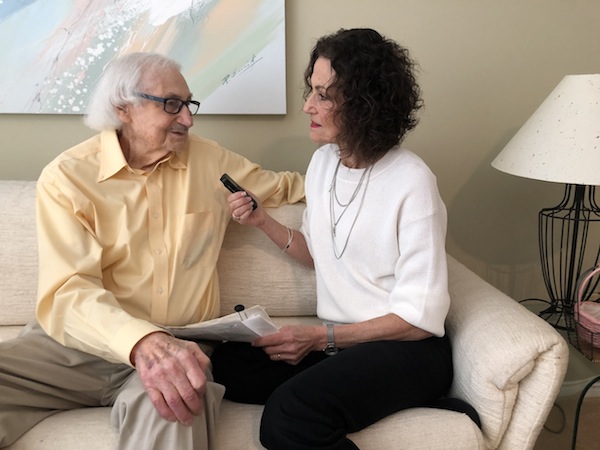
Lou Segal being interviewed by his daughter, Ramona Josephson, 2019. (photo from Ramona Josephson)

A few years ago, the Jewish Museum and Archives of British Columbia contacted my dad, Lou Segal, to interview him, as part of their mission to record the history of South African Jews living in Vancouver. It planted a seed in my mind. Why don’t I interview my dad, and record his voice for my family? So, with tape recorder in hand, we began. My dad (Lou) loves to tell a story and soon I had literally hours of tape.

It wasn’t my intention to write a book. But how would future generations know Lou’s story, and the lessons he has to share? And so the book Who’s Lou? A Loving Tribute to Lou Segal was born.

This is a story of a deeply spiritual man who governs his life with love and integrity; a self-made man who wanted to help others and, in so doing, became a pharmacist and entrepreneur; a man who is a role model and mentor to his four kids, 11 grandkids and five great-grandkids; a man who remains in constant gratitude for all his blessings; a 94-year-old man still in love with my 92-year-old mom!

Born in 1925 Yanishki, Lithuania, home to some 900 Jews, he set sail as a young boy on the Adolf Woermann with his mother and younger brother to join his father in South Africa. His father had left earlier to create a better life for them, after being attacked selling wares from his horse and cart. After a turbulent journey, they arrived in Cape Town, but there was no one to meet them. His father had mistaken the date.
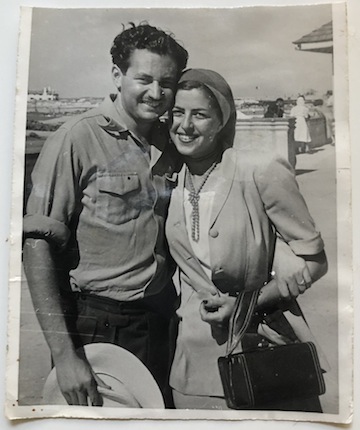
photo - Lou and Friedah Segal on their honeymoon, 1951
Lou and Friedah Segal on their honeymoon, 1951. (photo from Ramona Josephson)

“I remember my mother holding our hands, wailing in Yiddish: ‘Where’s my husband?’” said Lou. “We were told we’d have to sail back to Berlin if no one came. Just as the ship’s horn blasted, an angel came on board. She said she was my mother’s sister and we were able to leave the ship. She belonged to a Jewish agency that provided assistance for Lithuanian immigrants.” If not for her, how different this story would have been.

Lou’s childhood was difficult. “My first days of school were traumatic. I arrived late in the school year, wearing my tzitzit. I could only speak Yiddish and, even though I was 7, I was put into the equivalent of preschool. I was so embarrassed. Antisemitism was rife and I was ridiculed and beaten up often. I had no one to turn to.”

The family originally lived in a poor neighbourhood and many of Lou’s friends were black kids and they played soccer together. He learned to speak Zulu and, later, this would save his life.

As the years went by, his father’s business prospered, and the family moved to nicer homes. Their last home in Pretoria is today the residence of the consulate of Madagascar.

When Lou was 16, he first laid eyes on my mom, Friedah, at Muizenberg, a popular beach resort and meeting place for young Jewish people. Lou’s eyes always tear up when he talks about my mom.” To this day,” he said, “I am still so in love with your mother. The minute I saw her, she mesmerized me. But it wasn’t mutual. Mom would joke that, as the years went by, I was always looking at her, but she was looking the other way.”

One of Lou’s brothers, Charles Segal, recently received the Guinness World Record for most recorded pianist. Lou can’t claim the same, but he finally won my mom’s heart after she saw him playing the piano as a guest entertainer at a party one night. The next day, she called him … and the rest is history. They were married some years later in Cape Town, after Lou graduated as a pharmacist. They had four children, Basil, Ramona (me), Darryl and Janine.

But tragedy nearly struck when Lou had a fire in his pharmacy. His delivery boy lit a cigarette in the dispensary and a bottle of benzene erupted into flames. Lou tried to stomp out the fire with his foot. His pants went up in flames and his skin was burnt to the bone. A customer rushed him to the hospital. He needed skin grafts on both legs. A teaching professor came into his hospital room one day and told his students in Afrikaans, thinking my dad couldn’t understand, that he would likely never walk again.

“My heart dropped,” Lou recalled. “I asked Mom to bring my tefillin to the hospital, and I put it on every morning and prayed to G-d. Miraculously, over time, the grafts started taking. After six months, I was discharged, and was gradually able to go back to my usual activities. To this day, I lay tefillin every single day. I believe it is one of the most important of the 613 mitzvot in the Torah.”
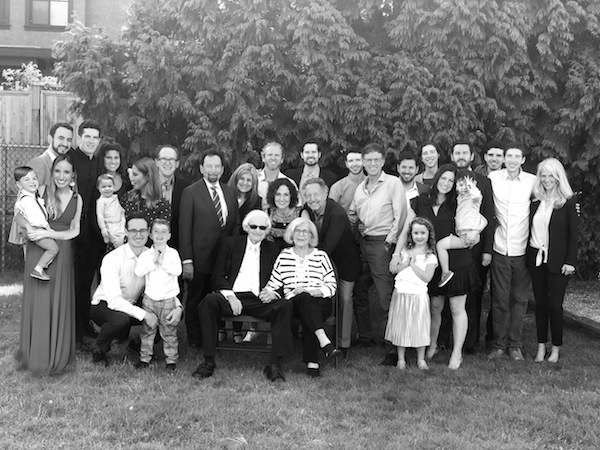
photo - Lou’s family at the launch of Who’s Lou?
Lou’s family at the launch of Who’s Lou? (photo from Ramona Josephson)

Lou was a pharmacist but became a successful and respected entrepreneur. He was a branding whiz, was coined the ‘Man with Ideas’ and was so well known that the newspaper created a caricature of him.

“I always wanted to make a difference in people’s lives. I had a deep knowledge of pharmacognosy and could formulate products from scratch using plants and natural ingredients. As time went by, I realized I could manufacture most products and so I started to create my own brand lines.” His products became household names.

In 1948, apartheid was introduced in South Africa and black people were forced to carry passbooks to restrict their freedom of movement. In 1960, they took to the streets in protest; stores were burglarized and cars overturned. The police opened fire and the bloodshed that followed is called the Sharpeville massacre.

“Demonstrations in Cape Town passed my drugstore,” said Lou. “Several blacks entered and were about to jump over my counter to attack me when a black man shouted in Zulu that I was his ‘doctor’ and they must stop. Over the years, I had tended to many black people who had come to my drugstore bleeding from fights. They’d promise to pay me later but I knew they never would. I had grown up with them and just wanted to help. I believe this man saved my life.”

Our family considered leaving the country but, after Nelson Mandela’s arrest, there was a false sense of security and life went on.

By that time, we, like so many white South Africans, were enjoying a wonderful lifestyle in Cape Town. We went to shul as a family every Friday night, played tennis or lounged on the beach on weekends. Lou kept fit, swimming lengths in our pool, going to the gym, playing tennis. He was a Toastmaster and he and my mom had a large network of friends. They loved to party and took ballroom dancing lessons in our home.

But there was always an underlying level of tension and the turning point came in 1976, after the Soweto Uprising. Black schoolchildren took to the streets in the thousands, protesting the government’s insistence that Afrikaans be the official language in schools. It became bloody.

My older brother, Basil, and I felt there was no future for us in South Africa and we both independently immigrated to Vancouver. I recall, when Basil phoned to say he had arrived in Vancouver, Mom asked: “Vancouver? Where’s that?” Basil replied: “Look at the map. It’s as far north and as far west as you can go!”

photo - Plaque representing Lou Segal’s top 10 “commandments”
Plaque representing Lou Segal’s top 10 “commandments.” (photo from Ramona Josephson)

My parents learned that they could bring our younger siblings on their passport if they immigrated before either of them turned 21.

“I was just 54 years old and at the prime of my career,” said Lou. “I had a business partner, and we were under negotiations to merge with two other companies to be listed on the Johannesburg stock exchange. I owned several large property holdings, both residential and commercial. There were strict regulations as to how much money you could take out the country. If you violated the law you could lose everything. But we had this deadline to move to Vancouver and be together again with our four kids, and that is what we decided to do. Family first!”

Our home in Cape Town later became the residence of the consulate of Lithuania.

Lou came as a retired man but he never retired. He still goes into the office, where he works with my younger brother, Darryl, manufacturing the HerbalGlo line of hair and skin products. Darryl wants to retire, but he can’t, because Lou still goes to the office.

Lou is a man who never raised his voice, but his life lessons and strong moral values are heard loud and clear by all who know him.

Who’s Lou? is filled with loving tributes from family and four rabbis who have officiated over the years at Congregation Beth Tikvah. We are so grateful to Barbi Braude for the hours she put into the concept and design of the book, which was launched in honour of Lou on Sept. 7 at a Kiddush luncheon at the synagogue. It is available at the synagogue library, the Jewish Museum and Archives of British Columbia and the Isaac Waldman Jewish Public Library.

Ramona Josephson is one of Lou Segal’s four children and is married to Ken Karasick. Her two children, Jaclyn and Marc, have brought Lou and Friedah four great-grandchildren. She is a happily retired dietitian and nutritionist and author of HeartSmart Nutrition: Shopping on the Run.
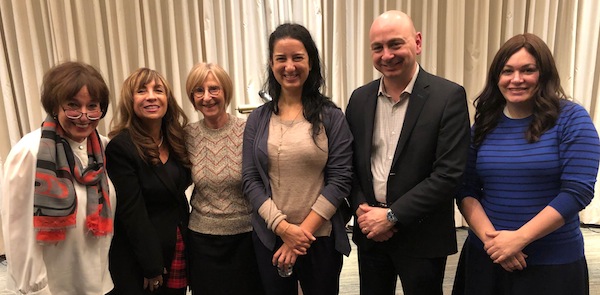

NCJW hosts Govender

Left to right: Debby Altow, NCJW Vancouver past president; Cate Stoller, NCJW Vancouver president; Shelley Rivkin, vice-president, Jewish Federation of Greater Vancouver; Kasari Govender, B.C. human rights commissioner; Ezra Shanken, Jewish Federation executive director; and Etti Goldman, Centre for Israel and Jewish Affairs. (photo by Rochelle Garfinkel)

Newly installed B.C. Commissioner of Human Rights Kasari Govender spoke to members and guests of the National Council of Jewish Women of Canada on Nov. 21 at the Jewish Community Centre of Greater Vancouver. Govender discussed a wide range of topics, including the connections her office will be making with similar bodies across Canada, her focus on the systemic issues affecting human rights in our province, and her welcoming of ideas for implementing forward-thinking and creative approaches to human rights issues. Govender’s presentation echoed the values and focus of NCJWC Vancouver section, which has a long tradition of innovation and creativity in the sphere of social action. For more information about upcoming events and programs, visit ncjwvancouver.org.

May there one day be peace

Operation Protective Edge, on Aug. 3, 2014. (photo from flickr.com/photos/idfonline)

Part 3 of a three-part series, in which the author shares his diaries from the homefront, providing a glimpse of daily life under missile threat during Operation Protective Edge in 2014. For Part 1, click here; for Part 2, click here. 

July 23

Day 16. Iron Dome success rate at 90%. Missiles still get through. Today, an errant rocket hit a house. No casualties. This prompted yet again another lecture from Dad to his kids. Don’t be over-confident and continue taking the Code Red alerts seriously.

Six hundred and sixteen dead in Gaza. Mostly civilians. Locked in a war zone. A human catastrophe. Simply put, as American Civil War general William Sherman put it, “War is hell.”

Hamas fighters seen emerging from their hideout in an ambulance. Balancing war aims with the desire to avoid collateral damage, the Israel Defence Forces decided against bombing the ambulance.

More missile action in Rehovot. Spoke with our son while huddled in our protective room. He was out with friends at a nearby café. They talked with us from under a table.

July 28

Huge uncertainty. Again that word. Shuffling from ceasefire to ceasefire. Meantime, my Code Red app doesn’t stop beeping.

What is sure? The death and devastation in Gaza is tragic. The continued threat to Israel from Hamas’s missiles and terror tunnels is unacceptable. Two ends of a very sharp sword that Hamas must sheathe to bring quiet.

Israel cannot rest until the Hamas threat is eradicated. Or at least severely beaten. In the past 12 months, more than 200 missiles have been fired at our southern communities. Another 200 rockets were fired at the same communities in the 10 days leading to our military offensive. Since the start of Operation Protective Edge, a staggering 2,500 rockets fired at Israel. Yikes!

Exceptionally telling was a picture in our morning paper. Israeli soldiers carrying a wounded bomb-sniffing dog in a stretcher to a waiting helicopter. Contrast to Hamas terrorists firing from behind women and children.

Returning from Tel Aviv with my wife and daughter, a Code Red sounded. A known routine. Pull over. Exit car. Crouch down on roadside. Cover heads with hands (!). My wife huddled over our daughter and I huddled over my wife. Double protection for my daughter. Unbeknownst to my daughter, while the Iron Dome chased and intercepted its target overhead, I managed a quick and loving grope of my wife. Nothing like some comic relief. Another Love Is moment.

July 31

Driving home from work as a missile barrage hit the south. Three people lightly injured by falling missile fragments. Text messages from my loving family:

Wife: “Where’s Dad?”

Son: “Think he’s at work. Tough luck for him – ha ha!”

My son inherited my dark and cynical sense of humour.

A country at war: 65,000 reservists now called up; 18,000 pending call-ups. Flags strung up along our main roads. War jingles on the radio. Billboards supporting our troops. Famous Israeli singers touring the front (which is one city over!). Patriotic teenagers waving flags and dancing at major intersections.

Nonstop beeping of the Code Red app. Heard everywhere. Movie theatres. Restaurants. Grocery stores.

Soldiers’ funerals attended by hundreds.

Solidarity with impacted businesses in the south, holding market days in major cities. Large public service campaign to buy “blue and white.”

Aug. 2

Sixty-three of our bravest boys killed. Three civilians killed. One soldier, Hadar Goldin, captured. Dead or alive?

U.S. President Barack Obama asked Hamas – one of the most barbaric terrorist movements in the world, who flagrantly have violated six humanitarian ceasefires, who hide behind innocent women and children, who plant arsenals and war rooms in hospitals, schools and mosques – to please set the soldier free. Pretty please. With sugar on top. Don’t think the president gets it.

Aug. 5

Three times I told my son to get up for work. Each time, he mumbled OK. Each time, he fell back asleep. Then, running to our safe room at 7:15 a.m. with Code Red apps blaring, he finally got out of bed.

Leaving home this morning, I told my daughter that today should be relatively quiet. Entering another ceasefire. “Ya, like Hamas will respect that,” my 12-year-old quipped.

A tough day yesterday. More than 85 rockets rained on Israel. Terror attacks in Jerusalem. Terror alerts in Tel Aviv. Entering a 72-hour truce, which will hopefully usher in … something.

Preparing for the inevitable “day after.” Fists clenched. Hearts palpitating. Brow sweating.

Aug. 6

Halfway into the truce. So far, quiet met with quiet. Yesterday, I woke to the sounds of missiles and my Code Rep buzzing. Today, I woke to the sounds of silence – well, actually, to the sounds of my kids arguing and my dog barking. Beautiful noise.

There’s an atmosphere of victory. Our soldiers – our children – are heroes. Hamas was dealt a severe and long-term blow. Is more isolated in the Arab world. Some strategic shifts in alliances per the dictum “My enemy’s enemy is my friend.”

Will not forget those who fell in our defence, as well as the few civilian casualties. Saddened by the death and destruction in Gaza. Pray that one day soon Gazans will rise above Hamas, save themselves.

Hope our enemies are deterred from other misadventures. Pray that peace will be upon us. Am Yisrael chai.

Aug. 11

A bit premature with my last entry. Suffering from wishful thinking. Looks like victory has not yet arrived. While Hamas took a severe beating and is largely isolated, they continue their disregard for a real truce.

Both sides met in Egypt to negotiate a settlement while the ceasefire took effect, but huge gaps. Not surprisingly, talks broke down. Hamas resumed their missile barrage. Israel reactivated our air defences and continues to pound Gaza.

International condemnation of Israel totally disproportionate. Fierce anti-Israel and antisemitic rallies throughout the world, especially in Europe. Jews surrounded in synagogues (France). Jew-free areas (United Kingdom). A rabbi killed on his way to synagogue (United States). Jewish kids bullied in schools (Australia).

Still feel safer in Israel than in Europe. Even now. Think the mass immigration of Arabs to European lands and poor absorption processes taking effect.

Going to Italy next week for a family vacation. Need to minimize our “Israeliness.” English will be our language of choice. A bit scary.

Amid a second three-day truce, am doubtful the truce will last.

Aug. 13

The truce ends at midnight. Lots of anxiety. What comes next?

Didn’t Netanyahu once say he would never negotiate with terrorists? The world looks different at the top, when the decision is yours.

Am working late tonight. If the truce ends early, I hope it lasts at least till I get home.

Aug. 17

Waiting on the outcome of an extended ceasefire. Expires midnight Monday.

The solid backing and relative discipline Netanyahu enjoyed from the government is starting to crack. Lots of conflicting postwar opinions, positions and plans. Two Jews, three opinions.

Heading to Italy for our long-awaited family respite.

Aug. 26

Back from Italy. Fiftieth day of Operation Protective Edge.

While away, we tried, as best we could, to unwind from the tensions of our little shtetl. You can never really escape the reality of your country being hit by missiles. Especially with the Code Red app going off when eating pizza in a town square, when visiting the Coliseum, when at the Vatican, when touring the medieval hamlets of Tuscany. Could have just turned off the app but, for a sense of identity, some twisted need to remain connected, didn’t.

After 50 days, Gaza is burning. Death and devastation are immense. But Hamas – like that Duracell rabbit – just keeps going.

In a Sisyphus-like manner, another ceasefire is in the making.

Israel is awash in the ALS Ice Bucket Challenge. Escapism of any kind, however temporary.

Aug. 29

Waited a few days before writing this entry. Wanted to be sure this ceasefire held. It has. But gaps remain wide. Hamas remains a wild card.

Discussions in Israel are intense. Significant introspection. If Netanyahu thought the Gaza battlefield was tough, here comes the national post-mortem. This soul-searching (self-flagellation?) is indicative of the Israeli psyche, our democracy. This constant search inwards may be the secret to our success as a people, as a country.

A contrast to the other side. Celebrating their “victory.” Dancing in the streets. Shooting in the air. Proclamations of battles won that never happened. A lack of critical introspection that will, unfortunately, keep our enemies from making any real progress in developing a strong, forward-looking society.

Former National Security Council head Ya’acov Amidror: “One of the main differences between Israeli and Palestinian societies is that, if Israel has a glass of water three-quarters full, it will complain about and search for the missing quarter. If the Palestinian glass is only one-quarter full, it will celebrate the one quarter and even imagine a second quarter.”

What was? What will be? I defer to our pundits and leaders. To hopefully bring, if not peace, at least quiet to this wonderful, ever-challenged, always robust, constantly developing and very happy country.

May peace be upon us. As-salumu alayna. Shalom.

Bruce Brown, a Canadian-Israeli, made aliyah 25 years ago. He works in high-tech and is happily married, with two kids. He is the winner of a 2019 American Jewish Press Association Simon Rockower Award for excellence in Jewish writing.

Ride to help Israeli veterans

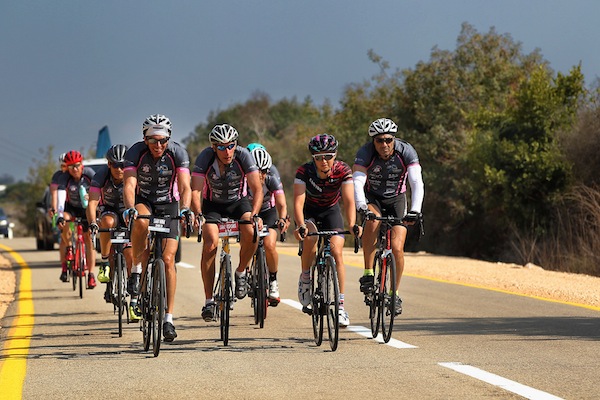
Beit Halochem Canada’s Courage in Motion saw many riders return to do the five-day annual cycle in Israel again. (photo from Beit Halochem Canada)

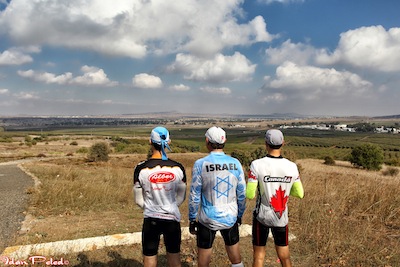
The 12th annual Courage in Motion, an initiative of Beit Halochem Canada, Aid to Disabled Veterans of Israel, welcomed cyclists from across Canada, joined by some Americans and Israelis. From Oct. 27-31, these international cyclists rode alongside Israel’s disabled veterans on five fully supported routes through northern Israel’s archeological sites and landscapes.

Fundraising is open until Dec. 31, and it is expected that the ride will raise approximately $750,000 Cdn. Sponsors’ support and cyclists’ fundraising facilitated the participation of more than 100 injured Beit Halochem Israel members this year. Money raised also funds programming at Beit Halochem centres in Israel. Thanks to the ongoing success of the ride, cycling has steadily grown in popularity at the state-of-art centres.

Lisa Levy, national executive director of Beit Halochem Canada, is the ride’s founder. An avid cyclist herself, she said, “Cycling in Courage in Motion means visiting Israel, supporting an incredible cause, and connecting directly with our members. Beyond the ride’s huge fundraising component, I never fail to be excited by witnessing lifelong friendships taking shape. It is truly a life-altering experience that you never forget and one that participants want to repeat!”

photo - 3 cyclists
(photo from Beit Halochem Canada)

Annually, the ride welcomes both new and repeat participants. This year, returning cyclists included Toronto-born Keith Primeau, who rode in last year’s CIM for the first time. Primeau enjoyed the experience so much that his daughter Kylie accompanied him this time.

Primeau played 15 seasons in the National Hockey League, most notably with the Philadelphia Flyers, prior to his career being cut short due to multiple concussions. He co-wrote the book Concussed! Sports-Related Head Injuries: Prevention, Coping and Real Stories (2012), detailing life after concussion.

Other international returnees included former cycling champion Eon D’Ornellas, who competed throughout the 1970s and 1980s on behalf of both Canada and his native Guyana. The proprietor of Toronto’s D’Ornellas Bike Shop, he started a cycling club more than 25 years ago. In 2011, D’Ornellas, then 59-years old, suffered a stroke during a training ride.

Among the Beit Halochem members participating in Courage in Motion 2019 was Asi Mekonen. In 2012, just prior to his release from the Givati Brigade, Mekonen suffered severe head injuries, with resulting brain damage, vision and hearing impairment, and memory loss. Following five years of physical and cognitive rehabilitation at Beit Halochem, he is now a Jerusalem-based musician. Besides experiencing several Courage in Motion rides, he has completed two marathons. Mekonen was already known to many of the ride’s Canadian participants through his on-stage appearances in this year’s Beit Halochem Canada Celebration of Life concerts.

This year, cyclists may have ridden alongside a future Paralympics hand-bike medallist. Critically wounded in 2002 in a military operation while serving in the artillery corps, Amit Hasdai was left with paralysis on the right side of his body. During rehabilitation, he benefited from equestrian therapy, later competing internationally. Since turning to hand-bike racing at Beit Halochem Tel Aviv, Hasdai has enjoyed participating in Courage in Motion. Hasdai’s natural talent, enhanced by Beit Halochem’s support of his training and coaching, has resulted in his current ranking of eighth in the world. He is training to qualify for the 2020 Paralympics in Tokyo.

Courage in Motion’s participants enjoyed group activities, including a cycling tour of the agriculture region of the Hula Valley and an evening with Israel’s heroes – all Beit Halochem members – who shared their personal stories of tragedy and resilience.

The next Courage in Motion takes place in Israel from Oct. 18-22, 2020. Registration is expected to open in March 2020. See courageinmotion.ca.

Glamour of a Leiber handbag

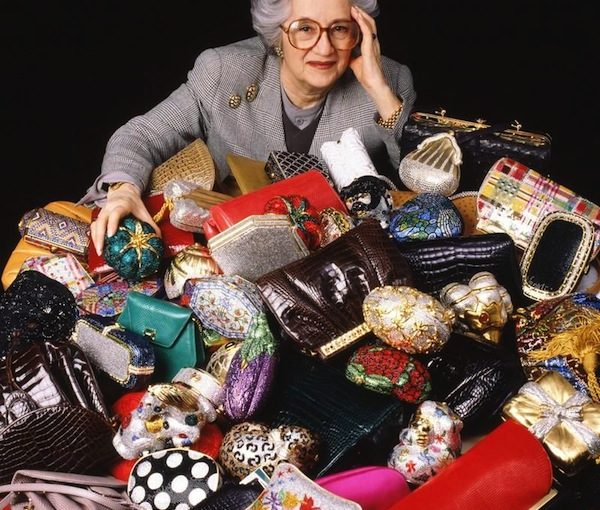
Judith Leiber (photo from Palm Beach Beauté)

Many of us gravitate towards objects that are bright and sparkly. Creating this magic in one handbag is what Judith Leiber, née Peto, accomplished.

Judith Peto was born in Budapest, Hungary, in 1921. Her mother, Helene, from Vienna, was a homemaker and her father, Emil, from Hungary, was a commodities broker. Together with her sister, Eva, the family had a bourgeois lifestyle.

Discovering that their teenaged daughter had a good head for numbers and academics, they sent Judith to London to study chemistry, with the hope that she would acquire a university degree and work in the cosmetics industry. Part of the reason they sent her away to school was a concern about her safety in case of a war. However, the distance from her family proved too difficult for Judith and she soon returned home.

She landed a job at a handbag company and, over the years, her father would bring her an assortment of unique handbags from his many travels around the world, thereby initiating Judith’s collection.

Learning the art of handbag-making from start to finish allowed Judith to become the first woman to join the Hungarian handbag guild; she gained the title of a true craftsman.

Judith and her family escaped and survived the Holocaust due to her father’s large circle of connections. He was fortunate to obtain a Schutzpass, a document that secured the bearer safe passage, giving the family, together with 26 others, access to a house set aside for Swiss citizens, where they could live. They ate what they could, slept on the floor and never left the security of the house.

“People in Budapest and my parents, especially my father, did one thing and then another to keep us safe, or as safe as we could be when everyone wanted to kill us,” Judith told the Jewish Exponent in a 2013 interview.

When Hungary was liberated, the family moved into a basement that was home to 60 survivors. Rebuilding the life they once knew was their goal. During this time, Judith met and fell in love with an American soldier, Gerson Leiber. Against her parents’ wishes, she married him in 1946 and the couple moved to the United States.

The young new immigrant had no intention of staying home and becoming a traditional housewife. With her knowledge and skill in making handbags, she got her first job at Nettie Rosenstein, a fashion designer. Working her way up in the company, she was commissioned to make a handbag to match the inauguration dress of the first lady, Mamie Eisenhower. The bag received high regard and this milestone, after 12 years of hard work, gave her the impetus to start her own brand.

In 1963, she launched her company with her husband and partner by her side, overseeing the business and operational duties. An avid artist himself, a painter, they were an unstoppable duo. In the 7,000-square-foot loft that became their studio, countless creations were brought to life, handbags that epitomized glamour, every piece an original, made with crystals and beads in shapes of animals, fruit and other objects.

A Judith Leiber handbag became a first lady tradition for the inauguration ball. Some A-list Hollywood stars put more thought into their Leiber handbag than their dresses, knowing it would be the focal point of any attire. One handbag could cost anywhere from $3,000 US to $20,000 US.

“That is what people pay for – quality,” Judith told the Exponent.

And quality was what she prided herself on, each bag being made by specialist craftsmen under Judith’s watchful eye in New York.

Her label brought in millions of dollars in sales each year and there was a waiting list for her creations, with women around the world wanting a timeless bag to wear and/or display as part of their home décor.

The company was sold in 1993, with Judith staying on as the head creator. She enjoyed her new life, moving out of New York and settling in East Hampton, N.Y., with her husband, “Gus.”

Over her career, Judith received numerous design awards and had her work exhibited in some of the world’s most renowned museums, including the Smithsonian, the Museum of Modern Art and the Metropolitan Museum, to name only a few.

In addition to being displayed elsewhere, there is the Leiber Collection museum in East Hampton, a project set in motion by Gus.

The Leibers were married for more than 70 years. Their earthly love story endured until 2018, when they died within hours of each other, both of heart attacks.

Ariella Stein is a mother, wife and fashion maven. A Vancouverite, she has lived in both Turkey and Israel for the past 25 years.

Women and education

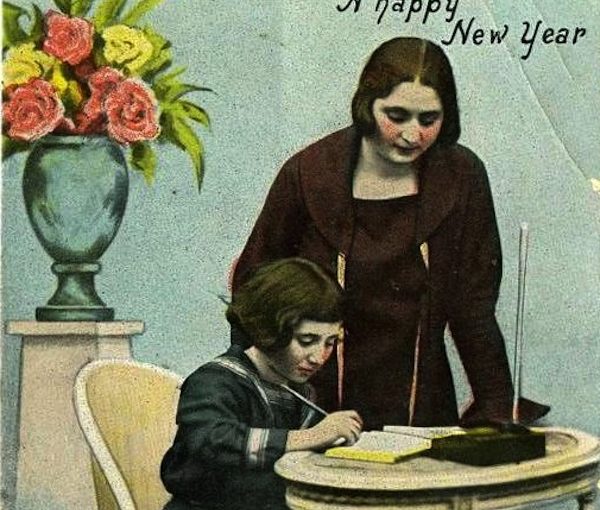
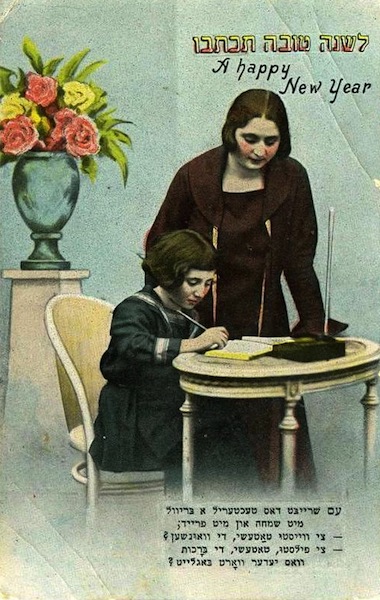
One of the family cards, produced 100 years ago, that is currently on long-term loan in the folklore department of the Hebrew University of Jerusalem, on Mt. Scopus. It is from the Chaya and Chana Gitelman Collection.

Not too long ago, I was flipping through a collection of old family cards, all of which were produced 100 years ago in Eastern Europe. On the cover of one card, a young girl sits at a table writing in a notebook. Her mother stands over her, looking on. From a modern perspective, there is nothing unusual about a woman knowing how to read and write. But less than 200 years ago, this would have been considered somewhat revolutionary.

Just how revolutionary? In the article, “The History of Jewish Women in Early Modern Poland: An Assessment,” Prof. Moshe Rosman reported that, at the end of the 19th century, more than half of all Jewish girls could not read, not even in Yiddish. Rosman noted that not only was limited attention given to educating Jewish women, but that those who first wrote the history of this period, deemed it hardly worth dealing with the subject.

In early modern Poland, education for Jewish girls and women was largely designed to make them into faithful Jews who would keep female rituals. For the most part, their education was informal and conducted in Yiddish. Brenda Socachevsky Bacon states that a learned woman was an aberration and considered outside the norm. In analyzing Shmuel Yosef Agnon’s story “Hakhmot Nashim” (“The Wisdom of Women”), which was published in 1943, Socachevsky Bacon says a woman’s very presence in the beit midrash causes the men to be uncomfortable. “They view the realm of Torah study as their own, even as their own hypocritical behaviour belies their dedication to it,” she writes. “The men will not allow this discomfort to continue, even if it involves transgressing the Torah’s commandment not to embarrass another person publicly.”

Fortunately, this was not the whole story of this period. Rosman explains there were secularized school settings in which Jewish girls learned both Yiddish and European languages. The objective of these schools was modernization and general knowledge. Girls read classic European literature. In this instance, the scorn was sometimes transferred, with traditional Jewish literature viewed contemptuously.

According to Prof. Eliyana Adler (“Rediscovering Schools for Jewish Girls in Tsarist Russia”), private schools for Jewish girls were a crucial ingredient in transitioning Russian Jewry into modernity. She reports that, from 1844 to the early 1880s, well over 100 private schools for Jewish girls opened in cities, towns and shtetlach throughout the Pale of Jewish Settlement.

The educators who opened and ran private schools for Jewish girls pragmatically balanced their ideological motivations with very real concerns about funding and retaining communal goodwill. Thus, those who ran private schools offered a variety of student tracks. Rich Jews (like their wealthy Christian neighbours did elsewhere) could pay to board their children. Many schools offered weekly instruction in both music and French as paid electives.

Adler goes on to say, “at the same time, families of modest means were offered tuition payments on a sliding scale. Noteworthy, poor students were actively recruited for scholarship positions. Other schools offered less sophisticated fee scales, but clearly worked within the same framework. The rewards for having a robust student body became clear as both the government and certain private and communal bodies began to award subsidies to successful private schools.”

These private schools for Jewish girls designed Jewish studies curricula to meet the expectations of the Russian Jewish communities from which they drew their students. The curricula had to be modern and useful without being radical. Thus, efforts were made to introduce training in practical crafts; that is, crafts that could be put to use in the marketplace. In 1881, the first trade school for poor Jewish girls opened in Odessa. Thereafter, both trade schools and sections within other schools that offered more in-depth training in such skills as sewing opened with increasing frequency.

image - One of the family cards, produced 100 years ago, that is currently on long-term loan in the folklore department of the Hebrew University of Jerusalem, on Mt. Scopus. It is from the Chaya and Chana Gitelman Collection
One of the family cards, produced 100 years ago, that is currently on long-term loan in the folklore department of the Hebrew University of Jerusalem, on Mt. Scopus. It is from the Chaya and Chana Gitelman Collection.

By the end of the 1890s, in Odessa alone, more than 500 girls studied in four communally funded vocational schools for Jewish girls. Jewish educators responded to the growing interest in interaction with the surrounding society by opening their private girls schools to Christian girls and by offering to teach courses in the Jewish religion in Russian schools. Prayer served as the common denominator of religious courses – the major focus of religious education was on prayer.

The teaching of Jewish history rather than simply the Torah allowed for an unprecedented degree of interpretation and even mild biblical criticism. Hebrew reading was also offered in many of the schools. Almost all Jewish girls schools offered penmanship and arithmetic.

Every private school for Jewish girls in the Russian Empire required extensive instruction in the Russian language. It was not uncommon for all general studies subjects to be taught in Russian.

Examples of the above educational transformation may be found in the bigger cities of Eastern Europe. In Plonsk (located some 60 kilometres from Warsaw), for example, toward the end of the 19th century, organizations such as Kahal Katan (literally, Small Community), educated the poorer strata of society. Also during this period, the city (which had a Jewish majority) opened a primary school for Jewish children, where some 80 pupils, mostly girls, studied in Russian. (See yadvashem.org/yv/en/exhibitions/communities/plonsk/jewish_education.asp.)

Vilna is another example. In 1915, the Association to Disseminate Education established three schools – one for boys, one for girls and one mixed – whose language of instruction was Yiddish. Also in 1915, Dr. Yosef Epstein established the Vilna Hebrew Gymnasium (high school), which was later renamed after him. The informal educational system included literature, drama, music, industrial arts and other courses. (See yadvashem.org/yv/en/exhibitions/vilna/background/20century.asp.)

According to Dr. Ruth Dudgeon (“The Forgotten Minority: Women Students in Imperial Russia, 1872-1917”), Russian women, aided by sympathetic professors, created educational institutions that evolved into universities and medical, pedagogical, agricultural and polytechnical institutes for women. Moreover, in 1916, the Ministry of Education overcame its bias against preparing women for public activity, rather than the home, and mandated the equalization of the curricula in the boys’ and girls’ gymnasia.

In the 1870s and 1880s, Jewish-Russian enrolment in the courses for women was between 16% and 21%. The imposition of quotas in the 1880s, however, reduced the number of Jewish students. But, in places where the quota was lifted, the number of Jewish women in the courses soared.

In the restricted Pale of Settlement, young Jewish women wanting to study did everything to establish residency elsewhere. The “everything” included registering as a prostitute. According to Dudgeon, one brother found out about his sister’s actions and then drowned himself in the Neva; the grieving sister, in turn, ended her life by taking poison.

As circumstances for Jews in the Russian Empire deteriorated in the 1880s, those Jews who stayed in that part of the world came to embrace new ideological solutions to the situation. In an atmosphere of violence, deprivation and brutally strict quotas in education and professions, Russian-Jewish parents wanted their children enrolled in schools where the course of study offered some hope for the future.

By the turn-of-the-century period, educators were no longer opening private schools for Jewish girls based on the old model. The schools they opened – whether they were trade schools where Zionism was taught, religiously mixed schools devoted to full acculturation, or Yiddishist schools committed to inculcating socialism – promised more than basic literacy.

In Poland, Gershon Bacon writes, “the education of Polish Jews in the interwar period was characterized … [as] the ‘victory of schooling.’ The compulsory education law of the reborn Polish republic had brought about in one generation what had eluded generations of prodding by tsarist officialdom and preaching by Jewish maskilim (people versed in Hebrew or Yiddish literature). Whether in the public schools or in the various Jewish school networks, Jewish children in Poland were educated according to curricula that deviated in almost every respect from that of traditional Jewish education. [Notably,] religious families had no objections to sending daughters to secondary schools, even though they objected to exposing sons to secular education.

“What is most striking,” continues Bacon, “are the differences in enrolment figures in institutions of higher learning. There was a much larger proportion of Jewish women students among female students as a whole (36% in 1923/1924), as distinct from the percentage of Jewish men among male students (22% in 1923/1924). It would seem that we have here but another example of a phenomenon observed in other countries, where Jewish women entered institutions of higher learning earlier and in greater proportion than their non-Jewish counterparts.” (See jwa.org/encyclopedia/article/ poland-interwar.)

So many factors about these educational statistics still need to be explored. Nevertheless, one can observe that an outcome seems to have been the creation of a modern Jewish Eastern European woman who “opened her mouth with wisdom.” (Proverbs 31:26)

Deborah Rubin Fields is an Israel-based features writer. She is also the author of Take a Peek Inside: A Child’s Guide to Radiology Exams, published in English, Hebrew and Arabic.

Jewish bootleggers, police

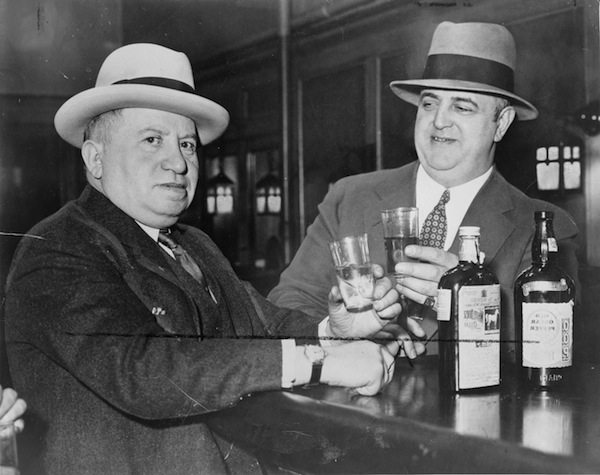
Izzy Einstein and Moe Smith sharing a toast in a New York bar, 1935. (photo from Library of Congress; New York World-Telegram and Sun Collection)

Wine is a large part of Jewish ritual and tradition. And a glass or two of schnapps is not uncommon. Adults often drink something alcoholic on a holiday or happy occasion. So what did people do when there was Prohibition?

In Canada, national Prohibition was from 1918 to 1920 and, in the United States, Prohibition lasted from 1920 to 1933. How did Jews get wine for Shabbat and holidays during these periods? And who clamped down on those who were disobeying the law?

In both the United States and in Canada, Prohibition laws allowed for wine to be sold for religious sacraments. This meant that rabbis and priests could lawfully possess wine. In the United States, both Jews and non-Jews were known to use this special legal passage as a ruse. It led to bootleg priests and rabbis and to the hoarding of wine for bogus religious reasons.

Although Canadian provinces had various earlier restrictions on liquor sale and consumption, the national Canadian Prohibition continued for only a short period of time. And, importantly, it remained legal to manufacture liquor in Canada. Even more significant, Canadian distilleries could likewise legally sell it to the dry United States, where the manufacture, importation, sale and transport of alcohol was then illegal. Thus, Canadians brought alcohol to the United States via Windsor, Ont., where it usually went on to Detroit, Mich. At the time, Samuel Bronfman was the Canadian Jewish owner of Seagram’s. He had Jewish bootleggers floating so much illegal booze into the United States over Lake Erie that this body of water became known as the “Jewish Lake.”

Remarkably, the two most successful U.S. Prohibition agents were Jewish. Izzy Einstein and Moe Smith were two “regular”-looking guys who had absolutely no resemblance to flashy Prohibition agent Elliot Ness, who has been characterized in television series and in movies. Their ability to fool violators with either their ordinary appearance or with their numerous disguises allowed them to make an outstanding number of arrests. In all, they made 4,932 arrests of bartenders, bootleggers and speakeasy owners. They had a 95% conviction rate. They confiscated an estimated five million bottles of alcohol. At the time, this catch was worth about $15 million US.

Neither man had any law enforcement training. Einstein had been a pedlar and a postal worker. Smith had sold cigars. They were not even strongly for temperance, but they were for upholding the law. Initially, Einstein’s job interviewer didn’t want to hire him as an agent because of his lack of training, but Einstein managed to convince the man that he was right for the job because he looked so unremarkable and because he had a “feel” for people.

Having been born in Austria, Einstein spoke a number of languages. He put his language skills to use when the pair disguised themselves. They were known to have used a huge variety of get-ups, including as German pickle packers, Polish counts, Hungarian violinists, Jewish gravediggers, French maitre d’s, Italian fruit vendors, Russian fishermen, Chinese launderers, streetcar conductors, ice deliverers, opera singers, judges, traveling cigar salesmen, Texas cattlemen, movie extras, football players, beauty contest judges, grocers, lawyers, rabbis, college students, plumbers and delegates to the Democratic National Convention. In my estimation, however, the funniest costumes were those of them dressed as a man and woman. One of them sported a thick beard and mustache and a bowler hat, while the other dressed in a heavy fur coat, scarf and jaunty cloche hat.

Einstein claimed that it was key to come into a speakeasy carrying some kind of tool of the trade, so he often carried a string of fish, a pitcher of milk, trombones, a fishing rod or a big pail of pickles. He did not carry a gun, however, and Smith carried one only occasionally.

The greater their chutzpah, the greater the risk to their personal safety. At one Bowery saloon, for instance, Einstein even produced his actual agent’s badge and asked for a pint of whiskey. The bartender thought it was a gag and served him.

So that he had enough evidence to bring charges against the offenders, Einstein devised a special hidden liquor collection system. There were three parts to this system: a rubber bag hidden below his shirt, a rubber tube that was connected to the bag, and a glass funnel sewn into his vest pocket. He sipped the liquor and, without anyone noticing, poured the rest of the drink down the funnel, which then led to the rubber tube.

The pair’s success on the job became a matter of public record. New York newspapers frequently covered their escapades. They became so well known that Einstein’s face was even hung in certain speakeasies. But even that did not tip off drinking customers, as Einstein reportedly once stood below his photo without anyone catching on.

Einstein and Smith had worked as federal Prohibition agents for about six years when they were laid off, perhaps because they inadvertently made other agents “shine” less than they did. They both went on to be a different kind of agent, successfully selling insurance. Some of their clients, it is said, were people they had busted.

Deborah Rubin Fields is an Israel-based features writer. She is also the author of Take a Peek Inside: A Child’s Guide to Radiology Exams, published in English, Hebrew and Arabic.

רשת פייק ניוז ישראלית

רשת פייק ניוז ישראלית ניהלה קמפיין אנטי-מוסלמי בינלאומי נגד טרודו

על פי תחקיר של העיתון הגרדיאן, בשנתיים האחרונות קבוצת משתמשים ישראלית, ובראשה סוחר יהלומים מלוד, הפיצה ידיעות מזויפות על פוליטיקאים מוסלמים ואף טענה כי ראש ממשלת קנדה ייבא למדינתו את חברי דאע”ש

רשת פייק ניוז ישראלית ניהלה קמפיין אנטי-מוסלמי בפייסבוק – שמשך אליו יותר ממיליון גולשים בארבע יבשות. כך על פי תחקיר שפורסם בעיתון הגרדיאן הבריטי.

לפי התחקיר כמה משתמשי פייסבוק פעלו בשיטה קבועה: ראשית הם פנו לעשרים ואחד עמודי ימין קיצוני וביקשו מהם הרשאה לניהול העמוד. לאחר שקיבלו את הגישה לעמודים הם הפיצו סימולטנית ידיעות שקריות. בשנתיים האחרונות הופצו בשיטה זו למעלה מחמשת אלפים ושש מאות ידיעות מזויפות. הן זכו ללמעלה משמונה מאות אלף אלף לייקים.

אחד ממנהלי העמודים סיפר לגארדיאן כי פנתה אליו אישה שהציעה לו סיוע ביצירת תכנים לעמוד שהוא מנהל. האישה הזו שכנעה אותו שהיא עורכת טובה, ושתוכל לספק לו תכנים איכותיים שיעלו את החשיפה והלייקים. כך אמר רון דה-ויטו מניו יורק. הוא חשב לעצמו שהוא יכול לתת לה את הזדמנות לפרסם את התכנים שלה.

קמפיין הפייק ניוז כאמור, שם לו למטרה להשמיץ פוליטיקאים מוסלמים ומחוקקים ליברליים. זאת במטרה להשפיע על השיח, בעיקר בתקופות בחירות. כך למשל, חברות הקונגרס האמריקני המוסלמיות רשידה טליב ואילהאן עומאר נפלו קורבן למתקפות אנטי-מוסלמיות. על ראש עיריית לונדון המוסלמי, סאדיק קאן, הופץ כי טען לאחר פיגוע בעיר בשנת אלפיים ושבעה עשרה – שפיגועי טרור הם חלק מעסקת החבילה של המגורים בעיר, ומי שלא מעוניין לחוות אותם יכול לעזוב אותה.

לא רק פוליטיקאים מוסלמים סבלו מדיווחים מזויפים, אלא גם מחוקקים ליברליים. על יו”ר מפלגת הלייבור הבריטית, ג’רמי קורבין, נטען כי אמר שהיהודים הם מקור הטרור הגלובלי. ואילו ראש ממשלת קנדה הנוכחי, ג’סטין טרודו, הואשם כי ייבא לקנדה את חברי ארגון הטרור הסוני דאע”ש.

עיתון הגרדיאן הצליח לאמת כי מקור אחד עמד מאחורי הפרסומים בדפים השונים, ואף אימת את זהותו. מדובר אחד האנשים שעומדים מאחורי הקמפיין ושגר בישראל אריאל אלקרס. הוא סוחר יהלומים בשנות השלושים לחייו ומתגורר כיום בלוד. מנהלי העמודים העידו כי היו בקשר עם משתמשים נוספים, בהן שתיים שהציגו את עצמן בתור רוחל’ה ותהילה (לא בטוח שהשמות אמיתיים), אך העיתון לא הצליח לאמת את זהותן.

כתבת העיתון הגיעה במסגרת התחקיר לביתו של אלקרס, והוא הכחיש מכל את מעורבותו ברשת הפייק ניוז. כאשר הוא נשאל על מתשמש בשם אריאל אלף מאתיים שלושים ושמונה איי, שנחשד כי הוא זה שהפיץ חלק מהידיעות, השיב אלקרס כי איננו יודע דבר וסגר את הדלת בפניה של הכתבת. בהמשך אלקרס יצא אחריה לרחוב וביקש ממנה לדעת הכיצד היא איתרה אותו.

בעקבות פניית הגרדיאן הסירה הנהלת פייסבוק חלק מהעמודים הקשורים לרשת הפייק ניוז. בפייסבוק ציינו שכנראה שמאחורי פעילותם של עמודים אלו עומדים מניעים פיננסיים. עמודים וחשבונות אלו הפרו את המדיניות של פייסבוק נגד ספאם וחשבונות מזויפים באמצעות פרסום תוכן קליקבייט – שנועד למשוך אנשים לאתרים חיצוניים. כך נמסר על הנהלת פייסבוק. בהנהלת האתר החברתי ציינו עוד כי היא לא תתיר לאנשים להתחזות בפייסבוק. הנהלת האתר עדכנה את מדיניות ההתנהגות הלא-אותנטית שלה, כדי לשפר את יכולתה להגיב לטקטיקות חדשות. החקירות של פייסבוק נמשכות ובהנהלת החברה אמורים עוד כי הם ינקטו בפעולות נוספות אם יאתרו הפרות נוספות.

Doing work he believes holy

Irwin Keller will share some of his eclectic interests at Limmud Vancouver in March. (photo from Limmud Vancouver)

Irwin Keller is the kind of person most of us would like to be: curious about everything, smart, creative, always learning, always teaching. As one of the invited presenters for Limmud Vancouver ’20, he’ll be sharing some of his interests with the local community.

Keller’s first career was a long stint as a human rights lawyer specializing in AIDS and HIV-related discrimination. But, as a lifelong amateur musician, he also co-created the drag group the Kinsey Sicks. In 2006, he ended up serving as a lay leader for his congregation, which finally pushed him to go to rabbinical school, where he is now finishing up his training.

“I had always wanted to be a rabbi. When I had finished my undergraduate and was looking at applying to rabbinical school, in those days, there were no seminaries that accepted openly gay students,” Keller said. “I couldn’t do it unless I was willing to go back in the closet that I had just come out of – the closet was still warm – and I wasn’t willing to. It felt wrong. It was important for me to be in the rabbinate as who I was.”

Within just a year of deciding he couldn’t be a closeted rabbi, the AIDS epidemic began to tear through the gay community, and Keller began working on civil rights cases.

“Things can happen to people whether they’re legal or not. Often through some sort of ruse, or subterfuge,” he said. “As long as people didn’t want people with AIDS renting from them or working for them, they were going to find some way to get rid of them. That was our work.”

This work, which Keller describes as both holy and harrowing, led to the creation of the Kinsey Sicks. “Our community needed to laugh, needed to be delighted out of what we were experiencing every day.”

Momentum built and, after a few years, the group had an offer to produce their show off-Broadway.

“That was the point when we all quit our jobs. That was the last I ever practised law,” he said.

In all, Keller performed with the group for 21 years. Along the way, he taught himself enough Yiddish to be able to bring Yiddish music into the show, to both hilarious and touching effect. He had a recording of his great-grandmother singing the heart-tugging “Papirosn,” about an orphan boy trying to get by selling cigarettes on a street corner. Usually sung by women performers to mimic a child’s voice, Keller performed it in his drag persona Winnie, channeling the spirit of his great-grandmother and Yiddish theatre divas of a bygone era. You can watch it on YouTube: Keller playing a much older Jewish woman playing a young boy – gender collapses à la Victor/Victoria.

“Over the course of the maybe 18 years that I performed it, it was the most commented-on piece of music that we performed,” he said. “People were so moved – including non-Jews – that they were getting a window into Jewish culture that they were not getting from modern American culture.”

Keller’s U-turn into the rabbinate is perhaps long in coming, but not surprising. He describes both his civil rights law career and his drag performing career as holy work: the yin and yang of what a gay community needed at a devastating moment in its history. Moving onto the pulpit only took that energy to a different place.

“I moved to Sonoma County and joined a synagogue whose rabbi was in the process of leaving and there was a lot of turmoil. I volunteered to do some of the rabbinical work while they were searching,” he said. “But what came out of me was a lifetime of longing.”

And the congregation needed his brand of leadership, too. “I think my being the singing drag queen rabbi gave people a different kind of welcome,” he said.

At Limmud Vancouver, Keller will be sharing two more of his interests: Yiddish poetry, and queer readings of Torah. In a session on the Yiddish poet Itsik Manger, Keller will lead discussion on the playful Bible-inspired poem cycle known as the “Khumesh lider.”

“The way he plays with the looping of time, the anachronisms, in a way that is also invited by rabbinic tradition – there is no before or after Torah, everything can take place in any order,” explained Keller. “So you can get the Turkish sultan visiting Hagar, you can get Ruth and Polish peasants, and it’s still Torah.”

Keller’s other Limmud seminar will examine the story of Joseph.

“I try to identify where there are queer currents running through Torah,” he said. “I don’t specifically mean exclusively gay-themed moments, but moments that seem to suggest a certain kind of outsiderness and outsider outlook and alternative biography from what you’ve come to expect from ancient tales.”

Joseph falls into this category because of his distance from the normative family. Joseph spends most of his life at odds with a family that made him unsafe. His power comes when he is able to be away from this family and incognito, and his unmasking is both dangerous and liberating.

“What’s interesting to me here,” said Keller, “is that the rabbinic tradition finds him to be problematic. They have a tendency to locate his problematicity in his gender and sexuality. So, it’s not like we as modern people are for the first time noticing that there might be a queer angle to this story. For 1,000 years he’s been alarming the rabbis.”

Keller speaks of human rights, Jewish drag, Yiddish poetry and queer Torah with unflagging energy. But this isn’t even all. Get Keller talking about angels in the Jewish imagination, and it’s off to the races again: “There is a tradition around angels who densely populate all our mystical texts, as well as running rampant through Torah,” he said. “It’s interesting to me the worldview that holds angels as present in every space and every function. Every natural force is controlled by an angel, every period of time. Every hour of the day has an angel that oversees it.”

Perhaps another year, Keller will share more at Limmud about angels. In the meanwhile, his joyous brand of learning and thinking will be available in two presentations on March 1 at Limmud Vancouver, held at Congregation Beth Israel. Registration is now open at limmudvancouver.ca.

Faith Jones is a librarian and Yiddish translator in Vancouver. She is a regular teacher and attendee at Limmud Vancouver.

A book about Operation Ezra

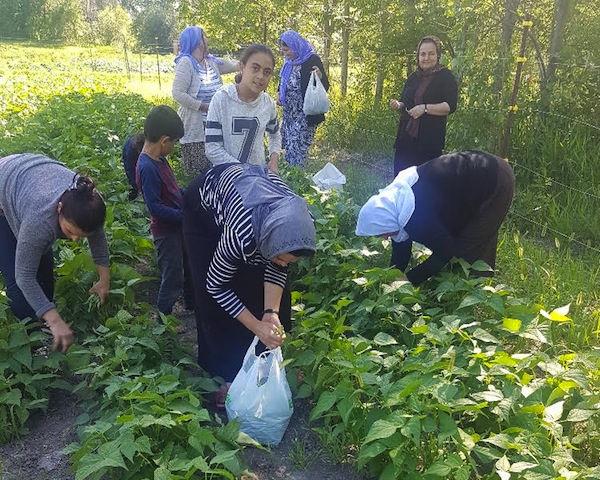
Operation Ezra in Winnipeg has expanded to include farming and selling local produce. (photo from Operation Ezra)

When the Operation Ezra committee in Winnipeg decided to produce a book about the efforts of Yazidi-Winnipegger Nafiya Naso and Operation Ezra, the local Yazidi community was very excited about the idea, about passing down their story in writing to future generations, as their tradition is largely oral.

Operation Ezra: Winnipeg’s Jewish Community-Led Interfaith Response to Survivors of the Yazidi Genocide was launched on Sept. 24 at the JCC Berney Theatre. The event included a few words from the author, Chana Thau, as well as from Operation Ezra (OE) leaders, and a panel discussion. The 71-page paperback includes photographs, interviews and various facts about the Yazidis and how OE came to be, among other things.

“When I first held the book in my hands,” said Naso, “it felt really special and I felt really proud of everything we had accomplished. Having it all in one text to give to people in the community and outside the community, to show what a small group of individuals was able to accomplish in the span of four-odd years, I’m very proud of it.”

Belle Jarniewski, director of the Jewish Heritage Centre of Western Canada (JHCWC), who has been involved in OE since its inception, said it was a grant from the Jewish Foundation of Manitoba that allowed the book to be published.

“By the time the book was written, there was so much more that we had done, but we thought it would be a nice way to let more people know about this wonderful multifaith initiative,” said Jarniewski.

Each of the families that OE brought to Winnipeg was given a book, including the most recent new-to-Canada family of 10, who had arrived just before the book launch.

Apart from OE’s ongoing efforts to bring more refugees to safety in Winnipeg, the endeavour has been helpful in settling the families already there. Both Nafiya and her sister, Jamileh, were invited to separate events in Europe over the summer to share the story of OE and some insight as to why it is so successful.

“We don’t really know if Operation Ezra can really be done anywhere else,” said Nafiya Naso. “Just because the community here is so welcoming and open, and it would be ideal if every city and every country in the world was like this … realistically, it’s not. Within the larger spectrum of the refugee crisis, a lot of people have very negative perceptions of refugees, without knowing the different types and layers of what refugees are, who they are, and things like that. So, even for us, education was a huge piece – letting people know who the Yazidis are and what’s happening.”

A group of individuals in Germany has been eager to incorporate some of the OE approaches. Naso said one of the main things that has made a huge difference is that OE is multifaith. She suggested that people wanting to undertake similar initiatives start by reaching out to faith-based communities and local businesses to find out who might want to become involved.

One of the more recent aspects of OE that has caught the attention of other communities around the world has been the farming project that started up two summers ago on a small plot of land.

“We had one of our volunteers whose father was a farmer with a lot of land, a potato farm, so some of the community went and helped out and got huge bags of potatoes after, and we had media coverage of it,” said Naso.

“The pastor from Charleswood United Church connected us to the owner of Shelmerdine Garden Centre,” she added. “He donated about five acres of land this summer and the community was harvesting it and they were able to sell some of the leftover produce and make money, and that money then came back into the community.

“This is not only a way for them to work and be involved in the community, but it’s also very therapeutic, especially for the women who have gone through the brunt of what ISIS committed and is continuing to commit.”

The land is located just outside of Winnipeg’s city limits. The families worked together and carpooled there to grow and harvest the produce and sell the excess at Shelmerdine, the Rady Jewish Community Centre and Charleswood United.

“Almost all of our families have vehicles, so everyone will go pick up a couple people, and that’s how we transport everyone,” said Naso. “A couple of times, too, we’ve used a bus, bringing the whole community out there – the kids and everyone – renting a bus or two to get everyone out there.”

“This has been just such a wonderful experience for them,” Jarniewski said, “because this is what most of them already knew, what most of them did in Iraq. Not only have they grown food for themselves, but they have been selling the produce. So, this has been a very positive project and we hope to expand it more next year. They will be able to feed the Yazidi community all winter with the kinds of vegetables you can put into cold storage, like beets and potatoes.

“Now, it’s an exponential growth. They really grew all kinds of things. I would see them here, at the Rady, when they were selling celery, beets, onions, zucchini, you name it … even mint and basil.”

Operation Ezra: Winnipeg’s Jewish Community-Led Interfaith Response to Survivors of the Yazidi Genocide explains the background of the Yazidis, a monotheistic religious minority in northern Iraq that was displaced and persecuted by the Islamic State group in 2014. It also goes into the efforts of the Jewish community to lobby the federal government to bring Yazidis to Canada and to resettle families in Winnipeg via private sponsorship. Sales of the book ($10 each) support the ongoing Operation Ezra efforts – it can be ordered from Jewish Child and Family Service Winnipeg by calling 204-477-7430.

Rebeca Kuropatwa is a Winnipeg freelance writer.