
Skip to content
  • Home
  • Subscribe / donate
  • Events calendar
  • News
    • Local
    • National
    • Israel
    • World
    • עניין בחדשות
      A roundup of news in Canada and further afield, in Hebrew.
  • Opinion
    • From the JI
    • Op-Ed
  • Arts & Culture
    • Performing Arts
    • Music
    • Books
    • Visual Arts
    • TV & Film
  • Life
    • Celebrating the Holidays
    • Travel
    • The Daily Snooze
      Cartoons by Jacob Samuel
    • Mystery Photo
      Help the JI and JMABC fill in the gaps in our archives.
  • Community Links
    • Organizations, Etc.
    • Other News Sources & Blogs
    • Business Directory
  • FAQ
  • JI Chai Celebration
  • JI@88! video

Recent Posts

  • Sharing her testimony
  • Fall fight takes leap forward
  • The balancing of rights
  • Multiple Tony n’ Tina roles
  • Stories of trauma, resilience
  • Celebrate our culture
  • A responsibility to help
  • What wellness means at JCC
  • Together in mourning
  • Downhill after Trump?
  • Birth control even easier now
  • Eco-Sisters mentorship
  • Unexpected discoveries
  • Study’s results hopeful
  • Bad behaviour affects us all
  • Thankful for the police
  • UBC needs a wake-up call
  • Recalling a shining star
  • Sleep well …
  • BGU fosters startup culture
  • Photography and glass
  • Is it the end of an era?
  • Taking life a step at a time
  • Nakba exhibit biased
  • Film festival starts next week
  • Musical with heart and soul
  • Rabbi marks 13 years
  • Keeper of VTT’s history
  • Gala fêtes Infeld’s 20th
  • Building JWest together
  • Challah Mom comes to Vancouver
  • What to do about media bias
  • Education offers hope
  • Remembrance – a moral act
  • What makes us human
  • המלחמות של נתניהו וטראמפ

Archives

Follow @JewishIndie
image - The CJN - Visit Us Banner - 300x600 - 101625

Byline: The Editorial Board

No slow news days here

In the journalism biz, summer is generally considered slow news season. That’s why our publishing schedule takes a bit of a hiatus. Then there are years like this one.

Rarely in political history has anything so upended American politics than the debate by President Joe Biden against former president Donald Trump June 27. Biden’s performance was deemed so portentous of defeat that a groundswell of Democratic party operatives mobilized to replace him on the ticket mere weeks before the election.

Avoiding potentially divisive competition, the party instantaneously rallied around Vice-President Kamala Harris, who then selected Minnesota Governor Tim Walz as her running mate and, according to early opinion polls, the race has been completely shaken up. This week’s Democratic National Convention was the Harris-Walz ticket’s effort at solidifying the momentum that began with her selection a month ago.

Practically the only bad news the Democrats have had during this honeymoon period has been the disruptions at Harris rallies and at the convention by anti-Israel campaigners and those pushing for an end to the Gaza war. As the vice-president said to one group of hecklers, “If you want Donald Trump to win, say that.” 

Israel’s opponents are not the only ones agitated by the Democrats position on the Gaza war. At the fringes of the pro-Israel movement are those who believe a President Harris would undermine the US-Israel relationship and those who have particular concerns about Walz. In fact, both candidates are effectively in line with the mainstream Democratic party and larger American consensus, which recognizes the invaluable and special relationship between the two countries.

On the other hand, pro-Trump Zionists, who insist that the former president’s rhetoric and family connections guarantee a degree of loyalty to Israel, premise these assumptions on the flawed idea that Trump has loyalty to anything beyond his own self-interest or that he subscribes to any coherent position on anything. And they ignore his connections to and endorsements of far-right and antisemitic figures and movements. As we saw on Trump’s 180-flipflop on electric vehicles after he was endorsed by Tesla-founder Elon Musk, or on bitcoin or on TikTok after donations and endorsements from other billionaires, Trump has no core principles. It would not be in the interest of Israel, American Jews, Jews around the world, or the rest of the world to trust the future to a person who is demonstrating increasingly erratic behaviour and policies.

The Democratic party’s comparatively speedy defenestration of their incumbent president has inspired some members of Canada’s Liberal party to wonder if such a political decapitation might happen here.

The incumbent government is stuck in opinion polls far behind the opposition Conservatives, led by Pierre Poilievre. The loss of an erstwhile safe Liberal seat in a Toronto by-election in June has a number of Liberals wondering if self-preservation demands the replacement of Prime Minister Justin Trudeau as leader. This fall’s return to Parliament – and probably the outcome of two upcoming by-elections, especially one in a relatively safe Liberal seat in a Montreal suburb – will almost certainly determine whether the Liberals stand by their man or take a lesson from their cousins to the south. 

Still closer to home, British Columbia politics has been heating up over the summer. The BC Conservative party under leader John Rustad is polling higher than that party has dreamed in about a century. Since being thrown out of the BC Liberal caucus two years ago, Rustad has taken the failing provincial Tories – a party that last won an election in 1928 – to opinion poll heights of a few points off top spot.

Kevin Falcon, whose disastrous rebranding of the BC Liberals to BC United seems to have left millions of voters unclear on what party he leads, is now in the single digits and faces complete obliteration, if polls are to be believed. Fears of a split centre-right vote (a perennial driver in BC politics for a century or so) seems to have been obviated by an overwhelming consensus by non-NDP voters to rally around the BC Conservatives.

Of course, campaigns matter. When voters realize that Falcon’s party is the one they used to know as the BC Liberals, some may return to familiar patterns, especially since BC United has frantically prevailed on Elections BC to allow them to include both their new and old names on this fall’s ballots.

It all just goes to show that you should take nothing for granted. With the BC election on Oct. 19, the US election on Nov. 5 and a minority Liberal government with increasingly uneasy backbenchers (and frontbenchers), the slow news season of the summer seems likely to usher in a rather exciting autumn. It’s going to be a bumpy ride. 
Posted on August 23, 2024August 22, 2024Author The Editorial BoardCategories From the JITags American election, BC Conservatives, BC election, BC United, democracy, Democratic convention, elections, Harris-Walz, John Rustad, Kevin Falcon, voting

World political theatre

Israel’s Prime Minister Binyamin Netanyahu visited Washington this week, coincidentally in the aftermath of US President Joe Biden’s decision to not seek reelection. There is certainly no shortage of topics on their minds – and there are doubtlessly some unspoken subtexts. Given that one man is now officially in the final months of office and the other seems likewise approaching an end, the significance to each man’s country of a tête-à-tête is inevitably minimized. 

This was hardly the only theatre happening in recent days. The Bibi-Biden meeting took place days after the International Court of Justice declared that Israel has perpetrated a “de facto annexation” and is preventing Palestinians from exercising their right to self-determination.

The decision by the World Court, as it is known, is “advisory,” rather than “binding,” which is effectively neither here nor there, since Israel will probably do whatever it chooses anyway. And so it should.

This is not to say the court’s decision is meaningless. But its impacts are not at all what the court or those trumpeting this decision think they are.

To be clear: the court is not wrong. Palestinians are experiencing human rights violations in the West Bank and East Jerusalem. They are being prevented from fulfilling their right to self-determination – for reasons well beyond Israel’s control, though Jewish settlements and other Israeli government decisions make a prospective Palestinian state more difficult to realize.

Two things, though, can be true at the same time. Palestinians are experiencing these violations. But, Israel will, and should, ignore the court’s ruling. The ICJ opinion was a political, rather than a judicial, expression, the culmination of a concerted campaign by some of the most despotic regimes in the world. Israel did not participate in the hearing, choosing not to legitimize the process. The decision deserves to be dismissed.

Likewise, the world should largely ignore a related provocation by Israel’s parliament.

The Knesset last week, for the first time, effectively voted against a two-state solution. The vote, which called the idea of a Palestinian state an “existential danger” to Israel, was every bit as much a political act as the ICJ decision. In fact, they are basically two sides of the same coin. The Knesset vote was a slap (along right-left party lines) against those who would presuppose an independent Palestine in the absence of what would be inevitably long and complex negotiations. 

The entire situation is a tragedy. The tragedy of the ICJ decision is, first and foremost, for the United Nations broadly, the World Court specifically and the millions, if not billions, of people worldwide whose legitimate need for human rights and a global voice for justice is diminished by the politicization of the ICJ. It is another nail in the coffin of the United Nations’ legitimacy.

Nawaf Salam, the chief judge who released the decision, is a two-time candidate for prime minister of Lebanon, having run with the imprimatur of the anti-Zionist and antisemitic terror group Hezbollah. His presence in this role is a mere illustration of a toxicity that has permeated some branches of the UN, not least the evidence that employees and leaders of UNWRA, the UN branch responsible for Palestinian refugees, were involved in the atrocities of Oct. 7. All of this is inevitable when a global parliament operating on democratic principles is made up primarily of autocratic member-states.

We must step back, though, and make a defence of the world body. Danny Danon, Israel’s former UN ambassador, who has undeniable Likud bona fides, is both a critic of the UN’s failures and a staunch defender of the necessity of its existence. He knows better than almost any other pro-Israel voice of the good work the UN does on too many fronts to abandon it. The idea of the UN is too important to terminate just because it is, in practice, falling woefully short.

Perhaps the best way to think of all these developments is as theatre. Like Netanyahu’s trip to Washington, the Knesset vote against a Palestinian state, the ICJ decision and all the hoopla around these events are just performances and, as Shakespeare said, all the people merely players. Only when all parties commit to laying the foundations for whatever form peace and coexistence might take, rather than simply making dramatic pronouncements, can substantive, positive change become reality. 

Posted on July 26, 2024July 25, 2024Author The Editorial BoardCategories From the JITags Binyamin Netanyahu, geopolitics, Joe Biden, politics, United Nations, World Court
Talkin’ about the JI

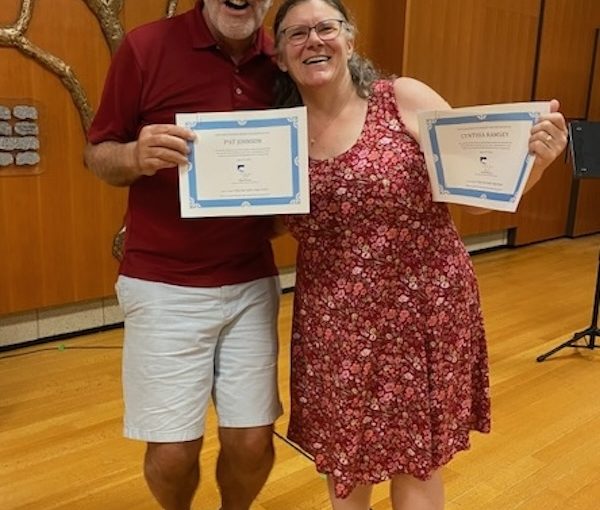
Talkin’ about the JI

Pat Johnson and Cynthia Ramsay after their presentation about the Jewish Independent at Congregation Har El’s Seniors Lunch July 17. The pair were asked to participate by lunch organizers Tim Newman and Kala Solway. They each received a certificate of thanks and a thank-you gift from Noga Vieman, the synagogue’s programming and education director. (photo by Lorraine Katzin)

Format ImagePosted on July 26, 2024July 25, 2024Author The Editorial BoardCategories LocalTags Cynthia Ramsay, Har El, history, Jewish Independent, Jewish journalism, Pat Johnson

Upheaval, good and bad

The French elections Sunday resulted in a hung parliament, with no party coming close to forming a working majority in the lower house. Given the choices French voters faced, this may be the best possible outcome.

The results were a surprise. The far-right National Rally, led by Marine Le Pen and founded by her father on neo-fascist roots, was widely anticipated to win. This would have been a long-dreaded victory for far-right extremism in Western Europe.

Dissatisfaction with the moderate President Emmanuel Macron was a significant factor, but the failure of the president’s party also reflects a larger trend across Europe toward the political extremes and away from the centre. This shift forced French voters into what, for many, was an unpalatable choice. Sunday’s election was the second round in a two-part process, the first round having eliminated many of the Macron-aligned candidates and forcing voters to choose between Le Pen’s party and a coalition of centre-left and far-left parties.

While Le Pen attempted to convince many French that her party had abandoned its antisemitism roots, the far-left leader Jean-Luc Mélenchon, in some ways, has taken up the antisemitic baton. He has repeatedly picked fights with the main French Jewish communal agency, employed what many hear as antisemitic dog whistles and condemned Macron’s acknowledgement of the complicity of some French people during the Holocaust, including in the notorious Vel’ d’Hiv Roundup of Jews. He has even dug up the ancient allegation that Jews crucified Jesus. So long are the litany of Mélenchon’s affronts to Jews that indications are that many Jews, possibly a plurality, opted for the far-right in Sunday’s vote. Additionally, many Jews apparently felt betrayed by the urging of Macron and other ostensibly moderate French leaders to support the left-wing bloc over the right-wing bloc.

Imagine Jews feeling it was safer to vote for a party born in fascism than a leftist bloc that includes individuals who don’t even make pretenses that they reject antisemitism. 

This sense of being squeezed from all sides is not a new or unfamiliar discomfort for French Jews, who have been abandoning that country for years. Terror attacks, often perpetrated by radicalized individuals originating or descended from former French colonies in North Africa and other Muslim-majority countries, have undermined what sense of security Jews had there. A litany of shocking crimes has occurred in the past two decades, including grisly antisemitic murders, a mass shooting at a kosher grocery store and, last month, the gang rape of a 12-year-old Jewish girl by perpetrators hurling antisemitic slurs.

Coincidentally, just three days before the French elections, a general election in the United Kingdom provided a dramatically different message.

In the previous election, the Conservatives, then under Boris Johnson, crushed the Labour Party, which was led by Jeremy Corbyn, a vocal anti-Israel voice and someone many British Jews perceive to be antisemitic. An internal party investigation and a government watchdog group denounced “a culture within the party which, at best, did not do enough to prevent antisemitism and, at worst, could be seen to accept it.”

While the Conservative government elected in 2019 stumbled from one disaster to another through a succession of failed party leaders and prime ministers, the Labour Party underwent what may prove to have been one of the most profound rehabilitations in modern political history.

The new Labour Party leader, Sir Keir Starmer, now the prime minister, promised he would “tear antisemitism out of our party by the roots.” 

The party undertook an intensive process purging those accused of creating the antisemitic culture – and Corbyn himself was ousted from the party (though he was easily reelected as an independent in his longtime constituency).

After one of their worst defeats in generations an election earlier, the Labour Party emerged July 4 with one of the most whopping landslide victories in British history. 

Among the 400 or so Labourites who will sit in the 650-seat House of Commons when the new government convenes, there are almost certain to be some who will demonstrate recidivist antisemitic tendencies. It will be up to the new prime minister and his team to demonstrate clearly and quickly that this sort of rhetoric and behaviour will not be accepted. 

The uplifting message is not so much that the Labour Party won the election – we can agree or disagree on their policies and approaches. The nearly miraculous thing that has happened is that a democratic party has provided an example for reasonable politicians everywhere of how to pull a movement that had been dangling over a dangerous ledge of extremism back to a reasoned and tolerant position.

The fact that such a rehabilitation is even possible, let alone achievable by a single determined leader in a mere couple of years, should be a message of profound hope to people who value tolerance and inclusivity and who oppose antisemitism.

Perhaps we have too much naïve optimism. But it is worth clinging to.

If Starmer’s efforts at cleaning up the antisemitic mess he was left with proves successful in the long-term, people in democracies around the world should be flocking to Labour Party headquarters to find out how it’s done. 

Posted on July 12, 2024July 10, 2024Author The Editorial BoardCategories From the JITags antisemitism, elections, extremism, France, politics, United Kingdom

Who are the cynical ones?

The Islamic Revolutionary Guard Corps is the world’s foremost state sponsor of terror. The IRGC’s Quds Force (“Quds” meaning “Jerusalem,” to note the ultimate priority of the corps’ aims), is effectively the international terrorism arm of the Iranian government and military.

Ottawa finally got the message. Last week, the Government of Canada designated the IRGC a terrorist entity under Canadian law. 

“The Canadian Jewish community has persistently called for this decisive action against the IRGC, recognizing its role in promoting violence and instability globally, including through its support for terrorist groups targeting Jews and others,” said a statement from Shimon Koffler Fogel, president and chief executive officer of the Centre for Israel and Jewish Affairs. “While we applaud this step, it is disappointing that it took so long for the government to act on its commitment.” 

Iran has destabilized (the word seems profoundly modest) Lebanon, by backing Hezbollah, the terror group that has wreaked havoc by upending that country and turning it into a staging ground for attacks on Israel, and Syria, by supporting Bashar al-Assad, the strongman who has waged war on his own people for more than a decade. Terrorism by the Iranian regime has prevented Iraq from becoming a functioning state. Tehran’s long arm has also terrorized individuals and organizations in the large Iranian diaspora. In 2020, the IRGC shot down Ukrainian International Airlines Flight 752, killing all 176 passengers and crew, including 55 Canadian citizens and 30 Canadian permanent residents.

And still Canada’s government did not take the seemingly simple step of calling the IRGC what is so clearly is.

In 2020, the US State Department estimated that Iran was supplying Hamas and other Palestinian terror groups with $100 million per year in training and military and financial support. An Israeli source put that number, by 2023, at $350 million.

Part of the intelligence catastrophe of Oct. 7 was an apparent assumption by Israeli intelligence that Hamas did not have the capacity to organize as complex an attack as it did against Israel that day. This was a tragic intelligence failure on many fronts, but it was certainly a failure in Israel’s massive underestimation of the extent and complexity of what Hamas was capable of, thanks directly to the IRGC. 

Canada is grappling with the fact that foreign actors have meddled in our politics, with China and Russia the prime suspects in this still-shrouded issue, but Iran has certainly had its fingers in our pie. The Iranian regime is also suspected of laundering money through Canada.

Iranian-Canadian human rights activist Nazanin Afshin-Jam addressed a parliamentary committee this month, putting a fine point of who we’re dealing with, not only internationally but domestically in Iran as well.

“Any time you have seen video footage of women in Iran being beaten and dragged screaming into police vans because of not properly wearing a hijab or of Christians arrested for worshipping in underground churches or Kurds being gassed or children being executed or peaceful protesters being intentionally shot at, blinded, raped or tortured, these are all the acts of the IRGC and its paramilitary subgroup, the Basij,” she said.

So why did Canada act now?

The announcement came less than a week before a pivotal byelection in Toronto. Voters in the riding of St. Paul’s, a Liberals stronghold since 1993 and considered one of the party’s safest seats in the country, went to the polls Monday.

The riding has one of the largest concentrations of Jewish voters – about 15%, which may not seem a lot but is 15 times the national Jewish population average and enough to swing a tight race, certainly. Another 1,500 of so residents list Farsi as a mother tongue and those, presumably Iranian-Canadians, know as well as anyone what the IRGC is capable of.

The very suggestion that a Canadian government would make a crucial, long-delayed decision like this based on crass political motivations is almost beyond the imagination.

Asked point blank by a reporter whether the decision was linked to the byelection – which many suggested could have existential implications for Prime Minister Justin Trudeau’s political career – Trudeau seemed to glass over and deliver a robotic reply.

Canada, he said, has already been “extremely preoccupied with the activities of the murderous regime in Tehran.” His government, he said, has “been working very, very hard on this for years.” He suggested that the delay was based on concerns for Iranian-Canadians and their families back home.

We are glad our government has taken this step. We are also revolted at the very suggestion that the decision could have been motivated by political expediency. It is unfathomably cynical – but who are the cynics? Is it reporters and commentators who accused the government of politicizing this move? Or is it a cadre of political advisors and elected officials who calculated that a few Jewish voters in midtown Toronto could save the prime minister’s hide if they were just thrown a bone?

We may never know exactly. But, if that was Liberals’ calculation, it failed. Conservative candidate Don Church upended tradition and won the riding. Liberals and others are still poking through the entrails to divine the wider implications for Canadian politics. 

Posted on June 28, 2024June 27, 2024Author The Editorial BoardCategories From the JITags Canada, Election, IRGC, Islamic Revolutionary Guard Corps, politics, St. Paul’s, terrorism

Small wins amid gloom

The rescue of four Israeli hostages from Gaza last week and their reunions with their loved ones is a bright spot amid much dismal news – though there remain 120 hostages whose reunions with their families we dream of and hope will happen soon.

This rescue has been a source of tempered joy for Israelis and others. In a time of tragedy and despair, these moments are worth appreciating. Amid the relief, we mourn the life of the Israel Defence Forces officer who died from wounds received during the operation and we mourn the lives of the many innocent Gazans lost. Holding this tension is weighing mightily on many of us, knowing that placing hostages among civilians is a deliberate and overwhelmingly cruel strategy of Hamas.

Closer to home, we are not without bleak news, but neither are we bereft of hopefulness.

The arson attack on Schara Tzedeck Synagogue two weeks ago is deeply troubling and scary. The outpouring of support and empathy from so many is a silver lining. Clergy, elected officials, multicultural community leaders and ordinary folks have expressed solidarity with Schara Tzedeck and the broader Jewish community.

A few less monumental but hopeful items crossed our desks recently.

The Vancouver Comic Arts Festival, which had earlier canceled the participation of artist Miriam Libicki, issued an apology for their actions – and announced that “the vast majority” of individuals who had perpetrated Libicki’s banning had resigned from the organization’s board.

Suffice to say, this is not the foremost news story this year. But it is surprisingly uplifting when a glimmer of common sense emerges where intolerance had once prevailed.

Libicki had been canceled ostensibly because she had served, once upon a time, in the Israeli army. IDF service was also the excuse used when inspirational speaker Leah Goldstein, a BC resident, was canned from an International Women’s Day event in Ontario in March. 

Assertions that an artist (or performer or whoever) is being excluded because they served in a military that we see every day in the news engaged in a tragic conflict may seem legitimate, or at least not quite as blatant as, say, posting a sign that reads “No Jews allowed.” Notably, though, no such litmus test, to our knowledge, has ever been applied to any artist (or whoever) in Canada based on their service in any other national armed forces – and, given the diversity of our country, we can be pretty much assured that we have citizens who have served in many of the world’s most tyrannical and nasty, even genocidal, militaries.

Other excuses to ban Jews or pull Jewish- or Israel-related work from events, exhibits, performances, etc., have also included enough plausible deniability to steer just clear of indisputable antisemitism.

Goldstein’s cousin, local photographer Dina Goldstein (it’s sadly becoming a family affair), was recently removed from a group exhibition. In this instance, the gallery claimed financial considerations were the deciding factor.

Then there are cases where venues pull an event or performer based on security concerns, as the Belfry Theatre in Victoria did with their scheduled performance of the play The Runner. They had reason to fear violence – the theatre was vandalized amid the controversy. But cancelations based on security concerns, as valid as they may seem, give an effective veto to those who are potentially violent.

In the shadow of the Belfry decision, The Runner was pulled from the PuSh Festival in Vancouver, the stated reason being that another artist threatened to pull their work from the event if the play was mounted. 

In addition to cancelations, there is plenty to raise alarm bells about anti-Israel bias in the public education system, as well, as we are forced to outline in discouraging detail elsewhere in this issue, with the BC Teachers’ Federation making some controversial decisions. But, again, here some reason prevails, though not from the BCTF.

The Burnaby school district took what it called “immediate action” when it became known that elementary students had been given an exam question asking them to make a case for and against the existence of the state of Israel. We could fill volumes with outrage about the unmitigated nerve of a teacher thinking this was a legitimate subject for grade sixers (if it was on the exam, one can only imagine what the same educator said in the classroom) but let’s take some solace that there were reasonable people in a position of authority to respond when this became public.

In further good news in the education realm, on June 1, the University of British Columbia’s Vancouver Senate soundly rejected (by a vote of 49 to 16) a motion urging the university to cut ties with institutions in Israel.

In challenging times, it is even more necessary to acknowledge and celebrate small victories and acts of decency. It is an act of individual and communal resistance to remain hopeful and steadfast in pursuit of peace and justice. 

Posted on June 14, 2024June 13, 2024Author The Editorial BoardCategories From the JITags antisemitism, arson, BC Teachers' Federation, BCFT, cancelations, Dina Goldstein, education, Gaza, hope, hostages, IDF, Israel Defence Forces, Israel-Hamas war, Leah Goldstein, Miriam Libicki, PuSh Festival, Schara Tzedeck, The Belfry, UBC, University of British Columbia, Vancouver Comic Arts Festival

Grief and joy intertwined

Every year, the sun goes down on Yom Hazikaron, Israel’s national day of remembrance for victims of war and terrorism, and the celebratory day of independence, Yom Ha’atzmaut, begins.

It’s a stark juxtaposition. The parallel of the two national days, of course, make perfect sense historically. The country was born in war. At the moment Israel became independent, it was attacked, with the intent of annihilation, by the military forces of all neighbouring countries. As a result, it is impossible to consider or celebrate the joy of that moment – the rebirth of Jewish national self-determination after nearly 2,000 years – without considering the human costs associated with that achievement, and not only Jewish or Israeli lives, but those of peoples whose leaders have refused to accept the existence of Israel since that rebirth. While reestablishing the Jewish homeland displaced Arabs living there, whether by being forced out or told to leave by their leaders, Israel has been a home for Jews displaced from surrounding Arab countries, Russia and elsewhere.

For the average attendee arriving at Vancouver’s celebration of Yom Ha’atzmaut, it was hard to know what to expect. Given the Oct. 7 Hamas terror attacks and the ensuing war, the remembrance commemoration, 24 hours earlier, was perhaps one of the most emotional, intense and moving this community has experienced. Could the next night’s audience, many of them the same people, make the emotional transition?

Under the circumstances, the event’s planners struck an appropriate balance in what must have been among the most difficult challenges organizers of this annual event have faced.

When Israel’s early leaders set these dates consecutively, they knew the nature of their neighbourhood. They would likely have foreseen the possibility of further wars, and yet they made the decision to mark the joy of independence immediately following the somber acknowledgement of the high cost of freedom. This was not a coincidence. Nor, presumably, was it a contrast they thought appropriate only in years that are relatively calm and peaceful. They recognized that, come what may, independence and freedom would come with a cost – and the deeply conflicting emotions these realities evoke will inexorably exist together.

Like the smashing of the wine glass at a Jewish wedding, joy is never absent of grief – and grief cannot eclipse the joy brought into the world by those we lost on Oct. 7, and since. Those murdered and kidnapped that day, the soldiers who have been killed in the war and the Palestinians who have been killed in the conflict as Hamas continues to hold them and Israel hostage.

In Jewish tradition, the various markings of time after the passing of a loved one – shiva, shloshim, yahrzeit, for example – each come with their specific obligations and expectations. These periods formally guide us through process of grieving.

Unlike that relatively slow process of mourning, the closing of Yom Hazikaron and the opening of Yom Ha’atzmaut is abrupt and immediate. Life in Israel has, in some sense, condensed time, requiring a speedier processing of even life’s most challenging realities, including loss and grief.

It is often said that Israelis have been in too much of a hurry to be polite about things. Stereotypes, often accurate and amusing, portray Israelis as sharp-elbowed, impatient and determined. If there was not some truth to this, they would not have built, in a mere three-quarters of a century, one of the most extraordinary nation-states on earth – all while confronted by existential threats.

The Israelis who chose to set the remembrance day immediately before the celebration of independence must have understood that, in some years more than others, the transition from one emotion to the other would be especially difficult. Perhaps we should trust their judgment that, even in the most difficult years, the juxtaposition is both manageable and appropriate.

Noam Caplan, who lit a candle at the Yom Hazikaron commemoration and spoke about his cousin, Maya Puder, who was murdered at age 25 at the Nova music festival, remembered his cousin’s love of dancing and looked ahead to happier times.

“The Jewish people will dance again,” he said. 

Format ImagePosted on May 24, 2024January 16, 2025Author The Editorial BoardCategories From the JITags commemoration, grief, independence, Israel Canada, mourning, Noam Caplan, Yom Ha'atzmaut, Yom Hazikaron

Legislating a fine line

Vancouver Police last week arrested a woman for praising the Oct. 7 terrorist attacks. The woman, who multiple reports say is Charlotte Kates, a leader in a group called Samidoun Palestinian Prisoner Solidarity Network, was later released as police develop their case to present to the Crown for possible charges.

News of the arrest was met with a level of satisfaction among Jewish community organizations. Kates and Samidoun have been sources of outrage and concern for years. The group is routinely described as having “direct ties to the Popular Front for the Liberation of Palestine (PFLP),” which is designated as a terrorist entity under the Criminal Code of Canada. Canadian Jewish organizations have called for Samidoun to receive a similar censure – as it has in Germany, where it is a banned organization, and in Israel, where it is designated as a terrorist entity.

Kates, a British Columbia woman who is married to Khaled Barakat, a senior member of the PFLP, was arrested in relation to recorded statements made outside the Vancouver Art Gallery last month. There, she referred to several terrorist organizations as heroes and described the Oct. 7 attacks as “the beautiful, brave and heroic resistance of the Palestinian people.” She led a crowd of hundreds in chants of “long live Oct. 7.”

Emergence of the video led to absolute condemnation from BC Premier David Eby.

“Celebrating the murder, the rape of innocent people attending a music festival, it’s awful,” said the premier. “It’s reprehensible, and it shouldn’t take place in British Columbia. There is clearly an element of some individuals using an international tragedy to promote hate that’s completely unacceptable.”

Kates is banned from participating in public protests for five months, according to a statement released by Samidoun. An investigation is underway and it will be up to Crown prosecutors to determine whether charges are laid and the case goes to trial.

In announcing the arrest, Vancouver police spokesperson Sgt. Steve Addison explained the line police walk.

“We defend everyone’s right to gather and express their opinions, even when those opinions are unpopular or controversial,” said Addison. “We also have a responsibility to ensure public comments don’t promote or incite hatred, encourage violence, or make people feel unsafe. We will continue to thoroughly investigate every hate incident and will pursue criminal charges whenever there is evidence of a hate crime.”

The arrest comes as the federal government begins a process of reviewing Canada’s approach to hate-motivated expression. New legislation beginning its way through the wending process of Parliament is focused especially on “online harms” and involves a multi-pronged approach that would see amendments to the Criminal Code, the Canadian Human Rights Act and new laws addressing cyber-bullying, “revenge porn,” encouragement of self-harm and other actions.

The bill (click here for story) is part of an ongoing effort to address the social and technological challenges of hate-motivated crimes, as well as the range of dangers presented to children and others by online predators, bullies and extortionists.

The federal government’s efforts, long delayed and inevitably controversial, are part of an age-old effort to walk a line between the right to free expression, on the one hand, and the right, on the other hand, for people to be free from harassment and threats based on personal identity or other factors. Any discussion of balancing these contending rights – which is anything but an exact science – is destined to disappoint or anger people on both sides. 

The next steps in the current legal investigation – whether it proceeds to criminal charges and, if so, how the case proceeds and concludes – will also not satisfy everyone, if anyone. Indeed, it is a factor of this sort of case almost exclusively where many argue the challenging position that, in the words of Voltaire, “I disapprove of what you say, but I will defend to the death your right to say it.”

Few today would defend to the death the right of anyone to glorify Oct. 7 (or anything else, probably), but the point is that the right of free expression is considered by many to be sacrosanct. This has always been a core differentiator between our society and that to which we so often compare ourselves, the United States, whose constitution prioritizes precisely this sort of freedom.

An absolutist position is much easier for courts to adjudicate. Drawing lines in moral conundrums is a much more challenging undertaking.

As we watch this one case proceed locally, we will also be carefully observing the broader, legalistic and philosophical disputations occurring in Parliament as Bill C-63 proceeds through the creation process. The outcome, in both instances, will be necessarily imperfect. The hope is that they should be as just as human endeavours can be. 

Posted on May 10, 2024May 8, 2024Author The Editorial BoardCategories From the JITags Bill C-63, Charlotte Kates, free speech, governance, hate, hate speech, legislation, Online Harms Bill, online hate

Don’t give up on the UN

A review released Monday about the United Nations Relief and Works Agency, the sprawling bureaucracy that for decades has played a central role in the lives of Palestinians, said Israel has not provided adequate evidence to demonstrate that UNRWA workers engaged in terrorism.

The review, headed by a former French foreign minister, dismissed Israel’s claims that UNRWA workers in Gaza were engaged in terrorist activities, including the Oct. 7 pogroms. It did, however, recommend several steps to ensure neutrality, transparency and third-party monitoring of UNRWA activities. 

Regardless of the specifics in this particular accusation, UNRWA is deeply problematic. Critics contend that its mission is to perpetuate Palestinian statelessness and discontent, rather than ameliorate these problems.

Many Jewish and pro-Israel voices have long pointed to UNRWA, as well as the annual procession of anti-Israel votes at the United Nations General Assembly, among other examples, as “proof” that the United Nations is hopelessly anti-Israel, if not antisemitic.

This may or may not be true. In any event, the answer is to fix the United Nations, not bury it.

Hyperbolic, disproportionate, often ludicrous attacks on Israel at the General Assembly and from countless UN bodies undeniably demonstrate a peculiar obsession with this one (Jewish) country to the detriment of other serious issues. However, this inappropriate and biased approach must not blind us to the irreplaceable value of the organization that was envisioned as a world parliament.

Coincidentally, a new poll of Canadians and Americans indicates massive dissatisfaction with the organization – and rightly so.

The Association for Canadian Studies and the Metropolis Institute engaged the pollster Leger to survey North Americans on their opinions toward the United Nations. The poll was conducted about four months after the Oct. 7 attacks, and indicates that just over one-third of Canadians and just under one-third of Americans trust the UN.

Jack Jedwab, president and chief executive officer of both of the survey’s sponsoring organizations, noted a particular incongruity in the results. While only around one-third of respondents “trust” the United Nations, much higher numbers of people hold a “net positive opinion” of the body. In both countries, a majority – 58% of Canadians and 54% of Americans – view the organization as more positive than negative.

This is encouraging, because it suggests that, while people have issues with the UN in practical terms, we are not ready to give up on the potential of the UN or the ideals upon which it was founded.

There are many reasons to criticize the United Nations, but the clearly biased anti-Israel resolutions and reports that grab headlines obscure a panoply of crucial, often lifesaving programs and services delivered by UN organizations like the World Health Organization, the World Food Program, UNICEF and UNESCO.

To put this in a context that perhaps makes sense on a more localized level, giving up on the UN would be like eliminating the sewer systems, traffic lights and schools in your hometown because you can’t stand the mayor. 

If we cannot muster idealism, let’s just be practical. Don’t take it from us, take it from Danny Danon, Israel’s former ambassador to the United Nations. Danon has a long history as a right-wing Israeli politician. In his 2022 book, In the Lion’s Den: Israel and the World, he reflects on his five years as ambassador, from 2015 to 2020.

He arrived, he admits, as a hawk and a hardliner, not expecting to fit into the world of diplomacy. Over his time there, he came to see the value of the UN, despite all the disappointments and wasted resources.

Even in the lion’s den at the head of the sprawling body, the General Assembly, Danon said it is possible for a seemingly unwelcome individual like Israel’s ambassador to “build bridges, forge friendships and create a space for understanding.”

The idea, expressed by some pro-Israel people, that Israel should simply walk away from the world body, would be to cut off our nose to spite our face. Why would we abandon the one small voice we have in that forum, surrendering it to the haranguing of Israel’s enemies without contest?

Likewise, if Canadians feel our government is not representing our values and ideals at the United Nations, we need to take that up with our elected representatives here and ensure that they do so. Throwing up our hands in surrender helps no one.

Is there a problem with UNRWA? Undeniably. Fix it. Is there a problem with the International Court of Justice? Many observers would say so. Fix it. Do numerous United Nations agencies obsess over Israel while millions around the world suffer in obscurity? Undoubtedly. Fix that too.

Is the United Nations perfect? It’s a ridiculous question. Nothing in human activity is perfect. But what is the role of Jews in the world, an obligation we reminded ourselves during our seders this week? Our obligation as Jews and as humans is to strive to make the world better – and, in that context, fixing the UN is central to that objective.

Is there a long way to go in this work? Yes. Are we free to abandon it? No. 

Posted on April 26, 2024April 26, 2024Author The Editorial BoardCategories From the JITags governance, Oct. 7, Passover, terrorism, tikkun olam, United Nations inquiry, UNWRA

Don’t leave. Engage!

Anthony Housefather has decided to remain in the federal Liberal caucus. Housefather, member of Parliament for the Quebec riding of Mount Royal, is one of only two Liberals to have voted against the NDP motion last month that called for a ceasefire, an end to Canadian military trade with Israel, as well as other positions about Israel and the current conflict.

As discussed in this space last issue, the New Democratic Party motion had some of its rough edges sanded down in order to make it palatable to almost all Liberal MPs. The rest of the House of Commons voted predictably. Conservatives unanimously opposed the motion, which they viewed as biased against Israel. The Bloc Québecois and the Green party sided with the NDP.

The daylong negotiations over amendments to the motion were a face-saving effort by the Liberal government to avoid the embarrassment of a serious schism in their caucus over foreign policy. In the end, a less inflammatory motion was passed.

Housefather, who is Jewish and represents a riding that has one of the largest concentrations of Jewish voters in Canada, was joined on the government side in opposing the motion only by Ontario Liberal MP Marco Mendocino.

Housefather was open about his frustration. Anyone who has found themselves in a place where they do not feel welcomed, based on their core identity, can certainly appreciate his feelings of isolation. However, we are pleased that he has decided to remain in the Liberal caucus.

Crossing the floor and joining the Conservatives, which he had said he was considering, would not have been advantageous to Jewish and pro-Israel voters. Since the administration of former prime minister Stephen Harper, at the latest, the Conservative party has been perceived as overwhelmingly pro-Israel. This approach has been welcomed by many Jewish Canadians.

However, this reality means that, were Housefather to switch parties, he would become just another pro-Israel voice in the Conservative caucus. By staying where he is, he will be a necessary voice for Israel and the Jewish community in the governing party. In an announcement a week ago, he said the prime minister has asked him to lead the government’s efforts in fighting antisemitism. This effort needs as much multi-partisan support as possible.

Anyone who has had difficult conversations with friends or family in recent months understands the emotional burden of being a voice for Israel in this challenging time. This, however, makes Housefather’s presence in the Liberal party that much more important.

We face a similar challenge at the provincial level. With the firing of Selina Robinson from cabinet, and her subsequent withdrawal from the governing New Democratic Party caucus, the Jewish community’s most outspoken ally, liaison and voice is gone from the government side of the legislature. Neither Robinson, who now sits as an independent, nor George Heyman, the other Jewish New Democrat in Victoria, are seeking reelection. It is entirely possible that the Jewish community will not have any community members in the next legislature.

This is not to say we do not have friends there.

Michael Lee, the MLA for Vancouver-Langara, has been a steadfast ally of the Jewish community and a stalwart presence at the weekly Sunday rallies for the Israeli hostages. Recently, when he addressed that audience, he went to lengths to warn against making Israel a political football. A community that can be taken for granted by one party and written off by another will find itself unrepresented in the halls of power. Lee reassured Jewish British Columbians that they not only have friends on the opposition side of the house, but in the governing NDP as well.

We know that there are allies for Israel and the Jewish people in the provincial NDP. It is a symptom of a larger concern that some of these people feel constrained around expressing that solidarity fully because of segments of their own party who would almost certainly single them out for that support.

As Robinson herself told the Independent last issue, she has friends and supporters in the caucus – but she wouldn’t mention them by name for fear of putting a target on their backs. This is a serious problem, of course. But it is better to have quiet allies than no allies at all. Their presence can potentially moderate extreme elements in their party. Were they not there, restraining impulses might be minimized.

As we approach a provincial election this fall, and a federal election at some unpredictable date (remember, there is a minority government in Ottawa) Jewish Canadians and allies of Israel should not abandon the parties that include voices with alternative views. We should, like Housefather has chosen to do, make sure our voices are heard in all of Canada’s diverse political venues. 

Posted on April 12, 2024April 10, 2024Author The Editorial BoardCategories From the JITags allyship, Anthony Housefather, antisemitism, governance, House of Commons, Israel, Liberal Party of Canada, Michael Lee, NDP, politics

Posts pagination

Previous page Page 1 … Page 4 Page 5 Page 6 … Page 49 Next page
Proudly powered by WordPress