Skip to content
  • Home
  • Subscribe / donate
  • Events calendar
  • News
    • Local
    • National
    • Israel
    • World
    • עניין בחדשות
      A roundup of news in Canada and further afield, in Hebrew.
  • Opinion
    • From the JI
    • Op-Ed
  • Arts & Culture
    • Performing Arts
    • Music
    • Books
    • Visual Arts
    • TV & Film
  • Life
    • Celebrating the Holidays
    • Travel
    • The Daily Snooze
      Cartoons by Jacob Samuel
    • Mystery Photo
      Help the JI and JMABC fill in the gaps in our archives.
  • Community Links
    • Organizations, Etc.
    • Other News Sources & Blogs
    • Business Directory
  • FAQ
  • JI Chai Celebration
  • JI@88! video

Recent Posts

  • Story of Israel’s north
  • Sheltering in train stations
  • Teach critical thinking
  • Learning to bridge divides
  • Supporting Iranian community
  • Art dismantles systems
  • Beth Tikvah celebrates 50th
  • What is Jewish music?
  • Celebrate joy of music
  • Women share experiences 
  • Raising funds for Survivors
  • Call for digital literacy
  • The hidden hand of hate
  • Tarot as spiritual ritual
  • Students create fancy meal
  • Encouraging young voices
  • Rose’s Angels delivers
  • Living life to its fullest
  • Drawing on his roots
  • Panama City welcoming
  • Pesach cleaning
  • On the wings of griffon vultures
  • Vast recipe & story collection
  • A word, please …
  • מארק קרני לא ממתין לטראמפ
  • On war and antisemitism
  • Jews shine in Canucks colours
  • Moment of opportunity
  • Shooting response
  • BC budget fails seniors
  • Ritual is what makes life holy
  • Dogs help war veterans live again
  • Remain vital and outspoken
  • An urgent play to see
  • Pop-up exhibit popular
  • An invite to join JWest

Archives

Follow @JewishIndie
image - The CJN - Visit Us Banner - 300x600 - 101625

Byline: Cynthia Ramsay

Fringe mixes drama, comedy

Fringe mixes drama, comedy

Naomi Vogt performs in Big Sister, written by her real-life sister, Deborah Vogt. (photo from Fringe)

The Vancouver Fringe Festival has started and there are (at least) a few shows that readers should try to fit in around the High Holidays. Jewish community members Deborah and Naomi Vogt, David Rodwin and Gemma Wilcox are presenting very personal works that examine issues with which we all deal, such as self-esteem, family relationships, finding and losing love, and the search for meaning. And they do it with humour and energy.

Local playwright Deborah Vogt and her sister, actor Naomi Vogt, “are still making tweaks” to Big Sister (Revue Stage), Deborah Vogt told the Independent. “However, I’m not sure if there will ever be a ‘final version,’ given that the script is a reflection of our ongoing conversation as sisters attempting to learn more about each other. Additionally, Naomi loves to ad lib and so the play will be slightly different every evening depending on who is in the audience. However, the dream would be to take it to other Fringe festivals, especially Edinburgh (the world’s largest Fringe Festival – and my personal dream). There is something very special, however, about premièring this show in the city that we grew up in and the community that we know and love.”

The idea for the show came up last summer at the Edinburgh Fringe. “Over there, I saw so many beautiful, personal solo shows that tread the line between monologue and standup. I thought, ‘I would love to do this, but I can’t act. Who do I know that could perform a solo show that I could write?’ The answer was obvious: my sister. We spent two weeks traveling together shortly after the Fringe, where we brainstormed ideas for shows in between hikes and wine bars. We abandoned most of those ideas when we realized the only story we could honestly tell was that of our relationship as sisters, and specifically how our relationship has changed over the last few years in the wake of Naomi’s 75-pound weight loss.”

Camp Miriam makes an appearance in Big Sister, said Vogt, “because my sister Naomi went there for a few summers as a preteen and our mother went there for many, many years when she was younger…. The show focuses on Naomi’s weight loss, and talks about what being a fat kid at camp was like. Naomi loved Camp Miriam, but we also acknowledge that no camp experience is easy if you don’t look like the other children.”

Naomi Vogt performs the whole play. “For the most part,” said her sister, “she is playing herself, but the version of herself that I have written through my perspective. And, on occasion, she plays me as well. I just have to sit in the audience every night and hear the ways she’s manipulating my words. Part of the joy of the show is the various power dynamics at play – as a playwright, I have shaped Naomi’s personal story but, as an actor, she is able to change my words at any moment.”

There were many challenges to writing Big Sister, said Vogt. “First of all, it was difficult trying to find the balance between Naomi as my real human sister and Naomi as a character. We wanted this show to be entirely truthful, while still presenting a piece of theatre. And this show touches on painful aspects of both of our lives (in a funny way, of course), so trying to write that without overstepping my place or lying to the audience about what actually happened (two sides to every story, right?) was difficult to manoeuvre.”

In a nutshell, the show is about weight loss. “It touches on how being heavy can affect all aspects of life, and particularly sibling dynamics,” said Vogt. “Both of us have lost weight … but Naomi’s journey was far more significant than mine. Through telling her story of weight loss, we’ve learned a lot about each other, our childhoods and the community we live in.”

* * *
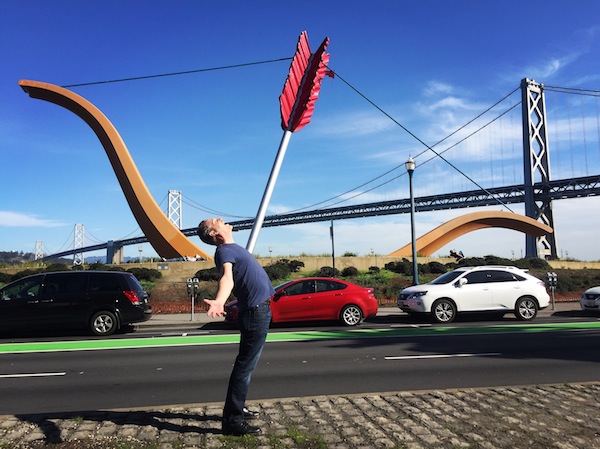
photo - David Rodwin shares his sometimes-heartbreaking dating experiences in F* Tinder
David Rodwin shares his sometimes-heartbreaking dating experiences in F* Tinder. (photo by Julia Farr)

“F* Tinder is 100% autobiographical,” said David Rodwin. “Only the names have been changed. But I only have 75 minutes to talk about dating 120 different women over two years, so there’s a lot I have to leave out. But every story I tell, I do so as accurately as I can recall – with a theatrical flourish.”

F* Tinder: a love story (Performance Works) began as a book, when a friend who was writing his first book challenged Rodwin to do the same.

“I’d moved to San Francisco after my last serious relationship ended in L.A. and, over a year and a half on Tinder and other apps, I’d experienced some bizarre and noteworthy experiences in the lawless dating wilds of the Bay Area,” he said. “So, I had an unorganized collection of short stories I’d been developing…. Around that time, I met the one woman I truly fell in love with. That inspired me to write like crazy. But (spoiler alert), when she dumped me, I got writer’s block for the first time in my life.

“Though I wasn’t able to continue sitting alone at my desk typing out these tales, I couldn’t stop telling them to friends and in storytelling shows like The Moth, which I’ve done for years. Finally, it became clear that, rather than just a bunch of short anecdotes, this was a full evening of stories with its own narrative integrity…. And though I’d written half the book, I threw out everything and started over because I find that writing with my mouth creates a more natural, humorous and vibrant live performance than when I type something, memorize it and recite it.

“It’s a thrilling and terrifying process for me each night, not knowing quite how it’s going to go and I hope it creates a more visceral, authentic and deeply intimate experience. And it’s a technique I inherited from my mentor Spalding Gray. But it’s meant that the show has changed a lot over time. The first version was 60 minutes long, then it grew to 90 minutes. Now, it’s 75 minutes. But there have been multiple versions of each one…. I’m also able to adjust certain sections to fit specific audiences. I’ve even added a curling joke for my Canadian audiences, making fun of Americans’ inability to understand the sport.”

Rodwin continues to work on the book F* Tinder and, later this year, he said, “I’ll begin directing a web series of F* Tinder set in San Francisco, and also a feature film of my previous show set in Los Angeles, called Total Novice. That one has an even edgier narrative than F* Tinder, if you can believe. Let’s just say I was a ‘nice Jewish boy’ who went to Princeton and I was a very late bloomer who became fearless (and occasionally stupid) in my pursuit of things that I considered off limits when I was younger.”

F* Tinder includes Jewish elements, said Rodwin, “because they directly affected how I look at relationships.”

In the show, he shares how, on one Shabbat, while chanting prayers he’d said for 30 years, he stopped midway through the V’ahavta, “when I said, ‘And thou shalt teach them diligently unto thy children.’ It suddenly hit me that I didn’t have children, and I couldn’t fulfil this prayer in a literal way. I always thought eventually I would. But, at 45, when I read that, I fell silent, contemplating how I’d lived my romantic life in such a way that I was childless. And what it meant for me. And what I should be doing with the woman I was in love with. And it directed my next choice in how that relationship went.”

Rodwin shared another touching, and Jewish, element of his show.

“The woman I fell in love with told me she could tell I was falling for her and I shouldn’t do that because she’d already decided we weren’t going to work out in the long term, and she didn’t want to hurt me. So, she told me to build a wall around my heart, or she wouldn’t see me again…. I agreed to do so because I was afraid if I told her the truth, that I was already hopelessly in love, I’d never see her again. Now, I’m not a biblical scholar, but the next morning a piece of Torah came to my mind, out of the blue, while she lay sleeping next to me. Deuteronomy 30:6 – I’d studied it eight years earlier with Rabbi [Sharon] Brous and I didn’t understand it, so it stuck in my mind. The phrase, ‘You must circumcise your heart … so that you may live,’ baffled me. But, that morning, it suddenly made sense to me, and I decided I had to circumcise my heart and careen it against the wall around her heart until I either broke through or I broke. And people can come see the show, to discover the surprising ending.”

* * *
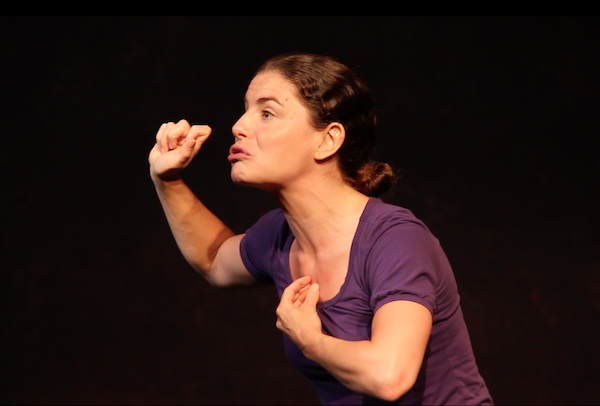
photo - In Magical Mystery Detour, Gemma Wilcox explores the detours that happen in life and how we can find and trust our own centre
In Magical Mystery Detour, Gemma Wilcox explores the detours that happen in life and how we can find and trust our own centre. (photo from Fringe)

There are many twists and turns in Magical Mystery Detour (Studio 1398) by Gemma Wilcox. Set in the United Kingdom in 2012, the action is prompted “by a letter from her dead mother, [and] the protagonist, Sandra, and her dog, Solar, take an unexpected car journey from London to Land’s End, Cornwall, at a pivotal and sensitive time in her life.”

Created in the summer of 2012, Magical Mystery Detour premièred at the Boulder, Colo., Fringe Festival that year.

“It is a semi-autobiographical piece, heavily based on aspects of my life at that time,” Wilcox told the Independent. “I wrote this show very shortly after the death of my mother and the ending of a very significant love relationship with a man I thought I would marry and have children with. It was inspired by the tender and vulnerable process of dealing with and letting go of my mother’s death, the getting over and releasing this powerful love relationship, as well as some of my magical journeys through the sacred, beautiful landscape in the southwest of the U.K.

“The show reflects some of the themes I was fascinated by and exploring at that time in my life,” she continued, “such as learning how to trust and surrender to the detours that happen in life, when we think our life is going in a certain direction, but then it dramatically changes. I was also interested in exploring how we can find and trust our own centre when those we love are not there anymore, and when we feel lost or that life is too chaotic or not going the direction we want it to.”

Wilcox was born and raised in London, and moved to the United States in 2001. She has been based in Boulder since 2004. “I moved to the U.S. to explore yoga and embodiment practices, was in the Shakespeare Company in Austin, Tex., for a couple years, and found my theatrical/creative family in Boulder, as well as touring across the U.S. and Canadian Fringe festival circuit every summer for the past 11 years,” she said.

Magical Mystery Detour is one of a handful of shows that Wilcox and director Elizabeth Baron have worked on together. In creating it, said Wilcox, Baron was incredible, advising “me on how to stay both open and vulnerable as a performer, whilst also staying protected and safe and able to show the many shades and subtleties of a character.”

Wilcox writes comedy-dramas. “I find that it is highly important to balance the ‘light’ material with the ‘darker’ material, humour with seriousness – for me as a performer, and also for the audiences,” she said. “It is easier to receive and digest more poignant or shadowy material when juxtaposed in appropriate moments with humour and lightness. Humour is a huge aspect of my work – humour that comes from identifiable and sometimes embarrassing situations or honest admissions.”

For the full Fringe lineup, visit vancouverfringe.com. The festival runs to Sept. 16.

Format ImagePosted on September 7, 2018September 7, 2018Author Cynthia RamsayCategories Performing ArtsTags David Rodwin, Deborah Vogt, Fringe Festival, Gemma Wilcox, Judaism, Naomi Vogt, theatre
Bringing the invisible to light

Bringing the invisible to light

Actor Ching Valdes-Aran in a scene from The Washing Society. (photo from The Washing Society)

Faced with the challenge of making a documentary for which the voices of undocumented immigrants were crucial, filmmakers Lynne Sachs and Lizzie Olesker had to push the boundaries of convention. The result is The Washing Society, which will see its Canadian première at the Vancouver International Film Festival, as part of the festival’s Impact programming.

“For this year’s Impact stream, we decided to foreground films that represent prominent themes found in the festival at large – themes that are extremely topical at this historical moment,” said Alan Franey, director of international programming at VIFF, in a release. “Refreshing in their cinematic artistry, insights and lack of platitudes, these films have the power to inspire actual change.”

The Washing Society combines research, interviews, acting, dance, artistic images and other elements to introduce viewers in 45 minutes to some of the laundromats in New York City, which are disappearing, and the people who work in them. Olesker and Sachs, who both live in Brooklyn, will be in Vancouver for the festival and the Independent interviewed them by phone in anticipation of their visit.

The filmmakers are practically neighbours, and they met each other through their daughters, who are about the same age and have the same piano teacher. It was at a piano lesson where they first crossed paths. “Then we saw each other’s work, and really admired what each other were doing,” said Olesker.

The origins of the documentary are in a performance Olesker was commissioned to do in a laundromat, upon which she wanted to expand. Thinking that film would be a good element to add to it, she contacted Sachs.

“We had a series of conversations, which led me to unexpected places in how to think about laundry and women doing laundry, and so it became a deeper, more fruitful collaboration,” said Olesker.

Over a span of about two years, the pair researched the topic, then co-created the play Every Fold Matters with the actors performing it, as well as writing their own text. The site-specific performance and film project – which was performed in laundromats and various venues throughout New York from 2015 to 2017 – formed the basis for what has become The Washing Society.

“We’ve been working together now for probably over four years,” said Sachs, “because we spent almost a whole year traipsing all over New York City – mostly Brooklyn and Manhattan – trying to do the convention of documentary practices, ‘Let’s go into laundromats, let’s talk to workers.’ But the issues in New York are that so many of those workers are undocumented, so they’re very hesitant to have a conversation in front of a camera. So, we would have conversations and we would go back and write pieces and create characters based on all of those interviews we did, which we didn’t film. But then, over the course of time, as it shifted from being a live performance with media to a film, we got better at finding people who were willing to speak in front of the camera.”

They did this, in some cases, with the help of an actor or a translator, who then became more involved or involved in other ways. “One of the things both of us are really interested in,” said Sachs, “is breaking down the conventions of roles in the project.”

Both Sachs and Olesker have done cross-disciplinary work before.

“It’s been exciting for me to work in film and also to engage in questions like, What is a documentary? What does it mean to inquire into a subject or have a question and pursue it in different ways? As a creator of film or theatre, you’re always looking for a truth, not necessarily the truth.”

“I’m really interested in how documentary crosses over into fiction, and how fiction informs the documentary aspect,” said Olesker. In this project, she said, “It’s been exciting for me to work in film and also to engage in questions like, What is a documentary? What does it mean to inquire into a subject or have a question and pursue it in different ways? As a creator of film or theatre, you’re always looking for a truth, not necessarily the truth.”

The Washing Society contains a lot of theatre. “That’s an issue that raises questions with audiences in good ways and in challenging ways,” said Olesker, for whom this film is her first foray into documentary-making.

Sachs, however, has made this type of documentary before, mixing lived experience with fiction; for example, Your Day Is My Night, which she brought to the Vancouver International Film Festival in 2013. “Working in this way,” she said, “has started to make me to question all forms of documentary, or even narrative film, because you see a narrative film and it’s really a document of a bunch of people getting together and making a fictional story.”

One passion “that has been very nourishing for both of us in our work is our relationship to history, to the historical document,” said Sachs.

“With this film,” she explained, “when we came across the story of the Atlanta washerwomen, we found it absolutely riveting and astonishing that there was this moment in American history in which a group of 3,000 black women had enough power or wherewithal or vision … to organize and to change their working lives. Any art project that gives you an excuse to research, I think, is pretty exciting.”

The title for the documentary is inspired by what these washerwomen accomplished in 1881. As for more recent history, The Washing Society both exposes the harsh working conditions in laudromats and laments the loss of these neighbourhood establishments.

“I think it’s interesting to explore that contradiction,” said Olesker. “It is grueling, underpaid, under-recognized work. It’s also necessary work – not necessarily in the form that it’s taken, of dropping off your laundry and paying someone to wash and fold it, but someone is always going to have to do the wash, so that sense of broad history and the roles that women have had in doing that work is something that was behind the project, as well.”

“My nostalgia,” said Sachs, “is any space where there is an intersection.… It’s what makes cities great, the idea that there is a space in which there are intersections, and that people who have less and people who have more are in the same space and they’re spending time [together]. And that all has changed so much now. The thing is, though, that the basic infrastructure – of there being a large group of people who are hidden in some way, and they are doing service work for other people, who have much more access or means – isn’t going to change because, even if it [laundry service] becomes an app, like we show at the end of the film, there are still people doing the work, they’re just not as visible.”

One purpose of the film is to make that invisibility visible. But, said Olesker, “What’s interesting about the film to me is that we’re not so much leaving you with something that we think should happen. We’re opening it up as a question and saying, ‘Look inside this.’ We looked inside and now we’re taking you inside, what is this about?”

There is a challenge to making a documentary when the “people who we would want to have in the movie are undocumented, therefore, they don’t want to be documented by us – they want to be documented by the government….”

In the United States, added Sachs, the idea of the document “comes down to a sense of security.” There is a challenge to making a documentary when the “people who we would want to have in the movie are undocumented, therefore, they don’t want to be documented by us – they want to be documented by the government, and so there is this resistance to being in front of our camera until they can find something that legitimizes their status here in another way that will serve them.

“And it actually comes down to the whole project of making art,” said Sachs. “To whose advantage is it? For example, we’re getting to go to Vancouver and we were talking about, Could we manage to bring one of the people from the film? There is a lot of questioning about what access the artwork gives. We’ve tried to bring along the people in the film as much as possible, but we aren’t always able to.

“There’s even a point in the film where we have Chinese and Spanish … sometimes we translated that and sometimes we didn’t, because we wanted to give opportunity for people who are in the audience who had access to those languages to feel that they were in positions of strength over the rest of us. There’s something about subtitling that, if you subtitle everything, you bring it all into the English window, and people stop listening.

“A big part of the film,” she continued, “is to go outside of issues of work and of cleaning in an urban situation, which becomes involved in service … [and to delve into] all the layers of existence or the layers of identity that happen in cities these days, and who listens to whom. We hear Spanish all the time [in the United States], but are we really listening to it or is it something we can just pass by? Same with Chinese.”

Both Olesker and Sachs are Jewish.

“I’m from New York so, growing up, it’s been a part of my life,” said Olesker. “Not in a religious way, but certainly in the culture of my family and my world. And specifically around labour and labour history, union organizing – not that anyone was an organizer in my family, but there was always an awareness of that, so that is part of my identity in terms of the work I’m interested in making.”

Sachs is a member of Kolot Chayeinu. “The rabbi and founder of the congregation – her name is Ellen Lippmann – she’s always been a hero of mine,” said Sachs. “She’s just retired, about a month or so ago, after 25 years running Kolot Chayeinu. It’s a very, very progressive congregation and I worked with her just a couple of years ago on something that I found very moving.”

Lippmann would often ask Sachs to film various activities for the synagogue and, in 2016, when B&H photo and video store, which is run by ultra-Orthodox Jews, was challenged by labour activists for the company’s treatment of its warehouse workers, “a bunch of people from Kolot decided to organize with the workers in front of B&H,” said Sachs. “I was there to videotape it and so were some television stations. And I think that Ellen Lippmann really wanted to say, this is not, to our mind, following an ethical frame of reference that we want to claim as Jewish.”

Olesker pointed out that the B&H walkout was organized by the Laundry Workers Centre. “So, we actually made a little film, which is kind of a postscript to The Washing Society, where they organize this march through east Harlem to a laundromat … where two of the workers who were part of the Laundry Workers Centre went in and presented a list of demands to the owners … to talk about unfair labour practices and long hours and being underpaid and no breaks. We were part of that march and demonstration, which Lynne shot on film and we edited.”

The video epilogue, as well as teasers for The Washing Society, can be found on vimeo.com. For the film festival lineup, visit viff.org. The festival runs Sept. 27-Oct. 12.

Format ImagePosted on September 7, 2018September 12, 2018Author Cynthia RamsayCategories TV & FilmTags Lizzie Olesker, Lynne Sachs, tikkun olam, Vancouver International Film Festival, VIFF
Stories to bring smiles

Stories to bring smiles

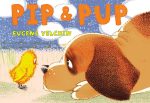
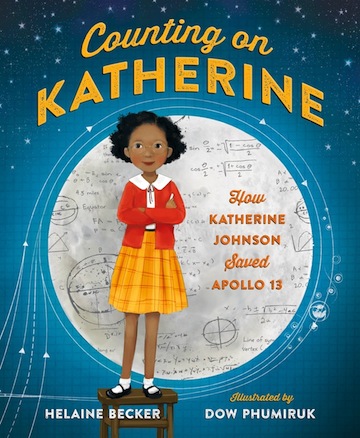
Delightful. That’s the first word that comes to my mind for two new hardcover children’s books by members of the Jewish community that will soon find their way to my youngest nieces’ bookshelves: Pip & Pup by Eugene Yelchin (Godwin Books) and Counting on Katherine: How Katherine Johnson Saved Apollo 13 by writer Helaine Becker and illustrator Dow Phumiruk (Christy Ottaviano Books).

Yelchin’s wordless book begins with a chick hatching. On a farm somewhere, having just come out of her shell, Pip sees the world for the first time. She spies a puppy sleeping under cover of a tractor. Fearless, she goes right up to Pup’s nose to say hello. When Pup awakens and barks in greeting, Pip is thrown into a panic, not quite prepared for the full size of her relatively large new friend.

When the rain starts, Pip literally climbs back into her shell, but just to stay dry. She is no longer afraid. In fact, when she sees Pup’s distress at getting wet and at the sound of the thunder and the force of the rain, she offers what help she can. The two start to play even before the sun comes out again. A broken eggshell dampens spirits momentarily, but then it’s Pup’s time to fix things, which she does.

Pip & Pup is a simple story that is evocatively illustrated using warm colours, texture and layers, combining pastels, coloured pencils and digital painting. There is a depth to the art and the story. Children and their adult readers will have fun asking each other questions as they go along. Do you think Pip is brave to say hello to Pup? Do you like the rain? How is Pup feeling right now? How would you feel if something of yours broke?

image - Counting on Katherine book coverMany questions will arise from reading Counting on Katherine, as well, though some of them will require a different kind of reflection, as the story touches upon racism, sexism and other such topics – in an age-appropriate way for readers 5 and up.

Becker interviewed Katherine Johnson, who turned 100 years old on Aug. 26, and Johnson’s family for this picture-book biography. Johnson was a mathematician at the National Aeronautics and Space Administration (NASA) and, among other things, her manual calculations were crucial in bringing the crew of Apollo 13 back to earth safely after it was damaged while in space.

In Counting on Katherine, we meet Johnson as a young girl: “Katherine loved to count. She counted the steps to the road. The steps up to church. The number of dishes and spoons she washed in the bright white sink. The only things she didn’t count were the stars in the sky. Only a fool, she thought, would try that!”

And Johnson was anything but a fool. She skipped three grades in elementary and was ready for high school at 10 years old. “But back then,” writes Becker, “America was legally segregated by race.” Johnson’s high school didn’t admit black students, so her father, by “working night and day, he earned enough money to move the family to a town with a black high school.”

Johnson’s next challenge was that, as a woman in that era, she was relegated to the teaching and nursing professions, so she became an elementary school teacher. However, in the late 1950s, the space race began, and NASA’s predecessor began hiring thousands of workers. “It even started hiring black women – as mathematicians.”

Johnson excelled at NASA and her work was integral to the United States’ space program, not just to the Apollo 13 mission, and Counting on Katherine has an epilogue that gives some additional information about Johnson. As well, Phumiruk’s imaginative digital artwork is also information-filled, clearly showing Katherine’s longing to learn, as she gazes from her bedroom window at the night sky; her joy with numbers, as she fills chalkboards with them; her anger at not being allowed to attend her town’s high school; her meticulousness, as she calculates a safe journey for Apollo 13. Counting on Katherine is a wonderful book.

Format ImagePosted on September 7, 2018September 6, 2018Author Cynthia RamsayCategories BooksTags art, children's books, Dow Phumiruk, Eugene Yelchin, Helaine Becker, Katherine Johnson, science, women
Creating with the land

Creating with the land

Dalia Levy, left, and Ariel Martz-Oberlander (photos from Vines Art Festival)

“Good art is accountable to the community, raises up voices rarely heard and is vital to repairing our world.” This is a quote from Jewish community member Ariel Martz-Oberlander’s bio. It is little surprise that she was the associate producer for Vines Art Festival last year and is once again one of the artists this year.

Martz-Oberlander will be joined at Vines by several fellow Jewish community members: interdisciplinary artist Barbara Adler, textile artist Dalia Levy and performer and storyteller Naomi Steinberg, as well All Bodies Dance, of which Naomi Brand is a co-founder and facilitator. The multidisciplinary eco-arts festival features more than 70 performing and visual artists at parks throughout Vancouver.

According to its mission statement, Vines “is a free public event that creates platforms for local artists and performers to create with and on the land, steering their creative impulses toward work that focuses on the environment – whether a deep love of nature, sustainability or climate justice.”

“Everything I create is in relation to the land I find myself on and the times I was born into,” Martz-Oberlander told the Independent. “I create from a place of wanting to live in good relation to the land and those who have been protecting it since the beginning. I also create with the hope of telling the stories we need to bring about tikkun olam, the stories that have been buried or hidden as we struggled to survive by assimilation. Telling my stories is part of my larger work of decolonizing theatre and performance – making space for other silenced stories, and dismantling and rethinking the ways we tell stories in the first place.”

About the specific work that she will present at the festival, Martz-Oberlander, who divides her time between theatre and community organizing, said, “My piece, entitled on behalf of my body, explores living in the body after sexual trauma and touches on the intersectionality of sexual violence, PTSD, dissociation and separation from the self. The piece is also an exploration of how the settler body can live in Turtle Island, as approached through the story of my Ashkenazi diasporic and refugee ancestry.

“I am making this piece because I struggle with my place on this land, having no homeland of my own, but still being an uninvited guest. My people have been wandering for 2,000 years, and now I find myself here – my body a site of so many struggles, politicized without my permission by the forces of antisemitism, racism, nationalism, Western medicine, patriarchy and rape culture. How do I walk back into my body after being forced from it in so many ways? What does recovery mean when I’m not sure what was there before or whether I can get back there. Was there a before?

“This is the journey I invite you to go on with me – it’s going to be a wild ride.”

Levy will be presenting Connective [T]issue at Vines.

“Inspired by women’s Arpilleras [brightly coloured patchwork images] of [Augusto] Pinochet’s Chile, this knit/sewn/embroidered piece protests the Pacific garbage patch and extractive economies, like bitumen on our coast,” Levy explained. “As the same criminal mentality of supremacy exhibited under a dictatorship disappears our earth and our humanity, the piece simultaneously contrasts the powerful sources of life embedded into all of us. Representative of the underground connective channels that create the webs of mycelium our entire planetary eco-system grows from, the netting gives further conceptual insights of life woven into all DNA. With women’s traditional textile knowledge as a means to subvert and survive, the piece protests the private and normalized plunder blanketing earth and the interwoven convergence of issues in an era of global crisis.”

Connective [T]issue builds off her performance art installation at the festival last year, which was called Knit Piece, she said. “I used natural red dye from local berries to cover myself in the blood of the earth and proceeded to knit a giant umbilical cord drawing fundamental connections between humans and Mother Earth. The umbilical cord was then attached to knit anatomical hearts, and left in the park as a ‘yarnbomb’ installation. You can see a photo of one of the hearts here: permacultureartisan.com.

“Knit Piece and this year’s piece will be accompanied by a relevant sound art soundtrack to encourage further reflection,” she added.

About her work in general and how it relates to the environmental justice focus of the festival or connects to Judaism or Jewish culture, Levy said, “My work is very much focused on using the traditions of my Jewish foremothers to highlight the massive injustices of today. By reconnecting with these folk traditions that women used to pass down through generations, I am able to find a voice for myself beyond the domestic craft sphere while keeping these ingenious skills alive. My work is in protest of the extractive, discard culture embodied in consumer culture, as every inch of my work has been hand-stitched by myself from upcycled and found materials headed for the landfill. The environmental themes I work with relate directly to Vines as a vehicle for system change and awareness-raising about the destruction to our sacred planet.

“My Jewish ancestors that escaped Eastern Europe stitched their way across an ocean, escaping dictatorships that were extremely antisemitic, and began working as tailors and settling in Winnipeg’s Jewish community,” she continued. “My work is, therefore, informed by this family history that literally survived the pogroms because of our ability to stitch and make and adapt. I feel strongly that our future rests in this spirit of humble handmade [things] that is full of sustainable, ‘slow’ knowledge adaptable to climate change and a post-carbon economy.”

Vines Art Festival is an all-ages event and, while it runs from Aug. 8 to 19 in various Vancouver parks, the main program takes place Aug. 18, 1-7:30 p.m., at Trout Lake Park. All of the festival presentations are free. For the schedule, visit vinesartfestival.com.

Format ImagePosted on July 20, 2018July 18, 2018Author Cynthia RamsayCategories Performing ArtsTags art, Dalia Levy, environment, Martz-Oberlander, Vines
Consul general speaks with JI

Consul general speaks with JI

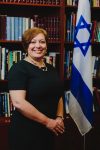
Consul General Galit Baram was in Vancouver last month. (photo from Consulate of Israel)

Galit Baram, consul general of Israel to Toronto and Western Canada, was in Vancouver last month.

“The visit was very good,” she told the Independent in a phone interview. “It included some political meetings and an academic meeting and I addressed the Jewish community and I attended the Negev Dinner of the JNF…. I had the opportunity to see the city, which is beautiful, and the weather was nice.”

Baram will be returning to Vancouver in November, when the late Dirk Pieter and Klaasje Kalkman will be honoured as Righteous Among the Nations for the assistance they provided to Jews during the Holocaust. The ceremony will be held in conjunction with Yad Vashem Canada and the Jewish Federation of Greater Vancouver.

Baram’s June meetings explored the opportunities of expanding cooperation between Israel and British Columbia in innovation and entrepreneurship.

“I believe that there is great potential in economic cooperation between Israel and British Columbia,” she said.

The provincial government, she said, “is making its initial steps now…. There is interest, there is curiosity, there is awareness of what Israel has to offer in innovation, in the medical field. When it comes to pharma, when it comes to cybersecurity, Israel is a leading country in the international arena in many of these fields.

“We had very good relations with the previous government and we hosted a mission … in November of 2016, a mission that was led by then-minister of finance [Michael] de Jong; there were representatives of different business sectors in British Columbia…. [It] is our intention to work very closely with the current government as well.”

The change in the federal government in 2015 also hasn’t affected Canada-Israel cooperation. On May 28, in Montreal, François-Phillippe Champagne, minister of international trade, and Eli Cohen, Israel’s minister of the economy and industry, announced the signing of the modernized Canada-Israel Free Trade Agreement.

Cohen spent two days in Canada, said Baram, adding, “I hope that Minister Champagne will soon reciprocate and visit Israel as well.

“I believe this is very important to have visits on such a high level … because I believe that governments can contribute greatly to bringing countries together. But we have to remember that, at a certain point, governments have to take a step back and leave it up to the business sector and the private sector to build bridges and to bring the countries together, but, as governments on both sides, Israel and Canada, we do as much as we can in order to strengthen and broaden our bilateral relations.”

Baram also sees the possibility of building a groundwork for peace in Israel through business and trade.

“I believe that economic mobility plays an integral role in bringing communities together,” she said, “and we are watching with pride the growing high-tech sector in the Israeli-Arab community, especially in the Greater Haifa area, in cities such as Nazareth…. We would like to see more Israeli-Arab students concentrating on science, concentrating on business, in business management and innovation and entrepreneurship.

“When it comes to building social bridges between Israelis and Palestinians, not necessarily Jews and Arabs, there are many activities that concentrate on that … and they are conducted by civil societies in Israel and it is heartwarming to see that. I would like to mention the activity of an organization such as Save a Child’s Heart … [which] brings children to Israel [for cardiac care] from Arab countries, from the Middle East, from Muslim countries in general, and they do wonderful, wonderful things in building bridges…. Another example I can give you is the upcoming visit of Dr. Yossi Leshem, one of Israel’s greatest experts on bird migration – he is going to be in Vancouver towards the end of August and he will be accompanied by his friends from [elsewhere in] the Middle East, and they are going to present beautiful regional projects in a conference that will be held in Vancouver…. Two other organizations that I would like to mention … are Ultimate Peace, that organizes Frisbee tournaments for youth … and another project, by Danny Hakim – Budo for Peace – teaches martial arts to Israeli Jews and Arabs, Palestinians, Jordanians and others, and they have instructors coming to Israel from Japan and from other countries…. I believe that such organizations can do so much good for Israeli society in general, for the Palestinians and for neighbouring countries in the Middle East.”

Of course, there are significant obstacles to peace, not the least of which are the ongoing altercations at the Gaza border.

“When it comes to the situation on the Gaza border, we are facing some very serious challenges,” admitted Baram. “It is an uphill battle. We see that there is sometimes a deterioration, sometimes the situation stabilizes a little bit and then there is another deterioration, the situation changes constantly.

“There are many, many challenges on a daily basis that are facing not only IDF [Israel Defence Forces] soldiers and the Palestinian civilian populations, but also the civilian population on the Israeli side of the border. Sometimes there is a tendency to forget about them but there are families, there are entire communities, that raise their children on the Israeli side of the border and because of this intifada of burning kites and balloons, they have to deal with arson cases on a daily basis, with a loss of crops and forest in the south of Israel, and it’s heartbreaking to see that because so much work has been put into making the desert bloom, especially in those regions.”

She added, “The one very disappointing thing for me to see as a former director of the department for Palestinian affairs was the fact that the Kerem Shalom border crossing that was built in the first place to enable trucks to enter Gaza was burned down by Hamas activists and by other terrorists and it’s a shame to see that because so much money was invested in that, so much effort was done in order to make trade between Israel and the Palestinian Authority, and especially Gaza, easier and simpler for us but especially for the civilian population in Gaza. And it’s difficult to see a civilian population that is being held captive by a terror organization…. Of course, there is awareness of the situation in Israel and understanding that the main enemy that has to be dealt with is definitely Hamas and not the people of Gaza.”

As for the Canadian government’s initial statements after the violent March of Return protests – in which Canada admonished Israel, saying its “use of excessive force and live ammunition is inexcusable,” and called “for an immediate independent investigation to thoroughly examine the facts on the ground” – Baram said, “I would like to mention that, after Hamas started attacking Israel, [with] renewed rocket attacks to the south of Israel, there were statements that were released by Prime Minister [Justin] Trudeau and by Minister of Foreign Affairs [Chrystia] Freeland condemning Hamas for this activity and I believe we should concentrate on these statements.”

And Canada’s reluctance to move its embassy to Jerusalem?

“When it comes to Jerusalem,” said Baram, “we believe that all countries should move their embassies to the capital of Israel and the capital of Israel is Jerusalem. Every sovereign country has the right of defining and choosing its own capital and we believe that we don’t have to prove over and over again the story connecting the people of Israel and the land of Israel, between the people of Israel and its eternal capital, Jerusalem.”

With respect to the almost 40,000 Eritrean and Sudanese asylum seekers in Israel, Baram said, “We have to remember that the first Western country that these people from Africa, from Eritrea, from Sudan, asylum seekers, work migrants – define them as you wish – the first Western country they encounter is Israel. And, several years ago, many of them came to Israel…. This is never an easy issue to deal with because the personal stories are very emotional and very difficult, and these people, many of them have been through terrible ordeals, until they reached Israel.

“The issue of migration in general … is an issue that is dealt with in Europe and in other parts of the world,” she said. “In the Middle East, for example, the issue of Syrian refugees is a very big issue that many countries deal with and, now, Syrian refugees, for example, are coming knocking on the doors of European countries, as well, but this is a problem that many Middle Eastern countries have dealt with for quite awhile, a long time now.

“With the African refugees or asylum seekers or work migrants, definitely a solution must be found in order to protect them, protect their rights. On the other hand, we have to keep the sovereignty of the state of Israel and we cannot allow floods of refugees entering Israel because we have to think about our population and … providing an answer that would satisfy all parties involved. This is not easy,” she said.

And neither is Israel’s relationship with Diaspora Jews always easy.

“When you look at Israeli society, you see that the public debate in Israel is very heated and emotional,” said Baram. “This is how we do things in Israel. People are very opinionated … they don’t hide their views and opinions, and I think this is wonderful. This is the strength of Israeli democracy.”

She recalled a statement made by Israeli President Reuven Rivlin about a year ago. “He talked about the four tribes of Israeli society, and he referred to secular Jews, to Orthodox Zionists Jews, to the ultra-Orthodox community in Israel and to Israeli Arabs…. And he called for these four tribes to join hands to discuss the future of Israeli society for the benefit of the country. Later on, he added the fifth tribe … and I believe this is very important to mention that the fifth tribe is Diaspora Jews because Israel is the homeland of the Jewish people…. I am actually very encouraged when I visit Jewish communities throughout Canada and people ask me sometimes challenging questions … about the nature of Israel and about the nature of Israeli society, and what should be done and what is done correctly, or what should be corrected in Israel. I encourage that and I welcome it, because it shows love and devotion and interest in Israel.

“And I encourage people to come visit Israel and express their opinions and to keep us Israeli diplomats on our toes … and I thank Jewish communities for participating in this ongoing discussion. I think this is vital not only for Israel by the way – this ongoing discussion is vital for Diaspora Jews as well.”

To participate in and to follow some of that discussion, follow the consulate on Facebook and Twitter.

Format ImagePosted on July 20, 2018July 18, 2018Author Cynthia RamsayCategories WorldTags asylum seekers, British Columbia, Canada, consul general, Diaspora, economics, Galit Baram, Gaza, Israel, trade
Hollow Twin full of meaning

Hollow Twin full of meaning

Emmalee Watts, left, and Rebecca Wosk are Hollow Twin. (photo by Alejandra Samaniego)

“We are constantly writing and working on new material. It’s a never-ending process for us and we love it,” Rebecca Wosk told the Independent about her musical partnership with Emmalee Watts.

“We started working together in 2011,” said Wosk, “a couple months after we met. We formed Chatterton Eve, which was the name of our band, in 2013 before we changed [the name] because no one could pronounce it. We released one EP as Chatterton Eve and three EPs, plus a single, as Hollow Twin.”

As Hollow Twin, the pair has released the EPs Noctuary (2014), Keepers (2015) and The River Saw Everything (2018), as well as the single “Bound By Blood” (2016).

Of the band’s names, Wosk explained, “Hollow is a synonym of ‘valley.’ Both Emmalee and I have deeply embedded roots in the Fraser Valley – we want to honour that wherever we are. Twin is because we feel we were twins in a past life and have been reconnected in this life. Our bond is very strong.

“Chatterton is one of Emmalee’s middle names, Eve is mine. We changed it in 2015 to Hollow Twin.”

The band’s output is more impressive when considering that Wosk and Watts have also been going to school and working.

“We met at Capilano University in 2011,” said Wosk. “We both graduated with diplomas in arts and entertainment management in 2013, and went on to work behind the scenes in the music industry. We also continued our education (we are very in sync) separately, but again, graduated at the same time, both earning diplomas in business this year. I would like to get my undergraduate degree and possibly study law, as well.”

Wosk has had a love for the arts ever since she can remember. “I always wanted to be an actress,” she said, “but I was painfully shy so, whenever I went on auditions, I would completely freeze. I turned to poetry for solace, which turned into song writing. I wrote my first song when I was 11. I still have my lyric journal from back then – they are all terrible!

“I grew up going to performing arts camps, acting classes, and I took singing lessons. This was all before I turned 14. At that point, I moved to Chilliwack. I didn’t know I would be a musician, but I’ve found singing and writing have come naturally to me. I always wanted to do something in the arts. Everything has felt very serendipitous.”

Wosk attended Vancouver Talmud Torah, and went to Point Grey and then Chilliwack Senior Secondary for high school.

For her part, “Emmalee is a Royal Conservatory-trained pianist,” said Wosk. “Her primary instrument is the bass, which also includes upright. Emmalee attended Langley Fine Arts School, which really nurtured her musical talents. Her father is a wonderful musician and had her growing up completely surrounded by music.”

Wosk described her and Watts’ songwriting process as “very balanced and collaborative.”

“We send each other ideas constantly over our phones and get together several times a week to practise or work on new material,” she said. “We let the song naturally progress. I’m constantly writing lyrics and coming up with melodies, while Emmalee is playing guitar or piano. We combine our strengths equally.

“We hire session musicians to play drums, bass and keys live. Emmalee plays bass, guitar and keys during our recording sessions.

“We used to be a five-piece band, with three other permanent members, but we found there were a lot of creative differences in play and we needed to be true to the vision of our music. A producer we worked with in 2015 suggested we become a duo and hire players when we need them. It’s made things a lot more efficient.”

While the musical influences listed on Hollow Twin’s website include Fleetwood Mac, Led Zeppelin and Heart, it describes Hollow Twin as “dark folk rock.” A press release says their songs are about “grieving, the dualities of life, and making the most of your time on earth.”

“We’ve gone through a lot in our lives so far, good and bad,” explained Wosk. “We have chosen to embrace the things that have shaped our character, even if it has caused pain or heartache – that usually creates the best inspiration. I lost my stepfather to cancer last year, I have been battling depression and severe anxiety since I was 10 years old. The darkness comes from those places – worries, insecurities, loss, life.

“There is a catharsis in our process. It’s truly like free therapy. It’s very vulnerable, we are really baring our souls with whoever chooses to listen to what we create. We don’t want to make anyone sad or depressed, we want people to feel something. Our music ranges from more upbeat to slower, darker songs, but they all have depth in their meanings. We hope that meaning can reach into our listener’s soul and connect with them, so they know they aren’t alone.”

About the role, if any, that Judaism, Jewish culture or Jewish community plays in her life, Wosk said, “I find comfort in knowing I belong to such a warm and welcoming tribe. For all my life, I have seen the support and love that surrounds our community, seeing everyone come together for events, and always being there for whatever may be needed…. I feel we have an unspoken, yet palpable bond and loyalty to each other as Jewish people.

“I myself am not religious,” she said. “I consider myself spiritual. I come from a line of strong Jewish men and women who valued their culture and contributed to the community. I carry the values they – and what I’ve witnessed from our community at large – have carried: compassion, education, family, openness, honesty and kindness.”

Hollow Twin will be recording demos at the beginning of next month, so they can apply for some funding. “If we can secure our funding,” said Wosk, “we will be recording a full-length album, touring and releasing a music video.” Regardless, the band will be releasing a new track in October of this year.

To see Hollow Twin play live, head to Guilt & Co. the night of July 29. To keep apprised of other show dates and news, visit hollowtwin.com or follow the band on Facebook, Twitter or Instagram. Their music is available online via iTunes/Apple Music, Bandcamp and can be streamed on Spotify and Soundcloud.

Format ImagePosted on July 20, 2018July 18, 2018Author Cynthia RamsayCategories MusicTags Emmalee Watts, folk music, Hollow Twin, Rebecca Wosk
Two solid TUTS productions

Two solid TUTS productions

Andrew Cownden and Paige Fraser in Theatre Under the Stars’ production of 42nd Street. (photo by Lindsay Elliott Photography)

The gasp of surprise and awe came from the row behind. “The glass slippers,” whispered the gown-clad girl, maybe 7 or 8 years old, when Cinderella received her infamous footwear from Fairy Godmother in Theatre Under the Stars’ production of Rodgers & Hammerstein’s Cinderella on opening night.

Directed by Sarah Rodgers, this social justice-infused version of the tale (with book by Douglas Carter Beane) seemed to resonate with the younger audience members, even though it was understated. The pace was on the slower side, the music beautiful but not that memorable and the costumes by Christina Sinosich were a mixed bag of styles but all earthy in tone, with no flash or brilliant pops of colour. Cinderella sported a pale blue and white dress in her harsh life with her stepmom and two mean stepsisters (though one turns out to be pretty nice) and a mainly white ball gown, with some silver and blue accents. Prince Topher’s outfits were basically brown or black, with the exception of white formal wear, though they also had some fancy detail work.

The cast performed admirably, especially Mallory James as the heroine, Ella. Tré Cotten seemed a little less sure in his role as Topher, but was suitably dashing and princely, wanting more than a beautiful woman for his wife and wanting to be more than just a ruling figurehead. The revolutionary Jean-Michel, played by Daniel Curalli, and the not-so-evil stepsister Gabrielle, played by Vanessa Merenda, add interesting elements to the play for those who’ve only seen the less substantive (story- and character-wise) romantic version. And the ensemble, in which Jewish community member Lyrie Murad sees her TUTS debut, does a fine job.

Alternating with Cinderella on the Malkin Bowl stage is 42nd Street, which, despite its Depression-era story, costumes and set, is an uplifting, energetic and fun production.

The role of Broadway producer Julian Marsh seems to have been written for Andrew Cownden, and Paige Fraser – making a very strong TUTS debut – is perfect as Broadway ingénue Peggy Sawyer. While the entire cast and ensemble is great, Colin Humphrey as choreographer/dance leader Andy Lee is fantastic, cigarette hanging out of his mouth for much of the show, even when putting the chorus through its paces. And, ironically, Janet Gigliotti as fading star Dorothy Brock is probably the brightest light of this show.

The direction by Robert McQueen, the choreography by Shelley Stewart Hunt, the musical direction (and acting) of Christopher King, the set by Brian Ball, the costumes by Sinosich, etc., etc., all come together neatly in this production.

For tickets to both Cinderella and 42nd Street, visit tuts.ca.

Format ImagePosted on July 20, 2018July 25, 2018Author Cynthia RamsayCategories Performing ArtsTags 42nd Street, Cinderella, Lyrie Murad, Malkin Bowl, musical theatre, TUTS
Liked Beauty, not Wall

Liked Beauty, not Wall

Lili Tepperman is one of five kids featured in Beauty. (photo from NFB)

It’s fine to be who you are,” says Bex Mosch, who turned 9 years old last year, when Beauty was released. Since the age of 3, Bex – formerly Rebecca – says he has known that he is a boy. He and the other “gender-creative” kids interviewed in Christina Willings’ 23-minute documentary have been forced by circumstances to become more mature than most kids their age. And they have more nuanced views on what it means to be human than many adults.

Beauty has its local première during the Vancouver Queer Film Festival’s first short film program, called The Coast is Genderqueer, which takes place Aug. 17. In addition to Bex, Fox Kou Asano, Milo Santini-Kammer, Montreal Jewish community member Lili Tepperman and Tru Wilson are interviewed. Interwoven with the interviews, footage of the kids being kids and meeting their families briefly, parts of Beauty are animated. These illustrations depict some of the kids’ favourite interests and tie together some of their common experiences. None of the parents is interviewed.

“In a way, the concept of this film came to me in the early ’80s,” says Willings in an interview on the NFB media site. “I was thinking a lot about the deconstruction of gender at that time, as were many others. We examined it from every angle, but what’s new now is that it’s children who are leading the conversation, who are saying, ‘Hey! Something’s wrong here!’ Some compassionate, and I would say enlightened, parents are hearing them. The new conversation isn’t ideologically driven, it’s experiential, and there’s a profound purity about that. It’s a breakthrough that I have felt very moved and honoured to witness and, by 2012, I realized this shift was going to be the subject of my next film.”

All of the five interviewees have had to face serious challenges, from being laughed at to being bullied. And, of course, they have had to talk with their parents about how they see themselves, versus how their parents initially viewed them.

“Sometimes, it’s easy to think it would be less stressful just to fit in,” says Lili in the film, “but then I’m not really being myself, and I find that’s an important part of living life because, if everybody’s trying to be like everybody else … it doesn’t make any sense to me.”

Beauty screens Aug. 17, 5 p.m., at SFU’s Goldcorp Centre for the Arts. For tickets, visit queerfilmfestival.ca/film/the-coast-is-genderqueer.

* * *

image - David Hare’s Wall purports to have complexity it doesn’t
David Hare’s Wall purports to have complexity it doesn’t. (image from NFB)

Another NFB film being screened in Vancouver next month is Wall, which is based on British playwright David Hare’s 2009 monologue on the security fence/wall between Israel and the Palestinian territories. Wall is not the first extended exploration of the Israeli-Palestinian conflict for Sir David, who was knighted in 1998. Written in 1997, his Via Dolorosa monologue premièred in London in 1998.

The film Wall has been a long time in coming. According to the NFB media site, in 2010, NFB executive producer and producer David Christensen “had a three-hour drive ahead of him when he chanced upon a podcast of Wall.”

“‘Listening to David Hare’s take on this wall Israel had put up gripped me visually,’ recalls Christensen.

“Riveted by Hare’s reframing of the issue and struck by how he could visualize the piece as an animated film, Christensen immediately called his producing partner Bonnie Thompson, who had the same reaction he did upon listening to Hare’s piece.

“‘For many of us, the issues around the Middle East, Israel and Palestine are complex and polarizing,’ says Thompson. ‘We thought making an animated film was a way to better understand this wall.’”

Canadian filmmaker Cam Christiansen is the animator who brought the concept to life visually, using 3-D motion-capture footage and other “cutting-edge animation tools.”

Wall has been the official selection of six film festivals to date, so it has captured critics’ imaginations. However, most Jewish community members will find it hard to watch, as Hare pays lip-service to the complexity of the situation but never veers very far away from blaming Israel for pretty much everything. When he says, “words become flags. They announce which side you’re on,” anyone with a basic knowledge of the Israeli-Palestinian conflict only has to look at the title of this work to know on which sides he falls. But then he goes on for 80 minutes about it.

There are a few instances when Hare seems about to offer the Israeli side, or at least condemn Hamas, but then he retreats. When he is told about a Hamas torture tactic, he is at first repulsed but then suggests it’s a metaphor for how Palestinians must feel at the hands of Israel. When he sees a poster of Saddam Hussein in a Ramallah café, he wonders about the appropriateness of such a man as a hero but then concludes it’s OK because Israel put up the wall, after all. And, then there’s his exchange with a Palestinian who says that Britain is to blame for all the problems: “Of course it’s your fault. The British were running Palestine in the 1940s. When they ran away and left everything to the Israelis, they didn’t care what happened to everyone else. There was a life here – a Christian life, a Muslim life, a Jewish life – and that life was destroyed.”

This ridiculous statement – and so many others – is not only left unchallenged by Hare or any of the filmmakers, but gets nods or words of understanding. With Israeli novelist David Grossman as the predominant voice defending or explaining Israel’s motivations and actions in Wall, most Jewish movie-goers will know before seeing it just how limited are the views expressed in this film, no matter what complexity it proclaims to convey.

Wall screens four times between Aug. 17 and 21 at Vancity Theatre. For tickets, visit viff.org.

Format ImagePosted on July 20, 2018July 18, 2018Author Cynthia RamsayCategories TV & FilmTags animation, David Hare, documentaries, film, gender, Israeli-Palestinian conflict, NFB, politics
Magic of Cinderella

Magic of Cinderella

Lyrie Murad is part of the ensemble in Rodgers & Hammerstein’s Cinderella, which opens July 11 at the Malkin Bowl. (photo from Theatre Under the Stars)

Lyrie Murad makes her Theatre Under the Stars debut this summer in Rodgers & Hammerstein’s Cinderella, which opens July 11.

“I’m both excited and nervous to be performing in front of 1,000 people every night,” Murad told the Independent. “I mean, that’s a lot of people! It’s great, because Cinderella is such a magical show, with such an empowering message, but it can be a lot of pressure to deliver the beloved tale. Despite this, I believe that our director, Sarah Rodgers, has done an incredible job in creating a show that will appeal to both young kids and adults, and that everyone will enjoy the love and magic the story entails.

“I am also so excited,” she said, “to be doing this show every other night with this company because everyone is so kind, funny and beyond talented, which makes the show so fun to do. I was nervous going into the rehearsal room, being the youngest in the ensemble, because I was going to be working with people up to 10 years older than me. But everyone was so welcoming, and I’ve learned a lot from all of them.”

Murad was born in Portland, Ore., but has lived in Metro Vancouver since she was 3 years old.

“My parents were both born and raised in Israel, so Israeli culture was a big part of my life growing up,” she said about her background. “My whole extended family lives in Israel, and it is extremely important to my parents to keep in contact with them, as well with the country, so they make sure we visit Israel at least once a year. I speak Hebrew fluently, which allows me to communicate with my family, as well as many people in Vancouver’s Israeli community.”

Murad went to elementary school at Vancouver Talmud Torah until Grade 6, then moved to McMath Secondary School, a late French immersion public school in Richmond. “I love learning languages, so choosing French was a no-brainer and a welcome addition to English and Hebrew,” she said.

While the family is not religious, “we observe the major holidays and traditions with various friends throughout the year,” she said. “Having gone to VTT, I have stayed very connected with the Jewish community through the friends I have from there. I’ve always felt OK with leaving VTT because I knew I could still stay connected to my roots by going to Camp Miriam, a Jewish social justice-based summer camp on Gabriola Island that has taught me a lot about different aspects of Judaism. I take pride in my Jewish identity, and I’m so happy that Vancouver has such a welcoming and inclusive community.”

Murad has been taking voice lessons and competing in local music festivals since she was 8 years old, and has been taking piano and music theory lessons since the age of 10. She has been dancing since she was 10, as well.

“I only started thinking about acting much later, so the lessons came recently,” she said. “I just finished my third year in the drama department at my school, and I’ve been taking private acting lessons for two years now. I have had the amazing opportunities and experience to perform with the Vancouver Opera in their productions of Tosca in 2013 and Hansel and Gretel in 2016.

“It’s always been hard for me to choose between classical voice and musical theatre,” she said, “so I’m very grateful for having done both opera and musical theatre performances to get a feel for each style.

“I am also so grateful to have been chosen to represent local festivals at the B.C. Performing Arts Provincial Music Festival four years in a row, where I am so honoured to have received first place in the Junior Classical Voice category, the Junior Musical Theatre category, the Junior Vocal Variety category and runner-up in the Intermediate Musical Theatre category.”

In addition to all of the performing arts activities, “when I was little, my parents also signed me up for karate at the JCC,” she added. “I just received my black belt in karate and became the first female black belt in the JCC karate club.”

She has always loved singing.

“My mom loves to tell the story of how I begged to be put into singing lessons because I thought it was so cool that your body is the instrument. I was also put into dance lessons at an early age, so I’ve been very involved in the performing arts world. But the first time I really knew I wanted to be on stage was at my first vocal competition, where I sang ‘Tomorrow’ from Annie. I was really nervous beforehand but, once I started singing, I enjoyed it so much that I didn’t want to leave the stage. I remember bowing for much longer than I should have. Once I started getting obsessed with listening to as many cast albums and different Broadway singers as I could, there was no turning back.”

Her sisters – Arielle is two-and-a-half years older and Omer is three years younger than Murad – are also very musical. “Arielle plays guitar and piano and Omer sings and plays piano, as well. We often put on shows in our house or just jam at the piano or with the guitar. They recently bought me a recording microphone for my birthday, so it’s been really fun playing around with that, as well.

“Omer also dances, so we dance together, too, whether it be at the studio or at home. Although my parents are not as theatrical as my sisters and I, they have come to appreciate the industry by either listening to musical theatre soundtracks on repeat in the car or taking us to New York to watch the actual Broadway productions.”

About the production she is in, Murad said, “Being in the ensemble of Cinderella is actually really hard work. In addition to being in all the major dance numbers, which are exhausting, we are used in all the scene transitions as well, so there isn’t a lot of time to sit in the dressing room. I have four different costumes and, though they are all gorgeous, my favourite is my ball gown. My favourite dance that we do is the ball sequence, because we get to waltz and get lifted a lot, in the beautiful ball gowns. It is also such a pleasure to sing Rodgers and Hammerstein’s music, which is so beautiful and elegant, even if we’re just oohing and ahhing!”

Having just finished Grade 10 at McMath Secondary, Murad plans on completing her high school education there. “I really want to continue my music education post-secondary and somehow keep theatre in my life,” she said.

While she doesn’t have any specific projects currently in the works, she said, “I am looking for any opportunities to be onstage. In the meantime, I will be participating in the Arts Club’s musical theatre summer intensive and continuing my training and education throughout the year.”

Encouraging JI readers to “come witness the magic in Cinderella,” Murad shared one of her favourite quotes from the show: “Impossible things are happening every day!”

Rodgers & Hammerstein’s Cinderella and 42nd Street run on alternating evenings until Aug. 18 at Stanley Park’s Malkin Bowl. For tickets ($30-$49), visit tuts.ca or call 604-631-2877.

Format ImagePosted on July 6, 2018July 5, 2018Author Cynthia RamsayCategories Performing ArtsTags Cinderella, Lyrie Murad, musicals, Theatre Under the Stars, TUTS
Line 41 through ghetto

Line 41 through ghetto

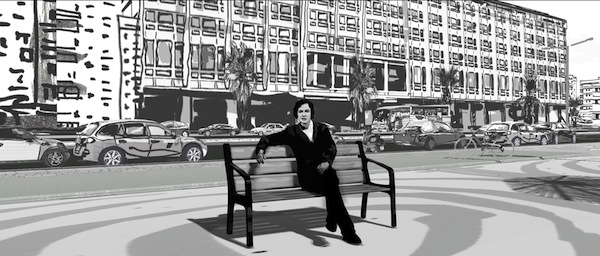
An historical photo of Line 41 blending into a drawing of the buildings and street. (photo by Marek Iwicki, drawing Tanja Cummings)

The Line 41 streetcar ran through Lodz Ghetto (Litzmannstadt). Established by the Nazis in 1939, 180,000 Jews and 5,000 Sinti and Roma were imprisoned there, in plain site of the streetcar passengers. As these travelers went about their daily routines for the next several years, 46,000 people died from hunger, disease and violence in the ghetto and practically everyone else was deported to Auschwitz or Chelmno extermination camps. By August 1944, fewer than 900 prisoners remained; the Soviet army arrived in January 1945.

The documentary film Line 41 focuses on the story of two men: Natan Grossmann, who survived the ghetto, and Jens-Jurgen Ventzki, whose father was the Nazi mayor of the city. It will see its Canadian première on July 11, 7:45 p.m., at Vancity Theatre. The screening will be followed by a discussion between Berlin-based director Tanja Cummings and Prof. Richard Menkis, associate professor of modern Jewish history at the University of British Columbia.

“I was interested in participating,” Menkis told the Independent, “because I am a Holocaust educator, quite simply. As such, I think it is important to engage the different ways of approaching the Holocaust…. I teach the course on the Holocaust at UBC, have published on aspects of the Holocaust and have worked on museum exhibitions. I am also interested in film representations – especially in documentaries – so I am glad to be involved. The film raises several important issues, especially about ‘bystanders,’ and I look forward to having a conversation about the film and its themes.”

Released in 2016, Line 41 has screened in Germany, Poland, Austria, Romania, the United States and Australia. The film took about nine years to make, with the initial idea for it coming in 2007.

“Everything started by reading the 1937 novel by Israel Joshua Singer, Di brider Aschkenasi [The Brothers Ashkenazi],” Cummings told the Independent. “It was this great novel that raised my interest in Lodz in the very first place and it made me travel there in 2008 or so.”

Cummings was initially interested in Lodz before the Second World War. “The history of Lodz was very much influenced by German, Polish and Jewish populations since the early 19th century,” she explained. “In a positive way, one could say that these groups worked together to transform a small village into a major European centre of textile production within a few decades.”

Known variously as “the Manchester of Poland” and the “Eldorado of the East,” she said, “Immigrants from all over Europe came to this ‘Promised Land.’ This term was actually coined for this city by [Nobel Prize-winning author] Wladyslaw Reymont in a novel of that title…. Later on, the famous Polish filmmaker Andrzej Wajda made a feature film out of it, with, again, the same title (or, in Polish, Ziemia Obiecana).

“So, it was Germans, Jews, Poles and also Russians who dominated the development of Lodz. Knit together – through trade, business, politics and bureaucracy – every group played its specific role, and made up what was and still is called ‘the Lodz man,’ ‘Lodzermensch,’ a ‘man’ of special wit of life and street smarts, so this fascinated me.”

Over time, her focus shifted.

“I tried to meet witnesses of German, Polish and Jewish background who, through their family background, would be able to tell me about these prewar times,” she said, “but, ‘naturally,’ all their stories circled around the era in which this world of the Lodzermensch was destroyed – by the invasion of the German Wehrmacht, the Second World War and the times of the ghetto. This is what their stories focused on, as they themselves had experienced it as young adults, teenagers, children. Through meeting these witnesses and hearing their powerful, shattering stories, it became clear that one must record them and their stories so that they would reach a larger audience. And, early on, it was clear to me that we should try to find witnesses – last witnesses – of these various groups: roughly, the victims, the perpetrators, the bystanders.”

Cummings said, “When you walk through Lodz today or through the area of the former ghetto for that matter, which formed a large part of this city, you realize that many of the buildings, streets, backyards, hallways and flats do not seem to have changed since the time of the war…. In many streets, time seems to stand still. The buildings still stand in their roughness, but the people of the ghetto of 1940 until 1944 (or early 1945) are gone. Yet, people live there today and seem to be oblivious to what happened in their streets, flats, courtyards.

“This is especially painful if one can connect certain buildings with specific stories of people and families – through the narratives told to us; through historical literature and through diaries or other reports, for example, Berlin Jewish families whose deportation has been traced, the places where they ‘lived’ in the ghetto and what happened to them, which tragedies evolved, which terror was inflicted upon them there, or in the camps, such as Kulmhof [Chelmno] or Auschwitz.

“A key moment that shocked me deeply was when, in 2010 or 2011, a Lodz German in his early 80s – not the one whom we see in the film – walked us through streets of the former ghetto area and he showed to us the street where the streetcar line ran through, coming from the ‘free’ part of the city. This was the first time I had ever heard about this streetcar,” said Cummings. “And he told us he had been a passenger in this streetcar many times, and that the ghetto was plainly visible to him and anybody who took this streetcar – not once, many times. And, while he told us this, streetcars passed by. In Lodz, the past is very present,” as it is elsewhere, in places like Berlin, and all over Europe.

“Since that day with this elderly Lodz German (who, after the war, did not leave this city) I tried to find more witnesses from this period of the war who would tell their stories from their own perspectives: Jewish survivors of the ghetto, but also Germans and Poles who lived around the ghetto which was hermetically closed and isolated over the course of four years. Germans and Poles, what did they see, what did they know? What was told in families, at school? What was the atmosphere in the city back then?

“The ghetto was a different matter altogether, and the narratives very much circled around survival, hunger and nightmarish scenes, but also culture, resistance – so many efforts to stay human.

“As for the main protagonist, Natan Grossmann, who was a teenager during ghetto times, we also tried to find out – together with him – about the fate of his older brother. To Natan, since the day his brother vanished in March 1942 in the ghetto, he had no clue what had happened to him.”

In the main phases of filming, from 2011 to 2013, about 120 hours with witnesses was recorded, after which it was decided the documentary would focus on Grossmann and Ventzki.

“When we started, we had no clear vision of what [the witnesses] would tell us, or where we would go with them, where they would lead us – all these things developed in the process of filming – or what we, together with the protagonists, would find out, what we would learn from them,” said Cummings.

When Grossmann arrived in the British Mandate of Palestine in 1946, she explained, “he felt he was ‘reborn’ there and crossed out the past from his mind. He suppressed what had happened to him in Lodz Ghetto, in Auschwitz, other camps in Germany, the death march…. He crossed this out from his daily life and did not talk about it. He did not look for his brother Ber, whose fate was unknown to him, except one attempt, when he visited Auschwitz in the 1980s but could not find any records there on his brother.”

Only because Grossmann was persuaded “to travel with us to Lodz in 2011, visit archives and connect with historians there, did we, together, finally find out what happened to his older brother Ber.”

In the film, Grossmann searches “not only for his brother, but also for the graves of his parents, who were murdered in the ghetto, and for photographs of anybody from his once-large family, as he has none of his close family.”

Ventzki, the second main protagonist, is the son of Werner Ventzki, a Nazi official and German mayor of Lodz (then Litzmannstadt) during the German occupation. “So, the son goes on a journey as well,” said Cummings, “but from a completely different perspective – as son of a perpetrator fighting a silence, the silence in his family, and trying to find ways of dealing with the fact that his father was a Nazi perpetrator, and his mother, too.”

photo - Director Tanja Cummings with Jens-Jurgen Ventzki, one of the two main protagonists in the documentary film Line 41
Director Tanja Cummings with Jens-Jurgen Ventzki, one of the two main protagonists in the documentary film Line 41. (photo by Marek Iwicki)

During filming, Ventzki and Grossmann were kept apart. “We traveled with them separately,” she said, “as we felt then it may be too intense and heavy for both of them. Only much later, [while the film was] in the editing room already, in 2013, we decided we should try to have them meet (and start filming again).”

The meeting took place at Ventzki’s home in Austria. “In the film, you can see their first-ever meeting, moments of this meeting, which, in the film, form the most powerful and, for some, unbearable moments in the film, towards its end. In fact, these moments were the starting point of a … deep friendship between these two men.”

The film isn’t intended to be “a ‘didactic play’ or tell audiences what to think,” said Cummings, “but rather to ask questions, as the film does…. I would be glad if this kind of curiosity and openness is transmitted to the audiences.”

While the film deals with historical issues, it does so, for the most part, through “the two main protagonists, who used to stand on different ‘sides of the fence’: victims and perpetrators. But the film is not about reconciliation, but rather about meeting and listening to each other. If audiences feel how important that is, or feel the power of what happens there or may happen there, that would be wonderful. And this reaches out beyond the ‘topic’ of the Shoah or Holocaust – there is something universal about it.”

For more information, visit linie41-film.net. For tickets to the screening and discussion, which is being presented by the Vancouver Foreign Film Society, go to viff.org. Vancity classifies the film as suitable for ages 19+.

Format ImagePosted on July 6, 2018July 5, 2018Author Cynthia RamsayCategories TV & FilmTags history, Holocaust, Litzmannstadt, Lodz, Richard Menkis, Shoah, Tanja Cummings

Posts pagination

Previous page Page 1 … Page 53 Page 54 Page 55 … Page 84 Next page
Proudly powered by WordPress