Skip to content
  • Home
  • Subscribe / donate
  • Events calendar
  • Business Directory
  • FAQ
  • News
    • Local
    • National
    • Israel
    • World
    • עניין בחדשות
      A roundup of news in Canada and further afield, in Hebrew.
  • Opinion
    • From the JI
    • Op-Ed
  • Arts & Culture
    • Performing Arts
    • Music
    • Books
    • Visual Arts
    • TV & Film
  • Life
    • Celebrating the Holidays
    • Travel
    • The Daily Snooze
      Cartoons by Jacob Samuel
    • Mystery Photo
      Help the JI and JMABC fill in the gaps in our archives.
  • Community Links
    • Organizations, Etc.
    • Other News Sources & Blogs
  • JI Chai Celebration
  • JI@88! video

Recent Posts

  • Or Shalom reopens its doors
  • JFS from past to future
  • Need holistic approach
  • Sharing stories, advice
  • Journalist shares fears
  • Skills to live together
  • Road to independence
  • Cutting grass with scissors
  • Zionism as a solution
  • Deceit, desire & the divine
  • Reclaiming sacredness
  • Creative project ideas
  • Summer squares and cobbler
  • Thou shalt … summer commandments
  • Legal help for students
  • Revisiting myth of Lilith
  • Wrong person rebuked
  • Canada’s mixed messages
  • Questions for museum
  • Symposium on antizionism
  • Making soccer political
  • CJPAC lauds Pulver’s impact
  • City recognizes Vrba’s legacy  
  • Organ donation saves lives
  • Theodore’s March premiere
  • A healing Shabbaton
  • Supplying healthy food
  • A chime of metal tags
  • Yellowknife seder a first
  • Ishai energizes, unifies
  • A Lag b’Omer to remember
  • Expanding the healing
  • Hannah Senesh – a unique hero
  • Community milestones … May 2026
  • Sharing her testimony
  • Fall fight takes leap forward

Archives

Follow @JewishIndie
image - The CJN - Visit Us Banner - 300x600 - 101625

Author: WRSS JCC

WRSS JCC remembers

WRSS JCC remembers

White Rock/South Surrey Jewish Community Centre Religious School kindergarten student Navi lays the WRSS JCC wreath at the cenotaph on Remembrance Day. (photo from WRSS JCC)

The Royal Canadian Legion Branch #008 hosts the annual Remembrance Day Parade and Wreath Laying Ceremony in White Rock on Nov. 11. White Rock/South Surrey Jewish Community Centre Religious School has been participating in the ceremony for more than 10 years.

The parade began at the corner of Roper Avenue and Johnston Road at 9:30 a.m., and concluded at First United Church on Fir Street. The wreath and memorial ceremony took place at the cenotaph beside White Rock City Hall.

Among the many community organizations laying a wreath was the White Rock/South Surrey Jewish Community Centre. As is the WRSS JCC tradition, the wreath was placed by a student from the centre’s religious school. This year, it was kindergarten student Navi and his father who placed the wreath.

Format ImagePosted on December 1, 2017November 29, 2017Author WRSS JCCCategories LocalTags Judaism, Remembrance Day, Royal Canadian Legion, veterans
Cycling with Israeli veterans

Cycling with Israeli veterans

Beit Halochem Canada, Aid to Disabled Veterans of Israel, held its 10th annual Courage in Motion Oct. 22-26. (photo from Beit Halochem Canada)

In this year’s Courage in Motion, 75 Canadians, including nine from Western Canada, cycled alongside 85 Beit Halochem members with disabilities on a five-day ride through northern Israel, concluding in Tel Aviv. Group activities followed each day’s ride, including a visit to an army base, a night walking tour of Tiberias, wine-tasting and an evening with Israeli veterans, who shared their personal stories.

This year, more than $500,000 was raised to purchase much-needed equipment for Israel’s five Beit Halochem centres, and support their ongoing cycling programs. For more information and photos, visit courageinmotion.ca.

Format ImagePosted on December 1, 2017November 29, 2017Author Beit Halochem CanadaCategories IsraelTags Courage in Motion, disabilities, Israel, veterans
Mezuzah hanging at Diamond Residences

Mezuzah hanging at Diamond Residences

Gordon Diamond hangs the mezuzah at the opening of the Diamond Residences on Oct. 17, as Rabbi Levi Varnai looks on. (photo by Shelley Karrel)

At the ceremony, donors were thanked, residents welcomed and mezuzot put up; present were members of the Diamond family and representatives of Jewish Federation of Greater Vancouver, Jewish Family Service Agency, the Bayit, Kehila Society and Tikva Housing Society. The residences are part of the Storeys Complex in Richmond, and the official opening takes place Dec. 1.

Format ImagePosted on December 1, 2017November 29, 2017Author Shelley KarrelCategories LocalTags affordable housing, Diamond Residences, Richmond
Richmond’s faith groups unite

Richmond’s faith groups unite

Richmond Jewish Day School vice-principal Lisa Romalis addresses a delegation of United Nations ambassador on Nov. 13. (photo from RJDS)

India Cultural Centre of Canada / Gurdwara Nanak Niwas in Richmond hosted 11 United Nations ambassadors on Nov. 13. These diplomats represented Finland, Ghana, Guatemala, Jordan, Mali, Mauritania, Peru, United Republic of Tanzania, Uruguay, Vietnam and Canada. And they took time to meet with local residents, including representatives from Richmond Jewish Day School.

The ambassadors were in Vancouver for the Peacekeeping Defence Ministerial summit. While here, they met with the Gurdwara Management Committee (GMC) and members of the Highway to Heaven Association (HHA). Richmond’s Highway to Heaven is home to more than 20 places of worship, representing many different faiths, including Sikhism, Islam, Buddhism, Judaism, Christianity, Hinduism and others.

An outstanding feature of this event was when two educators – Sukaina Jaffer, vice-principal of Az-Zahraa Islamic Academy, and Lisa Romalis, vice-principal of RJDS, stood up, holding hands, and spoke about their students’ common activities.

The UN ambassadors, led by Marc-André Blanchard, ambassador of Canada to the UN, were keen to learn about the multiplicity of religious groups represented on this small stretch of No. 5 Road and their concerted efforts in promoting harmony and unity in diversity. They were impressed with the concept of the HHA, where people from different ethnic and religious groups come together to practise their faith and live as peaceful neighbours.

The UN ambassadors commended members of the HHA and GMC and, on behalf of cultural centre chair Asa Singh Johal, Balwant Sanghera, a member of the GMC and chair of the HHA, thanked the ambassadors for taking the time to meet.

Format ImagePosted on December 1, 2017November 29, 2017Author Richmond Jewish Day SchoolCategories LocalTags education, interfaith, Lisa Romalis, Richmond, United Nations
Chabad rabbis gather in N.Y.

Chabad rabbis gather in N.Y.

The “class photo” at the recent Kinus Hashluchim. (photo from Chabad Lubavitch)

Twelve Chabad Lubavitch emissaries to British Columbia joined 5,600 rabbis and communal leaders from all 50 U.S. states and 100 countries, hailing from as far away as Laos and Angola, Ghana and Uzbekistan, at the International Conference of Chabad Lubavitch Emissaries (Kinus Hashluchim), which took place Nov. 16-20 in Brooklyn, N.Y.

photo - Rabbi Falik Schtroks at the “class photo”
Rabbi Falik Schtroks at the “class photo.” (photo from Chabad Lubavitch)

The annual event, the largest Jewish gathering in North America, is aimed at reviving Jewish awareness and practice around the world. The rabbis – each embracing multiple roles and responsibilities – explored relevant issues, and learned from professionals and colleagues with years of experience. The topics covered ran the gamut of their concerns: combating antisemitism, stemming the tide of assimilation, understanding troubled relationships, inclusion, and a conference within the conference for rabbis who serve students on college campuses, ensuring a lasting impact on the next generation of communal leaders.

This year’s conference brought added significance as the world marks 50 years since the Rebbe – Rabbi Menachem M. Schneerson, of righteous memory, considered the most influential rabbi in modern history – initiated the Mitzvah Campaigns, an historic undertaking that took Judaism beyond the institutional walls, impacting millions of Jews with no or minimal Jewish engagement. The conference included a visit to the Rebbe’s gravesite in the New York City borough of Queens.

Additional highlights were the “class photo,” where thousands of rabbis posed for a group picture in front of Chabad Lubavitch world headquarters in Brooklyn. There was also a gala banquet, where the rabbis were joined by admirers, supporters and layleaders from their respective communities for a sit-down dinner, which set a record for being the largest in New York.

The conference serves to connect Chabad Lubavitch emissaries with one another. This gives the participants, especially those going back to far and isolated outposts, an exhilarating send-off, coupled with the sense that they are not alone.

Representing British Columbia were rabbis Yitzchak Wineberg, Yechiel Baitelman, Binyomin Bitton, Avraham Feigelstock, Mendy Feigelstock, Shmuly Hecht, Meir Kaplan, Mendy Mochkin, Dovid Rosenfeld, Falik Schtroks, Levi Varnai and Schneur Wineberg.

Format ImagePosted on December 1, 2017November 29, 2017Author Chabad LubavitchCategories WorldTags Chabad, Judaism
Colouring for the holiday

Colouring for the holiday

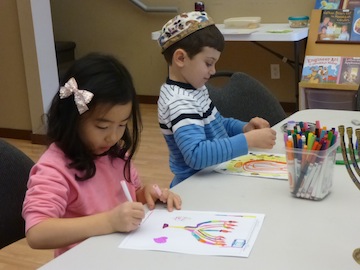
photo - White Rock / South Surrey Jewish Community Centre Religious School students work on their entries to the Jewish Independent’s annual Chanukah cover art contestWhite Rock / South Surrey Jewish Community Centre Religious School students work on their entries to the Jewish Independent’s annual Chanukah cover art contest. (photos from WRSS JCC)

Format ImagePosted on December 1, 2017November 29, 2017Author WRSS JCCCategories Celebrating the HolidaysTags art, Chanukah
The incredible power of soup

The incredible power of soup

Soup is not just food. It’s an experience, a sustenance, a simple yet magnificent meal, if done right, which is generally easy. Probably every culture on earth has a signature variation and, in the Jewish tradition, there is nothing more iconic than chicken soup.

When Sharon Hapton, a Jewish woman in Calgary, had the idea eight years ago to make a great vat of soup and carry it to a shelter for women escaping domestic abuse, she defaulted to that dependable chicken soup recipe. As reported in the Independent in 2014 (jewishindependent.ca/soup-ladled-with-love), that act elicited a deeply moving reaction. The chef at the shelter broke into tears when she saw the offering. There were Jewish women in the shelter and the chef knew the emotional significance and comfort the simple soup would bring.

The nonprofit social enterprise – a movement, really – that emerged from that first gesture is called Soup Sisters and it is a network of more than 40,000 people who have created one million servings of soup since the program began in March 2009. Each month, more than 10,000 servings are delivered to women, children and youth in shelters across Canada and in a couple of nascent cities in the United States. Hapton has been recognized by Chatelaine, CityTV and the YWCA for her vision.

In the interest of gender equality, there is also now Broth Brothers. And, a new iteration of the program, called Souper Kids, encourages young people from age 8 to 17 to participate in helping families and individuals who need it most.

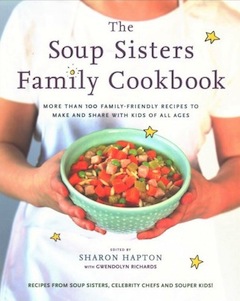
book cover - Soup Sisters Family Cookbook

The Soup Sisters Family Cookbook is the third in a series of publications the group has compiled, and it is aimed directly at this next generation. Edited by Hampton, with Gwendolyn Richards, and subtitled “More than 100 Family-friendly Recipes to Make and Share with Kids of All Ages,” it is a great addition to the shelf. Most recipes have only a few ingredients and are ideal for young people first venturing into the kitchen (with supervision from an adult of even limited cooking capabilities).

The volume includes contributions from celebrities, including Ruth Reichl, David Hawksworth, Nigella Lawson, Michael Smith and Elizabeth Baird, as well as from children from across Canada.

In addition to several variations on chicken soup (the B.C.-based singer and songwriter Jann Arden offers up a Kitchen Sink Chicken Soup), there are classics like Grandma’s Russian Borscht and Easy Creamy Tomato Soup. Kid-invented recipes include Every Bunny Loves Carrot Soup, Posh-tasting Red Pepper and Coconut Soup and Attack of the Killer Tomatoes. Dragon Soup was contributed by a Grade 2 Class in West Kelowna, B.C. Many or most recipes can be made kosher, Cheeseburger Soup notwithstanding.

Jerusalem/London food superstar Yotam Ottolenghi offers Chickpea, Tomato and Bread Soup. Vancouver chef and cookbook author Vikram Vij contributed Indian Comfort Food Soup, sometimes called “Indian Mac-and-cheese,” not because it contains macaroni or cheese, the introduction explains, “but because it’s value-for-money comfort food, and a favourite with kids.” Earls Restaurants contributed their Tortilla Soup recipe.

I made to the Roman “Egg Drop” Soup with ingredients around the house on a cold, rainy autumn afternoon. There is almost nothing to it, but it turns out surprisingly revitalizing and a little bit fancy. It’s really nothing but eight cups of chicken stock (kosher cooks could substitute vegetable stock), four cups of packed spinach leaves (I didn’t want to leave the house, so I used frozen – it would benefit from fresh), 1 1/4 teaspoons of salt, four eggs, and one third of a cup freshly grated Padano cheese (I used the Parmesan I had on hand and it added more salt than ideal).

Once the broth is simmering and the spinach is added, the eggs, cheese and quarter of a teaspoon of the salt are whisked together in a bowl, then slowly whisked into the soup in a traditional egg drop motion more commonly associated with Chinese cooking.

The book includes a preface about making your own stock, as well as basics on slicing, chopping, peeling and prepping – good for kitchen newbies as well as a refresher for oldsters who still slash ourselves too frequently in the kitchen.

The Soup Sisters Family Cookbook is meant for families to come together and cook as a group, which is, of course, what Soup Sisters (and Broth Brothers) is all about. Founded on the simple belief in the power of soup “as a nurturing and nourishing gesture that could make a tangible difference,” Soup Sisters holds year-round programs where participants, who have paid a registration fee, join a soup-making event in a professional kitchen under the guidance of a chef. The social process produces 150 to 200 servings of soup that are then delivered to local shelters.

“Events are social evenings with lively conversation, chopping, laughter and warm kitchen camaraderie that culminate in a simple, sit-down supper of soup, salad, bread and wine for all participants,” says the website.

Vancouver has two Soup Sisters chapters. One is in partnership with the Pacific Institute of Culinary Arts and supports Kate Booth House, a Salvation Army-associated agency that has provided a safe refuge for more than 4,000 women and children from 83 nationalities fleeing domestic abuse. It offers up to 30 days of housing in a supportive atmosphere that includes support services. This chapter also supports Imouto Housing for Young Women, which provides supportive housing in the Downtown Eastside for girls and young women who are homeless or in unsafe housing and who face risks including violence and abuse, exploitation, substance use, racism and other dangers.

Another chapter is in partnership with the Northwest Culinary Academy of Vancouver and supports Sereenas House for Women, a residential support program in the Downtown Eastside that allows women to live independently of violence, abuse and substance use and to access services and become involved in their community.

There are also Soup Sisters chapters in Burnaby, Surrey, the Tri-Cities, Victoria, Penticton and two in Kelowna, among other locations in Canada and the United States.

This recipe will become a cold-weather regular in my kitchen:

WHITE BEAN, CABBAGE AND SAUSAGE SOUP
Contributed to The Soup Sisters Family Cookbook by Laura Keogh and Ceri Marsh, cookbook authors and bloggers at sweetpotatochronicles.com.

2 tbsp olive oil
3 Italian sausages, cut into bite-size pieces
one onion, finely chopped
3 cloves garlic, minced
half a Savoy or green cabbage, cored and thinly shredded (4 to 5 cups)
4 cups chicken stock
one can (15 ounces) cannellini beans, drained and rinsed
1 tbsp fresh thyme leaves
2 bay leaves
salt and pepper to taste
1/2 cup fresh grated Parmesan cheese [easily omitted in kosher kitchens]

1. In a large pot, heat the oil over medium heat. Add the sausages and allow them to brown, pushing them around so they get colour all over. Remove the sausages from the pot and set aside on a clean plate.

2. Add the onion and garlic to the pot and cook, stirring often, until the onion starts to soften, around four minutes. Add the cabbage and stir it around for a couple of minutes.

3. Add the stock, beans, thyme and bay leaves. Return the sausages to the pot and allow everything to come to a simmer over medium heat. Reduce the heat to medium-low and simmer, uncovered, until the vegetables are tender, about 20 minutes. Fish out and discard the bay leaves. Season with salt and pepper to taste.

4. Ladle the soup into warm bowls and serve with a generous sprinkling of Parmesan cheese. [Or not.]

Format ImagePosted on December 1, 2017November 29, 2017Author Pat JohnsonCategories LifeTags Broth Brothers, cooking, Soup Sisters, Souper Kids
The power, beauty of music

The power, beauty of music

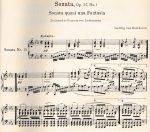
On classical favourite is Beethoven. (image from Schirmer’s Library of Musical Classics)

Music, my love! Where can one start with this subject? For many, it is a highly emotional issue. Watching young people at a rave or rock concert, we can see how totally they are consumed by the sounds, the words and the experience. Though it may leave profound traces in what they become, in the person they are, other priorities will ultimately dictate their behaviour. Nevertheless, don’t so many of us retain some place in our being where the music of our youth, once recalled, takes us back to those times with immediacy, carrying with it all its emotional weight? All the good and all the bad!

Carried away by a political consciousness early in my growing up years, I missed all that. Busy, busy, busy. My attitude was coloured somewhat by having had music thrust down my throat by a mother who felt that no education was complete without a person having the capacity to play a musical instrument. To my distress, the violin was her instrument of choice – weren’t there all those famous virtuosos Jewish? But, my output was in continuous dissonance with the beautiful music I heard in my head, no matter how hard I practised. I struggled with it for a number of years, while my sister achieved some facility, until my teacher suggested I could more productively focus my efforts on attaining celebrity in basketball, where I, as a short person, also had unreasonable expectations. I did, however, gain an appreciation of how beautiful music could be when offered by those with talent.

It was the folk music of the ’60s, the music of protest and rebellion, that most marked my consciousness in those early years. I trafficked in other forms, but it was the emotional appeal of that particular material that captured me. Some of it can still bring me to tears. Over time, though, a few favourite classical works were accumulated as top of mind: Beethoven, Tchaikovsky, Ravel, Dvorak, mainly their stuff stirred my emotions. Gershwin, some Joni Mitchell and Dylan, Joplin and Leonard Cohen round out the picture of less formal music. Do we begin to see a pattern?

I am not an addict. I can go for long periods of time without insisting on being surrounded by melodious strains. But, when the occasion arises, and the stars are aligned, I am totally captured by the music that is available – preferably one of my favourites, but no matter. I become enraptured by the immersion. I know I am an inconstant lover, but a lover I am, nevertheless.

The right sort of music can transport me to places where I feel I could remain forever, a nirvana that wipes away all the stuff that is usually filling my head. There is so much in there, catalogues and timetables, agendas and orders of priority; for the time that I am in a place of music, these things do not exist. In some ways, music becomes for me a refuge. I do not want to imagine life without it. The need for that escape accumulates within me over time until, unconsciously, I am forced to find the occasion for relief.

I know I do music an injustice. Those involved in music-making in all its forms devote the essence of their lives to it; it is their lives. I can only imagine the sacrifices that are made, the years that are spent, by those who have had music take them by throat and totally seize their souls, so driven are they. How insulting that it should descend to being merely a palliative to one like myself!

Many of the things we need in life have their devotees. Fortunately for us, what musicians/composers are offering to us is central to their lives, so they lead a life of service to others, in many ways, without their necessary volition. For us, their raison d’etre may be only incidental, but insofar as they are consumed in making music, in all its various forms, we are blessed by their commitment to finding their joy in their métier.

As a failed musician who knows how much devotion and hard work meaningful music-making takes, I can only express my gratitude. Some of the best moments of my life – and, undoubtedly, for many others – have come from their creativity.

Can we fully express our love for another person without turning at some point to music? Can we fully express our love of country without music? Would we be willing to surrender all that music brings to our lives?

Music came into being because humanity needed this medium to express those feelings that cannot be put into words. The oldest known instrument ever found – thought to be 3,500 years old – is a five-hole flute made from a vulture’s wing bone. Anthropologists estimate, according to Wikipedia, that music is 55,000 years old and originated in Africa. It has been said that humankind fundamentally changed its nature about that long ago. Maybe music played a crucial part in that.

Regardless, I have a love affair with music. I truly believe that music was invented all those eons ago so that I could get to dance with my Bride. Care to join me on the dance floor?

Max Roytenberg is a Vancouver-based poet, writer and blogger. His book Hero in My Own Eyes: Tripping a Life Fantastic is available from Amazon and other online booksellers.

Format ImagePosted on December 1, 2017November 29, 2017Author Max RoytenbergCategories MusicTags music
To leave a community

To leave a community

A still from One Of Us. (photo from lokifilms.com/one-of-us)

The riveting Netflix documentary One of Us follows three New Yorkers in various stages of the painful process of leaving their Chassidic community. The lone woman among them is far and away the film’s most memorable character, in part because she has the most harrowing journey.

“Etty was in the middle of a case and under massive personal duress from the beginning,” co-director Rachel Grady recalled. “She was apprehensive at first [about being in the movie] because she’s somebody that does not seek attention and would never under normal circumstances want to be filmed or photographed for her ego.”

Etty had filed for divorce after 12 years, claiming physical abuse, and she was fighting an uphill battle for custody of her seven children. At the same time, her family and friends abandoned her.

“We had agreed we wouldn’t show her face,” said co-director Heidi Ewing. “She had very good reasons for not wanting her identity to be shown to the world. What happens in the film is what happened to us in life, which is, about halfway through the project, she said, ‘I’ve got nothing to lose anymore. I’m not going to hide.’”

“She was very much alone and isolated and this insane, unexpected reaction from the community was happening to her,” said Grady. “She couldn’t believe it herself. I think she needed some documentation that this was real.”

One of Us debuted on Netflix in mid-October, but the New York-based filmmakers were recently on the West Coast for screenings and Q&As with Academy members who will vote on Oscar nominations.

Grady and Ewing, whose films include last year’s Norman Lear: Just Another Version of You and Jesus Camp, took steps to include the Chassidic community’s perspective, including a portion of a rabbi’s speech at an assembly at New York’s Citi Field that laments the threat – assimilation on steroids – that the modern world poses to Chassidism.

“Anything we had to show the warmth among the people in the community is in the movie,” said Ewing. “If you’re in the community, if you’re standing by all the rules and doing the right thing, there’s a lot to be gained. People will know about you and care about you. It’s when you deviate a little bit to the left or right, there’s going to be consequences.”

While most of the duo’s films focus on a religious community, Grady noted that they are interested in the belief systems that create community rather than matters of doctrine.

“It’s really about the community, how you identify yourself, how you identify yourself compared to others, your worldview based on your community,” Grady explained. “It’s something we could explore over and over and over, and religion is just a great way to do it. You could do the same thing on the zealots at my food co-op.”

Grady, who was raised Jewish in Washington, D.C., confided that she had never thought more about being a Jew than in the three years that she and Ewing were making One of Us.

“This idea that Jews always talk about, is it an ethnic group, is it culture, is it religion? It’s all of those things, and it weighs heavily one way or another depending how you were raised. In this case, there’s a group of people who are my neighbours in Brooklyn that I see every day and I know that I have a deep connection with them.

“I’m always thinking, ‘Did my great-grandfather do that? Would I have done that?’ It was kind of like an exercise every day when I was working on this film.”

While those questions will come up for some viewers as well, they are more likely to be moved by Etty’s struggle to leave the only society she’s known and forge a life in the wider world.

One of Us is now streaming on Netflix (unrated, in English and Yiddish, 95 minutes).

Michael Fox is a writer and film critic living in San Francisco.

Format ImagePosted on December 1, 2017November 29, 2017Author Michael FoxCategories TV & FilmTags Heidi Ewing, Judaism, Netflix, orthodoxy, Rachel Grady
Immersed in Judaism

Immersed in Judaism

Abigail Pogrebin, author of My Jewish Year: 18 Holidays, One Wondering Jew. (photo from Abigail Pogrebin)

A few years ago, author Abigail Pogrebin spent an immersive year studying the Jewish calendar and attempting to observe it. She chronicled her experience in a column in the Forward and, subsequently, in the book My Jewish Year: 18 Holidays, One Wondering Jew (Fig Tree Books, 2017). On Nov. 19, she was in Winnipeg for the city’s Tarbut Festival.

“I did not approach this as a gimmick,” she told the Independent. “It was really a sincere stab at an understanding I never had, which is the origins for all of these chaggim [holidays] … and also, not just the origins, but the underpinnings, because these are obviously … human-created milestones that have endured for thousands of years. I wanted to understand both how and why they were conceived – what they’re supposed to mean for us today, not just to our ancestors. I definitely had a hunch that, for something to have endured for as long as it has, it has to resonate wherever you are in your life – at least for a large swath of people who live by this calendar.”

Pogrebin recognizes that there is a segment of the population that adheres to it simply because they inherited it, without questioning. Yet, for many people, Jewish observance, particularly of holidays, is a deliberate choice.

Pogrebin grew up in New York City. Her mother, writer and activist Letty Cottin Pogrebin, was instrumental in promoting women’s rights in the 1970s, and her writing includes analyses of what it means to be Jewish and female.

“I was not someone who celebrated nothing before this,” said Abigail Pogrebin. “I had sort of the five or six tent poles of Jewish holidays in my life…. I grew up with Shabbat…. It wasn’t enforced, but it was observed when we were together as a family. I went to synagogue on the High Holidays. We had always lit the menorah for eight nights, and I went to two seders back-to-back. Then, also, the feminine seder, which was a tradition that was started in mid-1970s by a group of women, including my mother.

“So, those were the basics that I’d grown up with. But, obviously, I was missing the majority of the signposts of the Jewish year. It bothered me that I didn’t know [them]. I also wanted to experience them in a way that might lead me to more meaning in my life.”

book cover - My Jewish Year: 18 HolidaysAs examples of what she learned on her journey, Pogrebin said she had never understood before that the process of atonement and introspection needs to start far in advance of Rosh Hashanah and Yom Kippur.

“During the month of Elul, we’re supposed to do what is called, in Hebrew, cheshbon hanefesh (accounting of the soul). And, when I asked various rabbis how I might go about that, because there’s not a clear blueprint for observance, quite a few suggested taking the middot (characteristics) and breaking them down, exploring one a day. So, I chose to do that for 40 days leading up to Yom Kippur.

“I did this with a friend, a study partner, essentially. So, my friend, Catherine, and I took these 40 middot that a rabbi had posted online. One day, you’d do anger, another you’d do courage, another envy, another humility.”

As the women went through the days, they aimed to look at themselves as deeply and honestly as they were able and to write their reflections on each characteristic at the end of each day.

“By the time I got to synagogue on Rosh Hashanah and Yom Kippur, I felt like I was in a very different zone for reflection,” said Pogrebin. “On Yom Kippur, I went to a mikvah [ritual bath] for the first time, and that was extremely meaningful.”

Pogrebin spent Sukkot in Los Angeles, interviewing four rabbis in two days, with each one discussing a different aspect of Sukkot that she never had understood before.

“One emphasized the fragility, the impermanence of our structure, and our shelters in our lives,” she explained. “How resonant that is today, with natural disasters and poverty, and all kinds of things that should shake our foundations, both literally and metaphorically.

“Another talked about the fertility, the imagery that is in Sukkot – the shaking of the lulav and etrog, which was much racier than I ever understood. Another talked about agriculture, and the land and connecting – reconnecting with the earth in ways we don’t do in other times of the year.

“Another rabbi talked about wandering, the importance of being lost and being comfortable with being lost; embracing the idea of the most important lessons and reckonings when we don’t know where we are going.”

Pogrebin also mentioned Yom Hashoah, which commemorates victims of the Holocaust. According to her, not many people know when it takes place. “I think it’s just not in the fabric of how many of us were raised, but it seems to me to be a crucial holiday, even though it could never be adequate to mark such a vast and devastating history and persecution,” she said.

“I went to B’nai Jeshurun, which is a Conservative synagogue on the Upper West Side that, in partnership with the JCC in Manhattan, does something called the naming of the names, where they have this book from Yad Vashem … devastating lists of families who perished. Starting at 10 p.m. and going all night into the next day, people tak[e] turns reading those names,” said Pogrebin.

About how the yearlong experience has changed her and her family, Pogrebin said, “In a way, it’s changed completely and, in a way, it hasn’t changed radically. I’d say it’s changed completely in the sense that I don’t look at time, relationships, obligations, the same way anymore. I think, if the holidays do anything, they are constantly reminding us to ask ourselves who we are in the world and whether we are doing what we could be doing to alleviate someone else’s suffering or pain.”

Pogrebin is always looking for ways to bring the lessons of her journey into her day-to-day life, to make them come alive in a way they didn’t for her when she was a child.

About the book, she said, “If one wants to understand the arc of the year, you will. It’s not that there are not people who might disagree with this or that, but it was researched and tested with people who live this and teach this at a very high level. So, it’s not just Abby saying it to be true. It’s me putting on my journalist hat and making sure when I explain something that it’s definitely rooted in scholarship. I hope … it’s an enjoyable and entertaining book.

“The people who read it are coming along with me and my experience with the holiday for the first time. They are also getting, I think, a fairly thorough template of what a Jewish year involves and demands. I think that, whether you’re Jewish or an interfaith family that wants to explain or introduce … some of these holidays in your own home and you’ve never done them before, it’s absolutely a door into learning how.

“There is something magical,” she said, “about not just living by someone else’s clock, but by an ancient roadmap…. I think there’s something very powerful about embracing … whether it’s Judaism or any religion, what it imposes on you, in terms of [laying out] what you should be thinking about besides your own needs and wishes – to me, that’s an important takeaway that I think other people should explore.”

Rebeca Kuropatwa is a Winnipeg freelance writer.

Format ImagePosted on December 1, 2017November 29, 2017Author Rebeca KuropatwaCategories BooksTags Abigail Pogrebin, Jewish life, Judaism

Posts pagination

Previous page Page 1 … Page 411 Page 412 Page 413 … Page 670 Next page
Proudly powered by WordPress