Skip to content
  • Home
  • Subscribe / donate
  • Events calendar
  • News
    • Local
    • National
    • Israel
    • World
    • עניין בחדשות
      A roundup of news in Canada and further afield, in Hebrew.
  • Opinion
    • From the JI
    • Op-Ed
  • Arts & Culture
    • Performing Arts
    • Music
    • Books
    • Visual Arts
    • TV & Film
  • Life
    • Celebrating the Holidays
    • Travel
    • The Daily Snooze
      Cartoons by Jacob Samuel
    • Mystery Photo
      Help the JI and JMABC fill in the gaps in our archives.
  • Community Links
    • Organizations, Etc.
    • Other News Sources & Blogs
    • Business Directory
  • FAQ
  • JI Chai Celebration
  • JI@88! video

Recent Posts

  • Sharing her testimony
  • Fall fight takes leap forward
  • The balancing of rights
  • Multiple Tony n’ Tina roles
  • Stories of trauma, resilience
  • Celebrate our culture
  • A responsibility to help
  • What wellness means at JCC
  • Together in mourning
  • Downhill after Trump?
  • Birth control even easier now
  • Eco-Sisters mentorship
  • Unexpected discoveries
  • Study’s results hopeful
  • Bad behaviour affects us all
  • Thankful for the police
  • UBC needs a wake-up call
  • Recalling a shining star
  • Sleep well …
  • BGU fosters startup culture
  • Photography and glass
  • Is it the end of an era?
  • Taking life a step at a time
  • Nakba exhibit biased
  • Film festival starts next week
  • Musical with heart and soul
  • Rabbi marks 13 years
  • Keeper of VTT’s history
  • Gala fêtes Infeld’s 20th
  • Building JWest together
  • Challah Mom comes to Vancouver
  • What to do about media bias
  • Education offers hope
  • Remembrance – a moral act
  • What makes us human
  • המלחמות של נתניהו וטראמפ

Archives

Follow @JewishIndie
image - The CJN - Visit Us Banner - 300x600 - 101625

Author: Bruce Brown

Land of milk, honey …

Toward the end of last year, Israel signed an historic agreement with Lebanon, enabling both countries to enjoy an abundance of natural gas located deep below their respective territorial waters.

Now, Israel can continue exploring its northern Karish gas field without the risk of Hezbollah missiles overhead. And Israel will receive indirect royalties from Lebanon’s Kana field – with no peace treaty (yet), royalties will be paid via a third country. Add that to potential revenues from Israel’s other natural gas finds in the Mediterranean, and there’s the opportunity of Israel replacing Russia as Europe’s main natural gas provider. Israel will become more than just the land of milk and honey.

Optimistic forecasts of a natural gas Sovereign Wealth Fund are for billions of shekels in tax revenue. Trusting that the new ruling gas triumvirate – Prime Minister Binyamin Netanyahu, Finance Minister Bezalel Smotrich and Energy Minister Israel Katz – will optimize our natural gas and its wealth fund, then Israel becomes the land of milk, honey, natural gas and an overflowing wealth fund.

Hopefully, Lebanon’s natural gas opportunity will help their economy. Then it, too, will be a country overflowing in natural gas and with its own wealth fund.

***

Israel’s 2022 inflation rate was 5.3%, its highest since 2008.  Within the OECD, Israel had the third lowest rate, behind Japan’s 3.0% and Switzerland’s 3.3%. How’s that for our little shtetl! Can’t even compare these rates with the much poorer performing OECD countries such as Estonia at 23.6%, Lithuania at 24.1% and Turkey at 83.5% (yikes!).

Israel’s rate was even lower than the 6.3% of Canada, whose neighbour to the south experienced a similar level. As for Israel’s neighbours, Jordan and Saudi Arabia were at 4.4% and 3.3% respectively … pretty good. Egypt suffered a 24.4% inflation rate, Syria a rate of 105% and Lebanon 189.4%, one of the highest in the world! Israel, the land of milk, honey and competitive inflation rates.

***

Then there’s the judicial reforms bonanza. Israel’s new justice minister, Yariv Levin, is looking to overhaul the system by granting the government – through a simple majority vote – the right to overturn High Court decisions and by giving politicians more power in appointing Supreme Court judges. Detractors are concerned this gives the government way too much say over legal matters and threatens our democracy.  Supporters – largely those who voted for the new government – believe these changes will strengthen the legislature’s ability to enact the will of the electorate. Theirs, anyway.

Karnit Flug and Stanley Fischer, former Bank of Israel governors, are firmly in the former camp. They’re concerned these reforms will harshly undermine the High Court’s authority and concentrate too much power with the government, hurting Israel’s sovereign credit rating, destabilizing the economy and reducing the standard of living.

Netanyahu – the free market czar who revolutionized Israel’s economy as finance minister and who extracted natural gas from our sea as prime minister – believes his judicial reforms will rejuvenate the economy by reducing excess regulation and judicialization.

Adding to the festivities. Israel’s anti-reform (and largely anti-government) movement had its third weekly 100,000-person protest in Tel Aviv last month. A sea of people storming the city square, waving flags of blue and white, singing folk songs and Hatikvah and shouting slogans of support for the high judges. Israel, the land of milk, honey and a real judicial balagan.

***

It’s here! 7-Eleven opened its first store in Israel. In downtown Tel Aviv (of course), with plans to roll out hundreds of branches throughout our little shtetl over the coming years. Hello, Slurpees! Those multi-coloured slushies were a staple of my Canadian childhood. Although now  I am more a fan of the fresh Dole bananas sold at the stores in the United States and Japan, which I’d buy as a healthy snack while on overseas business trips. Looking inward, does this mean the demise of Israel’s famous mom-and-pop stores, found in neighbourhoods across the country, the Bella’s and Yankela’s, which add to Israel’s heimishe-like atmosphere? That would be a pity! Israel becoming the land of milk, honey, Slurpees … and Dole bananas.

***

On a much lighter note, what about Israel’s maple syrup revolution? It was once only available from specialty food stores, and at an exorbitant price. But what’s a poor Canadian immigrant to do? I paid the ransom and our family enjoyed Shabbat morning French toast, pancakes and waffles. Whenever visiting Canada, I stocked up with the stuff, packing carefully bubble-wrapped bottles of both real and imitation maple syrup into my suitcase.

But, thanks to free trade. Real maple syrup – the organic kind from Canada – became super cheap in Israel, even less expensive than in Canada! And it’s available everywhere, even at Bella’s and Yankela’s. Now when I return to Canada, I take back Canadian maple syrup as gifts. Dare I say it … Israel, the land of milk, honey and Canadian Maple Syrup, eh.

Bruce Brown is a Canadian and an Israeli. He made aliyah … a long time ago. He works in Israel’s high-tech sector by day and, in spurts, is a somewhat inspired writer by night. Brown is the winner of the 2019 AJPA Rockower Award for excellence in writing, and wrote the 1998 satire An Israeli is…. Brown reflects on life in Israel – political, social, economic and personal.


Posted on February 10, 2023February 9, 2023Author Bruce BrownCategories Israel, Op-EdTags business, economics, inflation, Israel, judicial reform, politics

Promises can be motivating

Most of us have to work for a living. Even if we enjoy most of what we do, it’s rare to find someone who feels every moment of their job is a joy. After all, if they’re paying you to do it, my brother and husband would joke with me, “there’s a reason they call it work.”

However, sometimes things happen at work that just aren’t OK or comfortable. Long ago, I worked at an hourly job at a university doing educational administration. It was a mind-boggling number of obligations, managing hundreds of short courses, from instructor attendance lists and access codes to editing course descriptions, proofreading course catalogues and scheduling classrooms. I even set up chairs and tables myself for some courses. It was not my favourite job.

When Passover came along, I had to request time off to clean and cook at home, as I was expecting family to visit. It was not a standard holiday at this university and, although I was asking for time off without pay, the dean questioned me in detail about why it was necessary to grant this to me.

I needed the job. I’d finished my graduate degree but my husband hadn’t finished his yet. We needed the income. I tried to politely field the questions. I knew she was just curious and likely hadn’t ever had the opportunity to ask a Jewish person these kinds of things before. She took pride in wishing me happy holidays – by name – even when she got the Jewish holidays wrong or shared the greetings at the wrong times of year. Even so, she was in a position of power as my boss and I had no option but to answer her if I wanted to keep my job.

The weird part about this encounter is that it doesn’t only happen to religious minorities working for a majority culture boss. I’ve experienced similar questioning as a freelancer working for Jewish organizations, too – everyone wants to know what your observance level is, whether they know your family, if you have a plan for the holidays. Perhaps it’s meant to be friendly and supportive but it can also feel uncomfortable or intrusive. If one answers truthfully, sometimes the outcome doesn’t align with whatever the boss’s preferences would be.

If you work in a large organization with a human resources department, maybe there’s help there, but, most of the time, bringing it up elsewhere can result in more trouble than it’s worth. If diversity and inclusion at your organization don’t recognize “Jewish” as one of the categories, you may have singled yourself out for even more difficulties later on.

The commitments we make Jewishly vary, and everyone chooses their own boundaries. However, these promises we make, to ourselves and our families, are in some ways vows that we must honour and reconcile with our work lives.

This made me think about the talmudic tractate of Nedarim (Vows), which I just finished studying. Much of the tractate is spent trying to help people understand why rabbis think vows of any kind are just a bad idea. Culturally, too, this tractate seems to recognize a time when someone could announce that “all vegetables are forbidden to me” and suddenly this very poorly thought out vow becomes real and must be observed. Hence, the rabbis spent a lot of time suggesting that people just avoid taking vows altogether: better to skip making serious promises you can’t keep. That said, eventually, the Kol Nidre prayer was developed for erev Yom Kippur – it is a blanket prayer releasing us from all the vows we could not keep over the past year.

Rabbi Elliot Goldberg taught an interesting perspective in an online siyyum (celebration at the end of the tractate) on My Jewish Learning. Goldberg points out an example from Nedarim 8a that, even if one is committed to doing mitzvot (commandments), making a vow to do more is motivating: “Rather, it teaches us this: it is permitted for a man to motivate himself to fulfil the mitzvot in this manner, although the oath is not technically valid.” For example, if someone decides that, this year, it would be good to attend services or to donate more to charity, these are not technically vows, but more like New Year’s resolutions. We’re already supposed to do these things, but if we voice a commitment to doing them, it is motivating.

What does this have to do with our uncomfortable moments at work? Sometimes, even knowing that a situation will be awkward, we decide to do it anyway. It would have been easier for me to work right through Passover instead of going through the question-and-answer situation with the university dean. Instead though, this hard encounter motivated me even more to take the time off to clean, cook and spend time with visiting relatives.

Sometimes, finding a way to cope with a difficult situation at work can result in a deeper personal commitment to one’s own beliefs and values. In my case, even though I was very happy to leave that job, I believe that my year working in the Short Course program made a difference. When I left, colleagues told me that they’d learned from me and respected what I’d offered the department.

Our household finances often dictate our work lives – we all have to pay the bills and eat. Yet, sometimes Jewish law, provincial or federal law also affect our finances and ability to make our way in the wider world. We shouldn’t make vows, but promising ourselves to try harder next time to do what’s right just might be motivating in situations that don’t make those choices easy.

Joanne Seiff has written regularly for CBC Manitoba and various Jewish publications. She is the author of three books, including From the Outside In: Jewish Post Columns 2015-2016, a collection of essays available for digital download or as a paperback from Amazon. Check her out on Instagram @yrnspinner or at joanneseiff.blogspot.com.

Posted on February 10, 2023February 9, 2023Author Joanne SeiffCategories Op-EdTags Judaism, lifestyle, Talmud, work
Just for Laughs returns

Just for Laughs returns

Phil Rosenthal of Somebody Feed Phil takes part in Just for Laughs Vancouver on Feb. 19. (photo from JFL Vancouver)

Just for Laughs Vancouver returns for another year’s festival, presented in association with SiriusXM Feb. 16-25. It welcomes back Best of the West, highlighting local talent, and reintroduces the Creator’s Series, with the first guest confirmed surely to be an entertaining afternoon: Phil Rosenthal. Listed below are some of the Jewish community members participating in the festival.

A Conversation with Phil Rosenthal /  Feb. 19, 5 p.m., at Vogue Theatre

Rosenthal is the award-winning creator, executive producer and host of Netflix’s hit Somebody Feed Phil, as well as a New York Times best-selling author. The Emmy-nominated unscripted documentary series combines Rosenthal’s love of food and travel with his unique brand of humour and he recently won a 2022 Critics Choice Real TV Award for Best Travel/Adventure Show on behalf of the series and garnered a 2022 James Beard Award nomination. He also recently released Somebody Feed Phil: The Book, which instantly landed on the New York Times bestseller list.

Sarah Silverman: Grow Some Lips / Feb. 23, 7 p.m., at Queen Elizabeth Theatre

Silverman is a two-time Emmy Award-winning comedian, actress, writer and producer. She currently hosts her weekly podcast, available on iTunes and wherever podcasts are available. She can next be seen as the host of TBS’s Stupid Pet Tricks, an expansion of the David Letterman late-night segment. She recently wrapped production on Netflix’s Maestro, a biopic on the life of composer Leonard Bernstein, where she will star opposite Bradley Cooper.

Ari Shaffir / Feb. 25, 9:30 p.m., at Vogue Theatre

Shaffir is best known for the storytelling show he created and hosted on Comedy Central called This Is Not Happening. His last Netflix special, Double Negative, won a Grammy for best comedy special before the award committee realized it was too filthy and didn’t represent the high standards that the Grammys has long stood for so the honour was stripped from him. Shaffir has had numerous appearances on the Joe Rogan Experience podcast, as well as WTF with Marc Maron, The Adam Carolla Show and Your Mom’s House. His own podcast, Ari Shaffir’s Skeptic Tank, is a chart topper that comes out every week.

Sarah Sherman / Feb. 16, 9:30 p.m., and Feb. 17, 7 p.m., at Biltmore Cabaret

Sherman aka Sarah Squirm is currently a featured player on Saturday Night Live. Outside of the show, she is known for her unconventional and popular live show, Helltrap Nightmare. She was chosen as one of the 2021 Just for Laughs’ Montreal’s New Faces of Comedy.

Jared Freid / Feb. 22, 9:30 p.m., and Feb. 23, 7 p.m., at Rio Theatre

Freid is a stand-up comedian based out of New York City, with a strong focus on dating and relationships. His comedy is current and reflects the ordinary daily thoughts of everyone you know, especially if you know a lot of millennials who are obsessing over dating apps, trying to be real adults, and worrying about their bodies. He co-hosts the podcast U Up? with Jordana Abraham, where they discuss their takes on modern dating, and recently launched a new show, Dating Makeover, a podcast presented by Spotify.

An Intimate Evening with Adam Pally / Feb. 17, 7 p.m, at Rio Theatre

Songs, stories and jokes come together just like Momma used to make it. Enjoy the stories, sing along to the songs, hopefully think the jokes are in fact jokes and the price of the ticket and commute and being around a bunch of strangers was worth it. I, uh, I mean whoever is writing this, definitely not Adam Pally, is so thankful for the opportunity to entertain you.

Hannah Berner / Feb. 18, 9:30 p.m., at Rio Theatre

Berner was born in Brooklyn, N.Y., and played competitive tennis for the University of Wisconsin. She emerged on the comedy scene by directing, editing and acting in videos on Instagram and writing viral tweets. She has two podcasts, Giggly Squad and Berning In Hell. Berner is an advocate for mental health, animals and napping.

* * *

For the full Just for Laughs Vancouver lineup and show tickets, visit JFLVancouver.com. 

– Courtesy JFL Vancouver

Format ImagePosted on February 10, 2023February 9, 2023Author JFL VancouverCategories Performing ArtsTags comedy, Just for Laughs, Vancouver

Navigate golden years

On Feb. 15 at Beth Israel, there will be two opportunities to hear Dr. Mielu Rabinovici speak on the topic of The Know-How to Navigate Through the Golden Years and Retirement, and Preparedness also Towards an Increased Longevity and a Better Quality of Life.

Rabinovici is an author and educator who has lived and worked across Canada and on three continents. He has degrees from various institutions, including the University of Toronto, faculty of education.

He has written and taught on several subjects, his areas of speciality being accounting, marketing and management. He is also the author of several books especially designed for seniors, about retirement, longevity and towards a better quality of life.

Now in his mid-80s, Rabinovici is still writing and sharing his knowledge with many groups, including seniors, helping them navigate through the modern complexities of life, characterized by climate change and rapid technological changes.

To register for one of Rabinovici’s Feb. 15 talks (2-4 p.m. or 6-8 p.m.), call him at 604-725-1376.

– Courtesy Temple Sholom

Posted on February 10, 2023February 9, 2023Author Temple SholomCategories LocalTags Mielu Rabinovici, retirement
Climate-change era graphic novel for young readers

Climate-change era graphic novel for young readers

Steve and Eve Save the Planet is an illustrated graphic novel series that tries to address the challenges of this climate-change era while inspiring children with adventure, laughter and hope. The project is the creation of authors Paul Shore and Deborah Katz Henriquez, and illustrator Prashant Miranda.

image - I Can Hear Your Heart Beep book coverIn the first book in the series, I Can Hear Your Heart Beep, readers will be introduced to Steve, a kooky polar bear with a magical power gifted to him by the Northern Lights, and Eve, a feisty electric car who wants to change the world. The 200-page illustrated work-of-art will be available to pre-order from Amazon in paperback, hardcover and ebook formats as of Feb. 14, and the book launch will take place on Feb. 25, 1 p.m., at Arts Umbrella on Granville Island.

Parents or their kids can sign up to Planet Hero Kids at savetheplanetbook.com/signup to follow Steve and Eve as their adventures begin to unfold.

– Courtesy Planet Hero Kids


Format ImagePosted on February 10, 2023February 9, 2023Author Planet Hero KidsCategories BooksTags children's books, climate crisis, graphic novels
New housing partnership

New housing partnership

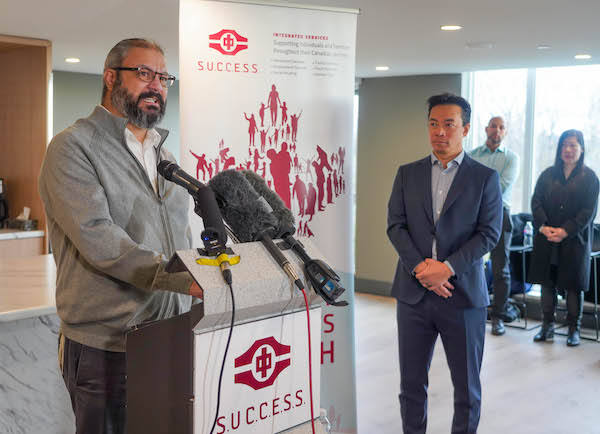
Yaron Komari, a resident at Dogwood Gardens, speaks at the development’s opening ceremony Jan. 10, as Vancouver Mayor Ken Sim looks on. (photo by Al Lau)

Yaron Komari grew up in Israel, served in the Israel Defence Forces and moved to Canada in 2009. He was pursuing a career as an apprentice electrician and was hopeful for the future when he was diagnosed with Type 2 diabetes in 2018. A year later, the diabetes progressed into serious neuropathy and his career was effectively halted.

“I had no financial safety net and soon found myself in tough times,” he said. “I quickly found myself living in a rooming house with drug addicts and prostitutes as my neighbours. I felt very unsafe. Just walking up the 12 stairs to my room became a daily challenge, never mind the chronic insomnia.”

Komari shared his story at the official opening Jan. 10 of Dogwood Gardens, an affordable housing development on West 59th Avenue near Cambie. The 138-unit building, part of the larger Cambie Gardens development, is a partnership between Tikva Housing Society, SUCCESS and the City of Vancouver.

“Even my doctor became concerned,” Komari recounted at the ceremony. “Without access to a kosher kitchen, my diabetes became unmanageable and further affected my overall health. I’m an observant, kosher Jew and my living situation simply added more stress to my everyday life.

“I never in my worst nightmares thought that I would live in an unbearable and unhealthy environment and rely on community generosity to help source kosher food and meals,” he said.

Komari knew of Tikva Housing, which has the mission of providing “access to innovative and affordable housing solutions for all those in the Jewish community who need it.” However, he thought that there were people in greater need.

“With the persuasion and the help of Tikva Housing and Jewish Family Services, I applied for housing,” he said. “You cannot even begin to imagine what I felt when I got the call from Tikva Housing that my application had been approved. There was no hope for me.… [But] the keys are now in my hand. I walked into my new home. I couldn’t even believe that was happening to me. It was emotionally overwhelming…. I have a fridge that I can store my food in. I have a kosher kitchen where I can prepare my own meals and I have the peace of mind that I am safe and secure. For the first time in years, I have slept through the night. Tikva Housing has changed my life. I’m proud of where I live…. My world feels more open and I no longer feel shame or embarrassed of where and how I live.”

Komari’s is just one of the lives positively affected by the opening of the new facility, which was made possible under the city’s inclusionary housing policy, which requires developers to provide social housing as part of large redevelopment projects. SUCCESS and Tikva will co-manage the facility, which also includes an amenity space, children’s play area, parking and storage. Of the 138 units, 30 are designated for Tikva and 108 for SUCCESS. There are studio apartments and one-, two- and three-bedroom units. About half the units are offered to tenants at 10% below market rents, while the rest are adjusted to income, based on provincial guidelines. The larger Cambie Gardens development, of which Dogwood Gardens is a part, will see a total of 540 affordable units when the project of more than 3,000 total apartments is completed on the 10-hectare (25-acre) site. The redevelopment is on the location of Vancouver Coastal Health’s former Pearson Dogwood complex, which housed adults with physical disabilities and seniors with complex needs.

Anat Gogo, Tikva’s executive director, told the Independent that about 90% of the homes designated for members of the Jewish community are now occupied, with the rest of the residents expected to move in within days. Earlier, she told the audience, which included elected officials and community leaders, that stable, affordable housing is a basic need that allows people to move from merely surviving to thriving.

“This project makes me feel like we can have a meaningful and long-lasting impact and actually make a difference in people’s lives,” she said. “At Tikva, we are committed to tikkun olam, repairing the world, and we do this one home at a time. We are committed to building community.”

Rhonda Sacks, chair of the board of directors of Tikva, also spoke, highlighting the power of partnerships.

“While Tikva and SUCCESS serve diverse populations, we share a common passion for supporting our communities and making a genuine difference in their lives,” she said. Sacks also offered special thanks to lead supporters, including the Diamond Foundation, the Ben and Esther Dayson Charitable Foundation, the Al Roadburg Foundation and the Ronald S. Roadburg Foundation.

“Dogwood Gardens is perfectly positioned to inspire meaningful connections and provide a strong sense of belonging,” said Sacks.

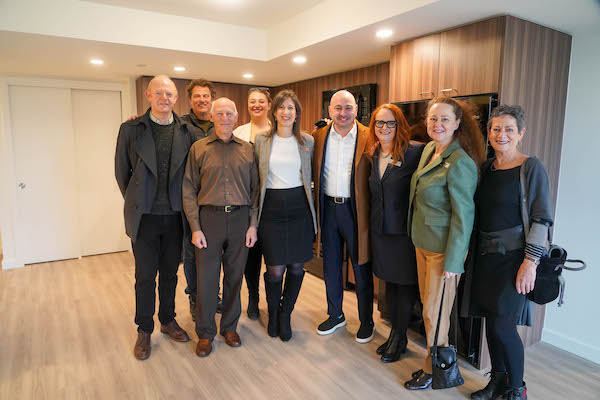
photo - Supporters of Tikva Housing in one of the units at Dogwood Gardens on Jan. 10, left to right: Stephen Gaerber, Gord Kushner, Bernard Pinsky, Rory Richards, Anat Gogo, Ezra Shanken, Rhonda Sacks, Sheila Sontz and Daniella Givon
Supporters of Tikva Housing in one of the units at Dogwood Gardens on Jan. 10, left to right: Stephen Gaerber, Gord Kushner, Bernard Pinsky, Rory Richards, Anat Gogo, Ezra Shanken, Rhonda Sacks, Sheila Sontz and Daniella Givon. (photo by Al Lau)

Dogwood Gardens is not the first partnership between Tikva and SUCCESS. With other partners, the two agencies opened the 129-unit Diamond Residences (Storeys), in Richmond, six years ago. Last year, YWCA Metro Vancouver, the Association of Neighbourhood Houses of B.C. and Tikva opened xʷƛ̓əpicən, a 125-unit complex at Arbutus Centre. Tikva’s portfolio also includes the 32-unit Ben and Esther Dayson Residences, in south Vancouver’s River District, and Dany Guincher House, an 11-unit building for people at risk of homelessness and persons with disabilities who can live independently, which was Tikva’s first building. The house was built in 1970, purchased by Tikva in 2007 and began operations in 2008. With Dogwood Gardens now open, Tikva’s portfolio includes 128 units.

Currently under construction in Burnaby is the next Tikva initiative, Susana Cogan Place, which is named after the woman who led Tikva until her passing in 2017. This project will add another 20 units of affordable homes.

In addition, Tikva Housing has a rent subsidy program that provides eligible low-income singles and families with cash assistance towards their monthly rent, within available funding.

At the Dogwood Gardens opening, Vancouver Mayor Ken Sim was joined by city councilors Sarah Kirby-Yung, Rebecca Bligh and Christine Boyle.

Sim noted that he grew up about a half-kilometre away in what was “effectively affordable housing” and said this new housing complex means that “the next generation of Vancouverites who may not have a lot … can still live in an amazing area like this one.”

The project is part of sprawling changes along the Cambie corridor, including the Oakridge redevelopment and smaller projects that increase density along the thoroughfare. JWest, the redevelopment of the Jewish Community Centre of Greater Vancouver campus a few blocks to the northwest, is a major component of the changing face of the broader area, which has traditionally been home to many of Vancouver’s Jewish residents and community institutions.

“The City of Vancouver is committed to delivering much-needed quality housing while developing collaborative relationships with community partners,” said Sim. “We applaud the work of SUCCESS and Tikva, who have helped expand options for culturally appropriate housing across our city.”

Queenie Choo, chief executive officer of SUCCESS, chaired the opening ceremony and acknowledged other representatives of her organization, which is celebrating its 50th anniversary this year and has grown from a small charity in Chinatown to one of Canada’s largest social service agencies.

Format ImagePosted on January 27, 2023January 26, 2023Author Pat JohnsonCategories LocalTags affordable housing, Ken Sim, SUCCESS, Tikva Housing, Vancouver, Yaron Komari

Complexities of Berlin

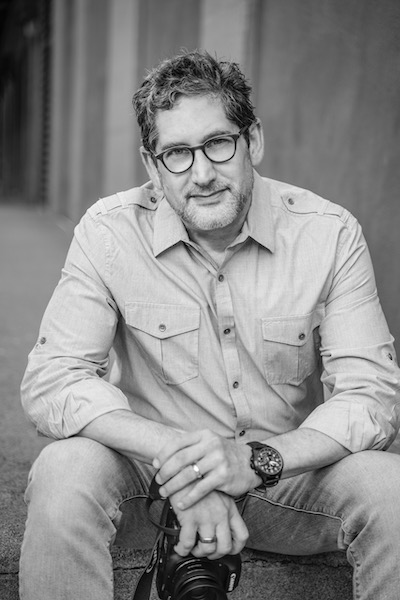
Photographer Jason Langer’s perception of Germany and its capital, Berlin, is a complicated one, and his current exhibition at the Zack Gallery, Berlin: A Jewish Ode to the Metropolis, reflects those complexities. Organized in partnership with the Cherie Smith JCC Jewish Book Festival, the exhibit is Langer’s first show in Canada.

photo - "Boys" by Jason Langer, from his book Berlin
“Boys”  (photo by Jason Langer)

Langer’s newly published book, Berlin, includes 135 black and white photographs. A selection of these images forms the exhibit at the Zack, which has an emotional sophistication of its own, even though the show is being promoted as a prologue for the book festival. Both the show and the book catalogue the artist’s several trips to Berlin and his explorations of the city. They also provide visually compelling commentary on Langer’s contradictory and evolving feelings for Germany.

photo - A Nazi uniform in the Sachsenhausen concentration camp museum in Berlin. (photo by Jason Langer)
A Nazi uniform in the Sachsenhausen concentration camp museum in Berlin.  (photo by Jason Langer)

As in life, the then-and-now overlap and, occasionally, the juxtaposition of the past and the present are jarring in Langer’s imagery. On the one hand, Germany is the country where the Holocaust originated, the country that erased its Jewish population almost entirely and spearheaded the destruction of the Jews of Europe. On the other hand, it is a modern country of laughing kids, hardworking people and beautiful architecture, a country that acknowledges its past actions and tries to make amends to the Jews. It is a country inspiring fear, hatred, respect and admiration in varying measures.

Langer writes in an essay about his relationship with Germany and its progression from total negativity to growing understanding. When he was 6 years old, his family moved from his native United States to Israel, where he spent his formative years, until age 11, on a kibbutz.

“Every year, each children’s house would visit the Holocaust memorial, located on the kibbutz property, during Yom Kippur…. We were asked to walk silently and led into a courtyard with one building and three short walls,” writes Langer. “I remember the walls were made of large, rectangular stones, grey in colour and a bit rough and oddly shaped. We learned about how the Jews had suffered, first as slaves in Egypt and then in the Holocaust by the Germans.”

Later, as an adult, he “vaguely remembered having heard fearful stories of German people from my mother and grandmother, though my mother also made jokes about Germans, putting on a comic fake accent. She died in 2003 and I inherited her books, among other things, including a kind of illustrated encyclopedia titled The Wonderful Story of the Jews, written by Jacob Gewirtz. It was published [in 1970], not long before our move to Israel. The text refers to the Germans’ ‘unspeakable crimes’ against the Jews, as well as the ‘unending ravages of war, persecution and tyranny’ they had faced. Some of the illustrations are quite scary, showing buildings on fire and Jewish people menaced by gun-wielding Nazis. The book presents Israel as a place of refuge, the kibbutzim as almost unique.”

After being exposed to such ideas during childhood, Langer’s predominant feeling towards Germany was aversion. But then, in 2008, when he was already an established photographer, one of his friends suggested he photograph Berlin.

“He thought the city would be a good match for my sensibilities but I met his suggestion with trepidation and fear,” Langer recalled. “I harboured many preconceived ideas about Germans and Germany. I imagined Berlin as a vast, cold, unfriendly, gritty place, but, at the same time, it seemed exciting and sexy somehow.

“I decided to see Berlin for myself, keen to challenge my existing ideas and also uncover reminders of the Jewish people who had lived there, until they fled or were hunted down and killed by the Nazis.”

photo - Photographer Jason Langer’s exhibit at the Zack Gallery runs to Feb. 16
Photographer Jason Langer’s exhibit at the Zack Gallery runs to Feb. 16. (photo from Jason Langer)

In the next five years, Langer visited Berlin frequently. “From 2009 to 2013,” he said, “I made five trips for two weeks at a time. I stayed in a flat with about six people. When they were going on vacation, they would let me know, and I would fly over and occupy their rooms. They would also give me advice on where to go.”

During those visits, he took multiple photographs and strived to form a new narrative regarding his feelings and associations regarding Germany and its people.

“This work is an attempt to remember, confront and unwind my attitudes about Germans, Germany, Berlin and my Jewish inheritance; these images are part discovery, part remembrance and part fantasy,” he explained. “They’re my attempt to stand where Jewish people were rounded up and deported, to remember but also reassess. They’re an effort to confront my internal attitudes and prejudices, to look into people’s eyes and find a continuation of kindness, to be open to the happiness of contemporary life in Berlin.”

Some photographs in the gallery are full of anguish and terrible beauty, like the Holocaust Memorial, consisting of 2711 concrete slabs (stelae) of  different heights, or an ornate door of the Stiftung Neue Synagogue, built in 1865, the only synagogue in Berlin to survive the war, though its interior was burnt.

The horror of the war is also reflected in the image of an old, dilapidated shed, the “goat house,” where one Jewish family, a mother and a daughter, hid for several years to survive the Nazis’ attempt to exterminate Jews. No water, no heat, no electricity, just the women’s indomitable spirits and relentless wish to live.

Every photo has a story to tell. Many a story of heroism and tragedy. But there are other pictures, too, reflecting modern Berlin, the city of now. Laughing boys, a tired-looking woman, an anti-fascist demonstration, various streets and buildings.

Langer writes: “It was a strange mix of death and life.… There was a sense of youth, freedom and joy I felt in Berlin.… Whenever I wandered, I took it as a gift of prolonged, uninterrupted time for reflection.”

The artist’s wanderings and reflections led to the creation of the photobook Berlin.

“This book is not a document,” said Langer. “It is a dream within a dream within another dream. Berlin is immense, there was no way I could cast a wide enough net to what it’s like. Instead, I have painted a picture of then and now, pain and pleasure, some people who died long ago and those who are living and young, all from my own perspective.”

Berlin: A Jewish Ode to the Metropolis opened on Jan. 6 and will continue at the Zack Gallery until Feb. 16. For more information, visit jasonlanger.com.

Olga Livshin is a Vancouver freelance writer. She can be reached at [email protected].

Posted on January 27, 2023January 26, 2023Author Olga LivshinCategories Books, Visual ArtsTags Berlin, Cherie Smith JCC Jewish Book Festival, Holocaust, Jason Langer, photography, social commentary, Zack Gallery

Obligation to criticize

Last Saturday, Israel’s ambassador to Canada announced he was resigning over differences with the new government back home.

Ronen Hoffman has served only about a year in the role. He was appointed by the last government and, before that, had been a Yesh Atid party member of the Knesset under the leadership of former prime minister Yair Lapid. So, Hoffman was a political appointee, which makes his resignation significant but not the bombshell it would have been had he been a career diplomat.

Nevertheless, this was perhaps the most conspicuous example in Canada of ripples of response to what media around the world have taken to calling Israel’s “most right-wing government ever,” which was sworn into office under the once-and-then-again-and-now-again Prime Minister Binyamin Netanyahu Dec. 29.

Having alienated, via policies or personality, a great number of potential allies on the centre and right, Netanyahu cobbled together a parliamentary coalition that includes some of the most extremist voices in Israeli society. As we mentioned in this space last issue, some of the approaches the new government seems bent on are not merely matters of policy but structural tampering with the fundamental tenets of Israeli democracy, including the courts, definitional foundations of citizenship, possible assaults on LGBTQ+ rights, as well as what appears to be a new bull-in-the-china-shop approach to governance and settlements in the West Bank.

In this issue of the paper alone, two separate Canadian organizations express concern about the impacts that perceptions of the new government in Israel will have on their work here.

Some Diaspora voices have been saying that this is the time for overseas allies to express in whatever ways possible to their Israeli counterparts, family and friends the impacts that certain policy approaches there will have on Jewish people here, and on relations between Jews in both places.

There is no doubt that the people who have made a cottage industry of attacking Israel in the past will continue to do so, using as fuel any evidence that the state of Israel is abandoning its commitments to human equality, democracy and pluralism. Haters gonna hate.

But there is another possibility, a conceivable glimmer of light shining through the cracks of Israeli-Diaspora relations.

There has always been a rhetorical disconnect between “anti-Zionism,” which by definition seeks the elimination of the Jewish state, and “criticism of Israel” or “criticism of particular policies,” which tends to be more nuanced. There has also been a casual accusation that pro-Israel voices are “uncritical” in their support for Israel, that there is a tendency to turn a blind eye toward things taking place in Israel that deserve condemnation.

Recent developments put these various positions in stark contrast.

There are now many issues and policies that probably the vast majority of Jews outside Israel (as well as inside Israel, as enormous protests in recent days have shown) find disagreeable, even abhorrent. For those who support Israel’s right to exist and for those who don’t, these issues and policies present an opportunity.

It is now especially necessary for supporters of Israel and allies to be absolutely clear that it is possible and reasonable to be emphatically, unequivocally supportive of the right of the Jewish people to self-determination in the form of the state of Israel while at the same time pointing at very specific policies with which we disagree vehemently.

There has often been far too much vagueness in this discussion, allowing people with unreasonable positions to appear reasonable, to allow people who would like to see Israel wiped off the map claim they are only criticizing “policy.” On the flip side, while there has always been a vibrant discourse among Diaspora Jews on events in Israel, critics have somehow been able to ignore that vibrancy and claim a monolithic Zionist hegemony of ideas. (This is, ironically, a conspiracy theory masquerading as a conspiracy theory.)

As this Israeli government proceeds with its agenda, and recognizing that Israeli voters have the final say, overseas Jews who for generations have supported and helped build the Jewish state have a right to express our opinions. We also have an obligation to be specific. There has perhaps never been a time when it has been easier to be clear: Israel has a right to exist. But efforts to chip away at the foundations of Israel’s judiciary, human rights and citizenship definitions are unacceptable, and it is right for Israelis and their overseas allies to say so in our loudest voices. Criticizing policies and being steadfast defenders of Israel have never been contradictory impulses. Now, more than ever, these are our obligations.

Posted on January 27, 2023January 26, 2023Author The Editorial BoardCategories From the JITags democracy, Israel, politics, Ronen Hoffman
Negev Dinner returns

Negev Dinner returns

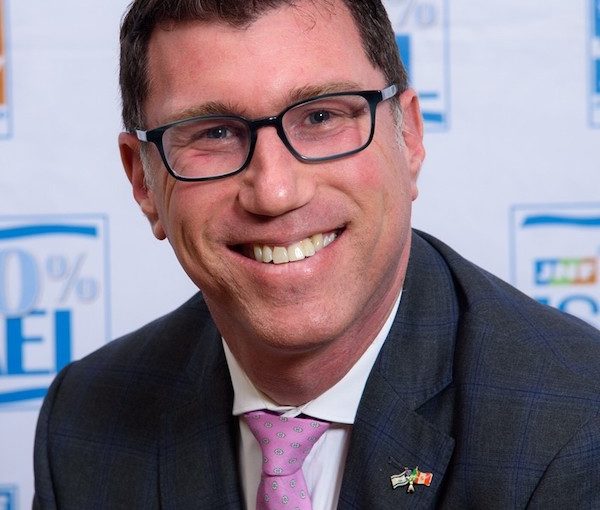
Lance Davis, chief executive officer of JNF Canada (photo from JNF Canada)

Noa Tishby, an Israeli who hit it big in Hollywood as an actor, writer and producer before bursting on the scene as an activist voice for Israel, will be in Vancouver June 29. She is the headliner for the first Negev Dinner in Vancouver since the pandemic.

The Negev Dinner is a tradition of the Jewish National Fund of Canada, with annual dinners taking place for decades in regions across the country.

Michael Sachs, executive director of JNF Pacific region, says that Tishby’s upcoming visit is a response to demand.

“A lot of people in the community really want to hear from her,” said Sachs. “The rising antisemitism, as well as the delegitimization of Israel – these are issues that are forefront in our community.”

Tishby is, he said, “one of the best spokespersons for the state of Israel and for the Jewish community at large.”

With her 2021 book, Israel: A Simple Guide to the Most Misunderstood Country on Earth, the Los Angeles-based Tishby placed herself firmly in the realm of show biz activist, but on a topic that many public figures avoid. (See jewishindependent.ca/tag/noa-tishby.) Her entertainment industry work includes appearances on Nip/Tuck, Big Love and NCIS, and she is the co-executive producer of the HBO series In Treatment, an adaptation of the Israeli series BeTipul.

“To be able to have her in Vancouver, we just couldn’t miss out on it,” said Sachs, adding that this young, dynamic woman has an appeal that can expand the reach of JNF and the Negev event.

“We are also working on student pricing and we want ‘angel’ tickets,” he said. “The idea is to get as many people in our community in front of her so they can hear her message.”

This dinner will not have an honouree like such events have had in the past. Part of that is simply the desire by the organization to try different things but it is also because, with JWest, the redevelopment of the Jewish Community Centre of Greater Vancouver, and other projects, there are “a lot of asks” in the community right now, said Sachs.

While JNF has sent out “save the date” notices for June 29, the location is not yet set. The organizing committee is co-chaired by husband-and-wife team Mike and Lisa Averbach. The project to which proceeds of the event will be allocated is to be announced in the next few weeks.

While the June event will be the first JNF gala in Vancouver since the pandemic, some took place in other regions last year, said Lance Davis, chief executive officer of JNF Canada. He has witnessed some pent-up demand to celebrate with community again.

“When people get together during cocktails and they haven’t seen each other for such a long time, the hugs and the warmth – it’s wonderful,” he said.

During the pandemic, JNF held Negev “campaigns” – fundraising initiatives that did not involve in-person events. Despite the financial and social impacts of the shutdown, Davis said the organization’s revenues have rebounded to pre-pandemic levels.

“It’s a wonderful news story that we are bouncing back and moving in the right direction,” said Davis, who has been CEO of the national organization since 2017, following five years leading the Toronto region.

JNF Canada, like Jewish and pro-Israel individuals and organizations worldwide, is coming to terms with the changed political dynamic in Israel. Binyamin Netanyahu’s new coalition, frequently referred to as “the most right-wing government” in the country’s history, is shaking up the global discourse on the region. The resignation of Israel’s ambassador to Canada, announced last Saturday, is just one reaction in an uncertain new environment. Davis, like leaders of other organizations, is emphasizing neutrality and independence.

“I just want to state unequivocally that JNF Canada is nonpolitical and nonpartisan and, as such, we are going to continue to do our work regardless of who is in government,” he said. “We are mission-driven and that means simply building the foundations for Israel’s future. We will continue to help the land and the people of Israel as we have done for decades with left, right and centrist governments. Nothing has changed. Our resolve to enhance the lives of Israel’s citizens is not impacted by the current regime and this is the time for Diaspora Jewry to communicate with our extended family in Israel that we are indeed a family and as such we will always be there for them.”

photo - Lance Davis, chief executive officer of JNF Canada
Lance Davis, chief executive officer of JNF Canada (photo from JNF Canada)

For all the ink spilled on the subject, Davis thinks the supporters of JNF Canada are sophisticated enough to understand the dynamics.

“For those people who say, I can’t be a part of this because I don’t support the government of Israel, I just hope that we can have a conversation with them,” he said. “You need not worry that one penny of that money goes to the government…. It’s only for charitable purposes and I think that if we are given the chance to explain this, people will understand we are nonpolitical and nonpartisan.”

The Israeli political climate may be a new variable, but JNF has not been without its critics over the years, some of whom accuse it of promoting Israeli “colonialism.”

“There is no question that there’s a whole host of anti-Israel parties who are taking an adversarial position,” he said. “I just wish that they would actually look at what we’re doing because is building a PTSD and health centre that serves all citizens, Jewish, Arab, Christian, Muslim, everybody – is that colonialism? Building a home for abused women with nowhere to go? It’s literally a lifesaving asset and, rest assured, Jewish Israelis and Arab Israelis will be using this facility – how is this colonialism? What exactly is it that they are protesting against?”

At a Negev Dinner in Vancouver a few years ago, which was raising funds to improve a facility for the most vulnerable sick kids in Israel, Davis saw protesters outside.

“I showed up at the dinner and I said, I wish these people understood what they were protesting against,” he recalled. “Because what you guys are doing is building a resource for the sickest kids, Jewish, Arab, Christian, Muslim – they’re all Israelis, they’re all welcome at this facility. Do they even understand what it is they’re upset about? And shame on them for protesting your efforts to build this facility for the most vulnerable children.”

One new initiative that Davis is particularly excited about is JNF Canada’s Climate Solutions Prize, a competition among Israeli researchers to fund breakthrough research focused on combating climate change.

“We’ve made an effort to raise $1 million a year over the next number of years,” he said. “We have a blue ribbon panel of scientists and engineers and businesspeople who review these researchers’ proposals.”

Last October, they presented the first awards, totaling $1 million US to the leaders of three research teams. Ben-Gurion University’s Prof. Itzhak Mizrahi and his team are working to ameliorate the methane emissions caused by cows. Dr. Malachi Noked of Bar-Ilan University seeks to reduce global emissions by improving ways to store renewable energy safely, efficiently, economically and in quickly accessible forms. Prof. Avner Rothschild of the Technion is working to produce green hydrogen through electrolysis of water.

Recipients are scientists who are well advanced in their work but need a boost in funding to achieve a breakthrough.

“This is the largest climate solutions prize that’s offered in Israel, by a long shot,” said Davis. “There are prizes to encourage green technologies, but in terms of the size and the scope, we are by far and away the largest prize.”

And, at this point, it’s an exclusively Canadian project. He hopes that other JNF organizations – there are about 40 countries with similar national bodies – will jump on board and make the prize a bigger success.

Israelis are renowned for successes in financial technology, cyber- and agri-tech, said Davis. “But, in terms of climate solutions, they really haven’t had a home run yet,” he said. “We felt that we need to give people a little push to get them over the top.”

Jewish National Fund of Canada was formally established in the late 1960s, but the iconic symbol of Keren Kayemeth LeIsrael, Jewish National Fund, the pushke, or blue box, has been in Jewish households in Canada and around the world for a century. The tin has been used for collecting coins that were forwarded to local offices around the world and combined to help build the nascent yishuv and then the state of Israel, beginning by planting trees and then expanding into all range of development projects.

Davis explained that JNF Canada is fully independent and not structurally connected with the Israeli organization.

“We are not a subsidiary,” he said. “We are not answerable to any other charity.… We get to decide what projects we take on. Canadians give money to things that they want to support and we bundle all that money from coast to coast and we take on projects.”

JNF Canada works with Keren Kayemeth LeIsrael on some initiatives but works with other charities on a range of undertakings.

“We, the Canadians, decide what we want to do and the Israeli entities are our agents,” he said. “They do the work for us. People often … have it reversed [thinking that] Israelis tell us what we need to do and we just do it. No, it’s the opposite. They work for us and that’s the way it should happen.”

Started in 1948, Negev dinners have taken place, usually annually, in Vancouver, Edmonton, Calgary, Winnipeg, Windsor, London, Hamilton, Toronto, Ottawa, Montreal, and Atlantic Canada. The name comes from the fact that the earliest dinners benefited projects in the Negev Desert. JNF Canada now funds projects throughout Israel, but the name has stuck.

“I think that when Canadians think about JNF a few things come to mind: trees, blue boxes and the Negev Dinner,” said Davis.

Format ImagePosted on January 27, 2023January 26, 2023Author Pat JohnsonCategories Local, NationalTags Canada, Israel, Jewish National Fund, Jewish National Fund Canada, JNF, Lance Davis, Michael Sachs, Negev Dinner, Noa Tishby

Women deserve to be seen

As a mom of twin toddlers about 10 years ago, I was desperate for childcare. Call it preschool, nursery school, daycare or old-fashioned babysitting, it was impossible to come by when we were looking. Every place had long waitlists. I was told by more than one place that I should have put our family on the list for childcare before I gave birth. (An absolute no-go from my position, due to Jewish traditions.) Then I heard about the possibility of spots at a local Chabad preschool.

I am a feminist and, while really invested in Jewish life, I’m on the liberal, egalitarian part of our tradition. I hadn’t even looked at Chabad as an option. I am still amazed by how we were welcomed there and how much help the preschool teachers and other families gave us. Older kids from other families even helped walk my 2-year-olds up and down the stairs to the school when I couldn’t manage. It was a gift when I truly needed a break.

At first, my twins could only manage preschool in the mornings, so I couldn’t get back to work. It allowed me three hours at a time on my own and I used it get long overdue medical support for myself or for one twin at a time. I accomplished basic household needs like grocery shopping or changing bedding. Sometimes, I got to rest. My twins didn’t sleep through the night until they were four-and-a-half years old. Eventually, the kids stayed longer hours at preschool and I worked a little, but it was a challenging time.

While in this sleepless, liminal state, I met Jewish women I’d never encountered before. Moms with more than 10 kids, for instance – a situation I’d scarcely considered before my kids went to this preschool. While some of my extended family made negative comments about my encounters with this pocket of traditional Jewish observance, I marveled, realizing that some parents raised big families with skill and love. Other families struggled with only a child or two. Large families were not inherently “bad” nor small families “good.” I learned many things from these experienced parents. They did not judge us. They helped whenever they could. Their kindnesses were a blessing.

Winnipeg, our city, is crisscrossed by train tracks. It wasn’t uncommon to be stuck at a train crossing going to preschool. I joked about this with a mom who was very involved in the Lubavitch community and had a big family. My twins loved trains, so we unrolled the car windows to hear the horn and the bells and trains rattling on the tracks and enjoyed the moment. She smiled and said she too enjoyed the unexpected wait at train crossings. She used the time to pray. She had a pocket-sized book of tehillim (psalms) and another siddur (prayer book) that she kept in the minivan specifically for occasions like this.

I was flummoxed, impressed by her piety but surprised. This woman, who was so incredibly busy, also invited my family to her kids’ huge birthday parties. She found time at train crossings to pray? Wow.

Afterwards, if her older kids sought me out at a Shabbat dinner or community event, I made room at the table, tried to treat them like I would treat my kids. Her mentorship and thoughtfulness made a deep impression.

I’ve been reminded of this because, lately, Haredi and Modern Orthodox women have been in my social media feed. In recent years, some Haredi publications have stopped using women’s faces or bodies in their photos and advertisements. I follow Chochmat Nashim, an organization that fights to keep images of observant women’s and girls’ images in traditional Jewish publications, so that Jewish women can see themselves in the world around them.

I also read about agunot (chained women), whose husbands will not grant them a get (a Jewish divorce) so that they can remarry. In some cases, these women wait years, are forced to pay large sums of money, or give up custody rights to their children so they can be granted a divorce. Since they observe Jewish law, a secular or civil divorce isn’t enough, and they can’t remarry in their communities without a get. One of the only ways they get “seen” is through loud protests held by other Orthodox women, who stand as allies, trying to bring attention to the situation. Sometimes, this public shaming is the only chance they have to receive a get. Imagine what this allyship means if it is one’s only recourse to escape domestic violence or to be free to remarry.

Another example: a concert was held in London, a special Orthodox women’s-only concert, designed so that Jewish women could sing and other women could attend. (In these parts of the Jewish community, it’s considered alluring and inappropriate for men to hear women sing. This is a way for talented women to perform and other women to enjoy their amazing gifts.) Despite all their precautions, there were rabbis who said that attending this women-only event would be forbidden. Guess what? Women went anyway. The event was sold out.

For me, “seeing” the strong moms of big families as mentors and friends was an eye-opener. They taught me so much, both about their everyday lives and how they viewed Judaism, orthodoxy and Hasidism. Despite a truly overwhelming load of parenting, work, religious and household obligation, they modeled for me how to find time for things that are important. Whether it is helping a kid with learning disabilities or praying at train crossings, they make time for what matters to them.

To some extent, these are all the same women. The ones whose images are banned from publications, who might suffer because they are denied a Jewish divorce, or who might be kept from attending even a women-only concert of religiously acceptable music – they are also perhaps the same mentors who model good parenting, find room for prayer and care for others’ children as their own.

Regardless of our level of religious observance, Jewish women deserve to be seen, loved and treated with respect. This may seem obvious, but it still isn’t happening.

Joanne Seiff has written regularly for CBC Manitoba and various Jewish publications. She is the author of three books, including From the Outside In: Jewish Post Columns 2015-2016, a collection of essays available for digital download or as a paperback from Amazon. Check her out on Instagram @yrnspinner or at joanneseiff.blogspot.com.

Posted on January 27, 2023January 26, 2023Author Joanne SeiffCategories Op-EdTags agunot, Chabad, education, Judaism, parenting, women

Posts pagination

Previous page Page 1 … Page 146 Page 147 Page 148 … Page 667 Next page
Proudly powered by WordPress