Skip to content
  • Home
  • Subscribe / donate
  • Events calendar
  • News
    • Local
    • National
    • Israel
    • World
    • עניין בחדשות
      A roundup of news in Canada and further afield, in Hebrew.
  • Opinion
    • From the JI
    • Op-Ed
  • Arts & Culture
    • Performing Arts
    • Music
    • Books
    • Visual Arts
    • TV & Film
  • Life
    • Celebrating the Holidays
    • Travel
    • The Daily Snooze
      Cartoons by Jacob Samuel
    • Mystery Photo
      Help the JI and JMABC fill in the gaps in our archives.
  • Community Links
    • Organizations, Etc.
    • Other News Sources & Blogs
    • Business Directory
  • FAQ
  • JI Chai Celebration
  • JI@88! video

Recent Posts

  • Story of Israel’s north
  • Sheltering in train stations
  • Teach critical thinking
  • Learning to bridge divides
  • Supporting Iranian community
  • Art dismantles systems
  • Beth Tikvah celebrates 50th
  • What is Jewish music?
  • Celebrate joy of music
  • Women share experiences 
  • Raising funds for Survivors
  • Call for digital literacy
  • The hidden hand of hate
  • Tarot as spiritual ritual
  • Students create fancy meal
  • Encouraging young voices
  • Rose’s Angels delivers
  • Living life to its fullest
  • Drawing on his roots
  • Panama City welcoming
  • Pesach cleaning
  • On the wings of griffon vultures
  • Vast recipe & story collection
  • A word, please …
  • מארק קרני לא ממתין לטראמפ
  • On war and antisemitism
  • Jews shine in Canucks colours
  • Moment of opportunity
  • Shooting response
  • BC budget fails seniors
  • Ritual is what makes life holy
  • Dogs help war veterans live again
  • Remain vital and outspoken
  • An urgent play to see
  • Pop-up exhibit popular
  • An invite to join JWest

Archives

Follow @JewishIndie
image - The CJN - Visit Us Banner - 300x600 - 101625

Month: January 2024

Nuance is vital path to empathy

On the morning of Oct. 7, 2023, I was in Vancouver, celebrating the holiday of Simchat Torah with my family. We woke up, my father went to synagogue, and I lay on the couch sipping coffee and reading a book. Four hours later, I was sitting on the couch of the Mizrachi family. Ben Mizrachi z”l was one of my brother’s closest childhood friends, a pillar of joy in our community, and an attendee of the Nova Music Festival in Israel on Friday evening. I watched for two days in helpless disbelief as his parents waited to hear whether their son was alive. On the third day, his body was identified.

By Oct. 9, I had already unfollowed one of my friends on Instagram. By Oct. 19, the number had become too many to count. I opened my friends’ Instagram stories with a pit of dread in my stomach, wishing I could stop looking, but feeling compelled to know where they stood. Ignorance may be bliss, but knowledge is safety. I watched, feeling resentful and hopeless as friends with no lived experience in this conflict posted comparisons between the Israeli government and Nazi Germany, tokenized anti-Zionist Jewish voices, spread demonizing misinformation, labeled Israelis “European settler-colonialists” and justified sexual violence in the name of “resistance” and “liberation.”

Humans crave consistency. We naturally gravitate towards narratives with a clear villain and an undeniable victim. Research on cognitive dissonance theory has demonstrated that we experience intense psychological discomfort when faced with information that conflicts with a preconceived belief. In response, we can either change the preconceived belief, which requires us to admit we were previously wrong, or we can discount and discredit the new information to protect our self-image. The dominant narrative in liberal North American circles has become that Jews and Israelis are colonizers in a land stolen from Palestinians. In accordance with cognitive dissonance theory, if Jews and Israelis are oppressors, we cannot also be victims. So, we must not be victims, after all. This narrative feeds into classic stereotypes about Jews as powerful, wealthy, manipulative and, in modern parlance, privileged.

Prejudice and discrimination have psychological benefits. Research shows that the act of derogating a member of a stereotyped group has positive implications for self-esteem. One foundational study by Fein and Spencer (1997) found discriminating against a woman who fit the stereotype of a “Jewish American Princess” dramatically improved participants’ self-esteem after receiving negative feedback. In other words, putting others down makes us feel better. Many in my social circles would balk at the mere thought of discriminating against a marginalized group. Yet, if you can convince yourself that a marginalized group is privileged, you can reap the self-esteem benefits of derogation without suffering cognitive dissonance. If Jews are oppressors and not victims, then discrimination is not only warranted, it feels good.

In the study conducted by Fein and Spencer in 1997, research participants enacted their discrimination in private, by degrading the Jewish subject’s personality and job qualifications. Today, we can perform our discrimination publicly through social media. Public discrimination maintains the self-esteem benefits of private discrimination, with the bonus of entrenching belonging within a social in-group. Humans have a fundamental need to belong. We fulfil this need by affiliating ourselves with social in-groups based on race, ethnicity, disability, music preference and TV-show character fandoms. Posting socio-political stances on social media is not simply about sharing information, it is a means of signalling affiliation with a valued in-group of social justice advocates. The opportunity to simultaneously derive a self-esteem boost from the derogation of Jews is a heady combination.

Despite our pursuit of certainty in the face of cognitive dissonance, certainty is the enemy of knowledge, nuance and, in the context of the Israel-Hamas war and other conflicts or social divisions, empathy. Research in social psychology has shown that the more certain we feel about our socio-political opinions, the less likely we are to seek out information that might challenge our beliefs. Those who feel certain in their characterization of the current Israel-Hamas war as morally unambiguous cannot cave to nuance, lest their psychological well-being suffer. Yet, the embrace of two opposing truths is at the core of seeing each other as human, capable of being both villain and victim in the same breath. Sitting with cognitive dissonance is painful, but it is the only path to true empathy. 

Shira Mattuck, MA, is a clinical child psychology doctoral student in the Genetics and Neurobehavioural Systems: Interdisciplinary Studies (GENESIS) Lab at the University of Houston. She was born and raised in Vancouver and is a graduate of Vancouver Hebrew Academy and York House School.
Posted on January 26, 2024January 24, 2024Author Shira MattuckCategories Op-EdTags antisemitism, cognitive dissonance, derogation, discrimination, empathy, Fein and Spencer, Israel-Hamas war, psychology, self-esteem, social media, stereotypes
Past trauma can help us

Past trauma can help us

Rabbi Dr. Tirzah Firestone spoke in a Zoom webinar hosted by Victoria’s Kolot Mayim Reform Temple on Jan. 14. (PR photo)

Rabbi Dr. Tirzah Firestone unraveled intergenerational trauma, and offered solutions to help remedy it, in a Zoom webinar hosted by Victoria’s Kolot Mayim Reform Temple on Jan. 14. Firestone, the author of the award-winning 2019 book Wounds into Wisdom: Healing Intergenerational Jewish Trauma, is a Jungian psychotherapist and a leader in the Jewish Renewal movement.

“When I was first approached by Kolot Mayim last year to present this talk, nobody had any idea of the life-changing events that we would be experiencing,” Firestone began, acknowledging the geopolitical developments on and after Oct. 7. “Nor did I ever fathom when I wrote Wounds into Wisdom that it would be so very painfully relevant today in the midst of historical traumas in the making.”

An objective of the January talk was to address traumas experienced by one’s ancestors that get transmitted onto future generations in the form of fears, anxieties and hopelessness. Firestone’s goal is to help current generations “metabolize life better” so that the damaging psychological effects of trauma are not extended to future generations. In other words, those who come after should experience life from a position of resilience and hopefulness.

Firestone, who currently lives in Boulder, Colo., spoke about her own parents, who were deeply impacted by the Shoah – her mother as a German survivor and her father as an American soldier stationed in Germany.

“The past does not disappear. The painful histories our ancestors endured, along with their warmth, resilience and all their good resources, are intertwined within us, both psycho-spiritually as well as physically and physiologically,” said Firestone. “And they create the patterns of who we are and who we are becoming.”

Along these lines, the pain from trauma can be unspoken over the course of generations, yet becomes part of the individual nonetheless. Or, as in a quote from Israeli psychologist Dan Bar-On, cited by Firestone: “Untold stories often pass on more powerfully from generation to generation than stories that can be recounted.”

Ongoing patterns, whether ones of heroism and activism or depression and anxiety,  are transmitted across generations.  A young woman Firestone worked with, for example, became an activist, not knowing it ran in the family – her grandmother and great-aunt, neither of whom she had ever met, were rebels in their shtetl decades earlier.  

Another example involved a woman whose very first memories as a young child were nightmares. One night, she explained to her concerned mother why she would wake up crying so often. The image in the young child’s mind was of an old wooden town where a man at the train station would jump from the platform to the train tracks. The man would run along the tracks yelling, “Stop! Stop!”  The train would go on with the young man unable to catch it. 

When the mother heard her child’s story, she cried and asked in disbelief, “How could you possibly have known this?” It was the story of the child’s grandfather who, in the Second World War, found out belatedly that Jews in his town, including his young family, had been rounded up and deported by train. He ran after the train, but never caught up and never saw his family again. The man survived the Holocaust and started a new life and family in the United States.

Traumas can happen collectively.  Firestone noted that Israeli journalist Chemi Shalev wrote, “I am a Jew, and there are scenes of the Holocaust that are indelibly etched in my mind, even though I was not alive at the time.”

Firestone also outlined research conducted by Rachel Yehuda of New York’s Mount Sinai Hospital, which showed that the children of Holocaust survivors were three times more likely to develop post-traumatic stress disorder symptoms when exposed to traumatic events than the children of other Jews.

In the latter part of her talk, Firestone focused on what can be done towards healing trauma. Every family has its own ruptures and resources, no matter who or where it is, she said. Whether through intelligence, resilience or good fortune, every family today is a survivor. Thus, she asked, “What family resources can you tap to assist you in this current moment in history?”

Among some of the keys she highlighted for healing trauma, and which are discussed in greater depth in her book, is being aware of family legacies. This awareness, she asserts, will hinder the transmission of trauma to succeeding generations.

Another is to face one’s losses. “When we face our grief, we can start to feel our grief. When we don’t feel our grief, it becomes pathogenic. It makes disease on the inside of us,” she said.

A third technique for healing, according to Firestone, is “to harness the power of one’s pain.” That is, one can use the tremendous power contained in pain to bring on more destruction and further pain or to bring light, warmth and hope.

Firestone advised taking action. Here she employed a saying from Midrash: “Had I not fallen, I would not have arisen. Had I not been subject to darkness, I would not have seen the light.”

In concluding her remarks, Firestone said, “We have a mandate to draw on our ancestors’ greatest traits – their survival skills, their courage, their ingenuity – to apply to circumstances now. There are so many people who are suffering. What can we do from our own pain by harnessing its power and going places that we could not have gone before we endured [it]?”

For more on Firestone and her writings and ideas, visit tirzahfirestone.com. 

To register for future Kolot Mayim speaker series Zooms, the next of which takes place Feb. 4, click here.

Sam Margolis has written for the Globe and Mail, the National Post, UPI and MSNBC.

Format ImagePosted on January 26, 2024January 24, 2024Author Sam MargolisCategories LocalTags healing, intergenerational trauma, Kolot Mayim, resilience, Tirzah Firestone, wisdom
Celebrating in Victoria

Celebrating in Victoria

Left to right at Chabad of Vancouver Island’s 20th anniversary gala last November: Rabbi Meir Kaplan; Iddo Moed, Israel’s ambassador to Canada; Dr. Elior Kinarthy and Leah Kinarthy, founders of Kineret Tamim Academy of Victoria; and Rebbetzin Chani Kaplan. (photo from Chabad of Vancouver Island)

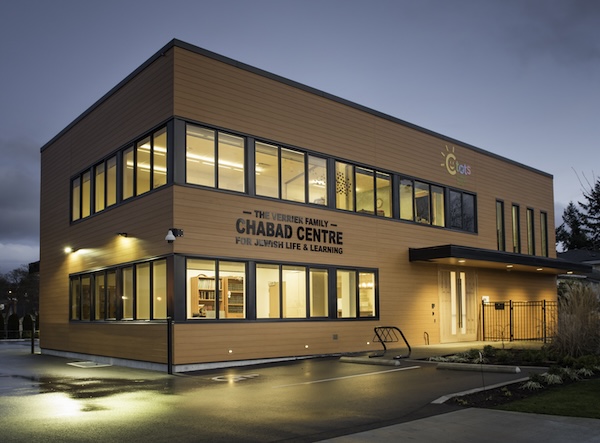
Chabad of Vancouver Island, led by Rabbi Meir and Rebbetzin Chani Kaplan, ended last year by marking a few milestones. The centre celebrated its 20th anniversary in November with a gala that included many dignitaries from across North America, including the Israeli ambassador to Canada. The centre – which is officially called the Verrier Family Chabad Centre for Jewish Life and Learning – marked eight years since the opening of its own building, which was the first new synagogue built on Vancouver Island in more than 150 years. And, Dec. 22-23, the centre hosted Cantor Yaacov Orzech and the Kol Simcha Singers for a community Shabbaton in solidarity with Israel, marking the first time a choir has ever sung at the Chabad synagogue.

My own connection with the Kaplans and Chabad of Victoria began several years ago, when the Kaplans hosted me at their home for Rosh Hashanah. At the time, services were being conducted in the annex of a nearby school. I was impressed at the dedication of the members of the synagogue in their little makeshift shul and even more impressed when I learned that a new Chabad Centre would be built. 

At the 20th anniversary event, which I unfortunately couldn’t attend, a future milestone was announced – the establishment of a new Jewish elementary school in Victoria. Kineret Tamim Academy will be the first new Jewish day school on the island in 160 years. It will be part of the Tamim Academies network, which operates 15 schools across North America, including locations in Toronto, Portland, New York and Miami. Opening in September, it will complement the existing CTots Childhood Education Centre at the Chabad Centre, which has a preschool and kindergarten.

photo - The Verrier Family Chabad Centre for Jewish Life and Learning first opened its doors eight years ago
The Verrier Family Chabad Centre for Jewish Life and Learning first opened its doors eight years ago. (photo from Chabad of Vancouver Island)

A spontaneous day trip to Victoria several months ago led to the December milestone at Chabad of Vancouver Island. I called Rabbi Kaplan from the ferry, and he told me to drop by the synagogue and say hello. When I arrived, the rabbi gave me a tour of the two-storey building which houses the kindergarten, a mikvah, offices, a meeting/study room, a Judaica store and a social hall. The building was light and spacious, and the acoustics were impeccable. I mentioned to Rabbi Kaplan that the Kol Simcha Singers, with whom I sing, would appreciate the great sound in the shul. He was intrigued and suggested that perhaps the shul could host an evening for the choir. On a subsequent visit, I brought Cantor Orzech and, after that meeting with Rabbi Kaplan, the stage was set for the community Shabbaton.

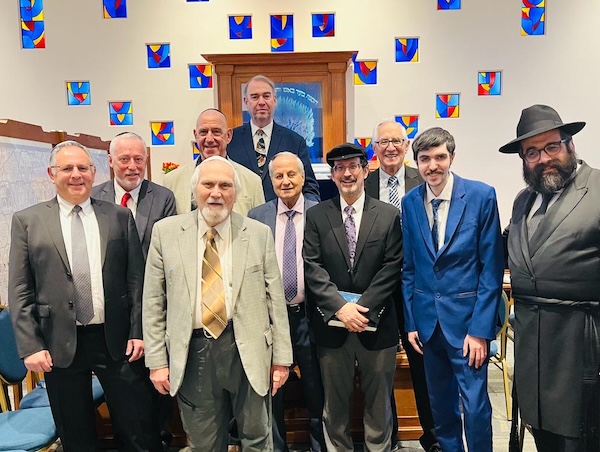
The choir – which includes Matanya Orzech, Sydney Goldberg, Maurice Moses, Hirschel Wasserman, Geoffrey Goldman, Edward Lewin, Terry Barnett and me – made our way from Vancouver to Victoria to lead the Friday night and Shabbat morning services. We were joined for this special occasion by a Kol Simcha singer who grew up in Victoria, as well as a chorister who is originally from Manchester but is now a resident of Qualicum Beach. As we crowded around Cantor Orzech on the bima to chant, in harmony, ancient Shabbat melodies, the shul’s acoustics enhanced our voices and made for a heavenly sound. After services, we enjoyed a Shabbat dinner made by Chef Menajem. We ate downstairs in the bright and cheery social hall, which features paintings from local artists. It was a joyous evening, with Rabbi Kaplan leading some spirited singing interspersed with inspiring words of Torah.

photo - Rabbi Meir Kaplan, far right, with Cantor Yaacov Orzech (back) and the Kol Simcha Singers at Chabad of Victoria prior to the Dec. 22-23 Shabbaton
Rabbi Meir Kaplan, far right, with Cantor Yaacov Orzech (back) and the Kol Simcha Singers at Chabad of Victoria prior to the Dec. 22-23 Shabbaton. (photo from Chabad of Vancouver Island)

Shabbat morning was more of the same, with the choir singing, under the cantor’s direction, songs to honour Shabbat and Israel. During the service, Rabbi Kaplan acknowledged several members of the congregation who have family members serving in the Israel Defence Forces. At lunch afterwards, the choir sang Shehecheyanu, a prayer that commemorates a milestone, because singing at the centre was a new experience for both the choir and Chabad of Vancouver Island. 

At the lunch, Rabbi Kaplan shared that one of our choir members, Terry Barnett, was born in Victoria and had lived there until the 1980s. After the meal, I took a walk with Terry along Cook Road to Dallas Road for a view of the ocean and the Olympic Mountains. For Terry, it was nostalgic being back in Victoria. For me, it was a pleasure to be in the city, too – I had almost moved there several years ago. Terry and I got back to synagogue just in time for ma’ariv, the evening service, and then most of the choir returned to Vancouver.

I stayed over a few extra days and, on Sunday morning, attended services and watched a video of the Lubavitcher Rebbe, Rabbi Menachem Mendel Schneerson (1902-1994), who stressed the need for education in a Jewish community. There were several new programs announced for 2024, including a six-week series entitled Advice for Life, which offers the Rebbe’s guidance for leading a more purposeful life. Registration for the series, which is also held at other Chabad centres, can be made via chabadvi.org or myjli.com. The new program complements the Shabbat and Sunday morning services, weekly classes and adult education and holiday celebrations that the centre offers throughout the year. 

Later that Sunday, I took a walk to some familiar places in Victoria and checked out the Fernwood General Store, which is in the neighbourhood I would have moved to. It’s a small grocery store that used to be owned by South African Jews and that still features a kosher section, with kosher chicken, blintzes, bourekas, gefilte fish, tuna, matzah and grape juice, among other things.

My visit to the island for the December Shabbaton reminded me of how much Jewish Victoria has to offer and brought back memories of another milestone I had the privilege of witnessing, the 150th anniversary commemoration of the Conservative Congregation Temple Emanu-El, the oldest synagogue in continuous use in Canada. Hopefully, I will be able to return to Victoria again to celebrate and perhaps write about another Jewish milestone in British Columbia’s beautiful capital city. 

David J. Litvak is a prairie refugee from the North End of Winnipeg who is a freelance writer, former Voice of Peace and Co-op Radio broadcaster, “accidental publicist,” and “accidental mashgiach” at Louis Brier Home and Hospital. His articles have been published in the Forward, Globe and Mail and Seattle Post-Intelligencer. His website is cascadiapublicity.com.

Format ImagePosted on January 26, 2024February 14, 2024Author David J. LitvakCategories LocalTags Chabad of Vancouver Island, Chani Kaplan, choir, Jewish day school, Kineret Tamim Academy, Kol Simcha Singers, Meir Kaplan, milestones

Remembering, learning

Hillel BC’s Holocaust Education Week takes place on campus at the University of British Columbia Jan. 29-Feb. 2. Every day of that week, there will be something going on to attend and learn from, including the exhibit from Yad Vashem called Shoah: How Was It Humanly Possible?, which will be on display the whole week.

photo - Rachel Mines
Rachel Mines (photo from Hillel BC)

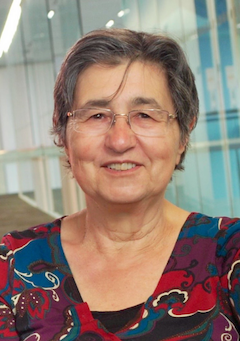
Jan. 29, 6 p.m.: Unheard Echoes: Jews in Lithuania Before, During and After the Holocaust. Presentations about the Jewish connection to Lithuania throughout history, focusing on the Holocaust, by Rachel Mines and Gene Homel, two members of the Lithuanian community. Register at forms.office.com/r/s4uAFqv8gc.

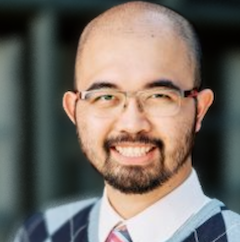
Jan. 30, 6 p.m.: Unheard Echoes: The Far Reach of the Holocaust in Asia. Ryan Sun is a PhD candidate in the department of history at UBC, working with Prof. Leo Shin and Prof. Richard Menkis. His transnational project expands the geography of Jewish exile outside Europe and beyond Shanghai, and onto the British colonies of Hong Kong and Singapore. He is particularly interested in Jewish refugees’ ship-bound experiences, how transiting colonial port-cities and encountering local inhabitants informed their understanding of “the Orient,” as well as how these ship-moments disrupt the standard narratives of the Holocaust and survivor testimonies. Register at forms.office.com/r/aQx4LG2Fhi.

photo - Ryan Sun
Ryan Sun (photo from Hillel BC)

Jan. 31, 5 p.m.: In a partnership between Hillel, brothers of the AEPi chapter of Vancouver and Chabad UBC, there will be a reading of the names of those who were murdered in the Holocaust. Meet at Hillel, then walk over to the fountain at the main mall, where the reading of the names will begin at 5:30 p.m. The reading can also be joined online, live on Hillel BC Facebook and Instagram, as well as the Instagram page for AEPi. 

photo - Marie Doduck
Marie Doduck (photo from Hillel BC)

Feb. 1, 5 p.m.: A Fireside Chat and Q&A with Survivor Marie Doduck & Dr. Lauren Faulkner Rossi. Marie (Mariette) Rozen Doduck was born in Brussels, Belgium, in 1935. She immigrated to Canada in 1947 as a war orphan with three of her siblings and settled in Vancouver. She is actively involved in Holocaust education and is a cofounder of the Vancouver Holocaust Education Centre. 

Rossi is currently researching child survivors of the Holocaust, the significance of their memoirs to Holocaust studies and the shared language of trauma among child survivors of different genocides.

Register at forms.office.com/r/1MtRu24BWT.

Feb. 2, 5 p.m.: Students-only Shabbat Dinner with Honoured Guests: Holocaust Survivors will feature a candlelighting ceremony and survivors spread out among the dining tables with students. Students can register at forms.office.com/r/ayufQr3Zmy.

For more information or help with the registration links, email [email protected] or call 604-224-4748. 

– Courtesy Hillel BC

Posted on January 26, 2024January 24, 2024Author Hillel BCCategories UncategorizedTags education, Hillel BC, Holocaust, UBC, University of British Columbia
Mental health series begins

Mental health series begins

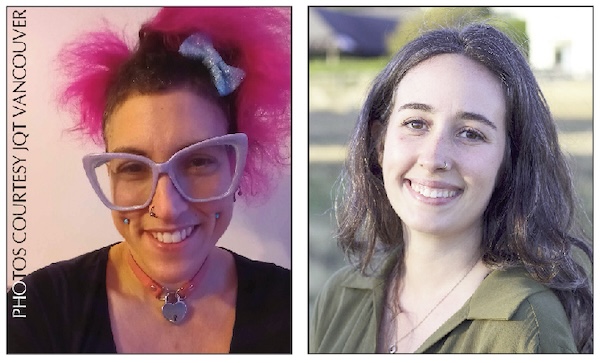
The first session in the new JQT-JFS mental health series will be facilitated by Alycia Fridkin, left, and supported by Anat Kelerstein. Listen & Be Heard takes place Feb. 11, 1 p.m., at Or Shalom.

“JQT and JFS are working together to answer the Jewish LGBTQ2SIA+ community’s explicit request for more mental health support in our newly launched JQT Mental Health Support Series,” said Aviva Rathbone, JQT chair. “This series will offer a steady flow of targeted workshops and events throughout the calendar year to get the JQT community talking, moving, crafting, laughing, vibing and healing together.”

The new JQT (Jewish Queer Trans) Vancouver and Jewish Family Services Vancouver program begins Feb. 11, 1pm, at Or Shalom Synagogue with Listen & Be Heard, a gathering for Jewish queers, transfolk and enbys in an intentional space for sharing and listening to each other’s perspectives on the Palestine/Israel conflict, including recent events in Gaza.

Facilitated by Alycia Fridkin and supported by Anat Kelerstein, the three-hour session will address “the elephant in the room – the Israel/Palestine conflict,” said JQT executive director Carmel Tanaka. “This was already identified in our 2022 community needs assessment as an extremely taxing topic that continues to negatively impact our community’s mental health, regardless of one’s stance. It is important that we create spaces that are not binary and welcome all perspectives.”

Fridkin is an equity and anti-racism consultant in health care. Kelerstein is a registered social worker and clinical counselor.

The JQT Mental Health Support Series, made possible with the support of the Jewish Community Foundation of Greater Vancouver and private donations, was developed in partnership with JFS Vancouver, following a 2022 community needs assessment that identified mental health support as a critical service gap for the Jewish LGBTQ2SIA+ population. The new mental health series as a whole answers nine of the needs assessment’s 13 calls to action. (See jewishindependent.ca/thirteen-calls-for-action.)

Future programs in the mental health series currently include (subject to change) a mindfulness kiddush cup clay workshop with Reuben King; a spoken word/music jam evening with fanny kearse; a screening of Sarah White’s documentary film Not Quite That; a cross-cultural history talk and demo of mahjong with Tanaka; a theatrical performance of Florida! You Kill Me! with Berlin’s Nana Schewitz (sponsored by the Goethe-Institut); a belly dancing workshop with Rathbone; a townhall conversation on the needs of parents of JQT youth; a JQT Pride Party; drop-in group therapy sessions; and the launch of the JQT Mental Health Toolkit.

The next session in the series is JQT Death Café at Mountain View Cemetery on Feb. 25, at 1 p.m. A townhall-style conversation on the status of Jewish queer trans dying and death services in British Columbia, people are invited to come learn, bring questions and voice their ideas at this hybrid event hosted by the JQT Seniors Initiative.

Registration for the mental health series events is free and required in advance. Details can be found at jqtvancouver.ca/events. To donate to the series, visit jfsvancouver.ca/donate and type in “JQT Mental Health” as the designated program. To learn more about the series, go to jqtvancouver.ca/jqt-mental-health. 

– Courtesy JQT Vancouver

Format ImagePosted on January 26, 2024January 24, 2024Author JQT VancouverCategories LocalTags Gaza, Israel-Hamas war, JFS Vancouver, JQT, mental health
Just for Laughs coming soon

Just for Laughs coming soon

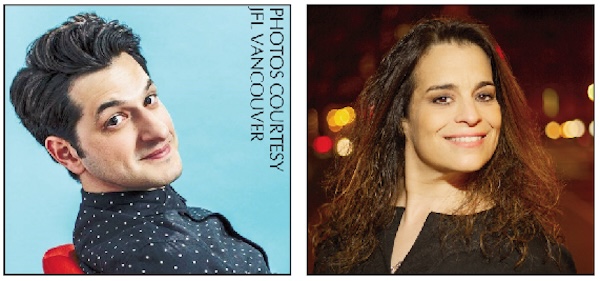
Ben Schwartz and Jessica Kirson are on the lineup of this year’s Just for Laughs Vancouver.

Just for Laughs Vancouver, which runs Feb. 15-24 at various venues in the city, features several members of the Jewish community.

All three of Brett Goldstein’s shows Feb. 16-18 at Queen Elizabeth Theatre have almost sold out. Goldstein was a co-executive producer, co-writer and co-star of Ted Lasso. He is also the creator and executive producer of the comedy Shrinking, alongside Jason Segel and Bill Lawrence, and of Soulmates, with Will Bridges. Goldstein is host of the podcast Films to be Buried With, which finds him in conversation with guests as they discuss the films that have shaped them.

Rafi Bastos performs at the Rio Feb. 17-18. Many of his viral stand-up clips come from nightly performances at the Comedy Cellar. In his home-country of Brazil, he was one of the first comedians to pioneer the art of American-style stand-up comedy. He has starred in movies, had his own talk show, been an infield journalist and hosted reality show Ultimate Beastmaster. He is co-founder and owner of Comedians, the largest comedy club in South America. 

Ben Schwartz and friends take to the Orpheum stage Feb. 18. Schwartz is part of the cast of The After Party, as well as the second season of Space Force. He was in the comedy series House of Lies and Parks and Recreation. As a writer, he has published four books and written television shows and movies for many major studios.

Jessica Kirson is at the Vogue Feb. 18. Her countless comedic character videos have racked up more than 200 million views on social media. She produced the feature-length documentary Hysterical. In addition to her one-hour special, called Talking to Myself, she is a regular on This Week at the Comedy Cellar and has appeared on many other shows.

At the Rio Feb. 23-24 is Catherine Cohen, best known for her comedy special The Twist…? She’s Gorgeous. She can be seen in the feature film At Midnight and in the upcoming series What I Was Doing While You Were Breeding. In 2021, she published her first book, God I Feel Modern Tonight, a collection of comedic poetry.

Comic, podcaster, writer and actress Annie Lederman will be at the Biltmore Feb. 21-22. Lederman is co-host of the podcast Trash Tuesdays. Most recently, she can be seen in the documentary miniseries The Comedy Store, alongside Jay Leno, David Letterman, Joe Rogan, and many other Comedy Store legends. She wrote and starred in Stand Ups, Impractical Jokers and Borat, among other things.

The full JFL lineup and tickets are available at jflvancouver.com. 

– Courtesy Just for Laughs Vancouver

Format ImagePosted on January 26, 2024January 24, 2024Author Just for Laughs VancouverCategories Performing ArtsTags comedy, Just for Laughs, standup

Putting the fun in dystopia – Steven Mayoff’s The Island Gospel According to Samson Grief

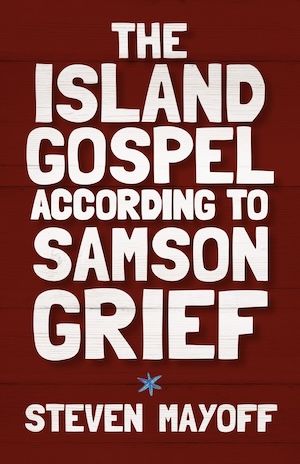
For all intents and purposes, it shouldn’t work, but Steven Mayoff’s The Island Gospel According to Samson Grief is a grand work of, let’s say, magical fiction that uses humour in large measure to elicit some very serious thoughts about art, politics, law, love, faith, community and more.

Mayoff takes part in two events during the Cherie Smith JCC Jewish Book Festival: on Feb. 11, he presents at Burquest Jewish Community Association in Coquitlam and, on Feb. 12, he is at the Jewish Community Centre of Greater Vancouver, along with Jeffrey Groberman, author of Globetrotting Strikes Again! Groberman also presents at Har El in West Vancouver on Feb. 11.

image - he Island Gospel According to Samson Grief book coverIt is hard to describe simply the plot of The Island Gospel According to Samson Grief. The title character is a middling artist who, when we meet him, is struggling to finish a painting. Outside his window, he has just seen – after a break of 13 years – three figments of his imagination. The Figs, as he calls them, present themselves in the forms of Judas, Fagin and Shylock, and they have returned with an important mission for Grief.

“The Supreme One,” who the Figs represent, was impressed by Grief’s scandalous, and most famous, painting of Prince Edward Island icon Anne of Green Gables as a Holocaust survivor, which Grief described in an interview as a statement “on the post-911 world we’re living in, where nobody is safe anymore and the primary victim is the delusion of our collective innocence.” Despite that Grief has not had much artistic or other success in the years since that painting – and that he is not actively involved in the island’s Jewish community – the Supreme One wants Grief to build PEI’s first synagogue. Once complete, the province will be consecrated as the new Promised Land, according to the Figs.

Among Grief’s many challenges – once he decides to take on the mission – is that the Supreme One has decreed that the synagogue must be built on a particular plot of land, a once-sacred place that has become a garbage dump and the focus of much political intrigue. It is hard to keep track of all the political manoeuvrings in this novel, but they sadly resonate, with some reality in their self-serving and unscrupulous nature.

It takes Mayoff awhile to set up the many pieces of his narrative puzzle. The characters are numerous, and quirky only begins to describe them. The societal issues that arise as Grief tries to achieve his mission, the role played by the media – both conventional and unconventional – in what ends up happening, the reliability and unreliability of friendship and love … so many factors are up in the air and changing as the story progresses. Somehow Mayoff juggles them all in a way that allows readers to follow along, discovering various elements as Grief does, and losing our naiveté as he does.

The Island Gospel According to Samson Grief is an ambitious novel that delivers beyond its promise. 

For the Cherie Smith JCC Jewish Book Festival guide, visit jccgv.com/jewish-book-festival. 

Posted on January 26, 2024January 24, 2024Author Cynthia RamsayCategories BooksTags fiction, humour, JCC Jewish Book Festival, Steven Mayoff

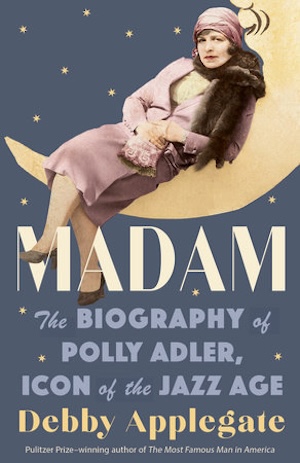
“Best goddam madam” – Madam: The Biography of Polly Adler, Icon of the Jazz Age

The immigrant experience is rarely if ever easy. It is hard to imagine sending a 13-year-old girl from Russia to the United States on her own, but, in 1913, the year that Pearl (“Polly”) Adler came through Ellis Island, “the Hebrew Sheltering and Immigrant Aid Society estimated that 13,588 ‘unaccompanied Jewish girls’ came through the port of New York, out of the 101,330 Jews who immigrated from eastern Europe,” writes Debby Applegate in Madam: The Biography of Polly Adler, Icon of the Jazz Age.

image - Madam book coverThe revelations abound in Madam and most do not centre around statistics, though there are some intriguing ones, like the fact that, in 1925, New York’s White Light District, with Times Square at its core, had “more than 2,500 speakeasies and 200 nightclubs, up from 300 saloons before Prohibition, all vying to offer the youngest girls, bawdiest songs, and hottest dance bands.”

Polly Adler was a major part of this scene, having entered the world of prostitution when she was 17. She had managed to avoid the lechers who recruited girls coming off the boats, and even got a couple years of education living with extended family in Springfield, Mass. But, once the minimum amount of schooling required was reached – a fourth-grade level of English – she had to work. And working in a factory wasn’t a way to get oneself out of poverty. So, with a little help from unscrupulous men, she started on a different career, one that would have her become the most well-known madam in New York, with clients that may even have included President Franklin Delano Roosevelt.

It was a harsh world, though, filled with gangsters, crime, violence, and it wasn’t even that lucrative because of all the payoffs and the immense levels of corruption at every turn: police, lawyers, judges, politicians. But Adler could literally take the punches, and she was “determined to be the best goddam madam in all America.” She achieved her goal and was successful, if measured by fame and money. However, she never achieved the approval and acceptance she sought, having been cared for as a child but never really loved.

Applegate’s biography of Adler is a page-turner, which is an accomplishment given its comprehensiveness and the amount of detail she covers: there are 33 pages of notes and the bibliography runs 13 pages. Readers will really feel as if they’ve met Adler and walked a few feet in her shoes. 

Applegate will talk about Madam in the Cherie Smith JCC Jewish Book Festival event on Feb. 11, which she shares with Roberta Rich, author of The Jazz Club Spy (see jewishindependent.ca/mysteries-to-be-solved). 

Posted on January 26, 2024January 24, 2024Author Cynthia RamsayCategories BooksTags Debby Applegate, gangsters, history, immigrant story, New York, Polly Adler, prostitution

Celebrating two new years 

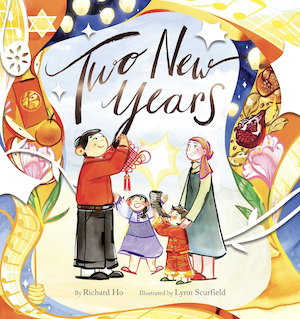
It would be fun to be a fly on the wall at Vancouver Talmud Torah on Feb. 14 as Richard Ho reads from his book Two New Years, illustrated by Lynn Scurfield, and discusses it with the children. Being that the story is based on his own life experience, he will likely be quite animated (pun intended) and his enthusiasm, combined with Scurfield’s bright, colourful and joyful art, will no doubt hold their attention.

image - Two New Years book coverHo has several kids books to his credit and, according to his website, more on the way. Two New Years highlights the differences and similarities between Rosh Hashanah and the Lunar New Year, both of which he celebrates.

The book notes the differences first: Rosh Hashanah takes place in the fall, is based on the Jewish calendar and began in the Middle East, and the Lunar New Year generally falls in spring, is based on the Chinese calendar and began in East Asia. “They represent different peoples with different histories, cultures and traditions,” he writes. “But in many ways they are also alike.” The many similarities include that each holiday is a chance to “try on new beginnings,” to “bring family home” and “remember the ancestors who live in our hearts,” to eat “foods that symbolize togetherness and the heartfelt sharing of good wishes,” among several other things.

In the author’s note, Ho shares that he converted to Judaism as an adult and that “the blending of two cultures was a conscious choice” for him. These days, he revels in experiencing both new years through the eyes of his children. “The best part?” he asks. “They’re not alone! All over the world, families with mixed backgrounds are blurring the barriers between cultures and customs. With the guidance of parents, grandparents and extended family on all sides, many children are weaving an increasingly diverse tapestry of celebration.”

The book features an eight-page illustrated glossary that’s as interesting to read as the story: it explains what a lunisolar calendar is, and some of both holidays’ rituals and symbols. It is followed by questions that readers can use to facilitate a discussion with others about their own traditions.

Ho’s presentation at VTT is part of the Cherie Smith JCC Jewish Book Festival (jccgv.com/jewish-book-festival). 

Posted on January 26, 2024January 24, 2024Author Cynthia RamsayCategories BooksTags children's books, Chinese heritage, culture, Jewish heritage, Lunar New Year, Lynn Scurfield, Richard Ho, Rosh Hashanah
Don’t let your lemon loaf

Don’t let your lemon loaf

Lemon loaf using a recipe by Jo-Anna Rooney, creator of A Pretty Life in the Suburbs. (photo from aprettylifeinthesuburbs.com)

So, a husband walks into Costco … with no shopping list. And what happens? He comes out with $200 worth of steak, a 10-pound bag of lemons (which, by my calculations, will make about 300 whiskey sours), 12 jars of capers, eight boxes of latex gloves, a snow blower, two big boxes of chocolate truffles and 98 rolls of toilet paper.

I am left wondering: what the hell am I supposed to do with a snow blower? We live in an apartment in Vancouver. And we’re not the caretakers. I ask my husband, “What’s up with the snow vehicle?” He just shrugs. Like, maybe he plans on relocating us to Winnipeg? “It was on sale,” he says. 

I continue my interrogation. “So, are you planning to resell it on Facebook Marketplace, since you have it on good authority that there’s going to be a monstrous snowstorm coming to Vancouver? Or did you buy it as a gift for our cousins in Michigan?”

Just when I think he’s going to take up the challenge of my inquest, he demurs. I guess it’s not the snow hill he wants to die on.

My very next thought is: what the heck am I supposed to do with 10 pounds of lemons? Don’t say “make lemonade,” because, well, that’s seasonal. I consult with my BFF, Google, and she tells me that the best thing I can do with lemons is make lemon loaf. By now, she’s figured out that I love old school recipes. Being the compliant (and lazy) baker that I am, I gather my ingredients and have at it. Despite that it’s a classic 1960s/1970s dessert, I’ve never made it before. But, since everyone tell me a chimpanzee could make it (like that’s supposed to make me feel better about myself), I can hardly sidestep the challenge. 

Long story marginally shorter, my husband and I demolished the whole lemon loaf in less than 24 hours. OK, make that 12 hours. I’m pleading the fifth. Wow, look what I just did with the math there. Anyhow, I baked, I fought, I ate. The fighting came into play when the last piece of lemon loaf was left.

LEMON LOAF
(a recipe by Jo-Anna Rooney)

1/2 cup butter (or margarine)
1 cup granulated sugar
2 large eggs
1 1/2 cup all-purpose flour
1 tsp baking powder
1/4 tsp salt
1/2 cup milk
zest of 1 medium lemon (but not the juice)
**
juice of 1 medium lemon
1/4 cup granulated sugar

Preheat oven to 350°F and then prepare an eight-inch-by-four-inch loaf pan by lining it with parchment paper. Set it aside.

With a mixer, cream together the butter and sugar. Add in the eggs, one at a time.

In a separate bowl combine the flour, baking powder and salt. Add half of the flour mixture to the butter mixture. Then add half of the milk. Add the remaining flour mixture. Mix in the remaining milk and lemon zest. Bake for 45-55 minutes, or until a toothpick inserted into the centre comes out clean.

While the cake is baking, combine the juice from one lemon with 1/4 cup granulated sugar.

When the cake is baked, take it out of the oven and pierce holes in it with a thick bamboo skewer or a sharp knife – make sure to pierce to the bottom of the loaf so the lemon juice mixture can get right down into the cake. Pour the lemon juice/sugar mixture over the warm cake. Let it sit. This cake is even better the next day, and there is no need to refrigerate it.

Tip: I used parchment paper, like the recipe called for, but, next time, I’d just grease the loaf pan and bake it that way. The parchment paper allows for easier removal from the pan so that you can present it prettily on a plate, but who are we kidding, it won’t last a day, so just eat it straight out of the loaf pan. You’re welcome.

After I made the lemon loaf, I realized it was almost time for dinner. Not feeling particularly inspired, I browsed through my mother’s old National Council of Jewish Women Cookbook from the 1960s, hoping for a quick fix. Honestly, I have no idea how housewives raising families in the ’50s and ’60s managed to come up with a different dinner day in and day out for decades. Donna Reed, with her poodle skirt and kitten heels. How did she do it? I can only surmise that she wasn’t serving Michelin Star meals every night. It was probably more like shepherd’s pie, liver and onions, fish sticks or TV dinners (if the kids were lucky). Then I saw it: tuna noodle casserole! Thankfully, it wasn’t my mom’s version, which tragically included chow mein noodles and canned mandarin oranges on top. I want to gag just thinking about it. My version was neat but not gaudy, and it practically made itself. Once again, you’re welcome.

TUNA NOODLE CASSEROLE

2 cans of tuna fish
1 can of mushroom soup
approx. 1 cup frozen carrots and peas
approx. 1 cup grated cheese (any kind)
pasta of your choice (enough for a few people)
Panko crumbs
salt & pepper to taste

Preheat the oven to 400°F. Boil pasta as per the package and grate the cheese.

Once the pasta is ready, drain the water and add the mushroom soup, tuna, peas and carrots, and salt and pepper. Mix it all together. Pour it into a large casserole dish and top it with the grated cheese and Panko crumbs. Bake for about 20 minutes or until the cheese bubbles and gets slightly brown.

Sure, you could fancy this up using Gruyere cheese and organic, gluten-free pasta, with chopped up fiddlehead greens instead of carrots and peas, but, seriously, why would you want to? Stick to the KISS principle – keep it simple, silly. The proof is in the pudding: my husband and I both loved it. Judging by how he hoovered it down, he probably wouldn’t mind if I made it at least once a week. Hmm … maybe that’s why he just bought 36 cans of tuna at Costco.

I’m fully aware of how unsophisticated this recipe is but, hey, I never claimed to be a connoisseur of food. I did, however, claim the title of accidental balabusta. And it fits, right? Bon appetit! 

Shelley Civkin, aka the Accidental Balabusta, is a happily retired librarian and communications officer. For 17 years, she wrote a weekly book review column for the Richmond Review. She’s currently a freelance writer and volunteer.

Format ImagePosted on January 26, 2024January 24, 2024Author Shelley CivkinCategories LifeTags Accidental Balabusta, baking, cooking, lemon loaf, recipes, tuna casserole

Posts pagination

Previous page Page 1 Page 2 Page 3 … Page 5 Next page
Proudly powered by WordPress