Skip to content
  • Home
  • Subscribe / donate
  • Events calendar
  • News
    • Local
    • National
    • Israel
    • World
    • עניין בחדשות
      A roundup of news in Canada and further afield, in Hebrew.
  • Opinion
    • From the JI
    • Op-Ed
  • Arts & Culture
    • Performing Arts
    • Music
    • Books
    • Visual Arts
    • TV & Film
  • Life
    • Celebrating the Holidays
    • Travel
    • The Daily Snooze
      Cartoons by Jacob Samuel
    • Mystery Photo
      Help the JI and JMABC fill in the gaps in our archives.
  • Community Links
    • Organizations, Etc.
    • Other News Sources & Blogs
    • Business Directory
  • FAQ
  • JI Chai Celebration
  • JI@88! video

Recent Posts

  • Sharing her testimony
  • Fall fight takes leap forward
  • The balancing of rights
  • Multiple Tony n’ Tina roles
  • Stories of trauma, resilience
  • Celebrate our culture
  • A responsibility to help
  • What wellness means at JCC
  • Together in mourning
  • Downhill after Trump?
  • Birth control even easier now
  • Eco-Sisters mentorship
  • Unexpected discoveries
  • Study’s results hopeful
  • Bad behaviour affects us all
  • Thankful for the police
  • UBC needs a wake-up call
  • Recalling a shining star
  • Sleep well …
  • BGU fosters startup culture
  • Photography and glass
  • Is it the end of an era?
  • Taking life a step at a time
  • Nakba exhibit biased
  • Film festival starts next week
  • Musical with heart and soul
  • Rabbi marks 13 years
  • Keeper of VTT’s history
  • Gala fêtes Infeld’s 20th
  • Building JWest together
  • Challah Mom comes to Vancouver
  • What to do about media bias
  • Education offers hope
  • Remembrance – a moral act
  • What makes us human
  • המלחמות של נתניהו וטראמפ

Archives

Follow @JewishIndie
image - The CJN - Visit Us Banner - 300x600 - 101625

Month: July 2022

נסיעה שנייה לישראל

חזרתי מנסיעה שנייה לישראל בסוף חודש מאי. בראשית חודש פברואר טסתי בדחיפות לישראל כיוון שאמי היתה מאושפזת במצב קריטי בבית החולים איכילוב שליד ביתה, לאחר שנחנקה מחתיכת תפוח שהיתה בסלט שאכלה. היא נפטרה לאחר מספר ימים ונקברה בדיוק באותו יום בו אבי נקבר, שנה קודם לכן. הנסיעה השנייה לישראל במאי בוצעה על ידי כדי לעזור לאחי להמשיך ולפנות דברים מדירת הורי, במקביל לחתימה על מסמכים שונים בפני עורך הדין של המשפחה. זו בעצם הפעם הראשונה מאז שעזבתי את ישראל לפני למעלה משבע עשרה שנים (בראשית שנת אלפיים וחמש), שאני מגיע לשני ביקורים בשנה. מודה אני שזה יותר מדי בשבילי. הטיסות הארוכות, השינויים בזמנים וכן באופי של שתי המדינות (ישראל וקנדה) מעייפים מאוד

הביקור הנוכחי בישראל היה קצר ונועד כאמור לטיפול בעניינים משפחתיים ולא מפגשים חברתיים. לכן לראשונה מאז עזבתי את ישראל, לא הודעתי מראש לאף אחד מחברי שאני מגיע. למעט אחי ואשתו, באותה סיבה לא פגשתי את שאר חברי המשפחה. כיוון שהספקתי לעמוד בכל המחויבויות ניצלתי את מספר הימים המועט שנשאר לי לפגוש מספר קטן של חברים קרובים. למרות ההיכרות הארוכה, אותה שפה (עברית) בה אנו מדברים, הרגשתי הפעם יותר מתמיד כמה אנו רחוקים זה מזה. אין ספק שהמגורים מחוץ לישראל, הפכו אותי לרחוק וזר מול מה שקורה במדינה, ובעיקר אצל אלה שגרים בה. אינני בטוח שהייתי היום יכול לגור בישראל. זו מדינה שהולכת ומשתנה תדיר ולצערי לכיוון הלא נכון

לפני שטסתי בחזרה לוונקובר הצלחתי להסתובב קצת ברחובותיה העמוסים לעייפה של תל אביב. ומה מצאתי: רעש קשה שחלקו נובע מבניית רכבת תחתית, פקקים אינסופיים ובעיקר ישראלים שלא אכפת להם מכלום. הם מדברים בטלפונים בכל מקום, מעשנים בכל פינה, צופרים נון-סטופ בעת הנהיגה הפרועה שלהם ועוד ועוד. בכל ביקור אני שם לב שגם בתל אביב כמות חובשי הכיפות הולך וגדל. הזכרתי זאת לבעלת בית קפה בכיכר מסריק והיא הגיבה במשפט אחד: “כמות הדתיים והבורים הולך וגדל”. כנראה שהיא צודקת

לאחרונה שמענו שהממשלה החילופית בראשות בנט ולפיד לראש הממשלה הנצחי – נתניהו, לא הצליחה במשימתה להחזיק קדנציה שלמה, ובחירות חדשות יערכו במהלך חודש אוקטובר. לפיכך יש סיכוי גדול שנתניהו שעומד למשפט על מעלליו הלא חוקיים, יחזור שוב לכס השלטון, לאחר שישב כבר על כיסא ראש הממשלה במשך כחמש עשרה שנים. זה הדבר האחרון שישראל צריכה כיום, וזה הדבר העיקרי שימשיך להזיק למדינה ולאזרחיה. נתניהו הוא מלך מלכי הפילוגים. בתקופת שלטונו ההסתה נגד גורמי אכיפת החוק ובית המשפט גדלה באופן משמעותי, כמו גם השסע בין האזרחים: דתיים מול חילוניים, ימנים מול שמאליים, ספרדים מול אשכנזים ויהודים מול ערבים

כשאני מסתובב כיום בישראל אני מרגיש זר לחלוטין. אינני מתחבר למה קורה במדינה, אינני אוהב את התנהגות הישראלים וסדר העדיפות שלהם. גם מבחינה תרבותית אני מרגיש כיום רחוק וזר. זה לא מתאים לי יותר. הישראלים הופכים יותר ויותר ללאומניים, ימנים ודתיים. במקום דו שיח יש יותר שנאה ואלימות מילולית (ולפעמים גם פיזית), במקום סדר יום חדש ובריא יותר למדינה ולאזרחיה: ישראל חוזרת לאחור והדת תופסת מקום מרכזי בחיים

כשעזבתי את תל אביב בטיסה בחזרה לוונקובר, נשמתי עמוקות וניסיתי לארגן את מחשבותי. למסקנה אחת ברורה הגעתי: בשנים הקרובות אינני מתכוון לחזור ולבקר בישראל

Posted on July 13, 2022July 7, 2022Author Roni RachmaniCategories עניין בחדשותTags Canada, Israel, lifestyle, politics, travel, טיולים, ישראל, סגנון חיים, פוליטיקה, קנדה
Dreamy Midsummer’s Night

Dreamy Midsummer’s Night

The company of Bard on Beach’s production of Midsummer Night’s Dream. (photo by Tim Matheson)

The thespian delights of Shakespeare set against the glorious backdrop of mountains, sea and sky have been missed. But now, after a COVID-induced two-year hiatus, Bard on the Beach at Vanier Park is back with a bang, based on the audience buzz on opening night.

The comedy A Midsummer Night’s Dream, a perennial crowd pleaser, will occupy the BMO Mainstage all season. Harlem Duet, a tale of Black life spanning three periods in American history, runs until mid-July on the smaller Howard Family Stage, with Romeo and Juliet taking over that stage in August through to September.

This is the seventh time Bard has produced A Midsummer Night’s Dream, and this rendition has “hit” written all over it. It is one cheeky dream.

Set against the backdrop of the upcoming marriage of Athenian Duke Theseus (Ian Butcher) to foreign Queen Hippolyta (Melissa Oei), three stories weave their way through a mélange of mistaken identities, unrequited love, feuding fairy royalty and would-be actors, riotously intersecting in the enchanted wood outside of Athens.

Four young lovers, Hermia (Heidi Damayo), Lysander (Olivia Hutt), Helena (Emily Dallas) and Demetrius (Christopher Allen) dash through the woods in a mad, “looking for love romp” replete with a WWE-worthy cat fight and zingy insults.

Meanwhile, in the sylvan wonderland, Fairy King Oberon (Billy Marchenski) and his queen, Titania (Kate Besworth), are in the midst of a custody battle. Oberon sends his trusty servant, the mischievous Puck (Sarah Roa), to exact revenge on his queen with a potion meant to make her fall in love with the first thing she sees when she awakes.

Finally, we meet a troupe of bumbling tradesmen who seek refuge in the forest to rehearse Pyramus and Thisbe, the play they have written in honour of the duke’s pending nuptials. It is during this rehearsal, that one of them, Bottom (Carly Street), morphs into an ass, both literally and figuratively, and becomes the love interest of Titania.

In a nod to diversity and gender fluidity, director Scott Bellis (who knows this play from top to bottom, having performed in five of Bard’s previous Midsummer productions) has cast lovers Hermia and Lysander as a lesbian couple, while two of the tradesmen, Bottom and Snug (Jewish community member Advah Soudack), are played as females.

Bellis has also incorporated some interesting staging devices. Oberon arrives on stage on stilts, towering over his subjects. Bottom makes numerous asides to the audience and takes forays up the aisles. And the Mechanicals characters, at one point, move in a shuffling turntable motion around the stage.

Street steals the show as Bottom, the know-it-all of the working class group. Although given the lead of Pyramus, she wants to play all of the parts, thinking she can act better than the others. In her quest to prove this, she gives whole new meaning to the concept of emoting. It generally works and the audience loves it, although she often upstages her castmates.

Roa provides a refreshing spin on her impish character and Soudack, although in a minor role, is hilarious as the timid lion in Pyramus and Thisbe, as is Flute (Munish Sharma) as Thisbe, the reluctant object of Pyramus’s affection. Many of the actors are making their Bard debut and it is good to see new blood in the Vancouver theatre scene.

Jewish community members are prominent behind the scenes in this production. Amir Ofek’s set, backed by two leaded glass windows framing the view of the North Shore, easily transitions from the staid royal Athenian court to the warehouse of the tradesmen to the whimsy of the Oberon realm. Mishelle Cuttler, as sound designer/composer, provides original music that complements Tara Cheyenne Friedenberg’s ethereal choreography, as performed by students from the Simon Fraser University School of Contemporary Dance. You don’t usually get to see Shakespeare with so many dance elements, which adds an interesting layer to the mix.

Christine Reimer’s costumes are a delight – earth-toned, tailored day suits and cloche hats for the women, a white bejeweled gown for Titania, frothy candy-coloured tutus for the fairies and silky evening frocks for the final scene. Gerald King’s lighting – the greens, the purples, the reds – all work in harmony with the sun as it sets behind the stage.

To escape into the Bard’s fantasy world and enjoy the dream, visit bardonthebeach.org.

Tova Kornfeld is a Vancouver freelance writer and lawyer.

Format ImagePosted on July 8, 2022July 7, 2022Author Tova KornfeldCategories Performing ArtsTags A Midsummer Night's Dream, Advah Soudack, Amir Ofek, Bard on the Beach, dance, Mishelle Cuttler, Shakespeare, Tara Cheyenne Friedenberg., theatre, Vanier Park
A story of two families

A story of two families

Marsha Lederman’s Kiss the Red Stairs begins in 1919, when her father was born, on erev Yom Kippur. (photo by Ben Nelms)

In the last couple of decades, researchers have identified traits that affect many children of Holocaust survivors. There remains much left to uncover, including how much is epigenetic – that is, whether and how the genes of people like survivors, who have undergone extreme trauma, work differently than other people’s – and how much might be a result of the parenting styles of people who, in many instances, were ripped from their own parents in the most brutal circumstances. The old issue of nature versus nurture, in other words.

While psychologists and scientists try to unravel those mysteries, a genre of second generation memoirs is exploring the deeply personal experiences of being raised by survivors of the Shoah. A page-turning, sometimes shocking and nakedly vulnerable volume has recently added much to the growing library.

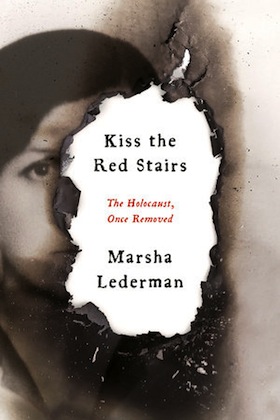
Vancouver journalist Marsha Lederman, Western arts correspondent for the Globe and Mail, has written Kiss the Red Stairs: The Holocaust, Once Removed. The book begins in 1919, when Jacob Meier Lederman was born on erev Yom Kippur. The auspicious timing of the birth of this baby, who would grow to become Marsha Lederman’s father, portended great things.

“[T]his was an occasion, an omen – a very good one, the hugest of deals,” she writes. “This person was special, he was going to be something, do something very important with his life.”

Indeed, he did. He survived the Holocaust – the only person in his immediate family to do so and one of only 10% of the Polish Jews alive in 1939 who survived to 1945.

Marsha Lederman’s mother was also a survivor, and one who participated in Steven Spielberg’s Shoah Foundation testimony project, video-recording her Holocaust experiences. This recording would become a touchstone because, despite the journalist daughter’s career asking questions of strangers, there were many unanswered questions in the family. This was due in part to the harrowing, abrupt response to a childish inquiry about the absence of grandparents, an early lesson that unexpected answers can have catastrophic emotional impacts.

Well into adulthood, Lederman decided to visit her mother during a snowbird retreat in Florida. But instead of sitting across the kitchen table learning about her mother’s darkest moments, she was instead living one of her own – delivering her mother’s eulogy. She had waited a day too long to fly south.

image - Kiss the Red Stairs book coverLederman’s book is the story of a family – two families, really. A family that in some ways never came together quite right, the author’s birth family with its silences about the past, and another that fell apart, that of her marriage. Kiss the Red Stairs, in fact, is a sort of applied case study in second generation (shorthanded “2G”) neuroses, as they distort the author’s reactions and coping mechanisms in a time of personal crisis.

As her marriage collapses, Lederman recognizes, on the one hand, that her responses may not be commensurate with actual events but are exacerbated by a lifetime of fears around loss and abandonment. On another hand, the undeniable anguish of her marital breakdown evokes an added burden of guilt, her own trauma juxtaposed with her parents’ experiences. Given what their mothers and fathers endured, do children of survivors have a right to feel the pain that other people seem to validly experience?

Lederman acknowledges that she was always ready for everything to fall to pieces. She inherited – or developed – an existential pessimism and a catastrophizing worldview: “The glass wasn’t just half-empty; it was half-full of poison,” she writes. “Or Zyklon B.”

The history that has formed Lederman’s identity was not imprinted on her at home only. It was in the zeitgeist of her coming-of-age as a young Canadian Jew in the 1970s and ’80s.

“The slogan ‘Never Again’ was drilled into us, implying – to me, anyway – that there was always the potential for an again, for another catastrophe. What would we do when the Nazis came back and came for us, like they came for our parents?

“This happened to us. This could happen to us again. I was one of the us. On some level I believed, from a very young age, that this could happen to me. I understood the need to be on guard, that we weren’t really safe. We needed to be on alert. Have a plan.”

For whatever were their good intentions, the organizers of a youth trip to Israel reinforced Lederman’s anxieties. Intending to instil in the participants the need for one solitary Jewish state in the world, they reminded their young charges that, in the absence of Israel, Jews would have nowhere to go should the need arise, “if the world once again turned on – or turned its back on – the Jews.”

She doesn’t disagree with the premise. “But the exercise scared the hell out of me. Don’t be so comfortable in that Canada you think of as home; you never know what could happen.”

That awareness of the unimaginable human capability for inhumanity had imprinted on her to the extent that everyday life became a gauntlet of inevitable disaster, misery the preordained endpoint of any happiness. When her marriage broke down, her reaction was extreme, “As if divorce, for instance, were some kind of death camp.”

Having consciously tried to eradicate (second-hand) Holocaust memory from its constant intrusion into her mind, Lederman finally faces the core question of her life, and of the book: “Could I possibly be a victim of the Holocaust, once removed?”

Now a mother, her obsessive worry has a new object, not only in terms of the world into which that child was born, but the potential for epigenetic inheritance. Will the baggage of the past be passed along to another descendant of survivors?

At the same time, Lederman is careful not to ascribe her challenges to the overburdened couple who raised her.

“I am not comfortable blaming what happened to my parents – and, in effect, blaming them – for my little problems. It feels self-indulgent, unfair and actually untrue,” she writes. What they accomplished after the war was almost as miraculous as their survival during it. “The fact that after such tragedy my parents were able to build new lives – purchase and set up a home, go to night school to learn English, buy a business, raise children – seems astonishing to me, as I contemplate it all as an adult. How on earth did they manage to do it, manage to be so normal?”

She quotes Elie Wiesel who, in 1984, told children of Holocaust survivors: “That your parents were not seized by an irrepressible anger … remains a source of astonishment to me. Had they set fire to the entire planet, it would not have surprised anyone.”

Elsewhere in Lederman’s book, Wiesel appears again, seemingly underscoring the legitimacy of second generation complexes by noting that it was they, not their parents, who were the ultimate target of Hitler’s plan.

“You were the enemy’s obsessions,” Wiesel told the children of survivors. “In murdering living Jews, he wished to prevent you from being born.”

Lederman confronts the reader with things she has learned from research, rather than from firsthand experience or from stories her parents shared (because they didn’t). The Holocaust experiences of her parents may be the impetus for her lifelong sense of danger, she seems to suggest, but the larger history of that era should be a warning shot for all humans – because it was humans who perpetrated everything that happened to her parents and to the millions of others of the Nazis’ victims.

In one of several graphic segments, she demands that the reader ponder how ordinary people could throw babies in the air and practise a merciless form of skeet shooting.

There are other psychological conundrums in the book. Reading her father’s journal of a trip back to Europe, Lederman confronts what reads like a cognitive rupture: her father’s love for and comparatively happy memories of Germany.

Rather than remain in Nazi-occupied Poland, young Jacob audaciously crossed into the belly of the beast, into Germany, posing as a Polish peasant boy, and got work as a farmhand, surviving until the end of the war. As a result, he took a perversely positive view. In a travel diary entry, he wrote, “I had a wonderful exciting day and my motto stands again forever: I will never forget you Germany and the peace and security I found here among these fields, meadows and trees in those murderous inhuman times of the year 1942.”

Of all the happenstances in the book – some life-altering and, in several instances, life-saving – there is a particularly poignant one that happened on her father’s trip back to his hometown. On that trip, her father found out that his parents had left a letter for him before they had been evacuated from the ghetto and shortly thereafter murdered.

“A Polish woman who lived there at the time, or moved in after the liquidation – I’m not sure which – had come into possession of that letter. There were photos in this packet and some other family keepsakes,” she writes. “The woman said she had held onto these items for a long time, but after so many years without word, she lost all hope that my father had survived; she figured nobody from the family had. She threw the packet away.

“What was that like for him – to learn that his parents had left him something: a declaration of their love, a wish for his future, some unknown secret, an explanation of what was happening to them? And to learn that those things once touched and left for him by his parents – a written document, photographs, who knows what else – proof that his parents had existed, evidence of their love – had survived, only to be discarded?”

On her own ventures to the blood-soaked continent, Lederman is reminded that the past has not passed. She sees antisemitic graffiti on abandoned synagogues, Polish youths giving obscene gestures to participants during the March of the Living. Lederman and four family members are paying tribute at a Holocaust memorial while a group of boys nearby chant something in Polish, something menacing that included one term she recognized: “Auschwitz-Birkenau.”

“It didn’t sound like they were expressing their condolences,” she writes.

After a lifetime of mostly solitary rumination and fears, Lederman has several epiphanies during the World Federation of Child Survivors of the Holocaust annual conference, held in 2019 in Vancouver. Here, she finds others who share her view that “the other shoe is always about to drop and the world is not safe”; “being plagued with obsessive doubt”; “a heightened ability – one might call it a curse – to observe and engage others”; “A constant expectation that someone is going to get you.”

There, she finds she is not alone.

“I had found my people,” she writes.

Format ImagePosted on July 8, 2022July 7, 2022Author Pat JohnsonCategories BooksTags Holocaust, Marsha Lederman, memoir, second generation, survivors

New era in U.S. politics

The explosive debate around abortion spurred by the U.S. Supreme Court’s rejection of a woman’s right to reproductive self-determination reminds us that the Jewish perspective on the topic is nuanced.

“Jewish law approaches each case according to its particular circumstances,” notes an article at chabad.org. This central dictum of halachah, Jewish law, makes generalizations difficult. One thing is almost universally accepted: abortion can be halachically required if the life of the mother is in danger.

In 2015, 83% of American Jews told Pew Research Forum that abortion should be legal in all or most cases, which is more than any other religious group, a finding around Jewish support for reproductive choice that has been true for decades. However, a story from the Jewish Telegraphic Agency recently noted that a growing alignment between some Orthodox Jews and the Republican party in the United States has led a minority of Jews to adopt what has been largely a conservative Christian approach to the subject.

The Orthodox Union released a statement that they are “unable to either mourn or celebrate” the court’s overturning of Roe. Their position is that an outright ban is unacceptable under Jewish law, but that abortion should be limited to cases where the mental or physical health of the mother is at stake, with an emphasis on the preservation of life. Further, they stated that abortion should be available regardless of someone’s economic status.

The tectonic decision by the court, overturning 49 years of precedent set by the landmark Roe v. Wade case, has set in motion frenetic activity across that country and beyond. State officials have had the issue thrown into their laps. The United States will become a patchwork of regulations on the subject. The ruling has led to triumphant celebrations by opponents of abortion and it has reenergized those endorsing reproductive freedom. What all of this will mean, not only for abortion rights but for social movements and society more broadly, can only be remotely imagined at this point.

The abortion decision was only one of several massive reversals of existing norms the U.S. court issued in its session. In other cases, the court made it more difficult for lower jurisdictions to limit access to firearms, weakened the power of federal agencies to address climate change and struck down a ruling that limited prayer in public schools (in this specific case, Christian prayer at school football games).

The succession of cases throws down a gauntlet that most people – whatever their opinions – knew was coming when the former president appointed three justices to the court, creating a 6-3 conservative majority.

In many cases, though, these decisions are deeply out of step with what the majority of the population believes. Of course, court rulings should not necessarily mirror societal norms. Historically, courts have made society-altering decisions in spite of opposition – desegregating public schools against the wishes of white racists, for instance. Leaving aside philosophy, public opinion may not be able to impact a Supreme Court packed with political appointees (three of whom testified in their nomination hearings that the abortion question was settled law) but public opinion will change society.

Anti-abortion activists (and anti-climate, anti-secularism and anti-gun control activists) have been celebrating their big wins in these cases.

In 1973, as pro-reproductive choice activists were celebrating their Supreme Court win, a new movement was gaining its footing. It would develop into one of the biggest, most powerful movements in American history, a new conservatism that led, among many other social and economic changes, to the elections of Ronald Reagan, two Bushes and Donald Trump. And it accomplished one of the core objectives it set out to address: it tipped the scales of the Supreme Court and stripped women of rights they have had since 1973.

Those who were celebrating in 1973 are today experiencing a vast array of emotions: grief, disillusionment, fear. But also rage, determination and purpose.

As the Roe decision did in 1973, last month’s ruling will launch a new movement that, like the new conservatism before it, will address a broad range of social issues and injustices. It was impossible, 49 years ago, to foresee the changes that would come. Whichever side one may be on, be assured that we have entered a new era.

Posted on July 8, 2022July 7, 2022Author The Editorial BoardCategories From the JITags abortion, human rights, Judaism, law, politics, United States
Folk festival returns to park

Folk festival returns to park

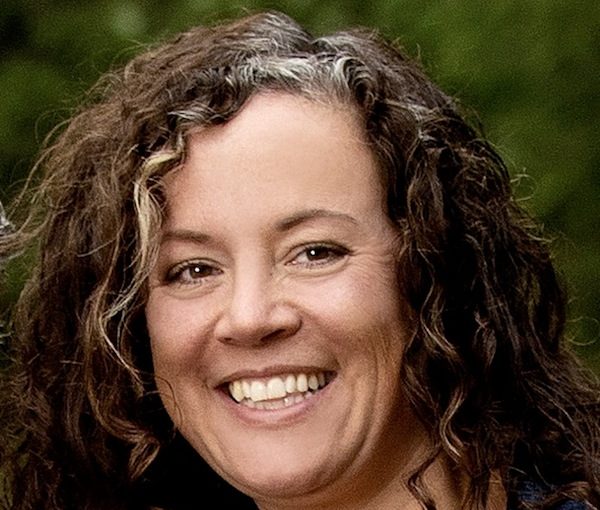
Michelle Demers Shaevitz, artistic director of Mission Folk Music Festival, which runs July 22-24. (photo from Mission Folk Music Festival)

“Mission Folk Music Festival is a wonderful combination of the familiar and the magical,” artistic director Michelle Demers Shaevitz told the Jewish Independent of how the festival has thrived for 35 years. “We’ve had the great privilege of presenting interesting and engaging music and art in a stunning setting. Imagine this creativity set among the trees, overlooking the river. We are very lucky.”

The annual festival takes place in Fraser River Heritage Park in Mission. This year, it runs over the weekend of July 22-24.

Demers Shaevitz’s history with the Mission Folk Music Festival goes back to 1991, the year she graduated from high school.

“I started by handing out volunteer tags, graduated to driving performers, moved into performer services and, from there on, to assisting our founder, Francis Xavier, with general management. When he departed in 2016, the board asked me to step into this role as the festival’s second artistic director. Adjacent to all of this, I spent 10 years working in student affairs for Simon Fraser University and the University of the Fraser Valley, as well as moving to Seattle, getting married, and having a kid.”

She credits the festival for that move and her marriage. People come to Mission from Seattle every year to volunteer and Demers Shaevitz said she has made many friends as a result.

“I was headed down there to stay with some of them and see a festival band, the Duhks, from Winnipeg,” she said. “These friends own a wine shop, West Seattle Cellars, and the night after the show, I met my future husband in the Riesling section. I’m so lucky for this festival for giving me the life I have.”

And part of that life is the Jewish community into which she married. She described herself as blessed to have it. “From the start of our relationship, Ben and I decided to incorporate Jewish traditions and holidays into our relationship,” she said. “We’re involved in the JCC here and our son attended Jewish day school for preschool and pre-K. We are members of Kol HaNeshamah in West Seattle and our son has just started Hebrew classes. I am grateful for the acceptance I’ve found in the community, as well as their amazing willingness to share knowledge, traditions and culture with me.”

In addition to the Mission Folk Music Festival, Demers Shaevitz works with Festival du Bois in Maillardville, an historic francophone neighbourhood in Coquitlam, and the Subdued Stringband Jamboree in Bellingham, Wash. She has also volunteered and served as a board member with Northwest Folklife in Seattle.

“I am lucky to have a supportive partner and a good internet connection,” she said of working remotely, notably on the folk festival. “The pandemic really demonstrated the capacity to produce and manage an event from outside of Mission. I’m generally up to Mission two to three times a month, which increases as we get closer to the festival.”

The organizing process for the music festival – which involves more than 300 volunteers – revolves around storytelling.

“If I can focus on the artistic side, I start with a story or an idea that I would like to explore,” she explained. “This year, I am digging into the idea of homecoming. I focus on artists who tell a great story through their music. Artists who are grounded in a culture and/or tradition. Artists who represent a diverse window through which to experience the world around us. It’s important to me that we highlight and celebrate diverse voices and communities. I take this responsibility very seriously.”

Another responsibility she and the festival as a whole take seriously is reconciliation – the event takes place in a park where a residential school once stood.

“We have planned our festival to respectfully acknowledge the footprint of the original site,” said Demers Shaevitz. “We are deepening relationships with the local Sto:lo community as we remain committed to the principles of the Truth and Reconciliation Commission. We continue to work towards a deeper understanding of what role we can play in the healing of this space.

“We recognize the privilege we have in presenting music and dance on these grounds and will continue to work with affected communities to prioritize their experiences,” she added.

“It’s a thrill for us to return in person to Fraser River Heritage Park for our 35th anniversary festival,” said Demers Shaevitz in the press release. “I’m excited to welcome folks back to the park to share some amazing global music with them. This year’s lineup offers festival-goers everything from singer-songwriter folk to Celtic, blues, bluegrass and soul to the uniquely amazing nu-folk of Estonia’s Puuluup, the electrifying sound of Chile’s Golosa La Orquesta and, for our Saturday night main stage final act, the dynamic Québécois zydeco of Le Winston Band…. From the heart of B.C.’s Rockies, Shred Kelly will help kick off the festival Friday night, and a true Canadian treasure, William Prince, will close the show on Sunday. And in between – there’s an incredible range of tunes to enjoy.”

Leading the festival through the worst of COVID had its challenges, but also its silver linings.

“I am so grateful to have been able to work with a talented bunch of dedicated folks to produce our two online festivals,” said Demers Shaevitz. “The highlight of this for me was all the ways in which people demonstrated their willingness to support us in any way that they could. The resilience of the artists, the community to continue was so heartening. It truly fed my heart and soul. I think that I’ve continued to draw upon that resilience to get through this return to music, this return to ‘live.’”

In addition to the concerts, the three-day live event includes music workshops, Wee Folks programming “so kids and their families can enjoy listening to the music while they play,” food and artisan markets and a licensed bistro on site. For evening, day or weekend passes, including an option to camp at the site, visit missionfolkmusicfestival.ca.

Format ImagePosted on July 8, 2022July 7, 2022Author Cynthia RamsayCategories MusicTags Fraser River Heritage Park, Michelle Demers Shaevitz, Mission Folk Music Festival
Standing up against hatred

Standing up against hatred

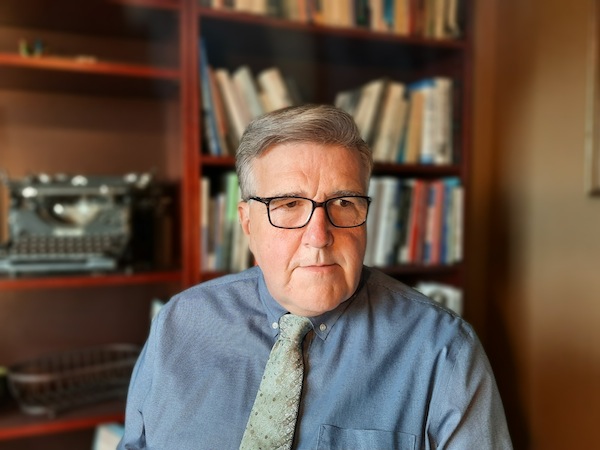
Pat Johnson, founder of Upstanders Canada. (photo by Paul Tillotson)

There has been a widening split between many progressive movements and the Jewish community in recent decades, according to Pat Johnson, the founder of Upstanders Canada. His Vancouver-based organization aims to encourage Canadians – especially non-Jewish Canadians – to stand against hatred of all kinds, but particularly against antisemitic words and deeds.

“You can make whatever justifications you want about what is wrong with Israel or criticize the government, but if a progressive movement finds itself at odds with 80% of Jewish people, then that is a sign that something is wrong with your worldview,” said Johnson, a member of the Jewish Independent’s editorial board.

“I have been watching as many people within the Jewish community became skeptical of the left – which their parents had built in this country. It is a betrayal.”

Long involved with progressive causes, such as gay rights, gender equality and interfaith dialogue, Johnson observed a rift forming amid the left and the Jewish community at the time of the Second Intifada that began in the Middle East in 2000.

“When Yasser Arafat turned to violence and the world, led by progressives, sided with the violence instead of demanding he return to the negotiating table, that is when the global left went off the rails,” he posited.

Johnson maintains that the North American left, with few exceptions, has let down the Jewish people. “If you do not believe in the Jewish people’s right to self-determination and that is the only people you do not support, then there is a problem in your movement.”

An ardent supporter of Israel, this was the genesis of his cognitive dissonance with the left. “I am a progressive Canadian and a fervent Zionist and there is nothing contradictory about that,” said Johnson, who is not Jewish. “What is contradictory is calling yourself a progressive and not supporting the Jewish people’s right to self-determination. I might not fit on the left any more but that is not because of me. It is because of them.”

The tipping point for Johnson happened in October 2018 on a return flight from Israel. On the airplane, he learned of the mass shooting at the Tree of Life synagogue in Pittsburgh. He realized then the need to launch Upstanders Canada.

“I thought somebody has to do something, I guess that someone could be me. We can’t pretend any more that this is not a serious problem in North America,” he said. “The Jewish community has always had to fight their battles themselves while progressives are standing up as allies to every socio-cultural group except Jews.”

An example Johnson uses to demonstrate this point is how many progressives have taken it upon themselves to disagree with the definition of antisemitism developed by the International Holocaust Remembrance Alliance. This, he asserts, they would not do with any other group. “When you treat the Jewish people differently than any other group in society – that is problematic,” he contended.

Antisemitism can be a “perfect prejudice,” he added, as Jews are deemed powerful by many, including those on the left. Thus, though most progressives may think antisemitism is not right and not view themselves as antisemitic, there is an element of “sticking it to the man and that the Jewish people will be just fine.”

“There is a theory that whatever happens to the Jewish people happened because they brought it on themselves and it is not something we say with any other group. Progressives will never say that any other victim of a hate crime brought that act upon themselves,” said Johnson.

A solution, Johnson believes, is for supporters of Israel to stop arguing with the people who will never agree with them. Instead, what should be done is to identify and mobilize the people who agree with Israel’s right to self-determination and don’t need convincing.

To Upstanders Canada, antisemitism is not a Jewish problem – it is a non-Jewish problem with serious implications for Jewish people. It is a problem created by non-Jewish people that needs to be confronted by non-Jewish people, said Johnson.

Upstanders Canada takes no position on issues that deserve to be resolved by Jewish people or the state of Israel, he said. Rather, it is based on the belief that Jewish people have a right to live safely and free from fear everywhere in the world.

The organization is currently building its database of allies. They welcome everyone, including those in the evangelical community and those communities in which antisemitism has surfaced, such as political parties on the left and trade unions.

In the past few months, Johnson’s letters have appeared in several newspapers across the country, reminding Canadians to be vigilant in the fight against bigotry and hatred.

Johnson has a long-standing connection to the Jewish community. In addition to being a regular contributor to the Independent, he has worked with numerous organizations: Hillel BC, Canadian Jewish Congress, the Vancouver Holocaust Education Centre and the Louis Brier Home and Hospital.

“I don’t have the short answer for how I wound up in the Jewish community, so I just say bashert [destiny],” Johnson said.

For more information, visit the website upstanderscanada.com.

Sam Margolis has written for the Globe and Mail, the National Post, UPI and MSNBC.

Format ImagePosted on July 8, 2022July 7, 2022Author Sam MargolisCategories LocalTags anti-hate, antisemitism, Canada, interfaith, Pat Johnson, tikkun olam, Upstanders
Good reads, good talks

Good reads, good talks

Helen Pinsky still chairs Waldman Library’s Jewish Book Club, which she started in 2015 when she was librarian there. (photo from Helen Pinsky)

Helen Pinsky founded the Waldman Library’s Jewish Book Club in 2015, when she was the librarian there. She has since retired from the position but stays on as the book club chair.

“We started it as a drop-in,” Pinsky told the Independent. “Always once a month, on a last Thursday. People drifted in gradually. Some were library volunteers who wanted to discuss their recent reads. Others were readers who wanted to talk about books. Waldman had book clubs before, on and off for years, but this one has lasted the longest.”

She defined the club’s goal: to foster the love and understanding of books written by Jewish authors or featuring Jewish content. “We try to select books that are entertaining, interesting to many readers. Mostly we read fiction,” she said. “Rarely, we try non-fiction books, but unless they are memoirs, not many people are eager to read or discuss them. We even attempted a separate non-fiction club, but it didn’t work.”

The books selected come from different sources. “I’m a librarian. I listen to what people want to read,” said Pinsky. “Sometimes, I select the books myself. Other times, the library staff might make a suggestion, or the group would vote on the title or author.”

The books that club members have read so far are divided between English-language writers and translated novels. “There are so many outstanding Israeli writers,” said Pinsky. “Our chosen books are not always new. Some of them were published a number of years ago. Often, they are not easy reads.”

But new or old, easy or sophisticated, they are always books with brilliant writing and complex ideas – “great literature exploring universal themes,” she said.

Generally, the club reads mainstream fiction. “We often read historical literature,” Pinsky said. “Not so much about the Holocaust and wars, but stories about Jewish life in other centuries and other countries. Some of our most captivating recent novels talked about the post-Holocaust decades, about the survivors rebuilding their lives.”

To find books for the club, Pinsky regularly scours the Jewish Book Council website. She reads reviews on Goodreads and Amazon. She seeks recommendations from the National Council of Jewish Women.

“We always choose books with multiple copies at the Waldman, as well as at the VPL [Vancouver Public Library] and the Richmond library, so people are not forced to buy them. Occasionally, the book was donated. Then it makes a round on a goodwill system, so every member of the club can read it. We usually announce the titles three or four months in advance, to give people time to read the books.”

The club’s facilitator from the beginning, Pinsky tries to make every meeting interesting in a different way. “I do my research about every book. Usually, in the beginning of a meeting, I would do a bio sketch of the author. Then, before we open a discussion, I would list the main points of the story, maybe a quote or two from the reviews to demonstrate something that caught other readers’ interest,” she explained. “Then we go around the table. Everyone who wants to speak raises their hands. I would ask questions to nudge the conversation. Who is your favourite character? Why? What lesson did you learn from the story? Some people enjoy talking at the meetings. Others keep quiet; they come to listen. I keep a list of speakers, but if someone new, who rarely participates, raises their hands, I bump them to the top of the list.”

In her experience as the club moderator, people are interested in different aspects. “Some read for the plot,” she said. “Others are fascinated by character development or emotional issues. Still others pay the most attention to the quality of writing.”

She said that, occasionally, even if you don’t like a book, it could provide a valuable insight. “We once read a book about Alzheimer’s. I didn’t want to read it,” she admitted. “It seemed too close to my private life. I had a personal experience with this dreadful disease. My mother had Alzheimer’s for years. It was very hard. But the book was written in a remote way that allowed me to maintain emotional distance. Otherwise, I probably couldn’t have read it.”

She shared her opinions about that book with the club, and the discussion was lively. It also veered from that particular book into more personal territory, as everyone had a story to tell.

Besides discussing books, sometimes the club has the privilege of meeting the authors. “If the author is local, I would invite them to speak to us,” Pinsky said. “Often, we tie our book selection to the Jewish Book Festival and organize the club nights to coincide with the author’s public appearances.”

According to Pinsky, the number of participants in the club fluctuates from month to month. Some people come for several months and then stop for various reasons. Some realize they are not interested, while others are devastated to leave the club but have no choice. Sometimes, more than 20 people attend the meetings, but the optimal number is around 10 or 12, said Pinsky.

“As we meet in the daytime, most of our members are retired,” she said. “Although we have younger participants if they are students or have flexible working hours, or if they are library staff. Some of the members are writers themselves. Newcomers to Canada also occasionally join the club to read and discuss Canadian Jewish authors.”

Pinsky stressed that COVID changed the book club atmosphere a lot, as it changed everything else. “During the pandemic,” she said, “we couldn’t meet in person, of course. We had our meetings on Zoom for almost two years. Only the last few months, we resumed out meetings in-person, and some longtime members are still not comfortable meeting face-to-face. New people come in. We might institute some changes to reinvigorate the club.”

The July selection of the club is The Last Rose of Shanghai by Weina Dai Randel, published last year. Everyone is welcome. Send a message to [email protected] if you’d like to join the discussion.

Olga Livshin is a Vancouver freelance writer. She can be reached at [email protected].

Format ImagePosted on July 8, 2022July 7, 2022Author Olga LivshinCategories BooksTags book club, Helen Pinsky, reading, Waldman Library
Tofino mustard maven

Tofino mustard maven

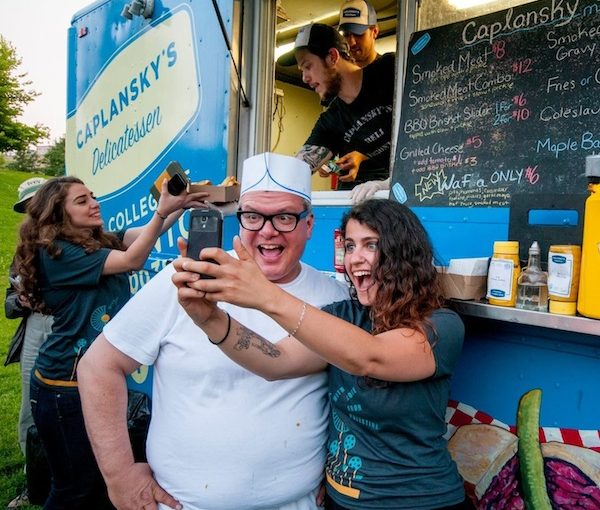
A Caplansky’s Deli fan takes a selfie with the restaurant’s founder, Zane Caplansky. (photo from Zane Caplansky)

As Zane Caplansky describes it, his journey in the world of deli, which ultimately led him from Toronto to Tofino, began on a hot summer night in 2007.

Sitting in a bar on Toronto’s Dupont Street, Caplansky was “hangry” (hungry and angry). He thought to himself, “Why can’t you get a decent smoked meat sandwich in this city? I am going to have to do it myself.” Toronto offered nothing that, to his tastes, compared to Schwartz’s Deli in Montreal.

As a child, whenever grownups would ask what he wanted to do when he was older, he said he wanted to own a restaurant. As an adult, he had worked in restaurants in every capacity, from dishwasher to manager, but not as an owner.

“That night, in a fit of hanger, I had a deli epiphany. Deli is so me. Deli has shtick, deli has chutzpah, deli has flavour. I am not a fine dining or fast food person. I am a deli guy,” he told the Independent. “That night, I resolved that this is what I was going to do.”

He opened Caplansky’s in 2008 in a dive bar in the Little Italy neighbourhood – it began as what many regard as Toronto’s first “pop-up restaurant.”

Shortly thereafter, David Sax, author of the book Save the Deli, wrote a piece for the Globe and Mail about the return of Jewish food to downtown Toronto.

“Every Jew in the city saw that headline and we got slaughtered. Everyone showed up and wanted a sandwich,” said Caplansky.

Following that success, he started what was to be his flagship location, not far from Kensington Market. There is also a Caplansky’s Deli at Toronto’s Pearson Airport in Terminal 3.

After a few years, the stresses of running the downtown business and continued complications with his landlord led him to consider a change.

In December 2017, he had a conversation with his wife, who hails from Tofino. “We were in the guest room of my in-laws when we decided to close the downtown Toronto restaurant and move here,” he said. “Now we are living our dream. The restaurant at the airport has afforded us the financial freedom to do what we have done.”

From 2011 to 2016, Caplansky had a line of mustards. From its earliest days, the restaurant used the mustard on all the food items it sold, and people would send him emails, asking how they could get some for home.

When considering what to do after settling in Tofino in early 2019, Caplansky returned to the idea of mustard. Later in 2019, when he was asked by the Toronto Blue Jays to open a kiosk at Rogers Centre, he saw it as an opportunity to relaunch the product.

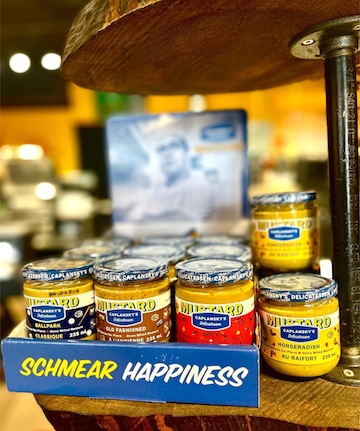
photo - Caplansky’s mustards“The aura of Major League Baseball is a very special thing. And the mustards were a hit,” he said. “As a Blue Jays fan, it was such a big deal to see fans eating my food in the stands.”

When the pandemic struck in March 2020, Caplansky was prepared. People started ordering products online and, as Caplansky recounts, business boomed. Retailers and distributors, too, were receptive to working with him and his products are now sold in nearly 500 retailers across Canada and the United States. His biggest problem, he said, is keeping up with demand.

“It’s going at a pace I never would have imagined,” he said.

Presently, Caplansky is focusing on four key mustards: ballpark, old fashioned, horseradish and spicy.

“To me, deli is the food you celebrate with. Our mustard connects with people to a degree that I never truly appreciated or anticipated. The secret ingredient of our product is resilience. I think people really identify and connect with it,” he explained.

Caplansky takes pride in creating what he calls a “unique quirk” around his deli. Oftentimes, people would come into the restaurant and tell him that, despite its mere 15-year history, they remember coming into Caplansky’s with their parents and grandparents. Despite this chronological impossibility, he would never correct them.

“It was amazing to us that people thought that it had been around forever. The idea of a deli holds a place in people’s minds,” he mused. “It’s truly a blessing.”

The entrepreneur has appeared on CBC’s Dragons’ Den several times and been a regular on Food Network Canada.

For more information, visit caplanskys.com.

Sam Margolis has written for the Globe and Mail, the National Post, UPI and MSNBC.

Format ImagePosted on July 8, 2022July 7, 2022Author Sam MargolisCategories LocalTags business, Caplansky, deli, food, mustard, Tofino
Journey from prison to power

Journey from prison to power

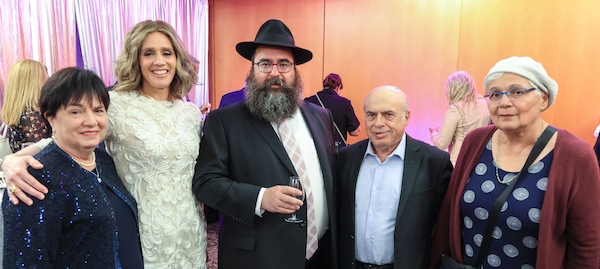
At the Freilach 25 gala on June 19, left to right, are Yocheved Baitelman, Chanie Baitelman, Rabbi Yechiel Baitelman, Natan Sharansky and Avital Sharansky. (photo by Kasselman Creatives)

Natan Sharansky, the most famous “Prisoner of Zion” and a former Israeli senior cabinet minister, shared reflections on his extraordinary life with a Vancouver audience last month.

Sharansky spoke June 19 at the Freilach 25 gala honouring Rabbi Yechiel and Chanie Baitelman on the 25th anniversary of their leadership of Chabad of Richmond. The event took place at Schara Tzedeck Synagogue.

Born in 1948 – the same year as the state of Israel – Sharansky was, like most Jews in the officially atheist Soviet Union, utterly disconnected from his Judaism. There was no brit milah, no bar mitzvah, no Jewish culture, language or tradition, he said – “What there was, was antisemitism.”

There were about 150 nationalities in the sprawling Soviet Union, each one of them identified on the fifth line of the official state identification issued to every citizen. Everyone, regardless of ethnic origin, was treated relatively equally, if not fairly, under the communist regime, with one exception. If someone said, “He has a fifth-line problem” or “the fifth-line disease,” it meant they were a Jew and, therefore, had more limited opportunities for advancement than members of the other national groups, said Sharansky.

While they had only the vaguest idea of what being a Jew meant – “There was nothing positive in this word ‘Jew,’” he said – his parents instilled in him the need to overcome the officially proscribed handicap through excellence.

“You must be the best at chess or music or whatever you’re doing,” they told him, “the best in your class, your school, your city.”

Sharansky – then called Anatoly – was 5 years old when Stalin died (on Purim). At the time, the so-called “doctor’s plot,” a Stalinist campaign to whip up antisemitism based on allegations that Jews were trying to assassinate Soviet leaders, was approaching a climax. Boris Sharansky told his two sons that the dictator’s demise was a good thing, but that they must not let on to others that they believed this.

Back at school, young Anatoly mimicked his fellow kindergarteners.

“We are crying together with all the other kids,” he said. “We are singing songs about the great leader.… You have no idea how many children are really crying and how many children are crying because their fathers told them to do it.”

This was Sharansky’s first conscious awareness of “doublethink,” the phenomenon in which Soviet citizens learned to compartmentalize what they knew from what they were supposed to know.

“You are reading what you’re supposed to read, you’re saying what you’re supposed to say, you are voting as everybody votes and you know that this is all a lie,” he recalled.

For Jews of his generation, the deracination from their heritage changed in 1967.

“The Six Day War was a big humiliation for the Soviet Union,” he said. “They had thrown in their lot with the Arabs.”

While the seemingly miraculous Israeli victory over the combined neighbouring Arab armies was notable, it didn’t change the perceptions of Soviet Jews overnight. It didn’t, for example, distract the young from their studies for university exams.

“But, over time, some things changed,” Sharansky said. “Those that loved you and those that hate you” changed their attitudes, he said. “They all look at you and say, ‘How did you Jews do it?’” Jews were upgraded, Sharansky has written. “We went from greedy, cowardly parasites to greedy, bullying hooligans.”

Soviet Jews did not consider themselves part of Israel, but at least some of their non-Jewish neighbours did. This sparked a new curiosity among Soviet Jews about their connection to Jews outside their realm and kindled pride in their identity for the first time.

Soon, smuggled copies of Leon Uris’s 1958 historical novel Exodus, about the founding of the state of Israel, found its way into circulation. The forbidden book was passed from hand to hand, not only because it was a page-turner, but because it was not the kind of book a Jew in the Soviet Union wanted sitting around the house.

Sharansky realized that the soldiers in Israel who had defeated the Arabs in 1967 were the same age as him.

“Suddenly, the university exams didn’t look so significant,” he recalled. So began a quest for identity and dissidence that would lead Sharansky to nine years in a Soviet prison, then, later, to nine years as a senior figure in Israel’s government and, later still, nine years as head of the Jewish Agency for Israel.

As Jews in the Soviet Union gained consciousness about their identity – and began their “treasonous” demands to abandon the communist state for Israel – they ignited a parallel and larger fight against Soviet tyranny. In his presentation, and more deeply in his book Never Alone: Prison, Politics and My People, co-authored with Gil Troy, Sharansky explained how he struggled with whether his fight was for his right to fully express his particular Jewish identity or whether it was a larger battle to free the millions of oppressed Soviets of all 150 or so nationalities.

At the same time, international solidarity that had begun as a tiny rally of Columbia University students in 1964 exploded into a massive global movement calling for the Soviets to free both “Prisoners of Zion” – those Jews imprisoned in gulags for openly confronting the Soviet powers – and the millions more Jews in the Soviet Union who were not free to leave the country.

As the Soviets grew more concerned about this international attention, they responded in two ways. They permitted some Jews to make aliyah – particularly middling troublemakers they preferred not to deal with – while imprisoning leaders like Sharansky, who soon became the leading face in the fight to free Soviet Jewry.

If Anatoly Sharanasky – who would rename himself Natan as his Jewishness evolved – was the face of the movement, his imprisonment required a voice to take up the mantle. This role was adopted by his wife, Natasha, who herself would become Avital as she, too, reconnected with her identity. As Avital Sharansky sat in the audience at Schara Tzedeck last month, her husband recounted her meetings with world leaders, Jewish community officials and anyone who would listen to her demands to free her husband.

Before being thrust into the roles of world-leading activists, Natasha and Anatoly – Avital and Natan – had a one-day honeymoon. They were hastily married and the next day she flew to Israel, not sure whether the Soviets would soon rescind her exit visa. She began her lobbying while he continued the activism that led him, three years later, to be sentenced to death by shooting for “high treason.”

Jews all over the world demonstrated, including a 250,000-person march on Washington in 1987. Soviet ambassadors in Western capitals were called in to explain their treatment of Jewish citizens. The U.S. Congress passed an amendment to a trade law, tying Jewish emigration and broader human rights issues to economic ties with the Soviets.

A Toronto man, Noah Landis (né Lantsevitsky), saw Sharansky on the news and did a little genealogy. Discovering a family connection, he contacted Irwin Cotler, Sharansky’s Canadian lawyer and later Canada’s minister of justice, who was able to go to then-prime minister Pierre Trudeau and demand that the government stand up for this relative of Canadian citizens being held hostage for his identity.

The ascent of Mikhail Gorbachev, with his liberalization programs of “glasnost” and “perestroika,” put the treatment of Soviet Jews further into the spotlight. In 1985, then-U.S. president Ronald Reagan met with Gorbachev in Geneva. At one point, Avital Sharansky, dressed in a prisoner’s uniform, accosted Raisa Gorbachev, wife of the Soviet leader, asking for her intervention. In private, Reagan demanded Gorbachev act on Sharansky’s case and, three months later, Sharansky was released, the first of the Prisoners of Zion to gain freedom. The day he was released from prison, Sharansky was stripped of his Soviet citizenship and flown to East Berlin, transported across to West Berlin and on to Israel, where he ended the very long day dancing at the Western Wall.

Sharansky’s attendance in Vancouver was to mark the quarter-century of commitment Rabbi Yechiel and Chanie Baitelman and their family have made to the B.C. community as Chabad shlichim in Richmond.

The rabbi said he felt “embarrassed and inadequate” at the recognition, saying, “Serving this community is not some great burden. It is in fact the greatest privilege imaginable.”

Baitelman spoke of the exponential growth Chabad of Richmond has seen in 25 years, including a huge increase in the number of educational programs delivered, meals prepared and shared, and youth activities, Hebrew classes and outreach programs initiated. The model of the late Lubavitcher Rebbe is one they try to emulate, said Baitelman.

“This is what we try to do – to ignite the soul of every Jew with the love of Torah, the love of Judaism and a passion for our Jewish traditions so that each person can realize their unique potential and fulfil the purpose for which he or she was created,” said the rabbi.

Chabad of Richmond is bursting at the seams, he said, and has begun a campaign to relocate to larger premises. On a personal level, Baitelman said he and his wife are not slowing down.

“We have no intentions of resting on our laurels, not for a minute,” he said. “Our work is only just beginning. Chanie and I pledge to work even harder, to grow this organization, to bolster our acts of chesed on behalf of this community, to increase the number of programs we have to offer.”

Shelley Civkin and Gayle Morris co-chaired the event. Steve Whiteside, president of Chabad of Richmond, welcomed guests, while his vice-president, Ed Lewin, offered closing remarks. Mark and Yolanda Babins introduced the keynote speaker.

Format ImagePosted on July 8, 2022July 7, 2022Author Pat JohnsonCategories LocalTags antisemitism, Baitelmans, Chabad Richmond, fundraiser, Natan Sharansky, politics, Prisoner of Zion, Russia, Soviet Union
Ben-Gurion goes global

Ben-Gurion goes global

Canadian Associates of Ben-Gurion University honouree Martin Thibodeau, B.C. president of RBC Royal Bank, speaks at the June 9 gala. (photo from CABGU)

Less than six decades ago, the city of Beersheva, in Israel, had more camels than people. Now, it is home to one of the world’s most innovative post-secondary institutions – Ben-Gurion University – and 400 British Columbians packed a Vancouver ballroom June 9 to help launch the university’s new School of Sustainability and Climate Change.

The Canadian Associates of Ben-Gurion University (CABGU) event at the Fairmont Pacific Rim Hotel honoured Martin Thibodeau, B.C. president of RBC Royal Bank, and featured Prof. Daniel A. Chamovitz, president of Ben-Gurion University (BGU), in conversation with event emcee Robin Gill.

Since taking the helm of RBC in the province, in 2018, Thibodeau has continued an involvement in Jewish community affairs that began earlier in his career, in Winnipeg and later in Montreal. He credits his mother with instilling in him a respect for multiculturalism and a connection with the Jewish experience.

In 2018, RBC Royal Bank created a cybersecurity partnership with BGU, investing in artificial intelligence and machine learning technologies to develop advanced cyber-security techniques. Two years later, RBC British Columbia sponsored the first two research fellowships at the new School for Sustainability and Climate Change and, later this year, Thibodeau will lead a summit to Israel, bringing a group of Canadian business leaders to BGU. He is engaged with a host of community organizations, including the Jewish Community Centre of Greater Vancouver, the Jewish Federation of Greater Vancouver, United Way of the Lower Mainland, B.C. Children’s Hospital, Science World and others. He is also co-chair of RBC’s Diversity Leadership Council.

“I’m always amazed at the dynamic and progressive work that continues to be produced by the scholars and the teams at Ben-Gurion University,” Thibodeau said at the June event. “The world owes a great deal of debt to the outstanding advancements that have already contributed to how we live and work as a society. I am excited to see what the future holds in the hands of these amazing and brilliant individuals.”

Thibodeau, who oversees 7,000 employees in the province, was introduced by Lorne Segal who, with his wife Melita, co-chaired the event. Segal gave an emotional testimonial to his late father, Joseph Segal, who passed away 10 days earlier, at age 97. Segal said his father had not attended many events in the past several years but had been looking forward to being present to honour Thibodeau.

In his presentation, Thibodeau thanked the Segals for their support, and for their presence in a time of mourning. Thibodeau paid credit to Joe Segal, who called him soon after he arrived on the West Coast, invited him for lunch and offered advice and an open ear.

In recorded greetings, Israel’s ambassador to Canada, Ronen Hoffman, called Thibodeau “far more than just a businessman. He is a leader, innovator and community-oriented friend of the Jewish people, of Israel.”

Chamovitz, the university’s president, noted that David Ben-Gurion’s dream of a university “at the gates of the Negev Desert” was intended to uncover secrets: “How to make energy from the sun, water from the air and agriculture from the infertile sands, taking advantage of resources that, until now, were going to waste.”

The changing climate has made innovations such as solar energy, desalinization and agriculture in inhospitable places answers to urgent questions that affect lands far beyond the Negev.

“We all of a sudden realized that what we thought was a local problem is now a global imperative and people from all over the world started coming to Beersheva to learn from our expertise,” said Chamovitz, who grew up in Pennsylvania and has been president of the university since 2019. The Abraham Accords have opened new doors to cooperation between BGU and Gulf States that need these technologies, he added.

The School of Sustainability and Climate Change was announced last year and, so far, 25 departments are collaborating on planetary life-and-death topics. (See previous articles at jewishindependent.ca.)

“My simple challenge was to get them to collaborate in order to really leverage our expertise into something that’s much greater than the sum of each of those departments,” said Chamovitz. Even the department of Hebrew literature is involved.

“Hebrew literature did a big seminar on climate fiction, understanding how climate change is influencing what people write about and how this literature is influencing public opinion about climate change,” he said.

While BGU was created with the development of the Negev Desert in mind, the work they are doing is global, with impacts reaching British Columbia, said Chamovitz.

“You cannot look at British Columbia divorced from the world,” he said. Flooding and heat domes are processes that are happening worldwide. Mitigation and prevention must take place both locally and globally, he said.

Chamovitz credited the leadership of Thibodeau and RBC for making it easier for BGU to go to other major donors to fund the new school.

Another new development at the university, he said, is a high-tech park dedicated to advanced research in cybertech, agricultural technologies and green energy.

CABGU B.C.-Alberta board member Eli Joseph chaired the event and board member Rachelle Delaney was the convener. Si Brown, president of CABGU B.C.-Alberta, opened the event. The corporate sponsorship committee was chaired by board member Adam Korbin, and David Berson is CABGU regional executive director.

Terry Beech, member of Parliament for Burnaby North-Seymour, brought greetings from the federal government. Representing the government of British Columbia, Minister of Finance Selena Robinson spoke of her family’s connections to Israel.

Format ImagePosted on July 8, 2022July 7, 2022Author Pat JohnsonCategories LocalTags Ben-Gurion University, BGU, CABGU, climate, Daniel Chamovitz, education, fundraiser, Israel, Martin Thibodeau, RBC, research, science

Posts pagination

Previous page Page 1 Page 2 Page 3 Page 4 Next page
Proudly powered by WordPress