Skip to content
  • Home
  • Subscribe / donate
  • Events calendar
  • Business Directory
  • FAQ
  • News
    • Local
    • National
    • Israel
    • World
    • עניין בחדשות
      A roundup of news in Canada and further afield, in Hebrew.
  • Opinion
    • From the JI
    • Op-Ed
  • Arts & Culture
    • Performing Arts
    • Music
    • Books
    • Visual Arts
    • TV & Film
  • Life
    • Celebrating the Holidays
    • Travel
    • The Daily Snooze
      Cartoons by Jacob Samuel
    • Mystery Photo
      Help the JI and JMABC fill in the gaps in our archives.
  • Community Links
    • Organizations, Etc.
    • Other News Sources & Blogs
  • JI Chai Celebration
  • JI@88! video

Recent Posts

  • Legal help for students
  • Revisiting myth of Lilith
  • Wrong person rebuked
  • Canada’s mixed messages
  • Questions for museum
  • Symposium on antizionism
  • Making soccer political
  • CJPAC lauds Pulver’s impact
  • City recognizes Vrba’s legacy  
  • Organ donation saves lives
  • Theodore’s March premiere
  • A healing Shabbaton
  • Supplying healthy food
  • A chime of metal tags
  • Yellowknife seder a first
  • Ishai energizes, unifies
  • A Lag b’Omer to remember
  • Expanding the healing
  • Hannah Senesh – a unique hero
  • Community milestones … May 2026
  • Sharing her testimony
  • Fall fight takes leap forward
  • The balancing of rights
  • Multiple Tony n’ Tina roles
  • Stories of trauma, resilience
  • Celebrate our culture
  • A responsibility to help
  • What wellness means at JCC
  • Together in mourning
  • Downhill after Trump?
  • Birth control even easier now
  • Eco-Sisters mentorship
  • Unexpected discoveries
  • Study’s results hopeful
  • Bad behaviour affects us all
  • Thankful for the police

Archives

Follow @JewishIndie
image - The CJN - Visit Us Banner - 300x600 - 101625

Month: February 2019

המדינות הטובות בעולם

המדינות הטובות בעולם

קנדה הגיעה למקום השלישי, לפי סקר שנתי חדש של ארגון יו.אס ניוז אנד וורד ריפורט לשנה הנוכחית. (צילום: Maliz Ong)

שוויץ היא המדינה הטובה בעולם לפי סקר שנתי חדש של ארגון יו.אס ניוז אנד וורד ריפורט לשנה הנוכחית. גם אשתקד שוויץ תפסה את המקום הראשון מבין שמונים מדינות שנסקרו. קנדה הגיעה למקום השלישי והמכובד לעומת מקום שני אשתקד. ואילו ישראל הגיעה השנה למקום העשרים ותשעה לעומת מקום שלושים אשתקד. הנתונים לסקר נאספו מראיונות שבוצעו עם לא פחות מכעשרים ואחד אלף איש ברחבי העולם.

להלן עשר המדינות הטובות בעולם לפי הסקר החדש: ראשונה-שוויץ (אשתקד ללא שינוי במקום הראשון), שנייה-יפאן (אשתקד במקום החמישי), שלישית- קנדה (אשתקד במקום השני), רביעית-גרמניה (אשתקד במקום השלישי), חמישית-בריטניה (אשתקד במקום הרביעי), שישית-שבדיה (אשתקד ללא שינוי במקום השישי), שביעית-אוסטרליה (אשתקד ללא שינוי במקום השביעי), שמינית-ארה”ב (אשתקד ללא שינוי במקום השמיני), תשיעית-נורבגיה (אשתקד במקום שניים עשר) ועשירית-צרפת (אשתקד במקום התשיעי)

להלן העשירייה השנייה בסקר: אחד עשר-הולנד (אשתקד במקום העשירי), שניים עשר-ניו זינלד (אשתקד במקום השלושה עשר), שלושה עשר-דנמרק (אשתקד במקום האחד עשר), ארבע עשר-פינלנד (אשתקד ללא שינוי במקום הארבע עשר), חמישה עשר-סינגפור (אשתקד במקום השישה עשר), שישה עשר-סין (אשתקד במקום העשרים), שבעה עשר-בלגיה (אשתקד לא דורגה כלל בסקר), שמונה עשר-איטליה (אשתקד במקום החמישה עשר), תשעה עשר-לוקסמבורג (אשתקד במקום השמונה עשר) ועשרים-ספרד (אשתקד במקום התשעה עשר).

להלן העשירייה השלישית: עשרים ואחד-אירלנד (אשתקד ללא שינוי במקום העשרים ואחד), עשרים ושניים-דרום קוריאה (אשתקד ללא שינוי במקום העשרים ושניים), עשרים ושלושה-איחוד האמירויות הערביות (אשתקד ללא שינוי במקום העשרים ושלושה), עשרים וארבעה-רוסיה (אשתקד במקום העשרים ושישה), עשרים וחמישה-פורטוגל (אשתקד במקום העשרים וארבעה), עשרים ושישה-תאילנד (אשתקד במקום העשרים ושבעה), עשרים ושבעה-הודו (אשתקד במקום העשרים וחמישה), עשרים ושמונה-ברזיל (אשתקד במקום העשרים ותשעה), עשרים ותשעה-ישראל (אשתקד במקום השלושים), שלושים-יוון (אשתקד במקום העשרים ושמונה).

להלן העשרייה הרביעית: שלושים ואחד-קטאר (אשתקד במקום השלושים וחמישה), שלושים ושניים-ערב הסעודית (אשתקד במקום השלושים ושבעה), שלושים ושלושה-פולין (אשתקד במקום השלושים ושניים), שלושים וארבעה-טורקיה (אשתקד במקום השלושים וארבעה), שלושים וחמישה-מקסיקו (אשתקד במקום השלושים ואחד), שלושים ושישה-קרואטיה (אשתקד במקום החמישים), שלושים ושבעה-דרום אפריקה (אשתקד במקום השלושים ותשעה), שלושים ושמונה-מלזיה (אשתקד במקום השלושים וארבעה), שלושים ותשעה-ויאטנם (אשתקד במקום הארבעים וארבעה), ארבעים-מצרים (אשתקד במקום הארבעים ושניים).

להלן חמשת המקומות הבאים בסקר: ארבעים ואחת-צ’כיה (אשתקד במקום הארבעים ושניים), ארבעים ושניים-מרוקו (אשתקד במקום הארבעים ושבעה), ארבעים ושלושה-אינדונזיה (אשתקד במקום הארבעים ואחת), ארבעים וארבעה-קוסטה ריקה (אשתקד במקום הארבעים וחמישה), ארבעים וחמישה-סרילנקה (אשתקד במקום החמישים ואחד).

מה אומרים עורכי הסקר על מצבה הכלכלי של קנדה: קנדה שהיא המדינה השנייה בגודלה בעולם מבחינת שטח, היא מדינת היי טק תעשייתית עם רמת חיים גבוהה. מגזר השירותים הוא הנהג הכלכלי הגדול ביותר בקנדה, המדינה היא יצואנית משמעותית של אנרגיה, מזון ומינרלים. קנדה מדורגת במקום השלישי בעולם ברמת עתודות הנפט המוכחות שלה, והיא בפועל מפיקת הנפט החמישית בגודלה בעולם.

ומה אומרים עורכי הסקר על מצבה הכלכלי של ישראל: למרות שמדובר במדינה קטנה יחסית לישראל יש תפקיד חשוב בכלכלה העולמית. למדינה כלכלה שוק הון חזקה והיצוא העיקרי שלה כולל בעיקר: טכנולוגיהמתקדמת, חיתוך יהלומים ותרופות. המדינה מפותחת מאוד במונחים של תוחלת חיים, השכלה, הכנסה לנפש ואינדיקטורים נוספים של מדד הפיתוח האנושי. מצד שני הכלכלה של ישראל נחשבת לאחת הכלכלות הכי לא שוויונית בעולם המערבי, עם פערים משמעותיים בין עשירים לעניים.

Format ImagePosted on February 6, 2019February 6, 2019Author Roni RachmaniCategories עניין בחדשותTags best countries in the world, Canada, Israel, ישראל, קנדה
Saved by Dutch Resistance

Saved by Dutch Resistance

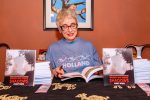
Janet Wees at a book signing for her novel When We Were Shadows, which she’ll be bringing to the Cherie Smith JCC Jewish Book Festival on Feb. 10. (photo by Jack Cohen)

Ze’ev Bar was 5 years old in 1937, when his family fled Germany to the Netherlands, where they lived in safety for a few years. But, in 1940, as the Nazis extended their hold on Europe, the family had to go into hiding, managing to survive the Holocaust with the help of members of the Dutch Resistance.

Calgary-based educator and writer Janet Wees tells Bar’s story of survival in the book When We Were Shadows. She will present the novel for younger readers (ages 9-13) on Feb. 10, 10 a.m., at the Jewish Community Centre of Greater Vancouver as part of the Cherie Smith JCC Jewish Book Festival, which runs Feb. 9-14. Wees and five other authors – Leo Burstyn, Miriam Clavir, Arnold Grossman, David Kirkpatrick and Helen Wilkes – will briefly introduce their works at the event A Literary Quickie.

“My reasons for writing this book were twofold,” Wees told the Independent. “One, to help relieve Ze’ev from having to repeat his story over and over to schoolchildren because it was so upsetting for him, yet he felt it needed to be told so they would know what happened during the Second World War in their country. Hopefully, having had the book translated into Dutch in Holland, that might be happening. I have had letters from mothers of children who are reading the book in Dutch for book reports.

“My other reason was to expose North American children to the plight of children during war, to the bravery of the people who helped save lives at risks to their own.”

Among the real-life members of the resistance featured in the novel are Opa Bakker, Tante Cor, and Edouard and Jacoba von Baumhauer, all of whom have been recognized as Righteous Among the Nations by Yad Vashem. Wees said, “I made a promise to von Baumhauer’s son that I would honour the people who risked their lives helping to build the Hidden Village [near Vierhouten] and hide, assist and feed the people who were fleeing the Nazis.”

Wees visited the memorial site of the Hidden Village in 2005, and again in 2007. She interviewed Bar in Amsterdam in 2008.

“We spent three to four days in his dining room, talking, crying, laughing; I taped and wrote,” she said. “Once home, I poured it all out on computer and began to sort and edit and change, and watched it take shape. Of course, life interfered, and sometimes it was so intense, hearing his wavering voice on tape, that I would have to take a break. By 2011, it felt ready for an editor. After that, I submitted it, naively giving myself 12 rejections – apparently J.K. Rowling had 12 rejections before Harry Potter was accepted – before I reconsidered my direction.”

A change in direction did occur. In 2014, Wees was accepted into a mentorship program and, with that guidance, realized that the novel “needed a boy’s voice and an empathetic setting, where children could identify with the protagonist.”

Over some four months, Wees said, “I essentially rewrote the book using a different format and incorporating a boy’s voice. At the end, there was a reading and the book was so enthusiastically received that I knew I was on the right track.

“It felt like I had kind of lost perspective, as I was so close to the story and, even though I would have times of ‘Wow! Did I write that?’ seeing it through others’ eyes really gave me a boost. I began submitting again and, this time, the 11th publisher contacted was the one!”

The book was accepted by Second Story Press in 2017.

“I always wanted Second Story Press to be my publisher because of their Holocaust Remembrance Series for Young Readers. I read other books in that series and felt this was a good fit,” said Wees.

While When We Were Shadows is Wees’ first book, she has published articles in educational journals and in news magazines. In addition to other literary projects, she has written drafts for two children’s books, she said, “based on something I did growing up in Saskatchewan, and one based on my pen pal’s granddaughter’s activity with her Oma in Holland.”

The 60-something Wees first started writing her pen pal when she was 12 years old.

“My pen pal Henk had to find a pen pal in an English-speaking country for his English class in school. He put an ad for a pen pal in the Regina Leader-Post and I saw it and responded,” she explained. “He told me, on my first visit, as we were looking over all my letters he’d saved, that my letter was the funniest so he chose me as his pen pal.

“We wrote constantly but lost contact for a few years during which we both got married and started families. I reconnected, in 1972 or thereabouts, and, knowing how families in Europe usually stay in their family homes, I wrote to the old address. Lo and behold! There they were! After that, it was letters with Henk’s wife because she was better at that point with written English, but we telephoned and, upon the onset of computers, we emailed and then FaceTimed.

“I went to visit them for the first time in 1991, and have been back 10 times since…. On one of the trips where I stayed one month on the island (Terschelling), Hennie (Henk’s nickname) and Loes took me to see the memorial site of the Hidden Village and the urge to learn more about this site was palpable.

“Two years later,” said Wees, “we went again, and I sat for longer in the replica huts and tried to imagine what went on. It smelled like our dirt basement in Togo, Sask., and just thinking about living in that basement for 18 months gave me a bit of an idea of the sense of being confined; the smells, the dark, the cold. And I decided that I had to write a book, if not for my former students who were now in university, for their children. Sadly, Hennie passed away this past April without seeing the published book, but I used his name (with his permission) for one of my characters, so he lives on through the book. If not for him, this book may never have existed.”

In their first discussions about the novel, Wees said she and Bar had “talked about making it an ‘adventure’ of a boy during wartime.” The original title was Boy of the Forest. “But,” she said, “as I was writing, I realized this was not an ‘adventure’ as we perceive adventure, and he concurred, so I changed my title to Whatever It Takes. My publisher chose the final title, When We Were Shadows, and I love it because it personifies the whole concept of living in the shadows – unseen, and unable to see.”

In revising the original manuscript to be from a young boy’s perspective, she said her focus was on “the emotional being of Walter [Ze’ev changed his name as an adult] and how he perceived what was happening, being sheltered and wanting desperately to know and to do something, and about the selflessness of others. I wanted it to be about the people in his world, what was happening inside his head and heart, more than what was happening outside.”

Wees said the character of Walter took over “and his voice flowed through so eloquently and so quickly that there were many days I never budged from my computer for hours, missing lunch and working until dark. I ‘heard’ him in my head. I could ‘see’ what was happening. Until I actually was writing, I always thought that was bunk when I heard other authors say that their characters take them on their own journey. But now I know it happens.

“I also discovered that what I’d taught my students about editing, I had to follow as well, so I did most of my editing by reading the book aloud. I found errors that way in facts, such as tents not having zippers in the 1940s but pegs instead. I was able to find correct weather for dates in the letters by searching online.”

This diligence no doubt contributed to When We Were Shadows being nominated for the Forest of Reading Red Maple non-fiction award of the Ontario Library Association, which describes the award program’s aim as getting young readers (ages 12 to 13) to engage “in conversation around the books and … to use critical thinking while reading.” The awards will be presented in May.

In the writing of When We Were Shadows, Wees said, “I have become friends with von Baumhauer’s grandson and wife. While writing this book, I also found out that my grandmother lost sisters-in-law to the death camps and her brother was killed on the Russian front. Until then, I had no idea how our family was affected by the Holocaust, as I was unaware of family still living overseas. I am now in touch with the great-granddaughter of one of those women.”

For the full book festival schedule and tickets, visit jewishbookfestival.ca.

Friendship interrupted

The Princess Dolls by Ellen Schwartz, with illustrations by Mariko Ando, takes place in Vancouver in 1942. Esther and Michiko are best friends. They dream that one day they will be princesses together; in games, Esther is Princess Elizabeth and Michi is Princess Margaret. When they spy dolls fashioned after the real-life princesses in the toy store window, the girls dare to hope that they’ll each get their favourite for their birthday, something else they shared, both having been born on the same day.

However, when Esther gets her royal doll as a gift, but Michi doesn’t, the girls’ friendship is strained. Before they have a chance to patch it up, Michi and her family – ultimately along with more than 21,000 other Japanese-Canadians – are forced to leave the West Coast, losing their home, business and possessions. Michi ends up in Kaslo, B.C.

A story thread throughout The Princess Dolls is Esther’s family’s worry over family members in Europe, as the Nazis round up Jews and send them to transit camps, about which Esther’s parents and grandmother know little.

The Princess Dolls is kind of a companion novel to Schwartz’s Heart of a Champion, in which 10-year-old Kenny Sakamoto dreams of being as good at baseball as his older brother, who is the Asahi team’s star player. Also set in Vancouver in 1942, the Sakamoto family’s neighbours and good friends, the Bernsteins, are Jewish. As she told the Independent when that book was released, “I wanted to point out that the treatment of Japanese-Canadians, although obviously not nearly as lethal or horrific, was comparable to that of Jews in Europe,” said Schwartz. “In both cases, a minority was being persecuted simply because of their religion or nationality. Giving Kenny a Jewish best friend would make both characters sympathetic about this issue.” (See jewishindependent.ca/uniquely-b-c-baseball-story.)

Schwartz will talk about The Princess Dolls on Feb. 10, 11 a.m., at Richmond Public Library, as well as at Vancouver Talmud Torah later that week as part of the Cherie Smith JCC Jewish Book Festival. For the festival schedule and tickets, visit jewishbookfestival.ca.

Format ImagePosted on February 1, 2019January 29, 2019Author Cynthia RamsayCategories BooksTags Cherie Smith JCC Jewish Book Festival, Ellen Schwartz, history, Holland, Holocaust, human rights, Janet Wees, Netherlands
Emerging from terrible abyss

Emerging from terrible abyss

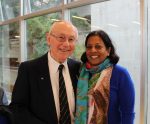
Robbie Waisman and Dr. Uma Kumar spoke Jan. 24 at UBC’s Hillel House. (photo from Hillel BC)

History’s resonance in the present was a recurring theme at a commemoration of International Holocaust Remembrance Day last week.

The event at Hillel House on the University of British Columbia campus, featured Holocaust survivor Robbie Waisman speaking about his experiences in Buchenwald concentration camp and his life before and after the Shoah.

Thirteen survivors of the Holocaust lit yahrzeit candles, after which Hillel’s Rabbi Philip Bregman chanted the Mourners’ Kaddish.

Before Waisman’s presentation, the audience watched a 1985 video from CBC television’s national program The Journal, which followed Waisman as he traveled to Philadelphia to meet Leon Bass, the American soldier who had liberated him from the camp 40 years earlier.

Bass, an African-American, was the first black person Waisman had ever seen. At the age of 13, Waisman thought Bass and his fellow American soldiers must be angels.

“Indeed, they were,” he said.

At the event Jan. 24, which was co-sponsored by the Vancouver Holocaust Education Centre, Hillel BC, the Centre for Israel and Jewish Affairs and UBC’s department of Central, Eastern and Northern European Studies (CENES), Waisman said the thing that kept him and his fellow survivors alive was the hope of being reunited with family.

“The enormity of the Holocaust was not yet known to us,” said Waisman. When it did become known, he said, “we had to find a way to deal and cope with the huge loss of all our loved ones.… How are we going to live with all these horrors?… Has anyone survived? If not, what is the point of my own survival?”

He and his father had seen one of Waisman’s brothers murdered, and his father died later in the same camp. He would learn that his mother and his other three brothers were also murdered, as were his uncles, aunts, cousins and friends. Of the family, only Waisman and his sister survived.

“I search for answers,” he said. “I only find more questions. How could anyone remain sane and functioning as a human being when humanity was destroyed in front of our eyes? Worst of all, how do you come to terms with the tragic loss of all our loved ones, fathers, mothers, brothers, sisters, friends that we grew up with, all innocent – everything gone – how is it possible? We started questioning the existence of God. How could this happen to us?… Before the war, we all came from Orthodox homes, rich in heritage and traditions. After coming out of the terrible abyss, the darkness, we questioned angrily. But what we learned in the home, from our parents, was not lost. The sense of humanity slowly returned to us. Our faith was shaken yet, in spite of it all, we remained true to it.”

Waisman said his experience in the Holocaust, and the experience of other survivors, has taught that “evil must be recognized and that we all have a responsibility to make sure that it never happens again to anyone. And yet … what is the world doing about it now?”

He reflected on the concept of “Never again.”

“Noble, thought-provoking words, but only if we act upon them,” he said. “Today, over 70 years after my liberation, the promise of never again has become again and again. There have been a number of situations that have tested the world’s resolve, in Cambodia, the former Yugoslavia, in Darfur and in Syria – I could go on and on.

“When I speak at high schools, I try to convey to students the pain of my experience in order to inspire them to prevent such events from occurring again,” he said. “The world must learn from the past in order to make this a better place for now and the future. We must teach compassion, we must eradicate racism and religious persecution. We must teach ourselves, teach our children, each generation must learn.”

photo - IHRD at Hillel, right to left, Michael Lee, Rabbi Philip Bregman, Robbie Waisman, Sam Heller (Hillel BC), Joyce Murray
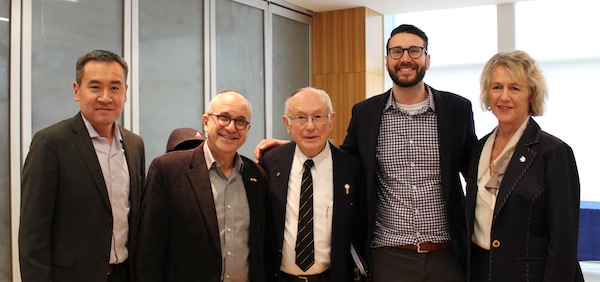
IHRD at Hillel, right to left, Michael Lee, Rabbi Philip Bregman, Robbie Waisman, Sam Heller (Hillel BC), Joyce Murray. (photo from Hillel BC)

Also at the Jan. 24 event, Dr. Uma Kumar, a lecturer with CENES, noted recent reports that indicate many Canadians and others are ignorant of the most basic facts of the Holocaust.

“Nearly half of Canadians cannot name a single concentration camp or ghetto that existed in Europe during the Shoah,” she said. “However, there is a positive point: 85% of the respondents of the study said that it was important to keep teaching about the Holocaust so that it does not happen again. Hence, there is a pressing need for more and better Holocaust education at schools and universities in Canada. We, as Holocaust educators, still have a lot of work to do.”

Joyce Murray, member of Parliament for Vancouver Quadra, brought greetings on behalf of the federal government and also reflected on her visit last year to Auschwitz.

“The Holocaust reality, for me, shifted from being a part of history that I thought I understood and regretted to a reality that I feel in my body and in my heart,” she said. “Commemorating mass atrocity and genocide in the continued sharing of the story of survivors is a vital part of prevention. These stories serve as a reminder of the dangers of hate, prejudice and discrimination, the dangers of seeing human beings as ‘us’ and ‘them,’ the dangers of excessive nationalism to the detriment of others that is stalking so many nations today.”

Murray also mentioned the Canadian government’s recent apology for refusing admission to passengers on the MS St. Louis in 1939 and reminded the audience that Canada is not immune to bigotry.

Michael Lee, member of the B.C. legislature for Vancouver-Langara, was also present.

International Holocaust Remembrance Day was officially marked worldwide on Jan. 27, the date when Allied forces liberated the Auschwitz-Birkenau concentration camps in 1945. Another ceremony and a film screening took place Sunday at the Peretz Centre.

For more about Waisman’s Holocaust experience, see the Independent story Feb. 28, 2014, at jewishindependent.ca/holocaust-survivor-robbie-waisman-receives-national-honor.

Posted on February 1, 2019January 29, 2019Author Pat JohnsonCategories LocalTags education, genocide, Holocaust, remembrance, Robbie Waisman, Uma Kumar
Much work left to do

Much work left to do

One of the displays in the exhibit Canada Responds to the Holocaust, 1944-1945, which was at the Vancouver Holocaust Education Centre in 2016. (photo by Cynthia Ramsay)

Nearly half of Canadians are not able to name a single Holocaust concentration camp. A large number of Canadians do not know that six million Jews died in the Shoah, offering up numbers like two million, with nearly one in four admitting outright that they just don’t know. Among millennials, those aged 18 to 34, the numbers are particularly disturbing: 22% have not heard of the Holocaust or are not sure whether they have (which seems like much the same thing). One in three Canadians thinks that this country had an open immigration policy for Jewish refugees in the 1930s, unaware that very few Jews were permitted into Canada in the lead up to genocide.

These are some of the details found in a survey conducted on behalf of the Azrieli Foundation and the Claims Conference. The study was based on 1,100 interviews of Canadians to coincide with International Holocaust Remembrance Day Sunday. (See story, “Emerging from terrible abyss. ”)

On the positive side, 85% of respondents said it’s important to keep teaching about the Holocaust in order to prevent such a thing from happening again, while 82% said that all students should learn about this part of history.

In reality, it is unlikely that all Canadian students will learn about the Holocaust. In British Columbia, for example, the Holocaust only became part of the core curriculum with the overhaul of the entire provincial curriculum three years ago – and only if the teacher chooses to include it. The history of genocide is one module that teachers are able to select from a range of subject components at particular grade levels. Therefore, it is still a crapshoot whether a student graduating from the British Columbia education system will have much or any knowledge on the subject.

It is extraordinarily unlikely that the curriculum will be revised again any time soon to make Holocaust education mandatory across the system. Educators complain, with good reason, that they are expected to teach more content than there are hours in a day. Competing needs, including career preparation and life skills, contend with subjects like history for class time.

In Canada, where the educational curriculum is determined by every province, similar discussions take place across the country and a patchwork of curricula exist.

At the same time, a massive shift in the larger culture has taken place, eliminating what had been, until the last few decades, a largely shared body of knowledge. In the days when there were only a couple of television networks, and hard copy newspapers were most people’s sources of information, everyone would generally be aware of similar issues and events. Half of all televisions in the United States in 1978, for example, were tuned in to the nine-and-a-half-hour miniseries Holocaust (a program that was admittedly not without its critics among Jews, historians and others).

The internet and the proliferation of cable TV channels has refracted our attention in unlimited directions. People now largely self-select the information they receive and that can blind us to matters outside of our spheres.

In a better world, knowledge of the Holocaust would be universal. In the world we live in, it remains vital to continue to focus attention on the subject whenever possible – and to use this history to educate about other genocides and violations of humanity while not diminishing the uniqueness of the Shoah itself.

Organizations devoted to the critical work of Holocaust education, including the Vancouver Holocaust Education Centre, are carrying a heavy burden for the larger society and depend on public support to meet their mandate. The Azrieli Foundation, which undertook this study, publishes survivor memoirs and funds a variety of Holocaust-related projects across Canada. Other groups, to varying degrees, share the burden of teaching this history, including universities, synagogues, Hillels, book publishers and authors, and so forth.

Unquestionably, the most powerful form of Holocaust education is firsthand testimony from survivors and witnesses. British Columbians who are survivors of the Holocaust have spoken to tens of thousands of students but, in a handful of years, this method of transmitting history will no longer be possible. Innovative strategies are being developed, such as the New Dimensions in Testimony oral history project, a collaboration involving Steven Spielberg’s USC Shoah Foundation, which includes holographic representations of survivors with whom students and others can interact virtually. This project recognizes that the issue is not only to continue educating, but to find ever-advancing means of doing so effectively.

The breadth of the challenge was underscored by Prof. Jan Grabowski, who delivered the Rudolf Vrba Memorial Lecture at the University of British Columbia last November. He and a team of scholars and researchers are visiting town and city archives across Poland, doing primary research on the events that led to the murder of three million Jews in that country. In other words, we’re still compiling the most basic facts of that history and, it may be safe to say, we are just as far away as ever as to understanding the larger moral questions – How? Why? – the Holocaust raises. Much work remains to be done.

Format ImagePosted on February 1, 2019January 29, 2019Author The Editorial BoardCategories From the JITags Canada, education, genocide, Holocaust, VHEC
Kindler in JFL’s lineup

Kindler in JFL’s lineup

Andy Kindler (photo ©Maljan)

Actor, writer and comedian Andy Kindler is one of several Jewish community members on the Just for Laughs NorthWest roster for Vancouver. He’ll host The Alternative Show at Yuk Yuk’s Feb. 21-23.

Kindler spoke with the Independent from Montreal, while on a shoot for the dark comedy feature film The Fiddling Horse, in which he co-stars as Barry Bitterman.

“I’m a bitter ex-jockey and it’s perfect for me,” said Kindler. “I’m five, five-and-a-half, so I almost look like an ex-jockey, I’m not too tall, and it’s just fun.”

Kindler has a ton of acting credits, including Bob’s Burgers, I’m Dying Up Here and Portlandia, as well as Everybody Loves Raymond, Maron and But I’m Chris Jericho! But standup came first, he said, “although I did acting in college and in summer camp – I played Elwood P. Dowd, the lead in Harvey, when I was 12. But, any acting that was filmed to be seen by others, that happened after standup. Standup, if you’re doing it right, is a good rehearsal for acting; it is just being yourself.”

Before standup, Kindler was a musician. It was his pursuit of a music career that took him to Los Angeles “many, many, many years ago,” but he “couldn’t make a living.”

“I was in my 20s,” he said. “I was very insecure, I kind of hated myself, like many kids that age, unless you have a tremendous amount of confidence. So, I just happened to stumble into standup comedy. A friend of mine – we were working at the same stereo store together – he said, you’re funny, let’s try it, so I actually was in a duo for a couple years and that was really a good way to start.”

Kindler played guitar. “I played classical violin when I was a kid, but I didn’t play very well … and I still took it for another 12 years, even hating it, because I had issues…. I started playing guitar in high school, which was the greatest. When I grew up, people wanted to be the Beatles. We didn’t want to be necessarily [comedian] Shecky Greene. Now I want to be Shecky Greene but, back then, all my heroes were musicians, except for Richard Pryor. But, I didn’t know much about comedy.”

While he learned to do comedy in Los Angeles, he said he wouldn’t recommend that people follow his example, “because it’s kind of a frightening thing. But I lived in L.A., so the only way I wouldn’t have been able to not start in L.A., I would have had to have moved out of town.

“I put my name in the hat, did all the open mic things, and that’s how I started and it just, I don’t want to say, took off, but I’ve been making a living since ’87.”

Despite his long career, Kindler has spoken in interviews about only recently becoming comfortable with doing standup.

“A lot of people, they see comedians and they say, how can you do it? Well, when you start comedy – unless you’re a person who really has no fear – you’re scared for a long time because you can be funny off-stage, but you still can’t do it under pressure or it’s not necessarily that you can produce it at anytime. That’s where the technique comes in,” he explained. “The technique basically for standup comes from doing it over and over and over again, until you either hate it or it becomes something you love. So, I felt like, after 10 years, oh, I’m really good at this but I wasn’t…. There are still nights I don’t feel comfortable, but it gets better.”

Kindler faces challenges that most comedians don’t: he has attention deficit hyperactivity disorder and obsessive compulsive disorder. When he was younger and just starting out, he said, “At that time, you didn’t hear a lot about OCD and so I thought I was losing my mind, because I never got help until a couple of years ago for it…. And when I was first starting comedy, it was like a whole year where I would say to myself onstage, I am holding the mic in my right hand, I am gesturing to the crowd with my left hand, I am walking two steps – I couldn’t get out of my head and I didn’t even know I was officially OCD.”

While knowing that he has OCD and ADHD hasn’t changed his act, which he describes as “so stream of consciousness,” it has helped him in other ways. “I feel better about myself now,” he said. “I’m more calm.” And he has learned ways of coping, he said, recommending the book Delivered from Distraction. “I don’t make any money on the sales of the book,” he said, “but they give you tools for dealing with OCD.”

Kindler has been to Vancouver often, including with JFL’s The Alternative Show.

“The Alternative Show started in Montreal at that festival,” explained Kindler, “and it started in the late ’90s when you actually needed to have a show called The Alternative Show. A lot of people probably don’t remember there was a big comedy boom, comedy got very generic and everybody was like, what’s the deal with this thing? It started to be very homogenized and so there was kind of a movement in L.A. and New York in the mid to late ’90s, or even earlier, for the core of alternative comedy. And now, the good news is, that comedy is better than it ever was, everybody is doing interesting things. So, I don’t really need to have a show because almost the whole festival you could call alternative, but one thing I do like to do is have people working on new stuff and hopefully taking chances, so it’s not like them doing their honed five minutes.”

Generally, Kindler brings five or six comedians onstage during the night. “It’s usually a combination of two things: other people in the festival and local people,” he said.

Kindler has been coming up to Canada in one form or another since the late 1980s. He worked Yuk Yuk’s in the west, he said. “So, I know a lot of the comedians and the comedians in Canada are hilarious. I think Canada has the best comedians per capita in the world. What I’m doing in my act, which is commenting culture, all Canadians do that naturally because you’re next to American culture, but you can comment on it and feel separate from it.”

Being Jewish is a large part of Kindler’s routine. While he sometimes thinks that, in his act, he’ll just do a few Jewish jokes and move on to other material, he said, “I just can’t stop it because I feel so Jewish. It’s so much a part of me. I used to make a joke about how Jewish people are funny even when they’re not trying to be funny. Like, when the Whitney Houston song ‘How Will I Know?’ came out, I was with this Jewish friend of mine, and she’s singing, ‘How will I know?’ and my friend yells at the radio, ‘You’ll know, Whitney, you’ll know. Believe me, you’ll know.’

“And this is just how all Jews are, even when they’re not trying to be funny. So, I feel very, very Jewish, but it also could be a member of any oppressed group that responds to being oppressed with humour and self-deprecation. I love to make fun of the fact that I’m Jewish.”

While he doesn’t have any topics that he won’t talk about in his act, Kindler does shy away from certain words and thinks about whether his material is unnecessarily offensive.

“I get very angry when comics say they never apologize, because everybody makes mistakes,” he said, giving the example of having used, early in his career, a joke that referenced the Holocaust. Two audience members approached him afterward, upset because they felt he was “gratuitously making fun of the Holocaust, and I decided that I wasn’t in that particular case, but also decided it’s important for comics to think about what they’re saying because, when you’re onstage, you can say something in the moment and then you have the right to not want to say it later. There’s no specific red lines, but I do think about why I’m doing the joke and whether it’s worth doing it and who’s the subject of the joke.”

Kindler said being a comic is a “kind of a miracle, or a magic thing” and “like a dream come true because I really, really, really love standup and a lot of people get sick of it after awhile. I just haven’t. That doesn’t mean I don’t get sick of it temporarily, but it’s still the thing I most love doing, it’s the thing I feel most natural about doing and it’s just I feel it is a dream come true.”

The Alternative Show is at Yuk Yuk’s Feb. 21, 10 p.m.; and Feb. 22 and 23, 11 p.m. For tickets and the full JFL NorthWest lineup, visit jflnorthwest.com.

Format ImagePosted on February 1, 2019January 29, 2019Author Cynthia RamsayCategories Performing ArtsTags Andy Kindler, comedy, JFL NorthWest

Jewish way to lend

This Shabbat (Feb. 2), in parashat Mishpatim, the Torah commands, “If you lend money to my people … do not act toward them as a creditor; you may not charge them interest.” This law, along with Maimonides’ teaching that the greatest level of tzedakah is to support a fellow Jew by endowing them with a gift or loan to strengthen their hand, are the guiding principles of the Hebrew Free Loan Association of Vancouver (HFLA).

HFLA provides interest-free loans to help Jewish individuals from British Columbia overcome financial challenges and build better lives. HFLA fosters economic stability and opportunity among low- and moderate-income members of the community by providing access to affordable credit in the form of a no-interest loan.

Over the years, the types of loans the organization has given out have evolved greatly. In the 1980s and ’90s, with a wave of immigrants from the former Soviet Union, the majority of HFLA’s loans went to helping immigrants finance vocational training. While HFLA still helps many new immigrants, its focus now also includes helping people with the rising costs of living in the Lower Mainland.

“With the bulk of people’s income going towards housing costs, many people have very little left over when unexpected bills arise,” said Joanna Wasel, executive director of HFLA. “We are able to be there for people during times of financial stress. A loan from us can help cover things like emergency dental work, physical therapy and short-term home care.”

HFLA is also here to help members of the community when they need support to start a Jewish family through fertility treatments or adoption, host a bar or bat mitzvah, finance university or start a new business. The goal of these loan programs is to help community members build better lives and avoid falling into high-interest debt.

HFLA recently unveiled a new webpage, hfla.ca. The new site is clear, concise and includes a step-by-step guide to applying for an HFLA loan. Potential borrowers can complete and submit an application online.

“We really want to make the process as easy as possible for our borrowers. Every step has been designed with great care to ensure that people’s dignity and confidentiality are respected and protected,” said Wasel.

In the past 40 years, HFLA Vancouver has made more than 1,900 loans. There is no other organization like it in the community and those in need, or with friends in need, are encouraged to seek more information about HFLA’s services by visiting its website or calling 604-428-2832.

Posted on February 1, 2019January 29, 2019Author Hebrew Free Loan AssociationCategories LocalTags Hebrew Free Loan Association, HFLA, Jewish life, loans, tikkun olam
Events around town this month – Sisterhood Choir, community artists & Netta

Events around town this month – Sisterhood Choir, community artists & Netta

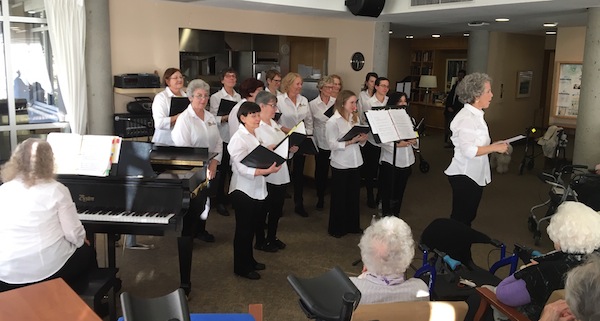
photo - Temple Sholom Sisterhood Choir under the direction of Joyce Cherry with pianist Kathy Bjorseth
(photo from Gordon Cherry)

Temple Sholom Sisterhood Choir under the direction of Joyce Cherry with pianist Kathy Bjorseth performed an afternoon concert of Jewish music at the Weinberg Residence on Jan. 13. Featured were three works by Joan Beckow, a resident of the Louis Brier Hospital and a Temple Sholom member. Beckow was an active composer and music director in Los Angeles and, for a time, was Carol Burnett’s music director. The 23-voice Sisterhood Choir has sung for the annual Sisterhood Service for a number of years, but the recent concert at the Weinberg was a first for them outside of Temple Sholom.

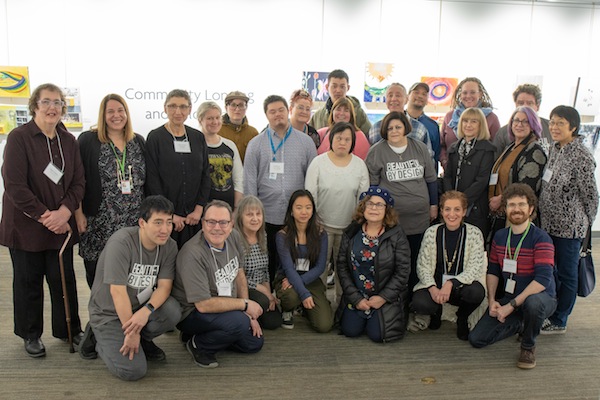
photo - Some of the artists on opening night of the group show Community Longing and Belonging, Jan. 15 at the Zack Gallery
(photo by Jocelyne Hallé)

Some of the artists on opening night of the group show Community Longing and Belonging, Jan. 15 at the Zack Gallery. The exhibit marked Jewish Disability Awareness and Inclusion Month and ran until Jan. 27.

photo - Eurovision 2018 winner Netta Barzilai, right, with Carmel Tanaka, emcee of the night with IQ 2000 Trivia
(photo by Corin Neuman)

Eurovision 2018 winner Netta Barzilai, right, performed at the Jewish Community Centre of Greater Vancouver on Jan. 26 to help celebrate the 18th anniversary of Birthright Israel. Here, she is pictured with Carmel Tanaka, emcee of the night with IQ 2000 Trivia. The dance party was presented by the Jewish Federation of Greater Vancouver in partnership with Axis Vancouver, Hillel BC and the JCCGV.

Format ImagePosted on February 1, 2019January 29, 2019Author Community members/organizationsCategories LocalTags art, Carmel Tanaka, disabilities, JDAIM, Joyce Cherry, Netta, Sisterhood Choir, Taglit Birthright, Temple Sholom, Weinberg Residence, Zack Gallery

Posts pagination

Previous page Page 1 … Page 4 Page 5
Proudly powered by WordPress