Skip to content
  • Home
  • Subscribe / donate
  • Events calendar
  • News
    • Local
    • National
    • Israel
    • World
    • עניין בחדשות
      A roundup of news in Canada and further afield, in Hebrew.
  • Opinion
    • From the JI
    • Op-Ed
  • Arts & Culture
    • Performing Arts
    • Music
    • Books
    • Visual Arts
    • TV & Film
  • Life
    • Celebrating the Holidays
    • Travel
    • The Daily Snooze
      Cartoons by Jacob Samuel
    • Mystery Photo
      Help the JI and JMABC fill in the gaps in our archives.
  • Community Links
    • Organizations, Etc.
    • Other News Sources & Blogs
    • Business Directory
  • FAQ
  • JI Chai Celebration
  • JI@88! video

Recent Posts

  • Sharing her testimony
  • Fall fight takes leap forward
  • The balancing of rights
  • Multiple Tony n’ Tina roles
  • Stories of trauma, resilience
  • Celebrate our culture
  • A responsibility to help
  • What wellness means at JCC
  • Together in mourning
  • Downhill after Trump?
  • Birth control even easier now
  • Eco-Sisters mentorship
  • Unexpected discoveries
  • Study’s results hopeful
  • Bad behaviour affects us all
  • Thankful for the police
  • UBC needs a wake-up call
  • Recalling a shining star
  • Sleep well …
  • BGU fosters startup culture
  • Photography and glass
  • Is it the end of an era?
  • Taking life a step at a time
  • Nakba exhibit biased
  • Film festival starts next week
  • Musical with heart and soul
  • Rabbi marks 13 years
  • Keeper of VTT’s history
  • Gala fêtes Infeld’s 20th
  • Building JWest together
  • Challah Mom comes to Vancouver
  • What to do about media bias
  • Education offers hope
  • Remembrance – a moral act
  • What makes us human
  • המלחמות של נתניהו וטראמפ

Archives

Follow @JewishIndie
image - The CJN - Visit Us Banner - 300x600 - 101625

Month: March 2017

Anti-BDS legislation

Israel’s Knesset last week passed legislation against the boycott, divestment and sanctions (BDS) movement, representing just one of several setbacks this month for BDS around the world.

The Israeli bill, which passed its third and final reading with a 46-28 vote, grants the interior minister authority to deny entry visas to non-Israeli citizens who actively support boycotts of the Jewish state.

Conveying the rationale for the anti-BDS measure, Member of Knesset David Amsalem (Likud), chairman of the Knesset Interior Committee, said that, “if someone demeans me, I do not let them into my home.” Responding to critics of the legislation, Amsalem said the new law is not intended to stifle free speech, but was implemented to combat antisemitism and enemies of the Jewish state. These opponents of Israel, he said, “are not talking about boycotting only the settlements; they are talking about boycotting the state as a state, without any distinction. We are talking about antisemites here.”

One of the bill’s initiators, MK Bezalel Smotrich (Jewish Home), expressed similar sentiments, saying, “In recent years, a new antisemitic front has been initiated against Israel. Our enemies carry out a campaign to delegitimize and boycott Israel. Banning BDS supporters that come here to harm us from within is the minimum we can do against those Israel-haters.”

Left-wing Knesset members and several American Jewish organizations, including the Anti-Defamation League and the Reform and Reconstructionist movements, were highly critical of the new anti-BDS law. MK Tamar Zandberg (Meretz) said the law “is against freedom of expression” and “is meant to silence people.” The American Jewish lobby group J Street claimed the law “damages Israel’s democracy and helps the BDS movement.” The American Jewish Committee said it is “troubled” by the legislation.

Despite the controversy, Israel’s new law represents just one of several recent setbacks for the global BDS movement….

Read more at jns.org.

Posted on March 17, 2017March 14, 2017Author Adam Abrams JNS.orgCategories WorldTags BDS, boycott, Israel

Adding meaning to life

When a group of eight couples in their 40s and 50s meet once a month to discuss different Jewish topics with Rabbi Yechiel Baitelman, co-director of Chabad of Richmond, no subject is off limits. The program is called Toward a Meaningful Life.

“I set the agenda for discussion each month, but if there are other subjects the group is interested in exploring, they’ll send me their questions ahead of time and we can have a meaningful, focused discussion when we meet together as a group,” said Baitelman.

The group of friends meets in the privacy of their homes, and rotates houses from month to month. The rabbi is open to any subject on which he can offer an insightful Jewish perspective. So far, topics discussed have included discovering your personal mission statement; marriage, love and intimacy; home and family; and purpose in life. Upcoming topics will include work; charity and wealth; pain, loss and anxiety; and religion and faith.

Jill Topp, a member of the couples group, values these sessions with the rabbi.

“He’s not judgmental at all, and we’re not even members of Chabad,” she said. “I love his style of guided learning, and what’s important to me is that he allows us to be the Jews that we are, and want to be.” She said they discuss issues related to being in healthy relationships of all sorts, from a Jewish perspective.

Debbie Aarons, another participant, said, “Our group is mixed, we’re not all Orthodox Jews, but we’re like-minded Jews and lifelong learners. Being part of this couples learning group sends a good message to our kids. It tells them that being Jewish is not just about going to shul once a week or a few times a year. It’s about continuing our Jewish learning and having meaningful conversations.”

Shay Keil, who also attends the group, finds it interesting to see how the other couples, who are his friends, respond to discussions about relationships from a religious perspective.

“It’s not something we talk about when we socialize, so it’s fascinating to hear their points of view on these topics,” said Keil. He commented that he finds it beneficial that they’re friends coming together, because it adds that social element to it. “I also like that our kids see us going on a Sunday night to a class that’s connecting us to Judaism, and that it’s not just about going to shul,” he added.

“As Jews, we struggle with all sorts of religious and other issues,” said Baitelman. “We’re a people that questions everything and wants to know why – or why not. Life is about purpose and meaning, and people want to understand their role in the world. So, during these couples classes, we explore all kinds of Jewish subjects and everyone has a chance to contribute. Hopefully, by the end of each meeting, couples have a better insight and understanding of Jewish topics, both personally and as part of the Jewish people.”

Anyone interested in joining this group, or starting one of their own, should contact Baitelman at 604-277-6427 or [email protected]. This informal program is open to all Jewish couples, regardless of age or religious affiliation.

Posted on March 17, 2017March 14, 2017Author Chabad of RichmondCategories LocalTags Chabad, education, Judaism
Come celebrate our history

Come celebrate our history

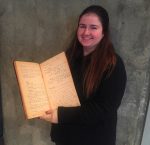
Jewish Museum and Archives of British Columbia archivist Alysa Routtenberg holds a minute book from Victoria’s Congregation Emanu-El, circa 1920. (photo from Alysa Routtenberg)

The documents and artifacts collected, processed and housed by the Jewish Museum and Archives of British Columbia are part of “everyone’s story,” JMABC archivist Alysa Routtenberg told the Independent in a recent interview. She encouraged people to donate material, join museum walking tours and visit the archives.

Routtenberg, who was born and raised in Vancouver, did her undergraduate studies in history and art history at the University of British Columbia before heading to Montreal for two years to earn her master’s of library information and archival studies at McGill University. In the summer of 2014, she had the opportunity to work in her field at the JMABC and, when she completed her studies, the museum’s then-archivist, Jennifer Yuhasz, was getting ready to move on and Routtenberg won the job.

“I ended up moving back to Vancouver, and was lucky enough to get this position not that long after I moved back to start my career as an archivist here,” she said.

Routtenberg’s family has been very involved in historical societies and groups for generations, and she always has loved her family’s library and the study of history.

“We did a lot of trips – like Fort Langley and all sorts of museums and things – so I always knew I wanted a career in history,” she said. “It was just a matter of figuring out the practicality of what that looked like.”

The JMABC originally started out as the Jewish Historical Society of British Columbia in 1971. Its founding president was Routtenberg’s grandfather, Cyril Leonoff, who passed away last year. Since its beginnings, the museum’s mandate has evolved, but the core objective has stayed the same – to preserve, collect and share the history of Jewish people in British Columbia.

The museum and archives makes information “accessible so people can come in and research,” said Routtenberg. “Then, we try to use that material in our public programming, whether that be with walking tours, lectures or physical exhibits. It’s all about celebrating and sharing the history. It’s a fairly short history compared to Jewish people in other provinces, but that doesn’t mean it’s any less important.”

The oldest material in the archives is from 1862 – from Congregation Emanu-El in Victoria. While not Canada’s oldest synagogue, it is the oldest synagogue in continuous use in the country. It’s been open and operational ever since it was started a couple years after Jews first arrived in the province.

“They were mostly coming up from California during the gold rush,” said Routtenberg of these pioneers. “And then, they developed businesses and, within a couple years, wanted to start a synagogue. So, that’s our oldest material. They are pretty special … very beautiful … handwritten notebooks and things.”

The first Jewish arrivals, she said, “set up businesses where they sold supplies to the guys who were going off panning [for gold]. So, that’s what allowed them to build a community. They built a business, a home, then a synagogue…. A couple guys called themselves wholesalers, selling every kind of supply. And then, as soon as there were actually people staying in Victoria and wanting to live there … I know there were a couple clothing stores and then a women’s clothing store, specifically, and a fur store … that sort of thing.”

As others did, Jews kept trickling into British Columbia, moving west with the hope of a better life, with more space. In the 1920s and 1940s, the Jewish community got big population boosts and communal groups began to be organized. Some community groups and businesses have now been around for three or four generations.

“There were furniture and scrap metal dealers … and we’ve collected a lot of those stories, fortunately, while those people were still with us,” said Routtenberg. “We’ve been able to write a couple of books about them,” she said, referring to the JMABC’s annual journal, The Scribe. The museum also publishes a newsletter, The Chronicle, twice a year.

Routtenberg’s job is to collect and preserve all the historical artifacts from the Jewish community, and the artifacts are divided into two major groups.

One group is family collections, which includes letters, photos, certificates and any other correspondence or paper material a family produced over the years. In that area, the JMABC has many great collections from a range of people.

“They were involved with any number of organizations,” said Routtenberg. “We’ll have their handwritten notes from meetings from the 1950s. We’ll have their letters back and forth with relatives across the country. Those are the sorts of things we have in the family collection.”

The second group focuses on community organizations, with collections from the Jewish Community Fund and Council, the Canadian Jewish Congress and the Hebrew Free Loan Association, as but three examples. The material in these collections includes correspondence, meeting minutes, agendas, publications they produced, information relating to events, etc.

“We’re very lucky in that most of the synagogues in the city have agreed to donate their materials to us,” added Routtenberg. “We collect the material related to the synagogue’s administration, meeting minutes, member lists, committee minutes, photos, events and publications.”

One important aspect of Routtenberg’s job is to reach out to and speak with people and organizations, to explain what it is that the JMABC does, what types of things it collects and, at times, making house calls to help sort materials.

“Once materials have been fully processed, everything is in a file and we know exactly what it is, what the dates are, and where to find it,” said Routtenberg. “So, that’s the main job we do.

“We deal with a lot of research requests as well,” she added. “A lot of people call or email and they are researching their family, asking what information we might have about them. Also, a lot of students, from high school to doctoral students, contact us when they are doing projects and want to know about a theme.

“I’ll make notes about those. I’ll try to answer right away, but often it requires some searching. Usually, looking through material in the archives needs to wait for a volunteer to be available or I encourage people to come in themselves.”

Routtenberg especially enjoys getting to dig into a box, and she has made some exciting discoveries.

“Something I love finding are handwritten letters,” she said. “We have a number of collections in the archives that are very thorough. There’s one that’s [between] a couple who was in Vancouver and Montreal in 1920, and they wrote letters back and forth.

“They met in Montreal, I believe, and then were secretly engaged for I think six months or so. And they wrote letters everyday, sometimes twice a day, back and forth. It’s those kinds of things that people don’t necessarily think is important, but they tell us so much about what life was like back then – things they struggled with and thought about. They are just beautiful.”

The archives are meant to preserve everyone’s history, not just the visible part of the community, stressed Routtenberg.

“If we don’t preserve our history, no one else will,” she said. “That’s what it comes down to at the end of the day. It’s really easy for people to think they’re not important, that their stuff isn’t important, thinking there is no reason why we would want it. People, all the time, bring stuff from the 1970s and 1980s, and they think it’s not important … but, if we don’t do it now, it never gets to be 150 years old.

“And we get so many research requests – we average 650 to 700 per year. These are all people with a wide range of questions wanting to know about the Jewish community. I don’t want to have to sit there and explain something, because I happen to know it – I want the evidence to back it up, providing the original documents for people to be able to come and look through.

“We’ve really been trying to promote community ownership of these archives,” she said. “They’re not this thing to be locked away from the public. They’re really everyone’s story.”

For more information, visit jewishmuseum.ca.

Rebeca Kuropatwa is a Winnipeg freelance writer.

Format ImagePosted on March 17, 2017March 14, 2017Author Rebeca KuropatwaCategories LocalTags Alysa Routtenberg, archives, British Columbia, history, Jewish museum, JMABC
Adding jazz to people’s lives

Adding jazz to people’s lives

Although he plays several instruments, the trumpet remains Gabriel Mark Hasselbach’s first love and his first choice. (photo from Gabriel Mark Hasselbach)

Music is a dazzling mistress. Once Gabriel Mark Hasselbach fell in love with it, he could never let it go. His music brought him from Denver, Colo., to Vancouver, where his jazz performances have been in high demand for many years.

“When I grew up in Denver, they had a new school education system. They allowed good students, and I had 4.0 average, to choose classes. I devoted almost all my junior and senior years to the art and music classes,” Hasselbach told the Independent.

He started playing professionally in his teens. “I’ve been an opportunist, in the best sense of the word, all my life,” he said. “When I recognize an opportunity, I follow it. When I was 14, I wanted to perform, so I went to the local restaurants and ski resorts and fashion shows and asked, Do you need a musician? Maybe on certain days, when the business is slow? And I offered to play.”

Gifted in multiple creative disciplines, he had a choice of several careers paths in high school. “At some point, I contemplated making ceramic sculptures as a career,” he said. “I liked it, but ceramics take time. You give it all, and then it cracks in the oven. Unlike ceramics, music is immediate.”

By graduation, he was sure he wanted to be a musician. “I hit the road when I turned 18,” he recalled. “I answered an ad for an audition for a band. It was in a bad, dangerous part of town, but I went there anyway and I got the job, with the soul band Nitro. All the other players were 10 or 15 years my senior.”

He played with that band and toured the Midwest with them for awhile. He also got a recording his first year.

When Hasselbach returned to Denver, he worked a few non-music jobs, but his calling wouldn’t allow him a long respite. In the 1970s, he came to Canada as a musician, and here he stayed.

“I brought my bicycle, my trumpet and a stack of music books,” he said. “That’s how I learned. I never went to a conservatory, but I read the books, I practised a lot and I performed a lot, alone and with the others. I think, this way, I kept my musical self, my uniqueness as a musician.”

In his early years, he was known in Vancouver by his middle name, Mark. “I changed my performer’s name to my full name, Gabriel Mark Hasselbach, in 1992,” he said. “Gabriel is my first name, and Gabriel was the original angel with a horn – it fit.”

Time and again, his creativity pushed him to explore other avenues besides music. “I used to write for several music magazines,” he said. “I also wrote a wine column for awhile.”

Predominantly, though, he remained a jazz musician, and he was among the original members of the jazz/pop/blues band Powder Blues, which was founded in 1978 in Gastown. “I toured the world with this band,” said Hasselbach. “We played often in Canada and the U.S. We garnered several multiplatinum record awards and the JUNO Awards. I was with the band for five years.”

But he wanted to play and record on his own, so he left the band and made his first solo recording in the early 1980s. By this time, he had more than a dozen albums to his name and multiple awards, including JUNOs and Smooth Jazz Awards. He’s had numerous top 15 and higher Billboard hits and he represented the Vancouver jazz scene at the Beijing and Vancouver Olympics in 2008 and 2010, respectively.

Since settling in Canada, Hasselbach has performed with many renowned national and international musicians. From 1996 to 1999, he hired Michael Bublé to sing with his band. When Bublé achieved stardom, Hasselbach worked for him as his music director from 1999 to 2003. Hasselbach also has performed or recorded with Nikki Yanofsky, Jim Byrnes and many others.

Although he plays several instruments, including trumpet, flute, flugelhorn and trombone, trumpet remains his first love and his first choice. He also writes music. Most of the pieces he performs and records are his original compositions.

In the early 1980s, Hasselbach added a new kind of gig to his repertoire. He began performing at Jewish events.

“I’m an honorary Jew,” he joked. “I was first hired to play at a Jewish wedding by a Jewish man who knew me from my restaurant playing. The word spread, and many others invited me. By now, I know all the music pieces required at a Jewish wedding. I know all the procedures and ceremonies. I’m the go-to guy and bandleader for many organizers of Jewish events and rabbis in Vancouver and Winnipeg, have been for years.”

In addition to his active schedule as a lounge musician and at Jewish events, he frequently plays at high-level corporate bashes. “I performed for Bill Gates twice, once in his home. He likes jazz,” Hasselbach said proudly. “I played for the president of Singapore at his birthday gala in Singapore, at the Montreux Jazz Fest, Switzerland, and the North Sea Jazz Fest in Netherlands. I played for the international APEC congress and for the world ice-skating convention.”

The impressive list will continue to expand this year.

“I’m going to perform at the French Quarter Festival in New Orleans and St. Lucia Jazz Fest,” he said. “I’m also going to have a week of concerts in Tel Aviv in 2018.”

But Vancouver is home. He performs here regularly, most Saturdays and Sundays. For upcoming shows and more about Hasselbach, visit gabrieljazz.com. His corporate and wedding website is sassabrass.com.

Olga Livshin is a Vancouver freelance writer. She can be reached at [email protected].

Format ImagePosted on March 17, 2017March 14, 2017Author Olga LivshinCategories MusicTags jazz, Jewish music
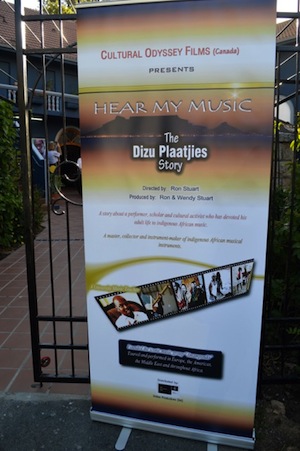
Hear My Music premières

Hear My Music premières

At the première of Hear My Music at Labia Theatre in Cape Town on Feb. 15, are, left to right, Ntandazo (Didi) Gcingca, associate producer, and Dizu Plaatjies, the documentary’s subject, with Wendy Bross Stuart and Ron Stuart of WRS Productions. (photo from WRS Productions)

Dizu Plaatjies is a performer, scholar and cultural activist who has devoted his adult life to indigenous African music. His journey from childhood in the Eastern Cape and Langa Township to concert stages worldwide is the compelling story that is the focus of the documentary Hear My Music: The Dizu Plaatjies Story.

photo - Dizu Plaatjies is a performer, scholar and cultural activist who has devoted his adult life to indigenous African music. His journey from childhood in the Eastern Cape and Langa Township to concert stages worldwide is the compelling story that is the focus of the documentary Hear My Music: The Dizu Plaatjies StoryCultural Odyssey Films and WRS Productions (comprised of Vancouver’s Ron Stuart and Wendy Bross Stuart) premièred the documentary on Feb. 15 at Labia Theatre in Cape Town, South Africa.

Plaatjies has a vast international following, both of overseas students at the University of Cape Town, where he teaches, and fans of his recordings and concert work. Throughout his career he has maintained a commitment to nurturing a younger generation of artists, and founded the Amampondo ensemble. Among the first African musicians to tour extensively, they became familiar to world music lovers in Europe, the Americas, the Middle East and throughout Africa. They were a personal favourite of the late Nelson Mandela and Bishop Desmond Tutu.

Plaatjies recognized the need of local musicians for access to authentic and reasonably priced indigenous instruments, and has embarked on a program of instrument-making with apprentices from the region. His love of traditional African melodies and rhythms from various cultural sources has led to significant “salvage ethnomusicology” work. Apart from his own Xhosa heritage, he has promoted the musical styles of groups throughout southern Africa.

Despite his accomplishments and wide recognition, Plaatjies remains an approachable and humble individual. He is at home teaching children in a township school, exchange students at the university, and specialists in African music. On stage, he still exudes the enthusiasm he had when busking on the streets of Cape Town as a young musician in the early 1980s.

Format ImagePosted on March 17, 2017March 14, 2017Author WRS ProductionsCategories TV & FilmTags Dizu Plaatjies, WRS Productions
Fundraising with food

Fundraising with food

Israeli business owner and chef Yair Yosefi helped spearhead a fundraiser for Syrian refugees. (photo from Yair Yosefi)

A Tel Aviv restaurateur and bar owner wanted to do something about the dire situation of Syrian refugees, so he turned to what he knows best – food.

Yair Yosefi is the owner of Nahalat Binyamin restaurant Brut and bar Extra Brut. Thinking about how he might be able to help, Yosefi connected with his friend Ronit Vered, who is a food journalist. Together, the two created Kitchen Without Borders, which raises awareness of the plight of and funds for Syrian refugees.

“When you see what’s happening on the other side of the border, we have to do something,” Yosefi told the Jewish Independent. “We don’t have enough power. We aren’t politicians. We thought, if we have to do something, we will cook.”

Although Yosefi said he would gladly go to Syria to cook, his Israeli passport doesn’t allow him to do so. “It was a dream of mine to go to Haleb,” he said. “When I was living in France, I had friends from there … very interesting cuisine. But, having an Israeli passport, it’s impossible. Syrians can go into Israel, but Israelis can’t go into Syria…. So, we just decided we’d do what we can.”

They have raised funds by selling Syrian-inspired dishes at their restaurants and by getting other restaurants to join in the fundraising efforts.

Yosefi started Brut and Extra Brut with partners two-and-a-half years ago, soon after he returned to Israel from Paris, where he had been living and working for 10 years. He is now married and has a four-year-old daughter.

Of the restaurant, Yosefi said, “I’m co-chefing with my best friend, Omar Ben-Gal. I’ve been cooking for the last 20 years, since I was 20. We were born and raised in Tel Aviv. It’s the heart for Israel, heart of cultural life in Israel.”

Being the father of a young child, Yosefi feels especially concerned with the situation women and children are facing in Syria. With his friends in the restaurant industry, he wanted to help, but the question was how.

“Every restaurant decided on a dish – either one inspired by Syrian cuisine or, if that wasn’t possible, like with Thai or French restaurants, they’d choose a signature dish,” said Yosefi. “All the revenue from this, which ran for a few weeks, went to a foundation called Karam, based in the U.S. and created by ex-Syrians. Karam uses donations to help, especially, kids … education…. It’s very important.

“We forget, because of the war, they haven’t gone to school or kindergarten … so they’re helping the women and the kid refugees with basic things like food, tents, clean water, education … everything.”

Restaurants throughout Israel joined in the effort to raise the funds, many in Tel Aviv, as well as some Arab and Palestinian restaurants, from large restaurant chains to small mom-and-pop operations, said Yosefi.

About how much was raised through the project, which ran Jan. 15-31, Yosefi explained that he and the other organizers decided ahead of time that every restaurant would donate directly to the foundation. “We trust each other, so we’re not even asking,” he said. “We decided not to count the money. Everybody gave what they made. I know it was quite an important amount … but, most important, it was an issue that was spoken about in Israel and the money obviously helped them – the refugees.

“From the Karam Foundation, we’ve heard two things. First, that it was a nice amount. And, secondly, that it was very heart-warming … [that] people from [across] the border, Israelis, chefs and bakers, gave money.”

As for the Israeli customers enjoying this special cuisine, Yosefi said, “People came and were looking for a certain dish from each restaurant devoted to the cause. It was very, very nice actually. It’s very nice when you go out, eat and drink, and you know that the dish means you’re donating money. Patrons are very generous.”

At Brut, they decided to make a spin-off dish, called Duhul Safadi, the recipe for which they were given by a Palestinian friend from Nazareth, though they called the dish A Night in Halab. Slow (overnight) oven-cooked lamb served on foraged vegetables cooked in yogurt, Yosefi described it as “our take on the Palestinian-Syrian dish.”

Brut chose this particular recipe because the ingredients are locally sourced, something they put an emphasis on with all their food.

Looking ahead for other ways to help, Yosefi said, “We’re going to do something, but we don’t know what yet. We want to see the reaction first.”

In September, Yosefi and his team will be going on the road for a few events in the United States, with stops in Charleston, Nashville and New York. They have been invited to Tokyo this April to do a pop-up booth.

“We’d love to bring our cuisine to Vancouver,” said Yosefi. “It would be fun. We’ll bring our knives and you bring your Canadian whisky. It could be a good match.”

Rebeca Kuropatwa is a Winnipeg freelance writer.
 

Format ImagePosted on March 17, 2017March 14, 2017Author Rebeca KuropatwaCategories IsraelTags Israel, Syria, tikkun olam, Yair Yosefi
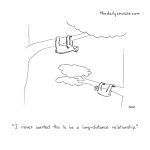
This week’s cartoon … March 17/17

This week’s cartoon … March 17/17

Format ImagePosted on March 17, 2017March 14, 2017Author Jacob SamuelCategories The Daily SnoozeTags sloths, thedailysnooze.com
מאה אלף דולר להגברת הביטחון

מאה אלף דולר להגברת הביטחון

איומים על הג’י.סי.סי של ונקובר: ממשלת המחוז תעניק מאה אלף דולר להגברת הביטחון. (צילום: Cynthia Ramsay)

הג’י.סי.סי של ונקובר מצטרף לרשימה ארוכה של למעלה מ-140 מרכזים ומוסדות יהודיים בצפון אמריקה, הנתונים לגל אנטישמיות חדש בחודשים האחרונים, ומקבלים איומים שונים בהם הטמנת מטעני חבלה. בקנדה הושמעו איומים דומים בשבועות האחרונים שעבר כלפי מספר מוסדות היהודים בהם בטורונטו ובלונדון.

הג’י.סי.סי פונה ביום שלישי שעבר ב-9 בערב עת התקיימה בו הופעה של הזמרת הישראלית, מאיה אברהם ולהקתה (בסגרת פסטיבל ‘חופצה’), לאור איומים של הטמנת מטען חבלה. האולם בו התקיימה ההופעה היה ברובו מלא אך חוקרי המשטרה לא מצאו שום מטען חבלה. לאחר זמן קצר המשטרה הכריזה שאין סכנה נשקפת לציבור והבניין חזר לפעילות רגילה. ביום ראשון ב-11 בבוקר הג’י.סי.סי פונה שוב בגלל איומים על הטמנת מטען חבלה. הפעם הבניין לא היה עמוס במיוחד והפינוי היה מהיר. גם הפעם למרבה המזל היה מדובר באיומי שוא.

לאור האירועים הוחלט בג’י.סי.סי להגביר את האבטחה במרכז והארגון ביחד עם הפדרציה של מטרו ונקובר, משתפים פעולה עם משטרת ונקובר. בהקשר זה אומרים בפדרציה כי הוקצו למעלה מארבע מאות אלף דולר לאבטחת 29 מוסדות של הקהילה היהודית באזור ונקובר. גם ממשלת מחוז בריטיש קולומביה החליטה לעזור והעניקה מאה אלף דולר לפדרציה, לצורך הגברת אמצעי הביטחון בארגונים היהודים באזור.

סקס אנד זה סקוז’י

זוג שקיים סקס סוער בג’קוזי בעיר קולונה וכיכב בסרט הוידאו של מצלמת אבטחה, נתפס על ידי המשטרה המקומית. בית המשפט הטיל עונשים על השניים כולל מאסר על תנאי לשנה, באם יחזרו על אותו מעשה.

נוח מקדונלד בן ה-18 מקולונה ובת זוגתו המבוגרת שרה אן קלמנטי בת ה-45 מהעיר סרי, מצאו ג’קוזי פנוי בגינה של בית רצועת החוף של אגם אוקנגן. השניים בדקו דרך החלונות שאין אף אחד בבית ואז התפשטו, עישנו סמים ושתו אלכוהול, ולאחר מכן ביצעו סקס בתוך המים החמים. בסיום האקט ולאחר שנחו קצת, מקדונלד וקלמנטי חשבו אף לפרוץ לבית אך ברגע האחרון חזרו בהם. הם עזבו את המקום לאחר הערב המהנה אך לא תיארו לעצמם שמישהו עקב אחריהם. בעצם מדובר במצלמת האבטחה המותקנת בגינת הבית, שצילמה את כל הערב הסוער של הזוג בג’קוזי. בעל הבית, דבון סמיט, שהגיע למחרת בבוקר ראה שהכיסוי של הג’קוזי הוסר. אז הוא החליט לצפות בסרט הוידאו של המצלמה, ונדהם לראות מה מקדונלד וקלמנטי עשו בג’קוזי שלו. סמיט הזעיק מייד את המשטרה שלקחה את סרט הווידאו, ובמהירות הצליחה לעצור את מקדונלד וקלמנטי. השניים הובאו בפני שופט של בית המשפט בקולונה. הוא הטיל על מקדונלד קנס בגובה מאה דולר פיצויים לבעל הג’קוזי, וכן מאסר על תנאי למשך שנה באם יחזור על אותה עבירה. על קלמנטי שהביאה את הסמים לג’קוזי השופט הטיל שישה ימי מאסר, קנס בגובה חמש מאות דולר לטובת סמיט, עשרים שעות של עבודות שירות וכן מאסר על תנאי למשך שנה באם היא תחזור על אותה עבירה. במשטרה מבקשים לציין שאין איסור על זוג לבצע סקס בג’קוזי, אך במקרה של מקדונלד וקלמנטי, הם השיגו גבול ונכנסו לג’קוזי פרטי.

יצרנית הג’קוזי שראתה את הסרטון החם באמצעי המדיה החברתית החליטה להעניק לסמיט מנעול לנעילת הכיסוי לג’קוזי, ללא תשלום.

דיירים שגרים מסביב לאגם אוקנגן מציינים כי לאחרונה קרו מספר מקרים בהם צעירים התגנבו לגינות שלהם ונכנסו לג’קוזי. המשטרה הגבירה לכן את השמירה סביב הבתים שליד האגם.

Format ImagePosted on March 15, 2017March 17, 2017Author Roni RachmaniCategories עניין בחדשותTags antisemitism, bombings, hot tub, JCC, Kelowna, security, threats, איומים, אנטישמיות, ביטחון, ג'י.סי.סי, ג'קוזי, הטמנת מטעני חבלה, קולונה
Return of looted art

Return of looted art

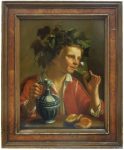
“Young Man as Bacchus” by Jan Franse Verzijl was among about 400 works owned by Max Stern that were forcibly sold by the Nazis in the 1930s. (photo from Max and Iris Stern Foundation)

When the painting “Young Man as Bacchus” by Dutch master Jan Franse Verzijl (1599-1647) went on display in New York City two years ago, the FBI moved in and seized the work. In the possession of an art gallery in Turin, Italy, the painting was among about 400 works owned by Max Stern that were forcibly sold by the Nazis in the 1930s.

In 1935, Stern was a successful gallery owner in Düsseldorf, Germany, but because he was Jewish, his collections were confiscated and sold by the Nazis. Stern would later move to Montreal, where he became a leading figure in the Canadian art world. After Stern died, in 1987, the beneficiaries of his estate learned of Stern’s Düsseldorf gallery and an extraordinary project began to seek restitution for the confiscated artworks.

Dr. Clarence Epstein, director of the Max Stern Art Restitution Project and senior director of urban and cultural affairs for Concordia University, will speak in Vancouver March 23 about the successes and challenges of the project.

The beneficiaries of Stern’s will are Concordia University, McGill University and the Hebrew University of Jerusalem. As a result, the art restitution project may be the only program of its type with three academic institutions working collegially to a common goal, said Epstein. His visit here is presented by the Canadian Friends of the Hebrew University, the Vancouver Holocaust Education Centre and Congregation Schara Tzedeck and is sponsored by Heffel Gallery and the estate of Frank and Rosie Nelson.

The Dominion Gallery, Stern’s Montreal business, remained in operation for more than a decade after his death. During this time, the beneficiary universities became aware of Stern’s prewar history.

“There was an entirely additional gallery business in Düsseldorf that his family had run before the war but had been closed by force as a result of Nazi persecution,” Epstein told the Independent in a telephone interview. “It wasn’t public knowledge. I think some people were aware of Dr. Stern’s past, but it coincided with the time when the issue of restitution was just starting to gain a little bit of traction in the art world and so it merited questioning. We just didn’t know how far to take it.”

The Max Stern Art Restitution Project has become a significant entity, with staff in Montreal, Ottawa, Washington and New York, as well as researchers in Europe. In addition to the obligation Epstein has to maximize the financial outcome for the beneficiaries of Stern’s will, there are other factors driving the project.

“There were fiduciary obligations, which is part of estate management,” he said. “There were moral implications, because this was something that was right for the universities to do on behalf of their great benefactor Max Stern. And then there were educational opportunities that this could open up in the fields of art history, of social justice, of art and law, the mechanics of the art market – and this enticed all kinds of academics to get involved in the project.”

The return of “Young Man as Bacchus” is among 16 successes the project has seen so far. While the restitution of that piece involved law enforcement, it also exemplified the good faith response of the gallery into whose possession the painting had fallen.

Every country has different rules and statutes of limitations around the return of art that has been stolen or forcibly sold, and the Stern project navigates the law as well as less litigious means of restitution. Through the recommendation of the German Friends of Hebrew University, the German government recently announced tax receipts for the owners of returned artworks. In the cases of galleries or museums, the reputation of the institution could suffer if they are known to be in possession of a work of dubious provenance, so this encourages cooperation. Individual collectors may not have the same impetus for preserving a reputation, but once a piece of art is identified as coming from Stern’s Düsseldorf collection, it bears a figurative black mark that makes it valueless on the open art market. Even so, Epstein said, the project does not seek to punish anyone for unwittingly possessing such a work.

“We don’t intend to be the bearers of bad news about the state of the work that is in their possession,” he said, “so if there’s any way that we could alleviate that kind of misfortune with some kind of tax relief, we would do so. But it hasn’t been tested yet.”

One example of an innovative solution found is the case of a work that was discovered in a Düsseldorf gallery. While the ownership was transferred to the Max and Iris Stern Trust, the universities agreed to lend it back to the gallery for long-term display.

“In their case, everybody kind of got their cake and ate it, too,” said Epstein. “It is owned by the Stern Foundation but it is lent to the Düsseldorf Museum.”

While Canada does not have the sort of art sector that New York or the capitals of Europe have, Epstein credited the federal government, specifically Minister of Canadian Heritage Mélanie Joly, for expressing the Canadian government’s commitment to restitution.

What happens to the artworks when they are returned varies. In the Düsseldorf case, the gallery in possession maintained custody. In some instances, the pieces have been sold to fund additional work of the project. (Once returned, the black mark is eliminated and the piece can be exchanged in the legitimate art market.) Others are loaned to museums and public institutions.

Next year, an exhibition of works from Stern’s collections will open in Düsseldorf, later traveling to Haifa, Israel, then Montreal.

Popular culture has taken on the topic of art restitution, Epstein said, and this is a good thing. For example, Monuments Men is about Allied soldiers charged with rescuing cultural artifacts before the Nazis destroyed or hid them, and Woman in Gold focuses on an American woman’s legal fight with the government of Austria to return a painting by Gustav Klimt that was stolen from her family by the Nazis. There have also been documentaries on different aspects of pillaging during the war. Epstein credited Helen Mirren, the star of Woman in Gold, for personally taking up the cause of restitution and making it more public.

“Any way we can make more public the challenges of the recovery of these kinds of objects, and the more we keep it in the spotlight, the more I think we’re going to be able to generate sympathy and attention from the groups that are in possession of those works,” he said.

While the Stern project has seen the return of 16 works and has located several more that are the subject of negotiation, it is impossible to know precisely how many cultural artifacts were stolen and remain unidentified.

“There is a number circulating on the internet in the hundreds of thousands in terms of objects that remain unrecovered,” said Epstein. “I don’t think it’s ever going to be possible to nail down that number … because we are talking about an historic loss that is multiplied over millions of people’s losses, that is also somewhat effaced as a result of time and lack of memory and archives. But that’s really the tip of the iceberg in terms of losses because in terms of material losses, everything that was in the possession of a Jewish family that was oppressed could still be in circulation now – musical instruments, jewelry, the list goes on. But those items were a lot harder to trace in terms of ownership and attribution than a painting has been. Works of art that are under a certain value and have not been researched historically are probably still circulating in the tens of thousands.”

Epstein added that Stern also had significant B.C. connections. His gallery represented E.J. Hughes and Emily Carr, two of this province’s most noted artists.

Admission to the March 23, 7:30 p.m., talk at Schara Tzedeck is free but an RSVP is requested to [email protected].

Pat Johnson is a communications and development consultant to the Vancouver Holocaust Education Centre.

Format ImagePosted on March 10, 2017March 8, 2017Author Pat JohnsonCategories LocalTags art, CFHU, Heffel Gallery, Holocaust, Nazis, restitution, Schara Tzedeck, VHEC
Creating dialogue, friends

Creating dialogue, friends

The Peace Factory founders Joana Osman and Ronny Edry spoke at the University of British Columbia on Feb. 6. (photo by Zach Sagorin)

“Israel loves Iran,” “Palestine loves Israel,” “Israel loves Palestine,” “Iran loves Israel & Palestine.” The Peace Factory uses social media to connect people in the Middle East, to build relationships and see one another as human beings with visions of peace.

“People may not like the idea of inclusion, the idea of welcoming everyone, but that’s why we are here – to invite those people to learn about the various cultures and faiths that are around us,” said Shem Arce when introducing the Active Community Dialogue (ACD) event Make a Friend, Make Peace. “With some dialogue and understanding we can create a community for everyone – no matter their religion, culture or ethnic background.”

Arce, a University of British Columbia film studies student from Mexico, recently began ACD with the goal of combating discrimination through meaningful, respectful dialogue and interactions.

ACD’s Make a Friend, Make Peace event on Feb. 6 featured a presentation from the founders of the Peace Factory: Ronny Edry, an Israeli graphic designer living in Tel Aviv, and Joana Osman, a Palestinian living in Munich. The pair also spoke at King David High School.

image - Israeli graphic designer Ronny Edry sent this poster out in 2012, when Israel was considering a preemptive strike against Iran
Israeli graphic designer Ronny Edry sent this poster out in 2012, when Israel was considering a preemptive strike against Iran.

The UBC event drew dozens of people, and Edry showed the crowd a poster he uploaded to Facebook in 2012, when Israeli Prime Minister Binyamin Netanyahu “was calling for preemptive strike on Iran,” when “it was quite stressing.”

The graphic designer decided to send something else to Iran. He designed a brightly coloured poster with a photo of him holding his daughter and bold text declaring, “Iranians / we will never bomb your country / We ♥ You.” Edry told the audience that the “five first comments were ‘delete it’” but, after leaving the poster online, he was surprised to find that “Iranians were commenting on the picture” and a line of communication was created.

“If something works, do it again,” said Edry. Soon, he added, “a lot of Iranians and Israelis started having a conversation.”

Interestingly, the security guard of the ACD event, an Iranian-Canadian man, had participated in the Peace Factory movement.

“When you don’t know someone and you close your eyes and think of the enemy, you end up thinking of some kind of monster,” said Edry. In Israel, “most of the time on the TV, they won’t show you the nice people of Iran.”

But, after starting the “Israel loves Iran” campaign, Edry received pictures from Iranians wanting to join. The movement has enabled many Iranians and Israelis to connect and build friendships online. And it continues to grow, with more than 121,000 likes and more than one million unique visitors each week to the “Israel loves Iran” Facebook page and more than two million views of Edry’s Ted Talk. The movement is continuing, with “both sides sharing stories and pictures of themselves,” said Edry.

With the success of “Israel loves Iran,” Edry said people were “coming up to me and saying, ‘Why don’t you do the same campaign with the Palestinians?’”

Soon after, Osman founded the group “Palestine loves Israel” to create a platform for Palestinians and Israelis to get to know one another through social media.

Together, Edry and Osman created the Peace Factory to “try to rehumanize the [other side] and give them a face and a story.”

Osman said building these connections “changes everything because, once you make a friend on the other side, everything changes for you.”

Osman said she asked herself, “As one person what can you do?” Her answer was, “You can be part of the change and you start communicating … if you can change one person’s mind, that may be enough.”

She added, “The enemy is nothing like you have in your mind … and, when you get to see his face and you see nice people,” you realize “they are not that bad.”

The Peace Factory’s vision is of a free and democratic Middle East, and they intend to build bridges and friendships to connect people with the same vision.

“It is not that we deny there is a conflict,” Osman said. “We have to pay attention to it, but I strongly believe that the solution can’t come from politics, it comes from people, real people connecting to each other…. Once you understand the other side is a real people with real pain … you come to the conclusion we are one people, one human race, with one goal to live in peace.”

To learn more, visit thepeacefactory.org. Anyone interested in future ACD events can find out more at acdmovement.com.

Zach Sagorin is a Vancouver freelance writer.

Format ImagePosted on March 10, 2017March 8, 2017Author Zach SagorinCategories LocalTags Iran, Israel, Joana Osman, Middle East, Palestine, peace, Ronny Edry, Shem Arce, UBC

Posts pagination

Previous page Page 1 … Page 6 Page 7 Page 8 … Page 10 Next page
Proudly powered by WordPress