Skip to content
  • Home
  • Subscribe / donate
  • Events calendar
  • News
    • Local
    • National
    • Israel
    • World
    • עניין בחדשות
      A roundup of news in Canada and further afield, in Hebrew.
  • Opinion
    • From the JI
    • Op-Ed
  • Arts & Culture
    • Performing Arts
    • Music
    • Books
    • Visual Arts
    • TV & Film
  • Life
    • Celebrating the Holidays
    • Travel
    • The Daily Snooze
      Cartoons by Jacob Samuel
    • Mystery Photo
      Help the JI and JMABC fill in the gaps in our archives.
  • Community Links
    • Organizations, Etc.
    • Other News Sources & Blogs
    • Business Directory
  • FAQ
  • JI Chai Celebration
  • JI@88! video

Recent Posts

  • Sharing her testimony
  • Fall fight takes leap forward
  • The balancing of rights
  • Multiple Tony n’ Tina roles
  • Stories of trauma, resilience
  • Celebrate our culture
  • A responsibility to help
  • What wellness means at JCC
  • Together in mourning
  • Downhill after Trump?
  • Birth control even easier now
  • Eco-Sisters mentorship
  • Unexpected discoveries
  • Study’s results hopeful
  • Bad behaviour affects us all
  • Thankful for the police
  • UBC needs a wake-up call
  • Recalling a shining star
  • Sleep well …
  • BGU fosters startup culture
  • Photography and glass
  • Is it the end of an era?
  • Taking life a step at a time
  • Nakba exhibit biased
  • Film festival starts next week
  • Musical with heart and soul
  • Rabbi marks 13 years
  • Keeper of VTT’s history
  • Gala fêtes Infeld’s 20th
  • Building JWest together
  • Challah Mom comes to Vancouver
  • What to do about media bias
  • Education offers hope
  • Remembrance – a moral act
  • What makes us human
  • המלחמות של נתניהו וטראמפ

Archives

Follow @JewishIndie
image - The CJN - Visit Us Banner - 300x600 - 101625

Month: March 2017

Topham appeal denied

The appeal of Arthur Topham, convicted of promoting hatred against Jewish people in November 2015, was rejected last month by the B.C. Supreme Court. On his website, radicalpress.com, Topham wrote that Jews should be forcibly sterilized. He described Canada as being “controlled by the Zionist lobby” and said Jewish synagogues are “synagogues of Satan.”

Harry Abrams, who was the representative for B’nai Brith Canada’s League for Human Rights in 2007, when he was first to raise the alarm about Topham’s antisemitic writing, said he’d like to see Topham receive the maximum sentence of two years.

“He was convicted in 2015 by a jury of his peers and he’s dragged it out, kept everything up on his website since then and added to it over all this time,” said Abrams, who now serves as chair of community relations for the Jewish Federation of Victoria and Vancouver Island. “It’s all been hateful, deliberate and with the intention of causing maximum pain and fear to Jews. He’s a sick guy and there has to be some kind of backstop on this.”

The Feb. 20 ruling is an important one, said Adam Fishman, who worked closely with Amanda Hohmann, national director of B’nai Brith’s League for Human Rights on this case.

“The argument by Topham’s lawyer, Barclay W. Johnson, that the law that criminalizes hate speech in Canada is unconstitutional, had no merit in my opinion,” Fishman said. “Basically, they were arguing that the presence of the internet and the fact that information is more widely available because of it, changes whether that material is constitutional or not. The judge firmly rejected that argument. He wrote in his decision that it actually makes the offence even more serious, by virtue of the fact that it’s much easier to disseminate hate today.

“This also means that when faced with incidents of hate, especially online, police and prosecutors should press charges because there’s no evidence those charges won’t succeed – so there’s no excuse for not enforcing them.”

Abrams speculated that Topham might try to appeal this conviction again in the B.C. Court of Appeal. Johnson said he had not received any instructions from his client on this matter.

Johnson had shared office space with Topham’s former lawyer, Doug Christie, who died in March 2013. “On his deathbed, I told [Christie] I’d look after the rest of his files, and this was one of them,” Johnson explained. “My interest was piqued by going over the issues related to freedom of expression. Ninety-nine percent of the material Arthur Topham posted from other sources is available on the internet, so the question is, what do you do about all this wickedness? I don’t think you use the Criminal Code. We argued that the protections afforded in Canada are of little assistance if you weigh them against what’s available worldwide.”

Johnson said Topham does not have a criminal record and was hopeful he would not serve time in jail. But Abrams begged to differ. “I really think he should spend a couple of years in jail. He’s sadistic and racist, and he’s worked really hard for it.”

Johnson added Topham’s sentencing is scheduled for this Friday, March 10.

Lauren Kramer, an award-winning writer and editor, lives in Richmond. To read her work online, visit laurenkramer.net. This article was originally published by CJN.

Posted on March 10, 2017March 8, 2017Author Lauren KramerCategories LocalTags antisemitism, Arthur Topham, BC, hate crimes

Or Shalom cemetery

Vancouver City Council has voted in favour of an agreement giving Congregation Or Shalom the right to develop a section of Mountain View Cemetery for use by the synagogue’s members. This follows three-and-a-half years of discussion and negotiations with the city, which owns and operates the historic cemetery.

The agreement will provide 64 burial plots (128 if shared) for purchase by Or Shalom members. The section is located along the west side of Fraser Street, extending south from 33rd Avenue, slightly north of the original Jewish section managed by Congregation Schara Tzedeck.

The Or Shalom cemetery committee is now focusing on the layout and landscaping of the site, developing policies for rights of purchase, and planning for a formal dedication of the section.

On April 19, Rabbi Hannah Dresner and Rabbi Susan Shamash will present a teaching on halachic issues that will help the congregation shape its burial practices. A community information and feedback meeting is planned for May 11, with the dedication ceremony tentatively scheduled for June 11. Policies relating to the cemetery will be available for comment before the community meeting.

The creation of a cemetery marks a major milestone for Or Shalom, giving it, for the first time, the opportunity to provide “cradle-to-grave” services for members. All purchases will be made directly with Mountain View after being authorized by Or Shalom.

Mountain View Cemetery dates back to the early days of Vancouver. Land was set aside for the cemetery in 1886, the same year as the city’s incorporation. The second mayor of Vancouver, David Oppenheimer, secured a portion of Mountain View for Vancouver’s Jewish community.

Mountain View remains the only cemetery within the city limits of Vancouver. A visit to the grounds, open to the public, gives a view of the past 130 years, with graves dating from the Gold Rush era, through two world wars and other military conflicts and various epidemics. It provides a glimpse at the ongoing growth of diversity in the city’s population.

The idea for an Or Shalom section of Mountain View came about somewhat coincidentally, when, in October 2013, several Or Shalom members – including Dodie Katzenstein, Marty Puterman, Pat Gill and John Fuerst – attended a walking tour of the cemetery sponsored by Schara Tzedeck and the Jewish Museum and Archives of British Columbia. This ad-hoc planning committee, with the board’s consent, began to explore the possibility of finding space for the Or Shalom community. Working with the cemetery’s manager, Glen Hodges, the committee was able to negotiate a legal contract with the City of Vancouver, which City Council approved on Feb. 8.

The cemetery committee, in addition to its four original members, now includes Dresner and Shamash, with input from Dave Kauffman. Catherine Berris, an Or Shalom member and an experienced landscape architect with a special interest in cemeteries, has volunteered her assistance in planning the site.

More information will be provided as the project proceeds.

Posted on March 10, 2017March 8, 2017Author Or Shalom cemetery committeeCategories LocalTags burial, death, Mountain View Cemetery, Or Shalom

Hard to find humour

Purim is a time of deception and inebriation. The story we commemorate in the reading of the Megillah is one of hidden identities and near catastrophe. As is often humorously pointed out, the Purim story ends as most Jewish holidays do, celebrating victory over oppressors and overindulging.

Purim is a fun holiday, with layers of meaning for people of different ages. The young (and many of their elders) enjoy the costuming and playacting, while we appreciate both the laughs and the historical and contemporary nuances of the shpiel perhaps more as we age.

The circularity of the Jewish calendar is both an indicator of consistency and of constant change. While the readings and rituals may stay more or less the same century after century, we as individuals and as a community are different than we were when we read the same verses last year, or the years before.

Certainly, much has changed since last Purim. We were keenly aware of this when we prepared this year’s Purim spoof page. Each year we have a few laughs (and try to bring some to readers) by making fun of current events. But it becomes exceedingly challenging to conjure witty parody when real-life events beggar belief and seem like bad TV comedy.

On Purim, we try to upend the truth or make fun of situations by taking them to their extremes. This takes special aplomb when upended truths and extreme situations are the apparent norm.

The parallels extend beyond the form, even mimicking substance. If the White House today is Ahasuerus’s castle, in this far-fetched narrative, there is even a Jewish consort credited for reining in the worst inclinations of the king.

George Orwell is invoked constantly these days, and rightly so. The fictional dystopia the author imagined in 1984 bears creepy similarities with current events.

The U.S. president habitually says (or, more frequently, tweets) outright falsehoods, either completely made up from within his own imagination or regurgitated from untrustworthy sources on the fringes of the internet. Then he repeatedly refers to legitimate media outlets as “fake news.”

The lies are so bald-faced and the accusations so exactly misdirected that we need to wonder if, rather than being the product of an unhinged loose cannon, they could conceivably be part of a genius strategy. Could it be that the president is inundating his constituents and the world with so many outlandish assertions and utter deceits that he is trying to inure us before laying on something he’s had in the works all along? If this sounds crazy or paranoid, well, we can review the facts, such as they are, next Purim.

Posted on March 10, 2017March 8, 2017Author The Editorial BoardCategories From the JITags Purim, Trump
Happy Purim 2017!

Happy Purim 2017!

image - JI mar 10 purim spoof 2017 colour

Format ImagePosted on March 10, 2017March 8, 2017Author The Editorial BoardCategories Celebrating the HolidaysTags fake news, Purim
How best to treat addiction

How best to treat addiction

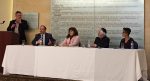
The Feb. 22 panel discussion at Congregation Schara Tzedeck featured, left to right, moderator Dr. Auby Axler and panelists Rabbi Andrew Rosenblatt, Dr. Jenny Melamed, David Berner and Rebecca Denham. (photo by Zach Sagorin)

Approximately 5,000 Jews in the local Jewish community need support around addiction, according to Jewish Addiction Community Services Vancouver.

JACS offers various support programs for those battling addiction, and their families and friends, and organizes events for community education and awareness. On the evening of Feb. 22, at Congregation Schara Tzedeck, the agency partnered with Schara Tzedeck and the Jewish Federation of Greater Vancouver for a panel discussion on the fentanyl crisis and addiction in the Jewish community in general. Participating panelists were Rabbi Andrew Rosenblatt, addiction medical specialist Dr. Jenny Melamed, addiction therapist David Berner and director of services at JACS, Rebecca Denham; the moderator was Dr. Auby Axler.

“JACS Vancouver is a new agency trying to tackle a taboo and shame-filled topic that can ignite passionate responses and strong resistance,” explained Denham in an email. It is committed to supporting community needs relating to substance use, and values a diversity of perspectives on addiction treatment.

At the panel discussion, Rosenblatt spoke about some of the community concerns and the internal conflicts that some people experience when trying to determine the best approaches to addiction support.

Melamed, an addiction doctor who has been treating people with opioid addiction for 15 years, said, “People have been dying from heroin, people have been dying from all drugs…. There are many drugs out there that are as dangerous. Alcohol is one of the most dangerous drugs out there, 90% of the trauma seen in the [emergency room] after midnight is from alcohol. A heroin addict is a calm, sedated person who is nodding off in a corner, he’s not violent; he’s a danger to himself, and he’s not a danger to anybody else.”

She explained, “Addiction is a … disease situated in the primitive part of the brain…. The addiction goes and sits there and it says, ‘if you do not use me, you will die, you need me.’ This is where the team comes in…. We’ve got the ability to say, ‘I’m not going to listen to you anymore.’ But the power to overcome that is what is needed and it is strong and it requires meetings, it requires therapy, it requires a team, it really is a village to keep somebody sober in the long term.”

About 40 people attended the discussion and Melamed commented, “When you look at how big the Jewish community is and how small the attendance is here tonight … we live with our heads in the sand and we don’t realize how many of us have family members who are in addiction.

“We need to remove the stigma related to addiction. When we tried to get somebody in recovery to talk tonight, we couldn’t find anybody in the Jewish community who would come and stand up, because we put that big addiction sticker on people’s forehead. But we all know that it can happen to anybody. Yes, there is an enormous genetic component, a 40% genetic component when it comes to addiction, but there is trauma. Sexual abuse happens in any religion. Everything happens across the board.”

While the Downtown Eastside is often considered the centre of addiction and drug use, Melamed said this is not the reality. “The people on the DTES make up maybe one to five percent of the drug-using population. Seventy-five percent of people using drugs are what we call functional … nobody knows what is going on out there. If you can afford your heroin habit, then you’re OK until you overdose and it takes you over to the other side.”

Berner, founder and executive director of a residential treatment centre for drug addicts and alcoholics, has conducted almost 11,000 therapy groups.

“Addictions are coping mechanisms…. I’ve never met someone in addiction who hasn’t had a terrible upbringing, who hasn’t had severe trauma, serious trauma,” Berner said. “I’ve rarely met anyone who has addiction who hasn’t suffered physical or sexual abuse, or emotional-psychological abuse, or financial abuse.”

Berner posed the rhetorical question, “Can you change? No.” But, he said, “You can change the things you do, including picking up [drugs or alcohol].”

He said, “Every week I give a lecture, every Tuesday morning, and then do group therapy. One of the things I say week in and week out is, I don’t want to hear about your substance.”

Berner also commented on the government’s spending on addiction services in Vancouver.

“We’ve got harm reduction, that’s it!” he said. “And then prevention, treatment and the law are not only ignored officially … they are officially denigrated by the health department, by the ministry of health, and anyone that can make a decision.”

In response to an audience question – “How does the word recreational fit in with the level of risk that’s involved in drugs?” – Melamed responded, “I think you have to replace the word recreational now with Russian roulette because that’s the word we’re using. There is no safe use.”

“Even with marijuana?” asked another audience member.

Melamed said she knows, based on urine samples she has taken, that “some of the marijuana is laced with fentanyl.”

However, a man in the audience, identifying himself as a federal prosecutor who works with the police on narcotics, countered that assertion. “My understanding, after looking at various police files on where this has been reported, [is that] marijuana laced with fentanyl … is anecdotal. It is from people who have overdosed in a non-fatal manner and have reported it to hospital authorities, doctors, police officers, [saying] ‘all I used was marijuana,’ and this is to avoid, in my understanding, the stigma of being labeled a hard drug user…. There has been no actual seizure by police in B.C. of marijuana laced with fentanyl.”

However, the prosecutor added, “We see cocaine laced with fentanyl, we see a lot of heroin laced with fentanyl, we see methamphetamine laced with fentanyl.”

With Purim approaching, Rosenblatt noted, “Drinking on Purim happens a lot, especially in the Orthodox Jewish community, because there is a statement in the Talmud – a person is obligated to drink on Purim until they don’t know the difference between cursed be Haman, who is the villain of the story, and blessed by Mordechai, who is the hero.”

He said, “Maimonides says the way you should be happy on Purim is by spending most of your effort feeding the poor on Purim. Why? You would think that maybe Maimonides was democratic and would say something very nice like the poor deserve a holiday, too.… That’s not what Maimonides says at all. Maimonides says that there is no greater joy in the world than helping another person.”

“JACS was born out of a necessity and I think it is important to remind you that JACS is here to support you,” said Denham in wrapping up the event. “If a question doesn’t get answered tonight or if an issue gets triggered for you, reach out to us and we will support you just as the community has supported us. We wouldn’t be here today without the kind accepting spirit that runs deep throughout this community. From the support of the rabbinical leaders, professionals, individuals, family foundations, the support of the Federation … all of whom continue to strengthen JACS services … we are bringing this much-needed discussion away from shame and into a supportive light.”

To learn more about JACS Vancouver, Denham can be reached at [email protected].

Zach Sagorin is a Vancouver freelance writer.

Format ImagePosted on March 10, 2017March 8, 2017Author Zach SagorinCategories LocalTags addiction, fentanyl, health, JACS, Rebecca Denham, substance abuse
Treating intergenerational trauma

Treating intergenerational trauma

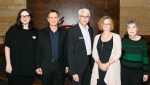
Left to right: Nina Krieger (Vancouver Holocaust Education Centre), speaker Mark Wolynn, Richard Fruchter (Jewish Family Service Agency), Nicky Fried (Congregation Beth Israel) and Shanie Levin (Jewish Seniors Alliance of Greater Vancouver). (photo by Rhonda Dent Photography)

On Feb. 15, Mark Wolynn, director of the Family Constellation Institute, spoke to an audience of almost 1,000 people at Congregation Beth Israel on the topic Understanding Intergenerational Trauma: How Inherited Family Trauma Shapes Who We Are and How to End the Cycle. The crowd sat in rapt silence as he unfolded his own story and the stories of some of the people his therapeutic approach has helped.

Introduced by Rabbi Adam Stein, assistant rabbi at Beth Israel, and Richard Fruchter, chief executive officer of the Jewish Family Service Agency, Wolynn quipped upon taking the stage, “The last time I stood at a synagogue pulpit was at my bar mitzvah.”

Wolynn said his work on intergenerational trauma has particular relevance for those who have survived genocide and war, such as First Nations people, refugees and Jews. His efforts to understand the effects of trauma began when, as a young man, he found himself going blind. He had “the bad kind of central serous retinopathy,” he said, “the five percent kind where it can lead to becoming legally blind.”

Plagued by grey blotches and blurs distorting his vision, Wolynn said he was terrified. He tried a litany of alternative medical cures, which didn’t help, and headed off on a quest for enlightenment.

After marathon meditation sessions and audiences with several gurus, Wolynn said he waited for hours for a satsang (sacred meeting) with a swami in Indonesia. When he finally made it to the front of the line, the guru looked at him for a moment and said, “Go home and make peace with your parents.” It wasn’t until he heard the same message from the next guru he visited that Wolynn returned home to begin his journey into healing his relationships with his family.

Years later, after making both personal and scientific study of the impact of family dynamics and inherited trauma (and healing his blindness), Wolynn has emerged with a persuasive vision of the role that unaddressed trauma can have in our lives – even if the trauma happened in previous generations, and even if you didn’t know about it. “Many of us spend our whole lives believing we are the source of our own suffering when we are not,” he said.

Wolynn presents his findings in terms of epigenetics, the study of how life experience can turn on or off certain genes. He points to findings in both humans and animals showing that the children of traumatized parents react with stress, fear or aversion to stimulus that traumatized their parents, even if the children themselves have no previous negative exposure to the trigger. “We think the effects – the alteration in the genes – may last for three generations,” he said.

Wolynn described several case studies in which patients had symptoms that could be addressed only after patients understood their source in something that had been done to (or by) a mother or grandfather. Wolynn challenged the audience to ask themselves what their greatest fear was and to put it into words, explaining that this was a clue to their “trauma language,” which could, in turn, be used “like breadcrumbs” to lead them back to the unrecognized traumas in their past.

Wolynn laid out a series of steps for uncovering intergenerational traumas and healing the brain. He also shared stories of his use of visualization, ritual and family communication to free both adults and children from chains they didn’t fasten themselves.

Alan Stamp, clinical director of counseling at JFSA, a co-sponsoring agency of Wolynn’s talk, told the Independent, “What Mark is doing is putting a new spin on how to get to the heart of it and resolve the difficulty. The past is alive in the present.”

Stamp said he knows of two people who attended a follow-up training session offered by Wolynn in Vancouver after the public lecture, and who have had success applying Wolynn’s method clinically; one of them being a counselor at JFSA. “It works,” said Stamp.

JFSA offers counseling for a wide variety of issues, and Stamp is hoping that attendees at Wolynn’s talk will be inspired to pursue healing, through JFSA or elsewhere.

JFSA, the Jewish Seniors Alliance of Greater Vancouver, Congregation Beth Israel and the Vancouver Holocaust Education Centre partnered to bring Wolynn to Vancouver, and the talk was additionally sponsored by the Lutsky families and Rabbi Rokie Bernstein. Banyen Books hosted Wolynn the day after his talk at the synagogue.

Matthew Gindin is a freelance journalist, writer and lecturer. He writes regularly for the Forward and All That Is Interesting, and has been published in Religion Dispatches, Situate Magazine, Tikkun and elsewhere. He can be found on Medium and Twitter.

Format ImagePosted on March 10, 2017March 8, 2017Author Matthew GindinCategories LocalTags Beth Israel, health, JFSA, JSA, Mark Wolynn, trauma, VHEC
Building a dream on Main

Building a dream on Main

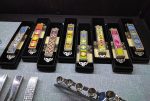
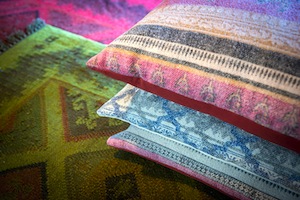
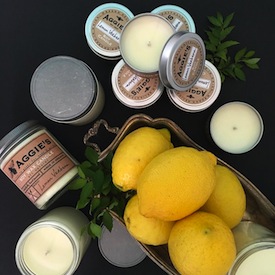
Among the offerings at Olive+Wild are mezuzot, textiles and fragrances. (photos from oliveandwild.com)

Judaica. Most of us have some in our homes. A mezuzah, Shabbat candlesticks, a seder plate, a menorah. As much as synagogues are a crucial part of Judaism, the Jewish home is a place to celebrate and perpetuate our traditions and faith.

For many years now, in Metro Vancouver, there has been hardly anywhere to buy Judaica locally. Many people order lovely things online or buy them when traveling, but it has been nearly impossible to buy a beautiful challah or matzah plate in the city – until recently.

In September, Bella Zaidel, a friendly and charming woman, opened Olive+Wild. It was her dream and she told her husband Simon it was now or never, so they did it.

Located between 27th and 28th avenues on Main Street, Olive+Wild is nestled among an increasingly interesting group of shops. At first blush, the store reflects her years of experience in design and décor retail. The displays are natural and artful and feature a carefully chosen, unique collection of home décor; the pottery is eclectic, attractive, and dishwasher and microwave safe; and the furnishings would help update any room. It’s the kind of store I love to wander through when I’m on holiday, to see local artists along with other striking pieces from around the world.

photo - Among the offerings at Olive+Wild are textilesWalking past the stunning candles and the Vancouver Island-made pottery, shoppers find near the back two large display cabinets with collections of sparkling Judaica. One case is full of renowned South African artist Carrol Boyes’ work. A portion of this case is dedicated to decorative objects and the rest features mezuzot, Kiddush cups, candlesticks and challah plates. Most of Boyes’ work has an organic, modern appeal. Made of a combination of pewter, aluminum and stainless steel, these objets d’art don’t tarnish and stay looking silver and shiny.
On the other side of the store stands a cabinet full of Judaica from a variety of artists. Zaidel explained that most of the work comes from American designers like Michael Aram and Mary Jurek. She has one Israeli line and is actively looking to expand the number of Israeli-designed and -made items. She also hopes to increase her selection of matzah and challah covers.

There is an entire shelf with mezuzot, making it possible for most anyone to find their match. They also have many candlesticks and chanukiyot, matzah and challah plates, and decorative dishes for apples and honey. As Pesach approaches, new items like seder plates will be prominently featured in this area of the store.

While Judaica is not Olive+Wild’s core business – they also sell textiles, home décor, fragrances, dishware for entertaining and artisanal foods – both Zaidels have been pleased with the enthusiastic response they have received from customers.

Among the offerings at Olive+Wild are fragrances“It’s interesting to see the number of younger people in the neighbourhood who walk in and don’t know there is Judaica in the store and end up buying things for their homes,” said Zaidel. “There are certain things every Jewish person should have and our pieces are heirloom quality, so they will last a lifetime.”
When asked why she decided to carry Judaica, she replied, “Not many places in Vancouver carry it, you had to search high and low. We love the young, modern Judaica and decided to carry it. It’s been very successful.”

Although she assumes most of the people buying ritual Jewish objects are Jewish, she knows some of them are not.

“We had a non-Jewish lady come and buy all of our hand-dipped Israeli Chanukah candles,” she said. “I think she was giving them to her child’s friends at the JCC daycare.”

The packages of Israeli hand-dipped Shabbat candles caught my eye and I couldn’t resist buying them, as they are a perfect hostess gift.

Zaidel wants people to know that there is a place in Vancouver to buy meaningful gifts for weddings and b’nai mitzvahs. Buying online may seem appealing, but seeing an item in person and having excellent service makes a big difference, especially if it’s for an important occasion. In addition, Olive+Wild has a great return policy.

“We will give a full refund with receipt up to two weeks after the purchase,” said Zaidel. “In retail, everyone expects lots of returns after the big number of gifts sold in December. Even though we tell our customers about our return policy, we didn’t get one return in January! We have this policy because we want people to be happy.”

In addition to the Judaica, Olive+Wild carries some Israeli art and jewelry.

“We like to support Israeli artists, as well as local artists,” noted Zaidel. “I tell people we carry eclectic ‘must-haves’ for the home.”

For more information about their collection, visit oliveandwild.com.

Michelle Dodek is a freelance writer living in Vancouver.

Format ImagePosted on March 10, 2017March 8, 2017Author Michelle DodekCategories LifeTags Judaica, Olive+Wild
Queen Esther in Vancouver

Queen Esther in Vancouver

Goldie Kassen at Louis Brier Home and Hospital’s Purim party last year. (photo from Barbara Taranto)

There are not many news stories in print or online that laud the everyday work of women. Occasionally, studies are published regarding the status of women’s salaries relative to men’s, the position of women’s roles relative to men’s, the division of labour in the household, etc., but very little is published about the everyday life and sacrifices of women. When stories are published, they are most often about how women have contributed, as a female actor in a traditional male role, to the social and economic welfare of the greater community.

I do not have many “heroes.” I never quite got the appeal of adoring a public figure or wanting to model myself after a stranger regardless of his or her qualities. One person I do admire, however, is Justice Ruth Bader Ginsberg – obviously for her remarkable contribution to the U.S. Supreme Court, her leadership and her example to American women – but more for the non-public and under-appreciated value she has added as a mother and a grandmother.

Bader Ginsberg is very much like Queen Esther of Purim – a woman with a private life who serves the greater good in the public sphere. There were not, and are not, many opportunities to have a life like hers. But, ordinary women, women not in the spotlight, have been serving the greater good throughout human history – volunteering in the community, giving time, food, sustenance and support to help their communities not only survive, but thrive.

When I grew up, I often came home from school and stopped at the Jewish community centre to see my mother – Goldie Kassen – who was working in the kitchen with the other women of Hadassah, an organization’s whose name is Queen Esther’s Hebrew name. The women of Hadassah were very active in Saskatoon. There wasn’t a week that went by that they weren’t involved in some sort of social action or charity event. And, on the days they were not busy with Hadassah, they were involved in the sisterhood at Congregation Agudas Israel, performing vital ritual tasks for the mikvah, the chevra kadisha or distributing mishloach manot (loosely translated as gift baskets) on Purim.

This culture of volunteerism that was widespread and common in my youth seems to have disappeared. Many smaller Jewish communities do not have the congregation or the means to support these activities and many services have been taken over by professionals. Frankly, many women understandably do not want to volunteer for no pay.

When my father, z”l, died, my mother left Saskatoon and moved to Vancouver. She immediately volunteered for a seniors group, Hadassah and the sisterhood at Temple Sholom. She became an active member of her new community by giving first and receiving warmth and welcome in return.

For the past 28 years, my mother has volunteered at the Louis Brier Home and Hospital. She started out as a salesperson, one day a week, in the gift shop. Over the years, she took on more and more responsibility. Today, she manages the staff and the staff schedule. She does the buying for the shop, she does the books for the shop and she does special requests for those who have no family or aid. She works four days a week, every week.

The proceeds from the shop have been used to purchase diagnostic medical equipment, hospital beds, a barbeque for the residents and much, much more. She greets all the customers in a quiet and gentle way, and I know she is loved for her patience and her concern.

On the Louis Brier’s website, there is a very brief paragraph about the shop. No mention is made of the women who work there, not that they expect it, but it would be nice. I know that the shop is an integral part of the life of the residents and the staff at the home. I know that there are not many women left like my mother.

So, when my mom called and told me she was going to the Purim party last year as Queen Esther, I was especially proud. She was worrying over what dress to wear. In the end, she chose the evening gown my father bought her in Jerusalem in 1962. It was a beautiful dress then and it is a beautiful dress now. More importantly, the woman wearing the dress is beautiful – as beautiful as Queen Esther and as important as all those women who have kept the traditions alive and without whom we would be impoverished.

Barbara Taranto lives in Tel Aviv. A version of this article was published last year on her blog, btarantoaretz.com.

Format ImagePosted on March 10, 2017March 8, 2017Author Barbara TarantoCategories LocalTags Goldie Kassen, Louis Brier, Purim, Queen Esther, volunteerism, women
Korts fund education

Korts fund education

Sol and Shirley Kort (photo from Alisa Kort)

Catherine Stoller, president of the Vancouver section of the National Council of Jewish Women of Canada, announces the Shirley and Sol Kort Family Award to HIPPY, which will enable HIPPY home visitors to pursue higher education in an accredited program. The award, $5,000 annually for five years, will be divided between two qualified applicants, to be adjudicated by the HIPPY board of directors.

The HIPPY program, originating in Israel and now operating in many countries around the world, is dedicated to ensuring that immigrant and refugee women can achieve the training and education they need to support their families and create a better future. The Kort family thus continues the dedicated and creative work of Shirley Kort, who was a longtime member of NCJW, and one of the key supporters of establishing HIPPY here in Canada.

Both Shirley and Sol Kort were community activists, focusing largely on the immigrant community. They were equally committed to the role of education as the key to better lives for everyone.

NCJW of Canada will be celebrating its 120th birthday this year – the Vancouver section has a history of 96 years! NCJW’s commitment to education, service and social action is demonstrated locally, nationally and internationally. Its members have worked with immigrant and refugee agencies for decades and NCJW is proud to celebrate the Kort family’s dedication to these issues.

Format ImagePosted on March 10, 2017March 8, 2017Author NCJW VancouverCategories LocalTags HIPPY, NCJW, tikkun olam, women
IDF orphans tree plant

IDF orphans tree plant

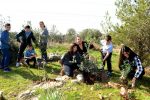
Orphans from the IDF Widows and Orphans organization plant olive trees in the Givat Koah forest along with Tami Shelach, IDFWO chair, herself an IDF widow. (photo from IMP Group Ltd.)

Eleven-year-old Maya Keidar lost her father, Lt.-Col. Dolev Keidar, in Operation Protective Edge in Gaza in 2014. But, on Tu b’Shevat this year, she was smiling as she helped plant some olive trees with other orphans in the Givat Koah forest near Rosh HaAyin in Israel – a site where many trees had been devastated by the recent forest fires. The initiative was organized by the Israel Defence Forces Widows and Orphans organization.

“It’s fun to spend time outdoors, with nature, and even more fun to do it with the friends from IDFWO,” said Maya.

Eliyah Asulin, 10, and her sister Ophir, 14, were part of the group. The Asulin sisters’ father, policeman Sgt. Maj. Shlomi Asulin, was stabbed and killed in 2011 when chasing after car thieves in 2011. Also participating were Jonathan Zilbershlag, 7, and his older brother Ido, 11, who were digging hard to break ground with a spade. Helping them was 8-year-old Yaron Berkovic. While they worked, the children tried to protect as much of the native Israeli flowers that had grown within the past week among the trees in the forest.

“These children’s fathers implanted the values of sacrifice and love of Israel in all of us,” said Tami Shelach, chair of IDFWO, herself an IDF widow. “Now, we must take the values they’ve modeled and continue maintaining them. It’s our fervent hope and wish that these orphans will, indeed, see new beginnings sprout from the darkness.”

The olive tree was chosen as a symbol of peace and hope. And, added 11-year-old Michael Zacharia – whose father, Sgt. Maj. Gil Zacharia, collapsed while his reserve unit was training in 2015 – “It’s a tree with strong roots, so it’ll live for a long time.”

IDFWO is the only nonprofit organization recognized by the State of Israel to work with widows and orphans of the IDF and Israel’s security forces. They care for approximately 8,000 widows and orphans every year through recreational events, programming, retreats, b’nai mitzvah trips, etc. For more information, visit idfwo.org/eng.

Format ImagePosted on March 10, 2017March 8, 2017Author IMP Group Ltd.Categories IsraelTags IDF, IDFWO, Israel Defence Forces, Israeli army, orphans, widows

Posts pagination

Previous page Page 1 … Page 7 Page 8 Page 9 Page 10 Next page
Proudly powered by WordPress