Skip to content
  • Home
  • Subscribe / donate
  • Events calendar
  • News
    • Local
    • National
    • Israel
    • World
    • עניין בחדשות
      A roundup of news in Canada and further afield, in Hebrew.
  • Opinion
    • From the JI
    • Op-Ed
  • Arts & Culture
    • Performing Arts
    • Music
    • Books
    • Visual Arts
    • TV & Film
  • Life
    • Celebrating the Holidays
    • Travel
    • The Daily Snooze
      Cartoons by Jacob Samuel
    • Mystery Photo
      Help the JI and JMABC fill in the gaps in our archives.
  • Community Links
    • Organizations, Etc.
    • Other News Sources & Blogs
    • Business Directory
  • FAQ
  • JI Chai Celebration
  • JI@88! video

Recent Posts

  • Sharing her testimony
  • Fall fight takes leap forward
  • The balancing of rights
  • Multiple Tony n’ Tina roles
  • Stories of trauma, resilience
  • Celebrate our culture
  • A responsibility to help
  • What wellness means at JCC
  • Together in mourning
  • Downhill after Trump?
  • Birth control even easier now
  • Eco-Sisters mentorship
  • Unexpected discoveries
  • Study’s results hopeful
  • Bad behaviour affects us all
  • Thankful for the police
  • UBC needs a wake-up call
  • Recalling a shining star
  • Sleep well …
  • BGU fosters startup culture
  • Photography and glass
  • Is it the end of an era?
  • Taking life a step at a time
  • Nakba exhibit biased
  • Film festival starts next week
  • Musical with heart and soul
  • Rabbi marks 13 years
  • Keeper of VTT’s history
  • Gala fêtes Infeld’s 20th
  • Building JWest together
  • Challah Mom comes to Vancouver
  • What to do about media bias
  • Education offers hope
  • Remembrance – a moral act
  • What makes us human
  • המלחמות של נתניהו וטראמפ

Archives

Follow @JewishIndie
image - The CJN - Visit Us Banner - 300x600 - 101625

Month: March 2017

Why not wait and see?

Things seem to be way out of control these days. So many of the things we used to take for granted in our lives now seem topsy-turvy. There used to be a right and a left, liberal, conservative, moral, immoral. Could it be really true that a rich guy with all the power in the world, who previously used his power to exploit the weak, rip off the powerless, abuse women, exploit racism, has become an upright guy? Maybe?

Witness U.S. President Donald Trump’s relentless focus on creating new jobs for those who have been displaced in their work by globalization, by robotization, by environmental imperatives. Witness a realpolitik that ignores political correctness and confronts fears we all have that we will be overwhelmed by an ideology of global supremacy that hides behind a religious façade.

What if Trump ignores the short-term advantage of going along with the power of oil and population numbers in the Middle East, trade interests in Europe, debt holdings of U.S. treasuries in China, and asserts support for a beleaguered Israel, gives notice that the United States is again prepared to fight robustly to maintain its international stature, and disarms Russia by seeking common cause in areas of common interest from a position of renewed military strength and commitment? What is wrong about making a serious effort to maintain the integrity and respect of America’s borders, and recognizing that international trading arrangements have ignored the reality that certain partners’ internal politics have undermined and eroded the supposed advantages of those arrangements? Perhaps his lack of ideology will overturn Republican extremism, make the United States a better place for millions of the country’s illegals, by finding some path for them to a legal presence there, and result in a replacement health program that is better for Americans than the one that has been dictated by gridlock and lobbyists.

We are seeing some of the power guys shaking in their boots about what Trump is going to do next, how he is going to shake up the country, and the world. Will he confront legislators who are lapdogs for lobbyists? Is he actually going to create jobs for those blue-collar guys who are having trouble adjusting to a changing world and are looking at a jobless future? Is he actually going to stop potential terrorists from getting into the United States? Will he confront cyber hackers, no matter what the cost to innocents, privacy concerns and the niceties of international relations?

There is that side of the coin. How many innocents will suffer in the process of getting the job done? How many in his base will presume a freedom for racism, misogyny and anarchy? Does our distaste for his past and some of his bedfellows mean we can’t trust him? Because the fact is that some of us just don’t trust the motives.

But are motives the be all and end all? What if he does actually tackle those countries that are abusing the rules set by trade agreements, like Mexico, China and some other countries? What if he actually is going to support a U.S. alliance with Israel? What if he calls Iran’s bluff or confronts Saudi Arabia, Turkey, the Emirates, Iran, etc., on their policies that favour terrorism? What if he challenges the Palestinians on their refusal to recognize a Jewish state and a Jewish presence in the West Bank, which is legal and sanctioned by the Oslo Accords?

Surely we are overdue for a change from Barack Obama’s failed policies. Why shouldn’t we lean on some of these guys? Why shouldn’t we put the United Nations on the backburner where it belongs, because it caters to the worst actors in human rights? Shouldn’t we go for American energy independence and deal with the consequences of using new technology?

Aren’t there some things that need fixing? Could some of the things we hate be the price for better policies in other areas? Don’t we have to wait and see what we are really going to get before we push the panic button?

Max Roytenberg is a Vancouver-based poet, writer and blogger. His book Hero in My Own Eyes was recently published.
Posted on March 3, 2017February 28, 2017Author Max RoytenbergCategories Op-EdTags Trump, United States

Teachings of the Land

On Feb. 12, at Shaughnessy Heights United Church, there was a dialogue featuring Rabbi Dr. Laura Duhan Kaplan, director of Inter-Religious Studies at Vancouver School of Theology, and Rev. Ray Aldred, director of VST’s Indigenous Studies Program. Held under the rubric of Shaughnessy Heights’ Reconciliation Matters initiative, The Teachings of the Land: Our Oldest Relative explored the spiritual relationships between people and land.

Aldred, who is from Treaty 8 territory in northern Alberta, said his understanding of the land has been formed by his Cree upbringing and his life study of indigenous wisdom. Asked about the title of the talk, he said, “For us, the land is part of the family.”

Kaplan spoke of the Jewish people’s connection to the land of their birth, Israel. A self-described “born urbanite,” she also spoke of her personal spiritual connections to the land – hiking in nature or learning from her husband how to grow food – and what she called the “eco-theology” of the Bible.

“The first chapter of Genesis takes us through the creation of an ecology, where everything is interconnected and blessed by the Divine,” she explained. “The first human is called ‘Adam’ in Hebrew, which is not just a random pleasing sound, but comes from adamah, red clay dirt, and means ‘the red clay dirt person,’ the ‘earthling.’ The Hebrew Bible is an indigenous text, which tells us ‘how to walk well on the land,’” she said, using a phrase of Aldred’s. “The Book of Leviticus, for instance, teaches us to consciously let the land rest – the commandment of Shmitah, where the land has rest from farming every seven years. The Hebrew Bible teaches that the ecosystem belongs to God, not to us. It is not ours to come in and displace peoples and animals and to take what we want.”

When Kaplan attended a course of Aldred’s in 2016, she said she realized she was a “rank beginner” in eco-spirituality. “Hunter-gatherers were specialists in sustainability,” she said. “They were not primitive; they are the next level.”

Kaplan also discussed the view of some that First Nations were one of the lost tribes of Israel, a view Aldred had also jokingly referred to earlier. Although lacking historical evidence to support it, commented Kaplan, “it works as a metaphor for a similar history of displacement.”

Aldred made another biblical allusion when speaking about how early Europeans were greeted by some Ojibwe as “Anishinaabe” (which literally means “people”) but they refused the title. “Reminds me of another story about some other people who didn’t want to be what they were created to be, but wanted to be God,” Aldred commented with a grin, referring to the story of Adam and Eve.

Aldred spoke a lot about the need for humility and the renunciation of certainty in order to find a relationship both to land and to other people. “Your perspective is always limited, it is always just ‘your perspective.’ You need other people, other creatures, to learn from. The Creator is giving us an opportunity to learn humility. If we miss that chance,” Aldred warned, alluding again to a biblical text (Leviticus 18:28), “the land will spit you out.”

Asked about practices of connecting to the land, Kaplan suggested learning about the local ecosystem, spending time exploring it and getting to know the unique creatures who inhabit it. She also spoke about connecting to members of one’s own tribe in order to cultivate a sense of home, and about getting to know the indigenous peoples of the area.

Aldred discussed the importance of really listening to the land so we can make better decisions as a community. Noting that Mary was Jesus’ mother, he asked who Adam’s mother was. “The earth was his mother, and the earth cared for him and cares for us.”

Aldred also said that indigenous people reverse Maslow’s hierarchy of human needs, which places basic needs like food and lodging on the bottom and spirituality and community at the top, as being less necessary. “Get your spirituality right,” said Aldred, “and everything else will be right. Take care of your relationship to the land, and take care of your neighbours.”

Asked about the ownership and economic use of land, Aldred said, “We belong to the land, it doesn’t belong to us.” He noted that treaties, in the indigenous understanding, were less about the division of land than about how it should be shared. “Of course, we should enjoy and make use of the gifts of the land,” he said, “but, in our decisions, we should think seven generations ahead – that’s 225 years into the future. That might take a little more time, but it’s worth it to our grandchildren.”

Matthew Gindin is a freelance journalist, writer and lecturer. He writes regularly for the Forward and All That Is Interesting, and has been published in Religion Dispatches, Situate Magazine, Tikkun and elsewhere. He can be found on Medium and Twitter.

Posted on March 3, 2017February 28, 2017Author Matthew GindinCategories LocalTags eco-theology, First Nations, Judaism, Torah
United against racism

United against racism

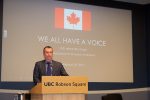
Artur Wilczynski, Canada’s ambassador to Norway, gave the keynote address at the Feb. 22 SUCCESS community forum. (photo from SUCCESS)

SUCCESS’s Safeguarding Our Communities, Upholding Our Shared Values: A Community Forum on Immigration and Racial Discrimination was a full-house event at University of British Columbia Robson Square on Feb. 22.

The keynote speaker, Artur Wilczynski, Canada’s ambassador to Norway, shared his family’s story about how they survived the Holocaust and came to Canada. “I am a Polish, a Jewish, a Quebecois. Most important, I am a Canadian,” he noted.

“Diplomacy doesn’t give you immunity from discrimination but gives you a platform to speak against it,” he said.

“It is important for Canadians to speak out against various forms of discrimination and xenophobia. As an immigrant to this country and the son of Holocaust survivors, I have been privileged to serve my country as an ambassador and senior official. It is why I feel it is my obligation to work towards a more inclusive and respectful Canada.”

He thanked SUCCESS for allowing him to share his story at the forum.

Wilczynski’s keynote address was preceded by two panel discussions. Panelists included, among others, Dr. Robert Krell, Vancouver Holocaust Education Centre founding president and outreach speaker; Dr. Gurdeep Parhar, University of British Columbia faculty of medicine; Chief Dr. Robert Joseph, Reconciliation Canada ambassador; and Sarah Al-Qaysi, program assistant, SUCCESS. SUCCESS chief executive officer Queenie Choo welcomed the audience to the forum. Among the sponsoring organizations of the event were the Jewish Independent, Jewish Federation of Greater Vancouver and the Centre for Israel and Jewish Affairs.

photo - Young audience members hoped to take what they learned at the forum about the immigrant experience and share it with those who could not attend the event
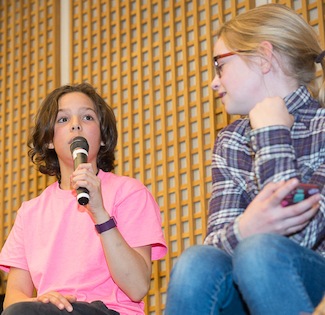
Young audience members hoped to take what they learned at the forum about the immigrant experience and share it with those who could not attend the event. (photo from SUCCESS)

At the facilitated discussion for Call for Actions, a group of young audience members raised questions on how they could share the knowledge they learned at the forum with those who were not able to attend.

SUCCESS will be launching a series of community roundtables across Metro Vancouver. These facilitated conversations will create a platform for community members to share and reflect on thoughts on diversity and inclusion, while engaging them in thought-provoking discussions regarding cultural integration in our community – to build safe, strong and enlightened neighbourhoods. Each session will be held at one of SUCCESS’s local offices or another accessible community location.

SUCCESS will also create a documentary video, featuring interviews with immigrants and community leaders, about the value and contributions of immigrants in Canada. The video will be distributed through multiple channels, including a special screening video launch, online and social media networks, and grassroots outreach through high schools and universities to help educate future generations about the stories of immigrants in Canada, who we are and where we are from.

Format ImagePosted on March 3, 2017February 28, 2017Author SUCCESSCategories LocalTags Artur Wilczynski, immigration, interfaith, racism
Guichon visit RJDS

Guichon visit RJDS

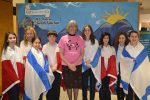
The Hon. Judith Guichon with Richmond Jewish Day School students. (photo by Lauren Kramer)

Students at Richmond Jewish Day School were thrilled to receive a visit from the Hon. Judith Guichon, lieutenant governor of British Columbia, on Feb. 22. Guichon addressed students on her role in Canada’s constitutional monarchy and shared her ideas about a healthy, sustainable future. To mark the 150th anniversary of Canada’s Confederation, the lieutenant governor is visiting 150 schools across the province.

Format ImagePosted on March 3, 2017February 28, 2017Author Lauren KramerCategories LocalTags Canada, Judith Guichon, RJDS
Time to make hamantashen

Time to make hamantashen

When Eastern Europeans immigrated to America, they brought their hamantashen recipes with them. (photo from Infrogmation via Wikimedia Commons)

When it comes to Purim pastries, hamantashen are what most of us think of first. The word is taken from the German mohn, meaning poppy seeds, and taschen, referring to pockets. Some say the pockets refer to Haman, who stuffed his pockets with bribe money.

The original name, mohntaschen, and the tradition of eating them, may date back as far as the 12th century. Israeli historian, caterer and cook Shmil Holland says that, when Jews fled Germany for Eastern Europe in the late Middle Ages, they took the poppy seed pastry with them and added the Yiddish prefix ha, thus making it hamantash.

In the Encyclopedia of Jewish Food, Gil Marks (z”l) writes that Eastern Europeans and their foods came to dominate the Ashkenazi world in the 19th century, and “hamantashen emerged as the quintessential Ashkenazic Purim treat.” The original dough was kuchen, a rich yeast dough, and common fillings include poppy seeds, chocolate, prunes or other fruit fillings. When Eastern Europeans immigrated to America in the late 19th and early 20th centuries, the idea came with them.

(An aside: In 18th-century Bohemia, Jews added a prune filling. The story is that a local merchant was accused of selling poisoned plum jam; when he was cleared of the charges, his family marked the occasion as a holiday, called povidl Purim, or plum jam Purim.)

In addition to the pocket imagery, several other explanations have been suggested for the triangular shape of hamantashen. Some say they represent a triangular-shaped hat worn by Haman, the villain in the Purim story, and that we eat them as a reminder that his cruel plot was foiled. Others say they represent Esther’s strength and the three founders of Judaism: Abraham, Isaac and Jacob, as a midrash says that, while reflecting on his plan to get rid of the Jews, Haman realized the three Patriarchs would intercede.

Yet another explanation lies in the cookies’ name in Israel, oznei Haman, Haman’s ears – perhaps referencing an old custom of cutting off the ears of criminals before they were executed. When the resulting treat became known as Haman’s ears for Purim is unknown, although it is mentioned as early as 1550. However, according to Marks, historical oznei Haman were strips of dough fried in honey or sugar syrup – a 13th-century Andalusian cookbook has a recipe for this “ear” dish and it was adopted by Sephardim.

Whatever their name, the reason behind eating hamantashen remains the same: remembering how close the Jewish people came to tragedy and celebrating the fact that they escaped death.

Here are some recipes from my family for your own celebration of Purim, which starts this year on March 12. My grandmother (z”l) made the most beautiful-looking yeast hamantashen.

GRANDMA’S PRUNE FILLING

1 1/2 cups finely cut prunes
1/4 cup sugar
2 tsp lemon juice

  1. Place prunes in a saucepan with water to cover. Bring to a boil then reduce heat and simmer until soft.
  2. Mash prunes, add sugar and lemon juice.

GRANDMA’S POPPY SEED FILLING

1 cup ground poppy seeds
1/4 cup milk or water
2 tbsp butter or margarine
1/2 cup raisins
1/2 cup finely chopped nuts
2 tbsp honey
1 tsp vanilla

  1. Place poppy seeds, milk or water, butter or margarine, raisins, nuts and honey in a saucepan. Bring to a boil, then reduce heat and simmer until milk or water is absorbed.
  2. Add vanilla.

GRANDMA’S YEAST HAMANTASHEN

4 tsp dry yeast
1/2 cup lukewarm milk
2 eggs
1/2 cup sugar
1/2 cup butter or margarine
1 tsp salt
1 cup sour cream
4-5 cups flour
vegetable oil

Day before baking:

  1. Dissolve yeast in a bowl with warm milk. Let stand.
  2. Beat eggs and sugar in a bowl. Add yeast mixture, butter or margarine, salt and sour cream and blend well.
  3. Add four cups flour and mix thoroughly. Gradually add the rest of the flour and knead until the dough is smooth and does not stick to your hands.
  4. Grease a large mixing bowl and add the dough. Turn the dough until it is covered with the oil. Cover with a cloth and refrigerate overnight.

Next day:

  1. Preheat oven to 350°F. Grease a cookie sheet.
  2. Roll out dough on a lightly floured board to 1/4-inch thick.
  3. Cut into 16 squares. Place a spoonful of filling on each. Fold to form triangles. Place on greased cookie sheet. Let rise one hour until double in size.
  4. Bake for 20 minutes or until brown.

MOM’S COOKIE HAMANTASHEN

2 eggs
1/2 cup sugar
1/2 cup margarine
2 3/4 cups flour
2 tsp baking powder
1/4 tsp salt
1 tsp vanilla
juice of half an orange or 1/2 cup sour cream

  1. Preheat oven to 350°F. Grease a cookie sheet.
  2. In a mixing bowl, blend eggs, sugar and margarine.
  3. Add flour, baking powder and salt and mix well.
  4. Add vanilla and orange juice or sour cream and blend into a dough. Refrigerate 20 minutes.
  5. Roll out dough 1/4-inch thick. Cut into three-inch circles. Place one tablespoon of filling in the centre of each and fold to make a triangle. Place on a cookie sheet and bake for 20-30 minutes.

Sybil Kaplan is a journalist, lecturer, book reviewer and food writer in Jerusalem. She created and leads the weekly English-language Shuk Walks in Machaneh Yehudah, she has compiled and edited nine kosher cookbooks, and is the author of Witness to History: Ten Years as a Woman Journalist in Israel.

Format ImagePosted on March 3, 2017February 28, 2017Author Sybil KaplanCategories Celebrating the HolidaysTags hamantashen, Purim
This week’s cartoon … March 3/17

This week’s cartoon … March 3/17

Format ImagePosted on March 3, 2017February 28, 2017Author Jacob SamuelCategories The Daily SnoozeTags internet, thedailysnooze.com
אפקט טראמפ

אפקט טראמפ

עשרות בורחים וארה”ב ועוברים את הגבול לקנדה בתקווה לזכות במקלט (צילום: Jimz47 via Wikimedia)

בחירתו של דונלד טראמפ לנשיאות ארצות הברית והכרזתו כי יאסור על כניסת מוסלמים ממספר מדינות וילחם במהגרים הלא חוקיים במדינה, הגדילה משמעותית את מספר אלה שעוברים לקנדה. לפי הערכה מראשית השנה מאות בני אדם עברו את הגבול לקנדה באמצעות נמלי האוור והיבשה, בתוך תקווה להינות ממעמד של פליטים ולזכות במקלט. המגיעים מארה”ב מתחלקים לשתי קבוצות עיקריות. אלה שנולדו במדינות ערב ויש להם מעמד חוקי בארה”ב, אך הם חוששים ממדיניות ההגירה החדשה של טראמפ. הם מגיעים לקנדה בעיקר בטיסות ומוכנים להליך קבלת מעמד של פליטים (הם מצויידים במסמכים ובכסף). על הקבוצה השנייה המסתננים – נמנים בעיקר מוסלמים מאפריקה שאין להם מעמד חוקי בארה”ב, וכצפוי גם הם חוששים לעתידם תחת שלטון טראמפ. הם חוצים את הגבול ושמחים להיתפס על ידי משטרה הפדרלית של קנדה שעוזרת להם. השוטרים בודקים את מצבם, מעניקים להם בגדים חמים ועוזרים להם לעלות את ילדיהם וחפציהם למכוניות המשטרה לאחר שקשרו את ידיהם. לאחר מכן הם מועברים לידי משטרת הגבולות של קנדה שעוזרת להם להתחיל בהליכי הבקשה לקבל מעמד של פליטים ולאחר מכן מקלט.

מרבית המסתננים מארה”ב חוצים את הגבול היבשתי לעבר מחוזות קוויבק ומניטובה (בעיקר לפנות בוקר), כיוון שאזורים אלה נחשבים לקלים “יחסית” למעבר רגלי. אך בגלל תנאי החורף הקשים ששוררים באזור המסתננים מסתכנים בחייהם, וחלקם אף מאבדים אצבעות לאחר צעידה של קילומטרים בקור העז. חלקם (בעיקר אלה שבאים עם בני משפחה וילדים) מצליחים למצוא מוניות, שיעזרו להם לחצות את הגבול, או שהם נעזרים במבריחים (ונאלצים לשלם אלפי דולרים). כל זאת עד לנקודות השיטור של המשטרה. כוחות הצלה קנדיים בהם אמבולנסים, פעילי הגירה ומתנדבים נמצאים באזורי הגבול, כדי לעזור למסתננים ולהעניק טיפול רפואי ראשוני לניזקקים.

לאור הגידול במספר המסתננים מארה”ב הוגדלו תקציבי הישובים הסמוכים לגבול המטפלים בהם. גם ראשי המחוזות נרתמים לעזור בתקציבים ואמצעים, וכן נעשתה פנייה לקבל עזרה מהממשלה הפדרלית. גם סוכנות האו”ם לפליטים החלה לבדוק את תופעת המסתננים לקנדה מקרוב. במשטרת הגבולות הקנדית מעריכים כי מאז נובמבר עת נבחר טראמפ לנשיא, מספר המבקשים לקבל מעמד של פליטים בקנדה עומד על כ-1,500 איש. ואילו בכל 2016 כשבעת אלפים איש עברו את הגבול היבשתי וביקשו מעמד של פליטים בקנדה. זהו גידול של כ-63 אחוזים לעומת שנת 2015. רק בינואר השנה כחמש מאות מסתננים הגיעו לקוויבק ולפחות כמאה וחמישים הגיעו למניטובה, וביקשו מעמד של פליטים בקנדה. לא ידוע על מספר המסתננים לקנדה שלא פונים לשלטונות והם פשוט נעלמים ברחבי המדינה הגדולה הזו.

להערכת גורמים מקצועיים עם השתפרות מזג האוויר ובוא האביב והגברת מדיניות ההגירה של טראמפ נגד פליטים וזרים, מספר המסתננים מארה”ב לקנדה יגדל משמעותית. לאור זאת מונטריאול הכריזה על עצמה בימים אלה כעיר מקלט לפליטים – שזה אומר להתחייב לעזור להם בהסדרת מעמדם החוקי ולא לגרש אותם. קדמו לה: טורונטו, המילטון ולונדון – כולן ממחוז אונטריו וונקובר שבבריטיש קולומביה. ערים נוספות בקנדה שוקלות להפוך לערי מקלט.

פליטים לא יכולים לעבור את הגבול מארה”ב לקנדה באופן חוקי כיוון, שלאור אמנה הבינלאומית בין שתי המדינות “הסכם המדינה השלישית הבטוחה”, עליהם לבקש מעמד של פליטים במדינה הראשונה אליה הגיעו (ארה”ב), לאחר שעזבו את מולדתם. אך אם הם מגיעים באופן לא חוקי הם כן יכולים לבקש מקלט.

Format ImagePosted on March 1, 2017February 26, 2017Author Roni RachmaniCategories עניין בחדשותTags Manitoba, Quebec, refugees, Trump, אפקט טראמפ, טראמפ, מניטובה, פליטים, קוויבק

Posts pagination

Previous page Page 1 … Page 9 Page 10
Proudly powered by WordPress