Skip to content

  • Home
  • Subscribe / donate
  • Events calendar
  • News
    • Local
    • National
    • Israel
    • World
    • עניין בחדשות
      A roundup of news in Canada and further afield, in Hebrew.
  • Opinion
    • From the JI
    • Op-Ed
  • Arts & Culture
    • Performing Arts
    • Music
    • Books
    • Visual Arts
    • TV & Film
  • Life
    • Celebrating the Holidays
    • Travel
    • The Daily Snooze
      Cartoons by Jacob Samuel
    • Mystery Photo
      Help the JI and JMABC fill in the gaps in our archives.
  • Community Links
    • Organizations, Etc.
    • Other News Sources & Blogs
    • Business Directory
  • FAQ
  • JI Chai Celebration
  • JI@88! video
image - Weizmann Canada Physics Tournament 2025
image - The CJN - Visit Us Banner - 300x600 - 101625

Recent Posts

  • היהירות היא אחד האויבים הגדולים ביותר של ישראל
  • Vrba monument is unveiled
  • Music to build bridges
  • A better future possible
  • Anne Frank exhibit on now
  • Human rights in sport
  • Telling the story of an icon
  • Crawl bigger than ever
  • JCC Maccabi in Toronto
  • A way to meet fellow Jews
  • Time to include
  • Add Jewish joy to the mix
  • Reminder of humanity’s light
  • From the archives … editorials
  • Year-round holiday recipes
  • מדוע עזבתי את ישראל ואינני חושב לחזור ארצה
  • OJC hosts Oct. 7 memorial
  • A journey beyond self
  • Antisemitism a problem
  • Young man is missed
  • Orr action sparks complaint
  • Prison sentence for hate
  • Etgar Keret comes to Vancouver
  • New fall lecture series
  • Series explores music
  • Doc on Zapiro screens Nov. 6
  • Joy of shared existence
  • Community milestones … October 2025
  • MAID vs Jewish values
  • Cheshvan a great month, too
  • Bull, bear or bubble?
  • From the archives … a coin, etc.
  • מדוע האנטישמיות הולכת וגואה בעולם
  • New bio gives Vrba his due
  • Joy brighter than ever
  • When approaches differ

Archives

Follow @JewishIndie

Tag: summer camp

Why we need summer camp

Why we need summer camp

Summer camp helps foster grit, creating space for kids to develop independence and author their own stories. (photo from URJ Camp Kalsman)

As a parent of three, I know how hard it is to balance the overwhelming desire to make sure my kids “have it all” – diverse extracurricular activities, best schools, quality family time, etc. – and, at the same time, to know when to let go (and actually do it!) so they can experience the power of paving their own way. Skinned knees, bruised egos, broken hearts and all.

As a summer camp director, I also know that parents like me are not alone. In fact, there is a whole army of incredibly kind and passionate young adult role models, often dressed up in silly costumes, ready to be my partner in this “gritty journey” of adolescence and the teenage years.

Ask anyone who grew up at overnight summer camp – Jewish or otherwise – and most will tell you it felt like their second home. At Camp Kalsman, where my children and I have spent the past six years, we welcome campers and staff members “home” each summer. But what does this really mean and why is this important for fostering grit in our kids and teens?

I’d argue that home, a place of true belonging, is prime real estate for failure, learning and growth – home is where grit is born. Often, when we think of home we think of being safe and protected, perhaps shielded from the real world. I would argue that home is more of a safety net, giving a child the reassurance that not only is failure OK but that, when they do ultimately fail at something, we’ll be there to catch them and help them bounce back, stronger and more resilient.

What are the top three reasons why you, as a parent, guardian or loving adult, need summer camp, too?

1. Creating space to deepen connection. I’m going to say something that might make some people uncomfortable – your kids need a break from you just as much as you need one from them. Camp gives you the chance to create that space, knowing that you have a trusted partner to create that same safety net for your child. Absence makes the heart grow fonder is a cliché and it’s also a deeply true statement. By creating (physical) space for a finite period of time, your child has the chance to broaden their perspective, test everything you’ve taught them, try something on their own and learn from other trusted adults. When a camper has a temporary moment of sadness at camp (sometimes referred to as homesickness), that feeling is validated – “how wonderful is it that you have such great folks at home who love you, believe you can do this and know you will be safe and cared for at camp?” Camp simultaneously builds a sense of self separate from the family unit and strengthens the roots of that family tree from afar.

photo - kid kayaking at Camp Kalsman
(photo from Camp Kalsman)

2. Declaration of independence. How often do you wish your kid would make their own lunch for school, make their bed without you asking, pick up those socks that have been next to the couch for what seems like days? At camp, where “nagging” parents are replaced with super-cool counselors who are the perfect combination of Julie Andrews and Dick Van Dyke from Mary Poppins, kids learn a sense of communal responsibility, pride in keeping their space clean, and come to understand how their action (or inaction) can have ripple effects on those around them. At the beginning of the summer, they will have contributed to creating a cabin covenant (at Camp Kalsman, we use the Hebrew term brit kehillah), a shared understanding, co-created by their bunkmates and counselors, about how they will live and play together for the camp session. Campers have to navigate social situations without adult or teacher intervention (those cool counselors are also trained in conflict-resolution and will help out, of course). The ownership children and teens feel about their time at camp helps foster confidence and self-awareness and helps calibrate their inner moral compass for when they return home and to school.

3. Sharing the stories. It may happen in the car-ride home, over that first “real-world” meal after so many days of camp food, or a few days after they get home and have had time to process, but your child might just freely and willingly tell you stories about the summer. It won’t be like their one-word answer when you ask about school. With their new-found independence and confidence (see #2!), they might tell you about the friends they made, the new food they tried, the counselor they loved, maybe even the silly dance they made up. And, after you’ve listened intently, controlling your need to ask 1,000 follow-up questions, and instead basking in their joy and nostalgia, you’ll say, “Wow, that sounds like one incredible summer!” You will have given your child the gift of summer camp, and they will have given you the gift of sharing in their joy and confidence and gratitude.

While there are many, many more reasons that we all need summers at camp (a second home), the combination of creating space, developing independence and authoring their own stories is, at its core, the secret sauce of raising a gritty and resilient generation of children, teens and parents!

Rabbi Ilana Mills is camp director, URJ Camp Kalsman. If you are interested in learning more about the camp, visit campkalsman.org or contact Rabbi Ilana at [email protected].

Format ImagePosted on January 13, 2023January 11, 2023Author Rabbi Ilana MillsCategories LocalTags children, identity, Jewish camp, Judaism, overnight camp, parenting, summer camp, URJ Camp Kalsman
Campers share their thoughts

Campers share their thoughts

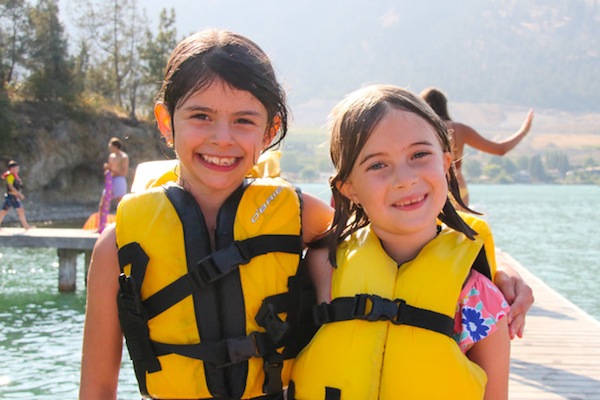
Making friends and challenging oneself are just two of the things kids love about summer camp. (photo from Camp Solomon Schechter)

Jewish camping can be an integral part of children’s lives and their development. Involving them in Jewish summer camps leads to brighter Jewish futures and a stronger Jewish community as a whole. Camp helps Jewish youth feel proud of their heritage and can lead to stronger friendships and relationships, campers finding their true passions, and discovering the joy in Jewish life. We spoke to several Camp Solomon Schechter campers about what camp means to them and how it’s made an impact on their lives.

Ruby Lipsky (1st year): “[Camp friends are special] because you can just do whatever you want with them and they make you feel like [you’re] home and, if you’re sad, they help you and it’s just nice to have somebody here to be with you. You’re living with some new people in your cabin that you’ve never met before and I made very good friends with them because I treated them nicely. If you treat them how you want to be treated, then it just makes camp so much more fun.”

Izzy Drazin (2nd year): “You’re just welcome to anything you want to do. I feel like I’ve been more excited whenever I come to camp. Instantly something clicks in my head to be happy, have fun, try new things. I want to bring back some of the energy that I have here, some of the ruach, happiness, and this new sense of self.”

Orli Kalman (7th year): “Out of camp I have learned so many new values of kindness and working with others. It’s a really great opportunity because you’re constantly surrounded by people and sometimes that’s a lot, but you deal with it and learn how to prioritize yourself and take time for yourself when you need it. Then, you can go back and make friendships and value the time that you get to spend with others.”

* * *

“My friendships at camp are the most important thing to me and that is one of the main reasons that I come back to camp. I get to see the same people every year that I love and that I get to grow with and learn more about every summer. We have so many similarities but at the same time so many differences, I’m constantly learning new things about my friends. It’s great that we are able to start right back where we left off and just keep growing these friendships and making them stronger.”

photo - kids having fun at Camp Solomon Schechter
(photo from Camp Solomon Schechter)

Bella Robinson (8th year): “At home, I have a few Jewish friends but going to camp, where everyone is Jewish, is such a magical thing. All the aspects of my life tie into me being Jewish and, at home, I find that I may not relate to my other non-Jewish friends because they don’t share some of the same aspects of their culture or religion or keeping Shabbat and they may not know about some of the traditions I keep close to my heart. When I’m at camp, constantly practising Judaism and I’m with all my Jewish friends, those friendships are just so much stronger than any other ones at home.”

Josh Kittay (15th year, counselor): “The biggest thing about camp that makes it so special is those memories for me. I love to tell stories and, when I go home, I get to tell all my family and friends those stories that happened, whether it’s your new friend you made or something really funny you did on the aqua park or an amazing shot you made on the basketball court. You get to really find out who you are here and you get to be that person you want to be, whether you’re extra goofy here or you wanna change a little bit who you see yourself as. You get to do that here ’cause no one’s gonna judge you.”

* * *

“It’s so important to be somewhere that is so inclusive. We are judged as a Jewish community, we are judged for just being Jewish, and being able to not only be Jewish here with tons of other Jews … you also get to be how you want to be and you better come up with your own story about who you wanna become. You don’t have to go along with the rules, go along with the set laws of what we call the ‘real world.’ You get to be who you wanna be, you get to choose who that person is. What we like to say is you get to try on new clothes. If you wanna become someone else, go for it. This is the place where no one is gonna judge you, everyone wants to do the same thing, so find out who you are.”

– Courtesy Camp Solomon Schechter

Format ImagePosted on January 13, 2023January 11, 2023Author Camp Solomon Schechter campersCategories LocalTags Camp Solomon Schechter, identity, Jewish camp, overnight camp, summer camp
It’s been a hard two years

It’s been a hard two years

Last summer, given COVID’s continued presence and restrictions, campers were especially happy to be at camp. (photo from Camp Hatikvah)

Prior to 2020, Camp Hatikvah was experiencing unparalleled success. With enrolment maximized, the organization was in the position to focus not only on capital and program development but also on long-term financial planning. According to Liza Rozen-Delman, the camp’s executive director, Hatikvah’s future had never looked brighter. “It was a period of great excitement for us,” she said. “We honestly thought that nothing could get in the way of our growth and success.”

The pandemic, however, changed everything. “The impact of COVID was immediate and devastating,” Rozen-Delman said. “We went from being on top of the world to worrying about our very survival.”

photo - Boys during a service at Camp Hatikvah
(photo from Camp Hatikvah)

Luckily for Hatikvah, donors immediately stepped in to cover the camp’s mounting financial losses. “People knew we were in trouble and they rallied around us,” said Rozen-Delman, with great emotion and gratitude. “Not only did they cover our operational expenses entirely in 2020, they made it possible for us to open in 2021 by funding all of the camp’s COVID-related expenses, like testing, site upgrades and more.”

Rozen-Delman went on to share how incredible it was to welcome campers back to camp last summer. While capacity had to be dramatically reduced to adhere to government group-size limits, close to 400 children participated in Hatikvah’s program in 2021.

“We rearranged our session lengths to make sure that every single Jewish child wishing to attend our camp was able to do so,” explained Rozen-Delman. “While this meant that each camper was at camp for a little less time than is typical, everyone was just so grateful to be there.”

“Our campers are always happy to be at camp but last summer, they were elated,” added Eden Gutterman, the camp’s associate director. “They needed to socialize, to be outdoors and to be away from technology and it was just so beautiful to watch them revel in camp and each other.”

photo - Campers at Camp Hatikva give a thumbs up
(photo from Camp Hatikvah)

Gutterman shared her favourite memory from last summer. “One Shabbat, we asked all of the campers who had their bar and bat mitzvah’s over Zoom to stand in the middle of a circle made up of the rest of the campers and counselors. We then did the hora around them as a tribute to their milestone and accomplishment. None of these campers got to celebrate their simchah in person so it was incredibly touching to see them surrounded and celebrated by their friends. It is something we – and they – will never forget.”

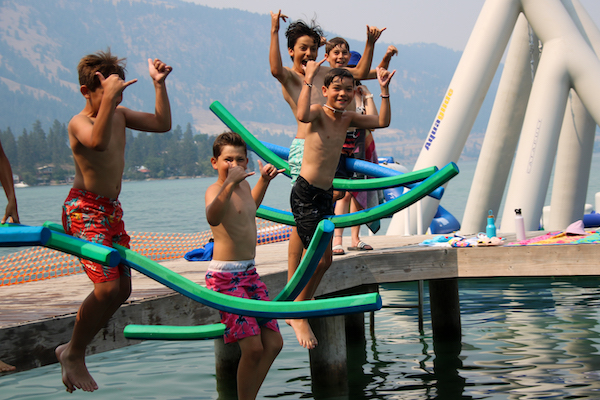
photo - Camper jumps into the water
(photo from Camp Hatikvah)

Camp Hatikvah is now busy preparing for summer 2022.

“We recognize that COVID will likely not be over by summer,” acknowledged Rozen-Delman. “And, while we wish it wasn’t the case, we feel well-prepared to deal with anything.”

Rozen-Delman shared that the Gutman family and Rockdoc Consulting Inc. have provided the funding for the camp to build a new infirmary in time for this summer.

“Given the realities of the ongoing pandemic, this gift couldn’t have come at a better time,” said Rozen-Delman. “Our new infirmary has been designed with COVID and any future infectious disease in mind and will have recovery rooms that can be used as properly ventilated isolation space if necessary. Its functional space has also been thoughtfully designed to allow us to meet and exceed current best practices in camper care. It is a gift our camp so desperately needed and we couldn’t be more grateful to Sam and Belinda and Gloria and their families for their generosity.”

Joanna Wasel, Camp Hatikvah’s board president, commented that, while she wished the world hadn’t had to experience this pandemic at all, she believes that the camp will ultimately be stronger because of it.

“We are entering 2022 with a renewed sense of purpose,” said Wasel. “Our community supported us through this challenging time because they believe in our mandate to help raise the next generation of strong, confident and resilient Jewish leaders. Their faith means everything to us and we are determined to make them proud.”

– Courtesy Camp Hatikvah

Format ImagePosted on January 14, 2022January 13, 2022Author Camp HatikvahCategories LocalTags Camp Hatikvah, COVID, Eden Gutterman, education, Gutman, health, Jewish camp, Joanna Wasel, Judaism, kids, Liza Rozen-Delman, pandemic, philanthropy, Rockdoc Consulting, summer camp
There’s no place like Miriam

There’s no place like Miriam

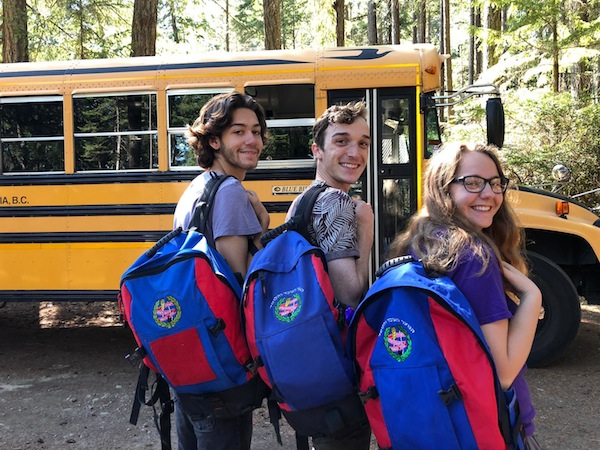
Judah Altman, left, Daniel Fine and Marina Levy all packed up for the bus. (photo from Camp Miriam)

Returning to Camp Miriam every summer is like going home. The kids shouting and laughing for joy, the bright smiles of the counselors, beautiful Gabriola Island – there’s no other place like Camp Miriam.

My first summer at Miriam was 2013. I’ve returned every summer since, more in love with the place and the people each time. I’ve grown up at Camp Miriam. I’ve grown up with the people; they are some of my best friends. I’ve grown up as a person; I’m always learning about myself and the world in ever-changing new ways. Most importantly, I’ve grown up at Camp Miriam having fun – summers at camp are what I look the most forward to most and I never want them to end.

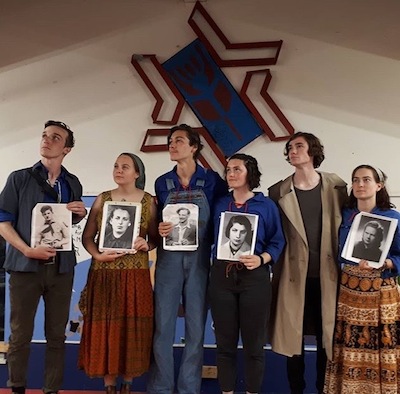
photo - Left to right are “Visionaries” Daniel Fine, Marina Levy, Judah Altman, Mira Macnair, Kieran Macnair and Mica Hastings
Left to right are “Visionaries” Daniel Fine, Marina Levy, Judah Altman, Mira Macnair, Kieran Macnair and Mica Hastings. (photo from Camp Miriam)

I’ve been a camper, a junior counselor, a counselor and, last summer, a counselor for the leadership training program. Last summer was my favourite summer yet, and I can’t wait for this coming summer. To me, Camp Miriam has always been special for two reasons: the first is the activities, and the second is the people.

This summer, as chinuch (educational director) on our youth-led executive team, or mazkirut, I will be in charge of activities for the entire camp. I could not be more excited. One of the main reasons I continue to return to Camp Miriam is the unique options it provides for campers. There are the classic undertakings – like swimming, soccer, art and music. But then there are the programs that few other summer camps have, such as special days where all camp activities run around a surprise theme, ocean swimming as the sun sets, Jewish learning, and a focus on social justice.

I’m also looking forward to seeing the new and returning campers bond with their cohorts and with their counselors. I know firsthand that Miriam friendships last forever. The people I’ve met at camp will undoubtedly remain my friends for the rest of my life. These are the deepest connections I have.

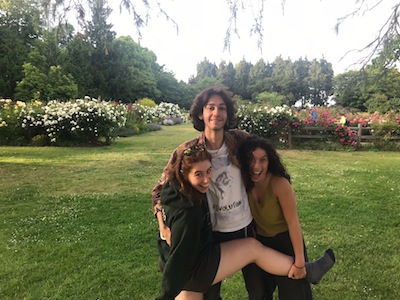
photo - Judah Altman with friends Meital Smith, left, and Rakeea Chesick Gordis
Judah Altman with friends Meital Smith, left, and Rakeea Chesick Gordis. (photo from Camp Miriam)

After two years of COVID, these connections couldn’t be more important: for counselors like me, and especially for kids. Camp Miriam empowers youth and provides a space for kids to be themselves and to continue to discover who they are. It is a place to make new friends and reaffirm old ones. It is a place to talk for hours on end about all manner of issues, and to play and be silly without fear of judgment. It is a place to learn what true friendship means.

I am excited for the summer because, once again, I will get to meet new campers and counselors and help create the community that is the essence of Camp Miriam. I also can’t wait to see all the familiar faces. I can’t wait to run memorable programming for the kids that will be fun, while also empowering them to grow as people. Camp Miriam is the most important place in the world to me – I feel so fortunate that my parents have given me the opportunity to return summer after summer.

Judah Altman is a student at Columbia University, studying philosophy and sociology. He will be chinuch, or director of education, at Camp Miriam this summer.

Format ImagePosted on January 14, 2022January 13, 2022Author Judah AltmanCategories LocalTags Camp Miriam, COVID, education, Jewish camp, Judaism, kids, summer camp
Back to camp, to being a kid

Back to camp, to being a kid

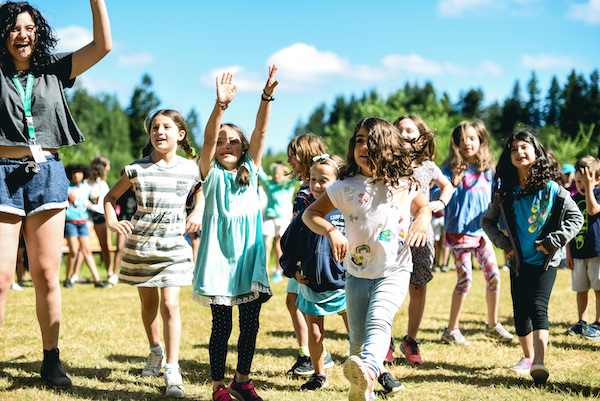
At summer camp, kids build community, take on challenges, become independent and develop leadership skills. (photo from Camp Solomon Schechter)

There’s a place where kids can simply be themselves. Where they build community, take on challenges, become independent and develop leadership skills. And, through it all, they think it’s just fun and friendships. That’s the magic of summer camp – a healthy dose of nature and nurture.

One year after sleepaway camps across the country were shuttered by the pandemic, many kids packed their shorts and hiking shoes once again, dug out their sleeping bags, and reunited with camp buddies to rekindle fond traditions.

We asked the directors of three Jewish summer camps in Washington state to share their perspective on the role camp plays in the social and emotional health of children, and how it was especially vital in the summer of 2021.

Welcome back to camp

“Welcoming the kids back this summer was extra special,” said Zach Duitch, director at Camp Solomon Schechter in Tumwater. “We could see it in their faces. After being online for a year-and-a-half, they were ready to be outside, with their friends, and having fun.”

Many parents were understandably concerned about sending their kids back to camp this past summer. Attendance numbers dipped somewhat, but families also recognized the value of getting their kids back to outdoor healthy summer fun, Duitch said. Away from everyday social pressures, camp staff works to create an environment that’s a safe place for kids to be their authentic selves.

“Parents trust us with their kids’ safety, security and health – and also with their spiritual and emotional needs. We take that trust incredibly seriously,” said Rabbi Ilana Mills, director at URJ Camp Kalsman in Arlington. “Camp is life-changing in so many ways. It’s an opportunity to grow as a whole person.”

Fun with lasting impact

When kids come home from one, two or three weeks at summer camp, the changes may not be immediately evident. In fact, many campers and counselors only realize as adults how much the experience has shaped them, instilling them early on with courage, compassion and independence. Kids can head off to camp as early as the summer after first grade. Many progress through the years to become counselors, taking on leadership roles as high school and college students, in what many describe as the “best job ever.”

Ask a kid and they’ll say camp is about boating, hiking, arts, sports, cookouts – and the thrill of a high-ropes course. Along with the fun, each camp has its own unique culture with familiar traditions passed down from summer to summer. Camp culture is what ties the community together with singing and celebrations, skits and games. Jewish summer camps also integrate religious observance and community into daily life.

“Camps are these bubbles – their own societies – where kids play a central role,” said Rabbi Kenny Pollack, camp director at Sephardic Adventure Camp in Cle Elum. “Our kids are immersed in the culture of camp, and it helps shape their identity.”

Healthy dose of silliness

When camp directors describe how their programs nurture kids, it can sound pretty serious. But one thing they take extremely seriously is fun.

“At Camp Solomon Schechter we do a lot of ‘shtick.’ Campers love seeing their counselors act silly,” said Duitch, as he explained a beloved trivia game that ends with participants messy and everybody laughing.

Mills described how “we really try to be as outside the box as possible. We push our counselors to teach their passion, be creative and try new things.”

She even got a chance to join the fun, playing a zombie during the culmination of their outdoor survival unit at URJ Camp Kalsman.

Leave real world behind

Kids leave their parents and their digital devices at home when they arrive at camp. There may be homesickness at first but soon their days are consumed by activities and friendships. And, since more and more camps are going device-free, campers get a break from their screens.

“Camp is a place where kids get to be their authentic selves,” said Pollack.

Each summer, as kids are reconnecting with old friends and making new ones, they’re also connecting across borders. Increasingly, camps are bringing counselors from international locations to supplement the programming with games and traditions from their home countries.

“As much as kids love their parents, camp is a great opportunity for them to learn from other role models,” said Duitch, explaining how the camp experience broadens kids’ viewpoints and connects them to lifelong friends.

Many parents, kids and camp staffers found it heartbreaking to cancel camp in 2020. That’s why camps throughout Washington banded together, lobbying the state government to make sure that camp happened in 2021 and that it would be a safe and extra-memorable summer. In the end, it may be difficult to measure the social and emotional impact of returning to camp after a trying year. But parents could no doubt see it in the hugs, the joy and the happy exhaustion as they picked their kids up at the end of camp this past year.

This article, courtesy Camp Solomon Schechter, comes from the Samis Foundation, which was established in 1994 by Samuel Israel, z”l, and is the largest Jewish philanthropy in Washington state. Grantmaking is focused on the foundation’s mission of supporting local Jewish education and initiatives in Israel. Samis is honoured to support the three Jewish overnight camps located in Washington state, working to keep Jewish children and teens engaged in their culture, religion and communities.

Format ImagePosted on January 14, 2022January 13, 2022Author Samis FoundationCategories LocalTags Camp Solomon Schechter, COVID, education, Ilana Mills, Jewish camp, Judaism, Kenny Pollack, kids, pandemic, Samis Foundation, Sephardic Adventure Camp, summer camp, URJ Camp Kalsman, Zach Duitch
Summer of a lifetime awaits

Summer of a lifetime awaits

Camp Kalsman has almost 300 acres, perfect for a wide range of activities. (photo from Camp Kalsman)

Rabbi Ilana Mills, director of URJ Camp Kalsman, started attending camp when she was 8 years old. “I remember being uncertain what the experience would be like, trying to picture how it would feel to live in a bunk. It was greater than I ever imagined,” she said.

“Jewish camping helped me learn more about myself and my Jewish identity,” she added. “I learned independence that served me my whole life and what it means to be part of a community. I have experienced the powerful impact camp can have on someone’s life and now get to watch my children experience it as well.”

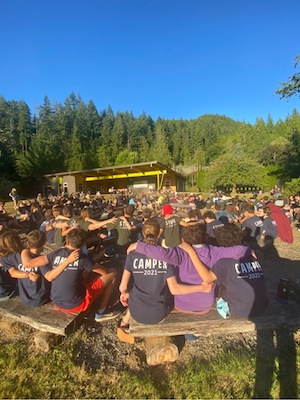
photo - Campers gather together
(photo from Camp Kalsman)

Camp Kalsman knows kids need places to be celebrated for who they are and places that help them grow. Camp Kalsman is one of those places – where a child can feel comfortable being their true self and learn independence while they climb the tower, play pool volleyball, and tie-dye.

Located in Washington, the camp has almost 300 acres, perfect for a wide range of activities: arts, sports, team-building, hiking, high ropes, guitar, and so much more. Each camper can explore all aspects of camp and participate in various programs, while exploring and gaining pride in their Jewish identity. Camp isn’t just a fun thing for kids to do when they’re out of school. Studies have shown that camp is one of the most powerful tools in a parenting toolbox for successfully launching an adult.

Discover new passions

Camp Kalsman strives to make every camper’s experience nurturing and fulfilling, and does so by making sure that every child feels welcomed and supported, while challenging themselves. Campers engage in activities and programs, develop lifelong friendships and live with a super staff. Jewish values infuse everything the camp does and, each year, new and returning staff members bring unique chugim, activities, based on their passions, so there are always more options being added to an already long list.

Arts: painting, ceramics, improv/drama, guitar, song writing/leading, digital media, Kalsman musical, photography, dance, cooking.

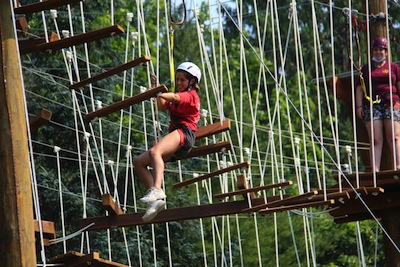
photo - Camp Kalsman ropes course
(photo from Camp Kalsman)

Sports: balloon volleyball, giant soccer, archery, Gaga, tetherball, ultimate frisbee, basketball, softball/kickball, Kalsman football (extra special/silly combination of sports).

Waterfront: pirate ball on the lake, cardboard box boat-making, mermaid contest, water polo, canoeing, kayaking, pool volleyball, pool basketball.

Teva (Nature): hiking, outdoor cooking, outdoor survival skills, wilderness first aid, gardening, animal care.

Ropes: high ropes obstacle course, tower, giant swing, zipline, low ropes team-building.

Unit programs: Israeli cooking, ice cream pool party, messy night, scavenger hunt, and so much more.

Shabbat shalom

Everyone can feel the magic that falls over Camp Kalsman every Shabbat. The entire camp community changes into white clothes and cleans up after a very busy week. The camp joins together in a Shabbat walk that ends at the outdoor beit tefilah (sanctuary). There are interactive services, a traditional Shabbat dinner in the dining hall, with challah and grape juice, and the night ends with Shabbat Shira (song session), where campers and staff alike can dance and sing the night away.

Since it is still Shabbat, Saturdays also look a bit different at camp. There is chofesh, free time, where campers can choose activities more freely and for longer amounts of time than during the full schedule of the rest of the week. They can focus on finishing their art project, challenge themselves on a different path on the high ropes course, or even chill on the quad with friends and really rest and reset for the days ahead.

– Courtesy Camp Kalsman

Format ImagePosted on January 14, 2022January 13, 2022Author Camp KalsmanCategories LocalTags Camp Kalsman, Canadian Summer Camp Research Project, COVID, Ilana Mills, Judaism, kids, pandemic, summer camp
Community support valued

Community support valued

Camp Hatikvah donors are not only helping ensure the quality of the camp but its inclusivity. (photo from Camp Hatikvah)

Camp Hatikvah is well known for its program offerings, as well as its facilities and its spectacular natural setting in the Okanagan Valley. What many people may not know, however, is that the camp is only the place that it is because of community backing. Camper fees cover things like counseling staff, food, insurance and site maintenance. Everything else – including every building and almost every piece of equipment – has been donated by supporters who want to ensure that Camp Hatikvah can continuously improve without passing on the cost of doing so to the young families whose children attend.

Camp Hatikvah was established in 1937. Its donor base understands the unparalleled value and impact of a Jewish camping experience. They know that today’s campers are tomorrow’s Jewish leaders and that a donation is not a gift to just the organization but an investment in the future of the Jewish community.

More than 20% of campers attend Hatikvah’s program with the help of financial assistance and it is estimated that another 25% are on the cusp of needing to do so as well. Donors appreciate that many camp families are struggling with the affordability of Jewish life in Metro Vancouver and want to help control fee increases without the camp having to compromise program growth or site improvements. By funding program enhancements, equipment upgrades or capital improvements, donors are not only helping ensure the quality of the camp but its inclusivity. While summer camps are expensive – and Camp Hatikvah is no exception – it is because of donors that, on a per-day basis, Camp Hatikvah is one of the least expensive Jewish camps in North America.

Donors have also played an instrumental role in getting Camp Hatikvah through the pandemic. Not able to operate in 2020, the camp was facing a financial crisis. Similarly, in 2021, while the camp was allowed to open, it had to dramatically reduce its capacity in order to manage the COVID protocols. The financial toll of both these summers had the potential to financially devastate the organization for years to come. Yet, as they always have, donors stepped in and stepped up immediately – they covered all the financial losses the camp was facing. The level of generosity and support not only got the camp through the financial challenges caused by the pandemic, but also gave the camp a renewed sense of purpose, determination and passion for serving the community.

The board and staff of Camp Hatikvah thank each and every donor who has played a role in helping the camp become – and remain – one of the best Jewish camps. To learn more about the camp’s programs and the donors who make them possible, visit camphatikvah.com. 

– Courtesy Camp Hatikvah

Format ImagePosted on December 10, 2021December 8, 2021Author Camp HatikvahCategories LocalTags Camp Hatikvah, COVID, finances, kids, philanthropy, summer camp
COVID-free camp summers

COVID-free camp summers

Camp Miriam offered both day and overnight camping experiences this past summer. (photo from Camp Miriam)

Camp Miriam is celebrating that, for the past two summers, its youth leadership has pulled out all the stops to provide programming for hundreds of campers despite the challenges of the pandemic.

“Coming into June of this year, we were all set to hold Kaytana [day camp] again in Vancouver and Victoria because at that time the provincial health restrictions did not allow overnight camp,” said Leah Levi, the camp’s registrar. “Then, in early June, the health orders changed and we learned that there was the potential to go back to our site on Gabriola Island.”

At that point, the camp – and especially its youth leaders who are responsible for everything from programming to logistics – had a decision to make. Would they continue with the plan they had been working on for months and hold six weeks of day camp, or would they try to quickly pivot and add overnight camp to the program?

“Honestly, if it had been up to the adults on the camp committee, I think we would have stuck with our original plan. The logistics of organizing overnight camp on Gabriola, with only a few weeks’ notice and at a campsite that had been empty for over a year was really overwhelming,” said committee chair Trilby Smith. “Camp needed to be cleaned from top to bottom, there were ferries to book, cooks, medics and lifeguards to hire, food to order and so, so many more details.”

But the young leaders knew that, as great as day camp is, overnight camp was what their campers needed after 18 months of pandemic living. However, they didn’t want to disappoint parents who had already planned for day camp. In the end, they voted to host two weeks of day camp in both Vancouver and Victoria – and three weeks of overnight camp on Gabriola.

The camp committee and many Miriam alumni supported the decision and volunteered hundreds of hours to help get the campsite in shape and assist in all kinds of other ways. In addition, Miriam’s donor community also rushed to help support Jewish camping in 2021.

In the end, 271 kids and 70 youth staff got to experience a COVID-free 73rd summer of “Miriam magic,” in a summer when the magic was needed possibly more than ever.

The effects of the pandemic on youth mental health have been well documented. The Canadian Mental Health Association notes, “Social isolation, removal from school and daily routines, as well as isolation and loss associated with illness are some of the top stressors children are facing.”

This fact was not lost on Miriam’s youth leaders, who reported that both campers and staff arrived at camp this past summer with greater mental health challenges than they had seen in previous years. However, they also saw that, after just 10 days of unplugged, in-person experiences in an inclusive environment, there was a noticeable change for the better in the mood of many campers.

“It was like someone released a pressure valve,” said camp director Marina Levy. “As the campers made friends, processed events going on in the world through our educational programming, and got to just be kids without the constant distraction from their phones and screens, we saw many of them settle and become less anxious.”

Parents noticed a change in their kids, too. One parent who responded to Miriam’s post-summer survey said, “My kid was soooooo excited that there was a sleepover camp this year. It felt like an oasis of near normality in an otherwise dystopian year. She came back so much more relaxed, with strong connections to the kids in their kvutzah [group].”

According to Project L’Chaim’s fall edition of Self-Care for Caregivers, it’s not surprising that camp would provide a balm to its campers and staff. Many of the suggestions offered by mental health experts in the booklet are embedded into Camp Miriam’s programming. For example, Miriam campers are immersed in nature and enjoy daily “forest showers” under the fir and cedar trees on the Gabriola site. They also receive a healthy dose of spirituality and mindfulness, especially through Shabbat and Havdalah traditions.

Finally, the experts say that feeling like you’re a part of something larger than yourself and forming meaningful social connections are keys to good mental health. Above all else, Camp Miriam prides itself on its focus on inclusion, community and tikkun olam – all of which contribute to many campers reporting that they have made lifelong friends at camp and that they feel more comfortable being themselves at Miriam than they do anywhere else in their lives.

Levy knows the respite of camp will not solve all the pandemic-related mental health challenges facing youth, but she believes it’s a start. “And, hopefully, next summer will be even more normal,” she said.

Apparently, many families are hoping the same. Miriam’s registration, which just opened last month, is already almost full. Anyone hoping to register their children for Camp Miriam’s 2022 session can get more details at campmiriam.org. To learn more about Miriam’s 2021 summer, the camp’s newly released annual report is also available on the website.

Vancouver-based writer Kelley Korbin is a Camp Miriam alum and Camp Committee member.

Format ImagePosted on December 10, 2021December 8, 2021Author Kelley KorbinCategories LocalTags Camp Miriam, COVID, kids, Leah Levi, Marina Levy, mental health, summer camp, Trilby Smith, youth
Seven summer camp benefits

Seven summer camp benefits

(photo from flickr)

There’s a single destination that gets kids outside having fun, experts say, while teaching them lifelong skills. It’s called camp.

The benefits of camp are plenty, from life lessons beyond the classroom and the value of playtime to appreciating nature and building confidence and leadership skills.

“The major changes in [campers’] growth speaks tremendously of the summer camp experience,” said Troy Glover, the director of the University of Waterloo’s Healthy Communities Research Network.

Glover spearheaded the Canadian Summer Camp Research Project, a nationwide study on the effects of camp on kids. The results demonstrated that for “bubble-wrapped” youth who have been over-programmed and overprotected, camp provides a safe environment to freely learn, grow and develop their capabilities. Summer camp, according to the study, fosters emotional intelligence (or EQ), self-confidence, independence, healthy living, environmental awareness, learning, leadership and other skills that prove beneficial long into adulthood.

The core benefits of camp include building friendships and social skills; developing resiliency and confidence; becoming and staying physical; overcoming nature deficit disorder; learning the values of leadership; continuing education in the summer; and carving time for “active play.”

 Friendships & social skills

It may seem scary at first to enter a whole new social world at camp. However, camp offers a crash course on meeting new people – helping children build social skills, explore their independence and improve their self-esteem, said Stephen Fine, research chair for the Ontario Camps Association. “Teamwork, cooperation and negotiation are inherent to the camp experience,” Fine explained. “Kids’ confidence levels and their ability to be in social situations increase.”

At camp, children boost their self-esteem and develop risk-taking and conflict-resolution skills as they learn to make their own decisions without their parents’ help.

Camp provides children with a “blank slate,” allowing them to try on different behaviours and identities. And the relatively short duration of a camp session decreases the cost of making mistakes.

One of the Canadian Summer Camp Research Project’s most significant findings was in the area of emotional intelligence, often referred to as EQ (emotional quotient). With EQ, which involves recognizing, understanding and managing emotions, children learn how to work, play, relate, get along, empathize and connect with others.

“It’s not just about IQ in children,” Glover said. “Research supports how EQ is more important in terms of future success…. This is an essential component of the maturation process and a skill that camp is successfully developing.”

Resiliency & confidence

Saturated with 24-hour news highlighting crimes in their communities, many parents today are overprotective of their children, “bubble-wrapping” them in order to keep them safe and sheltered. While Glover said it’s safer now, statistically, than it was when he was a child, parents are not as willing to let their kids out of their sight.

At camp, children are encouraged to go outside their comfort zone through activities such as high ropes courses, dramatic and musical performances, or wilderness camping. By allowing children to take risks and face challenges, camp helps children build their independence, resiliency, and self-esteem in a safe, supervised and supportive environment, the study found.

These invaluable life skills often translate into improvements at home and at school, said Mike Pearse, director of Camp Tawingo, a traditional overnight camp in Muskoka, Ont.

Pearse said the camp experience can be divided into the hard skills – for example, learning how to paddle a canoe, tie a knot, identify an edible plant and play a team sport – and accompanying soft skills, such as perseverance, creativity, responsibility and courage.

“At camp, every child has an opportunity to succeed,” he said.

This translates into increased self-confidence and, in many cases, an improved school experience. “I’ve had parents come to me and say, ‘My child is doing so much better in math class this year because of the confidence boost he got from camp,’” Pearse said.

Becoming & staying physical

With video games, Facebook and smartphones all vying for a young person’s attention, the national epidemic of obesity and inactivity won’t be easy to overcome. One Statistics Canada study found that only seven percent of youth aged 6 to 19 got the recommended hour a day of exercise they need.

Enter summer camp, where physical activity is well disguised in the form of fun and games, allowing youth to adopt a healthy lifestyle, often without even realizing it.

“Our study found that campers’ attitudes toward physical activity really improved toward the end of the camping session,” Glover said. “When given a choice, these campers will now choose physical activity because they realize it makes them feel good and contributes to their well-being.”

Along with banning the use of electronics, many camps provide a daily routine that involves waking up early, getting lots of physical activity, eating regular meals and spending extended periods of time outdoors.

“At camp, you’re always on your feet, always on the move, even if you’re just walking to a meal,” Glover said. “So, it’s not about forcing kids to spend 20 minutes on a treadmill, but rather easing them into an active lifestyle that includes lots of walking, engaging in team sports and playing outside with other kids.”

Nature deficit disorder

A bond with nature is sorely missing in the lives of many children today unlike a generation ago, Richard Louv writes in his book Last Child in the Woods: Saving Our Children from Nature-Deficit Disorder. It’s a world where kids may be all too aware of environmental problems, yet rarely venture out to experience the natural world, he writes.

“Camps have their own pressures, but the healing quality of nature is always there, just beyond the screen door,” Louv said.

At camp, kids are given the opportunity to see what they’re missing, and form lifelong bonds and connections with the natural world they may have never experienced before. “Even camps in the city usually have an outdoor dimension to them,” said Glover.

“Children need nature for the healthy development of their senses and, therefore, for learning and creativity,” Louv added.

Values of leadership

A leader isn’t always the loudest person in a group, or the most active. Many leaders share a range of skills and qualities that help him or her take charge: confidence, creativity in their decision-making and an understanding of teamwork, to name a few. It takes practise to become a good leader, too.

That’s where camp comes in, said Moira MacDougall, who heads teen and young adult strategies for the YMCA of Greater Toronto, a charity providing community support programs. Camp helps gradually build leadership skills, MacDougall said.

“You’re often having to rely on your teammates or cabinmates to complete an activity,” said MacDougall. “That builds in-group bonding and, in that process, what you hope the young person’s learning is either to have some voice within that group … or how to be persuasive.”

According to the Canadian Summer Camp Research Project, most campers demonstrated an increase in emotional intelligence and self-confidence, both characteristics attributed to good leaders.

As campers enter their teenage years, there are more opportunities to obtain explicit leadership skills. Most camps offer an LIT (leader-in-training) or CIT (counselor-in-training) program that walks young people through the skills they need to plan activities and programs, care for younger campers and communicate effectively.

Whether it’s by cleaning their cabins without being asked, helping younger campers find their way to the dining hall, or contributing their talents to a play or talent show, youth of all ages learn to take initiative at camp.

Learning how to take the lead essentially teaches youth how to be good citizens. “They learn that we all have a role to play to contribute to a better society, and nothing happens if you sit back and wait for someone else to act,” said Glover.

Continuing education

“It’s not only cognitive learning, it’s emotional learning,” said Tom Potter, associate professor at Lakehead University in Thunder Bay, Ont. Potter has been involved in outdoor adventure education for more than 30 years.

Camp is the kind of place where children can learn canoeing, archery, life skills such as teamwork, and apply the lessons they learned during the school year in many enjoyable activities. Geocaching lessons offered at some camps, for example, teach kids scientific and math skills.

“They’re getting instant and immediate feedback, so if they do something well, they’ll get feedback; if they’re sailing a sailboat and it’s going in the right direction, they’ll get feedback on that,” Potter said. “But if the boat turns upside down, that’s OK … it’s all part of it.”

Time for “active play”

Many children today simply don’t get enough of unstructured playtime. “If you look at time in school, time at home, time watching TV, those things have either stayed consistent or gone up,” said Michelle Brownrigg, chief executive of Active Healthy Kids Canada. “But active playtime has decreased.”

Canadian children are reportedly spending an average of four to six hours a day with TVs, computers and cellphones.

Camp gives children the playtime they need while encouraging creativity and social engagement. Play not only offers children the tools to entertain themselves, it also builds their imagination.

“Kids learn to set their own boundaries, to develop in an environment that’s not necessarily focused on a competitive end, to interact with one another, to determine how to win and lose, and to trade roles and be involved in an active way with their peers,” she said.

This article is a shortened version of the original, which is ourkids.net/camp/benefits-of-summer-camp.php.

Format ImagePosted on December 10, 2021December 8, 2021Author ourkids.netCategories NationalTags Canadian Summer Camp Research Project, health, kids, research, summer camp, Troy Glover, University of Waterloo, youth
The magic behind kaytana

The magic behind kaytana

While Camp Miriam won’t be able to offer overnight camping sessions, it will once again be offering day camp experiences this summer. (photo from Camp Miriam)

I will never forget waking up in a puddle in the middle of the night, feeling water slowly dripping into my sleeping bag as I shivered and clenched my muscles, trying to maintain the tiniest shred of heat.

It was 2011, I was 14, and my kvutza (cabin group) was on a three-day hike that would take us through steep inclines and 30 kilometres of terrain. It poured every day and night, leaving us without a dry item of clothing by the first morning. We were wet, cold, blistered and exhausted. It was a miserable trip.

And we loved it.

On the final day, we emerged from the forest chanting a marching song and smiling with glee at what we had accomplished. To this day, I reminisce about this trip with that same giddy excitement.

And yet, I’ve always wondered, what allowed us to not only persevere, but to create a lifelong positive memory. Anyone who has spent time at Machaneh Miriam – the overnight Jewish summer camp on Gabriola Island – can attest to the magic each new summer conjures. The thing about magic is that we may not know how it works, but we know what it does. It’s what drove us forward, step by step through the mud with smiles and songs that summer. Everywhere you go at Miriam, you can feel the magic – from the building walls decorated with generations of camper art and poetry, to the dining hall filled with chanting and singing voices every lunch.

It’s the same magic that, last summer, propelled Miriam’s youth leadership to accomplish the seemingly impossible.

When the pandemic hit, these young leaders were several months into planning a six-week overnight summer camp on Gabriola. Not only did the pandemic erase months of hard work and preparation, it also posed a serious question: could camp’s magic exist outside of the island?

To most campers and staff, Miriam and Gabriola are inseparable. As the rosh (camp director), Marina Levy, said, “At Camp Miriam, we are connected to our community, to Gabriola and to our traditions.”

Envisioning a summer away from Gabriola was a daunting task. But, the tzevet (staff) rose to the occasion, creating not one, but three kaytanot (day camps) – one each in Vancouver, Victoria and Portland. By summer’s end, more than 200 campers, 60 staff and a whole bunch of parents resoundingly affirmed that camp’s magic can exist off of Gabriola.

To understand the importance of the kaytana, it is necessary to consider the context. At a time when campers had been confined to their homes and separated from their friends for months, the news that overnight camp was not happening came as a severe blow.

The immediate effect of the pandemic on kids’ mental health was profound. Research by SickKids hospital in Toronto showed that, in just the first three months of the lockdown, a majority of children showed a serious deterioration in their mental health.

According to Camp Miriam parents, the kaytana helped their kids overcome some of that stress. One parent said, “Last June, our daughter was really struggling with the impact of COVID on her life, it was significant. Camp Miriam’s summer camp in Vancouver brought her back to herself again. A combination of the social component, the programming and empowerment she felt, and the sense of purpose in her life helped her rediscover herself and revive herself.”

Another parent observed a change in her son after just one day. “I  almost cried hearing him talk about it,” she said. “I think it wouldn’t be too much of a stretch to say it was a transformative experience.”

Counselor Rakeea Gordis said that, during the weekly Shabbat tradition where campers sit together and reflect on their week, “At least one, but usually up to five kids would say that they were devastated that today, Friday, was the last day of the kaytana for the week.”

So, how did the staff manifest the magic of overnight camp in day camps far from the quiet comfort of Gabriola? A huge amount of credit goes to the youth leadership who worked long days and then late into the night throughout the summer creating kishutim (decorations) for special days, planning peulot (educational activities) and even burying items for a treasure hunt the following day.

Financially, none of this would have been possible without the support of the camp’s community and the Jewish Federation of Greater Vancouver, who stepped up at a time of extreme need, as well as the Grinspoon Foundation and the Heller Memorial Fund, who provided matching grants. It cost nearly three times as much to run the kaytana as to run the overnight camp.

So, perhaps, camp’s magic is not a complete mystery after all. As technical director Inbar Avrahami Saraf said, “[The kaytana] was an experiment, a proof of concept of the magic of machaneh, and how the magic is not in the physical space but in the chanichm [campers] and the tzevet and just the community that makes it so incredible.”

So, credit must be given to the force of will that the youth leaders and the wider Jewish community bring – the relentless push to build and dream; to create community and unforgettable experiences, whether they be on Gabriola Island, on a three-day hike in the pouring rain or in the midst of a pandemic.

“The magic of machaneh doesn’t just exist far away on an island, it exists where we choose to create it,” said Levy.

Unfortunately, once again Camp Miriam has had to cancel its overnight camp due to COVID-19, but, once again, the young staff are ready to create amazing kaytana experiences. To register for Miriam’s 2021 summer programs or to support the camp as it faces another challenging season, go to campmiriam.org.

Sasa Popovich is a writer and former Camp Miriam camper, counselor and technical director.

Format ImagePosted on May 7, 2021May 7, 2021Author Sasa PopovichCategories Op-EdTags Camp Miriam, children, coronavirus, COVID-19, Gabriola Island, health, summer camp

Posts pagination

Previous page Page 1 Page 2 Page 3 Next page
Proudly powered by WordPress