Skip to content
  • Home
  • Subscribe / donate
  • Events calendar
  • News
    • Local
    • National
    • Israel
    • World
    • עניין בחדשות
      A roundup of news in Canada and further afield, in Hebrew.
  • Opinion
    • From the JI
    • Op-Ed
  • Arts & Culture
    • Performing Arts
    • Music
    • Books
    • Visual Arts
    • TV & Film
  • Life
    • Celebrating the Holidays
    • Travel
    • The Daily Snooze
      Cartoons by Jacob Samuel
    • Mystery Photo
      Help the JI and JMABC fill in the gaps in our archives.
  • Community Links
    • Organizations, Etc.
    • Other News Sources & Blogs
    • Business Directory
  • FAQ
  • JI Chai Celebration
  • JI@88! video

Recent Posts

  • Sharing her testimony
  • Fall fight takes leap forward
  • The balancing of rights
  • Multiple Tony n’ Tina roles
  • Stories of trauma, resilience
  • Celebrate our culture
  • A responsibility to help
  • What wellness means at JCC
  • Together in mourning
  • Downhill after Trump?
  • Birth control even easier now
  • Eco-Sisters mentorship
  • Unexpected discoveries
  • Study’s results hopeful
  • Bad behaviour affects us all
  • Thankful for the police
  • UBC needs a wake-up call
  • Recalling a shining star
  • Sleep well …
  • BGU fosters startup culture
  • Photography and glass
  • Is it the end of an era?
  • Taking life a step at a time
  • Nakba exhibit biased
  • Film festival starts next week
  • Musical with heart and soul
  • Rabbi marks 13 years
  • Keeper of VTT’s history
  • Gala fêtes Infeld’s 20th
  • Building JWest together
  • Challah Mom comes to Vancouver
  • What to do about media bias
  • Education offers hope
  • Remembrance – a moral act
  • What makes us human
  • המלחמות של נתניהו וטראמפ

Archives

Follow @JewishIndie
image - The CJN - Visit Us Banner - 300x600 - 101625

Tag: summer camp

Seven summer camp benefits

Seven summer camp benefits

(photo from flickr)

There’s a single destination that gets kids outside having fun, experts say, while teaching them lifelong skills. It’s called camp.

The benefits of camp are plenty, from life lessons beyond the classroom and the value of playtime to appreciating nature and building confidence and leadership skills.

“The major changes in [campers’] growth speaks tremendously of the summer camp experience,” said Troy Glover, the director of the University of Waterloo’s Healthy Communities Research Network.

Glover spearheaded the Canadian Summer Camp Research Project, a nationwide study on the effects of camp on kids. The results demonstrated that for “bubble-wrapped” youth who have been over-programmed and overprotected, camp provides a safe environment to freely learn, grow and develop their capabilities. Summer camp, according to the study, fosters emotional intelligence (or EQ), self-confidence, independence, healthy living, environmental awareness, learning, leadership and other skills that prove beneficial long into adulthood.

The core benefits of camp include building friendships and social skills; developing resiliency and confidence; becoming and staying physical; overcoming nature deficit disorder; learning the values of leadership; continuing education in the summer; and carving time for “active play.”

 Friendships & social skills

It may seem scary at first to enter a whole new social world at camp. However, camp offers a crash course on meeting new people – helping children build social skills, explore their independence and improve their self-esteem, said Stephen Fine, research chair for the Ontario Camps Association. “Teamwork, cooperation and negotiation are inherent to the camp experience,” Fine explained. “Kids’ confidence levels and their ability to be in social situations increase.”

At camp, children boost their self-esteem and develop risk-taking and conflict-resolution skills as they learn to make their own decisions without their parents’ help.

Camp provides children with a “blank slate,” allowing them to try on different behaviours and identities. And the relatively short duration of a camp session decreases the cost of making mistakes.

One of the Canadian Summer Camp Research Project’s most significant findings was in the area of emotional intelligence, often referred to as EQ (emotional quotient). With EQ, which involves recognizing, understanding and managing emotions, children learn how to work, play, relate, get along, empathize and connect with others.

“It’s not just about IQ in children,” Glover said. “Research supports how EQ is more important in terms of future success…. This is an essential component of the maturation process and a skill that camp is successfully developing.”

Resiliency & confidence

Saturated with 24-hour news highlighting crimes in their communities, many parents today are overprotective of their children, “bubble-wrapping” them in order to keep them safe and sheltered. While Glover said it’s safer now, statistically, than it was when he was a child, parents are not as willing to let their kids out of their sight.

At camp, children are encouraged to go outside their comfort zone through activities such as high ropes courses, dramatic and musical performances, or wilderness camping. By allowing children to take risks and face challenges, camp helps children build their independence, resiliency, and self-esteem in a safe, supervised and supportive environment, the study found.

These invaluable life skills often translate into improvements at home and at school, said Mike Pearse, director of Camp Tawingo, a traditional overnight camp in Muskoka, Ont.

Pearse said the camp experience can be divided into the hard skills – for example, learning how to paddle a canoe, tie a knot, identify an edible plant and play a team sport – and accompanying soft skills, such as perseverance, creativity, responsibility and courage.

“At camp, every child has an opportunity to succeed,” he said.

This translates into increased self-confidence and, in many cases, an improved school experience. “I’ve had parents come to me and say, ‘My child is doing so much better in math class this year because of the confidence boost he got from camp,’” Pearse said.

Becoming & staying physical

With video games, Facebook and smartphones all vying for a young person’s attention, the national epidemic of obesity and inactivity won’t be easy to overcome. One Statistics Canada study found that only seven percent of youth aged 6 to 19 got the recommended hour a day of exercise they need.

Enter summer camp, where physical activity is well disguised in the form of fun and games, allowing youth to adopt a healthy lifestyle, often without even realizing it.

“Our study found that campers’ attitudes toward physical activity really improved toward the end of the camping session,” Glover said. “When given a choice, these campers will now choose physical activity because they realize it makes them feel good and contributes to their well-being.”

Along with banning the use of electronics, many camps provide a daily routine that involves waking up early, getting lots of physical activity, eating regular meals and spending extended periods of time outdoors.

“At camp, you’re always on your feet, always on the move, even if you’re just walking to a meal,” Glover said. “So, it’s not about forcing kids to spend 20 minutes on a treadmill, but rather easing them into an active lifestyle that includes lots of walking, engaging in team sports and playing outside with other kids.”

Nature deficit disorder

A bond with nature is sorely missing in the lives of many children today unlike a generation ago, Richard Louv writes in his book Last Child in the Woods: Saving Our Children from Nature-Deficit Disorder. It’s a world where kids may be all too aware of environmental problems, yet rarely venture out to experience the natural world, he writes.

“Camps have their own pressures, but the healing quality of nature is always there, just beyond the screen door,” Louv said.

At camp, kids are given the opportunity to see what they’re missing, and form lifelong bonds and connections with the natural world they may have never experienced before. “Even camps in the city usually have an outdoor dimension to them,” said Glover.

“Children need nature for the healthy development of their senses and, therefore, for learning and creativity,” Louv added.

Values of leadership

A leader isn’t always the loudest person in a group, or the most active. Many leaders share a range of skills and qualities that help him or her take charge: confidence, creativity in their decision-making and an understanding of teamwork, to name a few. It takes practise to become a good leader, too.

That’s where camp comes in, said Moira MacDougall, who heads teen and young adult strategies for the YMCA of Greater Toronto, a charity providing community support programs. Camp helps gradually build leadership skills, MacDougall said.

“You’re often having to rely on your teammates or cabinmates to complete an activity,” said MacDougall. “That builds in-group bonding and, in that process, what you hope the young person’s learning is either to have some voice within that group … or how to be persuasive.”

According to the Canadian Summer Camp Research Project, most campers demonstrated an increase in emotional intelligence and self-confidence, both characteristics attributed to good leaders.

As campers enter their teenage years, there are more opportunities to obtain explicit leadership skills. Most camps offer an LIT (leader-in-training) or CIT (counselor-in-training) program that walks young people through the skills they need to plan activities and programs, care for younger campers and communicate effectively.

Whether it’s by cleaning their cabins without being asked, helping younger campers find their way to the dining hall, or contributing their talents to a play or talent show, youth of all ages learn to take initiative at camp.

Learning how to take the lead essentially teaches youth how to be good citizens. “They learn that we all have a role to play to contribute to a better society, and nothing happens if you sit back and wait for someone else to act,” said Glover.

Continuing education

“It’s not only cognitive learning, it’s emotional learning,” said Tom Potter, associate professor at Lakehead University in Thunder Bay, Ont. Potter has been involved in outdoor adventure education for more than 30 years.

Camp is the kind of place where children can learn canoeing, archery, life skills such as teamwork, and apply the lessons they learned during the school year in many enjoyable activities. Geocaching lessons offered at some camps, for example, teach kids scientific and math skills.

“They’re getting instant and immediate feedback, so if they do something well, they’ll get feedback; if they’re sailing a sailboat and it’s going in the right direction, they’ll get feedback on that,” Potter said. “But if the boat turns upside down, that’s OK … it’s all part of it.”

Time for “active play”

Many children today simply don’t get enough of unstructured playtime. “If you look at time in school, time at home, time watching TV, those things have either stayed consistent or gone up,” said Michelle Brownrigg, chief executive of Active Healthy Kids Canada. “But active playtime has decreased.”

Canadian children are reportedly spending an average of four to six hours a day with TVs, computers and cellphones.

Camp gives children the playtime they need while encouraging creativity and social engagement. Play not only offers children the tools to entertain themselves, it also builds their imagination.

“Kids learn to set their own boundaries, to develop in an environment that’s not necessarily focused on a competitive end, to interact with one another, to determine how to win and lose, and to trade roles and be involved in an active way with their peers,” she said.

This article is a shortened version of the original, which is ourkids.net/camp/benefits-of-summer-camp.php.
Format ImagePosted on December 10, 2021December 8, 2021Author ourkids.netCategories NationalTags Canadian Summer Camp Research Project, health, kids, research, summer camp, Troy Glover, University of Waterloo, youth
The magic behind kaytana

The magic behind kaytana

While Camp Miriam won’t be able to offer overnight camping sessions, it will once again be offering day camp experiences this summer. (photo from Camp Miriam)

I will never forget waking up in a puddle in the middle of the night, feeling water slowly dripping into my sleeping bag as I shivered and clenched my muscles, trying to maintain the tiniest shred of heat.

It was 2011, I was 14, and my kvutza (cabin group) was on a three-day hike that would take us through steep inclines and 30 kilometres of terrain. It poured every day and night, leaving us without a dry item of clothing by the first morning. We were wet, cold, blistered and exhausted. It was a miserable trip.

And we loved it.

On the final day, we emerged from the forest chanting a marching song and smiling with glee at what we had accomplished. To this day, I reminisce about this trip with that same giddy excitement.

And yet, I’ve always wondered, what allowed us to not only persevere, but to create a lifelong positive memory. Anyone who has spent time at Machaneh Miriam – the overnight Jewish summer camp on Gabriola Island – can attest to the magic each new summer conjures. The thing about magic is that we may not know how it works, but we know what it does. It’s what drove us forward, step by step through the mud with smiles and songs that summer. Everywhere you go at Miriam, you can feel the magic – from the building walls decorated with generations of camper art and poetry, to the dining hall filled with chanting and singing voices every lunch.

It’s the same magic that, last summer, propelled Miriam’s youth leadership to accomplish the seemingly impossible.

When the pandemic hit, these young leaders were several months into planning a six-week overnight summer camp on Gabriola. Not only did the pandemic erase months of hard work and preparation, it also posed a serious question: could camp’s magic exist outside of the island?

To most campers and staff, Miriam and Gabriola are inseparable. As the rosh (camp director), Marina Levy, said, “At Camp Miriam, we are connected to our community, to Gabriola and to our traditions.”

Envisioning a summer away from Gabriola was a daunting task. But, the tzevet (staff) rose to the occasion, creating not one, but three kaytanot (day camps) – one each in Vancouver, Victoria and Portland. By summer’s end, more than 200 campers, 60 staff and a whole bunch of parents resoundingly affirmed that camp’s magic can exist off of Gabriola.

To understand the importance of the kaytana, it is necessary to consider the context. At a time when campers had been confined to their homes and separated from their friends for months, the news that overnight camp was not happening came as a severe blow.

The immediate effect of the pandemic on kids’ mental health was profound. Research by SickKids hospital in Toronto showed that, in just the first three months of the lockdown, a majority of children showed a serious deterioration in their mental health.

According to Camp Miriam parents, the kaytana helped their kids overcome some of that stress. One parent said, “Last June, our daughter was really struggling with the impact of COVID on her life, it was significant. Camp Miriam’s summer camp in Vancouver brought her back to herself again. A combination of the social component, the programming and empowerment she felt, and the sense of purpose in her life helped her rediscover herself and revive herself.”

Another parent observed a change in her son after just one day. “I  almost cried hearing him talk about it,” she said. “I think it wouldn’t be too much of a stretch to say it was a transformative experience.”

Counselor Rakeea Gordis said that, during the weekly Shabbat tradition where campers sit together and reflect on their week, “At least one, but usually up to five kids would say that they were devastated that today, Friday, was the last day of the kaytana for the week.”

So, how did the staff manifest the magic of overnight camp in day camps far from the quiet comfort of Gabriola? A huge amount of credit goes to the youth leadership who worked long days and then late into the night throughout the summer creating kishutim (decorations) for special days, planning peulot (educational activities) and even burying items for a treasure hunt the following day.

Financially, none of this would have been possible without the support of the camp’s community and the Jewish Federation of Greater Vancouver, who stepped up at a time of extreme need, as well as the Grinspoon Foundation and the Heller Memorial Fund, who provided matching grants. It cost nearly three times as much to run the kaytana as to run the overnight camp.

So, perhaps, camp’s magic is not a complete mystery after all. As technical director Inbar Avrahami Saraf said, “[The kaytana] was an experiment, a proof of concept of the magic of machaneh, and how the magic is not in the physical space but in the chanichm [campers] and the tzevet and just the community that makes it so incredible.”

So, credit must be given to the force of will that the youth leaders and the wider Jewish community bring – the relentless push to build and dream; to create community and unforgettable experiences, whether they be on Gabriola Island, on a three-day hike in the pouring rain or in the midst of a pandemic.

“The magic of machaneh doesn’t just exist far away on an island, it exists where we choose to create it,” said Levy.

Unfortunately, once again Camp Miriam has had to cancel its overnight camp due to COVID-19, but, once again, the young staff are ready to create amazing kaytana experiences. To register for Miriam’s 2021 summer programs or to support the camp as it faces another challenging season, go to campmiriam.org.

Sasa Popovich is a writer and former Camp Miriam camper, counselor and technical director.

Format ImagePosted on May 7, 2021May 7, 2021Author Sasa PopovichCategories Op-EdTags Camp Miriam, children, coronavirus, COVID-19, Gabriola Island, health, summer camp

Camps plan tentatively

Normally, this issue of the Independent would feature our third Camp Guide of the season, with several camps advertising their summer sessions, and several articles on various topics related to Jewish camp. But COVID-19 seriously affected last summer’s programming and it’s making this year’s planning difficult, to say the least. Camp Hatikvah and Camp Miriam – which are overnight camps – have been particularly impacted by the pandemic.

With record camper enrolment, 2020 was slated to be Camp Hatikvah’s best year ever. By the third week of March, however, it became apparent that the summer wasn’t going to go as planned. By the end of May, the Provincial Health Officer had announced that overnight camps would be prohibited from operating and Camp Hatikvah had to cancel its upcoming season.

“It was devastating,” said Liza Rozen-Delman, the camp’s director. “My heart immediately broke for the 700 participants and 80 young counselors who were signed up for our programming. After such a hard few months in lockdown, I knew everyone was hanging on to the hope that they would still get to go to camp. The fact that this was no longer a possibility was so hard for everyone. I just wanted to fix this for kids but was helpless to do so. It was a very difficult time.”

The cancellation also created a financial crisis, as there was no program revenue to cover fixed costs, such as insurance fees, site maintenance and administrative expenses. Camp Miriam faced financial issues as well, and the Jewish Federation of Greater Vancouver provided emergency funding to both camps last April.

“Our community made it clear that we would not face this challenge alone,” said Joanna Wasel, Camp Hatikvah board president. “They knew we were in trouble and they immediately felt the call to action.” By the first week of June, Hatikvah had raised enough money to cover all of their 2020 fixed operational expenses.

“This was one of the hardest years in the camp’s history and yet, in a strange way, it was also one of our most meaningful,” said Wasel. “The way the community stepped up for us is an incredible affirmation of the value of our work and the impact Camp Hatikvah has had on generations of people. It has touched us beyond words and we will be forever grateful.”

“Last spring, as the reality of the pandemic hit, it was as if the rug had been pulled out from under us,” said Leah Levi, registrar of Camp Miriam. “We were scrambling to figure out how to provide what we do each summer on Gabriola Island – the fun, magic, community, friendship and Jewish experiences that our campers have come to expect from us. It was very overwhelming and we were sort of lost, until our youth staff stepped up and started planning for what was possible: day camps in Vancouver, Victoria and Portland, and even online programming for those who couldn’t attend the day camps. We rented space with the JCC’s Camp Shalom at Vancouver Talmud Torah, and in Victoria at the JCC. Donors and the Vancouver Jewish Federation backed our plans with financial support and, as they say, the rest is history!”

The camp’s staff, who are all between the ages of 17 and 22, got “to spend the summer being mentors and learning valuable leadership skills,” said Levi. “Parents and kids were grateful that we gave them a break from each other and a fun, unplugged, Jewish, social experience during COVID. For over 200 campers, COVID-19 took a backseat for six-and-a-half hours a day, and they were able to enjoy a physically distanced ‘normal.’ Even though they weren’t on Gabriola Island, campers and staff alike felt that they were at Miriam. As one camper put it, ‘We learned that Camp Miriam is not a place, it’s a feeling and we can take it anywhere.’”

For this coming summer, Camp Miriam has opened registration for three two-week sessions on Gabriola.

“All registrations are considered ‘pre-registrations’ and everyone is on a waitlist,” said Levi. “We will only accept campers when we have permission from the B.C. health authority, as their decision made last spring to not allow overnight camp still stands…. If we do not get permission to open … we will offer similar programming as last summer.”

Hatikvah translates to “the hope” in English and, while COVID is still raging, Camp Hatikvah remains hopeful they will be able to operate this summer, too.

“We are full for the upcoming season,” Rozen-Delman said. “Kids need camp, perhaps now more than ever, and we are going to do whatever we can to get them back there this summer.”

Acknowledging that much of the situation is out of their hands, Rozen-Delman is planning for a variety of scenarios. “And, while it is hard to face so many unknowns,” she said, “we are determined to find creative solutions to whatever challenges lay ahead.”

Posted on January 15, 2021January 13, 2021Author Cynthia RamsayCategories LocalTags Camp Hatikvah, Camp Miriam, children, coronavirus, COVID-19, Joanna Wasel, Leah Levi, Liza Rozen-Delman, summer camp
In the unlikely event that …

In the unlikely event that …

Most issues that arise at camp can be solved so that your child enjoys the experience, and perhaps learns that problems can be overcome. (photo from flickr.com)

The moment most working parents dread is when they discover, halfway through, that the summer camp they chose is not a good fit for their kid. The money is often already spent. How can this best be resolved for the child, the parent and the camp itself?

The first step is easy. If you’re relying on your child to relay all the issues, it’s possible you aren’t getting the whole story. The moment something seems to be going wrong, speak to your child’s counselor or the supervisor in charge of their daily activities. This could be something simple. Is your kid too hungry, too tired or getting too much sun? Is there a personality conflict between kids in the bunk? Sometimes it is possible to catch things before they get out of hand, such as separating the kids who are having difficulties, or to find solutions to the problems causing discomfort.

Next, keep communication lines open and keep abreast of the problems. How are the solutions working? Keep evaluating how things are going on a day-to-day basis. If it doesn’t change at all, don’t dally. Camp sessions don’t last long. It can be hard to find out exactly what’s happening to your kid if communication isn’t good.

If things don’t improve, it’s time to talk to the camp director. This can be a quick conversation in a hallway or a formal meeting. It’s important to air your concerns and see how they can be addressed. This is an opportune moment to figure out exactly what’s going on. Does the director seem concerned? Hopefully, the director will want to seek solutions, instead of explaining defensively that things should stay as they are.

In some cases, your kid might need extra help or to spend less time at camp. In these cases, a smart director can evaluate on the spot what might help. One year, I figured out which camp activity days sounded too hard for one of my kids to manage. On those days, he went to work with me while his twin was at camp. He didn’t drop out entirely, and I had a back-up plan that worked out.

A quick example here of when you know it’s time to bail. When my twins were in preschool, I signed them up for a Jewish community centre summer camp. I was surprised to find that there was little Jewish content. Further, they spent a part of every Friday watching movies at the day camp for 3- to 5-year-olds. When I asked about it, I was told that no one else saw the movies as a problem, but that they would switch the movies to the afternoons, since my children attended the morning half-day session.

What followed was a big show each week about how careful they were to adjust the movie activities – solely on my behalf. I was also told that the camp consisted of 50% non-Jews. They wouldn’t provide more Jewish flavour (blessings before meals, songs or activities) at the Jewish community centre where we were living at the time, for fear of alienating non-Jews.

The director then told me that, if I really wanted to iron this out, I would need to wait until after the summer camp season so he could have time to explain how his camp functioned. (This wasn’t the right place for us – I didn’t set up the mansplaining follow-up meeting.)

There are times when it’s immediately necessary to withdraw your kid from a camp, perhaps due to safety issues. This is a case of triage. You must find alternate childcare or summer activities and bounce back from a trying situation.

In these cases, it is unlikely that you’ll get your money back. The camp has already committed to paying its staff, buying equipment, paying rental fees and more. Further, unless they have done something illegal or egregiously wrong, it’s hard to prove that your difficulties require reimbursement.

Yes, it’s a bad feeling, but often we need to model moving on from bad experiences for our kids. It’s important to meet your child’s needs and get that kid back to enjoying the summer. If it’s possible to offer fair feedback about the camp to the director, sponsoring organization or agency, that is a worthwhile step. If another parent asks, you can explain what went wrong. But, on no account is it helpful to smear the camp through social media – avoid the lawsuit! Instead, focus on making things right with your children.

Our summers are short. Sometimes a bad camp experience is a good example of how to make the best of things. Learning to seek solutions and closure when problems arise are great life lessons to learn.

Joanne Seiff has written regularly for CBC Manitoba and various Jewish publications. She is the author of three books, including From the Outside In: Jewish Post Columns 2015-2016, a collection of essays available for digital download or as a paperback from Amazon. Check her out on Instagram @yrnspinner or at joanneseiff.blogspot.com.

Format ImagePosted on January 24, 2020January 22, 2020Author Joanne SeiffCategories Op-EdTags kids, parenting, problem-solving, summer camp
Camp should be “wow!”

Camp should be “wow!”

Hanging out around a campfire with friends is one of the things many kids love about summer camp. (image from pxhere.com)

Every year when I was a child, the first day back at school after the summer break, we’d be expected to write an essay on “What I did during my summer holidays.” Back then, my family were so poor I rarely did anything much, but I was blessed with a fertile imagination so I concocted an amazing list of activities. After all, the first rule for a writer, which was my ambition even then, is never to let the truth interfere with a good story. Oh, how I would have loved to go to a summer sleepaway camp.

Fortunately, times have changed and my kids and various grandchildren have had that opportunity. So, I’ve rounded up relatives, kids, their friends and my friends, to ask what they loved and hated about summer camp.

These are some of the reactions I got in the “hate” department. “The toilets and showers – ugh!” “The mosquitoes, which feasted on my blood every day.” “My girlfriend, who was prettier than I was, got all the boys interested in her, especially the one I liked.” “The others were better at sports than I was, and I couldn’t swim. They laughed at me.”

None of those I quizzed however, failed to have lots of reasons to list under “things I loved.” “We put on a musical at the end of camp, and we did everything, including painting the scenery. It was great!” “Parents Day, when they would visit the camp and bring us wonderful things to eat, that they rarely bought for us at home. The chocolates were divine.” “I learnt all kinds of crafts, that I still do sometimes. We were taught basketry, jewelry-making, ceramics and how to press flowers.” “One day, we had a Backwards Day – it was terrific fun. We even wore our clothes inside out.” “I loved the campfires, under the stars. We’d sing together, roast potatoes and onions, it was heaven. I can still remember the feeling of being among friends under a sky filled with stars, and the wind in the treetops. I think that was true happiness.”

Whether or not a camp will be a positive experience for a child largely depends on the parents’ preparation. Don’t send them to a camp you once attended and enjoyed without considering how the camp may have changed or the difference between your needs and desires and those of your child.

Think about what your child needs – to learn new skills, develop more self-confidence and independence, maybe to improve proficiency in certain areas. For the latter, there are lots of specialty camps such as tennis, horse-riding, hiking, adventure, backpacking or gymnastics.

The camp you choose will depend on the age and level of independence of the child. The first sleepaway camp can be very frightening for a young child and sometimes the best way to prepare them is to take them beforehand to the campsite and explain all the activities that will take place there.

Teenagers usually welcome escaping home and discipline for awhile and spreading their wings. No matter what the age, you need to consider and investigate the accessibility of the camp, its medical facilities and security arrangements. You also need to consider any fears your child might have, such as if a below-average athlete will feel comfortable trying new skills and be allowed to work on them at their own pace. Often it helps if they have a friend or two among the campers and, of course, try to meet the counselors to assess that they are competent and sympathetic.

A camp has the potential to offer a child many positive and rewarding experiences. They can be fun, healthy and relaxing. Many of the programs provide an opportunity to develop new skills, and become more responsible and independent. The main reaction I got from kids who’d been to a good camp was: “Wow! It was great. I want to go again this year!”

Dvora Waysman is a Jerusalem-based author. She has written 14 books, including The Pomegranate Pendant, which was made into a movie, and her latest novella, Searching for Sarah. She can be contacted at [email protected] or through her blog dvorawaysman.com.

Format ImagePosted on December 20, 2019December 18, 2019Author Dvora WaysmanCategories LifeTags culture, education, kids, summer camp
Tips for choosing right camp

Tips for choosing right camp

No matter your observance level, prioritizing a Jewish camp will boost your kids’ enrichment and ownership in the Jewish community. (photo by Joe Goldberg / flickr)

Day camp or sleepaway camp? Single sex or co-ed? Traditionally Jewish or liberal? Shabbat observant? Kosher? STEM or sports camp? The choices are endless. No matter your observance level, prioritizing a Jewish camp will boost your kids’ enrichment and ownership in the Jewish community.

As a parent, I often feel overwhelmed by the options available. Many say, “You’re the expert!” when it comes to your own kids. Yet, it can be hard to get inside kids’ brains to know what is right for them – and summer camp is one of those big decisions. It’s a time for childcare, enrichment and fun. But it must be decided in advance, it’s sometimes expensive and it can feel like a risky guess. Here are some tips to get started.

What do you need?

If you must get kids to camp before work, let’s be honest. Camp serves as childcare. It needs to be something you can pull off each morning. Make a list of what you need to make it through the summer. Early morning or afternoon care, a way to purchase healthy snacks and lunches, or a bus that picks the kids up? These may be essentials for some parents.

Some need much more. Kosher food? Stricter Sabbath observance? These may limit your choices. If your kid has special needs, your work schedule is unpredictable or you live far from Jewish camping options, things become complicated. Some parents start with geography. For many, it’s unrealistic to try to drive an hour to camp each morning with small kids before getting to work.

Plan ahead

If your list of possible Jewish camping options is short, find out when sign-up opens and get your kids’ names on the list. Sign-up often happens in January or February – long before we’re ready!

What do your kids want?

I started my research by asking my twins what they liked to do most in the summer. To my surprise, playing outdoors with Mommy and the dogs ranked top on their list. When I prioritized the other “wants,” it became clear that taking swim lessons at a lake (with a half-hour drive on each end) and just getting a chance for free play in the sunshine were key elements of their summer. For that summer, we had only a month of camp and a long but inexpensive “staycation,” with trips to a lake with a parent. We fit in making challah, doing Jewish art projects and reading PJ Library books, too.

Other requests might include attending camp with a close friend or trying out a new skill (music, acting, soccer, coding) – and these could all happen at a Jewish camp.

Be realistic

Maybe your kids know what they want, but, sometimes, they don’t. That’s OK. A general day camp, with lots of activities and choices every day, may be just the ticket.

One summer, I was sent to a co-ed sleepaway camp far from home for a month. I didn’t know anyone. The daily activities included a large dose of sports, which I hated. Worse yet, there was an outbreak of head lice. It was awful. By contrast, I also spent two years attending an overnight girls’ camp for two weeks each summer with a friend. I loved the library and the arts and crafts stations and have vague but good memories.

A kid’s maturity level matters, too. I was an independent oldest sibling, ready for overnight camps at 8, but, at that age, it was clear my twins were not ready to go anywhere overnight. I did ask them though. Did they want to go to sleepaway camp with some of their friends? I got a resounding no. Your kids often know what they’re ready for and what they wouldn’t enjoy. Give them a choice.

Feel confident in safety

Camp is a lot more flexible than life during the school year. There’s swimming, group sports and many other ways to have fun – and get hurt. Many camps are staffed by well-meaning teenagers and university students, with only a few adults supervising. Be sure things are safe and the activities are a right fit for your kids. Even one bad interaction with a bully or an unsafe situation could make camp hard for your kid.

There’s also a feeling of confidence when you know that the people in charge are knowledgeable and making good decisions that you can trust.

Ensure communication

Make sure the camp gives parents and campers lots of information from the beginning about what they will be doing each day, what they need to bring and how to have a successful experience. A camp that doesn’t remind you to bring towels or bag lunches may also be disorganized in other ways, too. See if the counselors offer you information when you drop off or pick up your kid so you can know more about what goes on. Tell those in charge that you expect to know about any injuries or tussles during the day.

Compromise is key

Sometimes, when you’ve gotten through your list of Jewish camps and kids’ desires, you find that the best camp for one kid might not work for the other. Or, the only horseback riding camp is single sex, and the kid’s best friend is not the same gender.

Sometimes, we need to choose out of our comfort zones to make things work. My kids attended a Chabad travel camp for years. It didn’t jive with my egalitarian sensibilities. Some of the theology concerned me. However, they definitely learned about Judaism and had fun. I trusted one of the directors, my kids’ former preschool teacher, completely.

It’s important to optimize things as best you can, and then compromise, too. There are a limited number of Jewish camps out there. Your kids have only a few summers to have fun outdoors with friends. Put aside some of the details you can’t change so you can make the most of their fun – and Jewish – times in the sun. They may remember their camp experience forever.

Joanne Seiff has written regularly for CBC Manitoba and various Jewish publications. She is the author of three books, including From the Outside In: Jewish Post Columns 2015-2016, a collection of essays available for digital download or as a paperback from Amazon. Check her out on Instagram @yrnspinner or at joanneseiff.blogspot.com.

Format ImagePosted on December 20, 2019December 18, 2019Author Joanne SeiffCategories LifeTags culture, education, Judaism, kids, summer camp
Camp fosters independence

Camp fosters independence

At Camp Shomria, it’s all “about equality and giving the power to the youth,” says one parent. (photo from Camp Shomria)

In Ontario, Camp Shomria was established based on the principals of Hashomer Hatzair (The Young Guard), with its Zionist and socialist principles, including that building a strong community is just as important as building strong individuals.

Camp director Uri Ron Amit is an Israeli who runs the only chapter of Hashomer Hatzair in Canada, which is based in Toronto. He comes from a background of working as an educator in international development and community management.

“The kids are from Grade 2 (7-year-olds) all the way up to Grade 11 (17-year-olds),” said Amit. “By Grade 12, they become first-year youth counselors in the movement. And then, later on, they can continue working to make an impact in the camp, either as youth counselors, as head of camping or as head of programs.”

Most families involved at the camp are from the Toronto area but some campers also come from the United States and a fairly large number come all the way from Israel. The camp is situated an approximately four-hour drive northeast of Toronto, and about an hour and a half southwest of Ottawa.

“Starting in Grade 2, the kids spend a week away from home at camp,” said Amit. “Grades 3 and higher stay at the camp for at least two weeks at a time, and sometimes for five weeks. Having young kids sent by their parents to be away from home … brings both opportunities and challenges. The further away you are, the more remote [it is, and] it can create a sense of independence and a different world for the kids and youth counselors.”

Hashomer Hatzair was established more than 100 years ago, he explained, “with the idea of having youth of different ages develop an independent youth community that stands for the ideals of humanistic Judaism and Zionism. The main difference in sending your kid to experience camp away from home is the added layer of independence – a level of ownership over the community … self-reflection and personality development.

“I think the main reason parents send their kids away from home for a couple of weeks with minimal communication with them is because they want them to go through a meaningful learning process that can help them pick up a strong group dynamic in the youth community.”

Amit described one particular child who came to the camp. This child had never been to a sleepaway camp before, and was dependent on his parents for almost everything. “After a couple days, this child became a star,” said Amit. “He became independent and took to different stages of sharing feelings and emotions…. We gave him the opportunity to lead discussions … with group members. His parents said it was a life-changing experience.”

Camper Zoe Friedman, 13, who lives in Toronto, started attending the camp last summer, choosing to do so after she learned that some of her friends from Israel go there.

“It’s a camp that really builds character,” she said. “And it gives you time to expand on things … expands character, responsibility and social skills. Every morning, we have something called toranuyot (chores), where we get split into groups and go clean up the camp…. So, we might clean the washroom, pick up trash, or something else that helps everybody. The theme of Shomria is socialism. We all do everything together and support each other. It’s a really good vibe.”

As for being away from her parents and home, Zoe said she felt it was sometimes very difficult, as, at night, it is extremely dark and you feel very far away from it all. But, at other times, she said, it is tremendously fun.

“It was really fun to disconnect from the outside world and focus on what’s in front of you,” she explained. “It’s just interesting to see how such a big group of kids can just disconnect from technology and focus more on social skills, responsibilities, and just on having a good time, without focusing on technology.”

Zoe and her family – mom Eilat Bakerman, dad David Friedman and younger sister Gaia, 9 – have been living in Toronto for the past 12 years, and are very involved in the local Jewish community. Bakerman heard about Shomria from friends and decided to send both Zoe and Gaia there.

“They thought it really helped to build kids’ character, and they support the values of what the camp aims for … about giving the power to the youth,” said Bakerman. “The camp is run by youth and they are leading other youth, a bit younger kids, in whatever they do. The only adults they have there are the operational staff – cooks, doctors, nurse, drivers, and so on. It highlights what you’d imagine a kibbutz life was like when it first started.”

According to Bakerman, one example of the unusual way in which the camp is run is how, when the kids first arrive at the camp, any money parents send with the kids is pooled together and everyone is given back an equal share. “Nobody feels they have more than others,” she said.

“When they go to Perth, which is the closest city,” said Bakerman, “everybody gets the same share of money – no matter how much they each may have brought into the camp – and that’s what they have for spending money.

“No matter if you came from a wealthy home, where you don’t need to do any chores, or not, at camp, in the morning, the kids decide what kind of chores they’ll do and everybody in the group does it,” she added. “Everybody is eating the same food. It’s about equality and giving the power to the youth.”

Bakerman also regularly sends her daughters to stay with family in Israel while she stays to work in Canada. The location of the sleepaway camp was not a deterrent.

“I think the kids are so engaged, it really doesn’t matter – the distance,” said Bakerman. “The distance is neither a barrier nor an excuse to come home or to call home. To me, it was about character and values…. The camp gave them independence and they have something to aspire to become. They’re really looking forward to next year.”

Rebeca Kuropatwa is a Winnipeg freelance writer.

Format ImagePosted on January 12, 2018January 10, 2018Author Rebeca KuropatwaCategories LifeTags Camp Shomria, education, family, Hashomer Hatzair, socialism, summer camp, teenagers, Zionism
Immersed in Hebrew

Immersed in Hebrew

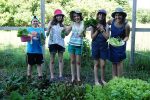
Friends at Camp Shomria show off the fresh vegetables they picked in the camp’s garden. The produce was used to make a salad for one of the meals. (photo from Camp Shomria)

It is said that there is no better way to learn something than by immersing yourself in it. And for kids who want to learn Hebrew in Canada, camp is one of the best and most accessible ways of doing that. But, while there are many Jewish camps in Canada that promote Hebrew language, Camp Massad in Manitoba is the only camp where all the activities and programming are carried out in Hebrew.

“They are not allowed to speak English outside the cabin,” said Danial Sprintz, the camp’s executive director. “Inside the cabin, they speak in whatever languages they want to. But, if they are outside, they are not allowed to speak in English to each other. The kids are all trying to speak Hebrew. So, when everybody’s doing it, you fall in line. Our camp is run completely in Hebrew and there isn’t any other camp that is doing that.

“Not all the kids that come to the camp can speak Hebrew when they arrive. About 50% of the kids don’t go to Hebrew day school, so they are learning Hebrew at camp. We don’t sit them down in a classroom, but we teach them the essentials they need to ask the basic questions. We teach Hebrew through song.”

With repetition, and everyone being together for three meals a day and programming, the kids start picking up the ability to communicate with each other as they go.

Most of the staff has grown up going to the camp and, each year, there are also a number of staff who come in from Israel.

The camp also prides itself on being 100% inclusive. No matter what a child’s situation – if they are autistic, use a wheelchair or are developmentally delayed, or if they are completely secular or ultra-Orthodox in Jewish observance – Sprintz said the camp is dedicated to finding a way to make the experience work for all campers.

Sprintz was executive director of Congregation Emanu-El in Victoria for a number of years, when he and his wife were going to school in British Columbia, before returning to Winnipeg and taking on his role at Camp Massad.

“When I arrived in Victoria, the rabbi was on sabbatical in Israel,” said Sprintz. “I approached the board about helping them with the programming while he was away, and then just stayed on after.”

This experience helped Sprintz develop ways of introducing the children at Camp Massad to Judaism. “We make it fun,” he said. “And we make it something the kids look forward to, as we make the tunes and the process of it all fun. We have tefillin club in the morning for kids who want to try something out, and for kids who need to. But, when it comes down to it, we provide all the religious and traditional cultural components that kids would need to come to camp, to a certain point – we don’t want to separate boys and girls, as we want everybody to be together.”

Camp Massad encourages the children to write their own songs and to put on plays for others in the camp – all in Hebrew.

Winnipeg’s Aviva Tabac has been sending her two daughters, Chaya, 15, and Sara, 13, to Camp Massad for the last three years.

“I didn’t go to camp growing up,” said Tabac. “My parents took us on a summer vacation each year, and the rest of the time was spent at the beach with family and friends. Since I didn’t grow up going to summer camp, I felt it would be a good idea for the girls to try it. Just from my immediate circle of friends who all went to Massad, there’s a special bond they have with one another that carries over into adulthood. All my friends still talk about their fond Massad days and I wanted to give the girls the chance to experience that for themselves.”

Both Chaya and Sara attend public school, so they do not get a lot of other opportunities to speak Hebrew. Tabac said, “When my girls return from camp, they continue to speak in Hebrew, sing Hebrew songs and reminisce. They hang onto their Massad memories and feelings for as long as they can.

“The Hebrew is a big component,” she continued, “but, more so, the celebration of Shabbat, day-to-day celebration of Jewish culture and being proud of being Jewish. The lov[ing], understanding and caring staff and councilors [are] amazing. My girls feel at home when they’re at Massad. They come back rejuvenated, independent and confident. I know that, when they’re there, I have nothing to worry about because they’re in good hands.”

Meanwhile, Lilach Golan moved with her family to Vancouver last fall. She has been sending her four daughters to Camp Shomria in Ontario for years, and plans to continue doing so. She does it with the hope of them picking up some of the values that she grew up with on kibbutz in Israel, including Hebrew.

“For us, the Hebrew language and culture were extremely important and it was very difficult to speak in Hebrew at home all the time … because, when children live in English, they want to speak English and want to be part of the culture around them,” said Golan.

While Camp Shomria operates in English, Hebrew is everywhere at the camp, and the different areas in the camp have Hebrew names, like the chof (beach), cheder ochel (dining room) and moadon tarbut (culture club). Hebrew is also spoken during many of the activities, which include singing and dancing, and at different presentations.

“They do have a lot of Israelis and people who speak Hebrew,” said Golan. “And that’s a big push for the Hebrew – kids love to talk Hebrew with them and the Israelis come every summer. And the songs they sing, there is a lot of language happening there.”

Sharon, 14, is Golan’s youngest daughter. For her, the best part of camp is getting to spend time with her kvutza (group).

“We use Hebrew terminology in contexts where they make sense to me and I can use them meaningfully,” said Sharon. “I also remember better what they mean when I’m not at camp anymore because I can remember the context in which we used them. Hebrew constructs a lot of what and how we do things at Camp Shomria and it’s that culture, atmosphere and values that make me want to come back.

“Even if the Hebrew we use at camp is not new to me,” she said, “it adds so much value to the camp environment and my experience of it. It helps me develop the connection to the three pillars of Hashomer Hatzair [The Young Guard, the Zionist-socialist youth movement] and the core values we share.”

Rebeca Kuropatwa is a Winnipeg freelance writer.

Format ImagePosted on January 12, 2018January 10, 2018Author Rebeca KuropatwaCategories LifeTags Camp Massad, Camp Shomria, education, equality, Hashomer Hatzair, Hebrew, socialism, summer camp, Zionism
A new Camp Shalom

A new Camp Shalom

This August, JCC Camp Shalom will also take place at Burquest Jewish Community Centre. (photo from JCC Camp Shalom)

The Jewish Community Centre of Greater Vancouver’s JCC Camp Shalom for children and youth living in the Metro Vancouver area is coming to Burquest Jewish Community Centre Aug. 21 to Sept. 1.

Four years ago, a collaboration between JCC Camp Shalom and the Aleph in the Tri-Cities group began with the support of the Jewish Federation of Greater Vancouver. This made it possible for children living in regional communities to attend JCC Camp Shalom in Vancouver.

This year, thanks to a grant from the Jewish Community Foundation of Greater Vancouver, JCC Camp Shalom will venture into the Tri-Cities and run its first outreach session of the summer camp at the Burquest Jewish Community Centre.

This camp will look and feel just like JCC Camp Shalom: Jewish exploration and an Israel connection, while celebrating Canada 150; fieldtrips in nature and an overnight camping trip are included as well. The outreach camp also has free bus transportation and rates matching other camps in the area. Israeli and Jewish families living in Burnaby, New Westminster, the Tri-Cities (Coquitlam, Port Coquitlam and Port Moody) and beyond will be able to register their children ages 5-13 for one or two weeks of full-day camp. Registration opens May 5.

“This summer, we are finally going to have an outreach Camp

Shalom on our doorstep within our hometown!” said Yossi Dagan of the Aleph in the Tri-Cities group, who has been part of the project since its inception.

“As a community member living in the Tri-Cities, I am so excited to be able to send my children to a Jewish day camp so close to home,” said Tammy King, mother of three and program coordinator for Burquest. “For the first time, they will be able to participate in Jewish programming, learn about Israel and meet other Jewish kids their own age. This is definitely an exciting opportunity for Jewish families living outside of Vancouver.”

For more information, contact [email protected] or [email protected].

Format ImagePosted on April 21, 2017April 20, 2017Author JCC Camp ShalomCategories LocalTags Burquest, children, JCC, summer camp, Tri-Cities, Yossi Dagan
Camp groundbreaking

Camp groundbreaking

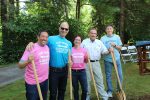
From left to right: Andy Kaplowitz, Camp Solomon Schechter vice-president/president elect; Sam Perlin, camp executive director; Sarah Kahn Glass, camp president; Jerry Cohen of the Samis Foundation; and Jay Holzman, leadership donor. (photo from CSS)

On July 10, Camp Solomon Schechter hosted a formal groundbreaking ceremony to commemorate the start of major construction at their facility. From 60 to 120: The Campaign to Build Jewish Continuity is a $12 million multi-year project, beginning this fall, to refurbish the camp’s facilities over the coming years.

But this campaign is about so much more than buildings. “Camp is kids,” said CSS executive director Sam Perlin, but “Schechter is also about adults. That’s because it’s not just a summer experience or a school-years’ experience. As we have found, it’s a lifelong experience.”

The facilities currently host more than 500 campers and staff each summer and are used during the year by the Osprey Camp program, which primarily works with distressed school districts in southwest Washington to provide students with an application of science concepts as they live and learn in the outdoors. It also provides a rental venue for a range of organizations and individuals.

Speakers at the groundbreaking included Sarah Glass, CSS board president; Andy Kaplowitz, CSS board vice-president; representatives of major donors, including Jerry Cohen for the Samis Foundation and Jay Holzman for the Holzman family; Tumwater Mayor Pete Kmet; and two CSS campers. Several local officials were in attendance.

Format ImagePosted on July 22, 2016July 19, 2016Author Camp Solomon SchechterCategories LocalTags Camp Solomon Schechter, continuity, groundbreaking, summer camp

Posts pagination

Previous page Page 1 Page 2 Page 3
Proudly powered by WordPress