Skip to content
  • Home
  • Subscribe / donate
  • Events calendar
  • Business Directory
  • FAQ
  • News
    • Local
    • National
    • Israel
    • World
    • עניין בחדשות
      A roundup of news in Canada and further afield, in Hebrew.
  • Opinion
    • From the JI
    • Op-Ed
  • Arts & Culture
    • Performing Arts
    • Music
    • Books
    • Visual Arts
    • TV & Film
  • Life
    • Celebrating the Holidays
    • Travel
    • The Daily Snooze
      Cartoons by Jacob Samuel
    • Mystery Photo
      Help the JI and JMABC fill in the gaps in our archives.
  • Community Links
    • Organizations, Etc.
    • Other News Sources & Blogs
  • JI Chai Celebration
  • JI@88! video

Recent Posts

  • SFU honours Gloria Gutman
  • Lifting people’s spirits
  • Wedding a ray of light
  • Indigeneity and Zionism
  • Rule of law broken: councilor
  • Football and its roles
  • The burden of defence
  • Fish Café returns after fire
  • All right in what goes wrong
  • Nuns & mermaids at TUTS
  • Camp offers holiday retreat
  • Students and mentors inspire
  • Once-in-a-lifetime trip
  • 100 dancers, one heart
  • Money for the sciences
  • What “Jewish food” means
  • Have a cookie, schnitzel too
  • Federation now across BC
  • Israel fighting for its existence
  • Deal strengthens Iran
  • Patriotic belonging diminishes
  • A campaign to engage
  • Upstanders’ first live event
  • Responding to Carney
  • Having your own home
  • Music a family tradition
  • Musical to warm heart
  • Community milestones … June 2026
  • Sharing her passion for Israel
  • Or Shalom reopens its doors
  • JFS from past to future
  • Need holistic approach
  • Sharing stories, advice
  • Journalist shares fears
  • Skills to live together
  • Road to independence

Archives

Follow @JewishIndie
image - CJN box ad Rockowers 2026

Tag: lifestyle

Reflecting on my Jewish hero

Reflecting on my Jewish hero

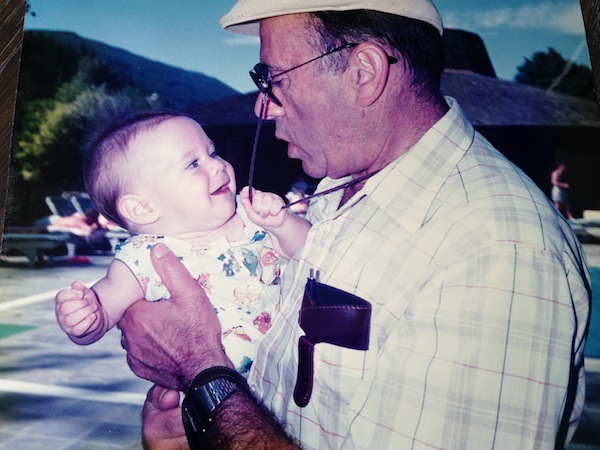
The writer with her grandfather, George Wertman. (photo from Becca Wertman)

I believe it was in Grade 6 at Vancouver Talmud Torah that we had to do a project about a “Jewish hero.” I remember other students wrote about Theodor Herzl, the founder of modern Zionism; Golda Meir, the first female Israeli prime minister; and Hannah Senesh, the Palmach paratrooper who was executed by Nazis while attempting to save Hungarian Jews. I wrote about my zaida.

My zaida, George Wertman, was born on May 17, 1921, in Lwów, Poland (now Lviv, Ukraine), and passed away on March 25, 2019, in Vancouver. He was a Holocaust survivor, yet that alone is not why I consider him my hero – it is because of how he survived and what he managed to accomplish in his life.

In fall 1941, Zaida was taken to a forced labour camp, Camp Winniki, where he became an assistant steamroll engineer, enslaved to build roads for the Nazis.

Zaida always marched in the first group of three during the 12-to-14-kilometre trek from the camp to the work site. One day, he lined up in the third group and, on that same day, two individuals escaped the camp. As was the “camp policy,” three people were shot for every person who escaped. The SS officer selected the first two rows and took them into the forest to their deaths. Zaida survived by sheer luck.

On other occasions, it was more than just luck that saved his life – it was his reputation as being a hard worker. In his second year in the camp, Zaida became ill with typhoid and was taken to the camp’s infirmary. An SS officer and a Ukrainian policeman came to the infirmary to select sick Jews to be shot for, as Zaida explained to me, why would Nazis spend scarce resources on healing sick Jews? The SS officer yelled to my zaida, “Out!” but the Ukrainian insisted that Zaida was his best worker and to save him.

In July 1943, Zaida’s determination to live motivated him to run when an SS officer came to his barracks in the middle of the night and told him to get dressed and, again, “Out!” Zaida preferred dying on his own terms – while doing everything he could to survive – and, therefore, jumped out of the window and ran. He ran through puddles to trick the scent dogs and eventually outsmarted the Nazis, managing to escape to “safety.” The rest of the camp was liquidated and sent to their deaths.

“Safety” meant reuniting with my great-grandfather in his hiding spot in a secret room located in a building where German officers lived. For one year, Zaida spoke in whispers and did not see the sun.

Zaida was liberated in summer 1944, but his story of survival by no means ended there. He met my grandmother (my baba, who I call Babi), and she, Zaida and my great-grandfather began a “business” of necessity – smuggling goods across one European border and the next. They would hollow out suitcases, fill the frames with gold and give them to my 20-year-old grandmother to carry across the border.

They eventually made enough money to get visas to Canada and, in July 1949, arrived in Vancouver.

The money they had made in Europe was invested in property, including a piece of land bought from the Canadian Pacific Railway that became my dad’s childhood (and current) house and a property that housed George Wertman Ltd., Zaida’s coat hanger factory.

Zaida worked extremely hard to succeed in Canada, making wire coat hangers and doing everything to ensure that his three children and eight grandchildren would never have to suffer.

His retirement largely consisted of wining, dining and drinking coffee throughout Vancouver. From the age of 91 to 96, he could be found daily at the Hotel Georgia’s Bel Café sharing a grilled cheese sandwich with Babi.

As the granddaughter of Holocaust survivors, I have unique childhood memories. I remember my family parking at least a 15-minute walk away, usually more, from the best restaurants in Vancouver in order to not pay for parking and to “save a buck”; of eating chicken soup in bowls of gold-rimmed china that my grandparents brought from Allied-occupied Germany; and of always asking Zaida to tell me stories, like the ones above.

In Zaida’s Holocaust survivor testimony to the University of Southern California Shoah Foundation, he explains that his philosophy is that you “have to work to get somewhere” and that he believes in “honesty, hard work and, once in awhile, if you can do a mitzvah,” do it. Indeed, hard work saved his life and being an honest businessman in Canada allowed him to give his family everything they needed.

As Zaida also instructs in his testimony, “Try to make a better world. If you cannot make a better world, do not make it worse.”

This is why he was, is, and will always be, my hero and my inspiration for how I live. I hope his story, summarized here, will inspire others as well. May his memory be a blessing.

Becca Wertman grew up in Vancouver and currently lives and works in Jerusalem.

Format ImagePosted on April 12, 2019April 14, 2019Author Becca WertmanCategories LocalTags George Wertman, history, Holocaust, Judaism, lifestyle

Balabusta preps for Pesach

Harvey’s charoset pyramid. (photo by Shelley Civkin)

As the Torah commands us, we tell the story of Passover and the Israelites’ exodus from slavery in Egypt to our children and ourselves every year, by reading from the Haggadah. Coming from a secular home, I don’t recall our family owning a single Haggadah. Instead, my father had a little black notebook in which he wrote down the story of Passover and the Jews’ exodus from Egypt. It took about five minutes for Dad to read it, and then we had our seder. It wasn’t particularly traditional, but it was meaningful nonetheless.

On the all-encompassing journey called Yiddishkeit, preparing for Passover scores about an 18/10 on the commitment scale. Between the feathers and flashlights, flourless sponge cakes and briskets, a balabusta has her work cut out for her. And then some.

As an accidental balabusta and relative neophyte to traditional Passover preparations, I want to get with the program as much as possible. I scared myself the other day though, by reading articles about what goes into getting ready for this significant holiday. One such article – called “Cook your Pesach while you sleep” – was particularly troubling. It seems to me that a Pesadik balabusta requires at least 36 hours in every day to prepare her food for the seder, a month ahead of time. She might also require a housekeeper to do all the laundry and clean the house while she’s tethered to the kitchen, cutting, peeling, blanching, baking and roasting the eight-course meals she’ll serve to her 42 guests over the two nights of Passover. Oh, and did I mention the other two minor meals she needs to organize daily for her family during the eight days of the holiday? Holy flourless kugel, Batman!

And then there’s the issue of finding and removing all the chametz from your home. Let me confess something right from the get-go: I am not an observant Jew in the strict sense of the word. I do observe certain things, like going to synagogue every Shabbat, lighting Shabbat candles, doing the odd mitzvah, and studying a little Torah. That’s about the extent of it. I refrain from eating chametz during Pesach, but I have never actually removed all the chametz from my home before the holiday. And I don’t keep kosher. However, I do eat matzah religiously during Pesach. And I kind of have a crush on shmurah matzah.

As for that age-old shmurah versus Manischewitz matzah debate … I wholeheartedly throw my vote behind shmurah. Yes, it’s expensive, but it’s so worth it. Having visited Kfar Chabad on our trip to Israel last year, we went to their shmurah matzah factory and witnessed how the matzah is made by hand. Seeing the meticulous precision with which everything is measured, timed and baked, it was a fascinating and educational experience. And did I mention its unique flavour and round shape? Sure, parts of it can be burnt, but that just enhances the taste. Once you go shmurah, you’ll never go back.

I’m the kind of accidental balabusta that, instead of making matzah ball soup, brisket, tzimmes and macaroons for Pesach, I’m inclined to make hotel reservations in Whistler and call it a day. There’s no need for me to be Jewish Wonder Woman. Gal Godot has that covered. I know, not every woman who prepares for Pesach considers herself Wonder Woman. But, given the magnitude of preparation that must get done in advance – and done to rigorous standards – I’m pretty sure that devotedly observant women qualify for that title. As for me, I’ll do the best I can to honour the traditions, prepare a welcoming and tasty seder for my family, then enjoy a plotzfest.

Preparing for Pesach can be dangerous though. A couple of years ago, I decided to forgo the store-bought chrain (horseradish) and make my own. I found a recipe, then went out and bought the fresh horseradish root. It looked innocent enough. From a distance. Nobody told me that taking a close-up whiff of newly pulverized horseradish root is akin to inhaling mustard gas. I thought I’d burned my lungs. Sure, it produced that unrivaled heat I always admire in a memorable horseradish. However, it almost knocked me out. This Pesach, I plan to simplify the process by buying horseradish. And saving my lungs for more important things … like breathing.

On the topic of food … my husband Harvey makes the ultimate Passover crowd-pleaser: a visually stunning, delicious pyramid-shaped charoset. He got the recipe decades ago from the L.A. Times. It never fails to impress guests. Here’s the recipe.

HARVEY’S CHAROSET PYRAMID

1 unpeeled pear, cored and chopped roughly
1 unpeeled apple, cored and chopped roughly
1 cup chopped walnuts
1 cup chopped almonds
1 cup chopped hazelnuts
1 cup chopped pistachios
1 cup chopped pitted dates
1 cup chopped raisins
2 tsp ground cinnamon
2 tsp grated fresh ginger
1 tbsp apple cider vinegar
sweet wine, preferably Manischewitz (about 1/4 cup)
extra dates to decorate the plate

  1. Put all the nuts in food processor and chop, but not too finely. Place in a bowl.
  2. Put dates and raisins in food processor and chop, but not too finely. Place in separate bowl.
  3. Core and roughly chop apple and pear by hand, then put in the food processor, along with the nuts, and the raisin and date mixture. Add cinnamon, ginger, apple cider vinegar and wine. Chop till it’s all mixed together. Be careful not to overdo it – you don’t want it mushy.
  4. Remove it all from the food processor and shape it into a pyramid with a spatula. Then use a small, sharp knife to lightly make “brick” shapes in the pyramid. Refrigerate. Put whole dates around the outside before serving.

For another Passover culinary experience, check out Jamie Geller’s recipe for potato kugel cups at joyofkosher.com/recipes/potato-kugel-cups. You can YouTube it, too. If you’re not afraid of hot oil in a 425°F oven, this recipe will knock your Pesach socks off. Personally, scorching hot oil makes me a bit skittish. But the result is potato heaven.

As Pesach approaches, it’s a time to clean house, both literally and spiritually. It’s a time to remember how blessed we are in our freedom as Jews today. And it’s a time to hold close our traditions, pass along the story of our exodus from Egypt to the younger generation, and be thankful for where we are now.

So, eat the matzah and bitter herbs and drink those four cups of wine. Then go out and buy lots of Metamucil. Because you’re going to need it after eight days of matzah. But check with your rabbi first to make sure Metamucil is kosher for Pesach.

Wishing you all a meaningful and freilach Pesach.

Shelley Civkin, aka the Accidental Balabusta, is a happily retired librarian and communications officer. For 17 years, she wrote a weekly book review column for the Richmond Review, and currently writes a bi-weekly column about retirement for the Richmond News.

Format ImagePosted on April 12, 2019April 2, 2020Author Shelley CivkinCategories Celebrating the Holidays, LifeTags cooking, Judaism, lifestyle, Passover
Love starts with the self

Love starts with the self

Most of us are familiar with the concepts of “inherent worth” and “unconditional love.” But many fewer of us actually live by these precepts. Anne Andrew would like to help change that fact. She does this in her work, as well as in her new book, What They Don’t Teach in Prenatal Class: The Key to Raising Trouble-Free Kids and Teens, the launch of which takes place April 11, 2 p.m., at the Isaac Waldman Library at the Jewish Community Centre of Greater Vancouver.

In the introduction, Andrew shares, “My experience as a worried parent of a once-troubled teenager (now a well-functioning adult) and my wish to help other parents avoid the sleepless nights, debilitating fear, helplessness and despair, led me to write this book. Our family’s ordeal lasted more than six years and, during that time, we learned strategies that not only helped us survive but actually allowed us to thrive…. At the same time, I was working as a school principal and became aware of the mental health crisis that was starting to take hold in younger and younger students.” As examples, she notes that 77% of children report having been bullied at school and 80% of 10-year-old girls wish they were thinner.

Andrew was a school principal at Temple Sholom for 20 years. “It’s likely,” she writes, “that one or more of your children will face some kind of difficulty, whether it’s an eating disorder, bullying, drug addiction, depression or other mental health issue, and it is almost impossible to predict whose child that might be. You can’t always see it coming – we certainly didn’t!”

Based on what she was learning from her family’s therapist, Andrew “concluded that there is an absolute and fundamental concept that underpins healthy human life.” That concept – inherent worth – is the subject of the first section of What They Don’t Teach in Prenatal Class. Part 2 focuses on unconditional love, explaining “why it is so difficult for us to accept and own our inherent worth, then explain[ing] how this can be done and become part of your ‘way of being.’” The third part of the book discusses parenting priorities, “kindness versus grades,” and “teaches how to parent out of love – not fear.”

While targeted to parents, What They Don’t Teach in Prenatal Class is a valuable guide for anyone who has negative opinions about themselves, which, to hazard a guess, is the vast majority of us.

“Part of the reason that I named my book the way I did is that it would be ideal if parents did some of the self-work ahead of having children,” Andrew told the Independent. “That way, they’d be better prepared to face the challenges of parenting and they would have a deeper understanding of how their children pick up negative beliefs right from the beginning. They’d have a bit more time and space to think clearly about the bigger picture in terms of purpose and priorities before the baby arrives. Imagine if prenatal classes included a few sessions on this topic!”

One of the tools Andrew presents in her book is the Choose Again Six-Step Process, which was developed by Diederik Wolsak, founder and program director of Choose Again Attitudinal Healing Centre and author of Choose Again: Six Steps to Freedom. Wolsak wrote the foreword of What They Don’t Teach in Prenatal Class. In it, he notes that Andrew – who is a Choose Again facilitator – “has written a manual which draws directly from her own heroic and victorious battle with depression and her transformation of some crippling core beliefs. But, more to the point, it tells the story of two people, parents, coming to terms with what they needed to heal to become real parents. Real parents teach by demonstration. Real parents are transparent and not afraid of what they’ll encounter when they begin their own journey to removing all barriers to love.”

By healing a negative belief about ourselves, we can change our behaviour. “By following our familiar feelings, we can retrieve early childhood memories in which we can discover the genesis of our beliefs and we can begin to transform them,” writes Andrew. “You have to be in the feeling for it to work – it is a process that has to be felt, not an intellectual exercise.” In brief, when you’re upset, for example, acknowledge that you’re upset; take responsibility for the feeling – it is not your child’s fault, but rather “a negative belief that you made up in early childhood has been triggered”; focus on the feeling and identify it; remember the feeling and try to determine when you first ever felt it; once you have that memory, contemplate how you judged yourself in that moment and how you thought others judged you; and, lastly, try “to fix your mistaken belief by a process of forgiveness that replaces your mistaken belief with the truth of you – that you are inherently worthy, whole and complete.”

If loving ourselves isn’t hard enough, parenting out of love, and not fear, is as much or more of a challenge. Not blaming your children for your anger, not punishing them for acting out, etc., would seem to require infinite patience and constant self-awareness.

“If people read my book and are feeling overwhelmed, then I would say do one thing, and that is to have a gratitude practice,” said Andrew. “I have a section in the book on exactly how to do that and I know that it’ll make a huge difference. Begin with one thing and then perhaps add another.

“Awareness is half the battle, so simply being aware that young children are developing negative beliefs about themselves will be helpful in the ways you respond to your child’s behaviour. I’ve presented the concept of inherent worth as the antidote to all of these beliefs, so I have actually simplified parenting into one challenge – how to get across to our children that they are inherently worthy beings. They don’t have to establish their own worth by getting good grades or winning competitions. I’ve suggested several techniques, so parents just need to adopt the ones that will work for their family.

“Many of the things that I suggest are simple, such as remembering to smile at your children more often – put a smiley face sticker on your phone, on the fridge or on the bathroom mirror to remind you. Mindfulness can be practised at the dinner table or getting ready for bed by helping children focus on their senses in the here and now.

“Parenting is a marathon, not a sprint,” she continued, “and it is OK to take awhile to get into the stride, stumble and get back up. Parents tend to judge themselves rather harshly (we all do!) and that’s not helpful. Be gentle with yourself and know that it is impossible to make a mistake – we make healing opportunities for ourselves and our children!”

Andrew invites “parents to use the day-to-day parenting upsets as portals to self-healing so that parenting becomes a journey into self-awareness. This in turn benefits the kids enormously. When parents heal their own negative beliefs, they won’t worry about being judged by others, they won’t be drawn into competitiveness and will not need to over-program their children, so that makes life and parenting less stressful and more fun for the whole family.”

Andrew is a parenting coach, and she presents workshops in the United States, Canada and Europe. She said parents take what they can from her recommendations.

“Parents who have taken my workshops, on which my book is based, report that they have more patience, greater understanding of their children’s behaviour and their own, and the ability to communicate more effectively with their children as well,” she said. “I have been told that the methods are transformational and that was certainly my experience. One parent (Roanna Glickman) told me that she dived headfirst into self-healing using the Choose Again Six-Step Process and she has transformed her life and her kids are thriving as a result. She said, ‘It may seem like more work initially but, when you take away the power struggle, it’s way less work in the long run.’”

Andrew shared feedback from another parent, Pam Roy, who said, “Parenting isn’t about trying to do it right but about learning along the way, being authentic with your kids when we don’t get it right; making yourself better helps you be more present and aware with and for your kids.” While acknowledging that self-work is time-consuming and difficult, Roy said it is crucial and, if Andrew’s suggestions “feel overwhelming or time-consuming, that should trigger that there’s work to be done. Change aversion is there but, when these fears come up, it’s the more reason they should be looked at.”

One of the more surprising pieces of advice, perhaps, is to be careful with praise. “How many of us do what we do to win approval from our bosses, peers, spouse, other family members and even our children?” writes Andrew. “When that approval is not forthcoming we beat ourselves up wondering what we did wrong or reminding ourselves that once again we failed.”

As to how to reduce our dependency on external validations of our worth, Andrew told the Independent, “Firstly, I suggest you gradually phase out praise – it tends to be a habit so takes awhile to correct. Notice when you automatically use praise and then follow it up with a question that indicates your sincere interest in whatever it is that was praised. Praise-dependency tends to undermine the concept of inherent worth – it encourages kids to look outside themselves for their worth.

“As far as knowing how to handle praise and criticism, knowing one’s inherent worth is the way to handle praise and criticism. Neither praise nor criticism has an impact on one’s inherent worth, though it may have an impact on self-esteem. Criticism says more about the person doing the criticizing than it does about the one being criticized. Children can be taught to just say ‘thank you’ to anyone who offers them criticism (or praise for that matter). The criticism can be taken for what it is – a neutral fact to be examined or ignored – not an emotionally charged thing.”

If you can’t make the April 11 launch, What They Don’t Teach in Prenatal Class is available on Amazon, and Andrew is currently putting her workshops online so that parents can access them more easily. She said they should be available in May or June at anneandrew.com.

Format ImagePosted on April 5, 2019April 2, 2019Author Cynthia RamsayCategories BooksTags Anne Andrew, children, education, lifestyle, parenting

Dig more deeply into identity

The Torah portions at this time of year, in Leviticus, are sometimes described as a hard sell. Leviticus’s detailed narrative about what is pure and safe, what’s diseased or leprous, and how priests can tell the difference isn’t light reading. It can be hard to interact with this kind of text.

At the same time, these details saved us as a people on numerous occasions. Keeping things clean, considering what was healthy, diseased or spoiled – historically, these things may have protected us from scourges like the Black Death. Analyzing the details of something difficult and complicated helps us find greater truths or safety, which are not always obvious from the outside, just as we continue to wrestle with diseases or challenges we don’t understand today. Whether it’s something described in Leviticus or a new kind of virus, smart people have to work to figure these things out.

In order to keep myself “working” and intellectually active, I do lots of reading and thinking about things I encounter. However, I don’t have much time to do this while juggling my household, kids, dogs and work responsibilities. I listen to audiobooks while I do household tasks. This gives me a chance to think about something bigger than, for instance, chopping salad or changing bedding. We all have a lot of boring waiting, obligations and chores to get through. Engaging my brain and listening to a book makes me feel a lot better about this grunt work.

I used to think I had to finish everything I started, but if it’s too violent or scary, I now shut it off. I recently found a new category of book to “shut off.” It doesn’t have an easy label, like “mystery” or “non-fiction.” Maybe it should be called “superficial.” Here’s what I mean.

I was listening to a memoir that contained recipes. In itself, this was a quirky choice for an audiobook, but I like food and cooking. Beyond that, the premise was larger. The author had been editor of a publication that had gone out of business. The memoir was supposed to describe how she found new direction through her cooking. I don’t write mean book reviews, even when I’ve been asked to review something, but I just can’t recommend this book.

I got very nearly to the end when I had to give up. Why? The primary reason was that the author is described, in her biography, as a Jewish person. However, her book rhapsodized about the food she made for Christmas and Easter and, even further, about the true glory of pork and shellfish. OK, I figured, maybe her husband isn’t Jewish. But I did more research. He was.

I could live with the idea that this writer didn’t keep kosher. Heck, lots of Jews don’t. I could even live with the idea that she’d decided, for whatever reason, to celebrate Christian holidays, if only there had been some explanation of why. She rhapsodized about matzah brei (but why?!) and yet she didn’t tell her readers why she ate it in the springtime. After awhile, I even started to feel cranky about how she used way too much butter in every recipe. Time to shut it off!

At its heart, I told myself that, while using the majority culture’s touchstones, like Christmas and Easter, might make a book more saleable, it seemed like a betrayal far worse than cooking with non-kosher foods. When I thought about it longer, I concluded that the whole thing was vacuous. She’d never actually explained how the cooking had helped her heal or get over such a big professional loss. At that point, it didn’t matter how the book ended. I was done.

Awhile back, I had a writing gig on a national platform. My proud husband boasted about it to our Montreal friends. The articles paid less than what I published locally and were poorly edited, but my earnest “voice” came through. That seemed OK. Then the editor told me that she would only get in touch again after she assessed how my previous posts had done. (The ones that, while earnest, had been poorly edited.) I never heard back. I guess they weren’t successful in her eyes. Instead, I saw parenting posts on that platform that celebrated Jewish writers who extolled how they proudly chose to be secular or why they weren’t comfortable investing in their religious or cultural identities.

All around us, hate crimes are rising. Minorities – like Jews – are being harassed. Just because it hasn’t happened to you yet doesn’t mean it won’t. So, why not ask Jewish writers to dig deeper and figure out what that identity actually means? When the Gestapo killed Jews during the Second World War, they didn’t ask, “Are you assimilated? Secular? Do you celebrate Christmas?” No. Why not embrace or at least learn about your real background?

I felt angry. My time is so limited that I hate wasting these spare moments on reading something so intellectually lazy. In between raising kids and walking dogs, figuring out our taxes (in two countries) and the rest of life’s details, well, I might as well get more sleep instead. If an entire memoir, written by a well-known figure, sounds so tone deaf, it bothers me that she makes a living selling these books.

Worse, my articles might have been seen as too earnest, too religious and too detail-oriented, and were tossed in favour of someone who was happy to express his apathy and ignorance about his Judaism. It’s like the (non-Jewish) editor said, “Well, gee, we want the Jewish perspective, but only if it isn’t too Jewish.”

Leviticus is a hard slog. Yet, every year, we go through all of the five books of Moses and we try to dig deeper to find something new. There are many commentaries on Leviticus. Some explain it, and others try to give modern examples for how to relate to its narrative. These are all worthy intellectual exercises, much like choosing to listen to books while doing mind-numbing chores.

What’s not worth it? Let’s not waste time on empty-headed accounts from people who determinedly embrace their ignorance. If you want to stay committed to your identity – Jewish, political or other – keep learning and growing so you can express it with pride.

Joanne Seiff has written regularly for CBC Manitoba and various Jewish publications. She is the author of three books, including From the Outside In: Jewish Post Columns 2015-2016, a collection of essays available for digital download or as a paperback from Amazon. See more about her at joanneseiff.blogspot.com.

Posted on March 29, 2019March 27, 2019Author Joanne SeiffCategories Op-EdTags books, identity, Judaism, lifestyle, philosophy

We do more than lift our feet

In Rachel Kadish’s book The Weight of Ink (Mariner Books, 2017), the fictional Rabbi Moseh HaCoen Mendes, living in London, England, in the year 1657, writes a letter to Rabbi Manasseh ben Israel in Amsterdam (who was a real person), using the phrase “we lift our feet.”

In the time the novel was set, the Inquisition in Spain and Portugal was still raging but Holland had opened its doors to refugees. Ben Israel traveled to England to try and persuade Oliver Cromwell to allow Jews back into the country, from which they had been expelled in 1290. His argument was that Jews had to be present in every country if the Messiah was to arrive in 1666. While he didn’t manage to open up England to Jewish immigration, Cromwell did permit the 20 Jewish families then living in London in hiding, pretending to be Christians, to live openly as Jews. It proved in the end to be the thin edge of the wedge.

In this letter of consolation to ben Israel, Kadish has Mendes write the following passage: “Our life is a walk in the night, we know not how great the distance to the dawn that awaits us. And the path is strewn with stumbling blocks and our bodies are grown tyrannous with weeping, yet we lift our feet. We lift our feet.”

I was struck by the fatalism of Kadish’s rabbi. He was expressing a common outlook of religious people in the era – that our lives on earth are lived in a vale of tears, and that our hopes must centre on the beyond. And yet, the Jewish philosophy of life has always been that we must live the life we have here on earth to the fullest. Different from some other views, we deny that our lives should be lived solely in the hope of some future reward.

It is true that, come what may, our role is to “lift our feet” and keep on going. This is a staple of Jewish thinking. We keep on going. We keep on trying. We are the nation of try. If we surrender to the obstacles we face, we are beaten before we start. There is so much around all of us, whatever our background, that can be discouraging, but we can’t allow it to get us down.

Persistence in the pursuit of the goals we seek is a hallmark of Jewish life, and of successful people of every persuasion. We are not easily deterred. Our parents, like many others of immigrant origins, worked their whole lives to try and ensure that their children would get an education and a better start in their lives than was the case for them. Many Jews have gravitated to the research fields, where years of effort are required to achieve results.

Many large enterprises that mark the commercial landscape were once small businesses initiated by Jewish entrepreneurs. From banking, to groceries, from the shmatte (rag) business, to high fashion, it is difficult to find an area of economic activity where Jews have not shown their hand. Remember Bugsy Siegel and Murder Inc.?

Our seeming job in this life is to keep on keeping on. But many of us continue to search for a rationale for human existence. We know that the struggle for survival is in the nature of all living things. That is nature’s imperative. As thinking humans, though, many of us seek other reasons for our being, explanations beyond mere survival. We do not know how long our trip will be before we see the “dawn,” but, in the meantime, many of us are not satisfied that just reproducing ourselves is enough to justify the existence of the universe we are experiencing.

For Jews, the business of survival over the years has been an interminable task accompanied by incalculable losses. But, though few in number, we have survived and, where we have had the tools of defence, we have prevailed. Our religious say we are here to celebrate the glory of G-d, in whose image we have been created. Oh yes, and we are also supposed to provide a model so that all peoples will come to recognize His Oneness and supremacy. It has been a painful task, and not many of us are ready to own up to that particular role.

In these days, when religious speculation about life’s purposes is far from the central issue of our time, it is still important in the lives of millions of people. Even for those of us who are not among them, many of us would like to believe there is some purpose in our lives beyond mere existence.

Many people devote a good part of their thinking and their actions to improving the lives of others beyond their immediate circle, and they draw some sustenance and psychic reward from those efforts. Some people believe that certain issues are more important than even their own lives and, indeed, they stand ready to lay down their lives, if need be, in defence of these ideas.

Helping others and a willingness to die for our beliefs both point to things that we value beyond mere existence. Yes, we go on “lifting our feet,” but with principles that guide us until we reach the “dawn.”

Max Roytenberg is a Vancouver-based poet, writer and blogger. His book Hero in My Own Eyes: Tripping a Life Fantastic is available from Amazon and other online booksellers.

Editor’s Note: This article has been edited to make clear that Rabbi Moseh HaCoen Mendes is a fictional character.

Posted on March 22, 2019May 13, 2020Author Max RoytenbergCategories Op-EdTags ethics, HaCoen Mendes, Judaism, lifestyle, mortality

Can only live in the now

It’s sunny today as I write this, and there is a lovely breeze fluttering the leaves on a tree outside my window. I am reacquainting myself with myself, pleasuring in the solitude. Writing this story for you (and myself) is a minor distraction.

Knowing ourselves can be scary, but we can get over that. We are not so bad after all. Look at all those good things we have done (rah! rah!) despite the weaknesses we know we have, and how they compare to the aspirations we have had for ourselves. It doesn’t mean we don’t have to try to be better, to achieve more, but facing our failings can make us be kinder to others.

My bride feels that I am amazing in my capacity to forgive myself for my errors and weaknesses. But I know, and I have told her, that she, and most people, are too hard on themselves. I believe it has something to do with the constructs we build up in our minds as to what we believe is success, the goals we set. Then, given the unpredictability of life, we are disappointed when we don’t realize all of them.

But these things we dream of are not real. They are something way out in a potential future. Only the now is real, only the now is what we can change. Often, when we get to the anticipated future, we no longer want what we aspired to. We have changed our mind as a consequence of our life experiences. Our pleasures may really arise from the incidentals we realize on our path, what we encounter in our nows. They may turn out to be what we treasure above all.

So, I forgive my errors as lessons learned, and aim for my goals as a spectrum rather than a single point. And I forgive my blunders as an excess of enthusiasm. I know my enthusiasms can be fierce, as I believe that we really have to want what we want to have some chance of getting there.

We all know that people are watching what we do. A lot of what we think about ourselves is motivated by what we believe other people think about us. And we worry about that at times. It can seriously affect our behaviour. As I have gotten older, however, I find that I am not so much worried about that. The person I am more concerned about is me – that’s the guy I have to come to terms with.

We cannot fail to develop in ourselves, unless we are sociopaths, some ideas about what are the right things to do in life. We absorb it from our parents, what we read or see, what our friends have said or done, and the “inner us” watches and measures everything we do, and passes judgment.

We know when we have violated what our inner judge has said is the right action. Nonetheless, we sometimes, thinking or unthinking, follow our own selfish self-interest. But, often, we are motivated to act in opposition to our short-term interests and according to the larger values we have absorbed.

When we do the wrong thing it stays with us. Our judge is difficult to escape. He or she is there every time we encounter ourselves in our thoughts. We have many ways to distract ourselves from what it is telling us, and that escape may tempt us powerfully, but we cannot know ourselves if we are not in touch, fully acquainted, with that inner self. We cannot be at peace if we are not in harmony with that inner self or judge.

We all know people who publicly espouse the public good and privately pursue the private good. We see examples of that every day on our television and internet screens, our newspapers and magazines, our trips to the grocery store or the community centre. Could we live with ourselves if we were that kind of person? Does it take self-delusion?

Most of us aspire to being the kind of people our children could respect, and we have taught them the lessons we believed would help them on their way. We all have had our aspirations to achieve positions and places, situations in life that we feel are appropriate for the kind of people we truly are. Hopefully, we are happy with the portion that we have earned and been given (as no one makes it on their own, or without some luck).

It is only in our solitudes that we truly confront the people we are, without pretension. Some people are able to be more like their real selves in public, but most of us present to others the person they believe others want or expect to see in us. How fortunate we are if we have those in our circle with whom we feel free to be the person we really are.

Deep in our heart of hearts, we know of all the compromises we have made with the principles we truly believe in. They weigh on us. We have corrected where we could along the way. For what remains undone, which cannot be fixed, we have to find in ourselves the generosity to forgive ourselves, and others.

This moment is the “there” we have arrived at, even if it is the life we did not necessarily aim for. This incidental is the real thing. We are really alive only in the now in which we find ourselves.

Max Roytenberg is a Vancouver-based poet, writer and blogger. His book Hero in My Own Eyes: Tripping a Life Fantastic is available from Amazon and other online booksellers.

Posted on March 8, 2019March 6, 2019Author Max RoytenbergCategories Op-EdTags aging, identity, lifestyle

A need for order in our lives

I’ve never seen my sister-in-law’s house look cluttered. Every piece of curated furniture and even the magazines are placed just so. I just couldn’t understand it, even though my mother told me that she was raised this way because her mother was an interior designer. My brother joked that, if he bought something new for their small townhouse, he had to give something up. Even as they moved and their family and lives grew complex, I always left their house feeling like mine had about three times as much stuff in it as theirs did.

During family emergencies where I helped out, I saw that this approach to home decorating wasn’t designed to make me feel badly about myself. So why was the house so carefully manicured? It was a chance to control something and make order where there isn’t any. When one is a methodical soul and life feels chaotic, it’s only natural to want to control something and make it do what you want. We can’t control politics or natural disasters. Even our family members are all independent. We struggle with their health and they do what they want whether or not it’s a problem for us.

This isn’t a Marie Kondo “spark joy” by cleaning article, although it may seem that way. No, it’s about Exodus, at the beginning of Chapter 38, where Bezalel comes on the scene. Bezalel helps create the Tabernacle of the Tent of Meeting, and the instructions, which were “drawn up by Moses’ bidding” (Exodus 28:21), spell out exactly how it’s to look.

I’ve heard sermons and discussions about this portion of the text where people say, “Why does the Torah spend so much time on these tiny details of design and style?” Yes, design and artistry are pleasing, and perhaps a chiddur mitzvah, beautifying the way we fulfil a commandment, but, for many, this seems to be extraneous and unnecessary.

Ever since getting to know my sister-in-law, who I love very much, by the way, I see this differently. Although I love aspects of design, I lack the gene that would enable me to keep my living space so tidy. It isn’t in me – and it’s certainly not in my spouse, who is more disorderly than I am. (He insists that every pile of paper is deeply meaningful and I shouldn’t touch his filing system.)

When we read about how the Tabernacle is created, it’s filled with precision and detail. It’s something that the Israelites contribute to, own and control, while in the midst of a wilderness, while wandering around and wondering when they will actually get to their new home. Perhaps it gives them a sense of security and purpose to create this during a time of nomadism and uncertainty. Unlike the golden calf episode, it’s a scene that’s calm and controlled.

Even while reading the specifics, there are surprises. Historically, women and children did nearly all hand-spinning of yarn. There were no factories for it. Every single yarn and thread for any garment was spun by hand, on a spindle. We might assume that all of the carefully hand-dyed linen yarn was provided by the Israelite women, yet it’s Oholiab, mentioned in Exodus 38:23, who is the man named as the carver, designer and embroiderer of “blue, purple and crimson yarns and in fine linen.”

There it is again. We think we are certain about all sorts of things in our environment and culture, like which gender does embroidery. We’re wrong. Many of the assumptions we make about gender roles, for instance, come from other times. For example, Victorian notions of a woman’s “higher spiritual nature” have seeped into Judaism. Our assumptions about what we wear or who does what kind of handiwork changes according to time period and culture.

So why be specific and detailed about the building of the Tabernacle or, for that matter, keeping your living room impeccably organized?

Some say that, since the Shechinah (G-d’s divine spirit) dwells in the Tabernacle, it must be perfect and beautiful. Others argue that our homes should also resemble the Tabernacle, because we each have bits of the holy spark, the divine, within. These are all wonderful aspirational and elevated ideas.

I’d argue something different. Our surprising world is busy and chaotic. Every time we shovel snow, the plow comes by and moves it, or it snows all over again. Maybe that flowerbed we planted last year didn’t bloom the way we’d expected it to. Our daily lives are out of our control in many ways, and this doesn’t account for disease, disaster, death or violence.

So, we manipulate what we can. My sister-in-law’s house is always going to be tidier than mine. It’s a way she can bring order to things despite the entropy around her. My house may be untidy, but I’m cooking, designing and knitting textiles in an endless attempt to keep people fed, warm and help them feel loved.

While writing this, my computer blinked. I lost a whole document. This week, a friend’s child is struggling and self-harming. Another far-away friend concludes radiation and chemo treatments, and I don’t know how she’s doing. My car might not start, my kids get sick at school – unpredictability and difficulties abound. However, there’s comfort in routine and minutiae. When we read the Torah portion or do the same Jewish prayers or rituals, we can offer ourselves that order and precision. We can’t control much, but we can control something. Goldsmithing, embroidery, carving, metal work or clothing, each of us can choose to create something precise and beautiful, in acknowledgement of a higher order.

Joanne Seiff has written regularly for CBC Manitoba and various Jewish publications. She is the author of three books, including From the Outside In: Jewish Post Columns 2015-2016, a collection of essays available for digital download or as a paperback from Amazon. See more about her at joanneseiff.blogspot.com.

Posted on March 1, 2019February 27, 2019Author Joanne SeiffCategories Op-EdTags history, Judaism, lifestyle, Marie Kondo
Intergenerational connection

Intergenerational connection

Grandparents and grandchildren discover their roots in Jerusalem with the G2: Global Intergenerational Initiative. (photo by David Salem / Zoog Productions)

The G2: Global Intergenerational Initiative is a new yearlong program being offered by the Jewish Agency. It helps bring grandparents and grandchildren closer with activities and conversations. It is spearheaded by Jay Weinstein, a rabbi from New Jersey who now lives in Israel.

“I work in the partnership unit, trying to build relationships between Jews around the world and Israelis,” Weinstein told the Independent. “I bring my connections from North America and also am exposed to Israeli communities here … trying to build bridges with Israel and overseas.”

The project stems from findings gleaned from meetings that the Jewish Agency held in a few prominent Jewish communities, which pointed to a lack of programming provided to older adults and a lack of an Israel connection among the young.

“We went to our partners on the ground, saying, ‘Let’s come up with something together’ … versus coming up with the idea ourselves and then trying to sell it or take it somewhere,” said Weinstein. “We wanted to do it in collaboration.

“Much of what we do in the Jewish community is for the younger generation,” he continued, “but, here, you have … people who spent their lives building up the federations, schools and synagogues. They’re usually the ones volunteering and donating, [yet] we’re failing to have something to really offer to them.”

Certainly, grandparents can be a positive influence in creating a Jewish identity in their grandchildren.

“When they’ve done studies asking young adults why they are involved in Jewish life or Jewish programming, what came back involved Jewish grandparents,” said Weinstein. “That’s even truer in interfaith marriage, [where] the role of the Jewish grandparent passing down values to their grandchildren is of even greater importance.”

The G2 initiative brings grandparents and grandchildren together over the course of a year through activities and creative projects.

“It gives grandparents the chance to think about what is important to them, about what they want their grandchildren to know about, how their family narrative makes them unique, and special things they care about,” said Weinstein.

Participating grandkids should be in Grades 5 and 6, preteens old enough to have deeper conversations, while still under the guidance of their parents “and they aren’t yet too cool to be with Grandma and Grandpa to do the activities,” said Weinstein.

“It’s not a text-based study. It’s more experiential,” he said. “And, at the monthly meetings, we give the grandparents and grandchildren things to do on their own time without a facilitator, like a little mesima (activity) or venture to do in the community.”

Each month has a different focus, such as discussing the most important Jewish gem of a place. This particular theme gives grandparents the opportunity to take their grandchildren to one of their favourite places and explain why it is important to them. Then, the grandchildren guide the grandparents to the most important Jewish gem to them, also sharing why it is important. If the grandparents and grandchildren so choose, they can record the visits on a two-minute podcast to share with others.

“Based on the partnership platform, we have communities overseas doing it with communities in Israel,” said Weinstein. “And, over the course of the year, they’ll connect with each other digitally. Sometimes, they’ll be synchronized and do a Zoom call, sometimes unsynchronized. One of the bigger goals of the unit is to connect Jews from around the world to Israel and, on the other hand, to teach and educate Israelis about what Jewish life is like outside of Israel.”

photo - grandparents and grandchildren in Israel on a G2 trip
(photo by David Salem / Zoog Productions)

Many larger Jewish communities can run G2 on their own, in-house, connecting with their sister city in Israel, but most communities won’t be able to carry it out on the same scale as that of the Jewish Agency.

“We believe there is power in the global Jewish community,” said Weinstein. “To be part of a worldwide network of people is a wonderful experience. I don’t think, oftentimes, that a fifth or sixth grader in Vancouver is connected with another Jewish fifth or sixth grader in Miami and Sydney … and we believe that is a very powerful experience. We’ve been in touch with the Jewish Federation in Vancouver and they are interested in G2.”

The partnership unit needs a local organization to launch the program in a region.

“In most cases, [the partner] is the federation, as they are our national partner, but, that being said, we’ve designed this program to be brought to any organization,” said Weinstein. “So, if there’s a synagogue that wants to participate in G2 or a JCC, we can work with them.

“I’ve gotten a tremendous amount of interest from communities all around North America and the world. People understand that grandparents and grandchildren have this special and unique bond. When we can build meaningful Jewish experiences around the grandparent and grandchild relationship, it’s just very powerful.”

The yearlong program includes an eight-day visit that the grandparents and grandchildren take to Israel – traveling about the country, learning and meeting their Israeli partners. They also get the opportunity to stay in the homes of their Israeli partners for part of the trip, getting a firsthand glimpse at everyday life in Israel.

While there is a cost for the program, G2 works with the different community partners to subsidize some of that, and is also looking for philanthropic partners.

“We’d love to have a partner to help us bring this around the world and not have a barrier of prices and expenses prohibiting families from participating,” said Weinstein. “We truly believe … sometimes we use the language of Birthright … that it’s a birthright of every grandparent to have meaningful Jewish experiences with their grandchild, including traveling with them to Israel.”

For more information, visit g2family.org.

Rebeca Kuropatwa is a Winnipeg freelance writer.

Format ImagePosted on February 22, 2019February 21, 2019Author Rebeca KuropatwaCategories WorldTags Diaspora Jews, family, G2, Israel, lifestyle

Helicopter parent’s confession

A couple years ago, I sat smugly through a lecture on helicopter parenting, feeling fully confident that nothing spoken during that time applied to me. Who were these overly involved parents who just couldn’t let go, even once their kids had left for college? They were nothing like me, I thought. I’d been an early advocate of children’s independence in my community, encouraging my kids to navigate Vancouver’s public transit alone at the age of 12. My 9-year-old daughter walks around Steveston Village with her best friend and my 15-year-old girls have flown to the United States on their own. I thought I had the helicopter mom in me under control – until my son left for college.

That’s when my over-protective mama-bear instincts kicked into gear, where they remain on high alert. How do you protect your child when they’re so far from home? And where is the line between supportive help and concern, and running your child’s life instead of allowing them to live it on their own? These days, I ponder these questions a great deal, my stomach churning with anxiety as I contemplate all the unseen dangers my son could encounter in the absence of his mother’s watchful eyes and words of cautious advice.

Yesterday, a phone call. “Mom, the craziest thing happened as I was walking to school this morning,” he declared. “I was crossing the road at the traffic lights when a hard tug on my backpack pulled me backwards. I stepped back just as a car ran a red light, flying past inches away from me. I was so close to being hit!”

The vision torments me as I write this, my child so close to life-threatening danger. I worry now about more cars hurtling at breakneck speed on those icy roads that separate his dorm room from his lecture halls. About his reading break, when he’ll be a passenger on the icy 401, his safety at the mercy of drivers I’ve never met. About his plans to go ice fishing in the Muskokas – what if the ice breaks?

This precious, precious child of mine is so excited to experience the world in all its beauty, to challenge his personal limits and dive deep into the friendships and opportunities that surround him. I want all this for him, of course. He is growing, thriving and learning with every turn in this journey far from home. Yet I cannot stop the worry for his vulnerability, nor the fear of “what if?” that pesters my mind incessantly. If that’s the whirring of helicopter parenting, then I’m guilty as sin.

As parents, it’s not always easy to know when to step back and when to be actively involved, particularly when our children head off to college. It’s natural for us to want to protect our kids, said Julie Lythcott-Haims, who published the book How to Raise an Adult after witnessing years of helicopter parenting when she was dean of freshmen at Stanford University. “We love our children fiercely and we’re fearful about what the world has in store for them. But we make the mistake of … being like a concierge in their lives.” (See jewishindependent.ca/ dont-helicopter-parent.)

If I’m a concierge in my kids’ life, let it be known I’m a darn good one. Case in point: my son recently signed a lease on an apartment with a friend-who-turned-out-not-to-be-a-friend, and needed to get out fast. The management company delivered a virtual shrug when he asked for his money back. “We’re not in a position to do refunds,” they told my 18-year-old. At that age, you don’t necessarily know how to respond to a statement like that. But, when you’re 46, you do. You call the company’s chief financial officer and let them know in no uncertain terms that a refund needs to be forthcoming. Posthaste. Voila, the cheque arrived.

I canvassed a mom’s group to ask for their definitions of helicopter parenting, hoping they might help identify the line between caring, support and over-involvement in the lives of college-age kids. You might be a helicopter parent, they suggested, if:

  • You know your kids’ passwords so you can register them on time for courses.
  • You have been known to call your kids’ instructor/professor, suggest they graded an essay, test or exam unfairly and insist that they reconsider the grade.
  • You proofread and edit your kids’ college essays because you want them to get the best results possible.
  • You feel compelled to step in and prevent your kids from making mistakes.

I suspect we all want to shelter our children from making awful, life-changing mistakes, so we try to gently guide them around the sharp curves of young adulthood, intervening perhaps too often in our efforts to break their fall. There is deep love in this act, a love that stretches way back to their infancy and embeds us with the certainty that our children are our richest legacies, irreplaceable treasures we want and need to hold close. There will be times when we teeter on the line of over-protectiveness, when the whirring sounds of helicopter parenting will be obvious to those around us. But the best we can do is walk the line, treading with the utmost care. Trust me, it’s much harder than it sounds.

Lauren Kramer, an award-winning writer and editor, lives in Richmond. To read her work online, visit laurenkramer.net.

Posted on February 22, 2019February 21, 2019Author Lauren KramerCategories Op-EdTags children, lifestyle, parenting
Building an epic relationship

Building an epic relationship

Sam Laliberte and Jared Schachter share what they’ve learned about long-distance relationships in The #LDR Activity Book. (photo by Ricky Pang / Sincerely Image)

The first quote in The #LDR Activity Book is from American writer Meghan Daum: “Distance is not for the fearful, it’s for the bold…. It’s for those knowing a good thing when they see it, even if they don’t see it enough.”

Sam Laliberte and Jared Schachter, co-writers of the activity book for people in, or contemplating, a long-distance relationship (LDR) knew a good thing when they saw it, and didn’t let Schachter’s move from Toronto to San Francisco get in the way.

“For two years,” they write in The #LDR, “we were long-distance loves, capturing our visits on Instagram and maxing out our data plans during weekly video calls. We picked up many lessons (most learned the hard way) and fun activities to keep our relationship strong AF despite living three time zones apart. It definitely took work, epic relationships don’t just happen, but we made it through and now we want to share our learnings with the world.”

In an email interview with the Independent, Laliberte and Schachter said they “always wanted the book to be interactive and fun for couples, since long, text-heavy books can be daunting and would be less conducive to creating positive interactions between couples.”

The #LDR Activity Book has eight chapters covering topics at the core of any relationship, even with yourself: understanding your personality, how you like to give and receive love, your values, what triggers you, envisioning the future, and more. Each chapter begins with an explanation of why the topic – expressing love, communication, IRL (in real life) visits, keeping the spark alive, values, trust, conflict resolution and planning – matters, followed by some “best practices”: assuming good intent, for example, giving “your partner the benefit of the doubt and operat[ing] under the impression that they’re trying their best.” Laliberte and Schachter then share a few tips of what worked best for them and, of course, there are several activities, some of which you complete on your own; others, with your partner.

Laliberte and Schachter wrote this book with Schachter’s mother, Beverley Kort, who is a registered psychologist in Vancouver, with more than 40 years’ experience counseling couples. They also interviewed dozens of other couples “who survived and thrived as long-distance lovers.”

“On top of all this,” they told the Independent, “we were also honest about the fact that our long-distance relationship didn’t work out. We too were scared of the associated stigma and didn’t have any resource to turn to, to help alleviate some of our concerns. The ability to create something for other couples [in a long-distance relationship] was really exciting for us.”

photo - pages of The #LDR Activity Book
The #LDR Activity Book takes couples through various activities.

Laliberte and Schachter are still together, though, just closer geographically.

“We’ve been in a relationship for almost three years now,” they said. “We spent one-and-a-half years in a full long-distance relationship (Toronto-San Francisco) and, now, because we have flexible jobs, we spend a majority, but definitely not all, of our time together. We were separated for two months at the end of 2018 but are now on an extended travel together in South America for four months.”

Feedback about the book – which Laliberte and Schachter encourage readers to share – has been very positive, they said, giving a couple of examples. Thessa (New York) and Anthony (Dublin) wrote about The #LDR, “Absolutely love it. The quality is great, the art and quotes in the book are gorgeous, and information in the book is spot on.” Sara (Los Angeles) and Charles (Toronto) emailed, “#LDR was a fun way to build our relationship after knowing each other for only a week! We met at a music festival and spent the next year living on different coasts and time zones, and used this book to provide a framework for exploring our new relationship.”

A longtime long-distance couple with whom the JI shared the book completed several sections, some that reinforced what they were already doing – daily rituals (regular texts and phone calls) and planning out IRL visits, for example – and some that either introduced new ideas or suggested activities they wanted to do more often, such as creating a joint vision board and talking about important moments during texts and calls, respectively.

To fund the publication of The #LDR Activity Book, Laliberte and Schachter ran a Kickstarter campaign. Seeking $6,000, they received contributions of more than $10,000 from almost 200 backers, with their initial funding goal being covered in less than 24 hours. The result is a smart-looking, durable, 63-page, full-colour, hardcover (with metal corners), spiral-bound “scrapbook.” More importantly, it is a book full of good advice and beneficial activities and exercises, if you (and your partner) are willing to be open and put in the time. And the learning continues online.

“We’ve also now partnered with a sexologist to create a bonus chapter on ‘Sex from a Distance,’ after a number of readers began asking more detailed questions about this area,” Laliberte and Schachter told the Independent. “It is available for free download if you signup for our email newsletter on our website.”

The #LDR Activity Book is for sale on ldractivities.com for $35 per copy, or $60 for a set of two. Laliberte and Schachter have created a special discount code for Jewish Independent readers: use JINDEPENDENT20 to receive 20% off.

***

On Feb. 17, Sam Laliberte and Jared Schachter were interviewed on the podcast From Long Distance to Marriage. The episode can be found on audioboom.com.

Format ImagePosted on February 22, 2019February 21, 2019Author Cynthia RamsayCategories BooksTags Beverley Kort, family, Jared Schachter, lifestyle, psychology, relationships, Sam Laliberte

Posts pagination

Previous page Page 1 … Page 20 Page 21 Page 22 … Page 24 Next page
Proudly powered by WordPress