Encouraging “another way”

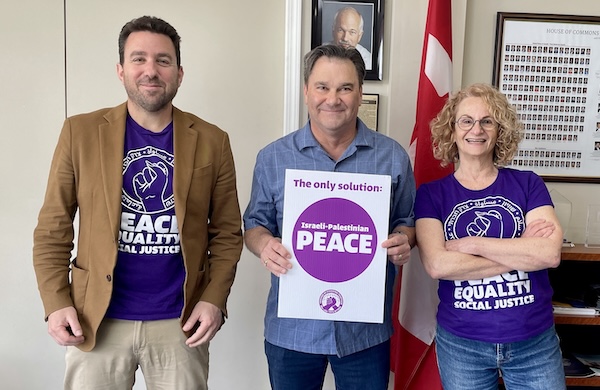
Interim leader of the New Democratic Party of Canada Don Davies, centre, with Itai Bavli and Avril Orloff of Vancouver Friends of Standing Together. (photo from Vancouver FOST)

This summer, Vancouver Friends of Standing Together has been holding weekly vigils in front of City Hall to continue the call for the return of the hostages, an end to the war in Gaza and an end to settler violence against Palestinians in the West Bank.

“We organize rallies, vigils and information sessions to raise awareness of the situation in Israel/Palestine and promote ‘another way’ that is not exclusively pro-Israel or pro-Palestine but pro-humanity,” Avril Orloff, who started the Vancouver Friends of Standing Together (FOST) chapter, told the Independent.

Adi Keidar, one of the chapter’s co-administrators, said, “If you are willing to accept that both Israelis and Palestinians deserve to live freely and safely on this land, I will be standing with and supporting you. Someone told me, ‘if you need to choose between pro-Israel or pro-Palestine, it is obvious for me, as a Jew/Israeli where I stand. However, if I knew and trusted that there is another way, I would choose both.’ Standing Together, for me, brings that other voice.”

“I joined the FOST group in June 2024 because it reflects my values and my belief that finding a just solution to the conflict is the only way forward,” Itai Bavli, also a Vancouver FOST co-administrator, said. “I care about all people living between the river and the sea and believe that both peoples can thrive if given the chance. I support Israelis and Palestinians alike and believe they both have the right to live freely and safely. Which means ending the occupation and supporting a Palestinian state. For me, it’s a responsibility I carry.”

Currently, there are nine local co-administrators, who play active roles as their other work and responsibilities permit, Orloff explained. “We try to divide up responsibilities, so no one is overburdened,” she said, noting that everyone involved is a volunteer. “We meet on an ad hoc basis as needed to brainstorm ways to increase awareness, bring out the voice of Standing Together and address issues that come up.”

Standing Together is an Israeli grassroots social movement made up of Jewish and Palestinian citizens that, according to its website, “envision[s] a society that serves all of us and treats every person with dignity. A society that chooses peace, justice and independence for Israelis and Palestinians, Jews and Arabs. A society in which we all enjoy real security, adequate housing, quality education, good healthcare, a liveable climate, a decent salary and the ability to age with dignity.”

Since the Hamas terror attacks on Oct. 7, 2023, and the ensuing war, Standing Together in Israel has been organizing demonstrations – attended by tens of thousands – calling for a hostage deal and a ceasefire agreement. They also have been engaging in public campaigns “aimed at re-humanizing the discourse, retaining humanity, mourning all lives lost and rejecting violence on social media in Hebrew, Arabic, and English.” Last May, they launched the Humanitarian Guard initiative at Tarqumiyah checkpoint to protect “aid trucks headed to Gaza from attacks by extremist settlers that come out to attack the trucks.” This month, they started a campaign to collect food and humanitarian aid for residents of Gaza. 

In addition to the eight chapters of Standing Together that operate in Israel, there are Friends of Standing Together chapters worldwide that have formed since Oct. 7. The chapters in the diaspora raise awareness of and funds for Standing Together, as well as offer a local communal space for people who share the movement’s values and goals. Orloff is an ambassador for ST’s global crowdfunding campaign and recently surpassed her personal goal of raising $6,000 for the movement.

“I started the Vancouver FOST group in February 2024, when I first learned about Standing Together and discovered they had support groups around the world,” said Orloff. “I was drawn to ST because I felt that a lot of groups advocating for either Israel or Palestine focused on only one side or the other, which seemed short-sighted to me. Standing Together’s stance, by contrast, is that, with seven million Jews and seven million Palestinians living ‘between the river and the sea,’ none of whom are going anywhere, the only sustainable future is a shared one grounded in equality, security, peace and justice for all.”

Orloff, Keidar and Bavli said they appreciate that ST is about more than ending the war and that it’s “a broad-based social movement that goes beyond the specifics of Jewish/Palestinian issues to encompass social change at all levels of society, from the bottom up.”

“One of the biggest concerns and confusions I had on Oct. 7 and the events that followed was the rise of hate and polarization on both sides,” said Keidar. “It was rare that I could agree with much that was said, and I was constantly trying to hold two thoughts at the same time. I felt alone and was not seeing the benefit of supporting one side – it felt wrong and unjust and it didn’t fit my values.

photo - Adi Keidar at one of Vancouver Friends of Standing Together’s vigils
Adi Keidar at one of Vancouver Friends of Standing Together’s vigils. (photo from Vancouver FOST)

“When I learned about Standing Together, it was the closest group that I felt spoke to my values and beliefs, as their focus is not one side or the other but humanity, which was the voice I felt was drowning in the hate that was brewing. I wasn’t willing to accept just one side. I believe that the only way to get out of this cycle is by compassionately seeing both sides, taking responsibility, finding the people that speak these values and bringing their voices out.”

Keidar participates in the weekly Bring Them Home rallies. Both she and Bavli spoke at a BTH rally this summer to raise the voice of Standing Together, to show “that it’s possible (indeed, necessary) to support both Israel and Palestine, and remind people that the immediate end of this war is only the beginning of the work to build a shared society in which all peoples live in peace and security.”

Vancouver FOST does local community-building through their WhatsApp group, social events (for example, film evenings, picnics, in-home gatherings), rallies and other activities. They raise awareness on social media via Instagram and work to build their membership, liaising with Standing Together and FOST groups globally. They meet monthly on Zoom with other Canadian FOSTs and build relationships with groups that share ST’s values and principles, like Women Wage Peace and various faith organizations. They have started doing outreach to Canadian politicians.

“We have endorsed Canada FOST’s Call to Action to the Canadian government and politicians to advance key priorities,” said Orloff, “including taking urgent diplomatic action to permanently end the war in Gaza; providing long-term support for peace and equality, not war; and supporting solidarity and partnership in our own society.”

The group organized and hosted an event in June last year, which brought Raja Khouri and Jeffrey Wilkinson to Vancouver to talk about their book, The Wall Between: What Jews and Palestinians Don’t Want to Know About Each Other. (See jewishindependent.ca/not-such-a-great-divide.) They have plans to host an information table at the University of British Columbia in the fall.

In an email, Orloff, Keidar and Bavli described Vancouver FOST as being “for more than we’re against. We don’t argue about terminology or labels or traffic in simplistic black-and-white ‘solutions,’ but are comfortable living with complexity and difference. We love to have juicy discussions, but, more than talk, we’re about supporting action that will bring about real, practical, sustainable change. We aren’t pro-Israel or pro-Palestine but pro-humanity,” they reiterated, “and we don’t see this as a left-right divide or an Israel-Palestine divide, but a divide between those who want peace and life for everyone and those who traffic in death and destruction. We’re here to offer a different way of thinking about the conflict and a different path forward, not to convince people that we’re right.”

Orloff said group members aren’t “settling for simplistic, one-sided solutions that make heroes of one side and villains of the other, but recognize that geopolitical issues have history and context that create layers of complexity, compounded by historical and intergenerational trauma on both sides. What I tell people is that, in this ongoing conflict, there is no win/lose: it’s either win/win or lose/lose. If we don’t find a way to justice, equality, peace and security for all, there won’t be justice, equality, peace or security for anyone.”

“We are involved with Standing Together,” the three co-administrators stressed, “because of deep feeling for Israel and the people living in the land. Many of our FOST members are Israelis who are heartsick at what Israel is doing in Gaza, the West Bank, and to its own Palestinian Israeli citizens. We believe in Israel’s promise and want to hold Israel to its highest ideals. There is no other way. It’s our responsibility to bring about the change.” 

טראמפ עוזר לנתניהו ונתניהו עוזר לטראמפ

 במדינות מתוקנות מנהיגים כמו ראש ממשלת ישראל בנימין נתניהו, ונשיא ארצות הברית דונלד טראמפ, היו יושבים בכלא כבר מזמן. אך כיום לצערנו ישראל וארה”ב כבר מזמן לא מדינות מתוקנות, הדמוקרטיה בהן חלשה ומחולשת מדי יום. והציבור או שאינו מבין את חומרת המצב או שלא אכפת לו. מכל מקום: הנזק שגורמים נתניהו וטראמפ למדינותיהם הוא קבוע ובר קיימה ולא יתוקן גם לאחר שהם יעלמו מהמפה הפולטית. יקח מספר דורות אם בכלל להחזיר את המצב לקדומו

בביקורו השלישי בחודשים האחרונים של נתניהו בבית הלבן, נראה המנהיג הישראלי זורח כאילו זכה בפייס. הרי בישראל נתניהו כבר אינו מקובל, ורבים מבינים עד כמה הוא הזיק ומזיק למדינה. אך בבית הלבן כשטראמפ לצידו, מרגיש נתניהו ממש כמו בבית. הרי מה אפכת לו שהוא האחראי הראשי למחדלי השבעה באוקטובר, שחטופים נהרגו כיוון שהוא סירב להגיע להסכמות עם החאמס, ושחיילים רבים כמו פלסטינים רבים נהרגים כמעט כל יום לחינם בעזה

נתניהו המושחת לא התבייש להציע שחברו האמריקני המושחת יקבל את פרס נובל לשלום. עבור מה? עבור הצלחתו להפסיק את המלחמה בין רוסיה לאוקראיינה? האם הצליח טראמפ להביא שלום בין ישראל לאיראן, או בין ישראל לפלסטינים, או בין ישראל לחמאס, או בין ישראל לסוריה, או בין ישראל לערב הסעודית, או בין ישראל ללבנון

אך כאשר שני מנהיגים מושחתחים נפגשים, כל אחד רוחץ את גבו של השני ויש הרבה מה לרחוץ שם. לכן טראמפ לא התבייש לקרוא למערכת המשפט בישראל להפסיק את משפטו של נתניהו. איזה מעמד יש לנשיא ארה”ב שהוא יכול בכלל לצאת בדרישה שכזו

ועל התערבות טראמפ במערכת המשפט בישראל כותב פרופסור אמנון סלע:
אינני קורא מתמיד של ישראל היום. לכן מזמן לא קראתי כתבה של אמנון לורד. כבר לפני שנים רבות הוא הסתמן כאיום כעיתונאי של ה-דיפ-סטייט, מתלהם, לא מדוד. בכתבה החדשה של רבעי אמיתות וחצאי שקרים, הבנתי את גודל החרפה בהתערבותו החצופה של טראמפ במערכת המשפט. נצחון הבורות השמרנית התאפשר, בין השאר בשל התערבות האוונגליסטים ושאר עובדי הדת. מיד יצא הקבינט המטורלל נגד הדמוקרטיה, ומה שנשאר, תוך עשרים וארבע שעות הוא ליבה את המלחמה בין רוסיה לאוקראינה. בהבל-פה הוא סיפח את קנדה וגרנלנד. והסיר מיסים משכבת המיליונרים שהשמינה

בשניה הפכה אמריקה לגדולה כשמפרץ מכסיקו הפך למפרץ אמריקה. באצילות אופיינית לימין לורד תקף את הנשיא ביידן. באותו שאר-רוח שביבי תקף את אובמה. את תמיכת שתי המפלגות ביבי ולורד השליכו הימה לאחר הליך הרס שיטתי של מערכת המשפט האמריקנית, עם נגיחות בקונסטיטוציה. נפנה הנשיא האמריקני הידיד (לפעמים) לנפץ את מערכת המשפט בישראל. זה הנשיא שעסק בפרוסטיטוציה תחת שמי אותו אל. לפני שבע שנים בעצת ביבי ידידו הוא סייע לאיראן להעשיר אורניום. בעצת ביבי ידידו הוא יצא למלחמה נגד אותו איום, ולא הואילו אזהרות הפנטגון והסי.אי.איי, נגד סמכות הקונגרס, אותו קונגרס שתקפו תומכיו, בליווי תפילות דרעי בעל הנס הטרמפיזם מטמא את העולם. נכון, לא לדעת כולם

ועל התנהלות ממשלת ישראל הפוגעת בשלטון החוק אומר איש הצבא הבכיר לשעבר בני ברבש: מחובתנו להציב מול הבריונות השלטונית אמצעי הרתעה יעילים ולמתוח קו עצירה שממנו לא נסוגים. מחיקת עברו והוויתו של כל אדם, יהיה זה אלוף, טוראי או סתם אזרח שלא בא לשלטון טוב בעיניים, היא פרקטיקה מוכרת וידועה של המשטרים האפלים ביותר במאה העשרים, שמפני אחד מהם הזהיר יאיר גולן עצמו. מחר תחליט הממשלה לשלול את תאריו האקדמיים של מדען מזהיר ומחרתיים היא תפקיע משופט עליון את משרתו כי פסיקתו לא תישא חן בעיניהם

Two Yiddish-speaking Bluenosers

Writer Adina Horwich only met Yehuda Miklaf and his wife Maurene in Jerusalem, even though both Adina and Yehuda are from Nova Scotia. (photo by Adina Horwich)

So, this guy walks into my Yiddish group one fine Sunday in Jerusalem – this is not the beginning of a joke. In the group, we welcome anyone who is into Yiddish, with any background, and, on that day, Yehuda was introduced to us. We went around the room asking him questions. I asked where he hailed from. Little could I have anticipated his answer: Nova Scotia.

“I don’t believe it!” I said. “So do I!” Then, “From where, exactly?”

“Annapolis Valley.”

 “Oh,” I paused, thinking to myself, I’d be hard-pressed to find any Jews there. 

Later, Yehuda’s story was revealed when the teacher matched us up to work together.

Yehuda, an Esperanto speaker and aficionado, has only recently started to learn Yiddish, while I have been at it for 15 years. I started off with little but the smattering I heard as a child. Yehuda happened upon it by the by, via a friend in the hand-printing scene, where he is an active, prominent member. With the characteristic zeal that he tackles so many projects, and lots of gumption, he has taken to Yiddish very well. 

The sight and sound of us two old-time Bluenosers (nickname for Nova Scotians) hacking a chainik in Yiddish, is too precious. But, most of all, I like when Yehuda slips into the down-home accent I grew up with. That is when I really kvell.

Né Seamas Brian McClafferty, Yehuda was born in the mid-1940s to a father with Irish roots and a mother with origins in Quebec. The youngest of eight, he had an idyllic childhood, as a small-town Catholic youngster in Annapolis Royal, which today has a population of only 530.

In his last year of high school, Yehuda attended a Fransciscan seminary in upstate New York, his first foray away from home. With his fellow students, he passed a building with Hebrew letters, which intrigued him. A friend he asked about these unfamiliar markings promptly replied: “That’s just Hebrew.” Yehuda had never seen, much less met, any Jews. 

He completed his last year of high school and then spent a year of silence and meditation at the novitiate in the Adirondacks. The following year, he furthered his studies towards the priesthood, commencing a rigorous and intense program that sounds like a yeshiva govoha (Torah academy of higher learning).

Discipline and training, mostly in silence, hours of meditation and living under austere conditions, Yehuda carried on through to the second of four years. He heard a lecture about the Torah, which was demonstrated by a small model scroll, and delved deeply from then on, backed by the church’s ecumenical approach of spirituality and faith. He availed himself of the library to his heart’s content and took to reading the Hebrew Bible over and over again. He didn’t know it at the time, but his first steps towards life as an Orthodox Jew were taken, while he was encouraged to become a scholar of the “Old Testament.”

Over the four years of study, Yehuda began to have rather different ideas about how he wanted to live his life.

Returning to Canada in the mid-1960s, he spent time in Toronto and in Nova Scotia, taking road trips home to tend to his father who had taken ill. Things grew clearer.

Yehuda absorbed every mention of things Jewish. It was an emotional attachment. In 1966, after having left Christianity, he discussed his evolving beliefs with a Jewish friend, who said: “You sound more Jewish than me. I’m surprised that you haven’t converted.”

The conversion process was long but not arduous. Yehuda took a class in Toronto and eventually went to the mikvah. 

He and his wife Maurene – who he met through his roommate in Toronto – visited Israel, as tourists, for an extended vacation. They had not intended to make aliyah, but, smitten with Israel, as so many of us are, did so three years later.

After making aliyah, Yehuda had to “rinse and repeat,” so to speak, as often happens with conversion. Israeli rabbinic courts do not automatically accept even the most stringent diaspora Orthodox ones, and Yehuda had to go through it again, studying for a year and then going to the mikvah. The converting rabbi gave him the option of choosing a name and Yehuda suited him, since that’s where the word Jew comes from. Miklaf (literally, “from parchment”) was a good abbreviation of McClafferty, he thought, and could not have been more fitting for his chosen profession of printer and bookbinder.

Like most new immigrants at the time, they started out at an absorption centre and had a routine klita (absorption/integration), including Hebrew language studies at ulpan. Maurene got a job in high-tech and Yehuda opened a studio. He started out by binding the original of David Moss’s My Haggadah: The Book of Freedom, and branched out into printing.

The couple attends an Ashkenazi shul but try not to be pigeonholed as being from one background (Sephardi or Ashkenazi). Early on, Yehuda tasted some traditional Ashkenazi delicacies and learned how to make potato kugel, for which he’s now famous, along with kneidlach.

Yehuda still has two siblings in Nova Scotia and visits his longtime friends in Annapolis Royal.

Our paths from the Atlantic led us to meet in Jerusalem, where we raised our families. The Miklafs have two children and several grandkids. Their daughter was a high school friend of my daughter’s, and both women have been living in the same community, and they see each other now and again.

Ma’aseh avot siman l’banim – the deeds of the fathers are a sign for the children – or, in this case, Ma’aseh horim siman l’banot, the deeds of the parents are a sign for the daughters. 

Adina Horwich was born in Israel to Canadian parents. In 1960, the family returned to Canada, first living in Halifax, then in a Montreal suburb. In 1975, at age 17, Horwich made aliyah, and has lived mostly in the Jerusalem area. She won a Rockower Award for journalistic excellence in covering Zionism, aliyah and Israel for her article “Immigration challenges.”

לאן נתניהו לוקח את ישראל

:איש צבא בכיר לשעבר שמשתייך למחנה השמאל בישראל אומר על בנימין נתניהו

זה כמעט שנתיים לא השיגה ישראל הכרעה במלחמתה נגד ארגון טרור המצויד ב”טנדרים וכפכפים”, כדברי ראש הממשלה, למרות שכבר הרגה כשני אחוז מתושבי הרצועה. אבל אל דאגה, האיש הזה החליט לפצות אותנו על הכישלון בחזית הקטנה בפתיחת חזית נוספת, ראויה ללביאים שכמותנו, בפותחו במלחמה נגד מדינה ששטחה גדול משטחנו פי 66 ואוכלוסייתה מונה פי עשר מאוכלוסיית ישראל, כולל ערבים וחרדים שלא נושאים בנטל הבטחוני, וממעטים לשאת (שלא באשמתם) בנטל הכלכלי והטכנולוגי

ישראל שיכולה הייתה לסיים את המלחמה בעזה כבר לפני שנה, לשחרר את כל חטופיה ולהיכנס, תחת חסות אמריקאית, להסכמי נורמליזציה, בריתות צבאיות וכינון יחסים דיפלומטיים עם המדינות הסוניות המתונות, לו רק הסכימה לקדם את פתרון שתי המדינות, החליטה להעדיף את החזון המשיחי, את העליונות היהודית, את הגזענות, את האפרטהייד ואת מלאכת השמד והגירוש של תושבי הרצועה

ישראל שהפכה עבור הפלסטינים את רפיח וג’יבאליה למה שסטלינגרד מסמלת לרוסים, ומרד גטו ורשה ליהודים, מעניקה עכשיו לאיראנים על מגש של כסף את מה שהעניקו היפנים לאמריקאים בפרל הארבור: מוטיבציה מטורפת להשיב מלחמה שערה המוזנת על ידי עלבון צורב. התלכדות פנימית, ונחישות סבלנית וארוכת טווח לפגוע בנו אנושות

התבונה המדינית המינימלית מחייבת לנטרל איומים אפשריים ולחזק בריתות אזוריות בבואך להבעיר חזית חדשה גדולה ומאיימת. אבל אנחנו, סרבנים אולטימטיביים שכמותנו לכל פשרה, לכל הסדר, העדפנו להעצים את ההתלקחות האזורית, כי זו הייתה הדרך היחידה לשמר את לכידותה של הממשלה, להשכיח את מחדל העוטף ואת החטופים, וללכד שוב את עדר הכבשים הפבלובי על ידי השמעת רעם תופי המלחמה. עובדה, כולם מריירים

המלחמה שפתחנו נגד איראן בשורת חיסולים המזכירה מלחמת כנופיות יותר מאשר מלחמה בין אומות לא תשיג הכרעה. היא אולי הצליחה להנחית מכה ראשונית מכאיבה, אבל מהר מאוד היא תהפוך למלחמת התשה והקזת דם שעלולה להימשך שבועות, חודשים ואפילו שנים, וזאת בשעה שאורך הנשימה שלנו, בכל מובן אפשרי קצר יותר מזה של האיראנים

כדאי להיזכר במלחמת איראן עיראק שנמשכה 8 שנים גבתה קרוב למיליון הרוגים, חיילים ואזרחים, איראניים, מעל למיליון נכים, שני מיליון עקורים ואומה שמשננת עד היום בהתלהבות את הסיסמה ‘ג’נג, ג’נג תא פירוזי’ (מלחמה, מלחמה עד הניצחון)

המוטיבציה להשיג נשק גרעיני ולהגיע למאזן אימה מול ישראל שכבר מזוינת בנשק כזה רק תתחזק, והנזקים שאנחנו נסב לפרויקט הגרעיני יתוקנו תוך חודשים או שנים מועטות

אני רוצה להאמין בכל לבי שמישהו סביב שולחן מקבלי ההחלטות לקח בחשבון את התסריט ההגיוני הזה ואולי מישהו הרגיע אותו שמיתקפה מוצלחת תערער את המשטר ותביא להפלתו. אולי. אין לדעת. כרגע מסתמן שהסולידריות של אזרחי איראן עם המשטר דווקא גדלה תחת רושם המהלומה הראשונה

אז יצאנו למלחמה להשיג מטרה מוגבלת מבלי לקחת בחשבון שאולי היא תתרחב לעימות מתיש וארוך. לא צריך אלפי טילים ביום כדי להכניס את מדינת ישראל לטרפת, לסגור את נמלי התעופה והים שלה ולגרום לה נזקים כלכליים, נפשיים ולאומיים חמורים

מספיק כמה עשרות שיגיעו למטרות מדי שבוע כדי לסגור את המרחב האווירי, לשבש את שגרת החיים, לחבל אנושות בכלכלה המקרטעת ובמוסדות החינוך, להפוך את המציאות כאן לבלתי אפשרית, לפחות לאלו שלא מצוידים במקלטים אטומיים

אז יצאנו למלחמה להסיר סכנה עתידית שנויה במחלוקת וקיבלנו סכנה מיידית שלא ברור עד כמה אנחנו מוכנים להשלכותיה

Life amid 12-Day War

Several Iranian missile barrages targeted residential areas in Ramat Gan and other areas of Israel. (photo by Yoram Sorek / Wikimedia Commons)

A missile alert blared! Early Friday morning, like 2 a.m. early, we ran into our saferoom, seemingly to seek safety from yet another Houthi missile from Yemen. As usual, I was the last to get there. Not because I heroically brought up the rear, but because I lagged behind, looking for my glasses and Ventolin puffer – in the heat of battle, I can’t seem to remember where I put them.

As I entered our sanctuary and slammed the heavy steel door shut, my wife exclaimed in disbelief, “We’re attacking Iran!”

Dumbstruck at first, thoughts then flew through my mind at hypersonic ballistic missile speed, including the prayer for the army, “He who blessed our forefathers Abraham, Isaac and Jacob, may He bless the fighters of the Israel Defence Forces, who stand guard over our land….”

The purpose of the siren that morning? Get Israelis in front of the TV, announce this remarkable development and prepare us for the days ahead. To advise us we were under emergency lockdown and we should remain close to safe areas until further notice, in anticipation of Iran’s retaliation.

So there we stayed for the rest of the night, watching history unfold. In shock. In awe. In fear.

* * *

Much later that morning, I noticed we were out of Manischewitz wine, needed for that evening’s Shabbat dinner. Now, I am not a religious person, but we are living in existential times. I needed to say the blessings.

“I’m going to the grocery store to buy some Manischewitz,” I told my wife.

“No!” she said. “We can be attacked any moment. We can do without the wine.”

“OK. I’ll go to the corner store,” I said by way of compromise. “We need the wine for the blessings tonight. I’ll be back in a minute.”

I guess everyone was looking for Manischewitz that day, as our corner store was sold out. I made my way to the store a bit further down the road, running, hoping not to be caught in a missile barrage. But that store also had sold out. Guess a lot of people wanted to say the blessings that Shabbat.

I tried one more store, a bit farther away, running faster, still hoping not to be caught in a missile barrage. Sold out there as well.

Determined to buy my Manischewitz, I ventured even further away, towards the main street, hoping even harder to not be caught during a missile alert, so much farther from home than expected. Found it! That night, we said the prayer for the IDF.

* * *

Speaking of blessings, I talked with a friend who has become very religious. As we discussed the situation, he asked what people who don’t believe in prayer are doing now. “Praying,” I deadpanned.

* * *

A few days later, my city was hit by two Iranian intercontinental missiles in the middle of the night. The impact was tremendously loud and tremendously scary. Our building shook. The destruction was immense, several blocks wide. With all the confusion and damage, there was no looting. Not here and not in other areas of the country suffering the same outrageous fortune from the mullahs’ missiles. 

In the morning, my wife and I walked along the main street – where I bought the Manischewitz – surveying the damage. You could still smell the dynamite. The huge front window of the bookstore was blown out. Now, if I were a looter … forget the TVs and stereos from the store next door or the perfume from the nearby pharmacy. As a bibliophile, I would probably loot the bookstore, grab a few bestsellers – not.

The scene was very humbling. Very depressing. 

* * *

My wife and daughter are sleeping in the saferoom. I remain in our bedroom across the hall, sprinting to join them several times a night as missile alerts blare. I’ve put an extra pair of glasses and my inhaler on a shelf to avoid delays.

Our saferoom is a messy fortress stocked with mineral water, canned goods, medications and passports. We each have packed an overnight bag, should our place be hit by a missile. How helpful are an extra pair of pants and underwear should we lose everything? We also put some shoes near the fortified steel door – we can’t imagine walking over rubble and shards of glass in our bare feet. Of course, we packed some personal keepsakes: photographs, favourite books, my plastic superhero figurines.

* * *

There was another missile alert the following Friday morning. As we made our way to the saferoom, I again brought up the rear. Again, not because of heroism but, this time, to grab the pots of food simmering on our stove. Dinner was my wife’s specialty. I wasn’t going to risk it to a ballistic missile fired by angry mullahs. This time, the Manischewitz was chilling in the fridge.

* * *

Anxious speculation comes to an end. Another Machiavellian Trump triumph. Doing the right thing, the moral thing. Several B-2 stealth bombers flew over 35 hours under the guise of a two-week bluff. To defeat tyranny, or at least to destroy those dang nuclear sites, “By wise counsel thou shalt make thy war.” (Proverbs 24:6) 

* * *

The ceasefire is holding. We unpacked our overnight bags and put the keepsakes back in place. Batman, the Green Arrow and the Flash are safely back on the library shelf. 

* * *

The financial cost to Israel of the 12-Day War, as it’s now referred, is huge, some billions of dollars. A war brought by surprise to the enemy – not against the Persian people but against the myopic, maniacal mullahs of the Islamic Republic of Iran. So please continue donating to your favourite Israeli charity or buy Israel Bonds or come visit and spend your tourist dollars here.

Israel lost 28 people during the war. According to Jewish mysticism, one soul is like an entire universe. But, while 28 universes were destroyed – and I don’t say this lightly – it was only 28, which is testament to Israel’s great preparedness and adherence to Home Front Command instructions. At every opportunity – billboards, newspapers, public service announcements, movie trailers – instructions were given. And again. And again.

* * *

Bring them home now. 

Bruce Brown, a Canadian-Israeli, made aliyah more than 25 years ago. He works in high-tech by day and, in spurts, is a writer by night. He is the winner of a 2019 American Jewish Press Association Simon Rockower Award for excellence in Jewish writing.

Harper to speak here

photo - Stephen J. Harper
Stephen J. Harper (photo from internet)

On Sept. 7, the Canadian Shaare Zedek Hospital Foundation, Western Region, presents A Special Evening Marking 50 Years of Supporting Shaare Zedek Medical Centre in Jerusalem, featuring former prime minister Stephen J. Harper. 

The event, moderated by Gordon Campbell, raises funds for Shaare Zedek Medical Centre’s Incubators Drive.

In 2024, more than 20,000 babies were born at Shaare Zedek’s Wilf Woman and Infant Centre – three times that of BC Women’s and Children’s Hospital. Of those, 1,100 required intensive care in the neonatal intensive care unit. The NICU operates 70 state-of-the-art infant stations, offering 24/7 care with specialized staff and cutting-edge equipment. The goal of the campaign is to raise enough money to purchase additional Giraffe Incubator Carestations, each costing $50,000, to meet growing demand and save more lives. Thanks to a matching donor, every dollar donated will be matched up to $118,000.

Marla Gordon and Justin Segal are emcees of the Sept. 7 event. Herb Silber and Eli Konorti are corporate committee chairs, while Carol Segal and Yael Segal are dinner chairs. The Jewish Medical Association of BC is the evening’s educational sponsor and the Dr. Harry and Ruth Frackson Speaker Series has contributed to the event. Community partners are the Jewish Federation of Greater Vancouver, Congregation Schara Tzedeck and the Jewish Independent.

Tickets for the VIP meet-and-greet are a minimum gift of $1,800, which includes tickets for two guests. Admission to the VIP cocktail dinner is $250 per person, and the price to only attend the moderated presentation is $36 per person. For more information and sponsorship opportunities, contact Ilan Pilo, Western Canada director of CSZHF, at ipilo@hospitalwithaheart.ca or 778-858-8748. 

– Courtesy Canadian Shaare Zedek Hospital Foundation, Western Region

Ex-pats make good in Israel

Former Montrealers Shmarya and Lainie Richler opened their first Muffin Boutique in Jerusalem in 2014; their second, in 2023. (photo by Adina Horwich)

My interview with Muffin Boutique owners Lainie and Shmarya Richler took place on the afternoon following the US airstrike on Fordow and other Iranian nuclear facilities. It was 2 o’clock on Sunday and the couple took time out from their breathlessly busy schedule to sit with me at their Talpiot location, minutes from Haas Promenade, aka Tayelet Armon Hanetziv, in Jerusalem.

I have been coming to this coffee shop almost every Tuesday afternoon for almost a year. As a participant in the Anglo Women’s group, which was initially supported by the local community centre, we are encouraged to meet and eat. Facilitated by Helena Flusfeder and Rachel Beenstock, we enjoy a hot or cold beverage, salad, bagel with a variety of spreads, a slice of cake or a muffin, good company and laughs. Another of the members is native Montrealer Paula Dubrow, Lainie’s mother.

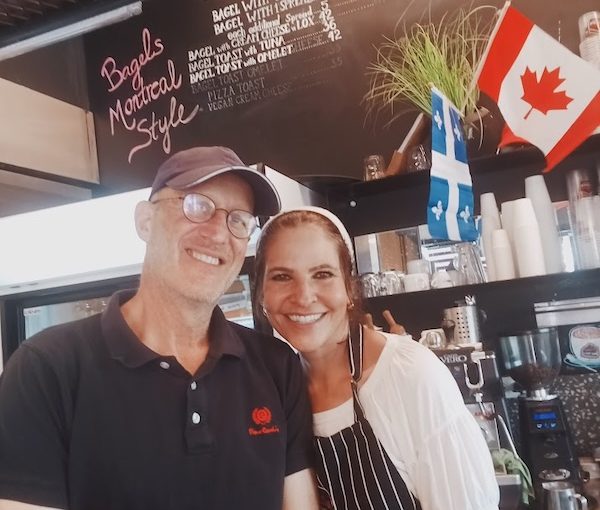
photo - A Canadian flag flies beside the province of Quebec’s fleur-de-lis
A Canadian flag flies beside the province of Quebec’s fleur-de-lis. (photo by Adina Horwich)

The café, which has indoor and outdoor seating for about 30 people, was busy, while the rest of the city felt deserted. I introduced myself, sharing my own Montreal experiences as an adolescent from 1969 to 1975. While the younger Richlers used to live in the very Jewish neighbourhoods of Côte Saint-Luc and adjacent Hampstead, I had lived in the suburbs, with a much smaller Jewish presence.

Shmarya hails from the large and prominent Richler family, most famous of whom was his first cousin, author Mordecai Richler. Shmarya’s mother, a survivor from Hungary, immigrated after the Second World War. Lainie’s paternal grandmother was English, as was my paternal grandfather.

We discussed their decision to make aliyah. It was always in the cards, they said, both having been raised in Modern Orthodox and Zionist homes. They studied at Jewish day schools and attended Tifereth Beth David Jerusalem Synagogue in Montreal. As teens, both were active in the Bnei Akiva youth movement, which is where they met and later started dating. Lainie studied and completed a master’s in psychology, while Shmarya majored in commerce. They married and had three children.

In 1995, they moved to Israel, living at first in Beit Shemesh, later and currently, in Efrat. Two more children were born here.

Lainie had intended to work in her field, but, as is wont to happen for immigrants to many countries, ran into the profession’s licensing body demands that, for her credentials to be recognized, she would need to take further studies. Since Lainie was trying to acclimatize to life’s challenges with a newborn, she preferred to shift her focus to that and raising the other children. 

She became involved in various exercise classes, giving them at community centres and other venues around Gush Etzion. Nutrition was a subject that had captured her interest, too, so she delved into that, taking a training course and becoming a certified alternative nutrition counselor.

Shmarya worked at first for a foreign company, then at a few Israeli startups, in high-tech, but the sector was continually growing and the jobs became increasingly demanding.

Needing to support a family of five kids, while coping with the everyday adjustments of aliyah, the couple began to wonder what to do. Their vision for retirement had been to run a B & B in the Galil or Golan. They thought, why not bring that idea forward, adapting it to their current situation.

Friends and family were skeptical, saying they were unrealistic, out of their depth; many a naysayer told them it would never work. But Lainie was determined to give it a go. She had always loved baking and cooking, informally making and selling muffins to friends and neighbours. She improved by testing many a recipe and soliciting feedback.

Shmarya was reluctant at first, but soon agreed. He took a  government-sponsored course at MATI (Jerusalem Business Development Centre), which trains and assists people interested in starting a small business. He was mentored by someone who took a serious interest and fully backed the couple’s plans, believing they could and would succeed.

photo - A Quebec licence plate – sporting the Quebecois nationalist slogan “Je me souviens” (“I remember”) – is prominently displayed behind the counter
A Quebec licence plate – sporting the Quebecois nationalist slogan “Je me souviens” (“I remember”) – is prominently displayed behind the counter. (photo by Adina Horwich)

Their first shop opened in 2014 on Jerusalem’s fashionable and ever-popular Ben Yehuda Street, a key menu component being Montreal-style bagels. And the store is replete with Canadiana. A Quebec licence plate – sporting the Quebecois nationalist slogan “Je me souviens” (“I remember”) – is prominently displayed behind the counter. It brings a half-smile to my face.

The second location, where I was conducting my interview, opened nearly two years ago. Scheduled to open Oct. 10, 2023, just days after the tragic events of Oct. 7, the opening was delayed – but only by a couple of weeks. When the doors opened on Oct. 23, the Richlers could barely keep up with the crowds. Locals warmly welcomed a chance to reaffirm their lives.

Ever since, this has been the local go-to café – the place is open 11 hours a day. Behind the register, a Canadian flag flies beside the province of Quebec’s fleur-de-lis.

photo - Both Muffin Boutiques prominently features the Richlers’ Canadian roots
Both Muffin Boutiques prominently features the Richlers’ Canadian roots. (photo by Adina Horwich)

Shmarya runs between the two branches, overseeing operations, keeping an eye on inventory, dealing with suppliers, expenses and all matters related to the running of the business.

Lainie is in charge of getting the daily, on-site baking up and running, with the help of a dedicated and hardworking staff. The restaurant serves coffee and breakfast from 8 a.m., while also accepting orders from their dairy menu for events, be they an office party or a family simcha. This aspect of the business comprises some 30% of its income. Everything is prepared fresh daily, using only natural ingredients, under Lainie’s expert watch and Badatz Mehadarin hechser (kosher certification).

Many employees have worked at both of the locations, most are native or near-native English speakers. This is vital, as the clientele is largely Anglo olim (immigrants). 

Every effort is made to maintain a family atmosphere – two of the Richlers’ children regularly work the counter – with friendly, personal service.

When you come to Jerusalem, do pay a visit to the Muffin Boutique, either at 16 Ben Yehuda or 13 Daniel Yanovsky, and have a nosh. Tell them Adina sent you! 

Adina Horwich was born in Israel to Canadian parents. In 1960, the family returned to Canada, first living in Halifax, then in a Montreal suburb. In 1975, at age 17, Horwich made aliyah, and has lived mostly in the Jerusalem area. She won a Rockower Award for journalistic excellence in covering Zionism, aliyah and Israel for her article “Immigration challenges.”

מחכים למשיח

שירו הגאוני של של שלום חנוך, מחכים למשיח, שנכתב בשנת 1985, מתאים למה שקורה בישראל היום לא פחות מאז. כותב חנוך בשירו: “תאונה למי שואל ארציאלי הבן. תאונה למדינה עונה השוטר המסכן. הבורסה נפלה, אנשים קופצים מהגג, גם משיח קפץ והודיעו שהוא נהרג. הכל אבוד, בוכה עזרא דהן הקבלן. משיח בשמיים ואנחנו בלי הכסף כאן. וירדנה היפה ממלמלת זה לא ייתכן. משיח לא בא משיח גם לא מטלפן. דצמבר המר זעקו כותרות בעיתון. ושר האוצר נתן במבט ראיון. הציבור מטומטם ולכן הציבור משלם, מה שבא בקלות באותה הקלות יעלם. האזרח הקטן נאלץ לשלם בגדול ואותי מעניינת ירדנה יותר מהכל. הולך למילואים וסופר את הכסף שאין. משיח לא בא. משיח גם לא מטלפן”

חנוך הסביר בשעתו את הרקע לכתיבת מחכים למשיח: “כעסתי על הציבור שנתן לאנשים ברמה בלתי מתקבלת על הדעת להנהיג אותו. כעסתי על כך שהעריצו דמגוגים טיפשים, שכל מה שמעניין אותם זה הפוזה בטלוויזיה. נדבקו למישהו והפכו אותו לגדול בשעה שצריכים היו לדרוש ממנו מקסימום של אמינות, אמת, אחריות, רמה מוסרית ושכלית. חיינו במדינה מטורפת, והראשון שצריך היה ללכת הביתה היה בגין עצמו. אבל הוא הבין רק כשהגיע בנפילה הגדולה שלו לקרקע. אין בעיני דבר נורא יותר מאנשים שעושים החלטות קלות לגבי החיים שלנו בשם הדמוקרטיה. כעסתי ואני אכעס עוד הרבה על ההפסד הגדול של המלחמה. על כך אין כפרה ואין סליחה”

היום בישראל המצב עוד הרבה יותר חמור מהמצב לפני ארבעים שנה. מנהיג דיקטטור נוכל, בנימין נתניהו, יושב על כיסא כמלך כבר יותר משבעה עשרה שנה. נתניהו לא מתכוון ללכת הביתה ומתכנן להמשיך ולשלוט בישראל עוד שנים רבות. רבים ממתנגדיו טוענים כל העת שהנה הוא כבר הולך הביתה וכל פעם הם מתבדים מחדש. מדהים לדעת עד כמה בישראל הציבור מטומטם כפי שאומר חנוך במחכים למשיח, וממשיך לתת לנתניהו וחבריו המושחתים להמשיך ולנהל את ענייני ישראל, שהולכת ושוקעת. בעולם ישראל נחשבת כיום לאחת המדינות המבודדות השנואות ביותר. לא פלא שהאנטישמיות כלפי ישראלים ויהודים בעולם מגיעה לשיאים חדשים כל הזמן. כלפי פנים: מדינת ישראל מפורקת לחלוטין בין מחנה מתנגדי נתניהו לבין חבורת המעריצים העיוורים שלו. אין סיכוי לגשר בין הפערים שנוצרו והשנאה הפנימית עברה כבר מזמן את הגבול. נתניהו האחראי הראשי לפציול החברתי בישראל, כמו גם לבידוד של ישראל בעולם, לא יקח שום אחריות על מעשיו והפאשלות הגדולות שלו לאורך כל ימי שלטונו. כמו ראש ארגון פשע בעולם התחתון, נתניהו מעולם לא לקח אחריות על מעשיו שגרמו לישראל נזק קשה ביותר, שקשה להאמין שאפשר לתקנו

בשיחות שלי עם בני משפחה וחברים בישראל, הם אומרים לי כל העת כי מרבית העם שונא את נתניהו וימיו כראש ממשלה ספורים. כך הם אמרו לי מיד לאחר השבעה באוקטובר, כך אמרו לי שוב לקראת סוף שנה שעברה, ולאחר מכן לפני מספר חודשים בעת אישור התקציב החדש בכנסת. עכשיו הם טוענים כי בעת הזו נתניהו הולך הביתה. אז חלומות לחוד ומציאות לחוד

האופוזיציה לנתניהו וממשלתו הנוראית היא חלשה עד גיחוח והיא איננה מסוגלת לארגן את השורות, לאחד את כל המפלגות המתנגדות לו, לארגן הפגנות ואספות עם, להשבית את המשק ולהפעיל את כל מה שניתן כנגדו. המצב בישראל וקשה ולנתניהו לא אכפת כלל כל עוד הוא יושב על כיסא המלך

Arab Zionist recalls journey

On June 12, Rawan Osman spoke with Daniel Koren, founder and executive director of Allied Voices for Israel, which brought her to the West Coast. (photo by Pat Johnson)

Rawan Osman, among the most visible Arab advocates contesting antisemitism and anti-Israel ideology, recently brought to Vancouver a bleak overview of hate ideologies across the Middle East and North Africa – but her prognosis is hopeful.

Osman is a Syrian-born, Lebanon-raised, German-based – and soon to be Israeli – accidental activist who shared her experience going from what she said is a characteristically antisemitic Arab into an “Arab Zionist.” She spoke at Temple Sholom June 12, in conversation with Daniel Koren, founder and executive director of Allied Voices for Israel, which brought her to the West Coast.

Osman took Islamic and then Jewish studies at Heidelberg University. After Oct. 7, 2023, she founded a social media channel called Arabs Ask, to combat antisemitism in the Arab world. She is writing a book about her relationship with Judaism and Israel, and is the narrator and central figure in the documentary film Tragic Awakening, about antisemitism after Oct. 7.

“My case is unusual,” she acknowledged. “There aren’t many people born in the Arab world who support Israel.”

She recounted the story of her first encounter with a Jew. She had moved to Strasbourg, France, and found herself living in the Jewish Quarter. She had assumed that the neighbourhood’s name was like the Jewish Quarter in Beirut or Damascus – an historical designation. When she went into a grocery store on her first day there, she stumbled into a kosher grocery and saw real-life Jews for the first time.

She had a panic attack, left her purchases and belongings behind and fled to her apartment. After she recovered and returned to collect her things, she had a life-altering experience.

She made an excuse that she had forgotten her wallet but she is certain the shopkeeper knew what had happened. He asked where she was from and how long she had been in town. He helped her with her groceries and behaved like a human being, not the monster she had been told was the way of the Jew.

“He allowed me to save face and, that day, without knowing it, that gentleman converted me from an enemy to an ally,” she said. “I realized it was the first time in my life that I was sharing the same space with a Jew, the enemy, and it was the first time in my life when I asked, why is the Jew my enemy?”

Osman’s father was Sunni from Damascus and her mother was Shia from the Beqaa Valley, which is the stronghold of Hezbollah.

“I grew up in Lebanon, attending a French Catholic school,” she said. But, negotiating between her family’s dual Muslim identities and Christians in Lebanon, she chose a middle path of atheism.

“They were secular, progressive, relaxed, laid-back,” she said of her family and the broader environment in which she was raised – with one exception. “The only thing everybody hated was Israel and the Jews and the Zionists.”

She said she employs these three terms – Israeli, Jewish and Zionist – interchangeably because that is how they are used in the Arab world.

“They say, I am anti-Zionist, not antisemitic. That’s a farce,” she said. “I grew up in that part of the world and I too believed [they were different things].” 

Studying abroad and having access to uncensored information in Europe was a privilege with which she was unaccustomed. The more she explored the history of Judaism and met and interacted with Jews, the more she rejected the antisemitism with which she was raised. Eventually, she moved back to the Middle East and decided to challenge the prevailing narrative.

“After living in the Middle East for awhile, I decided, OK, it’s hopeless,” she said. “I’m going to leave. I’m going to move to Europe. And I did.”

She chose Europe because she identified with Western values, she said, and because, as one person, “what can I change?”

She opted to mind her own business in Germany. Even so, she was alarmed by what she was seeing.

She viewed the notorious gang rapes that took place in Cologne on New Year’s Eve and the early hours of 2016 as a symptom of Arab misogyny imported to Europe. What was more jarring to her was seeing herself in the place of others perpetrating hate crimes. She watched a video of a young Arab man encountering a Jew in Berlin.

“He took off his belt and he was hitting the young Jew with the metal buckle on his head,” she recounted. “This was me. I was the civilized version … I wouldn’t hit a Jew. But I had a panic attack the first time I saw a Jew.”

She did not plan to become an activist. After Oct. 7, it just happened.

“I started speaking on social media and became an accidental activist and influencer,” she said. “I thought influencers made nail designs, baking and makeup.”

She is part of a small but notable group of Arabs who are speaking out against antisemitism and other regressive realities.

“We refuse to continue to raise our children and grandchildren in a world that tolerates what happened on Oct. 7,” she said. 

It is something she could not have undertaken if her extended family did not also live abroad, she said. To be known as an activist for Jews and Israel would endanger family in the Arab world, which means even many who live in the West remain silent, she said. But those who have the freedom to do so need to join her, she contended.

Osman receives private messages from Arabs and Iranians lauding what she does. She admires the courage of those who write to her from the Middle East. For those writing from Sydney or Toronto, she has strong advice.

“Those people who are living in the comfort of Toronto or Sydney tell me, I’m proud of you, I wish I could do what you’re doing,” said Osman. “Don’t be proud of me, darling. Do it. Do it. You might lose a friend or two but you will make a thousand more.”

Osman has chosen to convert to Judaism and is making aliyah this summer.

“The thing I love most about Judaism, what’s phenomenal, is that Judaism encourages your imagination. It encourages debate. Two Jews, three opinions. This is the talmudic tradition. It encourages challenging ideas.

“Islamic ideology is exactly the opposite,” she said.

When she decided to convert to Judaism, she got pushback – from Jews.

“Jews will tell me, you have to be a Muslim Arab ally,” she said, noting that some have told her she has a more powerful voice as an outsider. “You’re missing the point. Converting to Judaism is a privilege, my privilege. It’s not my dirty secret. It is time to say, I stand for that.… Your ancestors accepted that mission not because you’re special – you are the chosen people because you accepted that mission.”

Israel is not an easy place, she acknowledged, but the dichotomy of life in the Jewish state amazes her. The Israeli who pushes in front of her in queue and steps on her toes would, conversely, take a bullet for her, she said. 

“As soon as there is an alarm, a siren, they have each other’s back,” she said. “It’s unbelievable.”

Osman ultimately is hopeful. The new Syrian president, Ahmed al-Shara, is a jihadi terrorist turned – apparently – a suit-and-tie-wearing diplomat. Some doubt his sincerity. Osman believes that young Arabs who are drawn to extremism can see his transformation and believe there is an alternative path for them as well.

A billion Muslims are not going anywhere, she said. The only resolution to what she sees as a civilizational conflict is internal reform within Islam. This is already visible in the Abraham Accords – which she is certain that Syria will join – and the small number of activists like her speaking out.

Gabriela Rosenblum, director of education with Allied Voices for Israel, welcomed the audience and thanked Dr. Neil and Michelle Pollock of Pollock Clinics for sponsoring the event. Rabbi Carey Brown, associate rabbi of Temple Sholom, welcomed guests to the synagogue and led a prayer for the redemption of those held captive and a prayer for the soldiers of the Israel Defence Forces. 

Doing “the dirty work”

Israel’s decades-long conflict with Iran is no longer a proxy war, but a real war. Israel has bombarded sites associated with Iran’s nuclear program – as has the United States – and assassinated top military officials and nuclear program scientists. Israel also has targeted installations of the Iranian Revolution Guard Corps, the branch of Iran’s military that reports directly to the supreme leader and protects the nation’s Islamic identity from internal and external threats. Iran has launched missiles at Israel, as well as at a US military base. As of press time, a US-brokered ceasefire appeared to be holding.

Ending Iran’s nuclear program, or, at a minimum, setting it back, is the objective of Israel’s military operation. Regime change – a situation in which the Islamist government of the ayatollahs is replaced by something presumably better – is on the lips of Israeli and American leaders. But, as tempting and positive as that might sound, the immediate mission is more specific and tangible. Some express hope that the debilitated Iranian regime may be subject to internal rebellion. We should remember, though, that the Iranian regime fought an eight-year war with Iran that cost a million lives and millions more injured. That conflict, which ended in an effective stalemate, suggests massive loss of life is not a barrier to the ayatollahs’ ideological objectives.

Western countries, Americans especially, have seen the dangers of becoming entrenched in catastrophic military affairs half a world away, with decades-long engagements in Iraq and Afghanistan in which the people of the region by some measures are now worse off than ever.

We all prefer diplomacy to war, of course, and the discourse in the lead-up to Israel’s strikes on Iranian sites was focused on whether a negotiated resolution was possible. For now, however, negotiation is off the table, although a weakened Iran with a disabled nuclear program would presumably be more amenable to talking.

The objective of preventing end-times religious fanatics like those of Iran’s government from obtaining nuclear weapons is something that most reasonable people can get behind. But “mission creep,” the potential for a limited military plan to expand into a long-term engagement, is one of many dangers stemming from the current situation. 

Underestimating the seriousness of the enemy is another threat. Neville Chamberlain, the British prime minister in 1939, notoriously negotiated with Hitler and his name has gone down in history as someone who, put mildly, badly misjudged the preference for negotiation over force.

There have been dramatically conflicting reports about how close Iran is – or was – to nuclear weapons. Reports that Iran was on the cusp of nuclear capability were the justification for Israel’s attacks. Other reports suggest they were further away than Israel alleged. Perhaps no one knows but the Iranian regime.

We wish for peace. We also wish for a world where those who threaten peace can be contained. These basic truths can seem contradictory in the short term. But the long-term wish for peace, indeed the very survival of the Jewish people to judge by the explicit genocidal expressions from the top leaders of Iran in recent decades, requires that the nuclear program they have been constructing must never be allowed to near completion.

Interestingly, many voices who have condemned Israel’s approach to the war in Gaza are far more amenable to their approach with Iran. Although some people certainly view the Iranian threat and the Hamas threat as two prongs in the same war, the world seems more likely to acknowledge the urgent danger posed by Iran than they do the threat by Hamas, which is, at this point, limited primarily to Israelis. A nuclear Iran is viewed, by people in the West, as a direct threat to their own well-being – and that has seemed to focus their minds and create a common cause with Israel in ways the battle with Hamas has not.

Self-interest is a powerful force. A few leaders – notably Germany’s Chancellor Friedrich Merz, who said Israel is doing “the dirty work” for “all of us” – have acknowledged that the fight against Hamas and Iran are parallel battles. Others seem determined to view them as largely separate, as though existential threats to Israel are neither as concerning nor as world-changing as the Iranian dangers.

This may be true, in terms of scope, especially now that Hamas is widely seen to be massively weakened. However, the larger reality, as expressed by the German leader, remains: Israel is the frontline in a war that affects us all.