Wherever did the time go?

A few of the clocks that were stolen from Jerusalem’s L.A. Mayer Museum for Islamic Art in 1983, and eventually found and returned. (photos by Daniella Golan)

Over the past few weeks, many countries, including Canada, switched from daylight savings time to standard time. So, it seems like the right time (no pun intended) to talk about the biggest clock and watch robbery in Israel’s history.

Back in 1983, more than 100 antique timepieces vanished from Jerusalem’s L.A. Mayer Museum for Islamic Art. I remember visiting the museum about a year after the robbery, only to find the empty stands and cases – as if the museum staff hoped the watches would magically reappear.

For years, the Israeli police didn’t know where to go with this case. In fact, they struggled for a quarter of a century to solve the mystery of the 102 (a number of media reports stated 106) missing clocks. All that was clear was that, one spring night in 1983, these timepieces disappeared from the museum.

photo - one of the timepieces that was stolenThese missing clocks were not like the ones a regular person hangs on their kitchen wall or sits on their nightstand. They were highbrow antiques. Some were inlaid with jewels. Many had been cast from gold. One was made by famed watchmaker Abraham-Louis Breguet for Queen Marie Antoinette, but she met up with the guillotine 34 years before Breguet finished the timepiece – actually, Breguet’s son finished what is called an “open-work” watch.

Altogether, the stolen clocks and watches were worth millions of dollars. Given the magnitude of the theft, a special task force within the police was set up. Reportedly, Interpol was contacted, and the company that had insured the collection hired private investigators.

For years, police theorized that only a group of robbers could have taken so many clocks in one night. It turned out, however, that one thief did the job.

The alleged thief was Naaman Diller, also known as Naaman Lidor. He took advantage of the museum’s incompetence at that time. For example, he discovered that the museum’s alarm system did not work. And, while the museum windows apparently had bars, they were more for show than anything else – Diller/Lidor was able to bend a few of them. He had no difficulty entering and exiting undetected with the stolen items and placing them in his truck outside.

Many of the clocks were physically small and relatively light (i.e., pocket-size timepieces). He took most of them out of Israel. Some were hidden in Holland, some in France and the rest went to the United States. Several ended up in the home he set up in the Los Angeles area.

Despite – or perhaps because of – the great monetary value of his haul and because of how renowned some of the pieces were, Dillor/Lidor found it was hard to sell them. He only managed to sell less than 10% of the stolen collection. The majority of these timepieces spent 25 years locked up, unseen.
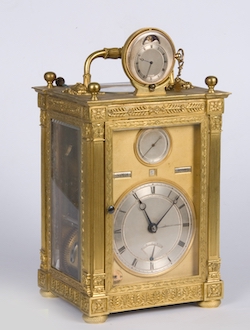
photo - one of the timepieces that was stolenFollowing the robbery, Dillor/Lidor lived on and off in Tel Aviv. In the early 2000s, he reportedly was hospitalized in Israel’s Tel HaShomer Hospital, suffering from skin cancer complications. When told that the cancer had spread to the bone, he refused radiation. In 2004, he died in his Tel Aviv apartment and was buried at Kibbutz Ein HaHoresh, his birthplace. In the end, he willed the clocks to his wife, Israeli ex-pat Nili Shamrat.

Within a few years of Dillor/Lidor’s death, an attorney representing the widow entered into a quiet, negotiated “buy-back” with the museum. According to the L.A. Mayer Museum for Islamic Art, in 2006, 39 of the original 102 stolen clocks were returned.

Two years down the road, the case further unraveled. The museum officially states that investigators located the remaining clocks in various bank safes. Some media reports said the clocks had been in France and in Holland. In any case, the clocks and watches have since made their way back to the museum. Unlike almost 40 years ago, they are now well-secured, with the clock exhibit housed in a sophisticated light-sensitive vault.

In the United States, the widow was charged with receiving stolen property. In 2010, however, she received a sentence of five years’ probation and 300 hours of community service. In her defence, her lawyer successfully maintained that she was a victim of circumstances – that is, her new husband (although they’d been together for many years, they’d been married for only a year when he died) had only told her about the clocks near the time of his death.

Deborah Rubin Fields is an Israel-based features writer. She is also the author of Take a Peek Inside: A Child’s Guide to Radiology Exams, published in English, Hebrew and Arabic.

A story of Hava Nagila

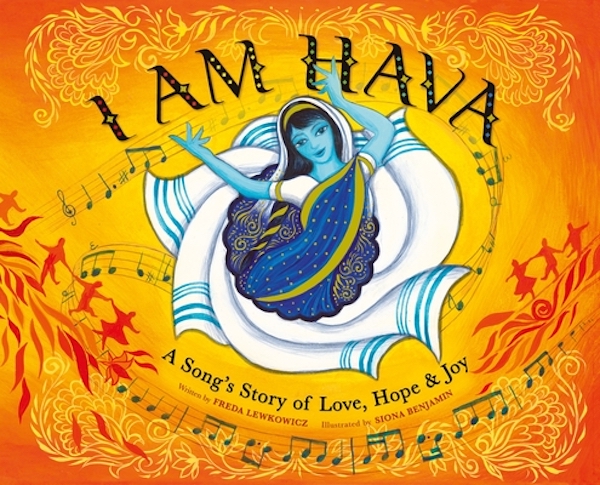
Among Intergalactic Afikoman’s newest picture books is I Am Hava: A Song’s Story of Love, Hope & Joy, written by Freda Lekowicz and illustrated by Siona Benjamin. It tells the story of the song “Hava Nagila,” from its birth as a niggun (melody without words) in Ukraine, to Jerusalem, to when it received its name and lyrics (though exactly from whom is still a mystery), and its journey around the world to popularity well beyond the Jewish community.

Hava Nagila means “Come and Rejoice,” explains the book, and this story – told by the song herself, personified as a blue-skinned Indian-Jewish girl in a sari – is full of movement and colour. It boldly celebrates the diversity of the Jewish people and our culture.

“For me, Hava’s story is a story of universality and multiculturalism,” Benjamin, who grew up as a Bene Israel Jew in India, writes at the end of the book. “Universality is always born from the specifics. The specifics for me are my Jewishness, my Indianness and my Americanness.

“Many blue-skinned characters populate my paintings,” she continues. “Hava is blue because blue is the colour of the sky and the ocean. Blue is the colour of the globe. Blue is also such a Jewish colour. It’s in the tallit. It’s in the tzitzit. It’s in the Israeli flag.”

Montreal-born Lekowicz also connects personally with the story. She shares that her parents, after the Holocaust, were in a displaced persons camp in Germany. “Like other Holocaust survivors,” she writes, “they were broken and in mourning. Yet the joyful sounds of Hava Nagila sometimes echoed in the camp. ‘Let us celebrate,’ it urged. The song symbolized hope and resilience.”

This lovely and imaginative book does joyous justice to this well-known song.

Museum releases new book

Jewish Museum and Archives of British Columbia releases its new publication Looking Back, Moving Forward after its AGM on Nov. 16.

The Nov. 16 annual general meeting of the Jewish Museum and Archives of British Columbia (JMABC) is the culmination of the museum’s 50th anniversary year of celebrations. The special occasion will not only feature Dr. Morton Weinfeld, Chair in Ethnic Canadian Studies at McGill University and author of numerous books on Canadian Jewry, but also the release of the new JMABC publication Looking Back, Moving Forward: 160 Years of Jewish Life in BC.

Taking place at Congregation Beth Israel, the 6 p.m. AGM will be followed by a reception at 7 p.m. and the keynote address. Weinfeld’s most recent publication is a revised and updated version of his book Like Everybody Else but Different: The Paradoxical Success of Canadian Jewry. His virtual presentation will highlight the unveiling of the JMABC’s Looking Back, Moving Forward.

Local historian Cyril Leonoff, who passed away in 2016, established what has become the JMABC with a group of volunteers in 1970. In his research on the B.C. Jewish community, he combed ship manifests and discovered that the first Jews to arrive in the province came to participate in the Gold Rush, in 1858.

The museum’s new book is a testament to the variety and tenacity of Jewish life all over British Columbia. The publication comprises interviews, archival research and community contributions from more than 200 B.C. Jewish community members and it includes more than 400 photos.

Organized into four sections, the book begins with a collection of essays on the history of Jewish life in various regions of the province. This section is followed by short descriptions of historic, modern and new Jewish agencies and organizations that serve(d) the social, cultural, political and religious interests of the Jewish community. Short biographies of notable B.C. Jewish figures from all areas of public and communal life make up the third part of the book. And, finally, a family-sponsored section gives some personal descriptions of a variety of families within the community.

A central mission of the JMABC is to raise awareness of the importance of everyday artifacts to the overall picture of Jewish history in British Columbia. Photos of a family barbecue or a trip to the beach, flyers, letters and other such memorabilia personalize history. Over the years, the museum has created exhibits, films, books and other research material, making its archives as accessible to the public as possible.

The JMABC is hoping to ride the wave of enthusiasm and support from the past year of 50th anniversary activities, as it continues its role as both keepers and disseminators of history within the community and as ambassadors of the Jewish community to broader B.C. society.

Copies of Looking Back, Moving Forward: 160 Years of Jewish Life in BC are now on sale through the JMABC website at a 10% discounted price up until Nov. 16. After the AGM, the price will increase to $50 in general and to $100 for the limited edition hardcover version.

To attend the Nov. 16 event in-person or online, buy your $18 ticket via jewishmuseum.ca/fiftiethbooklaunch.

– Courtesy Jewish Museum and Archives of British Columbia

Tackling antisemitism

It’s no secret that antisemitism around the world has been increasing for years. As recently as Sept. 30, MLA Spencer Chandra Herbert saw his office window hit with a spray-painted red swastika. Make no mistake: there is no place for antisemitism in our world. That’s why Chabad Richmond is offering the four-week Rohr Jewish Learning Institute program called Outsmarting Antisemitism on Wednesdays Nov. 3, 10, 17 and 24 from 7:30-9 p.m.

“Join me each week as we explore the ethical impacts of history repeating itself, both within the Jewish community and beyond, by those who believe that antisemitism and hatred are accepted and encouraged practices and attitudes,” said Rabbi Yechiel Baitelman, director of Chabad Richmond.

Outsmarting Antisemitism takes on this subject directly and unapologetically, with a sense of optimism, faith and a distinctly Jewish approach.

“Through insightful source texts and fascinating case studies, this course examines the sources of this ancient scourge, along with the appropriate strategies for overcoming it. It’s time to find the confidence to fight hate with hope, and to stand tall against antisemitism,” said Baitelman.

“Upon concluding our series Outsmarting Antisemitism, you will be better equipped to campaign publicly against those who oppose both Israel and the Jewish people, and ensure we do everything possible to condition society to bring out the best in humans, rather than their more sinister elements,” he added.

Outsmarting Antisemitism will be offered both in-person and online via Zoom. Sign-in information will be provided at the time of registration. The cost to attend is $75 per person or $130 per couple, and includes the textbook.

This course  will also be offered to lawyers for B.C. Law Society accreditation on Nov. 25, Dec. 2, 9 and 16 from 7:30-9:30 p.m. and will take place in person, at Chabad Richmond, 4775 Blundell Rd. The cost is $540 including textbook and the course is applicable for eight CLE approved credits.

To register for either Richmond course, call 604-277-6427 or visit chabadrichmond.com/jli.

The JLI course is also being offered at Lubavitch Centre (604-266-1313), starting Oct. 26, and Chabad of Nanaimo (250-797-7877), starting Nov. 9.

– Courtesy Chabad Richmond

Correcting historical record

Jonas Noreika, who was executed by the Soviets in 1947, has been revered in his native Lithuania and by its expatriate community as a national hero and an anti-communist patriot.

This vaunted hero, however, has come under intense scrutiny of late, largely as a result of the findings of his own granddaughter, Silvia Foti. Her research has revealed that Noreika, whose nom de guerre was “General Storm,” was in fact a Nazi collaborator, responsible for the murder of thousands of Lithuanian Jews – sometimes, on his own initiative.

In her new book, The Nazi’s Granddaughter: How I Discovered My Grandfather Was a War Criminal (Regnery Publishing, 2021), Foti documents her path from hearing stories about his almost legendary stature to her discovery of the disturbing truth.

The book, the writing of which had been undertaken to fulfil Foti’s mother’s (Noreika’s daughter’s) dying wish, was intended as a tribute. Foti succeeded in assembling hundreds of documents related to Noreika’s life, including an antisemitic pamphlet that he authored in 1933, and KGB transcripts of his prison interrogations.

At first, Foti did not want to believe the story that was emerging from the various written sources, finding it “too scary, too painful, too shameful.” Nonetheless, as a journalist, she could not ignore the rumours that she encountered during her investigative trips to Lithuania. She pursued the matter, in the hope that an examination of her grandfather’s acts during the Second World War would exonerate him.  Ultimately, she found so much evidence about his role in killing Jews that it was impossible to act as though it did not exist.

“I wanted to throw the manuscript away so many times, to just drop the whole project. I kept asking myself, Why me? Why am I the one to discover all this? I finally came to realize that, because I am the granddaughter, I would most likely get the most attention,” Foti told the Independent. “I am a practising Catholic, and I pray over this story constantly. My strength came from believing that this is the truth, and the truth needs to prevail, no matter the cost to me.”

What started out as a journey of discovery has now been the recipient of international attention. Foti’s story has been covered by the Wall Street Journal, the New York Times and the BBC, among others.

“So much seemed accidental, inadvertent. I didn’t mean to discover that my grandfather was a Holocaust perpetrator. I didn’t mean to discover that the government of Lithuania refuses to acknowledge his role in the Holocaust and, instead, has declared him a hero,” Foti said.

In 2018, when she was 18 years into her project and believing it was nearing completion, she learned of a lawsuit by Grant Gochin, who lost 100 relatives in the Holocaust, against the Genocide Research and Resistance Centre of Lithuania.  They compared notes and joined forces in getting the story out to the international community.

The revelations about Noreika were, to say the least, not easy for many Lithuanians to accept.

“Today, now that the book is out, I face anger, fear and resentment from many Lithuanians who are still in denial over Lithuanians’ role in the Holocaust. I get hate email and death threats, accusations that I work for the Russians, that I’m a traitor to Lithuania, even that someone else wrote the book instead of me. So many Lithuanians think Grant wrote the book,” Foti recounted.

“Grant has an accounting degree and I have two writing degrees and yet, for Lithuanians, it’s easier for them to think Grant hypnotized me and wrote the book,” Foti added. “Lithuanians still have a lot of superstitions concerning Jews. They just can’t believe a Lithuanian would accuse her own grandfather of such horrors. In some ways though, I understand them, because I was there about 20 years ago – minus the superstitions.”

Foti believes, at present, that Lithuania has backed itself into a corner and needs to admit that the Genocide Centre, “its great arbiter” of what took place in the country during the Holocaust, has made a grave error in deeming Noreika a hero. Nevertheless, she does not think such an about-face will happen anytime soon.

“It would be a hari-kari move that would necessitate that the Genocide Centre fall on its sword. How could a mere granddaughter in Chicago uncover so much information about Jonas Noreika, and how could the nation’s legions of historians under the government’s payroll not?” she asked.

“This was Lithuania’s last graceful chance to own up to its role in the Holocaust,” she said. “It could have saved face if its legal system did its due diligence. Unfortunately, the court systems there have a reputation for being corrupt; holdovers from the Soviet era. Because Grant Gochin has exhausted all legal avenues in Lithuania, he now is able to take it to the European Union’s International Court of Human Rights.”

The Nazi’s Granddaughter was edited by Lisa Ferdman of Vancouver.

Sam Margolis has written for the Globe and Mail, the National Post, UPI and MSNBC.

Ida Nudel passes away

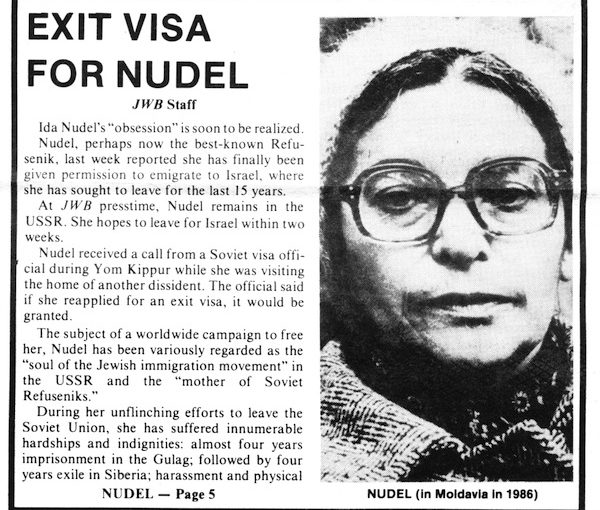
A cover story in the Oct. 14, 1987, JWB announced that Ida Nudel would be granted her long-sought-after exit visa from the USSR.

In the Jewish Independent’s special 90+1 issue this past May, reader Ronnie Tessler recalled one of the regular features of the JI’s predecessor, the Jewish Western Bulletin – the Gulag Record. Starting in 1978, the paper regularly reminded readers of how many days certain refuseniks were being held in the Gulag in the former USSR. One of the refuseniks featured, Ida Nudel, died this month, on Sept. 14, at the age of 90.

“The subject of a worldwide campaign to free her, Nudel has been variously regarded as the ‘soul of the Jewish immigration movement’ in the USSR and the ‘mother of Soviet refuseniks,’” reads the Oct. 14, 1987, JWB cover story announcing that Nudel would be granted an exit visa from the USSR.

“During her unflinching efforts to leave the Soviet Union, she has suffered innumerable hardships and indignities: almost four years imprisonment in abuse by the ever-present KGB, combined with travel restrictions amounting to incarceration,” the article continues.

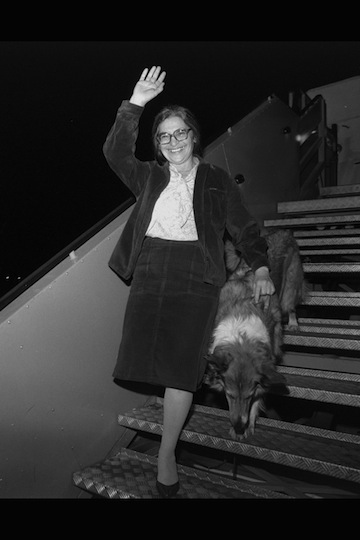
photo - Ida Nudel and her dog arrive on a private Boeing jet, owned by American oil billionaire Armand Hammer, at Ben-Gurion Airport on Oct. 15, 1987
Ida Nudel and her dog arrive on a private Boeing jet, owned by American oil billionaire Armand Hammer, at Ben-Gurion Airport on Oct. 15, 1987. (photo by Harnik Nati / IGPO)

“Occasionally, it was feared that, owing to diminished health, the 56-year-old Nudel would not live to see the Jewish state or be reunited with her sister Ilena Fridman, now residing in Israel.”

Fridman, the article notes, “visited Vancouver in October 1986 to lobby for Nudel’s release at a NETWORK-sponsored Soviet Jewry rally here….”

In addition to a concerted, long-term effort by Jewish groups worldwide, “urging Soviet officials to grant her an exit visa,” Nudel was visited over the years “by numerous delegations and dignitaries, including actress Jane Fonda, to bolster her spirits and encourage her efforts to leave the USSR.

“Under glasnost (openness), Nudel was allowed greater freedom to move and meet with Western journalists and fellow dissidents. Last month [September 1987], she was permitted to travel from her home in Moldavia to Moscow to meet with a group of women refuseniks to discuss their plight.”

Nudel was born in 1931, near Crimea, and “was raised by her maternal grandparents on a collective farm until she was 3,” writes Sam Roberts in the New York Times article about her death. “Her father was killed in World War II fighting German troops near Stalingrad when she was 10.

“After graduating in 1954 from the Moscow Institute of Engineering and Economics, Ms. Nudel worked for a construction company and later as an accountant for the Moscow Microbiological Institution,” notes Roberts.

As a result of her protests in the 1970s, Nudel lost her job and was exiled. When her exile ended, she settled in Moldova. After she was allowed to make aliyah, Nudel “originally lived in a rural settlement,” writes Roberts, “then moved to the city of Rehovot, about 18 miles south of Tel Aviv, to be closer to her sister [who had been allowed to emigrate in 1972].”

Nudel wrote an autobiography, A Hand in the Darkness, which was translated into English, and there was a movie made about her experience.

Exploring her family’s past

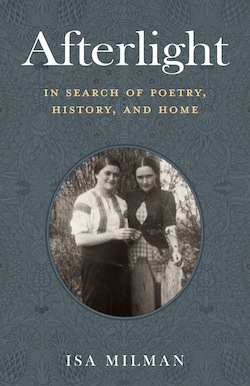
Afterlife is Isa Milman’s first work of nonfiction. (photo by Shea Lowry)

Midway through Isa Milman’s Afterlight, which came out this week, the author cites Reb Nachman of Breslov, who said, “The whole world is a very narrow bridge.” In Victoria-based Milman’s new work, we encounter bridges of various sorts: those that serve as a crucial lifeline to the survival of the denizens of cities, particularly at a time of war, and the bridges that bring together people from different continents in the pursuit of understanding an unconscionably horrific time in Eastern Europe.

And then there are the bridges that link us poignantly to our past – to those we know through words and photos but have never met. In Afterlight, one such bridge connects Milman to her mother’s twin sister, her aunt Basia, who perished in the Holocaust, and who, like Milman, wrote poetry. (Milman is a recipient of the Canadian Jewish Book Award for poetry.)

Milman’s journey began in 2013, when, following her mother’s death, she sought to find Basia’s poems from the 1930s. The book alternates between the present and the past (the war years), as Milman tries to uncover a layered tale. She travels to Europe where, at times, her quest for information leads to dead ends and, at other times, she finds details in unlikely places – a photograph in Amsterdam, for example.

At one stage, Milman finds poetry written in a Polish publication from the 1930s. She writes, “Reading the children’s poems, I felt a terrible nostalgia rise up – a dangerous nostalgia. Even now it hurts too much, this intense longing for a conversation with Basia, for a meeting, a recognition that we’ve lived on the same planet, come from the same earth, share blood and bone. We share a love of poetry, but I shall never know her, not even as smudged ink on a page.”

At one point in her exploration, Milman pens a poem to her aunt. “How many tiny flowers make one lilac sprig? / How many stars in the night sky have names? / How many yet to be seen? They disappear with morning sun too soon but in darkness or in light tucked in their beds they remain,” the poem reads.

image - Afterlife book coverBasia’s story is but one piece of the book. Afterlight also traces the journey of Milman’s parents and her other surviving aunts through the Holocaust and examines questions about the trauma, displacement and identity caused by the Holocaust to succeeding generations.

“I’d lived my life in a black hole of absence, of never having the experience of grandparents, of feeling rooted and at home with extended family. And this was not because of a tsunami, an earthquake, forest fire or plague. It was because of tribal hatred,” Milman writes.

As well, she explores the issue of reconciling the Poland that Jews thought of as their home with rampant antisemitism and the brutality of the war years. “Why couldn’t I choose how to think about Poland, even if it meant going against most everything I’d learned?” Milman asks. “Why couldn’t I revise my notion and accept that Poland is a place that I can love as well as despise and fear? Why must it be either/or? Was it possible to live in the uncomfortable in-between, where both realities coexist?”

Afterlight is Milman’s first work of nonfiction. At first, Milman, whose collections of poetry include Prairie Kaddish, Between the Doorposts and Something Small to Carry Home, was reluctant to write a nonfiction account of the Holocaust. However, recent surges in antisemitism around the world led her to change her mind.

“The lessons of the Holocaust need to be taught, and not just by citing facts and reportage,” she said. “Telling stories about real people and their experiences is the most effective way of reaching and teaching people about how evil can happen, and how we must fight our worst human inclinations and speak out against hatred and inhumanity.”

A big part of her decision to write a memoir was realizing that her family’s story did not match a more common Holocaust narrative. Hers is a lesser-told account of Jews from eastern Poland, some murdered in what’s known as “the Holocaust of Bullets” and others, like her parents, who survived because of deportation by the Soviets to the Gulag.

“I loved entering the world of creative nonfiction,” she said. “Using my imagination to create scenes where I clearly was not present enabled me to inhabit the places and people I needed to describe. Everything became more real as I entered into the minds of my characters, who happened to be my parents and close family.”

Sam Margolis has written for the Globe and Mail, the National Post, UPI and MSNBC.

Several shows to watch at Fringe Fest

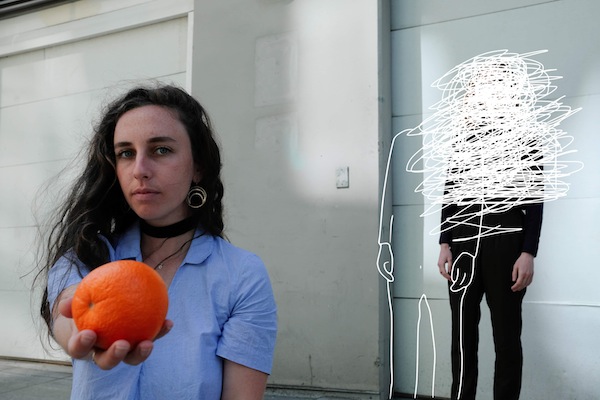
Ariel Martz-Oberlander wrote and co-stars in on behalf. (photo from Julia Lank)

In the Aug. 20 issue of the Jewish Independent, there was a short article on the Vancouver Fringe Festival show A Coveted Wife of East Van, which “tells the story of Samantha Cohen as she navigates friendship, men and dating apps while making some very bad decisions along the way.” Playing at the Picnic Pavilion venue on Granville Island, the creative team includes Jewish community members Marn Norwich (poet), Ariel Martz-Oberlander (director), Itamar Erez (musician) and Hayley Sullivan (actor). Martz-Oberlander is also involved in the show on behalf, with fellow Jewish community members Tamar Tabori and Julia Lank (co-stage manager). And there are other Jewish community members to watch in this year’s festival, as well. Here are the broad strokes of the productions that were in touch with the JI.

on behalf

Martz-Oberlander’s on behalf is a conversational, humorous and lyric conversation between a young woman (Martz-Oberlander) and an ancient goddess (Tabori).

on behalf challenges assumptions about what it means to survive and to be a survivor,” said Martz-Oberlander. “Rather than framing ‘healing’ as an individual, linear journey, the show frames it as a collective political and cultural act – messy, strange, circular, ancestral, shattering, transformative and ongoing. Our identities affect our visions of justice, and diaspora shapes our ability to find belonging on stolen land and within a system that views justice only as punishment.”

The inspiration behind on behalf came out of Martz-Oberlander’s own healing journey, and lack of a road map. She began looking back into her own cultural inheritance and to mine the stories of women who have survived dispossession and sexual assault across time and space, with bravery, creativity and the strength of rituals.

After three years in development, on behalf has shifted in focus and form many times. Now in a filmic state at the Fringe, it moves again. Shot in a single take with a shifting camera, the show runs less than 20 minutes. The film format invites audiences to engage with the tactile and sensory experiences linked to traditional ritual work – like handwashing and bread baking – to highlight how healing extends beyond the individual, because our wounds too extend beyond the individual experience.

on behalf is a digital presentation and can be watched anytime during the Fringe.

Everybody Knows

photo - Rita Sheena pays homage to Leonard Cohen in Everybody Knows
Rita Sheena pays homage to Leonard Cohen in Everybody Knows. (photo by Kristine Cofsky)

In this semi-autobiographical, one-woman musical, set to nine Leonard Cohen cover songs, Rita Sheena creates a spiraling narrative using contemporary dance, post-modern quirk and the haunting melodies of First Aid Kit’s Who By Fire album, which was released earlier this year.

Everybody Knows is the latest work from Sheena’s Come Emote With Me theatre series. It opens in a bright, primary-coloured hotel room. When we meet the smug captain, we are reminded that “everybody knows the dice are loaded, everybody rolls with their fingers crossed, and everybody knows the war is over, everybody knows the good guys lost….” Next, we meet a woman in a 1960s-style secretary dress who answers every telephone call ringing for death with “… and who shall I say is calling?”

Cohen enthusiasts will appreciate the esoteric nuances that Sheena emotes. Folks who love dance and movement artistry will enjoy the unique style of storytelling.

Everybody Knows is at the Revue Stage on Granville Island Sept. 11-18.

A Toast to Prohibition

photo - Melanie Gall brings her show A Toast to Prohibition to the Fringe
Melanie Gall brings her show A Toast to Prohibition to the Fringe. (photo from Melanie Gall)

International performer Melanie Gall comes to the Vancouver Fringe with her new historic musical, A Toast to Prohibition. Her previous shows include Piaf and Brel and off-Broadway’s Ingénue.

Celebrate the 101st anniversary of Prohibition with flappers, gin fizz and a speakeasy cabaret. Join Gladys in her secret gin joint, the Tipsy Sparrow, as she tells the story of when intoxicating liquor was forbidden and lawlessness ruled the day. From secret cellars and doctor-prescribed alcohol to a teetotaller attacking saloons with a hatchet, there’s a song about it! This show features, among other songs, forgotten 1920s hits “Lips That Touch Liquor Shall Never Touch Mine” and “Everybody Wants a Key to My Cellar.”

Performances of A Toast to Prohibition take place at Performance Works Sept. 10-19.

The Fringe Festival runs until Sept. 19. For tickets and the full schedule, visit vancouverfringe.com.

Challenging VIFF Films

Michal Wiets uses her great-grandfather’s diaries as the basis for her film Blue Box. (image courtesy)

At press time, the Vancouver International Film Festival lineup had not yet been announced. But the Independent received the names of some of the movies to be presented, as well as a couple of screeners.

Starting with the more challenging VIFF choices, most Jewish community members will either take a pass – with a roll of the eyes as to what film festivals often consider appropriately provocative fare – or get up the fortitude to watch the disparaging portrayals of Israel, so as to be better prepared to confront the criticisms, and perhaps learn from them. I admit that I have taken both routes in life and it was with great skepticism and high anxiety that I watched Michal Weits’s Blue Box.

Weits is the great-granddaughter of Yosef Weits (aka Weitz), a Russian immigrant to Palestine in the early 1900s who was instrumental in foresting Israel, as well as purchasing land for the Jewish government from the Arabs who owned it at the time (who were mostly absentee landlords and not the people who lived on and worked the land). Depending on one’s point of view, Weits was either a legendary pioneer to be tributed, as “the father of Israel’s forests,” or a notorious pirate of sorts, stealing land from Arabs and expelling them from it, as “the architect of transfer.” His great-granddaughter seems to believe he’s the latter, while he himself was conflicted.

The basis of the documentary is Yosef Weits’s diaries, some 5,000 pages. In them, he expresses his belief in the need for the reestablishment of the Jewish homeland and his fears for Jews’ continued existence (even before the Holocaust). He also details aspects of his work, with whom he negotiated land sales and meetings with David Ben-Gurion and other Israeli leaders. Presciently, he admits to misgivings about the way in which the Arab populations were being treated, predicting that such treatment would end up causing Israel severe problems if not dealt with.

The diary entries are fascinating and reveal some of the complexities of that era and of Yosef Weits’s legacy. The archival footage and photographs are compelling and expertly edited to make clear director Weits’s viewpoint – there is no mention of events that don’t fit her narrative, such as the expulsion of Jews from Arab lands.

Weits interviewed several family members about what she discovered from the diaries and other research. Their reactions are varied, with the generations closer to that of her great-grandfather more defensive and those closer to hers, more questioning, even condemning.

It might be helpful to watch this film with a non-Jew, as I did. In doing so, I found there were a few parts – such as the Israeli government’s relationship with the Jewish National Fund and why Weits named her film after the JNF’s donation box – that could have been better explained to viewers without prior knowledge. As well, a non-Jew is perhaps better able to keep in mind that every country deals with similar issues relating to how they were established, who was displaced, etc., and that Blue Box could be seen not only as a personal tale of one family, but as the beginning of a conversation about nation-building in general rather than as a stifling condemnation of Israel.

The same may or may not be said about The First 54 Years: An Abbreviated Manual for Military Occupation, directed by Avi Mograbi. There was no screener available for this documentary, which is described as “a ‘how-to’ guide to civilian subjugation along ethnic and religious lines, through the example of the Israeli occupation of Palestine. This is jet black, ice-cold political satire. But the harrowing statements of 38 former Israeli military personnel must be taken at face value as eyewitness testimony of decades of state-licensed crimes against humanity.”

Noam Imber plays a pothead teen in Quality Time
Noam Imber plays a pothead teen in Quality Time. (image courtesy)

Thankfully, there are at least a couple of more innocuous films in this year’s VIFF. One is the short Quality Time, written and directed by Omer Ben-David. When mom goes on a brief vacation, father (Shalom Korem) and son (Noam Imber) are left on their own together, and the awkwardness of their relationship is highlighted. Imber plays a pot-dealing and -smoking teen who’s just received his draft notice, while Korem is his recently retired – from the defence ministry – father. Both actors are wonderful and the story is quirky and fun, even if it doesn’t hold up logically at the end. While Israel-specific – a gym bag being blown up by the bomb squad is a key element – it has universal meanings.

The JI always sponsors a film at VIFF and, this year, we’ve chosen the animated feature Charlotte, about Charlotte Salomon, a German-Jewish artist who created her masterpiece work – called Life? Or Theatre? (comprising nearly 800 paintings) – between 1940 and 1942. She died in Auschwitz in 1943, at 26 years old. We’ll review that film next issue.

For more on the festival, visit viff.org.