Hike challenges one’s views

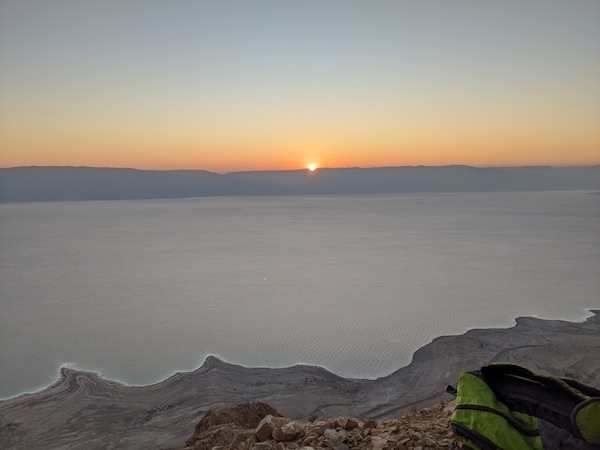
Sunrise at the Dead Sea. (photo from Kevin Keystone)

In this three-part series, the author recounts some of his experiences on Masar Ibrahim Al-Khalil, the Path of Abraham the Friend, which he visited in 2019. The articles have been adapted from a few of the letters he wrote home to family. The events and people described are real but, for reasons of privacy, the names are fictitious. To read Part 2, click here; for Part 3, click here.

I’m writing this from a rooftop deck in the small community of Arraba, about 15 kilometres from the West Bank’s northern border. We walked two days to get here along the Masar Ibrahim Al-Khalil, the Path of Abraham the Friend, a 330-kilometre trail from Rummanah in the north to Bayt Mirsim in the south. We’re here as part of a guided tour with the Siraj Centre; for 15 years, Siraj has organized walking, cycling and hiking experiences in Palestine.

Tonight, all eight of us will be staying at this villa. It’s unusual for a host to have so much room, but the Hassan family specially renovated their home to accommodate large groups. Noor, her husband and their five children have been hosting hikers on the Masar for five years. Throughout the hike, we’ll stay in homes like this, as well as hotels, guesthouses, Bedouin tents, and even a night in a cave.

Dusk has arrived; the evening view is clear and beautiful. The sun has set over the peaks and valleys of the West Bank, the lights of Palestinian villages and Israeli settlements shimmer around us. Beyond the hill ahead of me, backlit with shades of peach, rose and grey, lies Israel, Netanya and the Mediterranean Sea. A half-moon rises above.

The villages and settlements may seem quiet and peaceable, but are walled off from one another with concrete and hostility. The sea beyond means, for some, Europe, North Africa and its opportunities; for others, impassable waters. What is this place? How did we get here?

* * *

Five of us will walk all 25 days from Rummana to Bayt Mirsim: Felix and Thomas, Quebecois hiking companions in their 40s and 50s; Oliver and Eve, two 50-something activists from the United Kingdom; and myself, a 30-something freelance writer from Toronto. The remaining three will walk one to two weeks: John, a real-estate project manager who hiked Everest for his 60th birthday; and Sue and Howard, a retired teacher-principal duo from California. Neil, a young British doctoral student, hopped off yesterday and will be back for short stints in the coming weeks. Ines, an older Swede, walked with us for just the day.

After the hike, I plan to visit a friend in Beirut. In light of the protests against the government, I shared my reservations with Ines, who lived in Lebanon for two decades. “I lived in Beirut through the civil war,” she said, smiling. “You’ll be fine.”

If not all of us are quite so hardcore, we’re all mostly hikers. Sue and Howard walked 1,000 miles on the Camino de Santiago, Spain’s well-traveled Catholic pilgrimage-turned-hiking trail. I walked the Camino, but at half their age and half as far. Felix and Thomas are also Camino veterans: we all seem to have an affinity for long-distance trails in places of importance and meaning.

We are and aren’t here for the hiking. We’ve come to see Palestine for ourselves and hear directly from Palestinians. For my part, it felt like something of a responsibility. Like many Diaspora Jews, I have supported the state of Israel, either directly or indirectly, and benefited from it. I went on Birthright, the two-week, all-expenses-paid tour designed to build affinity and political support between young Jews and the state. I’m familiar with that side of the story – but after 50 years of occupation and a seemingly never-ending conflict, something didn’t quite fit for me.

Before I left for the Masar, I asked my rabbi for a blessing. In synagogue, she prayed that I would come here “with eyes wide open” and return home “with eyes opened wide.” It’s a prayer I share.

On the Camino, in Spain, locals are largely inured to tourists; here, on the Masar, tourists are rarer. Every local we pass waves hello, is happy and surprised to see us, stops us and wants to give us coffee. Yesterday, we were stopped often by olive-pickers – it’s the season for it. Enthusiastically, they beckoned us over to the stone borders of their groves, where we sat and shared thimbles of coffee spiked with cardamom. As we walked through towns and villages, small children yelled, “Hello! Hello!” and waved to us, their parents replying to our greetings of salaam aleykum (peace be upon you) with wa’ aleykum salaam (and peace upon you) and ahlan wa sahlan, you are welcome here. In these moments, of which there are many, I’m buoyed by unimpeachable hospitality.

This is, however, different from the Camino in other ways. I walked 40 days on the Camino and rarely thought about politics; here, every day is political. I never felt awkward about being Jewish on the Camino – except once, when I asked a local barkeep at a tavern called La Judería if there were any Jews left in the town. He laughed and said: “Not since the Inquisition.” Here, my being Jewish is something I keep to myself, to avoid assumptions about my politics. It’s different when you carry so little on your back and so much in your head. The walking is both easy and hard: mercifully, I have no blisters, but I’m still uncomfortable.

In the evening, after a home-cooked meal, we sipped sweet sage tea in the Hassans’ living room and listened to their story. Noor sat beside her husband Yusef, who spoke to us in Arabic while their son, Rayan, a young man with kind eyes and short hair, translated. If memory serves, Rayan was studying in the United States, which explained his excellent English.

Two years ago, Rayan’s brother, Nader, attended a rally at his university in support of Palestinian political prisoners on hunger strike. Five weeks before we arrived, Israeli soldiers entered the home where we were now staying, at 2 a.m., and arrested him. Nader was taken to prison without charge, where he’ll likely remain without trial for up to seven months. At the end of his time, he could be released; or, he could be detained again for another seven months, without explanation. According to his family, this cycle can repeat indefinitely. The practice is both common and permitted under Israeli military law, which is still in effect in the West Bank, 53 years after the Six Day War.

Noor was quiet, eyes downcast, hands folded in her lap. This was a mother who had lost her son, taken in the middle of the night, who wasn’t sure if or when she would see him again. As I understood from them, adults over 18 are restricted from visiting prisoners: they plan to send their teenage son, Malik, to visit Nader and bring offerings of the family’s love and hope.
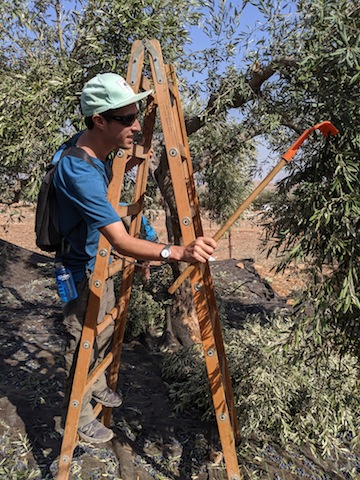
photo - Raking trees in an olive orchard, somewhere between Duma and Kafr Malik, West Bank, Palestine
Raking trees in an olive orchard, somewhere between Duma and Kafr Malik, West Bank, Palestine. (photo from Kevin Keystone)

In the short time we’ve been here, we’ve learned of the various ways in which Israel makes life nearly impossible for Palestinians: checkpoints; control over water, electricity, building and agricultural permits; the separation wall; demolition of homes and olive groves; restricted movement internally and internationally; arrest and imprisonment without trial; and, of course, the endless encroachment of settlements, which have been deemed illegal under international law by the United Nations Security Council and the International Court of Justice.

History, of course, is relevant to the present and, here, one can feel the weight of it, but it’s difficult to find a version that isn’t heavy with narrative. A briefing yesterday began with, “When Israel occupied Gaza and the West Bank in 1967….” That’s true, but Israel occupied the territories as an outcome of the Six Day War, which raises questions of how it started and who provoked it. (The answer, as with most things Israel and Palestine, is hotly debated and too extensive to rehash here.) Yesterday, we didn’t talk about the Six Day War, nor the nuances of what came before it. The conflict doesn’t justify the occupation, but to leave out relevant context, to drop the “why” behind the “what,” I’m not sure that’s helpful, either.

On Birthright, we visited an Israeli military base. One of our trip’s soldiers was a pilot in the air force; in the common room, rows of flat, black, airplane-shaped medallions were pinned to a wall. Someone asked what they were. “Those are enemy aircraft,” the pilot said. “Each one marks a plane we shot down.”

The group erupted in applause. I froze, horrified. It reminded me of the story we tell at Passover, when the Heavenly Hosts rejoiced at the drowning of the Egyptians in the Red Sea. “My creatures are perishing,” God silenced them. “And you sing praises?”

* * *

It’s dark now. Stars are appearing in the night sky. Crickets chirp and trucks rumble low in the distance, no doubt carrying goods along labyrinthine backstreets to avoid Israeli-controlled roads, or the possibility of a checkpoint rejection or closure. So much time and life wasted. Tomorrow, we walk. It’s day two, I’m not sure where this road will lead. But all I can do is keep walking.

Kevin Keystone is a Toronto-based freelance writer, editor and researcher. When not hiking long-distance trails, he can be found reading, spending time with friends and family, or with his beloved partner, Aaron. His writing has been published in the Literary Review of Canada, the Jewish Independent and Good Old Boat.
Holidays unlike any before

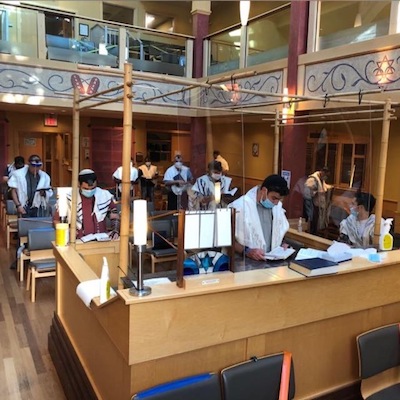
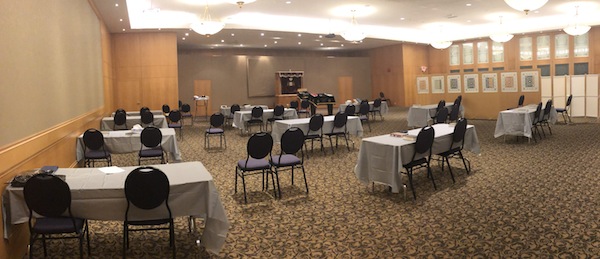
Services in the Schara Tzedeck auditorium, with social-distancing measures in place. (photo by Camille Wener)

In early March, Canadians were just beginning to take COVID-19 seriously. Then, in what seemed like an instant, the province shut down all places where people gather. Religious organizations were forced to close their doors – in some cases for the first time in more than a century – and rethink everything about how they engage with their congregants.

In a survey of rabbis and synagogue leaders across British Columbia after a summer of COVID, what emerges is not so much a story of hardship and difficulty but of resilience, creativity and a paring away of the superfluous to rediscover the most elemental things that we seek from spirituality and community.

The loss of life, the horrible illness and difficult recovery have directly affected thousands of British Columbia families, but we have fared better than many other jurisdictions. Even those not directly affected by the virus itself have had heartbreaking occasions, such as losing loved ones to other causes without family beside them, funerals and shivahs conducted online and, of course, the various burdens and isolation experienced by older people, those who live alone or others who are especially vulnerable.

As we approach High Holidays that are assured to be unlike any we have experienced before, there is an air of anxiety, but more evident is a flexibility and commitment to make the holidays as meaningful as possible. Although close coordination has taken place through RAV, the Rabbinical Association of Vancouver, every congregation is finding its own way and the holidays in most cases will occur along a spectrum of hybrid in-person and online services, most with multiple smaller, shorter programs. Services that routinely occur outdoors, such as Tashlich, will be joined in some cases with shofar-blowing and other services held out of doors. Despite all, reaction among rabbis is that community engagement and flexibility have made these months far better than could have been predicted in March.

“From day one, our motto was, we are not ramping down, we are ramping up,” said Rabbi Jonathan Infeld. His Conservative shul, Beth Israel, had not previously done programs or services online but, within 24 hours of the shutdown, all activities had moved online.

Zoom, an online meeting platform that almost no one had heard of before the pandemic, has proved a lifeline for individuals and communities, including almost all synagogues in the province. The platform’s interactivity allows individuals to participate in services, make virtual aliyot, engage in back-and-forth with teachers and guest speakers, and participate from home in numbers that rabbis say are routinely higher than in-person programs in “normal” times. “The social community of the synagogue’s remained intact,” said Infeld.

Most of Beth Israel’s congregants will experience the High Holidays from home, online. “It’s only the people who are leading the services and/or their families who will be in the building,” he said.

Provincial regulations permit a maximum of 50 people in any gathering, with social distancing enforced. For synagogues, that number varies based on the size of a sanctuary and the reality is that, to ensure two-metre separation, smaller synagogues will be able to accommodate far fewer than 50.

For the Orthodox Congregation Schara Tzedeck, however, online Shabbat and holiday services are not an option.

“We’ve had to think very creatively,” said Camille Wenner, executive director of the synagogue. “This was the first time in 110 years that our doors closed for davening,” she said.

People who had made minyan every week of their life suddenly couldn’t.

“That was really difficult,” said Wenner. “That’s why it was so important for us to mobilize a chesed committee to connect with everyone and make sure that everyone was OK. That’s how the idea of Shabbat in a Box developed and the idea of feeding people and making them feel that that ritual of Shabbat is still very much alive, you don’t have to be here to do it, we can still do it together.” That concept will be extended to Rosh Hashanah in a Box, which will go to more than 300 households.

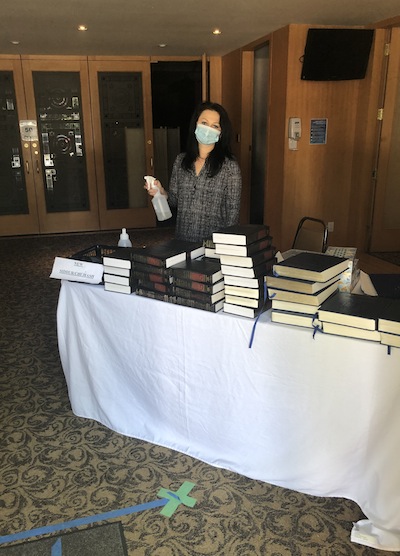
photo - Office administrator Anna Herman is among those who sanitize the prayer books for congregants to use at services
Office administrator Anna Herman is among those who sanitize the prayer books for congregants to use at services. (photo by Camille Wener)

Schara Tzedeck was the first Orthodox synagogue in Canada to reopen to limited in-person services, on June 1. “It was nerve-racking,” Wenner admitted. The usual single Shabbat service has been increased to two. Hand sanitizers and masks are required. Those who do not bring their own siddur are handed a newly cleaned one. Additional custodial staff are on hand to wipe down the entire sanctuary between services. An online registration program allows congregants to see how many of the 50 seats remain available.

For the holidays, services will be expanded to meet demand, she said. Rabbis and cantors who work in day schools and elsewhere in the community have volunteered to lead smaller services, which will occur in various places throughout the building and may even take place under a tent in the parking lot, if need be.

“The services will be condensed to about two hours instead of the regular five,” she said. “Right now, we’re looking at six or seven services back to back starting at 6:30 in the morning.”

The Peretz Centre for Secular Jewish Culture normally doesn’t run programming through the summer. But, this year, the Sholem Aleichem Speakers Series has continued every Friday on Zoom and Exploring Jewish Writers, on Saturday mornings, also has continued through the summer, said Donna Becker, the centre’s executive director. “Both of them are better attended on Zoom than they were in person,” she said.

Peretz Centre holiday services will feature Stephen Aberle singing Kol Nidre, but the usual musical program, which sees the Vancouver Jewish Folk Choir interspersed with the audience, is obviously out of the question.

This year’s High Holidays will be the first since the inception of the progressive congregation Ahavat Olam in 2004 that will not be held at the Peretz Centre. Said board member Alan Bayless: “We would prefer not to use computers for Shabbat or High Holiday services, but we believe that virtual services are necessary for our community this year given the danger of the coronavirus.”

Rabbi Yitzchak Wineberg of Chabad Lubavitch BC, said the 10 Chabad centres in the province are all adopting protocols appropriate for their congregants’ needs. He worries that, with daily infection reports often heading in the wrong direction, the province may re-impose stricter regulations by the time the holidays roll around. Either way, he suspects many or most people will be marking the holidays at home. “It’s the reality,” he said. “It’s a question of what works and what is acceptable and what isn’t.”

On the positive side, online learning has skyrocketed.

“The amount of study that’s going on by Zoom is absolutely unprecedented,” Wineberg said. “That’s the silver lining. I have a feeling that it will continue once this pandemic is over, God willing as soon as possible, I think people are going to continue learning that way. You have the convenience of sitting in your home and participating almost as if you are there – that’s the new reality.”

The Reform synagogue Temple Sholom had a running leap at livestreaming services, so some of the infrastructure was well in place before the pandemic. The difference now is the effort they are going to not just to allow people at home to observe, but to participate in the services. Classes, webinars and other programs have been expanded online. The Men’s Club and the Sisterhood have moved their programs onto Zoom. The accessibility means Temple Sholom programs are reaching new audiences, often far outside Vancouver.

The summer weather has allowed the synagogue to hold some events in parks and in the courtyard behind the shul. Still, Rabbi Carey Brown has no illusions that these High Holidays will be like any other. For one thing, only clergy will be in the sanctuary.

“It will be really different,” said Brown, who is the synagogue’s associate rabbi. “We are working really hard to put together High Holiday services and experiences that will help people feel the sense of the season, both the newness of the new year and the reflectiveness of the season.”

The Okanagan Jewish Community, which does not have a permanent rabbi, has depended on volunteers to deliver programs and services. The Kelowna-area centre has seen significant growth, and is running an 11-person conversion class and various adult education programs on Zoom. As great as all that is, Steven Finkelman, the centre’s president, thinks this might be a tough year financially for the group, a concern expressed by several interviewees. Revenue generated at the High Holidays and through in-person galas or other fundraising events in normal years is likely to suffer this year.

While online programming has proven hugely popular, there can be no denying that this experience has resulted in some missed opportunities. Rabbi Philip Gibbs of West Vancouver’s Conservative shul Har-El, has pangs of regret when he thinks back to the grand plans the synagogue had in January for a year of innovation and new initiatives.

“I was very excited about both the scale and the types and the variety of programming – more cooking events or culturally focused programs that really were going to give our community the chance to gather and engage in a really fun, exciting and meaningful way,” he said. “Unfortunately, we’ve lost that opportunity.”

The challenges and opportunities of the High Holidays will be met with one or more services on different days, he said. While he and his congregation are making the best of the situation, Gibbs laments the loss of in-person collective connection.

Similarly, Rabbi Hannah Dresner of Or Shalom, which is affiliated with the Jewish Renewal movement, grieves the loss of some in-person connections. However, she feels that Zoom can provide an intimacy that a large group gathering might not. As well, not only are out-of-towners joining Or Shalom’s offerings, but the rabbi and others are surfing programs throughout the Jewish world and beyond.

“I just think it’s a time when the world is our oyster,” said Dresner. “Spiritually you can look for whatever kinds of workshops you want, so people are experimenting a lot more.”

Or Shalom will hold successive Tashlich services at False Creek, each accommodating congregants in limited numbers. For the well-being of ducks and other birds, Or Shalom members drop leaves rather than bread in the water.

“I love the creative challenge, but I can’t say it doesn’t keep me up at night,” Dresner said, laughing. “I hear a lot of rabbis say, I didn’t sign up for this. There’s nothing that we’re doing that I signed up for.”

This extraordinary time has forced and invited rabbis and others to reconsider everything. The changes have made her reflect on “what’s at the heart of the service, what do we really need, what’s extraneous, what makes it tedious? Because it cannot be tedious. It’s got to be tight, shorter and beautiful.”

Rabbi Levi Varnai of the Bayit in Richmond concurs that the crisis forced a reckoning. “If a synagogue is not doing services – and we don’t do services online – what do we do? It got us thinking to the real core of what a synagogue is really supposed to be about,” he said.

As an Orthodox shul, the Bayit cannot stream services on Shabbat or the holidays, but they have expanded classes throughout the week and held socially distanced events at Garry Point Park. Pre-Shabbat events help people prepare for the Sabbath and regular phone calls and visits by the rabbi and volunteers to speak with people from a distance and drop off packages keep a sense of community alive.

Now that limited in-person gatherings are permitted, the shul’s size permits 25 congregants. But even that is not quite as it was. “It’s coming in, praying and going, which is great because it’s more than we had before that,” he said, but there’s no food and no kibbitzing.

The holidays will see multiple services and people can arrange to be there specifically for Yizkor but perhaps not come for the entire day.

The chaos of shifting suddenly from the way things have always been done has not left Varnai a lot of time to reflect. But, when pressed, he acknowledged how surreal it is.

“It’s a huge change to the regular Jewish life that I’m accustomed to since I was a young boy, since my bar mitzvah, praying three times a day with a quorum of others,” he said. It’s a stunning transformation, but entirely within Jewish tradition. “We always put safety and well-being and health first.”

He puts the whole thing in perspective. “Our people came out of the centuries and had to go through a lot worse,” he said. “Not going to synagogue is not fun but, thank God, other generations were challenged with much greater hardships and we’re relatively blessed.”

Beth Hamidrash, the only Sephardi synagogue in Canada west of Toronto, counts among its congregants Dr. Jocelyn Srigley, a microbiologist who is a director with the infection prevention and control branch of the Provincial Health Services Authority. Rabbi Shlomo Gabay and shul president Eyal Daniel credit Srigley with helping guide them through this difficult time and say it was on her advice that their synagogue was the first in the city to close.

photo - Services at Beth Hamidrash with COVID-19 precautions in place
Services at Beth Hamidrash with COVID-19 precautions in place. (photo from Beth Hamidrash)

Despite the challenges, however, engagement is better than ever, said the rabbi. Daniel added that synagogue membership has actually jumped 20% since the pandemic began, something he credits to an increased desire for meaning, and also a direct outreach he began when he became president in June to encourage occasional attendees to commit to membership.

The strange situation has also helped strengthen relations between Beth Hamidrash and the two Sephardi congregations in Seattle. They virtually co-hosted an Israeli historian speaking on Medieval Spain, for example.

Probably no rabbi has had an experience quite like Rabbi Susan Tendler. The new spiritual leader at Richmond’s Conservative shul Beth Tikvah arrived in the midst of the lockdown with her family from her previous posting in Chattanooga, Tenn. The family then had to quarantine for 14 days, with community members dropping off prepared meals and greeting the family from a distance. Despite that unusual arrival, or perhaps because of it, she has reflected on big things.

“While I would never wish the pandemic on this world or on any person, really, this is an opportunity for renewal,” she said. “We do all have to reconsider what we’re doing and what our goals are and find new paths for reaching them.”

While hoping that services might return to normal in the not-too-distant future, she acknowledged that the very term sanctuary implies that every congregant must feel secure. “At a minimum,” she said, “it has to feel safe.”

Editor’s Note: This article has been amended to reflect that Or Shalom is affiliated with the Jewish Renewal movement, not the Reconstructionist movement, as stated in the original online and print versions.

Parenting in pandemic

The Rohr Jewish Learning Institute (JLI) has recently published Parenting in a Pandemic: A Guide for the Perplexed. Part of Project L’Chaim, a new Vancouver-wide youth mental health initiative in memory of Steven Diamond, the 36-page booklet is filled with insights and practical tools from 14 mental health experts to help parents and educators support their teens through the current crisis.

New York-based Rabbi Zalman Abraham runs the marketing and strategic planning for JLI. “We are the largest Jewish adult education network in the world, operating in over 2,000 locations,” said Abraham, who has been working in this role for the past 11 years or so.

Prior to joining JLI, Abraham authored courses and books, was an editor at askmoses.com and served in various teaching capacities. He was born in Brooklyn, grew up in South Africa, and did his schooling in the United States and Israel.

“My father is very active in dealing with the opioid crisis in South Africa,” Abraham told the Independent in a phone interview. “He’s known as the ‘addicts rabbi.’ There were times when I was growing up where there were up to six or seven addicts living in our house, because there was no better alternative then…. My father was involved with hundreds and hundreds of addicts, and overseeing their rehabilitation. He ran a halfway house, so I have a little bit of a background in that area.”

Abraham’s study of Chassidic philosophy deals a lot with Torah hanefesh, which can be loosely translated as psychology. The rabbi explained that this “is how Judaism informs us about our emotional and mental state and character, which is very relevant to addressing some of the very real mental health challenges our society is experiencing today.”

JLI has been offering courses for about 20 years, said the rabbi. “Over the past 10 years or so, many of our courses have focused on continuing education for professionals. We started with the legal profession, with courses in ethics and comparative talmudic and civil American and Canadian law. These were accredited by various bar associations of states [and provinces] across North America, including … the Law Society of British Columbia – they accredit for official continuing education credits for lawyers and attorneys…. We then began offering continuing medical education for medical professionals. Over the past few years, our most successful courses have been for mental health professionals, accredited by the American Psychological Association for psychiatrists, psychologists, therapists, social workers and the like.

image - Parenting in a Pandemic book cover - full“This is an area where Jewish wisdom informs the professional world and answers a real need. The challenge with mental illness, chemical imbalances aside, is often a result of a build-up of crisis, where a person has one crisis and another … their experiences compound, [they] have trouble envisioning a future, finding hope.… They have trouble with self-esteem, with feeling confident about life, and with finding meaning and purpose in life. These are all areas that Jewish wisdom addresses in a real way, giving people a framework within which they can find meaning and purpose.”

JLI’s international program is called My Life is Worth Living. In the Metro Vancouver area, they run the program called Project L’Chaim (“To Life”), a suicide prevention project sponsored by the Diamond Foundation in memory of Gordon and Leslie Diamond’s son Steven, whose Hebrew name was Chayim.

“We use the already existing infrastructure to educate those on the frontlines who are interfacing with teens and youth – training them to become more professionally equipped to be able to support the emotional needs of the teens in their care,” explained Abraham.

“From 2007-2017 in the U.S., there’s been a 56% rise in teen suicide. This is despite all the efforts and energies being invested in this area. This is an issue that’s getting worse and isn’t yet contained – this is in the general (not Jewish-specific) population.… There’s definitely a greater need for mental health support now than there ever was before.

“And, especially now, with COVID-19, all of this is being exacerbated. To put things into perspective, only about 10% of those who need mental health treatment get it. Even then, it’s with an average delay of 10 years between the onset of symptoms and the first treatment, according to the National Institute of Mental Health.

“Stigma is a big enemy to mental health treatment. No one wants to be labeled with a mental health diagnosis and carry that around with them for life. That stigma gets in the way of people getting the help they need.”

JLI’s approach is not clinical, but is supported by a clinical advisory board that includes Thomas Joiner, author of Why People Die by Suicide and other books on understanding why people commit suicide; Jonathan Singer, president of the American Association of Suicidology; University of British Columbia suicide expert David Klonsky; director of suicide prevention for New York State Dr. Sigrid Pechenik; Madeline Gould from Columbia University; and Jill Friedman from the American Foundation for Suicide Prevention.

“We provide professional training to those teen-interfacing adults; training that takes many forms,” said Abraham. “They learn to identify warning signs to the risk, to create a safety plan and to intervene when necessary. They learn what resources are available and what to do in various scenarios. They’re trained to be first responders. And they can isolate and help teens in the most critical situations.

“We also engage teens in group discussions, about underlying issues that are conversations for everyone – about self-esteem, hope, finding purpose and meaning in life, coping mechanisms to deal with challenges, and so on. These are conversations had outside of the mental health framework, so as to avoid stigma.”

In the Vancouver area, JLI has connected with many Jewish organizations and doctors’ offices.

“Our goal is to put it in the hands of every parent in the Greater Vancouver area,” said Abraham, who is a father himself. “It’s a compilation of 14 articles from leading youth mental health professionals, mostly from the Jewish world … to provide support to parents, so they can support their teens during these difficult times.

“The booklet gives insight to what’s going on for teens in the mental health realm and provides a lot of practical tools. The most frequently mentioned idea in the booklet is that famous line from the safety announcement on airplanes – putting on your oxygen mask first, and then helping others. People need self-care first.

“Youth, particularly teens, are social beings needing social interaction to thrive. Many don’t have this right now due to COVID-19 restrictions. Also, youth need clarity, something they can depend on … so parents need to know how to create an open channel of communication for teens to feel safe to discuss their feelings.

“The number one hope is that parents will become more aware of what their teens are going through…. Lastly and most importantly, is that they gain some tool/ideas to help them support their teens through this.”

Visit myjli.com/index.html?task=parenting for more information or to order the booklet.

“This is just the first step of many that will be coming out,” said Abraham. “We’ve already run multiple professional trainings and we hope to do many more. This is a beginning of a big, multi-year project.”


Rebeca Kuropatwa is a Winnipeg freelance writer.

No Silence on Race: an update

It’s been almost two months since we launched our open letter on June 30 and so much has happened since then!

We have received hundreds of signatures of support from the Jewish community across Canada and several Canadian organizations, congregations and initiatives have written public statements outlining their commitment to our pillars. We have published these statements on our website and you can view them at nosilenceonrace.ca/statements. We’ve also received some coverage in Jewish publications across the country. We have made them available on our website as well. Although our set date of July 29 has passed, we are still accepting signatures and statements.

We have had conversations with leaders in our community and we know that many organizations are committed to action and to change. The work of creating inclusive, anti-racist and equitable Jewish spaces is a daily pursuit and we are encouraged to see the way our community has embraced our letter and the need for action and accountability.

Many of you have expressed interest in learning more about our pillars. Our team has launched a resource page (nosilenceonrace.ca/resources) on our website dedicated to furthering the conversation on each of our pillars and on how our community can collectively enact meaningful systematic change. We have also included equity consultants on this page that organizations can connect with directly to begin and continue this work.

Thank you to all of you who have reached out to us directly expressing your support and desire to get involved with our team and our work. We will be reaching out to you all soon. If you are reading this and would like to get involved with us, we’d love to hear from you! Please fill out our Get Involved page (nosilenceonrace.ca/get-involved) on our website to join us as we continue our work and create opportunities to connect with the community, grow our platform and take action.

We look forward to a time where we can create an in-person event and come together as a community. Until then, we encourage everyone to keep the conversation alive with your family, friends, communities and workplaces.

– Sara Yacobi-Harris, Akilah Allen-Silverstein and
Daisy Moriyama, co-founders, No Silence on Race

3,200-year-old fortress now open to public

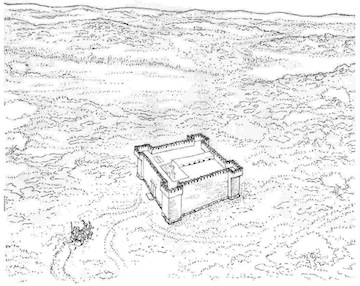
An aerial photo of the remains of a 3,200-year-old Canaanite fortress built near today’s town of Kiryat Gat. (photo by Emil Aladjem/IAA via Ashernet)

The Kiryat Gat fortress site, which was opened to visitors this week, was prepared by the Israel Antiquities Authority (IAA) and Jewish National Fund (KKL).

According to archeologists Saar Ganor and Itamar Weissbein of the IAA, “The fortress we found provides a glimpse into the geopolitical reality described in the Book of Judges, in which the Canaanites, Israelites and Philistines are fighting each other. In this period, the land of Canaan was ruled by the Egyptians and its inhabitants were under their control. During the 12th century BCE, two new players entered the game: the Israelites and the Philistines. This led to a series of violent territorial disputes. The Israelites settled in non-fortified settlements at the Benjamin and Judean mountains. Meanwhile, the Philistines accumulated power in the Southern Coastal Plain and established cities such as Ashkelon, Ashdod and Gat in an attempt to conquer more areas. The Philistines confronted the Egyptians and the Canaanites on the borderline, which probably passed at the Guvrin River, between the Philistine kingdom of Gat and the Canaanite kingdom of Lachish. It seems that the Galon fortress was built as a Canaanite/Egyptian attempt to cope with the new geopolitical situation. However, in the middle of the 12th century BCE, the Egyptians left the land of Canaan and returned to Egypt. Their departure led to the destruction of the now-unprotected Canaanite cities – a destruction that was probably led by the Philistines.”

image - A drawing of what the fortress probably looked like
A drawing of what the fortress probably looked like. (drawing by Itamar Viskin/IAA via Ashernet)

The dimension of the fortress is 18 metres square and watchtowers were built in the four corners. A threshold, carved from one rock weighing around three tons, was preserved at the entrance of the building. Inside the fortress was a courtyard paved with stone slabs and featuring columns in the middle. Rooms were constructed on both sides of the courtyard. Hundreds of pottery vessels, some still whole, were found in the rooms.

The remains of the fortress were uncovered with the help of students from the Israel studies department at Be’er Sheva’s Multidisciplinary School, students from the Nachshon pre-military preparatory program and other volunteers. This was done as part of the IAA’s policy to bring the general public, and especially the younger generation, closer to archeology.

Best years ahead: Shanken

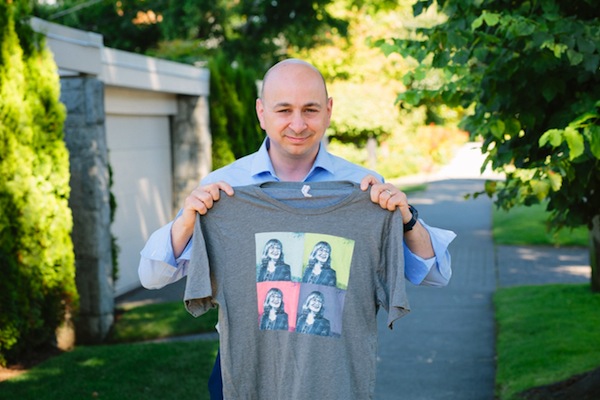
Jewish Federation of Greater Vancouver chief executive officer Ezra Shanken holding a T-shirt featuring Dr. Patricia Daly, vice-president of public health and chief medical health officer for Vancouver Coastal Health. The Facebook post thanks Daly for always being there, throughout COVID-19, “behind the scenes providing valuable support.” (photo from facebook.com/jewishvancouver)

The largest capital project in the history of British Columbia’s Jewish community – the redevelopment of the Jewish Community Centre of Greater Vancouver site – is going ahead as planned, despite the pandemic. This and many other projects are continuing as planned, says Jewish Federation of Greater Vancouver chief executive officer Ezra Shanken, in part because the agency has been preparing for a crisis for more than a decade.

As the Jewish Federation is set to launch the 2020-21 annual campaign, the Independent spoke with Shanken about the achievements and challenges of a year that started out relatively normally and veered suddenly into the utterly extraordinary.

While the COVID-19 crisis wreaked havoc on communities worldwide, and upended 2020 in unpredictable ways, Shanken said that Federation has been prepared for a crisis and that means the community remains in a position of economic and social health. After the 2008 economic recession, the organization launched a multi-year planning and allocations process intended to smooth economic ripples and equip partner agencies with reliable income expectations.

Federation raised $10.3 million this year – $8.9 million through the 2019 annual campaign and $1.4 million in special targeted funds from donors toward specific high-priority community needs such as supplemental education, to expand Jewish Family Services’ food hubs and to increase outreach to suburban and remote Jewish communities. Dr. Jonathon Leipsic was campaign chair. Alex Cristall, Federation board chair, and Shanken, provided a comprehensive overview of the year’s achievements in the 2019-20 annual report, available online at jewishvancouver.com.

When the pandemic struck, Federation launched an emergency campaign to help agencies meet the challenge of providing services to their constituencies while confronting the health crisis and its associated economic implications. The amount raised so far is not being announced, but $505,000 in funding has been released, for services like food and housing supports through JFS; to the JCCGV to help with service delivery; to supplemental and day schools to assist with tuition subsidies and transitions to online learning; for emotional support for seniors through the Jewish Seniors Alliance; and more.

A crisis like COVID, said Shanken, can have unintended consequences in helping communities overcome divisions and work together to reduce duplications of effort.

“Crisis often opens the door for opportunities for collaboration that never would have existed before for myriad political reasons,” he said. “People have far greater clarity around what the big picture looks like when they are in crisis. They are willing to forgo those smaller, often political complications that don’t allow for the advancement of big-ticket projects.”

Programs and projects that were underway before COVID include a Jewish Day School Council, chaired by Hodie Kahn, which began a year ago to undertake a benchmark study on the costs of education for each of the five schools in Metro Vancouver’s Jewish community. The findings of the report are expected to point the direction toward new funding models for Jewish education.

Community security also remains top of mind. This year saw the largest number of community organizations receive federal funding for security upgrades to facilities – Federation’s community security advisory committee, chaired by Bernard Pinsky, helped secure more than $225,000 from the federal Security Infrastructure Program. Security training sessions were provided to 160 community members.

A significant portion of campaign funds support programs abroad, including in Israel, especially in Vancouver’s partnership region, the Upper Galilee Panhandle. A connection with Jews in far-eastern Russia is also enjoying support from Vancouver’s campaign.

The challenges presented by the pandemic brought out the best in the community, Shanken said.

“It’s unprecedented in its negativity and it’s unprecedented in its positivity,” he said. “It’s unprecedented in the way that we are seeing need but it’s also unprecedented in the way that we are seeing cooperation to address that need. It’s really been a beautiful thing to see the community come together, agencies across the spectrum working together to ensure that we really have a great community as we come out of this.”

He recalls a phone call he received at the height of the lockdown.

“Somebody called me up one time when we were knee-deep in this thing and said to me, you know, Ezra, if you want to go through a crisis, go through it with the Jewish community, because we do it better than anybody,” he said. “I actually think that there is some truth to that. We really are very, very good at coming together at these critical moments. You see that materializing in the way that our agencies are working together, the way our donors are working together, the way our volunteers are coming now to serve, people are delivering food packages, over 1,300 people are being fed a week, that’s being done on the backs of volunteers and amazing professionals, multiple agencies working in conjunction with each other to make that happen. And that’s only possible because people’s best selves are emerging during this moment.… What strikes me is we really, really do, as a Jewish community, show our best selves in times of crisis.”

Shanken credits Eldad Goldfarb, executive director of the Jewish Community Centre of Greater Vancouver, for forging ahead with plans for the redevelopment of the site.

“I think people are still very passionate about seeing this project move forward,” said Shanken. “We are committed to continue to walk down the road. I can’t tell you when we will get a shovel in the ground, but I will tell you we have not put this on hold.”

Though this has been a most unusual year, so far, Shanken is bullish on the Metro Vancouver Jewish community.

“I believe it in my soul that the best years for our community have yet to happen,” he said. “We have had an amazing run over the past decade or more. Our community is incredibly strong, well positioned to emerge from COVID better than it’s ever been. But, for us to emerge in that way, it requires a commitment from our community to seize on the moment and bring us to that place that I know we can get to. The call that I would have for people is to join up, because we have an unprecedented opportunity to do truly great things for this community and to make us even stronger than we’ve ever been.”

Making yoga more accessible

For Miriam Leo-Gindin, founder of the Yoga Buggy, COVID-19 has meant more opportunities to bring her passion for yoga to Vancouver youth – free of charge.

Leo-Gindin, 41, a former school teacher who has taught yoga in various capacities, including at Vancouver Talmud Torah, founded her Vancouver-based nonprofit organization in 2017. Until recently, she was offering free Zoom yoga classes to kids, but, thanks to sponsorship from the Canadian Red Cross, she’s been able to offer physically distanced classes at McSpadden and Woodland parks to local children and their families.

photo - Miriam Leo-Gindin
Miriam Leo-Gindin (photo courtesy)

“I’ve been doing yoga since I was 19 and it helped me get through some of my own health issues,” she told the Independent. “I founded Yoga Buggy to bring yoga to all kids and families, including those who are underserved, have financial difficulties or don’t have access for other reasons.”

The “buggy” part of Yoga Buggy refers to its mobile nature. Leo-Gindin’s classes are portable, so she is able to bring them to before- and after-school programs and to parks, so that families don’t have to travel far to participate. In addition to the Red Cross, her organization also has received funding from the B.C. Recreation and Parks Association.

Pre-pandemic, Leo-Gindin was doing around 25 classes per week all over the city, in Vancouver schools, YMCAs and neighbourhood homes, while also planning expansion into Burnaby, Richmond and Coquitlam. When COVID-19 began, she launched Community Zoom Yoga, offering two sessions a week for 12 weeks. The classes had a variety of themes, from community kindness to staying healthy, and were geared at children ages 5 through 12. There were also classes for preschoolers and teens.

“Yoga is really fun and kids enjoy it,” she reflected. “It brings out their creativity, helps build their attention span, makes them feel more confident, and can play a supportive role in dealing with anxiety, depression and behavioural issues.”

The website notes, “Yoga Buggy’s trauma-aware practitioners strive to offer as welcoming a space as possible. Choice in how to participate is always at the forefront of our classes and events. If there are any sensory, learning or additional supports that could be of benefit to any of the participants, please let us know so that we can offer as hospitable a space as possible. This information is kept private and confidential.”

Yoga Buggy has 15 active teachers and will continue its work through the fall. Leo-Gindin hopes to develop a yoga teacher training program and to start a YouTube channel to increase her reach even further with kids yoga classes. For more information, visit yogabuggy.com.

Lauren Kramer, an award-winning writer and editor, lives in Richmond. To read her work online, visit laurenkramer.net.

***

Note: This article has been updated to make clear that, while Miriam Leo-Gindin taught yoga at Vancouver Talmud Torah, she was not on staff at the school.

Discussion, wine, food

Mayim Bialik headlines a Sept. 9 event to raise funds for the SOS: Support Our Students Assistance Fund at Ben-Gurion University. (photo from CABGU)

Across five time zones, two scientists and a Canadian senator will virtually get together to talk science, Judaism, veganism, Israel and the empowerment of young women. Join the Canadian Associates of Ben-Gurion University of the Negev on Wednesday, Sept. 9, at 4:30 p.m. (Pacific) for their first national virtual event, inspired by the appeal to address the dire needs of BGU’s students as a result of the coronavirus. The event will feature actress, neuroscientist and author Mayim Bialik, PhD, star of the TV series The Big Bang Theory and the sitcom Blossom; BGU president Prof. Danny Chamovitz; and special guest moderator, Senator Linda Frum. They will offer three perspectives on some of the most pressing issues facing the Jewish community, Israel and the world.

The economic crisis caused by the pandemic has forced thousands of BGU students to question their ability to continue their studies this fall. The event will benefit the recently launched SOS: Support Our Students Assistance Fund at Ben-Gurion University – a fund designed to save the class of COVID -19.

“Our event brings together three highly intelligent and socially engaged speakers that will captivate the 500 people we expect from across Canada,” said Mark Mendelson, chief executive officer of CABGU, speaking from Montreal.

“Mayim’s story has relevance and appeal for the next generation, especially during these turbulent times when many are wrestling with how to realize their social responsibility,” said David Berson, CABGU’s executive director for Western Canada. Regional chairperson for the event, Adam Korbin, added: “Equally important is the fact that she knows how to make people laugh, something we all could use right now.”

In addition to the discussion, guests will be treated to a bottle of award-winning red wine from the Yatir Winery in Israel’s Negev region and sweet and savoury kosher treats prepared by Café 41. Tickets are $180 per household, which includes a partial tax receipt; sponsorships are also available.

To purchase tickets or for further information, go to bengurion.ca or contact Berson at bguvancouver@bengurion.ca or 604-266-2680. Tickets are limited and this event will likely sell out.

Supporting HU scholarships

Lenny and Faigel Shapiro (photo from CFHU)

Calgary resident and philanthropist Lenny Shapiro recently announced that he and his wife Faigel are expanding their scholarship program at Hebrew University in Jerusalem. As part of a new five-year commitment, the couple is increasing the number and value of scholarships they will be awarding to students pursuing their university studies after completing their mandatory service in the Israel Defence Forces (IDF).

A strong believer in the concept of tzedakah, Lenny Shapiro has donated to many nonprofit organizations in both Canada and Israel. He has long supported students at HU, having provided scholarships to hundreds of students over the years and, in July, he decided to make a substantial donation to be used over the next five years for scholarships for students who have served in the IDF. To add to the impact, Canadian Friends of Hebrew University (CFHU) and Hebrew University will be matching a portion of his contribution.

At the heart of this action is Shapiro’s longstanding respect and appreciation for those who risk their lives in defence of Israel.

“I’m in love with the soldiers,” he said. “They put their lives on the line. Many have lost friends in battle. For those that then go on to study at Hebrew University who I can help, I feel they’re like my family. I see myself as being like a grandfather for them. Their needs are my needs, and I’m so pleased to do what I can to help them get their degree as they make their way through life.”

Shapiro has shared his passion for Hebrew University with the next generation in his family. One of his daughters, Robin Murphy, is a member of CFHU’s national board.

Born in Montreal, Lenny Shapiro grew up in modest conditions. After graduating from Sir George Williams University (now Concordia University) with a bachelor of commerce, he went on to head Allied Resources Management, part of the petroleum industry in Alberta.

Shapiro has always operated according to the principle that there’s no better exercise for your heart than reaching down and helping to lift someone up. His impact is reflected in the many letters he’s received over the years from HU students for whom his scholarships have allowed them to complete their studies.

“With the financial support I received from you, it’s easier for me to concentrate on my studies,” Julia Arziantzev wrote to Shapiro during the second year of her master’s degree in cultural studies at HU. “Without your scholarship, I doubt I would be able to keep up my average or even keep studying. Thank you for your generous assistance. It makes me optimistic to know there are people like you who are willing to help in such a tremendous way.”

More than a teaching position

Sara Barahan, a former Israel Connect student, continues to meet with her mentor from the program, and has started helping others improve their English, too. (photo from Chabad Richmond)

Israel Connect pairs a mentor with an Israeli teen student who is wanting to improve their English reading, vocabulary and language skills. Mentors dedicate time every week to a video meeting with their student, using Israel Connect’s “Tour of Israel” curriculum. The goal is that, by the end of the school year, students have the skills and confidence they need to succeed in Israel’s national university entrance exam.

I have been blessed with the opportunity of being part of the Israel Connect program as a volunteer tutor/mentor. Having done this for a few years, I’m keenly aware of the benefits for both students and tutors.

A year-and-a-half ago, I was matched up with Sara Barahan, 23, who is older than the average student we work with and is in college. When we were first matched up, she was in her first year, studying to be an English and special needs teacher. It was pure joy from the moment we met. Her enthusiasm, motivation and single-minded pursuit for learning English was palpable, and her commitment and memory extraordinary.

We were tutor and student for a full school year and, once it finished, Sara asked if we could continue to meet via WhatsApp video, independently, and, of course, I agreed. I think I enjoy our meetings even more than Sara does! Even though I have a new Israel Connect student I tutor once a week, Sara and I continue to talk weekly, often for an hour or more. I’ve met many of her family members, virtually, and we’ve shared a lot about our lives in our many conversations.

For one of her college assignments, Sara was asked to write about the people and things that have influenced her on her journey to learn English. This is what she wrote:

“The Israel Connect Program was sponsored by Chabad. This program involves senior volunteer tutors from all over North America, who are fluent English-speakers, connect online, one-on-one via Zoom, for 30 minutes once a week with Israeli high school students who want to improve their English conversation and reading skills. The organizers know that good English skills will give Israeli students an advantage in accessing post-secondary education, and getting better jobs.

“English proficiency is crucial to Israeli students, since it makes up a third of their entrance exam marks for university. Students and tutors make great connections and it often goes beyond simply tutoring the curriculum, and turns into friendship. The program is something concrete and meaningful that helps Israeli students improve their lives. Building relationships is a highly satisfying and core part of this program, for both the students and the tutors.

“I joined the Israel Connect Program when I was in my first year in college,” said Barahan. “The lecturer offered this program (although it was meant to be for teenagers) and I saw it as an opportunity to improve my English, so I decided to participate in it. And this is how I got to know my tutor, Shelley from Vancouver, Canada, who until today is still in touch with me.

“This program is very important and meaningful to me because it is through this program that I got to meet the person who has influenced me, and a person that I enjoy talking to about different topics. This relationship has become very close and it’s not just a virtual meeting about a set curriculum; our conversations are about topics far beyond the studies. Thanks to the Israel Connect program I have gotten the chance to practise my English speaking, reading, writing and listening skills and expand my vocabulary.”

What greater accolade could Israel Connect get than this firsthand testimonial from a graduate of the program? I use the word graduate because Sara participated as an older student and has continued with her English studies.

Sara and I are fast friends, despite our 41-year age difference. We talk about school, her social life, our families, her aspirations, her frustrations, and everything in between. She confides in me and we have become very close. I would say that Sara seems like a daughter to me, except for the fact that I’m old enough to be her safta (grandmother). The age disparity isn’t an issue though; in fact, I like to think that she sees me as a kind of hip grandmother.

Sara often asks for my help proofreading her essays for school, and I love helping her learn. I see remarkable progress in her English language fluency and conversation skills. She says that I’m the only person she can speak English with, and really appreciates practising with me. What better way to learn a language than to converse at length about all sorts of topics? And Sara has gone on to tutor English to her neighbour’s 9-year-old daughter. Now, if that’s not a success story, I don’t know what is!

Other Israel Connect mentors have also expressed how gratifying it is to help these young Israeli students, and most mentors say that they’re certain they enjoy the experience at least as much as their students. They’ve described the mentoring experience as refreshing, fun, fulfilling and, at times, challenging – but always rewarding. Their students all sincerely appreciate the chance to practise their English conversation, vocabulary and reading skills with someone who is friendly and nonjudgmental. Some kids said they are embarrassed to try speaking English in class, or in front of their family, so the Israel Connect program gives them the confidence to speak. More importantly, it gives them the incentive to continue learning English, which they know will help them as they enter university and seek out good jobs.

Israel Connect always welcomes new volunteer mentors. For more information about the program and how to volunteer, go to tinyurl.com/yd6y4jrq.

Shelley Civkin is a happily retired librarian and communications officer. For 17 years, she wrote a weekly book review column for the Richmond Review. She’s currently a freelance writer and volunteer. She wrote this article for Chabad Richmond.