Real-life learning

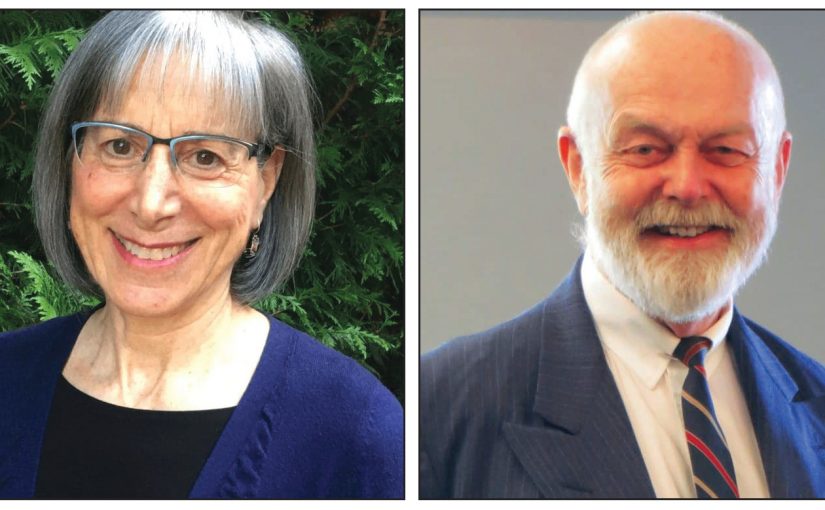
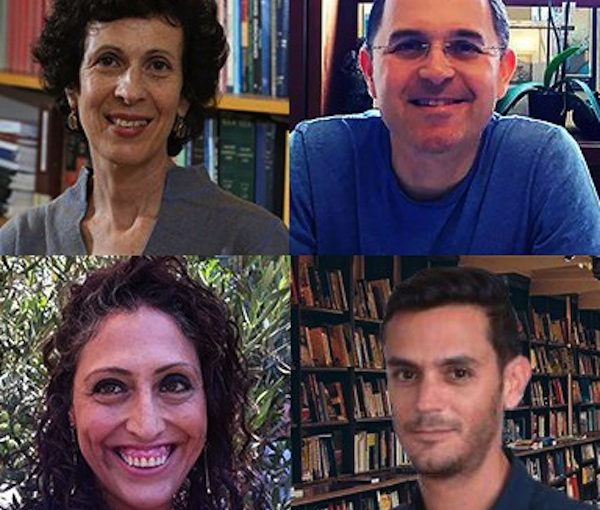
Clockwise from top left: Prof. Daphna Lewinsohn-Zamir, Prof. Guy Davidov, Ohad Amar and Vardit Dameri Madar of Hebrew University’s Clinical Legal Education Centre. (photos from cfhu.org)

Five representatives of Hebrew University’s Clinical Legal Education Centre (CLEC) took part in an online discussion about the legal aid the organization offers to disadvantaged individuals and groups.

“It is one of the jewels in our crown. CLEC has taught our students how social responsibility is an important part of the legal profession,” said Daphna Lewinsohn-Zamir, dean of HU’s faculty of law. “And it continues to do exemplary work during the coronavirus pandemic.”

Besides offering professional legal assistance to underprivileged people in Israel, particularly in the Jerusalem area, the centre provides students with hands-on experience. Each clinic, which is comprised of 16 students and includes six hours of field work each week, is overseen by an attorney and an academic advisor.

“The main goal is to demonstrate to students the difference between law in the books and law in action,” said Prof. Guy Davidov, CLEC’s academic director. “It is essential in showing how the law works in real life. We don’t want to be detached from the community in our ivory towers.”

Another key objective of the centre, Davidov said, is to present the potential (and limitations) of the law as a tool for social change, which also is better understood in practice and engagement.

To illustrate the scope of the centre, Vardit Dameri Madar, CLEC’s executive director, told the assembled Zoom audience the story of Hanna, a 32-year-old mother of six children, including one who has mental challenges. Hanna lives in severe poverty and is divorced after having suffered years of physical and mental abuse. She survives on minimum income benefits.

Just as the coronavirus struck, Hanna had her benefits stopped, said Dameri Madar. In spite of the pandemic forcing people to stay in isolation, the country’s housing department demanded that Hanna come to its offices in person to fill out the necessary documents to receive her benefits.

“Unlike a TV show such as LA Law, problems do not get resolved in the time it takes to watch an episode,” Dameri Madar explained. “In real life, it takes a long time to get a response from the housing department.”

After sending letters to the department and raising the issue in the media of Hanna’s possible eviction, a precarious circumstance shared by thousands of Israelis as the virus started, CLEC was able to make a difference – the housing department relented and allowed people to fill in their applications online.

CLEC handles 600 cases per year. The centre aims to address policy changes that affect broader populations; it initiates 35 to 40 policy change projects a year through tests cases, position papers, shadow reports, draft legislation and alternative models. CLEC also organizes about 90 lectures per year for the general population, as well as for specific groups, such as youth, single mothers and social workers.

This coming year, CLEC will run eight clinics, on the topics of at-risk youth, international human rights, marginalized communities, disability rights, criminal justice, the wrongfully accused, multiculturalism and women’s economic empowerment.

CLEC, too, has formed a Corona Crisis Program that manages existing cases related to poverty with responses in “real time”; provides Social Justice Operations Rooms on Facebook, with legal aid available in Hebrew and Arabic; and promotes policy changes stemming from the Facebook room and clinical activities.

“We decided that Facebook was a good tool to help answer people’s questions at a time when the rules were in flux,” said Ohad Amar, the lecturer at CLEC who started the Facebook groups.

From the Facebook groups, the public has easy access to specialized aid from attorneys, students and volunteers. To date, its 60 volunteers have helped more than 1,500 people.

Ariel Elkayam, a second-year law student, said “this is the best thing that happened to me with my studying here. I am so lucky to get to do this work. With the centre, you do teamwork. It really gives you a sense of belonging.”

Elkayam’s recent work with CLEC has been advocating for at-risk youth who have been fined and arrested for being out on the streets with nowhere to go during the COVID crisis – at a time when Israeli law enforcement has been clamping down on homelessness.

Every year, approximately 140 students are accepted to the CLEC clinics. For more information, visit openscholar.huji.ac.il/clinicallecen/book/clec-experience-assistance-impact-law-students.

Sam Margolis has written for the Globe and Mail, the National Post, UPI and MSNBC.

Inspiring students’ research

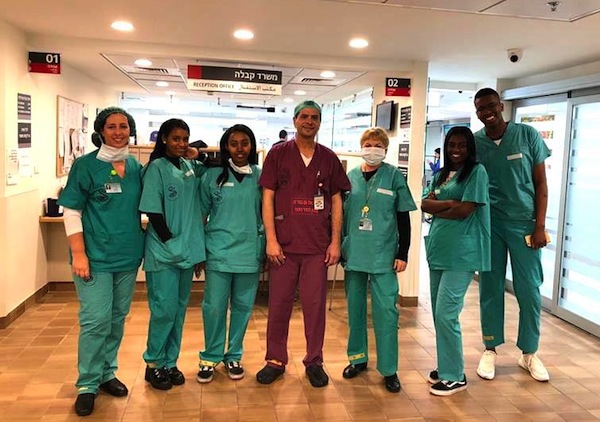
Students and staff of the recent Arrow Project on a tour of Sheba. In the centre is Prof. Eldad Katorza. Student Yair Jalmar is at the far right. (photo from IMP)

Sheba Medical Centre, Israel’s national hospital, enjoys a reputation for medical innovation, but many are unaware that it is also at the forefront of societal integration among various minority groups in Israel. In the past several years, Sheba has integrated hundreds of new Ethiopian olim (immigrants) into the hospital workforce, going as far as providing them with free classes to help them navigate Israeli bureaucracy and improve their language skills.

Recently, Prof. Eldad Katorza, senior physician at Sheba and director of the Arrow Project, decided to give youth from the Ethiopian community a head start by incorporating them into his pilot program.

The Arrow Project (Chetz in Hebrew, the initials of chokrim tze’irim, meaning “young researchers”) is an apprenticeship program for medical students, designed to pave their way into the world of research. Established in 2006, the initiative matches selected students with experienced researchers who serve as their mentors. During once- or twice-weekly meetings, the student-mentor teams work through every stage of medical research, from formulating the initial question, to collecting and analyzing data, to presenting the results at medical conferences.

This year, for the first time, each research duo also included a third tier: high school students from the Ethiopian community.

Katorza believes in the importance of encouraging students to pursue research, noting that, in med school, they do not receive sufficient exposure to research thinking or methodology.

“I believe that research makes a doctor more knowledgeable, more curious, more creative,” he said. “A doctor who engages in research is a much better doctor.”

Employing this premise, Katorza is planning to open several slots for nursing school students in the coming year’s program. “Nursing is also a field that stands to benefit greatly from adding researching to its ranks; it will raise the bar of nursing in Israel,” he said.

In the early stages of planning the pilot program for the Ethiopian high school students, it became evident to Katorza just how crucial, timely – and challenging – his initiative was. “I asked my son, then in 11th grade, to look around his own school in Givatayim for students from the Ethiopian community who might be suitable for the program,” said Katorza. “As it turned out, there wasn’t a single Ethiopian student in his school, nor in any of the good schools in the area.”

The reason can be traced to the socioeconomic realities in Israel today. Ethiopian Israelis have long experienced prejudice and being treated as second-class citizens. By and large, members of the Ethiopian community tend to dwell together in poorer neighbourhoods, where community services, schools included, are more limited. These conditions put Ethiopian teens at a disadvantage from the outset and, due to economic necessity, the youth are pushed to join the workforce at an early age, further perpetuating a cycle of poverty.

“Almost four decades have passed since the first wave of Ethiopian Aliyah,” said Katorza, “yet, judging from their rate of participation in academia, their level of affluence and other markers of social mobility, it appears that the government has failed to take the necessary steps to help them bridge the gaps and facilitate their successful absorption into mainstream Israeli society.”

Anxious to change this negative trend, Katorza decided to include outstanding students from the Ethiopian community in the Arrow Project. However, it wasn’t simple to locate high school students from the Ethiopian sector who met the criteria for participation in the program: high marks in the sciences, high motivation and interest, and living near enough to the Sheba campus to be able to easily attend the weekly meetings. Ultimately, Katorza was aided by an organization called Fidel (“Alphabet” in Amharic), which promotes the education and social integration of Ethiopian-Israeli youth. The Fidel staff welcomed this opportunity to incorporate Ethiopian students in Sheba’s research-mentoring platform, and provided 10 candidates, from which the top five were chosen.

According to Katorza, the pilot program was a resounding success and will be repeated in the coming year. “We found that, once they are freed from the limitations of their environment, the students manifested amazing capabilities,” he said. “We endeavoured to help build their self-confidence, empower them and teach them that they can do anything they put their mind to.”

Throughout the year, in addition to their full participation in research, the Ethiopian high schoolers were also exposed to the clinical activity at the hospital. “At the beginning of the year, the students didn’t have any specific plans for the future,” Katorza said. “Now, they are now seriously considering a medical career.”

One of those is Yair Jalmar, 17, from Beer Yaakov, who participated in a research project with pediatric cardiologist Dr. Shai Tejman. “This project helped me develop my interest in medicine and learn more about the advanced technologies and devices, as well as the various departments in the medical field,” he said.

In the 14 years since the project’s inception, the pool of participants, which in the beginning included only students from Tel Aviv University Sackler School of Medicine, has expanded to foreign exchange students from New York and London, as well as medical students from Ariel University, Bar-Ilan and others. Thus far, former participants in the Arrow Project have gone on to publish their findings in respected medical journals, and several have joined the team at Sheba.

– Courtesy International Marketing and Promotion (IMP)

We always find ways to learn

All over the world, students will be continuing a different school experience, one that began soon after the pandemic. Some face a new academic year with entirely virtual learning. Others are going back into classrooms with many adjustments to allow (theoretically) for safer, virus-free learning. Still others face a hybrid approach, with small amounts of time at school but more time with parents, in daycare or even without any supervision at all as their parents work.

It’s a precarious time. Most of us haven’t experienced anything like this. Yet, there have been moments throughout history when the school rules changed. Imagine the European parents of the 1930s, faced with the Nazi rules, where their kids weren’t permitted to learn in the regular schools. There were families who left everything they knew to escape and start new lives anywhere they could go. There were parents who sent their children away to English boarding schools or on the Kindertransport, knowing that they themselves might not ever be able to leave Germany, Austria, Poland, Czechoslovakia or Danzig.

Those who say children must go back to school because “school is better for them than the alternatives” make arguments like, “We don’t know what the effects of this absence from school will be.” When I hear this, I immediately think of the settler children, perhaps 150 years ago, on the prairies, who spent long winters in sod houses or log cabins. Jewish immigrant families arrived in the 1880s in Manitoba and many spent time in immigration sheds or shacks by the river – it’s unlikely those kids had formal schooling. Many immigrants taught their kids as they could. Schooling was intermittent at best.

Don’t get me wrong, for kids who are hungry, neglected or abused, school is a refuge. For refugees with traumatic pasts, interrupting school learning is not a good thing. However, many kids with stable, financially secure families are doing just fine while staying at home. It’s the safest choice.

Were all these people who lived in sod houses or who had lapses in their formal schooling permanently marred as adults? I don’t think so. I pondered all this recently as I celebrated finishing the Talmudic Tractate Shabbat – by myself. I started Daf Yomi in January of this year, and I’ve read my page online every day, often late at night. Aside from a few online exchanges, it’s all alone. I know this study is better done with a partner or chevruta (small group). This would be preferable. However, during the pandemic, at home with my family, I was lucky to squeeze in a solitary 20 minutes to study before bed. It’s been hard to listen to podcasts or chat online in a forum, and I certainly wasn’t regularly meeting with anyone in person.

I didn’t have any formal training in studying Jewish texts until I was a teenager in a summer camp program. I didn’t learn Talmud in an organized way until I was in graduate school. Yet, here I am, actively learning as an adult. Does interrupted or unconventional schooling mean less learning? I don’t think so.

In an informal survey of the online Jewish world, we’re finding learning opportunities all over the place. Whether it’s religious schools, congregational adult education, Jewish institutions for higher education, publications or more, we’re offered countless ways to listen, watch and discuss in online classrooms. My kids, age 9, were deluged with online Jewish opportunities, even outside of their bilingual Hebrew/English public school curriculum. My parents report that they are doing something interactive and learning with their congregation nearly every day.

Learning is happening in many traditional and hands-on ways. Often, it’s just having time for reading or making food from scratch. In some ways, the pandemic has motivated people of all ages to try new things. For many in the Jewish community, the pandemic has allowed us to jump into Jewish learning or to attend synagogue (virtually) more often. The need for stimulation while staying home has wakened many people’s intellectual curiosity.

For me, at least, and for my kids, school wasn’t usually the place to satisfy that curiosity. Sure, yes, we learn essential things at school. But the exploring of the outdoors and science, the building and construction with Lego, the art and design we see and draw and the music we listen to – our appetite for all this was never fully sated at school. Or, at least, not as of yet.

I have one twin who is desperate to get back to school to see his friends. He cannot wait. The other twin is not at all sure he wants to return to school ever. Given the situation we find ourselves in, each kid may get some of what he wants. A little school, and a little time at home.

I felt I didn’t need a fancy siyum (event to celebrate finishing the study of a talmudic tractate) or a seudah (celebratory meal). However, at the last moment, I signed up for a Zoom event hosted by My Jewish Learning online. Three distinguished teachers spoke, one taught the last few lines of the text, and another recited the Hadran, the special short prayer one says at the end. It says, “we will return.” We pray not to forget the tractate we’ve just studied.

I was moved by the Zoom siyum. More than 450 people attended! Although I listened while I answered kids’ questions and made salad for lunch, I still learned a lot.

I also realized that, as long as we’ve been studying Talmud, we’ve been hoping for a return, a review and a chance to learn in the future. We may sit in virtual classrooms, all alone, or in a real classroom, socially distanced, but we will return to learning – no matter what our age.

The pandemic is possibly the biggest event in our lives for some of us. To paraphrase what we say in the Hadran, we must remember that we’ll return to learning and that learning will return to us; that we will not forget you, learning, and the learning will not forget us, “not in this world, and not in the world to come.”

Wishing you a healthy and positive back-to-school learning experience – however differently we might experience it this year.

Joanne Seiff has written regularly for CBC Manitoba and various Jewish publications. She is the author of three books, including From the Outside In: Jewish Post Columns 2015-2016, a collection of essays available for digital download or as a paperback from Amazon. Check her out on Instagram @yrnspinner or at joanneseiff.blogspot.com.

Redouble efforts

North American society, hobbled by the COVID pandemic and enflamed by police violence and the belated recognition of other forms of systemic racism, has now veered determinedly into a discussion of privilege.

Discussion of white privilege is an effort to address systemic racism not only from the perspective of the disadvantages experienced by people of colour but, conversely, via the advantages experienced by the white majority in places like North America. It is, of course, a necessary and worthy undertaking. When considering anti-racism along with antisemitism, however, this approach can cloud more than it elucidates.

While some Jews, including most in North America, are considered white in today’s culture and society, the effort to dismiss the particularity of the Jewish experience is an erasure that can feel particularly galling when it emanates from people who pride themselves on respecting the cultural and historical experiences of different peoples.

It may be folly to seek rational explanations for unreasonable biases, but the presence of antisemitism in movements ostensibly advancing human equality can perhaps be explained by the fact that, among the many and morphing characteristics of antisemitism is a depiction of Jews as powerfully monolithic, grasping and collectively economically advantaged.

The application of generalized stereotypes onto all members of any group is the definition of prejudice. When it comes to stereotypes about Jews, it can naturally lead to what has been called “punching up.”

Attacking people perceived as weaker (or less advantaged) than oneself is “punching down” and is, obviously, despicable. Yet, if one subscribes to the idea of powerful, controlling Jews, the inevitable “punching up” can be perverted into an heroic act of advancing equality. Rather than raising up those who are, or are perceived to be, disadvantaged, this aberrant approach strives to drag down those perceived to be advantaged. That those “advantaged” or “privileged” people happen to belong to that oldest of scapegoated groups can hardly be a coincidence.

In recent years, but particularly in recent days, we have seen prominent Black figures in the world of entertainment and professional sports get themselves into hot water over comments that are explicitly antisemitic or perceived as such. Some, like football star DeShawn Jackson, have apologized; others have dug in their heels. In Jackson’s case, he recanted after sharing on social media assertions that Hitler was not racist and other posts that claimed a Jewish plan to “extort America” and achieve “world domination.”

Similarly, a social media hashtag, #JewishPrivilege, was perpetuated by white supremacists and others – but was then co-opted by Jews themselves. Israeli activist Hen Mazzig, who is said to have started the counter-trend, wrote: “#JewishPrivilege is when my grandparents were violently forced out of Iraq and Tunisia for being Jewish with only the clothes on their back. Along with 850,000 other MENA Jews they arrived to Israel with nothing, only spoke Arabic, and lived in a tent/tin shack for years.” So many Jews tweeted their experiences of antisemitism that the hashtag trended again, but with new meaning.

Fighting antisemitism and fighting racism against Black, Indigenous and other peoples of colour can sometimes put a person at a confusing and contradictory crossroad. However, the solution is not to walk away. We don’t have that privilege. It is our moral responsibility and it is in our self-interest to redouble our efforts against racism and antisemitism and to educate anyone and everyone who does not see the interconnectedness of these two causes and their complexities – including ourselves.

No Silence on Race

An open letter from Black Jews, non-Black Jews of colour and our allies to Jewish congregations, federations, foundations, organizations, nonprofits and initiatives, dated June 30, 2020.

We write this letter as proud members of the Canadian Jewish community. We are Black Jews and non-Black Jews of colour. We are Jewish community board members, educators and leaders. We write from a place of love for our Jewish identities and community, while also grappling with the cultural erasure, exclusion and structural racism that we experience in Jewish spaces. Nevertheless, we are compelled to be in Jewish community because it is who we are.

Over the past month, we have witnessed a racial reckoning within Canadian institutions. Police violence against Black and Indigenous people has continued unabated, with numerous deaths, including that of D’Andre Campbell, Eishia Hudson, Jason Collins, Regis Korchinski Paquet, Everett Patrick, Chantel Moore, Rodney Levi, Ejaz Ahmed Choudry and countless others. In the United States, the tragic murders of Ahmaud Arbery, Tony McDade, Breonna Taylor, Sean Reed, George Floyd, David McAtee and Rayshard Brooks have gripped the collective consciousness and have been the catalyst for a global call to action. We have witnessed and participated in protests and in conversations for structural change across all sectors and our Jewish community is not exempt from this dialogue.

No Silence on Race is born out of the necessity for inclusivity and racial equity in Jewish spaces. We acknowledge and are grateful for the longstanding work that Jews of colour and Jewish allies in Canada and the United States have dedicated themselves to in addressing structural racism within the Jewish community.

In this letter, we call on our Jewish community to uphold the tenets of justice and equality and to commit to the creation of a truly anti-racist, inclusive and equitable Jewish community.

The work that needs to be done to achieve this vision must happen collectively and systematically. To guide its implementation, we have devised nine pillars outlined below. These pillars are intended to support Jewish congregations, federations, foundations, organizations, nonprofits and initiatives in their transformation towards greater inclusivity and equity.

If you are aligned with the creation of an anti-racist, inclusive and equitable Jewish community, we ask that you sign this letter in support [at nosilenceonrace.ca]. If you are an organization, we ask that, in addition to signing your name, you write a public statement expressing your commitment to achieving this vision.

The nine pillars are:

1) Allyship: creating anti-racist, inclusive and equitable Jewish spaces begins with each individual. We call on everyone within their organizations to make a personal pledge to the work of allyship and to devise a personal plan of 10-15 comprehensive ways they will work towards becoming strong allies and leaders in the creation of more inclusive and equitable Jewish spaces.

2) Education: engage external facilitators for organization-wide anti-racism and anti-oppression education and training led by Black Jews, Jews of colour or people of colour consultants or consulting organizations.

3) Indigenous education and relationship building: engage in education about Indigenous peoples in Canada and cultural competency training. Build meaningful relationships with local Indigenous communities.

4) Equity consultancy: work with an equity consultant with a specialization in anti-racist work to formulate a multi-year strategic plan for your organization to create a roadmap towards inclusion, equity and anti-racist practices. This includes implementing non-discrimination policies, equitable hiring policies, anti-racist frameworks for organizational decision-making and a procedure to report and investigate any breaches of this policy.

5) Employment and recruitment: implement strategies to ensure equitable representation in your staffing, as well as development and retention planning to ensure these practices are adequately conducted.

6) Equity, inclusion, anti-racism advisory: accountability is essential. Create an advisory group to ensure that the equity-and-inclusion policy and strategies implemented are upheld at all levels of the organization. Create metrics to track ongoing anti-racism work.

7) Jews of colour leadership strategy: invest in a leadership strategy to ensure that Jews of colour are poised to be adequately represented in leadership roles in the community. This can include mentorships, educational scholarships and project grants.

8) Programming/events/partnerships: commit to more programming and partnerships with cultural institutions, with the goal of engaging in and elevating a diverse range of Jewish diasporas and histories.

9) Amplify the voices of Jews of colour in Canada: demonstrate explicit support for Jews of colour community groups and active initiatives. Engage in substantial outreach efforts.

We acknowledge that change takes time and recommend Jewish organizations create their own timelines for achieving the nine proposed pillars. We have designed these pillars as a guideline and we encourage all organizations to be intentional and creative in their implementation. While organizational priorities may have shifted amidst the realities of COVID-19, it is imperative that our community does not remain silent about how racial inequity plagues Jewish spaces. We look to the entire Jewish community in Canada to challenge ourselves to do more and to envision the path forward.

Jewish scholars as far back as Rabbeinu Bachya ben Asher, a significant rabbi and scholar from 13th-century Spain, call us to seek “Justice whether to your profit or loss, whether in word or action, whether to Jew or non-Jew.” So, we set our sights on July 9, which this year mark[ed] the fast of the 17th of Tammuz, where we begin the three-week period of mourning leading up to Tisha b’Av.

Tisha b’Av commemorates the destruction of the Temple. It is a time where we reflect on the divisions within our community. But, more importantly, it is a time to reflect on the cost of allowing those divisions to persist. During this holiday, we recognize the importance of taking a more active role in challenging each other and of doing more to make amends. It is in this spirit that we invite Jewish organizations across the country to engage in listening, introspection and action.

Creating anti-racist, inclusive and equitable Jewish spaces will require deep self-reflection, difficult conversations and an ongoing commitment to reimagining what the Jewish community can look like. Above all, it must be guided by the celebration of Jewish culture and a love for one another.

For individuals and organizations who believe in this movement, we invite you to join us in action by adding your name to this letter. We call on organizations to sign their name with the intention to issue a public statement by July 29, outlining your commitment to the vision of creating a more inclusive Jewish community.

The ground is shifting beneath us in ways that are undeniable and it is incumbent on each of us to play a role in shaping our collective future. When we honour our commitment to each other as Jews, our communities will reflect the beauty and diversity that truly exists within our culture.

Sara Yacobi-Harris, Akilah Allen-Silverstein and Daisy Moriyama

Inspiring achievers honoured

Dr. Paige Axelrood and Ivan Sayers were among the 25 British Columbians honoured with a 2020 BC Achievement Community Award. (photos from BC Achievement Foundation)

On April 27, Premier John Horgan and Anne Giardini, chair of the BC Achievement Foundation, named this year’s recipients of the BC Achievement Community Award. Among those honoured were Jewish community members Dr. Paige Axelrood and Ivan Sayers. “These days more than ever, our communities are made stronger by British Columbians who go above and beyond,” said Horgan. “Thanks go to all of the BC Achievement 2020 Community Award recipients for helping build a better province for everyone.”

“It is an honour to celebrate the excellence and dedication of these 25 outstanding British Columbians,” added Giardini. “On behalf of all of us at the BC Achievement Foundation, I thank each of them for strengthening their communities and inspiring others to community action.”

As the founder of the Scientist in Residence Program, Axelrood developed and built an educational program to support teachers and help students discover their inner scientist. Elementary students across the Vancouver School District have experienced real science and discovered the natural world through the Scientist in Residence Program. Axelrood’s vision to partner teachers with scientists to facilitate hands-on, inquiry-based lessons has helped change the delivery of science education.

Sayers is the honorary curator of the BC Society for Museum of Original Costume and curator emeritus, Museum of Vancouver. Specializing in the study of women’s, men’s and children’s fashions from 1700 to the present, Sayers has produced historical fashion shows and museum exhibitions all over western North America. A lecturer and mentor, his fashion shows have supported countless nonprofits over the years.

The BC Achievement Foundation is an independent foundation established in 2003, whose mission is to honour excellence and inspire achievement. This year’s selection committee members were Mayor Lee Brain of Prince Rupert, Mayor Michelle Staples of Duncan, and past recipients Lolly Bennett, Aart Schuurman Hess and Andy Yu.

The recipients of the 2020 Community Award will be recognized in a formal presentation ceremony in Victoria, in the presence of Janet Austin, lieutenant governor of British Columbia. Each recipient receives a certificate and a medallion designed by BC artist Robert Davidson. For more information on the award and its recipients, past and present, visit bcachievement.com.

Feeding the body and mind

National Hebrew Book Week has taken place every year in June. Its fate for this year, in light of the COVID-19 pandemic, is unclear. (photo from gojerusalem.com)

In Israel, you know Shavuot is approaching when you see the grocery stores setting up displays of pasta and spaghetti sauce. The pandemic shouldn’t change that.

Israelis are obsessed with the thought of eating non-meat meals on Shavuot. I suspect that at the heart of this obsession is the feeling that, even today, many people still consider eating a non-meat meal equivalent to eating less than a full meal. Hence, the worry that there really will be a satisfying meal to appropriately celebrate the holiday.

While there are many lovely explanations about why we eat dairy on Shavuot, they seem to be secondary to some practical considerations. As Rabbi Prof. David Golinkin points out, in the late spring, young calves, lambs and kids are weaned. Thus, historically at this time in Europe, there was an abundance of milk. Bear in mind that refrigeration is a fairly new process and that, prior to refrigeration, farmers needed to move fast with perishable milk. They made cheese and butter, which, likewise, needed to be consumed relatively fast. This dairy excess may have motivated some Jews to eat dairy on Shavuot. (See the article “Why do Jews Eat Milk and Dairy Products on Shavuot?” on the Schechter Institutes’ website, schechter.edu.)

But, eating a non-meat meal on Shavuot is not restricted to the customs of European Jewry. As Jewish food expert Claudia Roden notes in The Book of Jewish Food: An Odyssey from Samarkand to New York, Sephardi Jews in Syria made cheese pies called sambousak bi jibn, Tunisian Jews had a special dairy couscous recipe and, in places like Turkey and the Balkans, Jews prepared a milk pudding called sutlage for Shavuot. (If you don’t want to eat animal-based foods, you don’t need to feel left out. The United Kingdom’s Jewish Vegetarian Society helps you enjoy a variety of traditional, but vegan, cheesecake recipes.)

So from where did all this dairy focus originate? One appealing explanation reminds us of what was supposed to have happened on Shavuot, namely that the Jewish people received the Torah. In Gematria, the Hebrew word for milk (chalav) adds up to 40, the number of days on which Moses stayed on Mount Sinai in order to receive the Torah.

Significantly, studying the Torah and other Jewish texts on Shavuot eve has become a major trend in Israel, as well as in the Diaspora. The big Israeli cities offer any number of options for participating in a tikkun leil Shavuot. These free learning sessions welcome the participation of all of Israeli society, from the religious to the secular, and everyone in between. Those living in smaller towns and on kibbutzim and moshavim likewise hold study sessions on the night of the holiday.

The idea of all-night studying originates with the kabbalists. The earliest members of this group apparently studied with Rabbi Shimon bar Yochai, the author of the Zohar, who lived in the second-century CE. It was this scholar (also known by his initials, as Rashbi) who stated: “G-d forbid that the Torah shall ever be forgotten!” (See the Babylonian Talmud Tractate Shabbat 138b.) By the Middle Ages, the kabbalistic all-night Shavuot study had really picked up steam in places such as Safed.

photo - Studying the Torah and other Jewish texts on Shavuot eve has become a major trend in Israel, as well as in the Diaspora
Studying the Torah and other Jewish texts on Shavuot eve has become a major trend in Israel, as well as in the Diaspora. (photo from pexels.com)

Some claim the reason for studying during the night is found in the midrash stating that it was a way to correct for the Children of Israel’s mistake of oversleeping on the morning they were meant to receive the Torah. Others claim, however, that the Hebrew word tikkun should not be translated as correction, but rather as adorning or decorating the bride. The bride in this instance is the people of Israel and the groom is either G-d and/or the Torah.

According to a late 17th-century Libyan tradition, Shavuot symbolizes the wedding day between the people of Israel and the Torah. According to this tradition, the Torah is the bride, which explains the title of the Libyan Shavuot text entitled Tikkun Kallah. Accordingly, those who read this tikkun are likened to bridal attendants.

The importance of studying on Shavuot is bolstered by the fact that Israel’s Hebrew Book Week (or, in some places, Book Month) begins right after Shavuot. I do not believe this occurrence is coincidental, but rather links us to the idea that we are still the People of the Book and a people of books.

The Israeli book fair has been running for many years. This year, 2020, would mark the 59th annual celebration of Hebrew Book Week and the fair’s age is all the more impressive when you recall how shaky was the Israeli state’s start as an independent entity. Recent years’ events have included Israeli authors appearing in coffee houses, story hours and plays for children, guided walks in Israel’s National Library, the more traditional book signings and, of course, the possibility of thumbing through thousands of Hebrew books.

In brief, our spring holiday offers opportunities for both spiritual and physical nourishment.

Deborah Rubin Fields is an Israel-based features writer. She is also the author of Take a Peek Inside: A Child’s Guide to Radiology Exams, published in English, Hebrew and Arabic.

Culture & accessibility

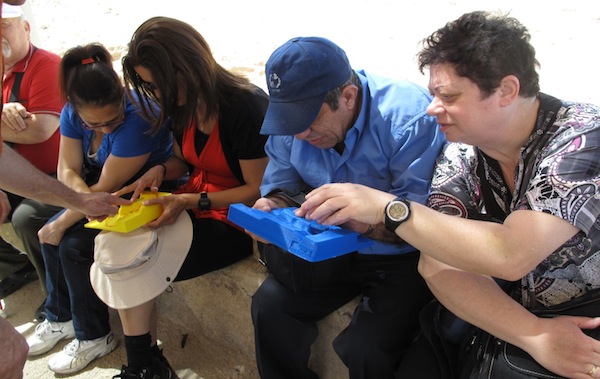
Visitors to Masada learn more about the site through Gadi Mathov’s miniature model of the landmark. (photo from Mathov Design)

What would it take to make museums, cultural sites and tourist attractions more accessible to people with visual, intellectual or developmental disabilities? For the past 25 years, Israeli professional miniaturist Gadi Mathov has been working on solving this problem using models.

At Masada National Park, for example, people with visual impairment can understand the site’s unique topographical structure and history through Mathov’s 3D tactile models.

“We also created for them miniature models of siege vessels that illustrate the Roman siege of Masada,” he explained. “The way I define it, a model is a physical representation of a product or an idea. A model is a medium that allows people to communicate and pass along ideas between them.”

Mathov Design models are used in leading cultural institutions such as the Israel Museum and sites managed by the Israel Antiquities Authority and the Israel Nature and Parks Authority. Mathov also cooperates with the Commission for Equal Rights of Persons with Disabilities, the National Insurance Institute and the Access Israel nonprofit organization.

Mathov Design’s 100-square-metre model of Jerusalem, featuring the Temple Mount, the Tower of David, the Knesset, the new Jerusalem Light Rail and other iconic structures, can be seen in Times Square in New York City as part of the Gulliver’s Gate project.

Birdwatching via models

Agamon Hula, a must-visit birdwatching and natural beauty attraction in northern Israel, is also enhanced by Mathov’s models. Here, he cooperated with Pnina Ceizler, Keren Kayemeth LeIsrael-Jewish National Fund’s northern region projects and accessibility coordinator, and KKL-JNF’s chief ornithologist Yaron Charka to make the site’s research station a place of interest for people with disabilities – visitors can see and/or feel models of the birds that migrate in the area, as well as special globes and maps that highlight migratory routes.

“There are quite a few models that we’ve created to enhance the experience for people with visual impairments,” said Ceizler. “We see that it’s useful for everyone, also for children with disabilities or with autism.”

The accessible experience at the research station has proved to be a huge hit, she told Israel21c. She tried it out on a group of people with visual impairments before opening it up to private visitors and organized trips for schools and people with special needs.

“They enjoyed this whole experience up close. They were impressed and admired everything,” she said of the accessible centre’s first visitors.

Back to the future

Mathov has worked in his profession for 37 years, but it came about quite by accident. “It was a temporary job while I was an architecture student, and then I found out that I liked it better,” he recounted.

Decades later, he’s still in love with the job. “They’ll have to take me out of here in a coffin,” he joked, speaking of his workshop in the central city of Lod.

Along with cultural institutions, his clients include the defence establishment and medical instrumentation companies.

Mathov is not worried about work drying up in the age of technological advancement. “There’s nothing more comfortable or clearer than a model,” he said. “There are dozens if not thousands of uses.”

Lately, it’s become much easier and cheaper to create a model. “The biggest development was the introduction of what we call computerized production,” Mathov explained, citing 3D printers, lasers and CNC (computer numerical control) machines. “Each of these technologies helps us create a much more complex and higher-quality product in less time and for a cheaper price.”

Mathov hopes that, one day, people will be able to print out models at home of the places they’re planning on visiting. “Today, no one goes to the store to buy music; no one goes to Blockbuster to watch a movie. I imagine that, when you’ll want a miniature model, you won’t go to a miniaturist. You’ll be able to download them and print them by yourself,” he explained.

However, printing is only the end of a process that begins with human creativity. Mathov said a model should contain “the human spark of the soul of the person who created it.”

And, while he mourns the disappearance of craftsmanship, Mathov is a firm believer in advancement. “You have to keep on looking forward,” he said. “To understand what the technologies are and where they’re heading; how to adopt them or compete against them or circumvent them.”

For more information, visit mathov.co.il/English.aspx.

Israel21c is a nonprofit educational foundation with a mission to focus media and public attention on the 21st-century Israel that exists beyond the conflict. For more, or to donate, visit israel21c.org.


A virtual community

With COVID-19, we now must connect online.

As the world continues to grapple with the coronavirus (COVID-19) pandemic, Jewish organizations across Metro Vancouver are finding new ways to connect with the public.

Last week, schools and most businesses and places of worship closed their doors to support the provincial government’s directives for new social-distancing policies. For everyone, this change has required the adoption of different ways to address daily needs, like shopping, study and religious practice. It has put increased demand on organizations and businesses to think out of the box when it comes to staying in touch with and supporting their membership, clients and connections. Here’s some of what the community is doing.

New lesson plans

Schools have shifted their classes to online attendance and are creating lesson plans that allow students to study virtually and independently. Some schools, like Richmond Jewish Day School, have sent out private communications to parents, outlining class schedules and continued services. Others are using their websites or other online services to keep families apprised and facilitate the learning curve that students, parents and teachers will inevitably face using the technology.

Students at Vancouver Talmud Torah will have independent study periods and be able to use social media to connect with their teachers and peers. The school is using Google Classroom for study plans and assignments and its website notes that students who are experiencing problems, need to discuss study plans or want to connect with other class members will be able to do so during the teacher’s virtual office hour each day. For families that don’t have a computer available, the school says students will be able to sign out a laptop to use at home (one laptop per family, as inventory is limited).

King David High School’s new multimedia program launched a week ago, and it uses Zoom video services, Moodle and Google Classroom to connect with at-home students. According to KDHS’s website, the school is doing its best to keep schedules and study periods the same as they were prior to the shutdown. It is using classes prior to Passover break (April 3) to test and refine the online structure.

Shalhevet Girls High School is also working hard to keep schedules standardized and reflective of the lesson plans it offers, and students can still connect with one another during the “lunch and shmooze” hour.

Take-out and online

On March 21, the City of Vancouver ordered all in-house restaurant service to cease. Restaurants that provide take-out and delivery services have been permitted to remain open.

Many of Vancouver’s kosher restaurants already provide take-out or delivery services to the public. Omnitsky Kosher, Nava Creative Kosher Cuisine and Maple Grill have enhanced their takeaway and catering services. Some provide service through the DoorDash online app or Uber. Most are urging customers to order with sufficient advance notice.

A staff person at Maple Grill said that ordering ahead is necessary for very large orders, “but we always have take-out between 4 and 8 p.m. for smaller orders.” Patrons should keep in mind that seating – even while waiting for orders – will be closed in all restaurants during this time.

Nava, which has a take-out restaurant at the Jewish Community Centre of Greater, has requested 24-to-48-hour notice on all orders. According to Susie Siegel, although the JCCGV is currently closed, customers can pick up orders by calling or emailing their order ahead of time. Sabra Kosher Bakery also will be open for take-out and larger Passover orders.

Other restaurants that have relied largely on their in-house service have found it challenging to meet the requirements of the city’s precautionary ban. Café FortyOne has announced that it has “made the difficult decision to temporarily close to protect the health and safety of customers and staff.”

Restaurants – including non-kosher establishments like Market Meats – are also accepting orders for Passover and most have cut-off dates for orders. While many kosher restaurants are scheduled to close on April 8 for the week of Passover, customers may wish to call ahead to confirm deadlines for orders and take-out during the current shutdown.

Meanwhile, stores are also struggling. Buchan’s Kerrisdale Stationery on West 41st Avenue, which has a selection of Judaica, among many other items, is now offering delivery service. And Olive and Wild, on Main Street, which offers a variety of Judaica, Passover items, art and home décor items, is transitioning its services to better serve customers who aren’t able to shop in-person.

Simon Zaidel, who co-owns Olive and Wild with his wife Bella, admitted that the COVID-19 alert hasn’t been easy. The owners have added an online store to their website and Zaidel said patrons can either pick up their orders, have them delivered or, for those outside the Lower Mainland, request delivery by Canada Post. He added that the store is currently providing a discount to offset any delivery costs.

Safeguarding the vulnerable

Jewish Family Services, like many organizations, is shifting its services to meet increased at-home demands. Kassidy Taylor, JFS marketing and communications manager, said the organization realizes that the current health concerns are financially and logistically difficult for people of all ages. Its Emergency Care Campaign allows families and individuals to reach out for help with food, deliveries and other social support.

“It is for anyone who needs a meal or grocery delivery, counseling, emotional support or just a friendly phone visit,” Taylor said. “We are trying to support as many people as possible.”

Taylor added that, for many seniors and other individuals, having to stay at home has cut them off from food banks and various resources that don’t deliver. “We are just trying to fill in the gaps as we can,” she said of JFS’s focus.

Individuals needing assistance can contact JFS through its website or by calling the agency’s hotline, 604-558-5719. As well, the emergency care program is in need of volunteers, and those wishing to donate are welcome to contact JFS as well. “There is a lot of need right now,” Taylor said.

On another front, healthcare facilities have been taking successive steps to address the impacts of the COVID-19 outbreak. On March 17, Vancouver Coastal Health announced the closure of all adult day centres, such as the L’Chaim Adult Care Centre at the JCCGV, in an effort to protect seniors and healthcare workers from the virus. Care workers are monitoring participants by phone to ensure that medications, food and support are coordinated as necessary through VCH case managers. More information is available by logging onto the Lower Mainland Adult Care Centre Association’s website and clicking on the appropriate care centre’s link.

As of March 17, Vancouver Coastal Health also restricted visitors to Louis Brier Home and Hospital, Weinberg Residence and other care homes to “compassionate visits” that meet specific limited guidelines for continued care and end-of-life support. VCH stresses the rules are a precautionary measure to keep patients and staff protected.

Most of the community’s organizations have instituted changes to address social distancing and other limitations brought about by the outbreak. Links to each one and an overview of temporary changes are accessible through the Jewish Federation of Greater Vancouver’s website.

Virtual davening

Few Jewish organizations have been as impacted by the call for social distancing than Vancouver’s religious institutions, which have been faced with myriad challenges. Restrictions on attendance (at press time, it was limited to 50 people) and other issues have forced synagogues to rethink how best to both continue regular religious services and provide social and educational support to their members, many of whom are seniors and required to stay at home. It’s also forced organizations across Metro Vancouver to change programs and services for Passover. Most religious institutions have already canceled or transitioned upcoming holiday celebrations to Zoom online services.

On March 21, rabbis from Vancouver Lower Mainland institutions issued a joint statement to congregants outlining the synagogues’ new guidelines for attendance. Many of the congregations have transitioned to online religious services via Zoom video to ensure that their members can stay connected, supported and engaged in religious life.

Congregations Schara Tzedeck, Beth Israel, Temple Sholom and others are providing daily and/or weekly minyanim online, along with classes and “meetings” throughout the day.

Most congregations are also working to fill the gap when it comes to much-needed social interactions for teens and younger members. Synagogues have found ways to both address concerns about halachah and ensure that members struggling with the impact of isolation are supported.

Both Schara Tzedeck and Beth Israel issued new cemetery guidelines earlier this week, calling on members and guests to adhere to practices that help safeguard both the participants and others who may be at risk from exposure to the virus. Cemetery facilities are closed to the general public. Burials are, in most cases, limited to family members, with some allowances to ensure that there will be enough attendees for a minyan so mourners can say Kaddish, and unveilings have been canceled to April 30 at least. Congregants and those interested should contact the synagogues in charge for more information on the revised guidelines.

Helping those in need

Many Jewish organizations are also finding ways to help those most vulnerable get financial aid if needed. The Hebrew Free Loan Association has announced that it will lend up to $2,000 to individuals or families impacted by loss of a job or other economic problems stemming from the coronavirus outbreak. Organizations, like Or Shalom, for example, are accepting donations within its congregation to help those struggling from illness or loss of income.

***

For the most comprehensive list of community resources and organizations, visit jewishvancouver.com/covid-19-updates.

Jan Lees articles and blog posts have been published in B’nai B’rith Magazine, Voices of Conservative and Masorti Judaism, Times of Israel, as well as a number of business, environmental and travel publications. Her blog can be found at multiculturaljew.polestarpassages.com.

Jewish microbe hunters

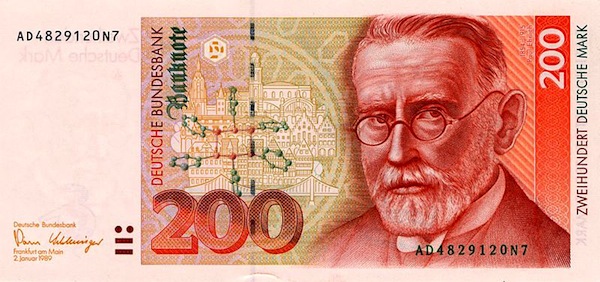
During the Nazi regime, all references to the great physician-chemist Paul Ehrlich were suppressed. In the 1990s, he was featured on the German 200-mark bill. (photo from the internet)

In the 17th century, the Netherlands was a country of great tolerance, having welcomed the Jews driven out of Spain and Portugal, including renowned physicians. Not coincidentally, this was the Dutch Golden Age, a time of breathtaking advances in the arts and sciences. It was there that the first microscopes were invented. To the eyes of Antoni van Leeuwenhoek in the town of Delft in the 1670s were revealed a veritable zoo of subvisible microorganisms previously inconceivable to even the most fevered imagination.

Throughout the 18th century and well into the 19th, there was speculation among medical men about the possible relation of microorganisms to disease. Certain varieties of these tiny beings seemed to appear in the organs or blood of patients with certain diseases. But there were endless questions: Could these creatures, so primitive, come into being by themselves (“spontaneous generation”)? Were they the cause of disease or were they the product of the diseased body? Could a pathogenic microbe of one disease transform into that of another disease? In diseases known to be infectious, were microorganisms the culprits, transmitted from a diseased body to a healthy one, there to germinate?

A breakthrough heralding the Heroic Age of the “microbe hunters” came in 1840 with the publication of Pathological Researches by the Bavarian medical doctor Jacob Henle, a descendant of rabbis. Using technologically advanced microscopes and deductive analysis of case histories, Henle declared to the medical world: “Contagion is matter endowed with individual life which reproduces itself in the manner of animals and plants, which can multiply by assimilating organic material and can exist parasitically on the sick body.”

A year later, the Polish-German Jew Dr. Robert Remak published the first of his observations that cells – of any living organism, including microbes – can arise only by division of parent cells. Thus, Remak helped put to rest the concept of “spontaneous generation.”

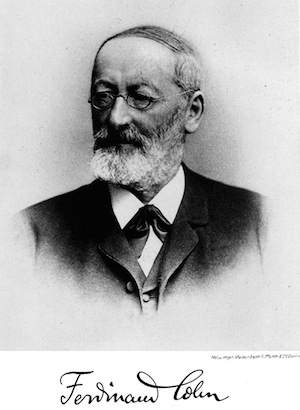
photo - Microbe hunter Ferdinand Cohn in the front piece of one of his books
Microbe hunter Ferdinand Cohn in the front piece of one of his books. (photo from the internet)

Humankind’s war against transmittable diseases accelerated dramatically in the second half of the 19th century. In the German city of Breslau (today Wroclaw, Poland) the botanist-microscopist Dr. Ferdinand Cohn published his Bacteria, the Smallest Living Organisms in 1872. As the undisputed master of the classification of subvisible life, Cohn elucidated that, while a microorganism of one disease may undergo various transformations, it remained the microorganism of that specific disease and not of another.

Robert Koch, a student of Henle and a protégé of Cohn, of Protestant background, discovered the tuberculosis bacterium and elucidated the mysterious life cycle of the anthrax bacillus.

Such dramatic advances led to the discovery of links in the chain by which the various pathogenic microorganisms are transmitted, and then to measures to break those links: cholera by drinking water contaminated by sewage, sleeping sickness by the tsetse fly, childbed fever by the contaminated hands of doctors and midwives, malaria (literally “bad air” in Italian) by mosquitoes.

To such defensive measures were added an arsenal of aggressive weapons. In Berlin in the 1890s, the Jewish doctor Paul Ehrlich was instrumental in developing serums. The watery part of the blood (after coagulation) of an animal that has fought off a toxin-producing disease such as diphtheria contains powerful antitoxins that can be injected into a diphtheria patient. A brilliant and imaginative chemist, Ehrlich pioneered techniques for selectively staining specific microorganisms to distinguish them under the microscope. This principle inspired him to develop the world’s first chemotherapeutic agent – the arsenical compound Salvarsan, known popularly as the “magic bullet,” which homed in on and destroyed the spirochetes of syphilis. (Ehrlich’s coreligionist Albert Wassermann developed the blood test for the disease.)

A general optimism prevailed as the new century dawned that humankind would soon be free of all serious infectious disease. But there was a missing piece in the puzzle.

It had been known since ancient times that people who survived a given disease were wholly or partially immune from an attack by the same disease. In 1798, the English physician Edward Jenner showed that deliberate inoculation with the pustules of relatively benign cowpox (vaccination, from the Latin vacca, cow) protected the person from attack from the far more virulent and deadly smallpox.

Among the great triumphs in the war against transmissible disease was the development of a new kind of vaccination by the French chemist Louis Pasteur, a devout Catholic. Pasteur showed how inoculating a patient with killed or attenuated (weakened by drying or other techniques) pathogens such as rabies activated the natural immune system against a subsequent all-out attack by the fully virulent disease.

But here was the rub. Unlike the microorganisms of tuberculosis, cholera, diphtheria, syphilis and so many other diseases, no one had ever seen the agents of smallpox and rabies. Pasteur speculated that they were microorganisms beyond the range of the most powerful microscopes.

Around the turn of the 20th century, the Dutch microbiologist Martinus Beijerinck showed how the fluid of an infected plant, after being strained through the finest filter, was able to infect healthy plants. This was an important breakthrough, but Beijerinck erred in assuming the culprit wasn’t composed of solid matter. He called it virus, Latin for poison.

That no one had seen a virus made the fight more difficult. Between 1918 and 1920, as the Spanish flu claimed more lives than all the battlefields of the Great War in the preceding four years, the medical profession mistakenly attributed it to an opportunistic bacterium, visible under the microscope.

The limit of what could be seen was dramatically pushed back with the invention of the electron microscope in the early 1930s, by which viruses, hundreds of times smaller than bacteria, were exposed to the light of day. It appeared that Pasteur was right after all in postulating that the agent of rabies was a microorganism.

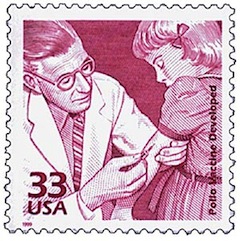
image - One of several U.S. postage stamps commemorating the polio vaccines of Jonas Salk and Albert Sabin
One of several U.S. postage stamps commemorating the polio vaccines of Jonas Salk and Albert Sabin. (image from the internet)

But not quite. Research later in the century showed that viruses – unlike living entities (organisms) – can’t multiply or reproduce on their own. Viruses turned out to be packets of genetic material – DNA or RNA – that penetrate, commandeer and destroy living cells in order to multiply.

Poliomyelitis, the dread crippler caused by an enterovirus, was checked in the 1950s (and is now virtually eradicated worldwide) thanks to two vaccines developed independently by the American Jewish medical doctors Jonas Salk and Albert Sabin. (The virus was cultured using the foreskins of circumcised babies.)

AIDS, hepatitis, SARS, Ebola and now corona – new virulent viruses keep emerging. And the weapons to fight them – vaccines, tests, serums, pharmacological “magic bullets” – are in the enduring spirit of the great Jewish microbe hunters.

Dr. Frank Heynick is the author of Jews and Medicine: An Epic Saga (KTAV Publishing House, 2002, still in print). There are some 500 publications of his in the United States and Europe, ranging from academic to popular-scientific, many on the history of medicine and allied fields, including the crucial Jewish role. He lives in New York and has taught the history of medicine at New York University.