Skip to content
  • Home
  • Subscribe / donate
  • Events calendar
  • Business Directory
  • FAQ
  • News
    • Local
    • National
    • Israel
    • World
    • עניין בחדשות
      A roundup of news in Canada and further afield, in Hebrew.
  • Opinion
    • From the JI
    • Op-Ed
  • Arts & Culture
    • Performing Arts
    • Music
    • Books
    • Visual Arts
    • TV & Film
  • Life
    • Celebrating the Holidays
    • Travel
    • The Daily Snooze
      Cartoons by Jacob Samuel
    • Mystery Photo
      Help the JI and JMABC fill in the gaps in our archives.
  • Community Links
    • Organizations, Etc.
    • Other News Sources & Blogs
  • JI Chai Celebration
  • JI@88! video

Recent Posts

  • Or Shalom reopens its doors
  • JFS from past to future
  • Need holistic approach
  • Sharing stories, advice
  • Journalist shares fears
  • Skills to live together
  • Road to independence
  • Cutting grass with scissors
  • Zionism as a solution
  • Deceit, desire & the divine
  • Reclaiming sacredness
  • Creative project ideas
  • Summer squares and cobbler
  • Thou shalt … summer commandments
  • Legal help for students
  • Revisiting myth of Lilith
  • Wrong person rebuked
  • Canada’s mixed messages
  • Questions for museum
  • Symposium on antizionism
  • Making soccer political
  • CJPAC lauds Pulver’s impact
  • City recognizes Vrba’s legacy  
  • Organ donation saves lives
  • Theodore’s March premiere
  • A healing Shabbaton
  • Supplying healthy food
  • A chime of metal tags
  • Yellowknife seder a first
  • Ishai energizes, unifies
  • A Lag b’Omer to remember
  • Expanding the healing
  • Hannah Senesh – a unique hero
  • Community milestones … May 2026
  • Деньги до зарплаты на карту Займ до зп онлайн за 5 минут 2026
  • Микрокредит онлайн в Казахстане Микрозайм в Акшамат

Archives

Follow @JewishIndie
image - The CJN - Visit Us Banner - 300x600 - 101625

Tag: comedy

Comedy can unite and heal

Comedy can unite and heal

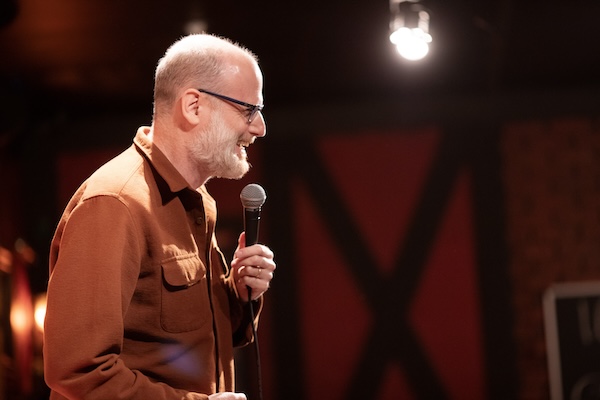
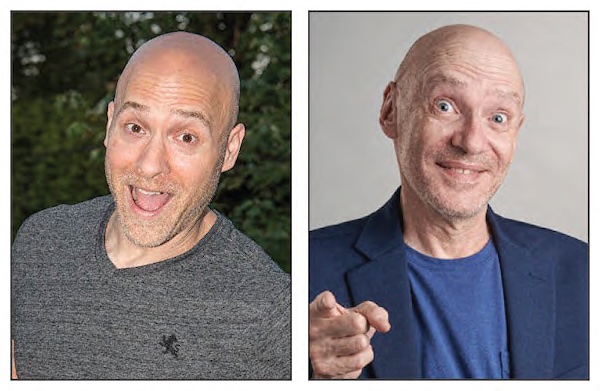
Comedian Erik Angel performs his one-man standup show, Speaking Falafel, at the Jewish Community Centre of Greater Vancouver on Nov. 14. (photo from Erik Angel)

“This year, I discovered even more how comedy is an important tool to bring people together, for release and relief, and I won’t be exaggerating if I say that comedy saved me this year,” Erik Angel told the Independent in an interview in advance of his solo performance Nov. 14, 8 p.m., at the Jewish Community Centre of Greater Vancouver. He’ll also be taking part in a show for students at the University of British Columbia while he’s here.

“This is perhaps the saddest time in my life, with a lot of pain, sorrow and worry, and going on stage night after night and making people laugh, helps me clear my mind and move on,” said Angel of the year since Oct. 7, 2023. “On stage, I deal with my reality today, with antisemitism, but I do it in an entertaining way. They say that comedy is tragedy plus time and I call my performance a humanitarian respite for the soul.”

Angel, who lives in New York, has opened for headliners like Maz Jobrani and Zarna Garg. He’s been part of several comedy festivals and has performed in more than a dozen countries to date. This will be his first time in Vancouver.

Born and raised in Israel, Angel moved to the United States for love, he said, after meeting his bashert at, of all places, the Jewish community centre in Krakow, Poland, in 2015. 

“I went to Krakow for a long weekend and all my life changed completely,” he said. 

Angel has worked in several creative fields. As a singer-songwriter, he released three albums in Israel. He studied drama and worked as an actor for five years. He did some standup comedy in Hebrew at open mics in Israel almost a decade ago, but said he quickly switched to doing routines in English, even while still in Israel.

“Since summer 2016,” he said, “I’ve been doing comedy in English, almost on a daily basis.”

The show that Angel is bringing to the Vancouver JCC next week is the product of a lot of work. 

“Speaking Falafel is an hour of comedy that I worked on for seven long years of comedy spots, day after day, and I am very proud of it. It’s a very funny show about my journey since I went on this long weekend in Krakow and met the love of my life. I share the difficulties of becoming a new immigrant, newly married in my 40s, the differences between Israeli culture and other cultures in the world, how to be now ‘the Jew’ everywhere, to live 24/7 with a second language. I tell stories, I speak with the audience, and I even sing a little bit.”

The Nov. 14 show is a bonus for Vancouverites, as Angel’s main purpose for coming to the city is the UBC show, which is the start of a winter tour for Comedy for Peace. 

Angel established Comedy for Peace five years ago.

“I grew up in Israel with two million Muslims. I never met one – not in school, not in my basketball team,” he said. “I started to meet Muslims when I started to travel the world. The meetings were always friendly, and I wanted to do something artistic together. When I moved to New York, I became part of the New York comedy scene. I produced the first show, that was a huge success, and since then we have had shows in more than 50 cities in the US and Canada.

“Comedy for Peace is not a political event,” he stressed. “It’s about different communities who sit together under one roof and have fun. Simple as it sounds, we want to show people how easy it is to collaborate, laugh, learn about each other and discover how much we are more alike than different. Today, we also have a version with Christian comedians that will travel with the West Coast tour. Nov. 9, Comedy for Peace will be part of the New York Comedy Festival for the second time.

“After Oct. 7, a few shows were canceled (and a few not) and very fast we decided that, for us now, it’s more important than ever and this is why we keep going,” added Angel. “There are comedians, mostly Muslim or Christian Arabs, that cut me off and don’t want to be a part of it – it’s painful because I didn’t change – but most of the comedians are still on board. And our goal now is to bring our message everywhere possible, and [I] will never give up and will always believe most of us, the people, just want to live together peacefully.”

Performing alongside Angel at UBC will be Liz Glazer, Gibran Saleem and Paul Schissler.

“From my experience, people that come to support the show support the idea and are not coming to protest or say something against it and I hope it will be the same this time,” said Angel when asked if he was concerned about the protests and vandalism that have taken place at UBC and other universities. “We are a non-political peace show, so it’s crazy for me to think that things will go differently. Until today, the only problem we have had to deal with was people calling/writing or trying to shame online our Muslim/Christian Arab comedians or asking them not to do it anymore. Most of them just want to do it more since then. But still, we have the reality, there are many haters out there and everything can happen. We have a Q&A session at the end and we are open to speaking with reasonable people that will come with an open heart and ask questions they want to speak about or to understand more. This is part of our mission, to be there together on stage.”

To watch some clips of Angel’s performances from around the world, visit his YouTube channel, youtube.com/@erikangelcomedy9702, or his Instagram page, instagram.com/erikangelcomedy/?hl=en. For tickets to Speaking Falafel, go to eventbrite.com. 

Format ImagePosted on November 8, 2024November 7, 2024Author Cynthia RamsayCategories Performing ArtsTags antisemitism, comedy, Comedy for Peace, Erik Angel, immigration, JCC, marriage, peace, Speaking Falafel
Feel-good comedy at Metro

Feel-good comedy at Metro

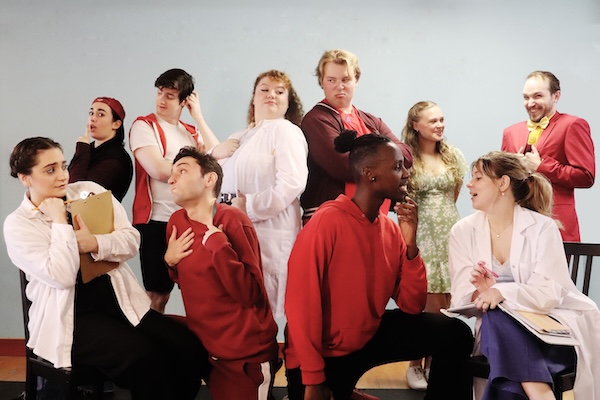
The cast of Bound! The Musical (In Concert), a quirky, character-based show, the story of which is a vehicle for the characters’ journeys and personal growth. (photo by Joelle Wyminga)

For two nights only, Nov. 19-20, Metro Theatre and Bound Musical Theatre Society are presenting the world première of the feel-good comedy Bound! The Musical (In Concert). 

Written by longtime friends Wayne Morris and Glen Freedman, their collaboration on Bound! – music and lyrics by Morris, book by Freedman and Morris – began in 2015. Morris had been working on the concept for several months.

The show is a reimagining of Shakespeare’s Love’s Labour’s Lost. Four Olympic-bound male athletes “are tricked into abstaining from vices and ‘romance’ during their high-intensive training, only to find themselves suddenly at the centre of a research study run by a group of attractive, brilliant and highly driven women,” reads the synopsis. “What follows is a hilarious battle of wills as their desires and the binds of their stringent guidelines battle for the win.”

“Glen and I were hanging out at Kits Beach, and I started telling him about the show,” Morris recalled. “Glen peppered me with all kinds of questions about the characters and the story. It turned into a two-hour conversation, after which I said, ‘Glen, you have to write this with me.’”

“To which, without any hesitation, I said, ‘yes,’” Freedman told the Independent. “The idea of working with Wayne on a creative project again (yes, we’ve been down this road before, though many years ago) carried a sentimental nostalgia for me.”

“When we first met, we started writing and performing songs together,” said Morris. “Together, we joined an ’80s band led by one of Glen’s friends. It was the ’80s after all!”

“It was a blast, even though they wouldn’t let me sing,” quipped Freedman.

The pair has lived in Metro Vancouver for more than 25 years, Morris in Maple Ridge, Freedman in Yaletown.

“We met at Marianopolis College in Montreal in our late teens, and became great friends. After university, we backpacked through Europe together,” said Morris.

Morris was an actor before becoming a singer-songwriter and then music producer as well. Freedman, while a keyboardist, took a less musical route and became a psychiatrist. Along the way, he also completed a creative writing program at Simon Fraser University and attended Bishop’s University in Quebec, where he performed in Chekhov’s The Cherry Orchard.

Morris and Freedman formed the Bound Musical Theatre Society earlier this year “as the vehicle for this and future productions,” said Morris. “Our lawyer recommended a not-for-profit society as the type of entity the local theatre industry is used to working with.”

The Metro Theatre production of Bound! is directed by Hailey Fowler, with musical direction by Kylie Fonacier. It features a diverse ensemble cast in what Morris describes as “a character-based show, and the story is a vehicle for the characters’ journeys and personal growth.

“For me,” he said, “this focus on character was challenging at first as a lyricist, in that the lyrics needed to reflect 10 distinct voices. As the show and characters continued to develop, and the songs were continually rewritten and refined, this process became easier, as both the characters and the lyric-writing process became more familiar.”

“As our show is about resilience and the possibility of change at times of challenge,” said Freedman, “it was my view that we had to create characters, each with their own unique personality quirk that was getting in their way – ‘bounding’ them up, you might say. Each character would then get their own story arc, in which they would overcome these constraints, to a realistic degree. The goal was to induce the audience to see themselves in these characters, such that they would walk away from the show with a feeling of hope and a bounce in their step.”

No doubt the musical’s 16 original songs will contribute to that bounce. Morris said his biggest musical influence is the Beatles, “and so that is a big musical influence for the show, including having a wide variety of musical styles across the show, in the same way the Beatles do.”

In a similar vein, Morris based the story on Shakespeare’s Love’s Labour’s Lost because, he said, “I wanted to have the best possible source material, and what better source than Shakespeare? Using Shakespeare ensured a solid story structure. Love’s Labour’s Lost is a very fun story, with silliness and great wordplay. That’s the type of show I wanted to write. Also, in Love’s Labour’s Lost, I loved the fact that the women in the story consistently have the upper hand over the men; very progressive then, and seems to fit our world today!”

“I couldn’t agree more,” said Freedman, whose day job has helped him in the creation process.

“Due to the nature of my work as a psychiatrist, I have, over time, developed an understanding of the nature of suffering – a human experience that ties us all together – and how personality informs how we suffer,” he said. “I have also had the privilege of having seen firsthand how change in how we think can manifest. This, I feel, has helped in our creating characters that are true to life, and who undergo change for the better, in a manner that we hope will be experienced by the audience as believable and relatable.”

And which will leave audiences feeling positive, though Morris and Freedman differ slightly in their outlook.

The press material describes Morris as a “glass half-full person.”

“It’s part of my nature to look for the good in everyone, and I’ve discovered that almost everyone means well deep down,” he said, acknowledging, “I’ve also been very fortunate that hard work and some good life decisions have led to things working out for the most part in my life.”

As for Freedman, optimism comes a little harder.

“Through my adult life (and with lots of therapy), I’ve gradually moved to a place of being able to recognize what’s in and out of my control, of what I have agency over and what I have to accept, of understanding that, just because I accept something does not mean I have to like it, and of letting go of expectations of how I wish things should go,” he said. “This mindset has fostered within me a capacity to face the events of life, sometimes tumultuous, with curiosity, a sense of humour and presence.”

While neither Morris nor Freedman are religious, Judaism does impact their lives.

“Judaism has shown me the value of a strong sense of community and connection,” said Morris. “The importance of these is a huge theme of the show.”

“I would add,” said Freedman, “that feeling oneself to be part of a community helps to add meaning to our lives.”

For more information and tickets to Bound!, go to boundthemusical.com/in-concert. 

Format ImagePosted on November 8, 2024November 7, 2024Author Cynthia RamsayCategories Performing ArtsTags Bound Musical Theatre Society, comedy, Glen Freedma, Metro Theatre, musicals, Wayne Morris
Judaism’s funny sides

Judaism’s funny sides

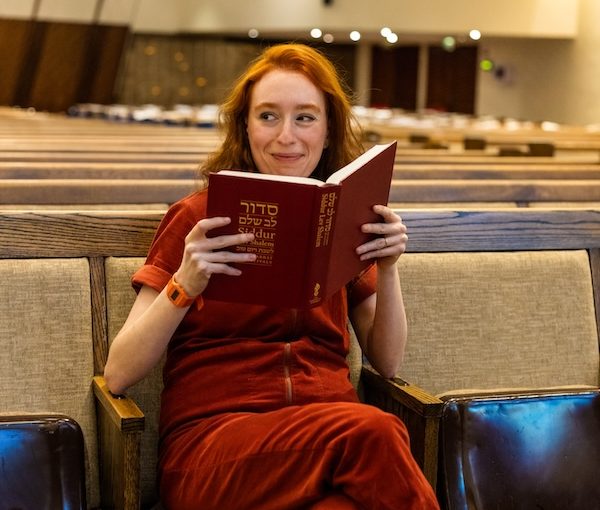
Los Angeles-based comedian and podcaster Antonia Lassar brings The Best Jew to Vancouver Performing Stars’ theatre on Nov. 30. (photo by Xander DePascale)

Ever wonder how Sarah might have welcomed back Abraham and Isaac from their “camping trip”? Who’s the biggest diva in the Hebrew Bible? What elements an interior designer for synagogues considers? These are just a few of the questions comedian Antonia Lassar answers in recent social media posts.

On Nov. 30, Vancouverites can see the Canadian debut of Lassar’s The Best Jew, in which she shares anecdotes about her Reform Judaism upbringing, contemplates questions like whether the late Debbie Friedman is the Messiah, and much more. Music and singing play a big part in the show, which will be opened by the Klezbians, a band from Victoria.

Lassar draws her inspiration from the Jewish communities she’s lived in, in Boston, New York and Los Angeles. “It’s sometimes brutal to be sitting in shul and not be able to pull out my phone to take notes, because I just noticed something hilarious that I need to write about,” she said. “I’m constantly having great ideas in places where I’m not allowed to write anything down!”

Lassar grew up in Newton, Mass., and attended theatre school before moving to New York City. Two years ago, she relocated to Los Angeles to focus on film and television. “I’ve known since I was a kid that I wanted to perform, but I didn’t pinpoint comedy as my strong suit until I got out of college,” she said. 

Today, she describes herself as being deeply immersed in the Jewish community, but, for many years, Lassar found her Jewish life uninspiring. “I didn’t like Judaism growing up,” she admitted. “It felt like an afterschool activity I was forced to do, in the same way I was forced to take piano lessons. I thought both were useless and probably just child abuse.”

It took a foray into other religions before Lassar returned to Judaism with genuine interest and curiosity. For that, she thanks Chabad in Brooklyn. “They sucked me in and gave me a great love for Judaism,” she said. “But I wouldn’t call myself Reform or Chabad. Like many Jews of my generation, I feel like I’m between denominations.”

When it came to writing comedy, Lassar turned to what she knew best, and that was Judaism. “Most Jewish comedy stays at the level of cultural Ashkenazi stereotypes of bagels and overbearing mothers,” she said. “This never felt representative of my experience. I wanted to write comedy for Jews that went beyond stereotypes and that shows a different side to Judaism, one that’s not commonly portrayed in comedy.”

She wrote The Best Jew for a pluralistic Jewish audience and has performed it for a wide range of Jews, from Reform to Hassidic. “My material is very clean, and any passing reference to controversial subjects like the Holocaust is extremely respectful,” she said. “This is an 18+ show, but it won’t offend anyone.”

In the show, Lassar jokes about the Reform movement’s obsession with the word “meaningful,” and Chabad’s distribution of menorahs, among many other subjects. “It’s so much more fun performing for Jewish communities than at comedy clubs, where you’re just another comedian,” she reflected. “When I perform at a synagogue, they treat you like you’re Moshiach! It’s a dream job to travel around the country and meet amazing Jewish communities who are so diverse and so welcoming.”

Lassar comes to Vancouver as a guest of JQT Vancouver, a volunteer-run Jewish, queer and trans nonprofit, and Jewish Family Services Vancouver, as part of the organizations’ Mental Health Support Series. While Lassar’s queer identity does come up, “it’s not a huge part of the show,” she said. “I’ve spent a lot of time in very Orthodox spaces, where the question of queerness is unavoidable. And I’m proud to be a queer Jew who is deeply engaged in Judaism.”

To get an idea of Lassar’s comedy, check out her sketches on Instagram and TikTok. She also co-hosts, with comedian Raye Schiller, Yenta Pod, a weekly podcast with the tagline “Sometimes funny, sometimes Jewish, always gossip.”

For tickets ($18) to The Best Jew on Nov. 30, 7 p.m., at Vancouver Performing Stars’ theatre, visit comedynightwithantonia.eventbrite.ca. 

Lauren Kramer, an award-winning writer and editor, lives in Richmond.

Format ImagePosted on November 8, 2024November 7, 2024Author Lauren KramerCategories Performing ArtsTags Antonia Lassar, comedy, JFS Vancouver, JQT Vancouver, mental health, The Best jew
Stand Up celebrates 20th

Stand Up celebrates 20th

Stand Up for Mental Health founder David Granirer. (photo from smhcomedysociety.org)

Stand Up for Mental Health (SMH), a program started in Vancouver that teaches stand-up comedy to people with mental health issues as a form of therapy and to destigmatize mental illness, celebrated its 20th anniversary this spring. 

“It feels like such an accomplishment. Helping so many people has been the highlight of my life,” said David Granirer, the founder of SMH. “One thing I am really good at is making other people into stars, and I feel like I have done that a lot. Over the past 20 years, I have trained about 700 comics. So, that’s a lot of stars.

“I had no idea what I was doing when I started out, so I had no expectations about the program being successful or not. I could never have imagined this,” he said.

Granirer, a counselor by profession, as well as a stand-up comic, told the Independent that the two-decade journey has been unforgettable. “Everything stands out,” he said. “Every show, every comic I have ever trained, every laugh we have gotten.”

When considering some of the more memorable bits over the years, he recalled writing a mental health version of the Beatles song “While My Guitar Gently Weeps.” In Granirer’s rendition, the guitar has dizziness, dry mouth and is too depressed to get out of bed.

Granirer, who is open about his own struggles with mental illness, has trained groups in more than 50 cities, in Canada, the United States and Australia, in partnership with various mental health organizations. He plans to continue the program and run it in more cities in the coming years.

The idea for SMH originated from a course Granirer has been teaching at Langara College since 1998 called Stand-Up Comedy Clinic. Occasionally, he would see people have life-changing experiences by getting on stage and using comedy to tell a club full of people who they were.

“One woman had a fear of flying and told me that the day after our event she had to get on a plane and she said, ‘My fear was gone. I felt like once I’d done stand-up I could do anything,’” Granirer said. “And I thought, wouldn’t it be amazing to be able to give this experience to people who wanted to do comedy but who also wanted to change their lives? And since I work in mental health and I also have a mental illness, I thought that would be the perfect place to start.”

For Filomena Black, a graduate of the course, SMH has been a lifeline. An introvert by nature, she said she has been able to be more comfortable around people.

“I’ve lost my self-conscious focus and become more engaged in enjoying other people’s company. I’m now looking forward to successfully meeting challenges in all aspects of my life rather than avoiding them,” Black said.

Asked to tell one of the jokes in her repertoire, Black responded, “I used to run away from home a lot, but my kids always found me.”

Another SMH graduate, April Soon, also speaks highly of the program, lauding Granirer for shining a light on what people with mental health issues can do and not letting finances be a barrier to participation.

Soon, a veteran of public speaking through Toastmasters, did not find standing up before a crowd as intimidating as others might have and, these days, she not only performs at SMH gigs but at other venues around Vancouver.

“When bad things happen to me now, I wonder how I can use it as material,” said Soon. “SMH has helped reframe my thinking and provided good resilience training.”

On a lighter note, she added, “Being involved with SMH has exposed me to many other mental illnesses I want to try out.”

Kevin Scow similarly expresses his gratitude, saying the program has given him his voice and was vital to his recovery.

“This came to me at exactly the right time,” he said. “Instead of seeming strange … now they know I am strange … and they love me all the more for it. Thanks to David and my fellow alumni for nurturing my voice and helping with making it funny. My First Nations side says thanks.”

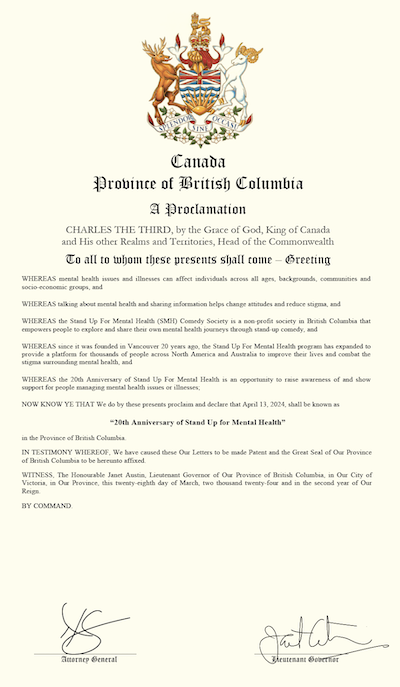
image - SMH’s 20th anniversary was recognized last month with a proclamation from the Province of British Columbia declaring April 13 as Stand-Up for Mental Health Day
SMH’s 20th anniversary was recognized last month with a proclamation from the Province of British Columbia declaring April 13 as Stand-Up for Mental Health Day.

SMH’s 20th anniversary was recognized last month with a proclamation from the Province of British Columbia declaring April 13 as Stand-Up for Mental Health Day. The proclamation reads, in part, that SMH provides a program for thousands of people “to improve their lives and combat the stigma surrounding mental health and … is an opportunity to raise awareness of and show support for people managing mental health issues or illnesses.”

Since 2004, Granirer and his comics have performed more than 500 shows for mental health organizations, government departments, corporations, universities, correctional facilities and the military. Granirer also gives “laughter in the workplace presentations” to organizations across North America, helping them use humour to lower stress, improve wellness and cope with change. Granirer, too, is the author of The Happy Neurotic: How Fear and Angst Can Lead to Happiness and Success.

SMH’s classes in Vancouver last for six months and students step on stage for two shows, a debut and a graduating performance. As Granirer says, “The comics go from knowing nothing about stand-up to killing it.”

Stand Up for Mental Health is currently recruiting for its next class, which starts July 30. For more information, visit smhcomedysociety.org. 

Sam Margolis has written for the Globe and Mail, the National Post, UPI and MSNBC.

Format ImagePosted on May 24, 2024May 23, 2024Author Sam MargolisCategories Performing ArtsTags April Soon, comedy, David Granirer, Filomena Black, health, Kevin Scow, mental health, milestones, performing arts, Stand Up for Mental Health
Many make gala successful

Many make gala successful

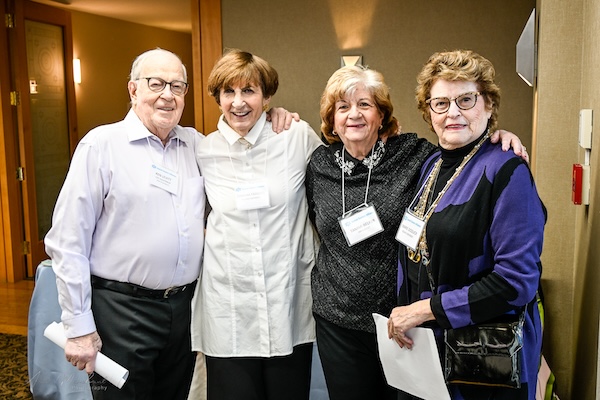
Left to right: Ken Levitt, Tamara Frankel, Tammi Belfer and Marie Doduck. (photo by Marchant Photograophy)

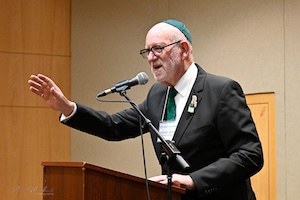
photo - A Night at the Catskills emcee Michael Geller
A Night at the Catskills emcee Michael Geller. (photo by Marchant Photograophy)

The Jewish Seniors Alliance commemorated their 20th anniversary with a gala titled A Night in the Catskills, which showcased Jewish humour from past to present.

On March 17, Schara Tzedek Synagogue was filled with more than 230 supporters and guests who reveled in an evening of good food and timeless humour. I was co-chair of the event with Michael Geller, who masterfully emceed the proceedings.

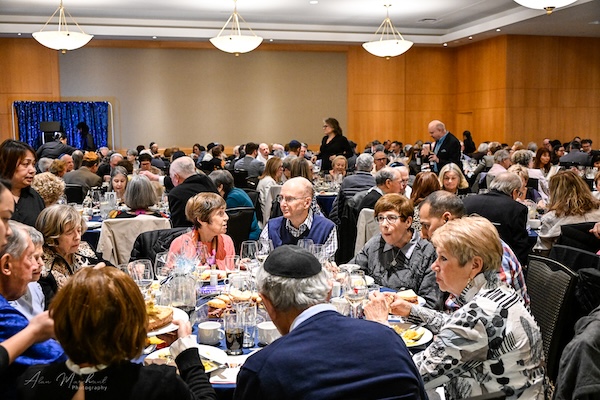
photo - More than 230 people attended the Jewish Seniors Alliance gala, which took place at Schara Tzedek Synagogue on March 17
More than 230 people attended the Jewish Seniors Alliance gala, which took place at Schara Tzedek Synagogue on March 17. (photo by Marchant Photograophy)

The night commenced with a warm welcome from JSA president Tammi Belfer and a tribute to the late Serge Haber, whose foresight laid the foundation for the seniors alliance two decades ago. The JSA is dedicated to supporting the welfare of all seniors, irrespective of race, religion or sexual orientation, through advocacy, peer support, education and outreach.

photo - MLA Michael Lee makes one of the night’s 50-50 draws, as Tim Bissett and Marilyn Berger await the result
MLA Michael Lee makes one of the night’s 50-50 draws, as Tim Bissett and Marilyn Berger await the result. (photo by Marchant Photograophy)

The entertainment lineup featured archival footage of renowned Jewish comedians, whose jokes still elicit laughter, alongside contemporary comedians like Kyle Berger and David Granirer, founder of Stand Up for Mental Health, and magician Stephen R. Kaplan, also known as “The Maestro,” all of whom enchanted the audience with their humour. I capped off the night with my “bucket list” stand-up sit-down comedy act, leaving the crowd in high spirits. (I delivered my routine from my wheelchair, if you’re wondering about the sit-down part of my stand-up.)

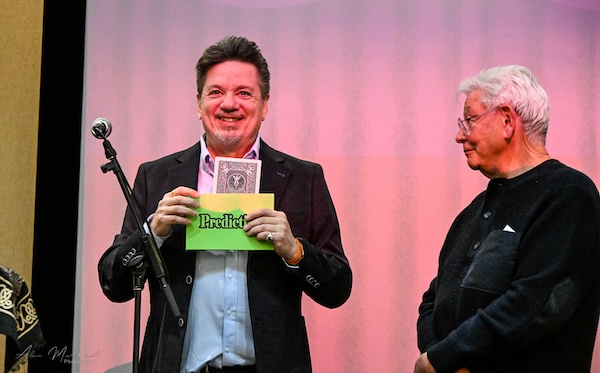
photo - Gala attendee Gary Averbach waits as magician Stephen R. Kaplan forms his prediction
Gala attendee Gary Averbach waits as magician Stephen R. Kaplan forms his prediction. (photo by Marchant Photograophy)

Guests enjoyed deli offerings from Omnitsky Kosher and desserts and service by Nava Creative Kosher Cuisine. Tim Bissett provided concierge service, working in tandem with JSA volunteers, who merit special recognition for their efforts in facilitating every aspect of the event, from its inception to festive conclusion. A special acknowledgment is also due to JSA staff members Miguel Méndez, Rita Propp and Jenn Propp for their dedication and extra hours spent supporting the volunteers.

Heartfelt gratitude is extended to all who generously contributed to the success of JSA’s 20th-anniversary celebration. 

Marilyn Berger is a past president and a life governor of Jewish Seniors Alliance. She was a co-host of and performer in JSA’s gala, A Night in the Catskills.

Format ImagePosted on April 12, 2024April 10, 2024Author Marilyn BergerCategories LocalTags comedy, Jewish Seniors Alliance, JSA, seniors
JSA celebrates its 20th

JSA celebrates its 20th

Kyle Berger, left, and David Granirer headline the Jewish Seniors Alliance’s A Night in the Catskills on March 17. (photos from JSA)

The Jewish Seniors Alliance of Greater Vancouver is celebrating its 20th anniversary with an event that’s all about laughter.

A Night in the Catskills: Jewish Humour Then and Now takes place at Congregation Schara Tzedeck March 17, 6 p.m.

“Jewish humour has enabled the Jewish world to gain strength through a history that shows that we should not be in existence today, but here we are bigger, stronger and better than ever!” said Marilyn Berger, a past president of JSA, who will make her debut as a stand-up comedian at the event. “Ask Kyle,” she said, referring to one of her sons. “I have given my family plenty to laugh about.”

It is perhaps not a coincidence then that Kyle Berger preceded his mother on the standup stage, and also produces comedy shows. He and David Granirer, founder of Stand Up for Mental Health, are headliners of the 20th anniversary event, which will include a performance by magician Stephen R. Kaplan, aka the Maestro. The whole megillah will be emceed by JSA board member Michael Geller, whose involvement in JSA was inspired by his late father, Sam Geller.

“He derived a great deal of joy from regularly attending JSA events and this is one of the reasons why the organization is so special to me,” Geller told the Independent.

photo - Michael Geller emcees JSA’s A Night in the Catskills at Schara Tzedeck
Michael Geller emcees JSA’s A Night in the Catskills at Schara Tzedeck. (photo from JSA)

“This comedy night is a follow up to a similar event organized by JSA 13 years ago,” he explained. “It was initiated by a phone call from the late Serge Haber, who called to tell me that the province had just canceled JSA’s gaming grant, but he knew my father would want me to help replace the funds. I asked how much was the grant. He said it was $18,000. I told him that was too much for me, but I had an idea.

“I was a fan of the website Old Jews Telling Jokes. Since JSA served many older Jews, I offered to book a room, buy some deli, and invite 17 of my friends to join me and each put up $1,000 and we would entertain one another with our favourite Jewish jokes.”

Haber – who founded JSA – liked the idea, as did the board, but they also wanted to join, and couldn’t afford to pay $1,000 each. So, the format was changed to one where people would attend and donate what they could, said Geller. Held at Congregation Beth Israel, almost 250 showed up.

“We presented clips from Old Jews Telling Jokes and invited people in the audience to share a joke in return for a donation. Everybody agreed it was a fabulous event,” said Geller. “There was just one small problem. We didn’t raise very much money. 

“So, this year we are charging $118 dollars to attend. Some generous members of the community are coming forward and agreeing to be sponsors. This will allow other seniors in the community who can’t afford $118 to attend. It has also allowed us to hire Tim Bissett, an experienced professional event organizer to assist with the program.”

photo - Stephen R. Kaplan will perform at the 20th anniversary celebration
Stephen R. Kaplan is a special guest performer at the 20th anniversary celebration. (photo from JSA)

Expressing gratitude to the sponsors on behalf of JSA, Geller said, “we are hoping other community members will come forward, especially those who regularly share their favourite Jewish jokes on the golf course. Sponsors will be invited to participate in the program by telling a favourite joke or two, or introducing a favourite comedian or routine.”

For his part, Geller is preparing for his role as emcee by watching vintage and contemporary Jewish comedians and selecting material. “The program will also include some professional comedians who are volunteering their time, and special appearances by local rabbis who have been urged to share stories they would never tell in shul,” he said.

“I am thrilled to be celebrating our 20th anniversary and look forward to going from strength to strength as my own children now, believe it or not, become seniors!” said Berger, who shared her appreciation for the organization that Haber started.

“As I gracefully age,” she said, “I thank Serge for enabling me to spend my golden senior years embraced by the love that Seniors Alliance offers.”

“JSA undertakes many programs that benefit so many Jewish seniors, including the excellent Senior Line magazine,” said Geller. “While we are supported by many community organizations and foundations, we need additional funding. I am, therefore, hoping this evening will help promote the organization’s good work and, this time, actually raise money to allow it to continue.”

For tickets to A Night in the Catskills or to become an event sponsor, visit jsalliance.org or call 604-732-1555. 

Format ImagePosted on February 23, 2024February 22, 2024Author Cynthia RamsayCategories Performing ArtsTags comedy, fundraiser, humour, Jewish Seniors Alliance, JSA, seniors, standup
“Moses” does standup at JFL

“Moses” does standup at JFL

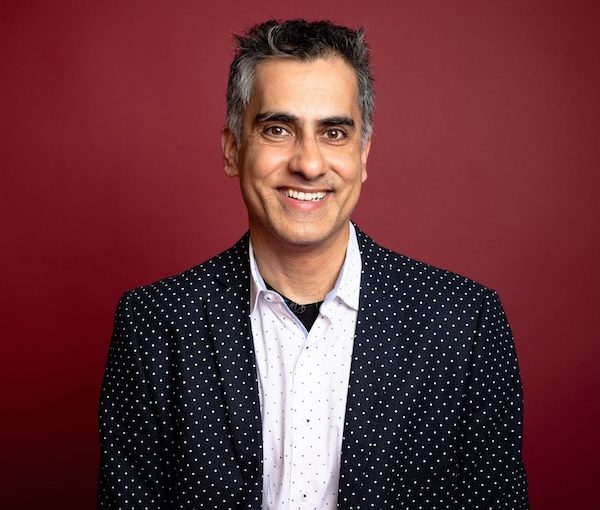
Samson Koletkar, dubbed the “world’s only Indian Jewish standup comedian, performs Feb. 15 as part of Just for Laughs Vancouver. (photo from Just for Laughs Vancouver)

This year’s Just for Laughs Vancouver features several members of the Jewish community, including Samson Koletkar, aka Mahatma Moses. He comes as part of Desi Comedy Fest – On Tour, which takes place at the Biltmore Cabaret Feb. 20, 9 p.m.

Koletkar is a co-founder of the Desi Comedy Fest with fellow San Francisco Bay Area comedian Abhay Nadkarni, who also hails from India. The biggest South Asian comedy festival in the United States, it is described as “celebrat[ing] subcontinental diversity with punchlines that transcend boundaries.”

Desi Comedy Fest isn’t Koletkar’s only entrepreneurial venture. He has a background in technology and also started Comedy Oakland, which “features funny, diverse, industry pros alongside up-and-coming comedians at various venues across Oakland,” according to its website.

Koletkar, who claims to be the “world’s only Indian Jewish standup comedian,” spoke with the Jewish Independent earlier this week.

JI: How does one go from being a techie to a standup comedian? Are there overlaps in skill sets? Do you still work in both areas or are your entrepreneurial endeavours your focus?

SK: I have tried a few things in my life, and standup started the same way. It seemed like a fun thing to do, I gave it a try and, the first time I was on stage, I was hooked. There is definitely an overlap from my tech life into standup – bulletproof logic in my jokes. If I am making a point, and I like to make many, there is no room for bugs, the jokes have to be tested thoroughly and any gaps in logic have to be fixed.

Standup has also helped make my day job easier with the ability to inject humour during tough situations. One of my ex-bosses actually made me realize the value of my standup comedy at work – he used to invite me to the tough customer meetings because invariably I would make the room laugh and the meetings got much easier after that.

JI: What were you like growing up – have you always seen the world with a humourous eye?

SK: I think so. I have always had this urge to crack a joke. There were a lot of inappropriate ones at inappropriate times, but isn’t that how we all learn, by making mistakes? Now, every time I meet parents who think their kids are funny, the one thing I advise them is to accommodate their kids’ misspeaks, and keep that funny bone intact. More often than not, the only mistake we as comedians make is saying out loud what everyone is thinking but politely holding back.

JI: When did you move from Mumbai to the San Francisco Bay Area?

SK: I took the first opportunity I got to move as far away from my parents as I could and, at the age of 24, I moved to the Silicon Valley in October 2000. I felt like the needle that burst the Y2K bubble.

JI: When did you first perform standup?

SK: Late 2005, but then jumped all in in January 2006.

JI: What led you to start Comedy Oakland?

SK: Standup is the one art form you can’t practise in your garage. You need a live audience. After grinding through three years of empty open mics and sub-par independent shows, I decided I could either sit and complain about how poorly some shows were produced, or try to do it myself. That led to Comedy Oakland, in May 2009, starting with one show on Friday nights. My goal was to create a space where comedians needed to only bring good jokes and audience experience was optimized for the art.

Just before the pandemic, I used to run 250+ shows (five shows a week), featuring 400+ comics entertaining 12,000-13,000 [person] audiences every year. In 2024, 15 years running, I am back to five shows a week at three venues in Oakland. These venues are 40 to 90 seaters.

JI: When you envisioned the Desi Comedy Fest, did you think it would become as huge as it is?

SK: I don’t think it is huge enough yet. Yes, the fest has grown from its early days, but we have a long way to go, and partnering with JFL is a big step in that journey. What I knew was that it was going to be fun, and it continues to be one of the most fun shows every year in my calendar.

JI: In what ways have you experienced racism and antisemitism, how do you handle such incidents and how do they impact you?

SK: Those stories are more fun to hear in my standup than they are to read, although they only form a small part of my routine because racism and antisemitism are a small part of my life. The world has a lot more good than bad in it and I don’t let the bad overshadow the good. An optimistic comedian – go figure! But, yes, they do impact me, not only when it happens to me but when I see it happen to others. So, some of my content is driven out of that and I tend to focus on the logical hypocrisy/fallacy of it.

JI: You’ve had much success. What are one or two things that you’d still like to achieve or do professionally?

SK: When my joke offends someone in America, it’s “Go back to where you came from.” When my joke offends someone in India, it’s “Go to Pakistan.” I want to tell an offensive joke in every single country in the world, just to see where they send me next, sort of like The Offensive Joke World Comedy Tour!

JI: If there is anything else you’d like to add, please do.

SK: Come watch a show, nothing gives me more happiness than seeing you laugh!

***

Desi Comedy Fest – On Tour also features Alisha Dillon, Amar Singh and UK Shah. For the full Just for Laughs Vancouver line-up and tickets, visit jflvancouver.com. 

Format ImagePosted on February 9, 2024February 8, 2024Author Cynthia RamsayCategories Performing ArtsTags comedy, Desi Comedy Fest, Just for Laughs, Mahatma Moses, Samson Koletkar, standup
Just for Laughs coming soon

Just for Laughs coming soon

Ben Schwartz and Jessica Kirson are on the lineup of this year’s Just for Laughs Vancouver.

Just for Laughs Vancouver, which runs Feb. 15-24 at various venues in the city, features several members of the Jewish community.

All three of Brett Goldstein’s shows Feb. 16-18 at Queen Elizabeth Theatre have almost sold out. Goldstein was a co-executive producer, co-writer and co-star of Ted Lasso. He is also the creator and executive producer of the comedy Shrinking, alongside Jason Segel and Bill Lawrence, and of Soulmates, with Will Bridges. Goldstein is host of the podcast Films to be Buried With, which finds him in conversation with guests as they discuss the films that have shaped them.

Rafi Bastos performs at the Rio Feb. 17-18. Many of his viral stand-up clips come from nightly performances at the Comedy Cellar. In his home-country of Brazil, he was one of the first comedians to pioneer the art of American-style stand-up comedy. He has starred in movies, had his own talk show, been an infield journalist and hosted reality show Ultimate Beastmaster. He is co-founder and owner of Comedians, the largest comedy club in South America. 

Ben Schwartz and friends take to the Orpheum stage Feb. 18. Schwartz is part of the cast of The After Party, as well as the second season of Space Force. He was in the comedy series House of Lies and Parks and Recreation. As a writer, he has published four books and written television shows and movies for many major studios.

Jessica Kirson is at the Vogue Feb. 18. Her countless comedic character videos have racked up more than 200 million views on social media. She produced the feature-length documentary Hysterical. In addition to her one-hour special, called Talking to Myself, she is a regular on This Week at the Comedy Cellar and has appeared on many other shows.

At the Rio Feb. 23-24 is Catherine Cohen, best known for her comedy special The Twist…? She’s Gorgeous. She can be seen in the feature film At Midnight and in the upcoming series What I Was Doing While You Were Breeding. In 2021, she published her first book, God I Feel Modern Tonight, a collection of comedic poetry.

Comic, podcaster, writer and actress Annie Lederman will be at the Biltmore Feb. 21-22. Lederman is co-host of the podcast Trash Tuesdays. Most recently, she can be seen in the documentary miniseries The Comedy Store, alongside Jay Leno, David Letterman, Joe Rogan, and many other Comedy Store legends. She wrote and starred in Stand Ups, Impractical Jokers and Borat, among other things.

The full JFL lineup and tickets are available at jflvancouver.com. 

– Courtesy Just for Laughs Vancouver

Format ImagePosted on January 26, 2024January 24, 2024Author Just for Laughs VancouverCategories Performing ArtsTags comedy, Just for Laughs, standup

Jewish comedy history

“Jews have always turned and continue to turn to humour as a cultural touchstone and a way to make meaning,” said Dr. Jennifer Caplan, author of Funny, You Don’t Look Funny: Judaism and Humor from the Silent Generation to Millennials, which was published earlier this year.

photo - Dr. Jennifer Caplan spoke Dec. 3, as part of the L’dor V’dor lecture series organized by Victoria’s Kolot Mayim Reform Temple
Dr. Jennifer Caplan spoke Dec. 3, as part of the L’dor V’dor lecture series organized by Victoria’s Kolot Mayim Reform Temple. (photo from Kolot Mayim)

Caplan, who is an associate professor and the Jewish Foundation Chair in Judaic Studies at the University of Cincinnati, was the second presenter of the 2023-24 L’dor V’dor (Generation to Generation) Zoom lecture series organized by Victoria’s Kolot Mayim Reform Temple. On Dec. 3, she spoke about the past several decades of Jewish humour. Similar to the approach she took for her book, her presentation explored the changing relationship to Judaism of four generations of Jewish funny people.

According to a 2013 report by the Pew Foundation, called A Portrait of American Jews, 42% of American Jews thought that having a sense of humour was integral to their Jewish identity, said Caplan. In the survey, in terms of what American Jews deemed important to their identity, a sense of humour came out far behind Holocaust remembrance and intellectual curiosity, just under support of Israel, and well ahead of belonging to a Jewish community or eating traditional Jewish food.

“The report set off little bells in my brain which pushed me to say that there’s something here and that there’s something I want to think about,” she said.

There were Jewish commentators who pointed to the Pew survey as an alarm bell for the dangers of the rise of cultural Judaism. To Caplan, the TV show Seinfeld, which premièred in 1989, encapsulated what worried some about the culturally Jewish experience.

“It was this group of people who seemed Jewish, even though Jerry (the title character) is the only character on the show who is actually Jewish,” she said. “They all sort of felt Jewish, but they never did anything Jewish and nobody ever went to synagogue and they didn’t even have a menorah like Rachel and Monica did in their apartment on Friends.”

In Caplan’s view, this fear of cultural Judaism aligned with the way that Jews were being portrayed in popular comedy and media, as Seinfeld led to a boom in Jewish sitcom characters – in shows like Mad About You and Anything but Love, for example. She thought there was something important in the way Jewish comedians were using Judaism in their humour to think about themselves and their Jewish identity, and what it means for them to be Jewish.

Moving forward to the present and, according to Caplan, one finds that the younger generation, the millennials, are even more culturally tied to their American generational cohort and less so to being the grandchild or great-grandchild of Jewish immigrants.

“It’s a story about comedy and it’s a story about the way that Jewish comedians have related to Judaism in their comedy, but it’s also a story about Americanization. It is a story about the way that Jews in the United States became more and more embedded within their broader cultural milieu,” Caplan said, explaining the thought process that led her to write her book.

Caplan pointed out that counterculture, in Jewish comedy, was represented in the 1950s – a time generally associated in the popular sense with Leave It To Beaver and The Adventures of Ozzie and Harriet – by books like those by Philip Roth. His works, well before the broader 1960s counterculture movement, were critical of institutions but defensive of the Jewish community – viewing organized religion as something that was hurting Jews, but seeing the need for Jews to be protected.

What intrigued Caplan was that the pendulum had swung in the other direction for Generation X. “What I found was a fascinating reincorporation of Jewish ritual into the writing and the movies and the comedy of Generation X comedians. Jews themselves are being made fun of, but their engagement with Judaism is actually the thing that humanizes them,” she said.

In the 2001 film Kissing Jessica Stein, for example, the characters can be perceived as stilted, neurotic, self-absorbed Jewish caricatures, yet scenes at a Shabbat dinner and a wedding ground the characters and are not the subject of ridicule.

“It’s not that Generation X suddenly believes in God more than the previous generations did. It’s that they believe more in the power of ritual and tradition because it binds you. You’re not doing it necessarily because you have some sort of theological belief,” Caplan said.

As for millennials, among whom the oldest in the cohort is presently 42 years old, their story is still being written, she said. 

“It seems as though they are willing to ridicule both Jewish identity and Jewish religious interaction at various times, depending on what suits the comedy,” she said. “They neither have a sense of oppression about their Judaism, nor do they have a sense of embarrassment about their Judaism.”

Caplan is currently researching and writing her next book, Unmasked: Jewish Identity in Comic Books.

The next speaker in the L’dor V’dor series is psychotherapist and author, and member of the second generation, Rabbi Dr. Tirzah Firestone on Jan. 14. Firestone will talk on the topic Healing Intergenerational Jewish Trauma. For more information, visit kolotmayimreformtemple.com. 

Sam Margolis has written for the Globe and Mail, the National Post, UPI and MSNBC.

Posted on December 15, 2023December 14, 2023Author Sam MargolisCategories LocalTags comedy, culture, history, Jennifer Caplan, Judaism, Kolot Mayim
A spoof on true crime

A spoof on true crime

Left to right: Sophia Paskalidis, David Underhill, Drew Ogle and Mai Stone (seated) co-star in Tragedy, Slander & Wine. (photo by Sarah Cherin)

When a community theatre production ends with an actor dying on stage, the media descends on the small B.C. town. Conspiracy theories flourish and no one is above suspicion.

This is the plot of Tragedy, Slander & Wine by Jewish community member David Volpov, which premières at the NEST on Granville Island Nov. 13-19. The mystery/comedy explores, among other things, media literacy.

“My goal in writing Tragedy, Slander & Wine is to bring awareness about the issue and to invite audience members to think more critically about the media they consume. So, that’s where the idea of true crime entered the play,” said Volpov, executive director of Promethean Theatre, which is presenting the work. “I see true crime lovers popularize a lot of sensationalistic interpretations of well-known deaths. I think people tend to want to believe wild hypotheses instead of the cut-and-dried truth simply because it’s more entertaining. This conspiratorial thinking can become dangerous if it impedes on innocent people’s lives, which is what happened in real life to the town of Moscow, Idaho, after several infamous deaths.”

On Nov. 13, 2022, Ethan Chapin, Xana Kernodle, Kaylee Goncalves and Madison Mogen were stabbed to death in the young women’s off-campus (University of Idaho) house. False accusations and other misinformation proliferated, causing much harm to the community. Eventually, suspect Bryan Kohberger was charged with their murders, and his trial continues.

In Volpov’s fictional story, the play’s description notes, “The finger-pointing grows so rampant that the victim’s sister, Shannon (Mai Stone), can’t even have a healthy relationship with her own mother. Shannon’s longtime friend Alec (Drew Ogle) promises to help Shannon replenish her image in the public eye and shed her status as a pariah. But they find out that manipulating the media is harder than they anticipated. They have to get past power-hungry reporter Penelope (Sophia Paskalidis) and gatekeeping publicist Colin (David Underhill). Soon, Shannon uncovers a secret plot that upends everything she thought she knew about the tragedy.”

The play features four actors on stage and seven performers who act only on screen.

“I knew that I needed a multimedia film component in the production to spoof true crime,” Volpov told the Independent. “We filmed interviews with the townsfolk, who give the audience information about the circumstances of the mystery of the play. The film is played on TVs, which are onstage during the entire performance.”

This approach was new to many working on the production and Volpov said he appreciated the help of a few film artists who offered their guidance. In particular, he noted, “Our videographer, Bruna Xavier, and our film editor, Ian Tan, are both godsends. I’m really excited for audiences to see what this collaboration created because it’s not something that Vancouver audiences have seen before.”

Tragedy, Slander & Wine is Promethean Theatre’s sixth production. Formed in 2018, the company’s mandate is “to create work opportunities for emerging artists,” said Volpov. “There are some apprenticeships open to emerging artists in Vancouver theatre companies, but I keep hearing from my peers that these positions only take them so far. They feel stuck in what they consider a trainee limbo before they can get a shot at a role they want. That’s why Promethean puts emerging artists directly in positions of creative leadership. In that sense, we act as a launchpad for artists who want to continue expanding their practices.” (For more information, visit prometheantheatre.ca.)

photo - With Tragedy, Slander & Wine, playwright David Volpov invites audience members to think more critically about the media they consume
With Tragedy, Slander & Wine, playwright David Volpov invites audience members to think more critically about the media they consume. (photo from Promethean Theatre)

Volpov joined the producing team after having acted in Promethean’s first production, Saint Joan. He graduated from the bachelor of fine arts acting program at the University of British Columbia in 2020.

“Like many people who graduated then, my final play at UBC was cut short after just three performances due to COVID,” he said. “This experience really opened my eyes…. I always knew acting is a difficult profession, but to see virtually every theatre and movie set shut down spiked my existential worries a lot. There’s a silver lining, though. I returned to playwriting during the lull period in 2020 because I realized that writing was a way I could create art while social distancing. I learned that I didn’t have to wait for theatre work to come to me; I could generate work myself. In hindsight, I didn’t actually know what art I wanted to make when I graduated UBC. It wasn’t until I began writing plays that I found my voice and had something to say about the world.”

Tragedy, Slander & Wine is one of the works Volpov began writing during the pandemic. “I felt troubled by how quickly conspiracy theories spread,” he says in the press release for the play. “I saw this cycle repeat after each major world event. Our abilities to engage in meaningful discourse eroded while our reliance on bias-confirming news increased. With so much misinformation online nowadays, how is anyone supposed to parse through what’s fact and what’s fiction?”

“Research shows that feelings of anxiety, disenfranchisement and isolation cause people to think more conspiratorially,” Volpov told the Independent. “People feel comforted by believing that their enemies cause their bad fortune (as opposed to random chance). One of the reasons conspiracy theories endure is because they have a backfire effect: when someone confronts a conspiracy theorist about their beliefs, it is interpreted as confirmation. Theorists think ‘of course, the higher powers want to convince me I’m wrong, that’s part of their plan.’ I don’t think conspiracy theories will ever go away, unfortunately.”

Nonetheless, Volpov is doing what he can to improve the situation, in addition to writing about it.

“Promethean Theatre partnered with a media literacy platform to provide education about the topic,” he said. “They are called Ground News and are a Canadian company based out of Kingston, Ont.

“I believe that there are many ways that people can combat their confirmation biases and to have a well-rounded knowledge about current events,” he continued. “The number one thing people can do is to read multiple sources about one story. I know it probably feels like a chore, but reading different perspectives can mitigate our political blindspots.

“After that, I recommend cutting your social media use when engaging with current events. Traditional media isn’t perfect, and it’s rightfully facing scrutiny from the public, but social media can be especially pernicious because the algorithm can steer people to engage with content that already supports their beliefs. Also, the algorithm boosts sensationalistic content while ignoring nuance, which I think is necessary for every discussion.

“My next piece of advice is, be diligent about claims you read. If information can’t be traced back to a source,” he said, “it can’t be verified as true.”

Tragedy, Slander & Wine is recommended for audience members age 16+ because of its “mature content, including references to substance abuse, murder and suicide.” Among the performances is a matinée for high school students Nov. 15, and artist talkbacks after the Nov. 18 and 19 matinées. For tickets, visit plainstage.com/events/tragedy-slander-and-wine.

Format ImagePosted on November 10, 2023November 9, 2023Author Cynthia RamsayCategories Performing ArtsTags comedy, David Volpov, media literacy, Promethean Theatre, satire, Slander & Wine, theatre, tragedy, true crime

Posts pagination

Previous page Page 1 Page 2 Page 3 … Page 8 Next page
Proudly powered by WordPress