“Queen Esther with Mordechai,” a Venetian glass mosaic triptych, 64” x 64”, by Vancouver artist Lilian Broca.
“This triptych mosaic image depicts a scene in the harem of King Ahasuerus and Queen Esther’s Palace in Susa,” writes Lilian Broca on her website. “Mordechai just brought Haman’s decree, which announces the proposed genocide of Esther’s people in Persia. Esther is reeling as she reads the parchment. She realizes at this moment that her role as a submissive wife to the king is about to change.” For more, visit lilianbroca.com.
Cochin Jews at the 450th year celebration of the Paradesi synagogue, December 2017. (photo by Shalva Weil)
A study on the Purim traditions of the Cochin Jewish community by Prof. Shalva Weil of Hebrew University was published in the Journal of Modern Jewish Studies. It examines the historical and cultural significance of effigies in Purim celebrations among Cochin Jews, tracing their evolution from the 16th century to the modern day.
The Cochin Jewish community, numbering no more than 2,400 at its peak in 1948, lived in harmony with their Hindu, Christian and Muslim neighbours. Unlike other Jewish communities, they never experienced antisemitism in India, except during the Portuguese conquest of the 16th century. Their unique Purim celebrations featured role reversals that symbolically challenged societal hierarchies based on caste, religion and gender. This inversion of power structures was most vividly expressed through the construction and destruction of effigies representing adversaries, a practice embedded in the communal and ritualistic fabric of Cochin Jewry.
By the 20th century, Cochin Jews increasingly aligned themselves with the global Jewish community. Following the establishment of the state of Israel in 1948, the majority of Cochin Jews made aliyah by 1954, leaving behind only a small number of Paradesi and Malabar Jews scattered across the state of Kerala. The once-thriving Cochin Jewish community on the Malabar Coast is nearly extinct, and traditional Purim celebrations have all but disappeared. With only one Paradesi Jew remaining there and a handful in other former Cochin Jewish locations, synagogue services now rely on visiting Jewish tourists.
In stark contrast, in Israel, where an estimated 15,000 descendants of Cochin Jews now reside, Purim is celebrated in ways that reflect broader Jewish and Western cultural traditions. Children dress up as superheroes, soldiers and biblical figures; they participate in school parties and exchange hamantashen. Observant Jews continue to read the Book of Esther in synagogue and hold festive meals, incorporating their heritage into mainstream Jewish customs.
Weil, who has been awarded this year’s Yakir Yerushalayim honour as a distinguished citizen of Jerusalem due to her lifelong research into ethnicity and gender, highlights in her research the transition of Cochin Jewry from a localized, community-bound identity to an integrated and globalized Jewish experience. While their presence in India has nearly vanished, the legacy of Cochin Jews continues to thrive in Israel and beyond.
מספר האמריקאים שעוזבים את ארה”ב ועוברים למדינה השכנה מצפון – קנדה – הולך וגדל. זאת, בעיקר עקב בחירתו המחודשת של דונלד טראמפ לנשיא המדינה
קרוב למאה אלף אמריקאים חצו את הגבול בעשר השנים האחרונות והפכו לתושבי קבע או אזרחים, לפי דיווח של ממשלת קנדה. וזאת בעיקר עקב בחירתו של טראמפ בפעם הראשונה לנשיאות (לפני כתשע שנים), לצד הרגשת חוסר הביטחון האישי, שהיו מהגורמים המרכזיים להגירה לקנדה
בעקבות המתיחות הפוליטית הגוברת בארה”ב, בוודאי אחרי בחירתו בחודש נובמבר של טראמפ לנשיא האמריקני בפעם השנייה, והזעזועים החברתיים העמוקים, יותר ויותר אמריקאים בוחנים אפשרות להגר לקנדה. נתוני גוגל טרנדס מראים זינוק משמעותי בחיפושים אחר מעבר לקנדה, שהחלו לאחר העימות הטלוויזיוני בין הנשיא היוצא ג’ו ביידן לטראמפ, כשביידן נראה מבולבל מאוד לאורך השידור, כך לפי דיווחים בעיתונות האמריקנית
מהלנה-רי ג’ונסון, אישה שחורה בת ארבעים ושתיים, מייצגת את גל ההגירה הזה. ג’ונסון, שגדלה בדרום ארה”ב ועברה ללוס אנג’לס, החליטה בשנת אלפיים ושמונה עשרה עבור לקנדה עם בן זוגה. היא רצתה לחיות במקום שבו המדינה לא נמצאת במלחמה מתמדת. לדבריה במדינה כמו קנדה היא מקום בו היא מרגישה בטוחה יותר עם משפחתה
לפי נתוני ממשלת קנדה, בין השנים אלפיים וחמש עשרה ועד הרבעון השלישי של שנה שעברה, קיבלו למעלה מתשעים ושלושה אלף אמריקאים תושבות קבע בקנדה. המספרים עולים בהתמדה כמעט מדי שנה מאז בחירתו של טראמפ לנשיאות בארה”ב בפעם הראשונה
אולם החיים בקנדה אינם חסרי אתגרים ובעיות. יותר ויותר אמריקאים מדווחים על הקשיים הכלכליים במעבר. כך למשל, כריס אולט בן הארבעים, שעבר מפורטלנד לויקטוריה במחוז בריטיש קולומביה, סיפר שהדירה שלו בארה”ב בבניין מגורים עלתה כשלוש מאות אלף דולר. ואילו אותה דירה בקנדה עולה בין חצי מיליון לתשע מאות אלף דולר. ובתים פרטיים הרבה יותר יקרים בקנדה ומחירם נאמד סביב מיליון דולר או אף יותר
האמריקנים שעברו לקנדה מספרים שהשירות הרפואי בקנדה הוא חינם עבור אזרחים ותושבי קבע, או בעלות נמוכה מאוד. וזה יתרון אדיר מול ארה”ב שבה השירות הרפואי עולה הרבה מאוד כסף, ויש משפחות מתקשות להתמודד עם הוצאה חיונית וגדולה זו. מצד שני זמני ההמתנה לטיפולים רפואיים ארוכים במיוחד בקנדה, עם תורים שיכולים להגיע לשנה וחצי עבור ניתוחים לא דחופים. המצב כל כך חמור עד כדי כך שאנשים נאלצים לטוס למדינות אחרות, כולל בחזרה לארה”ב, כדי למשל לעבור ניתוחים מסובכים
למרות בעיות ההגירה הקשורות בקנדה, המהגרים מדווחים על יתרונות משמעותיים. מערכת החינוך נחשבת איכותית יותר, והביטחון האישי גבוה יותר, בעיקר בכל מה שקשור לעניין רישוי הנשק, שהוא פרוץ לגמרי בארה”ב. וזה מעלה חשש גדול אצל הורים ששולחים ילדים למסגרות החינוך נוכח תקריות הירי, שהפכו כבר לדי שכיחות במדינתם
אם כן, אמנם קנדה מהווה פתרון אטרקטיבי לאמריקאים שמחפשים שינוי נוכח התנודות הפוליטיות במדינה והחשש לביטחון האישי שלהם, אבל היא לא אוטופיה. גם במדינה השכנה יש לא מעט מורכבויות ואתגרים כלכליים, חברתיים ותרבותיים. וכידוע חיי מהגרים לא תמיד קלים במיוחד בשנים הראשונות לקליטתם במדינתם החדשה
טראמפ שנכנס שוב הפעם לבית הלבן מדיר שינה מאמריקנים רבים שמבינים היטב עד כמה הוא מסוכן למדינתם, למערב ובעצם לעולם כולו. ועל כן מספר המהגרים מארה”ב לקנדה צפוי לגדול בשנים הקרובות. בקנדה שמתעבים את טראמפ מקבלים את האמריקנים בזרועות פתוחות כבני משפחה לכל דבר ועניין.
For decades, conversations about antisemitism and racism have been running on separate tracks, Prof. Magda Teter told the Independent. But there is a connection, she said, and, in her March 4 talk at Congregation Beth Israel, she will explain that link.
Prof. Magda Teter, author of the forthcoming book Blood Libels, Hostile Archives: Reclaiming Interrupted Jewish Lives, speaks at Congregation Beth Israel on March 4, 7:30 p.m. (photo by Chuck Fishman)
The lecture, called Reckoning with the Roots of Antisemitism and Racism, is co-presented by the synagogue and the Archdiocese of Vancouver. Teter, a professor of history and the Shvidler Chair of Judaic Studies at Fordham University, is president of the American Academy of Jewish Research. She is the author of several books, most recently Christian Supremacy: Reckoning with the Roots of Antisemitism and Racism (2023). Her book Blood Libel: On the Trail of An Antisemitic Myth (2020) won several awards, including the 2020 National Jewish Book Award. Other publications include Sinners on Trial: Jews and Sacrilege after the Reformation (2011), Jews and Heretics in Catholic Poland (2006) and many articles (in English, Hebrew, Italian and Polish).
Teter has a new book coming out soon, called Blood Libels, Hostile Archives: Reclaiming Interrupted Jewish Lives, which, according to the summary, “explores two places: Trent, in northern Italy, and Sandomierz, in eastern Poland … both had been sites of anti-Jewish libels falsely accusing Jews of killing Christian children, Trent in 1475 and Sandomierz twice – in 1698 and 1710; in both, the instigators of the Jews’ persecution left unique and extensive archives, both towns have physical remnants of these deadly affairs, and, finally, neither town has an existing Jewish population. Yet, centuries later, these anti-Jewish libels have not been relegated to the past; in both towns, their legacies still reverberate today.”
“There has been a lot of scholarship about blood libels – the false accusations against Jews that emerged in the Middle Ages, charging them with killing Christian children,” said Teter. “Scholars, including myself, have analyzed the trials, the rhetoric, iconography and anti-Jewish works to understand how these anti-Jewish ideas emerged and spread. What is largely missing from this scholarship is the real, not the imagined, Jews – those Jews whose lives weredestroyed by these accusations. So, what this book is trying to do is to recover the lives of Jews who were subjects of these accusations and tell us about them, how they lived, rather than how they were imagined by their accusers. The tricky part of this is how you recover their lives from documents that were created for the purpose of showing Jews’ guilt and how cruel, heinous and hateful Jews were. So, this book is trying to do just that: to peel through the layers of hostility for the glimpses of lives that were destroyed. It matters. This allows us to wrest the story away from the Jews’ accusers.”
Teter, who isn’t Jewish, grew up in communist Poland where, she said, “Jewish topics were a taboo.” Nonetheless, Poland is “a country whose history is so tightly intertwined with Jewish history, so I was very conscious of Poland’s Jewish past,” she said. “I wanted to learn more.”
This led Teter to Columbia University, where she earned a PhD.
“One of the inspirations for me in taking on difficult topics is the arduous path of Jewish-Catholic dialogue and reconciliation in the aftermath of World War II,” she explained. “It was a process of hard and honest conversations. What these conversations and subsequent documents that emerged show is that hard truths don’t have to tear groups apart but can bring people closer together. But, I think, in the last several years, we have been losing the ability to talk to one another on difficult topics. We, as a society, tend to look for affirmation or we walk away, block or dismiss. We closed ourselves in comfortable bubbles.
“My last book picks up threads that may have been left unexamined in the history of antisemitism – the questions of power and domination,” she continued, referring to Christian Supremacy. “As for the responses, in general, people are initially taken aback by the book’s title … but then, if they are willing to read or listen, they become appreciative of my pointing to something that they had not noticed before. That’s my goal in teaching and writing – I am not looking for affirmation, I hope readers or listeners will leave with a few ‘new thoughts.’ I also hope to learn from the readers and listeners. Their questions often help me clarify my thoughts as well and often inspire ‘new thoughts,’ too.”
Teter, who became a fellow of the American Academy for Jewish Research in 2016, has served on the executive board and, at one point, as treasurer of the academy. She was elected president in 2022 for a two-year term, and is currently in her second and last term.
“It is the oldest organization of scholars in Jewish studies in North America,” she said of the academy, which was founded in 1920.
“While at the beginning it focused on amplifying the scholarship of the fellows,” she said, “since the beginning of this century, the academy has been focused on programs intended to cultivate the next generation of scholars. For example, the academy awards the annual Salo Baron Prize for the best first book in Judaic studies, runs the biennial summer graduate student workshop and the early career workshop for untenured faculty and, with the increasingly diminishing opportunities for graduate student research, the academy offers dissertation research grants.”
Last month, in an interview with The New York Review of Books – for which she has written – Teter was asked what responsibility historians have to be guided by what’s happening in the present. She cautioned, “We must allow the past to speak on its own terms, even when asking questions that are pertinent to the present.”
“We are all shaped by our own experiences and contexts,” Teter told the Independent. “We often ask questions that are relevant to our own lives. But these may be questions that people of the past did not ask. We have to try to understand their lives on their own terms. They did not know what we now know. They did not hold the same values we do. So, it’s OK to ask about how women or non-binary people were treated in the past, or how people thought about the environment, or how they responded to pandemics, but we should not try to make them feminists or environmentalists.
“Let me give you another example, the world is now animated by the Israeli-Palestinian conflict, and many ask questions about how these different peoples engaged with each other historically, how they thought about one another – if they thought of one another. To find answers, we go to historical sources, but we have to read these historical sources on their own terms, not look only for examples that confirm what we already believe. We need to let them speak in the language and the values of the time in which they were created, not through the lens of now.”
There are other lenses too, and ways of connecting the past with the present. In a 2023 interview with JTA, Teter said, “Understanding Jews’ place in history and society, on their own terms but also on the terms imposed on them from the outside, holds much relevance today.”
“There are two vantage points from which Jews’ place in history can be seen: from the outside, and how Jews experienced their own lives,” she told the Independent. “The 2023 interview took place before Oct. 7 in the context of a recognition by the New York Jewish Week of my role in giving Jewish life in the Bronx more visibility, a borough that has now one of the smallest Jewish populations in New York but one that was, in the mid-20th century, proportionally, the most Jewish borough in New York, with nearly 50% of the population being Jewish.
“But that sentence from 2023 can be illustrated in 2025 in another way. Today, we are still reeling from the aftermath of Oct. 7. One of the main topics that concerns Jewish communities around the world is the rise of antisemitism. But when we talk or write about the history of antisemitism, we typically talk about what antisemites think or do – that is, we discuss it in terms ‘imposed’ from the outside, but what I am asking us to do is to also pay attention to Jews’ lived experiences, and not to refract that experience solely through the external lens. It is something that my forthcoming book is trying to do.”
When asked whether she was, in this moment, hopeful, despondent about or resigned to what humanity is capable of, Teter said, “We live in very dark times. I am very depressed when I look at the ruling elites, whether political or corporate. I am also despondent about the role social media is playing in our society – robbing us of our ability to talk to one another, to argue and reason with one another. I am most hopeful when I am with my students, when we have time to spend together and patiently wrestle with difficult topics or texts. When humans take that time to stop, read, think and talk, things can become better. Social media and the current commercial media environment push us to react without discernment.
Prof. Magda Teter’s talk at Beth Israel is a free event, but registration is required at bethisrael.ca.
Iris Bahr opens the Chutzpah! Plus Spring Edition on March 19 with Stories from the Brink: My Festive Near-Death Adventures. (photo from Chutzpah! Festival)
The Chutzpah! Plus Spring Edition kicks off with comedy, though the laughs will mix with thoughtful moments of reflection on life, family, being Jewish, and more. Live, all the way from New York, Iris Bahr will perform at the Rothstein Theatre on March 19, and Talia Reese will be on stage there March 20.
Bahr is coming to Chutzpah! with her show Stories from the Brink: My Festive Near-Death Adventures.
“I don’t want to give anything away,” Bahr told the Independent. “Let’s just say I talk about my childhood in the Bronx, where I had to lead a double life. My bacon-eating parents sent me to an Orthodox yeshivah, which, as you can imagine, was extremely stressful. I was also stung by an entire beehive. But there’s a lot more. Just come and see. I really look forward to sharing the story and coming back to the theatre. I’ve missed it. Vancouver’s one of my favourite places to perform.”
Bahr explained why she has ventured into the non-fiction realm with her performance work.
“Some very significant events happened in my life, like my mom’s stroke, which was the basis of my previous show See You Tomorrow, that I performed in Vancouver a few years ago,” she said. “I felt a need to not only share the story because it was a very dramatic story, but, even more so, as I was in the depths of caregiving for my mom [in Israel], first with a stroke and then with dementia, I realized how isolating it was, especially with a loved one with dementia. And I realized how important it was, as an artist, to create a new piece about it, because so many people undergo similar caregiving trials and tribulations. I’ve been doing that show for over three years, and the amount of people that come up to me after, thanking me and hugging me and telling me they found comfort and were also entertained and were able to find the humour thanks to the show, is truly the reason I keep doing it.
“With my current show, Stories from the Brink, I had been exploring this theme of near-death experiences for awhile, first on a podcast that I created and then near-death-themed stand-up shows, with guests sharing their own stories,” continued Bahr. “But, after Oct. 7 and my experience in Israel on that morning, which was obviously terrifying and gut-wrenching, and the rise in antisemitism and extreme anti-Israel sentiment, it was very important for me to create a show that was framed by that experience that I knew would reach people from all persuasions and attitudes. But that is only one small piece of the mosaic of the show which is also filled with a lot of other life shmutz and a lot of humour.”
For Bahr, humour is one of the ways in which she handles challenges.
“Any coping mechanism that can find light amongst the darkness is a highly effective one,” she said. “And, as someone who has always reveled in the world of humour and made it a living, it seems like an obvious go-to when dealing with dark times. It’s not even a conscious decision, it just exists as a muscle, an internal reflex.”
While See You Tomorrow was written as a long-form story, Stories from the Brink comprises vignettes. Bahr explained that See You Tomorrow “takes everyone on a ride and hyper focuses on one aspect of a story. There are some tangents there, but it really is this one event that has a clear beginning, middle and end in a finite time.”
She took a different approach with Stories from the Brink because, she said, “I have a larger theme that I’m trying to explore from many different facets. The vignettes kind of tackle that theme from different angles and ways. And, it’s also a very colourful way to put a show together. It’s like a mosaic and there’s something beautiful about a mosaic, as well. Mixes it up a bit, especially for those audience members that have short attention spans.”
But audiences don’t have to be concerned about remaining focused on Bahr, who is an accomplished storyteller. Being an engaging performer, she said, “comes from physicality to voice to emotional presence and being authentic, being in the moment. Especially with storytelling, you have to have that combination of performance and authenticity and live in the present as you are recounting these stories. Otherwise, you’re just kind of giving a clinical recap, as I tell my students. You also have to really paint a picture and create a world and you have to depict the characters, including yourself, in a very full manner.”
Reese, who went from being a comedian to being lawyer and back to being a comedian, agrees about the importance of being a good storyteller. It has served her well both as a lawyer and as a stand-up comedian.
“So, this is random, but I’m a really good summarizer,” she said. “At the law firms, my thing was summarizing case law for memoranda and stating the facts of a case succinctly but informatively in a pleading,” she explained. “I think I took that skill to joke writing. Word cutting is so important, saying just enough to get to your punchline then move on to the next.
“I also really enjoy telling stories, which is helpful in law and in comedy. I can tell a good story, ya know? That’s why Ihave a low tolerance for stories that dwell on unnecessary details. I zone out fast, which is why I think I was so tough on teachers. But I’m all about entertainment value. Entertain me or go away.”
Comedian Talia Reese takes to the Rothstein Stage on March 20. (photo by Limor Garfinkle)
Reese shared that she was the “class clown” growing up, which meant she was “thrown out of class a lot.”
“It really depended on the teacher though,” she said. “I was just so bored in middle school and most of high school and the teachers were such characters. Getting to act in plays was a saving grace for me. I enjoyed doing Neil Simon comedies so much. I wish I was still doing that.”
In high school, Reese said, “I was all about acting in comedies and then, in college, I was the director of a comedy troupe where I wrote all the sketches and played many wacky characters. Coming out of U of Penn, I felt tremendous pressure to choose a more traditional career path, so I did the law thing. Law school was an amazing education but the all-encompassing practice was not the life I would have ever envisioned for myself, so I took a stand-up class on a lark and wound up sticking with that.”
Coming from an acting and then sketch comedy background, Reese wasn’t sure she’d be good at stand-up. “But,” she said, “it was the only way to do comedy on my own schedule, after putting the kids to bed. I’d go to open mics and talk about my life, try out jokes, build setups around lines that I thought were funny. One by one my stories would pop, or a joke would come to life, and it was the most exciting thing since college, when I wrote those sketches. I think I found my voice, and am still finding it, when I started to talk more about my actual life, telling specific stories. And it always amazes me when something so random that struck a chord in me will get an audience going too. It validates that I’m not crazy. Or that I am, but everyone else is too.”
Reese, who describes herself as Modern Orthodox, grew up in a Reform environment, “but we always had a traditional Friday night Shabbat dinner at my savta and sabbah’s house,” she said. “I think, given that my father is Israeli and of Sephardic descent, having Shabbat with my grandparents and cousins every week gave me a strong sense of Jewish identity. Also, my grandparents on my mother’s side survived the Holocaust and I have childhood memories of being in the room when they played cards with their friends, most of whom were Polish and some had numbers on their arms.
“My ‘Jewishness’ played such a strong role in forming my personal identity that it wasn’t a stretch to become more religious for me, or for my parents and siblings, who consider themselves baal teshuva as well.”
She adapts her comedy routine to the situation, she said. “I try to be respectful of religious institutions that hire me to do a night of clean comedy. I know where that line is and I’ll go right up to it and then walk it back. I like to play with an audience’s expectations. Like I talk about my two failed marriages. Then mention that I’m still in one of them. As far as getting to know my audience, at a live show, I’ll usually do some crowd work to see what I’m working with, or throw questions out up top.”
As for how she works, she said, “If I make myself laugh with a thought, I write it down. If I make my friends laugh with a story, I write it down. Then comes the development. Will this be good for the stage? Are there enough moments in the build-up that keep it funny? Like, I was thinking about how my daughter’s name is too long for how much I have to yell at her. Isabella, too many syllables, it’s exhausting. So, just abbreviate. Isabreakfast! Isabedtime! Who knows, maybe that will make it into the act!”
* * *
Spring Chutzpah! Plus
The Jewish Independent interviewed Jessica Gutteridge, artistic managing director of the Chutzpah! Festival and the Rothstein Theatre, in advance of the March 19-23 Chutzpah! Plus Spring Edition.
JI: Why has Chutzpah! decided to do a spring edition?
JG: Chutzpah! has for many years presented special programming outside of the main festival through our Chutzpah! Plus program. It has been a goal of the festival to expand this programming in order to deepen our engagement with audiences and to take advantage of artists’ touring schedules that bring them to the area throughout the year. In late winter 2024, we were delighted to offer a Winter Weekend of programming. Now, with a shorter fall festival, we are able to shift some of our programming into the spring, offering opportunities throughout the arts season for audiences to enjoy what the festival has to offer.
JI: Last fall, there was concern about the future of Chutzpah! How is it looking now?
JG: We were gratified to see the community come together to support Chutzpah! at a time of crisis, contributing generously and expressing a shared commitment to Jewish arts and culture. Adjusting our festival schedule to a shorter fall flagship festival plus our spring edition has also aided our sustainability. Important capacity-building support has come from philanthropic organizations like the Diamond Foundation and the Azrieli Foundation.
But significant challenges remain. The grant-funding landscape has not improved appreciably and, with more organizations competing for less funding, costs rising and the general economy precarious, it’s critical that we keep the momentum going. Not only is it important that the community continue to sustain us as donors and sponsors, we need audiences to “vote with their feet” and come out to festival shows and events – and bring friends. Showing support and getting to enjoy fantastic artists – it’s a win-win!
The Chutzpah! Plus Spring Edition runs March 19-23. Universus, a dance double-bill by Belle Spirale Dance Projects and Fernando Hernando Magadan is at Vancouver Playhouse March 21-22, 8 p.m.; Yamma Ensemble is at Rothstein Theatre March 21, 10 a.m., and March 22, 7 p.m. (for more about Yamma, see jewishindependent.ca/unique-in-style-rich-in-culture); and City Birds, a new project in the tradition of Americana by Tamar Eisenman and Sagit Shir, will perform music for families March 23, 11 a.m., at Rothstein Theatre. For tickets, visit chutzpahfestival.com or call 604-257-5145.
It is said that a week is a lifetime in politics and – well, would you look at that? – it is almost exactly a week before the Liberal Party of Canada selects its new leader to replace Prime Minister Justin Trudeau.
Conventional wisdom says that leader will be Mark Carney. Of course, if conventional wisdom were dependable, prime ministers John Turner and Kim Campbell would have gone down in history as figures in the biggest landslides in electoral history. Of course, those “fresh faces” were indeed involved in two of Canada’s most decisive electoral sweeps – just not in the ways they had hoped. Both had taken what appeared to be their respective parties’ hopeless chances and revived their fortunes temporarily before being devastated in their parties’ worst showings to date when the votes came in.
Both Campbell and Turner were, to an extent, known quantities, though Turner had been out of the political scene for close to a decade and Campbell was a single-term cabinet minister without the deepest roots in federal politics when she became the country’s first (and, to date, only) female prime minister.
So, while conventional wisdom tells us that Carney will be the next Liberal leader – and, by convention, as leader of the governing party, prime minister – conventional wisdom can be bubkes, as Turner and Campbell learned.
Carney, former head of both the Bank of Canada and the Bank of England, has never held elective office. Many Canadians wouldn’t recognize him in the lineup at Tim Horton’s. In a time of economic anxiety, Carney’s undeniable credibility on that topic is the selling point that has brought members of the Liberal caucus to his campaign by an almost four-to-one margin over presumed second-place candidate Chrystia Freeland, whose shock resignation led to Trudeau’s retirement in the first place.
In any event, surveys suggest that, under Carney, the Conservatives under Pierre Poilievre would go from shoo-ins to a neck-and-neck race. One poll suggests that, given Anyone-But-Trudeau, centre-left voters would rally around Carney to keep the Conservatives out, with New Democratic Party support crashing to half of what it gained in the last election.
Whoever wins the probably-almost-immediate general election after the leadership vote will inherit one of the most unenviable scenarios. With the once and once again US President Donald Trump reprising his role as global disruptor, threatening the Canadian (and global) economy with tariffs, aggression and assorted chaos, the new Canadian leader will walk a tightrope of defending Canadian interests while not unnecessarily rattling the cage of the Most Powerful Man in the World ™. Trump injects variables into politics that can never be accurately predicted – and Canadian leaders will be forced to react.
It is almost inevitable that everything will be seen through a prism of Trumpism, including the flashpoint issue of the Middle East conflict. With the US president repeatedly promising variations on the theme of “all hell” if developments do not go in Israel’s favour, fragile diplomacy, such as it ever has been between Israel and its neighbours, seems to be a thing of the past – particularly with Israel’s Prime Minister Binyamin Netanyahu largely echoing Trump’ssociopathic scheme for some sort of Las Vegas in the Gaza Strip.
Canadian voters tend to make electoral decisions on domestic issues, not foreign policy. Nevertheless, there is another variable that could play a sleeper in the coming election. It’s something few people seem to have on the radar but that may emerge as things unfold.
Anti-Israel activists (call them “pro-Palestinian” if you will, though it is hard to see how stopping traffic, chanting slogans, burning flags, etc., are aiding Palestinians) are no doubt planning to continue disrupting any public event where they can make their case against Israel. While justifying the atrocities of Oct. 7 as “brilliant” and justifiable, for example, is probably a bridge too far even for those most sympathetic to the Palestinian people and those who desire peace, depend on these extremists to nonetheless disrupt political events across the country – and do not expect them to do so in stereotypically polite Canadian style.
There are a lot of external variables facing Canadian politicians in the coming weeks. Responding to harangues from Washington by an unprecedented leader will force our own leaders to respond. Closer to home, expect disruptions and pandemonium from so-called “pro-Palestinian” activists. How politicians react to these unpredictable interventions could change the trajectory of the race. How Canadians, in turn, respond to the politicians’ reactions could prove one of the most volatile variables in the unsettled political firmament.
A profoundly false (we think) assumption says that Canadian politics and history are boring. In this era, a more ancient dictum – the curse “May you live in interesting times” – seems more apt.
In middle school, we studied the 1920s in English and social studies. It was a period ripe with new slang. I remember the long list of phrases we had to learn and interpret. The surprise was that I knew some of the expressions because my family still used them! Phrases like, “Aren’t you just the bee’s knees?” or “He thinks he’s the cat’s pajamas!” This weird phenomenon came to mind when I happened upon an ancient rabbinic discussion in the Babylonian Talmud, Sanhedrin 62a.
Rabbi Zakkai taught a Baraita (an early teaching that was left out of the Mishnah, codified around 200 CE) in Rabbi Yohanan’s presence. It said that, when one did, in a lapse of awareness, a whole series of inappropriate things deemed idol worship, one was only obligated to bring one sin-offering sacrifice to wipe the slate clean.
Rabbi Yohanan responded with “Go out and teach outside.” It was the ancient equivalent of “Get out of town!” or “Get out!” This is the laughing or indignant response somebody makes when you say something unbelievable or surprising.
One can read this text in many ways. It’s possible that Yohanan earnestly thought Zakkai was teaching nonsense and that he shouldn’t teach that inside the house of study, because every action deserved its own separate offering to repent for these mistakes.
However, as the page continues, the importance of context reveals itself. Imagine a time when idol worship was everywhere. A person could inadvertently look like they were worshipping an idol or a person when they were just bowing respectfully as a custom or doing what they had to do to get along. If surrounded by idol worship, a person may do things that everyone else does, automatically and without reflection.
We still do this. Think about the phrases “knock on wood” or “crossing one’s fingers and toes.” These aren’t Jewish concepts, but many say them anyhow, just as we might use phrases from other religions in conversation. They’re part of the culture around us.
I was thinking about these cultural shifts recently because we had our own big moment a few weeks ago. We were driving home after middle school. I remarked that I’d taken the dog on the river trail for an amazing walk at lunch time. (In Winnipeg, our rivers freeze, allowing several kilometres of walking, skiing and skating trails, along with art installations and events on the ice. It’s like a pop-up provincial park in winter.) One of my kids complained that he hadn’t gotten enough skating in yet. The weather that day was perfectbut a cold snap was coming. I suggested that they head out right away onto the ice on their own.
My kids seemed astounded by the offer, but they took me up on it. We live a block from the river and there’s a convenient ramp down the riverbank. Before we could reconsider, they were off with skates, helmets, snowpants and the loan of my cellphone so they could reach me. I told them to be back in an hour. This bought me more time to make Shabbat dinner, too.
Just before 5:30 p.m., the phone rang. My responsible kids called from the ice, saying, “We got a little too far away, we’re getting tired, but we’re coming back now. We’ll be a little late.” When they got inside, both kids were wobbly, legs rubbery from exhaustion. I had to help them get off their parkas and snowpants, but they were full of triumph. They had taken off on their own and had an adventure. At dinner, they described bumping into a classmate who was out with his mom and younger siblings. While the classmate was a better skater than them, my 13-year-olds seemed puffed up with pride that they were allowed out by themselves.
Times change. As a Gen Xer, when I was 13, I babysat for two siblings on my own. I took the Washington, DC, metro by myself. I was a latchkey kid of longstanding. As the oldest child in my family and “mature,” I had a lot of leeway, as well as responsibility. Was it always good for me? I don’t think so, but it’s just the way things were.
My kids have had a longer stretch of childhood, with more supervision. While they have always had household chores and other responsibilities, these maiden voyages of independence now happen one after the next. Since the skating experience, they’ve been on their own for a Saturday night while we went out to a neighbour’s house. They take the dog walk on their own. This week, they’re headed off to a winter camp sleepaway experience with their school.
Generational shifts often lead us to believe that things are altogether different than they used to be. Yet, when I realized that I used 1920s slang as a kid, it reminded me that, while things change, some things stay the same. We no longer do sin offerings when we’ve made a mistake as part of Jewish practice. We don’t live in a culture surrounded by physical idols and their worship. However, we still make mistakes and seek absolution. Our kids still learn and grow through graduated steps towards independence, complete with worry and insecurity. One rabbi’s “Go and teach outside” becomes “Get out of town!” – after 2,000 years, the inference isn’t that different.
For each generation, something old becomes new again, or seems new, at least. For every parent, those amazing first moments of change in their kids are important. I burst with pride, telling others about the skating adventure. I revel in being able to go out socially (down the street), while my kids put themselves to bed. These ages and stages happen for everyone, but, each time, we’re still ecstatic with the individual circumstance.
My kids told me later that they had read until 8:40 or 9 o’clock when we were out, but, when we got back, their room was silent, lights were off, with the dog on guard. It was a moment of success. I nodded, feeling impressed. Inside, I was thinking, “Get out of town! Look what we accomplished here!” “Rabbi,” I wanted to say, “check these big bar mitzvah boys out! Look at this growth! That, too, is Torah.”
Joanne Seiffhas written regularly for the Winnipeg Free Press and various Jewish publications. She is the author of three books, including From the Outside In: Jewish Post Columns 2015-2016, a collection of essays available for digital download or as a paperback from Amazon. Check her out on Instagram @yrnspinner or at joanneseiff.blogspot.com.
Anat Gogo, executive director of Tikva Housing Society, speaks at the opening of Susana Cogan Place, Sept. 13, 2023.(photo by Alina Ilyasova)
Tikva Housing Society’s annual fundraising campaign starts March 3 and runs to March 9. While the society has increased its capacity over the years, the demand for its services continues to outpace its resources.
“The need for affordable housing within the Jewish community remains urgent, with 691 people currently on the Jewish Housing Registry, which Tikva maintains in partnership with Jewish Family Services,” Anat Gogo, executive director of Tikva Housing Society, told the Independent. “Among those on the registry, there are 103 families, which includes a total of 179 children who are currently without stable homes.”
This is the case, despite Tikva Housing having expanded its reach and impact within Vancouver’s Jewish community.
“While rental prices have started to stabilize after two years of unprecedented increases, affordability remains a pressing issue, and the need for Tikva’s services continues to grow,” said Gogo.
Currently, Tikva manages 168 housing units and provides stable housing and financial support to 374 individuals – 260 adults and 114 children – across seven properties and through its Rent Relief Program, said Gogo.
“To better support tenants and provide more direct management, Tikva has brought property management in-house for two of its properties,” she added. “This recent change is in addition to two other sites that are managed in-house and three properties where we provide tenant-relation services.”
Tikva recently raised the maximum Rent Relief Program subsidies from $750 to $828 per month for individuals and couples, and from $1,200 to $1,330 per month for families.
“This increase is in alignment with Canada Mortgage and Housing Corporation guidelines, which define the average rents in Metro Vancouver,” explained Gogo. “Our passionate and dedicated team continues to grow, and we have brought on new staff to ensure our tenants receive the support they need. We’ve also enhanced our volunteer board and committees made up of professionals with expertise in real estate, development, finance and the nonprofit sector.”
This year’s fundraising campaign aims to raise $100,000 to help address the growing housing affordability crisis, said Gogo, noting, “The challenge of affordability is not limited to low-income families. Increasingly, two-parent households that were once able to manage market rents are now struggling to keep up. There is also an ongoing need for affordable housing close to Metro Vancouver’s Jewish amenities and community resources.
“Rising costs, financial instability and security concerns due to rising antisemitism have contributed to a growing number of community members reaching out to Tikva Housing for housing options,” she said. “This campaign is an opportunity for our community to come together and ensure that more individuals and families have access to safe, stable and affordable housing.”
Since 2011, Tikva’s Rent Relief Program has helped hundreds of community members facing temporary financial crises stay in their homes, said Gogo. “Expanding this program is the primary focus of our annual fundraising campaign, as it provides urgent, critical financial assistance to individuals and families who are paying market rent but are at risk of losing their housing due to unexpected financial hardship.”
Both the Rent Relief Program and Tikva’s properties are at maximum capacity.
“The only way Tikva can address our community’s housing insecurity is through donor generosity,” said Gogo. “Donations are crucial to help us achieve our mission to provide access to innovative and affordable housing solutions.”
To support Tikva Housing Society’s annual fundraising campaign, visit tikvahousing.org or call 778-998-4582.
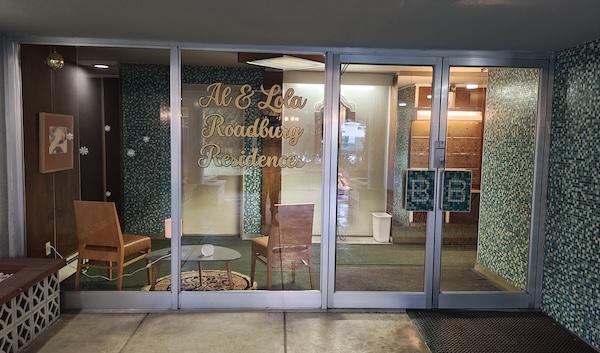
The Al and Lola Roadburg Residences – a place to call home. (photo by David J. Litvak)
Since moving to Vancouver from Winnipeg in 1991, I have moved approximately 30 times. Most of these moves have not been made by choice but, thanks to the good folks at Tikva Housing Society, I have hopefully made my last move in Vancouver.
I am a publicist/writer, and a mashgiach (kosher supervisor) at the Louis Brier Home and Hospital. Like many people here, I do not earn enough to own my own home. Living in a city where development is rampant is even challenging for renters, like me. We are at the mercy of the latest development, where, oftentimes, residences are torn down to accommodate new and more expensive apartments or condominiums (this has happened to me several times), or landlords, who give us notice to accommodate family members needing a place (which also has happened to me several times).
Since 2022, I have moved five times. However, my last two moves were much easier, thanks to Tikva Housing, which provided me with shelter and helped me navigate the challenging housing market.
I was familiar with Tikva but hadn’t wanted to reach out to them, except as a last resort. When I received two months’ notice in the dead of a freezing winter, during a COVID outbreak at my workplace, at a place I had been living for less than six months, I decided to contact them. I was desperate.
After I took the first step – signing up with the Jewish Housing Registry – I was informed that there was a suite available in a brand-new apartment building that had two floors of its nine storeys reserved for Tikva residents. I had to delay my move for a couple of months so that I could remain close to the Louis Brier for Pesach – as an observant Jew, I have to walk to places on Shabbat and holidays. Thankfully, friends put me up for those months and Tikva Housing saved the suite for me. Tikva even let me move some of my stuff in, though I wasn’t living there yet.
Once I moved into my apartment, I felt like I was living on a kibbutz. There were many familiar faces from the Jewish community living there. It was nice to see folks that I knew, including a colleague from work. The building itself was in a great location, not far from the Marine Gateway Canada Line station. Unfortunately, it turned out not to be a great location for me, because of its distance from the Louis Brier.
Even though this apartment didn’t end up working out, I was grateful to Tikva Housing for providing me with temporary shelter. I was even more grateful when a place became available in a 20-unit building in Kerrisdale that Tikva was able to purchase because of a $10 million donation from the Al Roadburg Foundation.
Not only did Tikva Housing Society find me this amazing apartment, but the staff did everything they could to make my move as painless as possible. I now have peace of mind, knowing that Tikva Housing is my landlord and I am no longer at the mercy of the city’s development. I love my new place. Hopefully, I will be able to call it home for a long time.
David J. Litvak is a prairie refugee from the North End of Winnipeg who is a freelance writer and publicist, and mashgiach at Louis Brier Home and Hospital. His articles have been published in the Forward, Globe and Mail and Seattle Post-Intelligencer. His website is cascadiapublicity.com.