Skip to content
  • Home
  • Subscribe / donate
  • Events calendar
  • News
    • Local
    • National
    • Israel
    • World
    • עניין בחדשות
      A roundup of news in Canada and further afield, in Hebrew.
  • Opinion
    • From the JI
    • Op-Ed
  • Arts & Culture
    • Performing Arts
    • Music
    • Books
    • Visual Arts
    • TV & Film
  • Life
    • Celebrating the Holidays
    • Travel
    • The Daily Snooze
      Cartoons by Jacob Samuel
    • Mystery Photo
      Help the JI and JMABC fill in the gaps in our archives.
  • Community Links
    • Organizations, Etc.
    • Other News Sources & Blogs
    • Business Directory
  • FAQ
  • JI Chai Celebration
  • JI@88! video

Recent Posts

  • Legal help for students
  • Revisiting myth of Lilith
  • Wrong person rebuked
  • Canada’s mixed messages
  • Questions for museum
  • Symposium on antizionism
  • Making soccer political
  • CJPAC lauds Pulver’s impact
  • City recognizes Vrba’s legacy  
  • Organ donation saves lives
  • Theodore’s March premiere
  • A healing Shabbaton
  • Supplying healthy food
  • A chime of metal tags
  • Yellowknife seder a first
  • Ishai energizes, unifies
  • A Lag b’Omer to remember
  • Expanding the healing
  • Hannah Senesh – a unique hero
  • Community milestones … May 2026
  • Sharing her testimony
  • Fall fight takes leap forward
  • The balancing of rights
  • Multiple Tony n’ Tina roles
  • Stories of trauma, resilience
  • Celebrate our culture
  • A responsibility to help
  • What wellness means at JCC
  • Together in mourning
  • Downhill after Trump?
  • Birth control even easier now
  • Eco-Sisters mentorship
  • Unexpected discoveries
  • Study’s results hopeful
  • Bad behaviour affects us all
  • Thankful for the police

Archives

Follow @JewishIndie
image - The CJN - Visit Us Banner - 300x600 - 101625

Delving into the past

Delving into the past

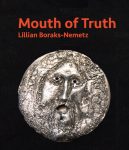
Lillian Boraks-Nemetz’s newest book, Mouth of Truth (Ekstasis Editions, 2017) is not an easy, escape-from-reality read, but it’s an interesting and important read. What does it mean to be a survivor? How does one person’s trauma affect those around them? Is healing possible? These are but a few of the many questions that Mouth of Truth elicits.

The novel is based on the experiences of Boraks-Nemetz, who is a Holocaust survivor. Born in Warsaw, Poland, she escaped the Warsaw Ghetto, and survived the war by hiding under a false identity.

“My life’s story is, of course, similar to the book’s,” Boraks-Nemetz told the Independent. “I suffered in childhood, in adolescence, girlhood and womanhood. It is only now, in my senior years, that I have found some degree of peace.”

The protagonist of Mouth of Truth is Batya, who still struggles with Beata (Bea), her wartime identity, even though she has been in Canada for decades. Her Canadian-born husband, Joseph, and their children, Sam and Miriam, have no idea of the trauma with which she is attempting to deal. She drinks to suppress her more feisty Bea personality and their memories – not only of the ghetto, but of abuse by the man entrusted with her care, and others. Though this method of coping isn’t working, Batya manages to keep her nose above water until she accompanies her friend Antonia on a visit to see Antonia’s brother in prison. The visit unleashes recollections of her tragic childhood and Batya can no longer hide from herself or her past. She must confront her dueling identities – and rumours about her father.

Batya finds out that her father might have been one of the Jewish police in the ghetto; not only that, but one who did some awful things, including helping the Nazis round up Jews for deportation. On his deathbed, her father apologizes. But for what? Batya’s mother will not talk about what happened in the ghetto and Batya must find out for herself of what her father was guilty, if anything.

The investigation, as well as Batya’s healing, requires that she leave her family and home in Vancouver. She travels first to Toronto, then to Italy and Poland. In Italy, she meets Grisha, with whom she has an affair, and experiences passion and desire. She initially confuses her feelings with love, but comes to realize the difference as she and Grisha travel together in Poland.

Between her research in Toronto and in Europe, Batya learns much about her father. She is also helped by her mother. When Batya first arrives in Toronto, her mother – who has never wanted to talk about the war – sends Batya a package of her father’s writings. Batya receives a second package when she returns from Europe.

With the first package, her mother writes, “I had always thought that because you were a mere child when all that happened to us, it would not touch you. Could I have been wrong?” Her mother also clearly states, “I have chosen to forget the past and start a new life. I don’t want to go back there either.”

In the note accompanying the second package, her mother concedes, “By shielding you, I may have done more harm than good. No matter what you might think of your father, he was a good man.” She also writes, “It never occurred to me before that I owe you the truth. Maybe I have kept secrets from you for too long.”

Batya, too, has secrets. Though she tried several times, she was not able to tell her children what happened to her during the war. As for her father’s actions, she had no idea herself, until Antonia told her the rumours. In addition to being the bearer of the news, however, Antonia opens the door for Batya to start facing her past, connecting Batya with the son of the woman who supposedly witnessed the actions of Batya’s father.

It is through her relationship with the son, Julian, who lives in Toronto, that Batya comes to tell her story – and start living. He encourages her to give a survivor testimony – “Survivors are no longer silent,” he tells her – and she does. Despite her fears, and with Julian’s support, she invites her children to watch her videotaped testimony. Afterward, they have a much-needed, overdue discussion. “One or even two conversations cannot erase the years of accumulated unhappiness and poor communication,” acknowledges Batya. “But today was a start.”

To read the first chapter of Mouth of Truth, visit lillianboraks-nemetz.com. To buy the book ($26.95), visit ekstasiseditions.com. Boraks-Nemetz will read from the novel and participate in a Q&A on Sept. 14, 2 p.m., at Waldman Library. She will also be participating in this year’s Cherie Smith JCC Jewish Book Festival, which takes place Nov. 25-30.

Format ImagePosted on September 1, 2017September 3, 2017Author Cynthia RamsayCategories BooksTags Holocaust, Lillian Boraks-Nemetz, survivor
Thrilled by community

Thrilled by community

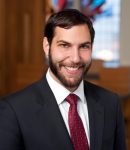
Rabbi Philip Gibbs is the new spiritual leader of Congregation Har El. (photo from Rabbi Philip Gibbs)

Rabbi Philip Gibbs, who took up the pulpit at Congregation Har El / North Shore Jewish Community Centre in July, had an unusually straight path to Judaism in many ways, at least for someone living outside the Orthodox world.

“Judaism was always part of my life,” Gibbs told the Independent.

Growing up in Marietta, Ga., he attended a Reform synagogue, went to Hebrew school and lived in a home life structured by Judaism. He found Judaism both comforting and intellectually engaging. He loved the thorny moral questions of Jewish tradition and studying Torah stories for guidance about how to live in the world. By the time he finished high school, he was on the regional board of the Reform Jewish Youth Movement (NFTY).

Being a leader in NFTY helped Gibbs see what it meant to bring others to and through the experience of Judaism – and the seed of a rabbinic calling was planted.

Gibbs went to college at Washington University in St. Louis, Mo., and graduated in 2012 with a double major in Hebrew and the humanities. He also attended summer programs for intensive Talmud study and, as he settled into “that place of serious learning about Judaism,” he felt at home. He was enamoured by how the Jewish community supported each other in times of crisis and celebration, giving a wider sense of meaning to even happy moments.

Gibbs attended the Jewish Theological Seminary (JTS), attracted “by its academic emphasis and its acknowledgment of the evolution of Judaism.” It also fit his personal level of observance.

He focused on Talmud and halachah (Jewish law) at the seminary and became the secretary of the committee on Jewish law and standards. He became passionate in his interest in halachah, both theoretically and as a “road to values.” He enjoyed taking ritual practice and explaining “the goal and meaning of it from a place of depth.”

Gibbs graduated with a master of arts in Talmud and received his rabbinic ordination earlier this year.

As a rabbinical student, he was engaged with global social justice and human rights issues, and became a member of Rabbis Without Borders. In his second year, after touring Hebron with T’ruah, a rabbinic human rights organization, he was featured in an article in the Forward about younger rabbis willing to grapple fully with the moral complexity of life in Israel.

Gibbs connected to Congregation Har El, which has been without a permanent spiritual leader for just over a year, through the JTS matching process for new rabbis. He had been to Vancouver before and looked forward to flying out for the interview.

“B.C.’s wilderness and outdoors activities are a big draw for me,” said Gibbs, who led the Jewish Outdoor Leadership Institute camp Ramah in the Rockies and is looking forward to the hiking and skiing opportunities available in the Vancouver area. “I grew up doing a lot of hiking in the southeast and led backpacking trips with Conservative movement summer camps. When I got here, I was also thrilled to find a community of very nice and caring people, a place that wanted depth in what they were doing.”

Gibbs said his main priority right now is getting to know the community before he begins putting together any new ideas. He is also getting to know Vancouver.

“It’s great,” he said. “One of the first things I did was get a bike – it’s a city very easy to get around in. My first view was before the forest fire smoke came in, and it was absolutely beautiful.”

Matthew Gindin is a freelance journalist, writer and lecturer. He writes regularly for the Forward and All That Is Interesting, and has been published in Religion Dispatches, Situate Magazine, Tikkun and elsewhere. He can be found on Medium and Twitter.

Format ImagePosted on September 1, 2017August 30, 2017Author Matthew GindinCategories LocalTags Har El, Judaism, Philip Gibbs, synagogue
Dramatic Fringe work

Dramatic Fringe work

Jewish community membersGina Leon and Michael Germant co-star in Island Productions’ presentation of Gruesome Playground Injuries at the Vancouver Fringe Festival Sept. 8-17. (photo by Jayme Cowley)

Playwright Rajiv Joseph describes Gruesome Playground Injuries as being “about missed love, it’s about pain and regret. These are things that almost everyone in humanity has some experience with.”

Jewish community member Michael Germant, who co-stars in Island Productions’ presentation of Gruesome at the Vancouver Fringe Festival with fellow community member Gina Leon, also highlights the universal elements of Joseph’s play.

“Everyone has either wanted to be in, or has been in, or has come out of a relationship, therefore, there is something for everyone to relate to,” Germant told the Independent. “The show is rich in humour, empathy and tenderness. Internal and external pain are a measure of everything vulnerable when it comes to intimacy, timing and love.”

Gruesome Playground Injuries is part of the Fringe’s Dramatic Works Series celebrating playwrights of Asian descent. Germant said that he and Leon – who together produced and performed the play A Weekend Near Madison in the 2015 Fringe’s Dramatic Works Series – “had read Gruesome Playground Injuries a few years ago and I think it’s always been in the back of our minds to do it one day, and so this turned out to be the perfect opportunity.”

The press material calls the play “a harrowing and humorous story about love.” The description reads, “Over the course of 30 years, the lives of Kayleen and Doug intersect at the most bizarre intervals, leading the two childhood friends to compare scars and the physical calamities that keep drawing them together.”

It seems like pretty heavy fare for the Fringe, or is it?

“The foundation of the Fringe usually is to do experimental and challenging work,” said Germant. “Gruesome Playground Injuries’ non-linear structure, raw subject matter, and bloody and bruised characters – both figuratively and literally – we feel are representative of the aims of the festival. We chose the play because of the way we felt about this unique perspective of a love relationship. The play is realized through humour and drama.”

The humour, which is dark, “is expressed through the naivety of the characters and the comedy of misconnection,” he said.

In his remarks on Island Productions’ website, director Mel Tuck notes that the play “demanded much from the actors.”

“The demands of the play are numerous, reconnecting with a prism of memories,” Leon told the Independent. “What’s it like to be a child, a teenager, a young adult; how does one authentically play it? This part is close to the bone for me, and giving myself permission to be vulnerable – really vulnerable, and go to all the places I need to, to bring Kayleen to life – that’s scary and exciting.”

For Germant, “I’ve never experienced the physical injuries of Doug, but I do have emotional and psychological parallels. My challenge has been to open myself up to express these psychological and emotional injuries.”

Working on his character, said Germant, “has caused me to confront my own behaviour and address some of my foibles. I’ve learned to laugh at myself.”

Both Leon, who was born in Johannesburg, and Germant, who was born in Moscow, know what it is like to be an immigrant, to straddle more than one culture. They can relate to Gruesome’s theme of alienation.

“Growing up in Montreal as a Russian-Jewish immigrant, I realized very early how different and apart I was,” said Germant. “As such, I viscerally know alienation and separateness. Doug is experiencing being separate and alienated throughout the play – we play these characters from ages 8 to 38 – and he suffers from self-esteem issues because of it. He feels obligated to perform for approval, which, in his case, causes gruesome injuries.”

Gruesome Playground Injuries runs at the Cultch’s Vancity Culture Lab Theatre Sept. 8-17. For tickets ($14) and the whole Fringe lineup, visit vancouverfringe.com.

Format ImagePosted on September 1, 2017August 30, 2017Author Cynthia RamsayCategories Performing ArtsTags Fringe Festival, Gina Leon, mental health, Michael Germant, relationships
Helping out new immigrants

Helping out new immigrants

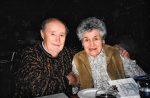
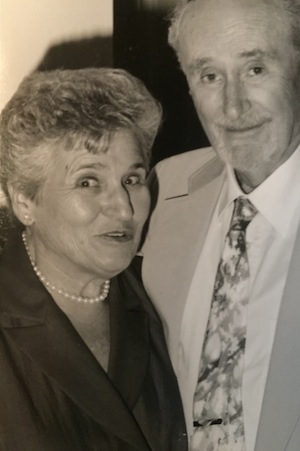
Sol and Shirley Kort (photo from Alisa Kort)

The Kort family – in an initiative led by sisters Beverley and Alisa – has established a scholarship in their parents’ names with the National Council of Jewish Women. The award will provide education funding to two newcomer women each year.

Beverley and Alisa’s parents, Shirley and Sol Kort, have both passed away. They met, said the sisters, in Shirley’s hometown of Edmonton at a Shabbat dinner event organized by the local Jewish community for the American Jewish soldiers stationed there – this included Detroit-native Sol, who was then in the U.S. army.

The couple moved to Vancouver in the 1940s and Sol started up the business Kent Chemicals with a fellow American who relocated to Vancouver.

Of Kent Chemicals, Beverley said, “He did that for many years, until the 1960s. Then, he sold his business and went into continuing education at UBC. On the side, he was leading and developing a lecture series called Search for Meaning, and more. He decided that, instead of being a chemist, he’d become an adult educator in the humanities.”

Sol was in his 40s when he changed career paths. In his new endeavour, he enjoyed connecting with people who were pushing the boundaries of understanding philosophy, science and psychology – people questioning the world.

Beverley recalled going to her father’s lectures, along with other kids, starting in her early teens. “I’d sometimes leave school and go to those lectures,” she said. “People came and stayed at our house. I was exposed to all sorts of interesting perspectives, like Buddhism and different types of spirituality, levels of consciousness, and ideas. I was already curious about human nature and this catapulted me onto the level of, ‘Oh, my God! Wow. What’s going on?’”

Meanwhile, Beverley’s mom, Shirley, was busy doing her own work, serving on the board of the Jewish Community Centre of Greater Vancouver for many years and being involved in National Council of Jewish Women (NCJW), among other pursuits. Later, Shirley helped form Shalom Vancouver, a welcoming service for newcomers to Vancouver.

“This was very important to her,” recalled Beverley. “People would describe her as one of the most welcoming, supportive people. When we did a special kind of presentation about my mom for the NCJW after she passed away, people got up and spoke about their relationship with her, especially young women who moved to Vancouver when she was quite involved in the council. They just found there wasn’t anything she wouldn’t do to help them get settled – connecting with people, coming to our house for dinner. Our whole family has this culture of, come for dinner, how can I help you connect, that kind of thing.”

Alisa added, “My mother was also on the board of the Volunteer Bureau of Canada and had been a president of the Vancouver chapter of the NCJW a number of times, [as well as being] involved in their mobile hearing testing project, HIPPY and Shalom Vancouver. My father was involved with the Vanier Institute of Canada and was director of humanities and science in continuing education at UBC.”

Alisa noted that one of her father’s good friends, author Ted Roszak, wrote of Sol that “he was ‘a bright, inquiring and caring educator who wanted to bring every leaping mind he could find to his school.’”

When Sol passed away, the Kort family established a fund in his name at the Isaac Waldman Jewish Public Library, as he was an avid reader. They also sponsored the Sol and Shirley Kort Author Series, the opening night of the Cherie Smith JCC Jewish Book Festival, for many years.

photo - Shirley and Sol Kort
Shirley and Sol Kort (photo from Alisa Kort)

“My mom, during her life with my dad, was always hosting events and having people come and speak, and dealt with the behind-the-scenes things, organizing and being social,” said Beverley. “For her, hosting the author series in her and my dad’s name was a nice continuation of that. We did that for many years. They would come to our house the night before. And, the author would come, and my mom would meet him and talk. We named it after both of them because we always wanted to do something for both of them together.”

When Shirley passed away, the family wanted to find a way to further commemorate both of their parents’ lives, and looked to the NCJW, even though Sol wasn’t a member of the council.

“He was like a feminist more than his own daughters were, and he was an educator and a mentor,” said Beverley. “He was always finding people who needed mentoring. We were hosts for a Bosnian family who we’re still good friends with. After retiring, they set up weekly sessions with him to talk about books. He led speaking series for seniors and was always looking for ways to teach.”

Among the NCJW initiatives that were important to Shirley was HIPPY (Home Instruction for Parents of Preschool Youngsters), said Beverley, and she talked about it “a lot during the last three years of her life, as she struggled with dementia. HIPPY is about mentoring women and furthering their education. We wanted to do something that would further education and make a difference in someone’s life – that’s why we chose the scholarship.”

The Shirley and Sol Kort scholarship provides $2,500 per year to two newcomer women toward their education.

“HIPPY is a way of keeping my parent’s memory alive and supporting something that represents the essence of what they found important in the world, which is welcoming people, furthering education, being supportive and being larger than the Jewish community,” said Beverley.

According to Alisa, her parents were interested in people, above all – they were passionate about education and in helping newcomers to the Jewish community and beyond. Beverley and Alisa also are inspired in what they do by their late grandmother, who informally adopted one of the young children who made their way to safety via the Kindertransport.

Regarding the HIPPY scholarship, Alisa said, “It seemed to embody all that our parents held dear and it also seemed very important to support women, particularly women with children struggling to find a new life in a new country after having to let go of so much of what made them who they are.”

The initial recipients of the award, said Alisa, “were both very highly motivated and articulate about their experiences as immigrant women and mothers in Canada, and how … being involved in HIPPY has factored into their journey and continues enriching their lives. They’re multicultural in background. One of the women intends to complete her bachelor of social work and the other wants to get her social work diploma.”

Past president of NCJW’s Vancouver chapter, Debbie Altow, said, “Shirley Kort inspired us all in council. Besides working to bring HIPPY to Canada, she led the way – she was the first in our membership to use a computer; she worked tirelessly to pilot a hearing testing program for preschoolers (a project taken over by Vancouver’s health department); she hosted so many meetings that daughter, Beverley, printed up a neat collection of her recipes; and she had family and friends all over Western Canada, especially in Edmonton and Winnipeg.

For more information about NCJW in Vancouver, visit ncjwvancouver.org.

Rebeca Kuropatwa is a Winnipeg freelance writer.

Format ImagePosted on September 1, 2017August 30, 2017Author Rebeca KuropatwaCategories LocalTags education, Kort, NCJW, tikkun olam, women
Recalling our history

Recalling our history

An architectural rendering of the proposed Jewish Legion Centennial Pavilion to be built in Windsor, N.S. (image from MacKay-Lyons Sweetapple Architects Ltd.)

David Ben-Gurion and Yitzhak Ben-Zvi will be among more than 1,000 men remembered when the 100th anniversary of the Jewish Legion is commemorated next year in Windsor, N.S.

These two prominent Jewish community leaders, who became the first prime minister and second president of the state of Israel, respectively, were part of the legion, which was approved by the British War Office as a Jewish military contingent for active duty during the First World War. Ben-Gurion and Ben-Zvi, as members of the training squad, earned 50 cents a day and slept in a bell tent on Nova Scotia earth.

photo - David Ben-Gurion, taken in Windsor, N.S., in 1918
David Ben-Gurion, taken in Windsor, N.S., in 1918. (photo from West Hants Historical Society)

Jewish recruits from across Canada and the United States assembled at the Imperial Recruits Depot, located at Windsor’s Fort Edward, in 1918. Fort Edward served as a basic training centre and point of departure for all North American recruits of the Jewish Legion. Once their training was complete, they went to England, where they joined other Jewish battalions for the last phases of the campaign against the Ottoman Turks. This Jewish fighting force, which included the 38th, 39th, 40th and 42nd battalions of the Royal Fusiliers, would become known as the Jewish Legion.

In a letter to Windsor’s mayor in 1966, Ben-Gurion wrote, “In Windsor, one of the great dreams of my life, to serve as a soldier in a Jewish unit to fight for the liberation of Israel, became a reality. I will never forget Windsor, where I received my first training as a soldier and where I became a corporal.”

The Jewish Legion Centennial Society, chaired by former Atlantic Jewish Council executive director Jon Goldberg and guided by Sara Beanlands, principal of Boreas Heritage Consulting Inc., is commemorating the centennial of the training of the Jewish Legion in Windsor. In conjunction with the town of Windsor, West Hants Historical Society and the Atlantic Jewish Council, events are planned for the town in May and September of 2018. As well, a distinct earthworks Centennial Pavilion will be built, with considerable private funding, near Fort Edward. Names of the more than 1,000 North American Jewish trainees will be listed on a Wall of Honour at the pavilion.

To donate to the Centennial Pavilion or for further information, contact Goldberg at [email protected] or 1-902-221-2174. For historical information or to include a name of a Jewish Legion soldier, contact Sara Beanlands at [email protected] or 1-902-483-7999.

Format ImagePosted on September 1, 2017August 30, 2017Author Jewish LegionCategories NationalTags Ben-Gurion, Ben-Zvi, Canada, history, Israel, Jewish Legion
An Israeli internet hit

An Israeli internet hit

Renny Grinshpan’s videos have gained quite an audience. (photo from Renny Grinshpan)

Born and raised in Toronto, Renny Grinshpan is the daughter of an Israeli-born dad and a Toronto-born mom. Her sister, Eden, works as a host on the food scene in Canada and the United States and recently hosted Top Chef Canada. For her part, Grinshpan is a bit of a celebrity herself – in Israel.

After finishing high school in Toronto, Grinshpan moved to New York City, where she studied history at New York University before heading to Columbia University to pursue her master’s in journalism. After six years in New York, she moved to Tel Aviv to be with her Israeli partner, Hadar Amar, and they still live there. This past June, the couple was married.

“Hadar and I met through a mutual friend at a bar in Tel Aviv,” she said. “We now live together in Tel Aviv. He works in strategic consulting.”

Grinshpan has been in Tel Aviv for about three years. “When I came here,” she said, “I worked as a content writer for Tross Creative House for a year. My boss there, Yaniv Tross, encouraged me to quit and start on-camera work, so I did. He cast me in my first video – a crowdfunding video for a start-up product that works against period cramps (Livia). Since then, I’ve been working as a freelance host, content creator and actor.”

Grinshpan became known in Israel’s comedy scene for her role on HaIsraeliot (the Israeli Girls), a Facebook page with female Israeli comedians, including Leah Lev and Meital Avni.

“I don’t do live shows,” said Grinshpan. “I tried stand-up comedy and realized it’s the scariest thing ever … and I am no adrenaline junkie!”

In her Facebook videos, Grinshpan delves into different aspects of Israeli culture from a Canadian perspective. As a relatively new olah (immigrant), these observations come naturally for her.

“I think my main audience is Israeli women,” she said. “It makes sense to me that Israelis are my biggest audience, because I think everyone enjoys hearing about themselves the most, especially from an outsider’s perspective.”

Grinshpan gained experience in video during her journalism studies at Columbia, where she focused on video journalism and learned how to film, edit and build a narrative visually.

“I made several short documentary-style videos that year and the year following,” she said. “When I worked at Tross, I got experience writing creatively for the first time – writing scripts for product and crowdfunding videos for start-ups.

“When I started freelancing after Tross, I worked not only as an actor and host, but also continued working as a content writer and videographer behind the scenes. I also worked as a model and voiceover actor – anything to earn a living in the creative video realm!”

Grinshpan has spent some time as a visitor in Vancouver and had much good to say about the experience. “I love Vancouver!” she said. “Thank you for giving me some of the best times!

“Being a tourist in Vancouver made me feel like I’m really athletic, which could not be farther from the truth! I found that, in touring the city, I was biking through Stanley Park (it’s a forest!), hiking up a waterfall in North Van, trying out long-boarding for the first time and canoeing again (like in my childhood). I was so active just by being there, which, again, is not reflective of my standard state.”

Looking ahead, Grinshpan said she dreams of co-hosting a food and travel talk show across Israel or Canada with her big sister one day.

To follow or see more of Grinshpan, visit facebook.com/heyitsrenny or check out youtube.com/watch?v=d9pPtsFplaI and youtube.com/watch?v=nYKvpVlOVmU.

Rebeca Kuropatwa is a Winnipeg freelance writer.

Format ImagePosted on September 1, 2017August 30, 2017Author Rebeca KuropatwaCategories TV & FilmTags Canada, comedy, internet, Israel, Renny Grinshpan
A shift to inclusion in Israel

A shift to inclusion in Israel

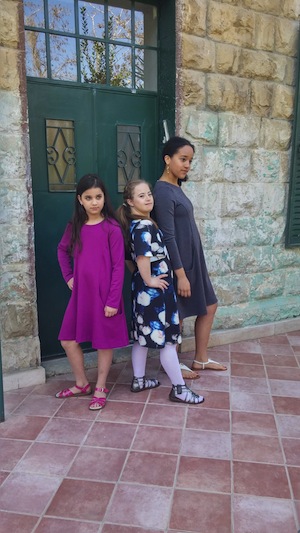
The 2017 Select Fashion and Totto bags’ Back to School ad campaign, in collaboration with Beyachad, featured Israeli children of varying abilities. (photo by Nechama Orah Photography)

In 2010, Gabrielle Markowitz set up a Facebook account in the name of her then-newborn daughter, Hallel. Called Hallel Mini Supermodel, the page is part of Markowitz’s goal to change the public perception of people with disabilities. And she has made some progress.

Hallel has Down syndrome. Set to start Grade 1 this September, she was chosen, along with several other Israeli children of varying abilities, to model the 2017 summer collection in Select Fashion and Totto bags’ Back to School ad campaign. The shoot was in collaboration with the Israeli organization Beyachad, which works to increase and strengthen society’s inclusion of people with disabilities.

Beyachad was started by Channie Plotnick, a New Yorker who has been concerned with this issue since she was 9 years old.

“I was living in New York,” said Plotnick, who now lives in Israel. “Not far from the home where I was growing up, there was a home for adults with disabilities. I was going to school every day and doing my thing. I’d pass by the home and I could see the people with disabilities through the windows. I could see them just sitting around and pretty much doing nothing – being locked in that home for many, many hours, just sitting around.

“I saw this a couple times a day, every day. I felt that these people are jailed in this place. I figured, I have to figure out a way to get them out of this. One day, I asked my mom if I could invite them for Shabbat morning. My mom said to give them my phone number and see. So, one Friday, they actually called and said they wanted to come over for Shabbat morning.

“I can remember myself sitting at home at the window and looking out that morning, and waiting anxiously for them to come. It was sort of a big group. I think there were eight adults with two staff accompanying them.

“We had a wonderful Shabbat meal. We played games and they became part of the family. For me, it was like a victory to see them out of jail and … part of a community, of our family.”

Plotnick has high expectations of herself as well as of others. Where some see disability, she sees ability.

As an adult, Plotnick made aliyah. She attended Tel Aviv University and earned a bachelor’s degree in psychology and a master’s in special education. From then on, it was no longer enough for Plotnick to be able to see ability in all people. It was now about figuring out how to care for these abilities and shape them toward everyday integration into society.

photo - An image from the Select Fashion and Totto bags’ Back to School ad campaign
An image from the Select Fashion and Totto bags’ Back to School ad campaign. (photo by Nechama Orah Photography)

“When I came to Israel, I was working as a supervisor in a special ed school,” she told the Independent. “I saw children who I thought could learn in regular schools, with help and support. I started looking around for schools and support, and I realized there were no services for children who wanted to be integrated in regular schools.”

So, in 2008, Plotnick started up Beyachad Foundation, to aid in the empowerment and inclusion of people with special needs.

“When someone wants to be in a regular school, we help them with resources, information, advocacy and case management, connecting them to the right people, figuring out how to get them resources from different departments,” said Plotnick.

The Knesset calls Plotnick when they are considering disability inclusion-related laws.

“In Israel, there’s a lot of welfare state taking care of people with disabilities,” explained Plotnick. “I call it a ‘stifling hug,’ as they’re taking care of the needy. But, it’s a situation where they are … making it so they are dependent, as opposed to helping special needs people be independent and able to contribute to society.”

According to Plotnick, the welfare system disperses benefits according to labels – it puts people into a box labeled “Down syndrome” or “autism.” These labels carry with them a set of expectations, and the people become the label.

“Today, when a social worker gets a person in front of him/her who has Down syndrome, she/he looks at his/her lists and says, ‘OK, we have schools with special education that focus on children with Down syndrome. And, when they are adults, we have what’s called workshops. This is what we have.’ You’re not looking at individuals and their abilities. You’re looking at a person with Down syndrome. You’re not even looking at the person. On the flip side, when you complement abilities, you look at individuals. That change of looking at a person and saying, ‘You’re an individual. Let’s see what your abilities are and let’s see what you can do with your abilities.’ That’s the change we are trying to make.”

Beyachad does not want to compete with, or put out of business, special ed schools or workshops. Its aim is to offer more options.

“It’s a lot easier for us, as society, to adapt to the needs of the less-abled than it is for the less-abled to adapt to our society,” said Plotnick. “As such, we have a duty to adapt to their needs.

“I’ll give you an example. If today we go out onto the street and all of the signs are in Braille, you and I would be the ones who are disabled, as we won’t be able to read them. Society has the ability to change people into disabled – and society has the ability to create people who are more able.

“As long as we adapt things in society for people with disabilities, they will end up being less disabled. If I come to a regular school and I’m a person with disabilities and the curriculum is adapted for me and school accessibility is adapted for me, I will be less disabled.”

Change will come slowly, but Beyachad has the motto ‘If it is to be, it’s up to me,’ and they work to provide the support individuals need to make accessibility possible. For more information or to lend support, visit beyachad.org.il.

Rebeca Kuropatwa is a Winnipeg freelance writer.

Format ImagePosted on September 1, 2017August 30, 2017Author Rebeca KuropatwaCategories IsraelTags Beyachad, Channie Plotnick, fashion, Gabrielle Markowitz, Hallel Markowitz, inclusion
Miraculous discovery

Miraculous discovery

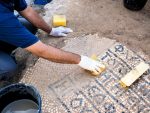
(photo from Israel Antiquities Authority via Ashernet)

A 1,500-year-old mosaic floor, with a Greek inscription, was discovered this summer following groundwork for a communications cable infrastructure near the Damascus Gate in the Old City of Jerusalem. David Gellman, the director of the excavation on behalf of the Israel  Authority, said, “The fact that the inscription survived is an archeological miracle…. We were about to close the excavation when, all of a sudden, a corner of the mosaic inscription peeked out between the pipes and cables. Amazingly, it had not been damaged.” Hebrew University in Jerusalem’s Dr. Leah Di Segni deciphered the inscription, which “commemorates the founding of the building by Constantine, the priest. The inscription names the emperor Flavius Justinian. It seems that the building was used as a hostel for pilgrims.”


Format ImagePosted on September 1, 2017August 30, 2017Author Edgar AsherCategories IsraelTags antiquities, archeology, Hebrew University, history, IAA, Israel
לישראלים בקנדה

לישראלים בקנדה

כשמכניסים את המושג “ישראלים בקנדה” למנוע החיפוש של גוגל מקבלים מגוון רחב ומפורט, על אודות הישראלים כאן, מעשיהם והקשר בינם ולבין ישראל, קנדה ויהדות.

להלן חלק מתוצאות החיפוש בגוגל של המושג “ישראלים בקנדה” לפי הסדר שנקבע על ידי מנוע החיפוש:

(פורסם ב-19 באוגוסט 2017) “ביל ניגש, חשבנו שאנו מתים”: הישראלים שפגשו את הקלינטונים. בני הזוג גלעד מרמת גן ציינו 25 שנות נישואים בקנדה, ומצאו את עצמם באותו מלון עם ביל, הילרי והבת צ’לסי קלינטון.

(פורסם ב-15 באוגוסט 2017) “חוקרים ישראלים פיתחו אי.אל שמסוגלת להציע פתרונות יצרתיים”: המחקר, שבוצע בשת”פ של האוניברסיטה העברית עם קרנגי מלון מפנסילבניה, נערך בידי ד”ר דפנה שחף. היא מספרת שיכולת זיהוי הקשרים מקדמת את האנושות לעבר בינה מלאכותית בעלת דמיון ויכולת אלתור. החוקרים הציגו את הפיתוח שלהם בכנס קי.די.די 2017, הכנס החשוב ביותר בתחום שנערך בקנדה (הליפקס) לפני כשבועיים.

(פורסם ב-16 באוגוסט 2017): “בתו של השגריר עשתה עליה. גאים בבת שלנו”: טליה פרידמן, בתו של שגריר ארה”ב בישראל, דיוויד פרידמן, הייתה בן 233 העולים החדשים מצפון אמריקה שהגיעו לישראל אתמול במטוס שכולו עולים, ע”י ארגון ‘נפש בנפש’. העולים החדשים הגיעו מ-19 מדינות בארה”ב, ומשני מחוזות שונים בקנדה.

(פורסם ב-30 ביולי 2017): “טוב ליהודים. חוק הלאום החדש נכון ונחוץ, אך הקישור שלו לדמוקרטיה שגוי”. החוק חשוב לא כדי להודיע לעולם שהמדינה שהזו שלנו, אלא דווקא כדי לקבוע שהיא איננה רק של היהודים בישראל, אלא של העם היהודי כולו ברחבי העולם. של אלה שחיים כאן, ושל אלה שחיים בארגנטינה, בארבייג’אן, בקנדה ובכל מקום גלות אחר.

(פורסם ב-19 באוגוסט 2017): “אני חייבת להסביר את הסכנה שבאסלאם, כי חייתי שם”. סנדרה סולומון נולדה ברמאללה למשפחה של פעילי טרור, ספגה שנאה לישראל ולמדה להעריץ מחבלים. היום, בחזית ההסברה היא לא מצליחה להבין איך מדינת ישראל מוותרת על כבודה וזכויותיה. בעלה קיבל עבודה בקנדה, והגיש בקשה להתאזרח שם.

(פורסם ב-11 בדצמבר 2015): “לקרוא ולקנא? ישראלים מצליחים בקנדה”. שלומית שטייר עברה עם משפחתה לקנדה במסגרת רילוקיישן שהיה אמור להמשך כשנתיים – אך בינתיים עברו כבר תשע שנים. דן גולוב נסע לפני כשש שנים לוונקובר כדי לעבוד קצת בעגלות, וכיום הוא הבעלים של חנות גדולה בוונקובר. אין נראים החיים של ישראלים שעברו לעבוד ולחיות במדינה השנייה בגודלה בעולם.

(פורסם ב-30 בינואר 2017): “מכללה בקנדה לסטודנט ישראלי, לא מקבלים ישראלים”. מחרימים: מכללה קנדית בשם בית הספר איילנד לאמנויות הבנייה שנמצא באי גבריולה השוכן בבריטש קולומביה, דחתה את בקשתו של סטודנט ישראלי ללמוד במוסד בגלל הסכסוך הישראלי-פלסתיני ובגלל ההתנחלויות הבלתי חוקיות.

(פורסם ב-12 באוגוסט 2017): “חוקרים ישראלים גילו כיצד בויתה החיטה הקדמונית”. המחקר גילה את המוטציות שאחראיות לתכונה החשובה בשינוי, והיא היכולת למנוע את התפזרות הזרעים ברוח, ובכך לשמור על היבול. המחקר בוצע עם חברה ישראלית אן.אר.גן מנס ציונה, ועם מעבדות מובילות בגרמניה, באיטליה, בקנדה, בישראל ובארה”ב.

(פורסם ב-24 באוקטובר 2016): “ישראלים נתקעו בקנדה. טרטרו אותנו, הפסדנו את החג בבית”. שדה התעופה בטורונטו שותק חלקית בשל רוחות עזות ונוסעים שלא הספיקו להגיע בזמן ממונטריאול בטיסה ארצה נתקעו במשך מספר כמה ימים. הם מותחים ביקורת על היחס של חברת התעופה (אייר קנדה) כאשר אף אחד לא נתן להם תשובות. הם נאלצו להגיע כל יום לשדה ולא נמצא פתרון.

Format ImagePosted on August 30, 2017August 29, 2017Author Roni RachmaniCategories עניין בחדשותTags Google, Israel, גוגל, ישראל
Tzedakah not charity

Tzedakah not charity

Rabbi Joseph Telushkin will be in Vancouver for FEDtalks on Sept. 13. (photo from HarperCollins)

A group of elderly retired men routinely gather in a Tel Aviv coffee shop and talk about current events. Given the world situation, their chats tend to be very downbeat. One day, one of the men in the group declares, “I am an optimist.”

His friends look at him in puzzlement and one of them asks, “You’re an optimist? So why do you look so worried?” And the man replies, “You think it’s easy to be an optimist?”

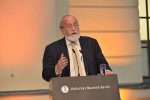
This is a joke Rabbi Joseph Telushkin tells when he speaks about Jewish humour – a topic on which he literally wrote the book. It also sums up his response to a question posed by the Jewish Independent in a recent telephone interview.

Telushkin is the author of more than a dozen books, including the two-volume A Code of Jewish Ethics, Jewish Literacy: The Most Important Things to Know About the Jewish Religion, Its People and Its History and The Book of Jewish Values: A Day-by-Day Guide to Ethical Living. He is routinely cited as one of North America’s most engaging thinkers and writers on Jewish topics and he has devoted his life to Jewish education.

“I am by nature an optimist,” he said, explaining that his study of Jewish history inspires pessimism, but Judaism’s promise of messianic redemption makes him an optimist. “Hence, I end up as an optimist with a worried look on my face,” he said.

Telushkin is one of five leading thinkers – originally there were four scheduled – who will speak at FEDtalks, the kickoff of the Jewish Federation of Greater Vancouver’s annual campaign next month.

Telushkin’s lifetime devoted to Jewish education was motivated in part by his concern that Jewish religious devotion tended to emphasize ritual observances “as if ethics were necessary, but sort of an extracurricular activity.”

Judaism, he said, has important and uplifting rituals, such as Shabbat and the observance of the holidays. “But there are these incredible insights in Judaism that apply to us in every day of our lives.” That is why he wrote The Book of Jewish Values, which is an exploration of ideas and lessons that can be applied day after day.

Exploring these ideas, he said, can ameliorate some of the challenges facing the Jewish people, such as assimilation and intermarriage.

“If two percent of Jews were intermarrying, you could make a big fight and just do everything in your power to stop intermarriage,” said the rabbi. “Once you’re dealing with intermarriage rates approaching 50%, you can either write off the future of the Jewish people … or you can say, guess what, Judaism has things to teach Jews and non-Jews. If Judaism has something to offer people, it can offer it to non-Jews as well. That’s the role that Jewish education can play. We can model values that people can look at and feel enriched by.”

If Jewishness plays a central role in one’s life, Telushkin said, a person should want to share that with a spouse and model Judaism “in a way that would also make them want to share in Judaism.”

With Dennis Prager, Telushkin wrote the book Why the Jews?: The Reason for Antisemitism. The provocative thesis suggests that something particular about Jews inspires Jew-hatred; that Jews bring it upon themselves.

“Antisemitism, we argue, is ultimately a reaction to Judaism and its values,” Telushkin said, “to the Jewish concept of God, which denied the gods of the others, to the Jewish concept of law.”

The centrality of education in the Jewish tradition has led to personal and collective successes that, in turn, have inspired jealousy, he continued. This jealousy leads to antisemitism and it is indeed, Telushkin said, something inherent in Judaism that provokes this response.

“The reason Jews have succeeded, often much more than their neighbours, is because Judaism entered the world with a demand that no other religion had made: that everyone has to be educated – and you shall teach it to your children – and that focus on education led to greater success.”

Antisemitism, he added, is also inspired by the unique theological relationship between God and the Jewish people.

“There is no other religion that fuses religion and peoplehood the same way,” he said. “When Ruth converts to Judaism in the Bible, she says, amech ami, your people shall be my people, Elohayich Elohai, your God shall be my God.”

This connection between religion and peoplehood also defined antisemitism and the way it morphed during the Age of Nationalism. Until around 1800, when the world in which Jews lived was primarily a religious one, antisemitism focused on the God of the Jews and the rejections of the prophets of Christianity and Islam.

“When nationalism emerged, antisemitism was increasingly focused on the people who were Jews,” Telushkin said. Conversion to another religion would no longer erase Jewish national identity, and membership in a peoplehood, a nation, became the focus of antisemitism. “Hence, the greatest antisemitism in the world today is anti-Zionism.”

The most catastrophic forms of tyranny in recent history, Telushkin added, were direct refutations of Jewish values.

“What was Nazism if not a rejection of all the values that Judaism was trying to bring into the world? What was Soviet communism if not a rejection of all the values the Jews bring into the world?” he said. “Nazism and communism were both radical repudiations of the Jewish notion of God. They held that the state had the highest value. That’s why Soviet dissidents used to chant the song ‘I Fear No One Except God,’ because, in a totalitarian society, people who fear God think that there is something higher than the government, higher than the party. Today, of course, there is the danger of Islamists, people who claim to believe in God but who certainly don’t believe in a God whose primary demand of humans is ethical behaviour.”

At FEDtalks, Telushkin will speak on the topic, Tzedakah is Not Charity. The word charity, he said, suggests something done voluntarily, out of love. “While the word tzedakah derives from the word justice, which suggests that it’s not only a voluntary thing to give tzedakah, it’s an act of justice, which means not doing so becomes an act of injustice,” he explained. “What I want to emphasize is that Judaism is rooted in the notion of not just volunteerism but also obligation.”

By example, he suggested comparing two types of diets. People go on diets, he said, usually for one of two reasons – to be physically more attractive or healthier – but few are able to maintain a strict diet for a month or longer without breaking it.

“Because, in the final analysis, it’s voluntary,” he said. “Everyone knows people who keep kosher, who can go for years without eating foods that are forbidden because they feel commanded … when we do something out of a sense of commandment, we do so with a greater sense of consistency.”

Charities often suffer during tough economic times, he added, because people see charity as voluntary. But, even during tough economic times, people pay their taxes because they are afraid of the consequences of not doing so.

“So the notion of mitzvah in

Judaism is a notion of commandment, something is obligatory,” he said. “I emphasize that point because people consider mitzvah a good deed, but it’s really a commandment.”

FEDtalks takes place at the Chan Centre on Sept. 13. For tickets and more information, visit jewishvancouver.com/fedtalks2017. The Independent has invited all of the speakers to be featured in advance of the event. Last week: Ruth Wasserman Lande. Next week: Rabbi Jay Henry Moses.

Format ImagePosted on August 25, 2017August 22, 2017Author Pat JohnsonCategories LocalTags annual campaign, FEDtalks, Jewish Federation, Joseph Telushkin, Judaism, tikkun olam

Posts pagination

Previous page Page 1 … Page 429 Page 430 Page 431 … Page 669 Next page
Proudly powered by WordPress