Skip to content
  • Home
  • Subscribe / donate
  • Events calendar
  • News
    • Local
    • National
    • Israel
    • World
    • עניין בחדשות
      A roundup of news in Canada and further afield, in Hebrew.
  • Opinion
    • From the JI
    • Op-Ed
  • Arts & Culture
    • Performing Arts
    • Music
    • Books
    • Visual Arts
    • TV & Film
  • Life
    • Celebrating the Holidays
    • Travel
    • The Daily Snooze
      Cartoons by Jacob Samuel
    • Mystery Photo
      Help the JI and JMABC fill in the gaps in our archives.
  • Community Links
    • Organizations, Etc.
    • Other News Sources & Blogs
    • Business Directory
  • FAQ
  • JI Chai Celebration
  • JI@88! video

Recent Posts

  • Zionism wins big in Vegas
  • Different but connected
  • Survival not passive
  • Musical celebration of Israel
  • Shoppe celebrates 25 years
  • Human “book” event
  • Reclaiming Jewish stories
  • Bema presents Perseverance
  • CSS honours Bellas z”l
  • Sheba Promise here May 7
  • Reflections from Be’eri
  • New law a desecration
  • Resilient joy in tough times
  • Rescue dog brings joy
  • Art chosen for new museum
  • Reminder of hope, resilience
  • The national food of Israel?
  • Story of Israel’s north
  • Sheltering in train stations
  • Teach critical thinking
  • Learning to bridge divides
  • Supporting Iranian community
  • Art dismantles systems
  • Beth Tikvah celebrates 50th
  • What is Jewish music?
  • Celebrate joy of music
  • Women share experiences 
  • Raising funds for Survivors
  • Call for digital literacy
  • The hidden hand of hate
  • Tarot as spiritual ritual
  • Students create fancy meal
  • Encouraging young voices
  • Rose’s Angels delivers
  • Living life to its fullest
  • Drawing on his roots

Archives

Follow @JewishIndie
image - The CJN - Visit Us Banner - 300x600 - 101625

New publisher set to launch

New publisher set to launch

Intergalactic Afikoman publishing house is the brainchild of children’s author and educator Brianna Caplan Sayres. (image from Intergalactic Afikoman)

A new Jewish children’s publisher is set to launch in Seattle. The brainchild of children’s author and educator Brianna Caplan Sayres, Intergalactic Afikoman will officially release its first book on Feb. 11.

Sayres is a fourth-generation Seattleite. Her bestselling series Where Do Diggers Sleep at Night has sold hundreds of thousands of copies. Illustrated by Christian Slade and published by Random House, Sayres said the series was inspired by a question from her then-2-year-old (who just celebrated his bar mitzvah) about where dump trucks sleep at night.

Her latest children’s books explore territory far from earth. Night Night, Curiosity (Charlesbridge), illustrated by Ryan O’Rourke, is about a young girl who imagines herself on board the rover Curiosity as it explores the planet Mars. Asteroid Goldberg: Passover in Outer Space, illustrated by Merrill Rainey, is one of the books to be published by Intergalactic Afikoman. In this story, a young Jewish girl gets stuck in outer space for Passover, so she plans a celestial seder.

Sayres is a graduate of Brandeis University in Massachusetts and an award-winning Jewish educator – recipient of the 2016 Grinspoon Award for Excellence in Jewish Education.

“I realized that I had a vision for what I wanted to see in Jewish children’s books,” she said about why she decided to establish the new publishing house. “One day, I sat down at my computer and a mission statement just started pouring out of me.”

Her vision includes publishing genres that are not frequently seen in the Jewish book world, including fantasy. She also wants Intergalactic Afikoman to be known for publishing humorous books – “The word zany often comes to mind,” she said.

However, the primary goal of Intergalactic Afikoman is “readability,” she said. “We are aiming to publish books that children re-read again and again.”

Of the name Intergalactic Afikoman, Sayres said it “really says a lot about our company in that it is a fun and unique name and we are a fun and unique Jewish children’s publisher.”

She added that the word “intergalactic” also “signifies the out-of-this-world quality we are going for with every one of our books – from the text to the illustrations, it all has to be absolutely stellar,” she said.

Aside from Asteroid Goldberg, Intergalactic Afikoman will be releasing Such a Library! A Yiddish Folktale Re-Imagined, written by Jill Ross Nadler and illustrated by Esther van den Berg. “Both of these books exemplify the type of fun, humorous and unique books that Intergalactic Afikoman is aiming to publish and both of them feature illustrations that are absolutely out of this world,” said Sayres.

“Make sure to look closely at Such A Library! A Yiddish Folktale Re-Imagined,” she added. “There are so many wonderful and funny details hidden in Esther’s illustrations.”

In addition to publishing these two books, Sayres said, “Intergalactic Afikoman is planning to do our own small part to help fight hunger by donating 10% of the net profits from each book sold to Northwest Harvest, Washington state’s own statewide hunger relief agency whose vision is ending hunger in Washington.” She explained that this commitment embodies the principle of feeding the hungry that is a fundamental element of the Passover seder.

Sayres, who has deep roots in Seattle, said she is “thrilled that our publishing company is based in Seattle, which is a literary hub of the Pacific Northwest, with many wonderful independent bookstores, an incredible children’s writing community and a thriving literary community.”

She said she is also “very happy to let the world know that, yes, there are Jews in Seattle.”

Sayres intends to publish just a few books a year to start and will be looking for both picture books and middle-grade novels from writers and illustrators from around the world.

“Our goal is to publish the absolutely best quality of Jewish children’s literature, so we are eager to consider all submissions,” she said, pointing out that one of Intergalactic Afikoman’s upcoming books is I Am Hava: A Song’s Story of Love, Hope and Joy by Freda Lewkowicz, who is from Quebec

“Of course, we would be thrilled to publish children’s authors from the wonderful Vancouver writing community,” she said.

Sayres also is looking forward to teaching a session at this year’s Limmud Vancouver, which takes place Feb. 29-March 1 at Congregation Beth Israel. For more on the class and the full LimmudVan schedule, visit limmudvancouver.ca.

For more information on Intergalactic Afikoman, visit intergalacticafikoman.com.

David J. Litvak is a prairie refugee from the North End of Winnipeg who is a freelance writer, former Voice of Peace and Co-op Radio broadcaster and an “accidental publicist.” His articles have been published in the Forward, Globe and Mail and Seattle Post-Intelligencer. His website is cascadiapublicity.com.
Format ImagePosted on February 7, 2020February 6, 2020Author David J. LitvakCategories BooksTags Brianna Caplan Sayres, children's books, Intergalactic Afikoman, Limmud Vancouver, publishing, Seattle
Inspiring optimism with art

Inspiring optimism with art

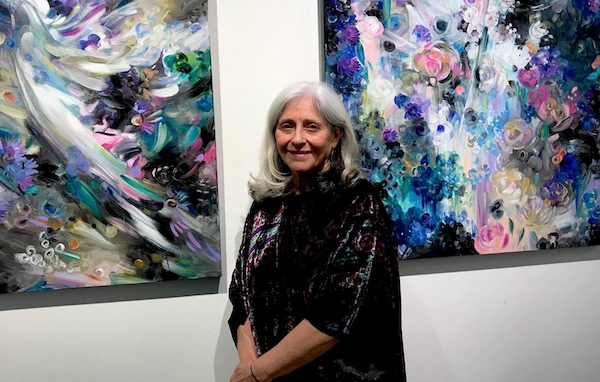
Linda Frimer’s exhibit, Beckoned by the Light, runs until Feb. 23 at the Zack Gallery. (photo from Linda Frimer)

“Since I was a child, I’ve always looked for the light – in the forest near my home and in the stories of my family. All the paintings in my show were inspired by light, the light of creation,” said Linda Frimer.

The exhibit, Beckoned by the Light, opened at the Zack Gallery on Jan 30. Originally, Frimer thought that her show would open simultaneously with the launch of her upcoming book, Connecting the Dots, and this is why the gallery exhibit opened in conjunction with the Cherie Smith JCC Jewish Book Festival. But life interfered, and the book is still a work-in-progress. Nevertheless, Frimer told the Independent, “I decided to go ahead with the show.”

Frimer’s paintings are beautiful, suffused with light. They are closer to impressionism than to realism, but every piece is unmistakably and uniquely hers. Light bathes the trees and the streams. It filters among the branches. It soars on dove’s wings over brilliant abstractions and illuminates mysterious paths winding through the woods. Light bursts into explosions of gladness and swirls like dancing fairies, inviting gallery visitors to share the luminous joy, to rejoice in the rainbow of colours.

“When I paint, I want to be positive,” the artist said. “Life is hard. That’s why I want joy in my paintings.”

To express her joy, Frimer uses bright colours, including gold and silver. “Gold and silver are great for all the recurring symbols in my paintings,” she explained. “One of my favourite symbols is wings – wings of the birds, like a dove, which is a metaphor for light.”

Another symbol that appears frequently is a tree. “Trees have wings, too. Sure, they are rooted in earth, but they reach for the sky, for the light,” Frimer said.

One more symbol populates many of her paintings – a flower, specifically a sunflower, which always strives to stretch higher, to touch the sun.

And then there are paths, roads to the light. Or to a better place. Or to someone you love. “I love people,” she said. “Love being a member of a group. I’m a member of several different groups.”

One of her groups – with five artist friends – attended her opening night and brought a gift: a wooden staff adorned with symbols of her art. Each object that was attached to the staff was created by a member of the group.

“We met through a project of the Hebrew University about 15 years ago,” Frimer said. “Now, we meet regularly, support each other in life and art. Whenever one of us has a show, the rest of us always make something symbolic for her.”

The group comprises Frimer, Nomi Kaplan, Lilian Broca, Barbara Heller, Sid Akselrod and Melenie Fleischer. “We call our group Five Hens and a Rooster,” Fleischer said with a laugh, as she presented the group’s gift to Frimer.

Music also plays a big part in Frimer’s artistic life. One could almost hear notes thrumming in her imagery. “I often listen to music when I paint,” she said. “I even dance sometimes. I love classical music, pop, all kinds, really.”

Frimer always starts a painting with an idea, but then her imagination takes over. “I follow my intuition,” she said. “Painting is a spiritual act for me. It’s like meditation. I love the process, the magic of creating. It’s wonderful to be able to express all that positive energy.”

In her opinion, everyone is an artist. Not necessarily a visual artist, but we all create in our own way. “It’s about how you feel, how you express yourself,” she said. “The process is much more important than the end result. I taught art a lot and I facilitated several healing artistic projects. It is great when I can help people tell their stories through creativity.”

Her new book is about that, too. “It’s my life story through art,” she said. “There are also creative exercises there, and some essays about different aspects of creativity. It’s about the healing power of the arts.”

Many of Frimer’s canvasses are large, expensive, fit for corporate headquarters or ballrooms, but the artist wants more than to sell her paintings for profit. “I believe in art reaching the public, being accessible. That’s why I make reproductions of my own work,” she said. “I make posters and giclée prints in different sizes. While my original paintings might not be affordable to many, anyone can afford a small print or appreciate a poster.”

In the same spirit, she often makes donations of her art to hospitals and synagogues. “When a painting hangs in a hospital,” she said, “I hope it might make someone feel better, help with their healing. In a synagogue, I hope my paintings might inspire and support. I studied colours and how they could aid in healing a body or a spirit. I even wrote about it in my book.”

Frimer’s bright paintings are permeated with hope and energy. They are celebrations of possibilities, as if the artist sees everything through the lens of optimism. And she shares that optimism freely with all of us.

Beckoned by the Light runs until Feb 23. For more information on Frimer and her work, visit lindafrimer.ca.

Olga Livshin is a Vancouver freelance writer. She can be reached at [email protected].

Format ImagePosted on February 7, 2020February 6, 2020Author Olga LivshinCategories Visual ArtsTags art, Beckoned by the Light, Linda Frimer, painting, tikkun olam, Zack Gallery

Loss-loss only solution

The parallels between the Trump impeachment trial in the U.S. Senate and the release of the Trump administration’s Israeli-Palestinian peace plan are striking. Donald Trump, a master of diversion, unveiled his incendiary proposal for the Mideast at the height of the Senate’s process. Just as the impeachment trial was, in some senses, a process whose outcome was predetermined by the Republican majority, so too is the Mideast proposal outcome predetermined in that it barrels over the Palestinian opposition and rubber-stamps almost everything the more extreme elements of the Israeli body politic have long demanded.

The approach is counterintuitive – like almost everything this U.S. president has done. Supporters might contend that, since all the rational thinking of the best diplomatic minds has not resolved this problem, a 180-degree turn that electroshocks the status quo might be better than nothing. The proposal is so one-sided that, out of sheer outrage, it has at least forced the Palestinian leadership to articulate what they will (or, rather, won’t) accept to a degree greater than they have expressed in recent years.

In the end, though, this emphasis on winning and losing – the Trump plan would be a clear win for Israel and a commensurate loss for Palestinians – is precisely the wrong approach. We may believe that the Palestinian leadership has betrayed their people by rejecting previous offers of coexistence, and conclude that what their people get is what their leaders deserve. But the Palestinian people deserve better than this.

Israel and the Zionist project have always had to contend with the realities and vagaries of coexistence – what other choice do Jews really have? Despite early warnings, coexistence with their neighbours was a widespread expectation among the early Zionists, some of whom thought (naïvely, in retrospect) that they would be welcomed with open arms by the other peoples in the region. But, even with the history of conflict and the absence of anything to give us a great deal of hope, some slow evolution that leads toward coexistence is the only realistic alternative to the status quo of suspended violence and intermittent war.

We need to recognize, above all, that a lasting resolution is not going to look like a win for one side and a loss for the other. Likewise, it is not going to resemble a win-win, as negotiators in various arenas, as well as salespeople, like to say. It will be a lose-lose proposition. An enduring peace and coexistence will almost certainly occur only when both sides are willing to accept a loss on many or most of their key demands – and accept that loss as a price for their children’s lives and well-being.

More immediately, we should be very wary of any master plan for peace that is scribbled out in the middle of an election campaign or another drama like an impeachment. The contents of such a plan are almost certainly more geared to the outcome it is trying to influence (votes for Likud or the Republican Party) or distract from (the U.S. president’s impeachment and trial or the Israeli prime minister’s loss of immunity from prosecution) than the problem it is ostensibly meant to address. Israelis and Palestinians, both, deserve self-determination and lasting peace.

Posted on February 7, 2020February 6, 2020Author The Editorial BoardCategories From the JITags impeachment, Israel, Israeli-Palestinian conflict, peace, Trump, United States
The comics rise again on Feb. 20

The comics rise again on Feb. 20

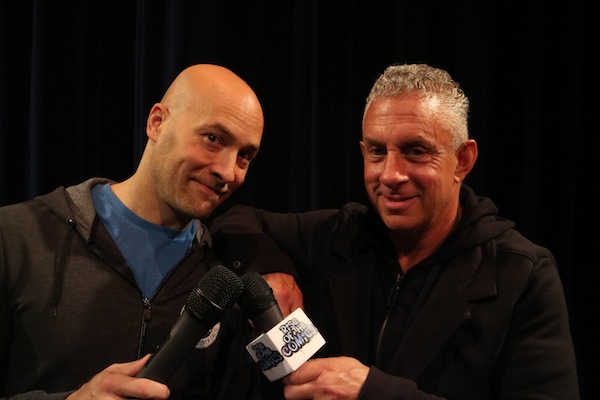
Kyle Berger, left, and Scotty Aceman, co-producers of Rise of the Comics. (photo from Rise of the Comics)

The outer limits of the laugh-o-meter will be tested on Feb. 20 at the Jewish Community Centre of Greater Vancouver’s Rothstein Theatre, when a group of Canada’s top funny people step on stage for A Night of Shticks & Giggles, presented by local comedy producer Rise of the Comics. This will be the third Shticks and Giggles show to raise money for the JCC Maccabi Games.

Headlining the event is Julie Kim, a two-time Canadian Comedy Award nominee for stand-up, who has performed at comedy festivals around the continent and appeared on CBC’s The Debaters and Laugh Out Loud. Her YouTube videos have amassed millions of views and, in 2018, she released her debut comedy album, Outside Voice.

Among other topics, Kim’s routine delves into modern parenting and various cultural issues, sometimes involving life seen from an Asian perspective. Yuk Yuk’s comedy club co-founder Mark Breslin called her “smart, funny, with enough self-awareness to deconstruct her life in a very sophisticated way.”

Other acts in the show, which Rise of the Comics describes as its “best line-up to date,” include Robert Peng, who bills himself as “an unemployed engineer who turned to stand-up comedy out of desperation”; New Zealander Sophia Johnson, “the one who keyed your car but probably shouldn’t have told you that”; Sean McDonnell, who Canadian comedy star Norm MacDonald has praised as “a fantastic talent”; and Brett Nikolic, a maven on Mountain Dew-flavoured weed.

Rise of the Comics is the brainchild of Vancouver stand-up comedian Scotty Aceman, who will also be on stage at Shticks & Giggles. Starting off as a weekly 30-minute program on Shaw Cable with the same name in 2015, the show has highlighted the work of many stand-up comedians who got their start on the local scene, such as Dino Archie and Ivan Decker, who has appeared on Late Night with Conan O’Brien.

Aceman, a University of British Columbia and B.C. Institute of Technology graduate, switched to comedy five years ago, after a 20-year stint in a sales job with Rogers in the corporate wireless phone department.

“Leaving the cellphone business after 20 years was a tough call,” he said. “But you have to chase your dreams. People would ask me, ‘What about my dignity and respect?’ I’d say dignity and respect went out the window the minute I had a Thursday morning bar mitzvah!”

In 2019, Aceman brought in Kyle Berger as co-producer of Rise of the Comics. Berger, sports coordinator at the JCCGV, will be the master of ceremonies for the Feb. 20 Shticks & Giggles.

Before joining the crew, Berger, in his role as JCC Maccabi Games delegation head, had hired Rise of the Comics for a fundraiser. He credits Aceman for allowing him to get his stand-up feet wet, with a debut performance at the Charqui Grill in Kitsilano in 2018.

“Stand-up was one of those things on my bucket list to do by the time I turned 40,” Berger told the Independent. “Scotty (and my then-girlfriend, now fiancée) were both big helpers in getting me up there on stage for a five-minute routine. My fiancée had had enough of me saying I was going to do it.”

Berger said, “Scotty’s reputation within the local comic community is a great asset. Nowadays, Rise of the Comics does all sorts of things, including parties in people’s living rooms. And, last year, we were hired by the Chutzpah! Festival to put on a show.”

Rise of the Comics currently works with a roster of more than 50 stand-up performers of all styles and experiences, and tailors its shows to any situation. They have created performances at such diverse venues as Hy’s Steak House, the Jericho Arts Centre and Ronald McDonald House, among others. Their gigs can cover everything from clean to dirty, social commentary to observational, but always, they say, with an emphasis on the funny.

Berger promises that he and fellow Shticks & Giggles comedians are likely to make mention, in one way or another, that their show is backed by the foundation created by Dr. Neil Pollock, a leading Vancouver male sexual health and circumcision expert, and his wife Michelle.

The show starts at 7:30 p.m. Tickets are $20 and can be purchased at m.bpt.me/event/4499277. For more information about Rise of the Comics, visit riseofthecomics.com.

Sam Margolis has written for the Globe and Mail, the National Post, UPI and MSNBC.

Format ImagePosted on February 7, 2020February 6, 2020Author Sam MargolisCategories Performing ArtsTags comedy, JCC, JCC Maccabi Games, Kyle Berger, Pollock, Rise of the Comics, Scotty Aceman, Shticks & Giggles, stand-up
Israel’s early days

Israel’s early days

Gloria Levi launches her most recent memoir at the Jewish Book Festival Feb. 12. (photo from Jewish Book Festival)

When local activist and writer Gloria Levi was a teenager, she was immersed in the Labour Zionist movement and “dreamed of becoming a pioneer in Israel.” In 1950, at age 19, she spent several months there. In 1957, with then-husband Norman (whom she had met on the previous trip) and two young children, she made aliyah. Her recently published memoir, Kissing An Old Dream Goodbye, honestly and succinctly relates what took her to Israel – and what brought her back just under two years later.

Levi launches her new book at the Cherie Smith JCC Jewish Book Festival on Feb. 12, 2 p.m., in the Waldman Library. Levi, who worked as a gerontologist for 30-plus years, has written a series of booklets, Challenges of Later Life, and co-wrote Dealing with Memory Changes as You Grow Older with Kathleen Gose. A lifelong student of Jewish texts and language, she translated The Life and Times of Simcha Bunim of P’shischa from Hebrew into English. She published her first memoir, My Dance with Schechina, in 2012.

Kissing An Old Dream Goodbye starts with Levi standing on the Marseilles pier, “impatient to set sail for Israel, the land of my dreams.” It was there that Norman noticed her, and the two became close over the subsequent months.

image - Kissing An Old Dream Goodbye book coverGrowing up in Brooklyn, Levi had just finished her first year at New York University – “Emotionally, socially and culturally, I was surrounded by Jews and rarely met non-Jews,” she writes. “I was fiercely independent and a bit of a rebel, and had a stormy relationship with my mother. My father had died when I was eleven. I paid my own way through university and had recently been living independently in Greenwich Village.”

Norman, then 23, had joined the British Army in 1944 and “had been with the British troops who liberated Buchenwald concentration camp. In 1947, he was “deployed to India during the bloody time of Partition.” He was traveling to Israel in 1950, intending to settle there.

While she stayed longer than the summer, Levi did return to the United States to finish her undergraduate degree, at the University of Iowa, “renowned for its child psychology department,” and Norman eventually returned to England. When a visit to Iowa City was about to extend past the deadline of his transit visa, the two decided to get married, as Levi’s career would have been jeopardized if they lived together without being married. “So much for romantic proposals!” writes Levi.

The couple ended up getting married in Canada, for various reasons, and then moved to Toronto, to Montreal and, finally, Vancouver. There, newlywed life was challenging, as they got to know each other, struggled with money and started their family. Levi writes with openness about the good and the difficult – a recurring theme is communication troubles between Norman and her. A prime example is that, when things finally began to look good for them, with secure jobs, a reasonable income, Norman suggested they move to Israel. Initially startled, Levi admits that she, too, still wanted to make aliyah, but “didn’t want to say much.”

They arrived in Israel, kids in tow, in late September 1957, heading to Kfar Daniel, a modified kibbutz. There, they adapted to yet another completely new way of life, making friends, learning the jobs they are given – Levi’s first work is cleaning outhouses – and figuring out how to live in a place with snakes, scorpions and other dangers, including possible imprisonment if you accidentally wandered into Jordan, and military service for Norman.

While they loved so many aspects of living in Israel – “the physicality of the land,” feeling like “a link to 2,000 years of history,” connecting “with the guttural, nuanced ancient mystical language of Hebrew” and feeling “that this truly was our home” – other parts of the experience, both on the kibbutz and in Akko, where they moved in 1959, were impossible to reconcile with their beliefs and moral code. Among Levi’s doubts about staying in Israel were “certain negative societal attitudes, my children’s potential education system, political injustices, corruption in the form of ‘protexia,’ and the top-heavy bureaucracy.” It is with regret and ambivalence, as well as some shame that they couldn’t make it work, that Levi and her family returned to Vancouver.

“I never felt concerned about going public,” she told the Independent of the personal nature of the book, “because I was describing my truth.”

And part of her truth is the love for the country that remains, despite the disillusion, especially regarding social justice – how kibbutz members interacted with one another at times, how citizens were treated by the state in certain instances and how Arabs were viewed. An epilogue takes readers briefly through Levi’s views of the political situation in 1964, 1967 and 2019.

“Given today’s controversies regarding Israel-Palestine, I wanted to describe the profound needs, emotions and idealism surrounding the early days of the state,” said Levi. “I wanted to convey my own journey of love and doubt, joy and conflict, idealism and human ego – the controversies inherent in communal living and the clashes of two peoples living and loving one land.”

In writing Kissing An Old Dream Goodbye, Levi said, “I hope I’m able convey the colour and beauty of the land, the strengths and limitations of people in an authentic, compassionate way.”

And Levi continues to write. Her current project is a novel called The Hotelkeeper’s Daughter, a “story about an immigrant Jewish religious family, taking place from 1938 to 1948,” she said. “It is the most exciting writing I’ve ever undertaken.”

For the book festival schedule, visit jewishbookfestival.ca.


Format ImagePosted on February 7, 2020February 6, 2020Author Cynthia RamsayCategories BooksTags aliyah, Cherie Smith JCC Jewish Book Festival, Gloria Levi, Israel, memoir
Loves making people laugh

Loves making people laugh

Esther Povitsky performs at the Biltmore Cabaret on Feb. 22 as part of JFL NorthWest. (photo from JFL NorthWest)

Chicago-born comedian, actor and writer Esther Povitsky is one of several Jewish community members performing in the Just for Laughs NorthWest comedy festival, which takes place around Metro Vancouver Feb. 13-25. Her credits include being co-creator and star of the show Alone Together, a recurring role on Crazy Ex-Girlfriend, parts on programs such as Brooklyn 99 and Parks and Recreation, stand-up on The Late Late Show and Comedy Central, as well as host of the podcast Glowing Up. The Jewish Independent spoke with her in advance of her Feb. 22 show at the Biltmore Cabaret.

JI: When did you first start doing stand-up and what motivated you to do it?

EP: I love comedy. I love watching it, I love laughing and making people laugh. I also liked the idea of being able to do something creative where I only relied on myself.

JI: Before you started stand-up, what were you working toward education- or career-wise?

EP: I thought I was going to be a professional dancer, and majored in dance in college.

JI: What is it about performing that you most enjoy, in stand-up and in acting?

EP: Having an excuse to drink too much coffee.

JI: When did you move to Los Angeles, and was it for a specific job or more opportunity for work in general?

EP: I did not have any specific jobs lined up! I moved here to pursue stand-up and worked as a babysitter, worked at a gym, a juice bar, and other random gigs.

JI: You describe your stand-up as just being you. Being Jewish on your dad’s side, where/how/does Judaism, Jewish culture or community fit into that, or your comedy series?

EP: I feel that I was raised very culturally Jewish and it’s a big part of my personality and who I am.

JI: In an interview you talk positively about the immediacy of seeing what works and what doesn’t onstage. How do you handle the highs and lows of comedy?

EP: I try to keep busy, stay active, spend quality time with friends and family, do puzzles, watch TV. I try to really focus on doing as many “normal” things as possible.

Povitsky’s Vancouver show is 19+. For tickets and the JFL NorthWest lineup, visit jflnorthwest.com.

Format ImagePosted on February 7, 2020February 6, 2020Author Cynthia RamsayCategories Performing ArtsTags comedy, Esther Povitsky, JFL NorthWest, stand-up
Addiction a risk for all

Addiction a risk for all

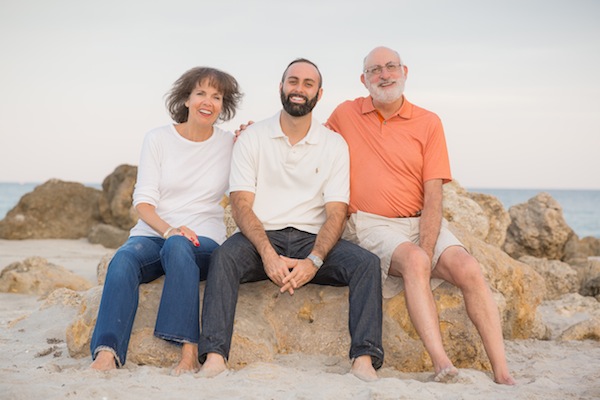
Left to right: Lisa, Jacob and Richard Hillman. (photo from Lisa Hillman)

“I had a fairly demanding and public position in the health system. I was president of our hospital foundation, had a very large board of about 25 people and a staff of about a dozen people. We were raising a lot of money to build a new hospital campus at the time, and so I was very public and very out and about. And, my fear was, as sick as it is to say today, that, if somebody would find out that my son had a drug problem, what would that say about me? What kind of mother could I be? What kind of person was I if I had a son who was using illicit drugs?” Lisa Hillman, author of Secret No More: A True Story of Hope for Parents with an Addicted Child, told the Independent.

“That was my feeling at the time,” she said. “I was not at all prepared to have addiction in my household. I was both ashamed and terrified at the same time.”

Hillman and her now-sober son, Jacob, shared their story at a Jewish Child and Family Service (JCFS) event at Congregation Shaarey Zedek in Winnipeg late last year.

Lisa and Richard raised their family in Annapolis, Md. Jacob was in high school when they found out he was using drugs. With almost 40 years of experience in the healthcare industry and being the healthcare decision-maker for the family, Lisa was determined to help Jacob overcome his addiction, while also keeping it a secret.

Like many others, however, she learned the hard way, after a couple of years, that this was not something she could fix. Although she held out hope that Jacob’s use of drugs was just a normal coming-of-age rite of passage, like trying cigarettes or alcohol, and that he would return to being the high-achieving person she knew him to be, that is not what happened.

“At first, we had him evaluated,” said Hillman. “I asked him if he would see a psychologist. He said ‘yes.’ He had bi-weekly meetings with a psychologist. At one point, my son gave me permission to talk to him – Jacob asked me, ‘If he tells you I’m alright, will you get off my back?’ And, I said, ‘sure.’

“This was when he was still in his senior year of high school. I visited with the psychologist, who said to me, ‘I told your son to smoke a little less.’”

Jacob was arrested during a holiday week after graduation, and the situation became more serious. As the family worked to get Jacob help, he resisted it, as addicts often do.

“The question I always get is, ‘How do you get them to accept treatment if they don’t want it?’” said Hillman. “I wish I had an answer for that. What we did with our son is finally say to him, ‘Jacob, you have a choice. You can continue to use, but you can’t live under our roof, or Dad and I will pay for inpatient treatment.’ Fortunately, he accepted inpatient treatment.

“Keep in mind, I’m very blessed,” she added. “I had some insurance and other resources. We were able to afford to send him someplace, which I know a lot of families can’t afford to do. I’m very, very lucky.”

The Hillmans found a place in Maryland, because Jacob did not want to leave the state. The place seemed to be very lovely and spiritual. They were hopeful he would get better there. But, after 12 days, the Hillmans visited their son and Lisa knew he had been using. Sure enough, the next day, Jacob’s counselor asked them to come pick Jacob up, that Jacob could no longer stay there.

“We brought him home to Annapolis,” Lisa Hillman said. “He entered the addiction treatment centre inpatient [program] that is part of my health system, where I was then and am still today, on the board. So, my drive for anonymity in this situation was about to crumble. The counselor my son was seeing said to me, ‘You have to tell somebody at work.’ So, I told my boss, the CEO of the hospital, and he was very empathetic and extremely understanding.”

Jacob went in for two weeks, after which the counselors suggested the Hillmans allow him to go to Florida for continued treatment, where he could live in a sober living house and continue to get outpatient treatment.

“The day he left, the counselor said to me, ‘Your son is going to have his program. What are you going to do for yourself?’” said Hillman. “My immediate reaction was that the counselor must have had 10 hits too many, because I didn’t have an addiction. I wasn’t the sick one, my son was the sick one. And yet, I realized I was crying all the time, I was obsessed with where he was and I couldn’t go to sleep at night until I knew he was home.

“I was isolated, I was depressed,” she said. “I wasn’t sharing anything with family and friends. So, I tried Al-Anon. And, from my very first time, I realized I’d [found] a home. These people understood me and were going through the same thing. I wasn’t alone anymore. I had people around me who got it and who were going through the same thing. Meanwhile, my son was in Florida and was getting better.”

Midway through that first year, Jacob had a minor relapse and told his parents about it over the phone. In that conversation, his mother said to him, “Jacob, we love you. Thank you for being honest and telling us. Please take care of yourself. You’re the only one who can.’ And Jacob replied, “Mom, thank you. That’s exactly what I needed to hear.”

Hillman recalled, “Pre-Al-Anon, I would have been on the phone screaming at him, angry. Fast-forward another six months, and he has another much more serious situation. We were told, ‘Your son needs detox.’ He was using heroin IV, a horrible scenario. So, we were asked to pay for a third inpatient treatment centre.

“I remember clearly asking the counselor, ‘How many times do we have to pay for this?’ And he said, ‘Tell your son that this is the last time.’ So, we did and, at the time, we did mean it, really. This was the last time we’d pay for him to have inpatient treatment.”

Although Hillman cannot say for sure that this ultimatum is what did it, Jacob stayed there for 100 days. After that, he moved, got a job and stayed for six months in a sober house. He kept the job for several years and eventually moved into an apartment. He has been active in AA ever since and has been clean for almost eight years.

Hillman has continued going to Al-Anon. She asked her husband to come with her and try it out at least once. They went to a different meeting than she had been going to. “We walked into the room and there were two couples who we know really well,” she said. “Both of them had children with similar problems and we had no idea. We’ve been going to that same meeting now for almost nine years, every Thursday night.

“That first meeting was a huge relief,” she said. “I couldn’t speak at the first meeting. I couldn’t open my mouth, with lips quivering as I cried. They let me cry. Other people at that meeting cried. And I heard a phrase that night, that I think really guided me: ‘Detach with love’ – meaning you have permission to detach from your loved one’s problems, that you’re not responsible for them, that you can’t fix their problems, but that you still love them.”

Hillman realized, over time, that Jacob would have to find his own way and that she couldn’t enable him by sending money or paying for things for him. “But, we never stopped loving him the whole way, the whole time,” she said.

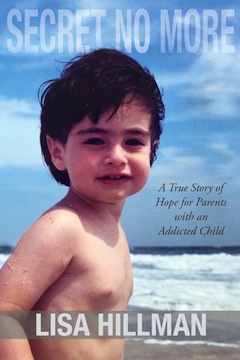
image - Secret No More book coverAs she healed, Hillman felt the desire to write a book about her experiences. She asked her son for permission to publish it.

“The reason for writing it was, I knew there were other families in hiding and ashamed, and that shame and fear just makes it worse,” she said. “It makes it worse for you if you love someone in addiction, and it doesn’t help the person with addiction. The whole purpose in writing this was to help particularly other moms and dads and sisters and brothers and boyfriends and aunts and uncles and grandfathers who I knew were sort of in hiding and had secrets and weren’t sharing – giving them hope that they can do it, too.

“Don’t hide,” she stressed. “Find professional help for yourself. My message is not to those with addiction, it’s to those who love people with addiction. My son says, ‘Mom, remind people that this is your story. Not mine.’

“If you have somebody in your life that is using or drinking, please go get help for yourself,” she said. “If one person in the family can get healthy and understand addiction, boundaries, and how to take care of themselves, then it will affect the rest of the family.

“That’s what happened in our family. I got stronger, my husband got stronger. Jacob saw that we were trying to understand him, that we were trying to get ourselves right again. He was getting better and we had a common language.”

Hillman said, “I think people who recover from an addiction and somehow live every day clean and healthy, year after year after year, to me, they are the most amazing, profound people. My son has become just an astonishingly profound young man and I’m very, very proud of him.

“I think that Judaism hasn’t helped us here today,” she added. “I think it’s getting better, but, looking back on it, part of my shame was that this doesn’t happen to Jews. We’re smart, educated, driven, are achievers, we don’t have addiction – but that’s not true.”

The Nov. 25 event with the Hillmans was sponsored by the JCFS and Gray Academy of Jewish Education. Panelists included an addictions physician, a therapist and an Addictions Foundation of Manitoba consultant on youth.

“Recovery is individual. There is no single treatment that works for everyone. There is no easy fix, like there is no single cause. It’s a combination of factors,” said Ivy Kopstein of the JCFS. “As a community, we need to end stigma and judgment, and replace it with compassion and understanding so we have no need for secrets anymore.”

Rebeca Kuropatwa is a Winnipeg freelance writer.

Format ImagePosted on February 7, 2020February 6, 2020Author Rebeca KuropatwaCategories NationalTags addiction, health, JCFS, Lisa Hillman, Winnipeg
Shluchim gather in N.Y.

Shluchim gather in N.Y.

The 2019 “class photo” of Chabad shluchim who attended the Kinus Hashluchim in New York. Among the 4,000 Chabad emissaries attending were 14 from British Columbia. (photo from Chabad-Lubavitch)

Fourteen B.C. Chabad emissaries (shluchim), including one from Victoria and one from Nanaimo, recently converged on New York City for the annual five-day International Conference of Chabad-Lubavitch Emissaries (Kinus Hashluchim), which brings together shluchim from more than 100 countries around the world and other Jewish communal leaders, almost 6,000 people.

The Kinus Hashluchim reflects directly on the influence of the Rebbe, Rabbi Menachem Mendel Schneerson, z”l, leader of the Chabad movement, who, decades ago began sending young Chabad couples to far-flung corners of the world to serve and, in some cases, build Jewish communities. The shluchim, or Rebbe’s Army, now comprises 5,000 Chabad couples worldwide. The newest shluchim just established a Chabad centre in Kigali, Rwanda; one in Myanmar; and one on the Caribbean island of Turks and Caicos.

The November Kinus conference focused on the work that has been accomplished. “It’s an opportunity for shluchim to share the various challenges they encounter and the countless accomplishments they achieve. We get a chance to share ideas, inspiration and guidance not only from the Rebbe’s teachings, but from each other. And these enable us to go home spiritually refreshed and ready to implement new things,” said Rabbi Yechiel Baitelman, director of Chabad Richmond. “We definitely gain strength from each other, and our challenge is to celebrate and share Judaism with joy, and to continue optimistically and positively empowering Jews around us.”

During the five-day gathering, the shluchim participated in seminars and workshops on combating antisemitism, inspiring pride in the Jewish people, and much more. They also engaged in study, prayer and celebrations, including a gala dinner. The spiritual high point took place on the Friday, Nov. 22, when shluchim visited the Ohel, the Rebbe’s resting place. Thousands of emissaries waited in line to deliver handwritten notes and prayers to the grave.

“It’s an opportunity for us to rededicate ourselves to the Rebbe’s spiritual and social vision for the world,” said Rabbi Yitzchak Wineberg, director of Chabad Lubavitch of British Columbia. On Shabbat, shluchim and lay leaders spent time learning and praying in Brooklyn’s Crown Heights neighbourhood, which houses the worldwide headquarters of the Chabad Lubavitch movement at 770 Eastern Parkway. They also took part in farbrengens (traditional Chassidic gatherings). On Sunday, the annual “class photo” of more than 4,000 shluchim took place at Chabad headquarters.

photo - Left to right, some of the B.C. rabbis who attended the conference: Rabbi Falik Shtroks (Chabad White Rock/Surrey), Rabbi Chalom Loeub (Chabad UBC), Rabbi Shmulik Yeshayahu (Community Kollel), Rabbi Yechiel Baitelman (Chabad Richmond); Rabbi Meir Kaplan (Chabad of Vancouver Island), Rabbi Bentzion Shemtov (Chabad Nanaimo) and Rabbi Binyomin Bitton (Chabad of Downtown Vancouver)
Left to right, some of the B.C. rabbis who attended the conference: Rabbi Falik Shtroks (Chabad White Rock/Surrey), Rabbi Chalom Loeub (Chabad UBC), Rabbi Shmulik Yeshayahu (Community Kollel), Rabbi Yechiel Baitelman (Chabad Richmond); Rabbi Meir Kaplan (Chabad of Vancouver Island), Rabbi Bentzion Shemtov (Chabad Nanaimo) and Rabbi Binyomin Bitton (Chabad of Downtown Vancouver). (photo from Chabad-Lubavitch)

The Sunday evening gala, which Baitelman described as “vibrating with uncontainable energy, renewed enthusiasm and an undeniable sense of mission,” was held at the New Jersey Convention and Exposition Centre. Emcee for the evening was Rabbi Moshe Kotlarsky, vice-chair of Merkos L’Inyonei Chinuch, the educational branch of the Chabad movement. He spoke of the challenges Chabad emissaries encounter in their work, and praised them for their enthusiastic and unflagging commitment to making a difference in the world.

The gala’s keynote address was given by U.S. Ambassador to Israel David Friedman. He related that he has been Torah study partners with a Chabad rabbi in Woodmere, N.Y., for more than two decades, and said that helped prepare him for his current role as ambassador to Israel.

Many of the gala’s speakers emphasized how shluchim are deeply connected to Jews in every part of the world, and that each individual Jew is important to them. Rabbi Yitzchak Schochet, a Chabad emissary from Mill Hill Synagogue in London, England, said: “Ask yourself, where would the world be today without the Rebbe’s vision? Who else goes looking for Jews all around the world, in every corner of the world?… What would have become of [Jews] were it not for the unconditional devotion of every shaliach and shalucha?”

The gala wrapped up with the annual “roll call,” at which Kotlarsky read out the names of the countries that have permanent shluchim. The evening ended with dancing and singing. For those who are interested, the banquet was livestreamed by chabad.org at tinyurl.com/twu2x7z.

In addition to Wineberg and Baitelman, the B.C. contingent of shluchim included Rabbi Avraham Feigelstock (Community Kollel), Rabbi Schneur Wineberg (Chabad East Vancouver), Rabbi Dovid Rosenfeld (Lubavitch BC), Rabbi Mendy Feigelstock (Kosher Check), Rabbi Levi Varnai (Chabad Richmond), Rabbi Binyomin Gordon (Kosher Check), Rabbi Falik Shtroks (Chabad White Rock/Surrey), Rabbi Chalom Loeub (Chabad UBC), Rabbi Shmulik Yeshayahu (Community Kollel), Rabbi Meir Kaplan (Chabad of Vancouver Island), Rabbi Bentzion Shemtov (Chabad Nanaimo) and Rabbi Binyomin Bitton (Chabad of Downtown Vancouver).

Format ImagePosted on February 7, 2020February 6, 2020Author Chabad LubavitchCategories WorldTags Chabad, Judaism, Kinus Hashluchim, Yechiel Baitelman, Yitzchak Wineberg

What is the worth of work?

Recently, I’ve had numerous encounters with middle-aged women. This isn’t strange. I’m talking to women who are a lot like me: dealing with school-aged kids, piano lessons, finding childcare, etc. What’s remarkable is that the same conversation pops up – about work.

One friend, an author and artist, said that she does the math every time she’s invited to do a workshop or a special event. Will the cost of travel, supplies and teaching preparation be worth the return? She’s often told, “Well, we can’t afford to pay you to teach” but, when she shows up for the single event she agreed to do for payment, what happens? People surround her, saying, “Well, if we’d only known you were coming, we would have paid for you to do a multi-day workshop!”

Another woman explained that she is only now, after years of staying at home, getting back to very part-time work in her field. Why? The cost of childcare would have canceled out anything she would have earned with part-time work.

Among women who juggle a full-time job with conventional hours, there’s an acknowledgement that it’s extremely hard to manage. In some cases, their partners step up to do the childrearing and run the household. In others, there are moms who are obligated to work full-time, be “on call” as the primary caretaker and either do, or hire someone to do, all the household chores. For many, this works because everyone’s healthy and they have support from extended family. In case of illness or lack of family support? Forget it. Of course, since these women do manage it, anyone who struggles is seen as “not as capable” as a woman who “has it all.”

This is a big topic, and it’s also (surprise!) a Jewish topic. We’ve been wrestling with it forever. In Exodus, the Israelites flee Egypt and slavery. Yet, in Exodus 14:12, the Israelites are afraid and they actually suggest to Moses that it would be better to return to Egypt and slavery (work without being paid) than to die in the wilderness. Lacking faith, they struggle with how they will be fed, and manna appears for them.

The first question is, what is the value of our work? For the Israelites, they were willing to live for nothing more than food and housing, as Egyptian slaves, rather than cope with being tossed out into the unknown. They didn’t value their work, and perhaps didn’t have the confidence that things could be different. Yet, when they take that risk, miraculously, their basic needs are met.

There are no guarantees. We can offer up our work for free – in whatever professional fields we’re qualified to do so – but there’s no surety that, at the end, we’ll have any offer of full-time, paying work. I see women doing this all around me. There’s an expectation that you’ll volunteer to offer your presentation, and you’ll also tack on free teaching, writing, editing, professional-level creative work or even childcare for others’ children. (Yes, I’ve been asked to do all these things for free.)

Here’s the second question. Is the Israelites’ manna in the desert the ancient equivalent of the “guaranteed minimum income” or “basic income” concept? At what point in modern society do we decide that everyone should get enough to eat? When is it acceptable to say, “Everyone should have a warm place to live, no matter what you earn or your special needs or other health challenges”?

In the Talmud, in Berachot 17a, the sages of Yavneh say that we are all G-d’s creatures, those who learn Torah in the city and those who labour in the fields. That both kinds of people rise early. Neither one is superior. Their work has equal merit as long as they “direct his heart towards Heaven.” This includes the idea that the labourer doesn’t presume to do the Torah scholar’s work and the scholar doesn’t presume to do the labourer’s. In this gendered ancient world, this leaves out women. Then Rav Hiyya acknowledges that women are offered “ease and confidence” because they do an enormous amount to sustain Jewish learning through raising their kids Jewishly and supporting their husbands who study Mishnah.

So, even in talmudic times, work was valuable and considered important, no matter what you did. Further, a woman who is doing “traditional” things like taking care of her children’s education or her husband is owed “ease and confidence” for her efforts.

Our work has meaning. It has important economic and social value. However, sometimes, when we compare our resumés, we feel lacking; certainly if we are being asked to do work for free. It turns out that we shouldn’t be expected to work for free, because our work, no matter what it is, is equivalent and necessary.

A more modern reminder: Martin Luther King, Jr., preached that all work is crucial and deserves fair pay. He supported the Memphis Sanitation Workers’ strike. To be healthy, we need trash collection. Garbage collectors matter.

There’s also no such thing as being out of the workforce. That dinner you cooked, the snow shoveled, the cleaning you did to keep someone healthy, the child you kept safe – according to the rabbis, if you do your work with the right intention, it’s all equally important.

I was recently invited by a favourite undergrad professor of mine to submit a short bio for the Cornell University Near Eastern studies department’s alumni page. I read some previous ones – doctors, rabbis, professors and others – and felt out of my league. Then I talked about it with my husband and thought about it. Being asked to share my work experience on that forum means, like the rabbis’ view of work, mine is valuable too – and so is yours.

Joanne Seiff has written regularly for CBC Manitoba and various Jewish publications. She is the author of three books, including From the Outside In: Jewish Post Columns 2015-2016, a collection of essays available for digital download or as a paperback from Amazon. Check her out on Instagram @yrnspinner or at joanneseiff.blogspot.com.

Posted on February 7, 2020February 6, 2020Author Joanne SeiffCategories Op-EdTags Judaism, lifestyle, Torah, women, work
הזוג המלכותי בבריטיש קולומביה

הזוג המלכותי בבריטיש קולומביה

הארי ומייגן התקשו להתמודד עם אור הזרקורים, מאז חתונתם המלכותית לפני כשנתיים. (Mark Jones)

הנסיך הבריטי לשעבר הארי עזב את בריטניה במהלך חודש ינואר ועלה על טיסה לוונקובר. כאן המתינה לו רעייתו ובנו ארצ’י. זאת אחרי הגירושים מתוקשרים מהארמון הבריטי. הדוכסים מסאסקס כבר לא מייצגים את הכתר הבריטי, אחרי שהחליטו לפתוח בחיים חדשים ועצמאיים במהלך שטלטל חזק את הממלכה. ארמון בקינגהאם הודיע כי השניים לא ישאו עוד בתארים המלכותיים שלהם.

הארי (בן השלושים וחמש) ומייגן (בת השלושים ושמונה) התקשו להתמודד עם אור הזרקורים, מאז חתונתם המלכותית לפני כשנתיים. כנראה גם שלא הסתדרו עם חלק מבני משפחת המלוכה. במסגרת פרישתם מתפקידיהם המלכותיים, הזוג לא יזכה עוד במימון ציבורי ולא ייצגו את המלכה אליזבת.

הנסיך לשעבר הארי, שמקומו היה השישי בתור לכתר הבריטי, נועד לפני שעזב את בריטניה לפגישה קצרה ולא רשמית (בת עשרים דקות לערך) עם ראש ממשלת הממלכה, בוריס ג’ונסון. ראש הממשלה אמר כי כל המדינה רוצה לאחל להם את הטוב ביותר. לפי הדיווחים בתקשורת המקומית, הארי דילג בהמשך על ארוחת ערב עם מנהיגים אפריקנים שביקרו בממלכה לרגל הפסגה, על מנת שלא למשוך את תשומת הלב מאחיו וויליאם, שאירח את האירוע. לא בטוח שהשניים מסתדרים.

משבר המייגזיט (על משקל ברקזיט) החל כשהזוג הכריז במפתיע בראשית בינואר, על כוונתו למצוא תפקיד פרוגרסיבי חדש ולחלק את זמנו בין הממלכה לצפון אמריקה, מבלי לעדכן את המלכה אליזבת ואת אביו של הארי, יורש העצר צ’ארלס. עם זאת, התפקיד המשולב שחיפשו שונה לחלוטין ממה שתואר בהכרזת הארמון משבת, שהתקבלה לאחר שיחות חירום בהשתתפות המלכה ויתר בני המשפחה הבכירים.

הזוג הסכימו לשלם בחזרה מכיסם כשניים וחצי מיליון פאונד מכספי המסים הבריטים, שהושקעו בשיפוץ מעונם בטירת ווינדזור. הם עדיין יכולים לשמור על החסויות המסחריות והאגודות הפרטיות שלהם, אבל עליהם לשמור על ערכי הארמון בכל הסכם מסחרי עתידי. לפי הערכה ההסכם עם בני הזג דווקא עשוי לחזק בסופו של דבר את הכתר ולשמש תבנית לבני מלוכה אחרים בעתיד.

למרות רצונם להתרחק מעין המצלמות, כלי התקשורת לא צפויים להניח לזוג המפורסם. אמצעי התקשורת פירסמו תמונות של מייגן מטיילת עם הנסיך ארצ’י ועם שני כלביה ליד רצועת החוף היפה בוונקובר.

ראש ממשלת קנדה, ג’סטין טרודו, אמר לפני מספר ימים כי טרם התקבלה החלטה, אם הממשלה תשתתף בעלויות של סידורי האבטחה של הנסיך הבריטי לשעבר הארי ואשתו מייגן מרקל. טרודו ציין כי איננו בטוח עדיין מה יהיו ההחלטות הסופיות, והיכן הזוג יגור. לדבריו אזרחי קנדה מתלהבים מאוד מהרעיון שהזוג המלכותי יגור במדינה, אולם יש עוד הרבה דיונים שצריך לקיים בנושא.

לפי דיווחים בכלי התקשורת בבריטניה קנדה תקצה כשבע מאות אלף דולר אלף דולר בשנה, לצורך כיסוי עלויות האבטחה של הדוכסים מסאסקס ובנם הנסיך ארצ’י. ואילו בתקשורת הקנדית העריכו כי העלות השנתית תהיה כמיליון וחצי דולר בשנה. באופן מסורתי, ממשלת קנדה מקצה כספים לצורכי אבטחתם של בני משפחת המלוכה שמגיעים לביקור במדינה. זאת כיוון שקנדה חברה בחבר העמים הבריטי, ובאופן פורמלי אליזבת היא ראש המדינה.

עד כה ידוע כי הזוג המלכותי שהסעיר את בריטניה ואת העולם כולו, כשהכריז על רצונו לצמצם את תפקידיו המלכותיים ולחלק את חייו בין צפון אמריקה לבריטניה, מעוניין לגור דווקא בקנדה. הבחירה תהיה קרוב לוודאי במחוז בריטיש קולומביה: בעיר ונקובר או אולי בבירת המחוז ויקטוריה שבאי ונקובר.

Format ImagePosted on February 6, 2020June 30, 2020Author Roni RachmaniCategories UncategorizedTags Harry and Meghan, royal family, Victoria, הארי ומייגן, ויקטוריה, משפחת המלוכה

Posts pagination

Previous page Page 1 … Page 278 Page 279 Page 280 … Page 664 Next page
Proudly powered by WordPress