Skip to content
  • Home
  • Subscribe / donate
  • Events calendar
  • News
    • Local
    • National
    • Israel
    • World
    • עניין בחדשות
      A roundup of news in Canada and further afield, in Hebrew.
  • Opinion
    • From the JI
    • Op-Ed
  • Arts & Culture
    • Performing Arts
    • Music
    • Books
    • Visual Arts
    • TV & Film
  • Life
    • Celebrating the Holidays
    • Travel
    • The Daily Snooze
      Cartoons by Jacob Samuel
    • Mystery Photo
      Help the JI and JMABC fill in the gaps in our archives.
  • Community Links
    • Organizations, Etc.
    • Other News Sources & Blogs
    • Business Directory
  • FAQ
  • JI Chai Celebration
  • JI@88! video

Recent Posts

  • Zionism wins big in Vegas
  • Different but connected
  • Survival not passive
  • Musical celebration of Israel
  • Shoppe celebrates 25 years
  • Human “book” event
  • Reclaiming Jewish stories
  • Bema presents Perseverance
  • CSS honours Bellas z”l
  • Sheba Promise here May 7
  • Reflections from Be’eri
  • New law a desecration
  • Resilient joy in tough times
  • Rescue dog brings joy
  • Art chosen for new museum
  • Reminder of hope, resilience
  • The national food of Israel?
  • Story of Israel’s north
  • Sheltering in train stations
  • Teach critical thinking
  • Learning to bridge divides
  • Supporting Iranian community
  • Art dismantles systems
  • Beth Tikvah celebrates 50th
  • What is Jewish music?
  • Celebrate joy of music
  • Women share experiences 
  • Raising funds for Survivors
  • Call for digital literacy
  • The hidden hand of hate
  • Tarot as spiritual ritual
  • Students create fancy meal
  • Encouraging young voices
  • Rose’s Angels delivers
  • Living life to its fullest
  • Drawing on his roots

Archives

Follow @JewishIndie
image - The CJN - Visit Us Banner - 300x600 - 101625

Desert not a wasteland

Desert not a wasteland

Monument Valley in Utah. (photo from CBC Radio)

Having always lived in and around rainforest, CBC Vancouver’s Matthew Lazin-Ryder said the desert is a place he still struggles to fully understand.

“The desert has always seemed to be an imaginary place,” said Lazin-Ryder, contributing producer of the radio-documentary What Happens in the Desert. “My only contact with the desert has been in movies, storybooks, religious metaphors and things like that. The closest I have ever gotten to the real desert is having spent a little time in New Mexico, but, even then, I don’t think I was in true, scientific desert. My impression of what the desert was in my imagination was different than reality.

“One thing I wasn’t prepared for in my time in New Mexico was how cold it got at night, because it can get really cold. The imaginary desert in my mind was always hot – nights are sweltering, empty spaces, desolation.”
photo - Matthew Lazin-Ryder, contributing producer of the CBC radio-documentary What Happens in the Desert
Matthew Lazin-Ryder, contributing producer of the CBC radio-documentary What Happens in the Desert. (photo from CBC Radio)

In the radio documentary, which is an episode of the CBC Radio show Ideas, Lazin-Ryder explores various perceptions of the desert, stemming from culture, such as movies, novels and poetry, which often only portray one aspect of the landscape.

“An example we use in the documentary is Monument Valley in Utah, which, if you’ve seen a western film, it’s in so many movies,” Lazin-Ryder, who is a member of the Jewish community, told the Independent. “So, Monument Valley is that part of Utah, with red sand and rock, with these big towers of rock jutting out of the middle of the desert. John Ford, legendary western director, shot over 10 movies there at Monument Valley and lots of other classic western movies have used the backdrop of this valley as the setting.”

However, while it may seem that many films are shot in Monument Valley, most are actually shot in less-known locations in states like Texas, California and Arizona.

“It’s never specifically that this movie or story is taking place in Monument Valley,” said Lazin-Ryder. “It just becomes a symbol of the desert, which is a stand-in for an alien place, an exotic place, a place that you’ve never been to.”

From a religious perspective, the experts Lazin-Ryder interviews often speak of duality, where the desert is both a place where God is absent and where God is felt the strongest.

“The desert, in the Old Testament, is a place of deep spirituality and is also, for the Israelites, the place where they encounter God, where God travels with them,” he explained. “In the Christian New Testament and Christian culture later on, the desert becomes a place, not of exile and separation from God, but a place you go to escape civilization and to connect with God. Simultaneously, it’s a place where there are dangers … and the devil lives there and there are poisonous creatures, and it’s a place of death, wasteland and absence of God. But, at the same time, the desert is the place, both for the Israelites and early Christians, a place to go to connect with God.

“In a sense,” he said, “the desert, through its absence, represents God, because you can’t fully describe God – you can’t fully describe absence. The desert represents this strange relationship that we have with God, in a religious metaphor – at the same time that God is everything, God is nothing, and indescribable.”

In the documentary, Lazin-Ryder talks about the way the desert is portrayed in science-related and apocalyptic movies – movies that portray the future world as a desert; that climate change, if it continues apace, will leave the whole earth a desert.

“The seas will dry up, the forests will die and everything will be desert waste … which is not particularly an ecologically valid prediction … but, it’s a helpful metaphor for people to think about the dangers of climate change,” he said.

“The other thing is that, when talking about climate change and things like switching to less carbon-intensive energy, the desert becomes a very easy thing for people to say … ‘Hey! You know what would be great? Let’s just put a whole bunch of solar panels and windmills and stuff in the desert, because that’s empty land and it gets a lot of sun.’ You can Google it – there are all kinds of plans that people have pushed, to put acres and acres of solar panels in the Mojave Desert, the Sonoran Desert or the Sahara Desert.

“It’s this kind of a science-fiction idea that, hey, we have these empty spaces on the earth – let’s absolutely fill them with solar panels and windmills. But, the problem with that is – it comes from this thinking about deserts as though they are empty, ownerless places, absent of life. And, the problem is that that’s not true. Deserts are full of life, of plants and of animals that have adapted in interesting ways. And, we also don’t quite understand the place that deserts have in the broader ecosystem, in terms of the carbon cycle.”

While we hear in the news about desertification, in actuality only some deserts may get bigger and others drier, he said. Very few reports talk about the fact that some deserts may get wetter and, in a sense, shrink.

Desert systems are intricate and delicate and we, as humans, often only notice a change when it is already too late. Lazin-Ryder gave the example of the Joshua trees in the Mojave Desert that are dying, and the efforts to preserve them.

“Those kinds of problems are expected to increase as climate change goes on,” he said. But, talking about the desert as merely land available to fix the problems that we have created, “neglects the fact that they are not absent, marginal places. They actually have a place in the world. Deserts are a natural thing that should exist on the earth,” he said. “And there will be increasing pressures to put things in the desert, to put people in the desert, to grow food in the desert – despite the fact that they are as important and as under threat as places like the rainforests and wetlands that we’re trying to preserve. So, on one hand, we’re afraid the future might become desert, but, on the other hand, we may want to think about how to preserve the deserts we already have, as there are many threats to the desert.”

Lazin-Ryder hopes listeners of the documentary will gain a better grasp of the nuances of the desert. For most people in the West, he said, “interaction with the desert is in an imaginary sense … either in religious texts, fiction or movies.” The show tries to get people to consider “what those metaphors and symbols do to our thinking – not just about the desert, but of all the natural world; in what places are worth preserving, celebrating, and what places we think of as marginal, empty, dead or inherently bad.

“We get lots of stories told to us all the time, about what parts of the earth are good or bad,” he said. “I think, ultimately, beyond whether we’re talking about deserts, dry land or wet land, my ultimate hope is that it helps people think about the stories that we tell ourselves about the natural world, versus trying to gain an understanding about how the natural world actually works.”

To listen to What Happens in the Desert, visit cbc.ca/radio/podcasts/documentaries/the-best-of-ideas.

Rebeca Kuropatwa is a Winnipeg freelance writer.
Format ImagePosted on February 28, 2020February 26, 2020Author Rebeca KuropatwaCategories NationalTags CBC Vancouver, desert, education, environment, Matthew Lazin-Ryder, Monument Valley, radio, science
Belief in God gives strength

Belief in God gives strength

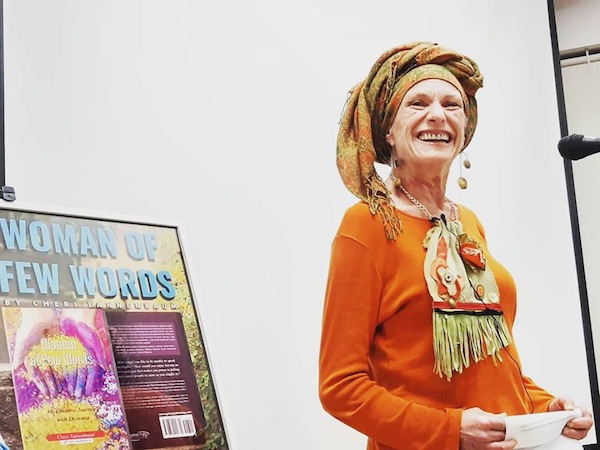
Author Cheri Tannenbaum gives a talk about her book, A Woman of Few Words. (photo from Gefen Publishing House)

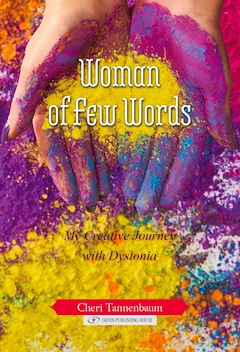
“Happiness is a choice,” writes Cheri Tannenbaum in her book Woman of Few Words: My Creative Journey with Dystonia (Gefen Publishing House, 2019).

No one would blame Tannenbaum for not being happy, for staying in bed, for giving up. But that’s not who she is. “From the first day of my illness to this very day,” she writes, “I wake up each morning, say Modeh Ani (the prayer said upon waking in the morning), push myself out of bed, and consciously and deliberately choose life.”

Born in Edmonton, Tannenbaum is the oldest child of Samuel (z”l) and Frances Belzberg; the family moved to Vancouver when she was 16. With refreshing honesty, Tannenbaum shares her struggles with anorexia, but also some of the ways in which she was a “happy, fun-loving, gregarious, outgoing flower child” when she was in her teens. She writes about how she became religious, and it is her strong belief in God that has buoyed her since she became ill with dystonia at the age of 20, the first sign of which was that her “handwriting suddenly became totally illegible.” As well, her voice became monotonic, and other symptoms appeared, including severe difficulties in walking and, eventually, speaking, a symptom that, very much later in life, was remedied, as the unexpected result of medication intended for another purpose.

Woman of Few Words details Tannenbaum’s life with dystonia, which, according to the Dystonia Medical Research Foundation, which was founded by her parents, “is characterized by involuntary muscle contractions and spasms.” She openly talks about the time she attempted suicide and the difficulties she had in having children. She offers thoughts on living with the illness and lessons she has learned, as well as several pages on dystonia and many inspirational quotes from various sources.

Tannenbaum has a bachelor’s in psychology and a master’s in human development. She has followed her passion – art – in more than one creative direction. She has a long-lasting marriage, three children, grandchildren, and family and friends who care about her, and she has lived in several places in the world, making her home in Efrat, Israel. As she writes, “Dystonia is not my essence, nor does it define me.” It does, however, present many challenges.

“If I didn’t have the belief that there is an all-loving, all-powerful G-d who runs the world and has a master plan, then all challenges are just random; things that happen are just occurrences coming from nowhere…. Most probably, those challenges would feel meaningless and purposeless,” she told the Independent.

image - Woman of Few Words book coverTannenbaum responds to every reader who sends her a note. “The notes I have gotten have been extremely positive, telling me how I have helped them or given them a different perspective, etc.”

She said, “If I were to have gotten only one response that I have touched one person’s soul then I have accomplished what I set out to do – baruch Hashem, I have gotten more than one.”

Tannenbaum’s mother shared some of the ways in which her daughter’s illness affected the family.

“Cheri’s illness was slow in showing itself so, at first, her tripping or falling or dropping things was almost a joke for her siblings,” said Belzberg, who has three other children. “I took her to our family doctor, who said it was just teen angst, then that it was physiological, so she saw a psychiatrist, who said she was fine, so back to the GP.

“As her condition became worse, I began shopping for different kinds of medical advice locally and even to Scripps Clinic in California, and still no answers.

“In the meantime,” said Belzberg, “Cheri met Harvey, married and moved to Los Angeles … and her condition worsened.”

Belzberg said it took almost five years for them to get a diagnosis and a name for her daughter’s condition: dystonia muscular deformans. “There were, at that time, three known patients,” said Belzberg. “Today, we have several hundred on this continent alone.”

With no known patients and no known treatment or cure, Belzberg said, “My husband mobilized with the help of two doctors from UCLA [University of California, Los Angeles], Dr. John Menkes and Dr. Charles Markham; we gathered about five or six known neurologists from across the U.S. and began to do research. Meetings were set up for every two weeks and both my husband and I monitored the meetings between the experts … with the whole purpose of finding everything there was to know about the disease and how to treat it.

“Word got out that this was being addressed and there was more interest from within the research community,” she said. “We got a grant from the NIH [National Institutes of Health], plus our own … financial support, to establish ourselves, and began a series of research conferences with different doctors with different specialties. That was almost 40 years ago and, this June, there will be the Samuel Belzberg 6th International Dystonia Symposium in Dublin, Ireland, the latest in our international annual meetings.

“Through our persistence, as parents, we have created an international research body with a large patient list and researchers waiting to have their grants financed,” said Belzberg. “We also – as parents and ones who are crucially and emotionally involved – started our own scientific board and monitored them ourselves. We set a precedent – no other research board that we know of allows lay people to actually participate, verbally, in the discussions as they ponder their findings.”

Belzberg noted that funding is always a concern because dystonia “is not a well-known disease or a recognizable name, though we fall in the category of MS [multiple sclerosis] and Parkinson’s.”

Asked what advice she would have for a parent of a child with a chronic illness, Belzberg said, “Every family has to deal with their own crises emotionally, spiritually, within their own strengths, and persist in finding answers. Chronic illnesses can be very wearing both for the patient and the family, so it takes a great deal of tolerance and understanding on the part of each to make it through the day.”

For someone who just found out they have a chronic illness, Tannenbaum said, “I would first give them a big hug and sit with them, hold their hands and just listen to them vent – how they feel about the diagnosis, their anger, their fear, their hopelessness, their ‘why me?’

“When they would be ready to hear me, I would tell them that there is a G-d, master of the universe, who loves you more than anyone else loves you in the whole wide world. Everything G-d does is for the good, even though I know it doesn’t feel that way right now. This is a test that G-d knows you can pass; otherwise, He wouldn’t have given it to you…. This is an opportunity for you to grow and to bring out your hidden potential and strengths that you never knew existed within you. Through this test, you can create miracles. Through this test, you can bring good and G-d into the world. Depending on your attitude and perspective, you will be able to help and change other people’s lives. This test is bringing you farther along to fulfilling the potential that only you can do.”

Format ImagePosted on February 28, 2020February 26, 2020Author Cynthia RamsayCategories BooksTags Cheri Tannenbaum, chronic illness, dystonia, Frances Belzberg, health care, Judaism, lifestyle, memoir
Life with inherited trauma

Life with inherited trauma

Dr. Gita Arian Baack, author of The Inheritors: Moving Forward from Generational Trauma. (photo from Gita Arian Baack)

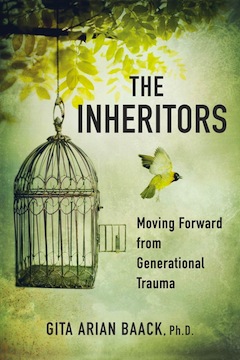
Dr. Gita Arian Baack, author of The Inheritors: Moving Forward from Generational Trauma, was in town earlier this month to speak at the Cherie Smith JCC Jewish Book Festival and hold a three-day experiential workshop with the Second Generation Group in Vancouver.

The Ottawa-based counselor began her festival presentation with a quote from the late Israeli novelist Amos Oz, who wrote, “Our past belongs to us, but we do not belong to it.” For Baack, the quote underscores her message to inheritors of the Shoah – that “we were given life and an obligation to bear witness and honour the martyrs and heroes of the Holocaust. And that we also have the right to live full and joyful lives.”

“Generational trauma stems from devastating events which transpired before we were born,” Baack told the Independent. “In the case of the Holocaust, we have experienced it from birth; it is as if we were there. We carry an unrelenting sadness, sense of absence and betrayal.”

The ultimate question her book explores is: “How can we live a full life despite the difficult trauma we inherited?”

Prior to writing The Inheritors, Baack conducted doctoral research into the subject of intergenerational trauma and resilience, yet what she uncovered did not fit or go deeply enough into either. Often, resilience is described as bouncing back with support from others. But, she said, “You don’t bounce back from the Holocaust!”

She was resolved to unravel answers to these and other questions, such as why are so many of us resilient and compassionate despite our inherited trauma? Do we carry memory from one generation to another? How do we move forward, when the usual therapies for trauma have proven not to work for us?

“We are also faced with the difficulty of piecing together our family stories,” said Baack. “Much of our family stories are full of holes, unknowns and even secrets, our roots destroyed. Understandably, we have strong emotions but don’t know how to deal with them; for example, excessive sadness, fear of authority, worry, lack of trust, lack of safety, etc.”

Further, inherited trauma is often frozen, embedded in the brain stem, also known as the primitive brain – accessing it is difficult, but it can be done, she said.

Baack noted that ancient wisdom, the Bible and new epigenetic scientific research explain that trauma is passed onto generations in the DNA, and even the cells, for as many as seven generations. She strongly believes that this is the case if it is acknowledged and processed; if it is not, then it can take longer than seven generations.

image - The Inheritors book coverThough Baack’s own experience is being a child of Holocaust survivors, The Inheritors encompasses others who have been victimized: Canada’s indigenous population, survivors of the Rwandan genocide and of several other horrible episodes of recent history. The book also looks at trauma on a personal level, from those who have suffered as a result of natural disaster, an accident, economic hardship, the justice or education system, illness or loss of a loved one.

The intent of The Inheritors is to serve as a tool for moving forward, said Baack. The book is filled with dialogues, poetry and stories from people of different backgrounds. Readers are invited to explore their story, and there are questions at the end of each chapter to help them process that story and, in so doing, transform their pain. At the least, in the end, they will have a written story as a legacy to their descendants.

The Inheritors has had other, unexpected, impacts. For example, the conductor of the North Carolina State University orchestra commissioned composer and flutist Allison Loggins-Hull to write a piece for an upcoming performance and she has chosen to write a work inspired by the book – Inheritors Overture will première on April 5 in Raleigh, N.C.

The group dialogues that Baack conducts offer a means of validation through other people with similar experiences and various experiential tools that can help further a deeper exploration of their trauma stories, the “undiscussables” and the unknowns. Group participants, she said, are often surprised by the creativity, laughter and camaraderie that arise.

The Inheritors is dedicated to (and inspired by) Baack’s two half-siblings. “From my earliest beginnings, I remember carrying a great sadness for my siblings, Henush and Halina Arian, who were only 4 and 3 years old, respectively, when they were killed,” she writes. There was no information about the circumstances of their death or burials, “But their existence was real and has mattered to me in an extraordinary way. And so I don’t fight the sadness; I embrace it. It has a special place. I am the carrier of their memory. This burden is the most cherished of all my burdens.”

At the age of 4 or 5, Baack had what she describes as a “knowing” or “inherited memory.” A “felt sense” told her, even at that young age, that her siblings, two of 1.5 million children killed by the Nazis, had both been shot in the back. When she asked her father how her half-siblings died, he said he didn’t know. Nonetheless, the memory (and feeling) she had inherited persisted, and could be placed on a spot in the middle of her back, with a knowing that her half siblings had been shot in that place.

Her research revealed that the timing of their deaths was before gas chambers had been built, and children under 5 were regularly shot. In 2019, a tour guide in Krakow pointed to the very street where the children and their mother were shot. To Baack, it was a stunning confirmation of her lifelong memory.

Baack has been consulting and coaching individuals and organizations for more than 30 years. She recently founded the Centre for Transformational Dialogue to help individuals and communities that have inherited devastating legacies. She also has written a book of verse, Poems of Angst and Awe, published in 2017.

For more information, visit gitabaack.com. Baack continues to research inherited memory and wishes to hear from others on the subject. She can be reached at [email protected].

Sam Margolis has written for the Globe and Mail, the National Post, UPI and MSNBC.

Format ImagePosted on February 28, 2020February 26, 2020Author Sam MargolisCategories BooksTags genocide, Gita Arian Baack, health care, Holocaust, intergenerational trauma, mental health, second generation
Most volunteer angels

Most volunteer angels

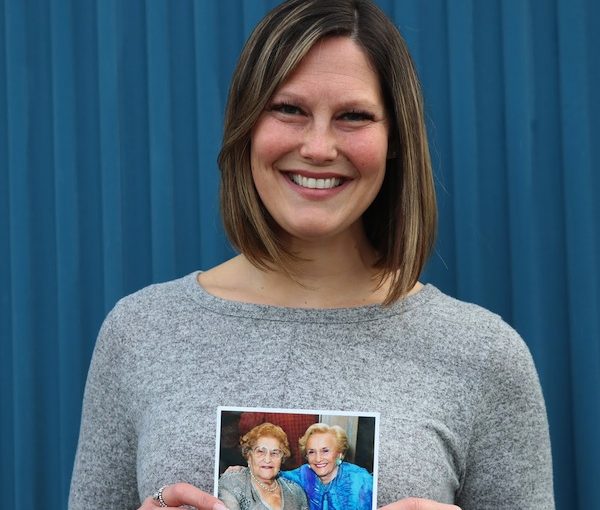
Courtney Cohen holds a photo of her grandmothers, Rose Lewin, left, and Babs Cohen. (photo by Lianne Cohen Photography)

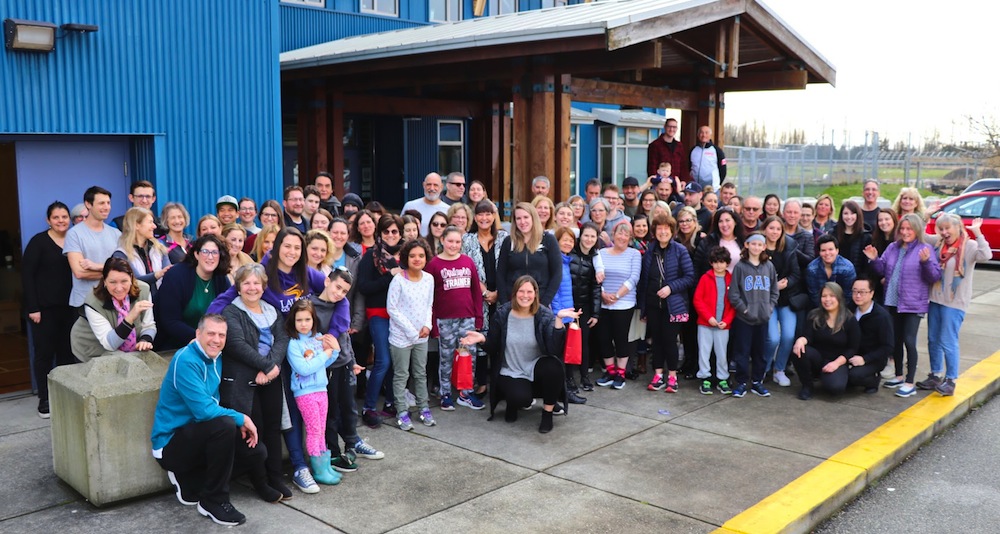
The seventh annual Rose’s Angels took place at Richmond Jewish Day School on Feb. 16. Held under the umbrella of the Kehila Society of Richmond, the event was founded by Courtney Cohen and Lynne Fader in 2013, in memory of Cohen’s grandmothers, Rose Lewin, who was a Holocaust survivor, and Babs Cohen. This year’s gathering saw the largest turnout for volunteers, with approximately 80 family, friends and community members coming together to assemble more than 1,000 care packages and several hundred warmth bundles, which were delivered to partner agencies.

A total of 24 not-for-profit agencies receive the care packages for their clients. Participating agencies included, but were not limited to, Richmond Family Place, Chimo Community Services, Jewish Family Services, Richmond Food Bank, Richmond Centre for Disability, Heart of Richmond AIDS Society, RainCity Housing, Richmond Multicultural Community Services and Gilmore Park United Church.

photo - More than 1,000 care packages were packaged on Feb. 16
More than 1,000 care packages were packaged on Feb. 16. (photo by Lianne Cohen Photography)

The packages consisted of toiletries, such as shampoo, soap and toothbrush; feminine hygiene products, including tampons, hair accessories, nail file and makeup; books, note pads, and arts and craft supplies; non-perishable food items, such as juice, oatmeal, granola bars, soup, coffee packets, trail mix and chocolate; and socks, gloves and scarves.

The items included in the packages were tailored to meet the needs of the recipients, as Fader and Cohen asked the agencies involved to survey their clients as to what items they would like to receive. The feminine hygiene and makeup products are donated via the Beauty for Babs component of Rose’s Angels, said Cohen.

“This event would not be possible,” she said, “if it wasn’t for our incredible donors and volunteers, who allow this event to be successful year after year. Individuals and businesses donate to Rose’s Angels through the Kehila Society of Richmond.”

photo - Volunteers at this year’s Rose’s Angels, which took place on Feb. 16 at Richmond Jewish Day School
Volunteers at this year’s Rose’s Angels, which took place on Feb. 16 at Richmond Jewish Day School. (photo by Lianne Cohen Photography)

She added, “People want to volunteer in their community and, sometimes, they don’t have the resources or connections that allow them to carry out their desire to give back. Rose’s Angels has grown into a strong pillar event in our community and it’s wonderful to see volunteers of all ages coming together to assemble care packages for those who they will never meet. It’s inspirational.”

Rose’s Angels takes place in February because, said Cohen, February is a special month – it’s Heart Month, Valentine’s Day and the month of her grandmother Rose Lewin’s birthday. Since its inception in 2013, the annual event has created and donated more than 5,000 care packages Richmond-wide, she said.

For more information about Rose’s Angels or to make a donation, contact Cohen or Fader at the Kehila Society of Richmond, 604-241-9270, or [email protected]. For more information about the Kehila Society, visit kehilasociety.org.


Format ImagePosted on February 28, 2020February 26, 2020Author Rose’s AngelsCategories LocalTags Courtney Cohen, Kehila Society, Lynne Fader, Richmond, RJDS, Rose’s Angels, tikkun olam, volunteerism
Goldstein’s Snapshots in Montreal

Goldstein’s Snapshots in Montreal

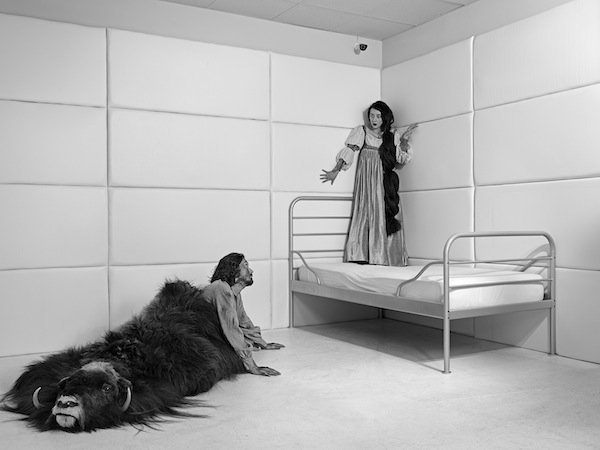
Part of Dina Goldstein’s 11-photograph series Snapshots from the Garden of Eden is “Princess in the Tower” (2017). (image © Dina Goldstein)

On Feb. 20, Vancouver-based artist Dina Goldstein’s Snapshots from the Garden of Eden opened at the Museum of Jewish Montreal (imjm.ca). The exhibit will be on display until May 17.

A collection of 11 large-scale black-and-white photographs, Snapshots re-imagines modernized versions of characters and passages from Jewish fairytales, folk stories and legends collected in the book Leaves from the Garden of Eden by award-winning folklorist Howard Schwartz. Drawn from Jewish oral and written traditions across the centuries, the stories span the Jewish world – from Italy to Afghanistan – bringing to life the diversity and vibrancy of this overlooked area of Jewish storytelling and heritage.

Renowned for her reinterpretations of cultural symbols, Goldstein’s Snapshots reframes Jewish lore both famed and forgotten through the eyes of the 21st century. “The resonance of Goldstein’s work stems from her ability to weave intricate visual narratives,” said curator Alyssa Stokvis-Hauer, “where the history of Jewish folklore is catapulted into the modern era with a cast of characters and film noir-esque scenes that are provocative, imaginative and layered with meaning.”

Playing with visual and narrative archetypes, Goldstein creates new connections and relevance by merging the traditional and whimsical with contemporary themes of technology, desire, justice and identity, exploring and reinvigorating the history and role of Jewish folk narratives in broader cultural memory.

Commissioned in 2017 by the Contemporary Jewish Museum in San Francisco for an exhibition on Schwartz’s Leaves from the Garden of Eden, Goldstein’s photographic series has already been exhibited across Europe and North America. (For more on Goldstein, see jewishindependent.ca/modern-ancient-jewish-tales and jewishindependent.ca/challenging-viewers-beliefs. Her website is dinagoldstein.com.)

Format ImagePosted on February 28, 2020February 26, 2020Author Museum of Jewish MontrealCategories Visual ArtsTags art, Dina Goldstein, folk tales, Howard Schwartz, Museum of Jewish Montreal, photography, Snapshots

Adding colour to our lives

Life is such an adventure, but its appeal for us depends so much on our attitude. One of the amazing things about this fact – that our attitude makes all the difference – is that this appears to be a law of nature. How we “reflect off” the events in our lives is crucial to our fate.

Most of us know a little bit about the nature of sight, the mechanics of seeing. We know less about the role played by light in our world. Light travels in units called photons. We know that these photons travel really fast, even when they have to bounce around in a world full of atoms to get where they are headed, which is everywhere. Photons travel so fast, we don’t notice that random atoms are impeding their progress a bit. In spite of that, they reflect off all the objects in our world and succeed in entering our eyes.

The lenses in our eyes focus this reflected light onto the light-sensitive rods and cones on the retina at the back of our eyeballs. (The rods work in dim or dark situations and the cones in bright light.) These create variable electrical charges sent along the optic nerve to the brain. Our brains interpret these stimuli as the visions that we see before our eyes. Did you know that the curvature of our eyes results in the images we receive being upside down? Our brains turn them right-side up for us.

What we are seeing is the reflected light. Any light absorbed by the objects we are looking at, we will not see. The same is true about colour. We only see the colours that the objects we are looking at reflect. All other colours are the ones that have been absorbed by these objects and we will not see them. Colour is all about light reflecting off the things in the world around us.

In the same way, it is our reactions to the realities we face in life that determine the kinds of lives we will lead. Different reactions, different lives. What does it mean to say that our reactions can be of overwhelming importance in determining our fates? It means that, to an important extent, our fates are in our own hands. (What does that do to the blame-games we have been nursing all our lives?)

I am getting to be what some people might term “an old guy.” Others, less kind, might say, “an old fool.” One would have to be foolish to live a whole life without understanding the principle I have enunciated above. And yet, it is only at this late date that this has become so clear to me.

Of course, I always knew I had to hustle my butt if I wanted to achieve the things I desired for my family and me. Yet, I never achieved the clarity of insight that I now have. I would venture to say that there are others of my fellow travelers who might have been, who might still be, wanting in this matter.

When all is said and done, there is no substitute for having a positive attitude. There are so many good things in our lives that we have to appreciate, that we have to be grateful for. There are so many people we pass every day who are less fortunate than we are. But that does not absolve us from the need to actively present our own best case to the world, to be up and at ’em every day, meeting the challenges we all face and will face. Without that, we are beat before we start.

Being open to the positive is a necessity if we hope to take advantage of any opportunities that might come our way if we reach out. Like the photons of light in our world, we move forward in our lives toward our goals in spite of impediments we might face; or we find paths to goals we hadn’t considered before.

I am not talking merely about amassing material possessions. I am talking about spending time working out how to ensure we are adding the colour we want to see in our lives. If all of this is dependent wholly on ourselves to determine what the elements of our lives are going to be – not our parents or our partners or our bosses or the economy – then what are we going to do about it? If, in spite of our positive attitude, we are not happy, if we are not satisfied, what are we going to do about it? I must confess, I never had this moment of clarity until I was 70 years of age. That’s a whole lot of living to have gone through without thinking about such things.

At the age of 71, unheralded, I flew across half a continent to try and reconnect with a woman I had known when we were teenagers more than 50 years before. I can report that we can look back now at almost 15 years of happily married life. We are keeping each other alive.

So, what I am writing about here is seeing the reflections off the objects (subjects?) that make up the elements of our lives. We have to be aware of the reflections streaming into our eyes, and consciously translate the images making their way into our brain. What colours are being reflected? Are we absorbing what those images are telling us? Or are we seeing them without really seeing them, same old, same old? And, if we do see them, and we don’t like what we see, what are we going to do about it? It is never too late to make an effort, I can tell you that!

Max Roytenberg is a Vancouver-based poet, writer and blogger. His book Hero in My Own Eyes: Tripping a Life Fantastic is available from Amazon and other online booksellers.

Posted on February 28, 2020February 26, 2020Author Max RoytenbergCategories Op-EdTags aging, lifestyle, philosophy, science
Mystery photo … Feb. 28/20

Mystery photo … Feb. 28/20

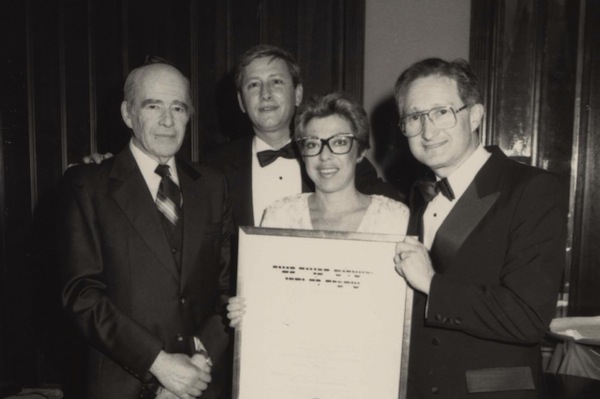
Two unidentified people on the left with Gail and Michael James on the right holding a certificate at a Jewish National Fund event. (photo from JWB fonds, JMABC L.12042)

If you know someone in these photos, please help the JI fill the gaps of its predecessor’s (the Jewish Western Bulletin’s) collection at the Jewish Museum and Archives of B.C. by contacting [email protected] or 604-257-5199. To find out who has been identified in the photos, visit jewishmuseum.ca/blog.

Format ImagePosted on February 28, 2020February 26, 2020Author JI and JMABCCategories Mystery PhotoTags history, Jewish museum, Jewish National Fund, JNF
Using apps and robots – coronavirus

Using apps and robots – coronavirus

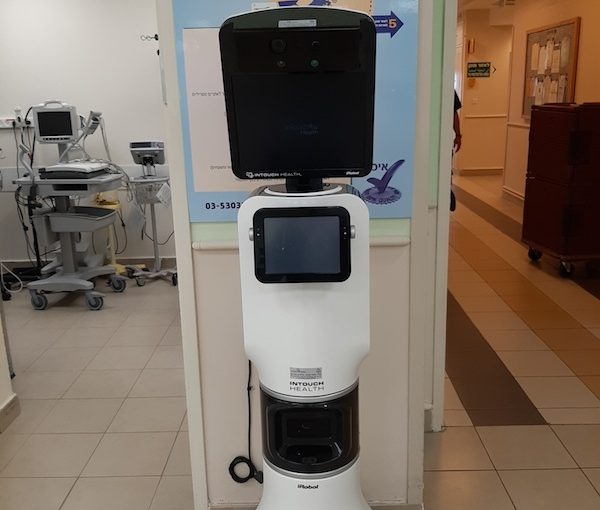
One high-tech solution for patients possibly infected with the coronavirus is a robot that can enter the patient’s room and be controlled by medical staff from the outside. (photo from IMP)

Before the coronavirus arrived in Israel – there were two reported cases at press time – Sheba Medical Centre was preparing for it with different high-tech means: a telemedicine app that enables patients to receive care in the isolation, but comfort, of their own home; and robots that can treat in-hospital patients in order to minimize contact with staff.

Sheba’s Datos Health-In is a telemedicine app that enables patients to remain at home. In the event of an epidemic, with more patients than isolation rooms available, the app can be a viable tool for patients who are not severely ill. With the app, patients can enter vital signs and other information, which is directly accessed by their doctor. Patients can also establish contact with their physicians at any time of day or night.

The program was launched on Feb. 9 and tested on Israelis who had been in China and who, according to Health Ministry instructions, had to be in quarantine for 14 days, the incubation period of the virus. Doctors initialized contact with the patients twice a day.

photo - Sheba Medical Centre’s Dr. Galia Barkai
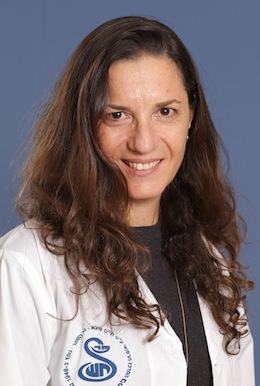
Sheba Medical Centre’s Dr. Galia Barkai (photo from IMP)

“This is one instance where telemedicine protects staff as well as other patients, by minimizing direct contact with those infected with the coronavirus,” explained Dr. Galia Barkai, head of telemedicine services at Sheba.

Another high-tech solution for patients possibly infected with the coronavirus is a robot that can enter the patient’s room and be controlled by medical staff from the outside. Designed by California-based virtual healthcare company Intouch Health, the robots are already in use in other departments, such as in the intensive care unit of pediatric cardiology, and the trauma unit.

“This technology is the perfect solution to provide care for in-patients infected with coronavirus, while protecting staff from contagion,” said Barkai.

Screening for the virus produces results in just a few hours but, with symptoms that are not very dramatic and that are reminiscent of the flu, including fever, cough and shortness of breath, Israel’s Health Ministry is only allowing those who have returned from China and a few other countries in the Far East to be tested.

– Courtesy International Marketing and Promotion (IMP)

Format ImagePosted on February 28, 2020February 26, 2020Author Ben Horodenker IMPCategories WorldTags coronavirus, Galia Barkai, health care, Israel, Sheba Medical Centre, technology
Treating children’s asthma

Treating children’s asthma

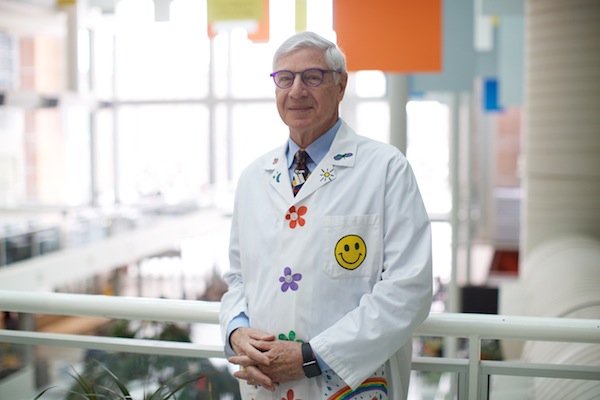
Dr. Allan Becker has devoted much of his life’s work to the study of asthma and how it affects children who have it. (photo from Allan Becker)

As Jewish community member Dr. Allan Becker was starting his career as a general practitioner, his daughter was diagnosed with asthma. As a result, he has devoted much of his life’s work to the study of the condition.

“My interest really started when my oldest daughter began having a wheezing episode at about two years of age,” Becker told the Independent. “It was pretty obvious that this was an infection – something we call bronchiolitis, which is fairly common in young children.”

Becker was working in Dauphin, Man., at the time of his daughter’s diagnosis, in the 1970s, and was beginning to see more and more kids with asthma coming into the emergency room.

“Since 1980, when I returned to academics, I’ve been trying to understand why the epidemic started – what the developmental origins of asthma and allergies are,” said Becker, who is now based in Winnipeg. “And, really, they’re the canary in the coal mine when you think about the increase in chronic diseases.

“Asthma is by far the most common chronic disease in children and it’s the earliest to start,” he said, “but we’re seeing parallel increases of other chronic diseases, like diabetes, inflammatory bowel diseases, various forms of arthritis, and others.”

Over the course of a five-decade career, so far, Becker has seen chronic diseases become more prominent. And, while the reasons for this change remain elusive, it seems clear that it involves genes and the environment.

In the early 1990s, Becker and Vancouver-based Dr. Moira Chan-Yeung embarked on a study of ways to potentially prevent the development of asthma.

“Think about the environment in terms of things we breathe and eat … and things like pets in the home, like tobacco smoke exposure, like pollution, like bad nutrition, Western-style diets, etc.,” said Becker. “We started a multifaceted prevention of asthma program in 1994.”

While that study did not reap substantial results, it did eventually lead to a current study examining the environmental impact on expectant mothers in all areas, including the benefits of decreasing stress, which Becker feels may be the most important factor.

Information about the study, called Canadian Healthy Infant Longitudinal Development (CHILD), can be found at childstudy.ca.

“CHILD started in 2008 and is an observation study, because we don’t believe we know enough to prevent the disease as yet,” said Becker. “We’re now seeing the children at 8 and 9 years of age, and we’re looking way more broadly at the environment. We’re looking at stress very specifically, both for parents and children.

“We’re looking much more in terms of diet, but also at the microbiota, the bacteria and other organisms that live in us, with us and on us, and which are likely extremely important – maybe critical – in helping to shape children’s immune responses in early life.”

According to Becker, there are more bacteria in our gut than there are cells in our body, and microbiota are now being considered as the cause of and potential cure for all sorts of illnesses.

One of the biggest hurdles is trying to determine if a young child who is wheezing has asthma and should be treated as such, or if the child has a respiratory infection that causes wheezing. Becker said part of the problem is how to more accurately define wheezing, which is described as a whistling noise coming from the chest.

“The key thing is that it’s not just the whistling noise in the chest,” said Becker. “It’s also that tugging in, particularly tugging in under the ribs, with the tummy pulling in when breathing. That’s a very good indication that those airways are narrowed and that the child has to work hard at moving air, particularly moving air both in and out. That’s what we teach our trainees to work on with the families they see.

“And, obviously, any time a child is distressed – if they’re looking distressed, particularly if there’s a change in colour of the lips – those are urgent issues. And, some children have such severe narrowing of the airways that you don’t hear wheezing, because they’re not moving enough air, but they will be struggling to breathe. You’ll see them pulling in their tummy and you’ll see their shoulders heaving,” he said. “And you’ll often see toddlers and older kids with their hands braced on their knees, hunched forward, trying to get air in. That type of tripoding is really a worrisome sign, as is a change in lip colour – that’s an emergency. Those children need to be brought to emergency quickly.”

If it gets to the point that the child is given inhalers, Becker pointed out that blue puffers are for particularly bad episodes, while orange or red puffers are for management.

For a bad episode, he said, two inhales from the blue puffer should be taken. “An inhalation and a bit of a pause, and then a second puff and inhalation … in many cases, that will be enough to help control things,” said Becker. “If it doesn’t help make things better, then, in five to10 minutes, it should be repeated. If the child is still distressed, that’s an indication they need to be brought to a hospital.”

The blue puffer should not be used for asthma management, he warned, as the body will develop resistance to it. So, if the controller medications are not providing enough control, he said parents should talk to the doctor who prescribed the puffer to determine a solution.

“If people are needing to use the blue puffer on an ongoing basis, even once or twice a week, week after week, that’s really telling you that you don’t have control of what’s going on and is very worrisome,” said Becker. “There should never be a death from asthma. But, sadly, every year there are some. And, these deaths are – rather surprisingly – not necessarily in kids with the most severe, persistent asthma; they’re in kids who are thought to have mild asthma. But, in fact, when you look at it, if you are using the blue puffer and need to get a new one every month or two, that’s a big red flag … needing to use the blue puffer in the middle of the night, that’s a big red flag. Nighttime symptoms are really a worry – those are kids who need to be seen and properly assessed and, in most cases, they need to be using controller medication.”

Becker is proud of having led the development of a national certification for asthma educators in Canada – Canada was the first country to provide this type of certification.

“We have a children’s allergy and asthma education centre in Winnipeg attached to our children’s hospital,” he said. “It’s one of the only real free-standing ones in North America. The website is asthma-education.com.”

Rebeca Kuropatwa is a Winnipeg freelance writer.
Format ImagePosted on February 28, 2020February 26, 2020Author Rebeca KuropatwaCategories NationalTags Allan Becker, asthma, children, education, health care, Winnipeg
Camp helps lift spirits

Camp helps lift spirits

A moment of levity during the taking of Justine and Stewart Silver’s wedding photos. (photo from Justin Silver)

The late Stewart Silver was born and raised in Montreal. He had worked as a standup comedian, and moved to Toronto in hopes of furthering his career. Justine Silver grew up in a Houston suburb. In late 1990, she followed her sister, who had moved to Toronto, and, there, she joined Jewish online dating site Jdate. So had Stewart.

“There was a thing where you had to describe your perfect date,” recalled Justine. “Profile after profile included long romantic dinners and were all gushy and gross … but his said, ‘Yeah, after we grab a drink, we step out of the restaurant and trip over a big bag of money.’ I was like, ‘Oh my gosh … that’s the perfect date!”

The couple took their time getting to know each other and, after a year and a half, got married.

To all appearances, Stewart was a healthy 44-year-old. He had biked up hills in Christie Pits Park the day before he had a fatal heart attack while the couple was having a conversation on Nov. 16, 2011.

Left shocked and widowed, Justine embarked on a healing path, including taking a hiatus from her event-planning business.

“It’s been quite some time since then and there’s been grief bursts,” said Silver. “In the early days, there was a lot of therapy and some peer support groups. Then, I found Camp Widow and have been to a few of those. I was pleased it wasn’t at all associated with any religion and was welcoming…. There was one in Tampa, and so a couple of widow friends that I had met up with, here, in Toronto, in a peer support group for young people who’d lost their spouses under the age of 55 … decided to make a whole trip of it. We went to the beach, museum, and then to Camp Widow. It’s a very transformational experience when you feel that you’re surrounded by people who understand the topsy-turvy world that you’re starting to barely understand yourself.”

The first camp Silver went to, in Tampa, was in the spring of 2018. Then, in November 2018 and November 2019, she attended the camps in Toronto. She and her friends have already signed up for the next November 2020 camp in Toronto.

While it’s called a “camp,” the weekend is more like a conference, with people coming together for sessions on various topics.

“One of the neat things I like at Camp Widow is that the name tags, everyone has one, but there are a couple features to it,” said Silver. “One of them, there’s a ribbon at the bottom. For example, in my work as an event planner, if you’re a presenter, your ribbon will say ‘presenter,’ or, if you’re on the organizing committee, it will say ‘organizing committee’ or ‘volunteer.’

“But, these [also] have the number of years ago that your loss occurred. So, for me, that was six years. So, let’s say it’s a teal ribbon. All of a sudden, you notice the six-year people … and there’s a bond, because you’re in a different place than, say, the six-month people. Everyone is compassionate to everyone else, but it’s just a really interesting way to bond with people.”

As far as the camp schedule, there are some group meals, as well as meals on your own. There are various types of sessions offered.

“There are tracks, like for people who are five years out, one year, or one to five,” said Silver. “I can’t remember the exact breakdown, but you can decide to go to everything along a certain track, or you can decide in the moment what you’ll do, which sessions you’ll go to. Then, there are some networking evening events, different ways of getting to know people.”

One is designed like speed-dating, but not for that purpose. You get the chance to talk to someone for a certain amount of time, and then you move on to the next person and chat with them. “It’s really interesting to see where the commonalities fall,” said Silver.

On Saturday night, there is a banquet with a theme and people dress up – some participants may not have gone out since their loss. After dinner, each person says the name of their loved one out loud, while some 200 others quietly listen. Then, there is a dance, which gives the opportunity to destress and socialize. The DJ doesn’t play any music that could potentially trigger anyone’s grief, like slow songs.

At the camp, there are people from their mid-20s to people in their 70s and 80s; people from all religions, cultures and political leanings.

For Silver, Camp Widow “creates community and support amongst widows and widowers…. Sometimes, when you’ve lost someone, it can be very isolating, which can be in different and unexpected ways. I wouldn’t say never, but it doesn’t go away. The intensity definitely lessens and you find new ways to live with grief. And there are plenty of people who, we say, are ‘re-partnered.’ When you’ve been widowed and then you meet someone else and you have a boyfriend/girlfriend, wife/husband or partner, we say you’re ‘re-partnered,’ because we don’t think that means you’re not still widowed.”

The camp provides tools and connections that widows and widowers may not otherwise find on their own.

“I feel camaraderie in sharing my story and being heard, or hearing someone else’s story and being helpful to them,” said Silver. “At this past Camp Widow, I did an art thing. I can do crafty things OK, but I’m not really an artist. But, one of the workshops I went to was all about healing through art and it was just a whole different facet. We all had paint and they set it up so well…. We had a white piece of paper and I got white paint and I painted a white heart. Then, I put a line through it – a squiggly line, like it was broken – and you could barely see it … like you couldn’t see that my husband had a heart problem…. Then, everyone shared in the room what theirs was about. When you do that, it’s like opening up a wound, and then the scar heals better next time.”

Six months ago – eight years into her healing journey – Silver and her older sister, Eileen Jadd, who is a social worker, started the charity Good Grief Bereavement Healing Services.

“We have a roster of counselors in different parts of Toronto for bereaved people,” said Silver. “We’re also offering workshops on eye movement desensitization, which is a thing for trauma victims. It really helps you compartmentalize the trauma, so you can talk about it without being retraumatized. So, we’re doing a workshop on that.

“We’re starting a group on sibling loss and, eventually, will have a physical building. We want to have a centre, so people who’ve lost someone, it’s like a snap of the fingers and they’ll know where to go. When you know there’s an accident, you know to dial 911. We want it to be, ‘Wow, you’re in need, you’ve lost someone, and you know exactly where to go.

“I think widows and widowers need their person’s name to be said. People are so afraid of saying it, because they don’t want to bring it up in fear. But, they want their names to be said, so that’s a big part of it. I happen to talk about Stewart all the time, but a lot of people don’t have those opportunities in their own lives.”

In addition to talking about him when memories arise, Silver said, “Every year, I go to shul and I say his name and a prayer for him, and commemorate it that way. I remind people that we got married in that synagogue, and I remind people that he was a person that existed and stood in that space with me, and that his influence is still there. Just because he’s not standing next to me in that moment … he’s still there. In those ways, we talk about him.”

Camp Widow is put on by Soaring Spirits International. For more information, visit soaringspirits.org, campwidow.org, widowedresilience.org and goodgriefhealing.ca.

Rebeca Kuropatwa is a Winnipeg freelance writer.

Format ImagePosted on February 28, 2020February 26, 2020Author Rebeca KuropatwaCategories NationalTags Camp Widow, death, grieving, health care, Justin Silver, lifestyle, mental health, widows

Posts pagination

Previous page Page 1 … Page 274 Page 275 Page 276 … Page 664 Next page
Proudly powered by WordPress