Skip to content
  • Home
  • Subscribe / donate
  • Events calendar
  • News
    • Local
    • National
    • Israel
    • World
    • עניין בחדשות
      A roundup of news in Canada and further afield, in Hebrew.
  • Opinion
    • From the JI
    • Op-Ed
  • Arts & Culture
    • Performing Arts
    • Music
    • Books
    • Visual Arts
    • TV & Film
  • Life
    • Celebrating the Holidays
    • Travel
    • The Daily Snooze
      Cartoons by Jacob Samuel
    • Mystery Photo
      Help the JI and JMABC fill in the gaps in our archives.
  • Community Links
    • Organizations, Etc.
    • Other News Sources & Blogs
    • Business Directory
  • FAQ
  • JI Chai Celebration
  • JI@88! video

Recent Posts

  • Zionism wins big in Vegas
  • Different but connected
  • Survival not passive
  • Musical celebration of Israel
  • Shoppe celebrates 25 years
  • Human “book” event
  • Reclaiming Jewish stories
  • Bema presents Perseverance
  • CSS honours Bellas z”l
  • Sheba Promise here May 7
  • Reflections from Be’eri
  • New law a desecration
  • Resilient joy in tough times
  • Rescue dog brings joy
  • Art chosen for new museum
  • Reminder of hope, resilience
  • The national food of Israel?
  • Story of Israel’s north
  • Sheltering in train stations
  • Teach critical thinking
  • Learning to bridge divides
  • Supporting Iranian community
  • Art dismantles systems
  • Beth Tikvah celebrates 50th
  • What is Jewish music?
  • Celebrate joy of music
  • Women share experiences 
  • Raising funds for Survivors
  • Call for digital literacy
  • The hidden hand of hate
  • Tarot as spiritual ritual
  • Students create fancy meal
  • Encouraging young voices
  • Rose’s Angels delivers
  • Living life to its fullest
  • Drawing on his roots

Archives

Follow @JewishIndie
image - The CJN - Visit Us Banner - 300x600 - 101625

Revisiting oral histories

Revisiting oral histories

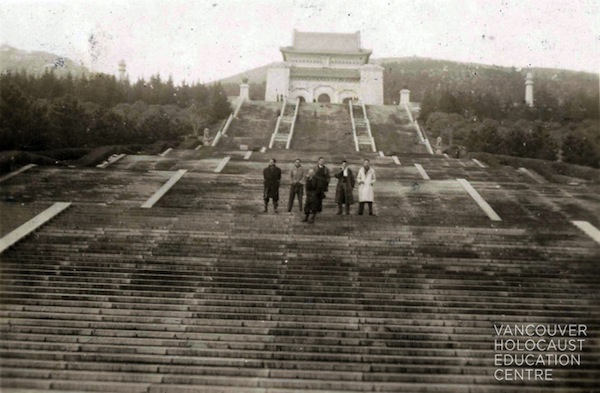
Manfred Gottfried and a group of men on the stairs to the Dr. Sun Yat-sen mausoleum. (photo from VHEC: RA001-5-o7-5-9-0339x)

A little over 20 years ago, the Vancouver Holocaust Education Centre started the Shanghai Oral History Project. Led by Roberta Kremer and Daniel Fromowitz, the project recorded the oral histories of Vancouver’s small Shanghai Jewish survivor community. They interviewed 10 survivors and/or their descendants, learning about their rich and unique experiences of survival in Shanghai.

This project, along with loaned artifacts and memorabilia, became the basis for VHEC’s 1999 exhibition Shanghai: A Refuge During the Holocaust. It opened alongside another exhibition, Visas for Life: The Story of Feng Shan Ho. Both were well received, and included film screenings on the topic of Jewish refugees in Shanghai, and a demonstration of mahjong, a game which remains popular in the Jewish community in Vancouver. Once the exhibitions concluded, materials were returned to their lenders or safely placed under the VHEC’s care, and the interviews were catalogued and filed away.

In January 2022, I began my co-op position as digital projects coordinator with the VHEC. One of the first tasks assigned to me was to help improve accessibility to the Shanghai interviews and the audiotape transcriptions. In the 20 years since these oral history transcriptions were created, the VHEC has changed its digital file management and storage system. Some files were missing while others were mislabeled. Many files would no longer open within the current version of Microsoft Word. At the top of some transcriptions was a disclaimer: “The whole tape is not transcribed, only that which is related to Shanghai.” Throughout the transcriptions, comments like “(side discussions)” denote what the original transcriber believed to be unrelated to the subject matter.

image - In 1999, the Vancouver Holocaust Education Centre held the exhibit Shanghai: A Refuge During the Holocaust
In 1999, the Vancouver Holocaust Education Centre held the exhibit Shanghai: A Refuge During the Holocaust. (image from VHEC)

Rummaging through these transcriptions, it became apparent that I would not simply be “tidying up.” By revisiting the Shanghai Oral History Project, my goal was to do more than just emphasize the unique experiences of this small group of individuals. As I listened to their interviews and transcribed their words, I wanted to offer a glimpse into how Shanghai Jewish survivors expressed themselves and reflected on their time in Shanghai, while also highlighting things that weren’t considered when the exhibition first opened 20 years ago.

On the list of possible interviewees for the Shanghai Oral History Project, George Melcor’s was the only name with “very elderly” added beside it in parentheses. Listening to George’s interview, it became clear that this would be a challenging transcription. George sometimes mumbled, which made it difficult to comprehend his words, or he would mix up his stories. But, for 88-year-old George, Shanghai left an impression. When asked by interviewer Daniel Fromowitz what memories of Shanghai come to mind, George lit up with excitement. “Shanghai was alive all the time. Never closed, always open.… Clubs and gambling, everything was free. Shanghai was a very free city.” At this point, the slow progression of the interview sped up: the emotions in George’s voice suggest that he was reliving his 16-year-old self. For a moment, George was not elderly.

What is striking listening to the Shanghai audiotapes is the dialogue between the interviewer and interviewee. Lore Marie Wiener was interviewed about her experiences in Shanghai by both Roberta and Daniel. But rather than just giving answers, Lore proceeded to converse with both interviewers, asking about where they were born, their experiences growing up and whether they faced antisemitism. Lore was also very reflective. She questioned the nature of Jewishness and what it consists of; she questioned “… why did we not interfere in Rwanda, and we do interfere in Yugoslavia?” With the former, there was a back-and-forth between Roberta and Lore, but, with the latter, Daniel was not sure how much to engage. These side stories provide a picture of Lore that is more than just her experiences of escaping the threat of Nazi violence and survival in Shanghai; it is the continuation of her life after the Holocaust.

Lastly, how did the interviewees recall, if any, their connection to the local Chinese and Japanese communities? In general, although interviewees were in Shanghai, Chinese people featured only in the background. They were acquaintances, as was the case for Anne Chick and the two Chinese kids living in her neighbourhood. For most interviewees who did interact with Chinese people, it was through a working relationship with Chinese servants, workers or amahs.

For Lore, she employed several Chinese tailors in her shop, as well as a chauffeur and a cook called Dun-zen. Interracial relationships were also possible. Kurt Weiss noted that, after divorcing his first wife, he had a Chinese girlfriend until he left Shanghai. Gerda Gottfried Kraus mentioned in passing how, in postwar Shanghai, one of her acquaintances married a Chinese woman and wanted to bring her with him to the United States. Knowledge of some Chinese, particularly Shanghainese, was also a common theme found in these interviews, though many interviewees state that they’ve either forgotten it after not using it for so long, or knew only the absolute basics. Additionally, they never learned how to read Chinese characters.
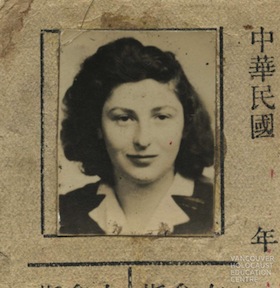
photo - Gerda Gottfried Kraus, 1940s
Gerda Gottfried Kraus, 1940s. (photo from VHEC: RA0001-05-00-02-0099)

Knowledge of Japanese people was more limited. Kurt’s success as a suit salesman was due to his patron relationship with a Japanese engineer named Kato. Lore mentioned she was helped by a Japanese engineer when she and her mother were stranded in Harbin. But the one individual whom most interviewees referenced was Ghoya, the Japanese commandant of Hongkew ghetto. Ghoya developed a reputation as an unpredictable ruler: while Lore mentioned that her father and husband were treated well by Ghoya due to their academic connections, other interviewees mentioned episodes of violence committed by Ghoya and his guards against the Hongkew inhabitants. Their brutality is matched only by their treatment of the local Chinese. Most interviewees mentioned the mistreatment that local Chinese faced.

The experiences of Shanghai Jewish survivors are often overlooked when compared to those who survived in Europe. Lore was very concerned about this. At the end of her interview, she stated: “I’m not uncomfortable with anything. [But] … just try to be careful about the parts where I am too pleased with my life because there are so many people who suffered.” With the “global turn” in academic research into the Holocaust, the sub-category of “Shanghai survivor” has been gaining strength. It is a term that validates the experiences of refugee Jews and others who survived the Holocaust in Shanghai, while also acknowledging the unique circumstances and challenges they faced.

It is heartening to know that, in the 20-plus years since the VHEC’s Shanghai exhibition, research into this dimension of the Holocaust and the voices of these survivors have not been obscured, but, instead, have expanded into a vibrant subfield. By revisiting past projects and exhibitions, and making them more accessible, we can hopefully gean new information about the Holocaust and the multiplicity of survivors’ experiences.

 Ryan Cheuk Him Sun is a PhD candidate in the University of British Columbia department of history. His research examines the entangled histories between Jewish refugees escaping Nazi oppression and the British colonies of Hong Kong and Singapore. He is also interested in the journeys that took Jewish refugees to East Asia, and their experiences in transit onboard ships and trains. He can be reached at [email protected]. This article was originally published in the VHEC’s Spring 2022 issue of Zachor.
Format ImagePosted on September 2, 2022September 1, 2022Author Ryan Cheuk Him SunCategories Local, WorldTags history, Holocaust, oral history, refugees, research, Shanghai, survivors, VHEC

Help teens with their English

Want to make a difference in the lives of Israeli teens? Consider joining Israel Connect, a program where local adult volunteers connect online, one-on-one, via Zoom, with Israeli high school students who want to improve their English conversation and reading skills. The program starts on Oct. 23 and is organized by Chabad Richmond, in partnership with the Israeli Ministry of Education. It entails a small and rewarding commitment of 45 minutes once a week.

There are currently 15 local volunteers participating in the Israel Connect program as tutors/mentors, and Chabad Richmond is looking to increase that number, since the need continues to grow.

“We’re looking for volunteer retirees, seniors or any adults with flexible schedules to join the Israel Connect program. No previous tutoring or teaching experience is necessary and the curriculum is provided for tutors/mentors,” said Shelley Civkin, local program coordinator. “If you’re an adult and a fluent English speaker, you have basic computer skills and you own a computer with a camera, that’s pretty much all you need. Oh, and, of course, a strong desire to help Israeli youth.”

Volunteers do not need to speak Hebrew and can tutor from home. Basic training and technical support are available.

Time preferences of volunteer tutors/mentors will be coordinated beforehand and sessions take place in the morning between 7 and 11 a.m. Vancouver time, any day between Sunday to Thursday. “All Israel Connect asks is a minimum commitment of one school year, in order to ensure consistency for the students,” said Civkin.

“It’s a meaningful and practical way for community members to support Israel and build bridges between diaspora Jews and Israelis,” said Rabbi Yechiel Baitelman of Chabad Richmond. “You’ll be doing a mitzvah, while investing in Israel and its young people. Plus, good English skills will give them an advantage in accessing post-secondary education and getting better jobs. English proficiency is crucial to Israeli students, since it accounts for a third of their entrance exam marks for university.”

“Partnering with the Israeli Ministry of Education, the Israel Connect program targets teens from less advantaged neighbourhoods in Israel. Most volunteers really enjoy helping their Israeli students and develop a lasting bond with them. It often goes beyond simply tutoring the curriculum, and turns into friendship and mentorship,” added Civkin. “Conversations sometimes continue long after the school year is over. This kind of one-on-one tutoring makes a huge difference in their lives, both educationally and personally…. Estimating the impact of this program on Israeli youth is, of course, speculative, but we do know for certain that it helps improve their school grades. It’s incredibly satisfying to know that you’re doing something concrete to help Israeli students better their lives.”

The curriculum consists mainly of a tour of Israel, focusing on the wealth of historically, culturally and biblically significant cities and sites. It’s not uncommon for both the students and the tutors to learn something new about Israel at each lesson.

To volunteer, or for more information, contact Deborah Freedman at Chabad Richmond, 604-277-6427, or email [email protected].

For anyone who can’t participate as a tutor, Chabad Richmond welcomes financial support for the Israel Connect program, which covers overhead costs like technical support, staffing and other administrative costs. To support the program call Chabad Richmond or email [email protected].

– Courtesy Chabad Richmond

Posted on September 2, 2022September 1, 2022Author Chabad RichmondCategories Israel, LocalTags Chabad Richmond, education, Israel Connect, seniors, teens

Finding my “why”

As a former World Jewish Congress Ronald S. Lauder Fellow, I attended the first Ronald S. Lauder Fellowship Diplomacy Summit. The fellowship is an international cohort of top Jewish students with an interest in global Jewish advocacy who are invited to Europe to participate in high-level meetings with government institutions. From the moment I arrived at the summit in Brussels, the excitement felt by the other fellows and staff was infectious.

We began the trip in the European Union offices, hearing from EU members about the state of Europe and advocating for the European Jewish community. This was followed by a visit to NATO. The number of brilliant minds in these rooms was astounding, and it was such a privilege to watch as my small cohort of young Jewish students and professionals posed challenging questions to EU and NATO leaders regarding the state of European Jewry, global antisemitism and recent world tensions.

The same can be said about our visit to UNESCO in Paris the following day. As a media and information studies student with a niche interest in big tech policies, I was intrigued to learn about the organization’s recent report, History Under Attack: Holocaust Distortion and Denial Within Social Media, directly from its writers. I am hopeful that, combined with efforts to address online harms in countries such as Canada, the UNESCO report will spur positive change in hate speech regulation worldwide.

Once the summit concluded, with my Jewish pride at an all-time high, I hopped on a plane to Israel for a much-needed reunion with family and friends, celebrating Shabbat with my great-aunt and others at her beautiful Jerusalem apartment.

After we studied the week’s parashah (Torah portion), a neighbour began to translate a book written in Hebrew by our relative about our family’s history in Israel. Although I had heard these names growing up, I had not fully understood their weight or meaning. It was there, sitting with family and friends, and with the WJC experience fresh in my mind, that I began to appreciate their significance and what my Jewish heritage really means to me.

My great-great-grandfather was Zvi Pesach Frank, chief rabbi of Jerusalem during the end of the Ottoman Empire and the British Mandate of Palestine. He was instrumental in the creation of the Chief Rabbinate of Israel, and in the appointment of Rav Kook (Abraham Isaac Kook) as the first Ashkenazi chief rabbi. I learned more of his historic contributions and my family’s legacy of working to build and protect Israel.

My experience as a World Jewish Congress Lauder Fellow and attending the summit took on a new layer of meaning. Not only am I inspired and committed to continuing my work in global Jewish advocacy, but I have also developed a determination to follow this path, grounded in my profound pride in my family and their accomplishments over the generations.  For that, I am grateful to World Jewish Congress, to my great-aunt and to the Centre for Israel and Jewish Affairs. I look forward to what’s ahead, fully appreciating the rationale supporting my aspirations, and I will hold the summer of 2022 near and dear to my heart.

Following the conference and my visit to Israel, it became clear to me that, in high school – when I found my footing in Jewish leadership and learned more about my intersecting Muslim and Jewish background – I had found the “what” of my life’s passion. It was this summer that I found the “why.”

Tia Sacks is a Vancouver native going into her fourth year at Western University in the faculty of media and information studies. She participated in the World Jewish Congress Lauder Fellowship and is currently the vice-president of the Israel committee at Hillel Western and an intern at the Centre for Israel and Jewish Affairs.

Posted on September 2, 2022September 1, 2022Author Tia SacksCategories Op-EdTags Centre for Israel and Jewish Affairs, CIJA, education, family history, Judaism, politics, Ronald S. Lauder Fellowship, WJC, World Jewish Congress

Introspection’s the hard stuff

Before the pandemic, we were once at synagogue on Shabbat when the clergy person leading the family service reminded us that, hey, Elul was here, and we could hear the shofar blown if we came to morning minyan. The next day, Sunday, one of my kids decided we needed to go hear the shofar. It was just a normal Sunday. The minyan was small, largely comprised of senior citizens. My elementary school-aged kid rocked and wiggled in his seat. Most of the adults there smiled and gave him high fives and handshakes and made him feel welcome.

When I explained our shofar mission, they nodded. They all understood why we were there. My kid was given honours and made to feel special. When it was time to hear the shofar, he sat up and listened intently. It was one of those times when I thought, “Oh, we should try to come to minyan to hear this every day.”

This was one of those moments when my aspirations were much higher than my capabilities. Years later, I can’t pretend we’ve ever made it to morning minyan regularly again, even virtually, even during Elul. Maybe, someday, I’ll be one of those senior citizens in the frequent minyan attendee club. For now, I’m rushing to get everyone up, fed and out the door to school and work.

Still, I think that morning minyan experience may stick in a kid’s mind. The Elul shofar is a quintessential wake-up sound for many Jews. It’s the time to think about how the year has gone. We can focus on what’s ahead on the Jewish calendar, how we can make amends and do better in the future. What will change next year? What, most likely, will stay the same?

Is this wake-up ritual true of everyone? No, of course not. I recently saw a TikTok reel of a man, probably in his 20s or early 30s, with a beard. The guy was joking that he observed Jewish holidays through food, and then jokingly said, “Rosh Hashanah? That’s the one with the matzo balls, right?” Maybe I haven’t remembered the skit’s details quite right, but I wasn’t its intended audience. I inadvertently cringed. It was grating to me, jarring, like driving the wrong way down a one-way street.

Here was this guy, probably an influencer, showing everyone that he not only wasn’t religiously literate, but also thought Ashkenazi food was the only essential part of the ritual or the holiday. I mean, food is part of Jewish ritual, don’t get me wrong, but, it rubbed me the wrong way.

Here is a full-blown Jewish adult. And yet, he doesn’t think knowing anything about his ethno-religious identity or choosing to observe anything in regards to its religious context is his responsibility. As a Jewish woman who cares about this stuff, this irked me, because with his masculinity comes a lot of privilege in some parts of the Jewish world. He might be so privileged that he doesn’t even have to know any of this but he still would count in an Orthodox minyan and I don’t.

Our household philosophy is that, if people may potentially harass us or kill us for our Jewish identities, we should know more about who we are and why – and try to find joy or meaning in it. Focusing on Jewish knowledge and joy is kind of a “thing” for us.

This is when I have to remind myself, hey, it doesn’t matter how knowledgeable or observant or ignorant this guy on TikTok is. He’s still Jewish. I am no more or less Jewish than he is. It’s not a competition.

Elul is for introspection. It’s also the time to admit that we are all works in progress. I sure need to keep working. As we grow, learn and age, we can recognize and understand new and different things. Hardest, of course, is to recognize what we don’t know: our biases, intolerances and prejudices. We all have these blind spots. This emphasis, each year, on working on ourselves is valuable in many ways, not least of which is trying to be more inclusive and kind.

Elul is also about wonder – through our senses, when we hear, see, touch, smell and, yes, taste the holiday. It’s the primal feeling we get when hearing the shofar, or the release one gets after a heartfelt apology to a loved one. That wonder continues into Tishri, throwing our bread (like sins) in the water at Tashlich. The wonder is in sweet honey on apples and other holiday symbols. It’s in this season, in the northern hemisphere, when the days shorten and get cooler, the trees lose their leaves and we start again.

As I write this, it’s still summer. I’m the first to say that I’m not ready to embrace Elul. It’s coming though, no matter what. In preparation, we’ve already been apple picking at a neighbour’s tree. We got honey from a local farm. The food part is easy. It’s the introspection that’s the work – and I’m looking forward to hearing the shofar remind me to get busy doing it.

L’shanah tovah (Happy New Year) in advance. May the year ahead be sweet.

Joanne Seiff has written regularly for CBC Manitoba and various Jewish publications. She is the author of three books, including From the Outside In: Jewish Post Columns 2015-2016, a collection of essays available for digital download or as a paperback from Amazon. Check her out on Instagram @yrnspinner or at joanneseiff.blogspot.com.

Posted on September 2, 2022September 1, 2022Author Joanne SeiffCategories Op-EdTags Elul, Jewish calendar, Judaism, lifestyle, TikTok

Belief in a future Poland

Editor:

Your editorial of Aug. 19 entitled “Does history matter?” recounts some of the terrain of recent right-wing Polish political machinations against an open, self-critical approach to Shoah research and discourse in the country. It is sad, unfortunate and, I dare say, stupid of many Polish politicians to think that avoiding rigorous debate will somehow improve the standing of Poland and Polish culture internationally.

I am a proud Polish Canadian, raised in an amazing, secular Catholic family, and now for the last decade-and-a-half (officially, anyway): a Jew. I love the choice I made and I love Judaism, however the world does look very odd from where I stand. I am often too Jewish for Poles and too Polish for Jews.

An artist by schooling and a software engineer by profession, I am not an historian. However, I have to be one just to muddle through my own life. Poland has always been a cultural floodplain between great powers. Most Poles, perhaps like most Israelis, have to be very finely tuned both to history and to current geopolitical rumblings. To be otherwise would be existentially precarious. Because of my conversion to Judaism, a significant portion of the last two decades of my life has been spent studying topics relating to Polish Jewish history, Polish/Jewish relations, Israeli history and contemporary Polish politics (especially as they relate to Israel, the diaspora and the history of the Shoah).

It is quite exhausting to sit between two communities that I love very much (the now thinly overlapping Polish and Jewish Venn diagram) and have to read occasional inaccuracies, such as the one sadly published in your fine publication in an otherwise excellent text.

When your editorial asserted that Poland is “the society that bears more blame for complicity with the Nazis than any other,” I got quite angry. It is simply not true. This claim is pernicious misinformation that Poles regularly have to dissipate. It is not true on the level of governance, nor is it true on the level of day-to-day street life at the time. Poland was the only Allied force to fight Germany from the very first day of the war to the very last. It never surrendered to Germany as did France. It never made any secret collaborative pacts with Germany as did Russia. Poland knew that Germany was planning the Shoah and it shared solid evidence with Allied command as early as 1942. That the Allies did not act upon this is another story.

Poland was a massive net contributor to the Allied war effort. One source I read suggested that over half of British wartime intelligence reports came from Polish field agents. The Polish army was very active outside of Poland as a key member of the Allied forces during the war, commanded from their government-in-exile in London. The Polish army under General Wladyslaw Anders in fact made a famous march all the way to Israel, where its Jewish soldiers were offered the option of decommissioning and settling down there. The Polish resistance effort was also very active throughout the war throughout occupied Polish territory, where they applied lethal punishments upon those who collaborated with the Germans – matching the brutality that the Germans applied to any Pole who provided shelter to their Jewish neighbours. It was a dangerous time for everyone.

To your editorial’s point about Poland’s historical reputational ranking, I submit here a few other societies that “bear more blame for complicity with the Nazis” than Poland: Italian, Japanese, Spanish, Greek, Romanian, Hungarian, Bulgarian, Croatian, Slovakian, Danish, Finnish, Burmese, Thai, Iraqi, Russian, French. Oh, and German.

Perhaps some of these are debatable, others much less so. I certainly agree with your editorial that history is important and should be open to public argument.

We live in different times today. To remember is important and we must remember well, but we must also be nimble enough not to get stuck in the ruts of history. One of my favourite Polish Jews, Shimon Peres, once said: “don’t be like us. Be different…. I have very little patience for history. I believe that to imagine is more important than to remember.” In that vein, I would like to echo the words of another Polish Jew I admire. Julian Tuwim, one of Poland’s best writers. He dared imagine: “I believe in a future Poland in which that star of your armbands will become the highest order bestowed upon the bravest among Polish officers and soldiers. They will wear it proudly upon their breast next to the old Virtuti Militari.”

I, too, believe in a future Poland. With criticism, I imagine that it could be something very good indeed.

Ian Wojtowicz
Vancouver

Posted on September 2, 2022September 5, 2022Author Ian WojtowiczCategories Op-EdTags history, Holocaust, Poland

Be a cautious online shopper

As students prepare for the upcoming school year, supply shortages may limit the options available to shoppers – and make them more vulnerable to scams when shopping online.

“Last year, nearly one-third of scams reported by Canadians to BBB [Better Business Bureau] Scam Tracker were about online purchase scams, with a little over 73% of those targeted losing money,” said Simone Lis, president and chief executive officer of BBB, serving Mainland British Columbia.

Online purchase scams often start when scammers target shoppers with phony deals, enticing ads and attractive but fake websites. Once an order is placed, victims find they receive nothing or the items they do receive are counterfeit or inferior to what the ads promised.

To ensure you have a pleasant back-to-school shopping experience, BBB advises shoppers to keep the following tips in mind when shopping for supplies:

Shop with familiar retailers. Shop with businesses you know and trust to ensure you’re getting a quality product and good customer service.

Know what you’re shopping for. Set a budget, identify what tech (or other) capabilities will benefit your student and compare your options. Then, shop around for a reliable seller.

Avoid making quick purchases while browsing social media. Scammers advertise websites that offer great deals or hard-to-find products, but either don’t deliver the product at all or deliver counterfeit products. Do more research on those products by doing an online search for more information and reviews.

Don’t buy from impostors. Fraudsters may use the name, logo and other characteristics of brands you trust. Closely examine the website to verify that they are who they say they are. Make sure the website has “https” in the URL (the extra s is for “secure”) and a small lock icon on the address bar.

Pay by credit card. Credit cards often provide more protection against fraud than other payment methods. Never use debit cards for online purchases.

Keep a record of what you ordered. Make a note of the website where you ordered goods. Take a screenshot of the item ordered, in case the website disappears or you receive an item that differs from what was advertised.

Approach “too good to be true prices” with caution. If the price seems too good to be true, it probably is.

Research the website before making a purchase. Some fake companies may copy the BBB seal to legitimize themselves. If it is real, clicking on the seal will lead to the company’s BBB profile. And do an internet search with the company name and the words “complaint,” “scam” and “review.” This may locate other complaints about the site or let you know if they are legitimate or not.

Scamadviser.com can often tell you how long a website has been in operation. Scammers create and close websites regularly, so a site that has only been operating for a short time could raise red flags.

Verify customer reviews. Scammers frequently post positive reviews on their websites, either copied from honest sites or created by scammers (fake profiles, bots, etc.). Look at the bad reviews first, as these are more likely to be real and can help identify scams.

If you think you’ve encountered an online shopping scam, be sure to report it to the right place and protect other unsuspecting consumers:

  • file a complaint with the Better Business Bureau at bbb.org or bbb.org/scamtracker,
  • file a report at Canadian Anti-Fraud Centre, antifraudcentre-centreantifraude.ca or 1-888-495-8501,
  • report ads that violate standards, copyright or other policies to the correct source such as Facebook (facebook.com/business/help), Instagram (help.instagram.com) or Amazon, and
  • call the phone number on the back of the credit card to report a fraud and request your money back.

– Courtesy Better Business Bureau

Posted on September 2, 2022September 1, 2022Author Better Business BureauCategories LocalTags BBB, Better Business Bureau, online shopping, scams
Talking about mental health

Talking about mental health

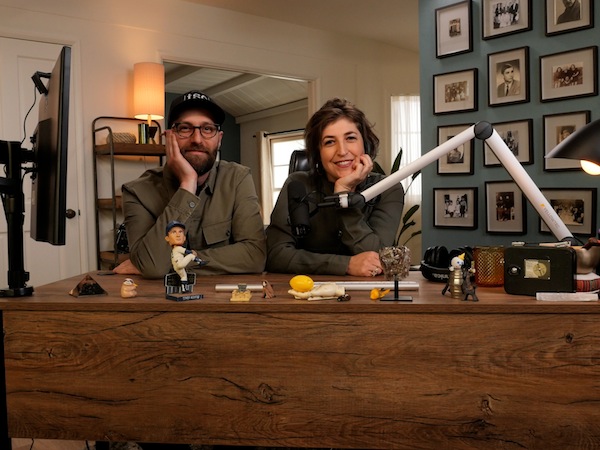
Jonathan Cohen and Mayim Bialik, co-hosts of the podcast Mayim Bialik’s Breakdown, help launch the Jewish Federation of Greater Vancouver’s annual campaign on Sept. 8. (PR photo)

Television viewers watched Mayim Bialik grow up, most notably as the character Blossom Russo on the series Blossom, and in a string of other TV and movie roles, including playing the child version of Bette Midler’s character in Beaches. More recently, Bialik has been nominated four times for an Emmy Award for her role in The Big Bang Theory and it was announced last month that she and Ken Jennings will jointly fill the late Alex Trebek’s shoes as hosts of the game show Jeopardy.

But, when Bialik speaks to a Vancouver audience Sept. 8, she will not be acting or holding the cards with all the answers. She will be opening up about an issue that is close to her own experience: mental health.

Bialik is one of three headliners at the opening event of the Jewish Federation of Greater Vancouver’s annual campaign. She will be beamed in live from Los Angeles, along with her podcast partner Jonathan Cohen. They co-host Mayim Bialik’s Breakdown, which is described as “a quirky, informative and interactive podcast breaking down the myths and misunderstandings about mental health and emotional well-being.” While the pair will join from Los Angeles, live on stage at Congregation Beth Israel will be Fran Drescher.

Best known for her titular role in the 1990s sitcom The Nanny, Drescher is also an accomplished producer and author who has won several awards in the health field. Only recently, she has begun to open up about the traumas and major health issues she experienced earlier in her life, including those she says she never adequately dealt with at the time. At the campaign launch, she will reflect on how important mental health issues are to overall well-being.

In a recent interview with the Independent, Bialik and Cohen shared some of their vision and a little of what audiences can expect when they speak. Mental wellness is a core theme of the opening event, in part because these issues have become more pervasive due to stress, uncertainty and isolation caused by the pandemic. Bialik has been open about her own experiences with these challenges.

“I think one of the things about mental health is, depending on what you’re dealing with, there can be a lot of isolation,” Bialik said. “Talking about it, and being part of challenging the stigma, I think, makes you feel less alone. I definitely feel less alone. A lot of my fears around my challenges have definitely gotten less. I have less fear about talking openly about it. I think that’s really made an impact on me.”

On the podcast, she and Cohen discuss their personal experiences, welcome experts and also introduce a buzzy crowd of celebrities like Sarah Silverman, Dustin Hoffman, Margaret Cho and Howie Mandel. Topics include managing anxiety, overcoming trauma, alternative medicine, body positivity, grief and gratitude.

A lot of the time, Bialik said, people tell her and Cohen that the show raises questions viewers didn’t know they needed to ask, or that they didn’t have the ability to express to their medical professional – or maybe they do not have access to professional care.

“We are not doctors of that sort, we’re not looking to make diagnoses,” she said. “But, in sharing our experience, a lot of people are hearing their stories and that’s been really, really very powerful. We’ve had some incredible interactions with some of our fans. One of the reasons that we do a lot of giveaways and things like that is it creates a sense of community and it lets people know that we are real people behind our microphones.”

They hope to hear from audience members in Vancouver.

“We really want to have an interactive component to the evening because, for us, we are very interested in other people’s stories and we really enjoy that part of our podcast,” said Bialik. “So we’re excited to bring that to an audience live and be able to share, and also hear what other people want to share. We are also quite funny together – we think so, but other people have told us that as well – so it will be a way for us to show how we use our humour to interact and especially discuss difficult things like mental health.”

In addition to the podcast, the pair have pitched a few TV pilots, which have yet to get picked up, but they have more up their sleeves.

“It’s been a very fun partnership and we have lots of ideas of ways we’d like to change the world,” she said.

“We also both like to explain things,” said Cohen, “which sometimes makes us compete for airtime, but usually results in a further understanding of something.”

They both balked jokingly when asked if they were drawn together by their “nerdy” pursuits. Bialik is a neuroscientist and Cohen’s expertise is artificial intelligence.

“Neuroscientists and people in AI are the new superstars,” said Cohen.

“It’s not really nerdy,” Bialik insisted with a laugh.

But seriously, she continued: “Really, when we started talking again and connecting again, [that] was when we started realizing how much we had in common in terms of our interest in science and mind and body.”

Bialik is tough to pigeonhole. A mother, a scientist, an actor, an author, a game show host, a proud Jew, a vocal Zionist – she doesn’t feel a need to choose between her complex identities.

“I don’t know if it was ever really a question of settling for just one,” she said. “I’m a mother and I think that is the role I most enjoy personally. In terms of professional activities, I really did enjoy being a scientist and the knowledge that I acquired does not go away just because I’m not a full-time scientist. I do love advocating for causes that are important for me. I love writing. I do love writing. I guess it’s hard to pick just one.”

Hosting Jeopardy is a very different kind of job than being an actor, she acknowledged.

“I obviously have to be myself, but I have producers and judges talking in my ear the whole time, so it’s a big division of attention and that can be hard,” she said. “It’s a lot of really difficult words to pronounce, which I do get to practise a little bit that morning before we tape each set of episodes, but [it’s] very, very different and you have to be ready for anything because anything really does and can happen at Jeopardy.”

As one of Hollywood’s most visible Zionists, Bialik has been a lightning rod for anti-Zionism and antisemitism. But that’s not new, she said.

“The fact is, I’ve been dealing with antisemitism and anti-Zionism for decades in my professional presence,” Bialik said. “I will say that the climate of North America has definitely shifted.… [But] for me, it’s always been an issue. It’s one I was raised to know about and be aware of. I think I’m more touched, as many of us are, by the increase in antisemitic acts, and violent acts especially, against Jews. As someone who has been going to Israel and continues to go to Israel – I’ve been probably a dozen times – that’s always something on my radar. There’s definitely been more of this kind of hatred and activity and specifically targeting me. But it’s also been something that I’ve always had to think about.”

The Thursday, Sept. 8, Federation annual campaign launch at Beth Israel starts at 7:30 p.m. Tickets, $18, are at jewishvancouver.ca.

Format ImagePosted on August 19, 2022August 18, 2022Author Pat JohnsonCategories LocalTags annual campaign, Jewish Federation, Jonathan Cohen, Mayim Bialik, mental health, philanthropy, podcasts
Averbach back home

Averbach back home

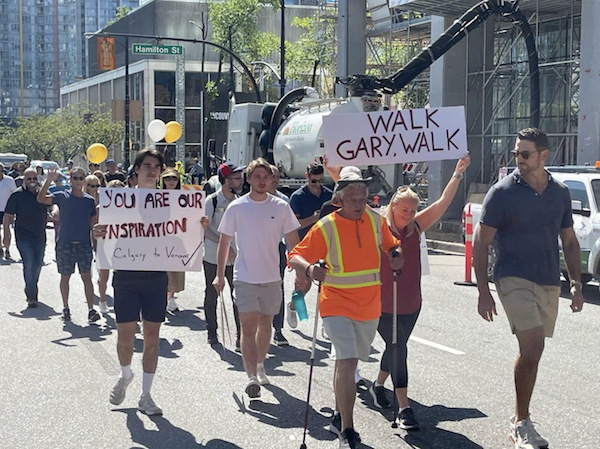
Supporters join Gary Averbach as he completes his walk from Calgary to Vancouver. (photo from Instagram @bobswalkforcancer)

When Gary Averbach told friends and family he was going to raise money for cancer research by walking from Calgary to Vancouver, they asked him if he was joking or crazy. His podiatrist urged his kids to get him to rethink his scheme. But when he strolled into Vancouver Aug. 11, he was greeted with a hero’s welcome at Jack Poole Plaza by those same people and plenty more who joined his cause.

The 79-year-old Averbach was inspired to raise at least $500,000 after he suffered the loss from cancer of four people close to him in a mere seven weeks last year. First, his cousin, business partner and friend Robert (Bob) Golden passed away. Averbach decided to do the fundraising walk in Bob’s honour. He connected with the B.C. Cancer Foundation and the planning for Bob’s Walk for Cancer was set in motion. Sadly, Averbach would soon find himself walking in memory and honour of three more people – cousins Ronnie Onkin and Darlene Spevakow, as well as his longtime and beloved housekeeper, Angelita Tica.

“At that point, I said, I can’t just do this walk for Bob,” Averbach told the Independent while taking a break from his walk in British Columbia’s Shuswap region last month. “I’ve got to include them as well because they are just as worthy of being included as Bob. Although it’s called Bob’s Walk, I made it clear that I’m walking for the four of them and everybody I’ve lost and anybody that has lost loved ones to cancer. There isn’t a family that that hasn’t happened to.”

The name of the campaign caused a little confusion on the road. As he trod along highways and byways, people yelled out encouragement to “Bob.” Averbach gave up correcting well-wishers.

“For awhile there, I was maybe correcting people but I thought, let me be Bob. It doesn’t matter, as long as they’re supporting me.”

What he didn’t get used to was the outpouring of support. All along the way, from the very first day of his trek, passersby sent shouts, honks, thumbs up and words of encouragement.

The cancer foundation helped Averbach set up a fundraising and information website, where people could follow his progress. He also blogged his journey, including interesting or thoughtful reflections on what had taken place that day or things that had popped into his head during his long, solo trek across the province.

Walking has always been a favourite pastime for the Vancouver businessman and philanthropist.

photo - Gary Averbach’s fundraising journey took him from Calgary to Vancouver over several weeks
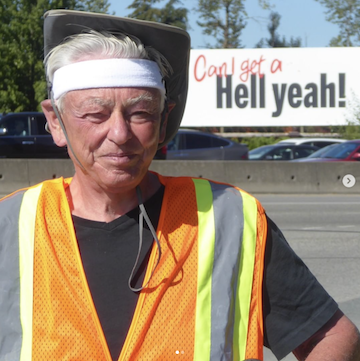
Gary Averbach’s fundraising journey took him from Calgary to Vancouver over several weeks. (photo from Instagram @bobswalkforcancer)

“I love sports and I wish I could be a good athlete but I was born with one eye weaker than the other,” he said. “Because I do not have good depth perception, I cannot be a good athlete. But one thing I always knew was that I had good stamina and I could walk for hours. I walked all through Israel when I was in my 20s and I’ve always enjoyed walking as a way to keep fit.”

Padding through some of North America’s most dramatic scenery was an experience, he said. Although he had been on the route many times, it was always at 100 kilometres an hour. The majesty of the Rockies, the rivers, streams, waterfalls and wildlife led him to change the theme song of his venture from “High Hopes” to “What a Wonderful World.”

“Watching closely like you do when you’re walking, it does make you realize not just how beautiful it is – you can’t do that when you’re driving – but also how amazing it is, how everything works together, like the water starts with a glacier and ends up being a river going out to the Pacific. Everything follows its path. And the flora, the way it changes here.”

He was in Banff National Park on Canada Day, but noticed that every day seems like Canada Day in some rural areas. The maple leaf flies frequently in small towns, he said.

“I think there’s a level of patriotism in the countryside that doesn’t exist in the big city,” he remarked.

He also noticed signs of the times. The pandemic and its associated labour shortages have led even the legendary 24/7 diner Denny’s to reduce its hours, and some of the motels his team stayed at along the way were short-staffed.

On foot, Averbach was also more aware than he might have been behind the wheel that the road system is not uniformly modern.

“It is so piecemeal,” he said. “There are some sections of the Trans-Canada that would not even be rated a good country road, especially going through some of the towns. It’s a disgrace in some cases.”

He had some trepidation about wildlife he might encounter – bears, obviously, were a worry – but infrastructure, more than luck, may have prevented any interactions with Smokey or Yogi. Wildlife-protecting fences have been installed along much of the country’s highway system, with overpasses for animals to safely get from one side to the other.

“I didn’t see a single bear,” Averbach said – not even from a distance. Mosquitoes, beetles and grasshoppers, on the other hand, were plentiful.

“If I was an entomologist, it would be fascinating,” he said.

Averbach was assisted by a team of two, Bart Zych and Alex Krasniak.

“Alex primarily drives the van behind me, he follows me like a puppy dog,” joked Averbach, noting that people undertaking adventures like this are required to have a vehicle adjacent for traffic safety. The usual schedule was to walk five hours, rest for a bit and then continue for another three or four hours.

“Bart is the person who does all the logistics. He arranges the hotels before we go from one place to the other. He even does my laundry much better than I do,” Averbach said. “He meets us and he brings us sandwiches.”

Averbach is a warm weather guy – he trained for the walk in Hawaii and Palm Springs – and didn’t appreciate the cold mountain weather in the early days of the walk. Even near the end, he encountered rain, despite it being the height of summer. On the other hand, he also traipsed through Canada’s desert zone.

“If I had my druthers, I’d rather be in hot temperatures than the really crappy weather we had in the mountains,” he said.

When he first spoke with the Independent, Averbach was worried about meeting his target of $500,000.

“For awhile there, it slowed down at about $320,000, $330,000,” he recalled. “I started to think, am I going to be able to reach my goal, which is a half-million?”

As of his arrival in Vancouver, he had surpassed his minimum goal of $500,000 and now has his sights on more.

“According to commitments and some of the cheques that are in the mail, we are probably somewhere around $570,000,” he said. The campaign will continue and the website will stay active until his 80th birthday, on Oct. 10.

He offers special thanks to friends in the Jewish community – donations in multiples of $18 are a sure sign of Jewish philanthropy.

“Over two-thirds of the donors, maybe even three-quarters of the actual donors, were from the Jewish community,” Averbach said. “The Jewish community really came out and supported me.”

While he is happy to be in his own bed and will continue pushing to raise more funds until his birthday, at least, he is not resting on his laurels or basking in the accolades.

“Been there, done that,” he quipped. “My 15 minutes are over.”

He was touched, though, by the crowd of about 200 who greeted him as he completed his journey.

“It was very heartwarming,” he said.

Format ImagePosted on August 19, 2022August 18, 2022Author Pat JohnsonCategories LocalTags cancer research, fundraising, Gary Averbach, philanthropy

Does history matter?

The promise of the internet was that people could access unprecedented volumes of information for the benefit of themselves and society as a whole. What has regrettably proven to be the case is that it is a fount from which people draw to “prove” falsehoods they choose to believe – or, for nefarious reasons, claim to believe.

Amid the oceans of “information” online, it is sometimes difficult to tell what people genuinely believe as opposed to what they say they believe in public to mislead their audiences. For example, does the U.S. member of Congress Marjorie Taylor Greene actually believe that reliance on solar energy means the lights will go out when the sun goes down? Or is her apparent stupidity a deliberate foil for her support of polluting energy sources? If she believes what she said, this is misinformation. If she knows she is telling a lie, it is disinformation.

The terms “misinformation” and “disinformation” are sadly necessary to understand what is happening in our era, as we have said in this space before and feel moved to repeat. In few places is this difference as consequential as in discussions of the history of the Holocaust.

Correspondence between Polish Prime Minister Mateusz Morawiecki and right-wing journalist Bronislaw Wildstein (and two others) leaked last week defines some of the world’s foremost Holocaust scholars as “enemies of the entire Polish nation.” There is other chilling language in the back-and-forth, detailing how top Polish authorities are expending enormous energies to rewrite the history of Polish collaboration in the Shoah.

A 2018 law forbids any suggestion that the Polish state or Polish people participated in Nazi crimes against Jews. International pressure saw the penalties for breaking this law reduced from a criminal conviction to a civil matter potentially resulting in a fine. But the intent and impact remain clear. Prof. Jan Grabowski, a Polish-born Canadian academic, and a Polish colleague, Barbara Engelking, were victorious in a 2021 appeal that saw an earlier court decision order to apologize to a descendant of a Shoah-era perpetrator for betraying Jewish neighbours to the German Nazis. But this court decision has not quenched the thirst for revisionism.

The obsession among top Polish officials on this subject is unabated. The email exchange includes the suggestion that Polish authorities should strategically coopt the Jewish experience in the Holocaust to their own benefit, recasting Poles as the Nazis’ primary targets and victims.

Poland also recently extended its Holocaust-related legislation to explicitly forbid financial restitution or compensation to survivors or their heirs.

The Polish government has steadfastly asserted that Nazi atrocities catastrophically affected non-Jewish Poles, which is plainly true. But two things can be true simultaneously. Many Poles were victimized by the Nazis and many Poles collaborated with the Nazis – and, in some cases, both involved the same individuals.

Wildstein, the journalist who seems to have the prime minister’s ear, makes threatening noises about top Holocaust research and archival bodies, including the Jewish Historical Institute, in Warsaw, and the POLIN Museum of the History of Polish Jews, and mentions “the possibility of introducing our people into their midst.” He accuses the Polish Centre for Holocaust Research of presenting “an almost obsessive hatred of Poles.”

There is paranoia in the idea that exposing historical truth is identical to hatred. Ironically, while Germany is the European country that has engaged in the most introspective contrition, as much as a society can hope to do for so unparalleled a crime, Poland has steadfastly dug in its heels. The society that bears more blame for complicity with the Nazis than any other is the one that is not only refusing to confront its grotesque past but most stridently whitewashing it.

All of this has led to strained relations between Israel and Poland. It should also be a source of friction with other countries, including Canada, partly because it is a Canadian citizen, Grabowski, who is among the most targeted objects of Polish scorn, and partly because all democracies should stand up to this appalling historical revisionism.

There is a grim silver lining in this “debate.” The Polish authorities understand, as too few in the world seem to, that history matters. What happened in the past informs our present and future. If they can recast the past, they can affect the future.

The question for us is whether we, as a society, have the same understanding of and commitment to historical power. Are those who seek truth as motivated as those whose goal is to subvert it?

Editor’s Note: For a contrary point of view, click here to read the letter to the editor that was published in the Jewish Independent’s Sept. 2/22 issue.

Posted on August 19, 2022September 1, 2022Author The Editorial BoardCategories From the JITags antisemitism, disinformation, history, Holocaust, Jan Grabowski, justice, law, misinformation, Poland, Shoah
Help break the cycle

Help break the cycle

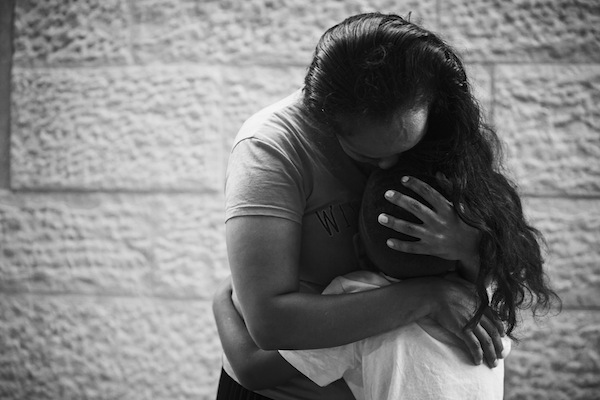
Canadian Hadassah-WIZO’s S.O.S. – Starting Over Safely campaign is 27 hours long, beginning at 9 a.m. PT on Aug. 23. (photo by Mickey Noam Alon)

With the COVID-19 government shutdowns and mandatory quarantines, domestic violence has increased significantly across the globe over the past two years. The drastic increase in intimate partner and domestic abuse has been coined the “Shadow Pandemic” by the United Nations.

In Canada, one woman is killed in a violent act every two-and-a-half days. According to the provincial ministry for public safety and Statistics Canada, every year in British Columbia there are more than 60,000 physical or sexual assaults against women – almost all of them committed by men.

In Israel, the situation is just as critical. In the first year of the pandemic, 20,140 domestic violence complaints were lodged with police, an increase of 12% from the previous year. Twelve women were murdered in the first six months of this year.

In accordance with its mission, Canadian Hadassah-WIZO (CHW) is working to empower women by stepping up emergency support and services at this critical time. CHW is launching the second annual S.O.S. – Starting Over Safely summer campaign, with proceeds helping empower victims of domestic violence in Canada and Israel.

One of the most frightening things about domestic abuse is that half of the women murdered by their partners never experienced physical violence before. Domestic violence can happen to anyone, anywhere, anytime. This year, through a new partnership with Michal Sela Forum, CHW is also promoting an awareness campaign to help women understand the warning signs in a relationship.

S.O.S. – Starting Over Safely 2022 has three campaign priorities, including Franny’s Fund in Canada, and WIZO programs and the Michal Sela Forum in Israel. The following campaign goals are intended to empower at-risk women and children to break the cycle of violence in Canada and Israel:

  • Provide help for parents and families in need of an urgent response;
  • Provide access to critical resources such as legal counsel and counseling services;
  • Provide women and their children with the basic essentials to start over safely;
  • Empower women and their children by providing financial help, social and personal support, employment support, and access to a network of other women in similar circumstances;
  • Provide women and their children with specially trained canine protection; and
  • Fund respite summer camp experiences for at-risk youth.

“CHW strongly believes that every human being deserves the right to achieve their full potential, while living in safety and security. You have the power to empower,” said Lisa Colt-Kotler, CHW chief executive officer.

The 2022 fundraising goal is $350,000. All funds donated will be matched three more times by a community of dedicated donors recognized as “Matching Heroes” during the 27-hour campaign, which kicks off at 9 a.m. PT on Tuesday, Aug. 23, 2022. During the crowdfunding period, each gift donated on the website chwsos.ca is quadrupled.

To donate or learn more, visit chwsos.ca.

– Courtesy Canadian Hadassah-WIZO

Format ImagePosted on August 19, 2022August 18, 2022Author Canadian Hadassah-WIZOCategories Israel, NationalTags CHW, domestic violence, fundraising, tikkun olam, women

Posts pagination

Previous page Page 1 … Page 163 Page 164 Page 165 … Page 664 Next page
Proudly powered by WordPress