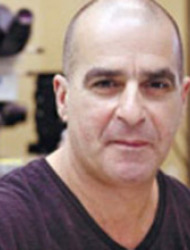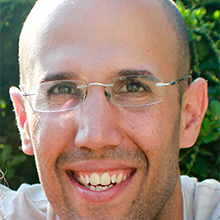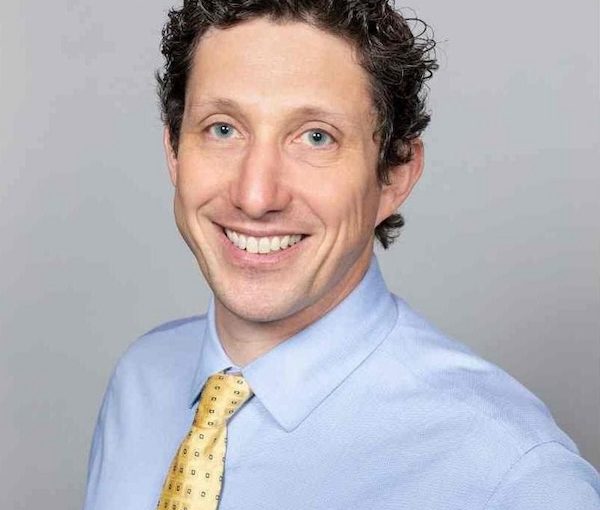
Members of the Clore & Roll Ensemble will perform in Vancouver on May 13. (photo from Clore Centre)
Every year, it is sobering to experience the transition from Yom Hazikaron, the day of remembrance for Israel’s fallen soldiers and victims of terrorism, into Yom Ha’atzmaut, the celebration of Israel’s Independence Day. This year, it will be even more so. And it will be especially poignant, given that the musical group headlining the local community gathering on May 13 is an ensemble from Kfar Blum, a kibbutz in the Galilee Panhandle, in northern Israel, where some 60,000 people have been evacuated because of the threats posed by Hezbollah in Lebanon.
The Clore & Roll Ensemble is an initiative of the music school of the Clore Centre for the Performing Arts, which also has a dance and theatre school. The centre was established in 1996 and approximately 1,000 students (which include adults) study there. They come from kibbutzim and moshavim in the area, as well as Druze and Arab towns.
“I’m glad to say that the conflict doesn’t get inside the centre,” Telem Chorin, chief executive officer of the Clore Centre and director of the ensemble, told the Independent. “Music is an international language and also an emotional language that connects people,” he said.
While the Clore Centre’s offerings remain afterschool programs, the centre has played a more important role in students’ lives since the Oct. 7 terror attacks that led to the current war.
“For some kids, the Clore is like a second home,” said Chorin. “Because, for some students, it is a more stable place than the hotel they were evacuated to, or the school that is currently closed or working partially.”
Despite being displaced, ensemble members have been coming together weekly to practise for the show in Vancouver. Rehearsals are at the centre.
“Last week, we had matriculation exams in dance and, during April and May, we will have matriculation exams in music playing,” said Chorin. “It is interesting to see how committed the students are to performing arts subjects even in such a period, and how much effort they have to invest – time, long journeys, sometimes even risking [their safety] and coming to Kfar Blum, even though it is relatively more dangerous here than in their homes or the hotels they have moved to. This shows how important it is to them and how much they don’t give up on it despite everything, and maybe even this is what keeps them ‘sane’ amidst all the chaos currently prevailing in the north.”
Some members of the ensemble have been playing together for more than five years in different capacities, but the group that is coming to Vancouver has only been playing together for the past three months, said Chorin. Due to the war and the evacuations, the group had to rebuild. “We’ve added additional musicians to the band so that you will have an amazing show!” he said.
Coming to Vancouver are Menachem Ofri (17, singer), Yaron Shir (18, singer), Kachtan Aviv (17, flute), Maman Moria (17, alto saxophone), Moyal Ido (17, tenor saxophone), Shem Tov Ido (19, trombone), Kovesh Gil (24, drums), Primor Adi (17, electric guitar), Fitzer Tal (16, piano) and Deutscher Goni (16, bass guitar). Also coming are Ziv Greenberg (music director), Ferry Stefan (dance teacher and dancer), Malki Smadar (administrative manager) and Kashri Noam (technical manager).
“Ofri, Ido Shem-Tov, Aviv and Noam were evacuated from their homes, and they are coming from all over the country to the rehearsals at the centre – sometimes, under rocket attacks!” said Chorin, who will join the band in the performance, on clarinet.
“Some of the students have already appeared in Edmonton and Calgary,” he said. “I have performed in Edmonton, Calgary, Windsor and Hamilton, but this is my first time in Vancouver and I am very excited! Some of the students were in Vancouver on student exchanges with their schools in Israel.”
Of what it means for the Clore & Roll ensemble to play a Yom Ha’atzmaut concert in the diaspora, Chorin said, “It is a great pride and honour to represent the state of Israel in general, and the Upper Galilee in particular, in such a show, on the eve of Independence Day, in a challenging time like now.”
The ensemble will present a wide-ranging repertoire.
“We are going to play modern Israeli songs (Idan Raichel, Mizrachit [Israeli pop]), classic Israeli songs and also some songs in English,” said Chorin. “A very diverse and happy program.”
“Bringing the Clore ensemble serves as a reminder of the unbreakable bond we share across borders,” said Dafna Silberstein, associate director of Israel connections and partnerships at the Jewish Federation of Greater Vancouver. “It is also an amazing opportunity for the ensemble of teens and young adults to take a break from what they have been through for the past six months. And, for us, it feels like it is exactly what we need this year: coming together as a community united for and with our brothers and sisters in Israel.”
Jewish Federation has supported the Clore Centre as part of the Coast-to-Coast Federations’ Collective and independently, “as the centre is in our partnership region of Kiryat Shmona and the Galilee Panhandle,” explained Silberstein.
“We have wanted to bring the Clore ensemble for awhile now, to showcase the impact our support has had on its students and have been waiting for the right opportunity,” she said, noting that it is “with mixed emotions” that Oct. 7 created that opportunity.
“This year, the commemoration of Israel’s 76th Independence Day holds an even deeper meaning and significance,” said Silberstein. “It is an opportunity to stand together in solidarity and celebrate our shared values. Considering the spike in antisemitism, the need for community unity has become more important than ever.”
For tickets ($18) to the May 13, 7:30 p.m., concert at Congregation Beth Israel, as well as information about other Israel@76 activities, visit jewishvancouver.com/israelhere.
A “Toronto for Palestine” protest Oct. 28, 2023. In the last six months, across Canada, such protests have often featured calls for violence against or the death of Jews. (photo by Sikander Iqbal)
In the past six months, protesters have targeted Jewish community buildings and synagogues in Montreal and the Toronto area. Jewish student group Hillel has also been a prime target for anti-Israel and anti-Jewish sentiment at Canadian universities, including in Vancouver. Similar protests caused the Art Gallery of Ontario to cancel an event with the Canadian and Italian prime ministers over security concerns. A man in Vancouver was charged with hate-related crimes over the defacing of Israeli hostage posters.
These are just a few examples of organized anti-Israel protests, often with calls for violence against or the death of Jews, on the streets and campuses across the country. Much of this activity is met with silence or borderline anti-Jewish remarks from many elected officials and leaders.
Trans and queer rights are also under attack in Canada with the premier of Alberta’s recent announcement of sweeping new anti-trans policies and Saskatchewan Premier Scott Moe’s use last year of the notwithstanding clause in the Charter to push through a law requiring parental consent for children under 16 who want to change their names or pronouns at school.
The confluence of these events and the ongoing need to carefully navigate the intersectionality of their identities has left many queer Jews feeling isolated, tired and disappointed.
Queer communities in Canada have long trended toward a pro-Palestinian point of view, often reflected in clashes over whether certain Jewish groups should be allowed to march in pride parades, Aviva Rathbone, board chair of JQT, a Vancouver-based Jewish queer and trans organization, told the Independent.
“Right now, what it means is that many of the Jews in the queer community, especially Israelis, but also Jews who would maybe call themselves Zionists or who feel complex about the situation in Israel and Gaza, are not welcome in queer communities,” she said.
“I did not know there was such thing as an anti-Zionist Jew until I moved to Canada,” said Ari Fremder, a 33-year-old who works in Vancouver’s animation industry. Fremder is originally from Zimbabwe.
As a trans person who is also autistic and introverted, Fremder said, they don’t leave their house very often anymore because of the anti-Jewish protests, posters and stickers – that frequently incite violence against Jews – in their neighbourhood.
They used to go to local queer events but said they don’t feel safe anymore, as many groups are pro-Palestinian and openly state Zionists are not welcome.
“I feel a lot safer being queer in the Jewish community than I feel safe being Jewish in the queer community,” said Jessie, a 21-year-old student and environmental activist in Ontario, who asked not to use their real name.
As one of few Jewish queer people in Halifax, Schuyler H. Smith said they are facing “more hate” than they’ve ever faced in that city.
The 33-year-old diversity consultant agreed that it’s more comfortable to be part of a Jewish than a queer community right now. They will, often with trepidation, reach out privately when they see antisemitic comments and remarks from queer community members, to try to dispel myths about Jews as white colonialists or as non-indigenous to Israel, for example.
Smith hopes one-on-ones can make people think twice before posting negative comments or memes about Jews.
Anti-trans policies in Alberta and Saskatchewan, attacks and protests at drag queen story times and other “parental rights”actions across the country are also taking a toll on members of the LGBTQ2S+ community.
“I’m scared, honestly, for young trans people who need this care and are being interfered with by politicians,” said Cas Allen, a 21-year-old university student in Victoria who says access to hormone blockers changed his life when he was 15.
Ezra, a 39-year-old trans teacher in Calgary, who prefers not to use his real name, said the government is pushing a lot of misinformation, but he’s heartened by the pushback from the queer community.
He’s committed to being a visible queer influence in his school, which has a high number of new Canadian immigrants.
“If there were any queer kids in the class, they could see themselves reflected,” he said, “and [I can give] them a safe adult to confide in [while] they decided who they are.”
Allen, who grew up in a religious Jewish family in Alberta, said since he transitioned, he has “recreated” his queer Jewish identity “from the ground up” but he’s once again finding it “complicated and messy” to reconcile both those parts of himself.
He said he feels isolated and unable to talk about his feelings regarding Israel and his Jewishness to the LGBTQ2S+ people he knows. He said the only person he can really confide in is his twin sister.
Queer spaces on university campuses tend to be very pro-Palestinian and are forcing students to choose between their Jewishness and being queer, said Rabbi Seth Goren, executive director of Jewish student group Hillel Ontario, which has a presence at nine universities in the province.
“I think that’s a choice that queer Jewish students shouldn’t have to make,” he said.
Many Jewish students feel like there is no place where the conflict isn’t swirling around them, added Rabbi Kylynn Cohen of Hillel BC. She said she’s had to help students who, after Oct. 7, couldn’t go to classes because of the anti-Jewish rhetoric, both from student groups and in classrooms.
Cohen said she sees more Jewish students hanging out in the Hillel building on the University of British Columbia campus, seeing it as a safe space. Many queer students have told her they go to straight bars to unwind now rather than congregating in gay spaces.
From Vancouver to Halifax, many queer Jews are feeling unsafe and isolated because of the increase in anti-Jewish and anti-trans sentiment since the Oct. 7 Hamas terror attack on Israel and the ensuing Israel-Hamas war. (photo by Maximilian Ruther / Pexels)
Many student-run groups and education-related unions have come out with strong anti-Israel statements. Six Canadian universities are facing class action lawsuits over anti-Jewish hate speech, threats against Jewish students on campus, and the silencing of Jewish voices.
There are also dozens of reports of Jewish students being shouted at, punched and spat on by anti-Israel protesters at universities across the country. Ontario student Jessie said, even though they’re at a university with a large Jewish population, there is constantly an “uncomfortableness” between their two intersecting identities.
Like many LGBTQ2S+ Jews, their stance on Israel is multi-faceted but they said they’re frustrated and have lost friends in the queer community who aren’t open to the nuances of how different Jewish people are feeling or to seeing the Jewish community as anything other than homogenous “white settler colonialist[s].”
Jessie wears a Star of David necklace but said they now often hide or remove it, including during their local drag king performances at which other performers have made pro-Palestinian tributes. They say they’d be “canceled” if they shared their support for the hostages or Israeli citizens during a show.
“There’s no space even for me to mourn or to acknowledge my feelings and what’s happening,” said Jessie.
There are, however, some Jewish queers for whom the past few months have been a time of solidarity and community building.
Non-binary Toronto artist Sadie Epstein-Fine said they are Jewish but were raised as an anti-Zionist. They’re a member of a group called Jews Say No to Genocide, whose membership is almost all queer Jews. Since Oct. 7, they say they’ve been “entirely surrounded by queer Jews” in a busy, activist environment.
They admit to looking white and acknowledge the privilege that brings, also recognizing that antisemitism is on the rise but saying they’ve been fortunate not to have felt it personally.
“We’re more concerned about Palestinian safety than we are about our safety,” Epstein-Fine said of their group members.
Beyond campuses, the past six months have seen bomb threats and attacks against Jewish schools and businesses, as well antisemitic graffiti and a rising number of other hate crimes aimed at Jews across the country. Police forces in some cities have enlarged their hate crimes units and set up hate-crime reporting centres in Jewish areas.
Darren Sukonick, 53, a Toronto businessman who has been involved with Jewish charities and community groups for decades, said he was surprised and disappointed at how widespread and swift anti-Jewish sentiment was across Canada after Oct. 7. He said he never thought he’d ever experience levels of hate like he’s seeing now.
“It was like being on a hike, turning over a log and seeing all this vermin crawling out from under it. That’s what it felt like,” he said.
On the other hand, Sukonick said many non-Jewish friends have reached out and shown support.
Calgary teacher Ezra said he frequently hears racist and hate speech about Jews, but not aimed at him, from his Grade 7 students. When he hears it, he addresses it with the kids in an effort to get them to see different points of view.
Sometimes, it’s easier to get out of bed and deal with all the negativity being hurled at both the trans and Jewish communities, said Ezra. Other days, he said, it takes a greater toll on his mental health.
Gail J. Cohenis an award-winning Toronto-based writer, editor and communicator.
Twenty years in the making, Egypt’s Grand Egyptian Museum is in a soft-opening period, with a section of the 81,000-square-metre site open for limited guided tours. (photo from Grand Egyptian Museum)
In biblical times, the Patriarch Jacob led his family to Egypt, the granary of the ancient Near East, to escape famine in Canaan. By the Roman era, the Nile River Valley and Delta – enriched by the Nile’s annual flooding with alluvial mud – had become the breadbasket of Rome. King Herod built an artificial harbour at Caesarea to facilitate the crucial maritime shipment of wheat to the imperial capital. Today, the once fabulously wealthy country is an economic basket case.
President Gen. Abdel Fattah el-Sisi and his military-industrial kleptocracy blame the country’s high birth rate for the inability to feed Egypt’s burgeoning population of 110 million people. Taking a page from Keynesian economic theory, the regime – which toppled Islamist leader Mohamed Morsi in a 2013 coup d’état – has triggered a free fall of hyperinflation and devaluations while building mega-projects to stimulate the country’s broken finances.
The country’s annual rate of inflation soared to 36% in February, the Central Agency for Public Mobilization and Statistics (CAPMAS) said on March 31. The Egyptian pound, called the guinea, traded at 20 to the American dollar as recently as 2020. Now, one needs 52 to buy a greenback in the flourishing parallel market. In the past 24 months, a crippling shortage of foreign currency has caused prices of goods and commodities to more than triple, forcing low- and middle-income Egyptians to further tighten their belts.
The result? Strained services, a bloated bureaucracy, a huge government budget and a staggering deficit.
Compounding the economic misery, Hamas’s Oct. 7 attack on Israel and the resulting Israel-Hamas war in Gaza have driven away tourists from the land of Pharaonic wonders and spectacular coral reefs. Houthi rockets targeting shipping in the Red Sea have shrunk revenue from the Suez Canal, which is down 40% this year versus the same period in 2023. And Russia’s invasion of Ukraine two years ago has driven up wheat prices and made subsidized bread – a staple for most Egyptians – more costly.
Notwithstanding Egypt’s inability to repay its current foreign debt of about $165 billion, el-Sisi’s immediate financial problems were eased in recent weeks thanks to a bailout, more than $23 billion provided by the International Monetary Fund (IMF), the World Bank and the European Union.
At the same time, the United Arab Emirates launched a rescue plan to prop up its ally through the Ras el-Hekma deal announced last month. The vast real estate project envisions a new city on the barren shores of the Mediterranean Sea near the site of the pivotal Second World War battle of El Alamein. It was concluded in exchange for $24 billion in cash liquidity and $11 billion in UAE deposits with the Central Bank of Egypt, which will be converted into Egyptian pounds and used to implement the project, reported Reuters.
Where then has Egypt invested, or perhaps squandered, its largesse?
One expensive pet project has been to expand the quasi-governmental Egyptian Railway Authority’s network of standard-gauge train tracks. The system, the oldest in the Middle East, dating back to the 1854 line between Alexandria and Kafr el-Zayyat on the Rosetta branch of the Nile, now extends across 10,500 kilometres. A further 5,500 kilometres are currently in construction, including high-speed lines from Alexandria west to Mersa Matruh, Cairo south to Aswan, and Luxor east to Safaga via Hurghada.
Equally ambitious are plans to expand the country’s clogged highways. Transportation Minister Kamel al-Wazir, who took over the accident-plagued portfolio from Hisham Arafat following the 2019 Ramses Station train disaster, in which 25 Cairenes were killed and 40 injured, plans to complete 1,000 bridges, tunnels and flyovers this year.
Key to the plan to clear Cairo’s traffic woes is to complete an ambitious, shimmering new capital 50 kilometres east of the megalopolis, whose population is estimated to be more than 22 million people. The so-far-unnamed New Administrative Capital, under construction for nearly a decade, is located just east of the Second Greater Cairo Ring Road. It includes more than 30 skyscrapers, the most striking of which is the 77-floor Iconic Tower – the tallest building in Africa. Equally noteworthy are the 93,000-seat soccer stadium, the Fattah el-Aleem Mosque, accommodating 107,000 worshippers, and the Nativity of Christ Cathedral, which has room for 8,000 Copts.
To date, 14 ministries and government entities have relocated to the New Administrative Capital, but the city remains a largely lifeless white elephant with few residents.
Apart from these vast infrastructure projects, Egypt has been burnishing its cultural heritage. In 2022, the Ministry of Tourism and Antiquity launched the Holy Family Trail, stringing together some 25 stops along the celebrated route that Jesus, Mary and Joseph took to escape King Herod’s wrath. Last year, the government restored the medieval Ben Ezra Synagogue in Fostat (Old Cairo), the home of the Cairo Geniza. The long-delayed Grand Egyptian Museum in Giza near the Pyramids is scheduled to officially open this summer – though no date has been announced.
The top part of the Merneptah Stele, inscribed by the New Kingdom pharaoh, dated around 1208 BCE. Line 28 reads: “Israel is laid waste – its seed is no more.” (photo from Grand Egyptian Museum)
Twenty years in the making, the GEM is currently in a soft-opening period, with a section of the 81,000-square-metre site open for limited guided tours.
Touted as the largest archeological museum complex in the world, the GEM will house more than 100,000 artifacts. It will showcase the treasures discovered in the tomb of Tutankhamun in 1922. Other highlights will include a restoration centre, an interactive gallery for children and the Khufu Boat Museum.
King Tut’s funerary possessions had been on display at downtown Cairo’s Egyptian Museum in Tahrir Square, a hopelessly inadequate leftover from Britain’s colonial rule. There, a decade ago, I wandered in sensory overload gawping at the Aladdin’s Cave of Wonders. As if guided by divine providence, or perhaps Ra or Isis, I stumbled upon the Merneptah Stele – a three-metre-high piece of black granite inscribed by the New Kingdom pharaoh, dated around 1208 BCE, which was discovered in Thebes in 1896 by archeologist Flinders Petrie. Line 28 reads: “Israel is laid waste – its seed is no more.”
For me, it symbolizes the cold peace Israel and Egypt have enjoyed since 1979. Though few Israelis would wish to repudiate that historic agreement, many share the sentiment of Eitan Haber, the confidant of former prime minister Yitzhak Rabin, who said: “The Egyptians don’t like us and – why deny it? – we don’t like them.”
School girls, Lord Strathcona School, 1915. The JMABC Walking Tours take participants on a journey through the girls’ Strathcona neighbourhood, as well as to the Mountain View Jewish Cemetery, where many of the community’s pioneers are buried. (JMABC L.00172)
This summer, the Jewish Museum and Archives of British Columbia is once again offering opportunities for time travel. JMABC Walking Tours are back, taking guests on an immersive journey into Vancouver’s Jewish past. All you need to bring for the journey is your curiosity – and a hat and water!
The Jewish presence in British Columbia goes back 166 years, to the days before Vancouver was established as a city. Early Jewish immigrants arrived in the region during the 1850s Klondike Gold Rush, along with masses of other hopefuls seeking fortune in the wilderness of the BC Interior. Unlike their contemporaries, early Jewish gold-seekers did not head to the mines. Instead, they opted to sell supplies to those seeking gold. In the mines, there was no guarantee that gold would be found; in the shops, even unsuccessful miners needed provisions, thus guaranteeing an income for the shopkeepers.
The earliest Jewish community in the province was based in Victoria. It was primarily made up of businessmen and their families, who had profited during the gold boom. As the rush petered out, Jewish-owned outfitter shops transformed into general stores or niche market suppliers that specialized in items such as stoves, fabric, dry goods and other essentials, updating their stock as necessary to meet the changing needs of the times. When Vancouver was officially established in 1867, Jewish storefronts in Gastown were among some of the earliest establishments along the main thoroughfare of Water Street.
Eventually, attention in the region turned away from mercantile pursuits and towards the burgeoning real estate market. With the completion of the CPR and the dedication of Vancouver as its terminus station, the railway company began selling off large packages of land that had been taken from Indigenous communities. Real estate investors jumped at the opportunity, and Jewish businessmen were among some of the first investors in what would later become the residential and commercial neighbourhoods of Downtown Vancouver. As the city expanded, surveyor groups purchased large swaths of the forested area to the south, which now comprises the bulk of the City of Vancouver. During this time of growth, Jewish real estate moguls were instrumental in securing space for a Jewish section within the then-newly established Mountain View Cemetery.
Around this time, the whispers of two core Jewish neighbourhoods sprang up: the West End, where those with more resources and status would settle; and the East Side, where immigrants and other lower-income families would congregate. The latter neighbourhood, Strathcona, was the closest residential area to the hub of the city. While the Jewish community eventually moved towards Fairview Slopes and Oak Street in the 1950s, the Strathcona neighbourhood continues to stand as a testament to the historic challenges and achievements of British Columbia’s early immigrants.
The JMABC walking tours seek to engage audiences in the remarkable structures and values that have contributed to Jewish life here over its history. Each tour introduces participants to the iconic characters, stories and cultural phenomena that formed the Jewish community’s foundations, and it is hoped that participants emerge from each experience with greater insight and new perspectives, inspired to continue building the legacy of the community in Vancouver.
Jewish Strathcona: The Architecture of Community-Building (JMABC Walking Tours July 7, July 21 and Aug. 18, at 11 a.m.)
Since the city’s early beginnings, Vancouver’s East Side neighbourhhood of Strathcona has been home to multiple waves of immigrant communities. From the 1880s through the mid-20th century, Jewish immigrants were among the ethnic minorities that claimed these streets as home. As early as the 1850s, these Jewish pioneers were establishing essential services and buildings to accommodate the vision of a thriving Jewish community.
The JMABC tour of Strathcona highlights the themes of social welfare, family and tradition as cornerstones of Jewish communal development. The tour follows the journey of early immigrants to this area and the paths they took to found and build communal structures and social groups. Through the magic of storytelling, participants are transported back in time and immersed in the experiences of those who laid the groundwork for the expansive Metro Vancouver Jewish community we have today.
Mountain View Jewish Cemetery: Exploring Common Grounds (JMABC Walking Tours July 14 and Aug. 4, 3 p.m.)
Despite its context and location, this tour is all about life! Like its sister tour in Strathcona, this experience transports audiences back in time to get to know the once-lively personalities of the people buried in the Mountain View Jewish Cemetery. Tour participants are encouraged to engage with the space and explore the unique aspects of the surroundings, looking beyond the façades of stone and dirt to understand the deeper nuances of this historic site. Using an audience-guided model, this tour can be repeated multiple times, with variable content and direction, stemming from three focal themes: the people, the stones and the stories. Each area of focus gives its audience new perspectives on the significance and role of a cemetery as a foundational pillar of Jewish community.
* * *
To join a tour or to book a private one, contact the JMABC office at 604-257-5199 or [email protected].
– Courtesy Jewish Museum and Archives of British Columbia
Left to right: Ken Levitt, Tamara Frankel, Tammi Belfer and Marie Doduck. (photo by Marchant Photograophy)
A Night at the Catskills emcee Michael Geller. (photo by Marchant Photograophy)
The Jewish Seniors Alliance commemorated their 20th anniversary with a gala titled A Night in the Catskills, which showcased Jewish humour from past to present.
On March 17, Schara Tzedek Synagogue was filled with more than 230 supporters and guests who reveled in an evening of good food and timeless humour. I was co-chair of the event with Michael Geller, who masterfully emceed the proceedings.
More than 230 people attended the Jewish Seniors Alliance gala, which took place at Schara Tzedek Synagogue on March 17. (photo by Marchant Photograophy)
The night commenced with a warm welcome from JSA president Tammi Belfer and a tribute to the late Serge Haber, whose foresight laid the foundation for the seniors alliance two decades ago. The JSA is dedicated to supporting the welfare of all seniors, irrespective of race, religion or sexual orientation, through advocacy, peer support, education and outreach.
MLA Michael Lee makes one of the night’s 50-50 draws, as Tim Bissett and Marilyn Berger await the result. (photo by Marchant Photograophy)
The entertainment lineup featured archival footage of renowned Jewish comedians, whose jokes still elicit laughter, alongside contemporary comedians like Kyle Berger and David Granirer, founder of Stand Up for Mental Health, and magician Stephen R. Kaplan, also known as “The Maestro,” all of whom enchanted the audience with their humour. I capped off the night with my “bucket list” stand-up sit-down comedy act, leaving the crowd in high spirits. (I delivered my routine from my wheelchair, if you’re wondering about the sit-down part of my stand-up.)
Gala attendee Gary Averbach waits as magician Stephen R. Kaplan forms his prediction. (photo by Marchant Photograophy)
Guests enjoyed deli offerings from Omnitsky Kosher and desserts and service by Nava Creative Kosher Cuisine. Tim Bissett provided concierge service, working in tandem with JSA volunteers, who merit special recognition for their efforts in facilitating every aspect of the event, from its inception to festive conclusion. A special acknowledgment is also due to JSA staff members Miguel Méndez, Rita Propp and Jenn Propp for their dedication and extra hours spent supporting the volunteers.
Heartfelt gratitude is extended to all who generously contributed to the success of JSA’s 20th-anniversary celebration.
Marilyn Berger is a past president and a life governor of Jewish Seniors Alliance. She was a co-host of and performer in JSA’s gala, A Night in the Catskills.
CTeen Shabbaton Havdalah in Times Square this past February. (photo from Chabad Richmond)
Richmond teenager Miriam Kriche addressed a global audience at the CTeen (Chabad Teens) International Jewish Teen Summit in New York City during the group’s annual Shabbaton. She shared her story of overcoming adversity and emerging as a local leader, guided by Rabbi Yechiel Baitelman of Chabad Richmond. Kriche’s story highlights the resilience and strength of Jewish youth, particularly significant in the wake of the events since Oct. 7.
Active in CTeenU and the Richmond CTeen chapter – projects of Chabad Richmond and the Bayit – Kriche has made significant contributions through her volunteer work with the Hebrew school and support for Holocaust survivors. Her journey is marked by personal challenges and a transformative trip to Israel.
The summit, which took place in New York Feb. 22-25, brought together more than 3,000 participants from 58 countries. It provided a platform for Jewish teens to connect, share their stories, and reinforce their commitment to their heritage and values during challenging times.
Kriche’s speech, infused with personal anecdotes and reflections on Jewish identity, encouraged her peers to find their purpose and connect with their community. Her message, which centred on the belief that everyone has a place and a role within the Jewish tradition, underscored the summit’s aim to empower Jewish youth.
She shared her journey of facing bullying and alienation, which led her to question her identity and purpose. She spoke of a trip to Israel that rekindled her faith and connection to her Jewish roots, inspiring her to embrace her heritage and lead with conviction.
The CTeen Summit featured a series of workshops, leadership training sessions and a Havdalah ceremony in Times Square.
“In a world where our youth are bombarded with countless challenges to their faith and identity, teens like Miriam Kriche stand as living examples, empowering the teens to hold strong and be ambassadors of their faith back home,” said Rabbi Mendy Kotlarsky, vice-chair of CTeen International.
Kriche’s participation and the presence of the Richmond delegation at the summit demonstrate the impact of youth leadership in fostering strong Jewish identities.
“Our teens have returned invigorated, ready to lead and make a difference within our community and beyond,” said Baitelman. “This experience has not only deepened their connection to their Jewish identity but has also empowered them to be a source of strength and inspiration to their peers.”
CTeen Richmond, sponsored by Chabad Richmond and the Bayit and led by Rabbi Schneur and Tamara Feigelstock, is a part of CTeen, a network of Jewish teenagers encompassing more than 730 chapters, focused on empowering Jewish teenagers to become leaders in their communities through acts of kindness, community service and a strong commitment to their values.
For more information about CTeen Richmond and upcoming events, contact Rabbi Feigelstock at 604-716-2770.
אירועי השבעה באוקטובר שהביאו למלחמה הקשה בין ישראל והחמאס ברצועת עזה הגבירו משמעותית את השנאה והאנטישמיות כלפי יהודים וישראלים שגרים בעולם. נשאלת השאלה האם הםנמצאים בסכנה קיומית? והאם השנאה והאנטישמיות יתמתנו לאחר סיום המלחמה בין ישראל והחמאס
לאור אירועי השבעה באוקטובר שהציגו תמונה קשה מנשוא של פעילות החמאס הרצחנית שכללה גם מעשי אונס והתעללות, ישראל, ישראלים ויהודים בחו”ל זכו לסימפטיה לתקופה קצרה שנמשכה כחודש ימים. אך כשהעולם רואה את מאות אלפי אזרחים בהם נשים ילדים רבים שנהרגו לאור הלחימה של צה”ל מול החמאס, הסימפטיה וההדה התחלפה בשנאה ואנטישמיות גלויה מול ישראל כמדינה, וכן כנגד ישראלים ויהודים שגרים ברחבי העולם. ככל הלחימה ברצועת עזה נמשכת, שמביאה להרס גדול תמונות קשות מתפרסמות בכל העולם של ילדים רעבים ורבים רבים שמתים בקרב האוכלוסייה המקומית, להבות השנאה גדלות בצורה חריפה ביותר
ישראלים ויהודים רבים בעולם המערבי שכולל את מדינות אירופה, ארה”ב וקנדה, מורידים פרופיל בחיי היום יום שלהם, מסתירים סממנים יהודים וישראלים ובודקים מי עוקב אחריהם. עד כה נרשמו הרבה תקריות נגד ישראלים ויהודים במדינות שונות וכנראה המצב אף יחריף, כל עוד נמשכת הלחימה ברצועת עזה ונרשמים הרבה קורבנות בנפש. לפי שעה אספקת מזון ומצרכים חיוניים לאוכלוסיה המסכנה של עזה רבתי, לא מספיקה
המלחמה בעזה הציתה כאמור את האנטישמיות בעולם שמגיעה לרמות גבוהות ביותר
יתכן ובמדינות דרום אמריקה זה לא מורגש אך בכל המערב זה מורגש כל הזמן וכל יום. תקריות נגד יהודים וישראלים נרשמות כל העת בערים רבות בעולם בהן ברלין, ניו יורק, לוס אנג’לס, לונדון, מונטריאול, טורונטו ועוד ועוד
ונקובר כרגע יחסית שקטה אך מדי סוף שבוע יש כבר הפגנות של פלסטינים ותומכיהם. להערכתי כשלושת אלפים משתתפים מגיעים לאירועים אלה שמתקיימים בעיקר בדאון טאון. אלפים צועדים לעבר הכיכר המרכזית בעיר – בין הרחובות רובסון ווסט ג’ורג’יה -והמשטרה סוגרת את הרחובות. זו תמונה לא נעימה כלל וכלל. הפגנות התקיימו גם בגשרים מתחברים לדאון טאון (בוארדד וגרנוויל) והתנועה התעכבה במשך שעות. הפגנות קטנות יותר מתקיימות באזורים מרוחקים יותר במטרו ונקובר
אתה אף פעם לא יודע מי יעמוד מולך ברחוב או בחנות האוכל וכידוע שונאי ישראל לא מבחינים במי תומך במדיניות ישראל במאה אחוז ומי שמתנגד למלחמה בעזה שהביאה לקורבנות רבים ורעב גדול. רבים הפכו לעיוורים לאור הסכסוך הנוכחי. וזה מצב חמור בפני עצמו
בנסיעה להוואי לא לקחתי לראשונה ספר בעברית אלה באנגלית. לא רק לטיסה אלה גם לקריאה בחדר במלון. בחדר אני לא נועל את הדברים כיוון שזה רק יכול לעורר חשד שאני מחביא משהו בעל ערך. לכן אין יותר ספרים בעברית בנסיעות
אני כידוע לא מדבר עברית ברחובות אך כשיש מפגש עם חבר או שניים דוברי עברית בקפה אין לי ברירה, כי הם לא מוכנים להסתתר ולדבר באנגלית ודווקא מבקשים לדבר בעברית
כשאני מדבר באנגלית עם מקומיים הם מבחינים במבטא שלי. רובם חושבים שאני בא מרקע צרפתי או גרמני שזה לא רע. אך אין לדעת מה יכול לקרות אם מישהו שאינני מכיר ידע שאני ישראלי לשעבר
הדברים רק הולכים ומחמירים. לא ידוע לאף אחד מאיתנו האם תירשם רגיעה במצב או השנאה והאנטישמיות אף יחריפו. להערכתי יקח עוד זמן רב עד שנרגיש להקלה במתח והחיים יחזרו למסלולם במדינות המערב. התקווה בסוף תנצח
Selina Robinson, centre, with then BC premier John Horgan and Kate Ryan-Lloyd, clerk of the Legislative Assembly, at Robinson’s swearing-in ceremony in 2017. (photo from Selina Robinson)
Selina Robinson says she was fired from the British Columbia cabinet. Premier David Eby says she quit.
This is merely the tip of an iceberg in the conflicting stories that have roiled BC politics since Robinson’s cabinet career ended in February – and which burst into an even bigger storm when she left the New Democratic Party caucus March 6 with an incendiary letter to caucus colleagues.
Whether Robinson jumped or was pushed, Jewish community leaders and opposition politicians are denouncing what they say is a double standard, with multiple people – including the premier – getting second chances for remarks that were at least as impolitic as Robinson’s.
In a wide-ranging interview with the Independent, Robinson maintains the premier prevented her from doing precisely the work he called on her to do – another point that Eby contradicts. He thought her acts of contrition were proceeding just fine and suggests he was blindsided by her resignation from caucus.
Perhaps the prickliest aspects of the entire controversy are the motivations of the individuals involved. Robinson, opposition officials and many in the Jewish community see antisemitism at play. Government officials – including the cabinet minister Robinson says the premier “trotted out as the new Jew” – say that the evidence doesn’t amount to racial bias.
The bones of the story are familiar by now – but Robinson shared with the Independent personal reflections and sharp critiques of former colleagues, including Eby, fellow New Democrats who she accuses of profound insensitivity in the aftermath of the Oct. 7 Hamas terror attacks, a death threat that is now in the hands of international policing authorities, and how everything might have been different if John Horgan were still premier.
Poor choice of words
The drama began with words Robinson spoke in a Jan. 30 webinar organized by B’nai Brith Canada featuring Jewish elected officials from across Canada – or, at least, that is how most media coverage frames the controversy. Robinson said she has had a target on her back since much earlier, as a Jewish woman with emotional, spiritual and familial connections to Israel. That targeting came from within her own party, she claims, and she went into some depth about her fights with fellow New Democrats in recent months and years over the issue.
During the January webinar, Robinson said that the area designated for a Jewish state under the 1947 United Nations Partition Resolution was “a crappy piece of land with nothing on it.”
She immediately clarified in the webinar that there were people living there and she was referring to the arability of the land and the limited economic development in the region. But the genie was out of the bottle. Robinson told the Independent that what happened in the succeeding weeks – and continues roiling – is not so much a result of what she said, but of who she is.
Marvin Rotrand, the outgoing national director of B’nai Brith’s League for Human Rights, was host of the now-notorious webinar. In a statement afterward, he said that a small part of Robinson’s speech was distorted and taken out of context, leading to a campaign against her by groups and individuals “too well known for their hate of Israel.”
Within days, thousands had signed a petition calling for Robinson’s firing. Leaders of more than a dozen mosques and Islamic associations sent a letter to Eby warning that NDP representatives would not be welcome in their sacred spaces as long as Robinson remained in cabinet. Days later, her constituency office was vandalized – including with the words “Zionism is Nazism” – and she received a death threat that international police organizations deem credible.
Feb. 5, 2024: Premier David Eby announces that Selina Robinson will step down from her cabinet position. (screenshot)
While pressure was building, Robinson and Eby both appeared to be feeling their way through uncharted territory. Robinson apologized – twice. She also offered to take anti-Islamophobia training.
“My words were inappropriate, wrong, and I now understand how they have contributed to Islamophobia and anti-Palestinian racism,” she said.
Parallels Robinson drew between Indigenous peoples in British Columbia and Jewish indigeneity in Israel also brought condemnations, and she specifically apologized for those remarks.
“The experiences of First Nations people are not mine to manipulate,” she said. “That was wrong and I am deeply sorry.”
“Her comments increase divisions in our province,” Eby told media. “They increase the feelings of alienation of groups of people, especially people of Palestinian descent and people who are concerned about the death and the destruction in Palestine that is happening right now.
“She has apologized unequivocally, as she should. And she’s got some more work to do,” Eby said. Robinson, the premier told media, was in the process of reaching out to community leaders to repair the damage her remarks caused.
What happened in those hours sowed the seeds for further conflict within the party, including, Robinson now says, the premier’s refusal to allow her to do what she could do – and wanted to do – torepair the damage she caused.
Was she wrong?
Some commentators have defended Robinson, saying that pre-state Israel was indeed a crappy piece of land in terms of arability. Robinson reflected on what she said and the reaction to it.
“I said things that I did not intend to hurt anybody,” she said. “I did not intend to make Arab, Muslim or Palestinian people feel like they are ‘less than.’ I understand that just the way I described Israel made them feel like they were poor land stewards, that they somehow were to blame for the conditions.”
Nevertheless, she said, she did not invent a narrative that Mandatory Palestine was a poor piece of land, she said.
“Other people have characterized [pre-state] Israel in that way,” she said. “I didn’t create that narrative. I was repeating a narrative that others had stated, from Mark Twain to land economists.”
For the purposes of historical accuracy, she said, she blames the Ottomans, whose empire had controlled the land for 400 years, for a lack of economic vibrancy in the region. That long-ago history, though, does not mean her words did not affect contemporary audiences, she acknowledged.
“Those words impacted them,” she said of people who expressed disappointment and other emotions at her remarks.
Criticism she rejects, though, are assertions that she espoused hate.
“I didn’t espouse hate,” she said, slowly, quietly and firmly. “I said words that hurt people. There was no hate in those words.”
These nuances, for what they may be worth, made no difference when it came to Robinson’s continuation as a cabinet minister.
Jumped or pushed?
“The depth of the work that Minister Robinson needs to do, in order to address the harms that she’s caused, is significant,” the premier told media Feb. 5. “[S]he screwed up, she made a really significant error and so we need to address the harm that was caused by that.”
At a news conference, Eby said a “joint decision” was made that Robinson would leave cabinet.
While she agreed to that wording, Robinson told the Independent, that is not a correct assessment of what happened.
“I didn’t think that I needed to leave cabinet,” she said. “That was not my choice. The premier was insistent that I had to.”
Robinson says Eby seized on something she said during discussions around her future.
“I said, ‘If you are asking me to step down from cabinet, if that’s what you want, I will,’” Robinson recalled. “It’s not what I want. And he said, ‘I can’t see a path forward for you in cabinet.’ So I said, ‘So you’re asking me to resign.’”
Robinson said she insisted the announcement from the premier’s office say that the premier asked her to resign.
“And they said, no, you offered your resignation,” Robinson continued. “And I said … the most you’ll get from me is that it was a joint decision and that’s what the press release [said], a ‘joint decision.’ But … let’s be really clear, as I said in my letter [resigning from caucus], I was told that there was no path back.”
Eby denies this.
“I did not remove her,” the premier told the Independent. “I can certainly believe that she didn’t want to do that, but I did accept her resignation.”
Leaving caucus
Robinson’s successive apologies and commitment to undergo anti-Islamophobia training didn’t save her cabinet job. But, she said, she was committed to making amends.
“The concept of teshuvah [repentance], for us as Jews, I take it seriously,” Robinson said, “It’s not enough to say you’re sorry, what are the deeds that go with it?”
Robinson came up with an idea she terms “The Project.”
In the aftermath of her firing, followed by the vandalizing of her constituency office and a death threat, Robinson and her family took off for a week in Mexico to recuperate.
“I called the premier from Mexico and said I have an idea, what do you think?” she recalled. “It was around outreach, working with the [Jewish and Muslim] communities, bringing them together … what did he think?
“And he said that’s a really interesting idea, let’s think about it,” Robinson said.
When she returned from Mexico, she talked to the premier’s chief of staff, Matt Smith. She fleshed the idea out some more, proposing that she and perhaps someone from the civil service – a Jewish person and a Muslim person – “would work with these communities and try to find ways to do dialogue and engagement and break bread and do the things that bring about peace and what could that look like,” said Robinson. She discussed the concept with Deborah Lyons, Canada’s special envoy on Holocaust remembrance and combating antisemitism, who was supportive and offered to do anything she could to support the effort, Robinson said.
After contemplating the idea, Smith came back with his decision: “Too political,” Smith said, according to Robinson.
The premier told the Independent that the idea that a civil servant would work on the project with an elected official is what was “too political.”
Robinson doesn’t believe that. “It was more, we’d prefer to be silent on the whole thing,” she said.
Silence, she contends, is a root of the entire problem – not just with her firing but around the government’s approach to antisemitism. The premier and the government, she contends, are more concerned with success in this fall’s election than with doing the right thing.
“We are in election mode,” she said. “And, frankly, we’ve been in election mode since [Eby] became the premier [in November 2022]. I get it. I’m a politician. I understand the gig, I know how these things work.
“However,” she said, “we are also government. We are a party trying to get reelected and we are government, and you have to be able to do both at the same time. It’s hard. I’m not saying it’s easy. But you can’t give up the governing part and just do campaign mode. You campaign and you govern simultaneously and I think what’s happened is they stopped governing. A government says, we have a problem, what are we going to put in place to help this community that is being terrorized? And it’s controversial, because there are others who think it’s appropriate to terrorize this community. I think what governments are supposed to do is bring people together. Right now, the actions are ripping people apart.”
The fact that the premier’s office would not allow her to engage her colleagues in a broader discussion about both antisemitism and Islamophobia led her to believe there was nothing she could do that would satisfy the government.
“I committed to a number of deeds and have acted on them and that still wasn’t good enough,” she said.
While the government seemed unsatisfied with her efforts, many Muslim people have been more forgiving, she said. Many have expressed forgiveness for her words and accepted her apologies – she has accepted Iftar invitations and extended seder invitations to Muslim friends and acquaintances, she said.
“There are Arab and Muslim leaders that I have had wonderful conversations with, heartfelt conversations,” she said. “I could hear the agony in their voice and they could hear the agony in mine.”
That kind of amity, though, was not something she found among her NDP colleagues. On March 6, her 60th birthday, Robinson released a statement resigning from the NDP caucus.
Harsh words for Heyman
The day after Robinson’s resignation, the premier’s office organized a news conference at the Legislature. George Heyman, BC minister of environment and climate change strategy, told the media that he took exception to the assertion that Robinson’s resignation represented “our government [having] lost the only Jewish voice in our caucus or cabinet.”
“They should know,” said Heyman, “that I’m also Jewish. I grew up as a Jew.”
His experience in the NDP, Heyman said, does not comport with Robinson’s perceptions.
“My experience is that our caucus and our cabinet are deeply committed to fighting antisemitism, to opposing hatred and I have found them to be personally supportive of me on an ongoing basis,” he said.
“He was trotted out as the new Jew, which was a shonda [shame], as they say, on so many different levels,” claims Robinson. “I believe George was put up to it. I know how things work. They didn’t want me to be the only Jewish voice.
“But George doesn’t identify as a Jew,” she said. “He’s told that to so many people. He’s not connected to the community.”
Robinson thinks Heyman allowed himself to be used.
“You thought it was OK? So, the premier asks you, you could have said I’m not going to do that.”
Heyman takes exception to Robinson’s comments about his identity and especially about the idea that he was put up to anything.
“People who know me know that I don’t do things that I don’t want to do,” he told the Independent. Heyman said he was moved to address the issue as soon as he heard opposition MLAs claim the government had lost its only Jewish voice.
On the larger issue of his identity, Heyman said it is up to individuals to self-define.
“I think it’s actually my and every Jew’s right and responsibility to determine in what ways they identify and connect with their own heritage, which is not the same as practising a particular religion,” he said. “My position as a child of Holocaust refugees and as a grandchild of Holocaust victims is, I think, fairly well known. I certainly haven’t hidden it. I may not be a member of the Jewish community in the same way that Selina is. I am not a practising Jew, but to say that I don’t identify as a Jew I think is simply inaccurate.”
Is it antisemitism?
Robinson said media have tended to misrepresent her comments about antisemitism in the NDP. She did not say the party was rife with antisemites. Her letter of resignation from caucus included several incidents – and most of these were matters of record. She herself has experienced antisemitism directly only from two colleagues, she said.
Immediately after the Oct. 7 terror attacks, Robinson said, she sent a message to her colleagues noting that the Jewish community in British Columbia was experiencing trauma as a result of what was happening, including the murder of a young Vancouver man, Ben Mizrachi, and expressions of solidarity and condolences were in order.
Days later, she said, two of her colleagues – Aman Singh, MLA for Richmond-Queensborough and parliamentary secretary for the environment, and Katrina Chen, MLA for Burnaby-Lougheed – responded to her message by stating that the government should express solidarity with Palestinians.
“Three days after, maybe four days after the massacre, [they] felt that it was appropriate to put out a statement about how Palestinians were treated,” Robinson said. “Ben Mizrachi hadn’t been buried yet. The [Israeli military] hadn’t responded.”
Robinson was outraged.
“This isn’t about that,” she said of responding to expressions of Jewish suffering with demands for solidarity with Palestinians. “Could you not take a moment – a moment – to reflect on how horrible it is that a terrorist group came in and slaughtered 1,200 people? Just acknowledge it. Just acknowledge that that was wrong and we need to fight against terrorism.”
Robinson does not understand how people cannot see antisemitism in the erasure of Jewish suffering.
“Jewish suffering is discounted,” she said. “It’s [perceived as] not real, it’s fake. It has no value and diminishes another group of people who are suffering.
“This isn’t a competition of who is suffering more,” Robinson said.
She called the premier immediately upon seeing the messages from Singh and Chen.
“I said, I can’t deal with this. I can’t deal with those two. I just can’t,” she said. “And he said, let me deal with it. I was grateful. It felt like he had my back.”
Robinson never heard from Chen, whose social media feed frequently shares Palestinian memes and messages. On the day Robinson released her resignation letter this month, Chen tweeted: “Not wanting to see more kids and people die in Gaza is not antisemitism.”
An hour after she took it up with the premier, Robinson said, she heard from Singh.
Neither Singh nor Chen responded to the Independent’s request for comment or clarification on Robinson’s version of events. However, the Independent has seen the text Robinson referenced and, in it, Singh called the Oct. 7 attacks “absolutely horrific” and said Hamas “should be brought down.” He also expressed empathy with Robinson and her family in Israel.
“I wanted us as a caucus just to recognize the pain in Gaza as well,” he wrote, adding that he was not calling on the government to make a statement in that regard, “[b]ut internally I felt that needed to be said.”
Additionally, the original email Singh sent was on Oct. 12 and, therefore, after the beginning of Israel’s military actions, not before, as Robinson had claimed.
While Chen and Singh did not comment to the Independent, Heyman defended them, also noting that the emails Robinson cited were “private communications within caucus.”
“It was disturbing to me that her interpretation of actions of a number of my colleagues were that they were antisemitic,” Heyman said. “These are colleagues I respect. I’ve had many conversations with them and I know how deeply committed they are to fighting antisemitism and to fighting all forms of hatred.”
Robinson, in any event, did not consider Singh’s text an apology and did not respond. Nor has she spoken to Singh since.
“If he had come up to me and said, ‘Selina, you never acknowledged my apology, can we talk about it?’ I would have,” she said. “But I really felt like he did not get it.”
Not getting it is, Robinson thinks, the problem. It is not that her colleagues are overt Jew-haters, but that they do not know what antisemitism looks like and refuse to take the time to find out.
“What I tell them is you don’t know enough about antisemitism in its newest form,” she said. “I think for them it’s name-calling, swastikas – I think that for them is really clear. The new form of antisemitism that we are seeing … [includes] the delegitimization of Israel, [the idea] that Jews are responsible for Israel’s political decisions or military decisions, Israel as colonizer, Jews as white people, therefore, the oppressor – I don’t think they have a frame for how to make sense of that.”
Criticism of Israel is not antisemitic, she said. Denying Israel’s right to exist, which is the position of many of the people who wanted her out of office, is.
“What you’re saying is Jews shouldn’t have a homeland, that their history of continually being pushed out of those lands over time, over millennia, you want that to continue,” she said. “If you don’t recognize the legitimacy of Israel as a nation-state, then that contributes to Jew-hatred.”
Taking the North American settler-colonialism model and applying that lens to Israel and Palestine is simply wrong, she said.
“It is inaccurate, it is a false narrative, it is patently not true. And, as a result, they are engaging in antisemitism,” said Robinson, whose own comparison of North American indigeneity to the Middle Eastern model drew condemnation. “I don’t think that they want to be antisemitic but they are, because they don’t understand and they’re not taking the time to learn how that history is different from this history here in North America. I think that’s where those folks are going wrong. What’s the solution? Education. Learn the history. And you’re not going to get it from TikTok and you not going to get it from Twitter, so you need to do some – I’ll use the premier’s words – you need to do some deep learning.”
When it comes to her former colleagues, Robinson believes their culpability comes from a combination of fear of failure and refusal to learn.
“They don’t recognize this form of antisemitism and so they are silent because they’re afraid of saying the wrong thing one way or the other,” she said. “But their silence is deafening and no one is saying, I want to learn more about this.”
Though that’s not quite accurate. One colleague, after she left cabinet, and another after she left caucus, reached out to Robinson and said they have been looking to learn more about antisemitism.
One asked her why they, as elected officials, are not trained in this.
“Well, you’d better ask the premier,” she responded.
Battling Zionists
In her letter of resignation from caucus, Robinson mentioned several colleagues by name, among them Mable Elmore, MLA for Vancouver-Kensington. Elmore’s example is one that has come up repeatedly among Robinson’s defenders in recent weeks as an example of someone who has gotten away with comments that are arguably worse than anything Robinson expressed.
In November, Mable Elmore rose in the house to make a routine statement. Instead, Robinson said, she went off script and delivered a two-minute talk about people dying in Gaza.
“But she never made reference to the massacre on Oct. 7,” Robinson said. “She never tied this as a response to terrorism.”
Elmore is parliamentary secretary responsible for antiracism initiatives under the attorney general.
Leaders in the Jewish community, Robinson said, have long been wary of Elmore. At the start of her political career, Elmore got in hot water for voicing a conspiracy about “vocal Zionists” in her workplace that she and other union activists had to “battle.”
“They were always anxious about Mable, given her history,” said Robinson of leaders in the mainstream Jewish community. “When she was made parliamentary secretary for antiracism, [Jewish communal leaders] expressed concerns to me but they said … we believe people can change [and] learn, and so they went along with it.
“Then, when Mable did her two-minute statement in November that sort of disconnected what’s happening in Gaza right now from the attack on Oct. 7 and left out a big chunk of the story, [Jewish community leaders] were outraged,” said Robinson. “They were absolutely outraged. I went to the premier’s office with my own outrage and then, of course, communicated the community’s outrage.”
Jewish leaders, according to Robinson, were asking for Elmore to be taken off the antiracism file completely. Instead, she said, the premier left Elmore in charge of antiracism initiatives but removed her responsibility for liaising with the Jewish community on issues involving racism. Dealing with the Jews on antisemitism and broader antiracism approaches would be handed over to Attorney General Niki Sharma.
“This is where the story gets really interesting,” Robinson said. Eight weeks after the premier removed antisemitism and liaising with Jews from the government’s point person on antiracism and handed those responsibilities over to the more senior attorney general, Robinson reached out to Sharma after the Vancouver Police Department released a report that anti-Jewish hate crimes in the city had spiked 62% in 2023.
“It’s been eight weeks now since [Sharma] has been responsible for the file. The Jewish community is reeling, numbers are through the roof,” said Robinson, who said she asked Sharma what the government was doing. “She had done nothing from November on. She hadn’t met with the [Jewish] community. She had no plan.”
Sharma promised to get Robinson a brief on how her department and the government intended to address the increase in hate-motivated crimes against Jewish individuals and institutions. Robinson never received it.
Disputed events
In the hours after Robinson released her letter to caucus, Premier David Eby addressed the controversy repeatedly with media.
“I wish she had brought her concerns to me directly so we could have worked through them together,” he said at one point. Later, he said, “She didn’t feel safe with me to bring forward her concerns and she felt she had to resign. So, I’ll examine that.”
Eby’s comments infuriate Robinson. “When the premier says that I never came to him – this is the part that really makes me crazy – I did,” she told the Independent. “I was even coming with solutions.”
Those solutions did not seem to move the dial in terms of any redemption Robinson might have expected for what she sees as good-faith efforts to make amends and her proposals to help address antisemitism and Islamophobia in government.
Target on her back
Robinson felt she had a target on her back – and not only since the “crappy piece of land” incident.
“There were targets even during convention,” she said. Before the BC NDP convention last November, Robinson warned the premier’s office that several delegates and groups were going to bring forward emergency resolutions about the war in Gaza.
“I kept saying, we are a subnational government, we don’t do international relations,” Robinson said. “I don’t even know why we would entertain international commentary.”
Convention organizers apparently felt there was a need to allow some delegates to blow off steam. Robinson said she and others then strove to create a relatively balanced resolution, “and that work happened behind the scenes.”
“But there were people calling for my head back then, back in November,” she said.
In her capacity as minister responsible for BC postsecondary institutions, Robinson gained the wrath in February of the Federation of Post-Secondary Educators of BC and the Canadian Association of University Teachers, who called on Eby to oust Robinson. The latter group accused Robinson of undermining “the democratic principles of freedom of expression, academic freedom, and a college and university system free of direct manipulation by the provincial government” because Robinson had retweeted a call for Langara College to fire Dr. Natalie Knight, an
English instructor who referred to the mass murders of Oct. 7 as “amazing” and “brilliant.”
As a result of Robinson’s vocal and visible presence on these issues, she said, there were people “paying very close attention to what I said, how I said it, when I said it. So, I was a target – I still am a target, I think.”
Warning signs?
While Robinson has felt a target on her back, including from some in her own party, there is a larger trend that has nothing directly to do with her, arguably going back to 1967 or before, when the Canadian left’s approach to Israel and Palestine began transitioning from a largely pro-Zionist position. With a few notable exceptions, NDP elected officials and rank-and-file members for several decades now have aligned more with the Palestinian cause than the Israeli one. While criticism of Israel may or may not be fair, depending on context, some people, including some longtime party members, have written the party off as poisoned by antisemitism.
Bernie Simpson is one of only a handful of Jewish British Columbians ever elected to the provincial Legislature. He was the New Democratic MLA for Vancouver-Fraserview from 1991 to 1996, but his roots in the party go back decades earlier. He was mentored by Dave Barrett, the first and still only Jewish premier of the province, and Simpson was at the upper echelons of the NDP from the 1960s.
Throughout that time, he told the Independent, he struggled against far-left “ideologues.” He eventually left the party about 25 years ago, in large part because of the prominence of anti-Israel voices like Svend Robinson and Libby Davies.
“I always felt, in the years that I was involved with the NDP, that there was underlying antisemitism,” he said. “I didn’t realize the extent of antisemitism in the NDP until Selina brought it to the world’s attention, and good for her.”
Simpson believes Eby is beholden to certain segments of his caucus.
“He has to appease the left-wing ideologues or else he’d have a revolt and probably they could undermine his leadership,” Simpson said. “They are quite capable of doing that, the left wing.”
“Can a party be antisemitic?” Robinson asked. “Well, people make up a party. So, it depends who is there.”
In 2021, she called on the resolutions committee of the federal NDP convention to get some perspective on foreign affairs.
“When they had their convention, they had the top 25 resolutions [and] 16 of them [or] 15 of them, were anti-Israel,” she said. “Really, people? Do you not care what’s happening in Chad, or the Congo, or to the Uyghurs? What is your obsession? I reached out to them and I called the people in charge of the resolutions committee and the response was, and I quote, ‘It has been ever thus.’ I was stunned.
“Can you not reflect on your obsession and where that’s coming from?” she asked. “I get it if you have one or two [resolutions about Israel]. I don’t like Israeli government decisions, what they’re doing. For sure, challenge this [Israeli] government in terms of the decisions that they are making. You only have so much time to debate your resolutions, but you want to spend three days debating Israel? Then you’re not a party I can take seriously to represent us as Canadians. Not on China, not on Iran, not on these really big, despotic nations. Nope. It’s just the Jews.”
Under the late Jack Layton, who was leader of the federal NDP from 2003 to 2011, Robinson said, things were not as bad as they are now.
“I blame Jagmeet Singh,” she said of the federal NDP leader. “I hold him completely responsible for the rhetoric and the outrageousness that we are seeing. He’s party leader. This is on him…. His attacks on me because I described Israel pre-1948 [Israel] as a crappy piece of land and his vociferousness towards me was vile.”
Singh had called Robinson’s comments “not only factually wrong, but offensive and irresponsible” and that “elected leaders must be voices for peace and justice.” The federal NDP leader said he had conveyed his “serious concerns” to Eby.
Singh’s office did not respond to the Independent’s request for comment.
Decision to retire
When Robinson left cabinet, she let it be known that she had earlier decided not to seek reelection in this fall’s provincial election.
She had planned to announce her retirement on March 6, her 60th birthday. After three terms as an MLA, following two terms on Coquitlam city council, Robinson thought it was time to leave public life after 16 years. In December, she shared the news with the premier.
Selina Robinson taking part in the BC government’s 2022 budget announcement. Before the controversy that saw her resign from caucus, Robinson had decided, after 16 years in public service, to not run in this fall’s election. (photo from Selina Robinson)
There were lots of reasons to wind up her elected service, she said. Her (adult) kids are talking about having kids and she wants to be a hands-on bubbe. Her father turns 84 this year and she wants to spend more time with him, and with her husband’s parents, who are of a similar age. Her husband, Dan, wants to travel.
The premier, Robinson said, was kind when she shared her decision with him late last year.
“He was surprised I wasn’t running again,” she said. “He thought I’ve been a very competent minister. He had lots of nice things to say about me.”
But there was something else.
“I said, caucus hasn’t felt the same since Oct. 7,” she told Eby who, she said, opted not to ask her about that. “It just hung. He didn’t ask. He didn’t say, tell me more about that or what do you mean – he knew what I was referring to, of course – but he didn’t push, he didn’t pursue. It saddened me a little bit because I would have hoped he would have been at least a little bit interested to understand what that was about.”
Still, she acknowledges, the purpose of the call was to share her retirement decision and the conversation soon turned to logistics – when she would tell the party brass, whether she had groomed a successor, when to go public.
March 6 did involve a major announcement, of course, but it wasn’t about the decision that she wouldn’t run in the next election. Instead, she released an open letter to colleagues, telling them why she would no longer be sitting as part of the New Democratic caucus.
Death threat and vandalism
The hate Robinson experienced after her webinar comments went viral was extreme. At her offices, voicemail reached capacity. Staff were days behind keeping up with the bombardment of email.
It was a Saturday when an email came in threatening to shoot Robinson in the head, but staff didn’t discover it until four days later. They knew the procedure, having dealt with a similar incident a year earlier – a threat against Robinson not because she is a Jew but because she is a woman. Staff found the death threat email the same day they had arrived at the Coquitlam office to find it vandalized and festooned with hate messaging.
“The police have found the perpetrator,” Robinson said. The email came from the United States, so US Homeland Security and the FBI are involved. “It’s legitimate and it’s credible. It helps that it’s someone at a distance but it’s also in a place where guns are easily accessible, so it’s a bit of both.”
Robinson’s husband now keeps a baseball bat next to the bed.
Kindness amid chaos
To look at social media posts targeting Robinson is to dive down a rabbit hole of varying degrees of outrage and a great deal of hatred. In the real world, she said, she has experienced an outpouring of compassion.
An acquaintance sent her a bouquet of blue and white roses – Israel’s colours. Robinson was walking in the park with earphones in and a passerby made the heart sign. Heaps of cards, letters and emails have poured in. People have sent art, including a rendering of a woman reaching for the sky, which is displayed prominently in her office.
“I want to weep, actually, because it feels validating,” she said.
But that outpouring of support from the public is not mirrored in the reaction of her former cabinet and caucus colleagues, she said.
While Robinson’s experiences among the NDP officials with whom she spent more than a decade is a testament of profound loneliness, that is not entirely the case, she said. Some people have been dependable and supportive. She can count them, she said, on one hand. And she won’t mention them by name for fear of throwing them to the wolves.
“I’m not going to single them out, only because I’m worried about their backlash,” she said. “I want to protect them for being there for me.”
What ifs …
When she left cabinet, Robinson cleared out her personal possessions from her ministerial office. The day the Independent visited her, she had just been going through those boxes.
“I came across a card from John Horgan, when he stepped down,” she said, referring to the former BC premier, who retired in 2022, and was replaced by Eby. The card, she said, “just talked about how much he values my input and that I brought all of me to cabinet.
“He trusted my judgment vis-à-vis the Jewish community,” Robinson said. “He really wanted to understand that he was doing right by the Jewish community, so he would regularly check in with me about what did I think. I would say, ‘You were a mensch.’ He really took to that word, ‘Was I a mensch?’ ‘You were a mensch.’”
Might things have played out differently if Horgan had been in the top job when all this blew up? Robinson believes so.
“I think he might have heard my concerns differently earlier on,” Robinson said. “If I would have told him that, since Oct. 7, caucus hasn’t felt the same, he would want to know why. What’s changed? What’s it like for you? And that may have had a different outcome.”
When the webinar comment grew into a crisis, Robinson suspects the former premier might have responded differently than the current one did.
“I think he would have stood by me. I think he would have weathered the storm,” she said.
Second chances?
One of the things that Robinson’s defenders, including Jewish community leaders, have pointed out is that everyone seems to get second chances but the Jew. The offences outlined in Robinson’s letter of resignation, as well as documented incidents like Elmore’s multiple transgressions, suggest a willingness to forgive, if not forget.
When Robinson was hauled on the carpet for her comments and thrown out of cabinet within days, the official voices of the mainstream Jewish community noted that, mere days earlier, the Jewish community had been asked – and agreed – to overlook an egregious misstatement on the part of the premier himself.
On International Holocaust Remembrance Day, Jan. 27, the premier’s social media feed noted the occasion and declared: “We stand with the Muslim community throughout Canada on this sorrowful day of remembrance.”
The message was soon taken down and an apology posted.
“Do you know who managed that debacle for the premier’s office?” Robinson asked. “Me.”
Robinson was not the only one to catch the grievous error, of course. BC United, the official opposition party, screen-captured the post before it was deleted. Robinson, meanwhile, was on to her leader’s office to get to the bottom of it.
“I spoke to folks in the premier’s office,” she said. “I learned who made the error. I was assured it was an error.”
An apology is not enough, she told them. “You need to explain how this could happen.”
The explanation was that two days after International Holocaust Remembrance Day was the anniversary of the 2017 Quebec City mosque attack during which six people were killed and 19 were injured. A lower-level social media staffer had apparently mixed up the messages for the two separate days.
Until the clarification, some people wondered if the post was a deliberate act of baiting the Jewish community on one of the most solemn days of the year. Robinson is confident it was simple human error.
“I have to believe that, otherwise I’m way too cynical about the world,” she said. “I have to take people at their word … and that’s what I guess is heartbreaking for me, that people couldn’t take me at my word. They chose to think the worst of me, after all this time.”
Political fallout
Robinson’s departure – and the broader issues of antisemitism she raises – absorbed the Legislature and the press gallery for days.
Kevin Falcon, leader of the BC United official opposition (formerly known as the BC Liberals), has repeatedly called for an independent investigation into what he calls “the antisemitism that is rife not just within the government but within their own cabinet, caucus and party.”
Speaking with the Independent, Falcon raised what he and so many others have called a “double standard” in the treatment of Robinson, while there are members of the NDP who have not apologized for intemperate remarks and yet have suffered no consequences.
“I can’t help but note the worst that Selina could be criticized for is using perhaps a poor choice of words,” said Falcon. “But she did the honourable thing and fully withdrew the comments, apologized for the comments and, even after saying that she would go through anti-Islamophobia training, whatever that is, [it] still wasn’t enough for the premier to [not] drop her out of cabinet, which is in stark contrast to how they’ve dealt with other people within their own government who have made terrible statements in the past.”
Recent concerns about racism against Indigenous people in the healthcare system, Falcon said, resulted in quick action.
“They couldn’t move fast enough then to appoint an independent investigation into the allegations of racism in the healthcare system,” he said. “But, when it comes to investigating antisemitism within their own government, caucus, cabinet and party, well, nothing to see here. They just continue to delay.”
Another double standard, Falcon said, is the different reactions to claims of antisemitism versus other forms of racism.
“They’re always out there professing to be so concerned about racism, except when it comes to racism against the Jewish community,” he said. “The double standard is certainly so glaringly obvious. That’s the part that feels so remarkably different. That’s the part that none of us can just get over. It’s amazing to me that they say all the right things about [being] so concerned about this, we have thinking to do, we need to create safe spaces and this word salad of woke-isms that they can spew out very easily, but fail to address the two fundamental issues that concern us on this – the double standard as a result of Selina being fired out of cabinet and people who have said far worse antisemitic statements or tropes [but who] continue to serve, some of whom have never apologized.”
Falcon said that critics of Israel, like those who targeted Robinson, are missing crucial moral principles.
“In war, tragically, there are always innocent lives lost,” he said. “It is an unavoidable aspect of war. That breaks my heart when I see innocent people dying on both sides.
“We have to understand some important principles,” he continued. “One is that Israel has a right to exist and Israel has a right to defend itself.”
Politics, legendarily, makes strange bedfellows. Robinson seems to have few reliable friends among her former colleagues, but Falcon said her new seatmates are literally and figuratively on her side – she is now on the opposition side of the House, awash with BC United, Conservative and Green MLAs.
“She’s got a lot of supporters on the opposition bench,” Falcon said.
John Rustad, leader of the BC Conservative party, a long-moribund party that is showing surprising strength in opinion polls, said his heart goes out to Robinson.
“That Selina was brave enough to share that I think speaks volumes to what is going on within the caucus and within the [New Democratic] party,” Rustad told the Independent. “David Eby has known about this for months and he’s refused to take action. I think the province is not interested in having a premier that won’t stand up and defend British Columbians and Canadians.”
The Conservative leader echoes Robinson’s allegations that the premier is more concerned with politics than fighting antisemitism.
“I don’t think they are looking to doing what’s right,” he said, suggesting that electoral calculations based on the disparity of sizes of the Jewish and Muslim populations are driving their decisions. But, Rustad warns, this approach could blow up in their faces.
“I think, quite frankly, they are miscalculating where people in this province are because I think people are not interested in antisemitism, they’re not interested in hate, they want a government that’s going to stand up for everybody in this province,” he said.
The letter from Islamic leaders warning that New Democrats would be unwelcome in Muslim sacred spaces that came shortly before Robinson’s firing was concerning, Rustad said.
“When I saw it, the first thing that came to mind was government bowing to threats,” he said.
“It takes courage to do what Selina did, it takes courage for a government to stand up for what’s right and that’s where David Eby has failed,” said Rustad. “I was, I guess, a little shocked to see how quickly David Eby backed down and bowed to that pressure that was put out there. It was disappointing from my perspective because government sometimes has to do things that some people may be upset with because it’s the right thing to do.”
BC Green Party leader Sonia Furstenau called the Oct. 7 attacks “a devastating and terrible event,” and said that elected officials in this province have a responsibility to address the local repercussions of overseas developments.
“We really have to focus on the people of BC and that we are taking seriously the reality of antisemitism,” she said. The rise in hate crimes, which began most notably during the COVID pandemic, was addressed in a report from the Human Rights Commissioner in 2022. Furstenau believes the commissioner should consider actions to confront the growing prevalence of antisemitism now.
“It may be that the next steps could be for the Human Rights Commissioner to take on a project to help us recognize, address and reduce antisemitism in BC,” she said. “I think, given the very complicated nature of the war between Israel and Hamas, that we could be looking for the Human Rights Commissioner to look at antisemitism and Islamophobia and, really, how do we come out of this as a place that’s less divided and has less hatred?”
Responding to Robinson’s expressions about antisemitism in government, Furstenau said the former minister needs to be taken at her word.
“Selina is the expert on what Selina has experienced and we have to respect that,” said Furstenau. “When somebody indicates that they have experienced racism or discrimination, it’s not our place to question that.”
“I’m fine”
Robinson’s emotional health has been a concern for friends and supporters. Few people can imagine the impact of being at the centre of a public maelstrom like the one Robinson is enduring.
Amid all this, there have been physical health realities.
In 2006, Robinson was diagnosed with a rare form of intestinal cancer. She beat it. Then, in February 2023 – “February’s been a bad month for me the last few years,” she said – Robinson shared the news that routine screening indicated that cancer had returned.
After treatment, she got the good news eight months later that the tumour they had found in February was gone.
“I’m fine,” she said. “I’m on the chemotherapy that I’ve been on for years. I will be on this medication for the rest of my life.”
The treatment is not without side-effects.
“It makes me a bit more tired than most other people, although my husband says that might not be a bad thing in terms of people keeping up,” she said. “I get muscle cramps. They are inconveniences rather than serious implications. I really am fine.”
The joyful news that the cancer was gone came on Oct. 5.
“Lots of happy tears around that,” she said. Two days later, news from Israel turned those happy tears to something very different.
Selina Robinson with former BC premier John Horgan. Robinson believes the outcome of her remarks and apology might have been different if Horgan were still the party leader. (photo from Selina Robinson)
Points of pride
Although she didn’t share the news with the public until the controversy arose, Robinson was already planning for a life post-politics. She will not be the NDP candidate for Coquitlam-Maillardville in the election scheduled for Oct. 19. Every indication is that she would have been reelected easily. When she first ran provincially, in 2013, it appeared on election night that she had lost. When the final votes were counted in the days after, she squeaked in by 41 votes. Her next two elections were not at all close. In 2017, more than half the voters in the riding chose her and, in 2020, she nabbed just a hair under 60% of the vote.
During her first term, Robinson was an opposition MLA. When John Horgan formed government (under an agreement with the BC Greens), he appointed Robinson minister of municipal affairs and housing. This was a daunting role in one of the most expensive places to live in the world.
Several things really stand out for her from that time.
The BC government, under Horgan, with Robinson in the housing portfolio, was and remains the only provincial government to fund housing on Indigenous reserves.
“It’s a federal responsibility, but this is ridiculous,” she said. “They are British Columbians and they need housing.”
Another achievement she cites is that, when she became minister, she undertook to meet with officials from every municipality in the province – close to 200 local governments – and she said she still runs into current or former mayors and councilors who credit her for engaging with them.
After the election in 2020, Robinson was promoted to finance minister. Achievements from that gig? Robinson throws her arms in the air without hesitation: “The biggest surplus in the history of our province.”
Her control over the province’s wallet came in the midst of the COVID pandemic, with all that entailed. In addition to sound bottom lines, she said the government brought down “good budgets that delivered for people and that made a difference.”
When Eby replaced Horgan as leader and premier, Robinson was shifted to the ministry of postsecondary education and future skills.
In this role, she takes pride in removing the age limit for former youth in care to access postsecondary education. Those who age out of the foster system had been able to obtain tuition funding and additional supports – but only until age 26.
“If you’re a former youth in care, it takes a longer time to figure out how to adult,” said Robinson. Now, these young people (even if they are no longer so young) can access educational funding and cost of living supports to reach their academic or vocational goals.
It was also in her responsibility for postsecondary education that Robinson found herself on the frontlines of campus turmoil, with anti-Israel protests by students and pro-terrorism comments by some BC academics. She convened a meeting of the heads of all BC’s colleges and universities and laid out expectations for civil, peaceful dialogue on campus.
Voting advice?
The firestorm over Robinson’s comments, charges of antisemitism in the government and public service, complaints that the premier is not taking matters seriously enough and the related controversies come only months before British Columbians go to the polls. These crises are not coincidental to the proximity of the election, Robinson contends, but are a direct effect. The government is doing what they think is politically helpful, rather than what is right, she said.
So, where does that leave Jewish and sympathetic voters who would have cast a vote for Eby’s party in October but now feel adrift, wondering if the NDP represents their interests?
“I feel very adrift as well,” she said. “I think everyone has to make up their own mind. There is no perfect party. If you’re going to bring about change, then you need to use your voice to bring about change. That’s what this is all about.”
She puts the onus on members of her own (former) party.
“If people are silent, if New Democrats are silent on this, then you are complicit,” she said. “If you think this is wrong, if you think the direction the party is taking vis-à-vis Jews [is wrong], then you need to say something. You need to take action on it. That means challenge what’s become the status quo.”
Future plans
“Boredom terrifies me,” Robinson said.
Though boredom might seem a welcome respite from some of the emotions she has endured in recent weeks, Robinson insists she is not done contributing to the community. She just doesn’t know yet in what capacity.
“I don’t know what I’m going to do,” she said. “I’ll find something to do.”
“I’m learning to knit,” she said. She’s got local food maven Susan Mendelson’s classic cookbook Mama Never Cooked Like This and she’s thinking of pulling a Julie & Julia by trying every recipe in the book and posting them to social media.
Robinson has traveled across much of Western Europe but not Spain and she is reading about that country and its history.
She has promised her husband she will not make any long-term commitments before January.
Until the writ drops for the next election, she remains MLA for Coquitlam-Maillardville.
Those who gathered for the weekly rally to call for the release of the Israeli hostages take their message down Georgia Street on Sunday, March 17. (photo by Cynthia Ramsay)
After five months of attending almost every one of the weekly rallies for the Israeli hostages, I found myself Sunday on the other side of the crowd. Daphna Kedem, the organizer of these events, invited me to address the audience on March 17, alongside Rabbi Philip Bregman and Michael Lee, member of the Legislative Assembly for Vancouver-Langara.
I was speaking on nobody’s behalf but my own, although my nearly 30 years of writing for this Jewish newspaper, my being the director of Upstanders Canada, which fights antisemitism, and just generally my being a non-Jew who is a keen Zionist, were presumably the reasons I was asked to speak.
Someone whose primary role is reporter does not like to become part of the story. This is different. I am a journalist (among other things) but there are identities and values that, in my view, supersede journalistic constraints – support for democracy, for example, and free expression. Zionism covers a wide swath of opinion and experience and I fall on that spectrum. There is no point in pretending I don’t.
Several people have requested that the Independent print the full text of my remarks. We have not done this for other speakers over the past five months, and this issue is jam-packed with news around related topics of allegations of antisemitism in the province so there is not space to run the entire speech. However, we have posted it on the paper’s website, with apologies to the dozens of speakers whose words have not been shared in their entirety over the past five months. Insider privilege, undoubtedly.
Even though the audience at these vigils is overwhelmingly Jewish, I felt my message should be aimed at non-Jewish people.
I’m also angry, and I decided to let that show. In addressing those gathered at the Vancouver Art Gallery, where the weekly rallies for the Israeli hostages are held, I observed that I was standing on the same steps where, days after the pogrom of Oct. 7, people stood and celebrated murder, rape, beheadings and kidnappings.
“We mourn,” I said, “We grieve every single innocent life lost. We do not celebrate dead innocents. Neither do we tally up bodies in a grotesque competition where the side with the most dead wins moral victory.”
I warned that it is not only Jews and Israelis who are threatened by the behaviours of anti-Israel activists.
“The violence, coercion, intimidation and racism these people embody is a threat to Canada … to our civility, our peace, our multiculturalism and political discourse,” I said.
Maybe, I suggested, there are Canadians who don’t care if the Jewish people lose their country.
“But when they wake up and see that Canadians have lost ours … Jewish Canadians and their allies will be asking: Where were you? Where were you when we were standing up for the values that Israelis and Canadians share? Where were you when we demanded ‘bring them home’? Because, if you are not standing with Israelis against extremism … you are emboldening extremism in Canada.
“This is not about choosing between Israelis and Palestinians,” I said. “Unlike the extremists, we want peace for everyone. This is about choosing between civilization and barbarism. And we need to ask every Canadian:Which side are you on?”
Before I spoke, Kedem shared comments made the night before at the weekly rally in Tel Aviv, with relatives of living and dead hostages urging Prime Minister Binyamin Netanyahu to do everything in his power to negotiate their release.
Kedem told the crowd that former cabinet minister Selina Robinson was to address the rally but security concerns prevented her from attending.
“I think it’s very, very sad moment for us that we can’t have a Jewish representative walk the streets of Vancouver in 2024,” said Kedem.
“Resilience comes from seeing the Oct. 7 survivors of rape and torture pick up the pieces of their lives. It comes from seeing Israelis gather once again to protest their government. It comes from so many of you who have reached out with words of support, encouragement and love,” wrote Robinson.
“Resilience comes from us gathering our collective strength as we lift each other up and remind ourselves that we are not alone – that together we will find the strength – the strength to bring peace,” she concluded.
Bregman – who was the senior rabbi of Temple Sholom from 1980 until 2013 and then was executive director of Hillel BC and created the Other People, an interfaith and multicultural group that has spoken to some 7,500 students and faculty about racism and bigotry – also spoke of resilience.
He contextualized current events as part of a very long Jewish history, with almost 4,000 years of steadfastness in the face of challenges, Temple destructions, expulsions, Crusades, pogroms and worse. He spoke of his own experiences growing up with antisemitism in rural Ontario, and the firebombing of Temple Sholom synagogue, then on West 10th Avenue, on Jan. 25, 1985.
Through all this ancient and modern history, Bregman said, one thing has remained constant.
“The message is clear. We are not going anywhere,” he said. “We are here.”
Lee had just returned from Germany and a meeting of state and provincial legislators from the United States, Germany and Canada. He reflected on the extremism that is rising in places around the world.
Michael Lee, member of the Legislative Assembly for Vancouver-Langara, addresses the March 17 rally for Israeli hostages. (photo by Cynthia Ramsay)
Part of the BC United party, Lee said he strives to avoid partisanship when speaking at these rallies to help ensure “that the Jewish community is not made a political football” and he assured Jewish community members that they have allies on both sides of the Legislature.
Lee called for the province to fully adopt the International Holocaust Remembrance Alliance Working Definition of Antisemitism because it would clarify discussions. Some of the commentary being heard today falls directly into at least one of the examples accompanying that definition, he said.
“Denying Jewish people the right of self-determination by calling the state of Israel a racist endeavour is an example of antisemitism,” he said.
Lee was recently shuffled into the role of opposition critic for the attorney general, a position he had held before, and he said he has called on the AG to take a stronger line in the justice system against potential hate crimes.
“We need the attorney general to direct Crown counsel to prosecute the Criminal Code violations which are antisemitic and hate crimes incitement to public violence that are antisemitic in nature on our streets,” he said.
Lee lauded Robinson’s work in the Legislature, especially her commitment to the Jewish community.
“I am very disappointed, like so many of you, that she is not able to be here with you,” said Lee, who has spoken admiringly in the Legislature and elsewhere about Robinson. “But she is with you, you know that. Selina has always been with you. She will always be with you.”
Throughout the afternoon, Mia Mor sang and Richard Lowy joined on guitar and vocals.
Premier David Eby announces on Nov. 15, 2023, that the province is taking action against hate-motivated violence in British Columbia by supporting community organizations throughout the province and by providing resources to individuals. (photo from Province of BC / flickr)
Jewish community leaders met with BC Premier David Eby March 8 in what participants describe as an emotional, intense and frank dialogue around antisemitism in British Columbia and the added impact of the loss of the community’s most prominent voice in government, Selina Robinson.
The meeting was convened by the Rabbinical Association of Vancouver and seven speakers from the Jewish community shared their experiences around antisemitism with the premier and three of his staff. Rabbi Jonathan Infeld, head of the rabbinical association, spoke, as did Ezra Shanken, chief executive officer of the Jewish Federation of Greater Vancouver, and others about incidents in the public school system, the post-secondary sector, healthcare, the legal profession, unions and the public sector.
“The general vibe was one of significant sadness, particularly around Selina’s departure from the NDP caucus and from cabinet, but also around just an array of examples of antisemitic activities in British Columbia that have been experienced by community members,” Eby told the Independent.
Even Jewish participants said that hearing the numerous personal encounters with antisemitism shared by various participants was emotionally taxing. Speakers conveyed not only their firsthand experiences but advised the premier and his staff on a range of incidents reported by civil servants and by students and families in public schools.
Among many examples drawn from the Vancouver school district alone, there was a teacher on call who asked if there were any Jews in the class. When two students self-identified, the teacher asked them to explain to the class, on the spot, what Israel was doing. In a Grade 9 science class, a teacher called Jews genocidal murderers. There have been multiple incidences of antisemitic graffiti, including swastikas and SS symbols, as well as students yelling “Heil Hitler” in hallways. Some teachers are wearing or displaying symbols indicating allegiance with a side in the conflict, such as wearing keffiyehs or displaying Palestinian flags in their classrooms. An elementary teacher made derogatory comments about Israel and Jews and, when a student complained, the student was made to sit in the hallway. A student overheard another student say “Allahu akbar, Hamas for life!” – when she told the principal, she was accused of calling the other student a terrorist. A librarian asked students: “What do you think about what is happening in Gaza?” One student said, “They’re doing what they did here to the Indigenous people” and another said, “They’re killing a lot of babies” and the instructor said “That’s right! It’s genocide!”
According to incident reports from civil service employees, a hostile atmosphere for Jews exists in many segments of the public service, with one-sided expressions of support for Palestinians being demonstrated in online meetings, on government bulletin boards and in staff meetings. One public employee was asked not to wear their Star of David necklace in meetings “as it may make my colleagues of colour uncomfortable because it is a symbol of genocide.”
Participants in the Jewish community meeting took particular exception to Eby’s statement in the Legislature denying systemic antisemitism and contended that a litany of examples from the public service refutes his assessment.
“It was extremely important that the premier heard what various leaders of the Jewish community had to say,” Infeld told the Independent after the meeting. “We are at a precarious moment in Jewish history in the province and in the country and the premier has let us down in a significant way.
“He seemed somewhat shocked by the degree of antisemitism that people are facing in the province,” the rabbi said. “He knew that there was antisemitism but, as people ran through case-by-case of experiences they know of, or that they experienced, he seemed surprised.”
Eby acknowledged that, after Jewish community members spoke, it did not seem appropriate to say, “Let me present to you this list of things [that we’re prepared to do],” noting that such a response would have “almost trivialized the emotion in the room and where everybody was at.”
“The next steps are about us working together,” the premier told the Independent. At the same time, he said, “I made a couple of commitments in the room.”
These included, said Eby, working together to weed out antisemitism anywhere it is identified in the province, including in government, and assisting with the “overwhelming security costs that have been incurred by the community.”
The premier admitted a reflexive response to Robinson’s allegations that the government has not adequately responded to antisemitism.
“I have to admit, my first instinct is to say, we have,” said Eby. “We’ve done these pieces around mandatory Holocaust education, around the Crown counsel definition of hate crimes, being present with the community in key moments.
“But, on reflection, here is someone who has the lived experience of being a person who has relatives in Israel that were called up to military service, that she knows through family and friends who died in the Oct. 7 attacks, and she hears every day from people in the Jewish community about the anxiety and the fear of the rise of antisemitism that we’ve seen following those attacks, across Canada and certainly in British Columbia, and so is it really up to me to tell her that we have done everything we can? So, instead, my response was, this is a time for me to reflect.”
Shanken said the meeting highlighted the seriousness of the issue.
“I’ve heard stories about people’s interaction with antisemitism and Jew-hatred within our province, but to hear it all together in one room, one speaker after another, it was really stomach-churning,” Shanken said. “I think the premier listened, I think his staff listened, so I do believe that people realize how serious this problem really is.”
On the issue of Robinson’s removal from cabinet, Shanken said, the premier has work to do.
“We need to be addressing the double standard that existed with Selina Robinson, there’s no doubt about that,” he said. “But we also need to be addressing the issues that people are facing.… We rely upon him to really set that tone for our community and for all the communities of British Columbia.”