Skip to content
  • Home
  • Subscribe / donate
  • Events calendar
  • Business Directory
  • FAQ
  • News
    • Local
    • National
    • Israel
    • World
    • עניין בחדשות
      A roundup of news in Canada and further afield, in Hebrew.
  • Opinion
    • From the JI
    • Op-Ed
  • Arts & Culture
    • Performing Arts
    • Music
    • Books
    • Visual Arts
    • TV & Film
  • Life
    • Celebrating the Holidays
    • Travel
    • The Daily Snooze
      Cartoons by Jacob Samuel
    • Mystery Photo
      Help the JI and JMABC fill in the gaps in our archives.
  • Community Links
    • Organizations, Etc.
    • Other News Sources & Blogs
  • JI Chai Celebration
  • JI@88! video

Recent Posts

  • Or Shalom reopens its doors
  • JFS from past to future
  • Need holistic approach
  • Sharing stories, advice
  • Journalist shares fears
  • Skills to live together
  • Road to independence
  • Cutting grass with scissors
  • Zionism as a solution
  • Deceit, desire & the divine
  • Reclaiming sacredness
  • Creative project ideas
  • Summer squares and cobbler
  • Thou shalt … summer commandments
  • Legal help for students
  • Revisiting myth of Lilith
  • Wrong person rebuked
  • Canada’s mixed messages
  • Questions for museum
  • Symposium on antizionism
  • Making soccer political
  • CJPAC lauds Pulver’s impact
  • City recognizes Vrba’s legacy  
  • Organ donation saves lives
  • Theodore’s March premiere
  • A healing Shabbaton
  • Supplying healthy food
  • A chime of metal tags
  • Yellowknife seder a first
  • Ishai energizes, unifies
  • A Lag b’Omer to remember
  • Expanding the healing
  • Hannah Senesh – a unique hero
  • Community milestones … May 2026
  • Деньги до зарплаты на карту Займ до зп онлайн за 5 минут 2026
  • Микрокредит онлайн в Казахстане Микрозайм в Акшамат

Archives

Follow @JewishIndie
image - The CJN - Visit Us Banner - 300x600 - 101625

Byline: Sam Margolis

Politics in the pandemic

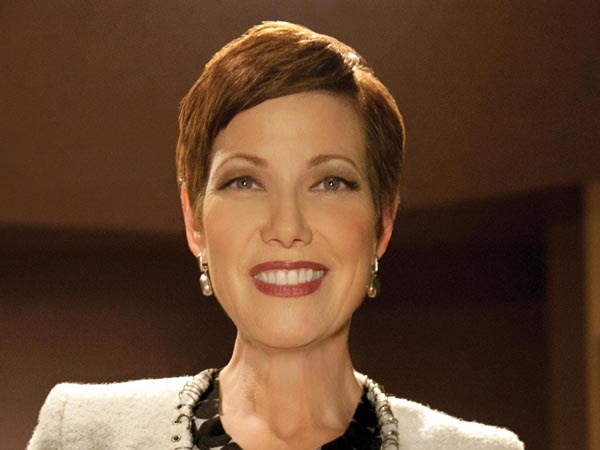
Clockwise from the top left are Amanda Blitz, Kathleen Monk, Amanda Alvaro and Chad Rogers.

Political pundits Amanda Alvaro, Chad Rogers and Kathleen Monk recently participated in an hour-long panel discussion on politics during COVID-19, examining how Canada’s leaders have fared since the start of the pandemic, what still needs to happen and how the coronavirus will shape the nation’s politics in the future. Hosted by the Canadian Jewish Political Affairs Committee (CJPAC), the May 14 webinar was emceed by its general counsel and director of communications, former news anchor Amanda Blitz.

The CBC Power & Politics regulars began, not with partisan jabs, but with kind words for the other sides of the political aisle. Alvaro, who frequently champions Prime Minister Justin Trudeau and the Liberals, paid a compliment to Premier Doug Ford of Ontario. “He’s really been able to connect well with Canadians. He’s delivered the news in a way people want to hear,” she acknowledged.

Rogers, a Conservative stalwart, praised Minister of Small Business Mary Ng as a person “who has done the hard work with a tremendous amount of humility and ability.”

And NDP proponent Monk lauded the work of the nation’s public servants, whose “yeoman’s efforts” have brought Canadians home from abroad and supplied them with stimulus cheques in a timely fashion.

Nonetheless, it took only a few seconds for Andrew Scheer’s name to appear on Alvaro’s list of those who have not performed well during the crisis. Rogers sprang to the Conservative leader’s defence, countering that it is exceedingly difficult for anyone on the right to watch a government spend as much as the Liberals currently are. “We’ve already allocated more money than we did in World War Two. For a Conservative, this is the worst horror movie ever written,” he asserted. “We are going to have things in this crisis that are going to be horrible missteps.”

Monk, meanwhile, criticized Quebec’s response to the pandemic but commended British Columbia’s. “It is amazing how good public policy can save lives. Never has it been more evident that we are a country of different governments, different territories,” she said.

Nobody on the panel could dispute the economic toll of the pandemic, including double-digit unemployment. Monk shone light on how women have been disproportionately affected, dubbing it a “she-cession,” as a higher ratio of women work in sectors brought down by COVID-19.

Both Alvaro and Rogers gave kudos to the federal government for providing emergency assistance to individuals quickly. However, Rogers claimed the Liberals were using “COVID-19 as a cover to put their boot heel to the throat of the oil and gas industry in Alberta. There is an extreme environmental agenda trying to pivot the Canadian economy into something it isn’t,” he said.

Of course, China was discussed.

“Despite the erosion of China’s image recently, we can’t avoid China,” Alvaro said. “There are many reasons why China can’t be written off, but many reasons why China is making it very difficult for countries to have a positive relationship with them.”

“The Chinese government is a totalitarian cult of death,” Rogers declared. “They could have aided the world by getting a week or a month ahead of the [COVID-19] curve. We should be very mindful every time we speak with them.”

“China has not done itself any favours with their management of the post-crisis phase,” Monk added.

In the midst of the pandemic, the Conservative party leadership race is taking place. All of the panelists steered clear of the Derek Sloan method of populism – which questioned the patriotism of Dr. Theresa Tam, Canada’s chief public health officer – and saw it more as a contest between Erin O’Toole and Peter MacKay.

All also agreed that it is remarkably challenging to campaign without being able to press the flesh and make stump speeches. However, Alvaro said, while people are at home, politicians do have a captive audience if they “can tap into the digital space that is less time-consuming than going door to door.”

On the topic of leadership, Rogers predicted that Trudeau will, as the crisis subsides, give consideration to his future as leader and ultimately decide it will be time to step down before the next federal election.

“It will give him an honourable exit, after establishing himself as essentially a wartime leader and not having to face a caucus that has lost faith in him,” Rogers said.

As the discussion wrapped up, Monk postulated that a potentially positive outcome from the crisis would be an increase in trade closer to home, i.e., within North America.

Alvaro said there will be many questions to follow: “Much of this will obviously be judged on how the recovery comes about, and how we fix the things we have fundamentally ignored, like long-term-care facilities.”

Rogers appealed to all in attendance to make a charitable donation, as nonprofits have been struggling for funds during the pandemic; a request that was backed by all the panelists.

For more information about CJPAC, visit cjpac.ca.

Sam Margolis has written for the Globe and Mail, the National Post, UPI and MSNBC.
Format ImagePosted on May 29, 2020May 28, 2020Author Sam MargolisCategories NationalTags Amanda Alvaro, Amanda Blitz, Chad Rogers, CJPAC, Kathleen Monk, politics
Doctors talk about COVID

Doctors talk about COVID

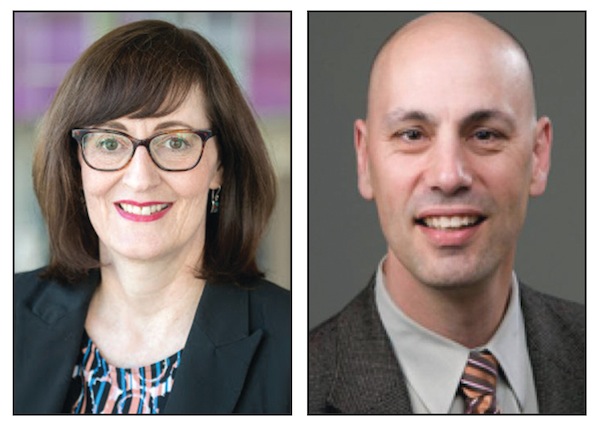
Dr. Patty Daly and Dr. Eric Grafstein were the featured speakers of Temple Sholom’s May 1 Let’s Talk About It webinar. (photos from Temple Sholom)

Temple Sholom began the first of a series of four (possibly five) webinars, called Let’s Talk About It, on May 1 with a public health forum that featured guest speakers Dr. Patty Daly, Vancouver Coastal Health’s chief medical officer, and Dr. Eric Grafstein, the regional head of emergency at VCH and Providence Health Care.

Together, the doctors provided a report from the medical frontlines in Vancouver, as the city responds to the COVID-19 pandemic. They later addressed several concerns raised by members of the community.

Grafstein offered reassuring remarks for those who may be apprehensive about visiting emergency departments. “Emergency departments are a safe place to go during a pandemic,” he said. “If you have things like chest pains or symptoms that you think may be a stroke, then you should be coming to the emergency department.”

Emergency visits declined sharply after a state of emergency was declared in British Columbia on March 18, dropping by half compared to last year, suggesting that people might be holding off from visiting the hospital, he said.

“When people come to a hospital with suspect cases, they are segregated. People who do not have COVID are not put at risk,” Grafstein said. As of the webinar date, about two people per 1,000 who had come to an emergency department in VCH had tested positive for COVID-19, he said.

Physical distancing in the emergency department is done through placing COVID patients in a different area than other patients. The risk of infection is further reduced by fewer people coming to EDs and creating more space in the hospital, he said.

Grafstein said the supply of personal protective equipment for medical workers is secure.

Though the first case of COVID-19 in British Columbia was identified on Jan. 15, the spread of the virus to the region came in early March, likely the result of traffic between British Columbia and the state of Washington, the first area in the United States to experience an outbreak. The number of reported cases in VCH peaked in mid-March and there has since been a decline.

Vancouver’s numbers have compared favourably to those of Toronto and Montreal, and the vast majority of cases here have been mild, said the doctors. The population most at risk is the elderly. Many of the deaths in the region have occurred at long-term-care facilities.

“We’ve done a very good job of flattening the curve – not only in our region but across B.C.,” Daly said. “Our modeling suggests that we can think about lifting some of the measures we have in place.”

Indeed, the province announced its Restart Plan last week. Outpatient services and elective surgeries are to be among the first medical activities to be resumed. An increase in the number of outdoor spaces that the public can access is also planned.

Some daycares – for the children of essential workers – have already reopened, and it is hoped that students will return to schools before the end of the academic year. Bars, restaurants and personal service businesses, such as hairdressers, could potentially reopen in the coming weeks as well, as long as measures, similar to those in grocery stores, are in place.

Universities may return to classes in the fall, though many classes will remain virtual.

There have been few cases of COVID-19 in the region among those under the age of 18, and day camps for children might take place this summer, said Daly.

Gatherings for groups of 50 or more people, such as weddings, funerals and religious services, will be among the last restrictions to be lifted.

“It will be done slowly and in a way that doesn’t lead to a dramatic increase in cases,” Daly said.

“The ultimate solution is a vaccine,” she said.

Neither doctor could predict when a vaccine would be ready, though some trials appear promising. Both doctors reinforced the messages that officials everywhere have been giving for months: stay home if you are sick, cough or sneeze into your elbow, don’t touch your face and wash your hands frequently.

“Anyone with the classic symptoms for COVID – fever, shortness of breath, cough, loss of sense of smell, nausea, diarrhea – should be tested,” Grafstein stressed.

Calling 811 will provide a person with the nearest testing facility. Every positive result is followed up and people who may have had close contact with that person are reached and advised to stay home for 14 days.

VCH covers a population of 1.25 million people, encompassing not just Vancouver but Richmond, the North Shore, the Sunshine Coast and some rural communities, such as Powell River. As of May 8, there had been 866 reported cases of COVID-19 within the VCH region; of those, 78 patients have died and 583 have recovered and discontinued isolation.

“As we open things up, we are doing everything we can to prevent a second wave. We need to also continue to help the most vulnerable,” Daly concluded.

Convened by Temple Sholom’s Rabbi Dan Moskovitz, the webinar was co-sponsored by the Jewish Federation of Greater Vancouver and was attended by more than 200 people. A video recording of the event can be found on Temple Sholom’s website and on YouTube.

Other talks in the Temple Sholom series have been discussions on financial planning and on effective parenting; a session on estate planning is scheduled for May 20.

Sam Margolis has written for the Globe and Mail, the National Post, UPI and MSNBC.
Format ImagePosted on May 15, 2020May 14, 2020Author Sam MargolisCategories LocalTags coronavirus, COVID-19, Eric Grafstein, health, Patty Daly, Temple Sholom, Vancouver Coastal Health
Filmmaker aims to inspire

Filmmaker aims to inspire

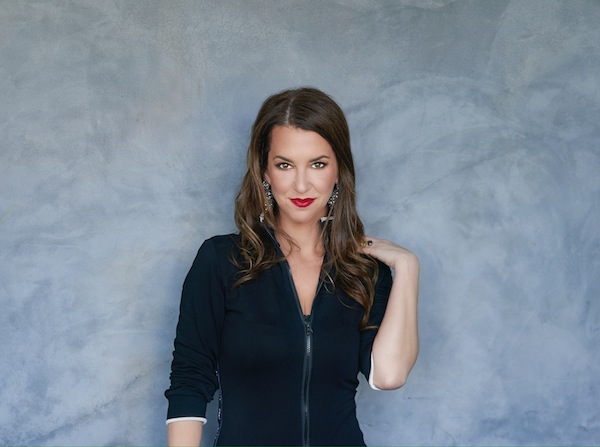
Esther Turan has produced an eclectic range of work. (photo from Moviebar Productions)

There is a Hungarian expression that translates roughly as “you are as many people as the number of languages that you speak.” This aptly describes the versatility of Budapest-born director and producer Esther Turan.

Turan, who spoke to the Independent from her home in Los Angeles, has melded eclectic cinematic styles into a considerable body of work. And she has done so within both a society and an industry frequently faulted for their limited opportunities for women. Among her credentials are director of documentaries about Budapest’s underground music scene; co-producer of an adaptation of G.K. Chesterton’s novel The Man Who Was Thursday; producer of In the Same Garden, a Bosnian film about Turkish-Armenian relations; and creator of commercials for dozens of internationally recognized companies.

Ever since the fall of the Iron Curtain, Budapest’s rich architecture and comparatively low production costs have made the city an attractive film location. Turan was barely out of her teens when, as a student at Hungary’s University of Drama and Film, her proficiency in English won her assignments as a casting director for several films shot in Budapest in the early 2000s, including Den of Lions, with Bob Hoskins.

In 2004, she became a founding member of Moviebar Productions, a full-service production company with offices in Budapest and – as of 2017 – Los Angeles. “I teamed up with a woman named Viktoria Tepper and we started producing television commercials,” explained Turan. “Soon our clientele grew, and we took on more projects for international companies.”

To date, Moviebar has produced 30 films and TV productions, in addition to more than 500 television commercials for brands such as BMW, Vogue and Nike.

“I have around 20 projects, in differing stages of development, underway at both the Budapest and Los Angeles offices,” Turan said. “One of my goals as a filmmaker is to tell stories that could inspire other women. My first TV series idea is about an exceptional woman who created a revolution and was a rebel herself. It’s also important for me to collaborate with other female filmmakers from all over the world and to share our visions. I would love to be involved in more projects, both with European and American female filmmakers.”

Currently, Turan is working on a miniseries about fashion designer Klara Rotschild, the “Coco Chanel of the East,” and contemplating a documentary about her grandfather, famed mathematician Paul Turan. His friendship and collaboration with eccentric mathematical icon Paul Erdos, known as “the oddball’s oddball,” would figure prominently in the film. Erdos was renowned for traveling from math conference to math conference around the globe, with a suitcase containing all his worldly goods.

Turan, too, has traveled to pursue her passions and her heritage. She studied at Hebrew University in Jerusalem, for example, to perfect her Hebrew. “Because of the fondness I had for it from earlier trips, I found myself missing Israel,” she recalled.

One of her latest projects is the anticipated The Reckoning, a horror film about a witch hunt set in 1665 New England that stars Charlotte Kirk (Vice), Joe Anderson (The Crazies) and Steven Waddington (The Imitation Game). Coincidentally, the movie is set against the backdrop of the Great Plague, and portrays the witch hunts conducted in its wake. Protagonist Grace Haverstock (Kirk) grapples with the tragic death of her husband, Joseph (Anderson), in a society consumed by fear and death. Later, in retaliation for having rejected the advances of her landlord, Squire Pendleton (Waddington), Grace is falsely accused of being a witch, and is imprisoned for a crime she didn’t commit.

In addition to The Reckoning, the third instalment of Turan’s documentary series Budapest Underground was just released. In it, in collaboration with co-director Anna Koltay, she explores Budapest’s musical subcultures in the late 1990s. This latest instalment focuses on electronic music. Accompanied by selected archival footage, it examines the genre’s emergence and growth, its key players, styles and sub-genres. The previous episodes delved into hardcore punk and hip-hop.

As Eastern Europe emerged in the late 1990s and early 2000s from several decades of communist rule, Budapest’s nascent underground music scene flourished, a blend of Western influences combined with a distinctively Magyar flavour. “I was into all this new music happening in Budapest at the time, especially rock and hip-hop,” said Turan. “It was really a great time.”

A fourth instalment in the series will be about underground rock and is currently in production.

For more information about Turan, her company and her career, visit movie-bar.net and her Facebook page, facebook.com/moviebar.productions.

Sam Margolis has written for the Globe and Mail, the National Post, UPI and MSNBC.

Format ImagePosted on May 15, 2020May 14, 2020Author Sam MargolisCategories TV & FilmTags Budapest, documentaries, Esther Turan, film, Moviebar Productions, women
No barriers to music

No barriers to music

Victoria composer Ari Kinarthy. (photo from Ari Kinarthy)

Victoria composer Ari Kinarthy has not let spinal muscular atrophy (type 2), a condition that has confined him to a wheelchair since the age of 6, inhibit his ability to create music. In fact, the very movements he makes in the wheelchair go into producing his music.

Using Soundbeam, an interactive hardware and software system that forms sounds from movements, Kinarthy’s music is recorded into multimedia platforms. For example, movements closer to the recording device establish lower notes and movements away spark the higher notes.

“I create all my music entirely with the computer. Sometimes, I will have access to a guitar player or singer but normally the music will be all done by the samples I use. I usually start with just piano and sometimes will write out a score. I think of a melody and/or harmony and continue from there. I love making themes,” Kinarthy, 30, told the Independent.

“I got into music at age 16 with music therapy sessions. I loved creating music. I started with remixing songs and then creating my own from scratch. I wanted to see what I could create and it just continued from there,” he said.

Starting out at the music therapy department at Canuck Place in Vancouver in 2006, he moved to the Victoria Conservatory of Music in 2007, where, over time and under the tutelage of music therapist Allan Slade, Kinarthy became adept at mastering the intricacies of his device.

The Soundbeam device, which looks like a large red microphone, is stationed in Kinarthy’s studio. It transmits ultrasonic sound, i.e., sound that is inaudible to the human ear, which, in turn, intersects with motion. This then transforms the resulting sound into MIDI, a digitized protocol for electronic instruments.

In 2012, Kinarthy released his first album, A Lion’s Journey, a play on his Hebrew name, Ari, which means lion. It featured an eclectic blend of many genres, including jazz and rock, mixed through the assistive technology. Though he is inspired by several music styles, he admits to loving orchestral music, specifically what one hears in Hollywood films, with Hans Zimmer and John Williams among his favourite composers.

When Soundbeam held an international competition to mark the company’s 25th anniversary in 2013, Kinarthy was one of two winners selected by a jury of musical heavyweights, which included Led Zeppelin bassist and keyboardist John Paul Jones, conductor Charles Hazelwood and composer Edward Williams.

“Pain E Motion,” the composition he presented, was lauded by the jury. Of it, Jones said, “A very interesting idea of performing live with a pre-recorded composition. A very good piece of work in its entirety.”

It was at that moment when Kinarthy decided he would devote himself further to studying music. He enrolled in the Berklee College of Music’s online program and received his certification in orchestration and music composition in film and TV in 2017, but not before releasing his follow-up album, A Lion’s Roar, which also delved into his extensive musical interests.

Judaism, too, has an important role in Kinarthy’s creative process, and his faith has been a source of inspiration. “I recently created a piece of music to honour my local temple. Creating music to share with my congregation made me very happy. I would say that Judaism has helped me share beautiful music,” he said.

After the High Holidays last year, Kinarthy wrote a song called “Kolot Mayim,” with lyrics in Hebrew and English, taken from the Book of Psalms.

His physical challenges have not infringed on his ability to perform live, which he has done on several occasions throughout Victoria.

Presently, Kinarthy is looking for people who might need original music for their project, as well as focusing on promotion and small personal pieces for family and friends.

“I don’t know if it will ever be a reality, but composing for visual media would be a dream come true, be it film, TV or even a commercial. Other than that, I just keep composing music and maybe take some more music classes. There’s always more to learn,” Kinarthy said.

“I never thought I would be able to not only create beautiful songs but also perform them live! That’s all thanks to the technology I have in my home studio.”

To learn more about Kinarthy and hear some of his music, visit facebook.com/arikinarthymusic.

Sam Margolis has written for the Globe and Mail, the National Post, UPI and MSNBC.
Format ImagePosted on April 24, 2020April 24, 2020Author Sam MargolisCategories MusicTags Ari Kinarthy, music therapy, Soundbeam, Victoria
Illustrating Holocaust stories

Illustrating Holocaust stories

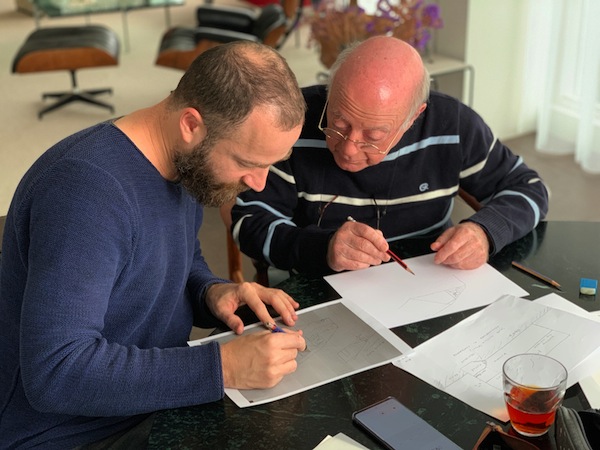
Gilad Seliktar, left, and Rolf Kamp in Amsterdam. They are drawing the last hiding place of Nico and Rolf Kamp in Achterveld, which was liberated in April 1945 by Canadian troops. (photo from UVic)

A University of Victoria professor is orchestrating an international project that links Holocaust survivors with professional illustrators to create a series of graphic novels, thereby bringing the stories of the Shoah to new generations.

Charlotte Schallié, a Holocaust historian and the current chair of UVic’s department of Germanic and Slavic studies, is leading the initiative, which connects four survivors living in the Netherlands, Israel and Canada with accomplished graphic novelists from three continents.

The project, called Narrative Art and Visual Storytelling in Holocaust and Human Rights Education, is supported by the Social Sciences and Humanities Research Council of Canada. Its aim is to teach about racism, antisemitism, human rights and social justice while shedding more light on one of the darkest times in human history.

UVic is partnering with several organizations in the project, including the Canadian Museum for Human Rights in Winnipeg, the Anne Frank House in Amsterdam and the Vancouver Holocaust Education Centre.

Many historians of the genre have argued that the rise of graphic novels as a serious medium of expression is largely due to the commercial success of Art Spiegelman’s Maus in 1986. Maus, the first graphic novel to win a Pulitzer Prize, depicts recollections of Spiegelman’s father, a Shoah survivor, with Jews portrayed as mice, Germans as cats and Poles as pigs.

Schallié told the Independent that the idea for the project came from observing the interest her 13-year-old son has in graphic novels and the appeal Maus has had among her students, who have continually selected it as one of the most poignant and memorable materials in her classes.

“Though a graphic novel, Maus could hardly be accused of treating the events of the Holocaust frivolously,” she said from her office on the campus of the University of Victoria.

As most survivors are now octogenarians and nonagenarians, the passage of time creates an ever more compelling need to tell their stories as soon as possible.

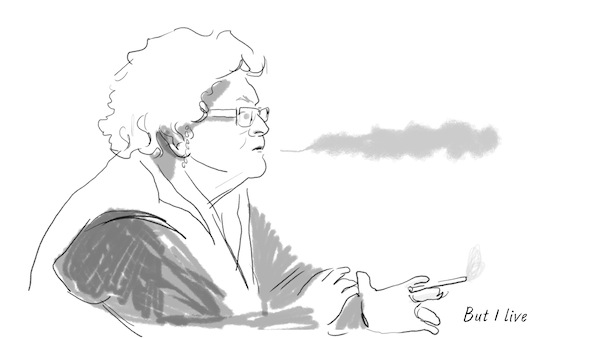
image - Barbara Yelin’s illustration of Emmie Arbel, now
Barbara Yelin’s illustration of Emmie Arbel, now. (image from UVic)
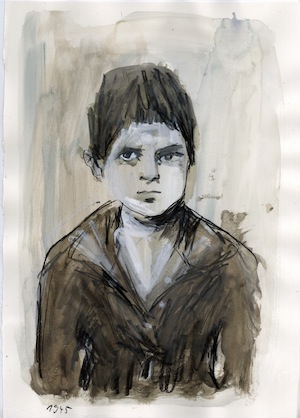
image - Barbara Yelin’s illustration of Emmie Arbel, then
Barbara Yelin’s illustration of Emmie Arbel, then. (image from UVic)

“Given the advanced age of survivors, the project takes on an immediate urgency,” said Schallié. “And what makes their participation especially meaningful is that each of them continues to be a social justice activist well into their 80s and 90s. They are role models for the integration of learning about the Shoah and broader questions of human rights protection.”

The visual nature of a graphic novel allows it to bring in elements or depict scenes that are not possible with an exclusively written work, according to Schallié. A person may describe an event in writing but leave out aspects of a scene that might add more to the sense of what it was like to be there at the time.

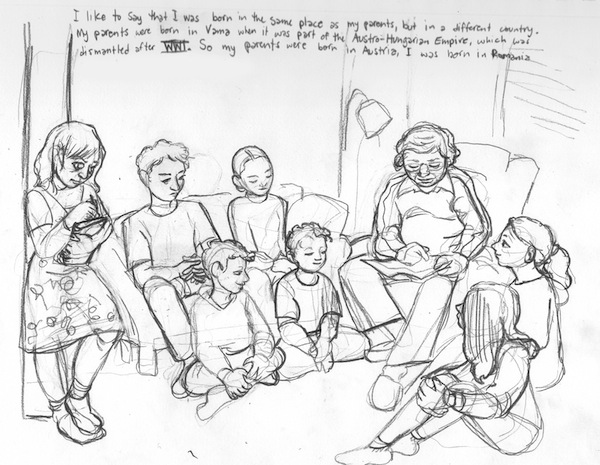
One of the survivors participating in the project, David Schaffer, 89, lives in Vancouver. He is paired with American-Israeli comic artist Miriam Libicki, who is also based in the city. The two met in person in early January so that Libicki could learn the story of how he survived the Holocaust as a child in Romania.

In 1941, Schaffer was forcibly sent with his family to Transnistria, on the border of present-day Moldova and Ukraine, by cattle car. There, they suffered starvation and were subjected to intolerable and inhumane living conditions.

image - One of the illustrations by Miriam Libicki, who is working with survivor David Schaffer
One of the illustrations by Miriam Libicki, who is working with survivor David Schaffer. (image from UVic)

“The most important thing is to share the story with the general population so they realize what happened and to avoid it happening again. It’s very simple. History has a habit of repeating itself,” said Schaffer.

Libicki, who was the Vancouver Public Library’s Writer in Residence in 2017, is the creator of jobnik!, a series of graphic comics about a summer she spent in the Israeli military. An Emily Carr University of Art + Design graduate, she also published a collection of essays on what is means to be Jewish, Toward a Hot Jew. (See jewishindependent.ca/drawing-on-identity-judaism.)

“The more stories, the better. The wiser we can be as people, the more informed we can be as citizens and the more empathy we can have for each other,” Libicki said. “Graphic novels are not just a document in the archives; they’re something people will be drawn to reading.”

image - Gilad Seliktar drew this sketch of Rolf Kamp
Gilad Seliktar drew this sketch of Rolf Kamp. (image from UVic)

The other illustrators are Barbara Yelin, a graphic artist living in Germany, and Gilad Seliktar, who is based in Israel. Yelin is the recipient of a number of prizes for her work, including the Max & Moritz Prize for best German-language comic artist in 2016. Seliktar has illustrated dozens of books – from publications for children to adult graphic novels – and his drawings frequently appear in leading Israeli newspapers and magazines.

Brothers Nico and Rolf Kamp in Amsterdam and Emmie Arbel in Kiryat Tiv’on, Israel, are the other three survivors who are providing their accounts of the Holocaust.

The books will be available digitally in 2022. A hard copy version of each book is planned, as well. When finished, the graphic novels will be accompanied by teachers guides and instructional material designed for schools in Canada, Germany, Israel, the Netherlands, the United Kingdom and the United States.

UVic hopes to match a larger number of survivors with professional illustrators in the future. To learn more, contact Schallié at [email protected]. You can also visit the project’s website at holocaustgraphicnovels.org.

Sam Margolis has written for the Globe and Mail, the National Post, UPI and MSNBC.
Format ImagePosted on April 3, 2020April 1, 2020Author Sam MargolisCategories BooksTags art, Charlotte Schallié, David Schaffer, graphic novel, history, Holocaust, Miriam Libicki, survivors, University of Victoria, UVic
Israeli pucksters visit

Israeli pucksters visit

Members of the Hockey Academy of Israel. (photo from Kyle Berger)

The Jewish Community Centre of Greater Vancouver, along with the Jewish Federation of Greater Vancouver, played host earlier this month to 27 young hockey players from Israel’s Northern District who were in town for an eight-day visit.

The stops for the athletes, ages 10 to 14, on their March 5-13 Vancouver trip included a fundraising exhibition game against the JCC league (which had some former NHL players in attendance), the JCC Purim party March 9, which had a hockey workshop for kids in the gym, and a Canucks game on March 10, where Vancouver took on the New York Islanders. The Israeli junior players also had a practice skating session with Barb Aidelbaum, one of Canada’s top power-skating coaches, and ate meals at the Israeli-owned Chickpea and the Palestinian-run Aleph restaurants.

The co-ed group, comprised of youth from a variety of backgrounds – Jewish, Muslim, Christian and Druze – is part of the Hockey Academy of Israel (HIA). Situated in Metula, Israel’s northernmost town – along the border with Lebanon – the HIA (formerly the Canada-Israel Hockey School) was started in 2010 thanks to the drive and ambition of a local Israeli apple farmer and hockey aficionado, Levav Weinberg, and the initial financial support of Canadian media mogul Sidney Greenberg. Presently funded by donors from around the world, the HIA sees as its goal to make hockey fun and affordable for kids who otherwise would not get the opportunity to play.

Since its inception a decade ago, the HIA has witnessed a growing passion for the game in Israel and now boasts more than 400 young players in its academy, all of whom play at the Canada Centre in Metula, home to the only full-sized hockey rink in Israel. This is the second time a group from the HIA has visited Vancouver, a trip that was organized by the JCC and financially supported by the Jewish Federation. Members of the HIA also have visited other NHL towns, such as Ottawa, Pittsburgh and Winnipeg.

The existence of a camp in an area that has frequently made headlines for regional animosities has shown that much good can arise from sport. Many lasting friendships between players of different ethnicities have been formed at the academy.

“There are few things in the world that bring people together the way sports can,” said Kyle Berger, sports coordinator at the JCC and local delegation head for the Maccabi Games. “Sports bonds teammates together, it bonds countries together and, in some rare cases, sports can even bring peace and unity when such things seems almost impossible. This is the magic of the Hockey Academy of Israel, which brings both Jewish and Arab youth and their families together in the name of hockey.”

The HIA says it has found that, as passion for hockey grows in a region surrounded by political conflict, so too grow the bonds and respect these teammates from different cultural and political backgrounds have for one another.

Berger, along with other members of the Metro Vancouver Jewish community, has visited the hockey academy on several occasions, starting in 2012. He told the Independent that he “was blown away” by what he saw when he first arrived. “I had no idea as to the extent of the passion and the intensity the hockey academy has created for the game in Israel, and how much it has done to unite people of different cultures,” he said.

Hockey in Metula, which was featured in the 2013 TSN documentary Neutral Zone, has had a short, yet storied, history. Before the HIA was created, Canadian coaching legend Roger Neilson taught a camp in Metula in the late 1990s and played an integral role in establishing a fervour for the game in Israel.

The HIA is presently coached by Torontonian Mike Mazeika, who believes “the main goal of the academy is to integrate Jewish and Arab kids together, playing hockey, so that they can understand each other and make a difference for the future. Is that going to get us peace in the Middle East? No, probably not. But, if you don’t start small and take small steps, you’ll never be able to take a big step.”

The JCC and Jewish Federation were helped in various ways to support the HIA’s visit, including by host families, sponsors or venue/activity donors. For more information, contact Berger at [email protected] or 604-638-7286.

Sam Margolis has written for the Globe and Mail, the National Post, UPI and MSNBC.
Format ImagePosted on March 13, 2020March 12, 2020Author Sam MargolisCategories LocalTags HIA, Hockey, Hockey Academy of Israel, JCCGV, Jewish Community Centre, Jewish Federation, Kyle Berger, sports, youth
Healing powers of song

Healing powers of song

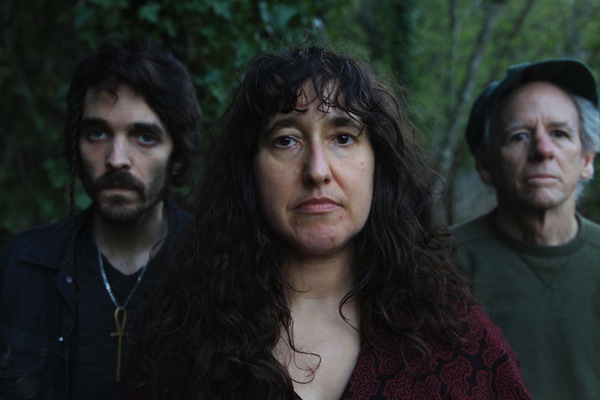
Seattle-based Iraqis in Pajamas, left to right: Sean Sebastian, Loolwa Khazzoom and Robbie Morsehead. (photo from Iraqis in Pajamas)

How do you take the wisdom of surviving and turn it into beautiful things?” asked Loolwa Khazzoom, front woman for Seattle-based punk rock group Iraqis in Pajamas, during an interview with the Independent recently.

One cannot easily classify Khazzoom, a cancer survivor, in a succinct journalistic fashion. Aside from being a musician, she is a writer, an activist, a polyglot and a journalist. Raised in California to an American mother and an Iraqi father, she was heavily involved in the Jewish feminist movement of the 1990s and the founder of the Jewish Multicultural Project, which provided resources about diversity to Jewish groups.

As with her stage presence, she transmits a raw, infectious energy in conversation, ever more so as Iraqis in Pajamas started this month by releasing a new single.

“Life brings with it an endless number of challenges. Negative experiences can be turned into art,” Khazzoom reflected.

“I was diagnosed with cancer in 2010,” she said. “I rejected the conventional option of surgery – despite a doctor proclaiming that I would die without it. ‘You can’t think your way out of cancer,’ he said, to which I replied, ‘You don’t know what I can do.’”

After the diagnosis, Khazzoom researched natural approaches to healing, and radically altered her diet – pulling everything out of her cupboards and moving to an all-organic and vegan diet. Through these and subsequent diet and lifestyle changes, she said she was able to stop the growth of the nodules, which remained stable for the next five years. The nodules began shrinking when she returned to music – her lost passion.

Formed in 2015, Iraqis in Pajamas combines ancient Iraqi Jewish prayers with its own original style of punk rock sung in English, Hebrew and Judeo-Arabic. The band’s songs examine a wide number of social issues – domestic violence, racism, mental illness, family caregiving, national exile – and cancer.

The band received a grant to produce the song “Cancer Is My Engine,” which was released March 1. “Cancer Is My Engine” combines an ancient Iraqi Jewish prayer with original punk rock, sung in Hebrew and English – challenging conventional medical approaches to cancer and putting forth the concept of music as medicine.

The song was produced by Bard Rock Studio, an independent Northwest music producer, and funded by the Lloyd Symington Foundation, which supports people living with and healing from cancer.

According to Khazzoom, singing has the ability not only to uplift but to heal. “This shift in consciousness is why, after hearing a particular song, our mood may change abruptly, or we suddenly may feel transported back in time. Singing bypasses our mental process, both awakening and soothing us at the core, without effort. Among other benefits, we are able to access, release and heal from the experience of trauma, without having to recount and risk getting triggered by painful memories,” she said.

Iraqis in Pajamas, which also includes drummer Robbie Morsehead and guitarist Sean Sebastian, got its name from a reputation Iraqi expatriates in the Israeli city of Ramat Gan had for putting on their pajamas when they had arrived home and the work of the day was completed.

The band is currently developing its next project: a debut double album. One CD will be an original a cappella version of 10 Iraqi Jewish prayers, which the band incorporates into its songs, along with a story about each prayer and why they chose it, while the second CD will be the 10 songs with those prayers woven through them. The project is sponsored by Allied Arts Foundation in Seattle and, in February, the band launched a fundraising campaign to develop, produce and promote the album: secure.givelively.org/donate/allied-arts-foundation-seattle/iraqis-in-pajamas.

Khazzoom’s first book, Consequence: Beyond Resisting Rape (2002), is a look at sexual harassment in everyday life. In 2003, she edited The Flying Camel: Essays on Identity by Women of North African and Middle Eastern Jewish Heritage, an anthology of the writings of Mizrahi Jewish women. Her writing has also appeared in the Forward, Tikkun and Lilith, as well as the Jewish Independent and other Jewish publications; she has written several times about Israeli hip-hop for Rolling Stone.

Iraqis in Pajamas hopes to find venues in Vancouver and on Vancouver Island in the coming year. For more information about Khazzoom and the band, and to listen to their music, visit loolwa.com. To purchase their music, go to iraqisinpajamas.bandcamp.com.

Sam Margolis has written for the Globe and Mail, the National Post, UPI and MSNBC.
Format ImagePosted on March 6, 2020March 4, 2020Author Sam MargolisCategories MusicTags cancer, health, Iraqi Jewish prayers, Loolwa Khazzoom, punk rock, Seattle
Life with inherited trauma

Life with inherited trauma

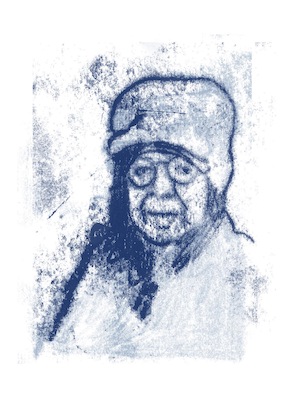
Dr. Gita Arian Baack, author of The Inheritors: Moving Forward from Generational Trauma. (photo from Gita Arian Baack)

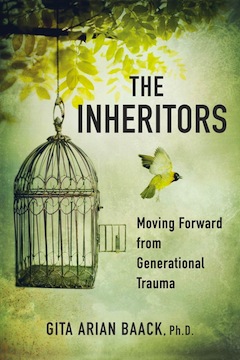
Dr. Gita Arian Baack, author of The Inheritors: Moving Forward from Generational Trauma, was in town earlier this month to speak at the Cherie Smith JCC Jewish Book Festival and hold a three-day experiential workshop with the Second Generation Group in Vancouver.

The Ottawa-based counselor began her festival presentation with a quote from the late Israeli novelist Amos Oz, who wrote, “Our past belongs to us, but we do not belong to it.” For Baack, the quote underscores her message to inheritors of the Shoah – that “we were given life and an obligation to bear witness and honour the martyrs and heroes of the Holocaust. And that we also have the right to live full and joyful lives.”

“Generational trauma stems from devastating events which transpired before we were born,” Baack told the Independent. “In the case of the Holocaust, we have experienced it from birth; it is as if we were there. We carry an unrelenting sadness, sense of absence and betrayal.”

The ultimate question her book explores is: “How can we live a full life despite the difficult trauma we inherited?”

Prior to writing The Inheritors, Baack conducted doctoral research into the subject of intergenerational trauma and resilience, yet what she uncovered did not fit or go deeply enough into either. Often, resilience is described as bouncing back with support from others. But, she said, “You don’t bounce back from the Holocaust!”

She was resolved to unravel answers to these and other questions, such as why are so many of us resilient and compassionate despite our inherited trauma? Do we carry memory from one generation to another? How do we move forward, when the usual therapies for trauma have proven not to work for us?

“We are also faced with the difficulty of piecing together our family stories,” said Baack. “Much of our family stories are full of holes, unknowns and even secrets, our roots destroyed. Understandably, we have strong emotions but don’t know how to deal with them; for example, excessive sadness, fear of authority, worry, lack of trust, lack of safety, etc.”

Further, inherited trauma is often frozen, embedded in the brain stem, also known as the primitive brain – accessing it is difficult, but it can be done, she said.

Baack noted that ancient wisdom, the Bible and new epigenetic scientific research explain that trauma is passed onto generations in the DNA, and even the cells, for as many as seven generations. She strongly believes that this is the case if it is acknowledged and processed; if it is not, then it can take longer than seven generations.

image - The Inheritors book coverThough Baack’s own experience is being a child of Holocaust survivors, The Inheritors encompasses others who have been victimized: Canada’s indigenous population, survivors of the Rwandan genocide and of several other horrible episodes of recent history. The book also looks at trauma on a personal level, from those who have suffered as a result of natural disaster, an accident, economic hardship, the justice or education system, illness or loss of a loved one.

The intent of The Inheritors is to serve as a tool for moving forward, said Baack. The book is filled with dialogues, poetry and stories from people of different backgrounds. Readers are invited to explore their story, and there are questions at the end of each chapter to help them process that story and, in so doing, transform their pain. At the least, in the end, they will have a written story as a legacy to their descendants.

The Inheritors has had other, unexpected, impacts. For example, the conductor of the North Carolina State University orchestra commissioned composer and flutist Allison Loggins-Hull to write a piece for an upcoming performance and she has chosen to write a work inspired by the book – Inheritors Overture will première on April 5 in Raleigh, N.C.

The group dialogues that Baack conducts offer a means of validation through other people with similar experiences and various experiential tools that can help further a deeper exploration of their trauma stories, the “undiscussables” and the unknowns. Group participants, she said, are often surprised by the creativity, laughter and camaraderie that arise.

The Inheritors is dedicated to (and inspired by) Baack’s two half-siblings. “From my earliest beginnings, I remember carrying a great sadness for my siblings, Henush and Halina Arian, who were only 4 and 3 years old, respectively, when they were killed,” she writes. There was no information about the circumstances of their death or burials, “But their existence was real and has mattered to me in an extraordinary way. And so I don’t fight the sadness; I embrace it. It has a special place. I am the carrier of their memory. This burden is the most cherished of all my burdens.”

At the age of 4 or 5, Baack had what she describes as a “knowing” or “inherited memory.” A “felt sense” told her, even at that young age, that her siblings, two of 1.5 million children killed by the Nazis, had both been shot in the back. When she asked her father how her half-siblings died, he said he didn’t know. Nonetheless, the memory (and feeling) she had inherited persisted, and could be placed on a spot in the middle of her back, with a knowing that her half siblings had been shot in that place.

Her research revealed that the timing of their deaths was before gas chambers had been built, and children under 5 were regularly shot. In 2019, a tour guide in Krakow pointed to the very street where the children and their mother were shot. To Baack, it was a stunning confirmation of her lifelong memory.

Baack has been consulting and coaching individuals and organizations for more than 30 years. She recently founded the Centre for Transformational Dialogue to help individuals and communities that have inherited devastating legacies. She also has written a book of verse, Poems of Angst and Awe, published in 2017.

For more information, visit gitabaack.com. Baack continues to research inherited memory and wishes to hear from others on the subject. She can be reached at [email protected].

Sam Margolis has written for the Globe and Mail, the National Post, UPI and MSNBC.
Format ImagePosted on February 28, 2020February 26, 2020Author Sam MargolisCategories BooksTags genocide, Gita Arian Baack, health care, Holocaust, intergenerational trauma, mental health, second generation
Increased cancer risks

Increased cancer risks

Libby Znaimer was the keynote speaker of the inaugural BRCAinBC event One in 40: From Awareness to Empowerment. (photo from zoomerradio.ca)

An estimated 200 people gathered at Congregation Beth Israel last month for One in 40: From Awareness to Empowerment, the inaugural event of a project to increase knowledge of the cancer risks connected to the BRCA1 and BRCA2 gene mutations.

The Jan. 8 event title is based on the fact that, for people with Ashkenazi Jewish heritage, there is a one-in-40 risk of carrying the BRCA genes, which increase the risk of genetically linked cancers. This rate is 10 times that of the general population. Elizabeth Wurzel, author of the bestselling memoir Prozac Nation, who passed away in January from breast cancer and was found to carry the gene mutation, called BRCA “the curse of the Ashkenazi Jews.”

One in 40 was organized by BRCAinBC, a provincial group spearheaded by members of the family – wife Jane and daughter Catriona – of Geoff Remocker, who died of aggressive prostate cancer. BRCAinBC’s objectives are to increase awareness among community members and health professionals, educate community members about genetic testing options and reduce the fear and stigma that can surround genetic testing. (See jewishindependent.ca/brcainbcs-inaugural-event.)

Toronto-based broadcaster Libby Znaimer, the keynote speaker, led the audience through her story. In January 2009, after enduring a six-and-a-half hour operation, the only possible cure for pancreatic cancer, she didn’t consider the odds of survival that favourable. Pancreatic cancer is the only form of cancer for which the survival rate is in the single digits, said Znaimer in her talk.

She not only has survived pancreatic cancer, but breast cancer, which was also BRCA-related.

Znaimer has made a film about her experience, Cancer Saved My Life. “It’s more than just a catchy title to get eyeballs on my documentary. It’s true. And I am living proof that, when it comes to the BRCA mutations, there is good news, in addition to the bad news,” she said in her remarks to the audience, which she shared with the Independent.

When Znaimer found out she had breast cancer in 2006, she was not surprised. Because of her family history, she knew that she was at a greater risk. However, she said, she did not think breast cancer would kill her.

“I remember being at a boozy dinner just a few days after being told I had cancer. I was very lucky that a former neighbour of mine was visiting,” she said. “She was working in the States as the head of breast radiology at one of the famous Mayo clinics and, based only on what she knew about my family history, she pointed her finger at me and said, ‘Sweetheart, you have bad genes and, if I were you, I’d bite the bullet and have both my breasts and my ovaries removed … as quickly as possible.’”

Znaimer cited a study in Toronto in which Jewish women were tested for the mutation regardless of family history. Fifty percent of those who tested positive would not have qualified for testing because of their family history. Results from similar studies in the United Kingdom and Israel produced similar outcomes.

“And, having one of those mutations doesn’t just mean you’re at an exponentially higher risk of getting those cancers once,” she warned. “You are also more likely to contract a second cancer, not a recurrence – a completely new other cancer.

“It is especially gratifying for me that my case has helped others and to be here to talk about the importance of getting tested,” she said. “It is the dawn of a new decade. My second decade as a survivor since Cancer Saved My Life.”

The Jan. 8 educational evening also included panelists Dr. Rona Cheifetz, medical lead of the Hereditary High Risk Clinic, B.C. Cancer Agency; Dr. Intan Shrader, co-medical director, BCCA Hereditary Cancer Program; Len Gross, president of the Prostate Cancer Foundation of British Columbia; and Tovah Carr, a BRCA carrier.

BRCAinBC arose from the realization that many in the Jewish community are not aware of the risks of carrying the BRCA genes. They hope to support improvements in access to genetic testing throughout the province for members of the Jewish community, and to protect BRCA carriers from the potentially negative consequences of positive carrier status; in obtaining insurance, for example. For more information, visit BRCAinBC.ca.

Sam Margolis has written for the Globe and Mail, the National Post, UPI and MSNBC.

Format ImagePosted on February 21, 2020February 19, 2020Author Sam MargolisCategories LocalTags BRCA, BRCAinBC.ca, cancer, health, Libby Znaimer, One in 40, Remocker
Community planning critical

Community planning critical

Alex Cristall, chair of the board of directors of the Jewish Federation of Greater Vancouver. (photo from JFGV)

Long active in the Jewish community, Alex Cristall started his current volunteer position as chair of the board of directors of the Jewish Federation of Greater Vancouver in June 2019. He spoke to the Jewish Independent about the role, and where he sees the organization as it enters a new decade.

JI: Could you go over your professional background and your work with Jewish organizations?

AC: I grew up in this community and was always surrounded by a culture of volunteerism. My professional background is in real estate investment, and my family’s values always drove our approach to business and to community involvement. From my grandparents to my parents to the way my wife Jodi and I are raising our children, giving back and getting involved with community has always been a priority, both in and out of the office. I started volunteering as a young adult and it’s grown from there.

JI: How did you become chair of Federation?

AC: Before taking on the role of board chair, I held a number of other leadership positions with Jewish Federation and with other organizations. At Federation, I served as chair of the 2016 and 2017 Federation annual campaigns, as chair of major donors, chair of men’s philanthropy and as a member of the board.

Anyone who knows me knows my love of sports, so my previous involvement with the JCC Maccabi Games and with Maccabi Canada came about very naturally. I also chaired the JCC Sports Dinner.

Serving as vice-president and then president of the JCC [Jewish Community Centre of Greater Vancouver] was instrumental in giving me a unique perspective that has been indispensable as chair of Jewish Federation. I got to see firsthand how important the partnerships between the organizations are, and how much partners rely on the community planning and fundraising expertise that Jewish Federation brings. At the time, Jewish Federation organized local missions, where we visited various partners, including the Jewish Food Bank and Tikva Housing Society, and learned about the range of needs in our community – and the range of responses.

It was very eye-opening, and that was when I got involved in men’s philanthropy at Jewish Federation and decided to learn more about the community. That ultimately led to a role on Jewish Federation’s allocations committee, where we were fully immersed in the entire breadth and depth of need – and opportunity for impact – in our community.

In my mid-30s, I was fortunate to travel to Ethiopia with members of Jewish Federation’s National Young Leadership Cabinet to see the work we were doing there with two of our international partners, the Joint Distribution Committee and the Jewish Agency for Israel. That was where I really began to understand the big picture of what we can accomplish for world Jewry in need.

More recently, I was able to visit our partnership region in Israel and learn about the particular challenges of living in the north, and the impact we’ve been able to make there as the result of a long-term strategic focus.

I’ve been in Israel many times, but, in terms of our partnership region and Beit Vancouver, this past spring was my first visit. It’s such a successful country overall, but I really saw the inequity that exists in the periphery. To see the contributions of our community and the future development plans of the region was inspiring, as was seeing what our Israel and overseas affairs committee, through annual campaign funds, and many local families are doing there with their investments…. It was very rewarding.

We need to continue to raise up that entire region…. Every mayor of our region came to greet us and that’s how you know how important our dollars are for youth. So many different things going on. When you see the respect that the different mayors have for the work we do and the people involved, it’s clear that our impact matters.

JI: What are your goals looking ahead?

AC: Our community is growing and changing all the time. As a Federation, we have been changing alongside it, which is positioning us to effect positive change in ways that can make an impact now and into the future.

We have a unique role in the community in terms of our planning function, and it’s a critically important piece that we bring to the table. We are focused on planning strategically to identify and prioritize needs locally, as well as in our partnership region in Israel. Our donors and fund-holders at the Jewish Community Foundation help us meet these needs. The partnerships we have developed over the decades are key to being able to get the work done in ways that are going to create lasting change.

We have made progress on every one of the areas of opportunity we identified in the strategic priorities, from affordability and accessibility, to seniors, engagement and, of course, community security. With big picture issues like these, the outlook is for the long term and so the work is ongoing.

At the end of the day, I would like people in our community to say that we made it easier for them to live Jewishly – whether that’s because we helped make a Jewish program more affordable, because we reached out to them where they live, because their aging parents were able to access a seniors’ program, or what have you.

JI: What challenges do you see before you?

AC: Our community is growing and its needs are constantly evolving, so there is always a lot of work to do, and that makes it exciting. I love a good challenge, and there are challenges everywhere we turn.

This community looks so different from when I was a child here. Even in the last decade it’s changed considerably. We’re more spread out and we’re more diverse.

More than half of our community is comprised of children, youth and young families, many of whom are really crunched by the high cost of living, and many of whom see their Jewish community engagement in ways that are very different from previous generations. At the same time, we have a growing population of Jewish seniors who need to stay connected and supported as they age. These are two of the big challenges facing our community right now. We also need to continue to meet our community’s needs through diverse revenue sources.

And last, of course, is the upcoming redevelopment of the JCC site into a true community hub. It’s still in the early stages, but Jewish Federation is poised to play an important role in this when the time comes. We’re proud to have entered into a memorandum of agreement with the JCC. [See jewishindependent.ca/historic-jcc-fed-agreement.]

JI: What excites you about the role?

AC: I feel very fortunate to work with an incredible group of volunteer leaders and professional staff, all of whom genuinely care about this community and about Israel.

From a personal perspective, some of the best lessons I’ve learned have come from volunteering with different community members and working with the Federation staff…. It’s very rewarding to meet with people in the community and see the reach and the impact of the good work we’re doing.

JI: What accomplishments are you most proud of thus far?

AC: One thing I am very proud of is how our donors have come to rely on Jewish Federation for our breadth of knowledge of community needs, our strategic approach and the strong relationships we’ve developed. Many of them trust us with all of their Jewish community philanthropy, and they come to us first when they have questions about where and how they want to make an impact.

I think we can be very proud of how we have taken a very strategic approach to growing the financial resources we generate, whether that’s through the annual campaign, through special project funding, or through legacy giving at the Jewish Community Foundation. As a result, our partners have more ways to access funding for the vital programs and services that align with high-priority community needs.

Community security is an area where we wish we didn’t have to focus our attention, but the reality is that we do. It was the first thing I really championed as chair of the annual campaign in 2016, and it was one of the first areas of strategic investment that we addressed from our 2020 Strategic Priorities [ourcommunity2020.jewishvancouver.com]. Since then, our community security advisory committee has taken an active role in addressing needs in this area and, on their advice, we hired a director of community security. Together, they are creating a culture of security consciousness.

Sam Margolis has written for the Globe and Mail, the National Post, UPI and MSNBC.
Format ImagePosted on February 14, 2020February 12, 2020Author Sam MargolisCategories LocalTags Alex Cristall, Jewish Federation, philanthropy, tikkun olam, volunteerism

Posts pagination

Previous page Page 1 … Page 22 Page 23 Page 24 Page 25 Next page
Proudly powered by WordPress