
Skip to content
  • Home
  • Subscribe / donate
  • Events calendar
  • News
    • Local
    • National
    • Israel
    • World
    • עניין בחדשות
      A roundup of news in Canada and further afield, in Hebrew.
  • Opinion
    • From the JI
    • Op-Ed
  • Arts & Culture
    • Performing Arts
    • Music
    • Books
    • Visual Arts
    • TV & Film
  • Life
    • Celebrating the Holidays
    • Travel
    • The Daily Snooze
      Cartoons by Jacob Samuel
    • Mystery Photo
      Help the JI and JMABC fill in the gaps in our archives.
  • Community Links
    • Organizations, Etc.
    • Other News Sources & Blogs
    • Business Directory
  • FAQ
  • JI Chai Celebration
  • JI@88! video

Recent Posts

  • Sharing her testimony
  • Fall fight takes leap forward
  • The balancing of rights
  • Multiple Tony n’ Tina roles
  • Stories of trauma, resilience
  • Celebrate our culture
  • A responsibility to help
  • What wellness means at JCC
  • Together in mourning
  • Downhill after Trump?
  • Birth control even easier now
  • Eco-Sisters mentorship
  • Unexpected discoveries
  • Study’s results hopeful
  • Bad behaviour affects us all
  • Thankful for the police
  • UBC needs a wake-up call
  • Recalling a shining star
  • Sleep well …
  • BGU fosters startup culture
  • Photography and glass
  • Is it the end of an era?
  • Taking life a step at a time
  • Nakba exhibit biased
  • Film festival starts next week
  • Musical with heart and soul
  • Rabbi marks 13 years
  • Keeper of VTT’s history
  • Gala fêtes Infeld’s 20th
  • Building JWest together
  • Challah Mom comes to Vancouver
  • What to do about media bias
  • Education offers hope
  • Remembrance – a moral act
  • What makes us human
  • המלחמות של נתניהו וטראמפ

Archives

Follow @JewishIndie
image - The CJN - Visit Us Banner - 300x600 - 101625

Byline: Sam Margolis

New rabbi settles into post

Victoria’s Congregation Emanu-El welcomed Rabbi Elisha (Eli) Herb as its new spiritual leader at the beginning of September, marking the next chapter for the historic shul, Canada’s oldest synagogue in continuous use. He takes over from Rabbi Harry Brechner, who served the community for the past 24 years. 

Herb, a 2016 graduate of the Hebrew College Rabbinical School, joins Emanu-El after serving for nine years as the rabbi for Temple Beth Shalom, a Reconstructing Judaism synagogue in Salem, Ore. 

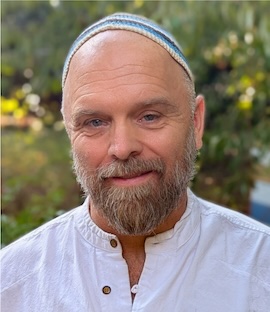
photo - Rabbi Elisha (Eli) Herb is Congregation Emanu-El’s new spiritual leader
Rabbi Elisha (Eli) Herb is Congregation Emanu-El’s new spiritual leader. (photo from Emanu-El)

“The Victoria community has been really wonderful,” Herb told the Independent earlier this month. “It feels like I found a niche, and that feels great. I love the people here. And I love Victoria. The island is amazing. I’m enjoying being here immensely.”

When the Emanu-El board announced that they had chosen Herb this spring, following a seven-month selection process, it notified members that a two-thirds majority in a closed ballot was required to confirm the new rabbi. The motion to hire Herb passed with 97% of the vote.

Since late summer, Herb said he has been learning from the community and hearing from people at Emanu-El about what they find satisfying about the synagogue and what they would like to see changed or enhanced. He wants “to listen more than lead right now,” he said. 

“Something exciting for me is, in general, that people love Emanu-El. They really like being here, and want more. I like the request for more – more social connections, more diversity in programming, more programming,” he said. 

Although Emanu-El has a reputation for supporting progressive causes, labeling it as a “lefty shul,” in Herb’s view, does not fully reflect the range of perspectives held by members. 

“Our membership is a big spectrum of backgrounds, orientations, ideologies, and so forth,” he said. “The community I’m experiencing is really much more about developing and strengthening the relationships they have to each other and trying to be a positive presence in Victoria as a whole.”

After Oct. 7, 2023, strong opinions within the Victoria Jewish community emerged, often pitting members against one another and leading to a fracturing of relationships. 

“A lot of judgments have been made absent a direct relationship, and that’s very painful. It feels important to me that some healing goes on,” Herb said. “Compared to where I was in Oregon, it feels like it’s been much harder for people here because of the schisms … within the Jewish community.”

Herb is an active social media user, with videos on YouTube about the weekly Torah reading and posts on the Emanu-El WhatsApp and Signal groups about Jewish art, jokes, music, poems and other insights. 

“It’s not edgy or politically motivated. It’s I saw this and it touched me, so I’m sharing it with you. This made me laugh, so I’m sharing it with you,” he explained. 

One aim as rabbi, Herb said, is to increase commitment to the practice of Judaism and to enhance people’s relationship to God. 

“I have this idea of connecting people with the people of Israel and with Torah and with Hashem,” he said. “But, in terms of actual programming, mostly right now, I’m responding to needs rather than directing things, I would say. That’s my philosophy. I need to get a lay of the land and know who I’m working with.”

Herb stressed that he feels fortunate to be in Victoria. 

“I want to be here, partly because of the nature of this community and the nature of the people who are involved, but it’s definitely also Victoria and Vancouver Island,” he said.

In addition to serving as a rabbi, Herb has been an outdoor educator, with certification from the National Outdoor Leadership School in the United States, and a river guide for the Four Corners School of Outdoor Education in Monticello, Utah. 

Though Brechner is stepping down as spiritual leader of the congregation, he remains an active member of the community and now holds the role of rabbi emeritus. 

“As much as I have grown this community, it’s also grown me,” said Brechner, before leaving his post. “The people I’ve met, the joy and pain I’ve had entrée to and the relationships I’ve developed all inform how I understand our place in the world as a Jewish people,” he said. “I hope Rabbi Eli has a similar experience. I know I’m handing our synagogue into very capable and caring hands.” 

Last year, Brechner received the King Charles III Coronation Medal for his significant contributions to interfaith connections, social justice and community dialogue in British Columbia. Earlier this year, he was awarded an honourary doctorate from the Jewish Theological Seminary in New York City for his more than 25 years of distinguished service. 

“Rabbi Harry is a gem,” said Ilana Stanger-Ross, president of Emanu-El. “While deeply grounded in tradition, he has always embraced a progressive vision that inspires action and nurtures deep community – things we are known for in Victoria.”

On Dec. 21, Emanu-El will celebrate Hanukkah with its annual menorah lighting in Victoria’s Centennial Square, starting at 5:15 p.m.

Sam Margolis has written for the Globe and Mail, the National Post, UPI and MSNBC.
Posted on December 19, 2025December 18, 2025Author Sam MargolisCategories LocalTags Elisha (Eli) Herb, Emanu-El, Harry Brechner
Partners in the telling of stories

Partners in the telling of stories

Robert “Lucky” Budd, left, and Roy Henry Vickers have co-authored close to 20 books together, with more to be released in 2026. (photo from “Lucky” Budd)

As oral historian Robert “Lucky” Budd tells it, his collaboration with First Nations artist Roy Henry Vickers, which has produced several award-winning and bestselling books, was accurately summed up during a car ride with Vickers’ sister, Patricia, as a unique version of a father-son bond.

“Roy’s the same age as both of my parents, and I am the same age as one of his sons. So, we do have this relationship that’s very, very close, and there definitely is a bit of a father-son element to it,” said Budd, who is a member of the Victoria Jewish community.

“I consider him one of my closest friends, and I love learning with and from him, and we learn a lot together, and he teaches me something all the time. I’m so deeply interested in the stories he has to share.”

For the past 14 years, the pair has teamed up on a variety of projects, but the path that led them to one another, according to Budd, goes back decades, to when Vickers was in high school in Victoria.

His art teacher, realizing that there was little to teach his student, tasked the young Vickers with delving into the art of the Tsimshian and the Haida. Missing his home on the Skeena River, in Hazelton, Vickers started his research, but his efforts yielded no results until he met cultural anthropologist Wilson Duff.

Through Duff, Vickers was able to locate books and recordings, such as those produced by CBC journalist Imbert Orchard, who, from 1959 to 1966, recorded interviews with BC pioneers and those from First Nations. On the cassettes, Vickers listened to stories of the people of the Tsimshian and was moved.

“Over the years, he ended up losing those tapes, but it stuck with him. And so, around 2009, 2010, he went on a mission to try to find those recordings,” Budd said.

Vickers got in touch with the BC Archives, but nobody there knew what he was talking about, until he spoke to someone who said, “Oh, I think the person you’re supposed to be talking to is Lucky Budd.”

Vickers called Budd, asking for help in retrieving the recordings, and their work together began.

Budd holds a master’s in history from the University of Victoria; he is also a rock musician with a penchant for recording everything. At the time of Vickers’ call, he was digitizing audio recordings owned by the CBC and the BC Archives.

“The crown jewel was the Orchard Collection,” said Budd. “And it hit me very early on that I was supposed to turn that material into a book because I was getting an education on the history of the province that no one had ever heard before.”

Budd’s first book, Voices of British Columbia, was based on those recordings, and many of the ones that interested Vickers were in the book.

Budd returned Vickers’ call, telling him, “I know exactly who you are, I know exactly what you’re looking for, I can help you find those stories. It’d be my pleasure to do so.”  

By this time, Budd had started a business, Memories to Memoirs, where he interviews and records people to help them tell their stories. He asked Vickers if he had thought of sharing his.

“He said, ‘Oh no, no, no, I’m way too young to do a thing like that,’” Budd recalled. “I was joking with him, and I took a little risk, and I said, ‘Hey man, didn’t you just release a print called “65 Years”? Doesn’t that mean that you get an old-age pension?’ And I started laughing, and he said, ‘OK.’”

After deciding that he had found the right person to work on his story, Vickers invited Budd to visit him in Tofino on Nov. 11, 2011.

“We hit it off like old friends. Roy, in that moment, was, like, if this isn’t the voice of the Creator saying that we ought to be working together, I don’t know what it is,” Budd recalled. 

“Lucky has been an inspiration for me since the day we met,” Vickers told the Independent. “His enthusiasm and positivity is uplifting. Lucky has impressed upon me the importance of writing my stories.”

In the 14 years since their first meeting, the duo has co-authored close to 20 books, with more to be released in 2026. Their published titles, such as Raven Brings the Light (2013), Cloudwalker (2014), Orca Chief (2015) and Peace Dancer (2016), have sold well and brought home awards.

The two have also put together board books for children featuring Vickers’ artwork: Hello Humpback! (2017), One Eagle Soaring (2018) and Sockeye Silver, Saltchuck Blue (2019). In 2026, Harbour Publishing will be releasing Summer Brings Berries, a board book using rhyming text and colourful imagery to explore and celebrate traditional foods of the West Coast. 

Additionally, Budd and Vickers have two other books coming out next year: a children’s colouring book and an art book celebrating Vickers’ 80th birthday. 

“I am an oral historian,” said Budd. “I work in the medium of storytelling, and he’s one of the best storytellers I can imagine. We get on the phone and we start talking and, the next thing I know, 45 minutes or an hour has gone by, and he’s told me a ton of different stories.”

Besides his books, Vickers is recognized as a printmaker, painter, carver, designer, author and keynote speaker. Among his numerous accolades is a nomination for a Grammy Award in 2019 for his artwork on a box set of Grateful Dead recordings. 

Sam Margolis has written for the Globe and Mail, the National Post, UPI and MSNBC.

Format ImagePosted on December 19, 2025December 18, 2025Author Sam MargolisCategories BooksTags art, books, children's books, education, kids books, Lucky Budd, Roy Vickers

Music can comfort us

On Dec. 3, in the second webinar of Kolot Mayim Reform Temple’s 2025/26 Building Bridges Lecture Series, Rabbi Deborah Sacks Mintz guided an interactive examination of the potential to harness the power of music, especially that which provides solace, be it secular or liturgical.

photo - Rabbi Deborah Sacks Mintz, director of prayer and music at the Hadar Institute in New York
Rabbi Deborah Sacks Mintz, director of prayer and music at the Hadar Institute in New York. (photo from Hadar Institute)

The director of tefillah (prayer) and music at the Hadar Institute, an educational organization in New York City, Sacks Mintz showed how, through text study, deep listening and participation, comfort (or anchor) songs can ignite creativity and provide strength, resilience and hope in an individual – and also serve communities in times of disruption.

“Tumultuous times are unfortunately nothing new. Times have been tumultuous since the dawn of humanity. And, also since the dawn of humanity, folks have drawn comfort from a variety of modalities,” she said, emphasizing that one of those modalities is communal song.

The talk began with a listening and reflection exercise around the question of comfort. Before playing a version of Hashiveinu, performed by Sacks Mintz and members of the Nigun Circle at Hadar, she asked participants to write down something that gives them comfort. The answers were varied and dynamic, ranging from prayer, food and song to family, friends and nature.

The role of comfort music in Jewish text was explored, starting with 1 Samuel: “So, it came about whenever the [evil] spirit from God came to Saul, David would take the harp and play it with his hand, and Saul would be refreshed/re-expanded, and be well, and the evil spirit would depart from him.”

Some in the Zoom audience described what happened in this passage as a possible early form of music therapy, bringing Saul healing and comfort.

Moving ahead several centuries, Sacks Mintz quoted Rabbi Nachman of Breslov’s encouragement for all to sing a niggun (wordless melody, often used in prayer): “It is good for a person to accustom oneself to reviving oneself with a niggun, because niggun is a powerful and mighty tool, and it has the great strength to awaken a person and point their heart towards the Blessed Name.”

Nachman called everyone to music, even those who could not play an instrument or were able to sing, said Sacks Mintz, for music has the power to revive the self, “for the lift of a niggun cannot be measured.”

She explained, “[He’s] not saying, wow, you should become a pro jazz musician and an amazing singer, and then you too can be sustained by song. You just have to be willing to engage in it on your own, and that can revive the self. It’s about being in a relationship with your internal world.”

Sacks Mintz shared two different pieces from the Jewish canon that comfort her, while asking the audience to reflect and unpack what might be core elements in the language of comfort they offer. She also asked the audience to consider what constitutes a comfort song for them.

One piece was by Rabbi Menachem Goldberger, a prolific composer of niggunim. It was an example of the various feelings one can experience in a piece of music. Reactions ran the gamut from feeling rejuvenated and uplifted to grounded and anchored. Similar feelings were expressed after “Mi Yiten Li Ever,” a song based on Psalm 55:7 by Rabbi Miriam Margles and the Hadar Ensemble, was played. The translation on its Bandcamp page reads: “Who will give me the wings of a dove, that I might fly away and find rest? I would flee to the wilderness; finding refuge from the tempest, from the sweeping wind.”

As well as being a facilitator of Jewish communal music, Sacks Mintz is a vocalist and multi-instrumentalist. As a performer and composer, she has collaborated on more than two dozen albums across the Jewish soundscape, including her original spiritual works The Narrow and the Expanse (2020) and Yetzira (2023), with Rising Song Records. A third album is expected in early 2026.

Sacks Mintz received rabbinic ordination from the Jewish Theological Seminary, holds a master’s degree in women’s and gender studies, and earned degrees in music and religious anthropology from the University of Michigan.

Founded in 2006, the Hadar Institute strives to build communities in North America and Israel, offering various programs to support the development of Judaism that is both traditional and egalitarian.

The next lecture in the Kolot Mayim series will feature Broadway historian and lecturer David Benkof on Jan. 11 at 11 a.m. Benkof will deliver his talk – Spotlight on Jewish Broadway with the Broadway Maven – in Victoria in person and on Zoom. For information, visit kolotmayimreformtemple.com.

Sam Margolis has written for the Globe and Mail, the National Post, UPI and MSNBC.
Posted on December 19, 2025December 18, 2025Author Sam MargolisCategories LocalTags Building Bridges, communal song, Deborah Sacks Mintz, Hadar Institute, history, Judaism, Kolot Mayim, music
An oral song tradition

An oral song tradition

Shenandoah University Prof. Lori Şen spoke about Sephardic music on Nov. 2, as part of Kolot Mayim Reform Temple’s 2025/26 lecture series. (PR photo)

Kolot Mayim Reform Temple started its 2025/26 Building  Bridges Zoom lecture series – six music-themed talks running through April – on Nov. 2, with Lori Şen, a professor of vocal pedagogy at Shenandoah University in Winchester, Va.

The title of Şen’s lecture was Classical Echoes in Ladino: Sephardic Songs Reimagined.

“This talk is especially meaningful to me, as it reflects a journey that began about eight or nine years ago with my doctoral dissertation in voice performance,” she said.

“What started as an academic project has since grown into a broader exploration and celebration of a rich and underrepresented genre within the Western classical tradition – Sephardic art song.”

Şen spoke about the Sephardim, their history, language and culture, before discussing the elements of traditional Sephardic music. Later, she introduced Western classical arrangements of Sephardic folk songs for voice and various instruments, and spoke about the development of this genre, playing excerpts from a variety of songs. 

Within the expanse of what constitutes Sephardic culture, there is a language, most commonly called Ladino or Judeo-Spanish, a mix of 14th- and 15th-century Castilian, with contributions from Galego-Portuguese, Catalan, Valencian, Aragonese, Hebrew, Turkish, Arabic and others, such as Greek, French, Italian and Balkan languages.

“A certain linguistic creativity is inherent to Judeo-Spanish, which has even been used as a vehicle for expressing verbal revenge through humour in an oppressive society,” Şen said, citing examples of plays on words that can be found in Ladino.

Şen quoted from linguist Marie-Christine Varol, author of Manual of Judeo-Spanish: “Irony, distance, puns and endless plays on meanings and stylistic nuances bouncing back and forth make this language of quotations, double entendres, discrete jokes that seem undecipherable of implied and overly clear meanings into an original and eternally renewed linguistic system steeped in a devastating sense of humour that can only be achieved through a knowledge of several languages, a knowledge that gives it its strength, its richness and its freedom.”

Şen said the types of Sephardic song are defined based on musical parameters such as structure, melody and rhythm, as well as the text and the relationship between the music and text. Many songs were passed down orally, making their origins difficult to trace. Others are Ladino translations or adaptations of Turkish, French and Balkan songs, incorporating dance rhythms like tango and foxtrot, and sometimes referencing familiar operettas.

“Since this repertoire represents such a wide range of cultural exchange, the musical analyses of them require vast musical knowledge,” Şen said. “Sephardic music possesses elements of Western classical music of all periods, starting from medieval, Spanish, Moroccan, Balkan and Greek musical traditions, and Turkish folk and classical forms, including makam.”

Makam is the Middle Eastern modal practice with more pitches than we’re used to in our Western 12-tone notation system.

According to Şen, although instruments were employed on occasion, the Sephardic song repertoire is essentially vocal. When instruments were involved, they were mainly percussive, a tambourine, for instance, though mandolin and oud were also employed.

Traditional Sephardic folk songs, since they were transmitted orally, incorporate a large amount of improvisation. Thus, the melodies of the same songs can differ significantly between communities and across generations.

On her website, lorisen.com, Şen has a catalogue she compiled that includes lists of Sephardic works and composers, works categorized by instrumentation, and songs. Based on archival research and interviews she has conducted with Jewish musicians and music scholars, Şen has identified more than 45 composers who have arranged more than 190 different traditional Sephardic folk songs in the art song form for voice and various instruments. Also on her website is a Ladino diction guide designed to assist singers interested in performing Sephardic songs.

A mezzo-soprano and Fulbright alumna, Şen’s range spans opera, art song, musical theatre and jazz, and she has performed throughout Europe and the United States. Her teaching and research specialize in vocal literature, pedagogy and voice science. Further, through her background in physics, she explores the art and science of the singing voice.

The next lecture in the Kolot Mayim series will feature Broadway historian and lecturer David Benkof on Jan. 11 at 11 a.m. Benkof will deliver his talk – Spotlight on Jewish Broadway with the Broadway Maven – in Victoria in person and on Zoom. For information, visit kolotmayimreformtemple.com.  

Sam Margolis has written for the Globe and Mail, the National Post, UPI and MSNBC.

Format ImagePosted on December 5, 2025December 3, 2025Author Sam MargolisCategories LocalTags history, Kolot Mayim, Lori Şen, music, Sephardic music, speakers

Aiding medical research

When Ariel Louwrier speaks about StressMarq Biosciences – the Victoria-based company he founded that specializes in the development and commercialization of high-quality bioreagents – in terms a layperson would understand, he draws an analogy to another era.

“If you think of drug discovery as a gold rush, we make the picks and shovels,” Louwrier said.

photo - Ariel Louwrier, founder of StressMarq Biosciences
Ariel Louwrier, founder of StressMarq Biosciences. (photo from StressMarq)

The company’s start during the 2008 financial crisis may not have been the most opportune time to launch an enterprise. Yet, Louwrier was able to secure a small amount of funding from the United Kingdom, which he used to invest in a variety of licences to make certain tools – at the time, antibodies specific to cancer research.

One of the hurdles he had to confront at the time was a strong Canadian dollar. For a company that exports its product and generally charges customers in US dollars, this posed challenges to the bottom line, until currency rates began to normalize after 2012.

“We were very draconian in terms of our spending, because the company was still very much in start-up mode,” he said. “I didn’t take a salary for the first three or four years, which helped the company. Of course, it didn’t help me.”

Eventually, around 2015, StressMarq considered developing a different type of product. Whereas it had once made antibodies, it decided to start making proteins instead. It moved into the neurodegenerative disease research space, as opposed to cancer, which, Louwrier noted, is a crowded area with companies from the United States, Europe and Asia vying against one another, making for a lot of products in the market. 

“The genesis of it was literally a friend of a friend that asked us to try to make something, a very specific product. It’s unusual for people to undertake strange projects for free in this world,” Louwrier said. “I’d always felt that it was an interesting and useful thing to allocate about 10% of our time and money into doing exactly that, because you never know what’s going to come out in the end. We were asked and tasked specifically to make a particular protein aggregate – those are proteins that come together and they form, literally, an aggregate.”

The artificial protein aggregates that StressMarq makes are comparable in many ways – though not always the same – to what forms in the human brain as neurodegenerative diseases progress, whether it’s Parkinson’s, Alzheimer’s or ALS. They are all different proteins, but the process is roughly the same.

“For us, the task has always been to try to make something that is as biologically relevant as possible for the researchers because they use that material to create the model,” Louwrier said. “The model is essentially a version of the diseased brain, but in a much more simplistic form. Then, researchers can proceed and do their work on the model. They’ll have drug candidates. They may have different treatment regimes, as well. But they work on an artificial model, and we produce the products for them.”

The timing for StressMarq to move into a different arena was good. Dollars were beginning to pour into research for neurodegenerative diseases, such as Alzheimer’s and Parkinson’s, including money from the National Institutes of Health in Washington, DC, the largest public funder of biomedical research in the world.

“We’ve ended up in a position where it makes sense to try to find, not necessarily cures, but treatments that can extend the time period for patients whilst they still have the vast majority of what you think of as typical cognitive abilities,” Louwrier said.

Continuing growth

Beginning in a 150-square-foot office on Douglas Street in Victoria, Louwrier hired his first employee in 2008 and produced a small array of products. These days, StressMarq employs 27 people, in 9,000 square feet allocated through six different suites in a building in Victoria’s Oaklands neighbourhood.

By Louwrier’s account, StressMarq is likely the largest biotechnology company from a laboratory perspective in the city and certainly the largest that is private.

“There’s no government funds, there’s no venture capital funds in here. It’s a completely self-defined and self-financing business,” he said.

StressMarq was not shaken by the pandemic because it was one of the entities governments wanted to keep open, even though it was not involved with COVID-related research.

This year, in a turbulent economic situation, with tariffs often changing, StressMarq has not been impacted for the most part, aside from a couple of minor exceptions. Louwrier said StressMarq’s customers have not been affected by the macroeconomic volatility, or the furloughs that occurred during the US government shutdown.

As the industry space and its technologies become more mainstream, Louwrier envisages a bright future for the firm, and he suspects the company will long outlast him when he decides to retire – whenever that may be. 

Sam Margolis has written for the Globe and Mail, the National Post, UPI and MSNBC.

Posted on December 5, 2025December 3, 2025Author Sam MargolisCategories LocalTags Ariel Louwrier, bioscience, business, medical research, neurodegenerative diseases, StressMarq, technology, Victoria
Lessons from past for today

Lessons from past for today

At the Kristallnacht commemoration in Victoria on Nov. 6, Congregation Emanu-El’s Rabbi Elisha Herb led a community pledge of mutual respect and support, joined by local politicians, faith leaders and law enforcement. (photo by Penny Tennenhouse)

“Hate has no boundaries and needs to be resisted wherever and against whomever it is found. This is necessary to protect our whole society. The history of the Shoah teaches us the dangers of complacency,” said Micha Menczer in his opening remarks at the Nov. 6 commemoration in Victoria of Kristallnacht, the Night of Broken Glass.

Menczer is a founding member of the Victoria Shoah Project, which held the community’s commemoration at Congregation Emanu-El. The project is a group of Holocaust survivors and their descendants, as well as educators and other individuals, dedicated to Holocaust remembrance and education.

photo - Micha Menczer
Micha Menczer, a founding member of the Victoria Shoah Project, gave the opening remarks at the Nov. 6 commemoration in Victoria of Kristallnacht. (photo by Penny Tennenhouse)

After Menczer spoke about the increase in hate crimes in Canada – of which Jews are often the target – Kristin Semmens, a history professor at the University of Victoria, spoke about Kristallnacht, the organized anti-Jewish riots in Germany and Austria on Nov. 9-10, 1938. The violence sent a clear message to Jews that they were not welcome in Germany, said Semmens, noting that, although Jews had already faced extreme persecution, no one foresaw what would come. 

“Even after November 1938, even after the destruction and horror and humiliation and fear, even after the shattered storefronts, the burning synagogues, the mass arrests, the physical assaults and murders, few could have imagined how much worse things could get,” she said.

Semmens stressed that, while people came on Nov. 6 to commemorate what happened in the past, it is also fundamentally important to act in the present, to differentiate among people when it comes to basic human rights today.

“We cannot turn a deaf ear or a blind eye to defamation and demonization,” she said. “We must find the courage to challenge the wrongs we see in our society. And, as the events leading to Kristallnacht reveal, we must beware of the beginnings.”

Nina Krieger, British Columbia’s solicitor general and minister for public safety, was the keynote speaker. Due to inclement weather that evening, she spoke from the Lower Mainland via Zoom.

“How can we, today, fathom six million lives cut short solely because they were Jewish?” asked Krieger, who, before entering politics, was the executive director of the Vancouver Holocaust Education Centre (VHEC).

“Sadly, as we gather to remember events of 87 years ago, our historical imagination, I think, is less challenged than we thought. With the recent Manchester synagogue attack and the graffiti scrawled on this congregation, the echoes of the past are particularly and painfully resonant.”

In August, antisemitic graffiti was painted at the entrance of Congregation Emanu-El. According to a September post by the synagogue, Victoria police have since found the suspected perpetrator, who “has been charged on two counts: mischief relating to religious property and wilful promotion of hatred.”

Krieger noted that, during the pandemic in Canada, contingents within the anti-vaccination movement borrowed symbols from the Holocaust, such as yellow stars and photos of Anne Frank, to portray their feelings of being marginalized and victimized for the requirement to carry proof of vaccination. She said a commitment to history and memory is the necessary antidote to such Holocaust distortion and trivialization, “which we are seeing with increasing frequency as the Holocaust transitions from lived to mediated memory.” 

She pointed to the VHEC’s use of primary sources when engaging with the 25,000 young people the centre educates each year. “Fragments of the Shoah – artifacts, photographs, documents – provide tangible entry points into the past and to individual human experiences during an event that might otherwise be an abstraction of numbers,” said Krieger, who reminded the audience that, in a time of rising antisemitism, the Holocaust may not simply be a lesson but a warning, “an inescapable fact that speaks to what is possible.”

Remembrance of the Shoah, she said, “provides an opportunity to wrestle with fundamental questions about the fragility of democracy and our responsibility as citizens today.”

Music performed by Kvell’s Angels, a local klezmer group, and the Capriccio Vocal Ensemble of Victoria, conducted by Adam Jonathan Con, was interspersed between speakers at the commemoration.

Politicians, leaders from other faith groups and members of the Victoria Police Department rose at the end of the ceremony to recite a pledge of mutual respect and support.

In the program notes to the commemoration, the organizers drew attention to the events that transpired in Germany 87 years ago, when at least 91 Jews were killed and 30,000 Jewish men were forced into concentration camps, Jewish homes and institutions were ransacked, businesses destroyed and synagogues burned. It was, the notes read, “a reflection of the inability of ‘polite society’ – of Jews and non-Jews – to comprehend that the institutions at the very heart of civil society (the police, uniformed people, political representatives) would be at the very core of this violence inflicted on the Jews of Germany and Austria, or contribute … to its devastating effect.”

The commemoration was sponsored by Congregation Emanu-El and the Jewish Federation of Victoria and Vancouver Island.

Sam Margolis has written for the Globe and Mail, the National Post, UPI and MSNBC.

Format ImagePosted on November 21, 2025November 20, 2025Author Sam MargolisCategories LocalTags antisemitism, Emanu-El, history, Holocaust, Jewish Federation of Victoria and Vancouver Island, Kristallnacht, Kristin Semmens, Micha Menczer, Nina Krieger, remembrance, Shoah, Victoria Shoah Project
Young man is missed

Young man is missed

Orca Wiesblatt was to play for the ECHL’s Allen Americans this season. The 25-year-old died in a car accident on Vancouver Island Sept. 14. (photo from allenamericans.com)

A crowdfunding initiative is underway to honour the memory of Orca Wiesblatt, a professional hockey player who died in a car accident on Vancouver Island Sept. 14, and to help his family and friends navigate through the hardship of losing a loved one who was only 25.

Paula King, a family friend of the Wiesblatts, launched the GoFundMe campaign shortly after news of the tragedy broke last month. The goal is to raise $22,000. Thus far, more than $16,000 has been contributed.

“There has been such an outpouring of love for this young man in statements from so many fans, friends, former teammates and every organization he has played for. His talent, love of life and infectious smile never went unnoticed on or off the ice; it is one to be recognized and to be remembered with such a high regard,” King, who knew the Wiesblatt family through the hockey community in Calgary, says on the site.

“I want the Wiesblatt family to know that they are not alone,” writes King. “Every friend, teammate and fan that has come to know them, we are here, standing united as a deep-rooted hockey community from near or far away. It takes a village, and we are here for them now more than ever.”

Wiesblatt was one of four hockey-playing brothers born to deaf parents. The children learned American Sign Language before they could speak English, and each could communicate in French and Quebec Sign Language as well.

Raised in both Kelowna and Calgary, Wiesblatt’s skills as a hockey player were evident early. In 2007, at age 7, he was ranked the best player in his class in the Okanagan.

The family was featured in a Nov. 9, 2007, article by Kelley Korbin in the Independent. At the time, his father, Art Wiesblatt, said, “Orca’s able to steal the show. I feel bad for the other parents, but he just gets out there and he’s all over the ice and the other kids just can’t keep up. Like Ocean (his older brother), he’s beyond the age range of the other boys he’s playing with. He’s at a whole different level.” 

Wiesblatt’s death has been met with shock and grief from the teams he played for in his professional career. The Calgary Hitmen of the Western Hockey League, where Wiesblatt got his start, said in a statement, “It is with great sadness that we mourn the tragic passing of [former Hitmen] Orca Wiesblatt. We are heartbroken for his family, friends and everyone who knew and loved him. 

“On behalf of the ownership, management, coaches, players and staff of Calgary Sports and Entertainment, we extend our deepest heartfelt sympathies during this very difficult time.”

Scott Hull, president of the Athens (Ga.) Rock Lobsters of the Federal Prospects Hockey League (FPHL), where Wiesblatt spent the 2024-25 season, said, “Orca will always be remembered as one of the players who helped set the tone for our franchise in its very first season. 

“His passion for the game and his infectious energy made him a fan favourite and a true teammate. But, more than that, Orca was an even better person off the ice – kind, humble, and someone everyone was grateful to know. We are devastated by this loss and our thoughts are with his family.”

Wiesblatt was slated to play for the Allen (Tex.) Americans of the ECHL (formerly called the East Coast Hockey League) for the 2025-26 season after the team signed him in August. 

“We are all heartbroken,” said Steve Martinson, the Americans general manager and head coach. “Orca was really looking forward to this next step in his hockey career. He wasn’t just skilled, he was a momentum-changing hitter. I can still see his grin when he would return to the bench after one of his big hits. That is what we will miss the most, his infectious smile.”

The Americans will pay tribute to Wiesblatt during their home opener on Oct. 24.

According to Vancouver Island’s CHEK News, Wiesblatt was driving a vehicle that veered off the road in Nanaimo and struck a light pole during the early morning hours of Sept. 14. He died at the scene. A passenger was treated in hospital for minor injuries.

Wiesblatt and his brothers were the subject of a 2019 Sportsnet Home Team Heroes segment titled “The Remarkable Story of the Wiesblatt Family.” Done in English and ASL, the piece covered the determination of Wiesblatt’s mother, Kim White, to have her sons participate in sports. 

In the video, Wiesblatt credits his mother for paving the way for their hockey careers. “You don’t hear of a lot of people that have five kids in their family, four of them playing high elite hockey. She sacrificed everything for us. She is a hero to us.”

Of his other brothers, Ocean Wiesblatt currently plays for the Danville Dashers of the FPHL, Oasiz Wiesblatt for the Milwaukee Admirals of the American Hockey League and Ozzy Wiesblatt for the National Hockey League’s Nashville Predators.

To learn more about the family and King’s fundraising effort, visit gofund.me/9000f7caf. 

Sam Margolis has written for the Globe and Mail, the National Post, UPI and MSNBC.

Format ImagePosted on October 24, 2025October 23, 2025Author Sam MargolisCategories LocalTags fundraising, Hockey, memorial, Orca Wiesblatt

Bull, bear or bubble?

Though North American stock indexes have risen to new heights in recent months, anyone who regularly checks financial news these days is unlikely to encounter the words “calm” and “steady” in descriptions of present-day markets. Rather, financial media are inclined to employ adjectives such as “turbulent” and “rocky.”  Some headlines are saying the market (or sectors within it) is in bubble territory.  Meanwhile, gold, often a refuge for those looking for stability, has also climbed to all-time highs.  

David Heyman, a financial adviser for Edward Jones in Victoria, said it’s hard to decide whether we are in a bubble or not.  COVID, he argues, exposed the vulnerabilities of the world’s supply chains, and many governments, especially in the United States, focused on domestic industries as a means not to be dependent on suppliers in other parts of the world.

“This is inflationary and costly, but it partly explains the strength in stock markets. Trump, in particular, is determined to bring industrial production back to the US. This trend is expected to continue for many years,” Heyman said.

To avoid risk in the event of a precipitous market decline, Heyman advises those close to retirement to have portfolios heavier in bonds and GICs (guaranteed investment certificates). For those in the earlier stages of their careers, he thinks equities, in the long run, are the way to go.

“History shows you can make a lot more in the stock market than you can in the bond market, but you’ll have to be able to withstand the volatility and endure the next recession, which will come one day,” he said.

In Canada, Heyman said, high prices in the housing market and the fact that interest rates may not fall as low as hoped have put the domestic housing market under pressure.  Further, unemployment in Canada is heading upwards, while tariffs are in place and a trade deal remains elusive.  There is a similar situation in the United States, he added, with inflation expected to remain high.

“The impact of tariffs in Canada has not been fully felt, as the Canadian dollar has declined to compensate, but Canada is more exposed to US tariffs than most countries. Sharply lower immigration in Canada will also have a dampening effect on the economy,” Heyman said.

Shay (Shy) Keil, senior wealth advisor at ScotiaMcLeod, said many people are worried that a market correction is imminent but that each investor would be impacted differently.  

“Be mindful of what you own and make sure you are not overly concentrated in any one area,” Keil said. “When you are young, you have the time to weather 10-15% declines in the stock market. When you are retired or nearing retirement, your ability to withstand a market decline is absolutely a function of how you are invested, and the reality is that many people do not know what risks are in their portfolios.

“The challenge is that, when markets are volatile, investors often shift to much lower rate GICs/bonds without considering the significant impact it will have on their monthly income,” said Keil.  “We would recommend to consider investing more into blue chip investments that will potentially maintain strong income and historically may not be as impacted by market volatility.”

Keil specializes in guiding clients with tax-smart strategies and cash flow solutions. “Earning predictable and consistent income is valuable in all market and economic cycles,” he said. “Our clients sleep better knowing they can draw from this income without touching their original capital, even when markets are volatile.” 

This year has been a stellar one for technology stocks.  As of Oct. 16, the sector on the S&P 500 index, where many mutual funds are invested, has risen more than 19%, with some companies climbing nearly 35% year-to-date.  Consumer and energy stocks have shown much more modest increases and have declined in some cases.

On the Toronto Stock Exchange, most sectors have done well in 2025, with IT and materials leading the way during the current bull market.  Consumer staples, utilities and health care are often considered stocks that perform well in bear markets.

In general, bonds, while offering a lower return, tend to be more stable than stocks.  GICs are investments with set rates of return that are guaranteed up to $100,000 by the Canada Deposit Insurance Corporation (CDIC).

When investing, one should understand that there is a risk of losing money.  While financial institutions may present packages that draw attention to positive returns over the course of several years, they will also include words to the effect that funds are not guaranteed to go up, values fluctuate and future results may not mirror past performance. 

Sam Margolis has written for the Globe and Mail, the National Post, UPI and MSNBC. This article is for general informational purposes only and does not constitute financial, investment or other advice.

Posted on October 24, 2025October 23, 2025Author Sam MargolisCategories LocalTags David Heyman, finance, investing, market volatility, Shay Keil, stock markets

New leadership at the JCCV

Following 12 years as president of the Jewish Community Centre of Victoria (JCCV), with many accomplishments to his credit, Larry Gontovnick will hand over the reins of the organization to Deborah Bricks at the JCCV’s annual general meeting in December.

A charitable nonprofit, the JCCV houses a deli, gift shop and library. It is also home to the Jewish Federation of Victoria and Vancouver Island, PJ Library, Jewish Family Services and Kolot Mayim Reform Temple. Additionally, it provides a location for Bema Productions, the Victoria Jewish theatre, to hold its auditions and rehearsals, and it hosts other Jewish organizations, such as Hadassah-WIZO and Camp Miriam, for meetings and events. Among the activities the JCCV organizes are webinars with guest speakers, a virtual Jewish conversation café, drop-in mahjong, a book club and Israeli dance.

photo - After 12 years at the helm of the Victoria Jewish Community Centre, Larry Gontovnick is handing over the reins to Deborah Bricks
After 12 years at the helm of the Victoria Jewish Community Centre, Larry Gontovnick is handing over the reins to Deborah Bricks. (photo from Larry Gontovnick)

Gontovnick, by far the longest-serving president of the JCCV since its founding in 1989, oversaw the raising of grant monies to renovate the centre’s kitchen, revitalize the interior and exterior of the building, enhance its security system and improve its audio-visual system.

The technical side of operations witnessed the redesign of the JCCV website, which now offers an online calendar and a PayPal option for donations and membership dues. A newsletter was implemented for communications with members and friends, and a payment device was installed at the centre for purchases.

“I am most proud of maintaining the warm, friendly and welcoming environment of the deli and centre, and maintaining this important facility for the Jewish community in Victoria,” Gontovnick told the Independent about his time running the JCCV. “I am very thankful for the wonderful staff and volunteers at the centre and the board members, who have all been a great pleasure to work with.

“I will now turn my attention to three beautiful grandchildren and being the best zayde I can be. My wife and I will continue our travels, as well as thoroughly enjoy living in one of the most beautiful places on earth.”

A notable and ongoing program started under Gontovnick’s leadership is the Victoria International Jewish Film Festival (VIJFF), now in its 11th year.  Bricks is the current director of the VIJFF.

“I am so pleased that Deborah, a current board member and director of the VIJFF, will be standing for president at the upcoming AGM,” said Gontovnick, who believes the energy and enthusiasm he brought to the centre will be furthered by his successor.  

An event planner with deep roots in Jewish culture and community, Bricks has been designing and orchestrating arts and culture events – music, cinema and literature – through Deborah B Event Management, both in Toronto and, for the past 10 years, in Victoria. She holds a bachelor’s degree from the University of Toronto in religious and cinema studies and a master’s in media and communications from the New School for Social Research in New York.

“The JCCV president role – a combination of strategic direction, community building and operational oversight – is especially important now,” Bricks said. “JCCV provides a home, a makom [place], for programs, services and events important to communities of Canadian Jews and our culture, such as the Lox, Stock & Bagel Deli, loved by community.

“And there are untapped directions for new, meaningful programs, services and events that build community among Jews in Victoria, seniors and families alike, and with our neighbours in Canada.”

As part of her community-building goals, Bricks is already engaging younger Victoria-area Jews from her own network to join the JCCV and its board, as well as older community members, who may enjoy the experience of Jewish community via the JCCV.

Part of her vision as president, Bricks said, is to direct a new strategic plan for the JCCV that eventually transforms it (i.e., its constitution) into a Jewish community arts and culture centre. As a formal arts organization, the centre could access more local, provincial, federal and other grants.

photo - Deborah Bricks will be both president of the JCCV and director of the Victoria International Jewish Film Festival
Deborah Bricks will be both president of the JCCV and director of the Victoria International Jewish Film Festival. (photo from Deborah Bricks)

Bricks told the Independent that she sees the JCCV “serving up something Jewish-ish for everyone.”

While president, Bricks will continue as director of VIJFF, leading its planning, film curation and event strategy.

“As Victoria’s only Jewish cultural festival, we try to spotlight Canadian-Jewish filmmaking and filmmakers,” Bricks said. “This year, we have three films by Canadians, ranging from stories about a Franco-Moroccan mother and son, about Yiddish in Sweden, and about the early Jewish immigrant experience in Montreal.” 

Also playing will be Sabbath Queen, which follows the story of Rabbi Amichai Lau-Lavie, the heir of 38 generations of Orthodox rabbis who became a drag queen and the founder of Lab/Shul, an experimental “God-optional” congregation based in New York. It will be followed by a discussion with filmmaker Sandi DuBowski (via Zoom) and Victoria drag king Dublin Tendre.

This year’s festival runs Oct. 18-23 and features seven film events at the Vic Theatre. For more information, visit vijff.ca. 

Sam Margolis has written for the Globe and Mail, the National Post, UPI and MSNBC.
Posted on October 10, 2025October 8, 2025Author Sam MargolisCategories LocalTags arts, community, culture, Deborah Bricks, JCCV, Larry Gontovnick, movies, Victoria, Victoria International Jewish Film Festival, VIJFF
Problematic work in exhibit

Problematic work in exhibit

“Delible (poppy, watermelon, wheat, walnut, blackberry)” is on display at the Art Gallery of Greater Victoria until Oct. 26, as part of the Architectures of Protection exhibition. (photo by Toni Hafkenscheid, courtesy Susan Hobbs Gallery)

Beth Stuart’s “Delible (poppy, watermelon, wheat, walnut, blackberry)” is part of the Architectures of Protection exhibition, which opened at the Art Gallery of Greater Victoria (AGGV) on May 24 and ends Oct. 26.

In each of the five “Delible” pieces, a black ledge has replicas of food items on top of it and a length of black mesh suspended below. Stuart used plaster, iron oxide pigment, dyed silk, steel and Sumi ink to create the works. The replicas are casts of halved walnuts, pizza crusts, poppy hulls, blackberries and watermelon seeds. According to the artist, each original mold was made from the source itself, except for the watermelon seeds, which were cast from clay originals.

On a wall leading to the five pieces, there is a several-square-foot textual display featuring more than 1,600 words, written entirely in capital letters, with the thoughts seeming to randomly jump from one topic to another; there are no paragraphs, but the words cover five columns. The text, an integral element of the overall artwork, was hand-stenciled by Stuart and relates to the physical pieces. 

photo - Beth Stuart’s “Delible (poppy, watermelon, wheat, walnut, blackberry)” installation comprises a wall of text and five structures
Beth Stuart’s “Delible (poppy, watermelon, wheat, walnut, blackberry)” installation comprises a wall of text and five structures. (photo by Mike Andrew McLean, courtesy Art Gallery of Greater Victoria)

The text begins with mention of the Himalayan blackberry, an invasive species in British Columbia, and then moves to Luther Burbank, an American botanist, horticulturist and eugenicist, before discussing the Armenian Genocide (1915-16) and Canada’s residential schools.

In the middle portion of the textual display, Stuart describes what she sees as the plight of Gazans and the attitudes of certain Israelis.

“AS I WRITE, THERE HAS BEEN NO AID OF ANY KIND FOR ALMOST TWO MONTHS AND EVERY WATER DESALINATION PLANT HAS BEEN BOMBED,” Stuart writes. “IN EARLY 2024 THERE WAS A CLIP CIRCULATING FROM ISRAELI CHANNEL 14, OF A PUNDIT SAYING EVERY PALESTINIAN OVER THE AGE OF FOUR YEARS IS A POTENTIAL TERRORIST AND A NECESSARY TARGET OF WAR. SINCE THEN TWO KNESSET MEMBERS HAVE DECLARED PUBLICLY THAT EVEN INFANTS ARE TERRORISTS. THE DELIBLES BAGS ARE APPROXIMATELY THE SIZE OF A BAG OF FLOUR OF THE TYPE THAT SOMETIMES ARRIVES IN GAZA, AND ALSO COULD CONTAIN THE BODY OF A FOUR-YEAR-OLD CHILD.”

Stuart then talks about tree-planting, which she apparently did in university, then writes: “THIS IS THE FOURTH VERSION OF THIS TEXT I HAVE WRITTEN OVER THE PAST 20 MONTHS. THIS WEEK THERE ARE MASSIVE WILDFIRES NEAR OCCUPIED JERUSALEM. THEY ARE BURNING IN AYALON CANADA PARK, A SEVEN SQUARE KILOMETER PARK LOCATED IN OCCUPIED PALESTINE. THERE HAD BEEN THREE PALESTINIAN VILLAGES ON THIS LAND IN 1948. AND APPROXIMATELY 10,000 PALESTINIANS WERE KILLED OR EXPELLED FROM THE AREA AND THE VILLAGES RAZED.”

She talks more about “THE ORGANIZATION THAT FUNDED THE PARK” without naming it and then raises the issue of the Canadian government’s involvement with Israel and, specifically, its military.

“BETWEEN OCTOBER 7TH 2023 AND THE FIRST WRITING OF THIS TEXT, MY GOVERNMENT HAD SENT 30 MILLION DOLLARS WORTH OF MILITARY SUPPORT TO ISRAEL,” she writes. “ON SEPTEMBER 10TH 2024 THE CANADIAN GOVERNMENT CLAIMED THAT THEY WERE NO LONGER SENDING ANY ARMS TO ISRAEL. IN FACT, WHILE CONTRACTS FOR ARMS SALES ARE NOT BEING OFFERED, ONLY 12% OF EXISTING CONTRACTS HAVE BEEN CANCELLED, AND MANY PARTS, RAW MATERIALS AND MUNITIONS ARE BEING SOLD TO THE U.S. AND THEN SENT TO ISRAEL. CANADA ALSO BUYS ARMS AND SURVEILLANCE TECHNOLOGY FROM ISRAEL.”

The text moves into Stuart’s comments on residential schools before she concludes with the sentence: “FOR THE SECOND SPRING SINCE OCTOBER 7, 2023 THE BLACKBERRY HEDGES ARE BLOOMING.”

To at least one member of the Victoria Jewish community, Stuart’s work is an example of “artfully coded antisemitism – all the more reprehensible for its coyness.”

“In itself, ‘Delibles’ are very beautiful, evocative works,” Maurice Yacowar, a professor emeritus (English and film studies) of the University of Calgary, wrote in a letter to the art gallery that was also sent to the Independent.

“What renders the work problematic is the full-wall text – in spectral grey – that accompanies the sculptures,” Yacowar said. 

He said,“As a whole, the work contrasts the self-renewal of nature’s produce with humans’ murderousness. Unfortunately, the art is undermined by the artist’s ignorance and prejudice in its Palestinian references.”

He said Stuart misrepresents Israel and its media by choosing to reference a news outlet “that even in Israel is considered extremist.” And, he argues,“She omits the Oct. 7 context. A Hamas spokesman flatly stated, ‘There are no civilians in Israel’ – ie., only targets in war.”

Stuart’s exhibit does not include the word “Hamas.”

In a statement to the Independent, the AGGV said:

“The gallery is aware that some members of the community disagree with the subject matter of a current work of art on display. We are always interested to hear how the public, and our members, respond to our exhibitions. We also embrace learning, new ideas and critical perspectives.

“At the AGGV, we respect the artists and curators who work with us to create exceptional exhibitions. As an arts institution, our role is to amplify artists’ voices and create space for conversation and learning. We encourage an exchange of ideas that results in meaningful dialogue and understanding through art.”

The Architectures of Protection exhibition, in the synopsis posted by the AGGV, is supposed to reflect “on ideas and modes of protection and refuge – with regards to oneself, to community, knowledge, culture, identity and land. What are these spaces and practices? What is protection for some and not for others? 

Together, in the wake of the COVID-19 pandemic and in the current global social and political climate, the artworks in Architectures of Protection direct critical attention towards systems and structures that shape and impact everyday and sacred environments and encounters, alongside individual and collective relationships with the land.”

The exhibit also features the artwork of Dana Claxton, Jessica Karuhanga, Emilio Rojas and France Trépanier. 

Sam Margolis has written for the Globe and Mail, the National Post, UPI and MSNBC.
Format ImagePosted on September 12, 2025September 11, 2025Author Sam MargolisCategories Visual ArtsTags AGGV, antisemitism, Art Gallery of Greater Victoria, artwork, Beth Stuart, Canada, First Nations, Gaza, genocide, global politics, Israel, sculpture

Posts pagination

Previous page Page 1 Page 2 Page 3 … Page 25 Next page
Proudly powered by WordPress