Skip to content
  • Home
  • Subscribe / donate
  • Events calendar
  • News
    • Local
    • National
    • Israel
    • World
    • עניין בחדשות
      A roundup of news in Canada and further afield, in Hebrew.
  • Opinion
    • From the JI
    • Op-Ed
  • Arts & Culture
    • Performing Arts
    • Music
    • Books
    • Visual Arts
    • TV & Film
  • Life
    • Celebrating the Holidays
    • Travel
    • The Daily Snooze
      Cartoons by Jacob Samuel
    • Mystery Photo
      Help the JI and JMABC fill in the gaps in our archives.
  • Community Links
    • Organizations, Etc.
    • Other News Sources & Blogs
    • Business Directory
  • FAQ
  • JI Chai Celebration
  • JI@88! video

Recent Posts

  • Story of Israel’s north
  • Sheltering in train stations
  • Teach critical thinking
  • Learning to bridge divides
  • Supporting Iranian community
  • Art dismantles systems
  • Beth Tikvah celebrates 50th
  • What is Jewish music?
  • Celebrate joy of music
  • Women share experiences 
  • Raising funds for Survivors
  • Call for digital literacy
  • The hidden hand of hate
  • Tarot as spiritual ritual
  • Students create fancy meal
  • Encouraging young voices
  • Rose’s Angels delivers
  • Living life to its fullest
  • Drawing on his roots
  • Panama City welcoming
  • Pesach cleaning
  • On the wings of griffon vultures
  • Vast recipe & story collection
  • A word, please …
  • מארק קרני לא ממתין לטראמפ
  • On war and antisemitism
  • Jews shine in Canucks colours
  • Moment of opportunity
  • Shooting response
  • BC budget fails seniors
  • Ritual is what makes life holy
  • Dogs help war veterans live again
  • Remain vital and outspoken
  • An urgent play to see
  • Pop-up exhibit popular
  • An invite to join JWest

Archives

Follow @JewishIndie
image - The CJN - Visit Us Banner - 300x600 - 101625

Byline: Sam Margolis

New day school opens

New day school opens

Tamim Academy of Vancouver is accepting kindergarten through Grade 5 applications for the 2025-2026 school year. (photo from TAV)

Tamim Academy of Vancouver, a new Jewish day school, is accepting applications for the 2025-2026 school year.

Located at Granville and 62nd, in what was the premises of Vancouver Hebrew Academy, Tamim will offer an integrated Judaic and general studies curriculum, with small class sizes.

Vancouver Hebrew Academy had been struggling financially. Several VHA staff members will help as the transition to Tamim takes place. New staff will also be joining the team and “will undergo intensive summer training to prepare for Tamim’s unique, child-centred educational approach,” Rabbi Shmulik Yeshayahu, who sits on the board of the school, told the Independent.

Open to all Jewish families, no matter how observant, Tamim will start this fall with a kindergarten through Grade 5 program and expand to include Grade 6 in 2026 and Grade 7 in 2027. Additionally, Ner Atid, a full-day early-years program for children 5 years old and under, just launched, with the aim of providing a smooth transition into the elementary school. Spots for younger siblings in the Ner Atid daycare program, adjacent to the school, are available as well.

“Together, Tamim and Ner Atid offer a seamless educational journey rooted in tradition and ready for the future, beginning in infancy and extending through the foundational years of learning and growth,” said Yeshayahu, who is also the director the Ohel Ya’akov Community Kollel.

The school day will be from 9 a.m. to 4 p.m., with optional extracurricular activities – an hour before and/or an hour after those times – included at no extra cost. 

“Our objective is to create a school that offers a unified, child-centred and future-ready approach to Jewish education, where academic excellence and spiritual development go hand in hand,” Yeshayahu said.

“At Tamim, general and Judaic studies are integrated, not compartmentalized – reflecting the belief that students should be empowered to live as their whole selves in every environment. We educate the whole child,” he said, “nurturing intellectual growth, emotional well-being, social responsibility and Jewish identity in equal measure.”

Yeshayahu emphasized that each student at the school will have their own learning plan, developed to meet their unique strengths, interests and areas for growth. Tamim offers an educational model that is personal, and designed for the real world, he said.

According to Yeshayahu, the school will include Hebrew taught by native speakers; a values-based culture that stresses kindness, responsibility, resilience and leadership; a nutritious hot lunch; and a diverse community.

photo - Tamim Academy of Vancouver will offer an integrated Judaic and general studies curriculum, with small class sizes
Tamim Academy of Vancouver will offer an integrated Judaic and general studies curriculum, with small class sizes. (photo from TAV)

Among some of the additional program highlights will be gardening, nature exploration (hiking and wildlife observation) and art across several media. The school, with access to a large field and playground, will also feature outdoor play.  

“Tamim students don’t just learn, they flourish,” said Yeshayahu. “They leave school each day feeling capable, connected and proud of who they are.”

Yeshayahu made clear that, while the Tamim Academy is situated on the location of the former Vancouver Hebrew Academy, it is a completely new school with a distinct vision, leadership team and educational model. 

“Tamim Academy of Vancouver is part of a growing international network of schools that are reimagining Jewish education for today’s world,” he said.

“We honour the legacy of Jewish education in this city,” said Yeshayahu. “Tamim carries that commitment forward with renewed energy, a modern educational philosophy and a warm, inclusive community. We welcome Jewish families of all levels of observance and are proud to offer a space where every child is supported, celebrated and inspired to grow.”

Laen Hershler, the school’s director of education, is currently a teaching associate and mentor for pre-service teachers at the University of British Columbia. His work focuses on literacy education, creative pedagogy and inclusive teaching methods. He has previously served as a Judaic educator at King David High School, developed interactive and performance-based learning programs, and contributed to curriculum development across K-12 and post-secondary education.

Itay Reuven – a former army officer and commander, with a background in business studies – is the school’s operations and safety coordinator, and Preet Brar serves as director of student life, innovation and learning enrichment.

Khezia Gibbons is the manager of Ner Atid Early Childhood Centre. She brings more than a decade of experience in early childhood education and, most recently, worked with the Township of Langley, where she guided young learners.

Tamim Academy of Vancouver will be the third Tamim in Canada after those established in the York region north of Toronto and the Kineret Tamim Academy, which opened in Victoria last year. (See jewishindependent.ca/groundbreaking-may-26.) There are 20 such academies in North America, and others around the world. The name stems from Tomchei Temimim, the first formal yeshiva system of the Chabad-Lubavitch movement that was founded in 1897 by Rabbi Sholom DovBer Schneerson in Russia. Each student was referred to as tamim: pure, perfect or complete. The assumption is that each child is inherently holy and good, with the concept of “wholeness” being the foundation of the education model.

For more information, visit tamimvancouver.org. 

Sam Margolis has written for the Globe and Mail, the National Post, UPI and MSNBC.

Format ImagePosted on July 25, 2025July 23, 2025Author Sam MargolisCategories LocalTags education, Jewish day school, Judaism, schools, Shmulik Yeshayahu, Tamim Academy of Vancouver, Vancouver Hebrew Academy, VHA
Will you help or hide?

Will you help or hide?

Bema Productions’ The Last Yiddish Speaker cast, director and crew: standing, left to right, Tess Nolan, Kevin McKendrick, Andrea Eggenberger, Nolan McConnell-Fidyk and Ian Case; seated, Siobhan Davies, left, and Zelda Dean. The play imagines a world in which the Jan. 6, 2021, attack on the Capitol in Washington, DC, was successful and Christian nationalists have taken over the United States. (photo by Peter Nadler)

Victoria’s Bema Productions is staging the international premiere of Deborah Laufer’s The Last Yiddish Speaker at Congregation Emanu-El’s Black Box Theatre June 18-29.

The drama imagines a dystopian world in which the Jan. 6, 2021, attack on the Capitol in Washington, DC, was successful and Christian nationalists have taken over the United States. In the play, a Jewish father and daughter must be careful and cunning, as any deviation from the norm could be deadly. When an aged Yiddish-speaking woman lands on their doorstep, they must decide whether to take the risk of helping the woman or focus on saving themselves.

Laufer has numerous full-length plays to her credit, as well as dozens of short plays and even musicals (written with composer Daniel Green). Her plays have been produced around the world and she has been recognized with numerous awards.

While The Last Yiddish Speaker focuses on Judaism and the right for Jews to exist, the play could be about any marginalized group, in any country.

“Although the play is set in the USA, the theme is universal: the struggle of good over evil,” Zelda Dean, founder and managing artistic director of Bema, told the Independent. “In this play, Canada is still a safe place for Jews.” 

That said, it has a message for Canadian audiences, as well, Dean said. “It is very important that we address social and political issues, particularly with the huge increase in antisemitism in Canada. The play is entertaining, engaging and enlightening. It takes place in 2029, when the fascists have taken over the USA. It is timely and powerful.”

Directed by Kevin McKendrick, The Last Yiddish Speaker features Ian Case, Siobhan Davies, Nolan McConnell-Fidyk and Dean.

McKendrick is an award-winning director, notably being recognized by the Alberta Theatre Projects for significant contributions to theatre in Calgary. Case, a veteran stage actor on Vancouver Island, is also a director and arts advocate. Davies, meanwhile, is a stage and cinematic performer – she will be appearing in the upcoming film Allure, shot in Victoria. McConnell-Fidyk is a local actor who appeared in Survivors, a play aimed at spreading information about the Holocaust to audiences from Grade 6 and up. (See jewishindependent.ca/theatre-that-educates and jewishindependent.ca/survivors-play-brings-tears.)

Before the November 2024 presidential elections, Laufer told Philadelphia public radio station WHYY about her reasons for writing the play, including that she was deeply disturbed by the events of Jan. 6. “I thought, ‘Is this the end? Is our democracy completely ended?’” she said.

“The play reminds us there are times in history when we have the choice to speak out against oppression or choose to remain silent. You get the government you deserve,” McKendrick told the Independent. “How will you respond when faced with outright injustice?”

Tickets for The Last Yiddish Speaker can be purchased at ticketowl.io/lastyiddishspeaker. 

Sam Margolis has written for the Globe and Mail, the National Post, UPI and MSNBC.
Format ImagePosted on June 13, 2025June 12, 2025Author Sam MargolisCategories Performing ArtsTags antisemitism, Bema Productions, democracy, dystopia, justice, politics, terrorism, Zelda Dean
Klezcadia set to return

Klezcadia set to return

Bay Area klezmer trio Veretski Pass returns to Klezcadia, which runs in-person and online June 10-15. (photo from Klezcadia)

Klezcadia, a festival of klezmer music and Yiddish culture, is back for a second year. The June 10-15 event can be experienced in-person in Victoria or virtually from around the world.

The 2025 festival, free for all who register, features author and playwright Michael Wex, who will be offering a two-part webinar titled Jews, Germans and Jive: Yiddish as a Language of Resistance.

Wex, the author of the bestseller Born to Kvetch and Just Say Nu, will be delivering the talks from his home in Toronto. No stranger to Vancouver audiences, his play, The Last Night at the Cabaret Yitesh (Di Letste Nakht Baym Yitesh), in which he also performed, closed the 2024 Chutzpah! Festival.

Laura Rosenberg, the director and driving force behind Klezcadia, said Wex “is arguably the most famous person to interpret the public impact of the Yiddish language on the English language.”

She told the Independent that the festival’s mission, operating principles and format will be the same as they were in its inaugural season. “The performance and workshop content, on the other hand, will be completely new for 2025, though obviously within the same klezmer music and Yiddish culture arena as last year, and involving many of the same artists and faculty members,” she said.

Between in-person and virtual attendees, Klezcadia had more than 500 participants from 21 countries in 2024 and the 2025 registration looks to be at least on par with those data, according to Rosenberg.

“Everything from concerts to workshops to open rehearsals is designed to equalize as much as possible the experience of in-person and virtual participants,” she said. “And, thanks to our generous donors, registration is once again free.”

Other notable appearances this year include returning Bay Area klezmer trio Veretski Pass, who will appear on both the concert and workshop rosters. Members Cookie Segelstein (violin), Joshua Horowitz (19th-century button accordion) and Stuart Brotman (bass) play a wide variety of East European numbers. This year, they will offer “band-to-band master classes” with two Victoria-based klezmer ensembles. 

Vancouver singer/songwriter Geoff Berner, joined by Segelstein, will perform songs from his upcoming album – Berner’s first to be completely in Yiddish. Over the past 25 years, Berner has toured in 17 countries, opened for rock stars in stadiums and, the Klezcadia notes state, “played nearly every dirty little café bar in Western Europe.”

Klezcadia 2025 will see the Victoria debut of Jordan Wax, a rising star on the Yiddish singer/songwriter scene, who will share music from his newly released album, The Heart Deciphers, on the Borscht Beat label. The New Mexico musician blends many influences, from the Missouri Ozarks to the Indo-Hispanic world and the entire Ashkenazic diaspora.

Christina Crowder, director of the Klezmer Institute, based in Yonkers, NY, will be on hand to perform century-old music rediscovered in Ukraine’s Vernadsky Library, which recently was published for global use via the Kiselgof-Makonovetsky Digital Manuscript Project.

As it did in 2024, this year’s festival will conclude with the entire Klezcadia cohort performing a finale concert at the Stage in the Park (Cameron Bandshell) in Victoria’s Beacon Hill Park. 

Billing itself as “A Safer Shtetl,” Klezcadia’s hybrid environment prioritizes the safe experience of immunocompromised and high-risk participants, for the performers, crew and volunteers, and for attendees. Indoor activities feature the use of protective protocols such as supplemental air purification, required masking and daily onsite COVID testing. 

“We learned from our inaugural-season experience that our fully hybrid format was extremely valuable, both to our immunocompromised and high-risk participants, but also to a vast number of people who, for geographic or financial reasons, were unable to attend in person,” Rosenberg said.

Rosenberg gives credit to other members of the Klezcadia team for helping with the various technical tools needed to put together a hybrid festival. She said some of the evolving challenges faced in viral safety and communal safety, and the current cross-border political situation, have provided added appreciation to how much a hybrid design can be adapted at short notice, if needed.

People who were not able to attend a live event in 2024 have expressed their thanks to Rosenberg in the lead-up to this year’s festival.

“One of my greatest delights in the intervening year since our inaugural season has been hearing what a difference Klezcadia made to our immunocompromised and high-risk attendees,” she said. “Whether local or halfway across the world, many of these people have felt shut out of their communities, including their Jewish cultural communities, and they expressed in heartfelt terms how life-changing it was for them to be able to participate in a cultural festival that prioritized their safety but was open to everyone.”

All Klezcadia events will take place within a 10-minute drive from downtown Victoria. Specific venue information will be provided only after registration, and only to in-person participants. For more information, visit klezcadia.org. 

Sam Margolis has written for the Globe and Mail, the National Post, UPI and MSNBC.
Format ImagePosted on May 30, 2025May 29, 2025Author Sam MargolisCategories LocalTags concerts, education, festivals, history, inclusion, Klezcadia, klezmer, Laura Rosenberg, workshops, Yiddish

Amid the rescuers, resisters

A nationwide Upstanders Canada keynote lecture to mark Yom Hashoah (Holocaust Remembrance Day) last month reminded the Zoom audience that the belief that Jews simply cowered, while the atrocities around them were being committed during the Second World War, is erroneous.

“The idea of Jewish passivity is part of the narrative, but it is not the truth. Jews, individually and collectively, engaged in acts of resistance and rescue,” said Pat Johnson, founder of Upstanders Canada, at the start of the event.

That people should know this fact “is crucial,” said Johnson, “because it corrects a flawed narrative. It is crucial additionally, not only for Jews but for every person and every people in the world, to see the potential for resistance and courage against authoritarianism hatred and inhumanity.”

image - Jews Who Rescued Jews During the Holocaust book coverThe April 27 event, titled Jews Who Rescued Jews During the Holocaust, was presented by Rinat Dushansky-Werbner. She was introduced by Moshe Gromb, author of a 15-volume series with the same title, which Dushansky-Werbner and Pnina Jacobi-Yahid translated into English from Hebrew. In her talk, Dushansky-Werbner, a member of the Action Committee for Recognizing Jews Who Rescued Jews During the Holocaust, highlighted several Jewish heroes during the Shoah – their names not widely known. 

“There were operations inside the death camps. There were people smuggling people across borders. They were hiding children in monasteries. They were falsifying documents,” Dushansky-Werbner said.

“The Jews were very, very creative, and tried to think of any possible way to save their brethren. Sadly, many of these Jewish rescuers were caught and murdered by the Nazis. Even though they could have escaped and saved themselves,” she said, “most of them decided not to do so. [They] decided to stand where they are, and try and rescue as many people as possible.”

The people discussed represented a range of backgrounds, ages, geographic locations and levels of religious observance, and were but examples from a much larger number of Jews who took on tremendous risks and used remarkable ingenuity to rescue other Jews during the Holocaust. Thus far, Dushansky-Werbner’s action committee has collected information on more than 2,500 Jewish rescuers and documented more than 50 rescue methods.  

Many of the Jewish rescuers, Dushansky-Werbner said, did not see themselves as great heroes, but rather as people who did what they were compelled to do, and saddened they could not do more.

“There is something very humble about these people,” she said.

Jews rescued other Jews wherever the Germans operated – throughout Europe, North Africa and even the Philippines –  and their operations began once the Nazis rose to power and continued throughout and after the war. Often, their operations involved collaborations with non-Jews.

In Belarus, four brothers named Bielski – Tuvia, Zus (Alexander Zeisal), Asael and Aron – founded a partisan unit, a wandering communal rescue army, that established a family camp in the Naliboki Forest. The camp operated for more than two years during the war, moving occasionally from place to place in the forest, and included a synagogue, a school, a courthouse, a clinic, an armoury and more. It is estimated that the Bielski brothers rescued 1,236 Jews in what became known as the “Jerusalem of the Forests.” Their story is among the more celebrated of Jewish rescuers and was turned into a 2008 film, Defiance, starring Daniel Craig.  

In France, the Loinger family, led by George, who passed away in 2018 at the age of 108, smuggled hundreds of Jewish children across the border to Switzerland, while his wife, Flora, managed the houses in which they hid Jewish children. 

George would play soccer with the children. When the ball flew over to the other side of the border, one or two children would be sent to safety to the other side without the local guard noticing, Dushansky-Werbner explained.

George’s sisters also helped. Fanny hid children in monasteries; Emme prepared abandoned monasteries for Jewish orphans and ran one of the children’s houses; the youngest, Ivette, 13, rode with Jewish children on trains, hiding their money and keeping them calm during the journey. 

French pantomime Marcel Marceau and his brother Alain – who were George’s cousins – forged papers for Jews on the run and helped George smuggle Jewish children out of France.

“Marcel would help keep them calm and would just basically be the clown. He would be like a mother, a father, a brother, and he would make them laugh. And this is how many of them stayed calm and agreed to go from one place to another,” said Dushansky-Werbner, who went on to share another story of heroism.

In Volos, Greece, Rabbi Moshe Shimon Pesach was ordered by a German commander to draw up a list of all the Jews in the city. He turned to his friend, Metropolitan Joachim Alexopoulos, who recommended the Jews leave the city immediately. 

At the age of 74, the rabbi gathered the members of the community and led them to the hills surrounding Volos with the help of the metropolitan and the city’s mayor, and hid them in homes and other buildings. This effort would save 746 of the 882 Jews in Volos.

Dushansky-Werbner ended her talk with the words of Marion Pritchard, a non-Jew who rescued Jews in the Netherlands: “If we do not acknowledge the bravery of those Jewish rescuers who, if caught, were in graver danger than the Righteous Among Nations, that would be a distortion of Holocaust history. It also adds to the false notion that the Jews were led like lambs to the slaughter as cowards. This is far from the truth,” said Pritchard.

Upstanders Canada is a national organization that seeks to mobilize primarily non-Jewish Canadians to stand with the Jewish people and against antisemitism. For more information, visit upstanderscanada.com. 

Sam Margolis has written for the Globe and Mail, the National Post, UPI and MSNBC.
Posted on May 30, 2025May 29, 2025Author Sam MargolisCategories NationalTags education, heroism, Holocaust, Jews Who Rescued Jews, Marion Pritchard, Rinat Dushansky-Werbner, Upstanders, Yom Hashoah
Writing & fixing holy scrolls

Writing & fixing holy scrolls

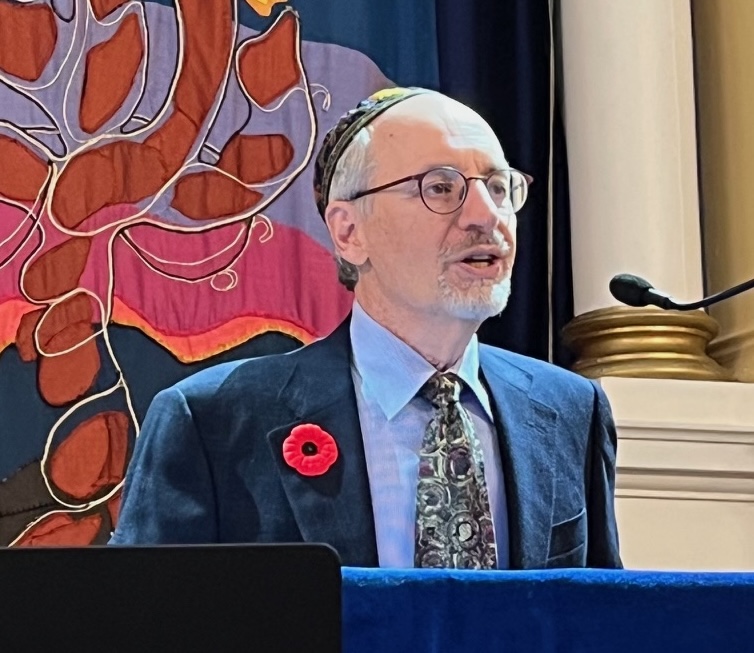
Scribe Marc Michaels concluded Kolot Mayim Reform Temple’s 2024/25 Kvell at the Well series with the talk Torah Tales: Adventures in Scribal Art. (photo from Marc Michaels)

On April 6, Marc Michaels spoke about his experiences as a Jewish scribe (sofer, in Hebrew) in the final webinar of the 2024/25 Kvell at the Well series. Titled Torah Tales: Adventures in Scribal Art, the event was organized by Victoria’s Kolot Mayim Reform Temple.

Based in London, Michaels has been writing Torah scrolls, Megillat Esther, ketubot and the scrolls inside mezuzot and tefillin for more 30 years. He is a Cambridge scholar, earning a PhD in Jewish manuscripts from University of Cambridge’s faculty of Asian and Middle Eastern studies.

A Jewish scribe writes and restores holy works using quills, parchment and special inks, all the while following a strict set of rules, explained Michaels. Indeed, there are many, many rules, which Michaels came back to through the course of the talk. 

The scribal art, he said, goes far beyond calligraphy and requires a detailed knowledge of Jewish law and a relatively high level of religious observance. 

Michaels provided a recipe for the special ink a scribe might use, which includes gum arabic, gallnuts (from oak trees), iron sulfate and water. The gallnuts are crushed to form tannic acid, mixed with the other ingredients and cooked on an open flame until a residue is left. The larger lumps of gallnuts are strained out and the mixture is left for six months to turn black and be used as ink. 

For quills, Michaels believes that a swan’s quill is too soft and a goose quill too hard and prefers a turkey quill. “As Goldilocks would say, it is just right,” he said.

Quills, Michaels warned, must be adjusted in such a way to limit the risk of a scribe sneezing because, if that happens on parchment, it is impossible to remove. Scribes shifted to quills on the move to Europe, he said. Beforehand, they used reeds – which were used to write the Dead Sea Scrolls.

“We switched to quills because that’s what the Christians were using and they were getting a much finer, nicer point on their calligraphy,” he said.

A large part of a scribe’s job is repairing scrolls. Returning again to the rules, he said, “It only takes one letter to be wrong, and that means maybe the ink has come off or it’s broken or whatever, for the whole scroll to be pasul (invalid).”

If a scroll is deemed pasul, Michaels told the audience, then it must be placed in the ark with an indicator to show it’s invalid, such as arranging its belt outside of its mantel. Jewish law states that it must be repaired within 30 days, but, he said, it may take much longer.

Among the Torah scroll repair horrors presented by Michaels were gauze that joined seams together, stains from tape that had to be scraped out, and a patch that was sewn onto the scroll. 

Typical repairs, he said, are not so extreme and mostly involve fading and broken letters, which require much overwriting. On occasion, whole columns no longer exist, having been completely rubbed away by time. Sometimes, members of a congregation might mark the scrolls with a pencil or ballpoint pen. In one slide Michaels displayed, someone had drawn a flower onto the scroll.

In his career, Michaels has also encountered incorrect spellings, deletions and Hebrew characters that were mistakenly joined together. Missing words, mixed-up letters and omitted characters from various Torah scrolls were shown to the Zoom crowd as well.

“And then you get wear and tear, dirt, holes, rips and things like that. You have to be very careful. You can patch a Torah, but you’re not allowed to do half patches,” he said.

What’s more, accidents can happen, especially when lifting the Torah during times when one side is much heavier than the other, ie., at the start and at the end of the yearly reading cycle. In one example, a Torah was torn through columns, thus the columns had to be removed and rewritten in the style of the original scribe.

Perhaps topping the list of Torah misadventures is the case Michaels came across of a young person studying for her bat mitzvah and the family dog chewed through a section of the Torah. 

“It was literally the best excuse for not learning a bat mitzvah portion – the dog ate my portion,” Michaels joked. 

“I had to do an emergency fix because there wasn’t enough time. I repaired it in the style of the original scroll, but only part of it, which you’re not normally supposed to do except in the case of an emergency – and this was a massive emergency. Because the parchment was much older than the shiny new parchment, I coated it with Yorkshire Tea. And it worked.”

A prolific author, designer and presenter, Michaels designed the prayer book for the Movement for Reform Judaism and has written numerous books and articles on scrolls, the Bible and art; he wrote the children’s book The Dot on the Ot. Michaels is currently working with Kolot Mayim to restore a Torah scroll. 

Sam Margolis has written for the Globe and Mail, the National Post, UPI and MSNBC.
Format ImagePosted on May 30, 2025August 30, 2025Author Sam MargolisCategories LocalTags education, Judaism, Kolot Mayim, Marc Michaels, Scribe, sofer
Emergency medicine at work

Emergency medicine at work

Dr. Oren Wacht of Ben-Gurion University of the Negev will be in Vancouver this month, giving a public lecture May 25 and promoting Heartbeat of Education, a project geared to helping more Israeli paramedics further their education in emergency medical services. (photo from BGU Canada BC & Alberta Region)

Dr. Oren Wacht, who heads the department of emergency medicine and is the academic director of the Field Family Medical Simulation Centre at Ben-Gurion University of the Negev, will be in Vancouver May 23 to 25. As part of his visit, he will speak to the community on May 25, 7 p.m., at an event titled Emergency Medicine in Action: Healing the Negev Post-Oct. 7.

An experienced emergency medical technician and the first paramedic in Israel to receive his PhD, Wacht serves, too, as a volunteer paramedic for Magen David Adom, Israel’s national emergency service.  Since Oct. 7, 2023, he has seen months of active service between his teaching and training responsibilities.  Thousands of BGU faculty, staff and students were called to serve after the Hamas attacks.

Wacht said his May 25 talk will be about his department, which trains paramedics, and will briefly touch upon his own experiences as a paramedic. 

“Since the war, I have spent most of the time in the military, in the infantry, as a paramedic,” he told the Independent. “I am trying to combine this with my work at BGU as a head of department and researcher, and, of course, my personal life and family. It is very challenging, but there is no other choice.”

Wacht’s visit to Vancouver will promote Heartbeat of Education, a project geared to helping more Israeli paramedics from all walks of life access and earn a bachelor’s degree in emergency medical services (EMS).

As the national EMS system,  Magen David Adom (MDA) has very close ties with the program. In February 2022, MDA and BGU signed an affiliation agreement as part of an academic initiative designed to improve training for paramedics and EMTs. The affiliation, believed to be the first between a national EMS service and a university, strives to bolster the quality of pre-hospital emergency care in Israel and elsewhere. 

“We want Israel to have the best paramedics and, with the program’s support, we can help our students go through our very intense program with less financial stress,” Wacht said. 

“Our program is unique,” he added, “because students do EMS shifts at MDA from the first year of studies. We are incredibly excited about this opportunity – and being able to support our students, especially since the war, is one of the most important things we need to do.”

In Israel, MDA paramedics are among the first on the scene in emergencies to provide critical care.  However, many paramedics lack the financial means to pursue higher education. The purpose of the Heartbeat of Education program is to enable paramedics to take on more specialized roles within the health-care system, bring enhanced expertise to emergencies and thereby save more lives and improve outcomes, drive innovation and support a diverse, inclusive environment that can provide life-saving services to everyone who lives in Israel.

Wacht also has created a summer program, in English, in emergency medicine at BGU. It will open this year, from July 20 to 30, and is geared towards laypeople and professionals alike. The program uses the extensive experience of tactical medicine – the delivery of care in hostile or high-risk situations that integrates medical and tactical operations to preserve life – at BGU and brings it to people in the course in a realistic environment at the school’s medical simulation centre. In addition to offering graduates a certificate from BGU, the program hopes to provide participants with the confidence to handle demanding medical challenges. 

The Field Family Medical Simulation Centre occupies four floors of the Rachel and Max Javit Medical Simulation and Classroom Building at BGU.  It includes classrooms equipped with medical devices, advanced simulators and research laboratories, and features state-of-the-art medical simulation rooms to train doctors, nurses and paramedics.  The rooms are designed to reflect real-life medical situations, such as cardiopulmonary resuscitation, procedures for trauma victims and emergency surgeries.

Since Oct. 7, many medical teams, from army and civilian organizations, have asked for guidance at the centre, and the centre has helped prepare many Israel Defence Forces teams. 

“Despite the challenges we face, and despite the fact that a significant part of the team has been called up for reserve duty, hospitals and MDA, this is our small contribution, and we stand united with the medical community in these difficult times,” Wacht said in October 2023. 

“The support of Jewish people from around the world gives all of us, and me personally, a lot of strength in these challenging times,” Wacht told the Independent. “We invite readers to visit BGU and see the fantastic work in many fields of research.”

To register for the Metro Vancouver event, visit bengurion.ca/events/vancouver-events. 

Sam Margolis has written for the Globe and Mail, the National Post, UPI and MSNBC.

Format ImagePosted on May 9, 2025May 8, 2025Author Sam MargolisCategories LocalTags Ben-Gurion University, education, emergency medicine, Israel, Magen David Adom, Oct. 7, Oren Wacht, paramedics, speakers, terrorism
Reinvigorating Peretz

Reinvigorating Peretz

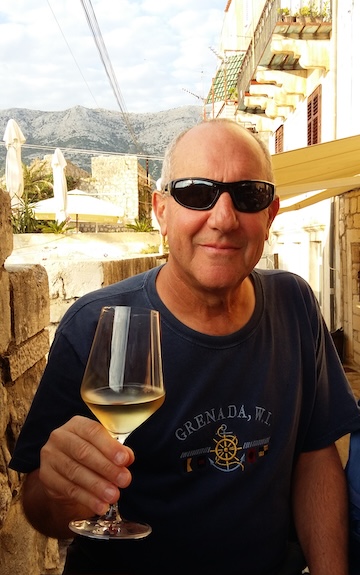
Itamar Manoff and Adi Burton, co-directors of the Peretz Centre for Secular Jewish Culture, whose vision respects centre’s history. (photo from Peretz Centre)

Adi Burton and Itamar Manoff became co-directors of the Peretz Centre for Secular Jewish Culture last summer. The Independent recently spoke with them about their relatively new positions and the secular humanist Jewish organization’s 80th anniversary this year.

Both Burton and Manoff acknowledge that they arrived at their new roles last year during a tense and uncertain time in the Jewish community. Still, they are bolstered by the vibrancy, solidarity and support that have been present at Peretz for a long time.

“Learning how to do this job is learning how not to think that you need to reinvent the wheel, but actually opening up to the amazing activity and cultural richness that exists here – and finding a way to balance out the diverse needs of this fascinating and unique community while also making space for newness,” Burton said.

Burton and Manoff are simultaneously welcoming new members and ideas to Peretz and carrying on long-standing traditions, such as the focus on Yiddish culture. Further, they are sharing the history of the centre, which is steeped in a commitment to social justice, peace activism and the integration of the Jewish and broader communities.

“Like all Jewish organizations, there is always a lively debate about what Peretz is and can be,” Burton said. “As a community, we constantly rethink and renew culture through these conversations, which shows up in our celebrations of holidays, in our classes and lectures, and community events, [and] everyone is welcome to participate in this process of recreation.”

In 1945, the founders of Peretz – socialists, communists and capitalists, among them – envisaged a place where Jewish and Yiddish culture could be preserved and cultivated. The centre, in its current location on Ash Street, is a home to the riches of that history: the Kirman Yiddish Library, photographs, recipe books, music, and stories of Jewish life in Vancouver over the past eight decades.

In the last 10 years, Peretz has lost three of its pillars: Sylvia Friedman, Claire Osipov and, just this month, Gallia Chud. As well, the centre is still recovering from the pandemic, which reduced in-person participation. A main task in the eyes of Burton and Manoff is to ensure that the legacies of past generations continue. 

“We’re lucky that there are so many people of different ages and backgrounds who are committed to Peretz – often working tirelessly in the background and with little to no support – and who keep us thriving,” Manoff told the Independent.

Burton and Manoff praised Donna Becker and Iosif Gershtein, two Peretz stalwarts who have been driving forces within the centre for more than 20 years.   

Becker, they said, brings a deep understanding of Yiddishkeit, music, progressive politics, programs and event coordination, and extraordinary administrative skills.  Gershtein provides a comprehensive knowledge of the building, an unsurpassed work ethic and a treasure trove of idioms and expressions, they said.

“We appreciate the chance to work with and learn from them,” Burton said. “Each brings a unique perspective and experience to the work that constantly inspires us to revisit our assumptions and act with greater care and respect for others.”

The Peretz Centre, according to Burton and Manoff, prioritizes diversity. It sees the LGBTQ+ community as an important part of its membership, they said, and the organization also opens its doors to interfaith and intercultural individuals and families.

“We keep a radically open definition of what it means to be a part of Jewish life, which, as a secular Jewish organization, we’re grateful to be in the position to do,” Manoff said.

The new directors say the city is entering an exciting period of growth for Jewish and Yiddish culture. There has been a marked increase in renewals and new members this past year, they said.  

On the education front, Peretz offers beginning and intermediate Yiddish classes and a Yiddish history course. Musically, there are klezmer-related events, the Jewish Folk Choir, and Yiddish dance classes with Claudia Bulaievsky.  There have been performances and lectures from well-known artists in the Yiddish music world.

“We’re excited to expand our arts and culture programming, including a few really innovative theatre productions and a film project on four amazing women who were among the founders of the Peretz,” said Burton. “We’re also especially enthusiastic about reviving our programs for youth. Our p’nei mitzvah program provides a pluralistic, non-dogmatic Jewish cultural education for young people aged 10-13 and helps them reimagine the traditional bar mitzvah rite of passage.”

When the Peretz Centre’s executive director position was announced last spring, Burton and Manoff applied together. Both have been involved in nonprofit, social and academic projects and organizations for many years.

“We draw confidence from each other because we hope that, together, we can bring and represent the spirit of friendship and community that has room for difference (makhloket) and strives towards peace,” Manoff said.

During this anniversary year, the relatively new leaders are striving to pay homage to and strengthen connections with those who have been at the Peretz Centre for a long time. They stress that their goal is to make sure that the longstanding traditions at Peretz flourish.

“It’s always such a wonderful experience to see how much is happening in the community and how much has been happening for such a long time, in such creative and independent ways,” Manoff said.

Both Burton and Manoff view the Peretz Centre as a place where people from different walks of Jewish life can come together and explore important questions of identity, history, culture, language, belonging and politics, in a safe and respectful environment – one, they say, that is needed in a time of disconnection and upheaval. 

For more information, visit peretz-centre.org. 

Sam Margolis has written for the Globe and Mail, the National Post, UPI and MSNBC.
Format ImagePosted on April 25, 2025April 24, 2025Author Sam MargolisCategories LocalTags Adi Burton, history, Itamar Manoff, Peretz Centre, secular humanism
Video shares Spiers’ legacy

Video shares Spiers’ legacy

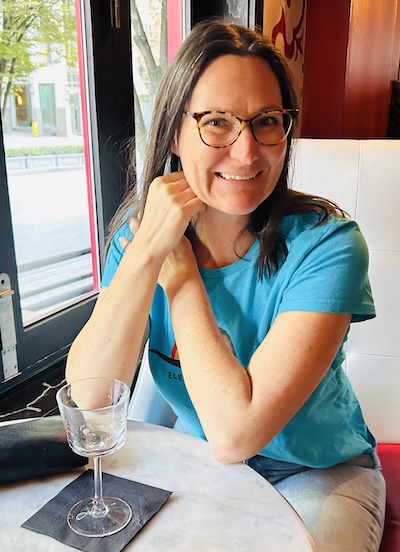
Artist Naomi Spiers explains the first panel of her wood-framed paper-cut mechitzah (partition) at the Chabad of Vancouver Island location in Victoria. A new video by David Cooperstone highlights some of Spiers’ creative path. (still from film)

Salt Spring Island sculptor Naomi Spiers, who celebrated her 90th birthday in March, is the subject of a new film, Naomi Spiers: A Legacy, released in January by Vancouver videographer David Cooperstone. 

Available on YouTube, the film follows Spiers’ path from her artistic beginnings and initial work in Ontario, through to her experiences abroad and her designs found on the mechitzah (partition) at the Chabad of Vancouver Island location in Victoria.

Born in Toronto in 1935, Spiers was allowed to have a penknife, and she carved her pencils into totem poles as a child. “I carved anything I could find and, when I was 14, I got a summer job with a potter,” she recalled. “Later, I got my hands in clay and started making all kinds of things.”

image - Naomi Spiers
Naomi Spiers (still from film)

Spiers went to the Ontario College of Art (OCA), where she studied sculpture. At the end of the four-year degree, she won a scholarship to study at the University of Edinburgh College of Art. Afterward, she returned to the OCA to assist a former instructor teaching first-year sculpture. 

There, she met Reuven, a fellow artist who, along with his two brothers, had immigrated to Canada from the United Kingdom in 1952.

“I was very impressed by his talent and very astonished when he asked me to marry him,” Spiers said. 

The couple opened a studio in Collingwood, Ont., on the shores of Lake Huron, and had various shows during their time there, with Reuven, whom Spiers said “was born knowing how to draw,” receiving several large commissions. 

She, meanwhile, created sculptures for the Catholic Church. Though not born into a Jewish home, Spiers came from a background steeped in biblical stories. She had to memorize many of them and, because of that, she was able to make works of a religious nature.

After several trips to British Columbia, she and Reuven moved to Salt Spring Island. Reuven did house renovations, while Naomi taught at Cariboo College (now Thompson Rivers University) in Kamloops. The two would see each other on weekends in Vancouver, where, on one occasion, they met an Israeli doctor who invited them to stay at a kibbutz.

The couple fell in love with Israel and moved there in 1987, eventually settling in Safed. They refurbished a centuries-old home – with no electricity, plumbing or windows – and set up a gallery: he painting, she sculpting.

It was in Safed that Naomi began to develop an interest in paper cuts, after seeing an exhibition in Jerusalem. At this point, a light went on in her head, and Spiers thought to herself, “I could do that.”

“It was quicker and cheaper than sculpture and people used to ask me to do family trees and things like that. I sold quite a lot of them,” she said.

Their time in Israel turned out to be very successful professionally. Naomi would have liked to have remained there, but Reuven’s physical constraints necessitated coming back to Canada.

Upon their return, the couple bought and renovated another property on Salt Spring Island. In 2009, Reuven, however, became ill and passed away. Within a short period, it was decided that a monument be established in his honour, and thus the Chabad mechitzah saw its beginnings.

With the help of Reuven’s brother, Martin, who assisted with the woodwork, the five paper-cut panels that form the partition got underway, each with its own theme.

The first panel in the Victoria shul shows the seven fruits of Israel – the ones that could be offered at the Temple. The second features the 12 tribes of Israel, with the symbolism being taken from inscriptions in the Hebrew Bible. 

In the middle of the partition is a Star of David panel, with hexagons that depict various Torah tales. This is followed by a panel based on the Jewish calendar – here, for example, the month of Adar takes the viewer to a scene from the Book of Esther. 

The last of the panels represents the Jewish holidays: a shofar, apples and bees making honey for Rosh Hashanah; a tent for Sukkot; a menorah and oil for Hanukkah; noisemakers and masks for Purim; four cups of wine and matzah for Pesach; and the 10 Commandments for Shavuot.

“My dear brother-in-law Martin built all this lovely woodwork,” Spiers said. “It wasn’t something he had ever done before, so we went around the house and looked at things that Reuven had made and tried to get the same style he would have done if he were doing it.

“Martin went ahead and built them,” she said. “I think they’re very nice and they matched the other furniture in the shul, and they were his monument to his brother – they were very close. Between the two of us, I think we did a good job of it.”

Chabad of Vancouver Island’s Rabbi Meir Kaplan, who first met the Spierses in 2008, shortly before Reuven’s death, lauded Naomi’s work, calling it “a stunning piece of art” and “the nicest mechitzah ever created.”

image - Naomi Spiers’ five-panel paper-cut mechitzah she created for Chabad of Vancouver Island in Victoria
Naomi Spiers’ five-panel paper-cut mechitzah she created for Chabad of Vancouver Island in Victoria. (still from film)

Spiers had approached Kaplan with her ideas after her husband’s death and, with his encouragement, she proceeded. After seeing the first panel, Kaplan said, “I was blown away. How can you do this with paper?

“As the project progressed, the works became more complex, with more wisdom and more meaning. This has become one of the masterpieces of our organization,” he said. “Local community members are proud of it and always are looking at it, trying to find some additional details and meanings in this beautiful design.” 

Kaplan, who advised Spiers on religious aspects during the years-long project – he traveled to Salt Spring Island on several occasions – noted that visitors to the Victoria Chabad have been deeply impressed by the artwork, as well. He hopes that the panels will be part of the synagogue’s decor for centuries to come. 

Spiers estimates that it took roughly a year to create each panel. At the time she started, Chabad of Vancouver Island had not yet moved into its present location at 2955 Glasgow St. 

Acknowledging that she always likes to have a project in the works, Spiers said she would like to contribute more to the community, possibly to the new school that opened across the street from the Chabad Centre last fall.

“It was an honour creating a video about Naomi Spiers, with the focus on the incredible mechitzah she created for Chabad of Vancouver Island,” Cooperstone told the Independent. “In doing this video, I discovered her amazing talent as an artist. The intricate, detailed paper cutting which Naomi spent five years creating is a marvel to look at and appreciate. I hope this video will be an everlasting legacy to this remarkable woman.”

Cooperstone has made several videos about community members, including The Naiman Family Concert with Vancouver Jewish Folk Choir (2017), Yosef Wosk Book Launch (2023) and L. Cohen, a JCC Interview with Michael Posner (2024).

The music for the Spiers film comes from Tzimmes, the Vancouver-based ensemble. Andrea Zeitz helped to put the film together and Cooperstone gave special thanks to Michael and Dvori Balshine for bringing the film to fruition. 

Sam Margolis has written for the Globe and Mail, the National Post, UPI and MSNBC.
Format ImagePosted on April 11, 2025April 10, 2025Author Sam MargolisCategories TV & FilmTags Chabad Vancouver Island, David Cooperstone, Meir Kaplan, Naomi Spiers, paper cutting
Balancing education and art

Balancing education and art

Alix West Lefler plays Frida in The Fast Runner, a 15-minute short from director David Bercovici-Artieda that was shot over the course of four days in the Greater Victoria area. (photo from thefastrunnerfilm.com)

The Fast Runner, a film about a young girl and a rabbi confronting the reality of the Holocaust, will be shown at the Comox Valley International Film Festival on April 5. The 15-minute short was shot over the course of four days in the Greater Victoria area and involved 260 people. 

Director David Bercovici-Artieda, the son of a Holocaust survivor, described the project as both a profound responsibility and an intensely personal journey. His father’s experience, though not depicted in the story, inspired him to bring the film to fruition.

“It’s not just about telling a story. It’s about honouring the memory of those who lived through unimaginable horrors, including my own father. Every frame, every scene and every creative choice carries the weight of history – my family’s history,” he told the Independent.

“I came to understand the profound impact of survival – not just the physical endurance, but the emotional and psychological resilience that followed. His story, and those of so many others, shaped my perspective on the responsibility of storytelling and the importance of preserving these narratives for future generations.”

Bercovici-Artieda said creating a film like The Fast Runner is a balancing act between art and education. It must be compelling, engaging and cinematic, but also serve the greater purpose of preserving memory and fostering empathy. At its core, he explained, the film carries a message of compassion, hope and perseverance in the darkest moments of history.

“It is a reminder that, even in the face of cruelty, there were acts of kindness, moments of defiance and an unbreakable human spirit. These themes are as relevant today as they were then,” he said.

Bercovici-Artieda admitted that, during the process of putting the film together, he questioned whether he was doing justice to the story and honouring his father’s legacy in the right manner. 

“Ultimately, telling these stories is a privilege,” he said. “It is a way to ensure that the Holocaust is never forgotten, to remind audiences that history is not just in textbooks – it lives in the voices and memories of those who came before us.”

Bercovici-Artieda stressed that the film is about choices as well: those forced upon people who suffered and those made by people who stood by, helped or betrayed. Viewers, he hopes, will recognize the weight of these decisions and that history is not just a collection of events: it is built on the actions and moral dilemmas of individuals.

“I also hope audiences see the film not just as a story about the past, but as a reflection of today’s world,” he said. “The forces of hate, intolerance and dehumanization did not disappear with the Holocaust. They persist in different forms. If we are not vigilant, history can repeat itself. And, right now, we are witnessing a dangerous rise in antisemitism, Holocaust denial and historical revisionism.”

photo - Director David Bercovici-Artieda behind the camera of The Fast Runner, which next screens at the Comox Valley International Film Festival
Director David Bercovici-Artieda behind the camera of The Fast Runner, which next screens at the Comox Valley International Film Festival. (photo from thefastrunnerfilm.com)

Most importantly, Bercovici-Artieda would like people to leave the theatre with a sense of empathy. Survivors like his father, he said, endured unspeakable horrors, but they carried on, rebuilt their lives and, in many cases, found a way to forgive.

“If they could move forward with hope, so can we,” he said. 

Currently, Bercovici-Artieda is raising funds to support a partnership with Journeys in Film, an educational nonprofit, to help teachers bring The Fast Runner into classrooms worldwide. In addition, he would like to expand screenings, panel discussions and outreach programs to engage audiences in meaningful conversations about the Holocaust, resilience and the dangers of historical revisionism.

“My hope for educating people about the Holocaust through The Fast Runner is to provide a deeply human perspective on one of history’s darkest chapters – one that goes beyond statistics and textbooks,” he said. “I want audiences, especially younger generations, to connect emotionally with the story, to feel the weight of what was lost and to understand the consequences of hatred and intolerance.”

The Fast Runner screened at the Victoria Film Festival in February; the Shabbat Lounge, a Jewish cultural event running alongside the Sundance Film Festival in Park City, Utah, in January; and the Victoria International Jewish Film Festival last November. After Comox, it will make its Latin American debut, with three screenings in Ecuador, Bercovici-Artieda’s home country. One of the screenings will take place on Holocaust Remembrance Day (Yom Hashoah), on April 23, in Quito. 

The film stars Alix West Lefler as the young girl Frida and Alex Poch-Goldin as the rabbi. Only 13 years old, West Lefler has a considerable list of acting credits, including roles in films (Speak No Evil, The King Tide) and on television (The Good Doctor, Riverdale). Poch-Goldin is a veteran stage and television actor with appearances on Nero Wolfe, Murdoch Mysteries and Queer as Folk; he is also a playwright, director and librettist.

Michael Bruce Adams wrote the screenplay for The Fast Runner. Adams has been involved in more than 150 film productions. Besides short films, he has written features and documentaries.

Bercovici-Artieda has been the cinematographer on dozens of film projects and a director of several recent television series’ episodes and movies, including the holiday film Making Spirits Bright.

For more about The Fast Runner, visit thefastrunnerfilm.com. 

Sam Margolis has written for the Globe and Mail, the National Post, UPI and MSNBC.

Format ImagePosted on March 28, 2025March 27, 2025Author Holocaust, Sam MargolisCategories TV & FilmTags David Bercovici-Artieda, education, Holocaust, second generation, The Fast Runner, Victoria
On the lookout for wildfires

On the lookout for wildfires

Tova Krentzman’s Fire Tower is a documentary about the people stationed high above the ground in the Yukon and Alberta, who are looking for smoke or signs of a wildfire. (photo from  Tova Krentzman)

Tova Krentzman’s Fire Tower, a documentary about the people stationed high above the ground checking for wildfires in the Yukon and Alberta, has been covering the film festival circuit. Most recently, it was shown in February at the Available Light Film Festival in Whitehorse, where the director resides.

The idea for the film arose when Krentzman was working as a cook at a firefighting camp one spring. Several lookouts, the people who comprise the first line of defence in battling wildfires, stayed at the camp as they were getting ready to head to their respective towers.

“I had a chance to talk to them and hear their stories. I even got to visit one of them. I was completely fascinated. The seed was planted there,” she told the Independent.

Krentzman’s diverse background includes experience as a geologist, cook, medic and merchant seafarer. She is also a photographer. Initially, she thought chronicling the stories of the lookouts would make an interesting photography book. However, when the pandemic struck, she became increasingly involved with video and turned the subject into a film.

For the documentary, she featured several different types of people who are lookouts, with ages ranging from young adults to seniors. Nonetheless, Krentzman said, they share a certain trait in common: the ability to be with themselves and thrive alone.

She was struck by the ability of the lookouts to climb a 100-foot tower every day, often many times a day, and to stay focused throughout the months they were on duty. In Alberta, where the season can last for six months, from spring to fall, lookouts work long hours without any breaks. In the Yukon, though the season is shorter, the job also requires a particular fortitude.

“It is definitely a certain kind of inner physical and mental strength to be able to do this job. When you are alone, everything you have ever done in your life comes into your mind, all your mistakes, everything,” she said. “You have to be the kind of person who can manage themselves. But these are also people who are able to feel very connected to their surroundings and derive a lot of pleasure of being connected to nature and what they are looking at.”

After spending large amounts of time with the lookouts, Krentzman observed how content they were with what they were doing. There was no drama, no breakdowns. Instead, the film raises the issue of how, in a hyper-connected world, solitude can inspire a different kind of connection with not only nature but community and one’s creativity. 

“I think the film does get into what the struggles and challenges are. And so, people reflect on things and have some quiet reflective moments that they discuss and they are personal. I would say, overall, they are pretty satisfied with what they are doing,” she said.

photo - A scene from Fire Tower. To do their fire spotting, lookouts must climb a 100-foot tower every day, often many times a day
A scene from Fire Tower. To do their fire spotting, lookouts must climb a 100-foot tower every day, often many times a day. (photo from  Tova Krentzman)

Krentzman hopes that, through watching the 47-minute film, more people will realize that the towers exist. She also hopes that the film will draw attention to the dozens of people perched in the air on the lookout for potential danger. While wildfire events can blanket the news cycle during summer months, the towers are not widely known and most provinces no longer have them, she said.

“It is important to realize all the steps that go into fire protection and prevention. The lookouts spot many of the smokes and call it in when it is a little wisp of smoke – that is when you can actually prevent it from becoming bigger. The idea is to catch it before it is a big fire,” Krentzman said. “If you can see a fire from a satellite, then it is too big – that is not prevention. 

“They are really there to protect, as a first line of defence, and then they call in the fire agencies and there is a back-and-forth going on. It is quite incredible what goes on behind the scenes when it comes to fires.”

In the time since the documentary was made, Krentzman said, the fire seasons have started so early that she likely would not have been able to gain as much filming access to the towers because of liability concerns. 

Originally from Montreal, Krentzman has lived in different places, including Israel, where many in her family still live. Yet, she was drawn to the Yukon and has spent several years there.

“The Yukon is one of those places that, as a Canadian, you have to see what it is,” she said.

Fire Tower debuted at the Hot Docs Festival in Toronto last April and has appeared on screens in the United States, Asia and Europe. The documentary was to have been shown in British Columbia last summer at the ArtsWells Festival in Wells, but the event was postponed due to a wildfire. 

For more information and to ask about a group screening of the film, visit underwirefilms.com. 

Sam Margolis has written for the Globe and Mail, the National Post, UPI and MSNBC.
Format ImagePosted on March 28, 2025March 27, 2025Author Sam MargolisCategories TV & FilmTags documentary, education, environment, Tova Krentzman, wildfires

Posts pagination

Previous page Page 1 Page 2 Page 3 Page 4 … Page 25 Next page
Proudly powered by WordPress