Skip to content
  • Home
  • Subscribe / donate
  • Events calendar
  • Business Directory
  • FAQ
  • News
    • Local
    • National
    • Israel
    • World
    • עניין בחדשות
      A roundup of news in Canada and further afield, in Hebrew.
  • Opinion
    • From the JI
    • Op-Ed
  • Arts & Culture
    • Performing Arts
    • Music
    • Books
    • Visual Arts
    • TV & Film
  • Life
    • Celebrating the Holidays
    • Travel
    • The Daily Snooze
      Cartoons by Jacob Samuel
    • Mystery Photo
      Help the JI and JMABC fill in the gaps in our archives.
  • Community Links
    • Organizations, Etc.
    • Other News Sources & Blogs
  • JI Chai Celebration
  • JI@88! video

Recent Posts

  • SFU honours Gloria Gutman
  • Lifting people’s spirits
  • Wedding a ray of light
  • Indigeneity and Zionism
  • Rule of law broken: councilor
  • Football and its roles
  • The burden of defence
  • Fish Café returns after fire
  • All right in what goes wrong
  • Nuns & mermaids at TUTS
  • Camp offers holiday retreat
  • Students and mentors inspire
  • Once-in-a-lifetime trip
  • 100 dancers, one heart
  • Money for the sciences
  • What “Jewish food” means
  • Have a cookie, schnitzel too
  • Federation now across BC
  • Israel fighting for its existence
  • Deal strengthens Iran
  • Patriotic belonging diminishes
  • A campaign to engage
  • Upstanders’ first live event
  • Responding to Carney
  • Having your own home
  • Music a family tradition
  • Musical to warm heart
  • Community milestones … June 2026
  • Sharing her passion for Israel
  • Or Shalom reopens its doors
  • JFS from past to future
  • Need holistic approach
  • Sharing stories, advice
  • Journalist shares fears
  • Skills to live together
  • Road to independence

Archives

Follow @JewishIndie
image - CJN box ad Rockowers 2026

Byline: Rebeca Kuropatwa

Remember the Weston Girls

Remember the Weston Girls

Weston Girls Estelle Sures, 17, centre, with Yvonne Harris, left, and Toni MacDonell before they set sail in 1953. (Photo from Estelle Sures)

The Weston Girls were named after the man who sent them from Canada to Great Britain – W. Garfield Weston, a Toronto businessman and philanthropist who came from Britain to Canada to open up a biscuit factory.

The young women who comprised the Weston Girls were sent from Canada to attend the coronation of Queen Elizabeth II in 1953 and to get a greater view of the British Empire.

A total of 50 17-year-olds from across Canada were chosen to make the six-week trip that included the coronation and a few historic and cultural sites in Britain, France and the rest of the British Isles – all paid for by Weston.

Estelle Sures (née Flesher) was the only Jewish member chosen. At that time, she was living in Ottawa. Now retired, following a successful career in public relations, Sures lives in Winnipeg. While she spent most of her career and life in Winnipeg, Sures did have a five-year stint in Vancouver, where she was director of public relations at St Paul’s Hospital from 1980 to 1985.

“Prior to our tour, he [Weston] had had a couple of boys tours to the British Isles, but, in the coronation year, he decided to send a group of 50 young women to foster a better understanding of Great Britain and foster closer ties. At the same time, he also sent 50 young women from Great Britain to tour Canada,” Sures told the Independent.

“The young women who were selected for the tour [to England] were from all across Canada, from the Yukon to Newfoundland, and there were four young women from B.C. One came from Prince George, one from 150 Mile House (a First Nations young woman), one from Dawson Creek, and one from Kimberley. One of the things he [Weston] was trying to do was choose young women, not just from cities, but who could represent all parts of the country.”

The selection was based on principals’ nominations of students from their schools and then, in conjunction with departments of education across the country, they made a selection of 50 young women to go on the trip.

“Those were the days when ocean liners were the way to travel,” said Sures. “It was also a way for the young women to bond. None of us knew each other before the trip. We took an ocean liner together there and back.”

The trip was well organized, said Sures, with two of Weston’s daughters, who were only a few years older than the other participants, leading the way.

As was the case with the other participants, Sures was selected during her high school graduating year.

“The trip had a big impact on all of us,” said Sures. “It was life-changing. It gave me a greater worldview and certainly inspired me to go on to higher education. After that, I received a scholarship from the National Council of Jewish Women to attend the University of Toronto.

“I think we all … wanted to give back afterwards and try to accomplish something, give back to the community and in terms of our careers.”

Sures was married in 1957. She and her husband Richard spent a year traveling overseas, later returning to Winnipeg (where he is from).

While the Weston Girls have kept in contact to a certain extent over the years, it was not until 2003 that they decided to hold their first reunion. “The first reunion was quite significant, because it was 50 years after the Queen’s coronation,” said Sures. “As you can appreciate, we had all moved on, changed cities, most of us had gotten married.

“When a few of the women, including myself, decided we wanted to have a reunion, there was a lot of detective work involved trying to find where people were. At the first reunion in Ottawa, we succeeded in having 38 of the original group attend.

“That first reunion sort of cemented our friendship and our desire to meet again. We had subsequent reunions in St. John’s, Nfld.; Victoria, B.C.; Burlington, Ont.; and St. Andrews by-the-Sea,” which is in New Brunswick.

Sures felt that this year, 2015, was time for another reunion, particularly with the establishment of the Canadian Museum for Human Rights (CMHR) in Winnipeg. She saw it as an opportune moment in history.

“I was quite thrilled, on a personal level, that 19 of the original group were able to come to Winnipeg,” said Sures.
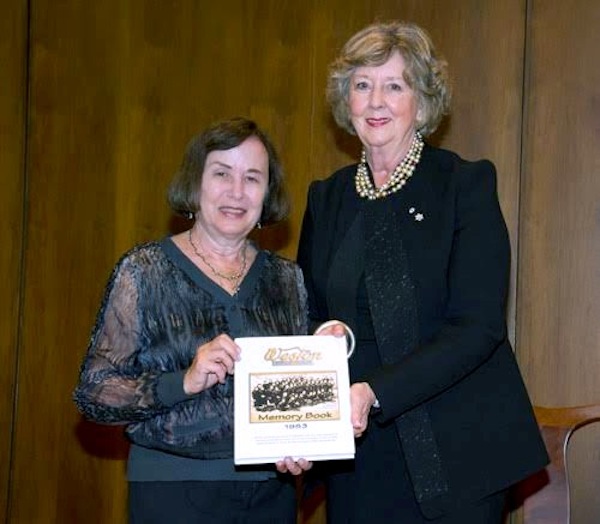
photo - Weston Girl Estelle Sures, left, presents a memory book of the Weston Girls tour to Manitoba Lieutenant Governor Janice Filmon
Weston Girl Estelle Sures, left, presents a memory book of the Weston Girls tour to Manitoba Lieutenant Governor Janice Filmon. (photo from Estelle Sures)

The reunion lasted for four days, beginning with Sures hosting the women to a luncheon at her home, followed by a tour of the legislative buildings, and capped off by a dinner reception hosted by the lieutenant governor of Manitoba, Janice Filmon. The dinner reception, said Sures, “was very elegant and we all enjoyed it.”

On the Saturday of the reunion, participants visited CMHR and toured the Forks area, a popular local meeting place with historical significance. On Sunday, they spent the day at Assiniboine Park, touring the English Garden and Leo Mol Sculpture Garden.

“We also had a picnic in the park that day,” said Sures. “So, it was a lovely weekend, where we spent a lot of time together, but also had the chance to see the best of Winnipeg.”

Given that all of the participants are now about 80 years old, it is getting more challenging for many of them to travel. While Sures will continue to get together with some of the women in smaller groups, the next large reunion is not yet planned.

“When I go to Vancouver, which I do once a year or so, because I have children and grandchildren living there, I usually meet the women who now live on the West Coast and a couple of the women in Calgary usually fly in to get together,” said Sures. “Similarly, with people in the east – there is a group that meets in Montreal.”

Of the original group trip, Sures reflected, “I think it was just coincidental, but I was the only Jewish girl in the entire group. There were a lot of Francophone women, because of the large representation from Quebec. It gave me an opportunity to meet women from across the country, which ended up being lasting friendships.

“A lot of these friendships, as we got older, we saw each other in a different context, and some of us who maybe didn’t know each other that well on the trip became even closer friends later on.”

Rebeca Kuropatwa is a Winnipeg freelance writer.
Format ImagePosted on November 20, 2015March 16, 2023Author Rebeca KuropatwaCategories NationalTags coronation, Estelle Sures, Queen Elizabeth II, Weston Girls
Children make film by selves

Children make film by selves

From filming and acting, to walking the red carpet, a group of 5-to-7-year-olds were filmmakers this summer. Their creation? The short Odd Life of Dr. Tooth. (photos from Art City)

It’s not every day that a group of 5-to-7-year-olds creates a movie. But that’s just what happened in Winnipeg this summer at Art City.

Art City was founded in 1998 by local artist Wanda Koop. She saw a need for engaging programming for kids and youth and, being an artist, she thought it would be great if there were a place where they could go to make art for free.

Since its opening, Art City has been providing after-school programs. In the summer, they run all day, from 9 a.m. to 8 p.m.

“Part of our model is that our staff and volunteers are mostly all artists,” said Josh Ruth, Art City managing director. “We also hire guest artists to come in and lead workshops, bringing their own art practice, perspectives and methods into the context of our community.”

One of the summer drop-in programs is Green Art, which is held at the park behind Art City. The idea of creating a movie came from the coordinator’s consultation with the kids about what they wanted to do this year. Art City invited as a guest filmmaker Noam Gonick.

“We all know him from his reputation as a filmmaker and he’s sort of a local art star,” said Ruth. “I asked if he would be interested in helping us out and he was really keen. He said the only reason he’d never done anything with Art City before was because he’d never been asked.”

Art City puts the kids’ ideas at the forefront of everything they do. In this case, participants wrote the script, developed the characters, made the costumes and sets – basically, they steered the whole creative process.

photo - From filming and acting, to walking the red carpet, a group of 5-to-7-year-olds were filmmakers this summer“The kids obviously developed their skills in terms of storytelling and understanding how to convey the message they are trying to get across to an audience,” said Ruth. “We feel it has some strong implications in terms of helping to grow literacy – not just reading and writing, but social literacy, and all those sorts of things, and working together in a team. Collaborating in that way always takes patience and problem-solving.

“In terms of working with Noam, he brings a huge amount of expertise, certainly in filmmaking, but in art-making in general. For example, I was in the office one day during the shoot and I overheard him talking to one of the participants who, for whatever reason, didn’t like what he was suggesting they do. And I heard him tell her, ‘You know, if you take direction well, people say you’re easy to work with, and then you’re more likely to get more work in the future. If you don’t take direction well, then people say you’re difficult to work with and that can be bad for your career. So, just keep that in your back pocket.’

“I thought that was a great way for him to shoot straight with the participants, even at such a young age, about the fact there are times when you get to do what you want and other times when you need to follow direction.”

Ruth felt the kids did an amazing job and that Gonick did a great job directing. As well, those involved in the post-production work were also invaluable, people like Ryan Simmons who edited the film along with Gonick, and Andy Rudolph who did the sound production.

photo - From filming to walking the red carpet, a group of 5-to-7-year-olds were filmmakers this summerRuth and staff created a première screening of the film that included the stars getting dropped off in a limo, walking down a red carpet, and enjoying champagne glasses full of gummy bears.

“The kids got out of the limo one by one and walked the red carpet,” said Ruth. “Then, they came into Art City, where we had set up a big screen and the kids had made their own VIP lounge passes. I was the security guard.”

Gonick said he felt a little lost at times, due to how Art City runs and the fact that he had very little control over many aspects of the film.

“They were looking for someone to mentor them, but not to bring an original concept to the table, just to help the kids realize their idea,” said Gonick. “Mostly, the shooting process, editing and, really, the idea came out of a workshop that Art City staff and kids did on their own.

“I was mostly just given their script. They cast it themselves and did all the designing ahead of time…. It was like being a director for hire and having 7-year-old producers. Given some of the producers I’ve worked with, the 7-year-old mindset was just par for the course.”

For Gonick, the experience was all about ensuring that everybody felt empowered, had fun and was involved. “You know, you don’t want children to be traumatized,” he said. “So, you just kind of make sure everyone gets to participate and that the ideas are fluid enough that everybody gets a part.”

There was a core group of six 5-to-7-year-olds but, on the morning of the first day of shooting, a seventh child joined the group, so a new role and scenes had to be created on the spot.

Gonick was at ease working with the kids, as he has been working with young stars as of late. “They are like any other group of actors,” said Gonick. “Everybody has their own needs and abilities. You just have to be responsive in the moment and get out of them what you can. The difference between this and working in a professional environment with kids is that I was conscientious that I didn’t push them too much.”

The 10-minute film, Odd Life of Dr. Tooth, is a surreal, non-linear story that follows the main character, who is a dentist. It begins with the dentist working on someone’s mouth and commenting on their poor dental hygiene. Then, suddenly, the camera closes in on the mouth of the patient and transports the viewer to outer space. Gonick incorporated this concept of traveling to outer space and animal kingdoms via patients’ mouths as a way to connect the disparate ideas that the kids had. The movie can be viewed at vimeo.com/138120558. For more on Art City, visit artcityinc.com.

Rebeca Kuropatwa is a Winnipeg freelance writer.

Format ImagePosted on November 13, 2015November 11, 2015Author Rebeca KuropatwaCategories TV & FilmTags Josh Ruth, Noam Gonick, Odd Life of Dr. Tooth, tikkun olam
Research in genetics

Research in genetics

Dr. Cheryl Rockman-Greenberg (photo from Dr. Cheryl Rockman-Greenberg)

“There are approximately 7,000 rare diseases, each individually very rare. But, when you look at them as an aggregate, rare genetic metabolic disorders, they affect approximately one in 15, or two million, Canadians.”

Although there are various ways to define what constitutes a “rare genetic disorder,” Winnipeg-based Dr. Cheryl Rockman-Greenberg told the Independent, “One definition is that a rare disease is one that only affects one in 12 or fewer individuals in the general population, or some have defined it as disorders affecting a maximum of 1,000 to 2,000 individuals.”

Rockman-Greenberg specializes in medical genetics and genetic metabolic disorders. She said rare diseases represent a disproportionally large percentage of Canada’s medical, health-care and pycho-social burden.

Children who have a genetic rare disease experience high morbidity and mortality in the first two years of life. Phenylketonuria (PKU) is one of the more well known and, before a newborn baby leaves a hospital, he/she undergoes a heel poke. According to the Mayo Clinic website, PKU is an “inherited disorder [that] causes an amino acid called phenylalanine to build up in your body. PKU is caused by a defect in the gene that helps create the enzyme needed to break down phenylalanine. Without the enzyme necessary to process phenylalanine, a dangerous buildup can develop when a person with PKU eats foods that are high in protein.”

“Every baby born in Manitoba is screened for a whole series of rare metabolic diseases,” said Rockman-Greenberg.

Newborn screening programs have been in place across Canada since the 1960s and have expanded over time as treatment options, and the ability to diagnose disorders right after a baby is born, have increased.

“PKU only affects one in 15,000 children, but it’s an important metabolic disorder,” said the doctor. “Untreated children with PKU have severe developmental problems.”

Through research, it was discovered that PKU can be controlled by providing a special diet and, if treatment is started early, any damage can be completely prevented.

“These are all hereditary disorders. These metabolic disorders I treat or that are screened for at birth are all caused by one single gene pair, where there is a mutation in both copies of the gene,” said Rockman-Greenberg.

“Remember, genes come in pairs as two copies of the gene. And, if there is a misprint in each copy, if the child has misprints in both copies of the gene, then that condition is manifested. The genetic abnormality is the most significant factor for what causes the signs and symptoms. The environment plays little role overall.”

In the last few decades, more resources have been put into research. A big step in this direction was in the United States, with the Orphan Drug Act of 1983, which gave incentive to companies to develop treatments for rare metabolic diseases. Canada does not yet have such a policy.

“If you can imagine developing a treatment when there may be 50 patients in the whole country,” said Rockman-Greenberg. “It’s, first of all, a very expensive venture. For the industry, it’s much more profitable to do a drug trial for a common disease that may affect thousands and thousands of people.”

Regardless, the number of drugs that have been developed by companies prepared to invest in the research of rare diseases has increased.

“For many of these rare diseases, there are or have been excellent clinical trials over the past decade,” said Rockman-Greenberg. “And when the clinical trials have shown that a treatment is effective and safe, then more and more of these drugs get licensed and become available to treat patients.

“And then industry has stepped in and shown a commitment for drug development. This has greatly increased the number of diseases, rare metabolic diseases, that were not amenable to treatment but now have the potential for an effective treatment. So, a lot of the barriers have been removed … [because of] good research by industry and basic research by university scientists.”

Another factor that has helped change the landscape is the development of national patient groups.

“Parents and patient groups are extremely effective,” said Rockman-Greenberg. “They have really brought together the rare disease community that, in the past, has been very fragmented. Now, there’s a national voice through the Canadian Organization for Rare Diseases (CORD), Canada’s national network for organizations representing all those with rare diseases.”

“There are many disorders – rare, ultra-rare diseases – where we had seen babies die early of the disease. Now, the potential of treatment, viable and good quality survival, good quality of life … that’s what being a doctor is all about.”

Of these changes that have enabled her to provide better care for patients, Rockman-Greenberg said, “It’s wonderful. There are many disorders – rare, ultra-rare diseases – where we had seen babies die early of the disease. Now, the potential of treatment, viable and good quality survival, good quality of life … that’s what being a doctor is all about.”

Looking ahead, Rockman-Greenberg is optimistic. “In general, there are more and more incentives for drug development for rare metabolic diseases, so I see the metabolic community continuing to participate in clinical trials,” she said. “The development of therapies and, then, another major role that we as doctors have is to help ensure that patients have access to these promising therapies.

“We have to make sure that there are programs in places in all the provinces and territories that are going to allow patients to have access to these treatments. So, there’s lots of work that needs to be done and physicians have to be part of this dialogue with industry, governments and stakeholders to ensure we can make real change for patients with rare diseases.

“It’s one thing to find the cause for a rare disease. It’s another thing to prove a treatment is effective through clinical trials. But, at the end of the day, we have to make sure patients who aren’t candidates for treatment trials have access to care.

“We need to make sure as many people as possible are aware of the existence of rare metabolic diseases and how complicated they are, what a burden these diseases have on the patients and their families, but also about the many programs being developed to help research and develop new treatments, and help them connect to patient support groups that assist rare-disease patients.”

Rockman-Greenberg is the director of the metabolic service and a clinical geneticist in the program in genetics and metabolism of the Winnipeg Regional Health Authority. She is also a professor in the department of pediatrics and child health, and the department of biochemistry and medical genetics at the University of Manitoba. She grew up in Montreal and moved to Winnipeg in 1978. In January 1979, she began working at Winnipeg Children’s Hospital. As both a pediatrician and medical geneticist, she sees patients throughout their lifespan.

Rebeca Kuropatwa is a Winnipeg freelance writer.

Format ImagePosted on November 6, 2015November 8, 2015Author Rebeca KuropatwaCategories NationalTags Cheryl Rockman-Greenberg, genetics, PKU, rare diseases

Refugee system doesn’t work

According to David Matas, former president of Canadian Council of Refugees (CCR), changes that have been made to this country’s refugee system within the last few years have made it more difficult to sponsor refugees.

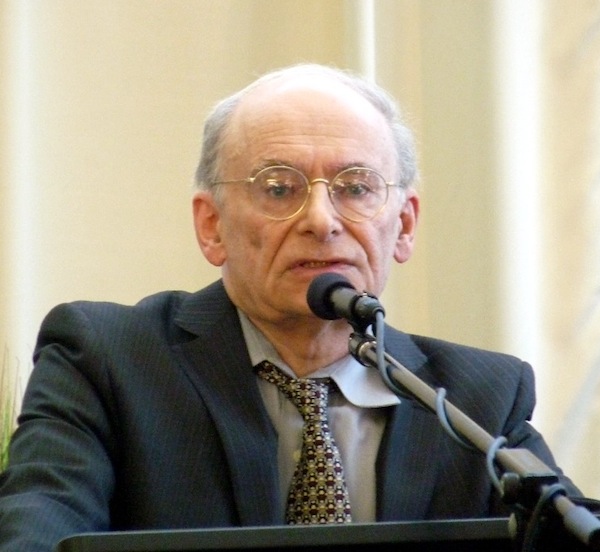
photo - David Matas is a vocal proponent of changing Canada’s immigration system
David Matas is a vocal proponent of changing Canada’s immigration system. (photo from David Matas)

“We set up a sponsorship system in ’78 and it was used in ’79 and ’80 and years around there to bring in the Vietnamese refugees,” said Matas. With the different sponsorship programs developed over the years, mixed with the growing willingness of people to sponsor, visa offices no longer have the capacity to process the amount of sponsorship applications, he said.

“The response of the government, in my view, should have been to increase the resources to match the sponsorship need, but that’s not what happened,” he said. “Instead, what they did is put visa caps on the offices with the biggest numbers, as well as an overall local cap for private sponsorship through sponsorship agreement holders. Then, they divided the global cap amongst the sponsorship agreement holders.”

According to Citizenship and Immigration Canada, “A group of five (G5) is five or more Canadian citizens or permanent residents who have arranged to sponsor a refugee living abroad to come to Canada. All of the group members must be at least 18 years of age and live or have representatives in the area where the refugee will settle.

“The group must agree to give emotional and financial support to the refugee(s) for the full sponsorship period – usually one year.”

They couldn’t cap the G5 applications in the same way as the other, so what they did instead, said Matas, “was insist that anybody who sponsored through group of five had to get prior approval … through the office of the United Nations High Commissioner for Refugees, which is much more overwhelmed and under-funded than the Canadian government.”

The CIC website explains that, effective Oct. 19, 2012, “a G5 may only sponsor applicants who are recognized as refugees by either the United Nations Refugee Agency (UNHCR) or a foreign state, unless you are applying to sponsor a Syrian or Iraqi refugee.”

According to Matas, the caps made the lines longer, forcing people to reapply year after year, making it so that anybody who applied had to wait years before sponsorship came through.

“But, obviously when you’re dealing with refugee people marching across Europe, they can’t wait years,” he said. “And, what’s more, there is a direct connection between people leaving and the failure of the sponsorship. Because, if people know they’re putting in an application and, if they hang around, it will succeed, they’ll stay. But, if it’s going to take five or 10 years, there is no point in waiting.

“So, there’s a direct connection between this exodus that we’re seeing now, the failure of the Canadian sponsorship scheme and the absence of any European sponsorship schemes.”

Matas believes that if we had kept our Canadian sponsorship scheme as it was, then we could have advised Europe to do the same and, if Europe had agreed, all this mass migration could have been avoided.

Recent turmoil has simply shined a spotlight on the issue. “It’s just like water pressing against a dam,” said Matas. “In the beginning, it doesn’t have any impact. It’s only when it breaks, or the water overflows the dam, that you notice the dam isn’t working or that the dam is a problem.”

The current situation does not come as a big surprise to him, with visa offices being “under water” for years. But, instead of giving them more “air” (staff), they were further strained by the capping system, which artificially controlled the number of refugees going through the system, regardless of need.

“With the failure of the Canadian system, there wasn’t a picture to show the Europeans how it is done and ask them to do the same,” said Matas. Instead, “We have a system that collapsed. Well, not completely, but it ceased to be functional.”

According to Matas, the caps need to be removed and the system resources increased “to match the private sponsorship, so we don’t have the generosity of Canadians being frustrated.”

In early September, Matas spoke at a public rally about refugees organized by the Kurdish community of Winnipeg.

“The refugee sponsorship and resettlement community has been against these changes from the first minute they were discussed,” he said. “I am not presenting a new idea here. I’m reiterating a stand that has been taken many times in the past by the refugee support, resettlement, integration [and] advocacy community.”

The topic became an election issue, with candidates talking in terms of numbers – but not in terms of fixing the mechanics of the system. However, said Matas, “Presumably, with the numbers will go the capacity to process them.”

While many of the refugees arriving in Europe are Syrian, many are not, said Matas. “While the situation in Syria is terrible, it’s not the only place in the world that’s terrible,” he said.

About the Canadian government’s decision to not have Canadian visa officers apply the UN refugee definition to 10,000 Syrians, thereby allowing these 10,000 to enter Canada on a first-come, first-served basis, Matas said, “The government, with the recent announcement, did nothing to fix the system,” said Matas. “Rather, it acknowledged, indirectly, its failure, by deciding not to apply it to 10,000 random Syrians who may or may not be refugees. As far as I am concerned, that is not much of a response to the global refugee crisis or even, for that matter, the Syrian one.”

Rebeca Kuropatwa is a Winnipeg freelance writer.
Posted on October 23, 2015October 22, 2015Author Rebeca KuropatwaCategories WorldTags David Matas, immigration, refugees, Syria
Expanding the financial field

Expanding the financial field

Michael Susser, left, and Murray Palay of Quadrant Asset Management. (photo from QAM)

The first-ever Quadrant Asset Management Investment Conference was held on Oct. 2 at the University of Manitoba’s James W. Burns Executive Education Centre in downtown Winnipeg. It will be a recurring event, happening at least once every two years, according to Murray Palay of Quadrant Asset Management, which has committed to five conferences in the next 10 years.

Even though the conference was their idea, Palay and business partner Michael Susser were taken aback by how quickly the idea was accepted and how speedily it has taken form – a year ahead of schedule.

Both graduates of the U of M, Palay and Susser wanted to support the Asper School of Business in its desire to hold a conference on behavioral finances.

“We felt it was appropriate to give back, particularly in the area of finance,” said Palay about the decision to support the conference. “But really what we wanted was more academic…. We wanted a program that we could kick-start and that would build over the years.”

Quadrant covers 60% of the cost, with the remaining amount covered by partners in the industry, Tetrem Capital Management and CI Investments. Michael Benarroch, dean of the Asper School, and Dr. Gady Jacoby, the Bryce Douglas Professor in Finance, were involved, and U of M assistant professor of finance Chi Liao organized the conference.

Behavioral economics, or finance, incorporates other factors, such as psychology and emotion, into conventional economic theory – which assumes that people always behave rationally, in a way that maximizes their wealth – in an effort to explain why people often make decisions, or behave in ways, that seem unpredictable or irrational. It does so not just to understand individual behaviors, but their effect on the market at large.

About that general definition, Liao said, “I’m not sure if I agree with the term ‘irrational.’ It may be more measured to say that behavioral finance uses psychology to understand how human behavior influences financial decisions.”

A major question the conference examined is whether or not people make decisions based on emotions as well as financial considerations.

“I had the liberty of choosing the speakers, so I chose people who I thought had very cutting-edge, very talk-able research topics – researchers like Dr. Hersh Shefrin of Santa Clara University, the conference’s keynote speaker,” said Liao. “He was an obvious choice, as he really pioneers the field of behavioral finance.”

Shefrin’s 1999 book Beyond Greed and Fear: Understanding Behavioral Finance and the Psychology of Investing has become a standard text used around the world in behavioral finance courses, as well as being part of the CFA Institute curriculum source material, among others. As it happens, Shefrin is a former Winnipegger and a U of M graduate.

Other conference presenters included Amos Nedler of the University of Western Ontario, who spoke about The Bull of Wall Street: Experimental Analysis of Testosterone and Asset Trading; Rawley Haimer of the Federal Reserve Bank of Cleveland on YOLO: Mortality Beliefs and Household Finance Puzzles; Jawad Addoun of the University of Miami, who discussed Local Bankruptcy and Geographic Contagion in Loan Characteristics; and Vicki Bogan of Cornell University on the Importance of Mental Health and Retirement Savings: Confounding Issues with Compounding Interest. Capping off the conference were speakers Scott Hsu of the University of Arkansas, who spoke about Beauty is Wealth: CEO Appearance and Shareholder Value; and Lisa Kramer of the University of Toronto, who discussed Examining the Effect of Social Distance on Financial Decision Making.

“Martin Wayngarten, who heads our investment management group, could have listened to Dr. Shefrin all day,” said Palay. “His explanation of the behavioral aspects, how sentiment and emotions factor in, and how they correlate or don’t to rational investors, this is all stuff that we live and breathe.

“Being on the front lines, we recognize that behavioral issues, such as sentiment and emotion, are very much a part of what we have to deal with. It’s just not all numbers.”

Palay felt some of the other speakers’ topics were a bit more esoteric, such as those discussing testosterone in traders, but still very interesting.

One major takeaway for Palay from the conference was a newfound understanding of the nature and depth academics go through to prove their theories through clinical studies.

“We would have never really seen this kind of a presentation if not for Jacoby and Liao,” said Palay. “The presentations you would get industry-wide would be a lot more practically oriented and more numbers-oriented.”

In addition to what he learned at the conference, Palay was also glad to have had the opportunity to spend time with his son, who is a student in Liao’s class, as the whole class came to the conference.

“I should mention, by the way, the bias I have in terms of how good Dr. Shefrin was,” said Palay, noting that Shefrin is his wife’s second cousin. Palay learned of this connection shortly before the conference, when sharing some information with his wife, Ivy Kopstein (of Winnipeg’s Jewish Child and Family Service), about the then-upcoming conference and the keynote speaker. Kopstein said Palay must invite Shefrin home over for dinner.

Rebeca Kuropatwa is a Winnipeg freelance writer.
Format ImagePosted on October 23, 2015October 22, 2015Author Rebeca KuropatwaCategories NationalTags Asper School of Business, behavioral finance, Chi Liao, Murray Palay, QAM, Quadrant Asset Management
Commenting with cartoons

Commenting with cartoons

Attendees at the opening of the Avrom Yanovsky exhibit in Winnipeg in September. (photo by Stan Carbone)

The Jewish Heritage Centre of Western Canada (JHCWC) and the United Jewish People’s Order (UJPO) are co-hosts of an exhibit in Winnipeg of the political cartoons of Avrom Yanovsky (1911-1979).

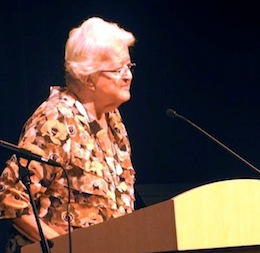
photo - Anna Yanovsky, the cartoonist’s widow, speaks at the exhibit opening
Anna Yanovsky, the cartoonist’s widow, speaks at the exhibit opening. (photo by Stan Carbone)

The exhibit opening took place Sept. 17 at the Asper Jewish Community Campus with guest speakers Ester Reiter, associate professor, School of Women’s Studies, York University; and Anna Yanovsky, the artist’s widow. The evening concluded with a performance by the North End Jewish Folk Choir.

With the event, Stan Carbone, director of programs and exhibits at JHCWC, said, “we attempted to provide a composite picture of Avrom Yanovsky placed within an historical and cultural milieu in which his Winnipeg years were critical in shaping and defining his intellectual development and his passion and commitment for social justice.”

According to a 2006 article by David Abramowitz in Outlook Magazine, Yanovsky was born in Ukraine “and came to Canada at the age of 2 with his widowed mother, her parents and his infant brother. They settled in Winnipeg, where Avrom attended the I.L. Peretz Shule. His 1925 graduating class included the late Nechama Gemeril, who later became his wife. The school provided an excellent grounding in the Yiddish classics and revolutionary politics, which stayed with Avrom throughout his life. His mother, a seamstress, and an active Bundist in the Old Country, became a labor Zionist and emigrated to Palestine with Avrom’s brother in 1931.”

Yanovsky was part of a generation of Jews arriving in Canada in the first decades of this century. He was old enough to remember the 1919 Winnipeg General Strike. He lived through and saw the suffering during the Depression, he witnessed the repressive government of the day in Canada, the rise of Hitler and rampant antisemitism.

Reiter said, “Those who knew him commented that had he just a bit of the capitalist in him, his enormous talents would have made him a very rich man … [he was] a rich man, but not in dollars.”

For a time, Yanovsky served as art director for a Yiddish children’s magazine, called Yungvarg (Youngsters), published in New York; for each issue, he did a cartoon story of one of the many Yiddish writers of the late 19th and early 20th centuries. In the late 1930s, Yanovsky began exhibiting with the Canadian Society of Graphic Artists, at the Art Gallery of Toronto, and was president of that organization for a number of years. His editorial cartoons appeared in many English and Yiddish publications, including the Vokhnblat, Canadian Tribune and Outlook.

“One of the cartoons you’ll see is that of the premier of Quebec, [Maurice] Duplessis [1890-1959], with a big padlock representing the padlock law,” said Reiter. “That enabled any person or organization deemed subversive [undefined] to have their house or building padlocked for a year.”

At one point, she said, Yanovsky was hired by a pest-control factory to create a mural. Even this, Yanovsky managed to politicize, using the theme to apply not just to the animal but to the human pests.

“He commented through his art on all aspects of the world, from labor to Canada’s increasing subservience to the United States, the struggle to make ends meet, and the concern for peace and human rights,” said Reiter.

“He targeted not only fat capitalists, but the CIA, the Mounties, antisemites, racists, fascists, fascist sympathizers, and most of Canada’s prime ministers.”

Reiter said, “Avrom was known to be a man of integrity and principle. He lived his politics, sharing his talents for not very much monetary gain. His art was tied to the life and daily experience of working Canadians. He made us laugh in his drawings and in real life.”

The exhibit now on display in Winnipeg was first shown at York University and originally curated by Dr. Anna Hudson of York with the title Free Discussion is the Key to Peace – The Political Cartoons of Avrom Yanovksy. It was remounted at Toronto’s Ashkenaz Festival and then at the Varley Art Gallery in Markham, Ont., together with his mural honoring Dr. Norman Bethune (1890-1939). It was hosted in Vancouver by the local UJPO in 2013.

“The exhibit is of his later cartoons, from 1950 to 1972,” explained Reiter. “And you can see … for him, his art and his politics were really one in the same. He used his art to express his politics. The cartoons that you’ll see, those particular cartoons, don’t give a sense of his profound commitment to Yiddish stuff, which he was profoundly committed to. His stuff was related to labor, to politics, to peace, stuff like that.”

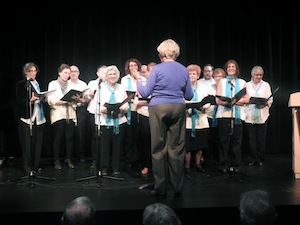
photo - The opening concluded with music from the North End Jewish Folk Choir
The opening concluded with music from the North End Jewish Folk Choir. (photo by Stan Carbone)

Reiter was asked to speak at the event, as she is writing a book on the history of the Jewish left in Canada, which should be out in the spring. She wanted to be involved in the showings of his art because of her interest in history and the left. “He was so famous, certainly among the left,” she said. “People spoke adoringly of his work.”

While Hudson went through some of Yanovsky’s work with Anna Yanovsky for the exhibits, Reiter provided the context.

“The ink drawings on display here, with their collaged and corrected compositions, are just to give an idea of the range of Avrom’s work,” said Reiter. Quoting from Hudson’s notes from a previous exhibit, she pointed out, “You will recognize ‘a cast of easily recognizable characters: the moneybag, the banker, the capitalist and the politician,’ with his sidekick, the police or military. ‘We can laugh at the tragedy of economic inequity because Avrom speaks to us personally to remind us of our humanity, our common ground, and our collective strength.’”

Said Reiter, “He was a communist and he was a Jew with a deep love and respect for Yiddish language and culture.”

Rebeca Kuropatwa is a Winnipeg freelance writer.

Format ImagePosted on October 16, 2015October 14, 2015Author Rebeca KuropatwaCategories NationalTags Avrom Yanovsky, cartoons, Ester Reiter, JHCWC, politics, UJPO, York University

Researcher moves to London

The Canadian government’s policies toward local research and innovation are being streamlined with industry, making it so researchers are no longer free to look outside the box. This is one of the reasons Dr. Robert Brownstone gives for his decision to leave Canada to live in England and teach at the University College of London.

photo - Dr. Robert Brownstone
Dr. Robert Brownstone (photo from Dr. Robert Brownstone)

Brownstone, who was born and raised in Winnipeg, has spent most of his research career in Canada. He is a neurosurgeon who has treated people with movement disorders, pain and epilepsy, and who researches neural circuits that control movement. Prior to recently leaving the country, he was working as a professor of surgery (neurosurgery) and medical neuroscience at Dalhousie University.

“While it could be argued that there have been no cuts to the Canadian Institutes and Health Research (CIHR), funding has been flat (which is in effect a cut) and funding has been directed to specific programs (which is a cut to investigator-driven fundamental research),” said Brownstone in an interview with the Independent.

Minister of State (Science and Technology) spokesperson Scott French challenged this claim, however. “Since being elected in 2006, our government has made record investment in science, technology and innovation to push the frontiers of knowledge, create jobs and improve the quality of life of Canadians – including providing over $1 billion in funding toward neuroscience research alone,” he said.

French added that CIHR directs two-thirds of its funding envelope to basic or discovery science to strengthen Canada’s position as a world leader in health research.

photo - Dr. John Bergeron
Dr. John Bergeron (photo from Dr. John Bergeron)

McGill University’s Dr. John Bergeron – researcher, professor and chair of anatomy and cell biology for 13 years – explained the issue using a hockey analogy. “For whatever reason,” he said, “we decided that talent and accountability to genuine discovery would not be part of our funding mechanism. That decision was made by administrators and, in my mind at least, it’s sort of like saying, ‘We’re going to get the best logos in hockey and that will make us win the championship, the NHL cup, or whatever.’ And saying, ‘We don’t need talent…. We just need to look good on camera.’ Of course, that’s not sensible.”

Bergeron acknowledged that generous sums of public money are targeted for research and development. However, he said that an accountability mechanism should be considered to see if that money is targeting talent that generates genuine discoveries.

“By any deductive measure, Canada is not doing well,” said Bergeron. “The most recent is the latest rankings of research universities (viewable at shanghairanking.com). We’ve had zero Nobel Prizes in medicine since our one and only award in 1923 (for the discovery of insulin). All big pharma pre-clinical research labs have left Canada and we have only one living Lasker Award winner – James Till of Toronto.

“It is the university presidents and heads of our funding agencies who have failed the Canadian taxpayer. It is young, genuine talent that is needed across Canada, and the lack of accountability of our university presidents and heads of funding agencies is what is holding us back.”

Bergeron said we are shooting ourselves in the foot by funding research without having an infrastructure to apply the discoveries and reap the rewards of our efforts. “One of my goals is to try to use the Merck labs, get them going to put together a world-class institute to exploit genuine discoveries that are made here in Canada.”

As an example, Bergeron pointed to the work of McGill University Canadian-Israeli educator Dr. Nahum Sonenberg.

“With Dr. Sonenberg’s basic science discovery, he went from figuring out all of the machinery involved in making proteins to stumbling across the fact that if you target a small molecule with some of the proteins he’s discovered, it improves memory. So, colleagues in the U.S. and Britain teamed up with biotechs and big pharmas and have now used this discovery to develop drugs to treat senility, Alzheimer’s, memory loss.

“This is going to be a market creating hundreds of millions of dollars that we’re not going to exploit [in Canada]…. We don’t have any infrastructure to do this, all because these crazy administrators know nothing about what real discoveries have been historically.”

Bergeron sits on grant panels for the European Commission that provide 10 million euro grants a year, as well as U.S. funding agencies panels that give out more than a million dollars in grants per year.

“When you’re in Canada, the average grant in the last competition for the open operating grant averaged out to about $125,000 a year per investigator,” said Bergeron. “That’s serious taxpayer money, but it’s not competitive with what’s going on in the rest of the world. We’re spending over $30 billion a year in research and development, yet we don’t use peer review. Funding decisions are made by administrators that know nothing about discovery.”

photo - Jim Woodgett
Jim Woodgett (photo from Jim Woodgett)

Jim Woodgett, investigator and director of research of the Lunenfeld-Tanenbaum Research Institute at Toronto’s Mount Sinai Hospital Joseph and Wolf Lebovic Health Complex, also said that funding has been stagnant in recent years and that restructuring at CIHR has resulted in further hoops researchers need to jump through to access funding.

“To access funds here, in Canada, you have to bring to the table equivalent funds from other sources,” said Woodgett. “They can be philanthropic sources, etc. These types of programs, the government has been quite keen on promoting as a means of leveraging additional support. And some types of research just don’t have that kind of accessibility or the researchers don’t have accessibility to those matching funds, so that does become a bit of a limiting problem.”

Woodgett said there needs to be a balance, and better ways to access funding that do not require fundraising. “You need to balance discovery research and applied research, otherwise what happens is you just dry up after awhile,” he said. “All the ideas dry up and there’s nothing then to translate into applied research.

“You can argue you should spend 10 percent of your funds on discovery and 90 percent on applied … and say that the private sector shouldn’t be funding basic science … they should be only funding applied science.”

Internationally, many government-supported research funds go toward the discovery end of the spectrum. Canada needs to do the same if it wants to retain top researchers, said Brownstone.

Acknowledging that he is not a politician nor an economist, he said, “I feel there is intrinsic value in knowledge or a knowledge economy. Good things come from knowledge. Just look at leaders in the field, like Switzerland and Silicon Valley, unlike oil economies, such as Saudi Arabia.”

As far as creating change and reinventing research in Canada, Brownstone said, “Changing culture is hard, but it can be done with leadership. Look at [U.S. President John F.] Kennedy and landing a man on the moon.”

Rebeca Kuropatwa is a Winnipeg freelance writer.
Posted on August 28, 2015August 27, 2015Author Rebeca KuropatwaCategories NationalTags anadian Institutes and Health Research, CIHR, Jim Woodgett, John Bergeron, Nahum Sonenberg, Robert Brownstone, science, technology
New addictions study

New addictions study

Winnipeg’s Jewish Child and Family Services executive director Al Benarroch. (photo from Al Benarroch)

Although the problem of alcohol and substance abuse in the Jewish community is not new, it is often kept hidden and even ignored. A recent study by Winnipeg’s Jewish Child and Family Services (JCFS) hopes to expose the problem and dispel the stigma.

Led by executive director Al Benarroch, JCFS has increased its activity in raising awareness about addictions in the Jewish community over the past five-plus years. These efforts have included giving lectures, writing articles, building JCFS staff’s capacity to address addiction issues, hosting speakers, holding a conference on the topic, and launching and supporting the local chapter of JACS (Jewish Alcoholics, Chemically Dependent Persons and Significant Others), a Jewish 12-step recovery group.

“As a result of all this work, stigma has been reduced and our community has become more open to discuss this significant social issue,” said Benarroch. “Many more Jewish families and individuals are now willing to seek out support and assistance from JCFS.”

These initiatives were mainly funded through grants from the Jewish Foundation of Manitoba and private donors. In 2011, JCFS received core funding from the Jewish Federation of Winnipeg to hire a dedicated staff person to oversee the development of future addiction recovery services.

JCFS has created a standing strategic advisory group on addictions (SAGA), which has prioritized main areas of focus, including the expansion of services and resources for youth and families. The continuum of services could include education (workshops, etc.), the provision of counseling, the opening of a Jewish recovery resource centre, offering Jewish transitional sober housing for individuals leaving in-patient treatment and requiring extended time to foster lasting sobriety and, ultimately, Jewish in-patient recovery services.

With all of these goals in mind, JCFS was faced with a problem: little or no research had been conducted on the incidence and nuances of addiction and addiction recovery in Jewish communities.

“However, anecdotal information and reports from other communities and their agencies mirror the experiences of Winnipeg,” said Benarroch. “Specifically, that there are many Jewish individuals and families struggling with a wide array of addiction issues, and that these numbers and [the] intensity of problems likely mirror the general population.”

Nonetheless, JCFS set about to gather some hard data about addiction in its community. The recent study, Alcohol and Substance Use in the Jewish Community – A Pilot Study, was proposed as the first in a series of studies on this topic.

“This study was a partnership between JCFS and the University of Winnipeg’s (U of W) department of psychology (Dr. Gary Rockman),” said Benarroch. “One of Dr. Rockman’s former students, who was also a former summer student case aide at JCFS, Melanie Baruch, expressed an interest in this topic and in conducting research. Together, I, as representative from JCFS, Melanie and

Dr. Rockman developed a survey that was sent out to a random sample of existing JCFS clients.”

The pilot study on the incidence of addiction-related issues among existing JCFS clients has been completed and researchers have embarked on a second phase, which is exploring the narrative themes of the journey of Jews in recovery. For this phase, Canadian and American Jewish individuals in various stages of the addiction recovery process are being recruited and interviewed.

“It is hoped that this study will shed light on what sorts of educational resources and treatment resources our community can offer to be most effective,” Benarroch said.

A third phase also has been proposed. It would involve an attitudinal survey sent out to Jewish communities across Canada, the United States and abroad, exploring various attitudes that exist within Jewish communities with regard to addictions.

The pilot’s findings

Almost 20% of the respondents to the JCFS survey had used drugs other than those required for medical reasons. Nearly 15% of respondents could not get through the day without using drugs, yet only nine percent of respondents had sought help.

photo - Ivy Kopstein coordinates JCFS’s addictions services
Ivy Kopstein coordinates JCFS’s addictions services. (photo from Ivy Kopstein)

“This is an area we would like to explore further – what is preventing individuals from seeking help,” said Ivy Kopstein, the social worker JCFS hired to coordinate its addictions services. “Is it lack of information, stigma, lack of services?”

Respondents had used general, rather than specifically Jewish, services more often, yet 70% said they would attend JACS if they knew it existed.

“This leads us to believe that respondents may not be aware of Jewish-focused addiction recovery services,” said Kopstein.

Almost 24% of respondents reported having a family history of alcohol or drug abuse and 41% reported knowing someone currently struggling with addiction. There was no difference when it came to marital status or education in who reported drinking frequently or infrequently, which is consistent with findings in the general population.

“A common theme when doing research on this subject is the stigma and sensitivity to the problem of addiction,” said Kopstein. “This includes concerns over anonymity, even though confidentiality was clearly expressed at the outset. So, we will continue with education and awareness programs to address the stigma and encourage those affected to seek help.”

Currently, SAGA is working on programs for youth and parents, as well as developing other clinical and cultural services.

“We are hoping to learn what helps individuals enter and maintain recovery and how Jewish culture, community and spirituality enhances (or detracted from) each individual’s journey,” said Kopstein. “This information will provide a microscopic view into recovery, which will assist us in further planning Jewish recovery resources.”

Rebeca Kuropatwa is a Winnipeg freelance writer.
Format ImagePosted on August 28, 2015August 27, 2015Author Rebeca KuropatwaCategories NationalTags addiction, Al Benarroch, alcoholism, Ivy Kopstein, JACS, JCFS, Jewish Child and Family Services
Fighter returns to Israel

Fighter returns to Israel

Former British Columbian Gill Rosenberg spent nine months fighting the Islamic State in Iraq and Syria. (photo from Gill Rosenberg)

Gill Rosenberg returned to Israel a month ago, after spending nine months fighting the Islamic State in Iraq and Syria (ISIS).

Born in Surrey, Rosenberg, 31, grew up in White Rock and graduated from King David High School before continuing her studies at B.C. Institute of Technology, finishing a program in airport operations management. She moved to Israel in 2006 to serve in the Israel Defence Forces, volunteering through a program called Mahal (the overseas volunteer IDF program). During the course of her service, she made aliya. She now lives in Jerusalem.

“I served as a search and rescue NCO (non-commissioned officer) and as an instructor at the Search, Rescue and Civil Defence School,” Rosenberg told the Independent. “It was a great experience.”

She also spent time training the Kenyan Armed Forces and helped them establish a disaster response unit in their country.

Growing up in British Columbia taught Rosenberg “to respect the diversity of culture, beliefs and religion,” she said. “As well, being raised Jewish, I had a strong education on the Shoah and participated in the March of the Living, visiting the concentration camps in Poland.”

After that experience, Rosenberg was invited to speak at the B.C. Legislature on behalf of Jewish youth when the government voted to enact Holocaust Memorial Day legislation, when Ujjal Dosanjh was premier.

Intolerance and totalitarianism are two things that she has vowed to never tolerate. “I fully believe that when we say ‘Never again,’ we don’t mean just for us Jews,” she said. “We can’t stand by and stay silent to any genocide taking place – and that’s what I saw happening to the Yazidi population on Sinjar Mountain. The Christians and Yazidis in Iraq have lost the most in this war.”

Rosenberg fought in Syria with the YPG/YPJ (Kurdish militia groups) for three months and then headed to Iraq for six months, fighting with the Assyrian Christian militia, Dwekh Nawsha.

“In Syria, I was in Serekaniye and it was a pretty static front over the winter months,” she said. “It was bitterly cold, always raining, muddy, and darkness like I’ve never experienced anywhere else.

“There’d be a firefight at least once a day, but it was mostly from a distance of over one kilometre. My first day on the frontline, a suicide bomber blew himself up about 50 feet from our checkpoint. He intended to get closer, but because of the deep mud, his vehicle got stuck and, thank God, he was the only casualty that day.

“In Iraq,” she continued, “I was at a frontline 25 kilometres from the city centre of Mosul. They were in Baqofa and Telskuf, and the next town over, called Batnay, was already Daesh-occupied.

“The Daesh [ISIS] are hitting that position with mortars, Katyusha rockets and heavy machine gun fire daily and especially at night. They attempt to ambush, but both Dwekh Nawsha and the Peshmerga at that frontline have prevented any advancement of ISIS forces.”

Rosenberg said she was treated with the utmost respect and not any differently than other fighters. “They feel like the world has forgotten them, so for an Israeli Jewish woman to pick up a weapon and stand with them on the frontlines meant a lot to them,” she said. “I still keep in touch with the leader there and he tells me I’ll be a part of them forever, that we’re family.”

As she was fighting, Rosenberg wore the Canadian flag on her uniform proudly. “I feel that Canada is one of few countries that still stands tall and supports democracy and freedom, and it isn’t afraid to condemn those committing evil in this world. And that’s something to be very proud of.”

Earlier in the interview, she noted, “Stephen Harper is the only world leader condemning the nuclear deal with Iran and speaking out against the evils of this world and standing with our best allies.”

Since returning to Israel, Rosenberg has met with several members of the Knesset and shared with them some of her experiences. She also has been approached by several nongovernmental organizations working in Syria and Iraq for her help with their efforts.

“I want to continue helping women and children in Syria and Iraq,” she said, “so I have to determine where my experience and abilities can be best put to use. As far as returning to the frontline, I have no plans to return at this stage.”

Rosenberg was very clear that she does not see herself as a recruiter. “I very adamantly would advise against anyone traveling to the region to fight,” she said. “There are many ways to help, including a Montreal Jewish foundation called CYCI (the Liberation of Christian and Yazidi Children of Iraq), which are buying and liberating the children that are sold like sheep in the market in ISIS-controlled areas.

“Pikuach nefesh [to save a life] is an obligation we have as Jews, and the Talmud even requires us to spend money to save a life if we have that ability,” she said. “This organization [CYCI] gives us that ability.”

Another Canadian organization, also coming from the Jewish community, is Rape Is No Joke (RINJ). This group provides medical care to women and children who have been victims of rape and other brutality in Syria and Iraq.

From what Rosenberg has been hearing, the dynamics on the battlefield have changed in recent weeks, with the Iranians making gains in Iraq against ISIS. However, she was quick to add, “They might be fighting ISIS just as I was, but, ultimately, they’re not a friend and I believe they’re a much greater threat than is ISIS.”

Reiterating her discouragement of anyone traveling to the region to fight, Rosenberg said, “I believe that if we don’t stop ISIS now, they’ll be at our doorstep before we know it. ISIS are geniuses at social media and media and know how to look strong and strike fear in the hearts of the West.

“I can tell you, from my personal experience on the ground, that they fight in a very cowardly manner and often run away when challenged. This is especially true when it’s the women of the YPJ. Their beliefs are such that they think if they’re killed by a woman, they will go to hell. So, my only question is this, What happens to them when that woman is also Jewish and Israeli?”

Rebeca Kuropatwa is a Winnipeg freelance writer.
Format ImagePosted on August 21, 2015August 19, 2015Author Rebeca KuropatwaCategories WorldTags Gill Rosenberg, IDF, ISIS, Islamic State, Israel, Middle East, terrorism
Reva Stone at ISEA2015

Reva Stone at ISEA2015

Winnipeg artist Reva Stone is interested in “examining ideas about the mediation between our bodies and the technologies that are altering how we interact with the world.” (photo by Harold Stone)

The International Symposium on Electronic Art comes to Vancouver Aug. 14-19. One of the artists featured in this “showcase of creative productions applying new technologies in art, interactivity, electronic and digital media” is Reva Stone.

It should come as no surprise, with Stone’s artwork comprising computer-assisted installations since 1992, that she has been invited to participate in ISEA once again. The first time Canada played host to the international symposium was in Montreal in 1995 and the Vancouver event marks only the second time that it has come to our country. In the last four years, it has been hosted in Istanbul, Albuquerque, Sydney and Dubai.

Stone, 70, was born to Sarah and Don Atnikov in Winnipeg and raised in Regina before returning to Winnipeg for university, earning a bachelor’s in sociology and psychology in 1966 and a bachelor of fine arts in 1985. She has been a professional electronic and digital media artist for more than 25 years.

“As far back as I can remember, I was always interested in making art, but it wasn’t seen as a practical decision when I was in university in the early 1960s,” said Stone. “By my early 30s, I was married [to Harold Stone] and a stay-at-home mom with two children. I was taking local art classes, but not finding them satisfying. I needed to learn more, experience more and experiment more.”

Stone returned to school to take fine arts. “I thought I was going to become a painter, but that didn’t last long,” she recalled. “I learned quickly that I love to take chances and am really comfortable trying things I have never done before.”

She graduated when she was in her 40s and was told that a woman her age could not have an art career. So, she said, “I did it anyways. Since that time, I have been creating computer-assisted installations that explore the mutable space between human and machine.”

Stone always begins new work with a concept that she has read about or an occurrence that she has observed, developing her ideas through research and experimentation. Each work comes to fruition, sometimes in collaboration with other artists and scientists, and other times with hired computer programmers. Stone has shown her work across Canada, the United States and Europe.

In addition to ISEA2015, Stone’s work is featured in the 2015 Governor General’s Awards Exhibition at the National Gallery of Canada, which runs to Aug. 30, and will be at Gurevich Fine Art in Winnipeg in September, as part of the exhibit A Celebration of Women’s Art.

The Winnipeg show includes the work of her studio partners, Aganetha Dyck and Diana Thorneycroft. “We have shared space for over 20 years and this is the first time we are showing together,” said Stone.

“My interest is in researching and examining ideas about the mediation between our bodies and the technologies that are altering how we interact with the world,” explained Stone. “I then use various forms of digital media to make artwork that comments on this changing nature of what it means to be human.”

Stone’s art has encompassed works such as “Imaginal Expression” (an endlessly mutating, responsive, 3-D environment), “Carnevale 3.0” (an autonomous robot that reflects on the nature of human consciousness) and “Portal” (which combines custom software, media, robotics and mobile phone technology to create a work that appears to be sentient).

“Recently, I began altering and repurposing obsolete devices that refer to the history of communication and technology,” said Stone. “I am altering them by adding small, embedded computer boards, video screens, lights, sensors, custom software, robotics and found video.

“I am choosing objects that possess an historical richness that merges with the alterations I am making to create a rich layering of ideas. As I continue to explore this series of work, I am finding that humor and a sense of play have become an increasingly important element.”

Over the years, Stone has received numerous research and production awards, including from the Canada Council for the Arts, the Major Arts Award from the Manitoba Arts Council and, of course, the Governor General’s Award in Visual and Media Arts this year.

She has also been internationally recognized. In 2002, for example, “Carnevale 3.0” received an honorable mention in Fundación Telefónica’s Vida 5.0 Art and Artificial Life International Competition. In 2009, Stone presented at Super Human – Revolution of the Species Symposium, organized by the Australian Network for Art and Technology in Melbourne. The proceedings were published in Second Nature: The International Journal of Creative Media.

The theme for ISEA2015 is “Disruption,” inviting “a conversation about the esthetics of change, renewal, efficiencies and game-changing paradigms.” Conference events will be held at the Woodward’s campus of Simon Fraser University, with exhibitions and events taking place at Emily Carr University of Art + Design and other venues throughout the city.

Vancouver Art Gallery’s Fuse event will be held in partnership with ISEA2015 on Aug. 15. In addition to music and live performance, the works of some 50 artists will be on display, including that of Stone. The event is open to the public starting at 8 p.m. (tickets are $20 plus tax). For more information, visit isea2015.org/schedule.

Rebeca Kuropatwa is a Winnipeg freelance writer.
Format ImagePosted on July 31, 2015July 28, 2015Author Rebeca KuropatwaCategories Visual ArtsTags digital art, ISEA2015, Reva Stone, VAG, Vancouver Art Gallery

Posts pagination

Previous page Page 1 … Page 23 Page 24 Page 25 … Page 31 Next page
Proudly powered by WordPress