Skip to content
  • Home
  • Subscribe / donate
  • Events calendar
  • Business Directory
  • FAQ
  • News
    • Local
    • National
    • Israel
    • World
    • עניין בחדשות
      A roundup of news in Canada and further afield, in Hebrew.
  • Opinion
    • From the JI
    • Op-Ed
  • Arts & Culture
    • Performing Arts
    • Music
    • Books
    • Visual Arts
    • TV & Film
  • Life
    • Celebrating the Holidays
    • Travel
    • The Daily Snooze
      Cartoons by Jacob Samuel
    • Mystery Photo
      Help the JI and JMABC fill in the gaps in our archives.
  • Community Links
    • Organizations, Etc.
    • Other News Sources & Blogs
  • JI Chai Celebration
  • JI@88! video

Recent Posts

  • SFU honours Gloria Gutman
  • Lifting people’s spirits
  • Wedding a ray of light
  • Indigeneity and Zionism
  • Rule of law broken: councilor
  • Football and its roles
  • The burden of defence
  • Fish Café returns after fire
  • All right in what goes wrong
  • Nuns & mermaids at TUTS
  • Camp offers holiday retreat
  • Students and mentors inspire
  • Once-in-a-lifetime trip
  • 100 dancers, one heart
  • Money for the sciences
  • What “Jewish food” means
  • Have a cookie, schnitzel too
  • Federation now across BC
  • Israel fighting for its existence
  • Deal strengthens Iran
  • Patriotic belonging diminishes
  • A campaign to engage
  • Upstanders’ first live event
  • Responding to Carney
  • Having your own home
  • Music a family tradition
  • Musical to warm heart
  • Community milestones … June 2026
  • Sharing her passion for Israel
  • Or Shalom reopens its doors
  • JFS from past to future
  • Need holistic approach
  • Sharing stories, advice
  • Journalist shares fears
  • Skills to live together
  • Road to independence

Archives

Follow @JewishIndie
image - CJN box ad Rockowers 2026

Byline: Rebeca Kuropatwa

Medication alert innovation

Medication alert innovation

The system concept for CuePath’s sensor-monitored blister packaging for dispensing medications. (photo from CuePath)

When blister pack medication dispensing came onto the market years ago, it was hoped that it would solve the issue of people not taking their medication on time. However, while this plastic packaging method has become commonplace, people are still forgetting to take their medicine.

One Vancouver-based start-up has come up with a solution. CuePath Innovation is creating a sensor that monitors when each blister pack is opened – connecting the sensor to care providers wirelessly. CuePath’s Jeff Nider is charged with marketing the concept.

Nider grew up primarily in Richmond. “My late father, who passed away in 2014, was a pharmacist and he had a number of different pharmacies in the Vancouver area over the years,” he told the Independent. “I grew up in and out of the pharmacy – working with my bubbie, manning the cash register, or pre-packaging medications for nursing home customers. That’s where I spent most of my summers, working in the pharmacy with my father.”

Nider earned his degree in biology at the University of British Columbia, and then his father asked him to manage one of the pharmacy locations. When they came across the blister pack technology, which makes the administering of medications more safe, they jumped at the chance.

“At the time, we had one nursing home client, and so we saw a future for the technology and decided to purchase the machine required to package it,” said Nider. “At this point, I started my sales career, going and selling … to basically convince … nursing homes to allow us to be their pharmacy provider.

“Each nursing home needs to have a single pharmacy provider for all of their residents. So, we had this technology along with some other software…. We were able to grow the business from one nursing home client to over 40, representing 1,700 residents.”

In 2012, they sold their business to a Toronto-based company and Nider stayed on as the business development manager for Western Canada. Last summer, Nider left that role after having been introduced to CuePath Innovation.

“It’s a start-up for monitoring medication for seniors living at home and in retirement communities,” he said about CuePath. “Based on the expertise I had in the pharmacy and geriatrics business, it made sense to me to get involved. So, I was approached to be essentially the third employee of the company, aside from the two co-founders, who have no pharmacy backgrounds … to take it from an idea and approve the concept through pilots and its commercial launch, which will happen in the second quarter of this year.”

CuePath’s sensor monitors each individual cell of the pack and indicates whether or not a person has broken the seal.
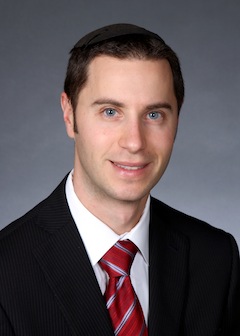
photo - CuePath’s Jeff Nider grew up in and around his father’s pharmacy
CuePath’s Jeff Nider grew up in and around his father’s pharmacy. (photo from CuePath)

“We also provide an alert for seniors at home, when it’s time to take their medications,” said Nider. “If they don’t take them by the appropriate time, a text message will be sent to [a] family member, so they can call and remind the family member to take them.

“If you’re an 85-year-old woman living alone, your daughter might be in Toronto or Winnipeg and have no idea what’s happening – worrying about whether or not you’re taking your meds on time, because there’s a bunch of stats on our website in respect of medication adherence: less than 50% of medications are taken as prescribed, and 22% of nursing home admissions are a result of non-adherence to medication. So, it’s very important that people take their medications the way they’re prescribed and at the right time.”

According to Nider, in some cases, just before care providers come each week, seniors will punch out all the medication in the blister pack that they have forgotten to take during the week. Therefore, everything might appear to be fine when, in actuality, it is not.

“This happens because they know you come every Sunday,” said Nider. “So, on Saturday, they go and punch out the whole card. When you come, everything looks like it’s been taken – but, it’s been taken out the day before and flushed down the toilet.”

Nider pointed out that the CuePath sensor monitors the punching of the plastic only – it does not monitor whether or not the medication was ingested. Though that addition is on the horizon.

The CuePath technology is a clip on a Bluetooth transmitter connected to the back of the blister pack. “Basically, it’s a label that the pharmacist applies to the back, which has some conductive materials in it to send the transmission as to whether or not those have been opened,” said Nider.

The service has a monthly fee and an initial hardware cost but, considering the alternative – paying a care provider to administer the medication – it is much more affordable, according to Nider.

“It runs around $30 a month; $200 for the initial gateway hardware cost,” he said. “There’s a bunch of different models right now. We are still in pilot stages, running various pilots in various forms in different retirement communities.

“In a lot of ways, this will help you avoid needing to get a caregiver and finding a time when a caregiver is necessary. We’ve seen that medications are indicators of other things as well. So, if people are taking their medications on time, they’re probably able to manage many of the other tasks, too. But, as soon as they start to slip with taking them on time, it’s usually a good indication that they may not be able to manage their cooking, they may not be doing their laundry…. It also puts them at a higher risk for falls and other issues if they aren’t taking their medications properly. It’s a good indication that now’s the time to hire a caregiver. It gives you data to what is actually going on with the senior.”

The CuePath gateway unit does not need an internet connection, as it connects to the cellular network. Each gateway comes with three Bluetooth clip transmitters that will be rotated with the pharmacy. The app that accompanies the device allows caregivers access to statistics in terms of percentage of medications taken on time and other data.

“You can see how this month compares to last month,” said Nider. “Then, this information can be printed out and brought to the physician’s office … shared with the pharmacy … so they have the information.”

Rebeca Kuropatwa is a Winnipeg freelance writer.
Format ImagePosted on March 31, 2017March 31, 2017Author Rebeca KuropatwaCategories LocalTags CuePath, health, Jeff Nider, seniors
Taking on the Regal mantle

Taking on the Regal mantle

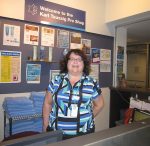
Mimi Grad at the Jewish Community Centre of Greater Vancouver’s pro-shop. (photo by Cynthia Ramsay)

As an independent sales ambassador for Regal Home and Gifts Inc., Mimi Grad told the Independent, “I don’t sell anything. I educate people on what is available and what the items can be used for.”

Grad was born and raised in Vancouver, as were her four siblings. They are third-generation Jewish Vancouverites – both of their parents were born in Vancouver and their maternal grandmother was born at Vancouver General Hospital in 1899.

“My parents were heavily involved in the local Jewish community, as my maternal grandfather was instrumental in the building of the Beth Israel Synagogue,” said Grad.

This is what led to Grad’s involvement in United Synagogue Youth as a teen and her going on the USY Pilgrimage to Israel in 1973.

“As an older teen,” she said, “I went back to Israel in 1976 for a six-month kibbutz-ulpan program and, as an adult, I was part of Canadian Hadassah-WIZO in Vancouver. The local Hadassah Bazaar never ran without Mimi in the Food Building … as the supplies assistant, beginning at the age of 12, or as the food chair.”

Grad and her partner, Gordon Jay, have been together for 21 years, and live in Burnaby. She has held several jobs over the years, including being a swimming instructor and a lifeguard at the Jewish Community Centre of Greater Vancouver.

Currently, Grad is the pro-shop coordinator at the JCCGV, a position she has held since September 2015, and also works as a cashier at the Real Canadian Superstore. Both jobs satiate Grad’s need to interact with different people.

“It was many years ago when I walked into a Regal warehouse on Prince Edward Street, just south of Southeast Marine Drive,” recalled Grad. “I was looking for plastic hole protectors for my shower curtain, as I had one hole that was ripped and I really liked that particular shower curtain.

“At that time, you could just walk in off the street and purchase goods there. The cashier told me that I could save 15% if I registered as a sales rep for Regal. What the heck, why not? And, it was free to do. Then, they started sending me catalogues, and I could buy more of them to share with people.”

Grad was not yet ready to be a sales representative at that point but reencountered the idea about 10 years ago.

Her mom was looking for another source of income in her senior years. “She figured she’d try Regal,” said Grad. “However, she wasn’t getting out much by then, nor was she (or my dad) driving at night. She even asked me to sign up and help her.

“Unfortunately, I was too busy with work, the hubby and life in general to be of much help. And then, dad stopped driving. When mom and dad moved into care, they couldn’t do business there. And then, Regal went bankrupt.

“Another company purchased it in 2005 and, lo and behold, that company went into receivership in August 2016.”

By November 2016, the Regal name was purchased and a new company – Regal Home and Gifts Inc. – started building a catalogue. It was up and running with its first catalogue just under two months ago.

The company behind Regal Home and Gifts has another online business and put many of their products into the first Regal catalogue.

“Regal started in Canada in 1928 as a stationery company. The Regal name has been associated with retailing and direct sales ever since,” said Grad. “Regal Home and Gifts is a newly formed corporation that returns the Regal brand to Canadian ownership, offering Canadian consumers functional and attractive houseware products and gifts through a network of dedicated ambassadors (independent sales representatives), a tradition of the Regal brand.

“They’ve been known over the years for selling kitschy items and plan to have more items like that with their next few catalogues. Like any new business, they’re experiencing growing pains and feeling out the consumers.”

As Grad is almost 60 and eyeing retirement, she felt that her savings needed a boost and decided to be proactive, finding a job she could do from home on her own time. “Honestly, Regal is my retirement plan,” she said.

“I’ve organized my schedule, so, between the JCC and Superstore, I’m generally off work by 2:30 p.m., leaving me with lots of time for my honey and for Regal.”

Grad is excited to spend her days meeting with people – helping them find what they are looking for, placing orders, and even doing evening deliveries. With Regal’s four to six catalogues per year, Grad is looking forward to being out and about most of the time, introducing new people to the products and the company.

“It is then their choice if they want to buy something or not, filling their need for an item,” said Grad.

“I’ve always felt that women made the best car salespeople, because I believe we’re more consultative … not just asking questions like, ‘Which car do you want to buy?’ but ‘Why do you need a car?’

“And, as always, all commissions are made from catalogue sales. Nothing is paid for introducing someone to this business.”

One can buy from the Regal catalogue almost anywhere in Canada. The company is still waiting for direct sales licensing in a couple of provinces, but has completed that process here.

“The first thing I’m always asked is, ‘Can I have a catalogue?’” said Grad. “Everyone wants to see what’s new.”

Anyone interested can peruse the online catalogue and purchase from Grad’s personal Regal website at regal.ca/?amb=9742420.

Rebeca Kuropatwa is a Winnipeg freelance writer.

Format ImagePosted on March 31, 2017March 31, 2017Author Rebeca KuropatwaCategories LocalTags catalogue sales, Mimi Grad, Regal Home and Gifts
Celebrating Canadian teams

Celebrating Canadian teams

In 2012, Avi Dunkelman and his business partner, Joseph Gault, won a five-year contract from Canada Post to create a postage stamp series celebrating 100 years of the National Hockey League. (image from Avi Dunkelman)

It was as if he had come full circle, when Israeli-born Avi Dunkelman won a five-year contract from Canada Post in 2012 to create a postage stamp series celebrating 100 years of the NHL, focusing on the seven Canadian teams in the league.

Dunkelman was born in Haifa in 1954 and, at an early age, started collecting the stamps from the postcards his father sent him on his travels in Europe. The stamps gave Dunkelman a great appreciation for graphic design, so much so that he opted to go to art school.

“After I finished my military service, I decided to see if I could get some work in graphic design,” he told the Independent. “I soon realized that what I had learned in high school was not enough. I needed to study this very seriously in order to make a career out of it.”

photo - Avi Dunkelman
Avi Dunkelman (photo from Avi Dunkelman)

Dunkelman first thought to pursue his studies in the United States but, as all of his mother’s family lived in Toronto, he chose to go there to study for a year. During this time, he also worked on improving his English language skills, with the intention of continuing his studies in the States.

Three weeks after he arrived, in 1977, he was attending Ontario College of Art and Design. He then pursued a post-graduate degree in Switzerland, at one of the top graphic design schools in the world at the time – they only accepted eight students per year.

In 1984, he made his way back to Toronto and got married, opening his own graphic design firm in 1986, called Avi Dunkelman Design Group. In 1987, he began teaching at Ontario College of Art and Design, where he has worked ever since – he’ll be celebrating 30 years there this spring.

“In 2010, I formed a partnership with my business partner, Joseph Gault, who studied with me in Switzerland,” said Dunkelman. “We’ve known each other for 37 years, and decided to form a creative partnership under the brand of Mix Design Group.

“We were invited to compete in designing the stamp for the Year of the Snake in 2011 – we won four design awards for it. In 2012, we were asked to compete on a five-year project celebrating or commemorating the 100th anniversary of the NHL. We submitted our design concept and we won the competition.”

Over the five years, Dunkelman and Gault designed 69 stamps, 32 first editions, about 15 booklets, and all kinds of other materials. It is the largest program that Canada Post has ever tasked.

Dunkelman did not grow up with hockey in Haifa. Instead, soccer was the sport of choice. He recalled, “I saw a glimpse of hockey, but never got to really understand the game like some Canadians do. I don’t know how to skate.

“My business partner is a hockey buff. His father was actually a professional hockey player in Scotland. He’s Canadian-born and grew up playing hockey with his father coaching him. He knows a lot more than I do.

“I think that the fact that I look at it from a layman’s perspective gives us an advantage … looking at things in a different way. And this is what my contribution to this project is.

image - One of the biggest challenges for Dunkelman was working with six different player photos at a time, editing them so that they work seamlessly together
One of the biggest challenges for Dunkelman was working with six different player photos at a time, editing them so that they work seamlessly together. (image from Avi Dunkelman)

“The way we work is we sit and brainstorm some ideas,” he said. “Then, we work independently on some ideas, designs, get together, analyze them, and decide what works and what doesn’t.”

One of the biggest challenges for Dunkelman was working with six different player photos at a time, editing them so that they work seamlessly together.

“That’s a challenging process,” he said. “If you look at the photograph on the stamp and the original, they sometimes look totally different.”

Over his more than 30-year career, Dunkelman has had to learn how to incorporate computers into the design process. The first computers came onto the scene as he graduated from the school in Switzerland and Dunkelman recalled that one of his teachers received four computers from Steve Jobs as a gift. While not so useful at the time – it was the mid-1980s – as software and computers developed further, Dunkelman began using them in his design process.

“Obviously, I had to adapt to computers, as the technology was growing, too, and going through its own growing pains,” he said. “I’d say I’m not unique in that. I think most designers had to do the same thing. When I was starting out on computers, Photoshop wasn’t around … wasn’t as complex and sophisticated as it is now. So, there were a few things I was integrating at the same time … taking an image, doing something, printing it, re-photographing it, re-modifying it, going back and forth between the computer and the work table.

“By the way, that’s part of the way I teach at school now … because my message to the younger generation is that the computer is not the answer for everything. The idea is not to develop a dependency on it. Depending on the nature of the project and what the opportunities present you with, even today, there are certain things to do in an analogue way.”

Dunkelman works with a production person. “I don’t have the time to get the ins and outs of every little update of software coming my way,” he said. “I try to keep up, but, to do this effectively, I’d need to devote my entire time to it. It’s not feasible for me.”

According to Dunkelman, graphic design has changed a lot in the computer era, opening up opportunities for more people to be in the industry. However, he said, “It’s a little disappointing to me how graphic design in general is going back. A lot of things look the same because people are using the same software, the same tools, fonts and colours. Especially with website design being template-oriented … it’s becoming more about information management and data management, as opposed to creating.”

Dunkelman has a long list of clients, including the Ontario Chamber of Commerce, the Royal Canadian Mint, the University of Toronto and many private companies.

“Right now, I split my time between teaching and working,” he said. “Going forward, the professional work I’m doing is probably going to slowly diminish by choice, while still teaching and being a mentor for the next generation.

“This is one of the things I’m focusing on for my students – mentoring them to a point where I still keep a strong connection with former students who seek advice. They know I’m always available, open and willing to help. This is what I really enjoy seeing – the next generation and my former students getting ahead in their own careers and taking charge of the industry … hopefully, to become leaders.”

Rebeca Kuropatwa is a Winnipeg freelance writer.
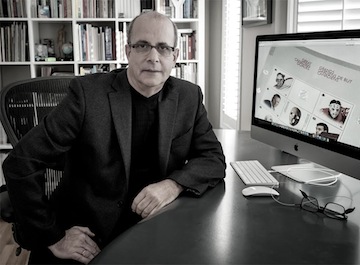
Format ImagePosted on March 31, 2017March 31, 2017Author Rebeca KuropatwaCategories Visual ArtsTags Avi Dunkelman, Canada Post, Hockey, NHL
Working to get to Olympics

Working to get to Olympics

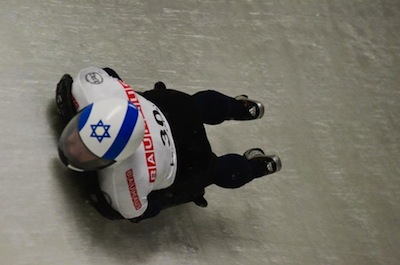
Joel Seligstein is one of four Israeli skeleton athletes aiming for the 2018 Olympic Games in PyeongChang, South Korea. (photo by Erin Murphy)

What began as a dream 15 years ago – when David Greaves helped establish an Israeli presence in the bobsled and skeleton world – finally received the approval, recognition and support of the Israeli Olympic Committee this past December.

Greaves was a member of the Israeli bobsled team that fell short of qualifying for the Olympics in 2006, although they did compete in two world championships.

“When I retired from the sport,

I felt I wanted to continue in some capacity,” Greaves told the Independent in an interview earlier this year. “So, I took over as head of the federation, of which I’m now the president. It’s called Bobsled Skeleton Israel, which is the Israeli bobsled skeleton federation.

“I wanted to stay involved in the sport and to try to provide an opportunity for other Jewish athletes to experience something of what I did – the pride of wearing the Magen David on your jacket and competing for Israel internationally.”

The experience changed the trajectory of Greaves’ life – he was working in the sales and high-tech industry. It also made him realize what was important for him as a Jew and an Israeli.

“I came back from that experience deciding I wanted to leave the world of high-tech and focus my efforts on Jewish community and working for Israel,” he said. “That led me to volunteering for the Jewish Federation of Winnipeg. This soon led to me working on a contract basis for them, which turned into a full-time role. I became a fundraiser for the Jewish community.”

Greaves spent 10 years fundraising for Winnipeg’s federation and then for the Jewish Foundation of Manitoba, before starting his own business in 2014. Called Protexia, it helps nonprofits and charitable organizations fundraise.

With the refocus in his professional life also came a refocus in his involvement with Bobsled Skeleton Israel. As the organization’s volunteer president, he is in regular contact with the Israeli Olympic Committee as they gear up for the Winter Olympics in PyeongChang, South Korea, in 2018.

“The challenge was finding an athlete interested, sometimes from another program … the American program, whatever it happened to be. Some of the bigger programs are so deep, you can be a great athlete … but may not have an opportunity to make the big leagues and would likely not ever get the opportunity that they have now … to compete at the highest level, for a smaller nation,” said Greaves. “But now, I have four athletes competing at different levels around the world … and that’s more than most small nations have.”

While many people compete for Israel from around the world, most are not directly connected to the Israeli Olympic Committee, but, with the completion of the process in December, Bobsled Skeleton Israel is now an official Olympic sport under its umbrella. Last September, the committee had accepted Greaves’ recommendation to recognize the criteria established by the International Bobsled and Skeleton Federation as the Israeli criteria.

“It was almost anticlimactic,” said Greaves. “I was working on this for 13 years and I’d never had the opportunity to present to the Israeli Olympic Committee before, with the opportunity of them possibly accepting our recommendation. Needless to say, I was over the moon and ecstatic.

“So, now, I feel confident talking about our future, because the only step left for us to be competing at the Olympics is for one of my athletes to qualify. If we have an athlete that qualifies, then we’ll be going to Korea for the Games, as he will have met the criteria.”

To get to the Olympics, the athletes will need to be in the top 60 internationally. For the current season, the goal is to get two athletes into the top 75 world ranking, which would position them for next year. They currently only have one.

All of the Israeli athletes in the federation are competing on their own in skeleton.

“It’s been easier for us to find skeleton athletes from a budgetary standpoint, because we don’t fund our athletes,” said Greaves. “We’d love to have a bobsled team, too, but it’s a bit more work for us to really develop that program. Given I’ve got a full-time day job and we don’t at the moment have any prospects for bobsled athletes, our efforts have solely focused on developing our skeleton program.”

Israeli skeleton athlete Bradley Chalupski in action
Israeli skeleton athlete Bradley Chalupski in action. (photo from Bradley Chalupski)

Bobsled Skeleton Israel is a nonprofit in the United States, enabling them to fundraise there for their athletes. These athletes can fundraise within their circles and the organization can provide a tax receipt to donors.

“We’ve been pretty successful in the last few years in raising more money than we have in the past,” said Greaves. “It’s been allocated out to the athletes based on need. Essentially, they get reimbursed, in very small part, for their costs. If we have $5,000 or $10,000 in the bank, so to speak, and an athlete has just come back from a week of training, then they can submit a portion of their expenses. But, it’s very modest.

“We’re looking to have a fundraiser this spring in Winnipeg. There’s also now – because we’re now officially a member within the Olympic movement in Israel – the possibility for funding from the state if an athlete qualifies for funding.”

In that case, the athlete will be eligible for a few Israeli shekels a month. Even so, about 95% of the money spent in this sport by Israeli athletes is money that they themselves have raised, either through their own personal supporters or their own savings. According to Greaves, his athletes have given up the last two or three years of their lives to compete and train.

Contributions are deductible in Israel and the United States, and there is an Indiegogo campaign currently underway. Greaves is in discussion with a few Jewish organizations with the hope that they may be able to assist in accepting Canadian donations.

“We want people to understand we’re in this because of a love for Israel and a love for sport,” he said. “Our ultimate dream is to walk into the Olympic stadium with the Israeli flag. There’s such a pride that’s hard to convey. We do this out of a sense of pride and love for Israel.

“I once was asked in an interview years ago, when I was competing, if I had a choice to compete for Canada or for Israel, who would I pick? I’m a dual citizen. I said, without a doubt, I’d want to do it for Israel. There’s a special connection between my Jewishness, my connection to Israel and my Zionism. The other guys on my team feel the same way as well. Am Yisrael might make this a different experience than other athletes might have … not to take away from how amazing it would be for any athlete to represent their country.”

For more information and to follow the athletes – Bradley Chalupski, Adam (A.J.) Edelman, Joel Seligstein and Larry Sidney – visit facebook.com/israelibobsledandskeletonfederation. To contact Greaves, email [email protected].

Rebeca Kuropatwa is a Winnipeg freelance writer.

 

Format ImagePosted on March 31, 2017March 31, 2017Author Rebeca KuropatwaCategories WorldTags David Greaves, Israel, Olympics, skeleton, sports
Ackerman keeps on winning

Ackerman keeps on winning

Estee Ackerman wins gold at the 2016 Junior Olympics in Houston. (photo from Estee Ackerman)

A Jewish Orthodox New Yorker is quickly becoming a legend – and she is not even 15 years old yet. Her name is Estee Ackerman and she is currently one of the hottest names in table tennis.

In 2013, Ackerman even beat one of the world’s greatest tennis players – Rafael Nadal – in an exhibition table tennis match during the American Open. Nadal went on to win the American Open that year. “So, I could say I was the only one who beat him in New York,” joked Ackerman.

A sophomore at Yeshivah University High School for Girls, also known as Central, Ackerman is a nationally and internationally ranked table tennis star.

Her passion for the sport began at a young age, as a fun way for her and her family to pass the time on Saturday afternoons in their basement.

“My dad wanted to do something fun with my brother, Akiva, and I that did not involve electronic gadgets,” Ackerman told the Independent. “He says everyone is looking down [at their gadgets] these days. We figured, what can we do? In the wintertime, we can’t go out so much and we were young kids at the time … we can’t do wrestling, we’re not tall enough for basketball.

“My dad started with my brother, Akiva, who is also now an amazing player. They really just had a fun family activity, as we had a table in our basement. One day, I went down and I said, ‘Let me give this a try.’ I was about 8 years old at the time and I was also so little that they just saw the racket going back and forth … I was under the table.

“Just playing with them about an hour each night was how it began. After doing this for a few months, a few days a week, we saw improvement. From there, we took it to the next level. We went to professional ping pong clubs. I compare it to how some people get piano lessons … I got the ping pong lessons, with top coaches from China.”

Ackerman recalls feeling “star struck” when she entered these clubs. “I was definitely at the bottom in the club leagues,” she said. “But, as the coaches said I had talent and that I should continue, I went to them a few times a week, and that’s how we saw much improvement to keep going.”

Balancing school and play is no easy feat, but, with Ackerman’s success, Central was willing to accommodate her traveling for tournaments, sometimes missing a week of school at a time.

“I would say that when I get back from these weekly tournaments, all the teachers are so happy … they’re so willing to sit down with me and catch me up on the notes I missed,” said Ackerman.

“Besides my friends wanting to know how I did in the tournaments, they’re eager to sit down with me, because they know that missing 11 classes a day for a week is not so easy to catch up on. But, I’m happy to say that Central is very supportive in all I do.”

Ackerman’s dad takes her to all the tournaments and practices, and ensures she has whatever she needs.

As for Ackerman’s fellow table tennis playing brother, he has put the sport on hold in order to continue his Torah studies in Israel. But, he may return to ping pong in the future, as he has plans to study at Yeshivah University after his time in Israel.

photo - Estee Ackerman in action
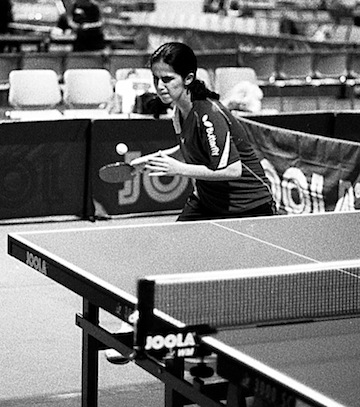
Estee Ackerman in action. (photo from Estee Ackerman)

In Ackerman’s professional career to date, she has already achieved successes that few even dare to dream about, including winning the Nationals in Las Vegas in 2015.

“This probably is one of my biggest accomplishments,” she said about those games, “as I was competing against 250 players in that event – transferring from the round robin group all the way to the single elimination matches.”

Last summer, Ackerman entered the U.S. Open playing hardbat. “That is like the old school way,” she explained. “If you know, a ping pong racket is usually made with smooth rubber, but a hardbat is usually made with pimples [an outer layer of rubber covered in dots]. I had never played in tournaments with hardbats [before that].

“Believe it or not, I did win the Women’s Open hardbat event. I came in second in the mixed doubles hardbat event. And, I won the gold medal in the women’s doubles hardbat event. So, I can definitely say that, in America, I’m the best female hardbat player.”

In February 2016, Ackerman was one of 16 women invited to the American Rio Olympics trials. But, as she could not play on Shabbat, she was not able to get enough wins to make the team.

“Being at the Olympic tryouts was already great enough to me,” she said. “Me being with the best players in our country – warming up with them, seeing them in the locker room – it doesn’t get better than that. I was playing on the biggest stage of my life.”

Now, Ackerman has her sights set on 2020 in Tokyo. But, in the meantime, she is busy accomplishing other feats, such as winning gold in the Junior Olympics, for girls under the age of 16 in singles and for girls under the age of 16 in doubles.

Ackerman is also thinking about whether or not she will go to the Maccabiah Games or stay in the local circuit for now. And, of course, she is focusing on graduating in 2019.

As it happens, Ackerman’s first trip out of the United States was in 2014 for a tournament in Markham, Ont. “I was representing the United States competing against Canada in the Junior Cadet Open,” she said. “As that was the first time I left the country, I was very excited, especially to be representing America.

“We did hear of a tournament taking place two weeks ago in Vancouver, but, as it was only a two-day event and one of the days was on Shabbat, we didn’t go. Other tournaments are four days or a week long, so just to compete for one day is a little much for the amount of travel.”

Asked if she has any advice for other young sport hopefuls, Ackerman said, “One should always dream big and just believe. I know that if one can put in countless hours and hard work, and they really love what they do, they can accomplish their goals. If they really want to be the best they can be, they have to put in the amount of hours that it takes.

“Although I love the sport of table tennis, I always say it’s my second priority. My religion, Judaism, is my first priority.”

As far as playing ping pong on Shabbat, Ackerman feels it is totally OK when her friends come over to have fun. But, when it comes to competing in a national tournament – with the uniform, with the media – she does not feel that it is right to participate on Shabbat.

Ackerman recently made it onto the world ranking. She is 466th in the world and 171st for her age group of under 18. To follow her career, visit teamusa.org/usa-table-tennis.

“I know to be really up there in the world rankings, you really have to travel worldwide – to France, Poland and Switzerland,” said Ackerman. “As I am in yeshivah, it’s a little tough. But, as I get any opportunity, I’d love to be there.”

Rebeca Kuropatwa is a Winnipeg freelance writer.

Format ImagePosted on March 31, 2017March 31, 2017Author Rebeca KuropatwaCategories WorldTags Estee Ackerman, ping pong, sports, table tennis
“Settlement” versus “Ariel”

“Settlement” versus “Ariel”

Avi Zimmerman chose for Talk17 a format that would allow a speaker to share their stories and views uninterrupted. (photo from Avi Zimmerman)

There is a range of strong opinions when it comes to Jewish community development east of the Green Line. Many around the world refer to these Israeli communities as “settlements.” But, to Avi Zimmerman of the Ariel Foundation and many Israelis, Ariel is something else.

Zimmerman was born and raised in West Orange, N.J. He made aliyah in 1995 and served in the Israel Defence Forces. After earning a degree in occupational therapy at the Hebrew University and then working in the field for four years, he and his wife decided to move to Ariel. There, Zimmerman started up an aliyah program.

“I was then asked to run the Ariel Foundation, which is what I’ve been doing for the last eight years or so,” Zimmerman told the Independent. “The foundation is not only for raising funds for city projects, it also provides accurate information about the city of Ariel to an international public.”

Ariel will celebrate its 40th anniversary in 2018. Established on Aug. 17, 1978, with 40 families, it is now a city of close to 20,000 residents, plus an additional 15,000 students studying at Ariel University.

Geographically, Ariel is east of Tel Aviv, past the Green Line. Given what he – and others – see as misinformation being spread about Jewish communities east of the Green Line, Zimmerman decided to share stories from the people actually living in the area and how local people feel about various issues.

To do this, Zimmerman copied a format that has worked very well for TED Talks on YouTube, and created Talk17.

“Our lives are not lived through a conflict lens, fortunately, nor are those of our Palestinian neighbours,” he explained. “Those elements possibly do exist. It’s not that they don’t exist. But, they are not the primary theme of the way life is lived here.

“If people are interested in what goes on here, I think it’s only fair to the international community to provide more accurate information – not in terms of stats or facts, although that’s part of it … [but] beyond that, in terms of the voices from the region.

“The concept is, instead of talking about us in a well-intentioned yet disenfranchising way, just listen to us and hear what we have to say.”

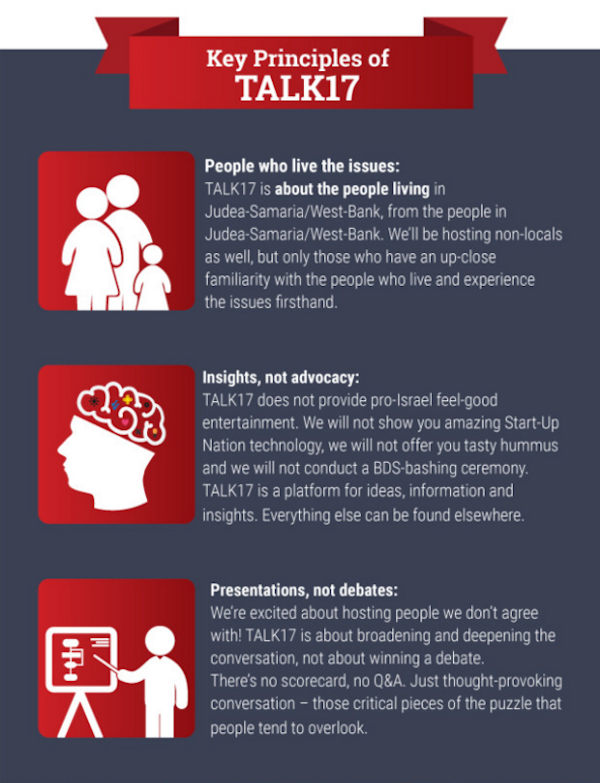
Zimmerman chose the TED Talk format because it is not confrontational, as are debates and as can be panel discussions. The format allows a presenter to tell their whole story without interruption.

“We want to give authentic voices an opportunity and a fair platform, so there’s no debate, no winners and losers, no questions and answers,” he explained. “There’s no objective right or wrong to that. It’s authentic…. I think, ultimately, people are interested in the breadth and depth of the story.

“There are a lot of people who like to live in what they are calling echo chambers … in a world where everybody says what they like to hear, and they de-friend you if you say something else. A lot of the world is just moving in that direction. But they are not our target audience. If you already know everything, we can’t convince you otherwise. You’re going to turn off the video when you hear something you don’t like and that will be the end of it. My target audience is authentic people. They actually care and are willing to listen to new ideas they’re not familiar with.”

image - The crowdfunding page clearly lays out the principles behind Talk17
The crowdfunding page clearly lays out the principles behind Talk17. (image from generosity.com)

While an 18-minute video is hard for some people to get through, Zimmerman has been finding that, organically, Talk17 has been successful by having speakers who are on the frontlines of change-making. He gave as an example an exchange he’d had just before his interview with the Jewish Independent – an artist had happened upon Talk17’s Facebook page and was very excited about the concept. The artist runs an organization that uses the arts as a form of intercultural dialogue and they and Zimmerman are now working on plans for an arts-themed program, including an exhibition, at the end of April.

“It was just a preliminary conversation today,” said Zimmerman. “But, the thing is, these are the kinds of people who can help us open new doors.”

Since starting Talk17, 90% of the views, as it happens, have been from Arab-speaking, self-identified Palestinians, said Zimmerman. “We’re reaching across the aisle,” he said. “There’s something very real to this.”

While Palestinians, Israelis and Canadians are open to listening to talks in languages other than English, Zimmerman has found that Americans are less willing to do so. Because of this, he has decided to stick with English for Talk17.

“We automatically limit ourselves to English-speakers,” he said. “They don’t have to be native English-speakers. We try to get a fair balance of Arab and Palestinian voices among the Jewish and Israeli voices. We try to get a fair balance of women and men.

“We try to find people that have a unique story … so, it’s not just a personal story, but there’s a new concept to it. If you follow the first videos we’ve been launching, you’ll see each story is very different. We’re also trying to work on themes, events with themes.”

He said an upcoming theme will be diplomatic options for the future. “For 50 years,” he said, “we’ve heard about the two-state solution, we’ve heard about it since the 1947 Partition Plan. But, the point is, it’s not going anywhere. So, people are saying that, if not that, then what? So, we want to examine that.”

Zimmerman hopes that, by the end of the process, he will have been able to create a video archive that people can access to deepen and broaden the conversation about the region, so they can realize there is more to the story than they thought from just reading a short article or hearing a news clip.

Zimmerman also hopes that, in the future, visitors to Israel will be more willing to venture out of Tel Aviv and Jerusalem, and will come visit Ariel to experience firsthand the beauty of the region and its people.

“We all need to remember that, regardless of the terms of the deal that one day will hopefully be reached between Israel and the Palestinians, and regardless of where the lines will be drawn, Jews and Arabs will be neighbours forever,” said Zimmerman. “With that in mind, we need to figure out how to work with them directly, and we’d appreciate it if the world would allow us to do so, by appreciating the dynamics between us … by having this window into our interactions.

“However, the objective of Talk17 is not for me to have a better relationship with my Palestinian neighbour. That’s an added value … something we do anyway. We don’t need Talk17 for me to meet with my friend on Wednesday. We need Talk17 for the relationship between the Israelis and the international community, and the Palestinians and the international community.”

In addition to the Talk17 YouTube channel, there is a crowdfunding effort in progress for the talks, at generosity.com/community-fundraising/talk17-change-the-israel-conversation–2.

Rebeca Kuropatwa is a Winnipeg freelance writer.
 

Format ImagePosted on March 24, 2017March 23, 2017Author Rebeca KuropatwaCategories IsraelTags Ariel, Avi Zimmerman, Israelis, Palestinians, settlements, Talk17

Medical help in dying

In June 2016, it became legal in Canada for a doctor or nurse practitioner to assist someone with their death, as long as they meet certain criteria under the law.

“We’ve been providing this service here ever since,” said Dr. Stefanie Green, who lives and practices in Victoria. “I am one of the medical-assistance-in-dying providers here in British Columbia. Before that, I was primarily a maternity doctor for 20 years, where I took care of babies and newborns.”

As it happened, the Jewish Independent caught up with Green at the end of a day she spent doing circumcisions. The doctor explained that she finds it uniquely interesting dealing with both the beginning and end of life. “There are a lot of similarities to me,” she said. “There’s a lot of overlap in terms of the emotion and skills involved.”

photo - Dr. Stefanie Green believes it “is a deep privilege to be involved in this care”
Dr. Stefanie Green believes it “is a deep privilege to be involved in this care.” (photo from Dr. Stefanie Green)

Growing up in Halifax and then doing her medical training in Montreal, Green made her way west almost 15 years ago.

Helping patients die on their own terms has been an increasing part of her practice, with about 70% of people choosing to end their lives at home, and the rest in a care home or hospital.

Medical assistance in dying is only available to people who meet specific criteria in Canada. These criteria include:

  1. The patient needs to be an adult, over the age of 18.
  2. The patient doesn’t have to be a Canadian citizen, but they must be eligible for Canadian health-care insurance.
  3. Patients need to be suffering from what is considered a grievous and irremediable condition; for example, a serious illness, disease or disability in an advanced state that is irreversible, causing unbearable suffering, and, ultimately, leading to the person’s natural death in the foreseeable future.
  4. The request needs to be made voluntarily; there can be no coercion by family, doctors or anyone else. It has to come directly from the patient and be made by the patient when she/he is capable mentally of doing so.

“If someone is interested, they have to make the request,” said Green. “There’s a specific form in every province that has to be filled out … that has to be witnessed as a legal document.

“Once the request is made legally, then someone like myself – a physician or nurse practitioner – would do an assessment with them, with the family, with the family doctor or specialist, with their records, and make sure they meet the criteria.”

If satisfied at this point, a second assessment is conducted by someone else. Only if both assessments find that the patient meets the criteria, can the patient then be considered eligible and have the power to give the go-ahead if they so choose.

The law stipulates a 10-day waiting period after the request is made before the procedure can happen, unless there are very specific circumstances that require it be otherwise. The procedure itself can be done in one of two ways.

The patients themselves can administer the medication by drinking a liquid the doctor or nurse practitioner provides. The mixture is made by a pharmacy, picked up by the doctor or nurse practitioner, and given to the patient. The nurse practitioner or doctor stands by to ensure all goes smoothly. “It’s not the tastiest of drinks and takes about an hour-and-a-half to be complete,” said Green.

The other option, which more people in Canada are currently choosing, is the physician-administered route. In this case, the doctor picks up the medicine from the pharmacy and brings it to the patient wherever they are. The physician administers it intravenously into an arm and the process takes about 15 minutes.

In the IV procedure, it is a mixture of medications. The first medication is an anti-anxiety medication to relax the patient. Due to its strength, it causes most patients to fall into a light sleep. The second medication is a local anesthetic used to numb the vein being used in order to avoid the chance that it could irritate the patient when the rest of the medication is administered. The third medication moves the patient from a light sleep into a deep sleep and then coma. Many people pass away during that sleep, but not always. The fourth medication paralyzes the body, so if anything is moving, like the respiratory muscles, it will be stopped. The heart will stop soon thereafter.

According to Green, there are a number of countries around the world that have some form of a medical-assistance-in-dying (MAID) team, but Canada is one of only four countries that allows both the patient-administered and physician-administered options.

“I think we allowed it and pushed forward on the law because Canadians feel very strongly that this is a very humane act,” said Green. “It’s something they want to have available.

“What our Supreme Court has decided is that this is actually a constitutional right of Canadians for this care. This is the ability of a physician or nurse practitioner to help someone who wants to end their life at the very end of their life, and who needs help to do so. That’s what this is – a very humane, peaceful and dignified act.

“I think the last poll I saw, 87% of the Canadian public supports this kind of care. I think that this is very respectful of the idea of patient autonomy. That’s what drives this.

“I think that, from an ethical point of view, as a physician, I have the duty to help heal people and to do the best I can to promote healthy life. At the same time, I’m also bound to reduce suffering. There’s a bit of a dichotomy there as a physician. In Canada, the law is reflective of the right of the patient; it’s not about the conflicted duty of the physician.”

From a Jewish perspective, Green does not anticipate any issue from the community. So far, she has done one case within the Jewish community (of a total of 31) and has not had any trouble.

At the time of her interview with the Independent, the MAID program had overseen two to three percent of all deaths on Vancouver Island over the previous six to eight months.

“People ask me a lot about how I feel about this work and what it’s like to do this work,” said Green. “I just want to stress that I do really believe this is a deep privilege to be involved in this care. I feel like I’m helping people. I find it very rewarding at the end.

“I don’t do it for the reward,” she said, “but have been absolutely overwhelmed by the gratitude expressed by the patients I work with and their families. It’s been surprising to me, the extent of that. I want people to know that the service is available and that it’s legal. There are people out there willing to provide this care, and I think it’s a great step forward in Canada. I’m very proud of the work I do.”

Rebeca Kuropatwa is a Winnipeg freelance writer.

Posted on March 17, 2017March 14, 2017Author Rebeca KuropatwaCategories NationalTags assisted death, health
Come celebrate our history

Come celebrate our history

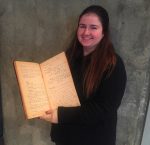
Jewish Museum and Archives of British Columbia archivist Alysa Routtenberg holds a minute book from Victoria’s Congregation Emanu-El, circa 1920. (photo from Alysa Routtenberg)

The documents and artifacts collected, processed and housed by the Jewish Museum and Archives of British Columbia are part of “everyone’s story,” JMABC archivist Alysa Routtenberg told the Independent in a recent interview. She encouraged people to donate material, join museum walking tours and visit the archives.

Routtenberg, who was born and raised in Vancouver, did her undergraduate studies in history and art history at the University of British Columbia before heading to Montreal for two years to earn her master’s of library information and archival studies at McGill University. In the summer of 2014, she had the opportunity to work in her field at the JMABC and, when she completed her studies, the museum’s then-archivist, Jennifer Yuhasz, was getting ready to move on and Routtenberg won the job.

“I ended up moving back to Vancouver, and was lucky enough to get this position not that long after I moved back to start my career as an archivist here,” she said.

Routtenberg’s family has been very involved in historical societies and groups for generations, and she always has loved her family’s library and the study of history.

“We did a lot of trips – like Fort Langley and all sorts of museums and things – so I always knew I wanted a career in history,” she said. “It was just a matter of figuring out the practicality of what that looked like.”

The JMABC originally started out as the Jewish Historical Society of British Columbia in 1971. Its founding president was Routtenberg’s grandfather, Cyril Leonoff, who passed away last year. Since its beginnings, the museum’s mandate has evolved, but the core objective has stayed the same – to preserve, collect and share the history of Jewish people in British Columbia.

The museum and archives makes information “accessible so people can come in and research,” said Routtenberg. “Then, we try to use that material in our public programming, whether that be with walking tours, lectures or physical exhibits. It’s all about celebrating and sharing the history. It’s a fairly short history compared to Jewish people in other provinces, but that doesn’t mean it’s any less important.”

The oldest material in the archives is from 1862 – from Congregation Emanu-El in Victoria. While not Canada’s oldest synagogue, it is the oldest synagogue in continuous use in the country. It’s been open and operational ever since it was started a couple years after Jews first arrived in the province.

“They were mostly coming up from California during the gold rush,” said Routtenberg of these pioneers. “And then, they developed businesses and, within a couple years, wanted to start a synagogue. So, that’s our oldest material. They are pretty special … very beautiful … handwritten notebooks and things.”

The first Jewish arrivals, she said, “set up businesses where they sold supplies to the guys who were going off panning [for gold]. So, that’s what allowed them to build a community. They built a business, a home, then a synagogue…. A couple guys called themselves wholesalers, selling every kind of supply. And then, as soon as there were actually people staying in Victoria and wanting to live there … I know there were a couple clothing stores and then a women’s clothing store, specifically, and a fur store … that sort of thing.”

As others did, Jews kept trickling into British Columbia, moving west with the hope of a better life, with more space. In the 1920s and 1940s, the Jewish community got big population boosts and communal groups began to be organized. Some community groups and businesses have now been around for three or four generations.

“There were furniture and scrap metal dealers … and we’ve collected a lot of those stories, fortunately, while those people were still with us,” said Routtenberg. “We’ve been able to write a couple of books about them,” she said, referring to the JMABC’s annual journal, The Scribe. The museum also publishes a newsletter, The Chronicle, twice a year.

Routtenberg’s job is to collect and preserve all the historical artifacts from the Jewish community, and the artifacts are divided into two major groups.

One group is family collections, which includes letters, photos, certificates and any other correspondence or paper material a family produced over the years. In that area, the JMABC has many great collections from a range of people.

“They were involved with any number of organizations,” said Routtenberg. “We’ll have their handwritten notes from meetings from the 1950s. We’ll have their letters back and forth with relatives across the country. Those are the sorts of things we have in the family collection.”

The second group focuses on community organizations, with collections from the Jewish Community Fund and Council, the Canadian Jewish Congress and the Hebrew Free Loan Association, as but three examples. The material in these collections includes correspondence, meeting minutes, agendas, publications they produced, information relating to events, etc.

“We’re very lucky in that most of the synagogues in the city have agreed to donate their materials to us,” added Routtenberg. “We collect the material related to the synagogue’s administration, meeting minutes, member lists, committee minutes, photos, events and publications.”

One important aspect of Routtenberg’s job is to reach out to and speak with people and organizations, to explain what it is that the JMABC does, what types of things it collects and, at times, making house calls to help sort materials.

“Once materials have been fully processed, everything is in a file and we know exactly what it is, what the dates are, and where to find it,” said Routtenberg. “So, that’s the main job we do.

“We deal with a lot of research requests as well,” she added. “A lot of people call or email and they are researching their family, asking what information we might have about them. Also, a lot of students, from high school to doctoral students, contact us when they are doing projects and want to know about a theme.

“I’ll make notes about those. I’ll try to answer right away, but often it requires some searching. Usually, looking through material in the archives needs to wait for a volunteer to be available or I encourage people to come in themselves.”

Routtenberg especially enjoys getting to dig into a box, and she has made some exciting discoveries.

“Something I love finding are handwritten letters,” she said. “We have a number of collections in the archives that are very thorough. There’s one that’s [between] a couple who was in Vancouver and Montreal in 1920, and they wrote letters back and forth.

“They met in Montreal, I believe, and then were secretly engaged for I think six months or so. And they wrote letters everyday, sometimes twice a day, back and forth. It’s those kinds of things that people don’t necessarily think is important, but they tell us so much about what life was like back then – things they struggled with and thought about. They are just beautiful.”

The archives are meant to preserve everyone’s history, not just the visible part of the community, stressed Routtenberg.

“If we don’t preserve our history, no one else will,” she said. “That’s what it comes down to at the end of the day. It’s really easy for people to think they’re not important, that their stuff isn’t important, thinking there is no reason why we would want it. People, all the time, bring stuff from the 1970s and 1980s, and they think it’s not important … but, if we don’t do it now, it never gets to be 150 years old.

“And we get so many research requests – we average 650 to 700 per year. These are all people with a wide range of questions wanting to know about the Jewish community. I don’t want to have to sit there and explain something, because I happen to know it – I want the evidence to back it up, providing the original documents for people to be able to come and look through.

“We’ve really been trying to promote community ownership of these archives,” she said. “They’re not this thing to be locked away from the public. They’re really everyone’s story.”

For more information, visit jewishmuseum.ca.

Rebeca Kuropatwa is a Winnipeg freelance writer.
Format ImagePosted on March 17, 2017March 14, 2017Author Rebeca KuropatwaCategories LocalTags Alysa Routtenberg, archives, British Columbia, history, Jewish museum, JMABC
Fundraising with food

Fundraising with food

Israeli business owner and chef Yair Yosefi helped spearhead a fundraiser for Syrian refugees. (photo from Yair Yosefi)

A Tel Aviv restaurateur and bar owner wanted to do something about the dire situation of Syrian refugees, so he turned to what he knows best – food.

Yair Yosefi is the owner of Nahalat Binyamin restaurant Brut and bar Extra Brut. Thinking about how he might be able to help, Yosefi connected with his friend Ronit Vered, who is a food journalist. Together, the two created Kitchen Without Borders, which raises awareness of the plight of and funds for Syrian refugees.

“When you see what’s happening on the other side of the border, we have to do something,” Yosefi told the Jewish Independent. “We don’t have enough power. We aren’t politicians. We thought, if we have to do something, we will cook.”

Although Yosefi said he would gladly go to Syria to cook, his Israeli passport doesn’t allow him to do so. “It was a dream of mine to go to Haleb,” he said. “When I was living in France, I had friends from there … very interesting cuisine. But, having an Israeli passport, it’s impossible. Syrians can go into Israel, but Israelis can’t go into Syria…. So, we just decided we’d do what we can.”

They have raised funds by selling Syrian-inspired dishes at their restaurants and by getting other restaurants to join in the fundraising efforts.

Yosefi started Brut and Extra Brut with partners two-and-a-half years ago, soon after he returned to Israel from Paris, where he had been living and working for 10 years. He is now married and has a four-year-old daughter.

Of the restaurant, Yosefi said, “I’m co-chefing with my best friend, Omar Ben-Gal. I’ve been cooking for the last 20 years, since I was 20. We were born and raised in Tel Aviv. It’s the heart for Israel, heart of cultural life in Israel.”

Being the father of a young child, Yosefi feels especially concerned with the situation women and children are facing in Syria. With his friends in the restaurant industry, he wanted to help, but the question was how.

“Every restaurant decided on a dish – either one inspired by Syrian cuisine or, if that wasn’t possible, like with Thai or French restaurants, they’d choose a signature dish,” said Yosefi. “All the revenue from this, which ran for a few weeks, went to a foundation called Karam, based in the U.S. and created by ex-Syrians. Karam uses donations to help, especially, kids … education…. It’s very important.

“We forget, because of the war, they haven’t gone to school or kindergarten … so they’re helping the women and the kid refugees with basic things like food, tents, clean water, education … everything.”

Restaurants throughout Israel joined in the effort to raise the funds, many in Tel Aviv, as well as some Arab and Palestinian restaurants, from large restaurant chains to small mom-and-pop operations, said Yosefi.

About how much was raised through the project, which ran Jan. 15-31, Yosefi explained that he and the other organizers decided ahead of time that every restaurant would donate directly to the foundation. “We trust each other, so we’re not even asking,” he said. “We decided not to count the money. Everybody gave what they made. I know it was quite an important amount … but, most important, it was an issue that was spoken about in Israel and the money obviously helped them – the refugees.

“From the Karam Foundation, we’ve heard two things. First, that it was a nice amount. And, secondly, that it was very heart-warming … [that] people from [across] the border, Israelis, chefs and bakers, gave money.”

As for the Israeli customers enjoying this special cuisine, Yosefi said, “People came and were looking for a certain dish from each restaurant devoted to the cause. It was very, very nice actually. It’s very nice when you go out, eat and drink, and you know that the dish means you’re donating money. Patrons are very generous.”

At Brut, they decided to make a spin-off dish, called Duhul Safadi, the recipe for which they were given by a Palestinian friend from Nazareth, though they called the dish A Night in Halab. Slow (overnight) oven-cooked lamb served on foraged vegetables cooked in yogurt, Yosefi described it as “our take on the Palestinian-Syrian dish.”

Brut chose this particular recipe because the ingredients are locally sourced, something they put an emphasis on with all their food.

Looking ahead for other ways to help, Yosefi said, “We’re going to do something, but we don’t know what yet. We want to see the reaction first.”

In September, Yosefi and his team will be going on the road for a few events in the United States, with stops in Charleston, Nashville and New York. They have been invited to Tokyo this April to do a pop-up booth.

“We’d love to bring our cuisine to Vancouver,” said Yosefi. “It would be fun. We’ll bring our knives and you bring your Canadian whisky. It could be a good match.”

Rebeca Kuropatwa is a Winnipeg freelance writer.


Format ImagePosted on March 17, 2017March 14, 2017Author Rebeca KuropatwaCategories IsraelTags Israel, Syria, tikkun olam, Yair Yosefi
Removing graffiti full-time

Removing graffiti full-time

Corey Fleischer volunteers most of his time to removing hateful graffiti. (photo from Corey Fleischer)

When Montrealer Corey Fleischer finished university, he was unsure of what career path to take. In the interim, to pay the rent, so to speak, he started Provincial Power Washing.

Reflecting back on those days, Fleischer said, “I hated what I was doing – washing a lot of trucks, houses, decks, residential and commercial – zero substance. I’m a person who thrives off substance.”

One day, while heading to a job, Fleischer happened to spot antisemitic graffiti out of the corner of his eye.

“I was driving downtown here, in Montreal, and I saw a swastika on a cinderblock in a very busy part of town,” he said. “I had the equipment needed to remove it, so I got out of the truck and did just that. I got back in my truck, not thinking anything of it.”

From that day on, whenever Fleischer came across such graffiti, he would stop and remove it. As well, in the evening, after returning home from work, he would grab a bite to eat, shower and go out to look for racist, antisemitic and homophobic graffiti to remove.

“I would scour the city for hate crimes – back alleys, on walls, anywhere,” said Fleischer. “I found another one (swastika) and then another one. And then I started noticing, as the graffiti-removal side of my business began growing … I realized this was a real problem around town. It became my pastime. I quit hockey and softball and everything. It’s what I spent all my time doing. It fulfilled my life.”

For the first several years, it was only Fleischer’s parents and close friends who knew what he was doing. Then, he received a call from the local B’nai Brith Canada office to confirm his address, as they wanted to include him in a community newsletter mailing. While Fleischer refused to give out his address, he told the BBC that he had pictures of 40 swastikas that he had removed over the past five years, if that was of interest.

The BBC representative, said Fleischer, “literally couldn’t understand what was coming out of my mouth. She couldn’t believe that’s how I was spending my time. So, I sent her the pictures. They sent out a blogger to come and follow me, to do a story on what I was doing.

“Lo and behold, my life at that moment completely changed. People started seeing what I was doing and wanted to get involved. It went from removing 40 to 50 hate crimes in five years … [to] a couple hundred last year alone. The increase was pretty crazy.”

Fleischer now has thousands of followers wanting to get involved, so he has many more reports coming in, asking for free hate-graffiti removal. He said he has gone from spending about 10% of his company time removing hate graffiti to 95%. And, thanks to social media, the movement Fleischer started has gone global.

“People are calling me from all over the world, trying to figure out how to remove hate crimes in their area,” said Fleischer. “And, I basically put it together and have the removal done – wherever the people are calling from – with a local company.

“For most people dealing with hate crimes, it’s not a comfortable situation. People don’t know what to do with them or how to act when they see them. I happen to thrive in uncomfortable situations. I’ll go and organize. If I can’t find a local company to remove it, I’ll contact the local government, mayors, statesman, whoever, to get it done.

“For example, there was an attack on a Jewish cemetery in New York state. Their whole cemetery was defaced with swastikas and hate symbols. And somebody called me up from the town, saying they’d seen my videos and they’d been staring at these swastikas on their cemetery for two weeks – right around Yom Kippur. So, they called me to find out what could be done.”

After Fleischer hung up the phone, he began calling power washers. As it was a small town, it was hard to find someone, so Fleischer called the mayor and the local government. Within two days, all the graffiti was gone.

“When people figure out who I am and what I’m doing, they tend to spring into action quicker than if it was another situation,” said Fleischer. “Although I started the movement, it’s not just me getting it done. It’s people in the community, that I like to call ‘my army.’ I’m just a tool that was given to these people in order to remove these hate crimes. I’m just the instrument.”

While removing the hateful graffiti is, of course, good, Fleischer pointed out that it does not deal with the root of the problem. So, he decided to collaborate with Montreal-based Overture with the Arts, a not-for-profit that provides mainly after-school art classes to high school students. One of its programs is targeted at educating students about the Holocaust through a series of spoken word workshops about Anne Frank. OWTA opted to include a talk by Fleischer in the program.

“Instead of thinking about the actual guys who are putting on the hate crime, I had to find another way to make a difference in our society and in our communities,” said Fleischer of his speaking role. “I had to think of a way to make another difference by educating our youth, our future.

“When I was growing up and was going to high school, I was never taught about the Holocaust. I was never taught about the biggest massacre, the biggest tragedy, in human history.

“Before I started this whole movement, I didn’t even fully understand…. I knew what a swastika was, I knew it was bad, but I didn’t understand everything that was going behind it.”

The first two schools at which Fleischer spoke were classroom-sized talks, but this quickly expanded into full auditoriums. Schools now flood him with requests to come and speak.

“I had two calls this morning from schools calling me, out of the blue, trying to figure out how I can come to their schools,” said Fleischer in his interview with the Jewish Independent. “The school tour is called Erasing Hate.”

Fleischer received a peace medal last year from the YMCA (Young Men’s Christian Association) for his efforts with Erasing Hate, along with 30 Auschwitz survivors.

“To think I’m even in the same bubble with people like that, with something I started doing as a pastime, because I followed my heart, is mind-blowing. It’s really something else,” he said.

“Hopefully, we won’t, in the future, be ignoring hate crimes on the street and the future – our kids, the kids in schools – will understand that you don’t need to be silent. You can wake up, open your mouth and you can make a difference. That’s what this has turned into.”

For more information, Fleischer is on Instagram (@ErasingHate) and Facebook.

Rebeca Kuropatwa is a Winnipeg freelance writer.
Format ImagePosted on February 10, 2017February 8, 2017Author Rebeca KuropatwaCategories NationalTags antisemitism, Corey Fleischer, graffiti, hate crimes, homophobia, Quebec, racism, tikkun olam

Posts pagination

Previous page Page 1 … Page 15 Page 16 Page 17 … Page 31 Next page
Proudly powered by WordPress