Skip to content
  • Home
  • Subscribe / donate
  • Events calendar
  • Business Directory
  • FAQ
  • News
    • Local
    • National
    • Israel
    • World
    • עניין בחדשות
      A roundup of news in Canada and further afield, in Hebrew.
  • Opinion
    • From the JI
    • Op-Ed
  • Arts & Culture
    • Performing Arts
    • Music
    • Books
    • Visual Arts
    • TV & Film
  • Life
    • Celebrating the Holidays
    • Travel
    • The Daily Snooze
      Cartoons by Jacob Samuel
    • Mystery Photo
      Help the JI and JMABC fill in the gaps in our archives.
  • Community Links
    • Organizations, Etc.
    • Other News Sources & Blogs
  • JI Chai Celebration
  • JI@88! video

Recent Posts

  • SFU honours Gloria Gutman
  • Lifting people’s spirits
  • Wedding a ray of light
  • Indigeneity and Zionism
  • Rule of law broken: councilor
  • Football and its roles
  • The burden of defence
  • Fish Café returns after fire
  • All right in what goes wrong
  • Nuns & mermaids at TUTS
  • Camp offers holiday retreat
  • Students and mentors inspire
  • Once-in-a-lifetime trip
  • 100 dancers, one heart
  • Money for the sciences
  • What “Jewish food” means
  • Have a cookie, schnitzel too
  • Federation now across BC
  • Israel fighting for its existence
  • Deal strengthens Iran
  • Patriotic belonging diminishes
  • A campaign to engage
  • Upstanders’ first live event
  • Responding to Carney
  • Having your own home
  • Music a family tradition
  • Musical to warm heart
  • Community milestones … June 2026
  • Sharing her passion for Israel
  • Or Shalom reopens its doors
  • JFS from past to future
  • Need holistic approach
  • Sharing stories, advice
  • Journalist shares fears
  • Skills to live together
  • Road to independence

Archives

Follow @JewishIndie
image - CJN box ad Rockowers 2026

Byline: Rebeca Kuropatwa

Promoting sanitation

Promoting sanitation

A handwashing workshop in the village of Chamba, Himachal Pradesh, India. Sydney Kamen started SOAP in 2012, with the goal of cutting in half the number of children under the age of 5 who die around the world from diarrhea and respiratory infections. (photo from Sydney Kamen)

Every year, 1.8 million children under the age of 5 die from diarrhea and respiratory infections. This number could be cut in half with proper sanitation and handwashing – which is precisely the goal of a 20-year-old Jewish woman from Washington, D.C., Sydney Kamen.

Kamen is working to achieve this target via the nongovernmental organization SOAP (So Others Are Protected), which she established in 2012.

“If you reduce the number of cases and number of deaths, then you reduce the burden on the international public health system … and that funding can go elsewhere to build infrastructure, etc.,” Kamen told the Independent. “It’s inspiring to me to think about the incredible impact one simple solution could have on a global scale.”

Raised in a Reform Jewish home that stressed community service, Kamen is a junior at Dartmouth College, majoring in geography with a minor in global health and ethics.

“When I was in middle school,” she said, “I was in a club and it was about girls’ education. We partnered with this school in Kenya. Once a week, we’d Skype with them and get to know each other. That was my first exposure to the different life experiences of my age group around the world…. It became girls’ and women’s health later, which really segued into this world of global health and wealth disparities … which then led me to the field of development, where I am now.”

In high school, Kamen joined a team of college students in rural Thailand to study marginalized, at-risk youth on the Thailand-Myanmar border.

“What does a white, Jewish girl from Georgetown know about not having access to clean water or not having access to sanitation?” said Kamen. “Nothing at all. So, this was a very eye-opening experience for me.”

Kamen stayed with a host-family in which the mother worked as a nurse clinician at a small rural health clinic. The host-mom explained how frustrating it was to see so many kids coming into the clinic with diarrhea and respiratory infections, but not being equipped to help – there was not enough access to sanitation.

In this remote community, which was, in a sense, an unofficial refugee camp, the people repurposed many things made from plastic and found ways to reuse many items. So, when Kamen came to them with the idea of repurposing unused shards of soap from local hotels, the idea was well-received.

“When I first arrived in Thailand, I was staying at a hotel, getting acclimated,” said Kamen. “I used to always bring home the soap, shampoo and conditioner. And then, I was exposed to this disparity and was told that, no, they don’t have soap. I thought, this is a problem … perhaps with a very simple solution. Simple things are sometimes the hardest things to identify, just because they are so simple.

“It’s something that took some time to come together. It was something I felt strongly about and it was an issue that I saw as a grave injustice. I think access to sanitation is a human right. Of course, this is not something unique to rural Thailand, it’s a global problem – lack of access to sanitation is a huge problem.

“I saw this as something well worth exploring. I came home and started talking to people in Washington about it … and it all came from that. It was definitely a collaborative effort and it’s something that’s very important. You can’t make big changes alone. It’s all about the collaborative group effort.”

Kamen made the link between the hotels and the community and created a win-win situation. The hotel reduced its disposal costs and the community created a business from the repurposed soap. So far, 13 communities and 14 hotels have joined the project and each community has their own way of making it work.

“It’s all about community ownership,” said Kamen. “That’s very important to me. Some communities recycle it one way and do different things with it, and others do other things.”

Once the hotel reaches a sufficient amount of collected soap, the shards are transported to SOAP’s partner communities who then recycle the shards by melting and reshaping them. Ultimately, the product is used to promote sanitation and handwashing in the communities.

Besides providing a platform to support sustainable economic growth and financial independence, this initiative is also helping train women in business, building cooperatives, as well as offering the women some funds to learn about sanitation and how to clean the soap bars. This allows them to become health ambassadors of a sort in the community.

To date, more than 50,000 bars of soap have been distributed.

As for Kamen, while she hopes to one day work full-time on the project, her current goal, she said, is to “learn my place in this field and how to do it to the best of my ability … and to do so humbly and mindfully. Something I’ve become hyper-sensitive to as a student is the ‘white saviour complex’ … and I’m fearful of it becoming a part of my efforts, as I see [it] very prominently in other development initiatives.

“In school,” she added, “my hope is to become aware and knowledgeable of these practices as much as possible. But, my role now is to support the partnerships that have already been made.

“The thing is, it’s a very simple solution to a very large problem. This soap model, if you will, is very mobile. It’s easily tailored to meet community needs, which is very important to me. I want it to be a self-ownership type of thing, where communities support each other and do it themselves. It’s not a hand out. It’s not some white young American going over and teaching people how to wash their hands because there’s this ‘primitive’ divide.”

Interest in Kamen’s idea is growing in general, but most important to her is that one of her partner communities has reached out, saying they want to establish something like this in the community next door.

“It was their own initiative, not something I sought out to implement, which, to me, is the whole point,” said Kamen. “Hopefully, the ownership is assumed by the people who need it and the people who benefit from it. That’s all that matters to me.”

Recently, Kamen was named one of the 15 recipients of the Diller Teen Tikkun Olam Awards.

“I was incredibly honoured and excited,” she said. “The kind of support that award offers is incredible and generous. At the same time, as wonderful as this attention is, I think it’s important you do something good with it. It feels great, but it’s easy to get caught up in the accolades and what other people see and want for you.

“I really wanted to take advantage of this opportunity to share this story, but, also, I want to encourage my peers to learn about some of these global issues and think more deeply about our actions – especially those interested in development or international volunteerism.”

In her international development studies, Kamen found out that the U.S. military is one of the largest humanitarian actors in the world. As a Dartmouth student, she had the opportunity to become a reserve officer training corps cadet, which she opted to take to learn about the army.

“I grew up with the image of the military being a bunch of uneducated white guys who were trigger-happy and oil-hungry … which is not the case,” said Kamen. “This was the image I grew up with culturally.

“I figured it was time to learn the system from the inside and to humanize it. You can read all about the military and army in books, and you can talk to people about it, but why not try and understand it through experience? So, I joined the program with the hope of learning how it works and learning how they train future generations of leaders.

“I’ve been a part of it for just over two years now, and love what I’ve learned. The whole experience has been very humbling. I’ve learned about patriotism and what it means to serve, especially from my peers. But, I haven’t signed my contract yet, and that’s something I’m thinking about.”

For more information about SOAP, visit the NGO’s website, soothersareprotected.org.

Rebeca Kuropatwa is a Winnipeg freelance writer.

Format ImagePosted on October 20, 2017October 19, 2017Author Rebeca KuropatwaCategories WorldTags sanitation, Sydney Kamen, tikkun olam
Blogging about food, farm life

Blogging about food, farm life

While food blogger Molly Yeh loves vegetables, she said she feels she has “more to contribute in the world of cake.” (photo by Chantell Quernemoen)

Blogger Molly Yeh, 28, is the daughter of a Jewish mother and a Chinese father. She grew up in a Chicago suburb in a house with great cooking by her mom and great music by her dad, giving her a lasting love and appreciation for both arts, even though it is food that has become her profession.

An accomplished percussionist, Yeh first pursued her musical passion, enrolling in Juilliard School in New York.

“What I discovered when I got to New York was how amazing the restaurant scene there was,” she told the Independent. “That really inspired me to get into food and tasting new things. I started cooking as well. I’d call my mother and ask her to send recipes … and I started baking a lot.”

When she started her blog, it was somewhat an extension of her diary. “I basically just used it as a scrapbook of adventures around the city and hanging out with friends and stuff,” she explained. “It quickly became clear that I only wanted to blog about food. So, I started doing recipe development and learning about food harvest and such. And then, four years ago, I moved from New York to the border of North Dakota and Minnesota, where my husband grew up. He’s a fifth-generation farmer.

“When we first moved here, I had a lot of time on my hands. I didn’t know that many people, I was working at the bakery in town…. But, other than that, I just worked on my blog a bunch and turned it into something that could become a business.

“It became my full-time job and then I also wrote my book, Molly on the Range, which includes a lot of the recipes from my upbringing in Chicago, to my time spent in New York, and then a lot of the recipes that I learned when I moved to where I live now.”

As a kid, Yeh had a penchant for starchy cuisine like challah and rugelach. At home, they marked both the major Jewish holidays as well as Christmas but, Yeh stressed, “I am Jewish. It’s an important part of my life.”

Her mom cooked Ashkenazi and Chinese food. “When she first married my dad, she took a dumpling- and dim sum-making class,” recalled Yeh. “So, I grew up with a stack of recipes she got from that class. Those sort of became the traditional recipes we’d make. On Christmas, we’d make our own Chinese food, and those were the recipes I grew up with.”

Yeh met her now-husband at Juilliard. He was a trombonist and they shared many of the same school friends. They began dating after they both graduated.

“In school, he was the quiet studious type,” said Yeh. “I was more the loud partier type. But, after we graduated, we started hanging out a bunch and I thought he seemed pretty cool. After a few years of dating and living in the city, we were both kind of ready for a slower pace of life … ready to be closer to family.”

Yeh joked that, when they went to visit the farm on which her husband spent his childhood, she told him, “OK. I’m moving here, whether you’re with me or not. I love it here! Let’s do it.”

Looking back, Yeh said, “It was a pretty easy decision, because we were just kind of ready after five or six years of living in New York City, going out every night, trying new restaurants every night and going to concerts and parties…. I was just ready to cook in a nice, big, sunny kitchen and have a garden, and not have to choose between 100 different pizza places. He grew up on the farm with a good relationship to it, but, because he was also playing trombone, he never saw himself going into farming full-time.

“But, both of us, while we were at Juilliard, separately made the decision that we didn’t want to be in an orchestra full-time,” said Yeh. “When you make that decision, there are still so many options for how you can have music in your life. We both like doing lots of different things, not just music.

“When the opportunity to farm came up, he felt strongly about carrying on the family tradition and keeping the farm in the family. None of his cousins or sister expressed an interest in taking over the family farm, so I think that there was big pull for him to come back and make sure it was carried on through the generations.”

The main crops they grow are sugar beets, wheat, soybeans and navy beans.

Yeh is an avid diary keeper, so when she learned that having a diary online was possible and that it was easy to put photos with it, she jumped at the idea of starting a blog. These days, her blog is primarily about food, but much of it is about travel, too.

“I share a lot of recipes that are influenced by Jewish cuisine, Israeli cuisine, and also cuisine in this area, in the upper midwest,” she said. “I also have recipes influenced by my Chinese heritage. I try to do recipes you wouldn’t really find anywhere else and recipes that tell a story, that are meaningful to me.

“I also just like keeping it in a diary format, so talking about what’s happening on the farm and my life these days.”

Yeh loves baking cakes, mostly because she gets to decorate them and they become edible art. She also likes making food that is celebratory, that people might bring to a party or share with others.

“I don’t think it’s totally a blog for everyday food,” she said. “It’s definitely a blog for recipes you might enjoy on a weekend, at a party, or when you’re splurging. I love making food that’s inspired by food I’ve had in Israel, because it’s so delicious and also healthy. I make a lot of hummus and salads, but I don’t blog that much about salads. I feel like I have more to contribute in the world of cake.”

Most of Yeh’s followers hail from English-speaking countries – from the United States, England, Canada, Australia, Germany and Israel.

“I love keeping the blog,” said Yeh. “Even if it wasn’t my job, I’d still keep it up. I see myself doing the blog forever. But, the landscape is always changing. Right now, people want more video. I can see videos really help people learn recipes, so that’s something I’m starting to get into.

“The book was really a great experience. I’m working on a smaller book right now. As long as it has to do with making food and being creative, then I’ll be excited about it. Who knows what form that will take on in the future?

“I want to give a shout out to the few blog friends in Vancouver. I’ve always wanted to do the cruise that goes from Vancouver up to Alaska. Vancouver just seems like the coolest place ever. One day, I’ll visit.”

To learn more about Yeh and her endeavours, visit mynameisyeh.com.

Rebeca Kuropatwa is a Winnipeg freelance writer.
Format ImagePosted on October 20, 2017October 19, 2017Author Rebeca KuropatwaCategories WorldTags baking, blogs, food, Molly Yeh
Krembo Wings unites

Krembo Wings unites

Members of Krembo Wings’ Kiryat Shmona branch enjoy one of the weekly activities. (photo from Krembo Wings)

Claudia Koby co-founded Krembo Wings, the only youth movement open to all youth, regardless of ability level. It was her son, Kfir, who inspired her – seeing him battle severe disabilities and his intense desire to be part of society at large.

Kfir’s friendship with a girl without disabilities changed his and his family’s life to such a degree that his mother decided to find a way to give other kids with disabilities and their families the same simple but incredible gift.

Krembo Wings was established in 2002, growing to 11 branches serving 300 kids by 2010. That was when Merav Boaz (affectionately nicknamed “Boozy”) joined as vice-president. To date, the movement has 61 chapters.

“I knew I could give a lot from my knowledge and experience, to make the movement known in the public eyes and ears … a new idea that was not in existence in Israeli society before,” Boaz told the Independent. “I wanted everybody to know what the Krembo Wings are doing, to see how well they change the world and society. It was like a fire in my heart.

“When I joined, almost no one knew about Krembo Wings…. Today, the movement has 6,000 kids involved – from the special needs kids to the able kids that help them be part of a life-changing movement.

“It’s the kids who run the branches, guided by adults. We give them the power to do so. It’s a lot of thinking to make it happen – to do the seminars really productively, to make them understand they can create their own reality. I think that, because of the kids, we’ve made this breakthrough, this change. From a local initiative, we became a national youth movement.”

When someone has a child with a disability, said Boaz, one of the parents usually stops working and starts taking care of the child, “they look for treatment and doctors to make things better.”

When the parents take their child to register in kindergarten, she said, “They tell you he doesn’t fit, that he can’t be with other children – the ‘regular,’ ‘normal’ children – because of the disability. From this point on, you have a kid who leads a different life within the shawl of society. They don’t belong and are not a part of the kids’ society – don’t go to school with their brothers and sisters, don’t enjoy the after-school programs…. A lot of the parents don’t take the kids outside to the mall or to cafés because of their different behaviour, like slapping hands or making noises. You feel that it’s not right that you’re there…. All of a sudden, you have a kid who doesn’t have a right to take part.”

Often, children in this situation are sent to a different school. In Israel, the school is usually not in the same neighbourhood or city where they live. So, they do not make many friends and, when they become adults, few people will hire them, because no one knows them.

“Why are we so surprised that no one will hire a person with a disability?” asked Boaz. “They don’t know how, were never shown how. We want to change that one day.

“I think the next school established in Israel will be a school with kids of all abilities. We won’t have special education schools separated…. We want the kids to go to the same school and do after-school programs…. When they grow together, they will live together in the same community and care for one another. Then, it won’t be hard for a hospital, for example, to hire a secretary who is blind.”

The disability does not need to – and should not – define the person, she said. And this is where Krembo Wings helps.

“It’s good for them to know other kids, to know and develop social skills, and be part of society,” said Boaz. “How would they know how to behave in a café or at a playground if they’ve never even tried it, practised it, because they’re separated?”

Boaz shared the story of a dad from Krembo Wings’ summer camp who has twin girls, one of whom was born with cerebral palsy and has difficulty walking, so she uses a wheelchair.

“When they go out together, nobody would even notice or try to talk to the twin in the wheelchair, because – automatically – people think she’s not well in her brain,” said Boaz. “Nobody is patient enough to talk to her. No kid stops to get to know her. But, at Krembo Wings, everyone knows her. She has so many friends now, but never in her life did she have friends before. She says, ‘Krembo Wings is my life. It’s where I’m loved by other kids.’”

When kids come to Krembo Wings once a week, they feel a sense of belonging, they sing songs and play together.

“When you accept, you don’t hate. When you don’t judge, you’re tolerant of others, you become more forgiving.”

“You can see how they don’t judge, they include – not because the teacher told them and not because they read it on the walls of the school,” said Boaz. “They practise it and it becomes a part of their souls, lives and values. When you accept, you don’t hate. When you don’t judge, you’re tolerant of others, you become more forgiving.”

The children without disabilities help ensure that their mentees take part in activities. “They learn to be creative, to work with the ability that each person has,” said Boaz, and this “improves their skills and their school success. They are better friends to … friends, to their parents. It’s amazing. Imagine them as grown adults in society – they will care more.”

Parents of children who aren’t able to communicate at Krembo Wings say how big the impact is – their kids do better at school, have more self-esteem and improved communication – from being in an environment of acceptance.

“I had a 16-year-old counselor, able-bodied, who wrote an email saying that, at school, they asked him to write an essay about the person who has influenced his life the most,” said Boaz. “And, he was thinking of his grandfather, a Holocaust survivor, who was a kid when the Nazis came to Poland. He lost all of his family, but he survived. Then he thought about his mom, who had breast cancer – a survivor, too. But, he decided to write about [another] person who influenced his life, because he learned from him what the meaning of being a hero is – of knowing how to deal with tough situations, to be resourceful, smart, full of life and always positive. That person’s name is Don and he’s 10 years old. He has severe cerebral palsy. He tries every day to get up and walk. He tries to practise how to talk with a speech therapist every day, because he wants to be understood. The 16-year-old said that Don taught him the most how to be a hero – disability or not.”

For brothers and sisters of children with special needs who are in Krembo Wings, Boaz said, “They say that, for them, it’s the first time they’re not ashamed to be the brother or sister of a kid with a disability. One girl wouldn’t invite people to her house. Her brother would make gestures no one could understand. She said she prevented her friends from coming to her house. She didn’t want them to know. With Krembo Wings near her house, the youth came to meet him and she saw two girls her age, able-bodied, good-looking, popular, talking to her brother, communicating. She said she was shocked. When her brother started going to Krembo Wings, he came back so relaxed, so happy, like he had had a break. She felt it – the missing piece in his life was filled…. When she came to Krembo Wings and joined in, she had members to mediate activities and, through her connections to another mentee child, she got closer to her own brother…. She learned how to communicate, to be tolerant, to listen – and that it’s OK if he’s like that…. She now knows he has the right to be a part of society and she has the tools to help change things…. More than they have a right, there’s so much they can give to society.

“We believe this change starts with kids. But, it also changes the parents … these same parents who had problems finding a kindergarten. As one of the mothers shared, for the past 15 years, she has been told how her kid does not fit in anywhere, yet no one could tell her where he does fit. All of a sudden, there are Krembo Wings … kids pleading with her to let them take her son to an activity. We pay for transportation, pick them up for three hours and return him satisfied, happy.

“I saw a mother crying, saying the counselor told her she could go do whatever she wanted to do, that they would take care of her kid. She said, ‘I don’t remember what I like to do, how to be alone without her … I’m always taking care of everything … I don’t have friends anymore.’ It changes [a] parent’s life as well.”

“This platform is not only good with or without special needs, it’s good for any society. If it’s not Jewish and Arab, it’s Bedouin and Christian. The kids get tools and values they need. It just happens. It’s more natural for kids than separation.”

When Krembo Wings wanted to open a branch in Lod, city officials recommended they open two branches to avoid mixing Arabs and Jews, but Krembo Wings refused, saying they do not believe in separation of any kind. The city officials conceded and said they could try, but to not expect it to work.

“We opened one and it was a big success,” said Boaz. “So, this platform is not only good with or without special needs, it’s good for any society. If it’s not Jewish and Arab, it’s Bedouin and Christian. The kids get tools and values they need. It just happens. It’s more natural for kids than separation.”

The Vancouver connection

The Kiryat Shmona branch was started in the nearby mechina (pre-army training program) in kibbutz Maayan Baruch before the Jewish Federation of Greater Vancouver took it under its wing, providing space in Kiryat Shmona’s Beit Vancouver for the branch to run its activities. The Federation has also provided funding of $26,000 a year for the last two years.

“They were so sensitive toward the kids’ needs and really understood,” said Boaz. “When you have donors, sometimes the donor – out of good will – starts interfering with the way you deal with the activity or the money or whatever – but Vancouver never did that.”

According to Candace Kwinter, chair of Jewish Federation’s Israel and overseas committee, “Krembo Wings is an incredible program. It enables every child living with any type of disability to take part in enjoyable social interactions between one another and their able-bodied peers and become part of community life in Israel. As a federation, we’re proud to support this program, which is based in Beit Vancouver, and empower both the participants and the volunteers.”

Kwinter quoted one of the mothers of Krembo Wings in Kiryat Shmona, whose daughter has Rhett syndrome. “When Tom was invited to join Krembo Wings,” said the mother, “I tried to explain to the young counselors that it’s difficult to interact with her…. She doesn’t speak and interactions are complicated…. They continued smiling and said that they believe it will be worth our while, that the activities are fun and there are a lot of other children and youth at the branch, with and without disabilities. I said yes, even though I was confident they would give up quickly.

“Today, after Krembo Wings has been in our lives for almost two years, I can confidently say that, where therapists and professionals failed, a group of motivated youth filled with faith and love have succeeded. They have filled Tom’s life with happiness, friends, laughter and songs – and have made our lives infinitely better…. It is an essential part of our family.”

Even with a budget of 22 million shekels (more than $7.7 million Cdn) and 61 branches, Krembo Wings has long waiting lists and not enough money to open new branches. Half of its revenue comes from the Israeli government and municipalities and the fees they collect from members who are able to pay; they subsidize everyone who cannot pay. The other half of the budget comes from fundraising. For more information, visit e.krembo.org.il.

Rebeca Kuropatwa is a Winnipeg freelance writer.
Format ImagePosted on September 29, 2017September 28, 2017Author Rebeca KuropatwaCategories Israel, LocalTags Candace Kwinter, disabilities, inclusion, Israel, Jewish Federation, Krembo Wings, Merav Boaz
Helping out new immigrants

Helping out new immigrants

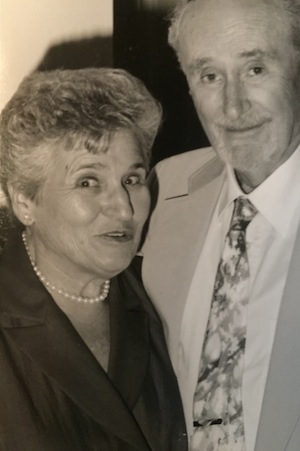
Sol and Shirley Kort (photo from Alisa Kort)

The Kort family – in an initiative led by sisters Beverley and Alisa – has established a scholarship in their parents’ names with the National Council of Jewish Women. The award will provide education funding to two newcomer women each year.

Beverley and Alisa’s parents, Shirley and Sol Kort, have both passed away. They met, said the sisters, in Shirley’s hometown of Edmonton at a Shabbat dinner event organized by the local Jewish community for the American Jewish soldiers stationed there – this included Detroit-native Sol, who was then in the U.S. army.

The couple moved to Vancouver in the 1940s and Sol started up the business Kent Chemicals with a fellow American who relocated to Vancouver.

Of Kent Chemicals, Beverley said, “He did that for many years, until the 1960s. Then, he sold his business and went into continuing education at UBC. On the side, he was leading and developing a lecture series called Search for Meaning, and more. He decided that, instead of being a chemist, he’d become an adult educator in the humanities.”

Sol was in his 40s when he changed career paths. In his new endeavour, he enjoyed connecting with people who were pushing the boundaries of understanding philosophy, science and psychology – people questioning the world.

Beverley recalled going to her father’s lectures, along with other kids, starting in her early teens. “I’d sometimes leave school and go to those lectures,” she said. “People came and stayed at our house. I was exposed to all sorts of interesting perspectives, like Buddhism and different types of spirituality, levels of consciousness, and ideas. I was already curious about human nature and this catapulted me onto the level of, ‘Oh, my God! Wow. What’s going on?’”

Meanwhile, Beverley’s mom, Shirley, was busy doing her own work, serving on the board of the Jewish Community Centre of Greater Vancouver for many years and being involved in National Council of Jewish Women (NCJW), among other pursuits. Later, Shirley helped form Shalom Vancouver, a welcoming service for newcomers to Vancouver.

“This was very important to her,” recalled Beverley. “People would describe her as one of the most welcoming, supportive people. When we did a special kind of presentation about my mom for the NCJW after she passed away, people got up and spoke about their relationship with her, especially young women who moved to Vancouver when she was quite involved in the council. They just found there wasn’t anything she wouldn’t do to help them get settled – connecting with people, coming to our house for dinner. Our whole family has this culture of, come for dinner, how can I help you connect, that kind of thing.”

Alisa added, “My mother was also on the board of the Volunteer Bureau of Canada and had been a president of the Vancouver chapter of the NCJW a number of times, [as well as being] involved in their mobile hearing testing project, HIPPY and Shalom Vancouver. My father was involved with the Vanier Institute of Canada and was director of humanities and science in continuing education at UBC.”

Alisa noted that one of her father’s good friends, author Ted Roszak, wrote of Sol that “he was ‘a bright, inquiring and caring educator who wanted to bring every leaping mind he could find to his school.’”

When Sol passed away, the Kort family established a fund in his name at the Isaac Waldman Jewish Public Library, as he was an avid reader. They also sponsored the Sol and Shirley Kort Author Series, the opening night of the Cherie Smith JCC Jewish Book Festival, for many years.

photo - Shirley and Sol Kort
Shirley and Sol Kort (photo from Alisa Kort)

“My mom, during her life with my dad, was always hosting events and having people come and speak, and dealt with the behind-the-scenes things, organizing and being social,” said Beverley. “For her, hosting the author series in her and my dad’s name was a nice continuation of that. We did that for many years. They would come to our house the night before. And, the author would come, and my mom would meet him and talk. We named it after both of them because we always wanted to do something for both of them together.”

When Shirley passed away, the family wanted to find a way to further commemorate both of their parents’ lives, and looked to the NCJW, even though Sol wasn’t a member of the council.

“He was like a feminist more than his own daughters were, and he was an educator and a mentor,” said Beverley. “He was always finding people who needed mentoring. We were hosts for a Bosnian family who we’re still good friends with. After retiring, they set up weekly sessions with him to talk about books. He led speaking series for seniors and was always looking for ways to teach.”

Among the NCJW initiatives that were important to Shirley was HIPPY (Home Instruction for Parents of Preschool Youngsters), said Beverley, and she talked about it “a lot during the last three years of her life, as she struggled with dementia. HIPPY is about mentoring women and furthering their education. We wanted to do something that would further education and make a difference in someone’s life – that’s why we chose the scholarship.”

The Shirley and Sol Kort scholarship provides $2,500 per year to two newcomer women toward their education.

“HIPPY is a way of keeping my parent’s memory alive and supporting something that represents the essence of what they found important in the world, which is welcoming people, furthering education, being supportive and being larger than the Jewish community,” said Beverley.

According to Alisa, her parents were interested in people, above all – they were passionate about education and in helping newcomers to the Jewish community and beyond. Beverley and Alisa also are inspired in what they do by their late grandmother, who informally adopted one of the young children who made their way to safety via the Kindertransport.

Regarding the HIPPY scholarship, Alisa said, “It seemed to embody all that our parents held dear and it also seemed very important to support women, particularly women with children struggling to find a new life in a new country after having to let go of so much of what made them who they are.”

The initial recipients of the award, said Alisa, “were both very highly motivated and articulate about their experiences as immigrant women and mothers in Canada, and how … being involved in HIPPY has factored into their journey and continues enriching their lives. They’re multicultural in background. One of the women intends to complete her bachelor of social work and the other wants to get her social work diploma.”

Past president of NCJW’s Vancouver chapter, Debbie Altow, said, “Shirley Kort inspired us all in council. Besides working to bring HIPPY to Canada, she led the way – she was the first in our membership to use a computer; she worked tirelessly to pilot a hearing testing program for preschoolers (a project taken over by Vancouver’s health department); she hosted so many meetings that daughter, Beverley, printed up a neat collection of her recipes; and she had family and friends all over Western Canada, especially in Edmonton and Winnipeg.

For more information about NCJW in Vancouver, visit ncjwvancouver.org.

Rebeca Kuropatwa is a Winnipeg freelance writer.
Format ImagePosted on September 1, 2017August 30, 2017Author Rebeca KuropatwaCategories LocalTags education, Kort, NCJW, tikkun olam, women
An Israeli internet hit

An Israeli internet hit

Renny Grinshpan’s videos have gained quite an audience. (photo from Renny Grinshpan)

Born and raised in Toronto, Renny Grinshpan is the daughter of an Israeli-born dad and a Toronto-born mom. Her sister, Eden, works as a host on the food scene in Canada and the United States and recently hosted Top Chef Canada. For her part, Grinshpan is a bit of a celebrity herself – in Israel.

After finishing high school in Toronto, Grinshpan moved to New York City, where she studied history at New York University before heading to Columbia University to pursue her master’s in journalism. After six years in New York, she moved to Tel Aviv to be with her Israeli partner, Hadar Amar, and they still live there. This past June, the couple was married.

“Hadar and I met through a mutual friend at a bar in Tel Aviv,” she said. “We now live together in Tel Aviv. He works in strategic consulting.”

Grinshpan has been in Tel Aviv for about three years. “When I came here,” she said, “I worked as a content writer for Tross Creative House for a year. My boss there, Yaniv Tross, encouraged me to quit and start on-camera work, so I did. He cast me in my first video – a crowdfunding video for a start-up product that works against period cramps (Livia). Since then, I’ve been working as a freelance host, content creator and actor.”

Grinshpan became known in Israel’s comedy scene for her role on HaIsraeliot (the Israeli Girls), a Facebook page with female Israeli comedians, including Leah Lev and Meital Avni.

“I don’t do live shows,” said Grinshpan. “I tried stand-up comedy and realized it’s the scariest thing ever … and I am no adrenaline junkie!”

In her Facebook videos, Grinshpan delves into different aspects of Israeli culture from a Canadian perspective. As a relatively new olah (immigrant), these observations come naturally for her.

“I think my main audience is Israeli women,” she said. “It makes sense to me that Israelis are my biggest audience, because I think everyone enjoys hearing about themselves the most, especially from an outsider’s perspective.”

Grinshpan gained experience in video during her journalism studies at Columbia, where she focused on video journalism and learned how to film, edit and build a narrative visually.

“I made several short documentary-style videos that year and the year following,” she said. “When I worked at Tross, I got experience writing creatively for the first time – writing scripts for product and crowdfunding videos for start-ups.

“When I started freelancing after Tross, I worked not only as an actor and host, but also continued working as a content writer and videographer behind the scenes. I also worked as a model and voiceover actor – anything to earn a living in the creative video realm!”

Grinshpan has spent some time as a visitor in Vancouver and had much good to say about the experience. “I love Vancouver!” she said. “Thank you for giving me some of the best times!

“Being a tourist in Vancouver made me feel like I’m really athletic, which could not be farther from the truth! I found that, in touring the city, I was biking through Stanley Park (it’s a forest!), hiking up a waterfall in North Van, trying out long-boarding for the first time and canoeing again (like in my childhood). I was so active just by being there, which, again, is not reflective of my standard state.”

Looking ahead, Grinshpan said she dreams of co-hosting a food and travel talk show across Israel or Canada with her big sister one day.

To follow or see more of Grinshpan, visit facebook.com/heyitsrenny or check out youtube.com/watch?v=d9pPtsFplaI and youtube.com/watch?v=nYKvpVlOVmU.

Rebeca Kuropatwa is a Winnipeg freelance writer.
Format ImagePosted on September 1, 2017August 30, 2017Author Rebeca KuropatwaCategories TV & FilmTags Canada, comedy, internet, Israel, Renny Grinshpan
A shift to inclusion in Israel

A shift to inclusion in Israel

The 2017 Select Fashion and Totto bags’ Back to School ad campaign, in collaboration with Beyachad, featured Israeli children of varying abilities. (photo by Nechama Orah Photography)

In 2010, Gabrielle Markowitz set up a Facebook account in the name of her then-newborn daughter, Hallel. Called Hallel Mini Supermodel, the page is part of Markowitz’s goal to change the public perception of people with disabilities. And she has made some progress.

Hallel has Down syndrome. Set to start Grade 1 this September, she was chosen, along with several other Israeli children of varying abilities, to model the 2017 summer collection in Select Fashion and Totto bags’ Back to School ad campaign. The shoot was in collaboration with the Israeli organization Beyachad, which works to increase and strengthen society’s inclusion of people with disabilities.

Beyachad was started by Channie Plotnick, a New Yorker who has been concerned with this issue since she was 9 years old.

“I was living in New York,” said Plotnick, who now lives in Israel. “Not far from the home where I was growing up, there was a home for adults with disabilities. I was going to school every day and doing my thing. I’d pass by the home and I could see the people with disabilities through the windows. I could see them just sitting around and pretty much doing nothing – being locked in that home for many, many hours, just sitting around.

“I saw this a couple times a day, every day. I felt that these people are jailed in this place. I figured, I have to figure out a way to get them out of this. One day, I asked my mom if I could invite them for Shabbat morning. My mom said to give them my phone number and see. So, one Friday, they actually called and said they wanted to come over for Shabbat morning.

“I can remember myself sitting at home at the window and looking out that morning, and waiting anxiously for them to come. It was sort of a big group. I think there were eight adults with two staff accompanying them.

“We had a wonderful Shabbat meal. We played games and they became part of the family. For me, it was like a victory to see them out of jail and … part of a community, of our family.”

Plotnick has high expectations of herself as well as of others. Where some see disability, she sees ability.

As an adult, Plotnick made aliyah. She attended Tel Aviv University and earned a bachelor’s degree in psychology and a master’s in special education. From then on, it was no longer enough for Plotnick to be able to see ability in all people. It was now about figuring out how to care for these abilities and shape them toward everyday integration into society.

photo - An image from the Select Fashion and Totto bags’ Back to School ad campaign
An image from the Select Fashion and Totto bags’ Back to School ad campaign. (photo by Nechama Orah Photography)

“When I came to Israel, I was working as a supervisor in a special ed school,” she told the Independent. “I saw children who I thought could learn in regular schools, with help and support. I started looking around for schools and support, and I realized there were no services for children who wanted to be integrated in regular schools.”

So, in 2008, Plotnick started up Beyachad Foundation, to aid in the empowerment and inclusion of people with special needs.

“When someone wants to be in a regular school, we help them with resources, information, advocacy and case management, connecting them to the right people, figuring out how to get them resources from different departments,” said Plotnick.

The Knesset calls Plotnick when they are considering disability inclusion-related laws.

“In Israel, there’s a lot of welfare state taking care of people with disabilities,” explained Plotnick. “I call it a ‘stifling hug,’ as they’re taking care of the needy. But, it’s a situation where they are … making it so they are dependent, as opposed to helping special needs people be independent and able to contribute to society.”

According to Plotnick, the welfare system disperses benefits according to labels – it puts people into a box labeled “Down syndrome” or “autism.” These labels carry with them a set of expectations, and the people become the label.

“Today, when a social worker gets a person in front of him/her who has Down syndrome, she/he looks at his/her lists and says, ‘OK, we have schools with special education that focus on children with Down syndrome. And, when they are adults, we have what’s called workshops. This is what we have.’ You’re not looking at individuals and their abilities. You’re looking at a person with Down syndrome. You’re not even looking at the person. On the flip side, when you complement abilities, you look at individuals. That change of looking at a person and saying, ‘You’re an individual. Let’s see what your abilities are and let’s see what you can do with your abilities.’ That’s the change we are trying to make.”

Beyachad does not want to compete with, or put out of business, special ed schools or workshops. Its aim is to offer more options.

“It’s a lot easier for us, as society, to adapt to the needs of the less-abled than it is for the less-abled to adapt to our society,” said Plotnick. “As such, we have a duty to adapt to their needs.

“I’ll give you an example. If today we go out onto the street and all of the signs are in Braille, you and I would be the ones who are disabled, as we won’t be able to read them. Society has the ability to change people into disabled – and society has the ability to create people who are more able.

“As long as we adapt things in society for people with disabilities, they will end up being less disabled. If I come to a regular school and I’m a person with disabilities and the curriculum is adapted for me and school accessibility is adapted for me, I will be less disabled.”

Change will come slowly, but Beyachad has the motto ‘If it is to be, it’s up to me,’ and they work to provide the support individuals need to make accessibility possible. For more information or to lend support, visit beyachad.org.il.

Rebeca Kuropatwa is a Winnipeg freelance writer.

Format ImagePosted on September 1, 2017August 30, 2017Author Rebeca KuropatwaCategories IsraelTags Beyachad, Channie Plotnick, fashion, Gabrielle Markowitz, Hallel Markowitz, inclusion
Bridging STEM gender gap

Bridging STEM gender gap

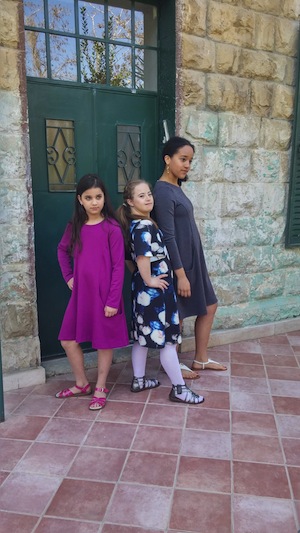
LeadWith’s leadership team at one of the organization’s events, left to right: co-founders Shira Weinberg and Dalit Heldenberg and managing director Aviv Ziv. (photo by Hadas Eldar Photography)

STEM-related women’s groups are popping up all over the world – and Israel is no exception. In fact, the country is a leader in this area.

Shira Weinberg and Dalit Heldenberg co-started LeadWith, a group for women like them – women interested in STEM (science, technology, engineering and math) and seeking camaraderie.

Weinberg, a senior product manager at Microsoft, started out as a software developer while in the Israel Defence Forces’ marine core, and then worked and studied as a software engineer for five years. She’s been with Microsoft for nine years, first as an engineer and then as a product manager.

“As a woman in the industry, I always felt like there aren’t many women,” said Weinberg. “At the beginning, I got used to it and I figured that’s how it is in this area and that’s OK. But, after a few years in the industry, I realized it doesn’t have to be like that.

“That’s one of the reasons I started LeadWith, and I’m also doing some other stuff related to promoting girls and women in the tech industry.”

Raised by a father who worked in the industry in Herzliya, Weinberg was much more familiar with computers than were most of her friends. She went into computer science in high school, which paved the way to her position in the IDF.

Like Weinberg, Heldenberg also started her career as a software engineer. “As a kid, I was always attracted to computers more than the others,” said Heldenberg. “I knew that this is what I wanted to learn, computer science.”

Both young women feel strongly that there is no reason the gender gap should be as big as it is today.

“As you look higher and higher in management positions, there are fewer women,” said Weinberg. “This is something we want to change. And this is one of the main reasons I wanted to lead this change.”

Heldenberg added, “Even when I studied computer science, I’d always see too few women in this field. When I was learning high school physics and when I studied computer science, I was always missing women. We want to see more women wanting to be in management roles.”

Weinberg and Heldenberg understand that, in order to create this change, they need to provide mentorship to other women. They now have bi-monthly get-togethers that include networking and education sessions.

“We found a lot of demand from women for these kinds of events,” said Heldenberg. “At the first event, we weren’t sure how many women would come. We planned for about 50, but ended up with 200 attendees.

“We are currently doing three types of activities. One, the meet-ups, where we usually have 100 to 200 women come.

“We also have the mentoring program, where we hold events also every two months. The mentoring events are smaller in terms of size, but we have our team of mentors all volunteering and joining in for the events. We hold sessions of one-on-one mentoring conversations for around 30 minutes…. For each mentoring event, we have about 25 mentees.”

The third activity is an accelerator program for women entrepreneurs who are at the end stages of launching their start-up. In the first program, they had 13 entrepreneurs. It involved nine full days of sessions over nine weeks, with each day focused on different tools relevant to entrepreneurs.

“At the end, we had a big demo day with important people in the industry,” said Heldenberg.

With more than 1,600 people now involved with LeadWith, it is clear that they are filling a previous void and that their approach is working.

“At the events, we put a lot of focus on networking,” said Weinberg. “We usually have a short networking session before the main session begins. We make sure every woman will talk with one or two women she hasn’t met before … that really helps them know more women in the industry and creates more conversations.

“Always after these kinds of events, you hear good stories about things that happen because of the networking and the new connections. Of course, you get to know other women in the industry.

“Also, at the time when a woman wants to change roles, she can draw upon the extensive connections she has gained at our events. You can never know what will come out of this kind of connection. We always hear great stories.”

LeadWith’s focus is both on connecting women who are already in the industry, as well as those who studied computer science or technology but, for one reason or another, did not go on to work in the field. The organization hopes to draw these latter women back into the field.

“A month ago, we did a hackathon in collaboration with another organization, called Cyber Girls,” which brings computer science to those around 16 and 17-years old, said Weinberg. “They brought the girls and we brought the women, and we divided into teams that included both women from the industry and the girls. It was a few hours. There were multiple teams. Each team had a big mission and a lot of tasks along the way – quizzes and such – to figure out solutions that involve writing code.

“What was amazing was that each team in this hackathon was … 10 teenaged girls and a woman from our community, and the quizzes they had to do were really tough. The young girls were very ambitious, they couldn’t get the answers from us. It was really good to see that. They are very smart.”

LeadWith is a nonprofit organization and volunteers are an integral part in whatever they do, said Heldenberg. “We get some help in posting events in certain offices, [donations of] snacks and drinks for events, those kinds of things, from Microsoft, Google and Wix.”

Both Heldenberg and Weinberg think there are multiple reasons for the lack of women in STEM fields, from how children are raised, the educational system and society as a whole. They also are concerned that, if they spread themselves too thin, they will achieve less. As such, they have opted to focus, for now, on industry women in their 20s to 40s. For more information, visit leadwith.org.

Rebeca Kuropatwa is a Winnipeg freelance writer.
Format ImagePosted on August 18, 2017August 16, 2017Author Rebeca KuropatwaCategories IsraelTags Dalit Heldenberg, Israel, LeadWith, mentorship, Shira Weinberg, technology, women
Increasing inclusivity

Increasing inclusivity

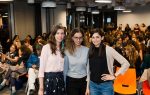
Jay Ruderman (photo by Noam Galai)

The Ruderman Family Foundation is working to reshape societal attitudes about people with disabilities. Established in 2000 in Boston, the foundation attempts to foster inclusion by way of example, with a special focus on the Jewish community.

Jay Ruderman, a lawyer who spent nine years in Israel, has been at the helm of the foundation since 2008.

“Our first major initiative was including children with disabilities in the day school system in Boston,” Ruderman told the Independent. “We got into this issue of disability and inclusion out of a sense of fairness – principles within our family – that everyone deserves a fair shake.

“In terms of Jewish day schools, even within the same family, we began to ask why some kids were being included and enjoyed a Jewish education while others were not. Then, when I took over – my background is law and the civil rights aspect appealed to me – I began to see a broader picture and thought there was a vacuum in the Jewish community,” that advocacy was missing.

“You should know that people with disabilities are the largest minority in the world. And, not only that, they are also the poorest minority in the world and the most segregated [because of] stigmas and so forth.”

Initially, the foundation operated as a reactionary organization, wherein people would approach Ruderman’s parents for support. But, Jay Ruderman did not see this as a good way to make a positive impact.

He said that, traditionally, disability has been approached from the viewpoint of charity, and that a majority saw people with disabilities as unfortunate and in need of help. The “help” given usually led to segregation – separate schools, separate housing and separate work.

According to Ruderman, a transformation of perception was in order – the focus needed to be about each individual’s rights. He started his work to change views by doing a lot of outreach to the media, as well as awareness-raising and developing strategic working partnerships with major Jewish organizations.

“We are all connected to disability,” he said. “Everyone has a child, parent, sibling, neighbour with some sort of disability. For us, initially, we thought we didn’t really have a personal connection, but then, of course, like everyone else, I had a nephew born with autism – and my father developed a debilitating disability. It’s a widespread issue. But yet, I think the way we approached it was somewhat unique…. We’ve been doing this for a long time. It takes a long time to change attitudes.”

Within the Boston Jewish community, the foundation created an employment initiative called Transitions to Work, which has employed hundreds of people with disabilities and seen more than 100 employers hire people with disabilities. The foundation has also engaged in a community-wide synagogue inclusion project, which has spurred congregations from various denominations to be more inclusive and accepting of people with disabilities and their families.

In Israel, the foundation’s major effort has been a partnership with the government of Israel and the American Jewish Joint Distribution Committee to create a more inclusive society.

“That’s been a partnership with the Ministry of Finance, the Ministry of Health and the Ministry of Welfare, and we’ve engaged in that for many years,” said Ruderman. “Then, we began getting more involved nationally in the U.S. and looked for influential partners in the Jewish community. We developed partnerships across different streams of Judaism, the Foundation for Jewish Camp and Jewish Federations of North America.

“Internationally, we’ve had a prize called the Ruderman Prize in Inclusion, which has been awarded to communities and organizations excelling in inclusion, anywhere from Argentina to Uruguay, Mexico, all across the U.S. and Canada, England, Israel, South Africa, Australia and many different places around the world.”

Over the last few years, the foundation has developed an advocacy branch that has so far put out six white papers, garnering attention from the general media, including the New York Times, Washington Post and LA Times.

“The first paper we did was on police brutality and the fact that half the people in the country killed by the police have some form of a disability,” said Ruderman. “That’s gotten a lot of attention because, unfortunately, since the papers have come out, there’s been more people killed by the police and we’ve commented on those cases.

“We did a white paper on Hollywood and TV, as we found out that 95% of the characters with disabilities that you see on TV are played by able-bodied actors, and that really tapped into a diversity conversation in Hollywood that’s mainly focused on race. We injected disability into that conversation.”

The foundation also created the Ruderman TV Challenge, where they challenge creators to include more people with disabilities in new TV shows.

Elections are another area the foundation has examined – studying voting accessibility – as was self-driving cars and the transformative impact they could have on people with disabilities.

“People with disabilities should be thought of as these technologies develop,” said Ruderman.

The foundation also issued a paper about the murder of people with disabilities. “On average,” said Ruderman, “once a week, someone with a disability is killed by a caretaker – whether a family member or a professional.”

The foundation’s latest endeavour is called Rapid Response, where they try to respond to events more quickly, as they did when Donald Trump was running for president and mocked a reporter with a disability.

“We’ve done this too with Israeli officials and celebrities – mainly to shine a light on derogatory ways of acting or speaking about disability. So, we tend to speak out, and have developed a very active social media presence. We are now a combo of funding innovation in inclusion and doing a great deal of advocacy.”

Ruderman has found most Jewish institutions and synagogues to be very open to looking at ways of increasing inclusion, but also has heard many stories of people with disabilities and their families having been turned away by inaccessible or unwelcoming synagogues.

“I think rabbis know this is an issue,” said Ruderman. “What most don’t understand is that most solutions for accommodation are already available and, while the Ruderman Family Foundation doesn’t engage in capital financing, most communities have other foundations that do.

“I’ve always believed, we live in North America, in the wealthiest Jewish communities in the world, [and] the challenge with disability inclusion is that of willingness and awareness. To welcome a child with autism and their family, it takes some willingness to have a service that maybe is not as quiet as some congregants might like or be open to. Physical access for people using a wheelchair may be needed or, if someone is blind, they may need a Braille siddur. There are all sorts of different disabilities, but I find that when rabbis and community leaders are open, solutions can be found.

“Older generations tend to look at people with disabilities, even those in their own family, as separate and undeserving of being part of the community, but I think younger generations accept more diversity.

“My impression of Canada – I have spent some time, mainly in Eastern Canada – is that Canadians are very open-minded and progressive and there’s opportunity to find some real leadership that can reverberate across the world.”

For more information, visit rudermanfoundation.org.

Rebeca Kuropatwa is a Winnipeg freelance writer.
Format ImagePosted on August 18, 2017August 16, 2017Author Rebeca KuropatwaCategories WorldTags advocacy, disabilities, inclusion, Ruderman Family Foundation
Population growth & nature

Population growth & nature

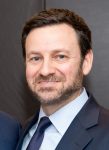
The four lines in this diagram are projections based on four levels of fertility of the general population. In 2059, there could be more than 20 million people in the state of Israel. However, if the birthrate drops to the replacement level of 2.1 children per woman during her lifetime, in 2059, it would be only about 10 million. (image from population.org.il)

While by no means unique to Israel, with less space than most to work with, it is happening a little faster there – population overload. While some feel it is too late to do anything to alleviate the problem, one growing group of Israelis is putting its energy into making a bid to re-educate the public about the need for stabilization, as opposed to growth.

One of the leaders in the group is Prof. Alon Tal, chair of the department of public policy at Tel Aviv University (TAU). Tal was born and raised in North Carolina before making aliyah after high school, at the age of 20.

“I’m an activist trapped in the body of an academic,” he quipped. “For many years, I fought it, but I tried very hard to stay an advocate for environmental interests in the country.”

A father to three daughters, Tal decided to move to Israel, as it seemed like a unique and exciting place, and he wanted to take his Jewish identity seriously.

“In Israel, every year, we take open spaces and turn them into houses, highways and commercial centres,” he told the Jewish Independent. “We live in a small country. We have the responsibility to give quality of life, to find a better way. We’re not meeting our responsibility to our great land.”

Tal is at the forefront of Israeli leaders calling on the Israeli government to adopt a policy that stabilizes the population.

“We have to cancel financial payments to families with more than two children,” he said. “We should not be encouraging it [larger families]. It means that we need to strengthen the status of women in the communities, like in the Orthodox communities. We need to make contraception available free of charge, [grant] basic rights of women to abortion, by removing some of the strings attached…. We need a policy that [aims for] stability, rather than maximum growth.”

While most Israeli Jews are raised with the fear that the Arab population will outgrow the Jewish one, Tal is trying to make people aware that there are lower fertility levels being seen in most populations, including Arab ones, while Jewish are on the rise.

A main thrust to all this need for change, Tal said, is the alarming rate of vanishing nature.

“To me, it’s very clear,” he said. “Israel’s wildlife is disappearing. It’s happening faster than I thought it would. If we had 10,000 gazelles 15 years ago, there are only about 2,500 now and they were just declared endangered by the International Union for Conservation of Nature (IUCN). Pretty much, when you go through that report, you can see everything is on the decline. One-third of mammalian species are described as endangered or extinct. It’s a horrible thing that Israel is letting this happen. I don’t want anyone to [be able to say] they didn’t know this was going on.”

When the Independent contacted Tal to be interviewed for this article, he was en route to the official opening of a new museum at TAU – Israel’s Museum of Natural History.

Tal has helped write new laws and has also been involved, indirectly, with Israel’s National Nature Assessment Program (NNAP). Recently, the first State of Nature report came out, explaining how construction and agricultural development have introduced some invasive species to Israel – to the extent that several bird species in southern Israel can no longer survive.

NNAP has established a program that operates out of the new museum, as part of a joint initiative with Jewish National Fund Israel, the Environmental Protection Ministry, and Israel Nature and Parks Authority. Its mission is to promote proper land management based on the science of open areas with Israel’s biological diversity in mind.

“It’s not a policy thing,” said Tal. “We want to save wildlife, set aside land, create ecological corridors, stop hunting and stabilize population growth.”

Although Tal acknowledged that the need to do these things is not news to many people, he is adamant that it must continuously be communicated in different ways to get to the tipping point of producing change.

“I was on television three times this week,” he said. “Every time I’m there, I mention what’s going on. I’m doing what I can do. Everyone needs to make a contribution.

“This is really about a change in Israel’s cultural DNA. We were raised on maximum population growth. We now have to stabilize. We have to tell people that, if we want to be responsible for other species that means we have to stop the incredible hemorrhaging of open spaces. If we don’t, then there won’t be any more nature.”

Tal plans to keep meeting with every willing influential person in order to educate enough people to swing the pendulum towards restoring nature. He anticipates that the new museum will be helpful in this regard.

“In order to change something, you have to know,” said Tal. “You have to look at the habitats, species logs, and take measures there. Anybody who considers Israel a promised land or has an emotional attachment to this holy place – Christian, Muslim, Jewish – we all share this responsibility. Just like how I make contributions for the Amazon rainforest, because I understand how it affects me. If you have an initiative you feel connected to, you should support it. Come to Israel and get involved, go on vacation and get involved, write letters to Israel’s decision-makers letting them know you expect the Jewish state to be a responsible trustee of its nature.”

For more information, visit population.org.il.

Rebeca Kuropatwa is a Winnipeg freelance writer.
Format ImagePosted on July 21, 2017July 21, 2017Author Rebeca KuropatwaCategories IsraelTags Alon Tal, environment, population growth, science, sustainability, TAU, Tel Aviv University
Getting closer look at Jupiter

Getting closer look at Jupiter

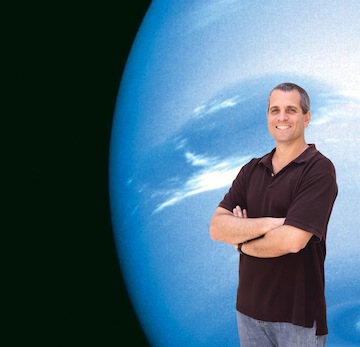
This JunoCam image highlights Oval BA. (photo from nasa.gov)

The U.S. National Aeronautics and Space Administration (NASA) recently released the first findings of the Juno research spacecraft, which entered Jupiter’s atmosphere last year.

The Weizmann Institute of Science’s Dr. Yohai Kaspi is a senior member of the Juno mission team. The reason why this research is so important, he said, is because it will allow us to better understand how the solar system was formed.

“To do that, we really need to understand Jupiter and how it was formed because, then, we can understand earth, in sequence,” said Kaspi.

photo - Dr. Yohai Kaspi of the Weizmann Institute of Science
Dr. Yohai Kaspi of the Weizmann Institute of Science. (photo from WIS)

For Kaspi, the fascination with space came at the early age of 7, when his dad shared some pictures of the Voyager I and II and took him stargazing. His interest grew from there, including when he was navigating in the Negev while in the Israel Defence Forces.

“My hobby growing up was competitive sailing,” said Kaspi. “That drew my interest into meteorology and understanding why the wind blows the way it does. Growing up in Nahariya, which borders Lebanon … all kinds of stuff [are] coming from Lebanon – currents, trash. It was very obvious where the wind or current was coming from and that connected to sailing.”

Kaspi studied math and physics at Hebrew University before heading to the United States, seeking adventure and a doctorate at Massachusetts Institute of Technology. Soon after, he was recruited to be a professor at the Weizmann Institute of Science.

While at MIT, Kaspi became connected to the Juno mission, developing instruments to help measure atmospheric conditions on Jupiter.

“I was interested in space and the weather,” said Kaspi. “I studied meteorology, as it kind of brings them together … [with] planetary science. We have planets, which resemble earth in some aspects, but we don’t understand their features and circulation.”

While Jupiter is by far the biggest planet in the solar system (11 times the diameter of earth) and has the greatest mass (300 times that of earth), it is a gas planet (i.e. it has no liquid or solid parts). Kaspi has studied Jupiter’s different weather zones and deltas.

“I developed a theory for understanding how deeply they extend,” said Kaspi. “When you look at Jupiter, you have this red and white belt, or zone. That’s all at the cloud level, so it condensates at the same temperature. But, we have no information what’s happening underneath them. What we needed was a global way to survey what was happening underneath the cloud layer. And that’s exactly what Juno is.

“During my PhD, I developed a new method to relate between the gravity field of the planet and the flows underneath this cloud layer. To understand Jupiter, we need to understand what’s happening in its interior.”

Kaspi has been involved with Juno since 2008, along with 30 to 40 other scientists who form the core of the mission, developing and designing the experiments, and interpreting the data.

photo - This enhanced colour view of Jupiter’s south pole was created by citizen scientist Gabriel Fiset using data from the JunoCam on NASA’s Juno spacecraft
This enhanced colour view of Jupiter’s south pole was created by citizen scientist Gabriel Fiset using data from the JunoCam on NASA’s Juno spacecraft. (photo from nasa.gov)

“We’re trying to deduce the depths of the flows from the gravity measurements of the planet,” explained Kaspi. “The purpose is to see what’s happening inside the planet. It has nine instruments and each one probes in different ways what is happening in the planet’s interior.

“One is a gravity instrument…. We send a beam from the spacecraft to earth. The beam travels 800 million kilometres and reaches earth. A desert in California captures that beam.

“We try to see the accelerations and decelerations of the spacecraft around the planet … trying to understand … the flow field and the gravity field of Jupiter.”

It was only when we first saw earth from space that we were able to understand the changing atmospheric conditions that are part of what is largely considered part of climate change, said Kaspi.

“We’d be able to understand how the solar system was formed, including earth,” he said of one of the project’s possible results. “For example, it’s really important for us to know if there’s a core inside Jupiter. A planet with a big or small core would have a different effect on the gravity field. When we measure the gravity field, we can deduce what’s happening deep inside the planet, which would lead us to different theories of how the solar system was formed.

“The connection to earth is we see the objects of Jupiter’s atmospheres … we don’t understand their strengths, how wide they are and how deep they are. We don’t have theories for that. If you want to have a good understanding of objects on earth, you have to look at the sister planet.”

The data-collecting portion of the Juno mission will come to a close at the end of this year. After 10 years of research and six orbits, the data will be analyzed to determine the direction of the mission going forward.

“We have already a lot of good data and we’re reaching a point where we can have significant results for understanding the structure, depths and composition of the atmosphere, but it’s a process,” said Kaspi. “Basically, we have one measurement every 53 days. So, every 53 days, I get my stuff and go to the U.S. and stay there for a week, analyzing the data and analyzing it for the rest of the 45 days, and then go back.”

Regardless of the results, Kaspi will continue the work he is doing at the Weizmann Institute on climate change and working on an instrument that will be sent to Jupiter on board the 2022 spacecraft being built by the European Space Agency.

“It will be the first Israeli instrument that will go beyond earth’s orbit,” said Kaspi. “That’s exciting. So, we’re involved in that and a variety of projects, trying to achieve fundamental understanding.”

As far as space exploration for the purpose of finding another planet fit for human dwelling, Kaspi said, “I’m just going to say that, if there is life in the solar system, it might be in the moons of Jupiter … because they have liquid water, a deep ocean, tens to hundreds of kilometres deep. Maybe there is life there.”

The public can follow the Juno mission on Facebook at facebook.com/nasajuno.

Rebeca Kuropatwa is a Winnipeg freelance writer.
Format ImagePosted on July 14, 2017July 11, 2017Author Rebeca KuropatwaCategories WorldTags Israel, Juno, Jupiter, NASA, science, space, Weizmann Institute

Posts pagination

Previous page Page 1 … Page 13 Page 14 Page 15 … Page 31 Next page
Proudly powered by WordPress