Skip to content
  • Home
  • Subscribe / donate
  • Events calendar
  • News
    • Local
    • National
    • Israel
    • World
    • עניין בחדשות
      A roundup of news in Canada and further afield, in Hebrew.
  • Opinion
    • From the JI
    • Op-Ed
  • Arts & Culture
    • Performing Arts
    • Music
    • Books
    • Visual Arts
    • TV & Film
  • Life
    • Celebrating the Holidays
    • Travel
    • The Daily Snooze
      Cartoons by Jacob Samuel
    • Mystery Photo
      Help the JI and JMABC fill in the gaps in our archives.
  • Community Links
    • Organizations, Etc.
    • Other News Sources & Blogs
    • Business Directory
  • FAQ
  • JI Chai Celebration
  • JI@88! video

Recent Posts

  • Story of Israel’s north
  • Sheltering in train stations
  • Teach critical thinking
  • Learning to bridge divides
  • Supporting Iranian community
  • Art dismantles systems
  • Beth Tikvah celebrates 50th
  • What is Jewish music?
  • Celebrate joy of music
  • Women share experiences 
  • Raising funds for Survivors
  • Call for digital literacy
  • The hidden hand of hate
  • Tarot as spiritual ritual
  • Students create fancy meal
  • Encouraging young voices
  • Rose’s Angels delivers
  • Living life to its fullest
  • Drawing on his roots
  • Panama City welcoming
  • Pesach cleaning
  • On the wings of griffon vultures
  • Vast recipe & story collection
  • A word, please …
  • מארק קרני לא ממתין לטראמפ
  • On war and antisemitism
  • Jews shine in Canucks colours
  • Moment of opportunity
  • Shooting response
  • BC budget fails seniors
  • Ritual is what makes life holy
  • Dogs help war veterans live again
  • Remain vital and outspoken
  • An urgent play to see
  • Pop-up exhibit popular
  • An invite to join JWest

Archives

Follow @JewishIndie
image - The CJN - Visit Us Banner - 300x600 - 101625

Byline: Cynthia Ramsay

Yiddish food’s long history

Yiddish food’s long history

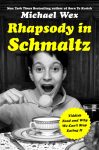
Michael Wex, author of Rhapsody in Schmaltz (St. Martin’s Press, 2016), will close the Cherie Smith JCC Jewish Book Festival on Dec. 1.

“Heavy, unsubtle and, once it emerged from Eastern Europe, redolent of an elsewhere that nobody missed, the food of Yiddish speakers and their descendants is a cuisine that none dares call haute, the gastronomic complement to the language in which so many generations grumbled about it and its effects,” writes Michael Wex in the introduction of his latest book, Rhapsody in Schmaltz: Yiddish Food and Why We Can’t Stop Eating It.

“This vernacular food continues to turn up in vernacular form in the mouths of people who have never eaten it, or who don’t always realize the Jewish origin of the strawberry swirl bagel onto which they’re spreading their Marmite,” he writes. “We’ll be looking at the aftertaste of Ashkenazi food as much as at the cuisine itself. But before we can do so, we have to go back to the Bible to see why Jewish food exists and what it really is.”

Toronto-based Wex – who is the author of many books, including Born to Kvetch: Yiddish Language and Culture in All of Its Moods and How to Be a Mentsh (& Not a Shmuck) – will close the Cherie Smith JCC Jewish Book Festival on Dec. 1. His topic, appropriately enough, is Jews and Food.

In Rhapsody in Schmaltz, Wex takes readers from the Exodus from Egypt – “Most national cuisines owe their character to flora and fauna, crops and quarry, domesticated animals and international trade. Jewish food starts off with a plague” – to the modern delicatessen, which “might no longer be the social hub it was for earlier generations, but the food that it serves is still recognized as Jewish, even when the ingredients are combined in ways that can’t help but pain an observant Jew.”

photo - Michael Wex
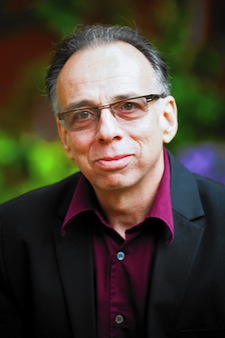
Michael Wex (photo by Zoe Gemelli / St. Martin’s Press)

While written in a tongue-in-cheek manner, Wex’s love of Yiddish culture, if not of Yiddish (aka Ashkenazi) food, is apparent in every page. And each page is packed with information – that he somehow compiled on his own, without research assistants.

“Although all of my non-fiction is rooted in subjects with which I was already quite familiar, I’ve found that it’s the research itself, the jump from one source to the next, that tends to produce the sparks that lead to the better ideas,” he explained to the Independent of his creative process. “I don’t think summarized works or lists of facts provided by an assistant would allow for the immersion that I, at least, need in order to write a book.

“It generally takes me about a year to research and write a book – maybe 18 months, if you count the preliminary research that usually goes into preparing a proposal for a publisher. I generally start with a specific, if somewhat vague, question and then try to answer it: What makes Yiddish different from other languages? Why do Jewish people go on eating traditional Jewish food even when they spend most of their time finding fault with it and have abandoned the rituals and ceremonies with which such dishes were associated?”

With nine pages of endnotes and a 13-page bibliography, one might assume that Rhapsody in Schmaltz is a dry read. It is anything but – Wex’s style is completely irreverent. For example, in writing about the formation of the dietary laws, he comments, “the Israelites aren’t supposed to feel any more deprived of the right to eat certain creatures than most of us usually do about the right to get high on crystal meth or pee in the street.” He openly discusses over-the-top kosher practices, bodily functions, etc. Perhaps surprisingly, his writing hasn’t ever gotten him into trouble with his religious compatriots.

“The only ‘trouble’ I’ve encountered has arisen from misunderstanding,” he said. “For instance, I received a vehemently condemnatory email from a woman who objected to my having used the phrase ‘goat or kid’ in describing the Passover sacrifice; she was afraid that non-Jews might take the word ‘kid’ as proof that we really murder gentile children and use their blood to bake matzah. Otherwise, though, the response has been quite positive. A number of rabbis – Orthodox, Conservative and Reform – have written to tell me that they’ve used material from my books in their sermons; Born to Kvetch is frequently cited in the language column of Hamodia, an English-language ultra-Orthodox paper published in Brooklyn.

“Most feedback about Rhapsody in Schmaltz has focused either on readers’ memories of the foods mentioned or on the ritual or halachic reasons behind the forms they’ve assumed or the occasions on which they are eaten, including questions relating to their viability in a world in which most Jews are not religiously observant.”

For many readers, some of Rhapsody in Schmaltz will serve as a memory refresher of the origins of certain rules of kashrut or the types of meals that are traditionally prepared for various holidays. But there is much readers will learn and, while Yiddish food may have been a topic with which Wex was familiar before he began his research, there were a few findings that surprised him.

“The whole Crisco-Manischewitz nexus and the things that grew out of it was probably the main thing I learned; I’d known how important Crisco was for kosher marketing, but until I looked into it, had no idea of why,” said Wex. “The other thing that really shocked me when reading through cookbook after cookbook was the surprising popularity of brain latkes at one time – I knew that brains were once popular, but had never heard of consuming them in latke form.”

Tickets to the closing of the book festival, which takes place at the Jewish Community Centre of Greater Vancouver, are $24 and the event features a food reception – brain latkes not included. To order, call 604-257-5111, drop by the JCCGV or visit jewishbookfestival.ca.

Posted on November 25, 2016November 23, 2016Author Cynthia RamsayCategories BooksTags food, JCCGV Jewish Book Festival, Yiddish
Fairy tale reimagined

Fairy tale reimagined

Taylor Pardell as Gretel and Pascale Spinney as Hansel in Vancouver Opera’s adaptation of the classic fairy tale. (photo by Emily Cooper)

While Vancouver Opera is presenting the fairy tale Hansel and Gretel Nov. 24-Dec. 11, cast member Leah Giselle Field is living one of her dreams.

Field first moved to Vancouver from Calgary – where her parents had moved from Montreal the year before she was born – for an undergraduate degree in opera at the University of British Columbia. “I left for a two-year master’s program in Ontario and then came back for my doctorate,” she told the Independent. “I came back to Vancouver several times during those years away, so I feel like I’ve been a Vancouver resident for the last 14 years.”

In fact, her connection to Vancouver goes back even further.

“Vancouver has always felt a little bit like home,” she said. “After the war, surviving members of my maternal grandfather’s family moved to Canada. My grandparents settled in Montreal, and my grandfather’s sisters settled in Toronto and Vancouver…. Growing up in Calgary, my family would take road trips to Vancouver over spring break and in the summers, and the time we spent with my great-aunt and my mother’s cousins’ families was formative. Friends of theirs have been part of family events and celebrations for decades, and it’s always fun to catch up during holidays. I’ve been part of the Congregation Beth Israel High Holiday Choir for the past few years and enjoy catching up with my BI family each fall.”

Her professional experience includes appearing “in the title roles of Carmen and Julius Caesar, and as Marcellina in The Marriage of Figaro, Suzuki in Madama Butterfly, the Principessa in Suor Angelica, and Jennie in Maurice Sendak and Oliver Knussen’s Higglety Pigglety Pop!” notes her bio. “She is a past winner in the Western Canada District of the Metropolitan Opera National Council Auditions and a 2015 semi-finalist in the Marcello Giordani Foundation International Vocal Competition.”

photo - Jewish community member Leah Giselle Field plays Gertrude, the siblings’ mother
Jewish community member Leah Giselle Field plays Gertrude, the siblings’ mother. (photo from Leah Giselle Field)

In Hansel and Gretel, Field, who is a mezzo-soprano, plays Gertrude, the mother. All of the principal singers in the show, including Field, are 2016-2017 participants in Vancouver Opera’s Yulanda M. Faris Young Artists Program.

“My experience with Vancouver Opera so far has really been a dream come true,” Field said. “I still have moments of disbelief that I get to do this every day, that I have the opportunity to work and learn with such wonderful colleagues within an organization that treats its singers with so much respect. The eight of us in the Yulanda M. Faris Young Artists Program [YAP] have become really dear friends – we had ‘YAPsgiving’ together last month (because Thanksgiving fell between Rosh Hashanah and Yom Kippur, I brought matzah ball soup, round challah with raisins, apples and honey, and honey cake) – and our bass-baritone always says, ‘Goodnight, family,’ on his way out the door.

“Being part of this production of Hansel and Gretel has been amazing…. We have exciting, fresh perspectives from the director, conductor and designers to work with, the stage management team has been incredible, and the performers are so caring and supportive. It has been exciting every day – seeing the show come together is such a thrilling experience.”

Vancouver Opera is billing their Hansel and Gretel as a “family-friendly production” for ages 6-plus.

“There are all sorts of factors that make this production more family-friendly than our standard conception of ‘opera,’” explained Field. “First, the subject matter is familiar: anyone who has heard the Grimm story – about the brother and sister lost in the forest who find a house made of sweets and outsmart the witch who lives there – already knows the foundation of our story.

“We’re also performing an updated translation of the original libretto, so audiences will be hearing our story in English. [And] Hansel and Gretel is … an opera that involves child performers – we have a chorus of 14 children,” she said.

“Beyond the traditionally family-friendly elements of the opera, we have the most incredible design concept enhancing our production. This is a larger-than-life, technicolor world that brings to mind the dream world Maurice Sendak’s protagonist Max imagines in Where the Wild Things Are. This show is a co-production with the Old Trout Puppet Workshop, so costume pieces, the set, hand-held puppets and multi-operator puppet costumes help create this realm of ‘everyday spectacular.’ It’s such a visually rich presentation that audiences of any age will be engaged by the complete realm of story they see and hear.”

In addition, the new production has been shortened – it will run approximately two hours and 20 minutes, with one intermission – and the “youthful cast of emerging opera stars” will be conducted by 24-year-old Scottish-born conductor Alexander Prior. The original score by German composer Engelbert Humperdinck (1854-1921) has been adapted to suit the relatively small size of the venue – Vancouver Playhouse – and will be performed by “a 14-member ensemble of the Vancouver Opera Orchestra, which includes strings, woodwinds, brass, percussion, a saxophone and an electric guitar.”

While Field’s focus is classical music, she said she also has some musical theatre, folk, jazz and pop music in her repertoire.

“Some of the music I’ve performed most includes Yiddish songs I learned in elementary school,” she said. “Whenever I can fit it into a program, I try to include ‘Oyfn Pripetchik.’ That’s always been a special song to me. When we learned new songs in Yiddish class, I would sing them over the phone to my grandfather in Montreal. He’d always say, ‘That’s very nice, Ketzeleh,’ but when I sang ‘Oyfn Pripetchik’ to him, he sang along. We had a party for his 90th birthday in 2010, and he got up to sing ‘Oyfn Pripetchik’ again with me then. I’m sorry to say he’s declined significantly in the past few years, but we still manage a sing-along every now and then.”

“Oyfn Pripetchik” is a song about a rabbi teaching his students the alef-bet, and it was written by Mark Warshawsky (1848-1907). In addition to folk songs, Field said that, since elementary school, she has “been interested in music and art suppressed under Nazism.”

“My maternal grandparents are Holocaust survivors and interwar European culture provides a fascinating snapshot of life and art amidst tragedy,” she explained. “Mary Castello, our pianist in the Yulanda M. Faris Young Artists Program, and I are beginning to plan a recital of suppressed music for the new year and hope to present it across the country.

“Jewish-Canadian composer Srul Irving Glick was commissioned by the CBC to write a song cycle for the great Canadian singer, Maureen Forrester,” she continued. “He used the translated text of children’s poems salvaged from Terezin for his cycle ‘I Never Saw Another Butterfly,’ and I had the honor of performing ‘Narrative’ from this cycle with pianist Richard Epp for UBC’s honorary degree conferral ceremony for Elie Wiesel.”

In addition to the recital planned for next year, Field said, “I’m looking forward to Vancouver Opera’s festival in the spring, and getting to play the bad guy in a production of Puccini’s Suor Angelica in Ottawa in February.”

For tickets to Hansel and Gretel, call 604-683-0222 or visit vancouveropera.ca.

Format ImagePosted on November 18, 2016November 18, 2016Author Cynthia RamsayCategories Performing ArtsTags fairy tales, Holocaust, opera, Yiddish music
Creeps is a Canadian classic

Creeps is a Canadian classic

Left to right, Aaron Roderick, Paul Beckett and Adam Grant Warren in Creeps, which is being mounted at the Cultch by Realwheels Theatre, Dec. 1-10. (photo by Tim Matheson)

David E. Freeman’s Creeps premièred in Toronto in 1971. Forty-five years later, it could still be considered radical, and most certainly remains relevant.

The 75-minute one-act play takes place in the washroom of a sheltered workshop, where the main characters – four men with disabilities – take refuge. Freeman, “who lived with cerebral palsy, was one of the first writers to put his own voice – a Canadian voice – on the stage in the early ’70s,” reads the description by Realwheels Theatre, which is mounting the production at the Cultch Dec. 1-10. “Tired of the way they’ve been treated, [the men] rebel and barricade themselves in the washroom. The brutality and hilarity of Freeman’s uncompromising and sardonic dialogue drives the show and expresses the tension of the oppressed with a raw ferocity and clarity.”

Realwheels’ mandate includes providing “respectful and accurate representation of disability, with a vision for full integration of people with disabilities in the performing arts.”

“We’ve cast three fabulous actors who live with disability in Creeps,” producer/dramaturg Rena Cohen told the Independent in an email interview. “They’re working alongside four of Vancouver’s top professional, able-bodied actors. To accommodate the stamina of the PwD [people with disabilities] cast members, we’re extending the rehearsal period to six weeks of part-time (four-hour) days – rehearsal duration for a professional show typically runs three weeks, full-time.

“As happens virtually anytime accommodations are made for accessibility, everyone in the company is loving and benefiting from this accommodation. The creative, interpretive process is given more time to germinate, allowing ideas to be explored and tested, and busy actors appreciate being able to take other gigs or auditions that come up during their free hours.”

The local production includes Jewish community members David A. Kaye and David Bloom.

Kaye plays four characters: Michael, Puffo the Clown, a chef and a carnival barker.

“Michael is a young man with cerebral palsy, which presents in him as both a physical and cognitive disability,” Kaye explained. “Michael works at a sheltered workshop, what the characters refer to as the ‘Spastic Club,’ a place where people with disabilities used to go to perform mundane tasks for pennies a day. For Michael, I’m doing a lot of textual sleuthing, because there’s more information about Michael between the lines than in the lines themselves.

“My preparation for Michael has taught me about the many ways that CP can present,” he continued. “Each case is unique, like a fingerprint. To prepare for Michael, I’ve interviewed and observed people who live with CP, watched documentaries and then, in rehearsal, I’m responsive to the other actors who are also making their way through the interpretive process. We’re also all learning about the history of sheltered workshops for people with disabilities.”

As for the characters of the clown and the chef, Kaye said they “live in a heightened reality that engages with the perceptions of people with disabilities through an ableist perspective,” whereas the barker “provides an ironic commentary, almost an infomercial or sales pitch for the worst-case scenario option for people with disabilities.”

Bloom plays what could be called the bad guy.

“I play Carson, the guy responsible for the facility,” said Bloom. “He doesn’t appear until the end, but he is talked about a lot before he arrives, mostly with disdain.

Carson is a representation of the patronizing, suffocating ‘support’ these guys receive at the hands of the institution they’re stuck in. During rehearsals, I’m learning a lot about my own lazy thinking about people with disabilities.”

Bloom has known of Realwheels’ work for many years and of Cohen’s involvement in the company, but only met her on the first day of rehearsals. Kaye became connected to Realwheels through Creeps’ director Brian Cochrane, with whom he has worked before.

”When Brian told me he was working with Rena and Realwheels, I was excited to come on board,” said Kaye. “It’s a unique experience! I can’t wait for audiences to witness the late, great David Freeman’s exposé on the lives of this fascinating group of guys.”

For her part, Cohen joined Realwheels in 2009, she said, after meeting its founder, James Sanders.

“James – along with two other Vancouver-based theatre artists, Bob Frazer and Kevin Kerr – had created and produced Skydive, one of the most successful productions to ever come out of Vancouver,” she said. “You couldn’t help but be struck by its technical innovation (in which a person with quadriplegia flies!), plus it had considerable impact on perceptions of disability. I’d been working in arts management and as a speech/presentations coach when James invited me to discuss the company’s next steps.

“Skydive’s remarkable triumph had been supported by a fairly rudimentary start-up company infrastructure. James needed help, and I saw an opportunity to bridge Realwheels’ early success to a more stable future.

photo - Realwheels Theatre managing artistic director Rena Cohen
Realwheels Theatre managing artistic director Rena Cohen. (photo from Realwheels Theatre)

“I was also drawn to the opportunities that come through greater insight into the lived experience of disability. Through James – who lives with quadriplegia – and his considerable network, I was exposed to the vitality and dynamism of the disability demographics. It didn’t take long for me to become passionate about Realwheels’ mandate: ‘to create and produce performances that deepen understanding of disability.’

“We’ve since mounted three more amazing professional shows, and built up our community practice – under the Wheel Voices banner. Our most recent community project was SexyVoices, an exploration of sexuality from a disability perspective. SexyVoices was created with and by the community participants, working with acclaimed director Rachel Peake. It offered incredibly funny, daring and moving performances, received national attention, and sold out its three-evening run!”

Last year, noted Cohen, Realwheels received the City of Vancouver Award of Excellence.

Though technically a part-time position, as with many who work in the nonprofit sector, the professional and volunteer lines blur and Cohen’s “efforts in any week are often significantly greater than a full-time job.”

“Embedded into my professional capacity at Realwheels is the need to authentically reflect the values of disability culture, and to serve as a liaison between the disability community and the theatre community,” she explained. “After James took leave of Realwheels due to medical reasons, I assumed responsibility for both management and artistic direction. I challenge myself to understand and to internalize the diverse voices of the disability community, and to convey those voices through the decisions and choices that we make with regard to projects, casting, mentorships, etc.

“My pure volunteer life in Vancouver has almost completely been centred upon Temple Sholom. I served as board president during the leadership transition planning years (2010-12), and before that I oversaw Temple’s strategic planning process. I’d co-chaired the religious school committee and, earlier, I served on Temple’s security committee, which was formed after 9/11. These days, I’m chairing the communications committee for the Syrian Refugee Resettlement Project, and otherwise just enjoying our Temple community.”

Of what she has learned from her years at Realwheels, Cohen said, “The PwD experience is the human experience. By that I mean that the state of ‘disability’ is not binary with a simple on/off. There is a scale or a ‘continuum’ of sorts. We are all challenged on some level and the human experience is defined by how we manage those challenges and how we optimize as a broader community to ensure everyone has the opportunity to self-actualize. I’ve learned that attitudinal barriers are far more challenging for PwD than physical barriers.

We need to challenge both, but attitudes and preconceptions about disability are the hardest to modify. I’m certainly continuing to work on challenging my own ableist privilege.

“I’ve learned that whenever accommodations are made to serve PwD, everyone benefits. One of my proudest achievements as board president at Temple Sholom was the Accessibility and Inclusion Project, which resulted in the installation of an interior ramp to the bimah. Overall, I think Temple has become safer, more inclusive and more accommodating to the diverse range of ages and abilities of all people who participate in Temple life. As I’ve said, I believe that disability exists across the broad spectrum of society, and that most of us are actually TAB (temporarily able-bodied).

“I’m continually learning about the tremendous diversity in the disability sector,” she added. “I attended the Cripping the Arts Symposium in Toronto a few months ago. One PwD artist there insisted, ‘I can’t possibly explain what [having a disability is] like, but I can show you through my artwork, and maybe you’ll get a better understanding of the struggle for survival.’ Yet another expressed: ‘How we experience the world is all based on who you are as a human being, not about being a PwD.’ Those are two nearly opposing positions.

“I’ve learned that, in Canada, the Charter of Rights and Freedoms recognized equality for those who live with disability in 1982, but there is still a great deal of work needed. The U.S., through the Americans with Disabilities Act (1990), is far more advanced than we are. The U.K. by far leads the way in terms of disability arts practices and inclusion.”

In addition to her involvement with the Temple Sholom community, Judaism and Jewish culture have influenced Cohen’s outlook on life and the work she pursues in other ways as well.

“My Jewish upbringing exposed me to critical thinking, to appreciation for the individual and for community, and provided me with exposure to the arts and theatre,” she said. “We have a rich storytelling tradition in Judaism, and a particular way of using humor to cope with life’s challenges. Exposure to that, combined with having a large, extended Jewish family when I was growing up in Montreal, definitely informed my worldview.

“The aching stories of the Holocaust, and the enormous victory of the establishment of Israel, also feel very personal to me. My parents (z”l) would tell you that, from the time I was little, I was a champion of the underdog, always ready to speak truth to power. I’m not so brave today, but I do feel very strong moral imperatives, whether about equality for PwD, or standing up to BDS [boycott, divestment and sanction] bullies, who are either misinformed about Israel or covertly antisemitic.

“My Jewish education also involved a lot of text analysis, including as a student at parochial school in Montreal. The shift to analyzing scripts was a natural segue for me.”

Cohen encourages people to join Realwheels “for an evening of savage wit and uncompromising truth-telling as we present Creeps, the award-winning dark comedy by David E. Freeman that changed Canadian theatre forever!”

And Bloom echoed her sentiments, “I feel very lucky to be part of this show,” he said. “Not only is it a seminal Canadian classic, but I’m working with a great company and an ensemble with real integrity.”

Tickets for Creeps, which previews Nov. 30 before its 10-day run, are $18-$40 from 604-251-1363 or thecultch.com/tickets. Tickets are only two for $20 on Dec. 3, which includes a post-show reception in recognition of International Day of People with Disabilities. There are also post-show discussions Dec. 4 and 6, and ASL and audio description on Dec. 4. Warning: mature content and offensive language.

Format ImagePosted on November 11, 2016November 11, 2016Author Cynthia RamsayCategories Performing ArtsTags Cultch, disabilities, Realwheels
What made your list?

What made your list?

Robin Esrock contemplating ancient wonders in Turkey. (photo by Paul Vance/EWM)

Read about Robin Esrock’s visit to a fountain of youth in Colombia, his rail journey across Siberia, his diving lessons in Papua New Guinea. Esrock has traveled to more than 100 countries and, as he writes in the introduction to The Great Global Bucket List, the hybrid guidebook and essay collection “draws together the best of these adventures.” What’s more, Esrock hopes that you won’t just read about his exploits, but make plans for your own.

book cover - The Great Global Bucket ListEsrock is one of the many writers participating in this year’s Cherie Smith JCC Jewish Book Festival, which runs Nov. 27-Dec. 1. The local author and journalist has not only been featured in the Jewish Independent before – for The Great Canadian Bucket List, among other things – but has written for the paper as well, so it was nice to catch up with him in anticipation of his Nov. 27, 5 p.m., presentation at the Jewish Community Centre of Greater Vancouver, appropriately called Travel Dreams.

While his career as an intrepid traveler only started after a bike accident – from which he received a broken kneecap and, eventually, a $20,000 insurance settlement that was “just enough,” he writes, “if used sparingly, to book a solo one-year adventure around the world” – he had traveled before.

“My first trip overseas was to Israel when I was 11, on a discovery tour, with my family and grandparents,” he told the Independent. “It was a hop-on, hop-off bus trip to tick off Israel’s greatest hits. I did a European bus tour after high school, memorable in that I can’t remember much of it, a two-month stint to a kibbutz, and then backpacked up East Africa to Zanzibar. I didn’t get malaria, but I did get the travel bug. I lived in London for a couple years and used that as a base to visit various odd spots in Europe, but the idea of traveling around the world always seemed like an impossible dream. Once it finally manifested, the result of a modest insurance settlement for my accident, I couldn’t believe I’d waited so long.”

The accident occurred as Esrock was approaching his 30th birthday. On that first yearlong trip, he visited 24 countries and was “published in newspapers on five continents.”

He writes, “A year later, my Hail-Mary pitch for a TV show landed on the right desk at the right time and, seven months later, I found myself as a co-host, writer and producer for a 40-part adventure series filmed in 36 countries. Funded by television networks, I was tasked with seeking out experiences that conformed to my bucket list criteria: Is this destination or activity unique? Is it something I will never forget? Will it make a great story? Is it something everyone can actually do?

“Tick off all those subjective items, and the journey began.”

These were the same criteria Esrock used to compile his shortlist for The Great Global Bucket List. Then, he said, “I had to cut 27 chapters for size in my book, but, fortunately, I have a Bucket List blog (globalbucketlist.com) to find them a home, and add new experiences. In my book, you’ll find far-flung adventures (Antarctica! the Galapagos! the Azores! the Amazon!) but you won’t find the Eiffel Tower or Tower of Pisa. This is a book of inspiring stories and photographs, not a guide to popular tourist traps.”

In addition to experiencing many a far-flung adventure over the last decade or so, Esrock has also found the time to start a family. How has that changed his travel plans?

photo - Robin Esrock camping in Antarctica
Robin Esrock camping in Antarctica. (photo by Jeff Topham)

“There seems to be a subtle flow in the career of travel writers: you start with hardcore budget travel, transition into hard adventure, then soft adventure, romance, family, cruise, food, wine, spa, and end up in golf!” he said. “I don’t take the risks I once did, or have the energy to sleep in roach hotels. People have become more important than ever and, since I’ve managed to tick off so much, I’m very drawn to unique experiences. My kids are a little young (3 and 3 months) to start ticking off a family bucket list, but I’d love to take them to countries like India, Cambodia, Israel and Turkey, where locals embrace children. Disneyland can wait.”

And his own bucket list?

“Write a novel that explains, in an entertaining way, everything I have learned on my journey. Raise my kids to be curious and up for anything, so they can join me on future adventures. And I’d love to get to the five ’Stans on the Silk Road in Central Asia, which has a rich history, few tourists, and is undergoing a fascinating modern transformation.”

Esrock added, “There’s too much bad news out there. The 24/7 news cycle dictates that bad news must be happening somewhere, all the time. The goal with my bucket lists, and with my career in general, is to provide some much-needed good news. In all my journeys, I’ve never been robbed, attacked, violently ill or had my organs harvested (at least to my knowledge!). The world is far more welcoming, reasonable, peaceful and beautiful than you’d imagine.

“Some people see bucket lists as a silly, ultimately harmful pastime that creates unrealistic goals. I see them as a mechanism for positive inspiration. You don’t have to go sandboarding on a volcano in Nicaragua or cage swim with crocodiles. You just have to do that thing you’ve always wanted to do, even if it’s just fixing the garden. We don’t have nearly as much time as we think we do. Every chapter in my book concludes with ‘Start Here,’ and an online link to practical info for readers to follow in my footsteps. More important, I think, is to start now.”

For the full book festival schedule and tickets, visit jccgv.com/content/jewish-book-fest.

The idea behind a bucket list is that life is finite and, if there are things we would like to do, we should do them while we can. The Cherie Smith JCC Jewish Book Festival opens the night of Nov. 27 with San Francisco-based writer and psychiatrist Dr. Irvin D. Yalom in conversation with Vancouver psychotherapist Larry Green. The title of Yalom’s most recent book, Creatures of a Day, comes from Marcus Aurelius’ The Meditations, to which Yalom refers more than once in his writings, and from which he quotes at the beginning of his latest book: “All of us are creatures of a day; the rememberer and the remembered alike. All is ephemeral – both memory and the object of memory. The time is at hand when you will have forgotten everything; and the time is at hand when all will have forgotten you. Always reflect that soon you will be no one, and nowhere.” Creatures of a Day is a collection of 10 stories based on his patients’ experiences with loss and illness, and their – and Yalom’s – efforts to live a life of both meaning and pleasure.

Format ImagePosted on November 11, 2016November 11, 2016Author Cynthia RamsayCategories BooksTags bucket list, Jewish Book Festival, mortality, travel
Threepenny in 2016

Threepenny in 2016

Left to right: Ariel Martz-Oberlander (Dolly), Damon Jang (Walt Dreary), Katie Purych (Polly Peachum), Kevin Armstrong (Macheath), zi paris (Bob the Saw) and Adam Olgui (Street Singer). (photo by Colin Beiers)

The Threepenny Opera “has a grassroots design to it and deals with action and issues that are often seen in the streets and politics of major cities throughout the world,” Theatre in the Raw artistic director Jay Hamburger told the Independent. “The play for sure is original and it takes a lot of risks that, if given thought, speak profoundly to today.”

Indeed, violence, poverty, oppression and inequality are not things of the past. And Bertolt Brecht and Kurt Weill’s 1928 musical – itself very closely adapted from The Beggar’s Opera, written 200 years earlier, by John Gay with music arranged by Johann Christoph Pepusch – remains both entertaining and thought-provoking. The Theatre in the Raw production of it Nov. 16-27 at the Russian Hall is to be highly anticipated.

“Theatre in the Raw has always strived to provide high-quality performance work,” said Hamburger. “Though the productions can seem minimalist, a theatrical experience is aimed for and often with a message. The Threepenny Opera play, and the Beggar’s Opera that it was based on, inverted the notion of theatre experiences as gaudy, excessive and out of reach of the common person, and instead focused on the underbelly of society. Brecht’s approach to theatre championed breaking down walls between audience and actor, turning the notion of passive viewer of entertainment on its head. These ideas are much in line with Theatre in the Raw’s ambitions and desire to reach out to audiences in profound and innovative ways. Plus, providing a play of this scale with a relatively large cast and crew allows Theatre in the Raw to not only put on the show for the community … but also to have many talented artists perform their craft on stage.”

Among those artists are a few from the Jewish community. Stephen Aberle plays the central figure of Mr. Peachum.

“I play Jonathan Jeremiah Peachum, owner and proprietor of the Beggar’s Big Brother, an outfitting and licensing company for all the beggars in the city,” Aberle explained. “Peachum has a monopoly, strictly enforced: anyone caught begging in his territory without a licence gets beaten up; second offenders get ‘the saw.’ His ‘clients’ must pay for their licences with hefty initiation fees, and by turning over half (or more) of their take.

“He’s a crucial plot engine: his daughter Polly marries the hero/antihero Macheath, leaving Peachum outraged. His obsessive struggle for revenge drives much of the action of the play.”

Set in London’s Soho just before Queen Victoria’s coronation, Peachum tries to have Macheath – also a brutal criminal, aka “Mack the Knife” – arrested and hanged, but the police chief happens to be an old army buddy of Macheath’s. Peachum, however, uses his influence and Macheath becomes a wanted man. Polly warns her lover, but, before fleeing, he stops in at the brothel he frequents.

“My character is Dolly, one of the whores who live with Jenny Diver in Wapping,” said Ariel Martz-Oberlander. “Macheath visits them every week and it’s them he goes to see instead of escaping from the police when he gets a chance.”

Adam Olgui plays the Street Singer, who is, in a way, “the narrator of the story,” said Olgui. “Although he’s an observer, he slips in at times to assume different roles to help move the plot along. The Street Singer himself is a smooth, playful, light-hearted being.”

As Brecht adapted Gay’s work, changing the setting, for example, to Victorian England, and highwaymen into gangsters of a sort, Theatre in the Raw will also add its touch.

“We are introducing elements modernizing the style of the characters, their wardrobes, etc., and are not doing the play using English accents,” said Hamburger. “Though the play technically still occurs in an alternate version of 19th-century Soho, we feel our stylistic choices help the piece reflect more universally about the 1920s Germany where it was written and possibly on our pressing modern situations as well. We’ll admit we’re putting a bit of Commercial Drive flavor into it, too, as the play involves a diverse group of characters that are both fun and standout.”

And the characters still speak to us.

photo - Stephen Aberle is Mr. Peachum
Stephen Aberle is Mr. Peachum. (photo by Colin Beiers)

“To my mind, the character of Peachum remains bitingly, bitterly relevant today,” said Aberle. “He is Brecht’s critique of capitalism par excellence, a ‘businessman’ whose business, like so many winning enterprises, thrives on human misery. As he observes, ‘The powerful of the earth can create poverty, but they can’t bear to look at it.’ He has learned to profit by this discovery, and has no scruples about doing so – by whatever means necessary.

“Peachum is cynically fond of religious references. He loves to preach, usually (like his middle namesake) to gloomily pessimistic effect (‘the world is mean, and man uncouth!’), and offers verses of scripture to persuade suckers to part with their money. This leaves me as an actor surmising that he may have had a religious education, perhaps even an earlier career as a clergyman, before stumbling into the vocation of extracting value from poverty instead of working to alleviate it. Some might find parallels with today’s professional evangelists.”

As for her character, Martz-Oberlander said, “Dolly represents the way a woman can make a living taking advantage of a very misogynistic and cut-throat society in the play. She has no misconceptions about Macheath falling in love with her and is content to use her body to make a living. She is reasonable, if very naïve. Dolly plays a small part in the story, but she stands the test of time by being a strong woman who makes her way in a system in many ways rigged against her.”

Olgui spoke more generally. “I think that the timelessness of Brecht’s themes and his view of human nature are why his works are still relevant today,” he said.

Hamburger highlighted the play’s “wild sense of humor” and its “rollercoaster” of a story. He noted that both Brecht and Weill “were extremely interested in U.S. entertainment during the early part of the 20th century. Though the play didn’t really make it in the U.S. until the 1950s, both creators looked to the U.S. for some form of success. Weill actually escaped Germany before the Holocaust, knowing he had to get out to save his life. Brecht, on the other hand, before and during the Second World War, fled to 10 different countries in order for him and his family to survive. The play speaks in an extremely original and relevant way to a lot of concerns that face us economically, socially, and the gap between the rich, the middle-class and the poor, and how certain people are often at a disadvantage and seeking ways to survive.”

Not to mention it has some pretty catchy and enduring tunes: “Ballad of Mack the Knife” and “Jenny the Pirate,” to name but two.

Tickets for The Threepenny Opera are $25 and $20 (students) and available at the door or from theatreintheraw.ca/tickets.


Format ImagePosted on November 11, 2016November 11, 2016Author Cynthia RamsayCategories Performing ArtsTags Beggar's Opera, Brecht, Threepenny Opera, Weill
We are all connected

We are all connected

Kerry Sandomirsky as Alice, centre. In Long Division, the way in which Alice’s son reacts to bullying “connects all the characters in the play, and it makes my character deeply question herself,” explains Sandomirsky. (photo by David Cooper)

Math, movement, images, text, music and more combine in Peter Dickinson’s Long Division, which will see its première at Gateway Theatre Nov. 17-26.

Dickinson is a professor at Simon Fraser University and the director of SFU’s Institute for Performance Studies. Long Division is his third play, and it features seven characters. Jewish community member Kerry Sandomirsky plays Alice.

“Alice is the single mother of a brilliant math student who is bullied,” Sandomirsky told the Independent. “He responds by making a shocking choice. This event connects all the characters in the play, and it makes my character deeply question herself. What could she have possibly done differently?”

Directed by Richard Wolfe and produced by Pi Theatre, Long Division is “about the mathematics of human connection.” The characters, explains the synopsis, “are linked by a sequence of ultimately tragic events, but there is more to the pattern than first appears. The three male and four female characters use number theory, geometry and logic to trace their connection to each other and to the moment that changed their lives.”

When asked about what challenges the script posed for her, Sandomirsky, said, “Well, have you ever tried to explain Pascal’s Wager using contemporary dance? Or Fibonacci numbers? Or Schrödinger’s cat? We’re dealing with mathematical concepts as metaphors for human stories. So, the first task is to learn the math!”

And to how much of the math could she relate?

“Zero,” she said. “Thank God my son has a math tutor.”

Not only is there the math to master, but the movement. For that, the cast also had help.

“Earlier today,” wrote Dickinson in his Oct. 20 blog, “the choreographer of Long Division, Lesley Telford, invited me to drop by the studio at Arts Umbrella on Granville Island, where she was working … with seven amazingly talented dancers … and they have each taken on a character in the play, drawing from the text … to improvise and develop individual gesture phrases that may or may not eventually get set in some related form on our corresponding actors when we begin rehearsals next week…. I was amazed at how bang-on their instincts were in terms of energy and tempo and line, as well as things like muscularity vs. flow, repetition, different levels and directional facings, and so on. I was also pleased to note that I could also read each character in the movement without reading the movement itself as telegraphing too obviously this or that character’s psychology or profession.”

Projection art also helps “reveal aspects of the characters’ inner lives,” according to the play description. On Oct. 29, Dickinson blogged that it was “useful to have Jamie [Nesbitt] at the table yesterday for our final beat-by-beat read-through of the text, as he asked a lot of tough dramaturgical questions about what exactly was going on in different sections, and how video might support them in some instances, or conceivably work against them in others. Combined with the cast’s similarly probing questions from the rest of the week, the rigorous text analysis has really forced me to justify my choices, and to explain their relevance to the overall structure of the play and the respective inner worlds of each of the characters.”

Playing Alice motivated Sandomirsky to read Sue Klebold’s book A Mother’s Reckoning: Living in the Aftermath of Tragedy. “Her son was one of the Columbine shooters,” explained Sandomirsky. “She experienced a firestorm of hatred. For example, when her family was sent food by her neighbors, her lawyer insisted she throw it out in case it was poisoned.

“This is the third play in a row where I play the mother of a tormented teenage boy. And this is definitely the first one that prescribes algebra as the way to get through life.”

But, Sandomirsky was quick to note, “Long Division is a workout for the mind – without sacrificing heart.”

Tickets for Long Division ($29) can be purchased from 604-270-1812 or gatewaytheatre.com/longdivision.

Format ImagePosted on November 11, 2016November 11, 2016Author Cynthia RamsayCategories Performing ArtsTags bullying, mental health
The aftermath of war

The aftermath of war

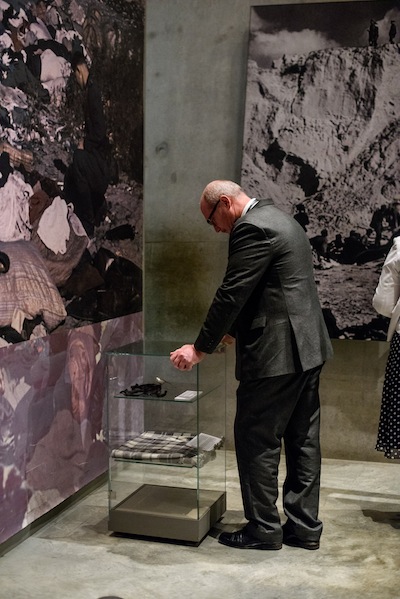
One of the displays in the exhibit Canada Responds to the Holocaust, 1944-1945, at the Vancouver Holocaust Education Centre until March 31. (photo by Cynthia Ramsay)

Canada Responds to the Holocaust, 1944-1945, opened on Oct. 16. The exhibit, said Nina Krieger, executive director of the Vancouver Holocaust Education Centre, at the event, “is the first major project of its kind, examining the encounters between Canadians and survivors of the Holocaust and the evidence of Nazi crimes at the end of the Second World War and its immediate aftermath.”

The VHEC commissioned the original research and writing under the direction of Prof. Richard Menkis and Ronnie Tessler, which includes a companion school program. “Students and other visitors will engage with a number of media elements in the exhibit,” said Krieger, giving the example of a tablet with survivor testimony, various interviews and other audio and video material.

The centre also commissioned a comic book by Colin Upton to accompany the exhibition, called Kicking at the Darkness, which will be given to every student participating in the school program, and is available to others for a suggested donation of $5.

Krieger thanked contributors and funders of the exhibition. She then introduced Menkis, an associate professor in the department of history at the University of British Columbia, and Tessler, a documentary photographer and a project consultant and editor for cultural arts groups, who also happened to be the first executive director of the VHEC, in 1990.

“Canada Responds to the Holocaust is a challenging exhibition,” began Menkis. “And it’s challenging, I think, for two reasons. First of all, because liberation is a complex phenomenon. Superficially, one might think, with liberation, of being free and being happy but, in fact, in the words of one of the Dutch survivors, it was, ‘not an undiluted joy’; to be free but then to be trying to look for family and the like. This exhibition very much tries to convey how complex liberation is.

“It is a complex phenomenon for three reasons,” he said. It is complex because, as the liberators (the soldiers) were in Europe, they were moving through new locations and coming up with new experiences. As well, liberation is the interaction between groups, each with their own assumptions and lived realties. And, finally, liberation is complex because of the disbelief at what had happened, and the difficulty in communicating what had been witnessed.

In addition to the voices of some of the survivors, the exhibit follows a number of different Canadians across Europe, including army chaplains, notably Samuel Cass. It also follows the First Canadian Army.

“Only three of the Western Allies had field armies on D-Day: the Americans, the British and the Canadians,” said Menkis. “The First Canadian Army was comprised of two corps,” he explained, but, also, “within the Canadian Army, as was the case with other armies, there were a variety of groups, such as Polish units as part of the Canadian Army, and there were Canadian units who were in, for example, the British army, which is why they are going to figure in Bergen-Belsen.”

The exhibit follows journalists, especially Matthew Halton, but also other CBC and Radio Canada journalists. “Moreover, we look at and follow the reactions of official war artists, official photographers and film crews and, finally, for the postwar period, we look at international agencies, such as the United Nations relief organization and the American Joint Distribution Committee,” said Menkis.

Using maps, archival photographs, news footage and video clips of interviews, Menkis touched on the highlights of the exhibit. He spoke of survivors coming out of hiding, of Canadians’ arrival at Vught, in the Netherlands, a camp that had been abandoned – the cover of Upton’s comic book is of this encounter – and Canadians’ reactions at Westerbork transit camp, also in the Netherlands. While outwardly appearing more well than other survivors, the 900 prisoners at Westerbork had experienced continual fear of being on one of the weekly deportations to an extermination camp.

A number of Canadian soldiers had been at Bergen-Belsen before they arrived at Westerbork, explained Menkis. “The effect of Bergen-Belsen was searing, and it affected, in some complicated ways, how the soldiers and others would view Westerbork,” he said, before sharing a quote from survivors Walter and Sara Lenz: “Shortly after the Canadians arrived it became clear that something was bothering them. They asked a number of questions that made little sense to us at the time, Why were we so well fed? Why were we not sickly, on the verge of death?

“In fact, as cruel as it may sound now, I had the feeling that our liberators were in a sense let down, for as we soon learned, they had steeled themselves for … another Bergen-Belsen.”

Noting that this was not just a view expressed years later, Menkis presented an excerpt of a letter Cass wrote to his wife on April 24, 1945: “I spent a good part of the day with our people [Canadians] at Camp Westerbork.… Everything looks so good on the surface…. With the papers full of the cannibalism of Belsen, it is almost a shock to find a camp where the survivors are all well and the physical surroundings good. But you can’t see the fear that people lived through every moment of their existence, nor can you see the 110,000 Jews who were herded like cattle on the transports.…”

While some people believed that things could return to the way they were before the war, that was not possible. A number of Jews felt they could not stay in Europe; they saw it as a graveyard, with no future. Many Jews looked to Palestine, but not everyone agreed with that. Menkis gave the example of Vancouver aid worker Lottie Levinson, who saw nationalism as the cause of what had happened and couldn’t understand why others would see Zionism as the resolution of the issue. “So, different approaches to what Jewish life would be,” said Menkis.

In the last part of his presentation, Menkis screened a video clip from an interview with war artist Alex Colville, which included some of the images he had drawn at Bergen-Belsen. Menkis also played an audio clip of an interview with Maj.-Gen. Georges Vanier, who went to Buchenwald shortly after its liberation with a group of U.S. congressmen. In his remarks, Vanier – one of the few Canadians who advocated for the acceptance of refugees before the war broke out – specifically referenced Jews as being victims, whereas most reports did not.

Rather than simplify this complex story, Menkis said that he and Tessler “chose to keep as many voices and perspectives as possible. Some of them may be uncomfortable to hear or see, but we wanted to do justice to the bewildering and poignant encounters of the time.”

When Tessler took to the podium, she explained, “The inspiration for Canada Responds to the Holocaust, 1944-1945, dates back to 2005, the 60th anniversary year of V-E Day, Victory in Europe Day. For that commemoration, Richard and I developed a CD for the Vancouver Holocaust Education Centre that teachers could use in one classroom session. Compact and tightly constructed, the themes were presented in short, crisp slides characteristic of PowerPoint presentations.

“The CD was a multi-media production – which the exhibition has retained. Along with text in point form, we included photographs, excerpts of articles, newsreels, eyewitness testimonies and art by Canada’s official war artists. Since that time, the 70th anniversary of the Second World War has passed and new research has been published, allowing us to expand and enrich the information that was in the PowerPoint.”

Many steps were required to “keep this complex story coherent,” said Tessler.

“The exhibition began with a year of research in archives across Canada, the Netherlands, Israel, the United States and Britain, and with locating the support material,” she said. “We were fortunate in this phase to have a good working relationship with several researchers and archives in the Netherlands. On the home front, we had access to the VHEC collections, and the assistance of a student intern.

“The next step was to arrange this mass of material into an easily readable and chronological narrative. In whittling down the accumulated information, it was essential not to lose sight of the historical overview. By including testimonies and other media, we could add individual, and sometimes opposing, perspectives on the events being portrayed. By adding photographs, the viewer gains a sense of place and time.

“The exhibition format also allowed us to display material objects,” she said. “For example, the Shalom Branch of the Royal Canadian Legion loaned the V-E Day edition of the Maple Leaf, a newspaper printed for the Canadian Forces, with the word ‘Kaput’ covering the front page. Dr. E.J. Sheppard of Victoria, one of the first soldiers through the gates of Westerbork transit camp in the Netherlands, loaned his battle uniform, pocket diary and a topographical map he carried in his tank that day.

“One of the most symbolic and touching objects in the exhibition is the yellow Jood star a newly liberated Jewish prisoner insisted on giving Sheppard in gratitude.

Another moment that gives pause is witnessing the large number of letters reproduced on a pillar in the gallery. Written by individuals and organizations seeking friends and relatives, they are but a smattering of the letters existing in just one archive in Montreal.”

The exhibit also includes “an antisemitic pamphlet printed in the Netherlands, and a 1943 poster ordering those with Jewish blood where, and when, to register with the authorities in The Hague … one of the most haunting objects in the exhibition is a facsimile notebook containing the weekly lists of deportees from Westerbork in the Netherlands to extermination camps in Poland: 100,657 people between July 1942 and September 1944 were, in most cases, sent to their deaths.”

Tessler thanked the many people who helped bring the exhibition to fruition, including Upton, who created the 24-page Kicking at the Darkness with the input of students in Menkis’ UBC course on Jewish identities in graphic narratives, and Canadian war historian Mark Celinscak, on whose research the section on the liberation of Bergen-Belsen concentration camp was based. She also thanked all the VHEC staff and Public, the design studio that designed the exhibition.

Canada Responds to the Holocaust, 1944-45, is at the VHEC until March 31.

Format ImagePosted on November 4, 2016November 4, 2016Author Cynthia RamsayCategories LocalTags Bergen-Belsen, Canadian Army, Holocaust, Second World War, VHEC, Westerbork
Becoming who we are

Becoming who we are

One of the best parts of Moos, which screens Nov. 10 as part of the Vancouver Jewish Film Festival, is the friendship between Moos (Jip Smit) and Roel (Jim Deddes). (photo by Greetje Mulder)

Moos is a delightful and unpretentious film. The title character is a truly nice person, so busy taking care of others that, not only do her dreams fade into the background, but she does. When a close family friend toasts everyone at the Chanukah dinner table but forgets Moos, she drops her news – she’s going to audition for theatre school.

In this light and uplifting Dutch contribution to the Vancouver Jewish Film Festival, which runs to Nov. 13, no one believes that Moos has the talent or confidence to pass the auditions and, well, she doesn’t, but her attempt starts her on a path of self-discovery and self-assertion. On their own personal journeys are Moos’ father, who must also become more independent and move through the loss of his wife, and Sam, a childhood friend of Moos who returns from 15 years in Israel for a visit and discovers that maybe he belongs in Amsterdam.

“I wanted to make a film about ordinary people in a world where beauty and appearance are everything,” writes director Job Gosschalk. “Not a glamorous romantic comedy but a film about two people who were not first in line when they were handing out good looks. There are enough stories about heroes. This would be a small story about daily troubles. I wanted to give the audience characters they could easily identify with.”

Sam, Moos and the other characters do seem like people viewers might actually know. And, while as predictable as most rom-coms, Moos has its own sense of humor and style. In addition to telling a good story, the film reinforces the importance of trying something (more than once) and of supporting (and being supported by) your family and friends – one of the best parts of the film is the friendship between Moos and Roel, who does get into theatre school. The value of tradition and ritual also play a large part in the film, which starts on Chanukah and features a bris and a bar mitzvah – for different boys. Moos is a really enjoyable hour and a half.

In the documentary realm, Mr. Gaga is a joy to watch if you’re a fan of contemporary dance. Full of excerpts from his masterful choreographic creations, the film also features many video clips of Ohad Naharin – as a boy dancing, as a young man trying out moves in his apartment, as a student, as a performer and as a teacher.

Naharin has been artistic director of Israel’s Batsheva Dance Company since 1990 and is the founder of his own language of movement, Gaga. His brilliance is evident from his work and, while Mr. Gaga, oddly enough, doesn’t tell viewers much about Gaga, it does offer a meaningful introduction to Naharin, his career path, relationships, method of work, love of dance.

“Dance started in my life as long as I remember myself,” he says. But, when asked by a reporter why he dances, instead of simply saying, there is “no one clear answer,” as he does in the documentary, he makes up a fantastical story about a tragedy involving a fictional twin brother and a grandmother dying in a car accident. It would be an understatement to say that Naharin has an active imagination and the courage to use it.

Naharin only started formal dance training at 22, and he credits his late start as a reason for his success: “… I was a lot more connected to the animal that I am.” A dance teacher notes, “what he did was different.” It certainly was – and is. Mr. Gaga shows just how creative and exacting a person Naharin is, some of the challenges he has faced, the losses he has mourned, the temper he has tried to quell, and his efforts to become a better communicator and teacher. As we all are, Naharin is a work in progress.

Another documentary in the festival is a local community project: A Life Sung Yiddishly about singer Claire Klein Osipov, made by Haya Newman. For viewers unfamiliar with Osipov and her accomplished lifetime career performing Yiddish folksongs – for the most part with pianist and composer/arranger Wendy Bross Stuart – the film touches on some highlights and serves as an important video record.

For the full festival lineup, visit vjff.org.

Format ImagePosted on November 4, 2016November 3, 2016Author Cynthia RamsayCategories TV & FilmTags dance, film festival, Gaga, romantic comedies
Temple Sholom’s roots

Temple Sholom’s roots

Left to right: Michael Schwartz of the Jewish Museum and Archives of British Columbia, Rabbi Philip Bregman, Rabbi Dan Moskovitz, Mike Harcourt and Chris Gorczynski. (photo by Cynthia Ramsay)

Lisa Wilson, special projects coordinator at Vancouver Heritage Foundation, welcomed the approximately 60 people who gathered at Trimble Park on the afternoon of Oct. 23 for the presentation of a plaque commemorating Temple Sholom’s first building, which was firebombed in January 1985.

A joint effort between VHF, Temple Sholom and the Jewish Museum and Archives of British Columbia, the plaque was the 86th presentation of a planned 125 in VHF’s Places That Matter project, which started in 2011, said Wilson. “Our goal is to raise awareness about the people, places and events that tell Vancouver’s history,” she said, “and we invited the public to nominate and vote online, and an independent site-selection committee selected 125 sites to receive a plaque.”

In anticipation of a website for the project, Wilson invited people to submit their memories of the original Temple Sholom building.

“I moved here in 1984 and I lived just down the street,” said Vancouver Deputy Mayor Heather Deal. “I had been here for less than a year when the fire happened, and I was shocked…. I moved here from Cleveland, Ohio, a city deeply, deeply divided along racial lines … and I was shaken to my core when this happened just down the block from me.”

Deal said Vancouver is a “great city in striving to overcome” intolerance. “I think we’ve come a long way and have a long way to go, and this is a great reminder of not forgetting that it is much closer to the surface than we think it is sometimes.”

She noted the importance of the Jewish community to the city of Vancouver, and acknowledged specifically the growth of the Temple Sholom community. “I welcome you all here to acknowledge something that’s happened and, out of that, the good that has come and the better city that we are today because we learn from our mistakes and we learn from other people’s lack of tolerance, so that we continue to move forward as a peaceful and tolerant city.”

Temple Sholom spiritual leader Rabbi Dan Moskovitz spoke of the Holocaust-related memorials he and his wife Sharon witnessed on a mission to Central and Eastern Europe this summer, stumbling blocks that indicate where a Jewish family lived or a Jewish business stood. This local memorial plaque is different, however. “This notes where we were, but it also acknowledges that we are still here,” said Moskovitz. “And though not in that physical space on West 10th, we are very much a part of the city in our ‘new’ home on Oak and 54th…. This is not a memorial plaque, but a testament rather to the roots – the seeds that were planted, the roots that grew – and to what has blossomed into a wonderful Reform Jewish community in Vancouver and, I think, an incredible member and partner in the larger faith community of our city.”

Cantor Arthur Guttman then led the group in Psalm 100, after which Philip Bregman, rabbi emeritus of Temple Sholom, briefly shared some of the congregation’s history, including the story of the firebombing and his role in helping save the synagogue’s Torahs, as the building was burning. There had been a previous arson attempt and vandalism to his car, which led the congregation to start putting iron bars on all the windows, as the police were not motivated to act. The job was almost complete when the arsonist struck again, throwing a Molotov cocktail into the one window without a grate.

Bregman spoke of his disbelief that such antisemitism could exist in Canada. He spoke of his phone call to then-mayor Mike Harcourt, who was at the plaque ceremony, and Harcourt and his wife Becky’s support of the congregation in its work to rebuild. The Harcourts attended services, said Bregman. “Mike and Becky showing up made a statement that was so very important: it was not the Jewish community that was attacked, it was Vancouver, it was Canada, it was our society that had been attacked.”

After the Temple Sholom bombing, said Bregman, there was also an attempt to torch the Chevra Kadisha, which was on Broadway and Alma at the time. “These were targeted events that were taking place,” he said. “The police were tremendously responsive then and thereafter.”

Bregman expressed his pleasure at the work that had been done to mark the place where Temple Sholom once stood, and how the congregation has grown since.

The plaque – which will be placed at 4426 West 10th Ave. – was presented by VHF board member Chris Gorczynski, who read it aloud. The event ended with Guttman leading those gathered in Oseh Shalom.

Format ImagePosted on November 4, 2016November 3, 2016Author Cynthia RamsayCategories LocalTags antisemitism, memorial, synagogues, Temple Sholom, tolerance
Putting heart into city

Putting heart into city

Heart of the City festival participants. (photo by David Cooper)

Community is at the heart of what Ruth Howard, Maggie Winston and Sharon Kravitz do, so it is no wonder they are participating in the Heart of the City Festival, which features more than 100 events at more than 40 locations throughout the Downtown Eastside Oct. 26-Nov. 6.

One of the projects is Realms of Refuge, which Howard (of Toronto’s Jumblies Theatre) describes as “an episode of Jumblies’ Four Lands national tour, which itself grew out of our 2015 west-to-east-coast tour, Train of Thought, for which Vancouver Moving Theatre was a key partner.” VMT is the main presenter of Heart of the City, and Howard has known VMT’s co-founder and artistic director Savannah Walling since 2003.

Realms of Refuge’s “four lands” concern senses, memory, history and dreams, explained Howard. “Over the course of the [two-week] residency, artists and community members create and bring to life these lands, through drawing, miniature models, words, music, movement and conversation. There will be drop-in art-making sessions at the Interurban Gallery (the project’s home-base), as well as some workshops in other locations with community groups and partners…. An open-ended number of people of all ages, backgrounds and abilities can take part in the activities and come to enjoy the evolving artwork.”

photo - Ruth Howard
Ruth Howard (photo by Liam Coo)

The intent of the project, said Howard, is “to spark thought and conversation and promote curiosity and understanding about the lives and experiences of people living on the same land.

“The ‘evolving gallery’ form, which I first invented and started to play with at Jumblies in 2009, involves setting up the framework for artistic creation in a gallery, studio or other suitable public venue, launching the starting point and facilitating its growth over a period of time. Generally, it starts with visual arts activities and then moves on to include words and simple performance. The idea is, rather than opening a gallery exhibition to be viewed in its finished state … we set the context for something that can’t happen unless diverse people come and take part; the nature and specifics are determined by those participating people, and we celebrate its closing state.”

Howard founded Jumblies in 2001. “I was always seeking ways to combine esthetic and social values and impact, and to blur distinctions between process and product; audience and participant; story and history; ritual and theatre; art and life,” she said.

“In 1990, I encountered the British ‘community play’ form, brought to Canada by writer Dale Hamilton, in a production in the Guelph area called The Spirit of Shivaree. This was for me a life-changing experience: I found a form of art-making that combined epic-scale theatre with wholehearted social inclusion and an astonishing capacity for social change.”

Howard wants to make art in ways “that don’t fit into standard disciplinary delineations,” to collaborate with others who have skills and perspectives she doesn’t, to learn “from people, places and stories that have tended to be left out of our cultural mainstream” and to “bring people together across real and perceived differences and remove restrictive delineations,” such as “youth” or “marginalized people.” She wants to “create an exciting, accepting and nourishing home and creative/social worlds in which my children – and also my friends, family, neighbors, colleagues and co-inhabitors of the land – can grow up and live,” as well as “have quirky ideas large and small and have the freedom to explore, develop and realize them.” She would like for art to be “at the heart of life.”

When asked if Judaism or Jewish culture has influenced her, Howard said, “My mother was a German Jewish refugee, whose immediate family escaped to England in 1938, just after Kristallnacht. Her father was a businessman and excellent amateur violinist, and her mother was a painter, well established in the Hamburg avant-garde arts scene before the war. I was brought up with a strong non-religious Jewish identity. As an adult, I joined a Toronto secular leftist Jewish organization (the United Jewish People’s Order and their summer community, Camp Naivelt), in which community I brought up my three children.

“Altogether my Jewish sensibility is hugely relevant to my life and work,” she said. “I was brought up with art as an essential part of life – both doing it … and witnessing it…. I was also brought up absorbing that it is important never to leave anyone out; not to support, tolerate or ignore separation of people into exclusive groups; always to have space at the table for unexpected guests; to welcome everyone; that ‘never again’ means ‘never for anyone.’”

Through her association with UJPO, Howard “learned to interpret and celebrate Jewish holidays for their social and cultural relevance to struggles of all humanity for survival, freedom and dignity.” She has created an oral history/theatre project with Camp Naivelt and, more recently, adapted a series of Passover seders to include the telling of other vital stories, such as Toronto’s indigenous history.

“When I first heard the word genocide used in relation to the treatment by European settlers of Canada’s indigenous people, I was stopped in my tracks; it was something that I couldn’t put aside…. Since then, I have made it a priority to learn and form relationships so that the work of Jumblies could support First Nations recovery, justice, equity, and new awareness for all of us who live here…. My ongoing artistic preoccupations include inherited memories of and present relationships with eradicated places, and the interplay and relative merits of remembering and forgetting. These themes are woven into the Four Lands/Realms of Refuge project. It isn’t particularly a Jewish project, but it springs from my particular Jewish mind … and the Vancouver iteration, with its focus on places of refuge, happens aptly to take place during Sukkot.”

Jewish culture has also influenced Winston, who grew up in a secular family.

“My upbringing in a family that is very engaged in politics, culture and the arts has definitely influenced who I am and how I approach the world,” said Winston. “I do believe that being culturally Jewish has contributed to my sense of being an advocate for others, of being confident in my ability to ask questions and explore ideas, and in feeling as though I am part of a greater community. Growing up in the United States in a suburb of Baltimore that was pretty white and Christian, I did feel different from my peers even though Baltimore has a huge Jewish population. Enjoying that feeling of differentness has led me to being a creative professional.

“Jewish folklore is a great source of inspiration and I would love to learn more,” she added. “My solo puppet and clown show Just Enough is based on the Yiddish folktale Joseph’s Overcoat, in which something is made from nothing and then passed down through family. In my version, it features a grandmother (a puppet) and her granddaughter (me, as a clown). The grandmother makes a quilt out of her old clothes for her baby granddaughter and, as she grows up, the grandmother cuts and sews it into other things for her until all that is left is a button.

photo - Maggie Winston
Maggie Winston (photo by Juliana Bedoya)

“As a theatre artist,” she said, “I am drawn to ritual and tradition in many forms. I have always found support for my work in the Jewish community, not only in Vancouver (through the JCC and the Chutzpah! Festival), but in other places around the world. I have started to make a few connections in the Jewish community in Montreal and am excited to see what evolves there.”

Winston only recently moved to Montreal, where her mother and grandparents grew up there. “Every summer of my life has been spent at our family cottage in Morin Heights, Que., just one hour from Montreal,” said Winston.

When she graduated in 2005 with a BA in puppetry performance from Sarah Lawrence College in New York, she wanted to move to Canada and, in the end, chose Vancouver “because I knew I could get to know people in the arts community easily through my relatives. Actually, it was through my aunt that I was originally connected to Terry [Hunter] and Savannah [Walling] of VMT back in 2008 when I got to be involved in We’re All in This Together, a shadow project in the DTES.”

However, “the pang of Montreal called me more and more,” so, this past January, she made the move. “The reason why I’m back in Vancouver right now is because of some other projects I had already planned last year…. Right now, in addition to working for Heart of the City, I’m collaborating on a music and puppetry project with Laura Barron (Instruments of Change), facilitating students in a Vancouver elementary school and then repeating the same project with students at a school in India. We did a similar program two years ago, and had already decided it would happen again this year.”

With Heart of the City, Winston is both an artist liaison, as well as a performer. She’ll be in It’s a Joke! – which has the theme “‘Stand-up for mental health” – with the Assembly, a group she’s been with about four years. “We are a playful and lofty collective of process-oriented, performance-driven, self-identifying women clowns, producing shows two to three times a year,” she said.

“Our performances at Gallery Gachet [on Oct. 28] will feature a few of the regular members of the Assembly doing short solo or duo acts from some of our previous shows,” she said. “In terms of the theme of the event … I can’t speak for stand-up comedy, as I’ve never done that before, but I can say that my mental health has been significantly affected for the better by my experience with clown. I know many other people who are similarly influenced. I hope the audience who attends this evening will get a taste of the deep psychological and spiritual power this art form has.”

Winston was in the festival last year with her solo show Just Enough and she has participated for several years – and will again this year – with Healthy Aging for the Arts, a program at Strathcona Community Centre. The group started in 2005, and it “consists of Cantonese-speaking women between the ages of 70 and 95. Every year, we explore a different style of puppetry with a theme that resonates with the members of the group. Sharon Bayly and myself have been the lead facilitators for the last five years.”

Winston noted that most of the seniors have been together since the beginning. “We all have aged together,” she said, “and I’ve been able to see the direct positive effect that art-making has on the well-being of these women.”

Despite the obvious importance of community in her work, Winston said, “I didn’t know that I was a community-engaged artist until other people started to identify me as such and until I started understanding the language of and paradigms of the art form.”

She said, “I always just did the kind of work that interested me and I got involved in whatever projects I could. I came to Vancouver with the intention of being a professional puppeteer and quickly discovered that, if I wanted to make puppet shows, I had to educate everyone around me, collaborate with artists of other disciplines and be as inclusive as possible…. Community engagement to me is simply sharing what I love to do with others. It’s about creating something together from scratch – from the ideas of those involved in the project…. I was never interested in being a traditional theatre artist, going to auditions, headshots, taking directions without having a say in them; I just wanted to tell stories and perform them creatively. Community engagement became an avenue for doing that.”

Community, in particular the DTES, is a focal point for Kravitz.

photo - Sharon Kravitz
Sharon Kravitz (photo by Ken Tabata)

“I felt a connection to the Downtown Eastside and particularly the Carnegie Centre almost immediately upon moving to Vancouver. I volunteered at Carnegie and then, the following year, I proposed a community public art project on the corner of Main and Hastings. My first night in the Carnegie in the winter of 1993 and my first summer on the corner are moments I will never forget. Coming there helped me become more of the person I wanted to be and so it will always have a very special place in my heart.”

Kravitz will come to Heart of the City with We Can’t Afford Poverty, “a participatory project that highlights the widening gap between rich and poor through community-driven art.”

“We will be making several appearances throughout the festival,” she said. “We’ll be co-hosting a print-making workshop with WePress, we’ll be taking part in the documentary night, we’re having an exhibit of kids’ art in the third floor gallery and we’ll be popping up throughout the festival with our mobile video soapbox.”

The arts play countless roles in individual and community health, she said. “The act of making art together and the bonding that happens through that process, the ability individually to respond to external and internal issues creatively helps us feel less powerless. It changes how we think, and it can change how others think.”

For Kravitz, in Judaism, “like all faiths, there is the common belief in how we treat others, and the knowledge that there is something in the world greater than all of us, who and whatever that is to someone. I grew up knowing that we needed to help each other, and it’s why were all here – to make things better for each other.”

Most Heart of the City events are free or by donation: visit heartofthecityfestival.com.

Format ImagePosted on October 14, 2016October 13, 2016Author Cynthia RamsayCategories Performing ArtsTags community, Downtwon Eastside, DTES

Posts pagination

Previous page Page 1 … Page 65 Page 66 Page 67 … Page 84 Next page
Proudly powered by WordPress