For many of us, it is hard to get excited about a subject until we can experience it, or meet someone who has. Historical fiction can bridge the gap between simply memorizing dates and names to empathizing with those affected and taking what we learn into our lives.
Two recent Second Story Press publications do an excellent job of teaching and engaging younger readers. They also provide a starting point for these readers and their parents, family, friends and educators to discuss difficult and sensitive topics that not only relate to the past, but to current situations, as well.
The Ship to Nowhere: On Board the Exodus by Rona Arato (for ages 9 to 13) tells the story of the ship Exodus 1947 through the eyes of 11-year-old Rachel Landesman. I Am Not a Number by Jenny Kay Dupuis and Kathy Kacer and illustrated by Gillian Newland (for ages 7 to 11) tells the story of 8-year-old Irene Couchie, who is forcibly taken from her First Nations family and home to live in a residential school in 1928. Both Rachel and Irene are real people.
Sadly, their stories are representative of what also happened to countless others. And, even more sadly, what continues to happen. The Ship to Nowhere could lead to a conversation about the Syrian refugee crisis and antisemitism in Canada and elsewhere. I Am Not a Number brings to mind some parallels between the Holocaust and the attempted genocide of Canada’s First Nations, as well as the inequalities that still exist in Canada, the treaties that have not been ratified, the reconciliation over the residential schools that is long overdue and has barely begun.
Given the ages of their intended readers, both of these books tread lightly – that said, they deliver powerful messages and succeed in their missions to educate.
The illustrations in I Am Not a Number, a hardcover picture book, are as revealing as the text. Irene and her siblings, as they huddle behind their father when the government agent comes to take her and two of her brothers away; the sadness on Irene’s face as a nun cuts her hair, the anger as she sits in church; and the unbridled joy when she and her brothers are back at home after a tortuous year – these are just some of the emotions Newland movingly captures.
And Kay Dupuis tells her grandmother’s story with such love. This was a family that was strong and, in the end, luckier than many, in that Irene and her brothers didn’t return to the residential school – when they came home for the summer, their family kept them hidden from the government agent.
I Am Not a Number includes a brief overview of the residential school system, and mention of the Truth and Reconciliation Commission. Kay Dupuis also tells readers a bit more about her grandmother in an afterword, where there are a few photos of the Couchie family.
The Ship to Nowhere has photos throughout, and Arato uses the author’s note at the end to let readers briefly know what happened to Rachel, Rachel’s mom and sisters (her dad was killed in the Holocaust), the ship’s captain, Yitzhak Aronowicz (known as Captain Ike) and one of the journalists who doggedly reported to the world the Exodus’s journey, Ruth Gruber.
Since it is for older young readers, there are parts of The Ship to Nowhere that are quite graphic – the incredible brutality of the British is well-depicted, as are Britain’s efforts to prevent the ship’s 4,500-plus Holocaust survivors from knowing what the media were reporting on their treatment. Even with the passage of time, the anger boils in reading about how these survivors were tear-gassed and beaten (in some cases to death) on the Exodus, forced to live as captives on three other ships after they were turned out of Palestine, and again beaten and manhandled if they refused to leave their ships in Germany, where the British took them eventually, to live in refugee camps.
There are many touching moments between the crew and their passengers and between fellow refugees. It is important to be reminded that France offered to take in all of the refugees; an offer that was declined. And it would be nice to think that, at the least, the Exodus’s plight positively influenced some United Nations members to vote in favour of the creation of Israel.
Queenie Choo, chief executive officer of SUCCESS (photo from SUCCESS), and Jacob Switzer, member of CIJA’s Local Partners Council (photo from CIJA Pacific Region), spoke with the Independent about the upcoming townhall April 2.
Immigration, security, inclusivity and affordability are among the subjects to be addressed at the April 2 Provincial Pre-election Townhall.
The townhall is being presented by SUCCESS and the Centre for Israel and Jewish Affairs (CIJA). SUCCESS chief executive officer Queenie Choo told the Independent, “The topics were determined based on … dialogue between the two organizations.”
“We wanted to find topics that were of relevance and concern for both sets of constituents, as well as current,” said Jacob Switzer, a lay leader involved in planning the event, as a member of CIJA’s Local Partners Council. Culturally sensitive care for seniors, and accessibility and transportation will also be covered.
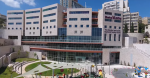
Scheduled to participate in the discussion as of press time were Michael Lee, B.C. Liberals candidate, Vancouver-Langara; George Chow, B.C. NDP candidate, Vancouver-Fraserview; and Michael Markwick, Green Party candidate, West Vancouver-Capilano. The townhall will take place at Choi Hall, SUCCESS Social Service Centre, 28 West Pender St.
“The event will allow our community to hear from its potential political leaders and learn about their views, as well as engage politically,” said Switzer. “It also lets us tailor questions to issues that are of specific importance to our respective communities, which often overlap and which may not be as central a concern in other forums.”
About SUCCESS, he added, “we have very much enjoyed cooperating with them, both on this event and in the past.”
“It has always been our mandate to support integration of newcomers to our Canadian communities, as well as helping them to understand the rights and responsibilities of being a Canadian citizen, particularly in the civic responsibility,” said Choo. “As such, SUCCESS and CIJA have taken a leadership role to host this pre-election townhall to ensure we have an opportunity for the community to understand the positions each political party holds on the key areas of our interest. This will help voters in making an informed decision on May 9.”
“One of the key discussion points for the event will be community security and the apparent rise in bigotry and hate crimes, which is a highly current issue,” said Switzer. “We expect that both of our communities will want to hear about what policies are being considered to improve these issues and we anticipate questions from the floor around security (particularly in light of the recent bomb threats to the Vancouver Jewish Community Centre).”
With respect to the seeming rise in expressions of bigotry and hatred, Choo said, “Through the townhall, I am sure this issue will surface. It is important for the community to hear what are the directions or policies in addressing discrimination and racism from each political party. We would also like to hear how our future government will uphold our shared values of inclusion and diversity.”
The format of the event will be that of “a non-debate-style townhall,” said Switzer. “Each participant will be given a brief period for initial remarks (order is set by draw) and then will have the opportunity to answer the questions that we are already receiving via email or phone call. All will be given time to answer the same question so they can present their party’s perspectives. They will have another period to share any final comments with the audience.
“We have found that this format works well with the candidates and allows for a respectful and organized interaction among themselves and the public.”
The pre-submitted questions will be facilitated by a moderator at the townhall, noted Choo.
“This event is open to the public and free of charge,” she added. And the hope, she said, is “to engage as many people as possible, as it is important to understand what are the directions the next government will hold, especially on our important topics.”
“We are co-hosting this event with our friends at SUCCESS because we believe that joining forces with partners in other communities can only strengthen us,” said Switzer. “We are looking forward to a well-attended and meaningful event.”
The townhall will run 2:30-4:30 p.m. on April 2. To submit questions on the aforementioned topics for any party candidate, email [email protected] with the subject line “Provincial Pre-election Townhall Question.”
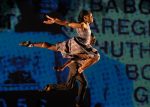
Kyle Abraham/Abraham.In.Motion’s The Gettin’ is among the repertoire the company will be bringing to Vancouver March 11-13 for the Chutzpah! Festival. (photo by Jerry and Lois Photography)
Kyle Abraham/Abraham.In.Motion is bringing to Western Canada for the first time a sample of its acclaimed repertoire, including The Gettin’, Quiet Dance and excerpts from the company’s newest work, Dearest Home. They will perform at the Chutzpah! Festival March 11-13.
“Dearest Home is a new evening-length work that is broken up into solos and duets dealing with love, longing and loss,” explained Kyle Abraham in an interview with the Independent. “Some of the themes, and movement itself, were derived from the workshops and conversations that took place during residencies. The excerpts that are shown in this program were made during a residency at the Hopkins Centre for the Arts, Dartmouth College.”
Politics, identity, justice and freedom are some of the other themes Abraham explores in his work.
“I try to create work that reflects society as I see it,” he said. “Sometimes people see hope in that and sometimes people see the disparity that is in closer correlation to my experience growing up in this country. But, there is also purposefully the possibility of seeing both hope and disparity in my work; I think that speaks to the conflict and tensions that have been in this country for a long period of time. There are stories that are from an earlier time, but the work winds up correlating with current events basically because of the cyclical nature of history repeating itself over and over again. With that work so often comes a direct smack in the face that there is still so much more progress to be made. I like to make work that speaks to all those things.”
Religion also plays a part in some of Abraham’s creations.
“Since my parents passed, and since my mother’s more recent passing, I have had a really conflicting connection with religion and spirituality in a larger sense,” he said. “I was very curious as a child when it came to religion. I think there’s so much history in religion, in so many different ways. My parents were of different Christian faiths: my father was raised in an Episcopalian church, my mother was raised in a Baptist church, and I purposely chose to go to Hebrew school. I think that shows that I was really interested in learning about different faiths and trying to figure out where I fit in.
“It’s a tricky thing. Just because your parents believe something doesn’t mean that’s what you will believe. Just because your friends believe something doesn’t mean that’s ultimately what you’ll wind up believing yourself. But, I’ve always been curious about religion and faith in some way, shape or form, and have spent time in different religious spaces through points in my life. The last religious space I was in was a (Jewish) temple; that was in October for a friend of mine’s mother’s passing. And then, before that, it was my mother’s passing, in a Baptist church.”
While his parents weren’t artists per se, Abraham said the arts were encouraged at home, and that his parents “were really creative people because they worked in education and they had to come up with inventive ways to really push education forward in the public school system.”
Born and raised in Pittsburgh, Abraham’s education in dance started relatively late in life.
“I started studying dance the summer I turned 17, when I took a boys jazz class,” he said. “The catalyst for this was seeing the Joffrey Ballet performing in Pittsburgh to Prince’s music, which was the first dance performance I ever saw. I also had some good friends that were in musical theatre that I went to raves with, and they suggested that I audition for our high school musical.”
Though he has made a career of dance, before Abraham started on that route, he studied music. And, when he took a break from dancing for a few years, it was to music he returned.
“For so much of my life, music has been my first passion,” he said. “When I was a senior in college, I thought about moving to England to study studio composition, to make electronic music, but, during that same year, I started taking company classes with Bill T. Jones. I was later offered an apprenticeship, which led to joining the company very briefly after college.
“That experience was very telling for me, because it helped me realize that even though I really loved that company and wanted to be around them, I preferred being a part of the creative space around the dancers rather than being a dancer myself within the company. I had a very hard time with making mistakes with an artist’s work that I respected so much. I felt like I was ruining the possibilities for people to be inspired by messing up, which is such a heavy burden to bear that I needed to find a healthier way into dance.
“When I quit dancing,” he said, “I started working in record stores; I would meet up with friends and I would maybe sing over some records for friends while playing around in the studio making songs. I also worked at the Andy Warhol Museum as an artist educator. During that time, I thought about different facets of my artistic interests growing up; for example, bringing in music at times, bringing in movement and finding ways we could connect those art forms to Warhol’s work. That’s primarily what I was doing with that time off.
“My way back into dance started when I was dating a visual artist. At the time, we both wanted to move to England so we thought that the best way for us to do that would be for both of us to get into school in England. I also applied to NYU [New York University], just as a backup plan in case I didn’t go to Europe – maybe I would go to NYU and see what New York was like again. We both ended up going to school in London, where I attended the [Trinity] Laban School. I went to Laban for maybe a couple months, but I was frustrated by the lack of opportunities I had to really dance: to make dance, take classes, etc. So, I left school and spent the rest of my time there focusing on trying new things (i.e. singing). I eventually moved to New York to go to NYU to figure out what my relationship to dance could be.”
Abraham received his bachelor in fine arts from the State University of New York at Purchase (2000) and his master’s from NYU (2006). He is a multiple award-winner, for both his choreography and performance. He has performed with many notable companies, and his works have been performed not only by his company, Abraham.In.Motion, which he founded in 2006, but others, as well, throughout the United States and abroad.
About one of the pieces set to have its West Coast première next weekend, Rachael Carnes of eugeneweekly.com wrote, “… The Quiet Dance, a quintet set to Leonard Bernstein’s ‘Some Other Time,’ this work built organically around simple gestures, from the swivel of knees and elbows side to side, to the slow descent of a head, alone, or against another. Abraham played with connection here, relating dancers to self and other, finding moments of counterpoint, without being heavy-handed or glossy. His organic style delved into lovely canonical structures without feeling artificial or contrived, as he boldly carved the stage space into two separate fields of vision.”
About The Gettin’, she wrote, “set to Robert Glasper’s interpretation of Max Roach’s Freedom Now Suite, Abraham plows even more deeply into the roots of racism, exploring the similarities between apartheid South Africa and the U.S.
“Jazzy and lyrical, yet pointed and gripping, this piece sings from a deep, guttural place.”
Abraham.In.Motion performs March 11 and 13, 8 p.m., and March 12, 7 p.m., at Rothstein Theatre. For tickets ($29.47-$36.46) and the full Chutzpah! schedule, call 604-257-5145 or visit chutzpahfestival.com.
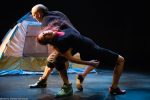
Allen and Karen Kaeja perform their latest lifeDUETS series March 9-11, as part of the Vancouver International Dance Festival. (photo by Zhenya Cerneacov)
As a dancer, how do you tell the story of a couple’s life together that has deep roots but is continually evolving? The Kaejas decided to commission two different pieces from two different choreographers. The result is the latest in their lifeDUETS series, which comprises a structured piece that is more or less consistent in every performance, and another that constantly changes.
Allen and Karen Kaeja established Kaeja d’Dance in 1991. The Toronto-based couple commissioned three duets about 20 years ago, and the newest two were commissioned in 2015 for their 25th anniversary. It is this anniversary pair – one by Tedd Robinson, the other by Benjamin Kamino – that the Kaejas will share at Roundhouse Performance Centre March 9-11, as part of the Vancouver International Dance Festival, which runs March 1-25 at various local venues.
“We’ve always performed together, but improvised, and I suggested this idea of commissioning choreographers,” said Karen in an interview with the Independent over speakerphone.
“We commissioned Claudia Moore … Peter Bingham from out west, and then we did our own lifeDUET, and commissioned Marie-Josée Chartier. Those years of commissioning ended in 2001,” said Allen.
Variations of that program toured throughout Canada, the United States and many other parts of the world. “And then,” said Karen, “for our 25th anniversary, that’s where I thought we should really reinstitute the lifeDUETS and commission more people. At that time, Allen was performing less, so it took a little bit of nudging and, together, we decided on bringing someone into the fold who was highly experienced and created pieces on so many Canadians, which is Tedd, and then someone who was up-and-coming who was in the realm of experimentation.”
“And that was Benjamin Kamino,” said Allen. “And so, two opposites of the spectrum.”
The two pieces were collaborative works. “We created together with both of them, so both choreographers say in their program notes, created with and performed by us,” explained Allen. “They were both created for our 25th anniversary, as Karen was saying, and Tedd’s is called 25 to 1. He talked to a very dear friend of his, Peter Boneham, about, what am I going to do with these two guys?” The semi-joking response, said Allen, was to put the couple in a tent having sex (though less delicately phrased).
“But then, of course, the whole thing began to evolve, and became this really gorgeous duet. And what was beautiful about that was that neither of them knew that Karen and I, in our dating years, would do wilderness camping up in Algonquin, in Temagami; we’d go out for 10 days to two weeks at a time. We loved wilderness camping, so it really resonated at home with us, but they didn’t have any idea.”
As for the idea that sparked Kamino’s piece, Karen said, “I think his vision came from the concept of ‘becoming’ each other, and that was the initial seed. Because we have this history of all these years, instead of having us do what people know us to do, which is a lot of partnering and so on, he would create a work where we almost never touched each other, where we would become each other to different degrees to a scored creation, because we knew each other so well.”
Karen said that every work created for her takes her off guard – “because it takes me on a tangent that I would not go myself” – and these two were no different. “Ben’s is really quite raw and exposed,” she said, “and that was a very beautiful inter-relational process, of becoming each other – and having him witness, as a choreographer. That process, for me, was like a mindful trio, very different than me and Allen being in the studio creating a work.”
Robinson and Kamino were creating works on a significant and special relationship, she said, and she and Allen “in a way, had to open our door and let them in.”
“Karen and I met in 1981 and started dueting 36 years ago, but started dating 32 years ago … so, our physical connection has a longevity that most people don’t know together,” said Allen, referring to its dance aspect. “As Karen was saying, a lot of our dueting is improvised, so we’re continuously surprising each other, we’re continuously living in this state of unpredictability, and yet a depth of knowledge about [each other].”
“Or catching each other’s predictabilities and challenging those,” interjected Karen.
“That, as well,” admitted Allen. “That being said, Tedd’s piece is tightly, tightly, tightly choreographed, to almost every beat in the music. There is very little room for variation. Whereas, in Ben’s piece, there’s only one moment that’s set and even that is an improvisation, so it really captures our life and our existence together.”
After a brief discussion about how many moments are indeed set – which wasn’t definitely resolved – Allen said, “The emotionality of the work, especially with becoming each other, with Ben’s piece, it’s a very different type of piece because we are continuously asking ourselves questions. For example, I was there when Karen’s father passed away, and so I would ask a question, what would my last dance be for my father’s final minutes, things like that. It’s got an emotional resonance that nobody would know but her. For me, it’s not only a vulnerable place and a personal place, but it puts me into her being, her essence. I’ll never know how Karen is truly feeling … but it allows me a window into her soul, to be my perception of where she is at.”
The Kamino piece is different every night, said Karen, “because we work with imagery that comes to us; it’s not set imagery.”
While not religious, Allen described he and Karen as “Jewish to the core.”
“Some of our works have touched upon that aspect of our lives,” he said. “But, as creative artists, I would say the connection to being Jewish, in a sense, is that connection of always questioning, of not being satisfied with an answer.”
“But I would say that that is universal,” said Karen. “I don’t think that’s particularly Jewish, but that’s what’s led us, our heritage.”
Allen’s father was a survivor, and Allen has done series of works on his father’s life during the Holocaust, including two trilogies of films, he said, some of which are housed at Yad Vashem, in its permanent collection, as well as in the permanent collections of New York’s Jewish Museum, and Museum of Modern Art.
Karen said her parents never approved of her becoming a dancer, and certainly not her marrying one. “Acceptance came later,” she said, “after the commitment to our career went forward and they saw what fruits were coming. It’s a long road, establishing oneself as a dance artist…. But, here we are, 27 years into the company.”
For tickets to lifeDUETS and the full festival lineup, visit vidf.ca/tickets or call 604-662-4966.
Lyla Canté’s Cristian Puig, left, and Cantor Alty Weinreb. (photo from Chutzpah!)
The best creative ideas often come when you least expect them. This was certainly the case for Lyla Canté, which performs on March 9 as part of the Chutzpah! Festival.
“In the summer of 2012, I walked into a New York City SoHo bar,” Cantor Alty Weinreb told the Independent. He and flamenco guitarist Cristian Puig are Lyla Canté’s front men.
“The room was steamy, hot and teeming with people. I heard the sounds of a guitarist, dancer and singer, and felt the intense passion coming from the stage,” Weinreb recalled. “The guitar is preening and screaming. I was floored by what he was doing without a pick. I hadn’t seen an acoustic guitar played like that. This was raw, urgent and beautiful. I had an epiphany. I started singing Sephardic and (Shlomo) Carlebach melodies over these tunes and they’re working.
“After the show, I approached the guitarist – Cristian Puig – and met with him to see if our musical styles could mesh. They did. We started performing ballads as a duo at chuppah ceremonies [weddings]. We then began arranging dance tunes and added some wonderful musicians: a Cuban percussionist, a blues electric guitarist and a rock-and-roll bassist. The happy result became Lyla Canté, which combines the Hebrew word for ‘night’ and the Spanish word for ‘song.’ We now perform our music at concerts, festivals and private parties internationally.”
While both musicians are based in New York, it was an unlikely encounter, given the men’s diverse backgrounds.
Puig was born in Buenos Aires; his parents also flamenco artists. He began studying classical guitar at 19, in addition to flamenco guitar with his father, before branching out into various other styles. He plays with and has co-founded various groups, and he composes both for himself as a solo performer and for different flamenco companies. He also teaches, composes music for film and works as a flamenco singer.
Weinreb, on the other hand, was raised in New York City in a strict Orthodox, Jewish family, where, he said, “secular music was off limits.”
“As a child,” he said, “the sound of my synagogue’s cantor was some of the first music I remember hearing. Listening to these cantors wail with yearning left an impression on me – this is how a Jew sings.
“Years later, I had another watershed musical moment. Hearing James Brown for the first time felt like a rhythmic ‘burning bush.’
“For the past 20 years, I’ve been cantor at High Holiday services and chuppah ceremonies across the United States. I currently sing with the Simcha All-Stars (jazz klezmer) and Cuban Jewish All-Stars (Cuban klezmer). I teach drums and percussion to children.”
As to where Lyla Canté fits into their busy schedules, Weinreb explained, “The creative process generally starts with me writing an arrangement idea for a song. I then play it for Cristian, who puts it through his blender, which turns it into something else. We then take it to the full group, where it’s further transformed.”
From their solo work and collaborations, it is obvious that both Weinreb and Puig are drawn to the concept of fusion.
“Since I love many different styles of music, I naturally incorporate them into the music I write and arrange,” said Weinreb. “Also, I don’t want to copy all the wonderful Jewish music that I love (including Jewish fusion). By being true to my musical myself, I can’t help but be original. Like everyone alive, I’m blessed with unique experiences and influences.”
Puig said his idea of “fusion is to have a musical style (flamenco, for me) and take elements of other musical cultures and experiment.”
About whether the Judeo-Spanish element changes the traditional flamenco melodies and/or rhythms, Puig said, “It does not really change my approach much, since the flamenco art is a mix of different cultures, among them Jewish. Many melodies and harmonies are similar in both Jewish and flamenco music.”
As for how flamenco influences traditional Jewish melodies and rhythms, Weinreb said, “Flamenco adds a tremendous musical and historical component to our music. Flamenco, which has deep Jewish roots (and Arabic, Gypsy, Moorish and Roman), is really the intersection of Eastern and Western Jewish culture.
“Paco De Lucia, considered the greatest flamenco guitarist in recorded history, said he discovered ancient Sephardic music transcriptions in Spain and was struck by the profound influence Jewish music has had on flamenco music.
“Musically, Cristian’s flamenco guitar adds a fiery energy to our music with its immediacy and earthiness. He then can turn on a dime and be heartbreakingly beautiful as well. I’m fortunate and grateful to play with him.”
Lyla Canté performs March 9, 8 p.m., at Rothstein Theatre. For tickets ($29.47-$36.46), call 604-257-5145 or visit chutzpahfestival.com. In addition to other musical offerings, the festival also features dance, theatre and comedy.
Sound of Dragon Ensemble plays at Orpheum Annex on March 9. (photo from Sound of Dragon Ensemble)
Sound of Dragon Ensemble takes the name of its upcoming concert, Consensus, from a work of the same name by Vancouver composer John Oliver. Oliver’s “Consensus” will be featured in the ensemble’s March 9 performance at Orpheum Annex, along with a number of other works, including one by Israel-born, Vancouver-based Itamar Erez.
In its mission to preserve the traditions of Chinese music, the Sound of Dragon Society “celebrates diversity and creativity in the contemporary applications of this music…. By presenting musicians and ensembles from different ethnicities, nationalities and musical trainings/genres, Sound of Dragon Society redefines Chinese music and reflects Vancouver’s multicultural environment and a highly creative music scene.”
According to the concert’s promotional material, Oliver’s “Consensus” “is a metaphor for inter-cultural music making…. Regardless of where [musicians are] from, there is one thing most can agree on: music was born of about four or five notes in all cultures. This idea inspired Oliver to build his piece on four notes with ever-changing rhythms between different instruments to create great complexity.”
On March 9, the ensemble will also perform pieces by local composers Mark Armanini, Farshid Samandari, Bruce Bai and Lan Tung; Toronto composer Tony Leung; and Italian composer Marco Bindi. The concert includes Vancouver conductor Jin Zhang and dancer/ choreographer Dong Mei.
Erez’s “Rikkud” is described as “a kind of a chaotic, ecstatic dance, with some moments of relief until the very exhausting end.”
“This piece is based on the last movement of my ‘Piano Trio,’ which was premièred by members of the Standing Wave ensemble back in ’99,” Erez told the Independent. “It is a very rhythmic and playful piece, influenced a lot by East Indian rhythms, and based on a simple pentatonic motive, which is a scale used often in Chinese music. Rikkud simply means dance in Hebrew. I had to rewrite the composition in order for it to work for the unique instrumentation of Sound of Dragon Ensemble.”
Erez, on guitar, is also part of the ensemble’s “plucked strings” section, with Zhimin Yu on the ruan (Chinese lute). The ensemble’s bowed strings are played by Tung and Nicole Li on erhu (Chinese violin) and Marina Hasselberg on cello; winds, by Charlie Lui on the dizi (Chinese flute) and Mark McGregor on the flute; and Jonathan Bernard plays percussion instruments from around the world.
“I played with the ensemble in last year’s festival,” said Erez. “Lan got in touch with me few months before, asking if I would be interested in taking part in this – of course, I was delighted.”
This year’s concert program features two poetry-inspired works: Armanini’s music is set to two poems by China’s Wong Wei (circa 692-761 AD) and Bindi’s “Hymn to Aphrodite” gets its inspiration from Greek poet Sappho (circa 630–570 BCE).
Bai’s “Fall” is locally inspired, by a Vancouver autumn, and Tung’s “Oriole” takes “a 1940s Chinese pop song and pays tribute to Shakti, the highly influential 1970s
Indian fusion band led by John McLaughlin and Zakir Hussain.” The choreography of Mei, one of whose specialties is the Uyghur style, “developed at the crossroad of the ancient Silk Road in northwestern China,” adds her touch, both traditional and modern, to Leung’s “Desert Dew” and Samandari’s “Breath of Life” (which is described as “a metaphor for how Persian and Western music have influenced each other”).
The Bagel Club will volunteer at Shalva, the Israel Association for the Care and Inclusion of Persons with Disabilities, when they are in Israel. (photo from shalva.org)
The mission of the Jewish Community Centre of Greater Vancouver’s inclusion services is “to educate, engage, train and support members with diverse needs and their families in our community.” One of the ways in which they do this is with the Bagel Club, described as “a social club for adults with diverse needs” that promotes Jewish heritage and education. In just over a week, 11 club members will experience the ultimate Jewish heritage and educational experience – a trip to Israel.
As part of its overall mission to “enhance positive identification with Jewish life and Israel and to develop good citizenship and a sense of community and belonging through various partnerships with communities in Israel,” JCC inclusion services coordinator Leamore Cohen told the Independent that, over the last 15 years, “the JCC has arranged for various cohorts, including counselors-in-training, dance troupes and specialty interest groups to experience Israel, sometimes for the very first time. Unfortunately, many of the people with diverse needs, accessing programs through inclusion services at the JCC, had never been to Israel, and many of them are older adults.”
The idea of an inclusion trip – “to allow for this group to travel in a cohort of peers, semi-independently, for a first-time trip, much like young adults do with Birthright or Taglit” – had been percolating for awhile. “We knew we wanted it to happen. It was just a matter of timing,” said Cohen.
The group leaves on Feb. 26, and will be in Israel for 10 days.
“Visiting Israel, including sites that define Israel and the Jewish people, is such an important rite of passage for Jews living outside of Israel,” said Cohen. “The potential for self-discovery and Jewish cultural connection through a trip to Israel is immeasurable. Such trips are essential to our social, cultural and religious preservation and should be shared with all members of our community – that is why the JCC is so fully invested in this trip.”
The trip is being funded by a number of sources, she said, including “the participants, the JCC, the Jewish Federation of Greater Vancouver and Partnership2Gether – an initiative that pairs Diaspora communities with regions in Israel to strengthen ties between Canadians and Israelis – and incredibly generous community members.”
Accessibility was, of course, a main consideration in the trip’s planning. In addition to the programming, Cohen said the cost also needed to be accessible.
“The reality is that this population lives on fixed incomes and has limited income-earning capacity. We wanted to correct for that,” she said. “The trip is highly subsidized so that no one who wanted to come would be priced out of the opportunity. We wanted to do things differently and make this an inclusive trip in every sense of the word.”
What makes the Bagel Club’s 10-day trip unique, said Cohen, are “the opportunities we have developed for cross-border community-building, collaboration and disability advocacy. The programming is intended to create friendships across borders and to show an Israel that is inclusive of each individual and yet supportive of individual differences. Our intention is to empower travelers and support their agency through semi-independent travel, while at the same time emphasizing and strengthening community connections through learning collectively, exploring collectively and even volunteering collectively in the Jewish homeland.
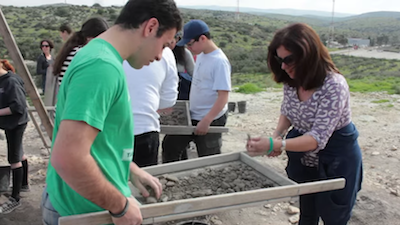
“Every bucket could hold a treasure waiting to be discovered,” reads the caption in the brief video about Israel’s Beit Guvrin-Maresha National Park, where visitors can help with the excavations. As part of their trip to Israel, the Bagel Club will take part in the park’s Dig for a Day. (screenshot from mfa.gov.il)
“During our time in Israel,” she said, “we will volunteer at Shalva, the Israel Association for the Care and Inclusion of Persons with Disabilities; meet with the Access Israel disability advocacy organization; visit the Knesset, Israel’s parliament, and meet with Knesset members. We will join an established theatre group of adults with diverse needs for a drama workshop. We will visit Beit Guvrin-Maresha National Park for Dig for a Day and take part in an active dig. We will pray at the Wailing Wall and remember at Yad Vashem.
“We will also be spending part of our trip in the Galilee Panhandle, which is our partner region in Israel. During that time, we will participate in an arts and crafts workshop at [the] inclusion occupational centre Ma’arag, together will local residents. We will visit Beit Israel and meet with Krembo Wings youth group (a youth group that works with children with special needs). Also on our itinerary is a visit to the Bereshit apple factory to learn about agriculture and the production process.”
Cohen said she is “honoured to be able to experience Israel with this group.” The 11 participants are David Benbaruj, David Berger, Frederick Dexall, Marc Estrin, Mark Fugman, Julie Huber, Harriet Kositsky, Alisa Polsky, Clark Levykh, Evan Lipsky and Gail Rudin. Joining Cohen in the support-staff capacity are Kathleen Muir, assistant coordinator, inclusion services and youth services at the JCC; Shannon Gorski, managing director of the Betty Averbach Foundation and JCC board member; and Alex Krasniak, community support worker with 26 years in the field.
Cohen noted that February is Jewish Disability Awareness and Inclusion Month, “a unified effort amongst Jewish organizations worldwide to raise awareness and foster real and meaningful inclusion of people with disabilities and those who love them community-wide.”
She said the JCC is holding a traditional Birkat HaDerech (Blessing for the Way) ceremony for the Bagel Club travelers on Feb. 19, 11 a.m., at the JCC.
“The invitation is wide open,” she said. “We want to share this simchah with the whole community. It is going to be such a joyful sendoff. We’ll have the Orr Vancouver Israeli Dance troupe performing to commemorate the occasion. Can you imagine a better way to celebrate this month than helping these Jews exercise their birthright?”
Maya Avraham will perform on March 7 at Rothstein Theatre, as part of the Chutzpah! Festival. (photo from Chutzpah!)
With two highly praised albums under her belt and a third one in the works, Maya Avraham has come a long way from Rishon LeZion and her days as a backup singer. All her experiences have made her the talented and entertaining artist she is today, as Chutzpah! Festival audiences will see for themselves on March 7.
Avraham told the Independent that she will be coming with two of her band members and two musicians who live in Los Angeles. “From there,” she said, “we’re flying out to Vancouver to perform at the Chutzpah! Festival.”
Avraham has been performing since she was a teenager.
“At 14, I was in a band called Kol Rishon [First Voice] in my hometown,” she said. “And, at the same time, I also sang in my school band. There, I realized how much I enjoy singing and performing. We performed at all festive events in Rishon LeZion.
“I began private singing lessons at age 16,” she continued. “Already, from a young age, the atmosphere at home was musical – we heard Egyptian music and Yemenite.
“At 16, I joined the Moroccan band Sahara, which performed at major family events throughout the country. With them, I was exposed to the Moroccan music that I still listen to and am influenced by today.”
In the Israel Defence Forces, Avraham was in the army’s music ensemble, where she was a singer and also responsible for the ensemble’s schedule. “Of course, we performed all around the country, and I gained more experience,” she said. “In this group was also where I met Moran Gamliel who, eventually, wrote and composed the song ‘Lama’ [‘Why’] with Adam Perry.”
“Lama” was Avraham’s first single.
“In addition to my involvement with the band Sahara, I was also a backup singer in different studios across the country and sang with various artists who recorded albums,” explained Avraham. “In my work as a studio singer who does vocals and harmonies, I gained a lot of professionalism and accuracy. At one point, I was singing backup vocals for the album of a singer named Amir Benayoun. Amir decided to write me songs and I sent them to Helicon, the company with which he was signed. As a result, the manager of Helicon chose to sign me and we started working on the first album. That was at age 23 and I was with Helicon for five years before I ended the contract.”
It was also at 23 that Avraham met fellow Israeli musician Idan Raichel.
“While searching for musical materials for my first album after I signed with Helicon,” she said, “I had the privilege of meeting with Idan Raichel about a song he wrote for his album that he wanted me to sing. So we met. After the success of the song, Idan approached me and wanted me to be part of his project. I agreed, and started the path to my own career by being part of a larger project, called the Idan Raichel Project, which was a success worldwide.
“Working with Idan was very enriching musically and professionally. I learned a lot from him and I was privileged to work with other talented people who were also part of the group. During the many performances in Israel and abroad, I got to know a lot of talented musicians and I was always learning, gaining knowledge and experience from, for example, singers like Martha Gómez and Shoshana Damari.
“I was part of the project for 12 years and the experiences were many,” she said. “Every performance we did or country we visited, we received a lot of respect and admiration, and I am certain it also shaped and strengthened my own personal career.
“The album Rak Ratzit Ahava [All You Wanted Was Love] came out when I was signed with Helicon and the album La Yom Haze Chikiti [This is the Day I’ve Waited For] came out recently, produced by Rafi [Refael] Krispin of Ze-Nihal.”
In a 2016 interview with French magazine TipTopTelAviv, Avraham said she was nine months pregnant when she met Raichel. Two months after her second daughter was born, she said, “Idan telephoned me and asked me to leave for the United States [for a tour], which was to begin a month later. I agreed and my husband stayed with the kids!”
Avraham and her husband have four kids now: Ruth, 12, Jonathan, 10, Tamar, 5, and Hadas, 3.
“Throughout the years with the project, when I toured abroad, I always had help along the way from my parents and my husband,” Avraham told the Independent. “They’re good kids, so it’s easier to trust that everything will be fine and the support from home is important, assuring me that everything is in order. Of course, you always have to come back with gifts.”
Avraham said she is happy and excited about coming to Vancouver. According to the Chutzpah! website, she and her band will be performing her own hits, songs she sang with the Idan Raichel Project and some of her favourite covers.
Maya Avraham Band performs March 7, 8 p.m., at Rothstein Theatre. For tickets ($29.47-$36.46), call 604-257-5145 or visit chutzpahfestival.com. Other music offerings include the Klezmatics 30th Anniversary Tour (Feb. 23), David Broza and Mira Awad (Feb. 28), Marbin with the band MNGWA opening (March 3), Shalom Hanoch with Moshe Levi (March 8), Lyla Canté (March 9) and Landon Braverman and Friends (April 2). The festival also features dance, theatre and comedy.
In Wrestling Jerusalem, which is at Chutzpah! March 1 and 2, Aaron Davidman tries to understand the complexities of the Israeli-Palestinian conflict. (photo by Ken Friedman)
Most of us have an opinion on the Israeli-Palestinian conflict. But how many of us have listened to others’ perspectives, really considered them and tried to understand them? Aaron Davidman has. And he will share his emotional and thought-provoking journey with Chutzpah! Festival audiences March 1 and 2.
Written and performed by Davidman, Wrestling Jerusalem, directed by Michael John Garcés, is Davidman’s personal journey, as an American Jew, to understand a situation that is often polarizing and over-simplified. The play gives voice to 17 different characters – all performed by Davidman – who represent the breadth, depth and complexity of the conflict; its political, religious and cultural aspects.
As personal as it is, however, Davidman was commissioned to write the play by Ari Roth, who, in 2007, was the artistic director of Theatre J, which is based in Washington, D.C. After 18 years with Theatre J, Roth founded Mosaic Theatre Company, also in Washington, in 2014, and is still its artistic director.
“He asked me to write a solo performance piece investigating the deaths of Rachel Corrie and Daniel Pearl and reflect on the public conversation in America about the Israel-Palestine issue,” Davidman told the Independent about the commission. “The play started there and, as I developed it, it became much more personal and those two subjects no longer relevant to my investigation, which became about the multiple perspectives and competing narratives at the heart of the conflict.”
Davidman is not only a playwright and actor, but also a director and producer. He received a master of fine arts in creative writing and playwriting from San Francisco State University and is a graduate of the University of Michigan; he received his theatrical training at Carnegie Mellon University.
Davidman was raised in Berkeley, Calif., he said, “by Jewish-identified but not religious parents, with a social justice context.”
In an interview with CJN, when Wrestling Jerusalem had its Canadian première in Toronto in November, Davidman said he “fell in love with Israel as a Jewish homeland” when he first visited the country, in 1993, at age 25. “I spent six months living there and had a really incredible spiritual and Jewish identity-forming experience. That story is in the play,” he told CJN.
In the process of researching, writing and performing Wrestling Jerusalem, Davidman told the Independent, “My views about the importance of engagement have deepened, as has my conviction that understanding the ‘other’ is a vital part of the process of reconciliation.”
The play, which premièred in 2014, has also been made into a feature film, directed by Dylan Kussman, which was released in 2016.
“The transcendent themes of the piece remain front and centre now more than ever in a world that is growing only more polarized,” said Davidman. “This piece stands for understanding multiplicity and complexity as humanity’s best chance to live together.”
To facilitate understanding, talk-backs often take place after performances.
“We try to have community conversation – I prefer that term to ‘talk-back’ – after performances and screenings because the piece opens people up,” Davidman said. “They’ve just had a fairly unique experience concerning this topic and there is hunger to process it. It’s a densely written piece and unpacking it and allowing people to hear where they each are coming from in response has proven to be very useful and moving.”
As for advice for people wanting to try and move the public – or even personal – discussion to a more nuanced or empathetic space, Davidman said, “Listen deeply. Don’t know so much. Try to connect.”
Wrestling Jerusalem is at Rothstein Theatre March 1-2, 8 p.m., with audience conversations after both performances, featuring Rabbi Dan Moskovitz of Temple Sholom and Aaron Davidman. For tickets ($29.47-$36.46), call 604-257-5145 or visit chutzpahfestival.com. The festival’s other theatre offering combines Cree storytelling, Chekhovian character drama and comedy, performed by Edmonton-based, award-winning improv troupe Folk Lordz – Todd Houseman and Ben Gorodetsky of Rapid Fire Theatre – on Feb. 22, 8 p.m., at Rothstein Theatre. The festival also features dance, music and comedy.
David Broza (below) will be joined by Mira Awad in concert on Feb. 28, as part of this year’s Chutzpah! Festival. (photo by Nahum Leder)
Israeli singer-songwriter David Broza is returning to Vancouver – and he’ll be joined by friend and fellow Israeli, musician (and actor) Mira Awad. The two will perform in concert on Feb. 28 as part of the Chutzpah! Festival, which runs Feb. 16-March 13.
“I have known Mira Awad for about six years,” Broza told the Independent. “First time I saw her perform was at the Tel Aviv Cameri Theatre, which is one of the most important theatres in Israel. I was very impressed and started following her work. When I was ready to go into the studio to record the album East Jerusalem/West Jerusalem, I asked her to come and sing a couple of duets with me.”
While Awad and Broza may have met only a handful of years ago, Awad told the Independent, “I grew up on Broza’s music and persona, and admired what he did.”
The two crossed paths on more than one occasion after their first meeting, said Awad. “Later on, we met several times on stages and in life, until he called me and asked that I collaborate with him on his album and movie East Jerusalem/West Jerusalem. I was proud to join him on that brave project, and we’ve been performing together since.”
East Jerusalem/West Jerusalem, which features mainly Israeli and Palestinian musicians, was recorded over the space of eight days and nights in Sabreen Studio in East Jerusalem in 2013 and released the following year. Co-produced by musician (and actor) Steve Earle and music producer Steve Greenberg, the creative journey was filmed and made into a documentary by the same name, which also came out in 2014 – and is currently available on Netflix.
“(What’s So Funny ’Bout) Peace, Love and Understanding?” is among the songs featured on the album and in the film. As is clear from human history – and current events – peace, love and understanding are downright scary to some people. Nonetheless, Broza and Awad have dedicated their lives not only to music, but to peace and other social issues.
“I am a human being and I feel kinship with all other human beings. It is beyond my grasp how people can hurt other people like what is happening in the world,” said Awad. “I just cannot understand how one man can think that another is less than him, or deserves less. So, inequality and injustice, no matter where, are total obscenities in my opinion, and I feel obligated to do anything in my power to banish them.”
David Broza (photo by Ilan Besor)
“I have always been involved in social activities, ever since I was a young boy,” said Broza, giving as an example his continuing work with people with disabilities and, in particular, with the Israel Sports Centre for the Disabled in Ramat Gan, which his father helped found when Broza was about 6 years old. “He would then take me along and ask me to help around,” said Broza of his father.
Broza also brings music to Shuafat refugee camp in East Jerusalem, which he discusses in the documentary East Jerusalem/West Jerusalem.
“The coexistence initiatives I have been involved with since I was 19,” he said, “are much due to my grandfather, Wellesley Aron, who, amongst many other initiatives, was one of the founders of the Israeli Arab village Neve Shalom/Wahat al-Salam, where the essential curriculum for peace studies and conflict resolution is developed. So, when I recorded my first written song ‘Yihye Tov’ (‘Things Will Be Better’) and it became a big success, I joined in all activities … in support of the peace process which had just started, [in] 1977.”
On the peace front, both Broza and Awad – and many others advocating for peace – face strong and even dangerous opposition.
“I would think that Mira probably has more of an issue since she is very committed to finding a way and is ahead of the pack,” said Broza. “I have been at it for so many years that it has become part of my being. I also believe in working with everyone when it comes to coexistence and conflict resolution, so I don’t exclude either the Palestinian side or the settler side. Of course, I am not immune to controversial and sometimes harsh commentary and opposition.”
In an interview last year with British online media outlet Jewish News, Awad – who was born in Rameh, in the Galilee, in northern Israel, and whose father is Palestinian and mother is Bulgarian – describes her situation.
“You call me Israeli Arab – but I call myself Israeli Palestinian and even that causes controversy,” she told the paper. “If I say that I am Israeli Arab, then my fellow Palestinians think that I am trying to disown my Palestinian roots and if I call myself an Israeli Palestinian, then the Israelis feel offended. They say: ‘If you are so Palestinian, go live in Gaza.’
“So, I identify myself only as an Israeli and not Palestinian. It mixes things up when you say both. The mere fact there is controversy around the definition might show you just a little bit of the situation faced by Israeli Palestinians in Israel. We are walking a very thin line all the time.”
In the song “Bahlawan” (“Acrobat”) and in a TEDx Talk, Awad describes how she maintains her balance in life, using the metaphor of an acrobat, who, she explains, must keep looking forward, both in order to not fall, but also to potentially “fly” (again, metaphorically).
“When you believe in something, when your vision is clear, you are like a good acrobat, you look onto the horizon and keep your balance,” she told the Independent. “If you start looking down, and calculate your risks, you will certainly fall and be eaten by the wolves waiting for you to trip. I think both David and I have a clear vision for what we believe in and, therefore, we keep our balance.”
“Empathy is the key,” said Broza. “You cannot think of yourself as the one who knows better than the other. Must learn to listen, always. I learn all the time from being exposed to such diverse people. With music, there is only one way, and that is to harmonize, so we keep eyes and ears open and stay in tune together.”
“The evidence is there, everywhere, that people just want to live, go to work, raise their children safely and take them on the occasional holiday,” added Awad. “We just need to encourage these silent masses to participate in the change process, to push their leaders towards resolution that is good for humans on both sides of the fence.”
One of the ways in which Broza attempts to do this is through music, giving benefit concerts, performing in hospitals and in crisis areas, offering workshops, and participating in or leading other social-minded projects and collaborations. “It is the backbone of my world,” he said of music.
“Music is my personal therapy,” said Awad. “As a musician, I deal with my thoughts, pains, joys, through music. Nothing stays cooped up inside, it is all put out into the fresh air, where everyone can see and hear it. But, in addition, I really feel that music has an advantage, it aims straight to subconscious levels, where people have fewer defences and borders, therefore, we as musicians can penetrate where other change-makers cannot.”
Broza is “very much looking forward to returning to perform in Vancouver and finally to take part in the Chutzpah! Festival.” He said his show will cover songs from his 40-year career, including some of his biggest hits, such as “HaIsha Sheiti” (“The Woman by My Side”) and “Yihye Tov.”
“It also covers my Spanish albums and some of the American albums,” he added. “The highlight is my having Mira join me on our songs from the album and film East Jerusalem/West Jerusalem, and she will be performing a couple of her own songs.”
For her part, Awad said she is “looking forward to arriving in Vancouver with this powerful collaboration. I cherish the friendship with David and the magic that happens when we are on stage together. I hope we convince all the people present how stupid and foolish all these disputes are, and that the things we have in common are way deeper than the stuff that divides us.”
David Broza and Mira Awad in concert takes place Feb. 28, 8 p.m., at Rothstein Theatre. For tickets ($43.75/$31.35), call 604-257-5145 or visit chutzpahfestival.com. Other music offerings include the Klezmatics 30th Anniversary Tour (Feb. 23), Marbin with the band MNGWA opening (March 3), Maya Avraham Band (March 7), Lyla Canté (March 9), Shalom Hanoch with Moshe Levi (March 8) and Landon Braverman and Friends (April 2). The festival also features dance, theatre and comedy.


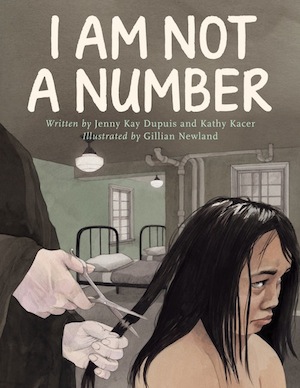 The illustrations in I Am Not a Number, a hardcover picture book, are as revealing as the text. Irene and her siblings, as they huddle behind their father when the government agent comes to take her and two of her brothers away; the sadness on Irene’s face as a nun cuts her hair, the anger as she sits in church; and the unbridled joy when she and her brothers are back at home after a tortuous year – these are just some of the emotions Newland movingly captures.