Skip to content
  • Home
  • Subscribe / donate
  • Events calendar
  • News
    • Local
    • National
    • Israel
    • World
    • עניין בחדשות
      A roundup of news in Canada and further afield, in Hebrew.
  • Opinion
    • From the JI
    • Op-Ed
  • Arts & Culture
    • Performing Arts
    • Music
    • Books
    • Visual Arts
    • TV & Film
  • Life
    • Celebrating the Holidays
    • Travel
    • The Daily Snooze
      Cartoons by Jacob Samuel
    • Mystery Photo
      Help the JI and JMABC fill in the gaps in our archives.
  • Community Links
    • Organizations, Etc.
    • Other News Sources & Blogs
    • Business Directory
  • FAQ
  • JI Chai Celebration
  • JI@88! video

Recent Posts

  • Story of Israel’s north
  • Sheltering in train stations
  • Teach critical thinking
  • Learning to bridge divides
  • Supporting Iranian community
  • Art dismantles systems
  • Beth Tikvah celebrates 50th
  • What is Jewish music?
  • Celebrate joy of music
  • Women share experiences 
  • Raising funds for Survivors
  • Call for digital literacy
  • The hidden hand of hate
  • Tarot as spiritual ritual
  • Students create fancy meal
  • Encouraging young voices
  • Rose’s Angels delivers
  • Living life to its fullest
  • Drawing on his roots
  • Panama City welcoming
  • Pesach cleaning
  • On the wings of griffon vultures
  • Vast recipe & story collection
  • A word, please …
  • מארק קרני לא ממתין לטראמפ
  • On war and antisemitism
  • Jews shine in Canucks colours
  • Moment of opportunity
  • Shooting response
  • BC budget fails seniors
  • Ritual is what makes life holy
  • Dogs help war veterans live again
  • Remain vital and outspoken
  • An urgent play to see
  • Pop-up exhibit popular
  • An invite to join JWest

Archives

Follow @JewishIndie
image - The CJN - Visit Us Banner - 300x600 - 101625

Byline: Cynthia Ramsay

First Vancouver Opera Festival

First Vancouver Opera Festival

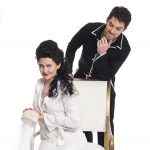
Caitlin Wood and Alex Lawrence star in Vancouver Opera’s The Marriage of Figaro. Jewish community member Leah Giselle Field performs the role of Marcellina in the production. (Emily Cooper Photography)

I am thrilled and honoured to have been chosen to lead Vancouver Opera into a new era,” said Jewish community member Kim Gaynor when her appointment as general director was announced prior to the start of this season. “Vancouver Opera already has a long history of excellent productions and a well-deserved reputation for innovation under Jim Wright’s exemplary leadership.”

As part of its vision for the future, Vancouver Opera is holding an inaugural opera festival April 28 to May 13. The event features a variety of vocal offerings for audiences, as well as workshops and other activities.

“Opera seasons are planned years in advance, so this festival was planned long before I joined VO,” Gaynor told the Independent. “However, I have brought 10 years’ experience managing the Verbier Festival in Switzerland and I am using this experience to shape the festival-going experience here. For example, we will have lots of opportunities to follow the development of young singers, and for audience participation, two things which were very popular in Verbier.”

Her resumé prior to managing the Verbier Festival includes managing director and co-founder of Austria’s Festival Retz, administrator of London, England’s Yehudi Menuhin International Violin Competition and head of marketing administration at London’s Royal Opera House. She has worked at Les Grands Ballets Canadiens de Montréal, the National Arts Centre Orchestra in Ottawa, L’Opéra de Montréal and Canada Council for the Arts.

photo - Vancouver Opera general director Kim Gaynor
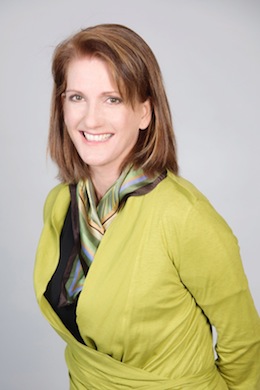
Vancouver Opera general director Kim Gaynor. (photo from VO)

Gaynor, who was born and raised in Ontario, returned to Canada from Switzerland last year, arriving in Vancouver in September. She was here in time for another recent Vancouver Opera innovation – the smaller-venue, family-friendly production of Hansel and Gretel in November.

“Hansel and Gretel was a huge success with people of all ages,” said Gaynor. “The whimsical, enthusiastic performances from our young artists and the wonderful puppets charmed everyone who came. I heard so many stories about young people being literally on the edge of their seats throughout the whole performance, and this could lead to a lifelong love of opera. One thing I learned was that the intimacy of the smaller Playhouse theatre really appeals to audiences. They want to be nose-to-nose with the performers – up close to the action.”

The upcoming festival will offer more opportunities to get up close to the action, including a performance at Vancouver Public Library – called Opera Tales – featuring singers from VO’s Yulanda M. Faris Young Artists Program, who the audience will have a chance to meet after the show. One of these singers is Jewish community member Leah Giselle Field, who also will be performing the role of Marcellina in The Marriage of Figaro. (For more on Field, see jewishindependent.ca/fairy-tale-reimagined.)

Among the other festival offerings are a video installation by artist Paul Wong, performances by vocal stylist Ute Lemper and Inuit throat singer Tanya Tagaq, an evening sing-along with the Vancouver Bach Choir, a film night, master classes for young singers, forums and discussions, preview talks and happy hours.

“We believe that the festival format will attract a new and younger audience who likes fast and furious action, because there will be something going on all the time during the 16 days of the festival,” said Gaynor. “At the same time, we are convinced that our main-stage operas, Otello, Dead Man Walking and The Marriage of Figaro, will appeal to our traditional audiences, who may only want to attend for an evening or two. In our next season, 2017/2018, which has just been announced, we are offering a season and a festival, starting with the ever-popular Turandot in the fall and closing the season with a spring festival.”

Further explaining why the festival concept is being embraced by VO, she said, “Festivals are, by definition, a celebration and people, in general, love to celebrate. We will not only be celebrating opera, but the human voice and all of its expression, from throat singing to choral. Festivals offer the chance to mingle and meet lots of other people who share the same passion. This chance to come together with like-minded people creates an atmosphere which is hard to create in a normal season. But I don’t think festivals are a more attractive model, just a different model, and VO is in the mood for change.”

One of the attractions of moving back to Canada was that Gaynor would be closer to her mom, who lives in Oakville, Ont. One of the appeals of moving to Vancouver was the opportunity to be outside. While circumstances have made that difficult so far, she has found other fun things to do around town.

“Honestly,” she said, “it seems like it has either rained or snowed every day since I arrived (until about two days ago)! I am normally a person who loves the outdoors, so my highlights have been discovering the North Shore mountains and walks along the Seawall with my dog (a 3-year-old border collie). That was before I broke my leg badly at the end of January falling off my horse! I am also finding some great spots for brunch in my neighbourhood around Main and 12th, and have been discovering all of the fantastic cultural organizations in town.”

Gaynor was born in Hamilton, Ont., but the family moved to nearby Burlington when she was six months old.

“We lived almost in the country in Burlington, in a house with a big yard with a small forest behind. More importantly, we were less than a kilometre from a horse farm, where I discovered my passion for riding. My father was a passionate amateur pianist and we had a baby grand piano at home. I got my love of classical music from him.”

Gaynor’s father was a Holocaust survivor.

“My father was one of the 10,000 Jewish children who escaped from Western Europe to England on the Kindertransport,” she said. “He lived in London from 1938 until 1954, when he emigrated to Canada and met my mother, who is not Jewish. He even changed his family name, which was Geier, but sounded too German in postwar Canada and that, combined with his accent, was a handicap. So, he took the last name of his movie star idol – Mitzi Gaynor. Unfortunately, he died quite young, only 53 years of age.

“I know my father’s life was in every way coloured by having lost his family in this way but, like many Kindertransport children, he spoke very little about it to his children. I learned much later, after his death, that a part of his family escaped Austria and made it to Palestine. I was able to find them and went to meet them in 1996. I have often wondered how life would have been different if I had been born and raised in a Jewish family in Austria, or in London. But I have close ties still to the family who adopted my father in London, and to his relatives in Israel and this has enriched my life immensely.”

While she doesn’t “practise any religious traditions in a formal way,” Gaynor said, “I feel quite close to Jewish culture and traditions because of my family and friends, but also I have participated many times in Jewish celebrations, weddings, a few bar mitzvahs and even a bat mitzvah. I also remember some very poignant things from my childhood, such as my father criticizing my mother for not being able to make good matzah ball soup. Clearly, he had some things he missed from home!”

For festival tickets, call 604-683-0222 or visit vancouveropera.ca. For Tanya Tagaq tickets, contact Ticketfly at 1-888-732-1682 or ticketfly.com/purchase/event/1412206.

Format ImagePosted on April 21, 2017April 20, 2017Author Cynthia RamsayCategories Performing ArtsTags Holocaust, Kim Gaynor, music, opera
Help celebrate Israel’s 69th

Help celebrate Israel’s 69th

Jane Bordeaux – Amir Zeevi, left, Doron Talmon and Mati Gilad – perform at the Chan Centre on May 1. (photo from Jewish Federation of Greater Vancouver)

What better way to bring folks together in song and celebration of Israel’s 69th birthday than with folk music. And what better band to unite Diaspora Jews than one that writes and performs American-style country-folk songs in Hebrew!

Tel Aviv-based Jane Bordeaux – Doron Talmon, Amir Zeevi and Mati Gilad – will headline this year’s community Yom Ha’atzmaut concert at the Chan Centre on May 1, 7:30 p.m. The trio regularly plays to sell-out crowds.

Their debut album was well-received, with songs such as “Eich Efshar” (“How is it Possible”) and “Whisky” radio favourites, and the video of their song “Ma’agalim” (“Circles”) went viral. A second album is nearing completion and is expected to be released in June.

Talmon and Gilad met in 2012 at Rimon School of Jazz and Contemporary Music in Ramat Hasharon, Israel. It was in a contest of original songs. “The idea was to perform some of my songs, and get some practical experience of a band format – you know, finding musicians, getting a name for the band and that sort of thing,” Talmon told the Jerusalem Post in a 2016 interview.

“We kept on playing after that one,” Talmon recently told the Independent, “and, when we needed a new guitar player, Amir, who’d been serving with Mati in the military band, had just returned from the U.S., and joined the band.”

Though the band has only been together five years ago, they have all been performing for much longer than that.

“I’ve been singing since I was a little child, always had the attraction to writing songs and singing them,” said Talmon. “After I returned from a long trip in South America, I decided to go and study music professionally, so I went to Rimon school for three years, learning music, songwriting and how to form a band, eventually.”

“I’ve been playing since I was 5, piano and then bass guitar,” said Gilad. “When I went to Thelma-Yellin arts high school in the jazz department, I started also playing the double bass. After high school, I served in the military in an army band and simultaneously studied at the Tel Aviv music conservatory. After the army, I started learning in Rimon school and was there for a year learning both classical, jazz and pop music.”

As for Zeevi, he has been playing the guitar for as long as he can remember. “My high school in Holon had a music major, that’s when I started taking the guitar more seriously, meeting great players and teachers,” he said. “In the army, I’ve played in the air force band and, after my release, I decided to go and learn music in the New School university in New York City, learning both jazz and country music.”

Usually, it is Talmon who comes up with the idea for a song, both the lyrics and melody, then the group starts playing with it, sometimes changing its harmony or structure, and building the arrangement. “Since we perform a lot,” they said, “we often try these new songs in shows, to get the feeling of what it is like to perform with them onstage and how does the crowd react, and each time improving and adjusting the song till it feels complete.”

In true country music fashion, many of Jane Bordeaux’s songs have to do with love and loss – ol’ American hurtin’ songs with a modern, Israeli twist.

“American folk-country, the way we see it, is storytelling, about the dark and the bright sides of life, wrapped in beautiful harmonies and joyful rhythm,” the band members agreed. “How can you not get excited from it? Also, we are addicted to the banjo’s sound and it’s going to feature a lot in our new album.”

“The songs are inspired from life, of course, mine and my friends,’” explained Talmon. “Sometimes, a song may be very close to a personal experience or feeling I had and, sometimes, it can be an idea I borrowed from a book I read or a movie I’ve seen, even a sentence I’ve heard.”

“Ma’agalim” is a bittersweet song about life: “It’s not me that’s progressing / It’s just the time that’s moving on.” The video features a wooden doll in a penny arcade. As the cylinder turns, she walks along her track, bundled up in a coat and scarf, passing people in various stages of life, from cradle to grave. Produced by Israeli animators Uri Lotan and Yoav Shtibelman, it really is a must-see (vimeo.com/ 162052542).

“The minute Uri and Yoav, the creators of the clip, showed it to us,” said the band, “we were so amazed by the beauty and sensibility of the video they made, so we can’t really say we were surprised that it went viral – we never had seen such animation before. We feel that there’s a unique connection between the music and the visuals that’s very moving, so people get excited by it, even without understanding the lyrics.”

No doubt a similar connection will be formed between the band and their audience in Vancouver, where they will sing in both Hebrew and English.

“It’s not going to be the same as in Haifa or Tel Aviv,” they said about the Yom Ha’atzmaut concert. “We love adjusting our set to best fit the place we are going to perform. Since the show date is Israel’s Independence Day, and we guess some of the crowd is English-speaking, in addition to our originals, we’re going to play some English covers and Hebrew all-time favourites – and even some special surprises for the Canadian crowd that obviously we can’t tell in here!”

The group starts their tour in Vancouver, then they have a few shows in North America, including one in Toronto.

“We are super-excited about the show in Vancouver,” they told the Independent. “It’s going to be the first show of our first tour outside of Israel and we’ve got a lot of great stuff planned specially for it, so we’re hoping to see you there!”

Tickets for the May 1 community celebration ($18) can be purchased at jewishvancouver.com/yh2017. In addition to this year’s co-sponsors – Canadian Friends of Hebrew University, Consulate General of Israel in Toronto, Georgian Court Hotel, the Jewish Independent and Jewish National Fund – the Jewish Federation of Greater Vancouver event is supported by 46 other community organizations.

Format ImagePosted on April 7, 2017April 4, 2017Author Cynthia RamsayCategories MusicTags Israel, Jane Bordeaux, Jewish Federation, Yom Ha'atzmaut
History, literature vital

History, literature vital

Rachel Seelig, author of Strangers in Berlin: Modern Jewish Literature Between East and West, 1919-1933. (photo by Lauren Kurc)

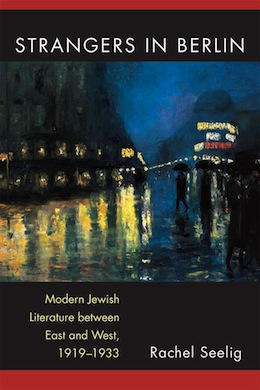
Rachel Seelig’s Strangers in Berlin: Modern Jewish Literature Between East and West, 1919-1933 (University of Michigan Press, 2016) encompasses so many ideas – some very nuanced, others technical – that a reader will enjoy it on their own, but will learn much more if they can discuss and analyze it with others.

Strangers in Berlin uses the example of four poets – Ludwig Strauss, Moyshe Kulbak, Uri Zvi Greenberg and Gertrud Kolmar – to examine the influence that Berlin during the Weimar Republic had on Jewish literature.

“The relationship between German Jews and East European Jews in Germany typically has been depicted in terms of … German Jews figuring as reluctant hosts, cultural insiders who viewed the so-called Ostjuden as outsiders or even infiltrators,” writes Seelig. “Strangers in Berlin is aimed at destabilizing these designations by presenting Berlin as a border traversable in both directions…. Foreigners arriving from abroad availed themselves of artistic inspiration and anonymity in order to cultivate new forms of culture, while those native to Germany ascertained their increasing estrangement from the fatherland, which they similarly channeled into artistic production. Whether they were coming or going, exiled in Germany or soon-to-be-exiled from Germany, these writers experienced Berlin as a transitional site between a moribund pre-World War I political order and an increasingly divided, nationalistic European reality.”

Seelig told the Independent that she “chose to focus on four poets who are not necessarily remembered as key figures in Weimar culture but who had considerable influence in their own day.”

She explained, “One of the reasons that these poets are relatively neglected is that they are not easily categorized according to national literary boundaries. Two of them, Strauss and Greenberg, immigrated from Europe to Palestine and wrote in more than one language (Strauss in German and Hebrew and Greenberg in Yiddish and Hebrew) and the other two, Kulbak and Kolmar, produced highly diverse, avant-garde bodies of work that do not align with what we tend to see as the dominant literary trends of their day. So, these writers weren’t just ‘strangers in Berlin’ – that is, writers who are located on the margins of the cultural milieu in which they had either permanently or provisionally settled – but also strangers to us as readers in the 21st century.

“I suppose I made it my mission to bring their extraordinary writing to light, and the best way to do so was to group them together within this context of intense transition and transformation,” she said. “For all four, the experience of living in Weimar Berlin – even if only briefly – left a profound imprint on their work and on their national identity. For all four, Berlin was a place in which they were forced to renegotiate identity. Taken together, I think their works provide a fascinating glimpse into the multiplicity of images of Jewish homeland that emerged during this very fruitful yet volatile period in history.”

Weimar Berlin brought together German, Hebrew and Yiddish literature and Strangers in Berlin examines “the impact of migration – of individuals, languages and cultural concepts – on Jewish national consciousness between the world wars,” writes Seelig. She chose to focus on poets, in part, “because establishing an autonomous and multifaceted poetic tradition was a crucial component of modern national movements.”

Whereas both the Westjuden and Ostjuden “initially viewed Germany as the wellspring of liberal, Western values, by World War I, they had begun to ‘re-orient’ their gaze toward the ‘East,’ extending temporally and geographically from the ancient Near East to contemporary Eastern Europe,” writes Seelig. “Plagued by the uncertainty of national homelessness and the terror of rising antisemitism, both groups looked eastward with a combination of nostalgia, hope and despair in a effort to come to terms with the failure of the West to fulfil the promise of coexistence predicated on the liberal principles of Enlightment. Indeed, melancholic longing for the ‘East’ betrayed profound dislocation in the ‘West,’ which in turn fueled the search for a new national homeland, whether real or imagined.”

Vancouver-born and -raised, Seelig received her undergraduate degree in comparative literature at Stanford University, then worked for a time in New York. She earned her master’s and PhD in Jewish studies at the University of Chicago, spending her last couple years of graduate school in Tel Aviv. She received the Ray D. Wolfe Postdoctoral Fellowship in Jewish Studies at the University of Toronto and then, after that, returned to Israel, where she was a Mandel Postdoctoral Fellow at the Hebrew University of Jerusalem. Currently, she is a fellow at the University of Michigan’s Frankel Institute for Advanced Judaic Studies. She speaks English, Hebrew, German and Yiddish. From even this brief bio, it is no wonder that Seelig is interested in borders and thresholds.

“We live in a world today that is both utterly divided and, in a sense, borderless,” she told the Independent. “The phenomena of globalization and mass migration have made us keenly aware of the ways in which borders are, on the one hand, more easily traversed, and, on the other hand, rigourously enforced and policed. Borders have always been sites of contestation and conflict, but a border can also be seen as a threshold that one crosses from one reality to another and a productive site of transfer and transformation.

“I myself migrated across several borders as this book came into being. It started to develop as a doctoral dissertation in Chicago, which I finished writing in Tel Aviv. It became a book – one that changed shape continuously – in Toronto, Berlin and Jerusalem, and was ultimately published in Ann Arbor, Mich. My own nomadic experience as an academic (and I realize, of course, that mine is a kind of privileged nomadism) made me particularly attentive to the impact of changing surroundings and of transitions on one’s thinking, work and identity.”

While accessible, Strangers in Berlin’s dissertation origins are evident, and there are some sentences people will have to read more than once for understanding.

“Strangers in Berlin is first and foremost an academic book, which grew out of my doctoral dissertation, acknowledged Seelig. “But, in the process of transforming the dissertation into a book – and I should point out that the book departs fairly dramatically in terms of content and argument from the dissertation – I made a concerted effort to make the text engaging and highly readable by simplifying the language and peppering every chapter with interesting anecdotes. It will be used by researchers and teachers within the academic context, but I also very much hope that it will be read by lay readers who are interested in modern Jewish culture and the history of the Weimar Republic, which is such a vibrant and captivating time period. I also think that the themes of homeland and migration, which are at the centre of the book, are extraordinarily relevant today, and I hope that readers will find this glimpse into Weimar culture and history resonates with our own political reality today.”

book cover - Strangers in BerlinCertain parts of Strangers in Berlin will make readers shiver with a sense of déjà vu. In the chapter on Kolmar, for instance, Seelig writes that, in the poet’s one novel, Die jüdische Mutter (The Jewish Mother), “Kolmar offers a pained reflection on the impossibility of salvaging a viable German-Jewish female identity in an era when both Jewishness and femininity were under siege.” Seelig notes, “Conservatives seeking to safeguard their middle-class privileges and to rebuild a healthy Germany Volkskörper (national body) regarded independent women and integrated Jews as similarly ‘decadent’ social elements…. The result of this campaign was a new form of male repression, which was often shrouded in xenophobic sentiments.”

Readers will see similarities between the Weimar period and what is currently happening in some European countries and in the United States. As it happens, Strangers in Berlin’s launch took place the day after the U.S. presidential election.

“A few hours before the event,” she said, “I was reading an article by Chemi Shalev in the Israeli newspaper Haaretz, in which he commented that many millions of Muslims, Mexicans and Jews now feel like ‘strangers in the country they call home.’ Obviously, his statement resonated very strongly with me and with my book.

“The book deals with a historical moment, nearly a century ago, when Berlin emerged as a major metropolis that attracted large swaths of immigrants, who were often seen as unwelcome infiltrators. In this respect, 1920s Berlin isn’t such a far cry from Berlin or Toronto or New York City of today. The book really does resonate with what’s going on in the U.S. and in so much of the world.… We are witnessing the rise of nativist sentiments and attendant xenophobia and bigotry that are oh so reminiscent of interwar Europe. And we’re seeing the way in which various forms of bigotry (anti-immigration, antisemitism and misogyny, all addressed in the book) have a tendency to intersect and even merge when these nativist sentiments are bolstered by political power. I realize it’s a cliché, but it really is remarkable to see how history repeats itself. It’s such a shame that the humanities, specifically history and literature, are under attack today (Trump just eliminated funding for the National Endowment for the Humanities from his proposed budget) at a time when we so desperately need them.”

Strangers in Berlin’s four poets struggle, as we all do, with the impossibility of being one thing – a German (or any other nationality), a Jew (or any other religion), for example. Not to mention the different conceptions of what comprises a “real” German (Canadian, American, etc.) or an “authentic” Jew (within the ranges of observance, belief). From all the research Seelig has done – her work, travel, ability to speak multiple languages and negotiate various cultures – has she any theories as to why humans have such trouble, in general, with multiplicity, ambiguity, a lack of borders?

“I wish I knew why we as humans have such a hard time with ambiguity,” she said. “This is something that affects our lives not only in terms of cultural, national or political identity but also in terms of relationships, career paths, place of residence, etc. On the one hand, we have more freedom than ever before to dwell ‘between’ identities, or to inhabit more than one identity, and yet that’s somehow deeply unsettling to us as creatures that crave order, certainty and security.

“I think there’s so much to be learned by the figures in my book, who didn’t have the luxury to choose where they would live or which system of beliefs to subscribe to (at least not without the risk of persecution), and who were profoundly shaped by the contingencies and vicissitudes of life. Each of the four main writers in the book represents more than one identity and, for each one, this was certainly a source of anxiety but also a source of profound inspiration and enrichment.”

Format ImagePosted on March 31, 2017March 31, 2017Author Cynthia RamsayCategories BooksTags history, poetry, Rahel Seelig, Wiemar Republic
Past leads to present

Past leads to present

For many of us, it is hard to get excited about a subject until we can experience it, or meet someone who has. Historical fiction can bridge the gap between simply memorizing dates and names to empathizing with those affected and taking what we learn into our lives.

Two recent Second Story Press publications do an excellent job of teaching and engaging younger readers. They also provide a starting point for these readers and their parents, family, friends and educators to discuss difficult and sensitive topics that not only relate to the past, but to current situations, as well.

The Ship to Nowhere: On Board the Exodus by Rona Arato (for ages 9 to 13) tells the story of the ship Exodus 1947 through the eyes of 11-year-old Rachel Landesman. I Am Not a Number by Jenny Kay Dupuis and Kathy Kacer and illustrated by Gillian Newland (for ages 7 to 11) tells the story of 8-year-old Irene Couchie, who is forcibly taken from her First Nations family and home to live in a residential school in 1928. Both Rachel and Irene are real people.

Sadly, their stories are representative of what also happened to countless others. And, even more sadly, what continues to happen. The Ship to Nowhere could lead to a conversation about the Syrian refugee crisis and antisemitism in Canada and elsewhere. I Am Not a Number brings to mind some parallels between the Holocaust and the attempted genocide of Canada’s First Nations, as well as the inequalities that still exist in Canada, the treaties that have not been ratified, the reconciliation over the residential schools that is long overdue and has barely begun.

Given the ages of their intended readers, both of these books tread lightly – that said, they deliver powerful messages and succeed in their missions to educate.

book cover - I Am Not a NumberThe illustrations in I Am Not a Number, a hardcover picture book, are as revealing as the text. Irene and her siblings, as they huddle behind their father when the government agent comes to take her and two of her brothers away; the sadness on Irene’s face as a nun cuts her hair, the anger as she sits in church; and the unbridled joy when she and her brothers are back at home after a tortuous year – these are just some of the emotions Newland movingly captures.

And Kay Dupuis tells her grandmother’s story with such love. This was a family that was strong and, in the end, luckier than many, in that Irene and her brothers didn’t return to the residential school – when they came home for the summer, their family kept them hidden from the government agent.

I Am Not a Number includes a brief overview of the residential school system, and mention of the Truth and Reconciliation Commission. Kay Dupuis also tells readers a bit more about her grandmother in an afterword, where there are a few photos of the Couchie family.

The Ship to Nowhere has photos throughout, and Arato uses the author’s note at the end to let readers briefly know what happened to Rachel, Rachel’s mom and sisters (her dad was killed in the Holocaust), the ship’s captain, Yitzhak Aronowicz (known as Captain Ike) and one of the journalists who doggedly reported to the world the Exodus’s journey, Ruth Gruber.

Since it is for older young readers, there are parts of The Ship to Nowhere that are quite graphic – the incredible brutality of the British is well-depicted, as are Britain’s efforts to prevent the ship’s 4,500-plus Holocaust survivors from knowing what the media were reporting on their treatment. Even with the passage of time, the anger boils in reading about how these survivors were tear-gassed and beaten (in some cases to death) on the Exodus, forced to live as captives on three other ships after they were turned out of Palestine, and again beaten and manhandled if they refused to leave their ships in Germany, where the British took them eventually, to live in refugee camps.

There are many touching moments between the crew and their passengers and between fellow refugees. It is important to be reminded that France offered to take in all of the refugees; an offer that was declined. And it would be nice to think that, at the least, the Exodus’s plight positively influenced some United Nations members to vote in favour of the creation of Israel.

Format ImagePosted on March 31, 2017March 31, 2017Author Cynthia RamsayCategories BooksTags British Mandate, Exodus 1947, history, Israel, reconciliation, residential schools, youth
A pre-election townhall

A pre-election townhall

Queenie Choo, chief executive officer of SUCCESS (photo from SUCCESS), and Jacob Switzer, member of CIJA’s Local Partners Council (photo from CIJA Pacific Region), spoke with the Independent about the upcoming townhall April 2.

Immigration, security, inclusivity and affordability are among the subjects to be addressed at the April 2 Provincial Pre-election Townhall.

The townhall is being presented by SUCCESS and the Centre for Israel and Jewish Affairs (CIJA). SUCCESS chief executive officer Queenie Choo told the Independent, “The topics were determined based on … dialogue between the two organizations.”

“We wanted to find topics that were of relevance and concern for both sets of constituents, as well as current,” said Jacob Switzer, a lay leader involved in planning the event, as a member of CIJA’s Local Partners Council. Culturally sensitive care for seniors, and accessibility and transportation will also be covered.

Scheduled to participate in the discussion as of press time were Michael Lee, B.C. Liberals candidate, Vancouver-Langara; George Chow, B.C. NDP candidate, Vancouver-Fraserview; and Michael Markwick, Green Party candidate, West Vancouver-Capilano. The townhall will take place at Choi Hall, SUCCESS Social Service Centre, 28 West Pender St.

“The event will allow our community to hear from its potential political leaders and learn about their views, as well as engage politically,” said Switzer. “It also lets us tailor questions to issues that are of specific importance to our respective communities, which often overlap and which may not be as central a concern in other forums.”

About SUCCESS, he added, “we have very much enjoyed cooperating with them, both on this event and in the past.”

“It has always been our mandate to support integration of newcomers to our Canadian communities, as well as helping them to understand the rights and responsibilities of being a Canadian citizen, particularly in the civic responsibility,” said Choo. “As such, SUCCESS and CIJA have taken a leadership role to host this pre-election townhall to ensure we have an opportunity for the community to understand the positions each political party holds on the key areas of our interest. This will help voters in making an informed decision on May 9.”

“One of the key discussion points for the event will be community security and the apparent rise in bigotry and hate crimes, which is a highly current issue,” said Switzer. “We expect that both of our communities will want to hear about what policies are being considered to improve these issues and we anticipate questions from the floor around security (particularly in light of the recent bomb threats to the Vancouver Jewish Community Centre).”

With respect to the seeming rise in expressions of bigotry and hatred, Choo said, “Through the townhall, I am sure this issue will surface. It is important for the community to hear what are the directions or policies in addressing discrimination and racism from each political party. We would also like to hear how our future government will uphold our shared values of inclusion and diversity.”

The format of the event will be that of “a non-debate-style townhall,” said Switzer. “Each participant will be given a brief period for initial remarks (order is set by draw) and then will have the opportunity to answer the questions that we are already receiving via email or phone call. All will be given time to answer the same question so they can present their party’s perspectives. They will have another period to share any final comments with the audience.

“We have found that this format works well with the candidates and allows for a respectful and organized interaction among themselves and the public.”

The pre-submitted questions will be facilitated by a moderator at the townhall, noted Choo.

“This event is open to the public and free of charge,” she added. And the hope, she said, is “to engage as many people as possible, as it is important to understand what are the directions the next government will hold, especially on our important topics.”

“We are co-hosting this event with our friends at SUCCESS because we believe that joining forces with partners in other communities can only strengthen us,” said Switzer. “We are looking forward to a well-attended and meaningful event.”

The townhall will run 2:30-4:30 p.m. on April 2. To submit questions on the aforementioned topics for any party candidate, email [email protected] with the subject line “Provincial Pre-election Townhall Question.”

Format ImagePosted on March 24, 2017March 23, 2017Author Cynthia RamsayCategories LocalTags CIJA, Election, Jacob Switzer, politics, Queenie Choo, SUCCESS
Dance that speaks out

Dance that speaks out

Kyle Abraham/Abraham.In.Motion’s The Gettin’ is among the repertoire the company will be bringing to Vancouver March 11-13 for the Chutzpah! Festival. (photo by Jerry and Lois Photography)

Kyle Abraham/Abraham.In.Motion is bringing to Western Canada for the first time a sample of its acclaimed repertoire, including The Gettin’, Quiet Dance and excerpts from the company’s newest work, Dearest Home. They will perform at the Chutzpah! Festival March 11-13.

“Dearest Home is a new evening-length work that is broken up into solos and duets dealing with love, longing and loss,” explained Kyle Abraham in an interview with the Independent. “Some of the themes, and movement itself, were derived from the workshops and conversations that took place during residencies. The excerpts that are shown in this program were made during a residency at the Hopkins Centre for the Arts, Dartmouth College.”

Politics, identity, justice and freedom are some of the other themes Abraham explores in his work.

“I try to create work that reflects society as I see it,” he said. “Sometimes people see hope in that and sometimes people see the disparity that is in closer correlation to my experience growing up in this country. But, there is also purposefully the possibility of seeing both hope and disparity in my work; I think that speaks to the conflict and tensions that have been in this country for a long period of time. There are stories that are from an earlier time, but the work winds up correlating with current events basically because of the cyclical nature of history repeating itself over and over again. With that work so often comes a direct smack in the face that there is still so much more progress to be made. I like to make work that speaks to all those things.”

Religion also plays a part in some of Abraham’s creations.

“Since my parents passed, and since my mother’s more recent passing, I have had a really conflicting connection with religion and spirituality in a larger sense,” he said. “I was very curious as a child when it came to religion. I think there’s so much history in religion, in so many different ways. My parents were of different Christian faiths: my father was raised in an Episcopalian church, my mother was raised in a Baptist church, and I purposely chose to go to Hebrew school. I think that shows that I was really interested in learning about different faiths and trying to figure out where I fit in.

“It’s a tricky thing. Just because your parents believe something doesn’t mean that’s what you will believe. Just because your friends believe something doesn’t mean that’s ultimately what you’ll wind up believing yourself. But, I’ve always been curious about religion and faith in some way, shape or form, and have spent time in different religious spaces through points in my life. The last religious space I was in was a (Jewish) temple; that was in October for a friend of mine’s mother’s passing. And then, before that, it was my mother’s passing, in a Baptist church.”

While his parents weren’t artists per se, Abraham said the arts were encouraged at home, and that his parents “were really creative people because they worked in education and they had to come up with inventive ways to really push education forward in the public school system.”

Born and raised in Pittsburgh, Abraham’s education in dance started relatively late in life.

“I started studying dance the summer I turned 17, when I took a boys jazz class,” he said. “The catalyst for this was seeing the Joffrey Ballet performing in Pittsburgh to Prince’s music, which was the first dance performance I ever saw. I also had some good friends that were in musical theatre that I went to raves with, and they suggested that I audition for our high school musical.”

Though he has made a career of dance, before Abraham started on that route, he studied music. And, when he took a break from dancing for a few years, it was to music he returned.

“For so much of my life, music has been my first passion,” he said. “When I was a senior in college, I thought about moving to England to study studio composition, to make electronic music, but, during that same year, I started taking company classes with Bill T. Jones. I was later offered an apprenticeship, which led to joining the company very briefly after college.

“That experience was very telling for me, because it helped me realize that even though I really loved that company and wanted to be around them, I preferred being a part of the creative space around the dancers rather than being a dancer myself within the company. I had a very hard time with making mistakes with an artist’s work that I respected so much. I felt like I was ruining the possibilities for people to be inspired by messing up, which is such a heavy burden to bear that I needed to find a healthier way into dance.

“When I quit dancing,” he said, “I started working in record stores; I would meet up with friends and I would maybe sing over some records for friends while playing around in the studio making songs. I also worked at the Andy Warhol Museum as an artist educator. During that time, I thought about different facets of my artistic interests growing up; for example, bringing in music at times, bringing in movement and finding ways we could connect those art forms to Warhol’s work. That’s primarily what I was doing with that time off.

“My way back into dance started when I was dating a visual artist. At the time, we both wanted to move to England so we thought that the best way for us to do that would be for both of us to get into school in England. I also applied to NYU [New York University], just as a backup plan in case I didn’t go to Europe – maybe I would go to NYU and see what New York was like again. We both ended up going to school in London, where I attended the [Trinity] Laban School. I went to Laban for maybe a couple months, but I was frustrated by the lack of opportunities I had to really dance: to make dance, take classes, etc. So, I left school and spent the rest of my time there focusing on trying new things (i.e. singing). I eventually moved to New York to go to NYU to figure out what my relationship to dance could be.”

Abraham received his bachelor in fine arts from the State University of New York at Purchase (2000) and his master’s from NYU (2006). He is a multiple award-winner, for both his choreography and performance. He has performed with many notable companies, and his works have been performed not only by his company, Abraham.In.Motion, which he founded in 2006, but others, as well, throughout the United States and abroad.

About one of the pieces set to have its West Coast première next weekend, Rachael Carnes of eugeneweekly.com wrote, “… The Quiet Dance, a quintet set to Leonard Bernstein’s ‘Some Other Time,’ this work built organically around simple gestures, from the swivel of knees and elbows side to side, to the slow descent of a head, alone, or against another. Abraham played with connection here, relating dancers to self and other, finding moments of counterpoint, without being heavy-handed or glossy. His organic style delved into lovely canonical structures without feeling artificial or contrived, as he boldly carved the stage space into two separate fields of vision.”

About The Gettin’, she wrote, “set to Robert Glasper’s interpretation of Max Roach’s Freedom Now Suite, Abraham plows even more deeply into the roots of racism, exploring the similarities between apartheid South Africa and the U.S.

“Jazzy and lyrical, yet pointed and gripping, this piece sings from a deep, guttural place.”

Abraham.In.Motion performs March 11 and 13, 8 p.m., and March 12, 7 p.m., at Rothstein Theatre. For tickets ($29.47-$36.46) and the full Chutzpah! schedule, call 604-257-5145 or visit chutzpahfestival.com.

Format ImagePosted on March 3, 2017February 28, 2017Author Cynthia RamsayCategories Performing ArtsTags Chutzpah! Festival, dance, Kyle Abraham
Life stories told in dance

Life stories told in dance

Allen and Karen Kaeja perform their latest lifeDUETS series March 9-11, as part of the Vancouver International Dance Festival. (photo by Zhenya Cerneacov)

As a dancer, how do you tell the story of a couple’s life together that has deep roots but is continually evolving? The Kaejas decided to commission two different pieces from two different choreographers. The result is the latest in their lifeDUETS series, which comprises a structured piece that is more or less consistent in every performance, and another that constantly changes.

Allen and Karen Kaeja established Kaeja d’Dance in 1991. The Toronto-based couple commissioned three duets about 20 years ago, and the newest two were commissioned in 2015 for their 25th anniversary. It is this anniversary pair – one by Tedd Robinson, the other by Benjamin Kamino – that the Kaejas will share at Roundhouse Performance Centre March 9-11, as part of the Vancouver International Dance Festival, which runs March 1-25 at various local venues.

“We’ve always performed together, but improvised, and I suggested this idea of commissioning choreographers,” said Karen in an interview with the Independent over speakerphone.

“We commissioned Claudia Moore … Peter Bingham from out west, and then we did our own lifeDUET, and commissioned Marie-Josée Chartier. Those years of commissioning ended in 2001,” said Allen.

Variations of that program toured throughout Canada, the United States and many other parts of the world. “And then,” said Karen, “for our 25th anniversary, that’s where I thought we should really reinstitute the lifeDUETS and commission more people. At that time, Allen was performing less, so it took a little bit of nudging and, together, we decided on bringing someone into the fold who was highly experienced and created pieces on so many Canadians, which is Tedd, and then someone who was up-and-coming who was in the realm of experimentation.”

“And that was Benjamin Kamino,” said Allen. “And so, two opposites of the spectrum.”

The two pieces were collaborative works. “We created together with both of them, so both choreographers say in their program notes, created with and performed by us,” explained Allen. “They were both created for our 25th anniversary, as Karen was saying, and Tedd’s is called 25 to 1. He talked to a very dear friend of his, Peter Boneham, about, what am I going to do with these two guys?” The semi-joking response, said Allen, was to put the couple in a tent having sex (though less delicately phrased).

“But then, of course, the whole thing began to evolve, and became this really gorgeous duet. And what was beautiful about that was that neither of them knew that Karen and I, in our dating years, would do wilderness camping up in Algonquin, in Temagami; we’d go out for 10 days to two weeks at a time. We loved wilderness camping, so it really resonated at home with us, but they didn’t have any idea.”

As for the idea that sparked Kamino’s piece, Karen said, “I think his vision came from the concept of ‘becoming’ each other, and that was the initial seed. Because we have this history of all these years, instead of having us do what people know us to do, which is a lot of partnering and so on, he would create a work where we almost never touched each other, where we would become each other to different degrees to a scored creation, because we knew each other so well.”

Karen said that every work created for her takes her off guard – “because it takes me on a tangent that I would not go myself” – and these two were no different. “Ben’s is really quite raw and exposed,” she said, “and that was a very beautiful inter-relational process, of becoming each other – and having him witness, as a choreographer. That process, for me, was like a mindful trio, very different than me and Allen being in the studio creating a work.”

Robinson and Kamino were creating works on a significant and special relationship, she said, and she and Allen “in a way, had to open our door and let them in.”

“Karen and I met in 1981 and started dueting 36 years ago, but started dating 32 years ago … so, our physical connection has a longevity that most people don’t know together,” said Allen, referring to its dance aspect. “As Karen was saying, a lot of our dueting is improvised, so we’re continuously surprising each other, we’re continuously living in this state of unpredictability, and yet a depth of knowledge about [each other].”

“Or catching each other’s predictabilities and challenging those,” interjected Karen.

“That, as well,” admitted Allen. “That being said, Tedd’s piece is tightly, tightly, tightly choreographed, to almost every beat in the music. There is very little room for variation. Whereas, in Ben’s piece, there’s only one moment that’s set and even that is an improvisation, so it really captures our life and our existence together.”

After a brief discussion about how many moments are indeed set – which wasn’t definitely resolved – Allen said, “The emotionality of the work, especially with becoming each other, with Ben’s piece, it’s a very different type of piece because we are continuously asking ourselves questions. For example, I was there when Karen’s father passed away, and so I would ask a question, what would my last dance be for my father’s final minutes, things like that. It’s got an emotional resonance that nobody would know but her. For me, it’s not only a vulnerable place and a personal place, but it puts me into her being, her essence. I’ll never know how Karen is truly feeling … but it allows me a window into her soul, to be my perception of where she is at.”

The Kamino piece is different every night, said Karen, “because we work with imagery that comes to us; it’s not set imagery.”

While not religious, Allen described he and Karen as “Jewish to the core.”

“Some of our works have touched upon that aspect of our lives,” he said. “But, as creative artists, I would say the connection to being Jewish, in a sense, is that connection of always questioning, of not being satisfied with an answer.”

“But I would say that that is universal,” said Karen. “I don’t think that’s particularly Jewish, but that’s what’s led us, our heritage.”

Allen’s father was a survivor, and Allen has done series of works on his father’s life during the Holocaust, including two trilogies of films, he said, some of which are housed at Yad Vashem, in its permanent collection, as well as in the permanent collections of New York’s Jewish Museum, and Museum of Modern Art.

Karen said her parents never approved of her becoming a dancer, and certainly not her marrying one. “Acceptance came later,” she said, “after the commitment to our career went forward and they saw what fruits were coming. It’s a long road, establishing oneself as a dance artist…. But, here we are, 27 years into the company.”

For tickets to lifeDUETS and the full festival lineup, visit vidf.ca/tickets or call 604-662-4966.

Format ImagePosted on February 24, 2017February 21, 2017Author Cynthia RamsayCategories Performing ArtsTags choreography, dance, Kaeja, lifeDuets
Fiery fusion of musical styles

Fiery fusion of musical styles

Lyla Canté’s Cristian Puig, left, and Cantor Alty Weinreb. (photo from Chutzpah!)

The best creative ideas often come when you least expect them. This was certainly the case for Lyla Canté, which performs on March 9 as part of the Chutzpah! Festival.

“In the summer of 2012, I walked into a New York City SoHo bar,” Cantor Alty Weinreb told the Independent. He and flamenco guitarist Cristian Puig are Lyla Canté’s front men.

“The room was steamy, hot and teeming with people. I heard the sounds of a guitarist, dancer and singer, and felt the intense passion coming from the stage,” Weinreb recalled. “The guitar is preening and screaming. I was floored by what he was doing without a pick. I hadn’t seen an acoustic guitar played like that. This was raw, urgent and beautiful. I had an epiphany. I started singing Sephardic and (Shlomo) Carlebach melodies over these tunes and they’re working.

“After the show, I approached the guitarist – Cristian Puig – and met with him to see if our musical styles could mesh. They did. We started performing ballads as a duo at chuppah ceremonies [weddings]. We then began arranging dance tunes and added some wonderful musicians: a Cuban percussionist, a blues electric guitarist and a rock-and-roll bassist. The happy result became Lyla Canté, which combines the Hebrew word for ‘night’ and the Spanish word for ‘song.’ We now perform our music at concerts, festivals and private parties internationally.”

While both musicians are based in New York, it was an unlikely encounter, given the men’s diverse backgrounds.

Puig was born in Buenos Aires; his parents also flamenco artists. He began studying classical guitar at 19, in addition to flamenco guitar with his father, before branching out into various other styles. He plays with and has co-founded various groups, and he composes both for himself as a solo performer and for different flamenco companies. He also teaches, composes music for film and works as a flamenco singer.

Weinreb, on the other hand, was raised in New York City in a strict Orthodox, Jewish family, where, he said, “secular music was off limits.”

“As a child,” he said, “the sound of my synagogue’s cantor was some of the first music I remember hearing. Listening to these cantors wail with yearning left an impression on me – this is how a Jew sings.

“Years later, I had another watershed musical moment. Hearing James Brown for the first time felt like a rhythmic ‘burning bush.’

“For the past 20 years, I’ve been cantor at High Holiday services and chuppah ceremonies across the United States. I currently sing with the Simcha All-Stars (jazz klezmer) and Cuban Jewish All-Stars (Cuban klezmer). I teach drums and percussion to children.”

As to where Lyla Canté fits into their busy schedules, Weinreb explained, “The creative process generally starts with me writing an arrangement idea for a song. I then play it for Cristian, who puts it through his blender, which turns it into something else. We then take it to the full group, where it’s further transformed.”

From their solo work and collaborations, it is obvious that both Weinreb and Puig are drawn to the concept of fusion.

“Since I love many different styles of music, I naturally incorporate them into the music I write and arrange,” said Weinreb. “Also, I don’t want to copy all the wonderful Jewish music that I love (including Jewish fusion). By being true to my musical myself, I can’t help but be original. Like everyone alive, I’m blessed with unique experiences and influences.”

Puig said his idea of “fusion is to have a musical style (flamenco, for me) and take elements of other musical cultures and experiment.”

About whether the Judeo-Spanish element changes the traditional flamenco melodies and/or rhythms, Puig said, “It does not really change my approach much, since the flamenco art is a mix of different cultures, among them Jewish. Many melodies and harmonies are similar in both Jewish and flamenco music.”

As for how flamenco influences traditional Jewish melodies and rhythms, Weinreb said, “Flamenco adds a tremendous musical and historical component to our music. Flamenco, which has deep Jewish roots (and Arabic, Gypsy, Moorish and Roman), is really the intersection of Eastern and Western Jewish culture.

“Paco De Lucia, considered the greatest flamenco guitarist in recorded history, said he discovered ancient Sephardic music transcriptions in Spain and was struck by the profound influence Jewish music has had on flamenco music.

“Musically, Cristian’s flamenco guitar adds a fiery energy to our music with its immediacy and earthiness. He then can turn on a dime and be heartbreakingly beautiful as well. I’m fortunate and grateful to play with him.”

Lyla Canté performs March 9, 8 p.m., at Rothstein Theatre. For tickets ($29.47-$36.46), call 604-257-5145 or visit chutzpahfestival.com. In addition to other musical offerings, the festival also features dance, theatre and comedy.

Format ImagePosted on February 24, 2017February 21, 2017Author Cynthia RamsayCategories MusicTags Chutzpah!, flamenco, fusion, Lyla Canté, Sephardi
A musical consensus

A musical consensus

Sound of Dragon Ensemble plays at Orpheum Annex on March 9. (photo from Sound of Dragon Ensemble)

Sound of Dragon Ensemble takes the name of its upcoming concert, Consensus, from a work of the same name by Vancouver composer John Oliver. Oliver’s “Consensus” will be featured in the ensemble’s March 9 performance at Orpheum Annex, along with a number of other works, including one by Israel-born, Vancouver-based Itamar Erez.

In its mission to preserve the traditions of Chinese music, the Sound of Dragon Society “celebrates diversity and creativity in the contemporary applications of this music…. By presenting musicians and ensembles from different ethnicities, nationalities and musical trainings/genres, Sound of Dragon Society redefines Chinese music and reflects Vancouver’s multicultural environment and a highly creative music scene.”

According to the concert’s promotional material, Oliver’s “Consensus” “is a metaphor for inter-cultural music making…. Regardless of where [musicians are] from, there is one thing most can agree on: music was born of about four or five notes in all cultures. This idea inspired Oliver to build his piece on four notes with ever-changing rhythms between different instruments to create great complexity.”

On March 9, the ensemble will also perform pieces by local composers Mark Armanini, Farshid Samandari, Bruce Bai and Lan Tung; Toronto composer Tony Leung; and Italian composer Marco Bindi. The concert includes Vancouver conductor Jin Zhang and dancer/ choreographer Dong Mei.

Erez’s “Rikkud” is described as “a kind of a chaotic, ecstatic dance, with some moments of relief until the very exhausting end.”

“This piece is based on the last movement of my ‘Piano Trio,’ which was premièred by members of the Standing Wave ensemble back in ’99,” Erez told the Independent. “It is a very rhythmic and playful piece, influenced a lot by East Indian rhythms, and based on a simple pentatonic motive, which is a scale used often in Chinese music. Rikkud simply means dance in Hebrew. I had to rewrite the composition in order for it to work for the unique instrumentation of Sound of Dragon Ensemble.”

Erez, on guitar, is also part of the ensemble’s “plucked strings” section, with Zhimin Yu on the ruan (Chinese lute). The ensemble’s bowed strings are played by Tung and Nicole Li on erhu (Chinese violin) and Marina Hasselberg on cello; winds, by Charlie Lui on the dizi (Chinese flute) and Mark McGregor on the flute; and Jonathan Bernard plays percussion instruments from around the world.

“I played with the ensemble in last year’s festival,” said Erez. “Lan got in touch with me few months before, asking if I would be interested in taking part in this – of course, I was delighted.”

This year’s concert program features two poetry-inspired works: Armanini’s music is set to two poems by China’s Wong Wei (circa 692-761 AD) and Bindi’s “Hymn to Aphrodite” gets its inspiration from Greek poet Sappho (circa 630–570 BCE).

Bai’s “Fall” is locally inspired, by a Vancouver autumn, and Tung’s “Oriole” takes “a 1940s Chinese pop song and pays tribute to Shakti, the highly influential 1970s

Indian fusion band led by John McLaughlin and Zakir Hussain.” The choreography of Mei, one of whose specialties is the Uyghur style, “developed at the crossroad of the ancient Silk Road in northwestern China,” adds her touch, both traditional and modern, to Leung’s “Desert Dew” and Samandari’s “Breath of Life” (which is described as “a metaphor for how Persian and Western music have influenced each other”).

Tickets for Consensus are $15 ($10 for students, seniors and children) and can be purchased at brownpapertickets.com or soundofdragon.com.

Format ImagePosted on February 24, 2017February 21, 2017Author Cynthia RamsayCategories MusicTags inter-cultural, Itamar Erez, Sound of Dragon
Bagel Club travels to Israel

Bagel Club travels to Israel

The Bagel Club will volunteer at Shalva, the Israel Association for the Care and Inclusion of Persons with Disabilities, when they are in Israel. (photo from shalva.org)

The mission of the Jewish Community Centre of Greater Vancouver’s inclusion services is “to educate, engage, train and support members with diverse needs and their families in our community.” One of the ways in which they do this is with the Bagel Club, described as “a social club for adults with diverse needs” that promotes Jewish heritage and education. In just over a week, 11 club members will experience the ultimate Jewish heritage and educational experience – a trip to Israel.

As part of its overall mission to “enhance positive identification with Jewish life and Israel and to develop good citizenship and a sense of community and belonging through various partnerships with communities in Israel,” JCC inclusion services coordinator Leamore Cohen told the Independent that, over the last 15 years, “the JCC has arranged for various cohorts, including counselors-in-training, dance troupes and specialty interest groups to experience Israel, sometimes for the very first time. Unfortunately, many of the people with diverse needs, accessing programs through inclusion services at the JCC, had never been to Israel, and many of them are older adults.”

The idea of an inclusion trip – “to allow for this group to travel in a cohort of peers, semi-independently, for a first-time trip, much like young adults do with Birthright or Taglit” – had been percolating for awhile. “We knew we wanted it to happen. It was just a matter of timing,” said Cohen.

The group leaves on Feb. 26, and will be in Israel for 10 days.

“Visiting Israel, including sites that define Israel and the Jewish people, is such an important rite of passage for Jews living outside of Israel,” said Cohen. “The potential for self-discovery and Jewish cultural connection through a trip to Israel is immeasurable. Such trips are essential to our social, cultural and religious preservation and should be shared with all members of our community – that is why the JCC is so fully invested in this trip.”

The trip is being funded by a number of sources, she said, including “the participants, the JCC, the Jewish Federation of Greater Vancouver and Partnership2Gether – an initiative that pairs Diaspora communities with regions in Israel to strengthen ties between Canadians and Israelis – and incredibly generous community members.”

Accessibility was, of course, a main consideration in the trip’s planning. In addition to the programming, Cohen said the cost also needed to be accessible.

“The reality is that this population lives on fixed incomes and has limited income-earning capacity. We wanted to correct for that,” she said. “The trip is highly subsidized so that no one who wanted to come would be priced out of the opportunity. We wanted to do things differently and make this an inclusive trip in every sense of the word.”

What makes the Bagel Club’s 10-day trip unique, said Cohen, are “the opportunities we have developed for cross-border community-building, collaboration and disability advocacy. The programming is intended to create friendships across borders and to show an Israel that is inclusive of each individual and yet supportive of individual differences. Our intention is to empower travelers and support their agency through semi-independent travel, while at the same time emphasizing and strengthening community connections through learning collectively, exploring collectively and even volunteering collectively in the Jewish homeland.

screenshot - “Every bucket could hold a treasure waiting to be discovered,” reads the caption in the brief video about Israel’s Beit Guvrin-Maresha National Park, where visitors can help with the excavations. As part of their trip to Israel, the Bagel Club will take part in the park’s Dig for a Day
“Every bucket could hold a treasure waiting to be discovered,” reads the caption in the brief video about Israel’s Beit Guvrin-Maresha National Park, where visitors can help with the excavations. As part of their trip to Israel, the Bagel Club will take part in the park’s Dig for a Day. (screenshot from mfa.gov.il)

“During our time in Israel,” she said, “we will volunteer at Shalva, the Israel Association for the Care and Inclusion of Persons with Disabilities; meet with the Access Israel disability advocacy organization; visit the Knesset, Israel’s parliament, and meet with Knesset members. We will join an established theatre group of adults with diverse needs for a drama workshop. We will visit Beit Guvrin-Maresha National Park for Dig for a Day and take part in an active dig. We will pray at the Wailing Wall and remember at Yad Vashem.

“We will also be spending part of our trip in the Galilee Panhandle, which is our partner region in Israel. During that time, we will participate in an arts and crafts workshop at [the] inclusion occupational centre Ma’arag, together will local residents. We will visit Beit Israel and meet with Krembo Wings youth group (a youth group that works with children with special needs). Also on our itinerary is a visit to the Bereshit apple factory to learn about agriculture and the production process.”

Cohen said she is “honoured to be able to experience Israel with this group.” The 11 participants are David Benbaruj, David Berger, Frederick Dexall, Marc Estrin, Mark Fugman, Julie Huber, Harriet Kositsky, Alisa Polsky, Clark Levykh, Evan Lipsky and Gail Rudin. Joining Cohen in the support-staff capacity are Kathleen Muir, assistant coordinator, inclusion services and youth services at the JCC; Shannon Gorski, managing director of the Betty Averbach Foundation and JCC board member; and Alex Krasniak, community support worker with 26 years in the field.

Cohen noted that February is Jewish Disability Awareness and Inclusion Month, “a unified effort amongst Jewish organizations worldwide to raise awareness and foster real and meaningful inclusion of people with disabilities and those who love them community-wide.”

She said the JCC is holding a traditional Birkat HaDerech (Blessing for the Way) ceremony for the Bagel Club travelers on Feb. 19, 11 a.m., at the JCC.

“The invitation is wide open,” she said. “We want to share this simchah with the whole community. It is going to be such a joyful sendoff. We’ll have the Orr Vancouver Israeli Dance troupe performing to commemorate the occasion. Can you imagine a better way to celebrate this month than helping these Jews exercise their birthright?”

Format ImagePosted on February 17, 2017February 15, 2017Author Cynthia RamsayCategories LocalTags Bagel Club, disabilities, inclusion, Israel, JCC, Leamore Cohen

Posts pagination

Previous page Page 1 … Page 63 Page 64 Page 65 … Page 84 Next page
Proudly powered by WordPress