Skip to content
  • Home
  • Subscribe / donate
  • Events calendar
  • News
    • Local
    • National
    • Israel
    • World
    • עניין בחדשות
      A roundup of news in Canada and further afield, in Hebrew.
  • Opinion
    • From the JI
    • Op-Ed
  • Arts & Culture
    • Performing Arts
    • Music
    • Books
    • Visual Arts
    • TV & Film
  • Life
    • Celebrating the Holidays
    • Travel
    • The Daily Snooze
      Cartoons by Jacob Samuel
    • Mystery Photo
      Help the JI and JMABC fill in the gaps in our archives.
  • Community Links
    • Organizations, Etc.
    • Other News Sources & Blogs
    • Business Directory
  • FAQ
  • JI Chai Celebration
  • JI@88! video

Recent Posts

  • Story of Israel’s north
  • Sheltering in train stations
  • Teach critical thinking
  • Learning to bridge divides
  • Supporting Iranian community
  • Art dismantles systems
  • Beth Tikvah celebrates 50th
  • What is Jewish music?
  • Celebrate joy of music
  • Women share experiences 
  • Raising funds for Survivors
  • Call for digital literacy
  • The hidden hand of hate
  • Tarot as spiritual ritual
  • Students create fancy meal
  • Encouraging young voices
  • Rose’s Angels delivers
  • Living life to its fullest
  • Drawing on his roots
  • Panama City welcoming
  • Pesach cleaning
  • On the wings of griffon vultures
  • Vast recipe & story collection
  • A word, please …
  • מארק קרני לא ממתין לטראמפ
  • On war and antisemitism
  • Jews shine in Canucks colours
  • Moment of opportunity
  • Shooting response
  • BC budget fails seniors
  • Ritual is what makes life holy
  • Dogs help war veterans live again
  • Remain vital and outspoken
  • An urgent play to see
  • Pop-up exhibit popular
  • An invite to join JWest

Archives

Follow @JewishIndie
image - The CJN - Visit Us Banner - 300x600 - 101625

Byline: Cynthia Ramsay

Talmud as film study prep

Talmud as film study prep

Filmmaker Jake Pascoe (photo from POV28)

The study methods of Jewish school have served Jake Pascoe well in his study of film at the University of British Columbia. His works will be among those featured in the Persistence of Vision Film Festival 28 (POV28) April 28 and 29.

The festival showcases the work of fourth- and third-year students in the film production program at UBC Theatre and Film, which is what brought Pascoe – born and raised in Toronto – to Vancouver in 2014. Now in the final year of his bachelor of fine art in film production, Pascoe is involved in many of the 21 short films being screened at POV28. He directed Genesis, was the producer of Snoop! and first assistant director on three films, With Love From God, It’s a Boy! and How Long?, as well as being key grip on two others and gaffer on yet another. Pascoe said that, for a student to be involved in so many productions is “completely usual.”

“In fact,” he told the Independent, “I have some currently exhausted friends who have been in several more roles this year than I have. The program really emphasizes getting as much exposure to the different departments as possible, which makes the production season of the school year a lot of fun; you and your friends working several long days in a row and having to figure out how equipment works on the fly since – hey, you’re suddenly our sound mixer now!”

Pascoe’s bio notes that, in addition to “a background in directing theatre, he’s won fiction and stage play awards and has had stories published in magazines.”

“Before I was ever interested in filmmaking, I loved writing, so that stage of the process will always feel a little sacred to me,” he said. “This year, I got my first opportunity to direct a large and legitimate set with a big, scary camera and lots of equipment. Directing a movie like Genesis has been an opportunity that’s sort of eluded me, so I didn’t know what to expect coming up to the shoot. My favourite directors, like David Fincher or Wim Wenders, have been almost holy figures to me but I haven’t had the chance to take on that role with any of the resources remotely similar to the movies I grew up watching. Just feeling part of that tradition was pretty special.

“It also just gave me a creative buzz I hadn’t really ever experienced before. There was a moment I had with my actors getting ready before a big scene and I listened as they were getting into character, talking about their fears and emotions and I got so caught up with them. It was really surreal sharing a creative process with so many people since writing is so solitary. Watching and working with them along with my producer Ayden Ross and cinematographer Sam Barringer was really inspiring.”

Pascoe said he will be taking some summer courses to complete his minor in English literature and he aims to graduate this fall. As for his plans after that, he said, “Directing is such a fun and almost addictive experience that I feel like I need to get back in the chair sometime soon, but what’s nice about writing is that you don’t need any money or equipment to do it. I’ve been writing fiction for my whole life so, immediately following graduation, I’ll be working on getting some of my writing published.”

Pascoe said he attended a Jewish day school until Grade 11, “so it was a very large part of my life growing up. In terms of how it comes into play now – it’s funny, I was just giving a little spiel about this at my family’s seders this year – it struck me recently just how strangely effective Jewish school was in preparing me to study film.

“There’s something really talmudic in the analysis and criticism of cinema and the application thereof to any filmic creative pursuits I’ve had at UBC,” he said. “I remember very vividly in long Grade 7 classes being given an excerpt from the Torah and having to take the ‘story’ and methodically comb through it for all the moral quandaries it presents, all of its impacts on daily life it posits, and all the laws within its lessons to follow.

“In a very similar way, when you watch a movie, you’re really being handed a puzzle in the form of a story and are expected to totally squeeze everything out of it and methodically ask different kinds of theoretical questions.” He spoke of walking out of theatres “with the movie nerds in my program, who are just, if not more so, as trivial and hairsplitting as any of the ancient rabbinical commentators I read in middle school.”

POV28 screenings take place at UBC’s Frederic Wood Theatre, and there are morning matinées and evening programs. For tickets and the full schedule, visit povfilmfestival.org.

Format ImagePosted on April 27, 2018April 25, 2018Author Cynthia RamsayCategories TV & FilmTags film, Jake Pascoe, POV28, UBC
My chat with Ed Asner

My chat with Ed Asner

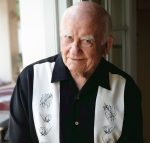
Ed Asner stars in A Man and His Prostate, which is at the Anvil Centre Theatre for two nights only: April 27-28. (photo from ACT)

I did my homework. I had read and watched interviews. I had my questions ready. I was prepared. But Ed Asner is a force of nature – a funny, caring and curious one, but a force of nature nonetheless. And nature is more powerful than the proverbial man. I learned that in high school English class – man has a chance against another man or his own internal demons, but not so much against nature.

I was calling Asner about his upcoming performances in New Westminster at the Anvil Centre Theatre April 27-28. He stars in A Man and His Prostate, written by his longtime friend Ed Weinberger, a multiple-award-winning scribe (including a Writers Guild of America Lifetime Achievement Award), who has written for countless TV series – for soooo many comedies. Both Weinberger and Asner know funny, so this show promises to be hilarious. But its purpose is also to make a point: “that point being,” Asner told me succinctly, “get examined.” Hear that, guys?

I’ve interviewed famous people before so that wasn’t the reason I got somewhat flustered in speaking with Asner. Admittedly, I loved and watched every episode of The Mary Tyler Moore Show and its spinoff drama Lou Grant. I have enjoyed Asner in various other roles over the years, including on Murdoch Mysteries (as Santa Claus, of all things) and, of course, as the voice of Carl Fredricksen, the grumpy protagonist in Up, who made me cry. Hearing such a well-known voice respond to your questions is very cool, and a little unnerving, but there was more to it.

I called Asner at the number I was given by the publicist for the local show. The woman who answered the phone simply said he’d had to leave and that I should try his cell, so I did, thinking nothing of it. The connection wasn’t great, but I reached Asner – he was in an L.A. hospital waiting to get a CT scan. When I wished him well and said we could reschedule the interview, he said, “Let’s try to talk now. It’ll help me pass the time.”

As I started asking him questions, he stopped me: “Are you uncomfortable doing this?”

“No,” I said, “I’m happy to keep your mind off things if that’s going to help.” I got as far as finding out that Weinberger had approached Asner about a year and a half ago to take on this role, but the line really was bad and we weren’t hearing each other – he said he’d call me back. But it was Asner’s righthand man (Nick, I think) who phoned, telling me that Asner had gone in for his CT, and they would call again once it was complete.

Next call: “Are you OK?” I asked.

“I’m fine. Well, maybe a little dizzy,” said Asner. Or, at least that’s what I think he said. After a spike of feedback came through the phone, I admitted, “I can barely hear you.”

In a louder voice, enunciating carefully and speaking slowly, he responded, “I said, maybe a little bit of syphilis.”

I might have taken a beat before saying, “Oh my. Really?! Is that the headline I can put?”

While it may not be apparent on first meeting, I can be bawdy with the best of them, and I enjoy such banter when all involved are of age and it’s in good fun. And this would turn out to be one of the most fun interviews I’ve conducted.

Laughing, I said, “So it all went well, the CT scan?”

It had indeed. He’d had a fall but was OK. I thanked him for calling me back, and he let me know, “Well, I’m reversing the charges.”

“You should!” I said. “You’re paying for this now. Oh my gosh. I was hoping to get my parents to pay for it.” (I was in Ottawa, and was calling him from my parents’ house.)

“Ah, no, no, no,” he assured me. “Anyway, you’ve got a lovely voice.”

“As do you, of course. But a little more famous than mine.”

“Well, I’ve been working at it longer.”

We eventually returned to where we had left off. “Were you involved in any of the writing process, or is there improv involved?” I asked about the show.

“Not on this,” said Asner. “I worked with him [Weinberger] on our book together, called The Grouchy Historian, which came out in October. We worked together on that, but he wrote A Man and His Prostate all by himself.”

“And you obviously liked what he wrote.”

“I love it.”

Asner said his first performance of A Man and His Prostate was in the fall of 2016, but then he stopped the interview again, leaving the phone with Nick – the two were still at the hospital, about to grab a very late lunch. Getting into a rhythm for this interview was proving impossible. Case in point, when Asner returned to the line, he started interviewing me. Why was I calling from Ottawa? I explained I was at home for Passover and asked if he had attended a seder. “No, we were on the road,” he said, going on to ask me about the weather in Ottawa, how many were in my family, whether I had grown up in Vancouver. When I let him know that I had grown up in Winnipeg, he said, “Oh, God.” And, while I fumbled to regain my role as interviewer, he continued his train of thought, “Froze your ass off didn’t you?”

“I did,” I admitted. “And that’s why I live in Vancouver now.”

After some PG-rated politically incorrect exchanges, I managed to get back to my questions.

The first shows of A Man and His Prostate were in California, he said, then they did a few in New York.

“Do you do what the show preaches? Do you get regular prostate exams?” I asked.

“Well, I’m due for one, I must tell you,” he said.

Asner called A Man and His Prostate “wonderfully funny,” and said “it stresses a very important point – that point being, get examined.”

He said the show is “very rewarding to do because the laughter is prevalent.”

At 88, he has no plans to retire. As for his beginnings in the profession, he said his desire to be an actor “didn’t achieve consciousness until I did the lead in the play at university.” He said, “I had done radio in high school, and loved it, but full-fledged stage-acting, I hadn’t thought of that.”

That doesn’t mean he didn’t like the spotlight as a kid. “I loved to get up and sing Adon Olam louder than anyone else,” he said, adding, “My bar mitzvah was a failure.”

He explained, “I spoke too fast, and angered my father. I put my hands behind my back, hovering over my ass, that angered him, as well. I was a prize student … but that bar mitzvah was not of prime quality.”

Asner grew up in an Orthodox home and, he said, “I’d say I pursued acting, probably, as part of my atonement” for his bar mitzvah. He said acting was at least a partial atonement in that it involved “pleasing the crowd, reciting or reading the script correctly and empathetically … all kinds of things.”

While no longer religious, Asner attributed his activism to “the intensity of my raising, the love of my parents, the constant identification as a Jew, [being] born in the time of Hitler.”

The actor has seven grandchildren. When I asked about whether he actively tries to engage them in the world around them, he joked, “Nope. I don’t like ’em.”

“You only hang out with them when you have to?” I asked.

“Uh huh. They don’t like me. It’s a perfect fit.”

I told him how much I enjoyed the Funny or Die video Old People Don’t Care About Climate Change, in which he took part. I mentioned it because one of his lines in it is, “My grandkids are spoiled anyway. They could use a little hardship.” The video’s message, of course, is that younger people must take action to protect the environment.

“I worship the earth,” Asner told me. “I don’t necessarily worship any god.”

Returning to the reason for the interview, I asked him whether he had anything else to say about A Man and His Prostate. “You’ll be there, and you’ll see how right I was to urge you to come,” he said.

The show is about Weinberger’s “journey to discover his inner self both literally and figuratively,” reads the press material. “This near tragedy is masterfully transformed into a poignant monologue perfectly portrayed by Asner as he visits the hospital in preparation for a surgery he needs but doesn’t want.”

“There’s mostly jokes all the way, or building up to a joke,” Asner said. “But then we get to that little section where I talk about the celebrities who have died – it’s a long list of celebrities – and I make the serious point that, every 16 minutes, a man dies of prostate cancer in the United States.”

As we wound up, he said, “You’re a wonderful interviewer, I don’t care what they say about you.”

“You should only believe half the rumours,” I returned.

A charmer to the end, he said, “I can’t wait to meet you.”

After I told him I didn’t think that was an option for me, he asked, “Why not?”

“Because you’re you!”

He told me to tell the publicist, “Well, say that I asked for you.”

“OK,” I said. “And I’ve now got it on tape, so I can actually prove that I’m not just making that up.”

“That’s right,” he agreed. “That’s absolutely right.”

He said, I “could even bring Momma” – my mother had answered the phone when he called back.

“Momma might even fly to Vancouver for that,” I responded before handing the phone over to my mom so she could say goodbye.

For tickets ($75) to A Man and His Prostate at the Anvil Centre Theatre April 27-28, 7:30 p.m., visit ticketsnw.ca or call 604-521-5050.

Format ImagePosted on April 20, 2018April 18, 2018Author Cynthia RamsayCategories Performing ArtsTags Anvil Centre, Ed Asner, Ed Weinberger, health, Judaism, prostate cancer, theatre
Yom Ha’atzmaut love, spirit

Yom Ha’atzmaut love, spirit

Shlomi Shaban will be joined by Ninet Tayeb (right) at Metro Vancouver’s celebration of Yom Ha’atzmaut on April 18 at the Chan Centre. (photo from Jewish Federation)

Two award-winning veteran musicians, not to mention good and longtime friends, will be headlining our community’s Yom Ha’atzmaut celebration on April 18 at the Chan Centre for the Performing Arts. Tel Aviv’s Shlomi Shaban will be joined by Los Angeles-based Ninet Tayeb.

“I have performed once outside the country on Yom Ha’atzmaut,” Shaban told the Independent. “It was Israel’s 60th anniversary. It was in Stockholm, Sweden. A lot of musicians and myself traveled over there, like Beri Sacharov, Eran Tzur and many others. We had a great show over there. But, beside that, I can’t remember performing outside Israel on Yom Ha’atzmaut, mostly I’m here in Israel, performing across the country or just being with my family, it depends.

“I’ve never been to Canada before, so, naturally, I’m very, very excited,” he said. “I’ve heard a lot of really great things about Vancouver and I’m really looking forward to just hang there, travel around and explore the place, although we’re going to be there for too short [a time] I’m afraid, two days, but I hope to catch as much as I can.

“I remember my friends Jane Bordeaux performing there last year,” he added, “and they came back really excited about the crowd and the place.”

Shaban was born in Tel Aviv and has lived there his whole life, except for a few years, when he was in London, England, to study classical piano. “I’m in love with Tel Aviv,” he said.

Like Tel Aviv, music has always been a part of Shaban’s life.

“I started learning how to play the piano when I was 6 years old,” he said. “I started privately, like a lot of kids. Then I went to a conservatory, and studied there for 10 years. And then, in London … I received an artist’s diploma from the Royal College of Music. I’m very proud of that, though I haven’t looked at that diploma since I got it.

“I always wrote little songs, since I was 10, I think, and always considered that as kind of a hobby, or kind of an intermission – I was practising a lot of piano, five hours a day, six hours a day, and more and more, and I always saw that as kind of a comic relief from practising…. When I was 21, I started thinking, maybe I went the wrong direction, so to speak, and the little hobby that I considered to be a comic relief, might be my main interest, and tried to publish my songs. I was very lucky, I was signed by a major label, here in Israel, of course, and faded away from the classical world, and never went back.”

Shaban now has four albums under his belt, and has won several awards for his work.

“In terms of career highlights,” he said, “I would mention two. As I said, I left the classical world but, five years ago, or six years ago, I was approached by the Israel Philharmonic. They celebrated their 75th year, and they asked me to do a concert of my music, my songs, with the orchestra.

“It was a great closure for me because, when I was 17, I played with the orchestra as a classical pianist with Maestro Zubin Mehta. I was a kid, so, naturally, very excited and very nervous, and now I came back through the main door with my own songs. It was another exciting and, again, nerve-wracking in a way, event for me. I had to practise piano again because I played my own songs and a little classical music we mixed throughout the songs. That was definitely a highlight.

“Nowadays, I’m touring with Chava Alberstein,” he continued. “She’s Israel’s, let’s say, Edith Piaf. I don’t know. She’s Chava Alberstein – she has more than 60 albums. I recorded a song with her four years ago, and asked her to consider touring with me and being her pianist – just me and her, she sings and I play…. We planned to do four or five shows, and now the tour has evolved and it’s sold out, and we are adding more and more shows. I sing only one song during the show, the song that I wrote for her…. It’s a great, great pleasure for me and I learn so much and enjoy so much doing it. So, that’s another big highlight for me.”

Shaban has been inspired by many musicians.

“I’ve covered many artists, Israelis and non-Israelis,” he said. “Mostly, I tend to cover storytelling songs, people like Bob Dylan, Leonard Cohen … I’m going to play a few songs by him in the show.

“I was trained as a classical musician and, when I left it and began hearing popular music, in a weird way, my heart went to very simple music, very text-based music, people, as I say, Dylan and Leonard Cohen, Tom Waits, Lou Reed, all that gang. And, during the years, they have remained my main love and inspiration, but I have listened to a lot of other music – new music, old music, jazz. I love jazz pianists and composers, people like [Thelonious] Monk … Miles Davis, and many, many others. I’m not interested in a specific genre, just getting as much inspiration as I can from different genres. But, as I said, my main interest always was the lyrics, funnily enough, and the story that the song conveys, and that hasn’t changed.”

In terms of his creative evolution, however, Shaban has been focusing more on the music. He described his early composing as “very functional,” something he used mainly to help the story to come across. “Nowadays,” he said, “I’m writing more rich music. I think, in that way, I’m heading backwards to the classical time and thriving on inspiration from all kinds of music, and not just folk music or rock music.”

photo - Ninet Tayeb
Ninet Tayeb (photo from Jewish Federation)

Shaban is excited to be performing in Vancouver with Tayeb, who he described as “one of the best singers I have ever heard.” He added, “She’s a great friend of mine, so that’s another bonus, meeting her in Canada – she’s in L.A. now and I rarely see her, so I’m looking forward to that, and meeting you all.”

For her part, Tayeb has recorded five albums and, like Shaban, has been recognized numerous times for her work. Also like Shaban, music has been a lifelong passion.

“Music has been my life ever since I was a little girl,” she told the Independent. “I started writing my own music at the age of 23. To be able to express myself through music is the most amazing gift I could have.”

Tayeb said, “My style is a mixture between Israel, L.A., Berlin and New York, kind of a Middle Eastern rock ’n’ roll with a slight hint of electronic. Music keeps evolving all the time and so do I – thank God! – and, for me, the most important thing is to keep moving forward and keep my mind open.”

It was this drive to continually enrich her knowledge and creative spirit that took her to Los Angeles, she said. She moved there from Tel Aviv.

On Yom Ha’atzmaut, said Tayeb, “The show will be me singing with Shlomi and Shlomi will sing alone, as well. One thing I can promise you – the show will be full of love and true spirit.”

For tickets ($18) to the April 18, 7:30 p.m., concert at the Chan Centre, visit jewishvancouver.com.

Format ImagePosted on March 30, 2018March 29, 2018Author Cynthia RamsayCategories MusicTags Israel, Jewish Federation, Ninet Tayeb, Shlomi Shaban, Yom Ha'atzmaut
Miller play remains relevant

Miller play remains relevant

Arthur Miller’s Incident at Vichy is set in a Nazi detention centre in Vichy France, where a group of prisoners are being held. (photo from Theatre in the Raw)

Theatre in the Raw is bringing Arthur Miller’s Incident at Vichy to the Studio 16 stage April 11-22.

The play was chosen and recommended to the theatre’s board of directors in 2017, said Jay Hamburger, artistic director of Theatre in the Raw and director of the theatre’s production of Incident at Vichy. “It had been a piece that had been suggested previously as well,” he said. “But, with the recent political developments in the U.S. as well as worldwide, I felt that, as a theatrical piece, it spoke closely to issues today perhaps even more so than when it was written in the 1960s, and these events were behind the popular consciousness in some way.”

In Incident at Vichy, Miller – whose most popular plays include Death of a Salesman, The Crucible and A View from the Bridge – explores our moral responsibility to act in the face of intolerance and hate. The one-act play, which was first performed in 1964, is set in a Nazi detention centre in Vichy France, where a group of prisoners are being held. “Their unease, fear and confusion is stirred up as they contemplate what may divide or unite them. And what fate awaits them,” reads the press material.

Panel discussions will follow each performance and explore the question, Can it happen here?

“That is the overall and main question placed before the audience as well as to ourselves,” said Hamburger. “Can fascism, or a wave of totalitarian, racially dividing politics take place in Canada? We see fragments of such distressing political and socially oriented movements happening worldwide. Even in the U.S., so close to Canada, there are semblances of divide and conquer. Sadly, it seems to come from the current administration in Washington, D.C. This is cause for real concern.

“Now more than ever this may be the time to warn people that eternal vigilance is key to the well-being of our daily lives, especially given the rise of violent hate crimes against Jews, Muslims, South Asian and First Nations communities, even in Canada…. The play finds a way to touch on economic and class concerns related to the increasing gap between the rich and the poor. It notes that certain people are at an insurmountable disadvantage in seeking ways to survive. Certain characters in the play point out the way prejudices are manufactured and fomented, often condemning people because of misconceived notions concerning races of people, ethnicities or religions.”

Incident at Vichy doesn’t only examine how genocide can happen, however, but what people could do to prevent it.

“Each character in the play has their own experience and background in relation to being interrogated for being Jewish or perhaps seen as an ‘undesirable’ in some way,” explained Hamburger. “The play is basically a dramatized account of events that took place in 1942 in the unoccupied ‘free zone’ of Vichy France,” he said, and it presents many of the attitudes that “people had who weren’t quite ready to accept the extent of what was happening around them until it is completely undeniable – and too late.

“It also includes as an important aspect the perspectives of characters who are non-Jewish Germans, and Austrians as well,” he added. “It implores members of the society to not be complacent in the face of governments and demagogues that wish to grab power by lying and oppressing the large swaths of society.

“A question and statement is placed forward within the play: who is responsible for such horrendous acts of cruelty leading to genocide? At what point must one consider themselves also responsible? The play suggests it is for all in society to give a damn or have a sense of responsibility to such terrible events. There is an important act of human kindness in the play, but I won’t give away the ending here. But, obviously, Miller is writing about shattering events, with shreds of hope that a holocaustal deluge will not repeat itself, that such human massacres will not happen again.”

Audiences should come away from Incident at Vichy with some answers, but perhaps as many questions about the nature of evil, how we perceive it and deal with it.

“I think the play is trying to answer the question, How did things get so far out of hand without people rising up and stopping the madness?” said Hamburger. “The play tries to answer that question, even though you get the impression of how relentless the evil and suffering was once certain powers were in control and the momentum of a horrific madness got going…. I think the play insists that ordinary people are instrumental in realizing evil actions, without necessarily wanting to see the bigger picture themselves. Thus, a vigilant eye is necessary on governments and draconian racial laws implemented upon a citizenry. Such policies must be watched, debated and fought against in a fair and free manner without fear of punishment or reprisal.”

photo - Theatre in the Raw artistic director Jay Hamburger directs the theatre’s production of Incident at Vichy
Theatre in the Raw artistic director Jay Hamburger directs the theatre’s production of Incident at Vichy. (photo from Theatre in the Raw)

Theatre in the Raw’s mission statement is on their website. Part of it is to be “risk-takers, willing to give exposure to voices seldom heard, striving for artistic excellence, in the presentation of unusual, awakening and exchanging theatre.”

“We are an independent grassroots theatre that has been in production and functioning for 24 years, residing on the Eastside of Vancouver,” said Hamburger. “We have produced comedies, tragedies, radio play works, original one-acts and full-length mainstage plays, as well as original and revived musicals of quality and enjoyment. Our process is to take the art of theatre and performance seriously and to present it first on a local level to Vancouver audiences and then beyond.”

The audition process for Incident at Vichy started seriously in early January and continued to the end of February.

“We saw dozens of actors (actually over 50 for weeks on end) that also included an extensive call-back set of days,” said Hamburger. “A few actors were called in to audition because I attended the unified general auditions that the Greater Vancouver Professional Theatre Alliance provides for theatre company members in the province. That proves an invaluable resource for those involved in the theatre arts.”

Rehearsals started at the end of February and will continue until the opening of the play on April 11 at Studio 16, which is housed in La Maison de la francophonie de Vancouver. “We are meeting three to four times a week, as well as individual meetings and sessions with each of the 15 actors cast in the show,” said Hamburger.

Incident at Vichy features some longtime Theatre in the Raw company members, he said, naming Roger Howie, Jacques Lalonde, David Stephens, zi paris, Brian Leslie, Stanley Fraser, Michael Kruse-Dahl and Ralston Harris. Hamburger is also part of the cast, as are Rob Monk, Julie Merrick, Daniela Herrera Ruiz, Laen Avraham Hershler, Giuseppe Bevilacqua and Simon Challenger, with Amanda Parafina as stage manager.

“We are fortunate to have such a dedicated and hardworking group of able thespians on the boards for the April run of the show Incident at Vichy,” said Hamburger, adding that fellow Jewish community member Cassandra Freeman also has been helpful.

“Cassandra has been an invaluable advisor and advocate for a number of years with Theatre in the Raw,” he said. “She has been a coordinator with the Tuesday night Vancouver Actor’s Drop-In sessions. We have cast at times from those evening sessions for some of our shows. She is a creative writer and has made the effort to report about Theatre in the Raw in a column or two she does for the press.”

Tickets for Incident at Vichy are $25/$22 and can be purchased from theatreintheraw.ca or 604-708-5448.

* * *

In his interview with the Jewish Independent, Jay Hamburger, artistic director of Theatre in the Raw and director of the theatre’s production of Arthur Miller’s Incident at Vichy, said, “A question and statement is placed forward within the play: who is responsible for such horrendous acts of cruelty leading to genocide? At what point must one consider themselves also responsible? … There is an important act of human kindness in the play, but … Miller is writing about shattering events, with shreds of hope that a holocaustal deluge will not repeat itself, that such human massacres will not happen again.”

Hamburger added, “The sentiment reminds and brings forth four related historical quotes that speak directly to significant parts of the play”:

“How can we expect righteousness to prevail when there is hardly anyone willing to give himself up individually to a righteous cause. Such a fine, sunny day, and I have to go, but what does my death matter, if, through us, thousands of people are awakened and stirred to action?” – Sophie Scholl, a member of the anti-Nazi White Rose group, who was executed for treason by the Nazis

“Of course, the terrible things I heard from the Nuremberg Trials, about the six million Jews and the people from other races who were killed, were facts that shocked me deeply. I was satisfied that I wasn’t personally to blame and that I hadn’t known about those things. I wasn’t aware of the extent. But, one day, I went past the memorial plaque which had been put up for Sophie Scholl in Franz Josef Strasse, and I saw that she was born the same year as me, and she was executed the same year I started working for Hitler. And at that moment I actually sensed that it was no excuse to be young, and that it would have been possible to find things out.” – Traudl Junge, one of Adolf Hitler’s secretaries

“I don’t believe that the big men, the politicians and the capitalists alone are guilty of the war. Oh, no, the little man is just as keen, otherwise the people of the world would have risen in revolt long ago!” – Anne Frank

“I’ve found that there is always some beauty left – in nature, sunshine, freedom, in yourself; these can all help you. Look at these things, then you find yourself again, and God, and then you regain your balance. A person who’s happy will make others happy; a person who has courage and faith will never die in misery!” – Anne Frank

Format ImagePosted on March 30, 2018March 29, 2018Author Cynthia RamsayCategories Performing ArtsTags Arthur Miller, genocide, Holocaust, Jay Hamburger, theatre
Inspired by cultures, nature

Inspired by cultures, nature

Artist Monica Gewurz’s “Woven Tallit” was inspired by her father.

Judaism’s history, traditions and clothing and my Peruvian upbringing are always latent in my inspirations,” artist Monica Gewurz told the Independent.

Gewurz will be one of more than 90 exhibitors at Art! Vancouver, which takes place April 19-22 at the Vancouver Convention Centre East.

“Both of my parents were Polish Jews,” said Gewurz. “My mother left Poland before the war to Palestine as part of the youth aliyah to help establish Israel. My father left Poland to study in France where, after completing his studies, he went to Peru to work for a French mining company. During the British Mandate, my father volunteered to help build the underground tunnels as part of the Jewish resistance. He met my mother and, in three weeks, they were married. My father had to return to work in Peru, where they both stayed. I was born there and left in 1976.”

Though Gewurz’s mother was a nurse, she “had a passion for rendering still life in pastels and watercolours.”

Gewurz left Peru, she said, because of the military situation there, “and the increased level of antisemitism in Peru and in South America in general.” She obtained both her bachelor of science and her master’s in landscape architecture and environmental planning from the University of Guelph, in Ontario, then worked for the federal government in Ottawa until 1987. She moved to Montreal, she said, “to work in the private sector for pension funds and, later on, for Canadian Pacific Railway, working on both environmental decontamination and commercial real estate planning, marketing and sales until December 1997. I moved that year to Vancouver because of the rise of the separatist movement in Quebec and the lack of professional opportunities because I was not fully bilingual.”

photo - Monica Gewurz will be participating in Art! Vancouver, which takes place April 19-22. (photo by Tatiana Rivero Sanz)
Monica Gewurz will be participating in Art! Vancouver, which takes place April 19-22.

During her career, Gewurz has worked in both large-scale commercial real estate development and sales; eco- and cultural tourism planning and marketing; environmental assessment; and for the Canadian government dealing with aboriginal issues. Her work in jewelry, photography and painting began as hobbies. However, in 2014, she received a fine art certificate from Emily Carr University of Art and Design, and embarked on a new career as a professional artist. She is currently enrolled in Emily Carr’s advanced study certificate in painting.

“My textured paintings strive to reflect and connect cultures through the use of ancient and modern materials, colours and techniques,” she said. “I use texture to blur the line between painting and sculpture, integrating man-made elements such as paper, natural elements like semi-precious stones and gravel, and traditional textile designs from various cultures, including Israel and my native Peru.”

Gewurz also travels a lot, which has allowed her to study different art forms, she said. She has been to Peru, Chile, Argentina, Brazil, Bali, France, Germany, Italy, Greece, Switzerland, Spain, Portugal, India, Israel, Turkey, China and several islands in the Caribbean. She said she always tries to visit museums and historical sites when she’s traveling. Last summer, for example, she participated in a guided art tour through the rivers of Holland, which included visits to UNESCO sites.

Her travels and love of archeology and tribal symbolism inspire her art, she said, and lend it broad dimensions.

“I am attracted to the abstraction of stylized figures done in wood, metal or in textiles that are decorated with simple colours … the myriad high relief textures and multicolour metallic patinas that have been created by weathering and the use of metals to indicate status or ceremonial purposes.

“I am also attracted by their simplicity, honesty and inventiveness, and the fact that they are all made with natural materials and pigments,” she said. “Distorted yet primal in its raw geometry, it provides my inspiration to create a new artistic language with new forms, colours and meanings.

“In my paintings, I use an earthy, quiet palette echoing the colour found in metallic patinas, Raku pottery and ancient glass. To accomplish the above, I use intense turquoises, luminous teals and yellows, haunting blues, earthy ochres and siennas, deep burgundies and mysterious charcoals and blacks. I also use metallic paints and foils to accent textures to give my paintings more luminosity.”

Gewurz really does seem to communicate with the earth. Her sea- and landscapes are alive with colour and texture. In some paintings, it’s almost a wonder how the water stays within the frame, its flowing movement captured somehow into a moving stillness.

“My studio is located amidst the rainforest with an ocean vista,” she said. “I am surrounded by the subtleties of changing skies and rhythms of the ocean. Hikes into the local mountains, forests and beaches up the north coast inspire my abstract work.

“The abstraction of the constant changing of shapes, colours and patterns of light in the reflected water and changing skies during sunrises and sunsets mesmerize me and are a source of my inspiration. I am fascinated with the contrasting nature of the organic and how that can provide an escape to a dream-like place.”

As for works in which her Jewishness played an important role, Gewurz offered the Independent a few examples.

The mixed media piece “Woven Tallit,” she said, “was inspired by the one my father wore until he passed away.” It not only depicts a tallit in the early stages of being made, but also symbolizes, she explained, “the tapestry that we call life, where individually we are nothing much more than a single thread intertwined with others, and also the ‘woven’ aspect of the various cultures and religions that have come together to create modern Israel.”

Gewurz created “Rachel de Matriarch I” and “Rachel de Matriarch II” to honour her mother, whose name was also Rachel, and who was “an artist, and had similar abilities and qualities as Rachel the matriarch,” one of the four spiritual matriarchs of the Hebrew Bible, she said, noting that “Rachel means a small lamb, and she is described as ‘beautiful of form and beautiful of appearance’ (Genesis 29:17).”

“Although she is no longer alive,” said Gewurz of her mother, “she continues to guide me in my daily life and artistic journey.

photo - Monica Gewurz’s “Rachel de Matriach” was inspired by her mother
Monica Gewurz’s “Rachel de Matriach” was inspired by her mother.

“In terms of symbolism,” she added, “the pose of Rachel is of deep thought, dreaming and hoping for the well-being of all people in the world. The texture, patinas and colour palette of copper, earth tones and turquoise are inspired by the simple but colourful clothes, jewelry and headdresses that Rachel would have worn while working in the fields.

“The many layers of this painting are reminiscent of the layered depth of a person’s life, and like looking into ourselves. While the surface layer is easily recognized and understood, deeper exploration is needed to reveal the complex and veiled richness of the person within.”

The last example Gewurz gave was her “Friendship Shawl,” which she described as “an abstraction of a silk and gold scarf which can be wrapped around the shoulders of two friends. Friendship is one of the key values of Judaism and a fundamental building block of the global community.” This painting was also inspired, she said, “by the patterns formed by the warp and weft of the friendship bracelets woven over the centuries by aboriginal people from Central and South America. According to tradition, a person will tie a string or fabric bracelet around the wrist of a friend while making a wish or prayer for them … the wish will come true if the bracelet is worn until it falls off by itself.”

Gewurz is represented by four different galleries. “I have been represented by Ukama since 2016, the Kube Gallery and Sooke Harbour House Gallery since 2017 and, this year, I will be also represented by Mattick’s Farm Gallery in Victoria,” she said.

In addition to paintings, Gewurz also creates “wearable art.”

“They are all based on my paintings,” she said of these works. “I take a portion of the image and expand it so it is an abstraction of a painting rather than the whole painting. I have been doing it only for one year, mainly as part of participating in the Slow Clothes fashion show held as part of the Harmony Arts Festival every year, and to give them away as a thank you for people that buy my artwork, i.e. somebody who buys a large painting receives a scarf or a pillow as a gift.”

Gewurz also donates a percentage of her sales to the Brooke Foundation, whose mission is to improve “the lives of working horses, donkeys and mules” around the world, and to the SPCA (Society for the Prevention of Cruelty to Animals) in Vancouver. She has donated art to numerous organizations, including the B.C. Cancer Foundation, the Children’s Heart Network Foundation and the Stephen Lewis Foundation’s Grandmothers to Grandmothers Campaign.

“It is a way of giving back to the community that has supported me in the past and continues to support me,” she said. “I like to donate art, money and time: ‘it’s better to give than to receive.’ I also like doing something useful and helping others, which makes me feel good about myself, which increases my self-esteem, and greater personal empowerment and better health.”

Other Jewish artists in the exhibition include Art! Vancouver director Lisa Wolfin – “I am doing a forest with a pipeline going in front of the forest to show what is going on in B.C.,” she told the JI. As well, Wolfin’s sister, LeeAnn Wolfin, and daughters, Taisha Teal Wayrynen and Skyla Wayrynen, will be showing their work. The event also features artist demonstrations and workshops, speakers and panel discussions, dance and other performances. For schedule and ticket information, visit artvancouver.net.

Format ImagePosted on March 30, 2018March 27, 2020Author Cynthia RamsayCategories Visual ArtsTags Art! Vancouver, Judaism, mixed media, Monica Gewurz
About the Passover cover art

About the Passover cover art

photo - Fae at Passover
Fae at Passover (photo from Ramsay family)

While based on the above photo of my niece Fae at a seder several years ago, the cover art is inspired by all my nieces and nephews: Hannah, 24, Zac, almost 22, Caleb, 17, Fae, 6, and Charlotte, 4. I may not get to as many family seders as I would like, with all of my immediate family living in Ontario, but this photo is just one of many that has adorned my fridge over the years I’ve lived “out here,” and there have been many visits, as well as Skype and phone calls, so I’ve been able to get to know the wonderful people they are, despite the physical distance, and am so proud to be one of their aunts. I am confident that they will contribute, each in their own way, to helping make this a world in which, eventually, everyone has the love and opportunities our family has had.

image - JI Passover cover 2018 smallTo create the cover illustration, I scanned a pencil sketch I made from looking at the photo. I emailed the scan to myself so that I could use the app Paper 53 on my iPad to do most of the “painting,” including nine of the 10 plagues. Jewish Independent production manager Josie Tonio McCarthy helped me symbolize the death of the firstborn sons in QuarkXPress – trust me, no letter d’s were harmed in the making of this cover! Josie also refreshed my memory of how to use some aspects of Photoshop, which is where I brought everything together, with the odd embellishment or two, or three.

With wishes from all of us here at the JI for a Pesach sameach.

Format ImagePosted on March 23, 2018March 22, 2018Author Cynthia RamsayCategories From the JITags art, family, Passover, plague
Helping more families

Helping more families

On Feb. 20, students at Vancouver Hebrew Academy packaged more than 200 mishloach manot bags full of non-perishable food items donated by the Marine Drive and Grandview Superstore locations. (photo from VHA)

The atmosphere at the Jewish Food Bank on Feb. 22 at the Peretz Centre for Secular Jewish Culture was almost festive. Adults chatted, kids played, as people made their way through the various lines. Vancouver Hebrew Academy students had already come and gone – having delivered more than 200 mishloach manot packages in anticipation of Purim – and Minister of Justice and Attorney General of Canada Jody Wilson-Raybould had stopped in to visit.

“We were thrilled to be able to distribute the Purim packages through the food bank,” Rabbi Don Pacht, VHA head of school, told the Independent. “It was the idea of Hodie Kahn and Rachael Lewinski, two die-hard VHA enthusiasts … Hodie is a past VHA parent and board member, Rachael is a current VHA parent (and a VHA alum) and board member. They have been largely responsible for building the program to where it is today. They saw this as a great way to bring the lesson of Purim into living colour. So much of the Purim theme revolves around helping others and bringing community together to celebrate – think mitzvot of sending food to neighbours and charitable gifts to those in need. What better way to celebrate as a community than to bring the joy of Purim to more and more families?”

photo - Several VHA students and teachers delivered the mishloach manot bags to the Jewish Food Bank on Feb. 22
Several VHA students and teachers delivered the mishloach manot bags to the Jewish Food Bank on Feb. 22. (photo from VHA)

“It’s a powerful symbol of love and friendship among our community,” said Richard Fruchter, Jewish Family Services chief executive officer, about the mishloach manot project in the agency’s February e-newsletter. He also noted that, during Wilson-Raybould’s visit, the minister spoke “with JFS about food security, housing and mental health services. She connected with the dozens of volunteers and hundreds of clients who benefit from this twice-a-month service.”

All of the items provided in the 200-plus mishloach manot gift bags were donated by two Real Canadian Superstore locations: Marine Drive and Grandview. “And they have [donated] for several years now,” said Pacht, stressing his gratitude.

In years past, the initiative has included other Jewish schools – Vancouver Talmud Torah, Richmond Jewish Day School, King David High School, Pacific Torah Institute and Shalhevet Girls High School – and “was an avenue to raise funds for all of the Jewish day schools,” said Pacht, as people donated to have Purim packages sent to friends, family and colleagues. Run under the umbrella of VHA, it was the “Vancouver Jewish Day Schools Purim Project,” he added.

“In past years, we have hosted the event at KDHS and had students from all the schools participate in various capacities,” explained the rabbi. “VTT, VHA and RJDS students packing, KDHS students setting up and cleaning up, PTI and Shalhevet students picking up items from Superstore, etc. We also have had parents from all of the schools volunteer their time to assist the packing process and deliver the packages on Purim day.

“This year, we took a step back and did not run the program as a fundraiser. With only 200 packages being prepared, that were then distributed through the Jewish Food Bank, we managed the entire process in-house.”

VHA also sent out “a mailing containing a Purim kit, with some information about the holiday and a few practical goodies as well,” said Pacht.

“What started in Ruth Huberman’s living room – at the time she was a VHA parent and board member (she now has several grandchildren attending VHA) – preparing about 100 packages, mushroomed into a program that reached the farthest corners of our community. We have over 1,200 families we connect with each year!” he said. “After 10 years of doing the same thing, we found it difficult to maintain the same momentum and enthusiasm. We are looking at various alternative models for next year. Something to refresh the program and keep the community engaged.”

Format ImagePosted on March 23, 2018June 7, 2021Author Cynthia RamsayCategories Celebrating the HolidaysTags Don Pacht, Jewish Family Services, Jewish Food Bank, Richard Fruchter, Vancouver Hebrew Academy, VHA
Separate but connected lives

Separate but connected lives

“I remember the deep pleasure I had as a child when I first began reading,” author Méira Cook told the Independent. “It was like climbing into a book and pulling the covers down over my head. When I write, I feel as if I’ve returned to that world. My greatest wish is that readers experience the absorption in reading my novels as I’ve had in writing them.”

Cook’s latest novel – her third – is Once More With Feeling (House of Anansi Press Inc., 2017). Readers will be immediately drawn in by the cheerful, optimistic and a bit naïve Max Binder, whose “many friends tend to exaggerate the dozens of half-full glasses – and some of them considerably less than quarter-full, it’s been pointed out by a couple of the more sour and dill-picklish ones – that he has eagerly poured into another until presto, not only is the glass full but it runneth over.”

Because, for Max, “hope is not merely a feathered thing, a bird, or an equation for water and glass. Hope is where he lives, where he hangs his hat and unbuckles his belt.”

So begins Once More With Feeling, with Max at the airport – where he’s never been “without running into someone he knows, however tangentially” – to pick up a visitor he’s invited as a surprise for his wife Maggie on her 40th birthday. The light tone lulls readers unfamiliar with Cook’s previous work into the expectation of a nice, light read, albeit one full of insight into human nature and wry observations on life. But, while there is much humour throughout, the novel is substantive and serious, and the writing demands that readers do some work.

The story of the Binder family – Max, Maggie and their two sons – and the community they live in, Once More With Feeling “explores how different family members are affected by tragedy, and how the Binder family’s trauma ripples out into the larger community,” explained Cook. “The novel began as a series of linked short stories centring on the Binders, but also veering off into other characters and situations. The structure I’d envisioned was of a year in the life of a city (Winnipeg), with each story taking place during a different month. I loved that sense of turning seasons and changing weather that we prairie folk experience so keenly.

“In the process of writing Once More With Feeling,” she continued, “I began to realize that, while we often like to believe that we are the protagonists of our own autonomous stories, really we are all connected, all linked in hidden and sometimes unexpected ways, all parts of a larger novel. In Winnipeg, we cherish the fond belief that we’re connected by two degrees of separation rather than the customary six degrees. I wrote my novel with this in mind – that people who live in different parts of the city, different neighbourhoods, are nevertheless connected not only through mutual friends and acquaintances but also in their shared humanity.”

The connections aren’t always easy to make in Once More With Feeling, and readers who like linear narratives will find the novel challenging. Some of the chapters have little to nothing to do with the Binders. But Cook is a master at creating characters – and Winnipeg would be one of the many in this book – that seem real, like people we know or have known, or who resemble ourselves in ways. The writing is excellent; many passages are hilarious, others are breath-catching. Cook is a perceptive observer and intelligent commentator. Perhaps not surprisingly, she was a journalist in her home country of South Africa.

“I came to Canada in the early nineties and lived for a couple of years in a small town three hours north of Winnipeg,” she said. “I’d previously lived an entirely urban existence in a large, bustling city, Johannesburg, where I was a film and drama reviewer. Suddenly, I found myself in a very small town (the population was about 500), where I could no longer work as a journalist. I’d never seen snow before and, since I’d arrived in February, there was an awful lot of it. I experienced culture shock as a devastating loss of identity, the loss of everything I’d known before. When I looked out my window, the snow seemed as white and blank as a page. I began to write – first poetry, later fiction – as a way of leaving my mark on that page.”

In addition to her three novels, Cook has published five books of poetry. In Canada, she also has lived on the West Coast for a spell.

“My husband and I lived in Vancouver for four years while we were studying. In those four years, I received my PhD in Canadian literature and had three children,” she said. “Despite how fertile a place Vancouver was for us, we returned to Winnipeg for work reasons. (Perhaps we were afraid that if we remained in Vancouver we’d have another three children!) My daughter had her naming ceremony and my twin sons had their britot at Beth Israel Synagogue on Oak.”

image - Once More With Feeling coverOnce More With Feeling has numerous Jewish aspects, from several characters, including Max, to topics such as the Holocaust, and how we remember and learn from it.

“Maggie isn’t Jewish but I didn’t have a specific reason for this in the sense of wanting to portray an intermarried couple,” said Cook. “I was interested in representing a city that is as diverse and vibrant as the Winnipeg I live in.”

For Cook herself, she said, “Judaism has always been important to me but I didn’t always feel that I was important to Judaism. When I was growing up in Johannesburg, my family attended an Orthodox synagogue and I often felt excluded and sidelined as a young girl and, later, as a woman.

“Through the years, I found my way back to my lost religion via the Conservative movement. My family attends an egalitarian synagogue in Winnipeg, where we sit and pray together, and where my daughter had her bat mitzvah six years ago. Watching my daughter reading from the Torah was such a deeply meaningful experience; it inspired the section of the book related from the point of view of the mothers watching their children grow up and become sons and daughters of the commandments.”

This chapter – called “Tree of Life” – is especially poignant, while also providing a critique of various social mores with wit and tenderness. And Cook doesn’t only put a lens on the Jewish community, but also on larger societal issues, such as racism toward First Nations people and the problem of homelessness.

“I don’t censor myself when I write but I certainly do when I revise,” she said about tackling controversial subjects. “Stephen King once said: ‘Write with the door closed, edit with the door open.’ And Hemingway is supposed to have advised: ‘Write drunk, edit sober.’ The model I follow is less decadent but similar in intent: write in a dream, edit when you wake up.”

And how does she know when to step away from the keyboard?

“There is a point where the writing doesn’t feel personal anymore. The story that has for so long been floating in your head or been messily transcribed from longhand notes to a Word document, that story hardens into conviction, becomes real.”

Format ImagePosted on March 23, 2018March 23, 2018Author Cynthia RamsayCategories BooksTags fiction, Méira Cook, Winnipeg
Music that entertains, heals

Music that entertains, heals

(photo from jaegerreidmusic.com)

An unexpected kindness reignites a passion for music, which offers an outlet for grief, as well as a new career path. A chance meeting turns into a mutually supportive, productive and enduring musical collaboration. We often forget how much of a role luck – fate, destiny, whatever we call it – plays in our lives. For Judi Jaeger, two occurrences stand out, with relation to her singing and songwriting.

From Way Up Here is Jaeger’s first CD with Bob Reid; she has two prior solo recordings. Released last summer, From Way Up Here features original music by both Jaeger and Reid, as well as covers of some of their favourite songs.

While Reid “is a California native and a fourth-generation Californian on his father’s side,” Jaeger told the Independent, he lived in “Calgary for awhile in the ’70s and also hitchhiked across Canada along the Trans Canada Highway in 1969.”

Jaeger, who lives near San Francisco, moved to California more than 20 years ago, after living in Seattle for almost 10 years, she said. “We moved here because of my husband’s job. We settled here and this is where we have raised our two children, our son Nick, who is 19 and a freshman in college (first year), and our daughter Emma, who is a junior in high school (Grade 11).”

But Jaeger was born in Ottawa. And she spent her teen years in Vancouver – “I went to Eric Hamber High School … where I sang in the swing chorus, played the flute in band class and was in some of the musicals” – as well as attending University of British Columbia. “I am still Canadian deep in my soul despite living in the States for many years,” she said.

Jaeger learned to play guitar when she was 15 – her brother, who is five years older, taught her the basic chords. “I played and sang folk songs for myself, and for friends when I went to Young Judaea summer camps,” she said. “When I was 20, and very busy – I was in college (I went to UBC for a few years and Carleton in Ottawa) – I put it away and didn’t touch it for 25 years.

“I picked it up again through some serendipity when a woman who was working for us as a nanny took my guitar, unbeknownst to me, to be restrung and presented it to me saying, ‘Here it is, now you can play it again,’ because I had been making noises about writing a song to deal with the lingering grief over my mother’s passing a few years before.

“So, I started playing it again after many years. And then, I wrote a song about my mother, which is called ‘Greedy Crime.’ I didn’t know anything about songwriting,” she admitted, “I just wrote a song – sat down and wrote the lyrics in one sitting and then, about a week later, sat down with my guitar and wrote a melody.”

One listen to this beautiful and moving song, which was released in 2007, and it’s obvious that Jaeger has natural talent. But she wanted more from herself.

“Once I had written a song,” she said, “I decided to learn something about songwriting, so I began to take a class at a local guitar shop in Palo Alto, Calif. From there, I began going to open mics to sing and play my original songs.”

Jaeger played in a band for a few years and was in another duo for about five years.

“Through my songwriting community, I learned about an acoustic music camp for adults called California Coast Music Camp,” she said. “It is a nirvana experience where about 100 adults attend a one- or two-week camp to study and play acoustic music. You can learn a new instrument or work on the one you play already. There are concerts and workshops and classes. It is collaborative, supportive and educational all at once. It was the best experience. I went about five times.

“That is where I met Bob Reid. He was one of the instructors at the music camp one of the years I went. On the last night of camp, they always have an enormous Beatles jam. Imagine 40 or 50 people sitting around in a large circle, playing guitar, ukulele, banjo, mandolin, bass, etc., and singing songs together. So, I was standing on the outside of the circle, singing, and Bob was walking around the circle singing harmony with people (he is particularly talented at harmony singing, and part of what people love about our duo is our blend) and he just happened to stop next to me and we hit a note that made him look at me and say, ‘wow.’ That was the extent of our meeting at the camp, but we ran into each other a few more times in the Bay Area, always at music camp events and there was always playing and singing at these events, and people kept saying, ‘Your voices sound so good together.’ So, after awhile, we decided to do something about it, and we formed a duo.”

Reid has sung and played guitar and many other instruments for his whole life, said Jaeger. “He grew up in a musical house – his parents owned a record store in Berkeley, Calif., his mother was a singer and songwriter in the ’60s and ’70s, and his father was a gospel music promoter,” she said. “Bob has played music for adults and for children, in schools and in concerts and at festivals all across the United States.”

Jaeger also grew up in a “home that was filled with music,” as well as “the beautiful cultural aspects of being Jewish, like wonderful food, family gatherings and loving extended family,” she said. “I went to Young Judaea summer camps for years, where there was always singing and dancing and plays. My mother played guitar, my brother played guitar, and my father loved music. We had a record player and lots of records. So, while I am not religious, and not even practising any faith, I have very warm feelings about Jewish culture.”

Jaeger is the daughter of Max Roytenberg – an occasional contributing writer to the Jewish Independent, and the proud father who alerted the JI to Jaeger’s latest CD – and Lorraine Davidson, who died in White Rock, in December 2004, at the age of 71. “And she had been declining for at least 10 years,” shared Jaeger. “So the ‘loss’ began when she was very young. She had a degenerative brain disease like Alzheimer’s.

“I felt cheated and thought she was cheated, too, and I felt angry that she didn’t get to enjoy her senior years or her children and grandchildren as she might have – my children were 3 and 6 when she passed away. I carried those feelings around for a couple years. One day, I just started thinking about this idea, that I would write a song about how I was feeling, even though I had never written a song before. I thought about this for a few months. I love music and always have, and I’ve always loved to sing. Then my guitar came back into my life with fresh strings (as I explained) and this gave me my outlet.

“I thought that maybe if I talked about how I was feeling that it might help other people who were dealing with or had dealt with the same problems and feelings,” she explained. “I can’t tell you how many times after a concert when we have sung ‘Greedy Crime’ people have come up to me and told me how much it meant to them, how they had experienced something similar and how moved they were. I had previously recorded ‘Greedy Crime’ and included it on an earlier solo album but that was many years ago and the song was overproduced. Bob is the one who encouraged me to include it, sung our way, on our first album as a duo because he feels it is such a powerful song. And, with his harmony, it is even more powerful.”

CD cover - From Way Up HereAnother powerful song on From Way Up Here is Jaeger’s “Love Caught Her,” written for the organization Community Overcoming Relationship Abuse (CORA). Jaeger was a lawyer, until she retired from the profession in 1997.

“As a family law attorney,” she said, “I saw domestic violence in my practice. It was there. I began to support my local domestic violence prevention organization (CORA) and I became friends with the executive director. Many years later, when she learned about my songwriting, she asked if I would consider writing some songs for them, and coming to perform them at a fundraiser they were having. I agreed and I wrote two songs for them in 2011. One of them, ‘Love Caught Her,’ is on our Jaeger & Reid album; the other song has never been recorded.

“Then, a couple years ago, the director asked if Bob and I would come to sing at an event they were having to honour people who had died from domestic violence. It was called Voices Not Forgotten. We agreed. When we couldn’t find just the right song to sing at this event, we decided to write it instead. Bob and I wrote a song called ‘Not Another.’ We have played it for CORA two years in a row at the same event. There is a video of this song on our Jaeger & Reid Facebook page, facebook.com/jaegerreidmusic.”

Jaeger and Reid play “house concerts and listening rooms in many different cities in the United States.” The pair came to Vancouver and Salt Spring Island last August, soon after their CD release, and they are hoping to get back to Canada this year.

From Way Up Here was recorded by multiple-Grammy-nominated producer Cookie Marenco at OTR Studios in Belmont, Calif. The title track, explained Jaeger, “is a song that was written by Malvina Reynolds (who wrote ‘Little Boxes’ and ‘Turn Around’ and some hits for the Seekers) and she gave the lyrics to her friend Pete Seeger, who wrote the melody. Bob, who was close friends with Pete and Toshi Seeger for 25 years, had always wanted to hear that song with harmony. It’s his arrangement on our album and is a powerful song.”

As for the original songs on the CD, Jaeger said, “We picked each for its story and its sound and then we brought in other musicians, all friends of either Bob or me, to add their own touch. We recorded so many songs when we were working in the studio that we have enough extra to almost release our second album. But, we have been writing new songs together for the past couple years now, so we have many new ones to record, as well. It is our goal to get our second album recorded and completed quickly.”

If it at all compares to their first recording, it is an album to eagerly anticipate. For more on Jaeger and Reid, visit jaegerreidmusic.com.

Format ImagePosted on March 23, 2018March 24, 2018Author Cynthia RamsayCategories MusicTags Bob Reid, folk music, Judi Jaeger
The telling of stories

The telling of stories

Left to right: Yoo Ra Kang (Asaka, Mother of the Earth), Ricardo Pequenino (Agwe, God of Water), Alexandra Quispe (Erzulie, Goddess of Love) and Sari Rosofsky (Papa Ge, Sly Demon of Death) in Fabulist Theatre’s production of Once On This Island, which opens April 6. (photo by Tina Clelland)

None of us mere mortals is a god. But some of us get to play one on the stage.

Sari Rosofsky takes on the role of Papa Ge in Fabulist Theatre’s upcoming production of Once On This Island. Papa Ge is one of four gods who affect – for better and for worse – the life of the main character, Ti Moune, a peasant girl living on an island in the French Antilles.

“What I love about Papa Ge is she’s the evil one!” said Rosofsky. “Ever since I was a child, I’ve always loved the bad guys more than the good because I felt they had more depth and dimension to them, and they always had the cooler songs. I think what is the most challenging part of this character is how to be a villain without being crazy – while I still want to portray the darkness and depth Papa Ge has to offer, I want audience members to be drawn to her despite her being the bad guy. It’s a delicate balance for sure, but I’m certainly up for the challenge.”

Based on the novel My Love, My Love; or the Peasant Girl by Rosa Guy, the one-act musical (with book and lyrics by Lynn Ahrens and music by Stephen Flaherty) “includes elements of Romeo and Juliet and Hans Christian Andersen’s The Little Mermaid,” explains the press material. Ti Moune “uses the power of love to bring together the different social classes living on her island.”

“Right now, I’m auditioning for a wide variety of shows, as I want to do as much theatre as possible to gain experience,” Rosofsky told the Independent about how she landed her role. “I saw the call [for Once On This Island] and saw that the production team had some familiar names, and knew I wanted to work with them – the music director, Amy Gartner, was actually in a show with me at the time I saw this call. I approached her and asked about the auditions and she strongly encouraged me to submit. So, I did, but, sadly, the auditions were during a time when my show had some important rehearsals. Thankfully, the production team decided to have me audition during the callbacks when I was available, and had me sing for multiple roles, Papa Ge included. And the rest, you can say, is history!”

Traditionally, director Damon Jang told the Independent in an email, the role of Papa Ge is played “by a man, but portrayed by a woman in the Broadway revival version.” Rosofsky, he said, “was the best person for the part, so we cast her.”

According to her bio, Rosofsky has “a passion for the arts, whether that be in singing, acting or modeling.” In addition to starting voice lessons at age 12, she started auditioning for school plays. She won her first role in Grade 8 – as a sailor in Shakespeare’s Twelfth Night. Her first musical came the next year, when she was part of the ensemble of Kiss Me Kate. She continued singing and acting through university, but did her degree in earth and ocean sciences.

Starting her sciences degree at the University of Waterloo, she finished it at the University of British Columbia. “While at UBC,” notes her bio, “she rediscovered her passion for musical theatre with the show Guys and Dolls, where she played Big Julie.”

Rosofsky has released two songs – “Save Me” and “Turn Around” – under the name Sari Rose. In her everyday life, she goes by the name Sari Chava Rosove. Rosofsky is her stage name, she said.

“My name alone is very difficult to pronounce for most people so I wanted to change it to something that rolls off the tongue slightly easier, but still maintain the uniqueness,” she explained. “It turns out my family already had this one taken care of for me – while Rosove is my legal last name, Rosofsky was the original family last name before they immigrated from Russia in 1901. They changed it to Rosove, as they were Jewish refugees and wanted to avoid antisemitism when they came to Canada. And so that’s where my stage name comes from, by paying homage to my roots.”

Rosofsky grew up in Seattle, where, she said, she spent most of her Jewish childhood at Herzl-Ner Tamid. “I went to Sunday school, along with additional after-school classes to prepare for my bat mitzvah, and, after that, I just kept going!” she said. “One of the most memorable things I did growing up at this synagogue was a program my mother actually ran, where a group of us would get together and make sandwiches that would be donated to a group that would hand out paper bag lunches to the homeless in Seattle. Of course, I also attended summer camp for a few summers at Camp Solomon Schechter.”

Rosofsky graduated from UBC in 2013, and then studied musical theatre at Capilano University.

“It’s a three-year, full-time program – and they truly keep you very busy,” she said. She attended Capilano from September 2014 to April 2017. “The entire program was so much fun. I learned a lot not only about the industry but about myself as a performer from some truly inspiring instructors.”

Recently, Rosofsky was in the ensemble for Merrily We Roll Along, put on by United Players, and played the wife in Draining the Swamp, by Curious Creations Theatre. “In between all of my endeavours in theatre,” she said, “I also dabble in competitive pole dancing which, in actuality, can be quite a performance! I competed and placed in my division back in October and will be training at Tantra Fitness for the upcoming competition in September, in between my other projects.”

Once On This Island is at the Red Gate Revue Stage on Granville Island April 6-14, 8 p.m. The show is approximately 90 minutes with no intermission.

The production is Vancouver’s first semi-professional cast of Once On This Island, according to the press release. Added Jang, “We wanted to cast based on the culturally diverse community of performers who make up Greater Vancouver and might otherwise be underrepresented in the city. We fully acknowledge that the story is a largely set in Haiti, but we wanted to use the story as a platform to address the more universal themes of love, death, and fighting against the class system. At the end of the day, these are storytellers telling a story.”

For tickets to the show, visit ootivan.brownpapertickets.com.

Format ImagePosted on March 16, 2018March 21, 2018Author Cynthia RamsayCategories Performing ArtsTags Damon Jang, Fabulist Theatre, musical theatre, Sari Rosofsky

Posts pagination

Previous page Page 1 … Page 55 Page 56 Page 57 … Page 84 Next page
Proudly powered by WordPress