Skip to content
  • Home
  • Subscribe / donate
  • Events calendar
  • News
    • Local
    • National
    • Israel
    • World
    • עניין בחדשות
      A roundup of news in Canada and further afield, in Hebrew.
  • Opinion
    • From the JI
    • Op-Ed
  • Arts & Culture
    • Performing Arts
    • Music
    • Books
    • Visual Arts
    • TV & Film
  • Life
    • Celebrating the Holidays
    • Travel
    • The Daily Snooze
      Cartoons by Jacob Samuel
    • Mystery Photo
      Help the JI and JMABC fill in the gaps in our archives.
  • Community Links
    • Organizations, Etc.
    • Other News Sources & Blogs
    • Business Directory
  • FAQ
  • JI Chai Celebration
  • JI@88! video

Recent Posts

  • Story of Israel’s north
  • Sheltering in train stations
  • Teach critical thinking
  • Learning to bridge divides
  • Supporting Iranian community
  • Art dismantles systems
  • Beth Tikvah celebrates 50th
  • What is Jewish music?
  • Celebrate joy of music
  • Women share experiences 
  • Raising funds for Survivors
  • Call for digital literacy
  • The hidden hand of hate
  • Tarot as spiritual ritual
  • Students create fancy meal
  • Encouraging young voices
  • Rose’s Angels delivers
  • Living life to its fullest
  • Drawing on his roots
  • Panama City welcoming
  • Pesach cleaning
  • On the wings of griffon vultures
  • Vast recipe & story collection
  • A word, please …
  • מארק קרני לא ממתין לטראמפ
  • On war and antisemitism
  • Jews shine in Canucks colours
  • Moment of opportunity
  • Shooting response
  • BC budget fails seniors
  • Ritual is what makes life holy
  • Dogs help war veterans live again
  • Remain vital and outspoken
  • An urgent play to see
  • Pop-up exhibit popular
  • An invite to join JWest

Archives

Follow @JewishIndie
image - The CJN - Visit Us Banner - 300x600 - 101625

Byline: Cynthia Ramsay

Art as an anchor amid chaos

Art as an anchor amid chaos

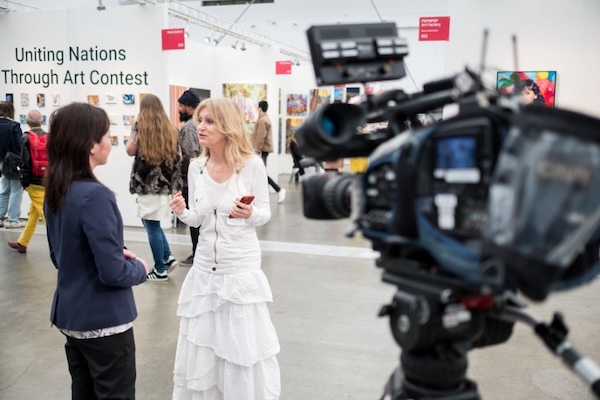
Lisa Wolfin, executive director and founder of Art Vancouver International Art Fair, which is at the Vancouver Convention Centre East April 11-14. (photo from Art Vancouver)

“Art serves as a vital anchor amidst the chaos of the world, both as a creator and a viewer,” said Lisa Wolfin, executive director and founder of Art Vancouver International Art Fair, which returns to the Vancouver Convention Centre East April 11-14.

“As a creator, it offers a therapeutic outlet to process complex emotions, providing a medium through which to express, reflect and make sense of the turbulence surrounding us,” she told the Independent, saying that, no matter the form of artistic expression, she finds solace in the act of creation, in addition to beauty and meaning.

“As a viewer,” she said, “art serves as a sanctuary, offering moments of escape and contemplation. It provides a lens through which to interpret and understand the world, offering insights, perspectives and opportunities for introspection. In both roles, art becomes a source of comfort, inspiration and resilience, offering a sense of connection and grounding amidst the uncertainty of our times.”

Wolfin and her daughters, Taisha Teal and Sky Lilah, who are also part of the Art Vancouver team, are among the Jewish community members participating in the annual art fair that drew more than 11,000 attendees last year. This April’s event is the eighth edition of the exhibit, which includes workshops, live demonstrations, a range of conversations, and is an opportunity for creatives to network and collaborate.

Wolfin is most looking forward to the sense of community and connection that Art Vancouver brings. “I’m eager to be a part of that vibrant atmosphere once again,” she said.

photo - Taisha Teal
Taisha Teal (photo from Art Vancouver)

Teal echoes that sentiment.

“I’m particularly excited about showcasing my art to a diverse audience of art enthusiasts and collectors,” said Teal. “Connecting with fellow artists, sharing insights and drawing inspiration from their work is another aspect I’m looking forward to. This event also provides a unique opportunity to engage with artists and galleries from around the world…. Moreover, I’m eager to receive feedback from attendees and potential buyers, which will contribute to my growth as an artist and refine my artistic practice.”

Lilah is looking forward to two main things: what she will create for the exhibit – “it is always a surprise,” she said – and, she shared, “Additionally, there’s immense enthusiasm surrounding hosting the opening night! Welcoming everyone to Art Vancouver is a true privilege, and having a significant role at the show is an honour.”

Art Vancouver, which was established in 2015, has been held annually, with the exception of the first two years of COVID.

“During the pandemic, I dedicated time to exploring new artistic styles,” said Teal. “Over the past couple of years, I’ve blended several styles together, continually evolving my approach. For instance, my ‘sparkle ladies’ series has undergone transformations with each passing year, featuring diverse female figures and introducing abstract faces. I particularly enjoy experimenting with abstract shapes and colours, and my upcoming collection will focus on incorporating textured elements using molding paste and various tools.”
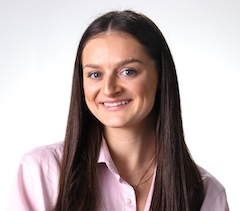
photo - Sky Lilah
Sky Lilah (photo from Art Vancouver)

Following the pandemic, Lilah curated her inaugural solo art exhibition, unveiling a series of abstracts for the first time. “Instead of merely attempting to depict something, I sought to channel the divine through my creative process, crafting unique works of art that had never been realized before – pieces that were distinctly mine,” she said.

“Over the years, I’ve persisted in exploring abstract styles, seamlessly blending them with my previous series,” she added. “I’m currently amalgamating elements from several series, combining the favourite aspects of each into a cohesive whole. While I continually experiment with new styles, I often layer them upon the foundations of styles with which I am familiar – an ongoing ebb and flow of artistic exploration.”

Wolfin, too, has spent time developing and refining her existing style and techniques, while venturing into different areas. “This has allowed me to push the boundaries of my creativity and explore new avenues of expression,” she said, noting that her work is inspired by many sources, “including nature, emotions, personal experiences.”

“I find inspiration in the beauty of the natural world, the complexities of human emotions and the stories of people and cultures,” said Wolfin. “Each of these influences shapes my creative process and fuels my desire to express myself through art.”

Teal also has a deep love for nature – “Whether it’s the patterns in a leaf, the colours of a sunset or the textures of a rock formation, nature constantly offers fresh ideas and motifs that find their way into my artwork” – and points to multiple sources of creativity.

“Firstly, the diverse cultures, landscapes and experiences I encounter during my travels serve as a constant wellspring of inspiration,” said Teal. “Each new destination offers unique perspectives, colours, textures and stories that influence my artistic vision.

“Secondly, connecting with other artists allows me to exchange ideas, techniques and perspectives, fueling my creativity and pushing me to explore new artistic territories. Collaboration and dialogue with fellow creatives foster a sense of community and shared creativity that invigorates my artistic practice.”
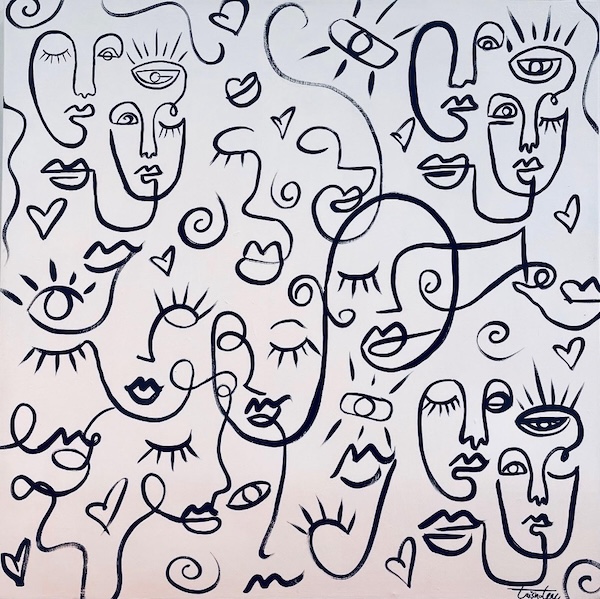
image - “A Thousand Expressions” by Taisha Teal
“A Thousand Expressions” by Taisha Teal.

Teal added that her “passion for experimentation with new materials adds another dimension.”

“Exploring unconventional materials and techniques challenges me to think outside the box and pushes the boundaries of my artistic expression,” she said.

“Art serves as a profound means of expression for me,” said Teal. “As a creator, it allows me to channel my emotions and immerse myself completely in the process. I infuse my art with love and happiness, aiming to evoke those feelings in my viewers. In a world filled with chaos, art becomes my sanctuary, a place where I find solace and peace. My intention as an artist is to spark positive emotions and inspire others with each brushstroke, inviting viewers to explore their own creativity and embrace the beauty within themselves.”

For Lilah, art embodies her very existence. “I’ve never known a life without it,” she said. “It serves as a means of creative expression, a harmonizing force for the diverse aspects of my personality and an invitation to embrace play, structure, freedom, love and acceptance.

image - a portrait by Sky Lilah
A portrait by Sky Lilah. (photo from Art Vancouver)

“Through art, I learn valuable skills and life lessons, such as time management (as artistic endeavours require dedication), self-love (recognizing that my efforts are ‘good enough’) and the importance of experimentation. It teaches me that we don’t know the result before it happens, and that you have to start in order to get to the end. For my work, I rarely know what I’m going to paint before I start painting, I discover it on the canvas, and that is a life lesson for my role in business as well – when hosting a new event, I won’t have all the answers before. I simply just need to start.”

Transformations in her life and the “opportunity to explore diverse cultures, languages and symbols sparks a fire of creativity,” Lilah said, adding that she tries, in her art, to “communicate a message that embodies inner strength, love, exploration, confidence, authenticity and kindness,” creating works “in an abstract, pop art manner to challenge mainstream thinking.” 

Art Vancouver opens April 11, 7 p.m., and runs April 12, 1-9 p.m.; April 13, noon-9 p.m.; and April 14, 11 a.m.-5 p.m. For tickets and more information, visit artvancouver.net. 
Format ImagePosted on March 22, 2024March 20, 2024Author Cynthia RamsayCategories Visual ArtsTags Art! Vancouver
Taking on care homes – Stolen Time screens in March 21

Taking on care homes – Stolen Time screens in March 21

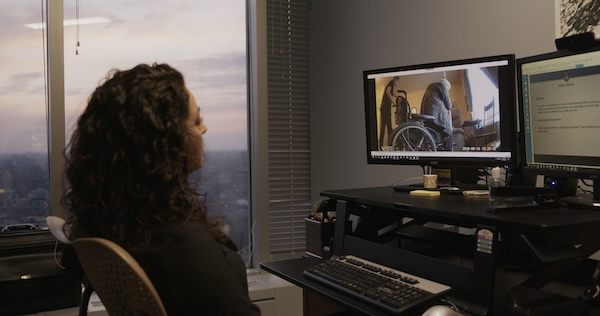
A still from the film Stolen Time: lawyer Melissa Miller reviews footage from a long-term-care room camera. (photo from National Film Board of Canada)

“I’m only at the beginning of this fight,” says lawyer Melissa Miller in the documentary Stolen Time, written and directed by Jewish community member Helene Klodawsky. Miller, of Toronto firm Howie, Sacks & Henry LLP, is lead counsel in mass tort claims against for-profit long-term-care corporations Extendicare, Revera Inc. and Sienna Senior Living.

Stolen Time will screen in Vancouver March 21 at VIFF Centre – Vancity Theatre, as part of a national release that includes Edmonton, Toronto and Montreal. The film is a joint production of Intuitive Pictures Inc. (with Jewish community member Ina Fichman at the helm) and the National Film Board of Canada (Ariel Nasr, producer).

To give readers an idea of what Miller is up against, there is a scene in the film where the private investigator she has hired, Brett Rigby, shares some financial data. According to Rigby’s documents, Extendicare had a revenue of $1.1 billion in 2019, $91 million in earnings and $42 million cash dividends declared – “and they’re locking up incontinence pads,” remarks Miller.

The film notes that “a few hundred family clients have grievances against these companies,” the most common complaints being serious dehydration, malnutrition, injuries and misdiagnoses. The homes apparently meet the requirements for staffing, but at least one person is off at any given time, so they are consistently understaffed. There seems to be no regulatory oversight, while the companies bring in record profits, the film contends.

Miller has been suing for-profit nursing home corporations in Canada and elsewhere for negligence since 2018, both in mass tort (class action) claims and independent cases against various facilities, one of which is featured in the documentary.

Video clips of residents experiencing abuse juxtaposed with family videos of the long-term-care residents when they were healthy allow viewers to see the people more fully and the depth of the injustices more clearly. Miller contends that it isn’t the staff who are to blame, generally, but rather that the staff aren’t given adequate resources by the companies, who could afford to do something but don’t. 

A complicating factor in effecting change is that, for example, Revera is owned by a Canadian Crown corporation, ie. the federal government, notes the film. As COVID ravaged nursing homes in 2020, with thousands of residents dying, “governments across North America pass[ed] legislation to protect them from lawsuits.”

“Today, nursing home chains around the world have become sites for wealth extraction by investors and shareholders,” writes Klodawsky in her director’s statement. “At its core, such financialization of care ties frail elders to overworked, racialized and predominantly female staff. When public pension fund managers, private equity and real estate companies help set the rules, compassion and dignity fall by the wayside. Nonetheless, rapidly expanding populations of the frail elderly, combined with shrinking numbers of family caregivers, ensure a steady stream of residents.”

People interviewed in Stolen Time include Dr. Pat Armstrong, a sociologist and professor at York University; Lisa Alleyne, a personal support worker who has worked in for-profit nursing homes (she is also an artist and her illustrations of what some long-term-home residents face are powerful); Rai Reece, who writes and teaches on anti-Black racism; Jackie Brown, who researches how publicly traded companies make money for investors; Jason Ward, who investigates how public pension funds are invested in for-profit nursing homes globally; Katha Fortier, who has been fighting for the rights of care workers for decades; Ayesha Jabbar, a former social worker who became a union rep; and members of a couple of the families Miller is representing.

Stolen Time is an engaging film that raises a lot of important questions about how nursing homes are run. It is unfortunate that it doesn’t include any interviews or statements from company representatives or government officials.

The post-screening panel discussion in Vancouver will feature Sara Pon, staff lawyer and researcher at Seniors First BC, and co-chair of the BC Adult Abuse and Neglect Prevention Collaborative; Bruce Devereux, a recreation therapist with three-plus decades of experience in the not-for-profit aging care sector; and Julia Henderson, assistant professor in the department of occupational science and occupational therapy at the University of British Columbia, and chair of the North American Network in Aging Studies.

More information about the March 21 event and other screenings of the documentary at VIFF Centre will be posted at viff.org. A ticket link will also be posted at events.nfb.ca/events/vancouver-theatrical-special-panel-on-march-21. 

Format ImagePosted on March 8, 2024March 7, 2024Author Cynthia RamsayCategories TV & FilmTags documentary, Helene Klodawsky, Intuitive Pictures, law, long-term care, Melissa Miller, National Film Board, NFB, VIFF
The choice to convert

The choice to convert

Adam is one of the potential converts interviewed in the documentary Converts: The Journey of Becoming Jewish, directed by Rebecca Shore and Oren Rosenfeld, which is part of this year’s Vancouver Jewish Film Festival. (photo from convertsmovie.com)

A religion that encourages questions, one in which people can speak directly with God. A religion that’s thousands of years old, which so many have attempted to wipe out, yet still flourishes. A religion that’s intellectual and communal, which involves both the head and the heart.

photo - Dana
Danya (photo from convertsmovie.com)

These are just some of the aspects of Judaism highlighted in Converts: The Journey of Becoming Jewish, directed by Rebecca Shore and Oren Rosenfeld. The 70-minute documentary is part of this year’s Vancouver Jewish Film Festival, which runs April 4-14 in theatres and April 15-19 online.

Converts follows Adam, Danya and Bianka as they go through the conversion process. Each have their own reasons for wanting to become Jewish.

Adam, a student at York University when we meet him, grew up in a violence-filled neighbourhood in Toronto. His father used the family’s savings – that could have gone into moving the family elsewhere – to establish a church, which failed. Adam was attracted to Judaism because, unlike the Christianity he grew up with, Judaism gave him the space to ask questions and to speak with God directly, though giving up belief in Jesus was hard, he admits.

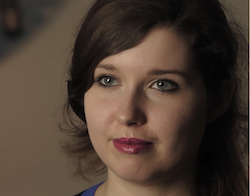
Danya, a businesswoman from Costa Rica, found out in high school that she has Spanish-Portuguese Jewish roots, that her ancestors were forced to convert to Catholicism from Judaism centuries ago. She feels that ancestral pull and uproots her life, traveling to Israel with her daughter in the hope of converting and living there.

photo - Bianka
Bianka (photo from convertsmovie.com)

Bianka, a PhD student in chemistry at the University of Warsaw, lives in Radom, Poland. She immerses herself in a few other religions before finding comfort in what she considers Judaism’s scientific approach, but also in the warmth of the Jewish community, which she discovers by attending synagogue and holiday events.

Well-constructed and well-paced, Converts is a fascinating look at identity, family, community, religion, the search for meaning and the possibilities of change and self-actualization.

For tickets to the film festival, visit vjff.org.

Format ImagePosted on February 23, 2024February 22, 2024Author Cynthia RamsayCategories TV & FilmTags Canada, conversion, documentaries, Israel, Judaism, Poland
JSA celebrates its 20th

JSA celebrates its 20th

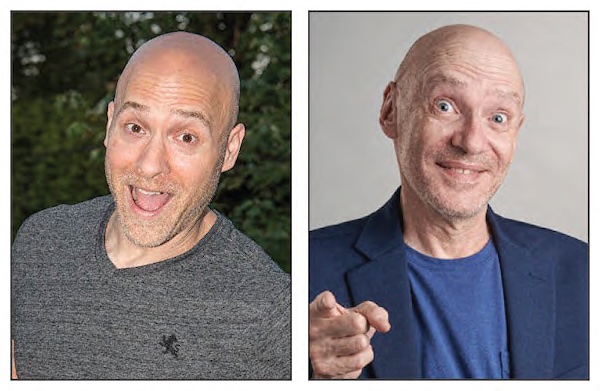
Kyle Berger, left, and David Granirer headline the Jewish Seniors Alliance’s A Night in the Catskills on March 17. (photos from JSA)

The Jewish Seniors Alliance of Greater Vancouver is celebrating its 20th anniversary with an event that’s all about laughter.

A Night in the Catskills: Jewish Humour Then and Now takes place at Congregation Schara Tzedeck March 17, 6 p.m.

“Jewish humour has enabled the Jewish world to gain strength through a history that shows that we should not be in existence today, but here we are bigger, stronger and better than ever!” said Marilyn Berger, a past president of JSA, who will make her debut as a stand-up comedian at the event. “Ask Kyle,” she said, referring to one of her sons. “I have given my family plenty to laugh about.”

It is perhaps not a coincidence then that Kyle Berger preceded his mother on the standup stage, and also produces comedy shows. He and David Granirer, founder of Stand Up for Mental Health, are headliners of the 20th anniversary event, which will include a performance by magician Stephen R. Kaplan, aka the Maestro. The whole megillah will be emceed by JSA board member Michael Geller, whose involvement in JSA was inspired by his late father, Sam Geller.

“He derived a great deal of joy from regularly attending JSA events and this is one of the reasons why the organization is so special to me,” Geller told the Independent.

photo - Michael Geller emcees JSA’s A Night in the Catskills at Schara Tzedeck
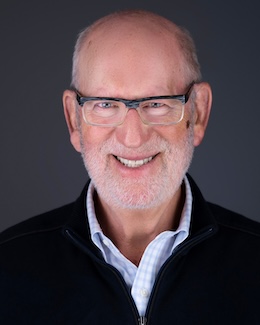
Michael Geller emcees JSA’s A Night in the Catskills at Schara Tzedeck. (photo from JSA)

“This comedy night is a follow up to a similar event organized by JSA 13 years ago,” he explained. “It was initiated by a phone call from the late Serge Haber, who called to tell me that the province had just canceled JSA’s gaming grant, but he knew my father would want me to help replace the funds. I asked how much was the grant. He said it was $18,000. I told him that was too much for me, but I had an idea.

“I was a fan of the website Old Jews Telling Jokes. Since JSA served many older Jews, I offered to book a room, buy some deli, and invite 17 of my friends to join me and each put up $1,000 and we would entertain one another with our favourite Jewish jokes.”

Haber – who founded JSA – liked the idea, as did the board, but they also wanted to join, and couldn’t afford to pay $1,000 each. So, the format was changed to one where people would attend and donate what they could, said Geller. Held at Congregation Beth Israel, almost 250 showed up.

“We presented clips from Old Jews Telling Jokes and invited people in the audience to share a joke in return for a donation. Everybody agreed it was a fabulous event,” said Geller. “There was just one small problem. We didn’t raise very much money. 

“So, this year we are charging $118 dollars to attend. Some generous members of the community are coming forward and agreeing to be sponsors. This will allow other seniors in the community who can’t afford $118 to attend. It has also allowed us to hire Tim Bissett, an experienced professional event organizer to assist with the program.”

photo - Stephen R. Kaplan will perform at the 20th anniversary celebration
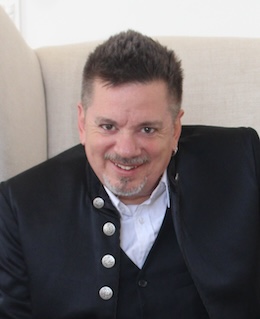
Stephen R. Kaplan is a special guest performer at the 20th anniversary celebration. (photo from JSA)

Expressing gratitude to the sponsors on behalf of JSA, Geller said, “we are hoping other community members will come forward, especially those who regularly share their favourite Jewish jokes on the golf course. Sponsors will be invited to participate in the program by telling a favourite joke or two, or introducing a favourite comedian or routine.”

For his part, Geller is preparing for his role as emcee by watching vintage and contemporary Jewish comedians and selecting material. “The program will also include some professional comedians who are volunteering their time, and special appearances by local rabbis who have been urged to share stories they would never tell in shul,” he said.

“I am thrilled to be celebrating our 20th anniversary and look forward to going from strength to strength as my own children now, believe it or not, become seniors!” said Berger, who shared her appreciation for the organization that Haber started.

“As I gracefully age,” she said, “I thank Serge for enabling me to spend my golden senior years embraced by the love that Seniors Alliance offers.”

“JSA undertakes many programs that benefit so many Jewish seniors, including the excellent Senior Line magazine,” said Geller. “While we are supported by many community organizations and foundations, we need additional funding. I am, therefore, hoping this evening will help promote the organization’s good work and, this time, actually raise money to allow it to continue.”

For tickets to A Night in the Catskills or to become an event sponsor, visit jsalliance.org or call 604-732-1555. 

Format ImagePosted on February 23, 2024February 22, 2024Author Cynthia RamsayCategories Performing ArtsTags comedy, fundraiser, humour, Jewish Seniors Alliance, JSA, seniors, standup

True crime wraps up festival

They both made headlines in their day, and then were more or less forgotten. A social climber who ends up convicted of killing his wife in one instance, an inventor-turned-money launderer in the other. Two very different men living in different eras who achieved the wealth and lifestyle they sought, then lost it all in spectacular fashion.

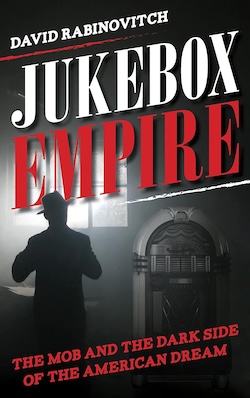
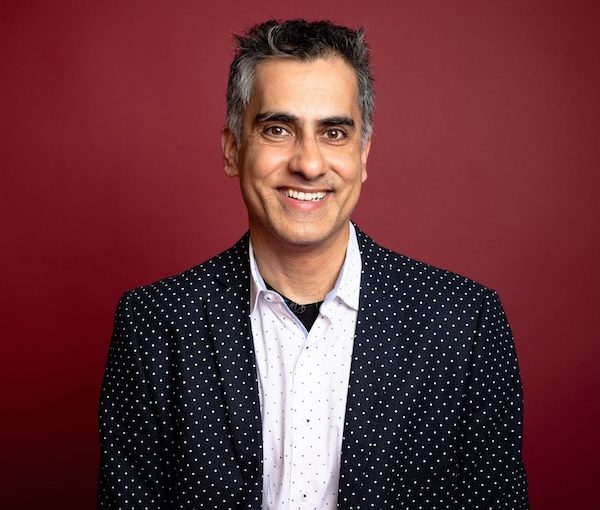
Historian Allan Levine and filmmaker David Rabinovitch close the Cherie Smith JCC Jewish Book Festival on Feb. 15, 8 p.m., at the Jewish Community Centre of Greater Vancouver with the event Jewish True Crime Stories, moderated by SM Freedman, who spent years as a private investigator in Vancouver before becoming a bestselling author of psychological thrillers. Levine will talk about his latest book, Details Are Unprintable: Wayne Lonergan and the Sensational Café Society Murder (2020), and Rabinovitch will talk about : The Mob and the Dark Side of the American Dream (2023), his first book.

Both true crime publications have a similar structure. They both have a cast of characters at the beginning, followed by a prologue or preface, then the narrative proceeds chronologically, beginning with each protagonist’s origin story, and following the circumstances and decisions that led to their headline-grabbing lives. Both books have extensive notes and bibliographies. Levine and Rabinovitch each read more than a thousand pages of court transcripts and related documents, like witness testimonies and letters, as well as newspapers of the day. These types of resources, written as events were unfolding, allow both authors to tell their stories with an immediacy that propels readers along. In both books, it feels as if what we’re right in the midst of what is happening.

image - Details Are Unprintable book coverFor Levine, the idea of exploring Toronto-born opportunist Wayne Lonergan’s conviction for the Oct. 23, 1943, murder of his wife, Patricia Burton Lonergan, the daughter of a wealthy German-Jewish family in New York City, came from reading a 1948 Cosmopolitan article by Raymond Chandler. The renowned detective fiction writer listed Lonergan’s case as #9 in his list of the “10 greatest crimes of the century.” There have been a couple of novels based on the case and, writes Levine, “Over the years, the story of the murder, with the requisite number of theories about Lonergan’s sexual identity, has been told and retold in countless tabloid newspapers and magazines and remains a favourite topic of crime and mystery bloggers.”

Lonergan’s bisexuality plays an important part in the story, including his initial alibi, and Levine adds social context in this and other instances, such as describing the mores of the café society into which Lonergan married. Levine takes the tabloid aspect out of the telling, in that he seems to have harnessed the facts and his conclusion as to Lonergan’s innocence or guilt seems solid.

image - Jukebox Empire book coverRabinovitch’s ability to step back and tell the story of Wolfe Rabin in an apparently unbiased way is even more impressive, given that Rabin is his uncle. Granted, Rabinovitch never met Rabin, but still, family is family. 

“How did my father’s brother, raised in an immigrant Jewish family in a remote Canadian prairie town [Morden, Man.], become a jukebox tycoon, a crony of gangsters and the mastermind behind an audacious and complex international money-laundering scheme?” writes Rabinovitch. “My investigation would reveal his world and a tale of jukeboxes, money laundering and organized crime.”

Rabin was a smart, creative and resourceful person. “He invented the car radio. He was a wartime profiteer. He designed the first jet-age jukebox. He was an international bonds trader,” writes Rabinovitch. “Wolfe and his sexy wife Trudy were a glamorous couple.”

But, early in his career, Rabin makes a deal with the proverbial devil, a mobster, and it’s a deal that makes him rich at first. But a competitor – fellow Manitoban David Rockola – successfully sues for patent infringements in the late 1940s, putting Rabin out of business and in need of money to pay back his criminal investors. It is fascinating to read of the mob connections to the jukebox industry, an industry that pulled in millions a week because, as Rabinovitch writes, “Even at the nadir of the Depression, anyone could afford a nickel for a song.”

And Rabin’s story becomes even more incredible after his jukebox business fails. In pursuit of much-needed cash, he becomes involved with stolen bonds, in what the U.S. Department of Justice called “the largest money-laundering scheme in history.” Eventually, the law does catch up with Rabin and some of his associates. Jail time is served. But Rabin’s biggest secret was only revealed long after his death in 1967, after Rabinovitch completed the draft of this book. It is one of the sadder elements of Rabin’s story. Despite all his achievements, there is much Rabin missed out on in his quest for wealth. 

The Cherie Smith JCC Jewish Book Festival runs Feb. 10-15. For tickets, visit jccgv.com/jewish-book-festival.

Posted on February 9, 2024February 8, 2024Author Cynthia RamsayCategories BooksTags Allan Levine, David Rabinovitch, Details Are Unprintable, history, JCC Jewish Book Festival, Jukebox Empire, the mob, true crime, Wayne Lonergan, Wolfe Rabin
“Moses” does standup at JFL

“Moses” does standup at JFL

Samson Koletkar, dubbed the “world’s only Indian Jewish standup comedian, performs Feb. 15 as part of Just for Laughs Vancouver. (photo from Just for Laughs Vancouver)

This year’s Just for Laughs Vancouver features several members of the Jewish community, including Samson Koletkar, aka Mahatma Moses. He comes as part of Desi Comedy Fest – On Tour, which takes place at the Biltmore Cabaret Feb. 20, 9 p.m.

Koletkar is a co-founder of the Desi Comedy Fest with fellow San Francisco Bay Area comedian Abhay Nadkarni, who also hails from India. The biggest South Asian comedy festival in the United States, it is described as “celebrat[ing] subcontinental diversity with punchlines that transcend boundaries.”

Desi Comedy Fest isn’t Koletkar’s only entrepreneurial venture. He has a background in technology and also started Comedy Oakland, which “features funny, diverse, industry pros alongside up-and-coming comedians at various venues across Oakland,” according to its website.

Koletkar, who claims to be the “world’s only Indian Jewish standup comedian,” spoke with the Jewish Independent earlier this week.

JI: How does one go from being a techie to a standup comedian? Are there overlaps in skill sets? Do you still work in both areas or are your entrepreneurial endeavours your focus?

SK: I have tried a few things in my life, and standup started the same way. It seemed like a fun thing to do, I gave it a try and, the first time I was on stage, I was hooked. There is definitely an overlap from my tech life into standup – bulletproof logic in my jokes. If I am making a point, and I like to make many, there is no room for bugs, the jokes have to be tested thoroughly and any gaps in logic have to be fixed.

Standup has also helped make my day job easier with the ability to inject humour during tough situations. One of my ex-bosses actually made me realize the value of my standup comedy at work – he used to invite me to the tough customer meetings because invariably I would make the room laugh and the meetings got much easier after that.

JI: What were you like growing up – have you always seen the world with a humourous eye?

SK: I think so. I have always had this urge to crack a joke. There were a lot of inappropriate ones at inappropriate times, but isn’t that how we all learn, by making mistakes? Now, every time I meet parents who think their kids are funny, the one thing I advise them is to accommodate their kids’ misspeaks, and keep that funny bone intact. More often than not, the only mistake we as comedians make is saying out loud what everyone is thinking but politely holding back.

JI: When did you move from Mumbai to the San Francisco Bay Area?

SK: I took the first opportunity I got to move as far away from my parents as I could and, at the age of 24, I moved to the Silicon Valley in October 2000. I felt like the needle that burst the Y2K bubble.

JI: When did you first perform standup?

SK: Late 2005, but then jumped all in in January 2006.

JI: What led you to start Comedy Oakland?

SK: Standup is the one art form you can’t practise in your garage. You need a live audience. After grinding through three years of empty open mics and sub-par independent shows, I decided I could either sit and complain about how poorly some shows were produced, or try to do it myself. That led to Comedy Oakland, in May 2009, starting with one show on Friday nights. My goal was to create a space where comedians needed to only bring good jokes and audience experience was optimized for the art.

Just before the pandemic, I used to run 250+ shows (five shows a week), featuring 400+ comics entertaining 12,000-13,000 [person] audiences every year. In 2024, 15 years running, I am back to five shows a week at three venues in Oakland. These venues are 40 to 90 seaters.

JI: When you envisioned the Desi Comedy Fest, did you think it would become as huge as it is?

SK: I don’t think it is huge enough yet. Yes, the fest has grown from its early days, but we have a long way to go, and partnering with JFL is a big step in that journey. What I knew was that it was going to be fun, and it continues to be one of the most fun shows every year in my calendar.

JI: In what ways have you experienced racism and antisemitism, how do you handle such incidents and how do they impact you?

SK: Those stories are more fun to hear in my standup than they are to read, although they only form a small part of my routine because racism and antisemitism are a small part of my life. The world has a lot more good than bad in it and I don’t let the bad overshadow the good. An optimistic comedian – go figure! But, yes, they do impact me, not only when it happens to me but when I see it happen to others. So, some of my content is driven out of that and I tend to focus on the logical hypocrisy/fallacy of it.

JI: You’ve had much success. What are one or two things that you’d still like to achieve or do professionally?

SK: When my joke offends someone in America, it’s “Go back to where you came from.” When my joke offends someone in India, it’s “Go to Pakistan.” I want to tell an offensive joke in every single country in the world, just to see where they send me next, sort of like The Offensive Joke World Comedy Tour!

JI: If there is anything else you’d like to add, please do.

SK: Come watch a show, nothing gives me more happiness than seeing you laugh!

***

Desi Comedy Fest – On Tour also features Alisha Dillon, Amar Singh and UK Shah. For the full Just for Laughs Vancouver line-up and tickets, visit jflvancouver.com. 

Format ImagePosted on February 9, 2024February 8, 2024Author Cynthia RamsayCategories Performing ArtsTags comedy, Desi Comedy Fest, Just for Laughs, Mahatma Moses, Samson Koletkar, standup
Lanyi’s live Canadian debut

Lanyi’s live Canadian debut

The Vancouver Recital Society hosts London, England-based pianist Ariel Lanyi on March 3. (photo © Kaupo Kikkas)

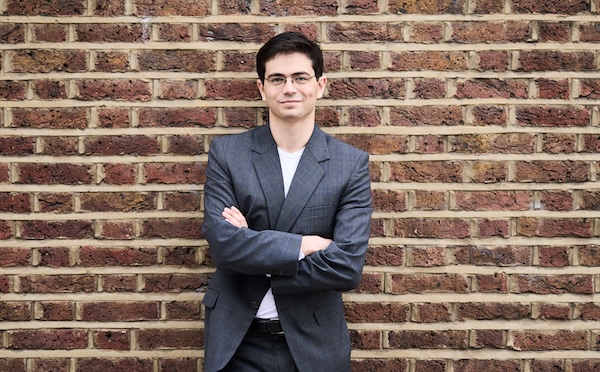
“Art is there to remind us that there is something bigger and greater than the present moment, something that will remain long after we are gone, which is worthy of our devotion and commitment,” pianist Ariel Lanyi told the Independent in a recent interview. Lanyi will perform an afternoon concert at Vancouver Playhouse March 3.

Hosted by the Vancouver Recital Society, Lanyi will play works by Ludwig van Beethoven (1770-1827), Frédéric Chopin (1810-1849) and Max Reger (1883-1916). In a Facebook post, the London, England-based pianist noted his pleasure at working on Reger’s Variations and Fugue on a Theme by Bach, calling it an “underrated masterpiece of the late-Romantic era” that he couldn’t wait to bring to the stage in 2024.

“Max Reger had a problem: writing fugues was too easy for him. He could jot down fugues with the same ease that Picasso could scribble drawings. Hence, his music sometimes falls into a trap of gratuitous polyphony. However, when he put his heart and soul into a work, as he did with the Bach Variations (which he considered to be his finest work), the result is worthwhile,” Lanyi explained to the Independent. “We hear a multitude of styles in this work – at times, we hear the world of Brahms and his traditional harmonic language; at times, we enter the post-Wagnerian sphere, and we even get a glimpse of more decadent music that was yet to be written. Still, it hangs together organically, and comes to a rousing ending, as all threads convene and the piano truly emulates the sound of the organ. 

“The reason this work is underrated and underplayed is quite obvious,” he added. “People tend to avoid Reger, and it takes a Herculean effort to learn this work. However, I earnestly believe that it is a masterpiece of piano literature.”

Last spring, Lanyi was awarded the Prix Serdang, which is given to young pianists at the beginning of their careers who excel in musicianship and artistic vision. The head of the selection panel, Austrian pianist Rudolf Buchbinder, said of Lanyi: “His playing is precise, nuanced and virtuosic, but he is no superficial virtuoso. What sets him apart is his ability to delve deeply into the music and to establish a connection with it. He doesn’t simply play the notes, he lives the music, seeks to capture its essence, and reflects it with extraordinary intensity, sensibility and expressive maturity.”

If one reads Lanyi’s posts and blogs, one gets a hint of the research that he puts into his performances, which have garnered critical acclaim. In addition to the Prix Serdang, Lanyi won third prize at the 2021 Leeds International Piano Competition. Also in 2021, he was a prize winner in the inaugural Young Classical Artists Trust (London, England) and Concert Artists Guild (New York) International Auditions, as well as being a finalist in the Arthur Rubinstein International Piano Master Competition. Other honours for the 26-year-old pianist include first prize at the 2018 Grand Prix Animato Competition in Paris and first prize in the 2017 Dudley International Piano Competition in the United Kingdom.

Born in Jerusalem, Lanyi studied piano at the Conservatory of the Jerusalem Academy of Music and Dance and moved to London in 2015 to study at the Royal Academy of Music. He remained in the city after graduating in 2021. Last month, he was among those selected by the Royal Academy for a 2023-2024 associate honour, which will be conferred in April: the award recognizes former students who have made “significant contributions to the musical landscape.”

Lanyi has performed around the world, both as a soloist on his own and with orchestras, and as a chamber musician. When he plays concertos or chamber music, he said of his preparation, “I always make sure to study the full score, in order to grasp the music from all points of view, not just through the prism of my individual part. When playing alone, obviously, this doesn’t apply.”

Among the highlights listed on Lanyi’s website for this season is the VRS concert next month. In 2021, during COVID, the recital society shared Lanyi’s Virtually VRS recorded performance on its YouTube channel. The March concert will be his live debut in Canada. In addition to the Reger composition, it will feature Beethhoven’s Sonata No. 30 in E Major, Op. 109; Chopin’s Mazurkas, Op. 59; and Chopin’s Polonaise-Fantaisie in A-flat major, Op. 61.

“Beethoven’s Sonata Op. 109 is a work that has been in my repertoire for quite awhile,” Lanyi told the Independent. “It was the first of the late Beethoven sonatas I worked on as a teenager, so coming back to it now feels enormously gratifying, as my idea of it has evolved in the years since. (It is also, if I remember correctly, the first work for piano to have ever moved me to tears.) The first two movements are concise and contrasting – from the relative serenity of the first movement to the fearful obsessiveness of the second. The third movement begins and ends with a hymn of gratitude and, in between, we are taken on a comprehensive journey through six distinct variations, each inhabiting its own world, deviating from the theme in the most fascinating ways while retaining the same epicentral connection to it.

“The two Chopin works in this program – the Op. 59 Mazurkas and the Polonaise-Fantaisie, Op. 61 – both stem from the composer’s late period, which is characterized by harmonic and structural exploration we seldom find in his earlier works. The mazurkas are elegant and poignant at the same time – in the midst of mellifluous music, Chopin finds ways to express intense distress with bold, dissonant harmonies, often left exposed. The Polonaise-Fantaisie is among his most symphonic works, I find. He never wrote any symphonies and, in my view, some of the late works make up for that by using the piano orchestrally. In the slow middle section of the Polonaise-Fantaisie, we almost hear a foretelling of Bruckner in the long, interwoven lines, which lead to the most unexpected places.”

Lanyi said he doesn’t have any specific formula for choosing performance repertoire.

“Usually, I have an idea of one or two central works I want to include in a program, and look for works which will complement them in a balanced way,” he said. “In the case of this program, the Reger has been on my mind for many years, so I was looking to combine it with works which aren’t as heavy.”

Lanyi’s March 3 performance takes place at 3 p.m. and is followed by a talkback. For tickets, visit vanrecital.com/concert/ariel-lanyi-2. 

Format ImagePosted on February 9, 2024February 8, 2024Author Cynthia RamsayCategories MusicTags Ariel Lanyi, Beethoven, Chopin, piano, Reger, Vancouver Recital Society, VRS

Putting the fun in dystopia – Steven Mayoff’s The Island Gospel According to Samson Grief

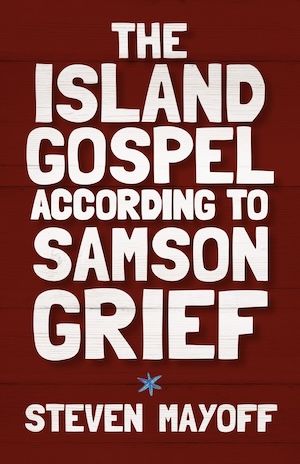
For all intents and purposes, it shouldn’t work, but Steven Mayoff’s The Island Gospel According to Samson Grief is a grand work of, let’s say, magical fiction that uses humour in large measure to elicit some very serious thoughts about art, politics, law, love, faith, community and more.

Mayoff takes part in two events during the Cherie Smith JCC Jewish Book Festival: on Feb. 11, he presents at Burquest Jewish Community Association in Coquitlam and, on Feb. 12, he is at the Jewish Community Centre of Greater Vancouver, along with Jeffrey Groberman, author of Globetrotting Strikes Again! Groberman also presents at Har El in West Vancouver on Feb. 11.

image - he Island Gospel According to Samson Grief book coverIt is hard to describe simply the plot of The Island Gospel According to Samson Grief. The title character is a middling artist who, when we meet him, is struggling to finish a painting. Outside his window, he has just seen – after a break of 13 years – three figments of his imagination. The Figs, as he calls them, present themselves in the forms of Judas, Fagin and Shylock, and they have returned with an important mission for Grief.

“The Supreme One,” who the Figs represent, was impressed by Grief’s scandalous, and most famous, painting of Prince Edward Island icon Anne of Green Gables as a Holocaust survivor, which Grief described in an interview as a statement “on the post-911 world we’re living in, where nobody is safe anymore and the primary victim is the delusion of our collective innocence.” Despite that Grief has not had much artistic or other success in the years since that painting – and that he is not actively involved in the island’s Jewish community – the Supreme One wants Grief to build PEI’s first synagogue. Once complete, the province will be consecrated as the new Promised Land, according to the Figs.

Among Grief’s many challenges – once he decides to take on the mission – is that the Supreme One has decreed that the synagogue must be built on a particular plot of land, a once-sacred place that has become a garbage dump and the focus of much political intrigue. It is hard to keep track of all the political manoeuvrings in this novel, but they sadly resonate, with some reality in their self-serving and unscrupulous nature.

It takes Mayoff awhile to set up the many pieces of his narrative puzzle. The characters are numerous, and quirky only begins to describe them. The societal issues that arise as Grief tries to achieve his mission, the role played by the media – both conventional and unconventional – in what ends up happening, the reliability and unreliability of friendship and love … so many factors are up in the air and changing as the story progresses. Somehow Mayoff juggles them all in a way that allows readers to follow along, discovering various elements as Grief does, and losing our naiveté as he does.

The Island Gospel According to Samson Grief is an ambitious novel that delivers beyond its promise. 

For the Cherie Smith JCC Jewish Book Festival guide, visit jccgv.com/jewish-book-festival. 

Posted on January 26, 2024January 24, 2024Author Cynthia RamsayCategories BooksTags fiction, humour, JCC Jewish Book Festival, Steven Mayoff

“Best goddam madam” – Madam: The Biography of Polly Adler, Icon of the Jazz Age

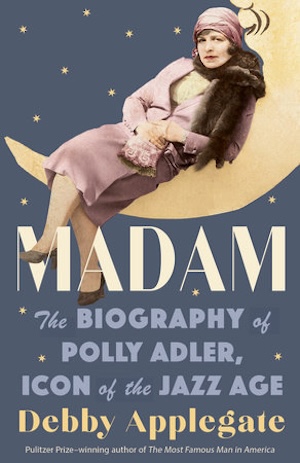
The immigrant experience is rarely if ever easy. It is hard to imagine sending a 13-year-old girl from Russia to the United States on her own, but, in 1913, the year that Pearl (“Polly”) Adler came through Ellis Island, “the Hebrew Sheltering and Immigrant Aid Society estimated that 13,588 ‘unaccompanied Jewish girls’ came through the port of New York, out of the 101,330 Jews who immigrated from eastern Europe,” writes Debby Applegate in Madam: The Biography of Polly Adler, Icon of the Jazz Age.

image - Madam book coverThe revelations abound in Madam and most do not centre around statistics, though there are some intriguing ones, like the fact that, in 1925, New York’s White Light District, with Times Square at its core, had “more than 2,500 speakeasies and 200 nightclubs, up from 300 saloons before Prohibition, all vying to offer the youngest girls, bawdiest songs, and hottest dance bands.”

Polly Adler was a major part of this scene, having entered the world of prostitution when she was 17. She had managed to avoid the lechers who recruited girls coming off the boats, and even got a couple years of education living with extended family in Springfield, Mass. But, once the minimum amount of schooling required was reached – a fourth-grade level of English – she had to work. And working in a factory wasn’t a way to get oneself out of poverty. So, with a little help from unscrupulous men, she started on a different career, one that would have her become the most well-known madam in New York, with clients that may even have included President Franklin Delano Roosevelt.

It was a harsh world, though, filled with gangsters, crime, violence, and it wasn’t even that lucrative because of all the payoffs and the immense levels of corruption at every turn: police, lawyers, judges, politicians. But Adler could literally take the punches, and she was “determined to be the best goddam madam in all America.” She achieved her goal and was successful, if measured by fame and money. However, she never achieved the approval and acceptance she sought, having been cared for as a child but never really loved.

Applegate’s biography of Adler is a page-turner, which is an accomplishment given its comprehensiveness and the amount of detail she covers: there are 33 pages of notes and the bibliography runs 13 pages. Readers will really feel as if they’ve met Adler and walked a few feet in her shoes. 

Applegate will talk about Madam in the Cherie Smith JCC Jewish Book Festival event on Feb. 11, which she shares with Roberta Rich, author of The Jazz Club Spy (see jewishindependent.ca/mysteries-to-be-solved). 

Posted on January 26, 2024January 24, 2024Author Cynthia RamsayCategories BooksTags Debby Applegate, gangsters, history, immigrant story, New York, Polly Adler, prostitution

Celebrating two new years 

It would be fun to be a fly on the wall at Vancouver Talmud Torah on Feb. 14 as Richard Ho reads from his book Two New Years, illustrated by Lynn Scurfield, and discusses it with the children. Being that the story is based on his own life experience, he will likely be quite animated (pun intended) and his enthusiasm, combined with Scurfield’s bright, colourful and joyful art, will no doubt hold their attention.

image - Two New Years book coverHo has several kids books to his credit and, according to his website, more on the way. Two New Years highlights the differences and similarities between Rosh Hashanah and the Lunar New Year, both of which he celebrates.

The book notes the differences first: Rosh Hashanah takes place in the fall, is based on the Jewish calendar and began in the Middle East, and the Lunar New Year generally falls in spring, is based on the Chinese calendar and began in East Asia. “They represent different peoples with different histories, cultures and traditions,” he writes. “But in many ways they are also alike.” The many similarities include that each holiday is a chance to “try on new beginnings,” to “bring family home” and “remember the ancestors who live in our hearts,” to eat “foods that symbolize togetherness and the heartfelt sharing of good wishes,” among several other things.

In the author’s note, Ho shares that he converted to Judaism as an adult and that “the blending of two cultures was a conscious choice” for him. These days, he revels in experiencing both new years through the eyes of his children. “The best part?” he asks. “They’re not alone! All over the world, families with mixed backgrounds are blurring the barriers between cultures and customs. With the guidance of parents, grandparents and extended family on all sides, many children are weaving an increasingly diverse tapestry of celebration.”

The book features an eight-page illustrated glossary that’s as interesting to read as the story: it explains what a lunisolar calendar is, and some of both holidays’ rituals and symbols. It is followed by questions that readers can use to facilitate a discussion with others about their own traditions.

Ho’s presentation at VTT is part of the Cherie Smith JCC Jewish Book Festival (jccgv.com/jewish-book-festival). 

Posted on January 26, 2024January 24, 2024Author Cynthia RamsayCategories BooksTags children's books, Chinese heritage, culture, Jewish heritage, Lunar New Year, Lynn Scurfield, Richard Ho, Rosh Hashanah

Posts pagination

Previous page Page 1 … Page 16 Page 17 Page 18 … Page 84 Next page
Proudly powered by WordPress