Skip to content
  • Home
  • Subscribe / donate
  • Events calendar
  • Business Directory
  • FAQ
  • News
    • Local
    • National
    • Israel
    • World
    • עניין בחדשות
      A roundup of news in Canada and further afield, in Hebrew.
  • Opinion
    • From the JI
    • Op-Ed
  • Arts & Culture
    • Performing Arts
    • Music
    • Books
    • Visual Arts
    • TV & Film
  • Life
    • Celebrating the Holidays
    • Travel
    • The Daily Snooze
      Cartoons by Jacob Samuel
    • Mystery Photo
      Help the JI and JMABC fill in the gaps in our archives.
  • Community Links
    • Organizations, Etc.
    • Other News Sources & Blogs
  • JI Chai Celebration
  • JI@88! video

Recent Posts

  • Or Shalom reopens its doors
  • JFS from past to future
  • Need holistic approach
  • Sharing stories, advice
  • Journalist shares fears
  • Skills to live together
  • Road to independence
  • Cutting grass with scissors
  • Zionism as a solution
  • Deceit, desire & the divine
  • Reclaiming sacredness
  • Creative project ideas
  • Summer squares and cobbler
  • Thou shalt … summer commandments
  • Legal help for students
  • Revisiting myth of Lilith
  • Wrong person rebuked
  • Canada’s mixed messages
  • Questions for museum
  • Symposium on antizionism
  • Making soccer political
  • CJPAC lauds Pulver’s impact
  • City recognizes Vrba’s legacy  
  • Organ donation saves lives
  • Theodore’s March premiere
  • A healing Shabbaton
  • Supplying healthy food
  • A chime of metal tags
  • Yellowknife seder a first
  • Ishai energizes, unifies
  • A Lag b’Omer to remember
  • Expanding the healing
  • Hannah Senesh – a unique hero
  • Community milestones … May 2026
  • Sharing her testimony
  • Fall fight takes leap forward

Archives

Follow @JewishIndie
image - The CJN - Visit Us Banner - 300x600 - 101625

Author: Lauren Kramer

A fine line we all walk

A fine line we all walk

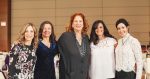
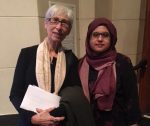
Left to right: Choices co-chair Debra Miller, Choices co-chair Sarah Marel-Schaffer, keynote speaker Lisa Friedman Clark, Choices co-chair Judith Blumenkrans and Jewish Federation of Greater Vancouver women’s philanthropy chair Megan Laskin. (photo from JFGV)

This year marked 13 years since the inception of Choices and some 450 women gathered in the Beth Israel reception hall to mingle over dinner and support Jewish women’s philanthropy. The keynote speaker was Lisa Friedman Clark, a New York native who commanded the floor as soon as she described herself as the “luckiest unlucky woman alive.”

Clark’s story is compelling. Diagnosed in 1995 at age 23 with a rare form of ovarian cancer, she endured chemotherapy and survived the illness against incredible odds. Andy Friedman, her boyfriend at the time, stood by her side throughout and, two years later, the couple married and began what she described as a “storybook life.” The arrival of twin boys completed their new family and both were pursuing successful careers up until Sept. 11, 2001. That morning, Andy went to work on the 92nd floor of One World Trade Centre and never came home.

There were audible gasps from the audience as Friedman Clark described the details of the morning her life changed forever. “He called me after the second plane had hit and said he was in a room with all his colleagues and they had plenty of air,” she recalled. “Later, we found out that the plane had hit one floor above him and the damage to the stairwells was so bad that he and his 68 colleagues could not get down. His floor was the line of demarcation between life and death. Those on floor 92 and above died.”

“I was 39 years old with two 11-year-old boys whose hero had just been killed in one of the most horrific manners one could think of,” she continued. “One minute you’re rushing to get the kids off to school and, in a split second, your husband has been murdered and life as you knew it has ceased to exist.”

Friedman Clark’s message was devoid of self-pity. “We all walk a fine line between being a donor to Federation and being a recipient of its generosity,” she told the crowd. “We never know when our lives will change.”

Federation counselors, social workers and support groups in New York were trained to deal with families affected by terrorism and came directly to the aid of her family and others in the same situation, she said. “They were uniquely able to understand our needs, and they were also there with financial aid for anyone who needed it. This help was invaluable and, had it not been for the many people that helped me at Federation, I’m not sure where I’d be today.”

Another story that touched a chord with Choices attendees was that of Ronit Yona, an Ethiopian Jew who, as a child, was rescued during Operation Moses. She lived in Israel for several years and more recently moved to Vancouver with her husband and two sons. Yona recalled her early years as a child in Ethiopia, growing up in a village that was home to 1,000 Jews and a life that revolved around home, school and synagogue. At the age of 9, everything changed. “The Ethiopian government wouldn’t allow us to practise our customs,” she explained. “I found myself following my father through the jungle at night as he led our donkey and horses, all loaded with our entire life. My father told me that, if the soldiers found us, they would kill us.”

Yona and her family became refugees in Sudan, in a tent camp where there was no sanitation and dysentery was rife. She recalled walking four hours a day to fill heavy jugs with water for the family. Then, at 10 years old, she found herself on an airplane with other Ethiopian families en route to Jerusalem. “What I didn’t know then, as a child, was that we weren’t walking alone on that journey,” she said. “ORT helped my father train as a nurse in Ethiopia and, later, the global Jewish community gave its money, time and energy to the Jewish Agency to rescue the Jews of Ethiopia who were stranded in Sudan.”

“We are all here this evening because we care about the future of the Jewish community, here at home, in Israel and around the world,” Megan Laskin, chair of women’s philanthropy at the Jewish Federation of Greater Vancouver, told attendees. “We’re celebrating making good choices for ourselves as strong women and setting a lasting example of l’dor v’dor. Women’s philanthropy is truly a force and your contributions are changing and saving lives.”

Last year, Choices generated more than $2.1 million. For information on this year’s campaign, visit jewishvancouver.com.

Lauren Kramer, an award-winning writer and editor, lives in Richmond. To read her work online, visit laurenkramer.net.

Format ImagePosted on November 3, 2017November 1, 2017Author Lauren KramerCategories LocalTags 9/11, annual campaign, cancer, Choices, Jewish Federation, Lisa Friedman Clark, philanthropy, terrorism, women
Women in politics night

Women in politics night

A sold-out crowd attended CJPAC’s Women in Politics Pecha Kucha event on Oct. 24, which featured four speakers, including CJPAC’s Sherry Barad Firestone (standing on the left). (photo from CJPAC)

On Oct. 24, CJPAC (the Canadian Jewish Political Affairs Committee) hosted its first Women in Politics Pecha Kucha event in Vancouver. It was a sold-out crowd with women and men of all ages and political backgrounds in attendance. Hodie Kahn hosted the event at her home.

The Pecha Kucha style of 20 slides at 20 seconds per slide created a dynamic evening that allowed CJPAC to showcase four guest speakers, all Jewish, each highlighting different facets of political engagement, as well as its importance and its accessibility during and between elections.

CJPAC advisory board chair Sherry Barad Firestone, originally from Vancouver but now living in Toronto, was one of the presenters. “It was such a thrill to participate,” said Firestone. “It was nice to be able to share my experience as someone who does not come from a political background. We often think politics should be left to the experts but there’s a role for all of us, regardless of experience, in our democracy.”

Other presenters included Temple Sholom Rabbi Carey Brown, an American transfer to Canada, who is passionate about adult and youth education, social justice and teen engagement; Dr. Moira Stilwell, who served as the member of the Legislative Assembly for Vancouver-Langara from 2009 until 2017, and was a minister of several portfolios; and, Rakeea Gordis, a high school student who has attended political rallies, volunteered on campaigns and recently became an EF Canadian Youth Ambassador.

Perhaps one of the best and inspiring quotes of the night came from Gordis, who stated, “I’m too young to vote. The only way I can use my womanly voice is to volunteer on campaigns.”

Kara Mintzberg, B.C. regional director for CJPAC, noted that CJPAC hopes to have more events focused on women’s experience in politics. “We know that it’s not always easy to be a woman in politics but we think events such as these, in particular hearing from their peers, will encourage more women to get involved and, ultimately, it will become easier for those who follow.”

CJPAC is hosting another event soon – the Ultimate Kiddush Club, featuring “Scotch master” Barry Dunner, on Nov. 23, 7:30 p.m. For more information about the evening or any other CJPAC events and opportunities, contact Mintzberg at [email protected] or 604-343-4126.

Format ImagePosted on November 3, 2017November 1, 2017Author Canadian Jewish Political Affairs CommitteeCategories LocalTags Carey Brown, CJPAC, Moira Stilwell, politics, Rakeea Gordis, Sherry Barad Firestone, women
Waters’ Vancouver talk

Waters’ Vancouver talk

Martha Roth, left, and Itrath Syed. (photo by Matthew Gindin)

“I don’t get why people cannot look straight at what’s happening in the occupied territories and see it for what it is,” Roger Waters said to a full house at St. Andrew’s-Wesley Church on Oct. 26. “There’s a word for what is happening there: ethnic cleansing.”

The event took place a few days before the end of Waters’ cross-Canada Us and Them Tour, the final leg of a North American tour that kicked off almost a year ago. The primary songwriter behind Pink Floyd albums like The Wall and Dark Side of the Moon was invited to speak by Independent Jewish Voices (IJV). Among talk sponsors were IJV, CanPalNet, Seriously Free Speech, Not in Our Name, and Solidarity for Palestinian Human Rights. Waters was interviewed by Martha Roth, co-chair of IJV Canada, and Itrath Syed, a professor at Langara College.

Many in the Jewish community were opposed to his speaking, accusing Waters of antisemitism and anti-Israel bias. B’nai Brith Canada made a documentary called Wish You Weren’t Here and followed him around Canada showing it in conjunction with his concerts. A week before the talk, the Centre for Israel and Jewish Affairs sent out a mailing identifying Waters as “the rock musician obsessed with boycotting Israelis” who has become “the face of the hateful BDS movement.” An online petition called for the talk to be canceled.

At the church, Waters said his genesis as a BDS (boycott, divest from and sanction Israel) activist happened after a 2006 trip to Israel. “I was going to do a gig in Tel Aviv,” he said, “and I started to get emails from Palestinians and others who said that might not be such a good idea due to this very new movement started by Palestinian civil society called BDS, and they tried to prevail on me to cancel the gig. As an act of compromise, I moved the show to Neve Shalom, where they grow chickpeas and there are Jewish people living there, Arabs living there and Christians living there. All of their children go to school together, so it’s a lovely experiment in what can happen when people don’t fixate on all the things that we disapprove of in each other.”

photo - A small group of protesters met across the street from the church, draped in Israeli flags and carrying signs
A small group of protesters met across the street from the church, draped in Israeli flags and carrying signs. (photo by Matthew Gindin)

Waters returned the next year for a tour of the territories with UNRWA and became a convert to BDS. “Since then, I’ve tried to open my big mouth as often as I can,” he said. “It’s been a long, quite trying, difficult road, not nearly as hard and trying, obviously, as living under occupation. The blackening of my name is just one more way of obscuring the truth. They want to stop the public discourse where people tell the truth about what happened in ’47-’48, what happened in ’67, in ’73, what’s happening now.”

Waters praised young Jews opposing the occupation. He said, “If you look at polls now, you find that younger Jewish people are no longer looking at the situation and not seeing anything. They’re saying, ‘This is not what Judaism is about, this does not represent the way I feel, it goes against everything I believe in with my heart. I am a human being, I am humane, and I do not want my people or anyone who pretends to represent me to behave like this. It’s happening, and it lightens my heart every time I hear someone speak out. It’s great.”

Waters also discussed his communist mother’s tutelage of him as a social justice activist, his opposition to the Trump administration, capitalism and militarism, and the inspiration behind songs on his recent album Is This the Life We Really Want?

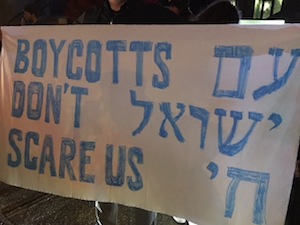
A small group of protesters met across the street from the church, draped in Israeli flags. One entered the talk and unfurled a banner reading, “Boycotts Don’t Scare Us – Am Yisrael Chai,” before being peacefully removed. A college-age Israeli protester held a sign saying, “Israeli Lives Matter” and told the Independent that what was going on inside was “just like Nazi Germany.”

IJV sent someone out to invite the protesters in afterward for dialogue. While they declined, one Jewish protester exchanged phone numbers with a Palestinian from Gaza who had approached the group, agreeing to meet later and talk.

Matthew Gindin is a freelance journalist, writer and lecturer. He writes regularly for the Forward and All That Is Interesting, and has been published in Religion Dispatches, Situate Magazine, Tikkun and elsewhere. He can be found on Medium and Twitter.

Format ImagePosted on November 3, 2017November 1, 2017Author Matthew GindinCategories LocalTags anti-Israel, IJV, Martha Roth, Roger Waters
The challah represents unity

The challah represents unity

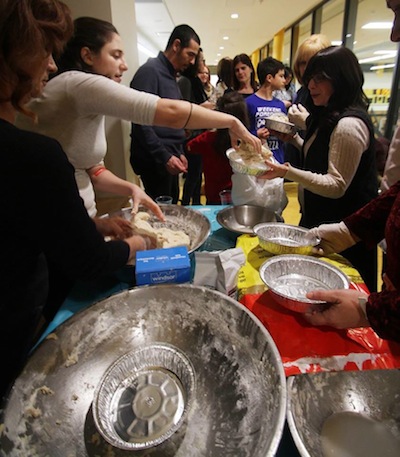
Photos from the Vancouver Shabbos Project event Oct. 26. (photo by Lior Noyman)

photo - Participants collect their supplies
Participants collect their supplies. (photo by Lior Noyman)

On the night of Oct. 26, hundreds of Jewish community members came together at Vancouver Talmud Torah to bake challah and socialize in a welcoming atmosphere. The event was part of the Shabbos Project, a worldwide movement where Jews across the globe celebrates a Shabbat together.

Why challah for Shabbat?

Most challot are braided with either three or six strands of dough. In kabbalah, when we talk about the mundane and physical world with its limitations, we consider the (three) aspects of time, space and matter, and the six days of creation and the six directions in our three-dimensional world (north, south, west, east, up and down).

Throughout the week, we work to master our environment. We struggle with time – when is there ever enough? We are limited by space, and we attempt to control matter. We are preoccupied with succeeding in and dominating our physical world.

photo - The challah braid represents the unity of everything
The challah braid represents the unity of everything. (photo by Lior Noyman)

Shabbat arrives and it supersedes and gives meaning to all we do during the week. It brings us back to focus. Shabbat represents the soul and our inner self. It represents the G-dly, the infinite and the spiritual energy beyond the physical dimensions.

The challah braid represents the unity of everything. It ties all the physical properties of our lives to the divine.

Similarly, Shabbat uplifts time, space and matter and all the dimensions of the physical world. It brings everything and everyone together, reminding us of unity, peace and the purpose of creation.

Rabbi Shmulik Yeshayahu is director of the Ohel Ya’akov Community Kollel.

Format ImagePosted on November 3, 2017November 1, 2017Author Rabbi Shmulik YeshayahuCategories LocalTags challah, Judaism, Shabbat
Flowers for fundraising

Flowers for fundraising

Global TV was at Richmond Jewish Day School last week to recognize the efforts of Grade 6 and 7 students who are selling flowers to fundraise for the Variety Club, Richmond Animal Protection Society and the Jewish Food Bank. To date, the students have raised $2,000 for these charities. Pictured, left to right, are Rachel Marliss, Shai Rubin and Nathan Brown. (photo by Lauren Kramer)

Format ImagePosted on November 3, 2017November 1, 2017Author Lauren KramerCategories LocalTags Jewish Food Bank, Richmond Animal Protection Society, Richmond Jewish Day School, RJDS, tzedakah, Variety Club
Conversation continues

Conversation continues

Author Nathan Englander with the Globe and Mail’s Marsha Lederman at an Oct. 22 event held by the Cherie Smith Jewish Book Festival, which runs Nov. 25-30. Englander was in Vancouver as part of a North American tour of his latest novel, Dinner at the Center of the Earth. For an interview with Englander, visit jewishindependent.ca/a-novel-born-of-heartbreak. (photo by Cynthia Ramsay)

Format ImagePosted on November 3, 2017November 2, 2017Author Cynthia RamsayCategories BooksTags Cherie Smith JCC Jewish Book Festival, Marsha Lederman, Nathan Englander
Mystery photo … Nov. 3/17

Mystery photo … Nov. 3/17

Congregation Beth Israel event, 1990. (photo from JWB fonds, JMABC L.09769)

If you know someone in this photo, please help the JI fill the gaps of its predecessor’s (the Jewish Western Bulletin’s) collection at the Jewish Museum and Archives of B.C. by contacting [email protected] or 604-257-5199. To find out who has been identified in the photos, visit jewishmuseum.ca/blog.

Format ImagePosted on November 3, 2017November 2, 2017Author JI and JMABCCategories Mystery PhotoTags Beth Israel, history, Jewish museum, JMABC
מי יקבל את הכסף?

מי יקבל את הכסף?

צריך לדעת מתי לעזוב: גבר העלים מבת בת זוגתו לשעבר כי הם זכו בשישה מיליון דולר בלוטו. (צילום: olg.ca)

אם מחליטים להיפרד מבן או מבת הזוג צריך לדעת מתי לעשות זאת. לא מומלץ לעשות זאת לאחר שרוכשים כרטיס להגרלת הלוטו וזוכים בה. מוריס טיבו (46) מהעיר צ’טהאם שמחוז אונטריו החליט להיפרד פתאם מבת זוגתו הקבועה דניס רוברטסון (גם כן בת 46). הזוג גר למעלה משנתיים בביתה של רוברטסון (עם ילדתה מנישואים קודמים). אך טיבו העלים מרוברטסון את העובדה כי כרטיס הלוטו שלהם להגרלת 6/49 (מתאריך ה-20.9) זכה בלא פחות משישה מיליון דולר. עתה בית המשפט של מחוז אונטריו הוא זה יכריע בסוגיה מי יקבל את הכסף וכיצד הוא יתחלק בין השניים.

טיבו סיפר לזוגתו כי הכרטיס שלהם לא זכה בשום פרס אך התברר לה שהוא שיקר. זאת כיוון שאחד מחבריהם המשותפים סיפר לה כי לאחר שעזב את הבית טיבו מיהר גם התפטר מעבודתו הקבועה. בת זוגתו לשעבר כעסה מאוד ופנתה מייד לקבל עצה מעורך דין. אותו יועץ משפטי פנה בדחיפות לבית המשפט שהוציא צו זמני האוסר על העברת הזכייה לטיבו. ולפיכך אונטריו לוטורי גיימינג קורפורשיין (או.אל.ג’י) הקפיא את הכסף של הכרטיס הזוכה עד שהסוגיה תברר סופית בבית המשפט.

יועץ משפטי המתמחה בתחום, עו”ד בוריס ביטנסקי, אומר כי למרות שהזוג לא היה נשוי לאישה קרוב לוודאי יש זכויות על כספי הפרס. ידוע שבני הזוג גרו יחדיו למעלה משנתיים, והם נהגו לרכוש במשותף מדי שבוע כרטיסים להגרלות הלוטו. חבר של טיבו מכחיש שהיה הסדר בין שני בני הזוג בנושא הלוטו. לדבריו טיבו רכש את הכרטיס שזכה בדביט קארד שקשור לחשבון הבנק האישי שלו. הוא הוסיף כי כבר לפני חודשים טיבו התכוון להיפרד מרוברסטון ורק לאחר שזכה בלוטו יכל לבצע זאת בפועל. עו”ד ביטנסקי מדגיש כי על רוברטסון להוכיח בבית המשפט כי השניים אכן נהגו לרכוש בקביעות כרטיסים להגרלת הלוטו, ולחלק את כספי הזכייה אם היו. היא תוכל לחזק את טענותיה כנגד בן זוגה לשעבר, אם תוכל להציג אימיילים והודעות טקסט טלפוניות, על המידע שהחליפו בקביעות בנוגע לרכישת כרטיסי לוטו (כמו האם רכשת כבר את הכרטיס להגרלה הקרובה? האם לא שכחת לרכוש את הכרטיס עם המספרים שלנו?). לדעת ע”וד ביטנסקי אם רוברטסון לא תוכל להביא הוכחות יאלץ בית המשפט להכריע על סמך מה שהיא תמסור בעדותה, לעומת מה שטיבו ימסור בעדותו. אז השופט יכריע לאחר שיחליט למי הוא מאמין יותר משני הצדדים. הוא מציין עוד כי בדרך כלל סוגיות כאלה נפתרות מחוץ לכותלי בית המשפט. זאת, למרות שדרך כלל מריבות של בני זוג לשעבר הן הרבה יותר מסובכות בעיות אחרות הקשורות בחלוקת כספים של זכייה בכרטיסי לוטו. האו.אל.ג’י יחזיק את כספי הזכייה במשמרת עד להחלטת השופט, כי בעבר קרו כבר מקרים שכספים חולקו ורק לאחר מכן נפתחו מאבקים משפטיים ביו טוענים שונים לזכיה בהגרלות. לדברי היועץ המשפטי זכור לו מקרה שזכה לפרסום בתקשורת לפני כעשר שנים, כאשר גבר שנה לאחר שזכה בלוטו פנה לקבל את הכסף. בינתיים לאור כל אותו זמן הוא לא סיפר לאשתו כי הם זכו בפרס בלוטו, ובמהלך השנה בני הזוג התגרשו. הסוגיה לבסוף הוסדרה בבית המשפט והכסף התחלק בין השניים. עו”ד ביטנסקי מתקשה לתת עצה לבני זוג שחיים ביחד כיצד יגנו על עצמם בפני מצבים מסובכים שכאלה.

Format ImagePosted on November 1, 2017October 22, 2017Author Roni RachmaniCategories עניין בחדשותTags Chatham, Denise Robertson, lottery, Maurice Thibeault, דניס רוברטסון, לוטו, מוריס טיבו, צ'טהאם
Stories from the Sylvia Hotel

Stories from the Sylvia Hotel

Left to right: Advah Soudack, Tom Pickett and Adam Abrams co-star in Two Views from the Sylvia, playing at the Waterfront Theatre Nov. 8-12. (photo from Kol Halev)

“For me, the ‘coolest’ thing is Sylvia herself,” Advah Soudack told the Independent. “From everything I have read and heard, she was a dynamite of a woman – fiery, passionate and full of life. The woman lived until 102, for goodness sake, and did so with a heart murmur that caused much concern for doctors and her parents when she was young. I like the story of how she met her husband, Harry. The two were on a Jewish singles cruise and, when Harry witnessed Sylvia dive enthusiastically off the side of the boat, he knew in that moment that she was the gal for him. I only wish Sylvia was alive to see the show.”

Soudack takes on the role of Sylvia Ablowitz, née Goldstein, whose father, Abraham, built the Sylvia Hotel and named it after his daughter. The family’s story and stories about the renowned establishment in English Bay are depicted in Two Views from the Sylvia, which is being presented by Kol Halev Performance Society Nov. 8-12 at the Waterfront Theatre.

“This is the most ambitious show Kol Halev has produced, and their first as a registered society. But it fits perfectly into their mandate to tell stories of Jewish history and local Vancouver history, with music, song and performance, in an engaging and entertaining way,” said Adam Abrams, who plays Abraham in the production, and is also vice-president of Kol Halev. “I’m so excited to be a part of it,” he said.

Two Views from the Sylvia is comprised of two original one-act plays. Its genesis can be traced back some four years, to a Jewish psychology network meeting attended by Kol Halev president Sue Cohene and Ablowitz’s great-niece, Marsha Ablowitz, who pitched the story of her famous great-aunt to Cohene. In mid-2013, members of Kol Halev met with Marsha Ablowitz and her mother, Sally Seidler, who is now 99 years old.

By August 2013, Joan Stuchner had drafted the first two pages of a play. A few months later, Deborah Vogt joined the writing team, with she and Abrams assisting Stuchner. Sadly, Stuchner died in June 2014 of pancreatic cancer and Vogt had to complete the script without her.

Vogt’s one-act play, Sylvia’s Hotel, with music by Britt MacLeod and Kerry O’Donovan, lyrics by MacLeod, is set in 1912, and focuses on the origins of the hotel and on the Ablowitz-Goldstein family. “Both young Sylvia Goldstein and Joe Fortes, the beloved lifeguard who taught Vancouver children to swim, experience the challenges of those who didn’t quite ‘belong’ in the Vancouver of the time,” notes the promotional material. It forms Act 1 of Two Views from the Sylvia.

Act 2, called The Hotel Sylvia, is by Cathy Moss and Kelsey Blair. It focuses on the period after the building of the hotel, and “we meet the characters whose lives and loves became interwoven with the story of the Sylvia over her 100-year history.”

In Act 1, most of the characters are based on real people, members of the Goldstein family and Fortes. In Act 2, most of the characters are composites of more than one person or story, notably the character of Franny, who is a nod to a longtime Sylvia employee.

“Several of the stories told in this one act play are the stories as told to Cathy Moss and me by Huguette Gingras, who was the front-desk clerk at the Sylvia Hotel for 35 years,” said Cohene.

Tom Pickett, who plays Fortes in Act 1, plays the character of John in Act 2. “Though John is an independent character, he cares about the Sylvia the way Joe cares about the kids and English Bay so, in my mind, I imbue a hint of John with a bit of Joe and maybe vice versa,” said the actor.

Pickett – who said he has played Fortes a few times before – was immediately on board when he heard that Christopher King was the director and Shelly Stewart Hunt was the choreographer of the production. “Then I had the pleasure of talking with Sue Cohene on the phone and the connection was instantaneous,” he told the Independent. “And then, as we began rehearsals, the artistic opportunities to honour a Vancouver landmark like the Sylvia and represent a historical figure like Joe Fortes deepened. I think many people know of the Sylvia but don’t know a lot about the Sylvia. I’ve done a gospel concert at the Sylvia, my wife’s cousin from Montreal always stays at the Sylvia, my mechanic, the teller at my bank, the list goes on.”

“It seems that everyone has a story or a connection to the Sylvia,” agreed Abrams, “so it’s exciting to be telling a story about something so iconic, that means so much to people in Vancouver. And though I’m thrilled to have a great role, I’ve been mostly just impressed with what everyone else is bringing to it. There are some really beautiful moments both visually and dramatically, and some wonderful music, too. I think people are going to leave the theatre humming the title theme, ‘At the Sylvia’!”

About his character in Act 1, Abrams said, “Abe is someone who wants more than just personal success, he really wants to make his city a better place and feels the hotel will help achieve that. He’s also proud of his Jewish heritage and wants to show what his people can accomplish – despite facing a lot of the prejudice that was so common at that time.”

In Act 2, Abrams plays Mr. Lowry, “the manager of the present-day Sylvia, [who] is trying out Franny for the front-desk job to see how she does. He just shows up a couple of times, but I’m finding a lot of little moments of humour in his appearances.”

In preparing for the show, Soudack met with Marsha Ablowitz. “I not only flipped through piles of photos and heard stories,” said Soudack, “but also held Sylvia’s hairbrush, mirror and curling iron with her initials gracefully engraved on them in my hands. If the audience is paying close attention, they may even catch a glimpse of these artifacts in the show.”

While Sylvia appears in Act 1, she is only talked about in Act 2. In the second half of the production, Soudack plays Nora, who appears, said Soudack, “as a flashback to the Sylvia during the Second World War.”

“She is an interesting character, not only because of her independent nature, but also because of the times in which she would exercise this independence,” said the actor. “Nora, as explained by her daughter Gloria in Act 2, would visit the Sylvia twice a year. Gloria mentions that her mother, Nora, would come to write in her journal. She made a routine of it and even wore the same blue dress…. It turns out that she didn’t always come to write in her journal, she would also come to the Sylvia to dance.

“For me,” said Soudack, “Nora is an intriguing character to play because there has to be a reason why she came to the Sylvia and did so year after year. In the script, she talks about ‘taking a night off from everything.’ She mentions things about the war, headlines, air-raid precautions, however, as the actress, I choose to dig deeper and find what else she is ‘escaping’ from and taking the night off from…. There is a pure innocence to Nora going to the Sylvia twice a year to write in her journal and dance, but is there also an alter ego or an alternate life she desperately wants to explore?”

Other Jewish community members in the cast are Anna-Mae Wiesenthal and Joyce Gordon, while Heather Martin is associate producer and Gwen Epstein is on the production team. The Jewish Museum and Archives of British Columbia has created a photo exhibit, which will be on display at the theatre.

“Lots of things are very exciting,” said Cohene, “like watching amazingly creative choreography being developed on the spot. Hearing beautiful singing by the cast makes me want to sing along. I don’t – I am the producer and need to remember my role.

“I hope that people who come to the show are aware that we are a community theatre group. We are so fortunate to have the wonderful participation of two professional actors,” she said, referring to Pickett and Soudack, “who work alongside our very talented group of emerging actors. Kol Halev strives to be inclusive, accommodating performers of all ages, backgrounds and levels of experience. We aim to offer the opportunity to learn and create, in all aspects of our production. I’m hoping that this value is appreciated when the public sees the show.”

For tickets ($28) – and a chance to win free ones with your story of the Sylvia – visit kolhalev.ca.

Format ImagePosted on October 27, 2017October 25, 2017Author Cynthia RamsayCategories Performing ArtsTags Adam Abrams, Advah Soudack, Joe Fortes, Kol Halev, musical theatre, Sue Cohene, Sylvia Ablowitz, Sylvia Hotel, Tom Pickett, Vancouver
Or Shalom’s new cemetery

Or Shalom’s new cemetery

Or Shalom Rabbi Hannah Dresner, reciting psalms, leads the congregation around the Or Shalom cemetery perimeter. (photo by Robert Albanese)

Or Shalom Synagogue celebrated a major milestone on Oct. 15 with the dedication of its new cemetery.

In March, after four years of discussions with the City of Vancouver, the synagogue signed an agreement for a small area within Mountain View Cemetery (MVC). The area runs along the west side of Fraser Street extending south from 33rd Avenue.

Rabbi Hannah Dresner noted that the dedication helped “connect our bayit (our home in life) to our beit kavurot (our home in death).”

The ceremony, attended by more than 50 people (and a few dogs), began with a service at the synagogue, followed by a walk along Fraser to MVC. After reciting psalms while circling around the Or Shalom cemetery perimeter seven times to consecrate the area, participants proceeded to a reception at the MVC Celebration Hall.

Or Shalom is affiliated with Aleph, the Jewish Renewal movement, whose core values support efforts to explore and redefine Jewish traditions in ways that are egalitarian and inclusive. Accordingly, the cemetery offers a choice of all-Jewish and interfaith sections, a green section and double burials.

The area contains 64 lots (burial sites). However, Jewish custom allows multiple burials in one grave in locations where land is scarce, such as Jerusalem and Vancouver. Many older Jewish cemeteries in eastern Europe followed this practice. The Or Shalom section permits two people, related or not, to share a lot. Due to the small size of the cemetery, purchases are limited to individuals who have been Or Shalom members for at least five years.

Lots are purchased directly from MVC, which is owned and managed by the City of Vancouver. MVC manager Glen Hodges supported the project from the beginning and Or Shalom member Catherine Berris, a landscape architect with Urban Systems, helped with design.

Referring to Abraham’s purchase of a cave at Machpelah to bury his wife Sarah (Bereishit/Genesis 23) as the “first Jewish cemetery,” Dresner said, “It is beautiful to be buried in community, and this is what we will now be able to provide for one another at Mountain View: community in death.”

Dodie Katzenstein is a member of Or Shalom and a founding member of the cemetery planning committee.

Format ImagePosted on October 27, 2017October 25, 2017Author Dodie KatzensteinCategories LocalTags Judaism, Mountain View Cemetery, Or Shalom

Posts pagination

Previous page Page 1 … Page 419 Page 420 Page 421 … Page 670 Next page
Proudly powered by WordPress