Skip to content
  • Home
  • Subscribe / donate
  • Events calendar
  • Business Directory
  • FAQ
  • News
    • Local
    • National
    • Israel
    • World
    • עניין בחדשות
      A roundup of news in Canada and further afield, in Hebrew.
  • Opinion
    • From the JI
    • Op-Ed
  • Arts & Culture
    • Performing Arts
    • Music
    • Books
    • Visual Arts
    • TV & Film
  • Life
    • Celebrating the Holidays
    • Travel
    • The Daily Snooze
      Cartoons by Jacob Samuel
    • Mystery Photo
      Help the JI and JMABC fill in the gaps in our archives.
  • Community Links
    • Organizations, Etc.
    • Other News Sources & Blogs
  • JI Chai Celebration
  • JI@88! video

Recent Posts

  • Or Shalom reopens its doors
  • JFS from past to future
  • Need holistic approach
  • Sharing stories, advice
  • Journalist shares fears
  • Skills to live together
  • Road to independence
  • Cutting grass with scissors
  • Zionism as a solution
  • Deceit, desire & the divine
  • Reclaiming sacredness
  • Creative project ideas
  • Summer squares and cobbler
  • Thou shalt … summer commandments
  • Legal help for students
  • Revisiting myth of Lilith
  • Wrong person rebuked
  • Canada’s mixed messages
  • Questions for museum
  • Symposium on antizionism
  • Making soccer political
  • CJPAC lauds Pulver’s impact
  • City recognizes Vrba’s legacy  
  • Organ donation saves lives
  • Theodore’s March premiere
  • A healing Shabbaton
  • Supplying healthy food
  • A chime of metal tags
  • Yellowknife seder a first
  • Ishai energizes, unifies
  • A Lag b’Omer to remember
  • Expanding the healing
  • Hannah Senesh – a unique hero
  • Community milestones … May 2026
  • Sharing her testimony
  • Fall fight takes leap forward

Archives

Follow @JewishIndie
image - The CJN - Visit Us Banner - 300x600 - 101625

Author: Cynthia Ramsay

Jersey Boys at Queen E.

Jersey Boys at Queen E.

The Four Seasons of Jersey Boys sings “Sherry.” (photo from Broadway Across Canada)

The multiple-award-winning Jersey Boys comes to Queen Elizabeth Theatre Nov. 14-19. The musical about Frankie Valli and the Four Seasons was written by Jewish community members Marshall Brickman and Rick Elice.

Elice spoke to the Jewish Independent by phone from New York. He and Brickman were friends well before they became writing partners on the musical and other projects.

“We became friends somewhere in the ’90s, 1997-’98, around there, and Jersey Boys didn’t present itself as an opportunity until 2002, although we didn’t really do anything about it until the very end of 2003,” said Elice, noting that the day prior to our interview, Oct. 17, marked the 13th anniversary of the very first production of Jersey Boys, which opened at the La Jolla Playhouse in 2004.

When Elice was asked to write the musical, he asked Brickman to collaborate with him.

“I had spent a couple of decades in advertising and I was no longer doing that,” he explained. “I was working at a movie studio in California and a former client called – this was right after Mamma Mia! had opened on Broadway – and he said, ‘Hey, I have the rights to the Four Seasons’ music.’”

Initially, Elice thought he meant Vivaldi’s “Four Seasons.” After setting him straight, the former client asked, “‘Well, would you be interested in doing the Mamma Mia! [concept] with the music of the Four Seasons?’ And I said, ‘No, somebody already did that, somebody already did Mamma Mia!’”

But Elice agreed to have lunch with Valli and Bob Gaudio, principal songwriter of the Four Seasons, and he called Brickman.

He and his friend “had been flirting with the idea of maybe writing something together,” said Elice, “which we assumed would be a screenplay because I was working at a studio and Marshall is, of course, an Oscar-winning screenwriter of some renown; I mean, he’s a legend. And I said, ‘Suppose we were to write a Broadway musical?’ And he said, ‘I’ve never written a Broadway musical.’ ‘Well, neither have I! But no one’s going to pay us anything, so we’ll just be wasting our own time and maybe we’ll have some fun. Let’s go to lunch and see what these guys are like.’”

During lunch, they asked Valli and Gaudio what it was like growing up in New Jersey, said Elice. “They started to tell us these jokes and anecdotes that were so, by turn, hilarious, tragic, stunning, but all of them engaging and compelling. We found ourselves leaning forward like anyone would when being told a really good story. And we said, ‘Hey guys, if you wanted to do this, if you wanted to do your warts-and-all life story, life of the group, that would be something that would be interesting because, look at us, we’re on the end of our seats. Other people would probably respond similarly, too.’… And they said, ‘OK, go ahead, knock yourself out. If we like what you do, then we’ll give you the gig.’”

Valli and Gaudio liked the first few scenes that Elice and Brickman wrote, so the writers began shopping the musical around. “The stars were in alignment,” said Elice, “as we wrote in the show.” The perfect producers, a director and venue were all lined up. “The only thing we didn’t have was the show,” he said. But, within a couple of months, he and Brickman had completed a script and, by August 2004, the production was in rehearsal in Southern California.

“And audiences loved the show from the very first performance,” said Elice. “We were always there in the back with our pads, ready to edit and make changes and do all the things in previews you’re supposed to do, but the show was really solid. Fundamentally, the show didn’t change. We improved certain things about it but there was no big surgery to be done on anything.”

He attributed the success to the music, which “underpins all our lives,” and to the fact that the group’s story is “a compelling one.”

“That’s always the secret to good theatre,” he said. “Tell a good story with characters the audience cares about.”

He also credited director Des McAnuff with being “a great visionary and a great field marshal for the project. He created this rocket ship that we all got on. It was a super-happy experience that could have amounted to nothing, and it ended up changing all of our lives.”
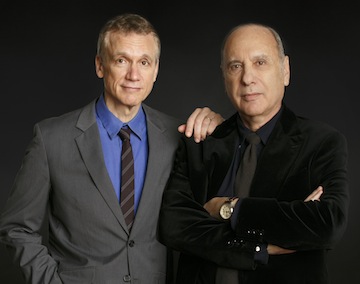
photo - Rick Elice, left, and Marshall Brickman, co-book writers of Jersey Boys
Rick Elice, left, and Marshall Brickman, co-book writers of Jersey Boys. (photo by Joan Marcus)

Part of the happy experience was writing with his friend.

“Writing for the theatre is like talking something into existence,” said Elice. It’s much harder to talk something into existence when you’re talking mainly to yourself, working as the sole writer, he said. “What I love about working with Marshall is that he taught me that, before you do anything, you take very long walks together and talk and talk and talk and talk, until you know how the characters sound, you know how to voice them, you know what happens, you’ve argued about plot and story and then, at some point, you have nothing left to do but sit down and actually write it. But the writing itself, the act of writing, is a product of extensive thinking and arguing and talking.”

There were no rules or a specific format for how the collaboration worked, said Elice. “If he wanted to write a scene, he would; if I wanted to, I would; then we would swap. And then, eventually, we were together combing through it.”

Elice said that he and Brickman weren’t involved in the making of the film version of Jersey Boys, which was directed by Clint Eastwood. “Generally, what the theatre offers that the film doesn’t offer is the live event,” said Elice.

He explained, “The existence of theatre ought to have ended by now – there are many, many other things to do. The theatre is expensive, it only happens in certain places at certain times of the day, it’s not convenient, it’s not particularly user-friendly as a medium, and yet it still exists. It’s actually doing better now than it did last year and, the year before that, it did better than the year before that, etc. So, why is that the case? Because, I think, we’re hardwired as a species – you and I and everyone around us – back to the days when cave-dwellers sat around fires and told each other stories. We like the idea of sitting in the dark and being told stories and experiencing them with other people sitting in the dark at the same time, experiencing the same story that will never be told in exactly the same way because it’s never the same. While the material may be the same, the performing of it is different, the audience is different, the chemistry in the room is different – everything changes.

“Each performance of a live event is a unique performance … and somewhere in there, somewhere in that unique experience, is something that’s thrilling for us,” he continued. “And what Des does specifically with Jersey Boys is to create a variety of roles for the audience because you’re not just sitting watching a show – you’re also the audience in the saloon, you’re the audience in the recording studio, you’re the audience at the concert, you’re the audience at the stadium. And there’s alchemy that happens with Jersey Boys on stage, where the audience, I think, really forgets that they’re watching actors playing these four guys and begins to believe that they are the Four Seasons and we are the people watching them. And so, the audience responds like they would at a rock concert, and not like they would do politely at a Broadway musical.”

He added, “It also happens to be a feel-good show and, as the world winds its way, a feel-good experience doesn’t feel out of sorts, because the rest of our days, we’re constantly facing greater challenges individually and collectively…. There are problems, there are bad things, so, you go to the theatre and feel good, it feels like a nice gift to give people.”

On Oct. 17, Jersey Boys’ 13th anniversary, a new company started rehearsals for another run of the show, said Elice. He dropped in to say hello to everyone and let them know of the significance of the day. “It’s a little like teaching,” he said. “If you’re a teacher, every year, the students stay the same age and you keep getting older … and I feel a little bit that way about Jersey Boys companies. I show up on the first day of rehearsals and, at the first production [in 2004], I was the same age as everybody in the show, and now I’m this old guy, because so many years have gone by but, of course, we’re still telling the story of a boy band, so you’ve got a cast in their 20s, and that’s a misty distant memory for me now.”

For tickets to Jersey Boys in Vancouver, visit ticketmaster.ca or call 1-855-985-5000.

Format GalleryPosted on November 3, 2017November 4, 2017Author Cynthia RamsayCategories Performing ArtsTags Broadway Across Canada, Franki Valli, Jersey Boys, Marshall Brickman, music, Rick Elice, theatre
What if shul had been sold?

What if shul had been sold?

Congregation Emanu-El in Victoria is the subject and setting for The Original Deed, which opens Nov. 15. (photo by Sid Tafler)

Established in 1863, Congregation Emanu-El in Victoria is the oldest synagogue in continuous use in Canada. As the saying goes, if those walls could talk. Well, journalist and author Sid Tafler, a longtime member of Emanu-El, has given them a voice, of sorts.

Tafler, who has worked in theatre as a writer, actor and producer, has created The Original Deed, an historical drama about the synagogue.

Despite being such a landmark, Emanu-El “was nearly lost forever a generation ago, when a move was afoot to sell the old building and relocate to the suburbs,” reads the description. “The play tells the story of Sam Abelman, a Holocaust survivor and downtown jeweler, who fights to save the shul from the wrecking ball, while his son Morry tries to sell out and move the congregation to the suburbs. As the father/son struggle reaches a climax, Sam invokes ‘the Original Deed’ and a ghostly figure from his past emerges to salvage his dreams and his memories.”

Performed in the sanctuary, it features Toshik Bukowiecki as Sam, Zuzana Macknight as Rivka Abelman and Bobby Cleveland as Jack Abelman. John Roebuck plays Morry, while the rest of the Abelman clan is performed by Maureen Van Wyck as Leah, Annika Hupp as Esther, Nolan Hupp as Young Sam, and Ava Fournier, 12, who plays Ellen. Bill Taylor takes on the character of Phil Cogan, the lawyer.

“The play is set circa 1980,” Tafler told the Independent. “I say circa because the issue of selling the shul was discussed a number of times over 15 to 20 years, so 1980 is an average.”

photo - Sid Tafler
Sid Tafler (photo from Sid Tafler)

Tafler mined the synagogue’s archives and online historical information, as well as the book Sefer Emanu-El, which was published by the synagogue on its 150th anniversary in 2013.

“I found that much of the written history about the shul is about the dynamic era of the founding in 1863 and the colourful figures of the gold rush and late 19th century,” said Tafler. “There is comparatively little about recent history. Some older members of the congregation knew about the proposed sale, which was discussed at board meetings, but not much detail about the how and why – specifically, why the idea was dropped.”

Tafler was inspired “by the intrigue and thinking behind this idea of selling the shul and moving to the suburbs, which many communities have done. When it first came up, the building was not the lovely restored heritage landmark it is now. It was covered in stucco and the ceiling had been lowered to exclude the balcony.”

In the real-life situation, there were proposals to buy an old church or to purchase land near the Jewish Cemetery on Cedar Hill Road, said Tafler.

“I created a family called the Abelmans to embody this story,” he explained. “Sam, an aging Holocaust survivor, is desperate to keep the old building, while his son Morry, head of the building committee, wants to sell out and move to a waterside location in Gordon Head (near the University of Victoria). Everyone gets involved: Sam’s wife Rivka, his granddaughter Ellen, his other son Jack, a wanderer; even his lawyer, Phil Cogan, who holds his finger to the wind and listens to his mother to decide which side he’s on.

“The stakes are very high for Sam,” said Tafler. “As a boy, he looked out the window of his home in Germany and saw his shul being destroyed on Kristallnacht. Soon after, he was shipped off to England in the Kindertransport, and never saw his family again.”

In addition to the history, Tafler said he was “also inspired by Zelda Dean, Emanu-El’s theatre maven, who suggested I write a play about the shul.”

It took two years and nine months for this production to go from idea to the stage, he said. “But, in some ways,” he said, it took 20 years. “My last play, Ghost on the Road, was produced at the Victoria Fringe Festival in 1997.”

The Abelmans are not real people, said Tafler, “but I have grown up with Holocaust survivors and their children and grandchildren from my earliest years. When I was still a toddler, my parents took in two teenage survivors from Hungary, a boy and a girl, who lived with our family in Montreal for a few years. In school, many of my classmates’ parents were survivors and I heard these stories firsthand. Here in Victoria, the survivors were a major presence in our shul.”

So, on whom is Sam based?

photo - Sam (played by Toshik Bukowiecki) and his granddaughter Ellen (Ava Fournier) listen for the sounds of voices in the synagogue walls in The Original Deed, at Congregation Emanu-El this month
Sam (played by Toshik Bukowiecki) and his granddaughter Ellen (Ava Fournier) listen for the sounds of voices in the synagogue walls in The Original Deed, at Congregation Emanu-El this month. (photo by Gayle Mavor)

“Sam Abelman is one part Jack Gardiner. One part Peter Gary. One part Willy Jacobs. One part Ray Rose. One part each of my grandfathers, Sam Tafler and Eli Shetzer,” said Tafler. “But mostly, Sam, the lead character in The Original Deed, is himself, played by Victoria actor Toshik Bukowiecki.

“Jack, Peter and Willy were Holocaust survivors and members of our shul at different times,” Tafler explained. “They taught us about terrible loss and despair, redeemed by liberation, healing and building a new life.

“Ray was born in Victoria in 1920 and operated Rose’s Jewelers on Douglas Street, a business started by his father Joseph in 1912. He was a bombardier in the RCAF in the Second World War and flew 33 missions over Europe,” said Tafler.

“Sam and Eli were both born in shtetls in the Ukraine and immigrated to Canada in the early 20th century. They found work and raised families in Montreal and their many descendants now live across North America.”

As to some of the reasons Morry, or community members like him, wanted to abandon the historic building and move to the suburbs, Tafler provided several excerpts from the play, all spoken by Morry (Morris):

  • “‘… there’s not enough room in this building. We can’t keep holding seders and Hebrew classes in this little space.’ (gestures at back, behind pews)”;
  • “It’s a new age, Dad. We need a real school if we expect the kids to keep coming.”
  • “Dad, this building is old, it’s small, there’s no room for a school, for offices.”
  • “(At the site in Gordon Head): ‘Use your imagination. Two lovely, modern buildings. A social hall, parking lot over there. Open space for the kids. And for expansion.’”

The Original Deed runs at Congregation Emanu-El Nov. 15-16 and 18-19, at 7 p.m. Tickets ($20/$15) are available at Ticket Rocket, ticketrocket.co/event/details/101436/the-original-deed.

Format ImagePosted on November 3, 2017November 3, 2017Author Cynthia RamsayCategories Performing ArtsTags Emanu-El, history, Original Deed, Sid Tafler, theatre, Victoria

Winning with grace

It was the model of dignity and decorum in a ludicrous situation. When Israeli judoka Tal Flicker won a gold medal last week at the Judo Grand Slam in Abu Dhabi, in the United Arab Emirates, his excitement was diminished by the Emirati host federation. Because of Flicker’s nationality, the UAE refused to play the winner’s national anthem or raise his nation’s flag. Instead, while the gold medal winner stood under a flag of the International Judo Federation and the federation’s theme song played, Flicker had to quietly sing his own private rendition of Hatikvah, the Israeli anthem.

Similarly, when Israel’s Tohar Butbul beat an Emirati judoka, the defeated competitor turned his back on Butbul’s extended hand, carrying through the tournament’s motif of betraying the values of judo in particular, and sports more generally.

Israel went on to win five medals in all at the tournament, with the rudeness by Emirati organizers repeated again and again. (The Israeli team was also forced to remove their nation’s flag from their uniforms.) Yet Flicker’s grace, and that of the other winners, was a model that Israelis and Jews worldwide – indeed, anyone with a smidgen of sportsmanship – should admire.

In what was a small consolation, two senior Emirati sports officials later apologized to the head of the Israeli judo delegation for the loser’s refusal to shake Butbul’s hand. But there has been no apology for the larger silliness around the Israelis’ participation in the competition.

In an ideal world, international sports federations and other bodies would reward behaviour like the UAE’s by preventing them from hosting major events for a specific period and demanding in advance that the most basic tenets of sportsmanship be respected by any country that hopes to host.

In the bigger picture, the incident demonstrates the absurd treatment Israel receives in the international community more broadly. The latest example, which also happens to involve the UAE, occurred on Monday in Paris at the 39th general conference of UNESCO, the United Nations Educational, Scientific and Cultural Organization. The UAE struck a commemorative medal to mark the renovation of UNESCO’s conference room. The medals feature a portrait of Hamdan bin Rashid Al Maktoum, the UAE’s finance minister (a keepsake for sure!) and one was left on the desk of every UNESCO member-state except … the Jewish one.

“The state of Israel has no need for gifts,” said Carmel Shama-Hacohen, Israel’s ambassador to UNESCO, “but this ugly and uncivilized step, here in the world’s organization for culture and education, which follows the outrageous treatment of our judokas during the tournament in the UAE’s capital, shows how much hatred, incitement and dark mentality surround these people.”

And so it seems.

Posted on November 3, 2017November 1, 2017Author The Editorial BoardCategories From the JITags Abu Dhabi, antisemitism, Israel, judo, Tal Flicker, Tohar Butbul, UNESCO

VHEC renewal now underway

Through education and remembrance, the Vancouver Holocaust Education Centre engages British Columbian students, educators and the broader public with the history of the Holocaust – the Shoah – and its ongoing relevance. Building on the VHEC’s achievements as Western Canada’s foremost Holocaust teaching museum, the centre’s renewal project, currently underway, will reconfigure the centre’s space to better serve the community and advance the organization’s vital mission.

The preservation of the VHEC’s collection of artifacts, and their use in support of Holocaust education in the post-eyewitness era, has emerged as a new area of emphasis for the future. To provide access to its archival collections and to better meet the needs of students and educators, the centre is proceeding with needed infrastructure upgrades, with support from the Government of Canada (Canada 150 Cultural Infrastructure Program), the Province of British Columbia (British Columbia/Canada 150: Celebrating B.C. Communities and their Contributions to Canada) and the Jewish Community Foundation.

The project will feature temperature and humidity-controlled archival storage and display facilities to enhance the visitor experience. The centre also looks forward to incorporating electronic access portals, which will allow visitors to interact with key themes in Holocaust history and with artifacts, documents and testimonies from the collections at the touch of a screen. Additionally, the VHEC is developing a designated audio-visual programming space that will allow Holocaust survivor outreach speakers – perhaps the centre’s most powerful, and certainly most in-demand, educators – to interact with students and participants in remote locations throughout British Columbia and beyond.

The VHEC renewal project will enable the centre to reach more students, to fulfil its obligation to archival donors and to engage in the time-sensitive work around ensuring that Holocaust-era artifacts from the community can be collected and integrated into exhibits and educational programs.

With plans for an eventual redevelopment of the Jewish Community Centre of Greater Vancouver in progress, the VHEC is ensuring that key aspects of the renewal are modular and transferable, in the event that the centre relocates in the coming years. The renewal will build in flexibility and sustainability.

The VHEC looks forward to welcoming students, teachers and community members to its renewed facility in early 2018, and to using its improved facility as a platform for carrying out its programming and interacting with the community. Guests attending the Nov. 22 special event in support of the VHEC, called “Looking Back … Moving Forward: Expanding the Reach of Holocaust Education,” will learn more about the centre’s upcoming plans, and preview the inaugural exhibition that will open in its renewed space.

Featuring a commissioned series of portraits of VHEC Holocaust survivor volunteers, the exhibition will honour and put a human face on those who survived the Shoah and have contributed to the VHEC community. Pulitzer Prize-winning photojournalist Marissa Roth created a similar exhibition of portraits of Holocaust survivors associated with the Museum of Tolerance in Los Angeles, currently on permanent exhibition at the museum. Inspired by this remarkable project, the VHEC is launching a documentation and exhibition project by Roth at an important time of transition for the centre and for Holocaust education.

The exhibition of black-and-white, matted and framed archival silver gelatin prints will be accompanied by biographical and historical information, and reflections on survival and the importance of education and remembrance. Representing and honouring the survivor volunteers who are no longer with us is an important aspect of the project, which will feature posthumous portraits – photographs of photographs of survivors, in some cases held by descendants.

Embodying the VHEC’s commitment to engaging with the past with eyes fixed firmly on the future, the renewal project and the Roth portrait exhibition will honour survivors, invite the participation of next generations and extend the reach of the VHEC’s work to new audiences, asking ever-more-challenging questions of how we extrapolate insights from history to navigate present-day affronts to social justice and human rights.

Nina Krieger is executive director of the Vancouver Holocaust Education Centre. This article originally appeared in the centre’s magazine, Zachor.

Posted on November 3, 2017November 1, 2017Author Nina KriegerCategories LocalTags Marissa Roth, photography, Vancouver Holocaust Education Centre, VHEC
Recalling a lost aunt

Recalling a lost aunt

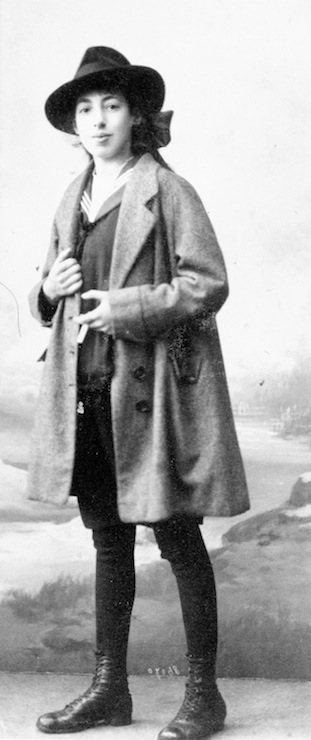
Rosetta van Dam, circa 1920. (photo from Louise Sorensen)

The Dutch Holocaust Memorial of Names has provided the opportunity to write and have published a piece about a person named on the memorial. I contributed stories about six of my murdered relatives, and wrote one of those stories in English, about my Aunt Rosa.

photo - Rosetta van Dam, circa 1920Rosetta van Dam (1904-1942), or Ro, was my mother’s younger sister. She was the first in the family to be deported and murdered, on Aug. 3, 1942, in the first Auschwitz gas chamber, at the age of 38. She had responded to the Nazi call to report for “labour in Germany.”

Ro lived in Rotterdam at the family home on Bergweg 99, where I was born and where she had her own room on my grandparents’ floor. Ro was totally withdrawn and had virtually no social life. She always wore a girl scout uniform, with heavy wool knee-high socks and sandals. She likely would have preferred men’s clothing but it was totally taboo at the time for women to dress in that way.

Ro’s voice was very deep and I believe now that she may have been transsexual or, in any event, a lesbian. I was told that my grandparents had been dragging her to a number of doctors, of course with no result. She ended up a virtual hermit, usually disappearing to her room. I think she did some secretarial work, perhaps for my grandparents’ business.

From 1929 to 1936, we lived in the same Rotterdam house. As a toddler and preschooler, I was too young to understand my aunt, but was curious and eager to please her.

Several years ago, I visited Auschwitz and learned that Ro never reached the Birkenau gas chambers because they were not yet in operation on Aug. 3, 1942. I was informed of this while standing in that very gas chamber, the only one that had not been destroyed, feeling deeply sad about my aunt.

Louise Sorensen was born in the Netherlands in 1929, where she lived with her parents and older sister. In May 1940, when the Nazis occupied Holland, they lived in a suburb near Amsterdam. Two years later, the Nazis ejected them from their home and the family was forced into the Amsterdam ghetto. By January 1943, they were separated and hidden in various locations throughout the country until the Canadians liberated them on April 17, 1945. Sorensen immigrated to Vancouver in 1959; her Danish husband has passed away and she has two sons and three grandsons. She has been active with the Vancouver Holocaust Education Centre since its inception: she was a board member for 10 years and has been speaking in schools and to other audiences for about 30 years. This article also appeared in VHEC’s Zachor.

Format ImagePosted on November 3, 2017November 1, 2017Author Louise SorensenCategories WorldTags Amersterdam, Holocaust, memorial, Netherlands, Rosetta van Dam
Netherlands builds memorial

Netherlands builds memorial

A bird’s-eye view of the Holocaust Memorial of Names to be built in Amsterdam. (photo from holocaustnamenmonument.nl)

More than 70 years after the Second World War, a memorial in Amsterdam will be erected with the names of all the Dutch Holocaust victims. This will finally provide the Netherlands with a tangible memorial where the 102,000 Jewish victims and 220 Sinti and Roma victims can be commemorated individually and collectively.

Up to now, no memorial in the Netherlands has listed each individual Holocaust victim by name. For surviving relatives, a place to commemorate family members is invaluable. In addition, a memorial listing the more than 102,000 names serves as a reminder to current and future generations of the dangers of racism and discrimination.

Between 1933 and 1945, the Nazis murdered an estimated six million Jews and hundreds of thousands of Sinti and Roma. Of the 140,000 Jews who lived in the Netherlands in 1940, 102,000 did not survive the war.

Not all Jews were murdered in the gas chambers of the extermination camps Auschwitz-Birkenau, Treblinka, Belzec, Majdanek, Chelmno and Sobibor. Many were murdered in mass executions or died as a result of sickness, hunger, exhaustion or slave labour. The Dutch Holocaust Memorial of Names commemorates all these victims.

Designed by Polish-Jewish architect Daniel Libeskind, whose studio is headquartered in New York City, the Dutch Holocaust Memorial of Names will be located in the heart of the Jewish Quarter of Amsterdam. The memorial consists of the four Hebrew letters that make up the word zachor, to remember. When visitors enter the memorial, they find themselves in a labyrinth of passageways flanked by two-metre-tall brick walls that convey the message, “In memory of.” Inscribed on each of the 102,000 bricks is a name, date of birth and age of death, in such a way that the name of each victim can be touched.

In combination with the highly reflective geometric forms of the steel letters, the brickwork connects Amsterdam’s past and present. A narrow void at the point where the brick walls meet the metal forms makes it appear that the steel letters float, symbolizing the interruption in the history and culture of the Dutch people.

Anyone can adopt a name on the memorial by donating 50 euros. For more information, visit holocaustnamenmonument.nl.

Format ImagePosted on November 3, 2017November 1, 2017Author Dutch Holocaust Memorial of NamesCategories WorldTags Amsterdam, Daniel Libeskind, Holocaust, memorial, Netherlands
Join in Limmud 2018

Join in Limmud 2018

Limmud Vancouver is now accepting program proposals for the April 14-15, 2018, learning symposium. Organizers seek presentations on a range of topics – text study, Jewish history, social action, arts and culture, family programs, and more – and welcome a range of formats: for example, lecture, interactive music and movement, chavruta-style small group, PowerPoint. They hope both new and returning presenters will prepare proposals, and encourage both experienced teachers and new voices to share areas of personal expertise. The Limmud principle is, “Every learner can be a teacher. Every teacher should be a learner.”

In 2018, Limmud Vancouver returns to Beth Israel Synagogue. The Saturday night event will shift: before sunset, participants will learn from several diverse presentations; after sunset, they’ll enjoy Havdalah and a reception. There will be only one weekend ticket sold, good for both Saturday night and Sunday.

Limmud Vancouver 2018 chairperson Laura Duhan Kaplan is well known around town for her breadth of teaching and organizational skills. The previous chairperson, Avi Dolgin, and the core group that created Limmud Vancouver will be staying on to create this next weekend. But Limmud Vancouver is looking for community members to join the team. They need volunteers on the existing committees – publicity, community outreach, venue, family programming, etc. And they would like to have one or two more people managing the computer tech for the presenters on the Sunday. As well, they are looking for two people to create the printed program guide – a time-limited task that calls for writing, editing, layout and production abilities. And they are also open to new initiatives; for example, Jewish theatre, monthly topic gatherings, and so on. What would you love to see at the next LimmudVan? What would you love to take on?

Contact [email protected] with any questions. If you have specific program ideas you’d like to discuss, contact [email protected]. To join the team or offer help, contact [email protected]. And, last but not least, to submit a presentation proposal, go to limmudvancouver.ca/submit-a-proposal. The deadline for proposals is Dec. 15, 2017.

Format ImagePosted on November 3, 2017November 1, 2017Author Limmud VancouverCategories LocalTags Avi Dolgin, education, Laura Duhan Kaplan, Limmud
Granirer paints with words

Granirer paints with words

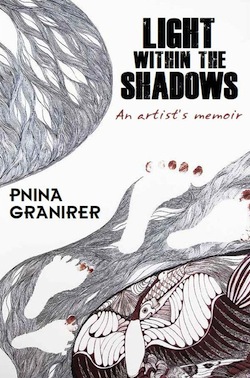
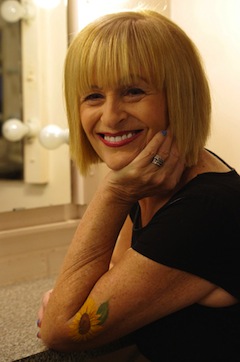
I am the proud owner of a Pnina Granirer work. More importantly, I am privileged to know the wonderful human being who is Pnina Granirer. After reading Light Within the Shadows: A Painter’s Memoir, I now know more about her art, its influences and styles, and her life, its joys and challenges. I also discovered that she writes as beautifully as she paints, and has a warm sense of humour.

Each chapter features a relevant quote from people throughout history, something they said or, most often, wrote; people as diverse as Roald Dahl, Anne Frank and Shakespeare. In these and her own words, Granirer imparts not only her life story but her philosophies on creativity, education, identity, family, business.

“There are people who plan their lives meticulously, step by step – I have never been one of them,” she writes. “Of course, I had goals, but these were like signposts to be reached one by one, short-term endeavours without a specific plan for the faraway future. I rather liked the idea of floating along, steering my boat from time to time and hoping that I would reach my destination, whatever it was meant to be.”

And the 82-year-old has experienced many destinations on her continuing journey. In a May interview with the Vancouver Sun, she talked about having written a book twice the size of what was published.

“There were a lot more historical references, many stories about family members and some more memories – it was too long and had to be cut,” Granirer told the Independent.

About the possibility of another book, she said, “I’m thinking about this and how I could use some of the chapters that have been cut, but, at the moment, I’m far too busy with getting through with the exhibition. I need a quiet space in order to begin thinking about writing and hope that I’ll begin doing just that early in 2018.”

book cover - Light Within the Shadows Granirer will do an artist’s talk at the Sidney and Gertrude Zack Gallery on Nov. 16 to open an exhibit of her work mounted in conjunction with the Cherie Smith JCC Jewish Book Festival because the occasion also represents the launch of her memoir. The event is sponsored by National Council of Jewish Women. This is especially appropriate because one of the topics that Granirer explores in her memoir is the difficulty of being a mother, a wife and an artist. About the 1970s, when her two sons, David and Dan, were young, she remarks, “I had little contact with the visual arts community in general and its avant-garde segment in particular. I didn’t have much time for forging professional ties, as my world consisted of my husband and my sons, who were a great source of joy and a well of inspiration for my art.” In this period, she not only produced much work, but also took on teaching.

Her memoir – which includes pages of colour photographs of her work – is divided into three acts. It takes readers from Romania, her birthplace and where she grew up, surviving the Holocaust; to the safety of Israel in 1950, to where first her father, then the family, fled from the dangers of communist Romania; to the United States in 1962, where her husband Eddy, a math professor, could find work, as the recently initiated American-Russian space race saw Americans “pouring money and resources into research, hoping to be the first to put a man on the moon…. Mathematics, the cornerstone and essential building block of scientific research, was suddenly in high demand all over North America.” Three years later, the Granirers would make their way to Vancouver.

Granirer talks about luck throughout the memoir and, specifically, about a couple of “old hackneyed sayings” being true, that of being “in the right place at the right time” and of being “born under a lucky star.” “Events beyond our control do change the course of our lives,” she writes. And, while they don’t always do so for the better, Granirer chooses, at least in looking back, to appreciate her good fortune.

“Of course, I never even thought of being lucky at the time,” she admitted to the Independent. “One just lives one’s life as it comes along and only later, in retrospect, one sees the whole picture. Getting older allowed me to have a better perspective of the past and writing the memoir brought it all together. We kept saying for years how lucky our family was to live in Vancouver, but day by day there were ups and downs and the occasional complaints when unfortunate events happened – and they did. The memoir was a watershed for me and helped me see the serendipitous moments in my life when fate could have gone easily the other way.”

The light and shadows of the book’s title not only apply to the vividness of remembered moments and the darkness in which forgotten moments lie, but also the grey areas through which we must travel in life – the uncertainties, the aforementioned circumstances beyond our control.

When asked if she was a naturally optimistic person or developed into one, she said, “I probably am more of the former, although that does not mean that there are not times when I feel as if the world is collapsing on me. There have been hard times for me in the past, but somehow I seem to manage to get through. I just try to deal with the black thoughts, when they come. Nothing is really black-and-white, it’s through the shadows that we have to find our way.”

In addition to geopolitics, health and other uncontrollable issues, Granirer also had to negotiate the politics of the art world, in which she had to deal with many curators who “did not seem to be interested in art and artists, except as tools for enhancing their own careers.”

“… meeting someone who loves a painting and wishes to live with it, who wants to learn the details of its creation and is convinced that owning it will enrich his or her life, is the most rewarding experience for an artist.”

Nonetheless, she persevered – “Early in my career,” she writes, “I decided to follow my own course, regardless of the cost.” She did so, even as she realized that, in her profession, “being different was not considered an asset, but a liability.” Though admitting that all artists, including herself, crave recognition, she writes that “meeting someone who loves a painting and wishes to live with it, who wants to learn the details of its creation and is convinced that owning it will enrich his or her life, is the most rewarding experience for an artist.”

To mark her 80th birthday, in 2015, and her 50th year in Canada, Granirer gave many others a gift. “Established galleries usually charge the artist 50% commission for each work sold, in exchange for space and promotion,” she explains. “Why not invite the public … for 10 days and offer the commission to my collectors instead.” It was because of this generosity that I was able to buy my first Granirer.

After this exhibition and sale, Granirer and her husband headed back to Romania, 65 years after they had left the country. It was a meaningful visit with at least three serendipitous occurrences. But, back in Vancouver, she ended up in hospital. Sixteen days later, after two surgeries for diverticulitis, she made it home. “I counted my blessings and told myself how much worse it could have been,” she writes. “What if it had happened while I was in Romania?”

She returns to the memoir’s opening paragraph about getting older, in which she remarks, “Simple words like ‘later,’ ‘next year,’ ‘tomorrow,’ ‘not now,’ become risky, unsure and speculative.” But there is also much to look forward to, she says. At the time of writing, it was an international exhibit in Costa Rica and one in Spain. Currently, she’s preparing for the Zack Gallery exhibit and the launch of the memoir. The event takes place Nov. 16, 6 p.m., and admission is free. It will be a great opportunity to meet the artist – and pick up a copy of Light Within the Shadows.

Format ImagePosted on November 3, 2017November 3, 2017Author Cynthia RamsayCategories BooksTags art, Cherie Smith JCC Jewish Book Festival, memoir, Pnina Granirer, Zack Gallery
Calendar Girls now at Metro

Calendar Girls now at Metro

The cast of Calendar Girls, at Metro Theatre until Nov. 25. (photo from Metro Theatre)

It takes courage for a small semi-professional theatre to tackle a play that was made into an internationally acclaimed film, with Helen Mirren and Julie Walters in the title roles. But that is exactly what the Metro Theatre has done. And they pull it off beautifully. Their new show, Calendar Girls, opened Oct. 28.

The play, like the movie, is based on the true story of a group of middle-aged Yorkshire women, one of whom was recently widowed. After her husband died of leukemia in 1998, she and her friends decided to produce a nude calendar, with photos of themselves, to raise funds to buy a settee for the visitors lounge in the hospital where her husband had been treated. The calendar for the year 2000 was released in 1999 and became a phenomenal success. The women made calendars for several successive years, and the proceeds from this original fundraising campaign resulted in several million pounds for cancer research in England.

These wonderful women inspired Juliette and Tim Firth to write a screenplay, which became a movie in 2003. Later, Tim Firth adapted it to the stage, and the play premièred in England in 2008. The North American première took place in Winnipeg in 2011.

The director of the Metro production, Alison Schamberger, writes, “I approached directing this beautiful play with a degree of apprehension. There seemed to be many pitfalls attached to it…. Luckily, I was able to surround myself with very talented people who always make the director look good! This play is a true testament to friendship that endures all hurdles.”

The play opens in a village church in Yorkshire, where a group of six women do tai chi and listen to lectures about such scintillating topics as broccoli. Everything is ordinary, bordering on the dull. We meet Chris and Annie and their friends, and learn some of the mundane details of their lives and a bit about their very different personalities. When Annie’s husband, John, dies of leukemia, the women come together to support Annie.

They also want to buy a new settee for the hospital – more than one of them has had to sit for hours in the facility’s uncomfortable waiting area. They come up with the idea of a (tasteful) nude calendar. Not everyone is open to the radical approach at first, but eventually they all do it for John. The photo shoot scene is hilarious and heartbreaking in its intensity. The six actresses actually disrobe on stage, but the audience sees less skin than they would on a beach.

The second act is the aftermath. The media attention. The fame (or infamy), which none of the women expected, and the different ways they deal with it. Tempers collide, but friendships endure, even as the sales keep rising.

Music plays an important role in this production, perhaps as important as the actors. It supports the classy feel of the story, as does the simple, stationary set, the interior of a church, and the lighting, which produces the church’s colourful stained-glass windows, as well as the sunlit field into which the women venture on a couple of occasions.

The actors playing the calendar girls are on stage almost the entire length of the play. Their monologues and sharp banter are in turn sad or funny, poignant or irreverent. They take the audience on an emotional journey. Each of the six shines in her unique way.

Chris (Rebecca Walters) is the heart of the show. Her courage and optimism have no bounds – she is the one who comes up with the nudity idea – but she is as fallible as everyone else.

Annie (Peg Keenleyside) is grieving for her husband. Her involvement in the calendar is for his sake alone; she wouldn’t do it otherwise. Her main reason for participating is to contribute to the fight against cancer.

photo - Jewish community member Judy McLellan plays Cora in Metro’s Calendar Girls
Jewish community member Judy McLellan plays Cora in Metro’s Calendar Girls. (photo from Metro Theatre)

Cora (Jewish community member Judy McLellan) is a single mother worrying about her daughter’s reaction to the calendar, and all mothers would understand her concern. McLellan provides many singing interludes, and her voice is charming.

Jesse (Joan Koebel), a retired teacher, is full of pluck and laughter. She is the most comical of the cast, while Celia (Yasmin Tayob) and Ruth (Helen Martin) wrestle with their own demons.

The women’s friendship triumphs over their adversities, and their story is thought-provoking. It brings up important issues, such as how we deal with death and what we consider beautiful. As we watch the play, we contemplate our own imperfect bodies. We ask ourselves for what cause(s) would be willing to expose our vulnerability and literally ourselves to the entire world.

The play is not simply a slightly risqué comedy of manners. It raises moral questions and examines our relationships. What would we do for a friend? How would we weather the test of fame? The protagonists of Calendar Girls came out of their adventure better friends and, arguably, better people. Do we have it in us to be as brave as they were?

Calendar Girls runs at Metro Theatre (metrotheatre.com) until Nov. 25.

Olga Livshin is a Vancouver freelance writer. She can be reached at [email protected].


Format ImagePosted on November 3, 2017November 1, 2017Author Olga LivshinCategories Performing ArtsTags Calendar Girls, cancer, Judy McLellan, Metro Theatre
Film festival underway – Ben-Gurion & Pinsky

Film festival underway – Ben-Gurion & Pinsky

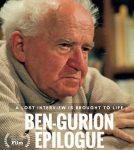
Five years before the end of his life, Israel’s first prime minister, David Ben-Gurion, gave six hours of interviews to an American who had recently made aliyah and moved near to Ben-Gurion’s Negev kibbutz retirement home in Sde Boker. The 1968 video footage sat undisturbed in the Steven Spielberg Jewish Film Archive in Jerusalem until it was rediscovered, but the audio was missing. Eventually, it too was found – in the Ben-Gurion archives at Sde Boker. Reunited, the six hours were whittled down by director Yariv Mozer to the one-hour film Ben-Gurion, Epilogue, which is part of this year’s Vancouver Jewish Film Festival.

Mere months after the death of his wife, Paula, Ben-Gurion reflected on his personal and public life. His Zionism was born in his Polish childhood, when the larger-than-life visionary Theodor Herzl traveled the Pale of Settlement. “When Herzl arrived in our little towns, they said, ‘Messiah’s come!’ And I believed it,” Ben-Gurion shared.

Ben-Gurion created a new life at least twice, first making aliyah and bringing to life the Jewish state, then, again, in retirement, when he retreated to the life of a simple kibbutznik in the Negev. His fascination with the desert was sparked in 1954, he said, when he was driving from Eilat back to central Israel and saw a cluster of rudimentary homes by the side of the road. He asked what they were doing there. “We were fighting in the War of Independence in this place,” the pioneers told him. “I decided to join them, to start building up, in the desert, where there is no soil, no water, no grass, no rain.”

The human side of the Ben-Gurion couple is on display through interspersed earlier footage of David and Paula together. In an interview with the BBC’s Malcolm Muggeridge, Paula says she was opposed to David’s retirement from politics. “Because he could not exist without politics,” she says.

“I can exist without politics,” he replies, without looking up.

“No you can’t,” she says. “It’s born in you.”

Likewise, when David gives a ponderous explanation of why he no longer defines himself as a Zionist, Paula deadpans, “I married a Zionist and you are not a Zionist?”

The interviewer draws Ben-Gurion into reflections on his tumultuous time in politics, including the riots that emerged in response to his decision to accept reparation payments, arms and military training from the West German government. But if the viewer is anticipating any earth-shattering revelations, Ben-Gurion is largely glib. Israel needed support and West Germany was offering.

As the Jewish people have a special role in the world, Ben-Gurion says, so does the Jewish state: to reflect the virtues set out by the Prophets. “To be just, truthful, helping all those who need help, and love other men like yourself,” the statesman says. “These are the virtues.”

“Do you think Israel is carrying out that mission?” asks the interviewer.

“Not yet,” Ben-Gurion replies instantly.

Ben-Gurion, Epilogue screens Nov. 6 and 11.

– Pat Johnson

***

In the American film Pinsky, the main character, Sophia Pinsky, has a good life: a job, a girlfriend, an apartment. But then her girlfriend leaves without saying goodbye and Sophia’s life unravels. She moves back home, to join her father, grandmother and brother, all still living together (what a miserable prospect), and the cheerless family dynamics are the focus of the movie.

The family are Russian Jews, and they are all unhappy for various reasons. Sophia works at a Russian grocery store. She feels alone, underappreciated and vulnerable. Nobody understands her. Her grandma tries to set her up with a nice Russian Jewish boy. “You’re too pretty to be a lesbian,” grandma declares, which drives Sophia bonkers.

She misses her girlfriend, she is searching for something big and beautiful, but, unfortunately, nothing even remotely resembling her dreams enters her drab life.

Depression seems to run in the family. Sophia’s brother is an alcoholic. Her father isn’t dealing well with aging. The grandmother, the only colourful character in the movie, is meddlesome and tactless, bossing around everyone in the family.

Everyone is lonely. Nobody understands one another. But, the truth is: none of them even tries to understand anyone else. Everyone concentrates on their own melancholy, hides inside their own bubbles of misery.

This movie reminded me of Chekhov’s plays: everyone is whining and nobody does anything positive. Unlike Chekhov though, this is a fragmented series of moments in the lives of different family members over a few days. The entire dysfunctional family comes under the director’s scrutiny, and all are found wanting.

Pinsky screens Nov. 9. The festival runs until Nov. 12. For the full schedule, visit vjff.org.

– Olga Livshin

Format ImagePosted on November 3, 2017November 1, 2017Author Pat Johnson and Olga LivshinCategories TV & FilmTags Ben-Gurion, Pinsky, Vancouver Jewish Film Festival

Posts pagination

Previous page Page 1 … Page 418 Page 419 Page 420 … Page 670 Next page
Proudly powered by WordPress