Ways to commemorate Oct. 7

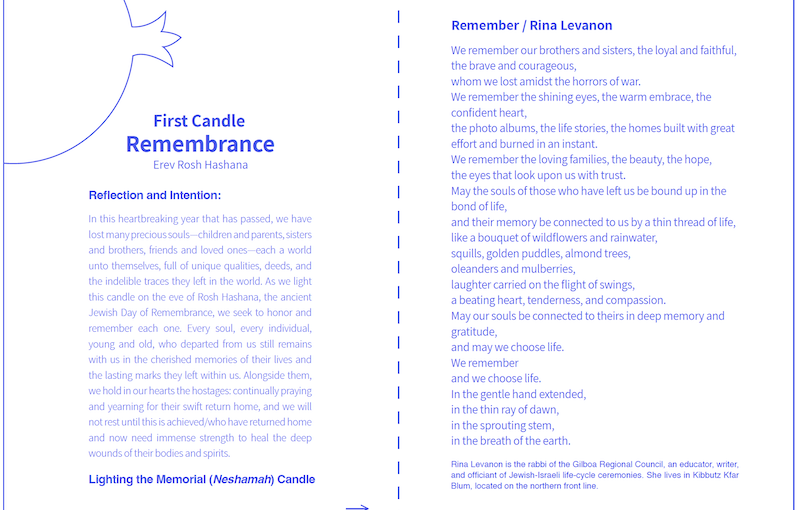
Erev Rosh Hashanah, from Shalom Hartman Institute’s Memory and Hope. For each holiday and Shabbat evening in Tishrei, the institute suggests we light a memorial candle before kindling the holiday and Shabbat lights, and offers an intention to recite before lighting this candle and a text to read afterward (both in English and in Hebrew).

Each year during Elul, the month leading up to the High Holidays, the women of medieval Ashkenaz would measure each of the graves in their community cemeteries with string. They would then dip these lengths of string in melted wax that had been collected from candles lit throughout the year in the synagogue when the community gathered to pray, to study, to cook and to connect. They would light these new candles, each made from string representing the dead and wax representing the living, on Yom Kippur as yahrzeit candles, a way of honouring and remembering deceased relatives.

On Rosh Hashanah, we will welcome a new year. And then, in the midst of the 10 days of repentance that lead up to Yom Kippur, we will reach the one-year anniversary of Oct. 7 and, with it, the anniversary of the day on which at least 1,139 people were killed by Hamas terrorists and more than 240 people were taken hostage. We will pray for the return of the remaining captives, and we will mark the start of the war that has since killed so many in Israel and Gaza.

We have struggled to fully mourn these losses as this war continues to unfold and expand; as not all the hostages have yet returned home; as, in North America, many of us navigate antisemitism in our communities and shifting relationships with local allies. And yet, we feel the need to grieve. The chaggim (holidays) offer us a pause in which we can reflect, cry and pray.

The Shalom Hartman Institute has developed two rituals for the anniversary of Oct. 7, one that spans most of the month of Tishrei, for individuals to use at home, and one for communal gatherings on Oct. 7 or on Shemini Atzeret and Simchat Torah.

Commemorating Oct. 7 at home

Every week, we begin Shabbat by lighting candles. Every Tishrei, we usher in Rosh Hashanah, Yom Kippur, Sukkot, Shemini Atzeret and Simchat Torah by lighting candles. Our ritual for commemorating Oct. 7 at home is woven into these traditions.

More specifically, for each holiday and Shabbat evening in Tishrei, we suggest that you light a memorial candle before kindling the holiday and Shabbat lights. We offer an intention to recite before lighting this candle each night and a short text to read afterward. These materials – inspired by the work of Hagit Bartuv and Rivka Rosner of the Shalom Hartman Institute’s Ritual Centre in Israel and in collaboration with Maital Friedman, Masua Sagiv and me from the Shalom Hartman Institute of North America – connect us with some of the central themes of the last year. Our hope is that the light of the memorial candle, the ner neshamah, literally a soul candle, and light of the festive candles flickering together will connect the strands of our grief and celebration.

Like the candles dipped by the women of Eastern Europe, this ritual honours both the dead and the living. It brings us back to the devastation of Oct. 7, and it also celebrates the artists, soldiers, teachers and ordinary people who helped us through a difficult year. Similarly, while memorial candles are traditionally lit to remember the dead, the ritual invites us to use these candles to light the way for the living – for peace, healing and hope.

While many Israeli Jews light candles on seven evenings from Rosh Hashanah through Simchat Torah, many diaspora Jews light candles on nine, the two additional candles marking the second night of Sukkot and for the start of Simchat Torah. As a statement of Jewish peoplehood, this home-based ritual is for seven nights of candlelighting, so that it will be used in Jewish homes around the world on the same days. If you want to use this ritual to accompany your candlelighting on the second night of Sukkot or on erev Simchat Torah, you might repeat an intention and text or offer an intention and reflection of your own.

Developing this ritual led us to ask about the meaning of memorializing Oct. 7. Is this ritual only about Oct. 7 or is it about everything that occurred that day and since? What do we mean by “heroism” at this time? Are we referring to military bravery or to the ways civilians stepped up to support and protect one another this year as well? Can the entire Jewish world share this one ritual, or have our experiences of this year been too different? What is the right balance between particularistic and universalistic yearnings?

For many of these questions, we looked to our Israeli colleagues to set the tone in creating a ritual that met their needs for their grief and vulnerability this year, as well as their sources of hope and comfort. For other elements, we offer suggestions to adapt the framing or created a slightly different version in the English that we thought might be better suited for those outside of Israel. You may want to use this resource exactly as is, but you may also find yourself adding different texts or focusing on different themes. We encourage creativity and would love to hear from you about how you adapt it to meet your needs for this moment.

Commemorating Oct. 7 in community

Many communities in North America will gather to mark the anniversary of Oct. 7, whether in synagogues, JCCs, Jewish federations, Hillels, schools or other Jewish centres. Our second resource is a collection of texts and prayers to be used in a communal ritual context, including suggestions of three different ways to use these rituals in your community.

The supplement also gave us the opportunity to add more texts, prayers, songs and perspectives, including texts with expressions of grief for the suffering of Palestinian civilians, which did not fit in the more particularistic framework of the home ritual above.

This Elul, as we reflect on the past year and gather up the wicks that measure our lives and our communities, may we continue to find ways to bind our wicks together, to find strength in community and ritual, and may all who mourn this tragic anniversary find comfort among the mourners of Zion and Jerusalem. Shanah tovah. 

Rabbi Jessica Fisher is the director of rabbinic enrichment at the Shalom Hartman Institute of North America. To read and download various Hartman Institute resources, including Memory and Hope: Rituals for Tishrei 5785 and accompanying resources for commemorating Oct.7 in community, visit hartman.org.il.
Setting intentions, priorities

This year, the High Holidays fall later than usual, with Rosh Hashanah just a few days before the anniversary of Oct. 7, 2023 – the most tragic date in the history of modern-day Israel. 

The High Holidays offer special opportunities for reflection and renewal, reaffirming what matters most, pursuing positive change and strengthening our connections with others.

As we look back on 5784, we should examine our own actions, reflecting honestly on our challenges and successes, and seeking lessons we can take from our experiences to carry into the year ahead. It’s a time to consider which elements of our lives and our relationships with others need improvement.

This leads naturally to an opportunity to contemplate our intentions and priorities and plan for the future. It is a means of charting a course that aligns with our values and contributes to the strength of our families and our communities.

While Canada remains one of the safest places for Jewish communities, the Centre for Israel and Jewish Affairs’ advocacy – especially since Oct. 7 – has been fueled by a profound dedication to tackling the disturbing rise in antisemitism.

The alarming surge in antisemitism, both online and on the streets, has been deeply shocking. Yet, it has also driven us to forge essential connections with all levels of government, law enforcement, educational institutions and community organizations representing the majority of Canada’s Jewish population and other vulnerable minorities. 

Just as the High Holidays are arriving late this year, so too are long-awaited protections from the government. We have seen some progress, but there is much to be done to ensure “bubble legislation” (safe-access laws to protect defined areas from protests, harassment and hate) becomes common, if not ubiquitous, across Canada. Vaughan, Ont., has adopted an encouraging example, and many other municipalities have expressed serious interest in following suit, but there is still much work ahead. 

Federal online hate legislation has been in development under various ministries for years, and we are not backing down on contributing to and securing this fundamental legislation that will enhance security measures.

The accusations against Israel of war crimes from the International Court of Justice (ICJ) are both absurd and detrimental to Canada and the West’s long-standing policies aimed at achieving peace in the Middle East. If the Canadian government wants to rescue the reputation of the ICJ, it must denounce this evidence of its politicization.

Antisemitism is not a “Jewish” problem. Jew-hatred poses a grave danger to all who cherish our core Canadian values. We know from history that, wherever antisemitism is allowed to thrive unchecked, social malaise and political oppression follow. Its defeat requires a concentrated, multi-pronged approach involving many cultural, political, ethnic and faith organizations, as well as individuals from across the country. Together, we are working to combat antisemitism while building relationships with many partner groups, promoting the Canadian values of dialogue and understanding, tolerance and respect. 

As Canada’s special envoy on preserving Holocaust remembrance and combatting antisemitism, Deborah Lyons, wrote in a July op-ed in the National Post: “Jews did not create antisemitism and … it is not on them to fight it alone.”

As we approach the sad and sombre anniversary of the Oct. 7 massacre, many will join us in honouring the memories of those murdered by Hamas and in praying for the safe return of the hostages and for the restoration of peace to the region. And, if we are so blessed to have welcomed home the hostages by the time you are reading this, we’ll have more to celebrate as we begin the new year.

In the meantime, I wish you a sweet, healthy, peaceful and happy 5785. 

Judy Zelikovitz is vice-president, university and local partner services, at the Centre for Israel and Jewish Affairs.

Think first, then share news

When I write articles lately, they’re usually columns with an Opinion header near the editorial section. Most writers try to back their opinions up with research and information. I’m no different. However, some readers can be easily swayed regardless of the facts involved. This was clear to me when I ate dinner at a neighbour’s home recently. I chatted with my host about a syndicated columnist who gives succinct opinions about all sorts of world politics.

The writer’s accessible approach makes it seem like his opinions are solid. His tone is breezy and confident. But he covers so many different world events and conflicts that I wondered how he knew so much about it all. My host suggested he had a large staff to help him. I doubted this. Writing’s just not that profitable these days.

Here’s why I grew to doubt this columnist’s work. When it came to how he analyzes Israel and the Middle East, I have some academic background in the subject and I read widely. I saw where I disagreed with his assumptions. In several cases, I had more information about the issues than he presented. I saw his bias. I questioned what I read. Yes, his work is always on the newspaper’s editorial page. It’s always an analysis piece but that doesn’t mean his facts and conclusions are always correct. Now when I read his work, I see the “mansplaining” tone. He’s overconfident and oversimplifies big conflicts. Sadly, I suspect few people call him on it.

My host and I had this exchange while talking about mainstream media. In North America, we like to think our journalism is objective, fair and impartial. When I was a kid, my family visited relatives in France. I noticed the sheer quantity of publications on the French newsstands. More than one relative explained that they subscribed to certain newspapers that represented their political view and bought others with differing views. This way, they could get a full picture of world events. They acknowledged that everyone had biases and that media wasn’t objective. The way to get a fair representation of events was by doing more: more reading, more information gathering, critical comparison and analysis.

My recent Talmud study, from the tractate Bava Batra, has taken me through some fun “tall tale” narratives from Rabbah bar bar Hanna. He was prone to exaggeration. In Bava Batra 73, he sees enormous antelopes and a frog as big as 60 houses. He claims that a dragon swallows the frog, which is then eaten by a raven. The raven then sat in a tree. Can you believe, he says, how sturdy that tree was? 

When Dr. Sara Ronis introduces these stories in the My Jewish Learning essay for this page, she calls them what they are: a real fish tale. (You should have seen the fish that got away!) These myths also perhaps have parallels to a Zoroastrian text called the Bundahishn, according to Drs. Reuven Kipperwasser and Dan Shapira. The stories might be crazy, but they were floating around in the ether of multicultural Babylonian marketplaces. Rabbah bar bar Hanna returns to the study hall with his crazy stories. The other rabbis call him on his nonsense. They insult him and call him names, criticizing his choices. There are lots of modern scholarly opinions about why the other talmudic rabbis do this, and what it means. It’s a topic for academic debate.

However, what if this is an ancient reminder for us? What if, during this period of Elul, when we’re supposed to start doing serious introspection, we’re also supposed to be examining exactly what crazy stories we’re swallowing? Imagine social media and news outlets as our marketplace. Maybe we’re bringing home Zoroastrian tall tales and repackaging them for our own consumption. The rabbis teach us in Bava Batra that swallowing these fish tales whole is not the smartest move. The rabbis ask why Rabbah bar bar Hanna didn’t just stop and think more before bringing this “stuff” home with him.

We’re often plied with misinformation – about the war in Israel, but also about other news. What do we know about Russia and Ukraine, repression in Iran, the Uyghurs or the Sudanese crisis? How much propaganda has been sent our way and who paid for it? It’s hard to tell. Too often, a seemingly objective, sincere journalist’s narrative might mislead us simply because their unconscious bias and opinion is submerged in the text. The editor’s headline guides us, too. 

Worse, sometimes it’s not subconscious bias. Sometimes, it’s bots or outright propaganda, paid for by a country that wants to mess up North American elections or culture. I’m not a conspiracy theorist. I believe that, like the rabbis suggest to Rabbah bar bar Hanna, one should reflect on things you read or hear, really look at them, and think critically. 

This season’s the time when we’re supposed to be examining our deeds since last year. Most of us were guilty of complacency in this past year. Last Sukkot, we couldn’t have imagined what was ahead. If someone had described what was to come, we would have accused them of telling an abhorrent tall tale. For many, Oct. 7 and its aftermath have been one scary, real and gruesome nightmare. 

It’s easy to understand complacency. We want to feel safe. We don’t want there to be metaphorical enormous frogs or dragons around the corner. That said, we owe it to ourselves to be like the rabbis in the study hall who called out Rabbah bar bar Hanna. Those rabbis asked bar bar Hanna to pause and think more about what he saw, read or told them. 

In the spirit of the High Holidays, let’s be true to ourselves. There is plenty of horrific real news for us to share. Let’s read widely first. Let’s keep our eyes open so we recognize bias and what is really happening before we pass something along. Let’s avoid the rumours and speculation, too.

Wishing you a sweet, happy, healthy and peaceful 5785, free of misinformation. 

Joanne Seiff has written regularly for the Winnipeg Free Press and various Jewish publications. She is the author of three books, including From the Outside In: Jewish Post Columns 2015-2016, a collection of essays available for digital download or as a paperback from Amazon. Check her out on Instagram @yrnspinner or at joanneseiff.blogspot.com.

The first of many Shabbats

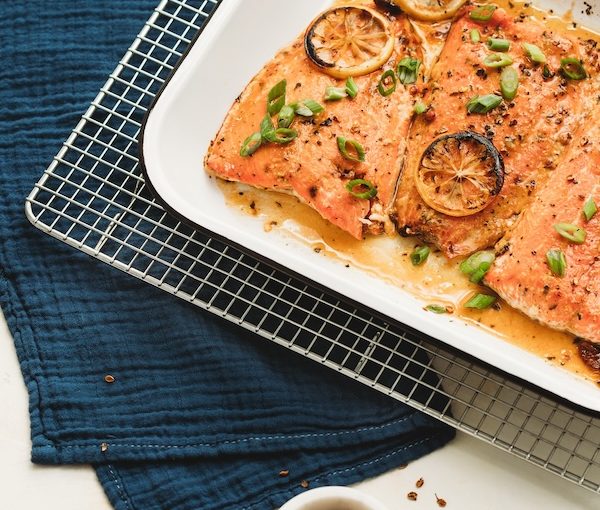
Faith Kramer’s Roasted Salmon with Citrus-honey Sauce. (photo by Clara Rice)

Somehow, I missed the cookbook 52 Shabbats: Friday Night Dinners Inspired by a Global Jewish Kitchen by Faith Kramer when it was published by the Collective Book Studio in 2021. Well, I now have a copy and, in an ideal world, my next year of 52 Shabbat dinners would all be cooked à la Kramer. Instead, it’ll probably take me several years to make all the special meals in this informative, well-laid-out, easy-to-follow cookbook – but at least I’ve gotten a head start.

In this last month of the Jewish year 5784, I made two of Kramer’s main dishes, a salad dressing and a dessert. Each recipe is prefaced with a blurb containing more information about the dish. Many recipes have suggestions of what to serve together (starter, main, dessert, etc.) to elevate the meal for Shabbat, as well as suggested variations and what can be made in advance. Kramer also provides explanations of lesser-known ingredients.

52 Shabbats begins with some discussion of different Jewish traditions around Shabbat and various Jewish communities’ ways of cooking food and the ingredients they use. Kramer gives a brief overview of Jewish dietary laws and shares her preferences for the common ingredients she uses throughout. The book is divided into the four seasons, plus chapters on side dishes and accompaniments, desserts, and fundamentals (sauces, etc.). There are additional resources listed near the end, as well as measurement conversions.

I chose the recipes to make from the fall section, focusing on Rosh Hashanah. I made a carrot and lentil main because, as Kramer writes: “Carrots are symbolic in Judaism of asking for prosperity and for our blessings to multiply. Combined with the sweetness of silan [date syrup] … or honey, they make an edible wish for a Happy New Year at Rosh Hashanah.” I also made a fish main, because fish is another symbol of Rosh Hashanah, with the hope that we be the head and not the tail, ie. a leader rather than a follower.

Kramer recommended mini cheesecakes as the dessert for both of these mains, so I made those as well. I also made the Lemon, Za’atar and Garlic Dressing for a green salad, but much preferred the dressing as a marinade for blanched green beans. For space reasons, I’ve not included the recipe intros or the “make it in advance” suggestions, nor have I included the dressing recipe. The three recipes here will hopefully inspire you to get a copy of the cookbook, and perhaps start some new Shabbat traditions this year.

SWEET-AND-TART SILAN-ROASTED CARROTS WITH LENTILS
(serves 4 as a main, 8 as a side)

for the lentils:
1 cup green or brown lentils
3 cups vegetable broth
1/4 tsp ground black pepper
1/4 tsp ground cumin
1/4 tsp paprika
1/2 cup chopped fennel or celery
1/2 cup chopped onion
1 tsp minced garlic
1 tsp minced jalapeño, optional
1/4 tsp salt, plus more if desired 

for the carrots:
2 tbsp olive oil, plus more for baking sheet
1 cup silan, honey or agave syrup
1/4 cup water
2 tbsp fresh lemon juice
1/4 tsp ground cumin
1/4 tsp ground cardamom
1/4 tsp cayenne pepper or paprika
1/8 tsp ground cloves
1 lb multicoloured carrots, peeled (cut large carrots into thirds)
1 tsp coarse sea salt
2 tbsp tahini
2 tbsp chopped fresh mint or flat-leaf parsley

In a large saucepan, stir together the lentils, vegetable broth, black pepper, cumin and paprika and bring to a simmer over medium heat. Stir in the fennel, onion, garlic and jalapeño (if using) and return to a simmer. Cover and cook, lowering the heat as needed to maintain a gentle simmer, until the lentils are tender and the liquid is absorbed, 15 to 20 minutes. Add the salt and stir well. Taste and adjust the seasoning, if desired. Remove from the heat, drain any excess liquid, and set aside while you make the carrots. 

Preheat the oven to 450°F. Line a rimmed baking sheet with parchment paper or aluminum foil. Grease the parchment paper with olive oil. 

In a wide, flat dish, whisk together the silan, water, olive oil, lemon juice, cumin, cardamom, cayenne and cloves. Add the carrots and toss until evenly coated.

Place the carrots in a single layer on the prepared baking sheet. Set aside any left-over silan mixture. 

Lower the oven temperature to 400°F. Roast the carrots for 40 to 50 minutes, or until tender and browned, tossing in the pan juices every 10 to 15 minutes.

Reheat the lentils, if desired, or keep them at room temperature. Add any leftover silan mixture to the lentils and stir to combine. Transfer the lentils to a large serving dish and top with the roasted carrots. Sprinkle with the coarse salt, drizzle with the tahini and garnish with the fresh mint.

ROAST SALMON WITH CITRUS-HONEY SAUCE
(serves 4-6 as a main, 8-10 as a starter)

1/3 cup fresh orange juice
1/2 cup light-coloured honey
1/2 tsp dried mint
1/4 tsp salt
1/4 tsp cayenne pepper or paprika
1/4 tsp ground black pepper
1/2 to 1 tsp Sichuan peppercorns, lightly crushed, optional
vegetable oil for baking sheet
1 1/2 to 2 lbs salmon fillet
6 tbsp thinly sliced green onions

In a small bowl, mix together the orange juice, honey, mint, salt, cayenne, black pepper and crushed Sichuan peppercorns (if using) to make a marinade. Set aside half of the marinade to use later for the sauce.

photo - Faith Kramer’s Roasted Salmon with Citrus-honey Sauce
(photo by Clara Rice)

Grease a rimmed baking sheet with oil. Place the salmon, skin side down, in the pan and brush the top of the salmon with some of the marinade. Let sit for at least 30 minutes or up to 60 minutes, brushing often with the marinade. 

Preheat the oven to 350°F. 

While the fish is marinating, pour the reserved marinade into a small saucepan over medium heat and bring to a boil. Lower the heat to low and simmer, uncovered, stirring occasionally, until the liquid is reduced by two-thirds, 15 to 20 minutes. Taste, and adjust the salt and other seasonings, if desired. Set the sauce aside.

Brush or spoon the remaining marinade over the salmon. Roast for 15 to 20 minutes, basting with the pan juices after 10 minutes, until the salmon is cooked to the desired doneness. For fully cooked fish, it should read 145°F when an instant-read thermometer is placed in the thickest part of the fillet. The flesh should be opaque all the way through but still be very moist. 

Transfer the salmon to a platter and spoon the sauce over the fish. Sprinkle with green onions and serve warm, at room temperature, or chilled.

MANGO AND CARDAMOM MINI CHEESECAKES
(makes 24 individual cheesecakes)

24 ginger snaps, lemon snaps or wafers, or vanilla wafers
1 1/2 cup fresh or defrosted frozen mango chunks, divided
3 (8-ounce) packages regular or light cream cheese, at room temperature
3 large eggs, beaten
1 cup sugar
1/2 tsp ground cardamom
1/4 tsp salt
1/4 tsp ground ginger
1 1/2 tsp vanilla extract
1 tsp fresh lemon juice

Preheat the oven to 375°F. Line two 12-cup cupcake pans with paper or foil liners. (If you don’t have enough tins, use foil cupcake liners on a baking sheet.)

Put a cookie in the bottom of each liner. Break cookies to fit and cover the bottom of the liner, if necessary.

In a blender, purée 3/4 cup of mango chunks until smooth. Set aside.

Cut the cream cheese into 1-inch chunks. In a large bowl, combine the eggs, sugar, cardamom, salt, ginger, vanilla extract and lemon juice and beat with an electric hand or stand mixer until light and lemony in colour, 1 to 2 minutes. Add the cream cheese chunks in 3 batches, incorporating each batch before adding the next. Beat on medium-high speed until totally smooth, 3 to 4 minutes. 

Fill each cupcake liner two-thirds full. Place 1 teaspoon of the mango purée in the centre of each cake. Using a knife, swirl the purée through the batter to create a marbleized look. 

Bake for 20 minutes, or until the centres of the cheesecakes are a bit loose and jiggly, puffed up and pale in colour. Turn off the oven, open the oven door and leave the cheesecakes there for 30 minutes. Transfer the cheesecakes to a wire rack and let cool. (The tops of the cakes will collapse.) Place the cheesecakes in the refrigerator until chilled. 

To serve, remove the cheesecakes from the liners, if desired. Chop the remaining 3/4 cup of mango and spoon it onto the cheesecakes. Serve cold or cool. 

Songs with a biblical touch

Of course, not everyone in Israel is religious. Yet, there is a rich heritage of Hebrew songs with lyrics taken either directly from the Hebrew Bible or inspired by it. Over the years, these songs have been tremendously popular with the Israeli public.

The first example – a song taken from Deuteronomy Chapter 30, verse 19 – unfortunately has special meaning in Israel today, as thousands of residents from both the northern and southern parts of the country have been forced to live away from their homes for almost a year now.

“Because man is a tree of the field” – this verse has been variously understood to mean human beings are like a tree planted on their land. While it has been recorded by more than one Israeli singer, a version I really like is the one with extended lyrics taken from a poem by the late Nathan Zach. It can be found at nli.org.il, if you know Hebrew.

Early in the daily morning prayer service and on holidays, including Rosh Hashanah, there is a section meant to put us in the mood for prayer, but is not prayer itself. In p’sukei d’zimra, we recite “Adonai [G-d] is my strength and my might; G-d is my deliverance.” These words are taken from the Song of the Sea, which is in the Book of Exodus, Chapter 15, verse 2. It was not only a popular Israeli song, but it was sung as part of the morning prayers by the Women of the Wall, which is fighting for women’s right to pray aloud, with Torah scrolls and tefillin, at the Western Wall (the Kotel). A version of it, sung by Naomi Zuri, is on YouTube.

From the same Song of the Sea comes a song of thanksgiving by Amir Benayoun. Found in the Book of Exodus 15:1-15 and 15:20-21, the text describes how the Israelites successfully crossed the Red Sea, leaving Pharaoh and his chariots to their fate when the sea closes back up. It’s on YouTube as well.

Another popular song is based on an event in the Book of Numbers 20:11, though it doesn’t use the exact wording of the biblical text. In the story, Moses hits a rock twice in frustration, water gushes out, and the Israelites and their animals drink. G-d apparently refused Moses entry into the Land of Canaan because of this angry action. According to the late Rabbi Lord Jonathan Sacks, Moses failed to understand that times had changed and he was facing a new generation. The people he confronted the first time were those who had spent much of their lives as slaves in Egypt. Those he now faced were born in freedom in the wilderness.

Rabbi Sacks clarified what that meant: slaves respond to orders, free people do not. Free people must be taught; otherwise, they will not learn to take responsibility. Slaves understand that a stick is used for striking, but free human beings must not be struck. Hence, Sacks suggested that, for this lack of understanding, Moses was punished.

There is a video on YouTube of Aviva Semadar singing “Mosheh hikah al sela” (“And Moses Struck a Rock”) and there is also a video of “Ya’aleh v’Yavo” (“He Will Go Up and He Will Come”), performed by Gidi Gov, who first sang Yoram Taharlev’s song in a 1973 song contest. In the first stanza, Moses has climbed Mount Nebo to look at the Promised Land. While no one knows for sure where Moses is buried, many claim he died on Mount Nebo and G-d Himself is said to have buried him. 

Curiously, these words – “Ya’aleh v’Yavo” – also appear in the Amidah. And, those who are familiar with the Grace after Meals will note that this phrase is added on Rosh Chodesh and holidays. It is chanted right before the section dealing with the [re]building of Jerusalem. 

Significantly, on Rosh Hashanah, we sing a verse from the Book of Jeremiah (31:19) during the Zikhronot section (which, according to Mahzor Lev Shalem, recalls the covenantal relationship between G-d and humanity) of the musaf Amidah for Rosh Hashanah:

“‘Is not Ephraim, my dear son, my precious child, whom I remember fondly even when I speak against him? So, my heart reaches out to him, and I always feel compassion for him,’ declares Adonai.”

image - Miri Aloni album coverYou can listen to Israeli singer Miri Aloni sing “Haben Yakir Li” (“My Dear Son”) at matchlyric.com.

There are several songs taken from the Song of Songs. One of the older well-known pieces is “Dodi Li,” “My Beloved is Mine,” sung by Sharona Aron, which is on YouTube, as are two other pieces from the Song of Songs, which have been composed more recently.

The first is performed by the Yamma Ensemble – a group that records in both Hebrew (ancient or modern) as well as in Ladino and Arabic dialects – which is coming to Vancouver for Chutzpah! (For story, click here.)

The lyrics are: “As a lily among thorns, so is my love among the daughters.  My beloved spoke and said unto me: ‘Rise up, my love, my fair one, and come away. For, lo, the winter is past, the rain is over and gone.”

The other piece from the Song of Songs is performed by singer Hadar Nehemya: “Many waters cannot quench love, neither can the floods drown it; if a man would give all the substance of his house for love, he would utterly be condemned / As a lily among thorns, so is my love among the daughters / My beloved spoke, and said unto me: ‘Rise up, my love, my fair one, and come away.’”

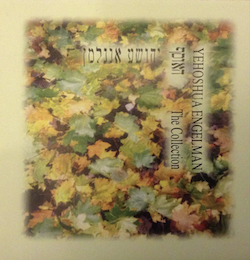
image - Yehoshua Engelman’s The Collection album coverSince Rosh Hashanah is approaching, I will end with an optimistic song, Yehoshua Engelman’s “Eliyahu (Elijah),” which can be heard on Spotify. Eliyahu is mentioned in numerous places in the Hebrew Bible and takes on numerous roles, though we don’t ever learn much about him. He is a bit of a mystery man, supposedly the harbinger of the Messiah. At the end of Havdalah, the ceremony marking the end of either Shabbat or holidays, we sing to Eliyahu, asking him to bring us redemption.

We could certainly use it. 

Deborah Rubin Fields is an Israel-based features writer. She is also the author of Take a Peek Inside: A Child’s Guide to Radiology Exams, published in English, Hebrew and Arabic.

Bucharest a city of contrast

There is an abundance of street art in Bucharest. (photo by Deborah Rubin Fields)

What could be more Israeli than the hora? Well, truth be told, the hora is not Israeli! The word hora comes from Romania. And, like the origins of the hora, the Romanian capital, Bucharest, is a place where the unexpected should be expected.

When you walk along Bucharest’s broad boulevards, one word comes to mind – palatial. There is the former Cantacuzino Palace, today’s George Enescu National Museum; the Elisabeta Palace, the private residence of the former Queen Elizabeth of Greece (born Princess Elisabeta of Romania), following her 1935 divorce from King George II of Greece; the former Royal Palace, today’s National Museum of Arts; the Romanian Athenaeum, today a major concert hall; the Palace of the Deposits and Consignments, still a bank, but today called the CEC Palace; and the Palace of Parliament.

Bucharest once had strong ties to Paris, and French is still mandated in schools. It was called Little Paris, so it should not be a surprise to see that Bucharest’s Manu-Auschnitt Palace is a copy of Paris’s Hôtel Biron (today’s Rodin Museum). While smaller in size, many older private homes were built with stunning stone (perhaps even cement) arches and columns, bas reliefs incorporating figures of lions, men and women, shields, gryphons, eagles, the angel of death, and various free-standing sculptures. In this home, the windows are in national-romantic and neo-Romanian style. Paris-inspired art deco metal work appears on door grills, door overhangs and the tops of buildings. Five classy examples of art deco building in Bucharest are 1 Piata Sfântul Stefan; the Ministry of Justice at 53 Bulevardul Regina Elisabeta; the Telephone Company Building on Calea Victoriei; the “Union” Building on 11 Strada Ion Campineanu; and 44 Calea Calarasilor.

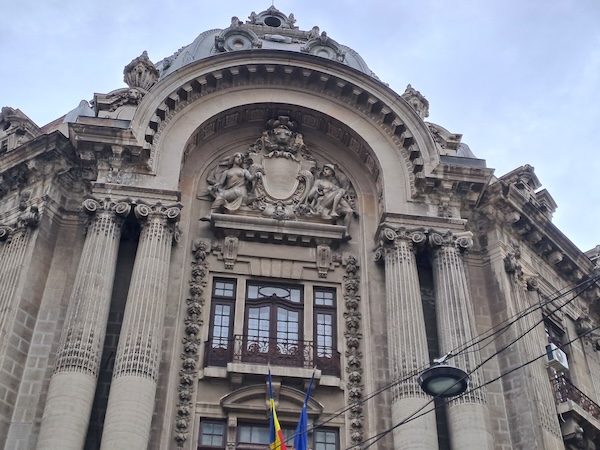
photo - The Old Palace of the Chamber of Commerce in Bucharest, a city full of former palaces
The Old Palace of the Chamber of Commerce in Bucharest, a city full of former palaces. (photo by Deborah Rubin Fields)

In addition to the number of stunning palaces, there is also an abundance of street art. Some of this street art is commissioned and appears on the sides of various buildings. It is often colourful and imaginative. There is, however, a lot of graffiti, which, apparently, began to appear after the 1989 Romanian revolt against the communist regime. Graffiti is illegal, but, as I was told, the consequences depend on the discretion of who catches the graffiti artist or how fast the artist can run.

Jewish presence in Romania dates to Roman times, when the country was a province called Dacia. The first mention of Jews in Bucharest is from the 16th century. Jews came to Bucharest from two directions: Sephardi Jews came from the south, mainly from the Ottoman Empire; later, Ashkenazi Jews came from the north. The latter, from Galicia or Ukraine, settled in Bucharest after having lived in Moldavia. As in other European countries, Jews were at various times tolerated, even integrated into general city life.  At other times, however, they were punished in one way or another.

The Jewish population of Bucharest grew significantly, particularly in the second half of the 19th century. In 1835, some 2,600 Jews lived there; this number jumped to 5,900 in 1860. In the 1800s, nine synagogues were constructed and, by 1900, the total Jewish population had risen to 40,500, making Bucharest by far the largest Jewish community in Romanian territory. By 1930, the city’s Jewish population was 74,480. Jews settled in virtually all the city districts, especially in areas where economic growth was fastest. Bucharest’s Jews laboured as artisans, metalworkers, merchants and bankers.

In the early 19th century, there were several instances in which Jews were accused of ritual murder. This led to violence and pogroms. While, on the books, Jews were to be given citizenship, government after government dragged its feet in making emancipation stick. In general, being Christian was a prerequisite for Romanian citizenship, although a complex naturalization process was theoretically made available to Jews. When, in 1866, Jewish French lawyer Adolph Crémieux came to Bucharest to help push for Jewish political emancipation, rioters attacked Jewish shops and synagogues. Toward the end of the century, many antisemitic organizations existed, due in large part to nationalist leader Alexandru C. Cuza’s political activities. In particular, his followers organized antisemitic agitation against Jewish students at Bucharest University. 

After Germany, Romania is directly responsible for more Jewish deaths in the Shoah than any other country. For most of the Second World War, Romania allied with Nazi Germany. According to official Romanian statistics, between 280,000 and 380,000 Jews were murdered or died in territories under Romanian administration during the war. Antisemitic legislation downgraded the identity of Jewish citizens to second-rate status: they lost the rights to education and health care, their property was confiscated, and they were forced to perform hard labour. In September 1942, approximately 1,000 Jews were deported to Transnistria.

Despite such treatment, most of Bucharest’s large Jewish community was spared the worst horrors of the Holocaust. Between 1941 and 1943, Bucharest-based Chilean charge d’affaires Samuel del Campo saved the lives of more than 1,200 Romanian and Polish Jews by issuing them Chilean passports, thus preventing their deportation to Nazi concentration camps.  A memorial stands in front of the former Ashkenazi Great Synagogue, commemorating the January 1941 paramilitary Iron Guard’s (Legionnaires’) savage murder of 125 Bucharest Jews, an action reminiscent of Nazi techniques, with the skinning of the victims and the hanging of them on meat hooks. 

Shortly after the Second World War, Bucharest experienced a great influx of Jews, as refugees arrived from concentration camps and from several areas in Romania where they continued to feel unsafe. By 1947, the Jewish population had grown to 150,000.

After the first years of the communist regime and the closing of Jewish welfare and religious institutions, Bucharest continued to be a centre of Jewish communal and cultural life due, in large part, to Chief Rabbi Moses Rosen, who coped with the inconsistencies and peculiarities of Romanian official policy – particularly during the 1965-1989 dictatorship of Nicolae Ceausescu. When former US ambassador Alfred Moses first visited Bucharest in 1976, a young Jew approached him saying, “Don’t believe what they tell you. The situation here is terrible, especially for Jews. We are blamed for everything that goes wrong. Help us get out. There is no future for Jews in Romania. Everything you hear is a lie, a lie, a lie.”

After the rebirth of the state of Israel, many Jews made aliyah. By 2000, only 3,500 Jews were left in Bucharest. Today’s Jewish life in Bucharest focuses on three synagogues, a community centre, a kosher restaurant and the Centre for the Study of the History of Romanian Jews. 

In 2021, a Romanian survey reported one-fourth of respondents saying they didn’t know or couldn’t say exactly what the Holocaust was. Another 35% said they couldn’t identify the Holocaust’s significance for Romania. In 2022, the populist Alliance for the Union of Romanians (AUR) opposition party called Holocaust education a “minor topic” when it was mandated in Romanian high schools. This party currently holds 12% of parliament seats and some people predict it will become a major political force in the near future.

On a more positive note, a few years after the death of Jewish Romanian Nobel laureate Elie Wiesel, at age 87, Bucharest memorialized him with a bust in the Piata Elie Wiesel. 

Finally, if you hear what sounds like a Slavic language spoken in Bucharest, it might just be Ukrainian. Since Russia began its attack on Ukraine two years ago, 11,000 Ukrainian men of conscription age have illegally fled to Romania. It is too early to say how this population will impact Bucharest life. 

Deborah Rubin Fields is an Israel-based features writer. She is also the author of Take a Peek Inside: A Child’s Guide to Radiology Exams, published in English, Hebrew and Arabic.

Trip sparks realization 

Starting in 1539, it took Spain 250 years to construct the six-level fortress El Morro in Puerto Rico, and Spain’s former power still emanates from the walls. (photo by Lauren Kramer)

I was in Old San Juan, Puerto Rico, recently, when the full magnitude of the Spanish Inquisition hit me like a ton of bricks.

The scene seemed an unlikely one for a blast from the Jewish past. I was with Pablo Garcia, a fast-speaking guide with Spoon, a boutique food and history company, and we were standing in the Plaza del Quinto Centenario, in front of fortifications that were more than 500 years old.

These were fortifications Spain built in the 1500s, not long after Christopher Columbus “discovered” Puerto Rico in 1493. “Discovered,” because the indigenous Taino people had been there for centuries but, for reasons that seem unfathomable now, that didn’t matter to the Spaniards.

Back home in Spain, 300,000 Jews were being expelled, murdered in the Inquisition or forced to convert to Catholicism, with some of them practising their Judaism underground. To appreciate the kind of force they were up against, you just need to pay a visit to Old San Juan and lay eyes on El Morro.

Spain started building El Morro in 1539 and it took 250 years to construct the six-level fortress. Its thick, stone walls, 185 feet above sea level, were punctuated by garritas, dome-shaped sentry booths located shouting distance from one another, so that, when one sentry perceived a threat on the horizon, he simply yelled a warning to his cohorts. El Morro guarded the city’s harbour from invaders and its bastion, with barracks, dungeons and storerooms, still holds original cannons that face the ocean in preparation for defence. 

The sites are so well preserved that, were the Spanish to resume control today, one feels certain they’d need very little additional infrastructure to guard the island. I looked at those stone walls that safeguarded the island from many battles over the centuries and marveled at the sheer strength of the Iberian Union. It dawned on me that the Jews of Spain really didn’t stand a chance against a power like this in 1492.

I was jolted back to reality when we stopped for a caffeine buzz at Don Ruiz, a coffee shop located in what was once Spain’s Ballajá Barracks. The coffee beans are from a four-generation family farm specializing in single-harvest, hand-picked beans, Garcia said. “In the 1700s, coffee was big business in Puerto Rico and one in every six cups of coffee worldwide was made with beans grown on the island. Coffee money built our roads and sealed our dams,” he said. 

Over the next three hours, I wandered between restaurants in beautifully preserved, colourful buildings in Old San Juan’s narrow, brick-laid streets. I sipped soursop juice, a local hangover cure with a pear-like taste, and sampled mofongo, a pastry made from mashed, fried green plantains. 

Spain maintained a stronghold on the island until 1898, when it became the US territory it remains to this day. But the Spanish influence remains pervasive, easily perceptible in the cuisine, the history of the island, the language and the islanders’ distinct cultural identity. 

Garcia stopped outside a local bank with a circular symbol above the door. “That’s the seal of Puerto Rico, still used to stamp new laws to this day,” he said. The seal depicts a tower representing Queen Isabella of Castille, a lion representing King Ferdinand II of Aragon and a cross, symbolizing Catholicism and Spain’s “discovery” of the “New World.”

It struck me as interesting that these two Catholic monarchs, the architects of the Spanish Inquisition, are still being lauded. Their legacies are sealed in Puerto Rico’s legal documents even today, and the authority they wielded 500 years ago still can be seen in those seemingly impenetrably thick stone walls of El Morro. 

Lauren Kramer, an award-winning writer and editor, lives in Richmond.

Tournament expands

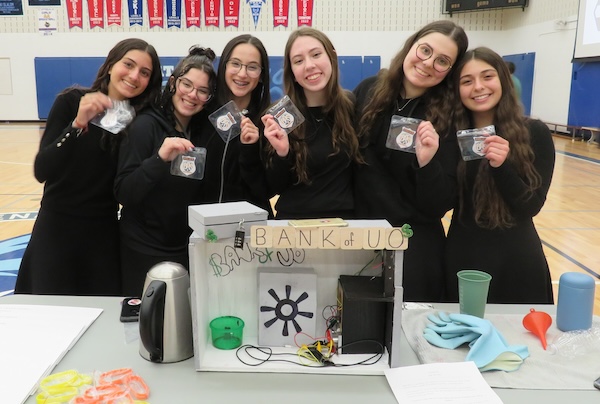
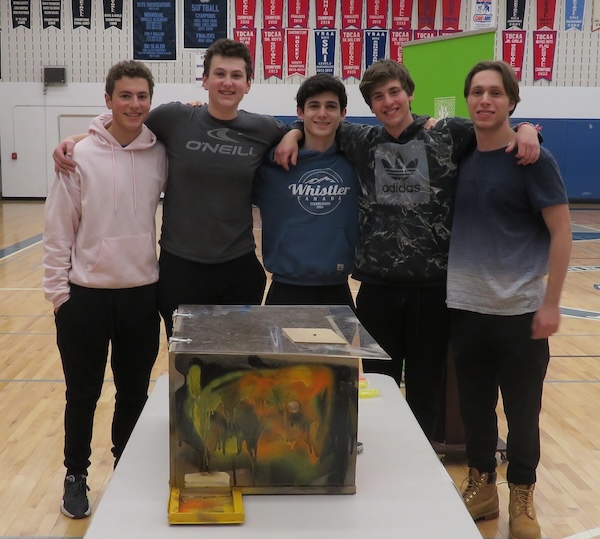
Weizmann Institute’s International Physics Tournament – the “Safe-Cracking Tournament” – is open to students in grades 11 and 12. (photo from Weizmann Canada)

Registration is now open for the Weizmann Institute’s International Physics Tournament. New this year – teams from Western Canada will be able to compete. A Zoom information session is scheduled for Sept. 23.

“Each spring, for the past 29 years, teams of highly talented high school students from around the world arrive at the Davidson Institute of Science Education, the educational arm of the Weizmann Institute of Science in Israel, to take part in the international physics tournament, commonly known as the ‘Safe-Cracking Tournament,’” Morgan Leibner, annual and education programs officer at Weizmann Canada, told the Independent.

In the competition, teams of high school students (grades 11 and 12) design and build a safe that has a locking mechanism based on principles of physics. “Teams are challenged to put their knowledge to the test, where they break into each other’s safes by solving the physics riddles,” explained Leibner.

“Throughout the tournament, participants gain experience in building systems that they invent,” she said. “It is a unique opportunity for students to put physical principles and their imagination into practice – it is a totally different, enjoyable, exciting and encouraging way of learning physics and collaboration, with the goal of competing internationally at the finals.”

While the finals take place in Israel – or online, as they did this year because of the war – there are semi-finals in Canada. They’ve usually taken place in Montreal, with school teams from Montreal and Toronto competing.

“This year, our goal is to expand the program to include a West Coast tournament, which will take place in Vancouver,” said Leibner. “We anticipate teams participating from Vancouver, Calgary and Winnipeg. One winning team will be selected from the West Coast and a second team will be selected from the East Coast to represent Canada at the finals in Israel.”

The registration deadline is Oct. 9 and, once accepted, “teams are required to check in with Weizmann Canada staff every one to two weeks to discuss their work, as well as their challenges and successes,” Leibner said. There are various milestones teams must meet by certain dates, with the semi-finals taking place in Montreal and Vancouver in early February, and the finals at the institute March 23-27, situation permitting.

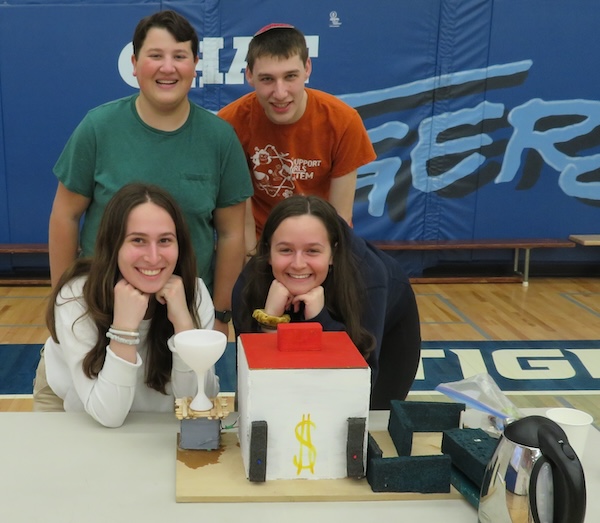
photo - Teams of three to five compete regionally for a chance to reach the finals in Israel.
Teams of three to five compete regionally for a chance to reach the finals in Israel. (photo from Weizmann Canada)

“The finals have been conducted virtually when circumstances make it unsafe for students to travel to the institute,” said Leibner. “In that case, students submit a video of their safe to the judges, explaining the locking mechanism and the physics principles required to open the safe successfully. The students’ videos are judged on roughly the same criteria and a winner is announced at a virtual Zoom session.”

The 2024 virtual closing ceremony can be watched at youtube.com/watch?v=InI8CDoDqDk.

Weizmann Institute of Science has hosted various versions of the high school physics tournament since 1973. “In fact, the winner of the first-ever physics tournament is Dan Gelbart – a notable Canada-based engineer and inventor. He won the tournament at the age of 16 with an original motor he designed and built himself using spare materials, some even sourced from his mother’s kitchen!” said Leibner.

Gelbart, who was born in Germany and raised in Israel, has lived in Canada since the 1970s. Based in Vancouver, he co-founded Creo, a local printing technology company that was bought by Eastman Kodak Co. in 2005, and he has co-founded several other companies. According to a profile on the Weizmann Institute’s website, Gelbart has registered some 145 patents. He also has volunteered as an adjunct professor at the University of British Columbia and has a YouTube channel – the most recent video, which was posted a couple of years ago, is a tour of his workshop and its instruments.

Typically, the physics tournament attracts between 200 and 300 participants a year, from Israel, Canada and other countries.

“The international tournament offers students an incredible opportunity to meet similarly scientific-minded youths from across the world,” said Leibner. “The tournament also offers a teacher development conference for the physics teachers accompanying teams to the tournament.”

photo - “The international tournament offers students an incredible opportunity to meet similarly scientific-minded youths from across the world,” according to Morgan Leibner, annual and education programs officer at Weizmann Canada
“The international tournament offers students an incredible opportunity to meet similarly scientific-minded youths from across the world,” according to Morgan Leibner, annual and education programs officer at Weizmann Canada. (photo from Weizmann Canada)

Participants work in teams of three to five students and their local teacher/mentor – who is the one who must submit the team’s registration – coordinates with the tournament’s physics consultant throughout the process. The team’s safe is judged on its quality and complexity; team members’ level of understanding of the physics concepts being employed is key, as are the esthetics and originality of the safe they build.

“Local mentors are past participants of the physics tournament themselves,” said Leibner. “They have firsthand knowledge of the competition, what is required to build the safe, and what it is like to compete in the tournament. They have also participated in other educational opportunities at Weizmann Institute in Israel and have experienced living on campus and working with the community of scientists. Our mentors have a deep love and appreciation for science and an understanding that promoting STEM in education is incredibly important.”

For information on the tournament and to submit an application, visit weizmann.ca/physics.

Artist’s portals to elsewhere

Artist Amy J. Dyck sits amid her work “Bed Desk,” one of the pieces in her solo exhibit, Portals to Elsewhere, which opened at the Zack Gallery last month. (photo by Byron Dauncey)

The art of Amy J. Dyck is surreal and enigmatic. Her solo show Portals to Elsewhere opened on Aug. 25 at the Zack Gallery. Like any portal, it allows a viewer a glimpse into the artist’s sophisticated and contradictory inner world. 

“I loved drawing when I was young,” Dyck said in an interview with the Independent. “I liked little details: earrings, shoelaces. It was easy, like a game. Then I had a son and, like every young mother, I was always tired. Creating art at that point stopped just being fun. I needed to concentrate, to find time for my art, to figure out whether I wanted to spend that time. That was when I became a real artist.” 

That wasn’t the only time life challenged her. “I wanted to be a designer,” she said. “I started at design school but, after one year, I became too sick and had to drop out.” 

But she never abandoned learning – she taught herself, read textbooks and took occasional classes. And she never stopped creating – paintings and drawings, mixed-media collages and soft sculptures, ceramics and wood installations dominated her life, as she juggled being an artist with her non-artistic jobs, family and chronic illness.

Multilayered and metaphorical, Dyck’s collages and sculptures could be seen as a self-portrait of an artist battling a chronic disability.

“I’m often sick and can’t move much,” she said. “Sometimes, I spend several months in bed. That’s why I make soft sculptures. It’s easier when I’m in bed and can’t go to my studio. I have to be flexible with my materials and techniques to accommodate my illness.”

Despite the hardships associated with her ill health, Dyck’s works don’t display any bitterness or resentment. Instead, the artist is on a journey of self-discovery.

“I have to learn how to live in a body that’s broken,” she explained. “That’s what my art is about. My soft pieces are something I want to wrap around myself, to counteract my anxiety.”

All the sculptures on display at the gallery present complex knots of fabric, pipes stuffed with soft fillings. Combined with ceramic elements, leather, wood, feathers and other materials, these ouroboros reflect the artist’s struggles and her determination to live as fully as she can. Her philosophical piece “Blame Mosquito” is a fur ball with half a dozen ceramic hands coming out of it, pointing in all directions. “When I was young,” she recalled, “there was a traumatic event in my life. I blamed everyone – like those fingers pointing everywhere – until I realized that I myself carried some of the blame. That’s why one of the hands points back at me.”     

“Yellow Polka-dot Tail” also has sharp, dark spikes coming out of the soft, colourful tangle and pointing everywhere. “Those spikes are like my anger. They help me feel powerful,” she said.

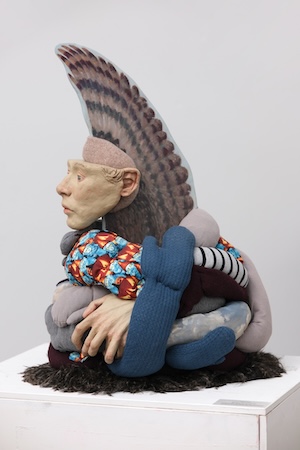
Another piece, “Wing Head,” introduces a strange single wing decorating the sculpture’s head. “The wing is not functional,” she said. “Just like parts of my body. It is a possibility of flight, an idea, not a reality.” 

Dyck explores a body that doesn’t work well by creating allegorical figures with faulty anatomy, with the wrong number of fingers on a hand or mangled joints or tiny wings in the wrong places. “I’m processing my disability through symbolism,” she said.   

She uses second-hand materials for her sculptures. “I buy old clothing at thrift stores or internet marketplaces. The leather came from our old couch. My kids helped me dismantle it and cut out the pieces I could use,” she said.   

photo - “Wing Head” by Amy J. Dyck can be seen at the Zack Gallery until Oct. 1
“Wing Head” by Amy J. Dyck can be seen at the Zack Gallery until Oct. 1. (photo by Byron Dauncey)

The theme of a body disrupted, of limbs disconnected, continues in her painting-like mixed-media collages. Many of them have images of open doors, windows or arches. “They are my portals to elsewhere,” she said. “When I’m in bed, when I can’t move,  I look out of my window and imagine myself out there. I like being outdoors.”

The images are uncomfortable and deformed, but there is optimism, a strange equilibrium of what might be considered ugly and beautiful. Body parts surrounded by butterflies. Too many hands counterbalanced by birds and ghosts, black and white charcoal drawings incorporating splashes of real gold. All of them speak of a deep need to understand our own bodies, how they work and why they sometimes don’t. The style of the artist is unique and instantly recognizable, and that is what Dyck teaches aspiring artists – she offers classes at community centres and retirement homes. “I try to teach my students how to find their own voices,” she said. 

One of the most interesting examples of Dyck’s art is an installation called “Bed Desk.” Dyck explained its etymology.

“I promised the gallery a sculptural installation, but then I became very sick and couldn’t leave my bed,” she said. “My husband is a builder. He made those wooden stands that surround the circular space and act as frames for my drawings. He also made me a bed desk where I could draw while in bed, but I could only create pieces of the same shape and size as the desk surface. I channeled my longing to move, to feel strong into those drawings. The figures I drew are broken, like me, but they move, they grow, they adapt and evolve. The installation was funded by a Canada Council for the Arts grant. When you step into its circle to view the drawings, you enter your own portal to elsewhere.”

Dyck’s show will be at the Zack Gallery until Oct. 1. To learn more about the artist and her work, visit her website, amyjdyck.com. 

Olga Livshin is a Vancouver freelance writer. She can be reached at olgagodim@gmail.com.

Education a key issue

Students across British Columbia have returned to the classroom. On university campuses, the activism that had roiled those spaces during the last academic year has returned to a boil. Jewish students are facing more of the horrible same.

Even public high schools are not immune, with reports of harassment of Jewish students and inappropriate comments by teachers and other students.

About a year ago, the government of British Columbia announced that Holocaust education would become a mandatory part of the Grade 10 curriculum. This came as a surprise to many people, who were shocked that it is still possible for a student to graduate from the public education system in this province without encountering anything about the Holocaust. To be clear, this is probably not usually the case, but what a student learns about that dark history has been left to the discretion of teachers.

Starting next year, that will no longer be the case. Students will have to study the Shoah. This is a positive development in many ways. Holocaust education is an entry-point to critical discussions about human rights, dignity, oppression, genocide, totalitarianism and a vast range of crucial topics. 

From a Jewish perspective, at a time of increasing antisemitism, this is especially welcome. The dangerous potential of unchecked antisemitism is, of course, the ultimate and unique lesson of the Holocaust. Sensitizing young citizens to this message is an important part of addressing anti-Jewish racism. 

The curriculum is still in development and we trust that educating about the Holocaust will be done in the context of a larger history of antisemitism. It would be a mistake to let students conclude that antisemitism is a product exclusively of a different place (Germany) and time (1933 to 1945). The Holocaust, students must understand, was part of a much longer trajectory of anti-Jewish racism and it must not be seen as anomalous in this larger context.

While there was much satisfaction at the announcement that this history would become mandatory in the curriculum, there is cause for concern.

When dealing with issues of extraordinary sensitivity – gender, race, sexuality, religion, treatment of historical events – parents, elected officials and the broader society depend on the ability and integrity of teachers to deliver this content in appropriate ways. This is where we have reasonable apprehensions. 

While it is the government that mandates curriculum content, it is obviously teachers who deliver it. The teachers’ union, the British Columbia Teachers’ Federation, has a long history of disseminating anti-Israel materials and adopting biased approaches to the issues of Israel, Palestine and the conflict there.

This year, a group of (mostly Jewish) educators applied to the BC Teachers’ Federation to create a specialist group to help equip teachers to educate on the Holocaust. Astonishingly, the BCTF rejected the application for recognition – a recognition that is, apparently, almost rubberstamped for most other topic areas – without any suitable explanation. Given the history of the BCTF on this subject, many people have understandably come to their own conclusions about what was behind this rejection.

By the nature of their roles, teachers have a vast amount of leeway in transmitting information. The government will set out learning outcomes and expectations for this component, but the potential for inappropriate messaging in individual circumstances is great. Off the top of our heads, for example, we can imagine teachers equating the Holocaust to contemporary events and universalizing beyond the edges of what is reasonable given the uniqueness of the Holocaust in the context of antisemitism throughout the ages.

Not only does the government need to create a curriculum for the subject matter, it might do well to consider a curriculum for teachers to address appropriate and inappropriate ways of addressing the topics raised, including comments from students who have seen the inescapable propaganda accusing Israel of “genocide” and equating Israelis with Nazis.

In just over a month, British Columbians will elect a new government. Whichever party forms government will necessarily have to find a way to work with British Columbia’s teachers to ensure the useful delivery of this curriculum material.

When candidates call or knock on your door, it would be good to remind them that Holocaust education is an important issue for you (as are many other issues, addressed in the story here). Let them know that ensuring this new component of the curriculum is handled appropriately is something you will be watching for as a new government – NDP, Conservative or, given the bizarre upheavals in politics recently, some other group – sets course on this important initiative.