Skip to content
  • Home
  • Subscribe / donate
  • Events calendar
  • News
    • Local
    • National
    • Israel
    • World
    • עניין בחדשות
      A roundup of news in Canada and further afield, in Hebrew.
  • Opinion
    • From the JI
    • Op-Ed
  • Arts & Culture
    • Performing Arts
    • Music
    • Books
    • Visual Arts
    • TV & Film
  • Life
    • Celebrating the Holidays
    • Travel
    • The Daily Snooze
      Cartoons by Jacob Samuel
    • Mystery Photo
      Help the JI and JMABC fill in the gaps in our archives.
  • Community Links
    • Organizations, Etc.
    • Other News Sources & Blogs
    • Business Directory
  • FAQ
  • JI Chai Celebration
  • JI@88! video

Recent Posts

  • Sharing her testimony
  • Fall fight takes leap forward
  • The balancing of rights
  • Multiple Tony n’ Tina roles
  • Stories of trauma, resilience
  • Celebrate our culture
  • A responsibility to help
  • What wellness means at JCC
  • Together in mourning
  • Downhill after Trump?
  • Birth control even easier now
  • Eco-Sisters mentorship
  • Unexpected discoveries
  • Study’s results hopeful
  • Bad behaviour affects us all
  • Thankful for the police
  • UBC needs a wake-up call
  • Recalling a shining star
  • Sleep well …
  • BGU fosters startup culture
  • Photography and glass
  • Is it the end of an era?
  • Taking life a step at a time
  • Nakba exhibit biased
  • Film festival starts next week
  • Musical with heart and soul
  • Rabbi marks 13 years
  • Keeper of VTT’s history
  • Gala fêtes Infeld’s 20th
  • Building JWest together
  • Challah Mom comes to Vancouver
  • What to do about media bias
  • Education offers hope
  • Remembrance – a moral act
  • What makes us human
  • המלחמות של נתניהו וטראמפ

Archives

Follow @JewishIndie
image - The CJN - Visit Us Banner - 300x600 - 101625

Month: May 2021

Holy jab a moving experience

We’re celebrating at our house. I’ve gotten my first AstraZeneca vaccination “jab.” I’ve got a sore arm and felt droopy afterwards, but I’m thrilled to have finally gotten access.

As a pragmatic, 40-something Gen X-er, I had to wait my turn. Then I rushed to get an appointment. In the Manitoba social media world, we heard others complain that the system was difficult to navigate. The deadpan reply from our cohort was something like, “Guess you’ve never had to get up early to try to register your kids for swim lessons.” In a place where resources like, say, vaccination or indoor pool swim lesson spots, are very limited, we’ve learned to negotiate systems that were not designed for our needs or to be welcoming.

This big event for 40-somethings in several Canadian provinces happened to coincide with the Torah portion of Acharei Mot-Kedoshim, Leviticus 16:1-20:27. This big double parashah (portion) covers a lot, including what it means to be holy. In some cases, it might mean “to be prepared.”

It’s also the portion that encourages us to “Love your neighbour as yourself” and Leviticus 19:34 reads, “The stranger who resides with you shall be to you as one of your citizens; you shall love him as yourself, for you were strangers in the land of Egypt: I the Lord am your God.”

The Torah is, sort of, a holiness how-to guide of its time, and some of the issues may no longer be everyday things for many. However, the pandemic forces us to be prepared for simple things like wearing a mask during a shopping outing. Add in more complex things, like obtaining access to that coveted vaccination, too. It’s interesting that the weekly parashah topics like preparation, holiness, loving neighbours and caring for strangers all came up at once.

The nurse who gave me my jab had worked in the COVID wards. She exuded calm as she went through her vaccine script. She made the moment feel monumental and holy while preparing me. When I thanked her, she said how great it was to be part of this effort to keep so many others healthy and safe after experiencing the suffering in the hospitals.

As I sat in the doctor’s waiting room for my 15 minutes after the jab, I thought about this. Masking up, getting vaccinated and social distancing are all ways that we show love for one another right now. Those actions are so powerful that I’m affronted and sad whenever someone demonstrates as an anti-masker, doesn’t wear a mask or even spits in public. Indeed, that means he doesn’t love his neighbour enough.

While I waited, it was a quiet. Yo-Yo Ma wasn’t serenading others on his cello in the clinic or anything like that. Instead, I turned and congratulated a stranger, a man who had also just gotten his shot. It was an oddly affirming moment. He had a spouse with an immune condition. Like me, he had kids learning at home. At first glance, I might have felt apprehensive chatting – he was heavily inked with tattoos and intimidating. Still, the love we both felt towards the universe for this opportunity and to those who also cared so much that we’d rushed to get vaccinated, was tender and transformative.

While I’d been able to get my shot, alas, Manitoba, and other parts of Canada seem to be quickly losing their battle to outrun the third wave. Vaccines can’t get into arms fast enough. Yet, as I read the news, there are also multiple reports of moments where people are taking care of strangers. In North Dakota, there’s now a pop-up Moderna vaccination site at a rest stop. They managed to vaccinate 62 truck drivers from Manitoba the first day. This was such a gift to our province, which hasn’t chosen to prioritize these essential workers.

In Montana, the Blackfeet Nation has invited Albertans to cross the border (with permission) to get vaccinated on their reservation. They were able to use up expiring vaccines on both strangers and Indigenous relatives who lived across the international border.

Many Jewish people have reported on social media that they recited the Shehecheyanu or the slightly more complicated “bathroom prayer,” which thanks G-d for the miraculous workings of our bodies. I uttered a silent prayer of my own, too.

It was also a chance to appreciate the kindness of strangers who looked after me. The doctor stuck his head in to ask if I had any questions. The nurse and I had a deep conversation – about illness, death, birth and our struggles as parents – in our few minutes together before and after the vaccine. Like so many who’ve been mostly social distancing and staying at home, these nurturing interactions have been few and far between this year.

I must admit, when we stream services on Shabbat at home, I’m not standing up much. I’m not on my tiptoes as we would in synagogue when we sing the Kedusha – the part where we say, “Holy, Holy,” and try to ease ourselves up closer to heaven and to the angels. Preparing oneself and trying to be holy is, for all of us, a process, but I felt just a little more prepared after what I experienced this week.

If you’re anxious about needles, don’t worry. My kids looked at my arm and I don’t have a “hole” there!

I feel like my vaccination experience captured a snapshot of how we can all strive to be more prepared. It’s an opportunity to love our neighbours, care for the stranger and, maybe, in the process, become a bit closer to heaven and more holy.

Joanne Seiff has written regularly for CBC Manitoba and various Jewish publications. She is the author of three books, including From the Outside In: Jewish Post Columns 2015-2016, a collection of essays available for digital download or as a paperback from Amazon. Check her out on Instagram @yrnspinner or at joanneseiff.blogspot.com.
Posted on May 7, 2021May 7, 2021Author Joanne SeiffCategories Op-EdTags Acharei Mot-Kedoshim, coronavirus, COVID-19, ethics, Leviticus, Torah, vaccination

Where I’ve been this year

After listening to Dr. Betsy Stone during a community workshop called A Year of Upheaval: What has Trauma Done to our Bodies and our Brains?, I decided to take her advice and tell my story. According to Stone, “Healing requires storytelling … we tell our stories so we’ll understand our experience differently.”

The past 15 months have been a journey for all of us. Some more than others, but no one has not “traveled” during the pandemic. And, by travel, I mean change. Whether we’re brave enough (honest enough?) to admit it or not, we have all been transformed. Call it trauma, call it what you like. It’s all a matter of semantics. Not everyone is as vocal as I am, or as filled with anxiety about COVID, but no one comes out of this horrible shindig unscathed.

Whether your resilience lies in emotional strength or a feeling of invincibility, or whether you’re firmly entrenched in that big river in Egypt (denial), we all cope in our own ways. There is no one right way through this. You can’t go over it, you can’t go under it – you can only go through it. Putting our experience into words brings new life to it, new insights. Speaking it makes it even more real and, maybe, just maybe, easier to cope with.

So, where have I been this year? I wish I could answer that with geographic precision. What comes to mind is: home. And, occasionally, the pharmacy and grocery store, as well as walks close to home. While I hate to say that the pandemic has been my world, it’s hard to escape the reality of that pronouncement. I fully admit my obsession with the pandemic, my fear and my single-minded focus on how to stay healthy. I won’t apologize for it, or feel less-than. It is what it is.

That doesn’t mean to say that my fear has prevented me from seeing silver linings during this unparalleled time. There has definitely been more than one “there-must-be-a-pony” moment. The most important one being that my nephew and his wife had a baby boy near the start of the pandemic. It doesn’t get any better than that. In random order after that, I have thrown myself into the deep end of the pool with Torah classes and other religious learning. Next on my list is that I started on a life-changing medical treatment that makes my life much easier. I have made new friends and acquaintances through the numerous Zoom classes I attend nearly every day. I am exercising 100% more than I did pre-pandemic. I might sleep less, but my brain has expanded. In the good way. And that’s just the beginning.

All this is by way of saying that, while I wouldn’t award COVID first place in a popularity contest, it has had its bright spots. It has impacted my perspective on all things, in a way that nothing else has, to that degree. When I think about what’s important now, my pre-COVID list is almost laughable. I, like many others, have embraced the basics: health and safety, family, faith and trust.

When I think of the trajectory of this past 15 months, it’s hard to articulate. Or, more to the point, what our reactions have been. Have I learned to be more trusting, or more suspicious? Have I expanded my capacity for compassion, or have I become more selfish? Have I anchored my experiences in religious belief, or have I trusted in science? Have I given in to my fears, or have I conquered them? While I’ve always tended to lean towards the black and white, there really are no absolutes right now. There are, however, firm yeses and hard no’s. I am reconsidering everything I once was certain about. The $64,000 question is whether I will be able to integrate what I’ve learned and turn it into something positive when all this is over. Or, better yet, before all this is over. The jury is still out. But I’m hopeful.

I have become exponentially more grateful for the simple things: my devoted husband who is my perfect companion in life; that I have a loving and lovely family; that I have never had to worry about where my next meal will come from; that I live in a part of the world that has great doctors, easy access to medical care and all the outdoor green spaces you could ever ask for; and that I have mentors and friends. I could go on ad infinitum.

Too often, I see the clouds instead of the blue sky that’s right behind it. I see impediments where there don’t have to be any. Positivity is a steep learning curve for me. It’s funny that I used to consider myself an optimist. Since the pandemic, I’ve come to see how maybe-not-true that is. Not that I’m proud of it, it’s just the current reality. But I’m trying pointedly to turn that around. There are days where I see hope staring me in the face everywhere. Literally everywhere. Other days, it’s just fog and darkness. I know I’m hardly unique in this.

So, in truth, I have been lots of places this year. Mostly in my head. But some real places, too. Like a certain street in Shaughnessy that’s filled with huge trees, beautiful homes and no people walking about. A place where it’s safe for me to take off my face mask for a block or two. Until I see someone. I have also been to a place of sheer, unnamable joy, seeing my tiny great-nephew on WhatsApp video. I have discovered flowers I never knew existed, in areas I’d never walked before (despite being a native Vancouverite). I have traveled via Zoom to other countries, for learning and sometimes for pleasure. But pleasures that don’t involve a beach or a buffet. And I travel constantly in my dreams.

Every day of this pandemic, I have learned something. About myself, about others, about faith. That’s got to count for something, right? When we all heal from what Stone calls this “trauma,” we’re definitely going to come out of it changed. Whether that change is positive or negative, or a combination of both, is up to us entirely. My commitment to myself is that I’m going to try and lay the groundwork for an improved Shelley. A less anxious, more trusting, deliberately positive Shelley.

I guarantee you’ll still recognize me, though. I’ll be the one still wearing a facemask a year from now. Or maybe not.

Shelley Civkin is a happily retired librarian and communications officer. For 17 years, she wrote a weekly book review column for the Richmond Review. She’s currently a freelance writer and volunteer.

Posted on May 7, 2021May 7, 2021Author Shelley CivkinCategories Op-EdTags Betsy Stone, coronavirus, COVID-19, health, mental health, resilience, self-improvement

Blessing of love

I must make the disclaimer that none of the letters after my name qualify me to opine on matters of this kind but, as I have done too often in the past, I “rush in where angels fear to tread.” I just feel it is so important for our well-being to have a little bit of this in our make-up. I believe we have to be lucky enough that someone has loved us unconditionally, whether that be a parent, God or a partner. It can arrive from siblings, but siblings are more often competitive than fully loving.

But why is this so important? Because a person who loves us unconditionally is one who is naturally inclined to forgive us for our transgressions. We are hardly likely to get through life without making mistakes. If others we respect are ready to forgive us our trespasses, we are much more likely to forgive ourselves as well. And that, I believe, is a very big deal.

If we can’t forgive ourselves for our mistakes, for our misbehaviours, then we probably don’t like ourselves very much. Indeed, we are probably angry with ourselves most of the time. If it’s true, it shows. Everybody knows the saying, “love thy neighbour as thyself.” If you don’t like yourself, well, look out below!

But suppose you understand that we all make mistakes? Suppose you understand that mistakes are learning opportunities and the great thing is that you can learn to not make the same mistake again. Mistakes are a necessary way to get smarter about organizing your life. You don’t have to beat yourself up about them. Learn your lesson and move on. You are still a person worth loving. And, because you are getting so smart about things, why shouldn’t you appreciate and admire yourself? Your heritage of love gives you strength, self-confidence.

But what if your mistake is unredeemable? Ouch! Those, you just have to live with. And shouldn’t that make you kinder about the mistakes of others, more generous, more forgiving? If you could do such a thing, well, then, it could happen to anybody, couldn’t it? Sure it could! Forgive them as you forgive yourself.

A belief in your essential goodness will aid you when you are confronted with all those essential decisions one has to make in life. How will what I am thinking of doing impact the lives of those I care for? Can I square this action with the kind of person I want to be? Will I still be able to love myself if I do this thing? If not, then I must find another way to accomplish my ends. Loving yourself can mean having that kind of conversation with yourself.

In the past, I often assumed that what advanced my interests would obviously be in the interests of those I cared for, those whose welfare I was responsible for. It was only with the passage of time that I grew to appreciate that I often missed a step in making that calculation. Most decisions turned out well, but some bore costs paid for by others, costs of which I had not the slightest notion. It was only with time that I would appreciate that I had paid a price as well.

In the end, I believe that those of us who have been blessed with a heritage of love are better able to love ourselves and are better equipped to bestow that heritage on others. I think that is a wonderful thing.

Max Roytenberg is a Vancouver-based poet, writer and blogger. His book Hero in My Own Eyes: Tripping a Life Fantastic is available from Amazon and other online booksellers.

Posted on May 7, 2021May 7, 2021Author Max RoytenbergCategories Op-EdTags gratitude, love, reflections

Working through emotions

The experiential feeling of shame is defined as a painful emotion caused by feeling like you have done something wrong or disgraceful. Shame is a popular trope and is associated with the concept of “Jewish guilt.” However, on the ground and in my practice with tweens, adolescents and adult women, shame carries with it strong painful emotions and regret(s). Shame is a common reaction to anxiety, depression and mental and emotional stress.

For the therapeutic clients who work with me, shame is expressed as all-consuming. In the context of emotional and mental stresses that are relational or situational, common expressions of shame arise of feeling broken, defective and disconnected. My general aim is to acknowledge the power of shame and their particular relationship to it by also normalizing the emotion and experiences with it. As a therapist, I use various creative-, expressive-, psychosocial-, embodied-, feminist-, narrative- and mindfulness-based psychotherapies to work a way inside, through and outside of the burdens my clients are holding. For the purpose of this article, I will focus on mindfulness psychotherapy.

Experiences of anxiety, depression, grief, relationship and family struggles often result in individuals being programmed and aware of the value of, or favouring of, one part of their experience over another – for some, it is intellectual or cognitive abilities; others are guided by emotions; others by physical signals. More and more we are realizing the importance of recognizing and listening to all of our responses as a way to heal and grow. A mindful approach to psychotherapy helps you identify and integrate all of these parts of yourself. Brain science validates this notion and suggests that, by attending to your thought patterns, emotional reactions and sensory experiences, you can change patterns of thinking, feeling and moving in the world. Even complicated mental and emotional health experiences paired with the weight of shame can be tackled using mindfulness as a key component in therapy and applying it in day-to-day life.

Mindfulness practice offers hope for changing unwanted or destructive reactions, belief systems and behaviours that seem fixed or difficult to mobilize. For example, if you have a negative self-view, by noticing the story you tell yourself and considering it a pattern of thinking versus a truth, there is room to reevaluate and create a more accurate description of yourself. And, when you have a more accurate and accepting view of yourself, you are more likely to trust yourself and live more freely. This work is not easy and it is important to proceed gently and in the care of a trusted mental health professional.

I will share a short mindfulness practice that you can do at home. Mindfulness connects one’s mind to one’s body and one’s breath. I like carrying out this mindfulness exercise with my individual therapeutic clients and in group therapy because it serves as a reminder to connect to one’s body and to breathe through it. Through this mindfulness practice, that I call “body scan,” one can gain both emotional and physical clarity and start a naming and eventual cleansing of emotions that do not serve including shame.

Body scan

Find a place you can sit comfortably, quietly and undisturbed and set a gentle timer for five to 10 minutes. Be kind with yourself and start slowly, with five minutes. The more you practise, the easier a longer mindfulness practice will be.

During the body scan exercise, you will pay close attention to the physical sensations throughout your body. The goal is not to change or relax your body and mind, but instead to notice and become more aware of your body, your mind and your breath.

Begin by paying attention to the sensations in your feet. Notice any sensations such as warmth, coolness, pressure, pain or a breeze moving over your skin. Slowly move up your body – to your calves, thighs, pelvis, stomach, chest, back, shoulders, arms, hands, fingers, neck and, finally, your head. Spend some time on each of these body parts, just noticing the sensations. Remember to breathe as fully as you can, in through your mouth, exhaling through your nose. Your breaths are like gentle and ongoing waves.

After you travel your body, begin to move back down, through each part, until you reach your feet again. Remember to move slowly, and just pay attention, breathing and noticing.

Dr. Abby Wener Herlin holds a doctorate degree from the University of British Columbia. She is the founder of Threads Education and Counselling and works with tweens, adolescents and adults. She carries out themed social justice and creative arts and writing workshops for students, teachers and schools. She is available for therapeutic sessions and contemplative writing workshops. She can be reached at [email protected] or via threadseducation.com.

Posted on May 7, 2021May 7, 2021Author Dr. Abby Wener HerlinCategories Op-EdTags anxiety, depression, grief, health, meditiation, mental health, mindfulness, psychotherapy, shame
COVID and other challenges

COVID and other challenges

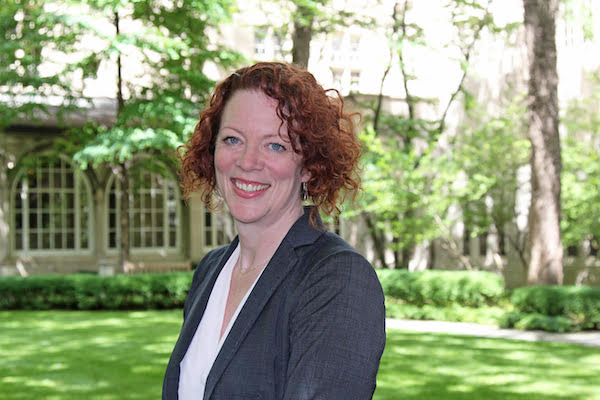
Dr. Judith Moskowitz (photo from Judith Moskowitz)

Anxiety and stress can be debilitating even in the most normal of times, but, with COVID-19 and all that it encompasses, we have all been presented with a whole other level of challenges.

In this context, the Jewish Independent connected with Dr. Judith Moskowitz, a professor of medical social sciences at Northwestern University Feinberg School of Medicine, in Chicago. She is also the director of research for Northwestern’s Osher Centre for Integrative Medicine. Trained as a social psychologist, with expertise in stress and coping with emotions, Moskowitz started her career in the early 1990s, helping men caring for their partners suffering from AIDS.

“Before there were more effective treatments available, it was essentially a terminal illness,” she said. “Caring for a loved one with AIDS was really one of the most stressful events a human could experience.”

Initially, she said, “We’d ask them, ‘What is stressful about this?’ Then, we’d help them cope with it, really focusing in on the negative part the whole experience and, shortly after the start of the study, the participants started saying, ‘You’re not asking us about the good things in our lives’ … which surprised us, because we’re coming at it from a very much stress and coping way.

“So, we listened to them and started then asking, ‘OK, tell us something positive that happened in the last week.’ And, almost in every single interview, even if their partner had just died, they could talk about something positive … often something small … having to do with something else going on in their lives not necessarily directly related to their care-giving.”

This new perspective helped direct Moskowitz onto a path looking at the positive things within stressful life events, allowing positive emotions to be expressed along with the negative.

“This isn’t about pretending things aren’t happening,” she stressed. “Rather, it’s about knowing that, even when times are really dark and you may be experiencing a lot of negative emotions and a lot of stress – maybe even depression or anxiety – you also have the ability to experience positive emotions as well. So, if you can experience the positive alongside those negative emotions, you’ll be able to cope better.”

Moskowitz and her team put together a program that includes eight to 10 skills, depending on the target group, toward helping participants increase their daily experience of positive emotions – stopping to notice, savour and capitalize on those good aspects.

“When things are stressful, it can be hard to see the positive things going on,” said Moskowitz. “We help people realize there’s usually something positive happening … you just have to be able to notice it.

“Things might be really horrific, but your dog is sitting next to you, really loves you, and it’s very sweet. So, just taking a moment and petting your dog, and then maybe telling someone about it – that would be noticing something positive in your life and savouring or capitalizing on it,” she explained. “We’ve been able to show that people who learn these skills and then practise them have better emotional well-being. They’re less likely to be depressed. In some samples, we were seeing some physical health effects. So, through clinical trials, we showed that the program seems to be helpful.”

When COVID first hit, Moskowitz was inundated with questions about how to cope better with stresses associated with the pandemic. The bottom line is that these skills transcend any particular stressor and can help no matter what the situation.

“For COVID, my advice is the same as it is for coping with breast cancer, diabetes, depression, or being a high school student,” said Moskowitz. “Learn these skills, try them out, see which work for you and, then, keep doing them. It’s like a physical activity, something you need to keep on doing. You can’t just do it once … similar to gratitude, noticing the good things, being thankful … it doesn’t work for you to just be grateful once and then be done with it. You need to take it up as a habit, and that can help you cope with COVID-19 or adapt with whatever kind of life stress you’re facing.”

Moskowitz also teaches the importance of doing acts of kindness. The idea is that, when you do something nice for someone else, it helps you feel better, too. Such an act can be as simple as paying for the coffee of the person in line behind you. Or looking someone in the eye and thanking them, making them feel appreciated and seen. And there are many types of acts that can be done without the receiver knowing the kindness came from you, if you’d rather remain anonymous.

“Doing these acts helps you feel better in a situation where you might think, I’m suffering here, I’m having a really hard time … but, knowing you can do something to help someone else can help your own well-being,” said Moskowitz.

Another skill she pointed to is “positive reappraisal.” When something stressful happens, take a moment to reframe it or think about it in a way that makes it seem not so bad or even like it’s positive thing – find the good in it.

“Sometimes, it takes the form of actually learning something about yourself – like you find that you are stronger than you’d thought you were,” said Moskowitz. “My favourite positive reappraisal is, ‘Well, that could have been worse! It’s bad, but it could have been worse.’

“An extreme example of this happened when we were doing some work with a gun-violence prevention group here in Chicago, teaching them these skills. They work with young men who are at high risk of either being victims or perpetrators of gun violence. The people they work with often are involved in a shooting. [The group members] will talk about it and will say, ‘One of our clients was shot and is in the hospital, but he’s alive.’ Having one of your clients shot is pretty bad and very stressful, but they’re able to say, ‘You know what? It could have been worse. He could have died, but he’s still alive.’ So, that’s a very vivid example of positive reappraisal.”

Moskowitz stressed that there is no one technique that works better than all others. She said, with regard to various anxiety- and stress-reducing methods, it is very much a matter of what fits best for each individual in a particular circumstance.

For more information visit moskowitzlab.com.

Rebeca Kuropatwa is a Winnipeg freelance writer.

Format ImagePosted on May 7, 2021May 7, 2021Author Rebeca KuropatwaCategories WorldTags anxiety, coronavirus, COVID-19, health, Judith Moskowitz, mental health, positive reappraisal, stress

JI Reflections … on the occasion of the JI’s 90+1

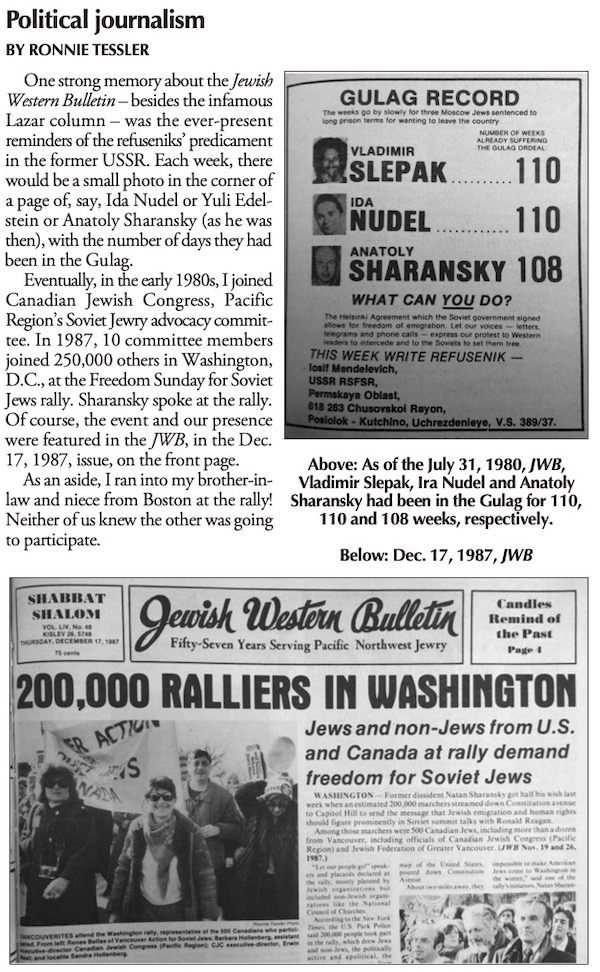
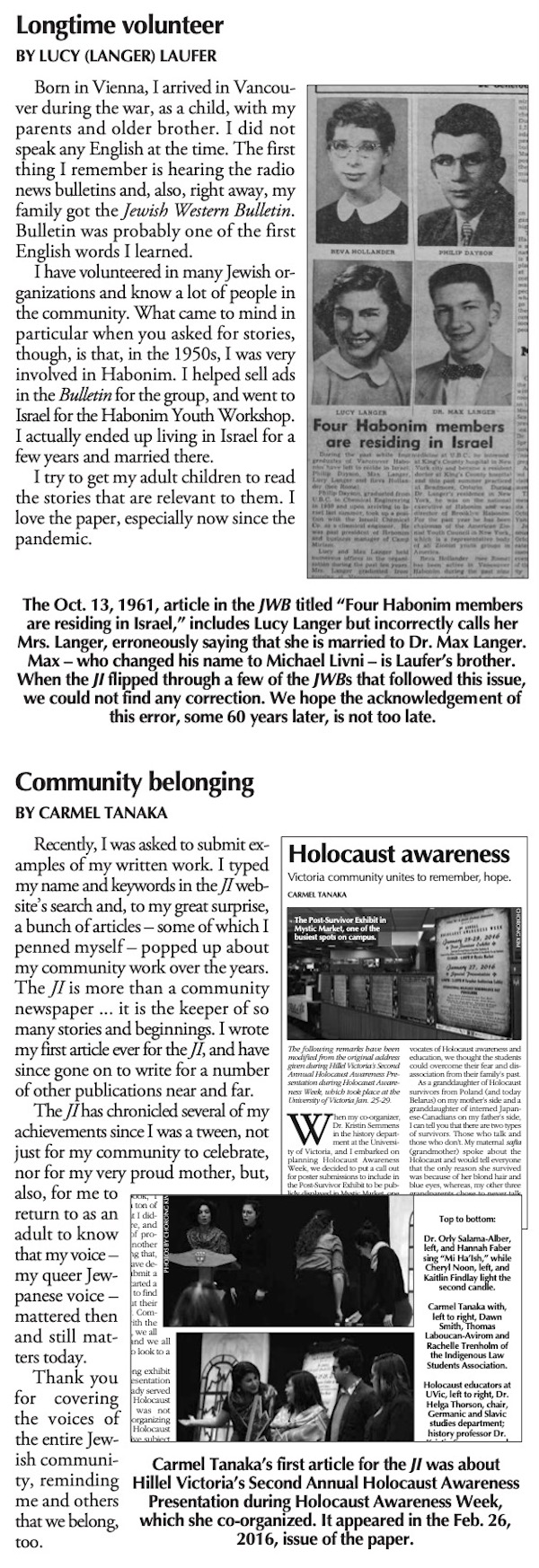
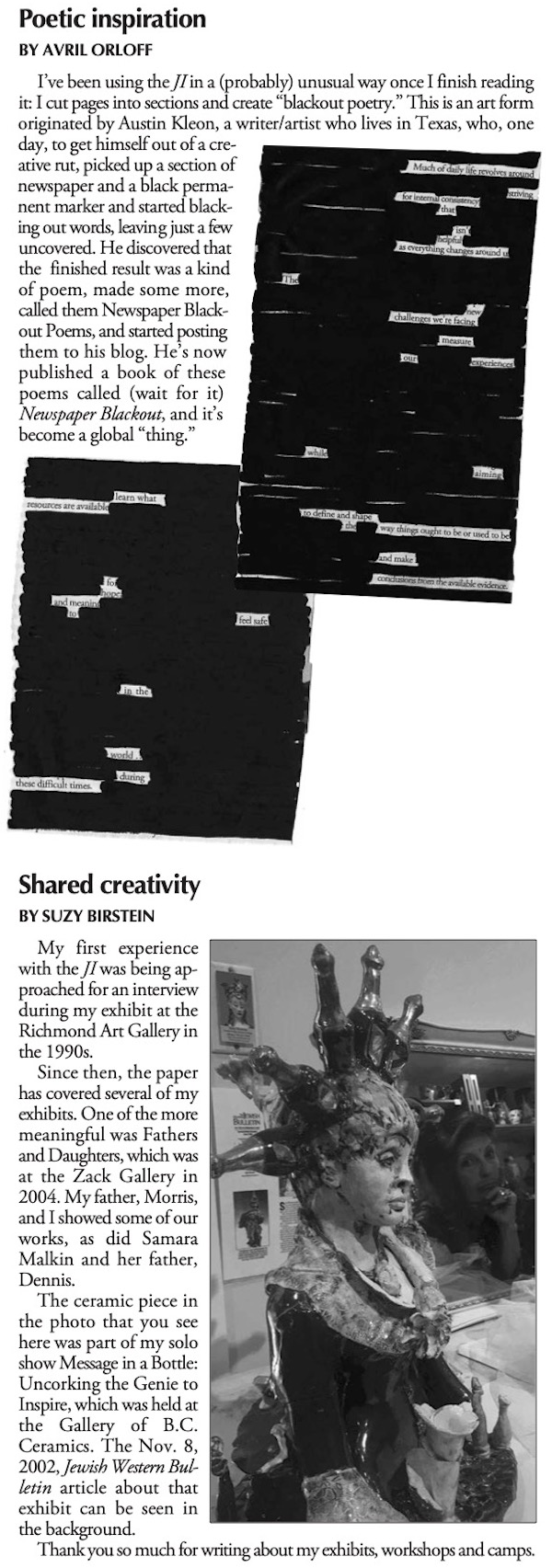
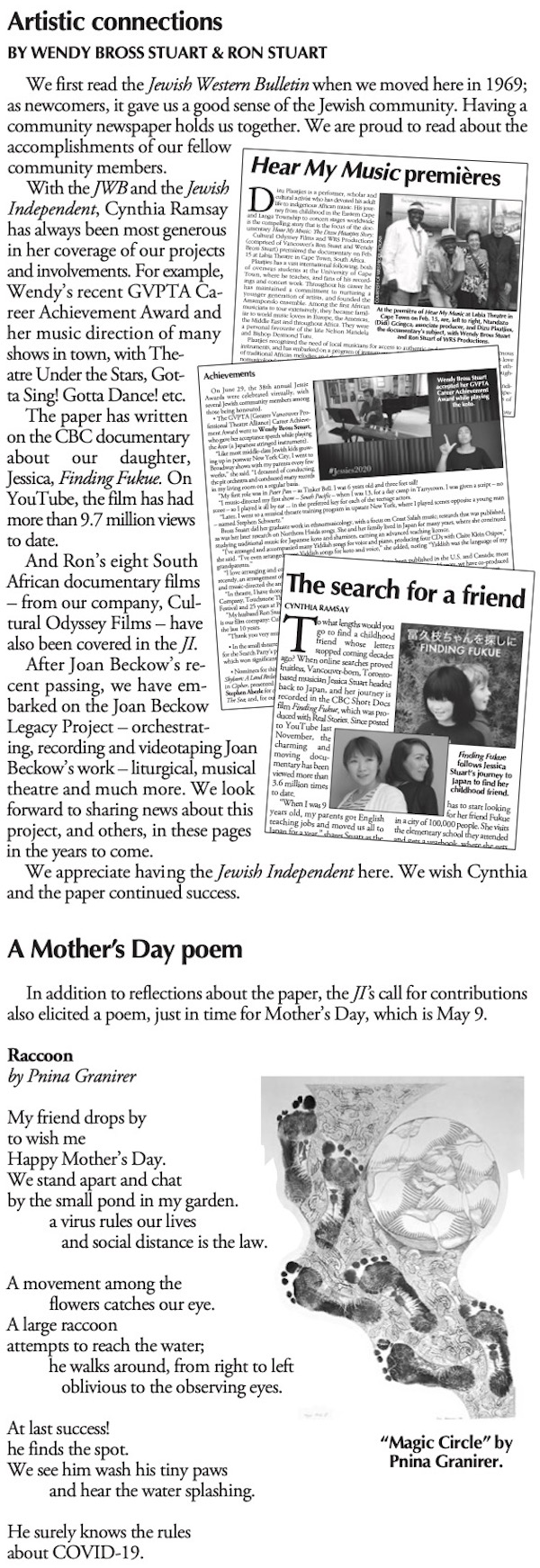
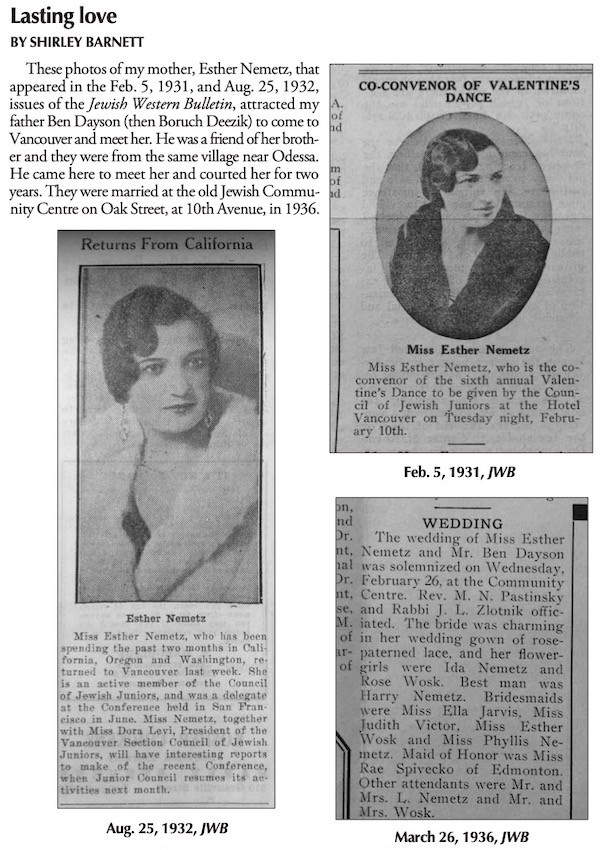
image - JI Reflections 90+1 - Shirley Barnettimage - JI Reflections 90+1 - Ronnie Tesslerimage - JI Reflections 90+1 - Lucy (Langer) Laufer ... Carmel Tanakaimage - JI Reflections 90+1 - Avril Orloff ... Suzy Birsteinimage - JI Reflections 90+1 - Wendy Bross & Ron Stuart ... Pnina Granirer

Posted on May 7, 2021May 7, 2021Author JI readersCategories From the JITags Avril Orloff, Carmel Tanaka, Lucy (Langer) Laufer, Pnina Granirer, Ron Stuart, Ronnie Tessler, Shirley Barnett, Suzy Birstein, Wendy Bross-Stuart

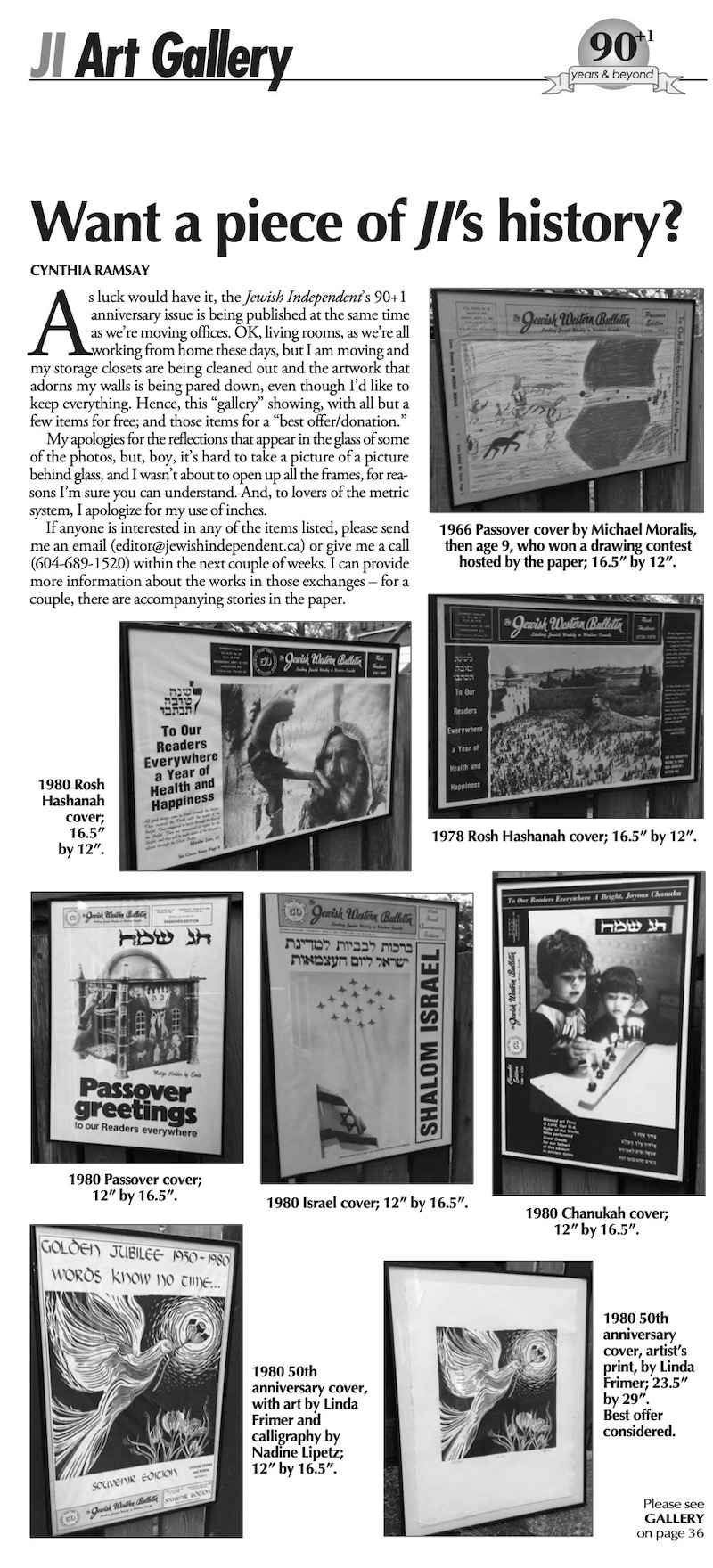
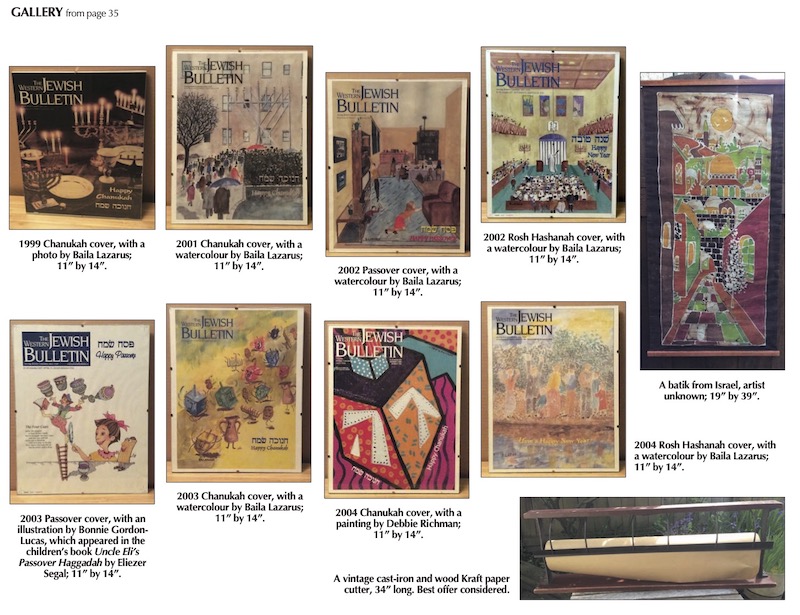
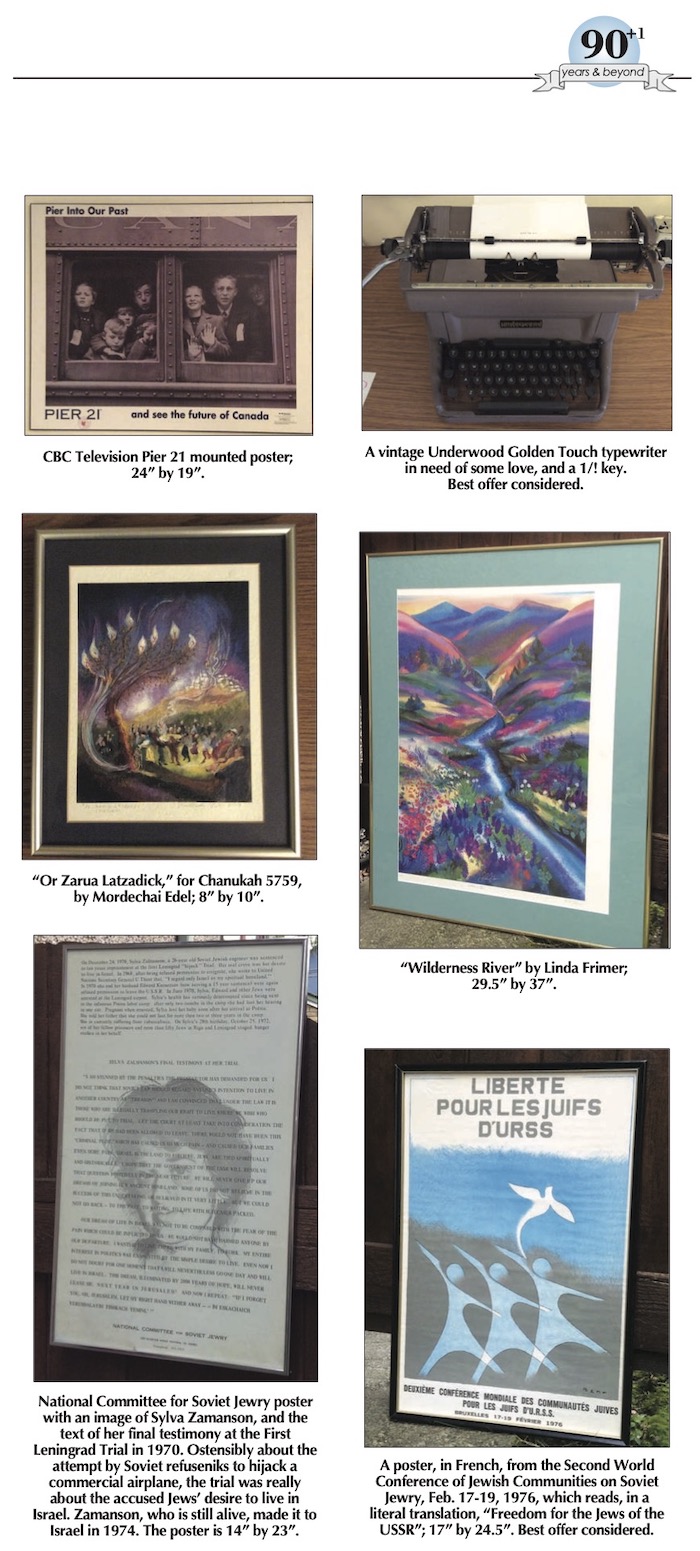
JI art giveaway … on the occasion of the JI’s 90+1


image - JI Art Gallery first page
image - JI Art Gallery second pageimage - JI Art Gallery third page

Posted on May 7, 2021May 7, 2021Author Cynthia RamsayCategories From the JITags A Portrait of Jewish Americans, art, giveaway, history, Jewish Western Bulletin
Spinach’s versatility, power

Spinach’s versatility, power

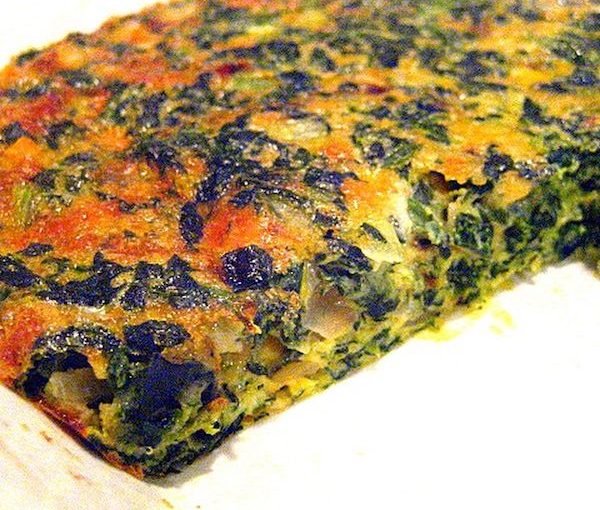
With spinach cheese pie, there likely won’t be leftovers. (photo from Shelley Civkin)

What’s chock-a-block full of healthy vitamins and minerals, packed with fibre and gives you humongous muscles, if Popeye, the muscle-bound, pipe-smoking sailor is to be believed? You got it – spinach! According to the internet (and who doesn’t believe everything there), the comic strip hero Popeye helped increase American consumption of the once-much-maligned spinach by around 30%. All because of his eating habits. Popeye’s famous line – “I’m strong to the finish ’cause I eats me spinach” – while grammatically heinous, does have a whiff of truth to it. Apparently, spinach, which contains lots of iron, can boost muscle strength. So, listen to pumped-up Popeye and eat your spinach! You might even want to try it with a little Olive Oyl.

Personally, I don’t see what all the fuss and resistance is about. It’s such a versatile vegetable – you can sauté it, make a salad out of it, use it in lasagna, mix it together with orzo, feta and sundried tomatoes. The sky’s the limit. Spinach is the quintessential blank canvas, but adds the health factor and colour element that every bona fide foodie seeks.

One of my favourite ways to use spinach is in a dish that can serve as a main or a side. Even spinach haters adore my famous spinach cheese pie. The recipe is straightforward, relatively healthy (unless you’re lactose intolerant or fat-phobic) and never fails to elicit endless oohs and aahs. For those people who can’t tolerate milk products, you can always substitute soy cheese and lactose-free milk. You can barely tell the difference. You can thank me later.

SPINACH CHEESE PIE

2 tbsp butter
3 eggs
3/4 cup flour
1 cup milk
2 10-ounce packages frozen spinach (cooked)
1 tsp salt
1 tsp baking powder
1 lb Monterrey Jack cheese, grated

Preheat oven to 325ºF. Melt butter in a 9-by-13-inch glass pan. Make sure the melted butter coats the bottom and sides of the pan.

Cook and drain spinach. Be sure to squeeze out all the water, then chop it finely in a food processor.

In a large bowl, beat the eggs. Add dry ingredients (flour, salt, baking powder) and milk, alternately. Mix well by hand.

Add grated cheese and spinach, and mix well by hand. Pour into the prepared pan.

Bake for 35 to 40 minutes, until slightly brown on top. Cool at least 30 minutes, then cut into squares and serve. I’m usually too hungry and skip this last step of waiting. Cooling it down, however, does make it easier to cut. And, well, patience is a virtue.

This spinach pie freezes really well and reheats perfectly in the microwave, but, believe me, there usually isn’t anything left to freeze or reheat. On one or two occasions, I’ve been known to eat it cold, right out of the fridge. Late at night. With a certain clandestine aura about me. Right … busted.

While your family – or, in non-COVID times, your guests … remember what those are? – relaxes before dinner, waiting with bated breath for your spinach cheese pie, you can serve them my popular olive dip. Caveat: I don’t have a particular recipe for it and I don’t use specific measurements – I just taste it as I go along. For someone who’s a hardcore Type A personality, this is highly unusual behaviour. But, somehow, I’m able to operate on simple faith when it comes to this. Truth to tell, it’s pretty hard to screw up.

Another caveat: even in non-COVID times, or inside your COVID bubble, be sure not to breathe on strangers or prospective love interests after eating this dip, because the garlic is flavour-forward. Depending on your love/tolerance for garlic, add as little or as much as you want. I start with one clove, but I’ve been known to up the ante for a large batch. This olive dip is decidedly non-dietetic, unfriendly for hypertensives and verboten for those watching their cholesterol. Otherwise, it’s the perfect pre-dinner dip. It makes a great tapas dish, and plays well with other Middle Eastern appies like hummus and baba ghanoush.

In the spirit of full disclosure, I never met an olive I didn’t like. My recipe calls for the plebian green olives stuffed with pimento, but, if you’re a risk-taker, you could try using other kinds. Just be sure not to use ones with an overpowering flavour. The mayonnaise in my recipe tends to smooth out the flavour and make it less sharp, so consider that when choosing your olives.

I never get sick of this recipe and it’s one of those dips you just can’t get enough of. It’s cheap and easy. Pre-COVID, I used to serve this a lot to friends, who would stuff themselves on the dip, then wonder why they were too full to eat dinner. Of course, the pita I serve with it makes it a much more filling appie. People will think you went to all sorts of trouble making it, so, if you want to maintain your kitchen cred, pretend that it’s an old family recipe and politely decline when they ask you to share it. Or … be a sport and let the world know what a lazy cook you really are.

OLIVE DIP

green olives with pimento (also called Manzanilla olives)
mayonnaise
fresh garlic
a squeeze of lemon juice (optional)

Throw all the ingredients into a food processor and blend away! It’s a dish best served cold (as is revenge), but really any temperature will do.

Pita or pita chips are a filling way to stretch this appetizer, but it also works nicely with crackers or thick potato chips. If you want to zhuzh it up a notch, add a couple of black Moroccan olives to it. And make lots of it because, mark my words, it’ll go fast. I’ve been caught dipping my toast into it for breakfast more than once. And, yes, I’m aware that garlic breakfast breath is not overly appealing, but I always floss and brush extra exuberantly after doing this. And, I usually do it when no one’s around. But be sure to turn off the nanny cam first.

Shelley Civkin, aka the Accidental Balabusta, is a happily retired librarian and communications officer. For 17 years, she wrote a weekly book review column for the Richmond Review. She’s currently a freelance writer and volunteer.

Format ImagePosted on May 7, 2021May 7, 2021Author Shelley CivkinCategories LifeTags Accidental Balabusta, cooking, spinach
The road of reckoning

The road of reckoning

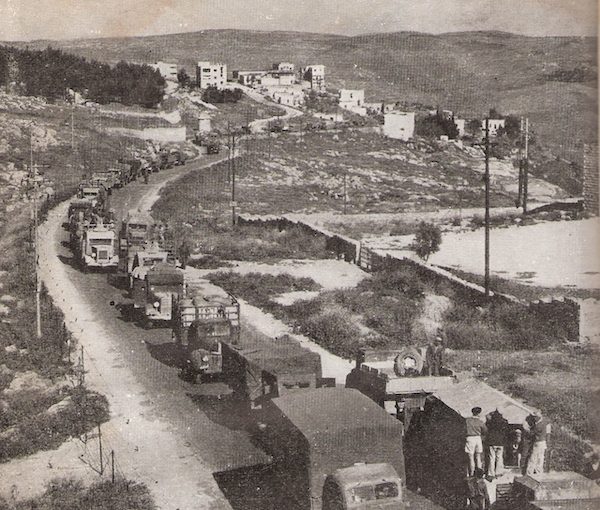
A supply convoy entering Jerusalem, 1948. (image from Shaar Hagai Heritage Museum)

Having just marked Yom Hazikaron and Israel’s 73rd anniversary, it is an appropriate time to recall a piece of Israel’s foundational history, and a new museum that commemorates it.

Seventy-four years ago, the road to Jerusalem was a site of easy ambush. Probably no part of the road was more treacherous than the area around Shaar Hagai. This spot, called Bab el Wad in Arabic, translates into English as the Gate of the Valley. As far back as 1868, French explorer Victor Guerin recognized and commented on this weak spot: he pointed out that the track was so narrow that “a determined band of men could stop an army in it with little difficulty.”

Admittedly, as you today drive on a smooth, paved, two-way, divided Jerusalem/Tel Aviv highway, it is hard to appreciate this reality. But, on Nov. 29, 1947 – the day after the vote on the United Nations Partition Plan, enabling the establishment of the Jewish state – Arab forces began blocking the route to Jerusalem. Not only were Jewish forces shot at, but, because the road curves, drivers couldn’t see where the road was blocked until they were trapped basically.

In David Dayan’s book Roadblock at Shaar Hagai: Creating a State (title translated from the Hebrew), Amos Kochavi recalled one such incident: “The time was approximately two in the afternoon. The long line entered the narrow and dangerous part. They could be anywhere…. We continued to climb … and there was a mighty explosion. The bomb under the road left a huge hole and the convoy stopped. Immediately, terrible shooting began…. We returned fire, but we couldn’t advance. Some of the drivers went into shock…. One driver with shell shock, screamed, ‘I can’t handle it anymore. I’m leaving.’ We yelled back: ‘Don’t move! You won’t come out alive!’ He didn’t hear, jumped from the car and was instantly killed.

“They tried to come down from the hills to get close to the cars, but our fire stopped them. They fire, we fire and the hours go by. No cars have air left in their tires. The number of injured grew. Shalom volunteered … he lay on the road, rolling – to avoid snipers – for a long hour … directing the drivers, one by one, until he had rescued all the cars…. An Australian captain ordered tanks that escorted us back to Gezer. The time was already two at night – 12 hours from when we entered Shaar Hagai.”

Jerusalem was under siege. Essential supplies could not reach the civilian and military population of the city. Jerusalem was dependent on supplies from the rest of the country, and was threatened with being totally cut off from the rest of the country. The only way to reach Jewish Jerusalem was to travel in convoy. (For more information, visit the National Library of Israel website, nli.org.il/en.)

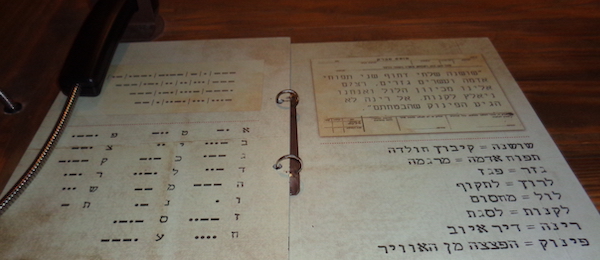
photo - A codebook for sending messages in the time of the siege of Jerusalem, on display at Shaar Hagai Heritage Museum. (photo from Shaar Hagai
A codebook for sending messages in the time of the siege of Jerusalem, on display at Shaar Hagai Heritage Museum. (photo from Shaar Hagai Heritage Museum)

According to the late Sir Martin Gilbert, by the spring of 1948, “Fewer and fewer Jewish food convoys were able to get through to Jerusalem. Towards the end of March, a food convoy failed, for the first time, to get through at all. One food convoy that did get through in March had taken 10 days to do so. By the end of the first week of April, there was only enough flour in Jewish Jerusalem to last for 30 days. Meat, fish, milk and eggs were unobtainable, except in small quantities, for children. The shortage of vegetables was such that children were sent into the fields to collect a weed … known as halamith, it tasted somewhat like spinach, and could be made into soup.” (See Jerusalem in the 20th Century.)

There was also a severe shortage of water. Three days before the state of Israel officially came into existence, the Palestine Post reported that “Jerusalem was still without water yesterday. The two pipelines from Ras el Ein, which were blown up by Arabs between Latrun and Bal el Wad on Friday, have still to be repaired. Crews are scheduled to leave under army escort this morning to continue repair work and, barring further trouble, repairs may be completed today. Water may be pumped into Jerusalem within a few days, according to one municipal official.” So grim was Jerusalem’s situation that archival photos show residents standing in long lines waiting to get their water ration and others rummaging through garbage, in the hopes of finding scraps of food.

Palmach fighters and, even more remarkable, simple truck drivers decided to do whatever they could to keep Jerusalem from being blocked. One now quite senior man, who drove a truck full of live fish for the Sabbath, was interviewed. He recalled looking out his side mirrors to see water streaming from the sides of the vehicle. The truck had been shot in numerous spots. Somehow, he managed to get to Kiryat Anavim, a kibbutz in the Jerusalem Corridor. There, women plugged up the bullet holes with rags. Probably, many of us would have considered giving up at this point, but this driver continued the slow climb to Jerusalem.

The fighters were mostly young people. A significant number were under the age of 18 (today’s conscription age). They came from all backgrounds, religious and non-religious, and from all parts of the country; some were Holocaust survivors. As a number of the fighters had been assigned the task of digging gravesites at Kiryat Anavim, they probably realized they might not survive on the road to Jerusalem.

It was crucial to find a different route for the convoys. Palmach soldiers discovered a detour that went through a hidden valley south of the heavily fortified fortress at Latrun and joined a path descending from Jerusalem. Using heavy tractors, the Palmach slowly cleared a path for vehicles. A water pipeline was also installed along it. The lifeline to the Jews in Jerusalem was secured, providing vital water and other supplies, in the summer months of 1948.

At the point where the road was most unsafe, there is a 19th-century Turkish-built travelers’ khan or inn. On March 23, 2021, Israel’s last election day, a memorial museum was opened at this historic location. The Shaar Hagai Heritage Museum is dedicated to the men and women who prevented Jerusalem from being disconnected in the days leading up to and even following Israel’s independence.

The museum deals less with the chronology of the battles and more with the physical and emotional difficulties convoy members faced, such as confronting dilemmas like whether the trucks should carry guns or food to besieged Jerusalem. There are displays of items used by the convoys, such as codebooks, handguns and rifles. And there are interviews with people who took part in the convoy operations, and part of the exhibit is animated.

Once we are again allowed to travel, the museum is worth a visit on your next trip to Israel. Allow at least an hour-and-a-half for the whole tour, which is recommended for viewers 10 years of age and older. The new museum requires visitors to make advance online reservations, and there are admission fees.

For Hebrew speakers, there’s a preview of the museum at parks.org.il/new/chan.

Deborah Rubin Fields is an Israel-based features writer. She is also the author of Take a Peek Inside: A Child’s Guide to Radiology Exams, published in English, Hebrew and Arabic.

Format ImagePosted on May 7, 2021May 7, 2021Author Deborah Rubin FieldsCategories IsraelTags education, history, Israel, Israeli War of Independence, Shaar Hagai Heritage Museum, siege of Jerusalem
The women of Israel

The women of Israel

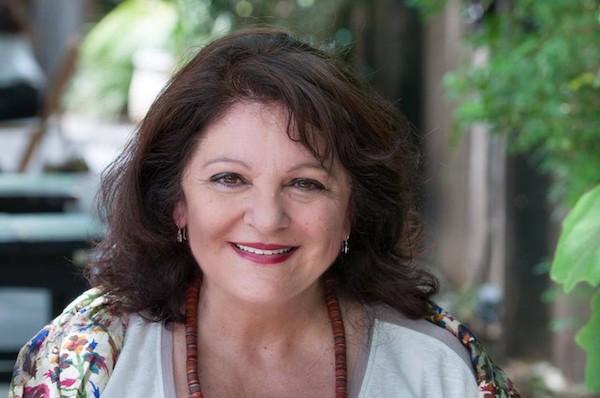
Curator and art historian Yael Nitzan, founder of Israeli Women Museum. (photo by Adi Eder)

How many “she-roes” of Israel can you name? Maybe you’d with Golda Meir, Israel’s first and only female prime minister. Or the tragic and courageous spy Sarah Aaronsohn and paratrooper Hannah Senesh. The list would include physician Vera Weizmann, the first first lady of Israel, who helped establish Chaim Sheba Medical Centre, now the largest hospital in the Middle East; and second first lady Rachel Yanait Ben-Zvi, who taught Jerusalem women how to grow vegetables, milk cows and make cheese so their husbands could go out and build the state.

These and many other women who played – and continue to play  – important roles in the history and culture of Israel will be immortalized later this year when the Israeli Women Museum opens in Haifa. The museum will showcase at least 100 noteworthy but not necessarily well-known women, from architects to lawyers to choreographers, says founder Yael Nitzan.

A curator, art historian and TV producer, Nitzan has overcome many roadblocks and setbacks in realizing her dream of opening Israel’s first museum dedicated to women.

“It was a struggle,” she admitted. “Now, with corona, the world has everyone sitting and listening, and, in three months, I accomplished what I could not accomplish in the past six or seven years.”

Nitzan gained the help of the Haifa Foundation in raising funds for the project, and she was given the rights to a former private school building in which the collections will be housed.

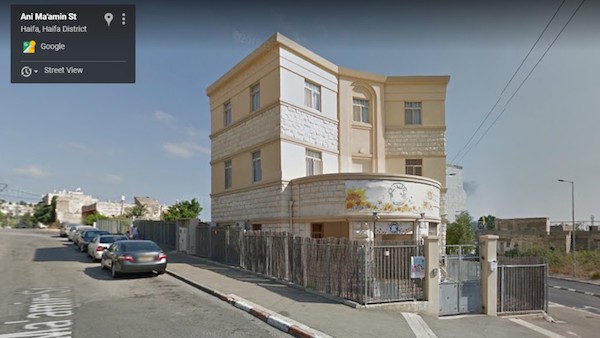
screenshot - The Haifa building that will house the Israel Women Museum
The Haifa building that will house the Israel Women Museum. (screenshot)

Brig. Gen. Gila Kalifi-Amir, former women’s affairs advisor to the Israel Defence Forces chief of staff, agreed to chair the museum. The board was joined by fellow Haifa residents Nadim Sheiban, director of the Museum of Islamic Art; and Prof. Aliza Shenhar, formerly a deputy mayor, ambassador to Russia and first female rector of an Israeli university.

“I found the right people,” Nitzan told Israel21c.

“There are currently about 45 women’s museums in the world, the most famous of which are the Women’s Rights [National Historic) Park in Seneca Falls, N.Y., and the Women’s Art Museum in Washington,” she said.

“The fundamental challenge in establishing a museum is not only in raising resources, but in creating a diverse and significant human and ideological infrastructure. The Israeli Women Museum must be a magnet of significance to the whole, or at least to large sections of, the population in Israel.”

Though Israel reportedly has the world’s highest ratio of museums per person, this will be the first one dedicated to the mostly unsung females responsible for weaving together its social, agricultural and business fabric. “Our museum will be on women in history and women in the arts,” Nitzan explained.

“The section on history commemorates the role of important women who have not been properly acknowledged.” Women like Hannah Maisel, who immigrated to Palestine in 1909 with a doctorate in agriculture and founded the region’s first agricultural training institute for women. And women like Rachel Roos Hertz (Harel), a Dutch resistance fighter who moved to Israel in 1950 after winning the U.S. Medal of Freedom and the U.K. King’s Medal for Courage in the Cause of Freedom, and became active in the Women’s International Zionist Organization (WIZO) – itself founded by Rebecca Sieff (Ziv) from the Marks family of Marks & Spencer, and whose name graces Ziv Medical Centre in Safed.

Some of the inspiration for this section comes from Prof. Margalit Shilo’s Women Building a Nation, a book published this year in Israel.

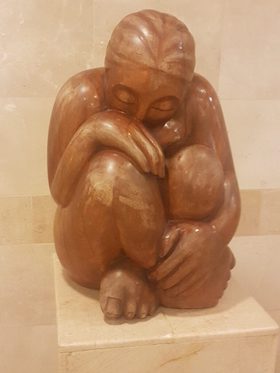
photo - Sculpture by 90-year-old Kati Paldi
Sculpture by 90-year-old Kati Paldi. (photo by Yael Nitzan)

“In the art section, we will spotlight women whose work was not considered important, as well as very important female artists of today whose work is rarely shown in museums,” said Nitzan.

Artists to be included run the gamut from Ziona (Siona) Tagger, one of the most important female Israeli artists of the early 20th century, to contemporary painter Haya Graetz Ran.

“Women in Israel contributed greatly to the establishment of the state, contributed to the construction of the infrastructure of settlement, education, defence, law, government, society, culture, cinema and theatre,” Nitzan said. “But, although they left their mark, they did not receive proper recognition and respect in building society.  The purpose of the museum is to raise their profile and to reshape the narrative of the critical role of women as full partners in leadership and public space design over the past century.”

Nitzan invites anyone to contribute stories or items relating to Israeli Jewish, Arab, Druze or Christian women, and even artists, poets and leaders from the Holocaust era who did not manage to get to Israel. She can be reached through the museum’s Facebook page. Donations for the project are being funneled through the Haifa Foundation.

Israel21c is a nonprofit educational foundation with a mission to focus media and public attention on the 21st-century Israel that exists beyond the conflict. For more, or to donate, visit israel21c.org.

Format ImagePosted on May 7, 2021May 7, 2021Author Abigail Klein Leichman ISRAEL21CCategories IsraelTags art, history, politics, She-roes, women, Yael Nitzan

Posts pagination

Previous page Page 1 … Page 4 Page 5 Page 6 Next page
Proudly powered by WordPress