Skip to content
  • Home
  • Subscribe / donate
  • Events calendar
  • News
    • Local
    • National
    • Israel
    • World
    • עניין בחדשות
      A roundup of news in Canada and further afield, in Hebrew.
  • Opinion
    • From the JI
    • Op-Ed
  • Arts & Culture
    • Performing Arts
    • Music
    • Books
    • Visual Arts
    • TV & Film
  • Life
    • Celebrating the Holidays
    • Travel
    • The Daily Snooze
      Cartoons by Jacob Samuel
    • Mystery Photo
      Help the JI and JMABC fill in the gaps in our archives.
  • Community Links
    • Organizations, Etc.
    • Other News Sources & Blogs
    • Business Directory
  • FAQ
  • JI Chai Celebration
  • JI@88! video

Recent Posts

  • Story of Israel’s north
  • Sheltering in train stations
  • Teach critical thinking
  • Learning to bridge divides
  • Supporting Iranian community
  • Art dismantles systems
  • Beth Tikvah celebrates 50th
  • What is Jewish music?
  • Celebrate joy of music
  • Women share experiences 
  • Raising funds for Survivors
  • Call for digital literacy
  • The hidden hand of hate
  • Tarot as spiritual ritual
  • Students create fancy meal
  • Encouraging young voices
  • Rose’s Angels delivers
  • Living life to its fullest
  • Drawing on his roots
  • Panama City welcoming
  • Pesach cleaning
  • On the wings of griffon vultures
  • Vast recipe & story collection
  • A word, please …
  • מארק קרני לא ממתין לטראמפ
  • On war and antisemitism
  • Jews shine in Canucks colours
  • Moment of opportunity
  • Shooting response
  • BC budget fails seniors
  • Ritual is what makes life holy
  • Dogs help war veterans live again
  • Remain vital and outspoken
  • An urgent play to see
  • Pop-up exhibit popular
  • An invite to join JWest

Archives

Follow @JewishIndie
image - The CJN - Visit Us Banner - 300x600 - 101625

Month: February 2019

Retirement offers new path – the Accidental Balabusta

Retirement offers new path – the Accidental Balabusta

It was an uber-yummy pot roast that spawned the Accidental Balabusta. (photo by Shelley Civkin)

The definition of balabusta goes like this: 1) an impressively competent homemaker; 2) female head of household.

I recently saw balabusta used in a sentence: “She’s such a balabusta, she can make Shabbos for 20 in one afternoon.” Seriously? In which galaxy could anybody (never mind a balabusta) make any meal for 20 in one afternoon? I’m pretty sure that’s called hyperbole, or straight up bovine caca. Maybe I’m just not aware of the superpowers of real-life balabustas; the ones who sport red aprons and rule the domestic world. Personally, I couldn’t even make mac and cheese for 20 in one afternoon.

According to the Jewish Chronicle, “Balaboosters [sic] are rather out of fashion these days, victims of feminism and women’s magazines. Still, at least according to family myth, all of our grandmothers were balaboosters – heroic homemakers who raised large numbers of children in straitened circumstances and made real gefilte fish from a carp that swam about in the bathtub.” Not my Jewish grandmothers! Mine were neither spectacular cooks, nor did they have a bathtub filled with fish.

I don’t buy the idea that balabustas are out of fashion these days. I believe they’re just contemporary versions of the old-time balabustas. We hold down jobs, raise kids – well, not me, personally, but millions of other modern balabustas – and we’re active in our communities. And we just happen to bake, cook, do the laundry, clean the house and more. I, for one, am flattered to be called a balabusta. Even an accidental one. I feel like it puts me squarely in the category with other competent Jewish women, who juggle multiple tasks and are the glue that holds their families together.

So, how did I come to be crowned “the Accidental Balabusta”? It was the day I made a textbook perfect, uber-yummy pot roast. My husband Harvey took one bite and proclaimed me the Accidental Balabusta. Just like that! To substantiate his declaration, a week later I baked a batch of kalamata olive and rosemary challah buns (recipe from Rising: The Book of Challah by Rochie Pinson). They were exquisite. Or so I’m told. For the record, there was no bread machine or KitchenAid dough hook within 100 metres of my tiny galley kitchen. Just me, a 13-litre stainless steel bowl and enough flour to coat a bison.

For an encore, I made a handmade, painted challah cover. Next thing you know, I’ll be herding sheep. Anyway, that’s how the new moniker stuck.

Regarding the definition of balabusta, I might qualify as the “female head of household,” depending on whom you ask. As for being a remarkably skilled homemaker … well, the jury’s still out on that one. Way out. Truth to tell, most people I know would unequivocally classify me as the anti-balabusta. “That Shelley Civkin is a real balabusta!” Said nobody. Ever.

It’s not for lack of trying. OK, for about 50 years, it was. I simply wasn’t interested in cooking and cleaning. I was single and worked full-time. Since I only got married at age 53, the childbearing train had left the station. Empty. I was zero for three.

Then heaven happened: I retired three years ago. I took the advice of a wise rabbi, who told me that retirement doesn’t mean just sleeping in and doing nothing. It means helping others, doing mitzvot and finding your purpose in life. Did I mention I regularly volunteer to bake challah for seniors? I took the rabbi’s words to heart, and here I am today, the Accidental Balabusta. I’m sure my family and friends are laughing their tucheses off right now. “Shelley, a balabusta? You gotta be kidding?” For most of my life I was a water-burner.

If you ask Harvey, he’ll tell you I’m a great cook. To wit, he’ll eat anything. Exhibit A: the fish fiasco. A year or two into our relationship, I decided to make breaded snapper. So, I used my father’s recipe and coated the fish in flour, eggs and breadcrumbs. While it was frying, a tiny piece of breading came off, so I popped it my mouth. Something didn’t taste right. I checked the expiry date on the egg container – it was fine. Then I put my finger in the bread crumbs to taste them – they were good. Finally, I put my finger in the jar of flour. Only to realize that I’d just coated all my fish in icing sugar. Harvey, G-d bless him, ate the icing-sugar-coated fish. I went out for sushi.

Then there was the infamous lamb debacle. It was New Year’s Eve and I decided to go for broke, so I made a rack of lamb. I covered the lamb in my usual Dijon mustard, lemon and garlic mixture and put it in the oven. Our first bite in, both of us noted the unusually strong lemon flavour. But it was tasty.

An hour later, it wasn’t. Harvey ended up in the bathroom driving the big, white porcelain bus. Several hours later, I landed in the hospital emergency department having three bags of IV fluids pumped into me. Let’s just say I got very dehydrated, and leave it at that.

As for being a great homemaker, that’s not my strong suit. What I mean to say is this: I am not on a first-name basis with my vacuum cleaner. In fact, I couldn’t tell you the brand if my life depended on it. I am to housecleaning what porcupines are to Winnebagos. If tchotchkes aren’t screaming out to be dusted, leave well enough alone. Let me clarify: I’m not dirty. I’m just a little messy. I figure there are more important things to do than clean house. Like read. Or eat chips. When guests come over, though, I pull out all the stops. OK, I pull out the fancy hand towels. Actually, Harvey pulls them out. I watch.

The last time I did anything domestic was in Grade 3 Hebrew school, when our teacher had all the girls embroider kippot for the boys. The boys’ assignment – wait for it – was to wear the kippot. No sexism there. Of course, it was the early 1960s. So, you’re welcome, boys.

But back to the balabusta thing. It turns out that I actually enjoy cooking and baking. Who knew? With nothing but free time on my hands now (except for my volunteer activities), I can kick back, put my hair up and tie one on. An apron, that is.

Stay tuned for more Accidental Balabusta.

Shelley Civkin, aka the Accidental Balabusta, is a happily retired librarian and communications officer. For 17 years, she wrote a weekly book review column for the Richmond Review, and currently writes a bi-weekly column about retirement for the Richmond News.

Format ImagePosted on February 22, 2019April 2, 2020Author Shelley CivkinCategories LifeTags Accidental Balabusta, Judaism, lifestyle, memoir, retirement
Beautifully acted film

Beautifully acted film

Recent Empowerment series session featured the screening of the film A Song for Marion (Unfinished Song). (photo from JSA)

On Jan. 16, more than 60 older adults gathered in the auditorium of the Jewish Community Centre of Greater Vancouver to watch the heart-tugging film A Song for Marion (Unfinished Song), starring Vanessa Redgrave and Terrance Stamp. This was the second session of the 2018-19 Empowerment series, and it was co-sponsored with JCC Seniors.

Before the film, attendees were welcomed by the smell of fresh popcorn, provided by Lisa Cohen Quay, coordinator of JCC Seniors program. She introduced the film and welcomed the audience. The JSA’s Gyda Chud gave an introduction describing the alliance and the Empowerment series.

The film portrayed the relationship between an elderly couple, husband and wife, with very different personalities. Marion, who is suffering from terminal cancer, is an outgoing and friendly person who is very involved in a community seniors choir. Arthur, on the other hand, is a grouchy character, who is over-protective of his wife and disdainful of the choir. After Marion’s death, Arthur is lost, but he honours her memory by joining the choir that brought her so much joy. His journey of self-discovery helps him build bridges with his estranged son.

This thought-provoking, beautifully acted movie delivered several messages, one of which is to open yourself up to new experiences and not be afraid to be you; to allow yourself to think beyond the scope of what is, and reach for what could be. It was an empowering experience.

After the movie, there was coffee, pastry and shmoozing. The work of Cohen Quay, Liz Azeroual and Raylene Burke made this event successful.

This year’s Empowerment series is on the theme of renewing and reinventing ourselves as older adults. The first session, The Role of Stories, was held Nov. 30, with the Sholem Aleichem Seniors of the Peretz Centre for Secular Jewish Culture. The next event will take place on March 5, 2:30 p.m., at the Weinberg Centre.

Shanie Levin is an executive board member of Jewish Seniors Alliance and on the editorial board of Senior Line magazine.

Format ImagePosted on February 22, 2019February 21, 2019Author Shanie LevinCategories TV & FilmTags JCC, JSA, movies, seniors
Community milestones this February

Community milestones this February

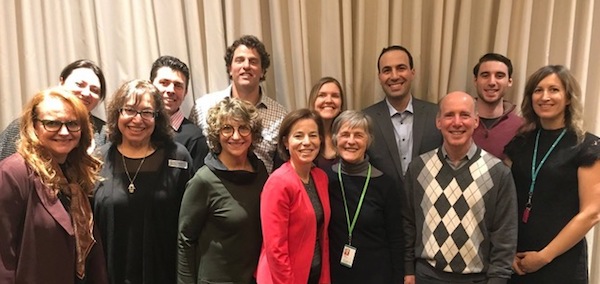
Left to right, back row, are Rory Richards, Kasimir Kish, Gord Kushner, Sarah Ann Chisholm (Jewish Family Services liaison), Daniel Bar Dayan, Jeremy Berger and Anat Gogo. In the front, left to right, are Rhonda Sacks, Marcela Manes, Shelley Karrel, Selina Robinson (guest speaker at the recent AGM), Alice Sundberg and Eric Fefer. (photo from Tikva Housing)

Tikva Housing had its annual general meeting Dec. 13, 2018. Two new directors were elected at the AGM, and another has joined since, to be appointed at the next board meeting.

The new directors elected in December were Jeremy Berger, a commercial property manager with Porte Realty, and Rhonda Sacks, a realtor with Sutton Group. Both have demonstrated a keen interest in Tikva’s work and have been actively engaged since joining. The new director to be appointed at the Feb. 28 board meeting is Rory Richards, who brings marketing and communications expertise, as well as strong links in the Jewish community.

Continuing board members are Shelley Karrel (chair), Gord Kushner (treasurer), Heather Sirlin (secretary) and directors-at-large Dan Granirer, Marcela Manes, Kasimir Kish and Mike Grudman.

Alice Sundberg, Tikva Housing’s director of operations and housing development, describes the Tikva board as a dynamic group of professionals who share a passion for providing affordable housing in an expensive region. In a meeting last October, they made a plan for Tikva’s next three years. The key strategic goals are engaged and committed board members and active committees; an endowment fund to provide stable and predictable funding for the rent-subsidy program; an expanded housing portfolio; closer ties with other Jewish nonprofit housing providers; and adequate human resources to manage all these goals.

Housing administrator Anat Gogo noted that the demand for rent subsidies is constant. Currently, Tikva is assisting approximately 30 families to be able to stay where they are, without worry of eviction for failure to pay their rent. For more information or to get involved with Tikva, contact the office at 604-998-4582.

***

photo - Tanya Paz
Tanya Paz (photo by Belle Ancell)

National Council of Jewish Women of Canada, Vancouver, welcomes Tanya Paz as executive director. Paz volunteered for NCJWC in the 1990s, subsequently served on the board of directors and was Council’s liaison to Canadian Jewish Congress (now Centre for Israel and Jewish Affairs).

Both Paz’s background as development director for the first car-sharing organization in British Columbia (Modo) and her involvement with the Vancouver Jewish Film Festival and other organizations, make her a valuable addition to the community of volunteers that is NCJWC. She also brings a wealth of experience in municipal affairs, in environmental initiatives and in social activism. And her expertise in community development and her commitment to women’s and children’s issues ensure a strategic approach to the goals of Council.

Working with the board of directors, Paz will help bring the goals of NCJWC – advocacy, education and social action – to both the Jewish and general communities throughout the region, with a focus on women and children experiencing poverty.

***

Nina Krieger, executive director of the Vancouver Holocaust Education Centre, is among those who have been appointed to the National Expert Committee on Countering Radicalization to Violence.

The Canada Centre was officially launched in 2017. Located at Public Safety Canada headquarters in Ottawa, its work includes the National Strategy on Countering Radicalization to Violence and the role of the expert committee is to help the centre meet the strategy’s three priorities: building, sharing and using knowledge; addressing radicalization to violence in the online space; and supporting interventions.

Krieger, who previously was education director and curator at the VHEC, is highly regarded for developing educational programs and exhibits that challenge audiences to probe the difficult historical, cultural and ethical issues raised by the Holocaust. She is also a member of the Canadian delegation to the International Holocaust Remembrance Alliance and past chair of the Memorials and Museums Working Group.

Joining Krieger on the expert committee are Dr. Ghayda Hassan (co-chair), a clinical psychologist and professor of clinical psychology at the Université du Québec à Montréal: Peter John M. Sloly (co-chair), a former Toronto police service deputy chief and currently a partner at Deloitte Canada; Bob Rae, a professor of public policy at both the Munk School and Victoria College at the University of Toronto, who also serves as senior counsel at Olthuis Kleer Townshend LLP; Dr. Jaspreet Khangura, an emergency physician at Royal Alexandra Hospital and Northeast Community Health Centre in Edmonton; Dillon Black, a gender-nonconforming feminist anti-violence and LGBTQ+ rights advocate and current PhD student with the eQuality Project in the department of criminology at the University of Ottawa; Max FineDay, executive director of Canadian Roots Exchange, an organization that builds bridges between indigenous and non-indigenous youth in Canada, among other things; Rizwan Mohammad, a Canadian Muslim civic engagement coordinator; Irfan Chaudhry, a hate crimes researcher and the director of the Office of Human Rights, Diversity and Equity at MacEwan University; and Dr. Shelly Whitman, executive director of the Roméo Dallaire Child Soldiers Initiative, who is considered a subject matter expert on the issue of child soldiers.

***

photo - Ten Bnei Menashe immigrants to Israel celebrated their bat mitzvah on Jan. 28
Ten Bnei Menashe immigrants to Israel celebrated their bat mitzvah on Jan. 28. (photo from Shavei Israel/Laura Ben-David)

On Jan. 28, 10 recent Bnei Menashe immigrants brought on aliyah from India by Shavei Israel, celebrated their bat mitzvah at a gathering of family and friends hosted by Girls Town Jerusalem, where they are enrolled as students.

“We were delighted to attend this very special and moving bat mitzvah celebration, which symbolizes the right of passage that the girls and their families have undergone in returning to the Jewish people,” said Shavei Israel founder and chair Michael Freund.

“We are determined to continue with our efforts until all the remaining 7,000 Bnei Menashe still in India are able to return to Zion,” he added.

The Bnei Menashe are descendants of the tribe of Manasseh, one of the Ten Lost Tribes exiled from the Land of Israel more than 2,700 years ago by the Assyrian Empire. So far, some 4,000 Bnei Menashe have made aliyah with Shavei Israel over the past 15 years, including more than 450 last year.

Format ImagePosted on February 22, 2019February 21, 2019Author Community members/organizationsCategories LocalTags Bnei Menashe, Girls Town Jerusalem, National Council of Jewish Women of Canada, NCJW, Nina Krieger, Shavei Israel, Tanya Paz, Tikva Housing, Vancouver Holocaust Education Centre, VHEC
Transferring our assets

Transferring our assets

(photo from Alpha Stock Images, photographer Nick Youngson)

After a lifetime of work, most of us would like to know that our assets and legacy are transferred to the next generations, children and grandchildren, in the amounts and percentages we chose while alive. Our hope is that this would happen as painlessly, securely and quickly as possible.

It is a subject I am quite passionate about. I have seen loving families, with the best intentions, fail to adequately plan this transfer of assets and they are faced with disappointing financial and emotional consequences. There is the very real risk that your assets will not land in the hands of the people you intended. In addition, even when your wishes are met, without the proper planning and communication, feelings can be hurt, with long-lasting negative, albeit unintended, consequences.

What is probate

Probate is a legal procedure that validates a deceased’s will and confirms the executor’s authority to carry out the testator’s wishes.

There is no requirement that every will must be probated. Proper planning can eliminate the need for probate, and the type of asset involved will generally dictate whether or not probate is required.

The cost of probate varies by province. British Columbia has fees of $14 per thousand on estates over $50,000, plus a filing fee. Property owned in another province may attract fees based on that province’s fee schedule.

Advantages/disadvantages

When letters of probate are obtained, financial institutions, transfer agents, land registry offices and other third parties can safely transfer the assets to the intended recipients. The time frame for any court challenges to the will or estate is usually measured from when the probate is granted. This limits the period when legal action may be taken.

However, the process can be very expensive, time-consuming and complex, and is open to public scrutiny. This loss of privacy can be very important to the ongoing harmony of the family when assets aren’t divided equally among the beneficiaries.

Avoiding or reducing probate

  • Make sure you have a will. Probate fees will be applied automatically if you die intestate (without a will).
  • Gifting prior to death can reduce the value of the estate subject to probate but must be done with care. There are important legal and income tax considerations and possibly property transfer taxes.
  • Use named beneficiaries whenever possible. Moving assets to vehicles such as life insurance, annuities and segregated funds is a great way to avoid probate. What’s important is that proceeds are paid quickly, typically in a few weeks, and directly to the beneficiary. This avoids lawsuits from family members who may feel they didn’t receive what they felt they deserved from the estate.
  • Holding assets in joint tenancy with a spouse, child or other family member will avoid probate, as the asset passes automatically upon death to the other individual. Using joint tenancy to avoid probate fees should involve careful consideration: there will be a loss of control once it is jointly held and the asset will be exposed to the joint tenant’s creditors. There are also certain complicated tax issues and other risks associated with this strategy.
  • Transferring assets to a trust will remove the asset from the estate. Be careful of appreciable assets that may attract a taxable disposition upon transfer. The use of an alter-ego or joint spousal trust can be very effective for this purpose. There are many cases where trusts are necessary to achieve more complicated wishes but they can be expensive to set up and require annual maintenance.
  • Transfer assets to a corporation. Except for outstanding mortgages on real estate, which are deductible, probate fees are generally charged against the gross value of an estate asset. If an estate asset was purchased with borrowed money, it may be beneficial to transfer that asset to a company. This will reduce the value of the estate and the company share value will be the asset, less the debt used to acquire it.
  • Have multiple wills. Not all assets are subject to probate. It is becoming popular to have two wills – one for assets that are probatable and one for those that are not. This strategy is not available in all provinces and the use of multiple wills may create problems with the new graduated-rate estate tax with respect to testamentary trusts. It is important to seek professional advice when considering these strategies.
  • Keep it simple. There are often cases where we can plan to quite easily avoid probate entirely. All assets can be invested within segregated funds (GICs, stocks and bonds are available) with named beneficiaries and others gifted. This can be done where income is still guaranteed for the rest of one’s life, but ownership has been transferred while alive, or will pass straight to beneficiaries later, thus avoiding probate.

***

Finally, I like to stress the gifting of assets while one is alive, be it to your family or a charity. There are many advantages, whether it’s the personal satisfaction of supporting your favourite charity, or the love shared with your children and grandchildren. After all, isn’t estate planning really intergenerational legacy planning?

Philip Levinson, CPA, CA, is an associate at ZLC Financial, a boutique financial services firm that has served the Vancouver community for more than 70 years. Each individual’s needs are unique and warrant a customized solution. Should you have any questions about the information in this article, he can be reached at 604-688-7208 or [email protected].

*** Disclaimer: The views (including any recommendations) expressed in this commentary are those of the author alone, and are not necessarily those of ZLC Financial. This information is not to be construed as investment advice. It is for educational or information purposes only. It is not intended to provide legal, taxation or account advice; as each situation is different, please seek advice based on your specific circumstance. This commentary is not in any respect to be construed as an offer to sell or the solicitation of an offer to buy any securities. ***

Format ImagePosted on February 22, 2019February 21, 2019Author Philip LevinsonCategories Op-EdTags financial planning, probate, taxes
Mystery photo … Feb. 22/19

Mystery photo … Feb. 22/19

Dave and Rose Nemetz with an unidentified group, undated. (photo from JWB fonds, JMABC L.16225)

If you know someone in this photo, please help the JI fill the gaps of its predecessor’s (the Jewish Western Bulletin’s) collection at the Jewish Museum and Archives of B.C. by contacting [email protected] or 604-257-5199. To find out who has been identified in the photos, visit jewishmuseum.ca/blog.

Format ImagePosted on February 22, 2019February 21, 2019Author JI and JMABCCategories Mystery PhotoTags history, Jewish museum, JMABC, Nemetz
Silver family wedding

Silver family wedding

Hoopla Under the Huppah by Dori Weinstein (Five Flames Press, 2017) is the third instalment of the YaYa and YoYo series, which includes Sliding into the New Year, about Rosh Hashanah, and Shaking in the Shack, about Sukkot.

Targeted to 9-to-11-year-olds, Hoopla Under the Huppah features 11-year-old twins YaYa (Yael/Ellie) and YoYo (Yoel/Joel) Silver. Their Aunt Rachel is getting married to soon-to-be Uncle David, and they have been asked to participate. As the plans develop, YaYa and YoYo learn all of the rituals and traditions of a Jewish wedding. However, as the weeks pass, there are all kinds of good and bad adventures that the twins and their 13-year-old older brother, Jeremy, experience. As the ketubah, painted by the kids’ mother, the wedding ceremony and more evolve, YaYa worries about “the Evil Eye” and that she might be bringing bad luck to everything she touches.

Hoopla Under the Huppah offers opportunities for parents to discuss various Jewish traditions with their kids, while enjoying the humour of the Silver family. As an adult, I really enjoyed this book.

Weinstein grew up in New York, taught in public and Jewish schools and now lives in Minneapolis, Minn., with her husband and children, where she teaches preschool Hebrew.

Sybil Kaplan is a journalist, lecturer, book reviewer and food writer in Jerusalem. She created and leads the weekly English-language Shuk Walks in Machane Yehuda, she has compiled and edited nine kosher cookbooks, and is the author of Witness to History: Ten Years as a Woman Journalist in Israel.

Format ImagePosted on February 22, 2019February 21, 2019Author Sybil KaplanCategories BooksTags children's books, Dori Weinstein, Judaism, weddings

Standing under the chuppah

Adir under the wedding canopy with his bride, Liat. (photo from UPnRIDE)

Forty days before his marriage, a wheelchair-bound Israeli man named Adir wrote to UPnRIDE Robotics, sharing his dream to stand under the chuppah with his bride, Liat. Chief executive officer Oren Tamari invited Adir to company headquarters in Yokne’am Illit to try the UPnRIDE 1.1 mobility device, now in transition from research-and-development to market.

“We saw he managed well with it, and we arranged for him to use the device during his wedding” on Nov. 12, Tamari told Israel21c.

The day after his wedding, Adir posted on UPnRIDE’s Facebook page: “Thank you all for [the] wonderful experience and magnificent night. Our chuppah was so amazing, people cried when [they] saw me standing and praying. My wife and I just want to say that you made our night as close as possible to perfection!!!”

UPnRIDE was invented by Amit Goffer, whose ReWalk robotic exoskeleton allows paraplegics to stand, walk, navigate steps and even run marathons. Goffer, who has a PhD in electrical and computer engineering, could not use ReWalk himself because he is a quadriplegic, paralyzed from the neck down. So he and Tamari formed a new company to develop an upright mobility solution enabling any wheelchair-bound person – quadriplegics, paraplegics, people with multiple sclerosis, cerebral palsy, ALS and traumatic brain injury – to recline, stand and navigate indoors and outdoors.

Jointed braces and harnessing straps provide support, while advanced motion technology and real-time computing ensure automatic balancing and stability on uneven terrain. Goffer said other types of standing wheelchairs can’t be used outdoors because of the danger of tipping over.

UPnRIDE is now raising funds, working toward U.S. Food and Drug Administration clearance and doing usability studies with all kinds of wheelchair users. A major study has begun at the U.S. Veterans Health Administration’s Centre of Excellence in New York to determine the benefits for UPnRIDE users. Many health problems are associated with long-term wheelchair sitting, from muscle atrophy to cardiovascular disease.

Goffer, chief technology officer and president of the company, doesn’t yet have his own UPnRIDE because the sample models are for testing. He borrows one on weekends and for special events, such as his daughter’s wedding last July.

Like Adir, he was able to stand under the chuppah and with his family for photos.

“My son and middle daughter were already married years ago,” he said, “and it was a very different feeling at the wedding of my ‘baby’ because I was standing like the rest of the family. I was also able to mingle with guests as never before.”

Eventually, Goffer expects UPnRIDE to become his everyday wheelchair. “I enjoy it because I can stand and sit easily whenever I want; I don’t have to be moved and lifted by someone else. It can recline, too, so it’s better for napping or receiving medical treatment.”

The smart wheelchairs are to be manufactured in a northern Israel factory run by Sanmina, an American electronics manufacturing services provider. Tamari said the company plans to use proceeds from the current funding round for marketing, establishing mass production and developing advanced and new models.

For more information, visit upnride.com or email [email protected].

Israel21c is a nonprofit educational foundation with a mission to focus media and public attention on the 21st-century Israel that exists beyond the conflict. For more, or to donate, visit israel21c.org.

Format ImagePosted on February 22, 2019February 21, 2019Author Abigail Klein Leichman ISRAEL21CCategories WorldTags Amit Goffer, disability, high-tech, innovation, Israel, ReWalk, UPnRIDE, weddings
Israeli designer’s star appeal

Israeli designer’s star appeal

Best known for couture wedding gowns, Galia Lahav is one of the major players in the wave of Israeli designers making a mark on the international bridal industry. (photo from Instagram)

With fashion accessible at our fingertips via e-commerce, shopping apps and social media, the past few years have seen the rise of emerging designers from around the world. Along the way, a number of Israeli designers have won favour with the international fashion crowd, particularly celebrities and their stylists.

“I always say that talent has no geographical boundaries. If your vision is strong, the quality of your work is high and you know how to work with international markets, then your way to success is quick,” Israeli fashion blogger and Instagram influencer Roza Sinaysky told Israel21c.

Sinaysky, known on Instagram as @moodyroza, said she has seen a change in the Israeli fashion scene over the last two to three years, where more people are interested in fashion and willing to support young designers. The designers, she said, also are more aware of trends and the needs of the industry thanks to social media.

“The rise of social media made a huge difference in the fashion industry. For designers, it opened a lot of doors. When everyone can see your work, you never know who might reach out,” said Sinaysky.

Over the past few years, Israeli designers have been approached by Kensington Palace, Beyoncé, Serena Williams, Lady Gaga and many others to create custom pieces.

“I think it’s so great that Israel is recognized as a place of talents, not just technology. It makes me very proud to see local designers do so well abroad,” said Sinaysky.

Below are eight Israeli fashion and accessory designers making their mark internationally.

  1. Shahar Avnet

screenshot - Shahar Avnet Instagram postWhat do Beyoncé and Eurovision winner Netta Barzilai (who was just in Vancouver for a concert) have in common? They both wear Shahar Avnet. The young Israeli designer made headlines last year when her custom-made, nude-coloured tulle gown was worn by Beyoncé on stage during her world tour with Jay-Z.

Avnet also designed the multicoloured kimono famously worn by Barzilai on the cover of her hit song “Toy.”

“My garments are for confident women who are fearless, intelligent and chic; women who are not afraid to be the centre of attention and making a statement,” Avnet told Vogue Italy.

The Tel Aviv-based designer’s tulle creations walk the line between art and fashion, often combining techniques such as drawing, embroidery and collage into a single dress.

Avnet graduated from Shenkar College of Engineering, Design and Art in 2016, receiving her first international exposure when her final project was chosen to represent the school at the International Catwalk during Graduate Fashion Week in London, England.

Avnet’s bold colours and unusual, feminine silhouettes have caught the attention of celebrity stylists and magazines. Other celebrities who have worn Avnet’s dresses include American actresses and singers Zendaya and Kelly Rowland, and members of the Israeli band A-WA.

  1. Marei1998

Designer Maya Reik launched Marei1998 several seasons ago, almost immediately earning praise from the fashion world for her classic-modernist design sensibility – an unusually subdued approach for a designer her age (1998 refers to the year Reik was born).

Drawing upon Reik’s love for European cities and vintage nostalgia, Marei1998 offers a twist on classic luxury, reviving traditional styles like the robe coat and wrap dress. The brand’s claim to fame is its faux fur coats, which have become a celebrity-approved go-to for a sustainable statement. Last year, Marei1998’s eco-fur was spotted on model Bella Hadid and actress Priyanka Chopra.

Marei1998 has presented its collection in Milan the past few seasons and has had several successful trunk shows with online retailer Moda Operandi, which says “the young Israeli is living proof that elegance doesn’t come with age.”

  1. A by Anabelle

Anabelle Tsitsin, the 26-year-old designer behind celebrity-approved shoe brand A by Anabelle, drew upon her background in fine arts to launch a collection of luxury footwear in 2016 that features unexpected and playful embellishments like crystals, feathers and fur. All the shoes are made of Italian leather and fabrics in Parabiago, a town just outside Milan known for its history of footwear craftsmanship.

The brand’s signature style features an architectural A-shaped heel, worn by celebrities like Victoria’s Secret model Josephine Skriver and actresses Katharine McPhee and Logan Browning. In 2017, Halle Berry wore A by Anabelle’s lace-up “starlette” shoes during an interview with Ellen DeGeneres on The Ellen Show.

Although based in Israel, the brand has started to make its rounds on the international style scene and social media thanks to influencers and fashion bloggers like Maja Malnar, Camila Carril and Cristina Musacchio.

  1. Nili Lotan

Israeli-born, New York-based designer Nili Lotan launched her namesake brand in 2003. The label, which revolves around timeless slip dresses, simple cargo pants and elevated basics, is tomboy meets luxury, making it a go-to for model-off-duty style.

Though Nili Lotan has been a mainstay in Tribeca since the store opened in 2006, it has been pushed toward the spotlight in the last several years thanks to an ever-expanding list of celebrity followers, like Gigi Hadid, Rihanna, Jennifer Lawrence, Gwyneth Paltrow and Kaia Gerber. The brand has been referred to as Hadid’s “wardrobe secret weapon” by Vogue, with frequent images of the model in Lotan’s designs flooding Instagram.

  1. Galia Lahav

screenshot - Galia Lahav Instagram postBest known for couture wedding gowns, Galia Lahav is one of the major players in the wave of Israeli designers making a mark on the international bridal industry.

Led by head designer Sharon Sever, the brand’s embellished, forward-thinking designs have been worn by Beyoncé, Serena Williams, Ciara, Jennifer Lopez and many others – Lahav made headlines when Beyoncé chose a dress from the label’s Victorian Affinity collection to renew her vows with husband Jay-Z. Another defining moment came when the designer created six custom-made, cream-coloured gowns for Williams’ wedding party.

Dresses from Lahav’s line of evening wear have made frequent red carpet appearances, with their plunging necklines and figure-hugging sequins adorning stars like model Shanina Shaik, actress Sarah Hyland and singers Ciara and Halsey.

  1. Alon Livne

While Alon Livne opened his Soho, N.Y., atelier and ready-to-wear showroom in 2017, he has been designing under the label Alon Livne since he founded his studio in Tel Aviv in 2010.

With three separate lines – bridal, evening and ready-to-wear – Livne has gained a following of international brides, celebrities and lovers of bold, fearless fashion.

Lady Gaga is among the brand’s A-list fans, having worn several custom gowns by Livne over the last years. His avant-garde, innovative designs have also been worn by Beyoncé, Nikki Minaj, Jennifer Lopez, Naomi Campbell and many others. One of his dresses made waves when it was worn by actor Johanna Mason in the film Mockingjay, part of the four-movie Hunger Games franchise.

  1. Inbal Dror
photo - Beyoncé’s gown is from the Inbal Dror Fall 2016 Bridal collection
Beyoncé’s gown is from the Inbal Dror Fall 2016 Bridal collection. (photo from Inbal Dror)

Inbal Dror began designing wedding dresses in 2014, pioneering the style of the “red carpet bride,” with her glamorous, figure-hugging styles that were new to the bridal industry at the time.

Since then, the brand has dressed high-profile brides around the world. In 2017, Dror was contacted by the royal family about possibly making the wedding dress for Meghan Markle’s wedding to Prince Harry. Though the newly appointed Duchess of Sussex chose a different dress in the end, the famous inquiry solidified Dror as one of the biggest names in bridal.

Dror had previously dressed Beyoncé for the Grammys in 2016, proving that wedding dresses aren’t just for brides.

  1. Tuxe

When Meghan Markle wore a silk Boss bodysuit by Israeli designer Tuxe for an evening out with Prince Harry in February 2018, the style was immediately backordered until May.

Tuxe was founded by Tamar Daniel, who was born in Jerusalem, raised in London, and graduated from the Shenkar College in Ramat Gan. She founded her Philadelphia-based bodywear line in 2015, focusing on transforming the bodysuit, once a 1990s staple, into a chic, modern garment.

Her collection includes a range of bodysuits with names like Boss, CEO, Pacesetter, Game Changer and Expert, and has become particularly popular with professionals and religious communities, Daniel told Vogue in an interview. Prices range from about $80 for a simple sleeveless bodysuit to $463 for a cashmere turtleneck version.

“We’ve been royally approved!” the brand posted on Instagram after Markle was photographed wearing the bodysuit. “We absolutely love Meghan for all she has done for women’s rights and are honoured to be worn by someone who encapsulates what we stand for as a brand. She uses her spotlight to be an inspiration and she definitely is to us!”

Israel21c is a nonprofit educational foundation with a mission to focus media and public attention on the 21st-century Israel that exists beyond the conflict. For more, or to donate, visit israel21c.org.

Format ImagePosted on February 22, 2019February 21, 2019Author Rebecca Stadlen Amir ISRAEL21CCategories WorldTags fashion, Israel, weddings
בית עולות איבד את מעמדו כגוף צדקה

בית עולות איבד את מעמדו כגוף צדקה

(Michel Rathwell) .משרדי הרשות המיסוי הקנדית באוטווה

רשות המיסוי הקנדית (הסי.אר.איי) הודיעה במהלך החודש שעבר לארגון היהודי-חרדי “בית עולות” מטורונטו, כי הוא יאבד את מעמדו כגוף צדקה לצורכי מס. זאת כיוון שהארגון העביר תרומות למכינות קדם-צבאיות בישראל ולגופים הנמצאים מעבר לקו הירוק. לפי תקנות המיסוי בקנדה “בית עולות” עבר על כללי החוק הקנדי למתן תרומות מצד קרנות צדקה. “בית עולות” כך התברר תרם כספים לפרוייקטים הקשורים לצה”ל בניגוד לכללי המס בקנדה. במקרה כזה הארגון לא זכאי לפטור במס. כן גם התורמים שלו עצמם לא זכאים לפטורים במס. על פי רשות המיסוי הקנדית תרומות הכספים למכינות הצבאיות על ידי הארגון שיפרו את היעילות של הצבא הישראלי. המידע בעניין “בית עולות” פורסם לאחרונה ברשת החדשות המקומית גלובל ניוז.

הארגון “בית עולות” הוא גוף צדקה יהודי-קנדי שמגייס מדי שנה עשרות מיליוני דולרים למטרות יהודיות, שחלקם הגדול מיועדים לישראל. הארגון פועל מאז אלף תשע מאות ושמונים והוא ממקום במקום השישים ושניים, בקרב רשימת העמותות לצדקה הפועלות בקנדה. בשנת אלפיים ושבעה עשרה “בית עולות” גייס תרומות בהיקף שישים ואחד מיליון דולר קנדי. שנה קודם לכן הוא גייס תרומות בהיקף ארבעים וחמישה מיליון דולר. ואילו באלפיים וחמש עשרה גוייסו ארבעים ושניים מיליון דולר. מרבית הכספים מועברים כתרומות לפרוייקטים מחוץ לקנדה. ולכן “בית עולות” נמצא במקום החמישה עשר בקרב רשימת העומותות הקנדיות לצדקה שמעבירות כספים לחו”ל.

רשות המס הקנדית שביצעה בדיקה בנושא “בית עולות” הודיעה לראשיו כי תרומותיו של הארגון למכינות קדם-צבאיות מהוות בפועל תמיכה בצה”ל. בנוסף נטען כי מדובר בהפרה של התנאים המחייבים גופי צדקה שפועלים שלא למטרות רווח, לא לתרום לפרוייקטים צבאים זרים. אז כספים שנתרמו על ידי תורמים שונים לא יוכרו כהוצאה מוכרת לצורכי מס. לא ברור בשלב זה כמה בדיוק כסף העביר “בית עולות” למכינות הצבאיות בישראל, ולאן בדיוק הכסף יועד.

“בית עולות” דחה את הפרשנות של ממשלת קנדה. בארגון אומרים כי התרומות נועדו לתמוך בפעילות חינוכית ודתית במכינות הצבאיות ולא לסיוע ישיר לצבא הישראל.

במקביל לתלונה בנוגע להעברת תרומות למכינות הצבאיות טוענת רשות המיסוי הקנדית, כי “בית עולות” תרם מיליון ומאתיים אלף דולר קנדי לגופים בשטחים הכבושים. בממשלת קנדה אומרים: סיוע להתנחלויות הישראליות בשטחים הכבושים עומד בניגוד למדיניות הציבורית של קנדה, וכן בניגוד לחוק הבינלאומי. ב”בית עולות” אמרו בתגובה לכך כי התרומות היו מיועדות לתמיכה במשפחות חלשות, בעיקר מהמגזר החרדי הגרות בשטחים. ברשות המיסוי הקנדית לא מקבלים את הסברי הארגון היהודי.

כפי שפרסמנו לאחרונה רשות המיסוי הקנדית בודקת מזה מספר שנים את פעילותה של קרן קיימת קנדה, לאור מידע שהתקבל לידיה כי הארגון עבר על כללי החוק הקנדי למתן תרומות מצד קרנות צדקה, ותרמה כספים לפרוייקטים הקשורים לצה”ל.

בקרן קיימת קנדה הגיבו לדבר החקירה בעניינם: “קרן קיימת קנדה תמשיך לעבוד במשותף עם רשות המיסוי לבדיקת הפעילויות שלנו. בעבר היינו מעורבים בפעילויות צדקה הקשורות בעקיפין בצה”ל. רבים מהפרוייקטים היו לטובת בין היתר איכות החיים של החילים ובני משפחותיהם. כל הפרוייקטים האלה נמצאים על שטחים השייכים לצה”ל והכסף לא הועבר לצבא. אנו לא ידענו שהפרוייקטים שלנו יהיו מטרה לחקירה של רשות המיסוי הקנדית, כיוון שהם נמצאים על אדמה בבעלות צה”ל. מייד שקיבלנו מידע על כך הפסקנו את התמיכה בפרוייקטים אלה. מזה מספר שנים אנו לא תורמים כספים לפרוייקטים על אדמת בצה”ל”.

Format ImagePosted on February 20, 2019February 13, 2019Author Roni RachmaniCategories עניין בחדשותTags Beth Oloth, Canada Revenue Agency, charitable status, CRA, IDF, Israel, taxes, Toronto, טורונטו, ישראל, מיסוי, סי.אר.איי, צדקה, צה"ל, רשות המיסוי הקנדית
Ballet BC creates with Salant

Ballet BC creates with Salant

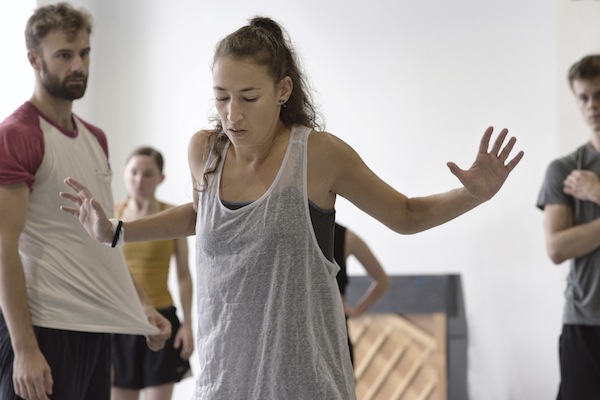
Israeli choreographer Adi Salant will be at the Ballet BC première of her work Feb. 28-March 2 at Queen Elizabeth Theatre. (photo © Michael Slobodian)

“I could not let it go on without being there to see the outcome,” Adi Salant told the Independent in a phone interview from Israel about the new work she is creating with Ballet BC. The piece will have its première Feb. 28-March 2 at Queen Elizabeth Theatre.

Salant was in Vancouver last August to work with the company and she was scheduled to return here earlier this week to help prepare for the performances.

“The [creative] process was split into two periods,” she explained, “and I was there for three weeks [in the summer], building the major part of the piece. Now I’m coming, it’s more the last adjustments, refining, rethinking, being open to the suggestions that will happen, but most of it is ready and they are working on it now, preparing it for my arrival. I’m very excited to meet them and meet the piece again because it’s been awhile.”

Salant knows Ballet BC artistic director Emily Molnar from the world of dance in general, but the two really connected just over two years ago, when Salant was invited to be one of the choreographers taking part in the inaugural Creative Gesture, a residency program led by Molnar and program head Stephen Laks at the Banff Centre. For the program, Salant had to create a short piece for the young dancers, who attended the residency from several countries, “to see how it is to work professionally.”

“I really enjoyed the energy there and the way I worked with the dancers. And she [Molnar] believed in me and gave me the opportunity to come and work with her company.”

Creating something in two time periods is interesting, said Salant. “It gives you time to reflect and to visit it with videos, or in my mind or afterthoughts of what happened. Even though I’m not there [in Vancouver], it’s like I stayed with the dancers. I got to know them.”

The limited amount of time made the work more intense, she said, “because both the dancers and I know, OK, we have now three weeks. There’s engagement and we’re just going for it.”

The piece involves many dancers. “I knew I wanted a feeling of a big group,” said Salant. “I think there will be 17 people, if I’m not mistaken. I fell in love with all of them and we want to use everybody…. I enjoyed so much and appreciated so much the energy and open hearts, and diving in with me to the unknown.”

In considering the piece about to be performed, as well as her previous works, Salant said, “I am just so fascinated by life – the everyday kind of life and the demands of life and the struggles. Some people, they create from what they dream about; I’m more about what I’m experiencing every day, so that’s the energy [of the new piece]. It’s about how, in life, you can plan and plan, but you can meet someone … if it’s a job interview or, for our profession, if it’s an audition, so he chooses, yes you are in, no you are out, and how [that concept] applies to the rest of your life. Or where you’re born … if you’re born into this kind of society or this kind of place, it’s also affecting you…. You can aim, but, in the end, we divide: you go there, you go there, you yes, you no, you up, you stay there, you down.”

Salant has been dancing since she was a young girl. “I started to dance in Bat-Dor dance group in Tel Aviv when I was 6…. When I graduated high school, I went for an audition … and, lucky for me, I was the one that got the yes.”

After two years at Batsheva Dance Company, she was invited to join the main company, with which she danced for five years. “Then I left, but I stayed in a very close relationship professionally with Ohad Naharin [then-artistic director of Batsheva], staging his works all over the world … and setting his repertoire for different companies – this is actually where I met Stephen, who I mentioned before. He was dancing in Les Grands Ballets Canadiens. It’s very nice and very exciting for me to look back and to realize, on this journey, I have met so many people.”

Members of her generation of dancers are now leading companies, choreographing and teaching, she said. “It’s really nice to see, and I enjoy very good and close relationships with my colleagues and we continue to share our passion in that way.”

Salant returned to Batsheva in 2009, but, she said, “this time, Ohad invited me as the co-artistic director.” She held that position until October 2017, when she struck out on her own.

“It’s part of my journey – all the tools that I collected until now and the experiences, and having actually more time now that I’m not directing a very busy company and dealing with the schedule of the company,” she said. “Now I have my schedule, and [am] owning my time in a way. I put the focus on choreographing and teaching workshops around the globe.”

Salant said she has created a motto of sorts for work, “Adi – Life is Moving,” “because I really enjoy meeting with people and, [while] it’s true that I’m coming to teach dance to them, I really connect it to life, and their life and how their emotions and, again, like I said about my work, this piece, it’s the same when I’m teaching or when I’m working now with the dancers of Ballet BC. Yes, I’m giving them the movements but I’m all the time connecting it to life, to the everyday behaviour. That’s what I’m aiming for.”

Salant teaches in various places around the world. This April, for example, she will be in Los Angeles for a week. “It’s called the Gypsy Project…. It’s the second time that I am involved there,” she said. “I’m looking forward to go, and to share and to learn and to deepen my knowledge and understanding.”

Salant reiterated her appreciation for Molnar. “As I said, I left my job as the co-artistic director and it’s, of course, a demanding job and you’re recognized with this position and with this place…. When I left and wanted to now continue to choreograph, because I did choreograph before, but I put it on hold because it was too intensive with the company life and, of course, I have three kids, something had to wait … Emily really was the first to open her door and believe fully. It’s not something that you see so often, that you feel that someone believes in you and takes a chance and appreciates who you are, knows your strengths and believes in your strength, no matter your title.”

Salant has enjoyed working with Ballet BC. “I had an amazing meeting with the dancers,” she said. “They inspired me and moved me a lot, so I really can’t wait to come back on Monday [Feb. 11], even though I miss my family. I have to leave three kids behind, and that’s the hardest part, but I’m happy that we can share again our time together and bring it on stage and to the audience what we did.”

Salant and her husband, Jesper Thirup Hansen, have two daughters, 10 and 8, and a 5-and-a-half-year-old son. Thirup Hansen is a physiotherapist. “I met him in Batsheva, he was a dancer, he is Danish,” said Salant. “Actually, they joined me in the summer in Vancouver; the whole family came. They had such a great time. I came to their place from work, and they told me all the fabulous things they did that day.”

For tickets to Ballet BC’s Program 2, visit balletbc.com.

Format ImagePosted on February 15, 2019February 13, 2019Author Cynthia RamsayCategories Performing ArtsTags Adi Salant, ballet, Ballet BC, Batsheva, choreography, dance, Emily Molnar, Israel

Posts pagination

Previous page Page 1 Page 2 Page 3 … Page 5 Next page
Proudly powered by WordPress