Skip to content
  • Home
  • Subscribe / donate
  • Events calendar
  • News
    • Local
    • National
    • Israel
    • World
    • עניין בחדשות
      A roundup of news in Canada and further afield, in Hebrew.
  • Opinion
    • From the JI
    • Op-Ed
  • Arts & Culture
    • Performing Arts
    • Music
    • Books
    • Visual Arts
    • TV & Film
  • Life
    • Celebrating the Holidays
    • Travel
    • The Daily Snooze
      Cartoons by Jacob Samuel
    • Mystery Photo
      Help the JI and JMABC fill in the gaps in our archives.
  • Community Links
    • Organizations, Etc.
    • Other News Sources & Blogs
    • Business Directory
  • FAQ
  • JI Chai Celebration
  • JI@88! video

Recent Posts

  • Sharing her testimony
  • Fall fight takes leap forward
  • The balancing of rights
  • Multiple Tony n’ Tina roles
  • Stories of trauma, resilience
  • Celebrate our culture
  • A responsibility to help
  • What wellness means at JCC
  • Together in mourning
  • Downhill after Trump?
  • Birth control even easier now
  • Eco-Sisters mentorship
  • Unexpected discoveries
  • Study’s results hopeful
  • Bad behaviour affects us all
  • Thankful for the police
  • UBC needs a wake-up call
  • Recalling a shining star
  • Sleep well …
  • BGU fosters startup culture
  • Photography and glass
  • Is it the end of an era?
  • Taking life a step at a time
  • Nakba exhibit biased
  • Film festival starts next week
  • Musical with heart and soul
  • Rabbi marks 13 years
  • Keeper of VTT’s history
  • Gala fêtes Infeld’s 20th
  • Building JWest together
  • Challah Mom comes to Vancouver
  • What to do about media bias
  • Education offers hope
  • Remembrance – a moral act
  • What makes us human
  • המלחמות של נתניהו וטראמפ

Archives

Follow @JewishIndie
image - The CJN - Visit Us Banner - 300x600 - 101625

Month: June 2017

Artworks on healing

Artworks on healing

Gail Dodek Wenner conceived the group exhibit Physician Heal Thyself … and Others, which is at Zack Gallery until June 25. (photo by Olga Livshin)

The new exhibition at Zack Gallery, Physician Heal Thyself … and Others, includes four artists, all of them local physicians near retiring or recently retired. Regular visitors to the gallery probably will be familiar with the work of two of them – Ian Penn and Carl Rothschild, who have exhibited at the gallery before – but maybe not that of Arturo Manes and Gail Dodek Wenner.

Rothschild’s contribution to the show is a selection of small, colourful paintings, which look like snapshots of his garden or a street around the corner. Each one is accompanied by a poem written by the artist. Together, they represent his impression of his home city and its healing potential.

photo - “Preventative Medicine” by Carl Rothschild
“Preventative Medicine” by Carl Rothschild. (photo by Olga Livshin)

Penn’s part of the show is more dramatic. It includes a video and several photographed pages from his journal, where he documented the before and after of his complicated spinal surgery in 2016. His display fits the theme of the show almost too perfectly for comfort.

Manes’ paintings – his method of spiritual healing – are based on Roman Vishniac’s book of black-and-white photographs, A Vanished World.

“The Shoah has been for me a defining event not only in Jewish history but human behaviour, which I’m trying to come to grips with,” Manes said in an email interview. “Black-and-white photographs in Vishniac’s book impressed me greatly…. I used those images of my people prior to the Holocaust as a template for my paintings. By adding colour and a free rendering, I hoped to express the feelings the photographs have evoked.”

He said Physician Heal Thyself is the first exhibit in which he has participated, although he has been painting since childhood. “I’m not an artist – I’m a physician who paints. I was honoured to be invited by Dr. Gail Wenner to be a part of this show.”

Dodek Wenner invited the other doctors to participate in the show, as well. It was she who came up with the theme.

“I always loved art, but I loved science, too,” she told the Independent. “I chose medicine as my career, but art has always been my hobby.”

As an artist, she is very versatile. At one point or another, she has tried various media: painting, ceramics, textiles, photography, Hebrew calligraphy. In practising medicine, however, she stayed true to one direction: mothers and babies. “In the past 26 years, I delivered 2,000 babies,” she said. “But I made the decision to stop delivering. It’s time for a change.”

One of the precursors of her decision was going back to school, to Emily Carr University. In 2009, she received a diploma in fine art technique.

photo - “Weaver” by Arturo Manes
“Weaver” by Arturo Manes. (photo by Olga Livshin)

“I took a class, Business of Art,” she recalled. “One of the assignments was to pitch an idea for a show to an art gallery. I chose a theme: healing, what it means to be a doctor and what Judaism says about healing. I chose the Zack Gallery, and I decided to invite several Jewish physicians to participate. All for a school assignment. I didn’t actually do it at that time. I did mention it to Yosef Wosk, who is a friend, and he said it was a great idea.”

A few years later, Wosk reminded her of the idea, and she finally contacted Zack Gallery director Linda Lando. “I pitched the idea to Linda in 2016,” Dodek Wenner said. “We brainstormed it and came up with a few names of Jewish physicians who were artists.”

That was the first step. The next step was to determine what she wanted to paint for the show. “I needed to explore what healing meant to me,” Dodek Wenner explained. “Personally, I always went to my parents’ beach house when I needed to do some healing. So, I thought, what was it about the ocean that healed me?”

After some contemplation, she came up with four steps of healing. “The first one is the acknowledgement: yes, there is a problem. There is a fear, and a doctor has to acknowledge that fear in her patient. Next comes compassion, which leads to the doctor assuring her patient: I can help you. The third one is wisdom. Doctors have a huge body of knowledge. They study for many years, and they share their knowledge with the patient, use what they know for healing. Last is comfort. Comforting the patient is very important at every stage of the healing process.”

After formulating these concepts in her head, she explored what Judaism says about healing. “I looked in the siddur, the Jewish prayer book, and found all four of those concepts of healing, both body and soul, in the first couple pages,” she said.

She knew she was on the right track but wasn’t sure how to showcase her ideas through art. “I went to the beach house again, walked along the shore, and I knew,” she said. “The ocean represents all four facets of healing, too.”

Her paintings, two distinct series of five paintings, are all different interpretations of the shoreline. The ocean is sometimes quiet, sometimes turbulent and the colours of the waves fluctuate from light blue to deep green. The foam, created with the use of medical gauze, plays in the sand among the shells. The shells are real, collected by the artist along the same beach she loves so much. “I scooped them with a cup,” she said.

“My paintings don’t show one particular place,” she added. “They are the essence of a shoreline. Each piece is different, but they all connect.”

Physician Heal Thyself opened on May 25 and continues until June 25.

Olga Livshin is a Vancouver freelance writer. She can be reached at [email protected].

Format ImagePosted on June 2, 2017May 31, 2017Author Olga LivshinCategories Visual ArtsTags art, Arturo Manes, Gail Dodek Wenner, healing, medicine, Zack Gallery
What is after death?

What is after death?

Theo Budd as CB, Eric Biskupski as Beethoven, Erika Babins as CB’s Sister and Ryan Nunez as Van in Dog Sees God: Confessions of a Teenage Blockhead, which runs June 8-11 at CBC Studio 700. (photo by Javier Sotres)

It would be interesting to know what Peanuts creator Charles M. Schultz would have thought of Bert V. Royal’s Dog Sees God: Confessions of a Teenage Blockhead, which premièred several years after Schultz passed away. Described as an “unauthorized parody” of the well-known cartoon strip, it seems more serious in its imagining of Charlie Brown, Lucy, Linus and the rest of the gang as teenagers.

photo - Erika Babins plays CB’s Sister in Awkward Stage Productions’ presentation of Dog Sees God at CBC Studio 700, which opens June 9
Erika Babins plays CB’s Sister in Awkward Stage Productions’ presentation of Dog Sees God at CBC Studio 700, which opens June 9. (photo from Awkward Stage)

Presented by Awkward Stage Productions next week, June 8-11, the show isn’t part of Awkward Stage’s regular season, said Jewish community member Erika Babins, who plays the character CB’s Sister. “This project sprung from a night of hanging out with friends and we were all lamenting the lack of opportunity to really sink our teeth into a meaty and relevant piece of theatre,” she explained. “I’m an artistic associate for Awkward Stage and I was chatting with artistic director Andy Toth, who more or less said, ‘This sounds like a show that Awkward Stage should be a part of.’ So, we’ve had the benefit of the support and connections that Awkward Stage has in the theatre community and as a not-for-profit, but we are producing it as a collective of emerging artists.”

The Wikipedia entry on the play goes into detail about the plot. In short, after CB (Charlie Brown) and his sister (Sally) hold a funeral for their dog (Snoopy), which degenerates into an argument, CB goes on a mission to determine what happens to us after we die. Among many other things, we find out that CB loves Beethoven (Schroeder) and they hook up, but Matt (Pig-Pen) can’t accept the relationship, so he harasses Beethoven, who eventually commits suicide. Also part of the story is that Van’s Sister (which would be Lucy, with Van being Linus) has been “institutionalized for setting the Little Red-Haired Girl’s hair on fire.”

“The only thing I would add,” said Babins about the Wiki synopsis, “is that the whole play is bookended within the context of CB writing a letter to his old pen pal.” The pen pal has the initials CS, referring to Schultz.

“The target audience for this play is anyone who is a teenager now or remembers being a teenager,” said Babins. “There is a lot of swearing and heavy subject matter so parental guidance is advised and it is probably not appropriate for elementary school-aged children.”

The promotional material for the Awkward Stage production notes, “Dog Sees God shines a light on homophobia, drug use, pedophilia, suicide, eating disorders, teen violence, rebellion, sex, mental illness and self-identity. And it’s funny!”

“I was taught at theatre school that comedy comes from the characters not realizing they’re doing something funny, and these characters definitely don’t know they’re being funny,” Babins said. “For them, everything that is happening to their group of friends is the worst thing ever but, for the audience, it’s an opportunity to look back and laugh at the dramatic highs and lows that are adolescence.”

photo - Theo Budd as CB and Erika Babins as CB's Sister
Theo Budd as CB and Erika Babins as CB’s Sister. (photo by Javier Sotres)

She describes her character as “a bit of an outcast herself. She’s younger than the other characters and, as such, is not included in their tight-knit group. She spends the course of the play drastically altering her persona in an attempt to figure out where she actually belongs. Without giving too much of the story away, she does find her way back to a close relationship with her brother, who she grew up admiring.”

Babins added, “One of CB’s big arcs in the play is trying to decide on what he thinks happens after you die, and each of his friends has a very different answer for him. Though none of the of the answers is expressly Jewish, it’s an interesting lens to look at how these teenagers interpret religion in a secular small town.”

Directed by Sarah Harrison, Dog Sees God previews at CBC Studio 700 on June 8, 8 p.m., and opens there June 9, 8 p.m., with performances June 10, 7 and 9:30 p.m., and June 11, 2 p.m. Tickets are $21, with $1 of every ticket sold going into the profit share for the cast and creative team (the preview is two-for-one). For tickets, visit dogseesgodvancouver.brownpapertickets.ca.

Format ImagePosted on June 2, 2017June 1, 2017Author Cynthia RamsayCategories Performing ArtsTags Awkward Stage, Erika Babins, Peanuts, teenagers, youth
The year it all changed

The year it all changed

On May 24, Israelis celebrated the 50th anniversary of the reunification of Jerusalem in the streets around the Jerusalem Great Synagogue. (photo from Ashernet)

Everything changed in 1967. Fifty years ago, Canada celebrated its 100th birthday, hosting an Expo in Montreal and, at least in the narrative we like to tell ourselves, came into our own as a country.

We became a country in 1867, “came of age,” historians tell us, at Vimy Ridge, in 1917, gained full autonomy from Britain’s Parliament in 1931, and adopted our very own constitution in 1982. But 1967 is when we stopped being a baby-country and became a confident, adult-like state on the world stage.

It’s possible that few Canadians pinpoint 1967 as a particular turning point. The various measures of Canadian pride – the U.S. exchange rate, hockey titles, military engagements, pop cultural contributions – have ebbed and flowed in the successive decades. National unity saw multiple flashpoints, from the October Crisis just three years after the euphoria of the Centennial, to the referenda of 1980 and 1995, the latter of which almost ended the nation. Free trade and globalization altered us once again.

“Canadianness” itself changed dramatically in this half-century, from a concept rooted in British heritage to a recognition of “two founding nations” to celebrating multiculturalism and a belated recognition of the rights and tragic history of indigenous peoples resulting directly from our national project. In this time, too, Canada has gone from a staid, comparatively conservative place to one of the most liberal countries in the world. Institutionalized antisemitism, which was still rife in the Canada of 1967, has become almost entirely absent (although incidents and acts of antisemitism, like much else, continue to occur).

While nothing really substantive changed overnight, 1967 is a symbolic moment in Canadian history.

For Israel, 1967 had symbolism but, in very real, tangible and irreversible ways, it was a year when everything changed. While it didn’t happen overnight, it did take a mere six days. The Six Day War, which began June 5, 1967, literally and figuratively reshaped Israel, the Middle East, Diaspora Jewry and global diplomacy.

In its early years, Israel experienced exponential population growth like almost no country on earth has seen. It went from the proverbial desert to a blooming success, first through innovations in agriculture and, later, in technology and almost every other sector of human endeavour. A successful nation was born. But the Jewish state was never accepted by the neighbours it defeated in 1948-’49 and, in 1967, war came again.

Yet the result was so quick and so decisive that some viewed it as a sign of Divine intervention or evidence of chosenness. More realistically, it was a people holding their ground because there was no alternative.

The experience affected not only Israelis but Jews everywhere. Canadian Jews and others in the Diaspora volunteered, sent money, prayed and organized. Less than two decades after it had begun, Jewish self-determination in the ancient land and modern state of Israel hung by a thread. And then victory.

The anxiety before and jubilation after transformed into something new and unexpected. The control by Israel over the West Bank (formerly part of Jordan) and the Gaza Strip (which had been under Egyptian control) led to a new dynamic in Israel – and in the world’s approach to Israel. Having been seen as the underdog, Israel in 1967 transformed – in the eyes of the world and, to an extent, in the eyes of Israelis themselves – into a powerful regional force.

The occupation has been the defining foreign policy concern for Israel for half a century now and affects the way Israel is treated on the global stage. Jerusalem, reunified under Israeli control during the war, is a flashpoint of local and international conflict over competing claims. Israelis will likely be forced to reckon with the legacy of 1967 for many years to come, as it seeks to protect both the democratic and Jewish natures of the state, as well as reaffirming its commitment to minority rights and to pluralism.

Despite this overarching conflict and its associated violence and threats, Israel has developed an economy and culture that is a human-made miracle of the modern world. The list is familiar and endless: scientific and academic achievement, technological innovation, global emergency response, lifesaving medical advancements. Even Israel’s intelligence capabilities, born of necessity, are so advanced that the president of the United States foolishly can’t help bragging to adversarial foreign despots that he has insider intel.

Amid all these challenges and hard work, Israelis self-report in international studies to be among the happiest people on the planet. (Canadians also rank high.) Even with room for improvement, this reality is perhaps the greatest achievement of all.

Format ImagePosted on June 2, 2017May 31, 2017Author The Editorial BoardCategories From the JITags Canada, Confederation, Israel, Six Day War
The art of creative criticism

The art of creative criticism

Dr. Rabbi Yosef Wosk, right, presents Max Wyman with the inaugural Max Wyman Award for Cultural Commentary. (photo by Fred Cawsey)

In the program of the inaugural Max Wyman Award for Cultural Commentary, Dr. Rabbi Yosef Wosk describes Max Wyman as “a cultural paragon whose clear vision, incisive writing and fearless voice have both grounded and encouraged us. In his half-century here in British Columbia, he has been an unparalleled personality, a cultural critic and midwife of creativity whose influence is sure to be modeled by future generations.”

In establishing the biennial, province-wide award – which will include a $5,000 honorarium and allow the recipient to choose an emerging commentator, who will receive $1,000 – Wosk will help ensure Wyman’s continuing influence, as well as “catalyze the art of creative criticism.” The award will be “presented to a writer for an outstanding piece or body of work that will raise the level of cultural conversation and, ultimately, human creativity.”

Wyman was the first recipient of the award that bears his name. He received the honour at a gala at Vancouver Playhouse on April 18 – 50 years plus a day after Wyman’s first shift at the Vancouver Sun. “Pure, lovely serendipity,” Wyman told the Independent about the timing.

Born in England, Wyman immigrated to Canada in 1967. He was a longtime arts columnist, dance and theatre critic, and books editor with the Sun and with the Province. He is an actor, radio and television personality; cultural commentator; arts policy consultant; author of several books; educator and arts advocate; former mayor of Lions Bay; and an Officer of the Order of Canada. Among other things, he was involved with the Canadian Conference of the Arts, Canada Council for the Arts and the Canadian Commission for UNESCO. He was a juror for numerous competitions, chair of several cultural committees and served on the board of the British Columbia Achievement Foundation.

That Wosk wanted the cultural commentary award to be in Wyman’s name “brought a tumult of responses,” said Wyman.

“I was astonished, deeply touched, profoundly humbled and, of course, delighted,” he said. “Delighted not just for the personal recognition (every ego likes to be stroked, after all), but, more importantly, because the award would lead us to a clearer understanding of how serious and intelligent criticism – creative criticism, the informed observation and contextualization that is an essential tool of the examined life – could best function in these momentously changing times.

“My joy, astonishment and gratitude have not diminished now that the project is up and running. I have been in awe of Yosef’s social activism for years: he seems to live the essence of the Hebrew phrase tikkun olam, the notion that we should perform acts of kindness to repair the world. He puts his resources where his idealism is.”

The idea for this type of an award was first raised some years ago at a dinner at Wosk’s home, said Wyman. “The topic came up again more recently at the inaugural meeting of another of Yosef’s initiatives, the SFU [Simon Fraser University] Jack and Doris Shadbolt Community Scholars, and, early in 2016, Yosef brought forward the proposal to establish a prize to stimulate and recognize creative criticism in various disciplines.”

“I have thought about championing the idea and the ethical practice of criticism for many years,” Wosk told the Independent.

Shying away from criticism when he was younger, Wosk said, “In our tradition, we are told that God created the world through words. Rabbinic teachings emphasize guarding our tongues, not speaking badly about others and not spreading rumours. Life and death, we are reminded, is often controlled by words. Just look at the prevalence of bullying in schools and the tragedy of so many youth who are driven to suicide in an effort to escape the unbearable embarrassment of verbal abuse. I had to work through numerous stages of emotional and intellectual maturity before learning that intellectual opinions or personal preferences were not the same as lashon ha’rah, derogatory speech about another, nor was it the same as moral rebuke.

“Criticism, I learned, could be a gift. It involved courage, clear sight and expression. Saying ‘no’ to one thing also means saying ‘yes’ to something else. I rejected mean-spirited criticism but embraced creative criticism.”

Wosk first heard of Wyman when Wyman was at the Sun. “I admired his work,” said Wosk. “From the sound of his name, I thought he was probably Jewish. Later, I found out that he wasn’t but, as I got to know him, I realized that he certainly had ‘a Jewish soul’: he was kind, smart, sensitive, humble and active in helping the world be a better place. I got to know him better when we were both involved in the Canadian Academy of Independent Scholars at Simon Fraser University. When I was appointed a Shadbolt Fellow at SFU in 2015, I invited Max and his wife, Susan Mertens – also a critic and a brilliant scholar of esthetics with a doctorate from Cambridge – to be in the first cohort of Shadbolt Community Scholars, with a mandate to knit together the academy, the arts and the community.”

Wosk said he approached Scotiabank Dance Centre with the idea for the Wyman Award because, although “Wyman was recognized as a culture critic in general, he was most famously known as a dance critic.”

Wosk sought the advice of the centre’s executive director, Mirna Zagar, and was introduced to associate producer and chair of the Dance Foundation, Linda Blankstein, who was hired to research the feasibility and nature of a possible award.

“Not only did Linda produce an excellent report that became the basis for future planning,” said Wosk, “but we also subsequently hired her to produce the inaugural event. With considerable advice from the organizing committee, she assembled a professional team from the Dance Centre, the British Columbia Alliance for Arts + Culture, a filmmaker to produce a video on Max, found the appropriate venue, worked with a graphic designer, publicist, assembled mailing lists, arranged for media interviews, and so on.”

In addition to the award presentation, the program at the Playhouse featured Bard on the Beach’s Christopher Gaze as the emcee, various speakers, video greetings and several dance performances.

Among Wyman’s publications is the first on Canadian dance history, Dance Canada: An Illustrated History (1989), as well as The Royal Winnipeg Ballet: The First Forty Years (1978), Evelyn Hart: An Intimate Portrait (1991) and Revealing Dance (2001).

“If you only knew me to look at me, and tried to work out what I did for a living, a career in dance is of course the first conclusion you would jump to,” said Wyman. “In fact, when they hear that I spent my life writing about dance, the first thing people say to me is, well, of course, you must have been a dancer. And I’m reduced to explaining that, in fact, no, I have only ever danced once. But it was for the Queen.

“I was 8 or 9, living in Nottingham, where I grew up. She was Princess Elizabeth, and she was on a visit to the city to open a gasworks or cut a cake – anyway, every kid for miles around was rounded up and taken to a clearing in Sherwood Forest, where we were made to do country dances around the maypole as part of her program of entertainment. I can still remember her vividly: coming down a slope into the clearing in an open car, beautiful pink dress, big pink hat, the famous wave. The memory has stayed with me all my life, so you can imagine how disappointed I was when I finally got to meet her – she had no memory of me at all.”

Wyman believes that “dance is the most moving and communicative of all the artforms.”

“It crosses the borders of language and logic, lets you see beyond the interacting bodies on the stage and, through the interplay of rhythm and pattern and energy, to an idea, or an emotion, or an intuition within yourself that the dancing has provoked – puts you in touch, at the best of times, with the intuitive, the spiritual, the transcendental, and you go away refreshed, thoughtful, energized.

“What makes all this so hugely poignant, at least to me,” he said, “is the transience of it all. The body, such an impermanent scrap, moves, and the dance is gone. No other artform speaks so directly about the fragile, temporary quality of life, or about the human instinct to cast off its physical bonds and aim for that perfect moment of self-realization. It exists in the realm of the transcendent and the truly brave.”

On May 14, Wyman turned 78. He has been intermittently writing his memoirs over the last few years, he said. They are “currently at 325,000 words and counting – and I post bits quite often to my website, Notes Toward a Life: essays, diary entries, pen-portraits, maxwyman.com.”

He is also working on a variety of other projects. At the time of his interview with the Independent, he was preparing a paper for a conference at the University of London. In an interview with the Sun in the days leading up to the award ceremony on April 18, he reminisced about his early years at the paper.

“We covered everything,” he told writer John Mackie. “Everything professional in theatre and music, dance, visual arts. It was a wonderful time. The Sun sent me off to Stratford and Shaw (in Ontario) every summer for the opening weeks. They sent me to Europe for the summer festivals one summer.”

The industry has changed since then, but Wyman is optimistic about the future of newspapers.

“The steady coarsening of public discourse, the shallowness of what passes for debate, the polarizing of political thought, the pernicious crudeness of public taste mean that our need for mediated, trustworthy information and informed opinion can only intensify,” he told the Independent. “Traditional media are flailing around to find their footing and their market in the shifting digital landscape … but I believe this is an interim period. What will emerge will be a leaner, cleaner delivery service that will give informed context to events and issues that affect their readers. However, the splintering of reader interests will mean that the one-paper-fits-all model is over. Given the way technology is evolving, it’s not hard to envision tailored-to-the-individual e-publication at a workable price.”

And the future need for cultural commentary – that which the Wyman Award hopes to perpetuate?

“The whole point of engagement with art, it seems to me, is to expose yourself to something that has the possibility to change you,” said Wyman, whose books include The Defiant Imagination: Why Culture Matters (2004). “I always want to come out of a theatre or a gallery or a concert hall a different person, even just slightly: I hope to have been shown a different perspective on how the world works, understand better the ways other people think or feel or express themselves. Many of us have stood before a painting, listened to a piece of music or watched a play and felt – along with the pleasure of the experience itself – a sense of inexplicable, even inexpressible, understanding or revelation.”

He acknowledged, “Cultural commentary will not produce a cure for cancer. It will not take us to Mars: not physically, at least. But, in its constant probing of new ideas and its ceaseless explorations of the human spirit, it gives us ways to rethink who we are and contemplate how we can be better. We are privileged and passing occupiers of this marvelous earth: books, plays, paintings, ballets, music – they guide us to the hidden truths of our daily being.

“So it is time – beyond time – to relocate creative activity and engagement at the heart of the social agenda, with an imagination-based education as the keystone. Engagement with arts and culture, the humanities, helps develop the flexible thinking that lets us see our world in fresh ways. In ways that allow us to build resilience, vision, innovation and generosity into our thinking so that we can cope with the unpredictable and adapt to rapid and complex change. If society is the Petri dish, culture is the, well, the culture that catalyzes change: makes us a better society, makes us more empathetic people, lets us understand our neighbours, civilizes us. It is the way we realize and communicate our shared humanity.”

Format ImagePosted on June 2, 2017May 31, 2017Author Cynthia RamsayCategories LocalTags cultural commentary, dance, Max Wyman, Yosef Wosk
Helping is partnership

Helping is partnership

Dr. Dan Ezekiel, left, and Ezra Shanken with JFSA Innovators Lunch co-chairs Shannon Ezekiel, left, and Dr. Sherri Wise. (photo by Rhonda Dent Photography)

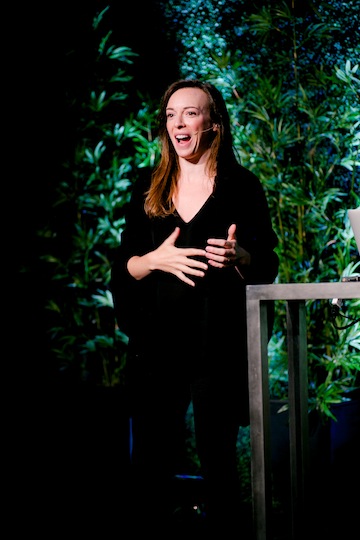
“Something that we never could have imagined to be possible eventually became a reality because of our continued dreams,” said Beth Israel Rabbi Jonathan Infeld, referring to the establishment of the state of Israel, the 69th anniversary of which took place on the day he addressed the 13th Annual Jewish Family Service Agency Innovators Lunch.

“The JFSA as an organization,” he said, “continually looks forward to and works for ending hunger and poverty, healing those with mental illness and other challenges, solving issues of housing for our community – dreams that may at this moment seem impossible but, with the extremely dedicated and talented staff and donors and people who care about the JFSA, this is a dream that I believe is within our capacity.”

JFSA’s capacity was strengthened by the success of the May 2 lunch at Hyatt Regency Vancouver, which featured Kiva founder Jessica Jackley as the keynote speaker. After three years of declining donations, the 2017 event set a record – $340,224 has been raised from the lunch to date, writes JFSA chief executive officer Richard Fruchter in the agency’s May 24 enewsletter. The Edwina and Paul Heller Memorial Fund helped this year’s total by matching new gifts and any increases in renewed gifts to the event, up to a total of $25,000.

Co-chaired by Dr. Sherri Wise and Shannon Ezekiel, the lunch began with a welcome from Karen James, chair of JFSA’s board of directors. Fruchter then provided an update on the varied activities of the organization, including the services they offer the non-Jewish community. “We strive to make a difference for each and every person who walks through our doors,” he said.

This year’s short video shared the stories of a few people who JFSA has helped, including that of a young man struggling with anxiety and depression who received counseling at JFSA and a couple who received help finding needed subsidized housing for seniors. It also focused on the story of Tea and her father, Zadik.

“It’s remarkable to see a multi-generational story like Tea’s, whose family first arrived in Canada from wartorn Bosnia with almost nothing,” writes Fruchter in the May newsletter. “JFSA was there to welcome them, provide help and support as they adjusted to life in Canada and became productive citizens. Now, nearly 25 years later, we’re supporting her father, Zadik, a Holocaust survivor, through the [Claims Conference] Jewish Victims of Nazism program.”

At the lunch, JFSA board member and development chair Jody Dales told the audience of more than 600 that one of her and her husband’s main concerns is alleviating poverty, and that’s why they came to work with JFSA. She spoke about the importance of JFSA’s services for seniors with low incomes, and noted that this group includes Holocaust survivors. She spoke of the importance of the counseling that JFSA provides in a province where waitlists for psychiatrists can be eight months or longer.

JFSA spends more than $100,000 a year on operating the Jewish Food Bank and close to $400,000 making food vouchers available, said Dales. In the last few years, she added, the demand for vouchers has almost doubled and JFSA has had to reduce the amounts provided, from approximately $65 per month per individual, to $45. In addition, the agency has had to stop accepting new requests. Approximately five new people or families request to be put on the voucher list each month and all must be turned away, she said.

Shay Keil, director of wealth management at Keil Investment Group, introduced Jackley. Kiva, the microloan platform she launched in 2005, allows users to give loans of as little as $25 to entrepreneurs anywhere in the world. According to its website, Kiva has connected 1.6 million lenders with 2.4 million borrowers, facilitating almost $1 billion in microloans, which have a repayment rate of 97.1%.

photo - Kiva founder Jessica Jackley speaks at the 13th Annual JFSA Innovators Lunch on May 2
Kiva founder Jessica Jackley speaks at the 13th Annual JFSA Innovators Lunch on May 2. (photo by Rhonda Dent Photography)

In her Innovators talk, Jackley emphasized her journey from caring for the poor to helping them empower themselves, illustrating along the way how a small idea in social innovation, like Kiva, can grow and have such a large impact.

She told the Vancouver Sun in an interview, “I think people assume giving is a financial transaction, but what I am way more interested in and what changes the giver, is participating in someone else’s story and doing something outside your comfort zone, giving of your time, sharing a resource.”

“We all have something to offer, and it may not be money,” she also told the Sun. “As we expand the set of what we see as possible things to share, to give, I think we’ll see more abundance and possibility.”

The record revenue raised at this year’s Innovators comes at a time when the demands on JFSA are at record levels. The cost of living in Metro Vancouver, combined with rising food prices, particularly for produce, protein and dairy-based staples, is creating a crisis for many families, Fruchter told the Independent.

“In the past year, due to increasing hardship, the number of families having to use the Jewish Food Bank twice a month has almost doubled. Weekly phone calls seeking help with housing have also doubled over the past two years,” said Fruchter, and demand for help from new immigrants is also high.

“In the past year,” he said, “we have helped over 350 families make their new home in Canada.”

Matthew Gindin is a freelance journalist, writer and lecturer. He writes regularly for the Forward and All That Is Interesting, and has been published in Religion Dispatches, Situate Magazine, Tikkun and elsewhere. He can be found on Medium and Twitter.

Format ImagePosted on June 2, 2017May 31, 2017Author Matthew Gindin and Cynthia RamsayCategories LocalTags Innovators Lunch, Jessica Jackley, Jewish Food Bank, JFSA, Kiva, philanthropy, poverty, tikkun olam
Don’t “helicopter parent”

Don’t “helicopter parent”

King David High School students with Teaching for Tomorrow keynote speaker Julie Lythcott-Haims, who spoke on the topic How to Raise an Adult. (photo by Jocelyne Hallé)

Our kids are not bonsai trees that need to be clipped and sheared! That was the message Julie Lythcott-Haims delivered to a packed audience at Congregation Beth Israel in her May 17 talk, How to Raise an Adult.

The keynote speaker at King David High School’s Teaching for Tomorrow evening, Palo Alto, Calif.-based Lythcott-Haims was previously dean of freshmen at the University of Stanford for 10 years. There, she said, she saw a lot of “helicopter parenting.”

“My freshmen students seemed to be like drones in their own lives, driven by someone else and constantly tethered to home and parents by their phones, the world’s longest umbilical cord,” she reflected.

Lythcott-Haims described how parents would email asking for their children’s passwords so they could register them for classes, parents calling her “unhappy with the grade a professor gave their child” and parents wanting to know where their kids were at all times. “I would rail against this absurdity,” she said. “I’d give a speech to parents each year, telling them, ‘Trust your child, they have what it takes to thrive. Trust us at the university. And now, please leave!’”

A mother of teens herself, Lythcott-Haims realized that it’s impossible for parents to let go of their 18-year-old freshmen unless they started relinquishing their helicopter-parenting tendencies years earlier. “We love our children fiercely and we’re fearful about what the world has in store for them. But we make the mistake of thinking we must cloak them in our arms instead of preparing them to be strong out there. So, we end up being overprotective, over-directive and doing excessive handholding with our kids, being like a concierge in their lives. We treat our precious kids like bonsai trees – we plant them in a pot, but we won’t let them grow.”

Lythcott-Haims peppered her talk with anecdotes about her personal adventures parenting. She described her desire to give her kids independence and trying to balance that with the over-protectiveness of their friends’ parents. She and her husband chose a house in a particular neighbourhood, she admitted, because she wanted her kids in the “right” preschools and schools, so they would have better chances of getting into the “right” universities.

Along the way, she realized she was misguided. Her son did not tick the boxes required by the “right” universities. She saw that she was inadvertently pushing him so hard to succeed, she was losing him in the process, robbing him of happiness.

What’s at the root of this tendency to overparent? “Love and fear motivates our actions, but also ego,” Lythcott-Haims stated. “We fear being judged. Our measure of worth is saying what our kids are doing. We want to brag about them because it makes us feel we’ve succeeded as parents and in life.”

A hushed, sobered silence descended over the large synagogue auditorium as Lythcott-Haims delivered an emotional talk about her own parenting mistakes and what she learned.

“Our children are not investments, they’re humans and they deserve to know they’re loved – and not because they got a particular grade. For kids, their knees go unskinned if we catch them before they fall. When we hover over every bit of play, we get short-term wins, but the long-term cost is to their sense of self and their ability to self-advocate. They emerge chronologically as adults but they’re still kids inside.”

There are serious consequences to overparenting, she continued. “When we over-direct them and lift them to the outcomes we desire for them, it leads to higher rates of anxiety and depression. They emerge as university students who are failure-deprived and who want to have a parent tell them what to do, how to feel. Though they might look beautiful on paper, when something bad happens, they don’t have the internal sense of self that says, I’ll be OK.”

Lythcott-Haims’ message to parents was a warning to back off, particularly if they want their kids to enter the world as fierce warriors, “strong individuals who are loving of themselves and feel capable and able to keep going when things go wrong.”

Just before receiving a standing ovation, she said, “It takes humility to be a good parent. The ego has to come out of it.”

Lauren Kramer, an award-winning writer and editor, lives in Richmond. To read her work online, visit laurenkramer.net.

Format ImagePosted on June 2, 2017May 31, 2017Author Lauren KramerCategories LocalTags education, Julie Lythcott-Haims, KDHS, King David High School, teenagers
Anything possible

Anything possible

Courage to Come Back chair Lorne Segal, left, with David Richardson, president of Octaform, a longtime supporter of Coast Mental Health and a personal friend of Segal’s, says a few words about the cause and his commitment to mental health before donating $50,000. (photo by Avi Dhillon Photography)

A record $1.57 million was raised at the 19th Annual Courage to Come Back Awards on May 16 at the Vancouver Convention Centre, where more than 1,500 people gathered to celebrate the extraordinary stories of triumph over adversity of the six awards recipients.

Each year, Coast Mental Health organizes this awards gala, an evening to recognize six remarkable British Columbians. Funds raised will go directly to Coast Mental Health to support those living with mental illness. The event was chaired by Lorne Segal, president of Kingswood Properties Ltd., and attended by many of British Columbia’s most notable business leaders and philanthropists.

After sharing their stories of how they have “come back to give back” in their communities, each of the six Courage to Come Back Award recipients received a glass sculpture designed by Musqueam artist Susan A. Point. This year’s recipients, with the category noted in parentheses, were Deborah Carter, Vancouver (addiction); Esther Matsubuchi, North Vancouver (social adversity); John Westhaver, Victoria (physical rehabilitation); Stephen Scott, Vancouver (medical); Rachel Fehr, Surrey (mental health); and Richard Quan, Vancouver (youth).

Westhaver perfectly captured the essence of the evening: “Looking back at my life, one thing I got is that anything is possible. Often we give up on our dreams because something gets in our way or we lose sight of our dreams. I invite you to never give up on your dreams. Anything is possible. The stories you have heard tonight are living proof.”

For the inspirational stories of this year’s Courage to Come Back Award recipients, visit couragetocomeback.ca/2017-recipients.

For 45 years, Coast Mental Health has helped provide housing, support services, and employment for people driven to recover from mental illness. Each program and service places clients at the centre of their own recovery. Coast Mental Health believes that recovery from mental illness is possible, but only when communities come together to break the silence around it, provide support and uplift the people it impacts. Coast Mental Health Foundation raises funds exclusively for Coast Mental Health. To find out more about the programs and services offered by Coast Mental Health, visit coastmentalhealth.com.

Format ImagePosted on June 2, 2017May 31, 2017Author Courage to Come BackCategories LocalTags Courage to Come Back, Lorne Segal, philanthropy, tikkun olam
Serving his country

Serving his country

The Grade 1-3 class of Israeli dancers from Richmond Jewish Day School who participated in Festival Ha’Rikud on May 14. See more photos below. (photo by Lauren Kramer)

***

In every community, and ours is no exception, there are folks who frequently capture the spotlight for their work while others quietly get things done behind the scenes, flying below the media radar. In our Kibitz & Schmooze profile, we try to highlight members of our community who are doing outstanding, admirable and mention-worthy work out of view of the general public. If you know of profile subjects who fit this description, please email [email protected].

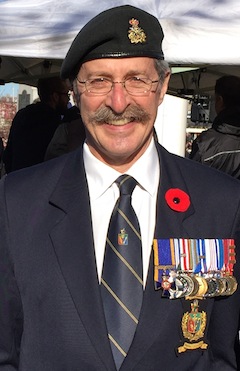
For Victoria resident Ed Fitch, the Canadian Armed Forces did more than make him a major-general. It made him more of a Jew.

Growing up in Montreal, Fitch says he took his Judaism for granted. At 17, when he joined the armed forces, it was a wake-up call. “I realized if I didn’t respect my own religion, how could I expect anyone else to? It was the beginning of my journey to become more Jewish,” he says.

photo - Retired major-general Ed Fitch
Retired major-general Ed Fitch. (photo from Ed Fitch)

Fitch was open about his Judaism and, over the course of an illustrious career that saw him rise high through the ranks, he helped create institutional change that would benefit other Jews, too. There had last been a Jewish chaplain in the forces in 1945, and Fitch was determined to change that. “I made a proposal to the armed forces’ governing body for chaplains in 2003, and I asked them, do you want to be followers or leaders? Build it, and they will come!”

The result was the appointment of Rabbi Chaim Mendelsohn to chaplaincy and, a few years later, the succession of Rabbi Captain Lazer Danziger. “Rabbi Danziger will be leading Shabbat services at Alberta’s Area Support Unit Wainwright (one of the country’s busiest army bases) … with a full minyan!” Fitch says with delight.

Fitch’s proposal didn’t just benefit Jews in the armed forces. Today, there’s a Muslim chaplain serving, as well.

Fitch served Canada for 43 years in a career that spanned from 1966 through to his semi-retirement in 2006. During that time, he received the Meritorious Service Medal for his work in the former Yugoslavia, facilitating NATO’s entry. He was also appointed an Officer of the Order of Military Merit in June 1999, the military equivalent of the Order of Canada.

As a colonel in the mid-1990s, Fitch was in the former Yugoslavia when the United Nations’ peacekeeping force, of which he was part, was contracted out to NATO. “It was an astounding change that had never happened before: an in-place transition from a UN command to a NATO command,” he reflects. “It was December 1995 when we all removed our UN badges and rolled over to this NATO force, with a completely different set of rules. As a combat engineer on the land force, I was the guy on the ground preparing for the incoming 50,000 troops who needed minefields cleared, bridges built and accommodations created.”

At 50, Fitch was promoted to brigadier general and was in command of a division of 12,000 members of the military and civilians, and a land mass that stretched from Thunder Bay to Vancouver Island and up into the Arctic. “My staff enjoyed telling me that it was the largest military district in the world – happily, a fairly benign one,” he jokes. The division’s responsibilities were domestic – attending to forest fires and tornadoes – as well as deployed operations, and Fitch regularly prepared troops of 1,000 to 2,000 to fly to Bosnia, Afghanistan and other countries where they were needed.

In 2001, Fitch was appointed major-general, a rank third from the top in the Canadian Armed Forces, and relocated to Ottawa. Here, he supervised planning the restructuring and modernization of Canada’s army reserves.

Fitch had just relocated to Victoria when, in 2006, he was called up from the Supplementary Reserve in support of Operation PODIUM, the Canadian Armed Forces’ support to the 2010 Vancouver Winter Olympics. His primary duty was the leadership of the Games Red Team, a project in which he and his team synthesized a terrorist cell and created practice scenarios to prepare Olympics planning staff for a potential attack.

“Our goal was to improve the capacity of the armed forces to deal with some potentially devastating situations,” he explains. “The model behind it is, train hard, fight easy. We disciplined ourselves to be real and started giving Olympics planning staff gentle problems, upping the ante to present them with tougher and tougher problems.”

When asked if he ever experienced antisemitism in the armed forces, Fitch says that his rise through the ranks is evidence there is none. “What the forces did with me proves there is no antisemitism,” he says. “I think the Canadian Armed Forces is the purest meritocracy in this country.”

After the Winter Olympics, when his full retirement came into effect, Fitch dedicated himself to community work. As a qualified civil engineer, he was instrumental in helping with the construction of the Centre for Jewish Life and Learning (Chabad), the first new synagogue to be built on the island since 1863. He volunteers with the Victoria Jewish Cemetery Trust and the Vancouver Island Chevra Kadisha, and serves as chair of the Centre for Israel and Jewish Affairs’ national community security committee. He’s been house committee chair and treasurer of Congregation Emanu-El and a board member of the Jewish Historical Society of British Columbia.

***

The 14th annual Festival Ha’Rikud took place at the Jewish Community Centre of Greater Vancouver May 12-14 and Israeli dancers from Richmond Jewish Day School (RJDS), Vancouver Talmud Torah, Temple Sholom, Or Chadash, Orr Ktanim and a group from Miami entertained a packed house in two performances. The theme for this year’s festival was friendship and a celebration of Israeli culture in its Canadian context, in honour of Canada’s 150th birthday. Dancers delivered polished performances that testified to many hours’ practice and a great fondness for Israeli folk dancing.

photo - The Or Chadash dancers who participated in Festival Ha’Rikud on May 14
The Or Chadash dancers who participated in Festival Ha’Rikud on May 14. (photo by Lauren Kramer)
photo - The writer’s daughter, Maya Aginsky, left, with friend Tamar Berger, both in Grade 2 at RJDS
The writer’s daughter, Maya Aginsky, left, with friend Tamar Berger, both in Grade 2 at RJDS. (photo by Lauren Kramer)


Format ImagePosted on June 2, 2017May 31, 2017Author Lauren KramerCategories LocalTags Canada, Canadian Armed Forces, Ed Fitch, Festival Ha’Rikud, JCC, military
Making Canada home

Making Canada home

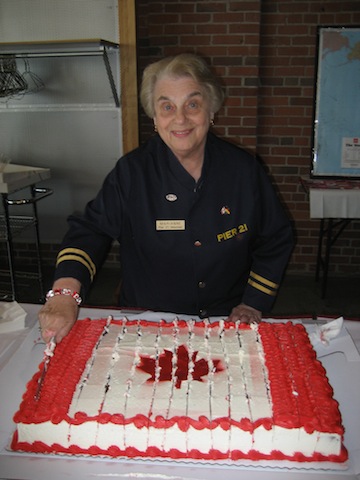
Marianne, left, with her father, Otto Echt, and sister Brigitte. (photo from Canadian Museum of Immigration [CMI] at Pier 21)

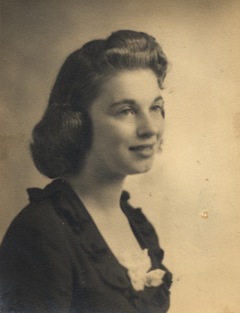
Marianne Ferguson’s family missed the train that was supposed to take them to Montreal from Halifax. Just 13 at the time, she and her sister were mostly excited at the prospect of something new, although they were sorry to leave friends and family behind in Europe. Their parents, however, were apprehensive, worried about starting a new life in a foreign country. And that was before they got stuck in Halifax – where, almost eight decades later, Ferguson, née Echt, still calls home.

In Europe, the Echts had lived in a little resort town called Brosen, just outside of the Free City of Danzig, which is today the Polish city of Gdansk. Ferguson’s father, Otto, was a pharmacist and a hobby farmer, and they lived well. Her mother, Meta, had multiple maids; the children – Marianne, Brigitte and Reni – had a nanny, and every spring and autumn a dressmaker would come into their home for a week to create new wardrobes for the upcoming season. When Adolf Hitler came to power, Ferguson’s family was relatively unaffected in the beginning. Even so, her parents saw what was coming and began making contingency plans.

Ferguson’s father kept homing pigeons on his farm. He would go to Poland to deposit money, and send the pigeons back home with coloured ribbons tied to them for Ferguson’s mother to decipher. A yellow ribbon meant he had arrived, for example, while a red ribbon meant he had deposited the money. He was able to get away with this scheme because the guards at the Polish border assumed he was entering his pigeons into competitions.

The Echts continued living in Brosen as the situation deteriorated for Jewish families. When the fair-haired Ferguson traveled to Hebrew school in Danzig with her sister, Hitler Youth would yell at her to ‘Stop walking with that Jew!’ When the Jewish children in the region were no longer allowed to attend school with their peers, the Jews of Brosen opened their own school on a local estate. The estate was at the end of a long street inhabited by Nazis, and it was understood the Jewish children all had to be in school and off the street by 8 a.m.

One day, when Ferguson was about 11 or 12, her streetcar to school was late. As she was walking alone down the long street to her school, a man sent his police dog after her. The dog attacked her, biting her on the elbow.

“And all of a sudden, somebody raised me up. Must have been an angel, really,” said Ferguson in a recent interview with the Independent from her nursing home in Halifax.

It was the milkman. He put Ferguson in his wagon, drove her to school and deposited her inside the gate. Ferguson said that man saved her life.

For her parents, it was the last straw. They decided they had to get out. A member of the Canadian consulate informed them that the country was not accepting pharmacists. Fortunately, though, the consulate worker saw their little farm and suggested sending them as farmers. And so it was that the Echts found themselves coming through Pier 21 in Halifax on March 7, 1939.

When they arrived at the pier, someone called their names and frightened Ferguson’s father. How did people here know who they were? But the woman calling them was Sadie Fineberg, from Jewish Immigrant Aid Services (JIAS). When the Echts missed their train, Fineberg put them up in a boarding house run by a Yiddish-speaking woman, and many Jewish families came to visit them.

photo - Marianne Ferguson
Marianne Ferguson (photo from CMI at Pier 21)

“My parents said, ‘The people were so nice to us, and how do we know what it’s going to be like in Montreal? Maybe we should stay in Nova Scotia.’ And then they helped us with finding the farm, they drove us out … and we moved over there,” said Ferguson.

The farm was in nearby Milford, about a 45-minute drive from downtown Halifax. The Echts had to stay and work the farm for seven years as a condition of their immigration and, after their term ended, they moved to Halifax. Fineberg became a close family friend, and her nephew Lawrence became Ferguson’s husband.

Ferguson’s extended family was not so lucky. Her parents had applied to bring 11 of them over to Canada, and they were supposed to arrive later in the year. Cutting through all the red tape took time, but the process seemed to be progressing. Ferguson’s 11 family members went to meet their boat in Hamburg – but it wasn’t there. That day was Sept. 1, 1939, and the Second World War had just broken out.

“My father had bought a second farm. We were so lucky, it was right next to our farm. We thought we would all be together in the two farms. But it wasn’t meant to be. They were all killed,” said Ferguson.

When the war ended, Ferguson began volunteering with JIAS, helping Jewish refugees find their way in Canada. Many of the displaced persons were children traveling alone. Ferguson remembers one 17-year-old boy in particular who came through Pier 21 in 1948 and needed money to get to Montreal. Ferguson and her mother gave him $20 and some food. They also told him that he would become a good citizen, and he should work hard and make something of himself. Meanwhile, Ferguson continued to volunteer at Pier 21 until it closed in 1971. She began volunteering there again when it reopened as a museum in 1999.

Unbeknownst to Ferguson, the boy listened to her. His name was Nathan Wasser, and he had survived multiple camps in the Holocaust, including Auschwitz. He was trained as an electrician in Munich after the war, so that’s the work he first did after arriving in Montreal. In 1952, he met his wife-to-be, Shirley, at a parade for Queen Elizabeth, who was still a princess at the time. Together, they started a family, having a daughter and a son, and he ventured into the business world. Wasser eventually came to own his own shopping centre.

photo - Marianne Ferguson volunteered at Pier 21 when it was an immigration facility and again when it reopened as a museum
Marianne Ferguson volunteered at Pier 21 when it was an immigration facility and again when it reopened as a museum. (photo from CMI at Pier 21)

Through it all, Wasser – who passed away in 2015 – kept in mind the two women who had helped him when he first came to Canada as a scared and overwhelmed teenager.

“So I said to him, ‘You know, you have this vision of two volunteers. Would you like to go back to Pier 21?’” said his wife Shirley Wasser in a phone interview with the Independent. “And he said, ‘Well, I’ll never find anything.’”

Despite his doubts, Wasser contacted the Atlantic Jewish Council in 2003. The council connected him to Ferguson (her mother had already passed away), and they arranged to meet when the Wassers visited Halifax later that year.

On the appointed day, Ferguson and her granddaughter waited in the lobby of Pier 21 for a man with a blue shirt. Unfortunately, it seemed as if every man was wearing a blue shirt that day. Finally, a couple entered. The man was wearing a blue shirt and carrying flowers.

“My granddaughter said, ‘I think that’s for you.’ And, you know, he recognized me,” Ferguson recounted as she started to tear up.

Ferguson and Wasser stayed in touch until Wasser’s death, and she is still in contact with his wife. Whenever the Wassers came to Halifax, the Fergusons would have them over for Shabbat dinner on the Friday, then the Wassers would take out the Fergusons for dinner on the Saturday. Every birthday and holiday, Nathan Wasser would send a bouquet of flowers to Ferguson.

“He had no words for her, how grateful and how appreciative he was to the pier and the volunteers,” said Shirley Wasser. “I think [Ferguson] was one of the finest ladies I’ve ever encountered.”

“He did save his money and he listened to what we were saying. He said he owed it to us to do well. He was so grateful,” said Ferguson, speaking of her late friend somewhere between laughter and tears.

Alex Rose is a master’s student in journalism at the University of King’s College in Halifax. He graduated from the same school in 2016 with a double major in creative writing and religious studies, and loves all things basketball. He wrote this article as part of an internship with the Jewish Independent.

Format ImagePosted on June 2, 2017May 31, 2017Author Alex RoseCategories NationalTags Canada, Halifax, Holocaust, immigration, Marianne Ferguson, Pier 21, tikkun olam
This week’s cartoon … June 2/17

This week’s cartoon … June 2/17

Format ImagePosted on June 2, 2017May 31, 2017Author Jacob SamuelCategories The Daily SnoozeTags sex, thedailysnooze.com

Posts pagination

Previous page Page 1 … Page 5 Page 6
Proudly powered by WordPress