Skip to content
  • Home
  • Subscribe / donate
  • Events calendar
  • News
    • Local
    • National
    • Israel
    • World
    • עניין בחדשות
      A roundup of news in Canada and further afield, in Hebrew.
  • Opinion
    • From the JI
    • Op-Ed
  • Arts & Culture
    • Performing Arts
    • Music
    • Books
    • Visual Arts
    • TV & Film
  • Life
    • Celebrating the Holidays
    • Travel
    • The Daily Snooze
      Cartoons by Jacob Samuel
    • Mystery Photo
      Help the JI and JMABC fill in the gaps in our archives.
  • Community Links
    • Organizations, Etc.
    • Other News Sources & Blogs
    • Business Directory
  • FAQ
  • JI Chai Celebration
  • JI@88! video

Recent Posts

  • Sharing her testimony
  • Fall fight takes leap forward
  • The balancing of rights
  • Multiple Tony n’ Tina roles
  • Stories of trauma, resilience
  • Celebrate our culture
  • A responsibility to help
  • What wellness means at JCC
  • Together in mourning
  • Downhill after Trump?
  • Birth control even easier now
  • Eco-Sisters mentorship
  • Unexpected discoveries
  • Study’s results hopeful
  • Bad behaviour affects us all
  • Thankful for the police
  • UBC needs a wake-up call
  • Recalling a shining star
  • Sleep well …
  • BGU fosters startup culture
  • Photography and glass
  • Is it the end of an era?
  • Taking life a step at a time
  • Nakba exhibit biased
  • Film festival starts next week
  • Musical with heart and soul
  • Rabbi marks 13 years
  • Keeper of VTT’s history
  • Gala fêtes Infeld’s 20th
  • Building JWest together
  • Challah Mom comes to Vancouver
  • What to do about media bias
  • Education offers hope
  • Remembrance – a moral act
  • What makes us human
  • המלחמות של נתניהו וטראמפ

Archives

Follow @JewishIndie
image - The CJN - Visit Us Banner - 300x600 - 101625

Month: June 2017

Ignorance and power

Rebecca Katzman is graduating from the School of Social Work at Ryerson University in Toronto this spring. Now that she is leaving the institution, she has decided to go public with an incident that happened when she applied for a field education placement at a Jewish agency.

The story emerged recently and Katzman shared the experience firsthand in the Canadian Jewish News last week.

For her third-year work experience placement, she asked the school’s coordinator to investigate possible opportunities at UJA Federation or the Prosserman Jewish Community Centre. The school official responsible, Heather Bain, denied Katzman’s request, telling her that her choices were incompatible with the values of the school.

“I did not follow up with Prosserman JCC or UJA because after looking into them, some of their values seem to be in opposition to the values of the school,” Bain wrote in an email to Katzman, adding that the agencies both appear to have a “strong anti-Palestinian lean.” Later, Katzman said, Bain suggested that Katzman could work with the Jewish organizations only if she came in with an agenda to “bring a critical awareness to the setting.”

“It seemed that she implied that I could only work at these agencies if I came in with an anti-Israel agenda,” Katzman wrote in CJN.

When pressed by Katzman, Bain acknowledged that she did not do her own investigation into the organizations, but relied on the advice of colleagues who are members of Jews Against Israeli Apartheid. She added that she might change her position if she discovered that “both agencies (were) supporters of Palestinian solidarity movements.”

It turns out Bain may have underestimated who she was dealing with. Katzman was not only active in student organizations supporting Israel and opposing antisemitism on campus, she was a StandWithUs Emerson Fellow, part of what is described as a “prestigious one-year fellowship program that recruits, trains, educates and inspires pro-Israel college students to become an elite cadre of leaders on college campuses across North America.”

StandWithUs provided Katzman with pro bono legal counsel. Even so, despite legal assistance and a history of involvement in Jewish activism, Katzman did not go public until her time at Ryerson was over. How many students in Canada have had similar experiences but lacked the resources or fortitude to stand up to it?

It is clear that Bain’s extraordinary decision was based on almost complete ignorance of the reality of the organizations she besmirched, having been arrived at on the advice of individuals who come from an extreme anti-Israel position. For a person in a position of power to set policies, this is disgraceful.

It takes courage to stand up to this sort of injustice. Those who choose – or who, like Katzman – are forced to confront it deserve our encouragement, support and gratitude.

Posted on June 9, 2017June 9, 2017Author The Editorial BoardCategories From the JITags anti-Israel, antisemitism, Heather Bain, Israel, Rebecca Katzman, Ryerson
BBQ party for Lag b’Omer

BBQ party for Lag b’Omer

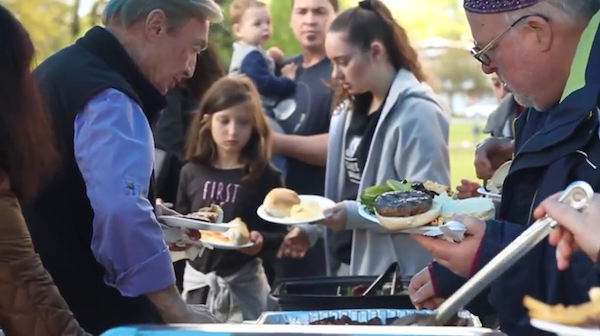
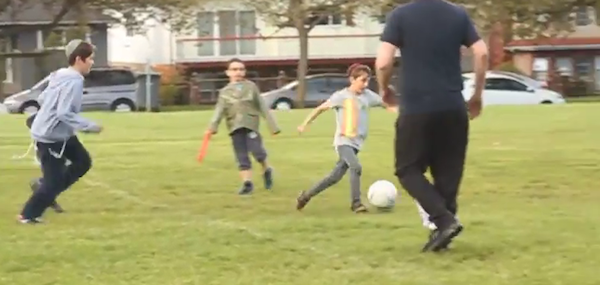
Approximately 300 people celebrated Lag b’Omer at David Livingstone Park on May 14. (all images are screenshots from the video by LNP)

Chabad East Van, Chabad of Richmond, Chabad Lubavitch BC, Ohel Ya’akov Community Kollel, Tzivos Hashem Vancouver (a Kollel program) and Chabad of Downtown hosted a community BBQ at David Livingstone Park in honour of Lag b’Omer on May 14. Approximately 300 people attended and kids from Tzivos Hashem did a presentation and led a short program. There was food, music, prizes and sports. A video by Lior Noyman Productions, which captures some of the afternoon’s highlights, can be found on YouTube.

screenshot - Lag b’Omer BBQ at David Livingstone Park on May 14

screenshot - Lag b’Omer BBQ at David Livingstone Park on May 14

screenshot - Lag b’Omer BBQ at David Livingstone Park on May 14

Format ImagePosted on June 9, 2017June 7, 2017Author Community KollelCategories Celebrating the HolidaysTags Chabad, Judaism, Kollel, Lag b'Omer, Lior Noyman
Thanking first responders

Thanking first responders

Front row, left to right: Sgt. Pat Madderon, Canadian Forces Reserves; Ron Van Houten, B.C. Emergency Health Services; Brian McLeod, Richmond Fire; and Superintendent Will Ng, Richmond RCMP officer in charge. Back row left to right: Cpl. Dave Winberg; Cpl. Kevin Krygier; Councilor Bill McNulty; Councilor Derek Dang; Richmond Mayor Malcolm Brodie; Rabbi Yechiel Baitelman; and Peter Tellis, Richmond Fire. (photo from Chabad of Richmond)

More than 400 people came out on May 18 to show their appreciation for Richmond’s first responders, including the RCMP, Richmond Fire and Rescue, BC Ambulance and the Canadian Armed Forces. The First Responders Appreciation Event was held in conjunction with Richmond RCMP Police Week.

Presented by Chabad of Richmond, the festivities featured a kosher hot dog barbeque. Sergeant Safety Bear was on hand to meet the kids, and attendees got the chance to learn more about their local police. There was also free Project 529 bike registration, a chance for young people to try out the Youth Police Academy and a scavenger hunt. Donations were collected for the Jewish Food Bank.

Other event sponsors included Sneg Mortgage Team, SOS Emergency Response Technologies, ER Plus Risk Management, Vision Plus, Kehila Society, Jewish Federation of Greater Vancouver and Real Canadian Superstore. The get-together offered people the opportunity to “strengthen bonds with faith-based communities,” said Chabad of Richmond’s Rabbi Yechiel Baitelman.


Format ImagePosted on June 9, 2017July 2, 2020Author Chabad of RichmondCategories LocalTags Chabad, Richmond, Yechiel Baitelman
Busy months at OJC

Busy months at OJC

The Okanagan Jewish Community Association’s Purim party featured a variety of costumes. (photo from OJCA)

So far this year, the Okanagan Jewish Community Association has held several events, including Shabbat services on more than one weekend, as well as gatherings for Purim and Passover, and the first Ladies Group Meeting.

At the Purim party on March 13, children from all across the community enjoyed making their own batches of hamentashen – Nutella was the overall favourite filling, but strawberry was also popular – and unique groggers. They had a “Hamen-tossin’” battle (Haman-shaped beanbag toss) and put the groggers to good use twice: while OJC members Natalie Spevakow and Steven Finkleman showed them the Megillah and told them the story of Esther, and during the costume parade. There was an eclectic and creative selection of costumes – even the grown-ups dressed up. And there was a mishloach manot basket exchange, with the kids eager to devour the treats they received, as well as a light sushi buffet and a variety of hamentashen that people brought to share. Mark Golbey and Abbey Westbury organized the party.

More than 100 people attended OJCA’s Passover seder at the Harvest Golf Club on April 10. This was the first year it was held there and the chefs created, with the help of her expertise, many recipes that OJCA member Barb Finkleman shared with them. The seder was led by OJCA members Philippe Richer LaFleche and Barb Pullan, with parts of the ritual in English and parts in Hebrew.

On March 4, services were led by OJCA member Evan Orloff with a dairy potluck following. On April 21 and 22, services were led by Rabbi Shaul Osadchey of Beth Tzedec Congregation in Calgary, who has been coming out on a regular basis; there was a community potluck Shabbat dinner and luncheon. On May 5 and 6, services were led by Cantor Russell Jayne from Calgary, also with a Shabbat dinner and lunch.

On May 11, the first Ladies Group Meeting was attended by approximately 25 women. OJCA members Lillian Goodman, Cindy Segal and Barb Pullan organized the get-together at which attendees enjoyed refreshments and the screening of the documentary entitled The Lady in Number 6. There was a discussion period following and it is hoped that the meetings will continue on a monthly basis.

For information on more OJCA events, including a June 24 BBQ, visit ojcc.ca.

Format ImagePosted on June 9, 2017June 7, 2017Author OJCACategories LocalTags Judaism, Okanagan, Passover, Purim
Exploring Jewish Marseille

Exploring Jewish Marseille

BirthWrong participants in Calanques de Morgiou. (photo courtesy Jewdas)

Marseille, a lively port city sloping down toward the Mediterranean Sea, has a long, rich history of immigration and multiculturalism – including a Jewish presence dating back 1,000 years. Today, France’s second-largest city is home to about 80,000 Jews, or almost 10% of its population, with both newer and centuries-old Sephardi and Ashkenazi communities.

Recently, a group of 30 self-identifying Jews and allies from Europe, North America, South Africa and Israel gathered in Marseille for the second edition of BirthWrong, an initiative started by the London-based collective Jewdas to explore and celebrate Diaspora histories and cultures. (The inaugural BirthWrong took place in Seville, Spain, in 2015.) We spent four days exploring the city and surrounding nature, meeting with locals and partaking in Jewish life, and found plenty to do for visitors.

The city’s Old Port is the classic starting point, with a spacious plaza, boat-filled marina and daily cruises shuttling visitors along the Calanques, a 20-kilometre series of fjord-like inlets surrounded by steep limestone cliffs. With a compact city centre, Marseille is easy and enjoyable to explore on foot; there are also trams, buses and subways. As in Vancouver, there are beaches in the heart of the city (Plage des Catalans, west of the Old Port) and near the centre (Malmousque, Plage du Prophète, Plages du Prado and Pointe Rouge).

In a city of 40 synagogues, the oldest and grandest is aptly called the Grande Synagogue de Marseille. Opened in 1864, it’s a three-storey Sephardi synagogue (with a basement Ashkenazi chapel) that hosts Shabbat services on Saturdays, followed by Provençal-style kiddush including green olives, anchovies and pastis, which is a local anise-based liqueur. The small congregation is predominantly Algerian-French Jews, and the impressive sanctuary – with the men’s section on the ground floor and women on the second floor – has shining marble floors, chandeliers, Romanesque arches and jewel-toned stained-glass windows. To attend services, be prepared to bring ID and have your bag searched, and women are asked to wear a dress or skirt.

A plaque outside commemorates that, in 1943, Jews were deported from the synagogue to Nazi death camps. In Marseille, 23,000 Jews were deported – with French police aiding the Nazis – and about 1,800 were killed in camps.

Prewar Jewish history in Provence dates back to the first century, with a more documented presence starting in the sixth century. After the Inquisition, Sephardi communities arrived from nearby Spain and Portugal and, in the Middle Ages, when the Vatican controlled the Avignon-Carpentras area, the Juifs du Pape (Jews of the Pope) acted as its financiers. At the time, Jews were banned in most other parts of present-day France.

photo - BirthWrong participants take part in Havdalah
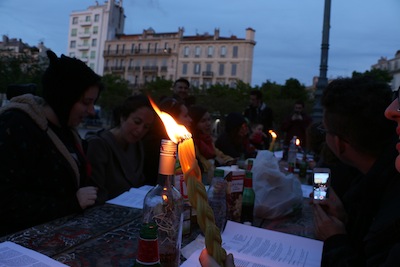
BirthWrong participants take part in Havdalah. (photo courtesy Jewdas)

Today, much of the Jewish community in Marseille came from Tunisia, Algeria and Morocco in the late 1950s and early 1960s, following the countries’ independence from France. The city is also home to large Italian, Armenian and North African communities (resulting in delicious cuisines to choose from).

A local guide, Lou Marin, gave us a custom walking tour of the city centre focused on 1939-1945, and has encyclopedic knowledge of Marseille’s history. He leads hours-long or multi-day walking tours with flexible rates. (Contact [email protected] or 33-486-954576 to inquire about a tour.)

Just outside the city, Calanques National Park offers more than 85-square kilometres of stunning coastal walks through pine forests, which were planted by the Romans, and ridges above the cliffs, with bushes of wild rosemary and thyme dotting the landscape. Our group did a four-hour hike with local guide Felix Altgeld (provenceapied.wordpress.com), who offers customized walks and has extensive knowledge of the local flora and geography.

Food-wise, Marseille is an affordable city within France, with ample fresh produce coming from sunny Provence and varied cuisines to relish, including North African kebab shops, Lebanese delis and 30 kosher eateries (including the pizza food truck L’imprévu). On Tuesday, Thursday and Saturday mornings, look out for the market in La Plaine plaza, a community institution with independent food stalls and other shopping. The neighbourhood, which holds an annual carnival and is filled with colourful street art, is fiercely resisting gentrification, and maintains an inspiring multicultural, multi-class spirit day and night.

We got the sense that many non-Jewish Marseillais are aware of Jewish history and culture. At the annual May Day rally, multiple locals (both Jewish and non-Jewish) approached our group to ask about our trip and the Yiddish songs we were singing. Both Marin and the local historian Alessi Dell’Umbria, who spoke to us about Marseille’s history, knew a lot about Marseille’s Jewish history and culture through both their work and their personal lives.

Given France’s culture of secularism – where religious identity isn’t generally part of public life – the local Jewish activists who hosted us found it refreshing and unusual to meet Jews who bring our religious identity to politics, wear Stars of David and kippot and are openly Jewish in public. We, in turn, were fascinated to visit a bustling but laid-back city with a rich left-wing history, near-constant sun and diverse communities carving out an inclusive collective identity.

Marseille is just over three hours from Paris by high-speed train (visit sncf.com/en).

Tamara Micner is a playwright and journalist from Vancouver who lives in London, England. Her work has appeared in the Globe and Mail, Wall Street Journal and London Review of Books.

Format ImagePosted on June 9, 2017August 18, 2019Author Tamara MicnerCategories TravelTags BirthWrong, history, Judaism, Marseille, tourism
Grodzka Gate Lublin reunion

Grodzka Gate Lublin reunion

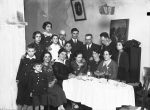
A photo from Lublin: Faces of a Nonexistent City, likely taken by taken by Abram Zylberberg. (photo from Grodzka Gate – NN Theatre Centre)

From July 3-7, the Grodzka Gate – NN Theatre Centre in Lublin (Osrodek Brama Grodzka – Teatr NN), Poland, will host the Lubliner Reunion – the first international meeting of Jewish inhabitants of the city and their descendants in 70 years.

Grodzka Gate – NN Theatre Centre is an organization run by non-Jews dedicated to preserving Jewish memory. It has been actively pursuing this mission for 25 years, and its program includes meetings, discussions, sightseeing tours, commemorations and artistic events. The reunion will constitute an important element of the celebrations, which mark 700 years since the founding of the city of Lublin, and is designed to emphasize the significance of the Jewish community for the history of the city.

The history of Jews has been intertwined with that of Lublin for several hundred years, and has helped shape its identity. The story of Lublin has been enriched with, among other things, the presence of a well-known yeshivah (Yeshivat Chachmei Lublin), the meetings of the Council of Four Lands (Vaad Arba Aratzot), the activities of local rabbis and social organizations and the work of writer and Nobel-laureate Isaac Bashevis Singer.

Just before the Second World War broke out, the 43,000 Jewish citizens of Lublin constituted one-third of the city’s population. The majority of Lublin’s Jewish inhabitants were murdered during the Holocaust and one of the German death camps, Majdanek, was located on the outskirts of Lublin. The story of Lublin cannot be told without the stories of its Jewish inhabitants, which is why, during the festivities organized to celebrate the 700-year-long history of the city in 2017, the presence of their descendants is vital and symbolic.

“The Lubliner Reunion is a way to build a bridge across time,” said Tomasz Pietrasiewicz, founder and director of Grodzka Gate. “It’s meant as a meeting in which both the people and their stories are important. Grodzka Gate is engaged in protecting the ‘memory of the place.’ We want to preserve what is left of Lublin’s Jewish community. The Lubliner Reunion will allow us to share knowledge and fill the blank spaces in the stories about Lublin and its inhabitants.”

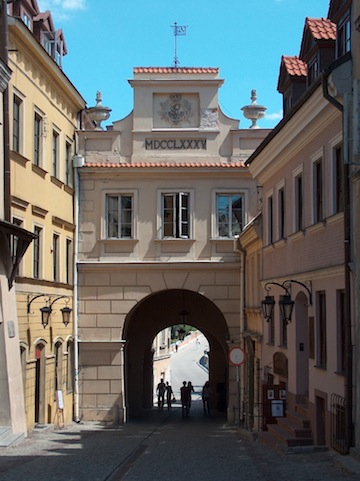
photo - Grodzka Gate in Lublin, Poland
Grodzka Gate in Lublin, Poland. (photo from Grodzka Gate – NN Theatre Centre )

The program of the reunion covers meetings devoted to the history and culture of Jewish Lublin, workshops in genealogy, walks along tourist trails, commemorations and a variety of artistic events. One of the central features of the reunion will be presentations of Lubliner family stories. Guests will have a chance to get to know both historical and contemporary Lublin, visit the former Jewish district and meet non-Jews working to preserve the memory of the Jews of Lublin for generations to come.

Apart from sightseeing within Lublin, Grodzka Gate is also planning tours of the region – Zamosc, Kazimierz Dolny, Belzec and Wlodawa, among other places. Apart from these excursions, all events are free of charge for participants. The inauguration of the reunion will take place on July 3 in the Museum at the Lublin Castle.

“We want to get in touch with and invite all those whose families come from Lublin,” underlined reunion coordinator Monika Tarajko. “We already have participants coming from Israel, the United States, France, Belgium and Great Britain. However, we are still striving to reach as many prospective participants as possible and inform them about the reunion. We are expecting more than 100 people to visit Lublin as part of this special event. Feel welcome to join us!”

For reunion registration and information, visit lubliners2017.teatrnn.pl or contact Tarajko (48-606-687-367, [email protected]) or the American ambassador to Grodzka Gate, Leora Tec (1-781-862-4976, [email protected]).

Grodzka Gate’s other projects include Lublin: Memory of the Holocaust, a trail commemorating the Jewish inhabitants of Lublin who perished in the Holocaust; The Mysteries of Memory, an artistic happening involving a piece of the city with its specific topography, history and technical infrastructure; and Henio Zytomirski: The “Letters to Henio” Project, where, on April 19 (Holocaust Remembrance Day in Poland) every year, citizens of Lublin send letters to Henio Zytomirski, a Jewish boy who was born in 1933 in Lublin and was murdered by the Nazis in a gas chamber, probably in November 1942.

Grodzka Gate’s Lublin: Memory of the Place Exhibition is dedicated to Lublin before the war. A considerable part of the former Jewish district today has been covered with concrete, under which the foundations of Jewish buildings and the memory of those who once lived there are buried. Over the years, Grodzka Gate has become a place where old photographs, documents and testimonies can be preserved for posterity.

As well, there is Lublin: Faces of a Nonexistent City. In May 2012, Grodzka Gate received a collection of 2,700 glass plate negatives found in the attic of the house at Rynek 4 by workmen doing repairs. The photographs were taken between 1914 and 1939 and were, based on Grodzka Gate’s research and recent findings, taken by Abram Zylberberg.

Grodzka Gate’s website is teatrnn.pl/en.

Format ImagePosted on June 9, 2017June 7, 2017Author Grodzka Gate – NN TheatreCategories WorldTags continuity, Grodzka Gate, Holocaust, Lublin, memory, Poland
Ramat Beit Shemesh well

Ramat Beit Shemesh well

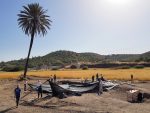
Students from the Paran and Hinaton pre-military preparatory programs took part in the discovery.  (photo from Israel Antiquities Authority via Ashernet) 

photo - IAA counselor and a student in the well
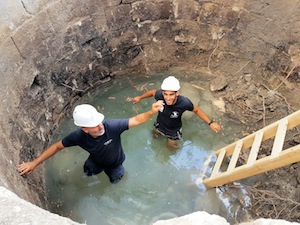
IAA counselor and a student in the well. (photo from Israel Antiquities Authority via Ashernet)

Late last month, the Israel Antiquities Authority (IAA) uncovered an Ottoman-period well, hundreds of years old, as part of the work being carried out by Netivei Israel Co. to widen Highway 38, north of the main entrance to Ramat Beit Shemesh. Students from the Paran and Hinaton pre-military preparatory programs took part in the discovery of the well that is about 3.5 metres in diameter and joins a series of wells that have been documented over the years along Route 38. The palm tree is an indicator that there is nearby a source of groundwater. 

Format ImagePosted on June 9, 2017June 7, 2017Author Edgar AsherCategories IsraelTags archeology, Israel, Ramat Beit Shemesh
This week’s cartoon … June 9/17

This week’s cartoon … June 9/17

Format ImagePosted on June 9, 2017June 7, 2017Author Jacob SamuelCategories The Daily SnoozeTags thedailysnooze.com
גידול באנטישמיות בקנדה

גידול באנטישמיות בקנדה

(צילום: Steven W. Dengler)

גידול משמעותי נרשם באירועים אנטישמיים נגד יהודים בקנדה. לדברי ארגון בני ברית קנדה אשתקד אירעו 1,728 אירועים אנטישמיים במדינה וזהו גידול של 26% לעומת 2015. מדובר רק במקרים המדווחים וקרוב לוודאי שבפועל מספר האירועים האנטישמיים אף גבוה יותר.

בפועל מדי יום מתרחשים 4-5 אירועי שינאה נגד יהודים בקנדה שכוללים אלימות, הטרדות והשחתת ציוד (בהם ציורים של צלבי קרס וסיסמאות שינאה). ב-20% מהאירועים מעורבים מכחישי השואה בהם גורמים איסלמים קיצוניים, לעומת 5% ב-2015.

בבני ברית מציינים כי מעולם בקנדה לא אירעו כל כך הרבה אירועים אנטישמיים וזה מטריד במיוחד, לאור העובדה שהיא נחשבת לאחת מהמדינות הסובלניות ביותר בעולם. בארגון מוסיפים עוד כי לדעתם האנטישמיות בקנדה היא אינה יבוא מארה”ב, ולא קשורה לבחירתו לנשיא של דונלד טראמפ.

לדברי מומחה מקומי לנושא פשעי שינאה העלייה באינטישמיות בקנדה היא חלק ממגמה עולמית בעולם המערבי, במקביל לעליית כוחן של תנועות הימין הקיצוניות. יצויין כי בקנדה גרים כיום למעלה מ-400 אלף יהודים ומדובר בקהילת היהודית הרביעית בגדולה בעולם.

סקס ופוליטיקה: חברי מועצת העיר קיבלו אימייל עם תמונה של בחורה עירומה מחברם שמכחיש כי הוא השולח

כמאה חברת מועצת העיר סנט קטרין, ראשי מערך ביטחון של אוניברסיטת ברוק המקומית ותחנות הרדיו באזור שבמחוז אונטריו, קיבלו לפני מספר ימים אימייל יוצא דופן מחבר המועצה אנדי פטרובסקי. מדוע? כיוון שצורפה לו תמונה של בחורה בלונדינית בעירום מלא שיושבת על כיסא, ידיה שלובות מאחורי גבה ורגליה מפוסקות. זאת, בתגובה להחלטת מועצת העיר לסגור את אחד הנתיבים שעל גשר בורגויין שבעיר. לאימייל של פטרובסקי צורפו המילים: “צריכה להיות מכירה בשווי של מולטי מיליון דולר במימון הציבור של הקשתות הלא המתפקדות שעל הגשר. נחש מי השיג את המימון שלהן מהממשלה הפדרלית? נכון אתה צודק. אילו הם טפשים. איזה בדיחה”.

כמה חברי מועצה אומרים בתגובה שהאימייל של פטרובסקי הוא מגונה ומדובר בהתנהגות שאינה מקובלת עליהם, והם דורשים ממנו להתפטר מיידית. בתגובה שלח פטרובסקי אימייל עם התנצלות “על האימייל הלא מקובל והלא הולם”. לטענתו לא הוא שלח את האימייל, אלא מישהו אנונימי שניצל את העובדה שהאייפד שלו היה פתוח, והוא זה ששלח אותו עם תמונת העירום. פטרובסקי לא מקבל את הדין לגבי זהות כותב האימייל הטורדני, שנשלח לדבריו בטעות. ראש העירייה, וולטר סנזיק, אומר כי היה בהלם מהאימייל ולדבריו הוא תומך בקריאות להתפטרותו המיידית של פטרובסקי. ראש העירייה הוסיף: “כשאתה מסתכל על השפה בה נכתב האימייל זה מזכיר בברור את סגנון כתיבתו הידוע והמיוחד של פטרובסקי”.

אין זו בעצם הפעם הראשונה שפטרובסקי מסתבך בשליחת מסרים בעיתיים. בינואר 2016 הוא הואשם בשליחת הודעת טקסט מהטלפון שלו, למפקד משטרת מחוז ניאגרה פול, ג’ף מקווגיר, בה נכתב: “הלו ליצן. האם אתה עריץ?”. באותה עת פטרובסקי שימש חבר הנהלת מועצת המשטרה של ניאגרה. גם אז הוא עשה טען בתגובה הטלפון שלו נשאר פתוח, ומישהו אלמוני שלח את הטקסט הבעייתי למפקד המשטרה.

ועוד ממעללי פטרובסקי: הוא נחקר בימים אלה על פרסום שש הודעות פוגעניות בחשבון טוויטר שלו. לדברי הממונה על הנציבות בעיריית סנט קטרין, במעשיו פטרובסקי פגע בקודים של העירייה. הממונה ממליץ לחברי המועצה לקרוא לו להתנצל באופן פומבי על מעשיו, ולאסור עליו להשתתף בישיבות המועצה, עד שיקח חלק בקורס מקצועי מיוחד שבו ילמד על הבעיות בהתנהגותו.

Format ImagePosted on June 7, 2017Author Roni RachmaniCategories עניין בחדשותTags Andy Petrowski, antisemitism, B’nai Brith Canada, St. Catharines, אנדי פטרובסקי, אנטישמיות, בני ברית קנדה, סנט קטרין
Caravan welcomes Vazana

Caravan welcomes Vazana

Amsterdam’s Noam Vazana will play in Vancouver and Victoria next week. (photo by Robin Daniel Fromann)

Multifaceted Jerusalem-born, Amsterdam-based musician Noam Vazana comes to Canada this month for the first time. She plays in Calgary June 6, Vancouver June 7 and Victoria June 8.

Vazana’s B.C. dates are presented by Caravan World Rhythms, whose managing artistic director is Robert Benaroya, and she will perform with local guitarist and composer Itamar Erez, who also hails from Israel.

“I heard about Itamar through a joint musician friend, Yishai Afterman, and through the presenter of the show, Robert Benaroya,” Vazana told the Independent. “We got to know each other by phone and on Chat. Our first shows together will be in Vancouver and Victoria.”

Vazana’s music has myriad influences, including classical, pop, jazz and Sephardi. She composes, and has two CDs to her credit, Daily Sketch (2011) and Love Migration (2014). Performing regularly on stages around the world, she returns to the Netherlands after her shows in Canada, but has Poland, Morocco, Germany, France and Israel also on her tour schedule.

“This is an amazing year, performing 90 concerts in 12 countries,” she said. “I consider myself very lucky to combine my two greatest passions, music and traveling. I get inspired from new people and new places. I get excited every time before I go on tour – the night before, I can hardly sleep because I can already feel new experiences at my doorstep, waiting to accompany me or take me over or be a part of who I’m about to become. Bob Dylan said once that an artist is always in the state of becoming; somehow, it seems that in order to stay creative I always have to be on the way to somewhere.”

One of the unique aspects of her performance is that she plays the piano and trombone – at the same time.

“My first encounter with the trombone was in an explanatory concert the local orchestra gave at my school,” she said of her somewhat unusual choice of wind instrument. “They were demonstrating several instruments and, the moment I heard the trombone, I fell in love with its rich tenor sound. Another thing that appealed to me is that the trombone is an orchestral or combo instrument, so mostly you play it in a formation. When playing classical piano, especially the old-fashioned way, my teachers always told me it was forbidden to try when I asked to improvise and learn chords and songs. So, I mainly kept to the scores and played alone as a child. It sounded cool to me to play in an orchestra and get to play things that were out of the classical context I was already exposed to.”

The trombone stands she uses had to be invented, she said, “and designed especially for the purpose of playing trombone and piano simultaneously.”

“I first used a model I designed myself from a tripod used to support a window-shopping mannequin,” she explained. “It was working quite well but had one main flaw: it was centred right in front of me, in the middle of the keyboard, so I had to be very creative with the piano parts and manoeuvre around it when moving between the registers.

“Then I had a second prototype designed by an engineer who had good intentions but his strength lay in theory and not in mechanical skill. I was struggling to set up the stand during a soundcheck and the owner of the venue told me he knew a blacksmith who might be able to help me. That guy is amazing, autodidact with phenomenal skill, designing motorcycle engines from scratch. He mended the flaws of the second model and eventually created a much lighter third prototype, which is the stand I use today. I have two different models, one for pianos and the other for keyboard.”

Vazana also leads a Sephardi group called Nani, and she will be performing some songs from that repertoire on her tour. While the spark for Nani was kindled in Morocco, its source lies further back.

“At our house, Israeli culture was eminent,” said Vazana. “My father grew up in a kibbutz and I was brought up part traditional, part secular. Foreign languages were forbidden at home and, although my mother spoke fluent Moroccan Arabic and French, my father insisted she talk to me only in Hebrew.

“My grandmother on my mother’s side spoke Ladino and Moroccan Arabic and never assimilated in the Israeli culture, so some of my first memories include her speaking Ladino with my aunt and singing Ladino lullabies for me. She passed away when I was 12 – you can imagine that, throughout my childhood, she was very old and I didn’t get to spend a lot of time with her.

“In both 2012 and 2013, I was invited to play at the Tanjazz festival in Tangier and I took these opportunities to explore the cities where my families originated from, Casablanca and Fez. On my second visit to Morocco, in 2013, during one of my many walks down the narrow streets of Fez’s medina, I heard people singing on the street behind me. As I made way to them, there came more and more people, singing and playing drums and wind instruments, all to a familiar melody. The procession ended in a square and, as I arrived there – I was one of hundreds of people, young and old – I suddenly realized this is a melody that my grandmother used to sing for me in Ladino. It was a special moment and the rest of my travels in Morocco called memories of my grandmother back to me. I felt drawn to a root that was longing to be rediscovered.

“When I got back home,” she said, “I started researching more and more about the Ladino language and culture and started combining a song or two in Ladino in my regular shows. Slowly, I studied the language over the course of a year and developed a substantial repertoire. It resulted in recording a new Ladino album that will be released in September 2017, and winning the Sephardic music award … at the International Jewish Music Festival in Amsterdam,” which took place last month, May 4-8.

Vazana first visited Amsterdam on tour with an orchestra, as a classical trombone player, she said. “At the time, I was a student at the music academy in Jerusalem and this was intended as a 10-day work trip and another 10 days to explore the Netherlands, as it was my first visit. I checked some information about local musicians and schools and applied for lessons with musicians from the Concertgebouw Orchestra.

“After having a lesson with their bass trombonist,” she said, “he asked me if I’d be willing to come back for another lesson with his colleague, the principal trombone player. After a 45-minute lesson, they both decided to invite me to study with them at the Royal Conservatory of Amsterdam, with an internship at the Concertgebouw Orchestra. The day later, I found myself attending a rehearsal with the orchestra, absolutely mind-blowing, because it was the best orchestra I ever heard live (and the No. 1 in Europe at the time). It didn’t take a lot more to convince me to quit my studies in Jerusalem and transfer to Amsterdam.”

This move forms the creative foundation of Vazana’s second album, which won the ACUM (Israel Association of Composers, Authors and Publishers of Musical Works) album prize, charted No. 14 on the iTunes bestselling chart and No. 2 on DPRP’s (Dutch Progressive Rock Page’s) best albums of 2015. It was financed in part by crowdfunding, through which 800 advance copies were sold. (There is a video, set to her song “Waiting,” in which Vazana personally delivers the CD to various supporters, giving each of them a hug. It can be found at youtube.com/watch?v=tW5Y2IEjgI0.)

“Love Migration is a very personal and exposed album, combining parallel stories about two migrations: my first migration to follow my heart, which is music, while longing to find a feeling of home. The second migration is the long-distance relationship I had with an Israeli guy whom I met just as my EU visa was approved, eventually resulting in him migrating to live with me so I could continue to follow my dream,” explained Vazana. “The process took three years to evolve into stories one can retell [with] perspective…. It could have turned many ways, but my personal search eventually led me (and still is leading me) towards taking the feeling of home with me wherever I go. It has been a long journey, but life is a journey and I feel that I evolve every day anew. In my song ‘Lost and Found,’ I describe that sensation: “Every time I look in the mirror / Every time I stand in the corner / Every time I knock something over / It’s a way for starting over / It’s a way to see it anew.”

Vazana and Erez’s Vancouver concert is at Frankie’s Jazz Club June 7, 8 p.m., and their Victoria appearance is at Hermann’s Jazz Club June 8, 8 p.m. Tickets to both shows are $20 at the door and $15 in advance. Visit caravanbc.com or call 778-886-8908.


Format ImagePosted on June 2, 2017May 31, 2017Author Cynthia RamsayCategories MusicTags Amsterdam, Caravan World Rhythms, Israel, jazz, Noam Vazana, Sephardi

Posts pagination

Previous page Page 1 … Page 4 Page 5 Page 6 Next page
Proudly powered by WordPress