בלקברי יורדת לכביש: תשקיע כמאה מיליון דולר בפרוייקט לפיתוח תוכנה למכוניות בנהיגה עצמית. (qnx.com)
יצרנית הסמארטפונס הקנדית המקרטעת בלקברי נכנסת לתחום פעילות חדש. החברה הודיעה לאחרונה כי היא תשקיע כמאה מיליון דולר קנדי (שהם כשבעים ושישה מיליון דולר אמריקני), בהקמת מרכז מחקר לפיתוח תוכנה להפעלת מכוניות בנהיגה עצמית, במחוז אונטריו. בפרוייקט שותפים מספר גורמים משמעותיים ובהם: אוניברסיטת ווטרלו, יצרנית המכוניות האמריקנית פורד וחברת השבבים היפנית רננס אלקטרוניקס. המרכז שימוקם בעיר הבירה אוטווה מתוכנן לייצר כשש מאות וחמישים מקומות עבודה חדשים, בשנים הקרובות. בלקברי תעשה שימוש במערכת ההפעלה המאובטחת שלה הקיו.אן.קס גם להפעלת המכוניות בנהיגה עצמית. הקיו.אן.קס מותכנת כיום בלמעלה משישים מיליון מכוניות בעולם. לאור הפרוייקט החדש הודיעה בלקברי לכשלוש מאות מעובדיה כי היא מספיקה להעסיק אותם, והם יעבדו מעתה במרכז החדש באוטווה עבור פורד. העובדים שטוענים כי בעקבות כך הם יפסידו את כל הזכויות שצברו בבלקברי במשך השנים, הגישו בימים אלה תביעה יצוגית נגד החברה בסכום של עשרים מיליון דולר.
בלקברי מצידה הגישה בחודש שעבר תביעה נגד יצרנית הטלפונים הפינית נוקיה על גניבת אחד עשר פטנטים.
בחודש ספטמבר אשתקד הודיעה בלקברי כי היא מפסיקה לייצר טלפונים ומעתה היא תתמקד רק בפיתוח תוכנה למכשירים הסלולריים. בשל מצבה העגום של החברה הקנדית כשנתח שלה בשוק הטלפונים העולמי מגיע כיום כמעט לאפס (כ-0.05 אחוז בלבד), מחיר המנייה שלה הוא פחות משמונה דולר. בשיאה של החברה (בשנת 2008) עת היא שלטה בשוק הסמארטפונס מחיר המנייה הגיע למאה ושישים וחמישה דולר.
אהבה יקרה: פנסיונרית נתנה מאה אלף דולר לבן זוג עתידי שנעלם
איש מבוגרת מהעיר ננאימו נפלה קורבן לנוכל שהוציא ממנה כמאה אלף דולר ונעלם. המשטרה המקומית חוקרת אך אין לה קצה חוט בנושא. הפנסיונרית (שמתקרבת לגיל שבעים) התאלמנה לאחרונה וביקשה לקראת סוף השנה למצוא בן זוג חדש, באמצעות אתר ההכרויות מאץ’.קום. בתגובה לפרופיל שלה יצר עימה קשר גבר שהציג עמו בשם ג’ונתן לוקרון, וטען שהוא מהנדס אזרחי העובד בסין. השניים החליפו הודעות, אימיילים ואף שוחחו בטלפון מספר פעמים. לאחר שרכש את אמונה סיפר לה לוקרון שהוא זקוק לכסף כדי שזה יעזור לו בפרוייקטים שונים. הוא הבטיח להחזיר לה את הכסף במלואו. האלמנה הסכימה והעבירה לו במספר תשלומים כמאה אלף דולר לחשבונות שונים ברחבי העולם. לוקרן הבטיח לפגוש את האישה בערב השנה האזרחית ובו במקום לבקש את ידה. לאחר שלא הגיע לפגישה ולא ענה עוד להודעות שלה, היא הבינה שלוקרון עבד עליה ופנתה מייד למשטרה. במשטרת ננאימו מציינים כי מבוגרים רבים חסרי נסיון באתרי היכרויות באינטרנט נופלים קורבן למעשים של נוכלים, שמצליחים להוציא מהם כסף וזה כמעט בלתי אפשרי למצוא אותם. רבים ברחבי העולם מתלוננים על כביכול “מהנדסים אזרחיים” שהוציאו מהם כסף במרמה. לכן מוצע להיזהר מאוד ולא להעביר כספים לאף אחד לפני שפוגשים אותו.
באר.סי.אם.פי מעריכים שבשנה שעברה נוכלים הוציאו כשבעה עשר מליון דולר מכשמונה מאות אזרחים תמימים, באמצעות היכרויות באינטרנט בהם גם פייסבוק וסקייפ. מרבית הקורבנות (גברים ונשים כאחד) הם בגילאי ארבעים, חמישים ומעלה. חלק מהם הפסיד את כל כספי החסכונות לנוכלים, שמנצלים עד תום את תמימות ליבם ולא מגלים שום רחמים כלפיהם. לאור זאת חלק מהקורבנות לא יכולים לממש את תוכניותיהם ולצאת לפנסיה והם נאלצים להמשיך ולעבוד. במשטרה הפדרלית מציינים כי רבים כלל לא מדווחים על מעשי הנוכלות בגלל בושה.
The Bagel Club will volunteer at Shalva, the Israel Association for the Care and Inclusion of Persons with Disabilities, when they are in Israel. (photo from shalva.org)
The mission of the Jewish Community Centre of Greater Vancouver’s inclusion services is “to educate, engage, train and support members with diverse needs and their families in our community.” One of the ways in which they do this is with the Bagel Club, described as “a social club for adults with diverse needs” that promotes Jewish heritage and education. In just over a week, 11 club members will experience the ultimate Jewish heritage and educational experience – a trip to Israel.
As part of its overall mission to “enhance positive identification with Jewish life and Israel and to develop good citizenship and a sense of community and belonging through various partnerships with communities in Israel,” JCC inclusion services coordinator Leamore Cohen told the Independent that, over the last 15 years, “the JCC has arranged for various cohorts, including counselors-in-training, dance troupes and specialty interest groups to experience Israel, sometimes for the very first time. Unfortunately, many of the people with diverse needs, accessing programs through inclusion services at the JCC, had never been to Israel, and many of them are older adults.”
The idea of an inclusion trip – “to allow for this group to travel in a cohort of peers, semi-independently, for a first-time trip, much like young adults do with Birthright or Taglit” – had been percolating for awhile. “We knew we wanted it to happen. It was just a matter of timing,” said Cohen.
The group leaves on Feb. 26, and will be in Israel for 10 days.
“Visiting Israel, including sites that define Israel and the Jewish people, is such an important rite of passage for Jews living outside of Israel,” said Cohen. “The potential for self-discovery and Jewish cultural connection through a trip to Israel is immeasurable. Such trips are essential to our social, cultural and religious preservation and should be shared with all members of our community – that is why the JCC is so fully invested in this trip.”
The trip is being funded by a number of sources, she said, including “the participants, the JCC, the Jewish Federation of Greater Vancouver and Partnership2Gether – an initiative that pairs Diaspora communities with regions in Israel to strengthen ties between Canadians and Israelis – and incredibly generous community members.”
Accessibility was, of course, a main consideration in the trip’s planning. In addition to the programming, Cohen said the cost also needed to be accessible.
“The reality is that this population lives on fixed incomes and has limited income-earning capacity. We wanted to correct for that,” she said. “The trip is highly subsidized so that no one who wanted to come would be priced out of the opportunity. We wanted to do things differently and make this an inclusive trip in every sense of the word.”
What makes the Bagel Club’s 10-day trip unique, said Cohen, are “the opportunities we have developed for cross-border community-building, collaboration and disability advocacy. The programming is intended to create friendships across borders and to show an Israel that is inclusive of each individual and yet supportive of individual differences. Our intention is to empower travelers and support their agency through semi-independent travel, while at the same time emphasizing and strengthening community connections through learning collectively, exploring collectively and even volunteering collectively in the Jewish homeland.
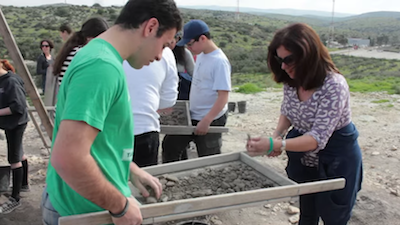
“Every bucket could hold a treasure waiting to be discovered,” reads the caption in the brief video about Israel’s Beit Guvrin-Maresha National Park, where visitors can help with the excavations. As part of their trip to Israel, the Bagel Club will take part in the park’s Dig for a Day. (screenshot from mfa.gov.il)
“During our time in Israel,” she said, “we will volunteer at Shalva, the Israel Association for the Care and Inclusion of Persons with Disabilities; meet with the Access Israel disability advocacy organization; visit the Knesset, Israel’s parliament, and meet with Knesset members. We will join an established theatre group of adults with diverse needs for a drama workshop. We will visit Beit Guvrin-Maresha National Park for Dig for a Day and take part in an active dig. We will pray at the Wailing Wall and remember at Yad Vashem.
“We will also be spending part of our trip in the Galilee Panhandle, which is our partner region in Israel. During that time, we will participate in an arts and crafts workshop at [the] inclusion occupational centre Ma’arag, together will local residents. We will visit Beit Israel and meet with Krembo Wings youth group (a youth group that works with children with special needs). Also on our itinerary is a visit to the Bereshit apple factory to learn about agriculture and the production process.”
Cohen said she is “honoured to be able to experience Israel with this group.” The 11 participants are David Benbaruj, David Berger, Frederick Dexall, Marc Estrin, Mark Fugman, Julie Huber, Harriet Kositsky, Alisa Polsky, Clark Levykh, Evan Lipsky and Gail Rudin. Joining Cohen in the support-staff capacity are Kathleen Muir, assistant coordinator, inclusion services and youth services at the JCC; Shannon Gorski, managing director of the Betty Averbach Foundation and JCC board member; and Alex Krasniak, community support worker with 26 years in the field.
Cohen noted that February is Jewish Disability Awareness and Inclusion Month, “a unified effort amongst Jewish organizations worldwide to raise awareness and foster real and meaningful inclusion of people with disabilities and those who love them community-wide.”
She said the JCC is holding a traditional Birkat HaDerech (Blessing for the Way) ceremony for the Bagel Club travelers on Feb. 19, 11 a.m., at the JCC.
“The invitation is wide open,” she said. “We want to share this simchah with the whole community. It is going to be such a joyful sendoff. We’ll have the Orr Vancouver Israeli Dance troupe performing to commemorate the occasion. Can you imagine a better way to celebrate this month than helping these Jews exercise their birthright?”
Maya Avraham will perform on March 7 at Rothstein Theatre, as part of the Chutzpah! Festival. (photo from Chutzpah!)
With two highly praised albums under her belt and a third one in the works, Maya Avraham has come a long way from Rishon LeZion and her days as a backup singer. All her experiences have made her the talented and entertaining artist she is today, as Chutzpah! Festival audiences will see for themselves on March 7.
Avraham told the Independent that she will be coming with two of her band members and two musicians who live in Los Angeles. “From there,” she said, “we’re flying out to Vancouver to perform at the Chutzpah! Festival.”
Avraham has been performing since she was a teenager.
“At 14, I was in a band called Kol Rishon [First Voice] in my hometown,” she said. “And, at the same time, I also sang in my school band. There, I realized how much I enjoy singing and performing. We performed at all festive events in Rishon LeZion.
“I began private singing lessons at age 16,” she continued. “Already, from a young age, the atmosphere at home was musical – we heard Egyptian music and Yemenite.
“At 16, I joined the Moroccan band Sahara, which performed at major family events throughout the country. With them, I was exposed to the Moroccan music that I still listen to and am influenced by today.”
In the Israel Defence Forces, Avraham was in the army’s music ensemble, where she was a singer and also responsible for the ensemble’s schedule. “Of course, we performed all around the country, and I gained more experience,” she said. “In this group was also where I met Moran Gamliel who, eventually, wrote and composed the song ‘Lama’ [‘Why’] with Adam Perry.”
“Lama” was Avraham’s first single.
“In addition to my involvement with the band Sahara, I was also a backup singer in different studios across the country and sang with various artists who recorded albums,” explained Avraham. “In my work as a studio singer who does vocals and harmonies, I gained a lot of professionalism and accuracy. At one point, I was singing backup vocals for the album of a singer named Amir Benayoun. Amir decided to write me songs and I sent them to Helicon, the company with which he was signed. As a result, the manager of Helicon chose to sign me and we started working on the first album. That was at age 23 and I was with Helicon for five years before I ended the contract.”
It was also at 23 that Avraham met fellow Israeli musician Idan Raichel.
“While searching for musical materials for my first album after I signed with Helicon,” she said, “I had the privilege of meeting with Idan Raichel about a song he wrote for his album that he wanted me to sing. So we met. After the success of the song, Idan approached me and wanted me to be part of his project. I agreed, and started the path to my own career by being part of a larger project, called the Idan Raichel Project, which was a success worldwide.
“Working with Idan was very enriching musically and professionally. I learned a lot from him and I was privileged to work with other talented people who were also part of the group. During the many performances in Israel and abroad, I got to know a lot of talented musicians and I was always learning, gaining knowledge and experience from, for example, singers like Martha Gómez and Shoshana Damari.
“I was part of the project for 12 years and the experiences were many,” she said. “Every performance we did or country we visited, we received a lot of respect and admiration, and I am certain it also shaped and strengthened my own personal career.
“The album Rak Ratzit Ahava [All You Wanted Was Love] came out when I was signed with Helicon and the album La Yom Haze Chikiti [This is the Day I’ve Waited For] came out recently, produced by Rafi [Refael] Krispin of Ze-Nihal.”
In a 2016 interview with French magazine TipTopTelAviv, Avraham said she was nine months pregnant when she met Raichel. Two months after her second daughter was born, she said, “Idan telephoned me and asked me to leave for the United States [for a tour], which was to begin a month later. I agreed and my husband stayed with the kids!”
Avraham and her husband have four kids now: Ruth, 12, Jonathan, 10, Tamar, 5, and Hadas, 3.
“Throughout the years with the project, when I toured abroad, I always had help along the way from my parents and my husband,” Avraham told the Independent. “They’re good kids, so it’s easier to trust that everything will be fine and the support from home is important, assuring me that everything is in order. Of course, you always have to come back with gifts.”
Avraham said she is happy and excited about coming to Vancouver. According to the Chutzpah! website, she and her band will be performing her own hits, songs she sang with the Idan Raichel Project and some of her favourite covers.
Maya Avraham Band performs March 7, 8 p.m., at Rothstein Theatre. For tickets ($29.47-$36.46), call 604-257-5145 or visit chutzpahfestival.com. Other music offerings include the Klezmatics 30th Anniversary Tour (Feb. 23), David Broza and Mira Awad (Feb. 28), Marbin with the band MNGWA opening (March 3), Shalom Hanoch with Moshe Levi (March 8), Lyla Canté (March 9) and Landon Braverman and Friends (April 2). The festival also features dance, theatre and comedy.
On Feb. 6, Igor Sadikov, an elected student representative at McGill University, tweeted “punch a zionist today” (sic). The statement stirred some reaction, though not the universal revulsion that should greet incitement to political violence in Canada. The Student Society of McGill University (SSMU), on which Sadikov serves as an elected representative, has declined to condemn him or remove him from his position.
Instead, the brunt of vitriol appears to have been reserved for another member of the SSMU – one who is Jewish. At a public meeting where the violence-inciting statement of a councilor should have been the top agenda item, the tables turned and, instead, Jasmine Segal, a fellow councilor, who told the audience she is a Zionist, was singled out for condemnation.
The McGill Daily, a student-run newspaper that has an explicit policy of refusing to publish anything perceived as pro-Israel, has been a voice on campus emboldening voices like Sadikov’s. In writing about the SSMU meeting – under a header boldly declaring the article “News,” as opposed to commentary or opinion – the paper “reported” that “many at McGill and in the wider world are portraying it as an incitement to antisemitic violence.”
For the education of readers, the author of the piece explained: “This interpretation rests on the conflation of Zionism with Jewishness which, while widely believed, is in fact a misconception; many Jewish people do not identify with the settler-colonial ideology of Zionism or the goals and actions of the state of Israel.”
One member of the audience at the meeting said he felt personally threatened by Sadikov’s tweet, in response to which a student who identified herself as Palestinian declared that she felt unsafe because there is a self-avowed Zionist on council.
“Since SSMU has a social justice mandate,” she asked, according to the Daily account, “why does it allow Zionist councilors on council, when Zionist ideology is inherently [linked to] ethnically cleansing Palestinians?”
On a Facebook post after the meeting, Segal wrote about being targeted by the audience and abandoned by her colleagues on council.
“I was left isolated and alone to respond,” she wrote, in a statement that has been widely shared. “My fellow representatives sat in silence and permitted this malicious, prejudicial and unjustified attack to continue. Instead of rising to state that this abusive conduct would not be tolerated at this meeting and at McGill at large, I was left alone to answer prejudicial questions that should not have had such a platform. I was under attack and did the best I could to try and redirect to the issues of the meeting and … bring down the rising temperature in the room.”
The fact that most of Sadikov’s colleagues on the student society stood by him and that it has been Segal who has been made to feel like the wrongful party is not surprising. It is reflective of a general lack of compassion and listening, including among those who claim to be stewards of social justice and intercultural understanding.
Time was critics would specify that they are condemning policies of the Israeli government, not Israel’s right to exist. Now, the journalistic voice of students at McGill University just declares that the movement for Jewish self-determination has nothing at all to do with Jews, and a student considers themself “unsafe” in the mere presence of an individual who believes the Jewish people have a right to a homeland. Worst of all, even when someone literally calls for violence against fellow human beings, the overall reaction is not to condemn such incitement, but to turn against the Jew in the room.
Writing Lives is an initiative at Langara College, coordinated by instructor Dr. Rachel Mines, in which second-year students are teamed up with local Holocaust survivors to interview them and write memoirs of their lives before, during and after the Holocaust. Langara students earn English or history credits towards a diploma or degree, but, more importantly, they get the opportunity to learn outside of the classroom setting, in the community. The course is a partnership between Langara, the Vancouver Holocaust Education Centre and the Azrieli Foundation.
In the first term, students learned about the Holocaust through examining literary and historical texts. They wrote a research project on prewar Jewish communities, using resources from the VHEC and Waldman libraries, and they had the opportunity to meet with and learn from two of the VHEC’s outreach speakers, Alex Buckman and Lillian Boraks-Nemetz. This term, with guidance from Kit Krieger and other guest speakers, students have learned strategies for planning and conducting interviews with Holocaust survivors and, in mid-January, they began to record survivors’ testimonies. The following is an essay by one of the students.
I found a quiet corner of the library and took a deep breath. This was the moment; it was all happening now. I was about to call my survivor, code name “Chester.” I say “my survivor” as if he were a possession. I don’t “own”’ him … and yet, in a very short period of time, I will have to “own” his story. I will be responsible for taking his experiences and shaping them into a lasting memoir.
This was the moment of truth: the first phone call. It was now or never. I slowly dialed and had a look around – no one within earshot. I put my cellphone up to my ear, my palm sweaty with nervousness. It began to ring. I gulped. It rang again. “Oh no,” I thought. “It would be just my luck that he’s not home and I have to leave an awkward message, and what sort of first impression will that be?…”
“Hello?”
“Hi, uh, hello. Hi. Um, my name is Ashley and I’m calling from Langara College about the Writing Lives project. May I speak to Chester?”
“Oh, sorry dear, Chester’s not here right now. Why don’t you text him?”
“OK, sure,” I said with a smile. I was expecting a hard-of-hearing senior citizen and, in true 2017 style, I was being instructed to text instead. I took down the phone number and finished the call.
Gulp. Another deep breath. Time to text.
I punched in the number and wrote an introductory message to “my survivor.” I said that I’d call in the morning for a formal introduction. I nervously hit send.
I then spent the next 74 minutes checking my phone to see if I’d received a response. Eventually, it did come: “We will talk then.”
Relief. It had begun. This journey, this process.
The next morning, Chester and I spoke briefly. I told him a bit about the program and asked if he had any questions. The phone call went well. Chester seemed to have a comfortable style, a compassion and understanding that put me at ease; there were sprinkles of humour amid logistical details. Though the call was short, I immediately felt better about what lay ahead.
The following Saturday was our first meeting in person. My group and I met up early so that we were all on the same page and fully prepared for what was about to transpire. We sat across from each other in a small meeting room on the main floor of the school’s library. We were excited, nervous, tense, curious. We were all in agreement that we didn’t really know what to expect and that we’d do our best to tackle things as they came and we’d support each other as much as possible. I felt lucky to have such encouragement.
The time came; it was 10 minutes to the scheduled interview. I grabbed my phone and headed out of the library and down the hall. Chester and I had decided to meet by the Starbucks, which is close to the library entrance. Even though I was early, I wasn’t surprised when I saw a person with a head of greyish-white hair seated near the coffee shop. “That has to be him,” I thought to myself. As I approached, he turned around and I was greeted by the welcoming face of Chester.
We exchanged pleasantries and made our way to the meeting room in the library. I think we both may have been a little nervous, but there was also a sense of mutual understanding – a consensus that we were about to do something important: something private and meaningful, potentially for both of us, particularly for the survivor.
“First off, do you have any questions?” I began once we were all settled. One of my group members sat to my right, ready to take notes and provide support. Chester sat across from the two of us, but diagonally across the square table, so we were all huddled around its corner, quite close to each other.
“Well …” and we were off! The next hour flew by. The purpose of the first meeting was for introductions and initial questions to be sorted. We also asked for a brief overview of Chester’s story, a sort of condensed version of his life. In learning the scope of his journey, we’d be able to better shape questions and structure further interviews. Chester was incredibly giving and kind. And what a storyteller! Sure, we bounced around a little, as memories and stories came to mind, but the next interviews could be more structured, more chronologically accurate. This was our introduction, our chance to get a sense of “our survivor,” to learn what he’d been through and how his experiences had shaped him.
I must admit, I was particularly moved by stories regarding Chester’s family. The way he spoke of his mother, in particular, and his children: it was just lovely.
There were a few difficult moments, and that is to be expected. In future interviews, when we will go into greater detail regarding Chester’s life and journey, we now know when certain difficult experiences occurred and will be prepared. Well, as prepared we can be, I suppose, for the emotional moments that are to come.
At the end of our meeting, Chester mentioned that we may not have enough material for a memoir. Such a sweet, humble comment. I couldn’t help but smile.
“I don’t think so,” I said. “I believe that we definitely have enough for a book here. You have some wonderful stories.”
And it’s true. The stories of love, survival, adventure, family, travel, loss, connection…. We’ve only begun the interview process, and I’m already moved by the trust that’s been shown. Our survivor is being so generous with his time and his story. I only hope that I can do this project justice.
I am 69 years old and I have been living with multiple sclerosis for the last 29 years. During that time, my disability has affected my spirituality, and vice versa.
I grew up with Orthodox Jewish maternal grandparents in the same house as my less-than-Orthodox parents. Spirituality is about love if it is about anything, and my earliest memories of spiritual experience are all tied up with my love for my grandfather and his for me.
I was very close to my grandfather, Shmuel (Samuel) Silberberg. He died when I was 12, but until then, for as long as I can remember, I sat with him in the synagogue in the rows closest to the ark. There was a sense of belonging – those old guys were connected. Looking back, it is funny that I had a strong sense of belonging where I definitely did not belong. Young girls were not wanted there. But my grandfather belonged, and it was clear to all that he thought I belonged with him. He was not argued with. Even my father, Moishe (Morris) Novik, sat with the other 50 regular guys in the middle toward the back. He sat where he belonged, which was not up front with me and the old guys.
After my grandfather died, there was no more sitting with the old guys in the synagogue. I got sent upstairs to sit with my mother and the rest of the women. It just wasn’t the same. There was one row of old women who had that aura of belonging, but the other women were chatting or moving around. My connection to Judaism drifted away.
Around 1978, I went to visit my parents in New York. To my chagrin, I realized that my children, ages 8 and 6, knew nothing about being Jewish and knew plenty about Christianity. Oops. If I didn’t give them a sense of being Jewish, our dominant Christian culture would move in. When I returned to Vancouver, I searched for a place our family would fit. For a single, lesbian, politically active welfare mother, this wasn’t easy. But the children and I persevered, and we found the Peretz Shul (officially the Peretz Centre), a progressive secular Jewish place of education and culture. Our Jewish identity was saved – we had an anchor. I came to see spirituality as the sense of belonging that I remembered and that I needed for my children. Every Sunday I took them to the Jewish school and, once a month, there was a potluck lunch following. The kids had secular bar and b’nai mitzvah, and all was well.
By 1988, the woods and physical movement were my spirituality. My son had moved out on his own and my daughter was staying with family in California, so I hiked, cross-country skied, and spent time in British Columbia’s backcountry. The woods and mountains were my holy places, my grounding and my anchor. I found it impossible to wander in the beauty and not feel in every fibre of my body that I was part of something so much bigger than I.
Enter primary progressive multiple sclerosis. In this type of MS, disability gets steadily worse, without pause or remission. And my world was – and is – turned upside down. In the midst of this chaos and uncertainty, where was my anchor now?
In 1989, I took a medical leave from the travel agency I owned and moved to an A-frame home on friends’ property in Mission, B.C. No electricity, no running water. I chopped lots of wood. My MS moved slowly. I could happily live in the bush while trying to sort out what it all meant. I was blessed to find a weekly aboriginal healing circle, through the Mission Indian Friendship Centre, that warmly welcomed and grounded me.
Back on the farm, I walked with the dogs to the waterfall and talked to G-d, the G-d who was and is very much my father’s G-d. He had a personal relationship with G-d and, as a kid, I learned from watching him. When we went to the cemetery, he chatted with his dad and mom. He would stand by their graves and have long, friendly conversations, and I would watch with awe how the talks were never solemn, just friendly and intimate. When he was done, he would always ask if I had anything to add. I would shake my head and he would smile. There was never any pressure that I should talk.
The important lesson I learned was that it is OK to talk to dead people. And they will listen – they are interested. I spoke about this lesson at my father’s funeral. When one of my children or I had a problem, some people would say, “I’ll pray for you.” My dad would say, “I’ll talk to my friend upstairs for you.” He was just a regular guy who spoke about his friend upstairs in the way he would talk about any neighbour. For me, as a child and even now, this relationship is soothing and comforting.
With the chaos that MS brings to my life, sometimes a breakthrough comes when I can step back from the insurmountable roadblocks and see them instead as stepping stones on my path. This is difficult for me. My first impulse is to kick, scream and deny every new loss. Yet it is crucial to see the stepping stones so I can move forward. I remember that from hiking.
In 1990, I was back on my porch in Vancouver and missing the aboriginal healing circle. I thought, “Wait, I have my own ritual.” Around this time, my son, who had just become a father, said, “Mom, it’s time to go to synagogue.” And I said, “I know where to go.” We went to Or Shalom, where I found much grounding and a sense of community. I told a friend at Or Shalom that I hadn’t been to synagogue in 30 years. She just said, “Welcome home.” And home it was to me, my son and my granddaughter. Over the years, people have asked, “How did you manage to get your son to come to synagogue?” And I tell them it was his idea.
A few years later, in 1994, I wanted a way back to the woods. I had heard of therapeutic horseback riding, and I thought that, with the horses, I could get there. My first lesson, just 10 minutes of riding, felt great. I was convinced that this was going to sort out my hip joints, legs and back. That happened, and the surprise was that my soul and psyche were also woken up. I always felt like I had just done something grand. I, who don’t often feel proud of myself, suddenly felt quite proud for getting on this obstinate horse, Brew. He was an elderly, beautiful chestnut gelding. But strong-willed, like me. Before I got on a horse, I would always have a minute where I thought, I am insane to climb all the way up there. But, as soon as I got up there, I felt wonderfully alive. The day I rode Visteria, a big 16-hand chestnut mare with an amazingly smooth walk, it was like gliding along on top of the world. My hips unlocked and I felt my spirit rising.
For a few years, those horses were my anchor, my connection and my strength. Riding gave me back the joy of moving. I began to realize again how much my sense of spirituality was connected to physical movement. Hiking, long walks, swimming and horseback riding put me in a place where I could be connected to G-d, where I could feel myself part of a larger whole. But, with MS, there was one loss after another. I went through several aids: cane, then walker, then scooter, then horses.
Before the MS diagnosis and the losses in mobility, did I talk to G-d? Not much. The first conversations I remember happened in my year in Mission, during my daily hikes to the waterfall, with G-d and the dogs my daily company.
Now, with my mobility much more compromised, I still find G-d time where I can. The conversations now centre on “meaning.” What does this new life mean? What am I supposed to be doing? And so often G-d answers, “Go write.” I complain about the endless health maintenance that leaves so short a day, and G-d answers, as she always has, “Go write.”
Can I say exactly where spirituality is in my life and what it means for me? I am still a tad confused. Primary progressive MS slowly and persistently takes stuff away, so, in the 29 years of the illness, I have reinvented myself over and over and over again. The long hikes are just a memory, and I don’t often get out of my house to my synagogue anymore. Now that my physical movement is so limited, will I find a way to grow more spiritually?
Still, when I need spiritual guidance, I ask my father to talk to his friend upstairs. My father smiles and says, “You can talk yourself now, you know.” We both know that I do have my own conversations. But I still like using him as my go-between.
Ellen Frankwas a writer, activist, mother, grandmother and retired travel agent, author of Sticks and Wheels: A Guide to Accessible Travel on the Lower Sunshine Coast (Ouzel Publishing, 2006), Taking the Reins (Kindle, 2011) and several articles published in anthologies and in periodicals, including the Jewish Independent. She lived with primary progressive multiple sclerosis from 1988 to her death in January 2017.
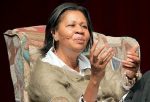
Author Jamaica Kincaid is among the Dan David Prize winners this year. (photo from TAU via Ashernet)
Tel Aviv University (TAU) has announced the winners of this year’s Dan David Prize, which will be awarded at a ceremony at TAU on May 21. Sometimes referred to as “Israel’s Nobel Prize,” this year’s recipients are Swedish biologist Prof. Svante Pääbo, American geneticist Prof. David Reich, American author Jamaica Kincaid, Israeli author A.B. Yehoshua, American astrophysicists Prof. Neil Gehrels and Prof. Shrinivas Kulkarni, and Polish astronomer and astrophysicist Prof. Andrzej Udalski.
The prize is named after the late Dan David, an international businessman and philanthropist.
Born in Romania in 1929, David worked for Romanian TV and later became a press photographer. In 1960, he settled in Israel. A year later, he traveled to Europe. With a loan from a cousin, he won the franchise for the Photo-Me automated photography booths in certain countries, and opened branches in several European countries, as well as in Israel, and eventually took over the company.
In 2000, he founded the Dan David Foundation with a $100 million endowment. The first time the annual prize was awarded was in 2002. David’s aim was to reward those who have made a lasting impact on society and to help young students and entrepreneurs become the leaders and scholars of the future.
שרהפייליןמועמדתלשגרירתארה“בבקנדה? (צילום: Therealbs2002 via Wikimedia Commons)
שרה פיילין נחשבת למועמדת לתפקיד שגרירת ארצות הברית בקנדה. כך פורסם בהרחבה בתקשורת הקנדית והבינלאומית בימים האחרונים. פיילין ששימשה מושלת מדינת אלסקה בשנים 2006-2009 הייתה בין הראשונים להתייצב לצידו של דונלד טראמפ, עת התמודד בפריימריז על רשות המפלגה הרפובליקנית. באחת מעצרות הבחירות של טראמפ בהן השתתפה לפני כשנה היא אמרה: “טראמפ בונה דברים גדולים שנוגעים בשמים. כל חייו הוא מביט כלפי מעלה”. פיילין נחשבת למקורבת לנשיא החדש, ויתכן ועתה הוא יגמול לה בכך שימנה אותה לשגרירה באוטווה, למניגת ליבה של קנדה. עם זכייתו של טראמפ בנשיאות בבית הלבן היא הוזכרה כאחד המועמדים המובילים לתפקיד שרת הפנים של ארה”ב. וכן לתפקיד השרה האחראית על יוצאי הצבא. בנושא זה התבטאה פיילין כי: “הבירוקרטיה הורגת את הווטרנים שלנו”.
מזה כחודש אין לארה”ב שגריר באוטווה לאחר שברוס היימן, נתבקש לעזוב את תפקידו בראשית ינואר על ידי ממשלו של טראמפ. היימן (יהודי חבר המפלגה הדמוקרטית) שהחזיק בתפקיד השגריר בקנדה כשלוש שנים היה מקורב לנשיא היוצא, ברק אובמה. קודם למינויו לשגריר הוא שימש בכיר בבנק ההשקעות האמריקני גולדמן את זאקס ולאחר מכן היה לאיש עסקים.
דובר הבית הלבן, שון ספייסר, גרם ביום רביעי שעבר לתדלוק השמועות על המינוי של פיילין לתפקיד השגרירה בקנדה, כיוון שהוא סירב לאשר או אף להכחיש אותו. פייליין שכמו טראמפ מגיבה כל הזמן באמצעות חשבון טוויטר, לא התייחסה אף היא לשמועות על התפקיד החדש שמיועד עבורה.
חבר הפרלמנט הקנדי מטעם המפלגה הדמוקרטית החדשה, ניתן כהן, טוען כי מינויה של פיילין לשגרירה כמוהו להתמודד עם שני דונלד טראמפ. לדבריו הענקת תפקיד השגריר לפיילין יזיק למאמצי קנדה לחזק את הקשרים עם הממשל החדש של טראמפ, ויהיה קשה לקחת אותה ברצינות. הוא הוסיף: “פיילין אף פעם לא הרגישה בנוח עם האמת”. חבר פרלמנט נוסף מטעם המפלגה הדמוקרטית החדשה, צ’ארלי אנגוס, ציין כי המינוי הזה מראה עד כמה הממשל של טראמפ לא לוקח ברצינות את קנדה. ואילו רבים מהגולשים בקנדה הגיבו בצחוק ובגיחוך לגבי האפשרות שפיליין תזכה במינוי של השגרירה באוטווה.
פיילין (בת ה- 52 ואם לחמישה ילדים) הייתה ב-2008 מועמדת לתפקיד סגן נשיא ארה”ב, עת הכריז הסנטור הרפובליקני, ג’ון מקיין, כי יתמודד על תפקיד הנשיא מטעם מפלגתו. לדעת רבים מהמומחים בארה”ב פיילין רק הזיקה למקיין לזכות בתפקיד, והוא הפסיד לברק אובמה. מושלת אסלקה לשעבר נחשבת בדעותיה לימנית שמרנית (היא מתנגדת בין היתר להפלות), ומקורבת מטבע הדברים לאגף הניצי במפלגה הרפוליקנית. פיילין גם משתתפת קבועה באירועים של ‘תנועת מסיבת התה’, שאותה היא כינתה “העתיד של אמריקה”. היא משמשת כיום כפרשנית ברשת הטלוויזיה הימנית פוקס ניוז.
פיילין ידועה כתומכת נלהבת בישראל והיא דוגלת בברית האסטרטגית בין ארה”ב לישראל. יצויין כי במשרדה מוצב דגל ישראל באופן קבוע והיא אף ביקרה בארץ לפני כשש שנים.
אין זה סוד שפיילין נחשבת לאחת מהדמויות השנויות במחלוקת בארה”ב, והיא לא זוכה לאהדה רבה בקרב התקשורת בכל העולם. בראיונות שונים היא מתבלבלת בין מושגים ומפגינה חוסר ידיעה בנושאים בסיסים. דמותה לכן מככבת לא פעם בתוכניות פרודיה שונות. ב-2011 יצא לאור ספר שנכתב על ידי ג’ו מגיניס, שתיאר את פיילין בצורה שלילית. בין היתר נכתב כי היא בגדה בבעלה עם השותף שלו לעסקים וכן הסניפה קוק.
Cornelia Oberlander collaborated with architect Arthur Erickson on many projects, including the Downtown Vancouver Law Courts. (photo by Joe Mabel via commons.wikimedia.org)
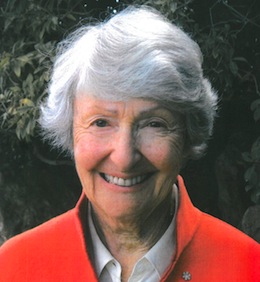
At 95 years old, landscape architect Cornelia Hahn Oberlander can look back on a string of stellar accomplishments.
From the Arctic Circle to Vancouver, from Ottawa to New York to Berlin, Oberlander has carved out a new relationship between the urban environment and nature, created innovative approaches to playgrounds for generations of children and spearheaded initiatives for environmental sustainability.
But she is still struggling with one of the most intractable problems that she has confronted throughout her career, now stretching into its seventh decade. What does a landscape architect do?
When she walks onto the stage of Temple Sholom’s Dreamers and Builders Gala dinner on March 5 at Vancouver Convention Centre East, Oberlander will come with a simple message. “I do not just bring the bushes,” she says. “I take care of the environment.”
During a recent interview at her home near Pacific Spirit Park, Oberlander repeatedly comes back to the challenge of explaining the work of a landscape architect.
She passes quickly over projects that made her an influential trailblazer on the global stage. She does not want a spotlight shining on her own life story and her quiet but unwavering lifetime commitment to Temple Sholom. She is hesitant to say too much about projects she is now working on.
“Look at the big picture and not all the other stuff,” she tells me. She wants to talk about the design process, building landscapes commensurate with climate change, and the need for green spaces in cities.
She sees the gala as an educational opportunity. “It’s about tikkun olam, which means, to heal the earth,” she says.
At the inaugural Temple Sholom Dreamers and Builders Gala, Oberlander will be honoured for her work as a landscape architect and as a founding member of the synagogue. A highlight of the evening will be biographer Ira Nadel in conversation with Oberlander. Among his numerous books, Nadel, in 1977, co-authored with Oberlander and Lesley Bohm Trees in the City, which advocates for integration of trees into the pattern and function of urban activity.
Temple Sholom will also unveil an $1,800 youth award for a teen who has demonstrated a passion for healing the world through tikkun olam.
Oberlander has been called a national treasure, the dean of Canada’s landscape architects. With a feisty personality and resolute sense of purpose, she has been regarded as “a force of nature” and “the grand dame of green design.”
World-renowned “starchitect” Moshe Safdie has collaborated with Oberlander on several projects over the past 35 years, including the Vancouver Public Library and the National Gallery of Canada in Ottawa. “It was a joy to work with her,” he says.
Oberlander is passionate about integrating landscape with architecture, says Safdie. “Above all, Cornelia is a great craftsman of landscape, paying as much attention to concepts as to the craft of sustaining plant-life both in the natural and built environment.”
Temple Sholom celebrates renowned landscape architect and founding synagogue member Cornelia Oberlander at its inaugural Dreamers and Builders Gala on March 5. (photo from Temple Sholom)
Oberlander is a fearless innovator, says Phyllis Lambert, architect and founder of the Canadian Centre for Architecture in Montreal. Oberlander not only considers the ecology, the natural environment and the nature of soils, plants, light and shade, she also looks into the history associated with the landscape and the architectural design. “No one else does that,” says Lambert.
When I phone Oberlander for an interview, she has difficulty finding time to speak with me. She maintains an incredibly busy professional life. “I just got another job this morning. I have six huge jobs,” she says shortly after we finally meet.
Oberlander works from a studio in her spectacular 1970 post-and-beam home on stilts above a ravine, surrounded by hemlocks, western cedars, big leaf maples and 20-foot-high rhododendron species. The boundary between indoors and outside is fuzzy. With huge glass walls, she can see forest and sky from most spots in her home.
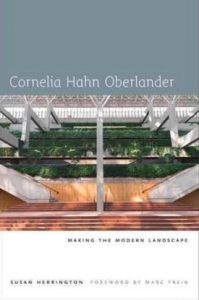
Oberlander’s mother Beate Hahn, a horticulturalist, published books on gardening. Oberlander, born in Mulheim, Germany, decided when she was 11 that she wanted to create parks. Susan Herrington, in Cornelia Hahn Oberlander: Making the Modern Landscape, writes that Oberlander, by the age of 15, was sketching drawings of wooded parkland and experimenting with organic gardening, using birds and insects to mitigate pests.
Oberlander’s father, an industrial engineer, died in 1932 during an avalanche while skiing. Oberlander came to the United States in 1939 with her mother and sister and, after completing high school, enrolled in Smith College, a women’s college in western Massachusetts.
By the time she graduated from Harvard University’s Graduate School of Design in 1947, she viewed landscape architecture as much more than gardens. She had been taught to look for inspiration for design and plant material in history, art and culture and to seek out collaboration across disciplines. Oberlander now describes her approach as the art and science of the possible. The spark of creativity is the art; research coupled with analysis is the science.
Her perspective continued to evolve. “I am trying to show in my landscape today the impact of climate change and clean air, emphasis on alternative energy with low carbon emissions, sustainable use of water and land, preservation of endangered species and protection of the biodiversity,” she says in the interview. “We [landscape architects] are no longer just garden-making. We are creating environments for human beings that are commensurate with saving the environment.”
Oberlander worked in the early 1950s in Philadelphia before moving to Vancouver in 1953 with Peter Oberlander, who she met while at Harvard. Peter had been invited to Vancouver to establish the School of Community and Regional Planning at the University of British Columbia.
In her early years in Vancouver, she designed landscapes for private homes and children’s playgrounds. Her innovative approach to playgrounds began to attract attention following her work on the Children’s Creative Centre at the Canada Pavilion at Expo ’67.
Oberlander reimagined what a playground could be. She replaced swings and metal climbing structures with trees, piles of sand, a stream, logs and covered areas. In the following years, her ideas about spontaneous exploration and unstructured play spread across the continent.
Although her name-recognition is limited outside professional circles, most Vancouverites have enjoyed the benefits of her designs. Oberlander reshaped how Vancouver relates to its waterfront with an idea she had in 1963, as she was driving along Jericho Beach. City staff were burning logs that had washed ashore. She recalls going straight to the park board office with a proposal to use the logs as benches. They gave her a hearing and heeded her advice.
It was her work in the 1970s with architect Arthur Erickson that took her reputation beyond the playground. Beginning a relationship that lasted more than 30 years, she collaborated with Erickson on the Robson Square courthouse and government complex, one of the earliest green roofs in North America. She created an oasis in the centre of Vancouver with white pines, Japanese maples, white azaleas, roses, dogwoods and citrus trees. Her work on Robson Square established her reputation for meticulous research into soils, plants and structures, her creative ideas, and her “invisible mending” for weaving nature into urban development.
At UBC’s Museum of Anthropology (1976), she designed a simulation of an open meadow in Haida Gwaii with indigenous grasses and plants used by First Nations for medicine and food. At the National Gallery of Canada in Ottawa in 1988, she envisioned the landscape as an extension of the museum’s collection of Group of Seven paintings. Her work in the 1990s on the C.K. Choi Building at UBC, with its biological marsh to process recycled water, and the legislative building in the Northwest Territories, reflect her commitment to sustainability, the inclusion of social and cultural values and the use of native plants. Determined to rely on indigenous plants in the Arctic, she collected seeds and cuttings, and brought them to Vancouver to propagate. Three years later, she took the plants back and nestled them among the rocks outside the building.
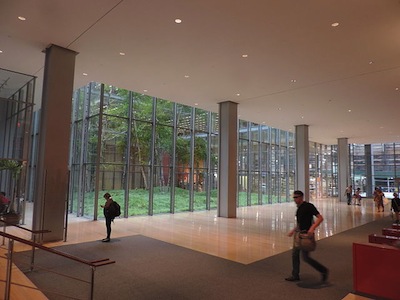
Oberlander brought greenery to the heart of Manhattan in 2007, planting northern birch trees amid sculpted mounds in a central courtyard of the New York Times building. In Vancouver around the same time, she turned to botanist Archibald Menzies, who accompanied Captain George Vancouver in 1792, for the selection of plant material, bulbs and grasses on the roof garden at the Van Dusen Botanical Garden Visitors Centre. She used only plants that he described more than 220 years ago.
Pointing to stacks of research notes, drawings and books scattered about her studio and in two other rooms, she stresses the importance of research and of integrating the site with the building. She says she is constantly looking for new technologies to advance sustainability and respond to climate change. “As a landscape architect, you have to know the building, the reason for the building, the way the building works,” she says.
Looking south at the New York Times atrium, which was designed by Cornelia Oberlander. (photo by Jim Henderson via commons.wikimedia.org)
Oberlander is hesitant to reveal all her current commissions, saying some are “political.” But she mentions that, after our interview, she is going to a meeting on restoring the grounds of the so-called Friedman House, designed by Swiss architect Frederic Lasserre. The mid-century modern house, built in 1953 for Sydney and Constance Friedman, was her first project when she moved to Vancouver.
Also, she is part of a team redesigning a garden at the National Gallery of Ottawa, she is conducting research on the lack of green spaces in downtown Vancouver and she is working on a roof garden for a small apartment block in South Granville. As we talk, she pulls out drawings of a new roof garden at the Vancouver Public Library, where she is working with a team redesigning the roof garden that she designed in the early 1990s.
Oberlander has received the most prestigious awards in the world of landscape architecture but she diverts the focus away from her achievements. “What is amazing is that landscape architecture, the way I practise it, is being recognized,” she says.
Throughout her career, she and her husband Peter maintained close ties to Temple Sholom.
In searching for their place in the early 1960s in Vancouver’s Jewish community, the young couple with three children felt that something was missing. They decided to bring Reform Judaism, already familiar to Peter from his childhood in Vienna, to Vancouver. Gathering a small group of Jews in their living room in 1964, they were among the founders of Temple Sholom.
Oberlander shared her passions and talents with Temple Sholom over the years: providing honey and home-grown apples at Rosh Hashanah, reading the Book of Jonah with Peter on Yom Kippur for more than 20 years, and beautifying the holy community both inside with flowers for the High Holidays and with peaceful exterior landscapes. She also designed Temple Sholom’s cemetery in Surrey.
As I step outside at the end of the interview, she recalls the words of her husband Peter three days before he died in 2008.
“He said to me, tikkun olam,” she says. “I said, yes, you have done that all your life with the city and I with my greening efforts.
“And he looked me straight in the eye and said, you, Cornelia, must carry on.
“And so I know every day what I am supposed to do.”
Robert Matas, a Vancouver-based writer, is a former journalist with the Globe and Mail.
Sam Bob is one of seven šxʷʔam̓ət, cast members. The play will run at Firehall Arts Centre March 3-11. (photo by David Cooper, design by Dafne Blanco)
Vancouver theatre director David Diamond, who founded the Theatre for Living 36 years ago, is hard at work this month on a play titled šxʷʔam̓ət(home), about reconciliation between indigenous and non-indigenous Canadians. Eleven performances are scheduled March 3-11 and Diamond says anyone that has any interest in a healthy Canada will find the play interesting.
“I don’t think we necessarily understand where we live but I think we all have a vested interest in living in a healthy country,” he reflected. “The tagline for the play is, What does reconciliation mean to you? Our hope is that we’re asking real questions about how to engage in this (reconciliation), in an honourable way that isn’t a repetition of colonization.”
Diamond was born in Winnipeg and has lived in Vancouver since 1976. Why did he choose the subject of reconciliation for his latest play? “Some of it is just paying attention to what’s happening in the world,” he said. “The Theatre for Living has a long history of working with indigenous communities throughout Canada and the reconciliation issue has gained a lot of prominence in the last couple of years. It feels important to ask these serious questions about reconciliation at a time when a lot of people are questioning whether the process in Canada is even valid.”
The issue of reconciliation has many layers, he added. “Sometimes people want to imagine there’s a solution – but, of course, there isn’t one, there are millions of smaller things that need to happen, that make up larger solutions. We have a lot of conversations to have internally about legacy, colonialism and the reality of the country we live in. Some of those conversations are internal to indigenous communities and only then can we get to the conversations in between communities. All of that has to occur in order for reconciliation to be an honourable, honest and real thing.”
Diamond has been involved in the subject of reconciliation for decades. “I’ve been very privileged and honoured to be invited into conversations on issues that arise out of colonialism and to work with indigenous communities,” he said. “The best thing a production like this can do is ask real and challenging questions, questions that we legitimately don’t have answers to. And then, because the theatre is interactive at every performance, to navigate a very deep conversation every night, that helps transform people’s relationship to the issues.”
Theatre for Living is collaborating with Journeys Around the Circle Society for this production, which began with a workshop and creation process on Jan. 30. It’s the same procedure Diamond has followed for many of his larger shows over the past few decades. Diamond strives to produce interactive theatre that challenges perceptions and creates social change, and this performance will consist of life-based stories woven together, as well as challenges to the audience to make reconciliation respectful and real.
Performances of šxʷʔam̓ət will be held at the Firehall Arts Centre, and tickets cost $15, with matinées priced at two-for-one. The trailer can be seen at youtube.com/watch?v=1Srk5Vlvueo and more information can be found at theatreforliving.com.
Lauren Kramer, an award-winning writer and editor, lives in Richmond. To read her work online, visit laurenkramer.net.





 Oberlander reimagined what a playground could be. She replaced swings and metal climbing structures with trees, piles of sand, a stream, logs and covered areas. In the following years, her ideas about spontaneous exploration and unstructured play spread across the continent.