Reflections on elections

(photo by Cynthia Ramsay)

Advance voting is underway across British Columbia for municipal elections that culminate Oct. 20.

There are many dedicated, informed people with excellent ideas running for office in Vancouver and in communities across British Columbia. This is especially fortunate, since this year saw what may be the greatest number of incumbents in recent memory opt not to seek reelection. Of the 10 members of Vancouver city council, for example, only three are running for reelection. (One is running for mayor.) Mayor Gregor Robertson is also leaving the scene.

A similar change is evident across Metro Vancouver, where an inordinate number of incumbent mayors and councilors have chosen not to continue serving. Part of this may be coincidence and part may be that new funding rules put in place by the province have made the task of running more challenging, in some ways. Whatever the reasons, Vancouver and many other communities face a major realignment in our local politics.

Especially at a time like this, it is a little disappointing that there are not more individuals from the Jewish community who have chosen to offer themselves for office. It has been encouraging, on the other hand, to see the number of people from the community who are volunteering on campaigns and taking a very active role in engaging with candidates. The candidates forum for several mayoral hopefuls, sponsored by the Centre for Israel and Jewish Affairs (CIJA) and the social service agency SUCCESS, was well attended. Another event, organized by CIJA and the Canadian Jewish Political Affairs Committee, allowed people to speak one-on-one with those who would like to be mayor of Vancouver.

There are, of course, not a lot of “Jewish issues” in local elections, though candidates for mayor addressed a number of things that are of concern to the Jewish community at a recent candidates forum. (For story, click here.) Ensuring that our municipalities remain welcoming, safe places for members of every ethnocultural community is a top priority. Part of that comes from people in positions of leadership leading by example. We have seen, in the United States, Europe and elsewhere, the licence that can be given to people with ill will when leaders choose to engage in incendiary language. It has been reassuring that there have, to date, been no serious incidents in local campaigns of overtly divisive language or strategies.

While the atmosphere has not been terribly divisive, division is the key word for traditional political parties in Vancouver.

Vision Vancouver, which has dominated the city for the last decade, has collapsed, not even managing to put up a candidate for mayor. The Non-Partisan Association (NPA) is a house divided, with at least two new parties emerging from disaffected former members.

The likelihood of independent candidates being elected to Vancouver city council and boards – as well as to the mayor’s chair – has probably never been greater. It could be an interesting mix for the next four years, with a constructive amalgam of different ideas coming together to synthesize into good policy – or it could be four years of chaos.

On the topic of chaos … a word about Vancouver’s at-large voting system. It is difficult enough to make an informed choice for the one position of mayor with 21 people contesting the race. It is an entirely different ballgame to try to make sense of the 137 candidates running for the 26 positions on city council, school board and park board. There is simply no way to expect reasonable, ordinary people to inform themselves adequately about this number of candidates.

Vancouverites have been floating the possibility of a ward system for decades but still face this daunting and compendious ballot every election. A ward system would not be without it faults – it could have the effect, for example, of elected officials representing their narrow constituencies against the broader interests of the city at large – but it would certainly permit average voters to become more familiar with the candidates who would represent them.

For now, though, this is the system we are in. And finding our way through it and voting with the best information we can access is the least we can do as citizens of a democracy. Despite the fact that local government is the one that has the most direct impact on our everyday lives, it is also the one that tends to attract the lowest voter turnout.

The last election saw a turnout of about 43%, which is comparatively good for a local election. (The one before that saw less than 35% turnout.) Some observers have suggested that the circus-like circumstances this year could help voter turnout, with so many new groups and independent candidates trying to get their supporters to the polls. Still, with 21 candidates for mayor – at least a half-dozen of them serious contenders – the possibility of someone taking the position with, say, 25% of the vote, is a real possibility. If turnout were to rise to a comparatively healthy level of, say, 50%, that would still mean the mayor has a mandate from a mere 12.5% of voters.

But, consider this from your perspective as a voter: the power of your one ballot to influence the outcome may be higher than ever.


Eclectic mix of plays at Bard

Left to right are Jennifer Lines, Quelemia Sparrow and Marci T. House, who form part of the cast of Lysistrata. (photo by David Cooper)

At Bard on the Beach this summer, there is an eclectic mix of plays. There is Macbeth, set in its proper period, which runs in repertory on the BMO Stage with a Beatlemania version of As You Like It. On the more intimate Howard Family Stage, there is an experimental gender-role reversal take on little-known Timon of Athens and Lysistrata, a somewhat X-rated farcical romp through an ancient Greek tale, with a contemporary twist.

For Lysistrata, University of Victoria professor Jennifer Wise (Canadian Jewish Playwriting Competition winner) collaborated with director Lois Anderson to adapt Aristophanes’ 411 BCE comedic protest play about a group of Athenian and Spartan women who, tired of their husbands’ endless war-mongering, reluctantly decide to withhold sex until the men vow to give up fighting and stay at home with their families. You can probably guess what ultimately happens. But, to get there, the audience is led through a Monty Python meets Saturday Night Live series of misadventures replete with double entendres, an interesting use of plastic pool noodles and plenty of rollicking action.

The play’s backstory is Bard’s scheduled production of an all-female Hamlet that morphs into a dramatis interruptus as the company decides, at the last minute and with profuse apologies to the audience and artistic director Christopher Gaze, to stage Lysistrata this one night only to protest the pending rezoning of Vanier Park to make way for a shipping terminal. This leads to a lot of backing-and-forthing through ancient Greece and modern-day Vancouver interspersed with the ever-sublime Colleen Wheeler, as Hamlet, trying to get her “to be or not to be” soliloquy in, despite the change in plans, as she hauls “poor Yorick’s skull” around the set.

This is truly an ensemble cast and every member shines, but special mention must be made of Luisa Jojic’s role as the eponymous ring leader, Jennifer Lines as Mother Earth and Quelemia Sparrow’s poignant performance as an indigenous actor.

Mention must also be made of the two male artists (Sebastien Archibald and Joel D. Montgrand) who, as uniformed police officers, “stop” the performance to arrest one of the actors – who has defaced the rezoning signs and plastered graffiti all over the crab sculpture in front of the Planetarium – for public mischief. It all seems very real and is very funny, especially since one of the cops plays Wheeler’s husband, Ross.

In addition to Wise, other Jewish community members play prominent roles in the production. Mishelle Cutler makes her Bard debut as music director and one-woman orchestra. She uses 1930s Weimar cabaret-style music for the contemporary scenes, and opera and choral works for the more classic Greek theatre bits. Choreographer Tara Cheyenne Friedenberg takes that music and provides novel dance moves, especially for the quirky geriatric men versus women Athenian reel.

In keeping with the environmental theme of the night, the costumes and accessories are simple, to give credence to the improvised nature of the show. Head gear is made of hand bags, recycled water bottles and paper toilet rolls, a Starbucks cup does double duty as a wine chalice, costumes made from curtain rods and drapes (à la Carol Burnett’s iconic Gone With the Wind outfit) mix in with the actors’ own street clothes.

Ultimately, this mélange of Shakespeare, Greek theatre and contemporary activism should resonate with all of us, as we grapple with the reality of development in this city and its impact on our heritage and our way of life. While this show is a lot of fun, it may not be suitable for children under the age of 13.

* * *

Sometimes, you have to take risks with Shakespeare and director Meg Roe certainly does so with this adaptation of Timon of Athens. She admits in her notes that it is a “difficult play” and that it may not have been written solely by the Bard. It is the tale of a wealthy Athenian who wines and dines his friends and showers them with expensive gifts until he gets into financial difficulty. When he approaches those friends for help, they refuse. This sends him into a rage and, ultimately, to his death.

In the original version, the cast is predominantly male. In this adaptation, it is 2018, the set is a high-end condo in Vancouver and the cast is reminiscent of the Real Housewives women – uber wealthy, stiletto-heeled and shallow, constantly on their pinging/chirping phones.

Wheeler is sublime in her role as Timon and her manic meltdown into madness alone is worth the price of a ticket. She literally destroys the set. You have to give kudos to the stage crew, who have to rebuild the set for every performance, and to the costumers, who have to replace her white pantsuit every show. The set is stylish and sleek and the couture frocks divine. But, in the end, the basic takeaway is that money can’t buy you friends.

* * *

This summer’s Macbeth is the way Shakespeare intended it to be – in its proper Elizabethan period, with a stark set and eerie smoke and lighting effects. Perfect for a tale of greed, lust for power and revenge.

Early in the play, Macbeth (Ben Carlson) encounters three witches (the ones with the famous brew that includes the “liver of a blaspheming Jew”) who predict that he will be king of Scotland. Once Lady Macbeth (Moya O’Connell) hears of this, she sets out to convince her husband to murder King Duncan when the king visits their castle so that he, Macbeth, can reign. And so begins their downward spiral towards murder, death, destruction and madness.

Carlson and O’Connell are the crème de la crème of Canadian acting and exude an intense chemistry as the plotting Scots. Special mention must be made of Andrew Wheeler as a gruff Macduff and Craig Erickson as a ghostly Banquo.

* * *

Bard’s As You Like It is the must-see show of the summer. It is definitely a crowd-pleaser. And you will want to see it over and over again. Director Daryl Cloran has taken out half the Shakespearean text and inserted 25 of the Beatles’ top hits where appropriate in this tale of four pairs of young lovers (and the obstacles in their paths) so that, when one of the pairs, Rosalind (Lindsey Angell) and Orlando (Nadeem Phillip), locks eyes the for the first time, he breaks out in, “She loves you, ya, ya, ya.” Every situation easily morphs into a Beatles’ moment through songs like “Help,” “I Want to Hold Your Hand,” “Eight Days a Week” and so forth. The 1960s setting is split between urban Vancouver and the Okanagan, where various characters are exiled by the new duke on the block. There, in the wilderness, the four love stories unfold.

In addition, there is a pre-show display of Wildcat Wrestling, a psychedelic VW van parked on stage, a terrific four-piece band led by musical director Ben Elliott who does double duty as love-struck Silvius and is one half of a memorable and raunchy pas de deux with Jojic as Phoebe the shepherdess. That girl can belt out a song.

The standouts are the protagonists Angell and Phillip – they both sing and dance up a storm – Kayvon Khoshkam, who is simply terrific as the wrestling master of ceremonies and then later as the court fool, Touchstone, and Ben Carlson who, as the stereotypical beatnik, intellectual elitist, gives the audience a new take on the “all the world’s a stage” speech.

This is a fast-paced, fun night of music, song and dance that will have you humming these tunes all the way back home. Even old Will himself is probably rocking in his grave over Stratford-upon-Avon way.

* * *

Bard on the Beach runs to Sept. 22. For tickets to any of the shows and more information, go to bardonthebeach.org or call the box office at 604-739-0559.

Tova Kornfeld is a Vancouver freelance writer and lawyer.

Local office open again

Yael Levin, executive director, Israel Bonds Vancouver. (photo from Israel Bonds)

For more than two years, the local Israel Bonds office was closed, and anyone wishing to contact Bonds had to go through Toronto. But, last July, the local office started to open again, initially for a few hours a week. By September 2017, it was open two days a week. Finally, on Feb. 1 this year, it reopened fully, with Yael Levin in the role of executive director.

Levin will be spearheading an effort not only to raise the profile of Israel Bonds here and find more investors, but she will also form a strategic plan and host a number of events each year for the community.

The reopening was championed by Israel Bonds Canada chief executive officer Raquel Benzacar Savatti, who wanted to ensure that Vancouver’s Jewish community is served.

“I know that smaller communities do feel the loss when organizations close their offices…. Although we kept in touch with our Vancouver clients through our other offices, it’s not the same as having a presence,” said Savatti. “Vancouver is a wonderful community, our third largest, and it’s important that we have an office to serve investors in this savvy financial hub.”

Savatti was hired in December of 2016 and had a number of other priorities to deal with before searching for the appropriate executive director for the Vancouver office. She credits Nadine Katz – who is still working in client services at the local office – with connecting her to Levin.

Levin comes to the job ready to work in English, Hebrew or Spanish. Born in Mexico City, Levin made aliyah in 2002. She lived and worked in Israel for four years and then moved to Vancouver for a couple of years before returning to Israel until 2012, when she came back to Vancouver with her family to stay.

“I love to work in my community,” said Levin when asked what appealed to her about joining Israel Bonds.

Since her return to Vancouver in 2012, Levin has worked for Jewish National Fund and, most recently, for the Centre for Israel and Jewish Affairs, Pacific Region. At CIJA, she worked with members of the non-Jewish community and welcomes the chance to share the investment tool that Israel Bonds has to offer both within and outside of the Jewish community.

Having never defaulted on a loan since its establishment in 1951, Israel Bonds has a notable track record and a better interest rate than other comparable fixed-term investments. One of the highest-profile investors in the world, Warren Buffett, has been a vocal supporter of Israel Bonds. Savatti shared a story of a recent event that Buffett headlined for Bonds. In order to attend the event, investors needed to buy a minimum of $1 million in bonds. In the first three minutes of his address, Buffett challenged those in attendance to buy five more $1 million bonds, which he would match. She said the crowd responded.

While not everyone can invest so much, obviously, Savatti was clear that the mission of Israel Bonds offices throughout Canada, the United States, Mexico, Brazil and Europe is to raise awareness in the Diaspora of needs in Israel. In the early days of the state’s existence, funds were needed for basic infrastructure like roads and schools. Now, the money, which goes directly to Israel’s finance ministry, is used for projects such as high-speed trains and water desalination.

Savatti was quick to point out that, while things are going well with Israel’s economy at the moment, when the chips are down, it’s friends of Israel, both Jewish and non-Jewish, around the world who continue to support and invest in the state of Israel.

Another important job for local Israel Bonds offices like the one in Vancouver is to educate investors. Levin is actively engaged in the planning of two programs scheduled for this fall. One will be a financial literacy seminar for women and the other will be a larger community event with a keynote speaker of note.

Anyone who is interested in becoming involved as a volunteer for Israel Bonds can contact the local office, which is located on the third floor of the Jewish Community Centre of Greater Vancouver, at 604-266-1210. The hours are Monday through Thursday from 9 a.m. to 5 p.m., and Fridays from 9 a.m. to 3 p.m.

Michelle Dodek is a freelance writer living in Vancouver.

אירועים אנטישמיים בטורונטו

תלונות הועברו למשטרת טורונטו בנוגע לסיטקרים האנטישמיים והפוסטרים להחרמת ‘ארומה’ והמוצרים מישראל. (צילום: booledozer)

ארגון בני ברית בטורונטו מדווח על התגברות האנטישמיות בעיר, ובפעילות להחרים מוסדות ישראלים ומוצרים ישראלים. לדברי הארגון סיטקרים אנטישמיים עם צלבי קרס והסלוגן: “צעירים נאצים נמצאים כאן” הודבקו לאחרונה, ברחבי טורונטו על עמודים ברחובות ובמקומות נוספים, בהם במסעדה. במקביל הודבקו פוסטרים להחרים את רשת בתי הקפה הישראלית ‘ארומה” ומוצרים מתוצרת ישראל.

תלונות הועברו למשטרת טורונטו בנוגע לסיטקרים האנטישמיים והפוסטרים להחרמת ‘ארומה’ והמוצרים מישראל.

לדברי בני ברית בשנת 2017 אירעו 1,752 אירועים אנטישמיים בקנדה, לעומת 1,728 ב-2016. בחלוקה לאזורים להלן ארבעת המחוזות המובילים: במקום הראשון אונטריו עם 808 מקרים, במקום השני קוויבק עם 474 מקרים, במקום השלישי אלבטרה עם 206 מקרים ובמקום הרביעי בריטיש קולומביה עם 165 מקרים.

הערים הטובות למגורים: ונקובר, טורונטו וקלגרי בעשירייה הראשונה

שבועון החדשות הבריטי האקונומיסט מדרג כמדי שנה את הערים הטובות בעולם למגורים. מאה ארבעים ערים דורגו לשנת 2017 על פי הפרמטרים הבאים: היציבות הכלכלית, רמת שירותי הבריאות, התרבות והסביבה, החינוך והתשתיות. כרגיל בשנים האחרונות ערים מקנדה ואוסטרליה שולטות בעשירייה הראשונה של הערים הטובות בעולם לחיות בהן. זאת על פי מחלקת המחקר של האקונומיסט.

הנה הן עשר הערים הטובות בעולם למגורים:

ראשונה-מלבורן (מאוסטרליה): בולטת בתחומי החינוך (ציון 100), התשתיות (ציון 100), רמת שירותי הבריאות (ציון 100), התרבות והסביבה (ציון 95.1), היציבות הכלכלית (ציון 95). הציון הכולל של מלבורן הוא: 97.5.

שנייה-וינה (מאוסטריה): בולטת בתחומי החינוך (ציון 100), התשתיות (ציון 100), רמת שירותי הבריאות (ציון 100), היציבות הכלכלית (ציון 95), התרבות והסביבה (ציון 94.4). הציון הכולל של וינה הוא: 94.4.

שלישית-ונקובר (מקנדה): בולטת בתחומי החינוך (ציון 100), רמת שירותי הבריאות (ציון 100), התרבות והסביבה (ציון 100), היציבות הכלכלית (ציון 95), התשתיות (ציון 92.9). הציון הכולל של ונקובר הוא: 97.3.

רביעית- טורונטו (מקנדה): בולטת בתחומי החינוך (ציון 100), רמת שירותי הבריאות (ציון 100), היציבות הכלכלית (ציון 100), התרבות והסביבה (ציון 98.1), התשתיות (ציון 96.4). הציון הכולל של טורונטו הוא: 97.2.

חמישית- קלגרי (מקנדה): בולטת בתחומי החינוך (ציון 100), רמת שירותי הבריאות (ציון 100), היציבות הכלכלית (ציון 100), התשתיות (ציון 96.4), התרבות והסביבה (ציון 89.1). הציון הכולל של קלגרי הוא: 96.6.

שישית-אדלייד (מאוסטרליה): בולטת בתחומי החינוך (ציון 100), רמת שירותי הבריאות (ציון 100), התשתיות (ציון 96.4), היציבות הכלכלית (ציון 95), התרבות והסביבה (ציון 94.2). הציון הכולל של אדלייד הוא: 96.6.

שביעית- פרת’ (מאוסטרליה): בולטת בתחומי החינוך (ציון 100), רמת שירותי הבריאות (ציון 100), התשתיות (ציון 100), היציבות הכלכלית (ציון 95), התרבות והסביבה (ציון 88.7). הציון הכולל של פרת’ הוא: 95.9.

שמינית-אוקלנד (מניו זינלנד): בולטת בתחומי החינוך (ציון 100), התרבות והסביבה (ציון 97), רמת שירותי הבריאות (95.8), היציבות הכלכלית (ציון 95), התשתיות (ציון 92.9). הציון הכולל של אוקלנד הוא: 95.7.

תשיעית-הלסינקי (מפינלנד): בולטת בתחומי רמת שירות הבריאות (ציון 100), היציבות הכלכלית (ציון 100), התשתיות (ציון 96.4), החינוך (ציון 91.7), התרבות והסביבה (ציון 88.7). הציון הכולל של הלסינקי הוא: 95.6.

עשירית-המבורג (מגרמניה): בולטת בתחומי רמת שירותי הבריאות (ציון 100), התשתיות (ציון 100), התרבות והסביבה (ציון 93.5), החינוך (ציון 91.7), היציבות הכלכלית (ציון 90). הציון הכולל של המבורג הוא: 95.

החיים כמו בסרט

גשם של חפצים ניתך על עוברי אורח מקומה תשעה עשרה של אחד הבניינים בווסט אנד. (צילום: Victoria Nguyen via cbc.ca)

הסצנה לקוחה מסרט – לא? מדובר בסיפור אמיתי לחלוטין. עוברי אורח שהלכו על המדרכה ברחוב הארו שבשכונת הווסט אנד, באחד מימי שבת האחרונים, בסביבות שלוש אחר הצהריים, נדהמו לראות פתאם ים של חפצים עפים לעבריהם, מאחד הבניינים (מספרו 1650). מהמרפסת בקומה תשעה עשרה נחתו החפצים אחד אחרי השני. תחילה נזרקו עשרות דפים שהתנפנפו להם להנאתם ברוח. לאחר מכן הגיע התור של החפצים הכבדים ורהיטים בהם כיסאות שעפו ללא רחם מהקומה, ונחתו במהירות על המדרכה. הרעש היה גדול ושברי חפצים וזכוכיות של רכבים עפו לכל עבר.

עוברי האורח חששו מאוד מהמראה הביזרי וחלקם אף צעקו “או מיי גוד”. ובנס אף אחד מהם לא נפגע. אך חפצים כבדים שנחתו על מספר מכוניות שחנו במקום גרמו להם נזק לא קטן. כמה מהאזרחים המבוהלים התקשרו למשטרה וניידת עם שוטרים הוזעקה למקום. השוטרים פתחו בחקירה מואצת ועצרו את הגבר (בן 56), שהשליך את החפצים מדירתו החוצה. התברר להם שהאיש היה תחת השפעת סמים קשה. לכן הוא הועבר תחילה לבדיקה מקיפה בבית החולים הסמוך. לאחר מכן הוא הוחזר לידי המשטרה ונכלא למעצר. המשטרה החליטה להגיש נגד האיש כתב אישום שיכלול מספר סעיפים, בהם גרימת נזק לרכבים ולבניין עצמו.

העורב שמשגע את ונקובר עומד להיות אבא

העורב קנאק שזכה לחשיפה גדולה לאור מעשיו יוצאי דופן, עומד להיות אבא. כך מדווח שון ברגמן שהוא חברו האנושי של קנאק. לדברי ברגמן קנאק ובת זוגתו ססייר שומרים על הביצים בקן שלהם, ויושבים עליהן לסרוגין. ברגמן לא יודע כמה ביצים בדיוק יש לזוג העורבים. הוא משקיף על הקן בפריסקופ ומשקפת שקיבל משכניו שגרים לידו במזרח ונקובר. ברגמן פרסם את המידע על קנאק שעומד להיות אבא בדף הפייסבוק המיוחד שפתח עבורו “קנאק אנד איי”.

בראשית השנה קנאק הפריע לדוור של קנדה פוסט לחלק דואר בקירבת ביתו של ברגמן. כיוון שהעורב הטריד כל הזמן את הדוור החליטה רשות הדואר להפסיק את חלוקת הדואר באזור. הדוור מצא אז דרך לשמח את קנאק והוא התחיל להביא לו בוטנים. ומאז השניים הפכו להיות חברים והדואר שוב מחולק כבעבר.

סרט תעודי שהכין ברגמן על יחסיו עם קנאק (במימון טלאס) הוקרן בפסטיבל סרטים בניו יורק בראשית השנה.

לפני כשלוש שנים בהיותו גוזל קנאק נפל מקן ונמצא על ידי ילד שגידל אותו בביתו. ברגמן שהוא דייר בביתו של אב הילד הלך ביום השחרור לטבע לצפות בעורב, ואז הציפור עפה הישר אליו והתיישבה על כתפו. מאז הם חברים ומבלים שעות. קנאק רגיל לחברת בני האדם, אינו פוחד מהם והם יכולים ללטף אותו ולגעת בו כמו כל חיית מחמד אחרת.

ברגמן התקין טבעת פלסתיק אדומה על רגלו השמאלית של העורב. עשרות אלפי גולשים עוקבים מקרוב אחרי מעשיו שמתועדים בתמונות ובסרטי וידאו. גם אמצעי החדשות מסקרים את מעשיו של העורב שזכה לחשיפה עולמית.

העורב זכה לחשיפה ראשונה בעת שהתיישב על צוואר של צעיר שרכב על אופניים בקרבת ביתו של ברגמן, שהחליט מאז לתעד את מעשיו בפייסבוק. קנאק צולם כשהוא גונב מפתחות, גונב כרטיסים של הגרלה בפארק שעשועים, נוסע ברכבת קלה ומבקר במקדונלד’ס. הוא אף גנב סכין מזירת פשע ותמונתו כשהוא עף עם הסכין והדם עליה נעוצה בפיו זכתה לסיקור עולמי.

Bridging communities

Ariella Kimmel, left, and Sophie Hershfield at last summer’s Winnipeg Pride Parade. Hershfield has been on CIJA’s LGBTQ+ Advisory Council since its inception. In that capacity, she is trying to break down barriers and clear up misconceptions about Israel within the LGBTQ community. (photo from Sophie Hershfield)

As part of the Limmud festival that took place in Winnipeg March 18-19, LGBTQ activist Sophie Hershfield gave a presentation.

A student at the University of Winnipeg, studying English and philosophy, Hershfield became active in the LGBTQ community when she was at Gray Academy of Jewish Education. She has been on the Centre for Israel and Jewish Affairs’ LGBTQ+ national advisory council since its inception last year.

“The talk I gave at Limmud was largely on advocacy within LGBTQ communities, because a lot of them are hostile towards Israel,” Hershfield told the Independent. “Last year, for example, at the Chicago Dyke March and the fallout from that … it was apparent that the LGBTQ community was hostile toward Israel and often to Jewish Zionists within their organizations. At the Chicago Dyke March, people who were on the Pride side were actually told to put their flags away, because of their connection to Israel.”

Hershfield is trying to break down barriers and clear up misconceptions about Israel within the LGBTQ community.

“One of the most successful things I think we did last year was we had an Israel-themed float in the Pride Parade,” said Hershfield. “And we had Jewish people and Israeli people on this float. We actually won best float in the entire parade. People were associating Israel with fun and happiness and being inclusive, those positive connections. There were definitely some positive responses. There were people saying, it was so cool, that Israel is so fun. I didn’t see any negative pushback, just positivity.”

Hershfield is already working with a planning committee on next year’s parade in Winnipeg.

Through CIJA, Hershfield plans to continue her efforts to improve inclusiveness within Jewish communities across Canada and to do Israel advocacy in LGBTQ communities.

“Halifax’s Pride board was incredibly hostile toward Jewish people and toward pro-Israel people – to the point where there were death threats to people who were involved,” said Hershfield. “I wanted to be more preventative, by building positive connections instead of negative ones.”

Jonathan Lerner favours a similar approach. He is assistant director of the Vancouver Holocaust Education Centre, and is also on CIJA’s LGBTQ+ Advisory Council.

photo - Vancouver’s Jonathan Lerner, a member of CIJA’s LGBTQ+ Advisory Council, finds that many LGBTQ Jews “choose one or the other – either they’re involved in the Jewish community or the LGBTQ community, but not necessarily both”
Vancouver’s Jonathan Lerner, a member of CIJA’s LGBTQ+ Advisory Council, finds that many LGBTQ Jews “choose one or the other – either they’re involved in the Jewish community or the LGBTQ community, but not necessarily both.” (photo from Jonathan Lerner)

“Vancouver is a very welcoming place for LGBTQ people, with a society that is very diverse and welcoming,” he said. “The annual Pride Parade draws 600,000 people or more, and there is a month-long celebration. The municipal government is very supportive of these events and, while discrimination still exists, Vancouver as a whole is very welcoming.

“I’ve had great experiences with Vancouver synagogues, including the Reform and Reconstructionist movements,” he added. “I can say that even the Conservative synagogue in Vancouver has sponsored our booth at the Pride festival.”

Still, Lerner feels there remains a disconnect between the Jewish and LGBTQ communities.

“There are plenty of LGBTQ Jews and they’re often involved in Jewish or LGBTQ communities,” he said. “However, I find that most choose one or the other – either they’re involved in the Jewish community or the LGBTQ community, but not necessarily both. Sometimes, one may feel a necessity to choose an identity. For example, if one is associated with LGBTQ organizations, they may be anti-Israel … and so, one may choose to hide one’s Zionism or even Judaism.”

Lerner said that, while CIJA and the Jewish Federation of Greater Vancouver have worked hard at increasing collaboration and sharing between the communities – with recent workshops, training and outreach – more is always welcome.

“It has been challenging at times for LGBTQ people to be out in the Jewish community, and also for Jews to be open about their religion and Zionism in the LGBTQ community,” he said. “I’d like to see that change.”

Meanwhile, in Winnipeg, there have been other initiatives to increase awareness and inclusivity. On Feb. 21, Shaarey Zedek Synagogue hosted at the Jewish deli Desserts Plus an event called LGBTQ Jews: Sexuality, Gender Identity and Judaism, with some 20 attendees. It was led by the synagogue’s Rabbi Anibal Mass.

“Our vision is an inclusive space, a nonjudgmental environment, where you can express your Judaism pretty much your way,” Mass told the Independent.

photo - Spiritual leaders of Winnipeg’s Shaarey Zedek Synagogue, Rabbi Alan Green, left, and Rabbi Anibal Mass. The synagogue is working to become more inclusive
Spiritual leaders of Winnipeg’s Shaarey Zedek Synagogue, Rabbi Alan Green, left, and Rabbi Anibal Mass. The synagogue is working to become more inclusive. (photo from Shaarey Zedek Synagogue)

An LGBTQ group had approached the synagogue, said Mass. Some people from the group attend Shaarey Zedek and were concerned about the level of acceptance at the shul.

“I don’t blame them,” said Mass. “We’ve been changing … the last few years, and some people are unaware of all the changes we went through. We thought that it would be a good time to share with this specific group of people our vision and our values, for them to have it clear. If they have any doubts or questions, they can ask a member of our clergy – what we stand for, what we’re willing to do or not do, etc.”

Mass sees rabbis of the Talmud as examples to follow in regards to being nonjudgmental and inclusive. “They speak about compassion, about loving your fellow human beings,” said the rabbi. “We feel empowered by the works of the rabbis to embrace all these people in our synagogue and make Shaarey Zedek their home.

“I was expecting to have lots of questions [at the event]. I didn’t have too many. I guess maybe they weren’t expecting me to say how open we are. Maybe people thought I would come there and preach … and to say, ‘Yeah, we accept you, but….’ But there was never a ‘but.’ We do accept you, period. So it was a great event.”

At that information event, a gay male couple from the synagogue shared their story with the group, about how they were turned down for a wedding from pretty much every synagogue in town – until they arrived at Shaarey Zedek. The couple said they could not believe how welcoming the congregation was.

“We ended up celebrating their wedding,” said Mass. “Many times, people complain that synagogues don’t offer the answers. The problem is, sometimes we don’t have the questions. We want to know what people in the LGBTQ group actually want, and to make that part of our vision.

“We also detect there will be some challenges for the future that we don’t know how to handle,” he admitted. “For example, how do you serve people who define themselves as non-binary? Do they have a bar or bat mitzvah? Both terms are appropriate.”

To keep things moving forward, Mass plans to start by hosting a group at his house. He understands that it might take awhile for some people to feel comfortable coming to a synagogue. “But, that’s OK,” he said. “If they don’t come to the synagogue, the synagogue will come to them. That’s my philosophy.”

Rebeca Kuropatwa is a Winnipeg freelance writer.

מדד השחיתות

מדד המדינות המושחתות בעולם: קנדה במקום השמיני וישראל רק במקום השלושים ושתיים. (צילום: Cynthia Ramsay)

בימים האחרונים התפרסם מדד המדינות המושחתות בעולם לשנת 2017. המדד כולל מאה ושמונים מדינות שנסקרו, ומיקומן נקבע על פי השחיתות במגזר הציבורי, באמצעות שלושה עשר מקורות מידע משנים עשר מכוני מחקר עצמאיים ובלתי תלויים.

מהתוצאות עולה כי קנדה נמצאת במקום השמיני והגבוה בקרב המדינות הכי פחות מושחתות. ואילו ישראל איך לא לאור פרשות השחיתות הרבות שמאפיינות אותה, ובעיקר את ראש הממשלה, בנימין נתניהו, נמצאת מאחור במקום השלושים ושתיים.

להלן העשירייה הראשונה של המדינות הכי פחות מושחתות: ראשונה – ניו זילנד, שנייה – דנמרק, שלישית – פינלנד, רביעית – נורבגיה, חמישית – שוויץ, שישית – סינגפור, שביעית – שבדיה, שמינית – קנדה, תשיעית – לוקסמבורג ועשירית – הולנד.

העשירייה השנייה: אחד עשרה – בריטניה, שתיים עשרה – גרמניה, שלוש עשרה – אוסטרליה, ארבע עשרה – הונג קונג, חמש עשרה – איסלנד, שש עשרה – אוסטריה, שבעה עשרה – בלגיה, שמונה עשרה- ארצות הברית, תשעה עשרה – אירלנד ועשרים – יפן.

העשירייה השלישית: עשרים ואחד – אסטוניה, עשרים ושתיים – איחוד האמירויות הערביות, עשרים ושלושה – צרפת, עשרים וארבעה – אורגוואי, עשרים וחמשה – ברבדוס, עשרים וששה – בהוטן, עשרים ושבעה – צ’ילה, עשרים ושמונה – איי בהאמה, עשרים ותשעה – פורטוגל ושלושים – קטאר.

אחריהן במקום השלושים ואחד טיוואן, במקום השלושים ושתיים ישראל, במקום השלושים ושלושה ברוניי, במקום השלושים וארבעה בוטסואנה ובמקום השלושים וחמשה פולין.

ערים מתקדמות הופכות אשפה למשאב: ונקובר פועלת להיות העיר הירוקה בעולם

ערים רבות בעולם פועלות בשנים האחרונות לחסוך את העלות הגבוהה של סילוק פוסלת האשפה, הנוצרת בהן מדי יום בכמויות ענק. הן פועלות להפחית את כל צורות הפסולת שלהן, ולהשתמש בפסולת עד כמה שאפשר כמאשב, כך שהיא תהפוך לחומר גלם אחר. כך מדווח אתר הידען מישראל המפרסם מידע בתחום המדע והטכנולוגיה.

הערים בעולם הופכות למאוכלסות יותר וראשי הערים מחוייבים לשאת באחריות למצוא ולפתח פתרונות להרי הזבל שנוצרים בהן. הנוף העירוני הוא כיום הסביבה, שבה מתרכזים האתגרים הכרוכים בניהול חיים אנושיים מורכבים. בערים מתבזבות כמויות גדולות של אנרגיה, פחמן דו-חמצני, מזון, מים, מרחב וזמן. העירייות יכולות לפתור מספר בעיות בעת ובעונה אחת, ולהבטיח לתושבים, הפחתה משמעותית של חלק מהפסולת, תוך הפיכתה למשאב בעל יתרונות כלכליים.

כיום אין בהזרמת הפסולת למי הביוב פתרון סופי ויש להפחית מראש את הפסולת שנוצרת בערים, ולהשתמש בחלק גדול ממנה, לשימושים יעילים יותר. פעילות זו נקראת “כלכלה מעגלית”.

באתרי הטמנה האשפה של ונקובר לוכדים את גז המתאן הנפלט מהאשפה הרבה, ובחום שנוצר משריפתו משתמשים לחימום חממות בסמוך להם, בהן גדלות עגבניות. זו דוגמא טובה של יצור אררגיה חיובית מאשפה.

ונקובר שפועלת להיות העיר הירוקה ביותר בעולם, מחלקת לתושבים מיכלים נפרדים לאשפה רגילה, לפסולת אורגנית (כמו שאריות מזון, ענפים וגזם), לפסולת זכוכית, פסולת נייר, פסולת פלסתיק ועוד. עיריית ונקובר שמצפה מאזרחי העיר שיפעלו בהתאם עם הפסולת לסוגייה כמתבקש, שולחת מעת לעת פקחים לבדוק שזה אכן נעשה.

מן הפסולת האורגנית העירייה מפיקה את גז המתאן, וכן מוצרים מוצקים שיכולים לשמש לדישון הקרקע. לפתרונות אלה מספר יתרונות בעת ובעונה אחת: הם חוסכים לעיר הוצאות על אנרגיה, הם מפחתים משמעותית את הצורך בהטמנת פסולת באתרי האשפה וכן הם מועילים לענף החקלאות.

JCC site to be redeveloped?

An aerial view of the proposed redevelopment of the Jewish Community Centre of Greater Vancouver site, looking south. (image by Acton Ostry Architects Inc.)

On Feb. 7, the Jewish Community Centre of Greater Vancouver was packed with community members, as well as some area residents. For the three-hour open house hosted by the City of Vancouver, visitors worked their way through the crowded atrium, reading the numerous poster boards about the proposed redevelopment of the centre site, and how that redevelopment fits in with the massive changes proposed for the Oakridge neighbourhood.

While it is still early in the process, the City is looking for public feedback by March 30 on the rezoning application it has received for 950 West 41st Ave., i.e. the JCC.

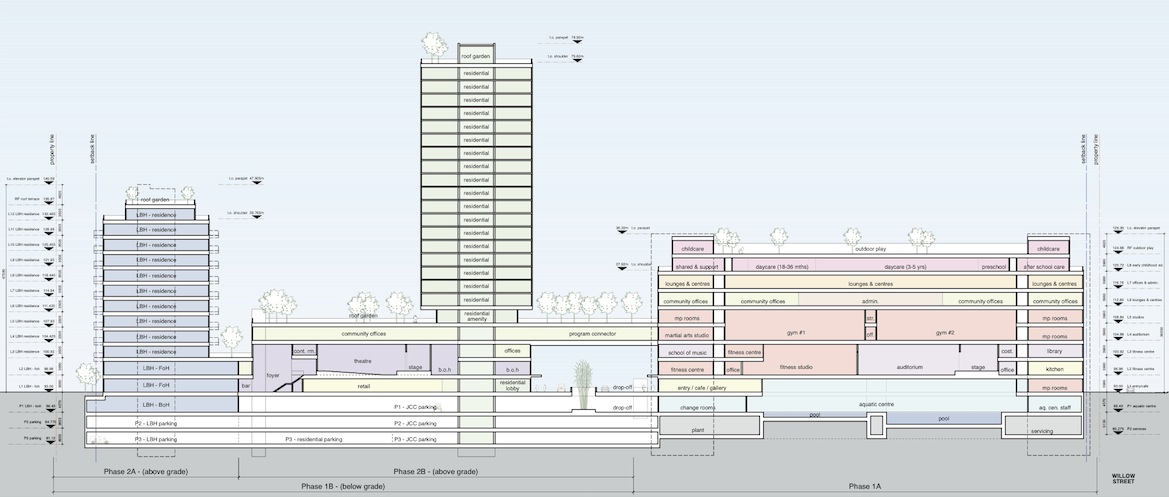
The proposed redevelopment comprises a nine-storey building to replace the current JCC, a 13-storey replacement for the Louis Brier Home and Hospital and a 24-storey residential building.

image - The rezoning application proposes that the redevelopment starts with the building of most of the new JCC on what is now the existing centre’s parking lot, then moves to the construction of the underground parking, followed by that of the new Louis Brier Home and ending with the residential tower and the rest of the JCC
The rezoning application proposes that the redevelopment starts with the building of most of the new JCC on what is now the existing centre’s parking lot, then moves to the construction of the underground parking, followed by that of the new Louis Brier Home and ending with the residential tower and the rest of the JCC. (image by Acton Ostry Architects Inc.)

According to the rezoning proposal, the new JCC would include “recreation space, including pools and gyms; ground-level commercial space; an Early Childhood Education Centre, including 104 private daycare spaces; cultural arts, auditorium and theatre space; [and] nonprofit office space.”

The new Louis Brier would have “266 senior assisted living, complex care and memory care beds,” and the residential building would have “160 secured market rental units,” including 64 studios, 40 one-bedroom units, 40 two-bedroom units and 16 three-bedroom units. “Underground parking, with 693 vehicle parking spaces and 250 bicycle parking spaces, is proposed.”

The rezoning application is being considered by the City under the Oakridge Transit Centre Policy Statement.

The City of Vancouver explains on its website that the Oakridge Transit Centre, across from the JCC, “was formerly home to 244 trolley and 182 diesel buses, and employed over 1,200 transit staff including drivers, mechanics and administrators…. With the completion of the Vancouver Transit Centre on the Eburne Lands in 2006, almost all services moved out of the OTC” within several years and TransLink determined that the OTC was no longer required as a transit centre. TransLink approached the City about the redevelopment of the site: “Council approved a cost-recovered planning program to create a policy statement for the site in February 2014 and the program was publically launched in June 2014.”

The statement was approved in December 2015, after “an 18-month process involving community engagement at key points, and technical planning and design work.” It guides “the rezoning and redevelopment of the Oakridge Transit Centre,” as well as that of the JCC, the Petro Canada Station at the corner of 41st and Oak, and Oakmont Medical Centre (809 West 41st).

The JCC rezoning application was coordinated by Acton Ostry Architects Inc., the JCC and the Louis Brier Home. In the application, which is on the City’s website, Acton Ostry explains that the “surrounding context is in a state of transition and transformation from a low-density semi-urban neighbourhood to a high-density urban centre. Transit is a driving force at the heart of the new town centre with the Canada Line on Cambie Street and a new B-line proposed for West 41st Avenue.” The document notes that King David High School, which is east of the JCC, on Willow Street, uses and “shares many spaces in the existing JCC and is intended to have a dedicated gym in the proposed new JCC, in addition to access and use of many other activity spaces.”

image - How the space in the three proposed new buildings might be used
How the space in the three proposed new buildings might be used. (image by Acton Ostry Architects Inc.)

According to the timeline on one of the posters at the February open house, there was a pre-application open house in November 2016 and the rezoning application was submitted in December 2017. With the City-led open house now having been held, there will be a public hearing, “pending staff review and feedback,” followed by a council vote, again “pending staff review and feedback.” If the rezoning is approved, “the proposal becomes a development application.”

Development and building permits would take months to years to procure, and the construction itself would also take a few years. Since the JCC cannot be non-operational for that long, the project is envisioned in phases. The existing JCC would remain in place as the main building of the new JCC is built on what is now the centre’s parking lot, followed by the construction of the new underground parking lot. Once the new JCC was operational, Phase 2 would start with the new Louis Brier Home, to be located at the opposite end of the development site, then move to the construction of the residential tower and the rest of the JCC, located in between the main JCC and Louis Brier.

The entire rezoning application can be found at rezoning.vancouver.ca. Feedback can be submitted online.

Mothers embrace Mamatefet

Mamatefet’s first Mom and Babe Circle. (photo from Mamatefet)

Meirav Galili and her husband Itai moved to Vancouver with their two children from Israel five years ago. When their third child was born here, the family received lots of support from friends, something that helped make up for the fact that they have no extended family here.

When she heard about a plan to create a network of Israeli moms and moms-to-be, she was one of the first to sign up with Mamatefet.

Mamatefet, which has grown exponentially almost exclusively through word of mouth, is a mash-up of “mama” with the Hebrew word “maatefet,” which is a wraparound or embrace. The group welcomes those who want to be an otefet, an embracer, or a ne’etefet, an embracee. Except, the terms are not mutually exclusive.

“Sometimes it’s our turn to give and sometimes it’s our turn to get some help,” said Galili, adding that the success of the group surprised all involved.

“It was amazing because many, many people said, ‘me, me, me, me, me,’ and quickly we established something,” she said. Understanding the added burden of having and raising children without parents, aunts, sisters-in-law or other family around inspired many women to step forward.

Thanks to Mamatefet, one phone call or a WhatsApp message can put a team into action.

“The woman doesn’t need to ask even,” Galili said. “Everything is being done for her. She just needs to tell a friend, ‘My child is sick with me’ or ‘I have to stay at the hospital for tonight,’ and we’ll take it from there, and when they get home they have everything. It’s a very strong, warm feeling that we are not alone and we have this supportiveness.”

That is exactly what Rotem Regev had in mind when she and four friends conceived of Mamatefet in late 2016.

“It was one of those nights,” Regev recalled, “a few friends got together sitting around the coffee table chatting, recounting their individual – which we then realized were quite collective – stories of transition, to Vancouver, to motherhood, and how that intersected. What became really crystal clear to all of us is that we were feeling quite a bit of loneliness at that time, whenever that transition was, coming to Vancouver either pregnant or with a very little one, when there is not a school yet or any sort of structure to fit into…. To top that off, you would also be facing an extra challenge being away from your family and friends in a country that doesn’t yet quite feel like home and a language that doesn’t quite feel like home and a healthcare system that feels very, very different.

“We didn’t want any woman to feel the loneliness that we felt,” she said.

photo - Mamatefet offers moms like Osher Cohen support, including the occasional homemade meal, and friendship
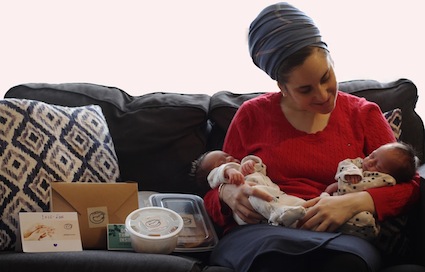
Mamatefet offers moms like Osher Cohen support, including the occasional homemade meal, and friendship. (photo by Lior Noyman)

When they decided to share their idea, they thought maybe five more women would join, perhaps seven. A few months later, they had 70 embracers and more than 40 embracees.

“The word spread out like wildfire really, because I think the need was so great,” said Regev, who is a clinical psychologist. There are a couple of similar groups in Israel and something sort of like Mamatefet in San Francisco and another in New Jersey, but, considering the evident need, it is a surprisingly rare initiative.

Regev and her Mamatefet co-founders Tamara Halamish, Yael Pilo Raz, Yael Mayer and Matti Feigelstock, have now seen their project expand from Vancouver to teams in Richmond, Ladner, Surrey, North Vancouver and East Vancouver-Burnaby, with a new team gearing up in Langley and the Tri-Cities.

In general, Mamatefet volunteers will deliver food, often including a Shabbat meal. There are regular meet-up groups for pregnant women and another for new moms. They are also on call in case of a crisis, like a miscarriage or a stillbirth.

But it’s the informal friendships that organically develop that are as important, said Marina Ingel. Being able to arrange play dates, exchange kids’ clothes, have a coffee with other new moms – this is an important outcome too, she said.

One of the reassuring things is talking to other moms about how the medical system in Canada differs from that in Israel.

“Here it’s totally different. Everything,” said Ingel. “In Israel, every time you’re going to the doctor, you’re doing an ultrasound. Here, you have maybe two the whole pregnancy. A bunch of things that they’re checking in Israel, they’re not doing this at all. But then you realize it’s fine and, if you have any problem, they will check it. Everything is OK, but the thing is that you’re worried about it, because it’s new to you.”

For Galili, cooking is both a hobby and a way to support other new moms.

“They send a message saying there is a woman who is about to come home with a baby and [asking] who is willing to participate,” she said. “I thought, OK, I need to prepare something anyway so I’ll just prepare something extra.”

Baking, homemade granola and yogurt, soups and a main dish, comfort food like chicken and rice, are the sorts of things she preps for new moms.

“If her mother were here, this is what she would probably make for her,” said Galili.

Mamatefet can be reached via facebook.com/mamatefet.