טקס יום הזיכרון ואירוע יום העצמאות המרכזי בוונקובר יערכו בג’ואיש קומיונטי סנטר ובמרכז צ’אן סנטר
טקס יום הזיכרון לחללי מערכות ישראל ולנפגעי פעולות האיבה 2018 יערך כרגיל מדי שנה בג’ואיש קומיונטי סנטר של אזור מטרו ונקובר, בשיתוף פעולה עם הג’ואיש פדרשיין של מטרו ונקובר. האירוע יתקיים ביום שלישי ה-17 באפריל החל מ-7.30 בערב והכניסה חופשית. בכך יפתח יום הזכרון בוונקובר ולמחרת יחול יום העצמאות השבעים להולדתה של ישראל. הג’ואיש פדריישן תקיים את האירוע המרכזי ליום העצמאות של ונקובר, במרכז צ’אן לאומניות הבמה בקמפוס של אוניברסיטה של בריטיש קולומביה. זאת, למחרת יום רביעי ה-18 באפריל, גם כן בשעה 7.30 בערב. באירוע החגיגי לאחר הנאומים, יתקיימו הופעות של האמנים הזמרת נינט טייב והזמר שלומי שבן.
טייב (בת ה-34) היא זוכת העונה הראשונה של תוכנית הטלוויזיה ‘כוכב נולד’. מלבד שירה היא גם משחקת ואף שימשה שדרנית ברדיו. ביולי 2016 טיבי ובעלה (יוסי מזרחי) ובתם עזבו את ישראל ועברו לגור בלוס אנג’לס.
שבן (בן ה-41) הוא זמר יוצר וגם פסנתרן ואף זכה ברפס אקו”ם. הוא נשוי לשחקנית יובל שרף ולזוג שני ילדים.
עלות מחירי הכרטיסים (רבים מהם כבר נמכרו): 18 דולר, 36 דולר או 70 דולר.
פשע בקנדה: תמונת הסלפי הסגירה את הרוצחת שחגרה חגורה בה רצחה את חברתה הטובה
מי היה מאמין שתמונת סלפי תמימה של שתי חברות טובות שהועלתה בפייסבוק, תביא להרשעתה בדין של אחת החברות שרצחה שעה קלה לאחר מכן את חברתה. סיפור הרצח המזעזע כאילו לקוח מאחד הפרקים של הבלש המיתולוגי הבריטי שרלוק הולמס.
לפנכי כשבועיים בית המשפט המחוזי בסיסקצ’ואן גזר על שיין אנטואן (בת ה-21), מהעיר ססקטון, שבע שנות מאסר על רצח חברתה הטובה בריטני גרגול (שהייתה בת 18 במותה), בחודש מרץ לפני כשלוש שנים. לפי חקירת המשטרה מתברר כי שתי הצעירות יצאו לבילוי משותף וביקרו במספר פבים ושתו הרבה וכנראה גם עישנו סמים. לאחר מכן התגלע וויכוח מר ביניהן, ובמהלכו אנטואן חנקה את גרגול והשליכה את גופתה בסמוך לאחד הכבישים בססקטון. ליד הגופה החוקרים מצאו חגורה שחורה גדולה.
במסגרת חקירה מאומצת חוקרי המשטרה בדקו את דף הפייסבוק של אנטואן ומצאו תמונה משותפת שלה עם גרגור, שצולמה זמן קצר לפני הרצח. אנטואן כדי להסתיר את העובדה כי היא הרוצחת הוסיפה לתמונה את הכיתוב: “לאן נעלמת חברתי הטובה?” החוקרים בדקו שוב ושוב את התמונה מקרוב, ולבסוף הבחינו גם בכלי הרצח: אנטואן חגרה את אותה חגורה שחורה גדולה שנמצאה ליד גופת חברתה שרצחה.
גזר הדין “הקל” באופן יחסי נקבע לאחר שאנטואן הודתה באחריות לרצח, אם כי היא ציינה שהיא אינה זוכרת שחנקה למוות את גרגול. היא אף לא יכלה להסביר לבית המשפט את המניעים שלה להרוג את חברתה הטובה, שכאמור שעה קודם השתיים בילו ונהנו ביחד. התביעה וההגנה הגיעו להסכם (עיסקת טיעון) על תקופת מאסר בת שבע השנים שהשופט כאמור אישר אותה. ההגנה ציינה כי אנטואן גדלה בבית הורים מאמצים וסבלה מהתעללויות במשך שנים רבות, דבר שהביא אותה לצרוך סמים ולשתות אלכוהול בדחיפות רבה. עורך דינה של אנטואן קרא בבית המשפט את הצהרתה בה נאמר בין היתר: “אני לעולם לא אסלח לעצמי על מה שעשיתי ושום דבר לא יחזיר לחיים את חברתי הטובה. אני מאוד מאוד מצטערת ודבר כזה בשום פנים ואופן לא היה צריך לקרות”. חרטה מאוחרת.
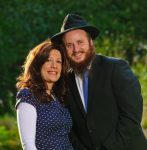
Ayala and Ariel Wilchfort are recent arrivals to Vancouver. (photo from Ariel Wilchfort)
Two years ago, Rabbi Gideon Osher Shmueli donated a kidney to a stranger, saving that individual’s life. These days, he works at Magen David Yeshivah in Brooklyn, N.Y., teaching Hebrew and bringing with that teaching the culture and values of Judaism and eretz Yisrael, the land of Israel.
To him, teaching about Judaism is akin to donating a vital organ. “Connecting Jews to Torah and mitzvot is no different from helping someone to live,” said Shmueli, 32, who, with his wife, Leore Sachs Shmueli, was matched with the school by Ohr Torah Stone’s Beren-Amiel Practical Training Program for Educational Emissaries, which trains educators who are sent to teach Judaic studies in both Orthodox and non-Orthodox schools throughout the Diaspora. A similar initiative, the Straus-Amiel Program for Rabbinical Emissaries, trains rabbis for synagogue postings in the Diaspora.
Like Shmueli, Rabbi Ariel Wilchfort is a recent arrival to his new post. He is city director for the National Conference of Synagogue Youth in Vancouver, following his participation in the emissary training at OTS’s Israel campuses.
“They guided me and helped me choose positions,” said Wilchfort, 33, who relocated to Vancouver with his wife Ayala and their two young children.
Wilchfort, who attended the emissary training from 2015 to 2017, said he found his current job when a representative for NCSY, the youth arm of Orthodox congregations in North America, visited with him and other emissaries.
Based in Israel, OTS is a modern Orthodox network of 24 institutions on 12 campuses, founded by Rabbi Shlomo Riskin with a mission in part to demonstrate that Judaism’s “laws and traditions remain profoundly relevant to the contemporary world,” Riskin has said.
As part of that mission, OTS has some 200 emissary families serving in more than 50 countries, according to Rabbi Eliahu Birnbaum, who directs the emissary programs. Shlichim (emissaries) serve on average five to six years, with some who have been at their posts as long as 18 years.
They serve not only in large Diaspora communities but also in places that are far afield and have few Jews, such as Quito, Ecuador; Guangzhou, China; Cochin, India; and Harare, Zimbabwe. “We believe that people need to work with people, and the only way to influence other people and strengthen their Jewish identity, as well as the community itself, is by having emissaries and creating personal connections,” Birnbaum said.
OTS annually receives at least 150 applications for the program, and chooses 25. “We accept only applicants who have advanced Torah knowledge and yeshivah background, high academic level and, most important, very good people and leadership skills,” said Birnbaum.
The training program consists of weekly classes with educators, rabbis, experts in halachah (Jewish law) and advisers. Shlichim assignments range from teaching positions, to youth directors to pulpit positions.
In a smaller Jewish community like Vancouver, Wilchfort occupies several roles on the community scene, mentoring young people at Congregation Schara Tzedeck and running a religious education program called Torah High, in which Jewish students can attend afternoon classes and gain a few credits toward earning their high school degree.
Originally from Englewood, N.J., Wilchfort’s family immigrated to Israel when he was a child, and he received his rabbinic ordination from Israel’s Chief Rabbinate at the same time that he was enrolled in the Beren-Amiel program. He said he was drawn to the initiative by a desire to serve Jews in the Diaspora and help them enrich their Jewish lives.
“I entered the program out of a care for other Jews, a love for our nation, and especially a love for our fellow Jews who have not had an adequate religious education,” he said.
Wilchfort has enjoyed settling into Vancouver, which he credits for having a vibrant Jewish scene. “Our community has a great infrastructure; it’s a very pro-Israel community here,” he said. “As for the area itself, it’s beautiful. In Vancouver, we live between forests and the ocean, and everyone is so health-aware, nature-aware.”
For Wilchfort, whose wife’s first language is Hebrew, not English, it’s a true cross-cultural experience. “It’s a new city, new country, new culture. It’s really an adventure, and we feel so excited to be here.”
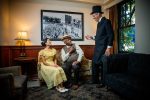
Left to right: Advah Soudack, Tom Pickett and Adam Abrams co-star in Two Views from the Sylvia, playing at the Waterfront Theatre Nov. 8-12. (photo from Kol Halev)
“For me, the ‘coolest’ thing is Sylvia herself,” Advah Soudack told the Independent. “From everything I have read and heard, she was a dynamite of a woman – fiery, passionate and full of life. The woman lived until 102, for goodness sake, and did so with a heart murmur that caused much concern for doctors and her parents when she was young. I like the story of how she met her husband, Harry. The two were on a Jewish singles cruise and, when Harry witnessed Sylvia dive enthusiastically off the side of the boat, he knew in that moment that she was the gal for him. I only wish Sylvia was alive to see the show.”
Soudack takes on the role of Sylvia Ablowitz, née Goldstein, whose father, Abraham, built the Sylvia Hotel and named it after his daughter. The family’s story and stories about the renowned establishment in English Bay are depicted in Two Views from the Sylvia, which is being presented by Kol Halev Performance Society Nov. 8-12 at the Waterfront Theatre.
“This is the most ambitious show Kol Halev has produced, and their first as a registered society. But it fits perfectly into their mandate to tell stories of Jewish history and local Vancouver history, with music, song and performance, in an engaging and entertaining way,” said Adam Abrams, who plays Abraham in the production, and is also vice-president of Kol Halev. “I’m so excited to be a part of it,” he said.
Two Views from the Sylvia is comprised of two original one-act plays. Its genesis can be traced back some four years, to a Jewish psychology network meeting attended by Kol Halev president Sue Cohene and Ablowitz’s great-niece, Marsha Ablowitz, who pitched the story of her famous great-aunt to Cohene. In mid-2013, members of Kol Halev met with Marsha Ablowitz and her mother, Sally Seidler, who is now 99 years old.
By August 2013, Joan Stuchner had drafted the first two pages of a play. A few months later, Deborah Vogt joined the writing team, with she and Abrams assisting Stuchner. Sadly, Stuchner died in June 2014 of pancreatic cancer and Vogt had to complete the script without her.
Vogt’s one-act play, Sylvia’s Hotel, with music by Britt MacLeod and Kerry O’Donovan, lyrics by MacLeod, is set in 1912, and focuses on the origins of the hotel and on the Ablowitz-Goldstein family. “Both young Sylvia Goldstein and Joe Fortes, the beloved lifeguard who taught Vancouver children to swim, experience the challenges of those who didn’t quite ‘belong’ in the Vancouver of the time,” notes the promotional material. It forms Act 1 of Two Views from the Sylvia.
Act 2, called The Hotel Sylvia, is by Cathy Moss and Kelsey Blair. It focuses on the period after the building of the hotel, and “we meet the characters whose lives and loves became interwoven with the story of the Sylvia over her 100-year history.”
In Act 1, most of the characters are based on real people, members of the Goldstein family and Fortes. In Act 2, most of the characters are composites of more than one person or story, notably the character of Franny, who is a nod to a longtime Sylvia employee.
“Several of the stories told in this one act play are the stories as told to Cathy Moss and me by Huguette Gingras, who was the front-desk clerk at the Sylvia Hotel for 35 years,” said Cohene.
Tom Pickett, who plays Fortes in Act 1, plays the character of John in Act 2. “Though John is an independent character, he cares about the Sylvia the way Joe cares about the kids and English Bay so, in my mind, I imbue a hint of John with a bit of Joe and maybe vice versa,” said the actor.
Pickett – who said he has played Fortes a few times before – was immediately on board when he heard that Christopher King was the director and Shelly Stewart Hunt was the choreographer of the production. “Then I had the pleasure of talking with Sue Cohene on the phone and the connection was instantaneous,” he told the Independent. “And then, as we began rehearsals, the artistic opportunities to honour a Vancouver landmark like the Sylvia and represent a historical figure like Joe Fortes deepened. I think many people know of the Sylvia but don’t know a lot about the Sylvia. I’ve done a gospel concert at the Sylvia, my wife’s cousin from Montreal always stays at the Sylvia, my mechanic, the teller at my bank, the list goes on.”
“It seems that everyone has a story or a connection to the Sylvia,” agreed Abrams, “so it’s exciting to be telling a story about something so iconic, that means so much to people in Vancouver. And though I’m thrilled to have a great role, I’ve been mostly just impressed with what everyone else is bringing to it. There are some really beautiful moments both visually and dramatically, and some wonderful music, too. I think people are going to leave the theatre humming the title theme, ‘At the Sylvia’!”
About his character in Act 1, Abrams said, “Abe is someone who wants more than just personal success, he really wants to make his city a better place and feels the hotel will help achieve that. He’s also proud of his Jewish heritage and wants to show what his people can accomplish – despite facing a lot of the prejudice that was so common at that time.”
In Act 2, Abrams plays Mr. Lowry, “the manager of the present-day Sylvia, [who] is trying out Franny for the front-desk job to see how she does. He just shows up a couple of times, but I’m finding a lot of little moments of humour in his appearances.”
In preparing for the show, Soudack met with Marsha Ablowitz. “I not only flipped through piles of photos and heard stories,” said Soudack, “but also held Sylvia’s hairbrush, mirror and curling iron with her initials gracefully engraved on them in my hands. If the audience is paying close attention, they may even catch a glimpse of these artifacts in the show.”
While Sylvia appears in Act 1, she is only talked about in Act 2. In the second half of the production, Soudack plays Nora, who appears, said Soudack, “as a flashback to the Sylvia during the Second World War.”
“She is an interesting character, not only because of her independent nature, but also because of the times in which she would exercise this independence,” said the actor. “Nora, as explained by her daughter Gloria in Act 2, would visit the Sylvia twice a year. Gloria mentions that her mother, Nora, would come to write in her journal. She made a routine of it and even wore the same blue dress…. It turns out that she didn’t always come to write in her journal, she would also come to the Sylvia to dance.
“For me,” said Soudack, “Nora is an intriguing character to play because there has to be a reason why she came to the Sylvia and did so year after year. In the script, she talks about ‘taking a night off from everything.’ She mentions things about the war, headlines, air-raid precautions, however, as the actress, I choose to dig deeper and find what else she is ‘escaping’ from and taking the night off from…. There is a pure innocence to Nora going to the Sylvia twice a year to write in her journal and dance, but is there also an alter ego or an alternate life she desperately wants to explore?”
Other Jewish community members in the cast are Anna-Mae Wiesenthal and Joyce Gordon, while Heather Martin is associate producer and Gwen Epstein is on the production team. The Jewish Museum and Archives of British Columbia has created a photo exhibit, which will be on display at the theatre.
“Lots of things are very exciting,” said Cohene, “like watching amazingly creative choreography being developed on the spot. Hearing beautiful singing by the cast makes me want to sing along. I don’t – I am the producer and need to remember my role.
“I hope that people who come to the show are aware that we are a community theatre group. We are so fortunate to have the wonderful participation of two professional actors,” she said, referring to Pickett and Soudack, “who work alongside our very talented group of emerging actors. Kol Halev strives to be inclusive, accommodating performers of all ages, backgrounds and levels of experience. We aim to offer the opportunity to learn and create, in all aspects of our production. I’m hoping that this value is appreciated when the public sees the show.”
For tickets ($28) – and a chance to win free ones with your story of the Sylvia – visit kolhalev.ca.
לדין שיינדלר תושב אזור ונקובר מסתבר שיש מנהג מוזר ביותר שאינו זוכה כלל להערכה. במשך עשר השנים האחרונות הוא נוהג להופיע בעשרות טקסי אשכבה שונים (בעיקר אלה שנערכים במועדוני גולף מהודרים), ולהינות בחינם מהאוכל והשתייה שמוגשים בהם – לקרובים של הנפטרים. שיינדלר שיהיה ברור לא מוזמן כלל לאירועים אלה והוא פשוט מופיע אליהם כאילו הוא אחד ממקורבי הנפטרים. הוא אינו מדבר עם אחד וללא בושה ניגש לאחד השולחנות העמוסים אוכל מתיישב ומתחיל לאכול. לאחר סיום הארוחה המכובדת כאשר מילא את כרסו, הוא מכבד את עצמו בשתיית מספר כוסות של בירה או יין ואז נעלם. מספר קרובים של נפטרים מציינים כי הם ראו את שיינדלר אף לוקח אוכל הבייתה. וחוזר חלילה. איך הוא לא מתבייש?
במשך השנים הצטברו עדויות רבות בגין התנהגותו השערוריית והביזארית של שיינדלר שהוא איש מבוגר המרכיב משקפיים עם שיער שיבה לראשו, שכנראה נחשב לאיש בודד מאד בעולמנו וחי לבד. לא מעט תושבים מקומיים ראו אותו שוב ושוב בטקסי האשכבה שונים. אז גם החלו להגיע תלונות כנגדו לתחנות הרדיו והטלוויזיה המקומיות שהולכות ונערמות.
במספר מקרים ניגשו לשיינדלר קרובי משפחה שלא הכירו אותו ושאלו אותו ישירות איך וכיצד הוא קשור לנפטר. לפי תשובתו המתחמקת הם הבינו מייד שהוא לא מכיר את הנפטר כלל. באחד המקרים אומרת אישה שאימא נפטרה, כי שיינדלר סיפר לה שכביכול שאימא ואימו היו חברות טובות. ואימא נהגה להסיע את אימו אף למקומות שונים כולל לקניות. נו באמת? “אך מה לעשות” אומרת האישה “לאמי לא היה רשיון נהיגה ואף לא רכב”. לאחר השיחות הלא נעימות הללו שיינדלר היה קם ומסתלק מהמקום בשקט ומהירות רבה.
לתשובת כתבת תחנת הטלוויזיה ‘גלובלניוז’ שתפסה אותו ליד ביתו, אמר שיינדלר שלא הרגיש בנוח עם הראיון (הוא לא הפסיק להתגרד, להוריד ולהרכיב את משקפיו), כי הוא אכן מבקר בטקסי ההשכבה, אך זה נובע לטענתו לאור כביכול תחקיר שהוא עושה במסגרת ספר שהוא כותב. הספר שהולך להיות פרוייקט מאוד ארוך יעסוק בסיפור מפחיד מאוד הוא מוסיף. הוא דחה את הטענה כי הוא מגיע לאירועים בגלל האוכל והשתייה בחינם. שיינדלר הודה כי הוא נהג לבקר בשלושה עד ארבעה טקסי הלוויות מדי חודש לאורך שנים רבות. את המידע בדבר האירועים לכיבוד המתים הוא פשוט מצא במודעות אבל בעיתונות של משפחות הנפטרים. להגנתו אמר עוד כי הוא כן נהג לשוחח מעת לעת עם האורחים באירועים, אך הוא לא יכול לספר להם מדוע הוא נוכח במקום. לאור התלונות הרבות נגדו הבטיח שיינדלר להפסיק ולבקר בטקסי הלוויות שאליהם לא הוזמן. הוא גם התנצל. לא ברור עדיין האם יש אמת בדבריו כי הוא אכן כותב ספר. שיספר זאת למתים.
אחד מהגושלים באינטרנט שקרא על מעלליו הרבים של שיינדלר הגיב באופן הבא: “כשיבוא היום ונקווה לא בזמן הקרוב כולנו נגיע להלוויתו שלו”. גולש אחר הגיב בחריפות גדולה יותר: “מדוע שלא נעמוד על הכבר שלו ובתור נשתין עליו?”. גם אחת הגולשות הגיבה בחריפות רבה על התנהגותו של שיינדלר: “אין שום תרוץ למעשיו. האיש הזה הוא כדור רפש שמנצל צער של אנשים אחרים כדי להשיג רווח פרטי. זה מעורר רחמים”. ולסיום גולשת אחרת ענתה בתחכום: “יש כאלה שהולכים לסרטים ויש אחרים שהולכים להלוויות”.
Left to right, Lilia Apelbaum, Olga Livshin and Tanya Kogan, during their reunion in Vancouver. (photo by Tanya Kogan)
For two weeks this August, my apartment was unusually crowded. Friends from Haifa and Los Angeles were staying with me. We talked almost nonstop the entire time they were here. While they have already left for their respective homes, the memory of their presence still lingers in my house, in the photographs and in my fond recollections.
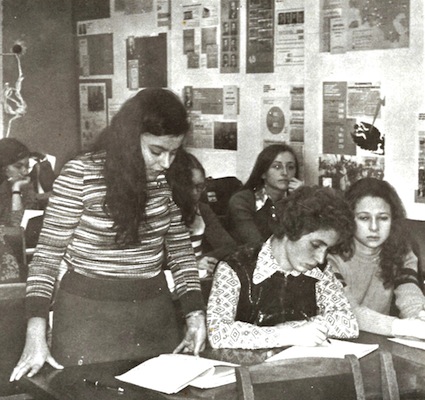
In 1973, the three of us, three Jewish girls, high school graduates from different Moscow schools, lived in the Soviet Union. We met for the first time when we enrolled in the Moscow Institute of Economics and Statistics. For five student years, we were inseparable. We studied in the same groups and partied with the same friends but, after graduation in 1978, we parted ways. This year, 39 years later, the three of us met for the first time since then, at my place in Vancouver.
Many things have changed in our lives, of course, but, despite the grown-up children, deteriorating health and multiple wrinkles, all three of us have stayed basically the same: the same personalities, the same interpersonal dynamics, the same feeling of closeness as friends. And our relationship with our Jewishness also has stayed basically the same.
At the time of our youth, all observance of Jewish traditions in the Soviet Union was suppressed. Not banned, per se, but not encouraged. There was one synagogue in Moscow and, I have to admit, I never visited it. My parents tried to blend in with mainstream society, so they never visited it either. We didn’t celebrate Jewish holidays, and I didn’t even know about most of them. Only my grandfather went to synagogue on most Saturdays and some Jewish holidays. He tried to instil some sense of Jewish identity in our household (as he lived with us) but, unsupported by my parents, he was unsuccessful. I was never interested in anything Jewish when I was young.
The situation was a bit different with my two friends. Tanya Kogan (née Schneiderman) lived in a similar household to mine. Her parents’ one ardent desire was to blend in. Being “the same,” not sticking out, was safer in Communist Russia but, after her high school graduation, Tanya broke away from the “blend-in” mold.
“I wanted to know who I was,” she told me. She immersed herself not only in her academic studies at the institute but also in Jewish customs and traditions, to the extent they existed in Moscow of that time.
“I tried to learn Yiddish from my grandmother, even though she was ashamed to speak it. I went to synagogue for some Jewish holidays and, every year, for Simchat Torah. It’s such a fun holiday. Lots of students from our institute were there. Not many colleges and universities in Russia accepted Jewish students, but ours did, and there were many of us. We danced in the streets together,” she remembered. “I bought matzos every year and fasted on Yom Kippur.”
Left to right, Tanya Kogan, Olga Livshin and Lilia Apelbaum – Class of 1978. (photo from Olga Livshin)
My other visiting friend, Lilia Apelbaum, was also part of the group of students that danced in the streets outside the Moscow synagogue on Simchat Torah. Her father came from a family where tradition was paramount.
“We bought matzos every year when I was a schoolgirl,” Lilia said. “We would travel on the Moscow Metro with the big packs of matzos wrapped in brown paper, to a seder in some relative’s home, and I would think: ‘I’m special. I’m better than all the people around me. I know something they don’t.’ I felt very proud.”
In 1996, Lilia, her parents and her young son immigrated to Israel. She still lives there, in Haifa.
“My father went to synagogue often when we lived in Moscow, but he stopped going after we immigrated,” said Lilia. “In Moscow, he needed it to prop his Jewish identity but, after we settled in Israel, he said he didn’t need it anymore. He felt Jewish and happy without the support of religion.”
Lilia herself doesn’t follow any Jewish tradition, doesn’t keep kosher and doesn’t attend synagogue, but she is still, as in her childhood, intensely proud to be a Jew and an Israeli. “I love Israel,” she said. “It’s a wonderful country, very humane.”
She told me a story about her neighbour and friend. “She is very sick. Once, we walked outside together, and she fell. Her legs wouldn’t support her and I couldn’t help her – she is a big woman, much bigger than myself. I panicked; didn’t know what to do. Suddenly, a couple cars passing along the street stopped. Totally unknown men climbed out of those cars, lifted her, helped her to a bench, and then drove away. Where else would a car stop just to help a strange woman on the sidewalk? Only in Israel.”
She talked about the urban improvements being undertaken in Haifa, about Israeli healthcare and technology, about her fellow Israelis, and her eyes shined with love for her country.
Tanya also left Russia. In 1996, she and her family immigrated to America and settled in Los Angeles. “I almost never go to a synagogue here,” she said. “But I do keep kosher. Mostly. In my own way. During Passover, we don’t eat bread. I make so many interesting dishes with matzos, my family always anticipates the holiday. They don’t want bread – they remember that torte and this pie for years after and always ask if I would make them again. It’s a game we play. It’s easy and fun to be a Jew in America.”
Like my friends, I left Russia, too, at about the same time. In 1994, I came to Vancouver. Unlike my friends, though, I didn’t get in touch with my Jewish roots right away. It took me some time to become a part of the Vancouver Jewish community. At first, I was busy with my computer programmer job, raising children as a single mother, and generally integrating into the Canadian society. But life has a wicked sense of humour. It pushed me toward my Jewishness in a roundabout way.
In 2002, I got very sick. My illness altered my worldview and induced me to change my priorities. In 2003, I started writing fiction. A few years later, I quit my computer job to dedicate myself fully to my writing career. At that time, I tried to find a writing gig. I took a course on a mentored job search, and one of the assignments was to find a mentor.
I scoured the internet for some Vancouver writing professional to approach, to ask to be my mentor, and came up with the name Katharine Hamer. At that time, she was the editor of the Jewish Independent, a newspaper I had never heard about before. I sent her an email and, to my amazement, she replied. She said she didn’t have time to mentor me, but she offered to add my name to the list of her newspaper contributors. I grabbed the opportunity.
My first article for the Jewish Independent was published 10 years ago, in July 2007. I write about Jewish artists and writers, teachers and musicians. I love my subjects, every one of them, but I have never written about myself before. This is the first time and my 301st article for the paper.
Three friends from Moscow, three Jewish women from around the world, spent a wonderful week together during their reunion in Vancouver. We are planning to meet again soon. We are not going to wait another 39 years.
Olga Livshin is a Vancouver freelance writer. She can be reached at olgagodim@gmail.com.
Seattle comedy couple Clayton Weller and Sophie Lowenstein are bringing Naturally to the festival. (photo from Amanda Smith)
Fear of death, making comedy and fighting prejudice are but a few of the topics Jewish community members will be exploring in their productions at this year’s Vancouver Fringe Festival, which runs Sept. 7-17.
Seattle comedy couple Sophie Lowenstein and Clayton Weller are bringing Naturally to the festival. It’s not one show, but two, with audiences deciding which they want to see: the one about grief, which also contains a dating scene, “the worst theatrical audition ever” and more; or the one about what sketch comedy is, how to make it – and why to bother making it.
“We have a variety of choosing activities at the top of the show, which culminates in the audience throwing paper airplanes at the stage for the show they’d most like to see. It’s going to be bonkers,” explained Weller. “As far as seeing both shows – how flattering would that be?! – the final two performances we’re locking in which show will happen.” So, Good Grief (Heart) will be on Sept. 14 and Understanding Sketch (Head) on Sept. 16; for the other performances, you’ll have to take your chances. Though, having seen them on video in preparing for this interview, it’s not much of a risk – both shows will have you laughing, and crying. There is a reason they dub Naturally “serious comedy.”
“As a duo, this has always pretty much been our style,” said Weller. “We’ve both done a bunch of plays, both serious and completely frivolous…. We thought that a laugh never feels as good as after you’re done crying. The contrast makes both the dark and light pop out more.”
“I would also say that we find a lot of beauty in that line between joy and pain because it’s not a very thick line. It’s blurred and sometimes nonexistent,” added Lowenstein, who is part of the Jewish community. “When you’re working with comedy, experiencing other emotions besides happiness while you laugh is sort of taboo – at least rare. We play in that playground. I think, individually, we are both curious about people’s emotions and we investigate them in our own ways, so we came together to run a joint study.”
According to the press material, Lowenstein and Weller have been performing comedy together for more than 12 years.
“Sophie and I went to the same college, University of Puget Sound, and both got cast in our college sketch comedy group,” Weller told the Independent. “We performed in several shows before we actually started living together as roommates, then we started living together, with feelings and stuff. Humour and comedy definitely permeate every part of our lives. Lots of laughter keeps our hearts light.”
With the comedy group Ubiquitous They, the couple produced about 15 shows. However, said Weller, the group “is more of an alumni network at this point. Several members have moved on to work in L.A., or across the country. We produced really regularly from 2007 to 2014, but, for the most part, it’s more of a club that hangs out every couple of months, and goes, ‘Wow, it’s tough to be an adult, am I right?’”
For the past few years, Lowenstein and Weller have been focusing on their performances as a duo. “Basically, Naturally is the only comedy project Sophie and I do now,” said Weller. “We’ll do a variety show or small play here and there on our own, but, because our lives are so crazy, we’ve pared the work we do down and this is where we put our real artistic push. I’ve never made work I’m more proud of than what I’m currently making with Sophie. She’s awesome. (Secret: This is all just an excuse for me to hang out with her more!)”
“Other secret: I feel the same way about him,” added Lowenstein. “He makes this process happen.”
In addition to Naturally, Weller runs two performance venues – the Pocket Theatre and the Slate Theatre – and Lowenstein works as a nurse practitioner.
“I look at it like this: some NPs have kids and they can do it. I have theatre and I can do it,” said Lowenstein about balancing her careers. Her recipe for success? “Save as many of your nights for rehearsals as possible. Dinner no earlier than 10 p.m. most nights. Make sure the other member of your group does all the administrative stuff and keeps you motivated when you’re dragging your butt and snarling. And, if the project doesn’t give you deep joy, don’t do it.”
In one of the Naturally shows, Weller mentions that he once had a lucrative high-tech job that he gave up for comedy. Does he have any regrets?
“I started a company called Freak’n Genius in 2012,” he said. “We made animation software, and we raised over half a million dollars in financing. At first, I was working with cool creative people and helping them make awesome things – then we slowly turned into an iPhone app for tweens. I learned a ton, but I 100% do not regret leaving. I give about three hours a week’s worth for tweens. Not the 60 hours a week I was putting in. Artists are who I really care about!”
About how he became one, or at least got into comedy, Weller said he had terrible stage fright until eighth grade. “I decided I was tired of being scared, and did improv comedy. After the first laughing crowd, I got bit by the bug, and I’ve been doing it ever since. There’s no better way to make friends than to make art together. Our relationship is proof to the point! I’m super lucky.”
For her part, Sophie said she first got into comedy “by loving that feeling of making my friends laugh. So, I practised how to do that more and more. I also had very funny friends. Now, I’m friends with the funniest human I know, and he also has a heart and mind. Bonus. As for the theatre part, I started performing when I was a little kid then throughout school: musicals, Shakespeare, etc. Stuck with it.”
The couple has been doing Naturally for a couple of years now. “After every performance,” said Weller, “we can’t help but do the ‘Oh man, next time why don’t we blah blah blah.’ The script is never permanent, and every remounting of the material we go through a rewrite and punch up all the scripts. Also, finding new ways to fit it together is a whole other way to make the thing new for us. Mostly, we just like hanging out and this is a great excuse.” Lowenstein agreed.
Naturally runs Sept. 8-16, at various times, in the gym at False Creek Community Centre on Granville Island. The 55-minute show is rated 14+ for coarse language and sexual content. Running Sept. 7-17 at the Firehall Arts Centre, also at various times, is the Canadian première of Cry-Baby: The Musical!, which is being presented by Awkward Stage Productions. It, too, is rated 14+ for the same reasons.
Jewish community member Erika Babins, who is artistic associate of Awkward Stage, choreographed the Fringe production, which features “a cast of 16 emerging artists” and runs 90 minutes.
Erika Babins choreographed Awkward Stage’s production of Cry-Baby: The Musical! (photo from Awkward Stage)
“It’s 1950s Baltimore, the conservative squares face off against the leather-clad delinquents in this rockabilly musical based on John Waters’ cult film,” reads the press release. The 2008 Broadway show was nominated for four Tony Awards, including best choreography, and won a Drama Desk Award for outstanding choreography. So, where does Babins begin?
“I start my choreographic process by obsessively listening to the music of the show so that it can live in my body,” Babins told the Independent. “Before we start rehearsals, I’ll meet with the director and we’ll talk through the shape of the show so that we know what purpose each song serves in the show, where we’re coming from and where we’re going, and how we’re going to get there.
“Then, when I get the cast in the room, I can take the story I know I’m going to tell and use them to tell it, using movement and music as my storytelling techniques. If I’m really stuck about how to tell a part of the story, I might look up a video or two on YouTube to see how a different company made something work, but I’m careful to only watch it once so that it only ever is for inspiration and I don’t accidentally steal something.”
Awkward Stage decided to mount Cry-Baby for several reasons. “Awkward has made a tradition out of presenting hilarious, and culturally relevant, full-scale musicals at the Fringe Festival,” said Babins. “Cry-Baby: The Musical came to us via artistic director Andy Toth. He brought it forward as a show that features a mostly young cast, great music and a lot of interesting and fleshed out female characters. Not only that, the messages in the show about systematic prejudices, classism and living your own truth so long as it’s not hurting anyone else, are still so relevant today.”
This is Awkward’s eighth musical at the Fringe Festival. “In that time,” noted Babins, “we’ve won three Pick-of-the-Fringe’s and the Joanna Maratta Award. We are committed to bridging the gap for emerging artists coming into the professional theatre scene in Vancouver and paying our artists for their efforts.”
For the full Fringe schedule and tickets ($14), visit vancouverfringe.com. (Note: a $5 Fringe membership is required for all shows.)
An estimated 4,000 to 5,000 people showed up at Vancouver City Hall Aug. 19 to protest a planned racist rally. (photo by Cynthia Ramsay)
A week after the tragedy in Charlottesville, Va., British Columbians faced the prospect of a clash between racist, anti-immigrant and neo-Nazi activists and their opponents.
An estimated 4,000 to 5,000 people showed up at Vancouver City Hall Aug. 19 to protest a planned racist rally. Among those at the counter-rally were members of the Jewish community, including several wearing kippot and at least one draped in an Israeli flag.
For those in attendance, it was an odd and strangely uplifting time. As it turned out, most attendees never came in contact with those they came to protest. Many left the event thinking that the other side never showed up. For all intents, they didn’t. Apparently, a couple of extremists appeared at one point but their voices were quickly drowned out. The counter-rally turned out to be the main event.
Since the sound system at the gathering was terrible, most of the crowd couldn’t hear the words of the pro-diversity speakers. For the record, the event was organized by an ad hoc group and the speakers included Vancouver Mayor Gregor Robertson, Ravi Kahlon, the parliamentary secretary for sport and multiculturalism in the new B.C. government, several indigenous representatives and people from a range of faith and multicultural organizations, including Independent Jewish Voices. (Anyone complaining that their own particular views were not represented on the official roster of speakers should bear in mind that we are all free to organize our own rallies, as this ad hoc group did, and those who organize such events are free to invite whoever they like to speak.)
There were concerns by some that the sort of anti-Zionist (and arguably antisemitic) undertones that pervaded some “progressive” events in the United States recently might pop up here, but there appeared to be nothing of the sort. One speaker – one of the few who could be heard, because she led the group in a boisterous chant – specifically identified Jews as brothers and sisters. It was reassuring and welcome.
The crowd was wonderfully diverse, including people of apparently every culture, religion and identity, milling about enjoying witty and positive handmade signs and running into old and new friends. It is probably safe to say that those who attended left feeling encouraged by the show of solidarity in the face of hatred, while social media responses suggest those who did not attend believe the crowd of thousands made the province and the country proud.
A similar event – on an even grander scale – was taking place at roughly the same time in Boston, with roughly as positive an outcome. Elsewhere in America, however, wildfires of hatred fanned by winds directly from the West Wing of the White House continued to spread, with one incident of particular concern to Jews.
Richard Spencer, one of the emerging leaders of white supremacism in the United States, told an Israeli TV interviewer that his “white nationalism” is essentially the same as Zionism.
Jonathan A. Greenblatt, head of the Anti-Defamation League, writing online at the Forward, summarized the stupidity of this comparison.
“Richard Spencer’s movement is based on hate, racism, negativity and exclusion,” wrote Greenblatt. “Zionism, the national liberation movement of the Jewish people in the Jews’ historic homeland, is based on providing for equal opportunity for the Jewish people, like others, to have sovereignty in their land while still fully protecting the rights of minorities who live within Israel. At its core, Zionism is a positive movement and is not intended to be ‘against’ anyone.”
Of course, as Churchill said, a lie gets halfway around the world before the truth has a chance to get its pants on. The equation of Zionism with racism is an idea we have been battling for four decades. Originating from the Muslim bloc at the United Nations, it has been happily incorporated by many organizations of the left.
But things are changing quickly. In just the past week, while the U.S. president has effectively endorsed the Charlottesville racists (or, at the very least, equivocated between good and evil), a new urgency has emerged among anti-racist advocates.
Sometimes, something good comes out of something terrible and, as we said last week in this space, Charlottesville may be a turning point.
In another example, the March for Racial Justice – potentially one of the most significant such rallies in recent U.S. history – has been scheduled for Washington, D.C., on Yom Kippur. The sadness, disappointment and anger expressed by Jews over this timing resulted in what appears to be a deeply heartfelt, apologetic and, honestly, beautiful response from organizers, including the observation: “Our mistake highlights the need for our communities to form stronger relationships.”
This incident is a reminder, much needed, perhaps, not to write off potential allies. We are experiencing an unprecedented lack of moral leadership from what was once deemed the leadership of the free world. That moral vacuum will be filled. As the battle for space in this time of change proceeds, we must continue to make the case for our place in a multicultural society and for Israel’s place in the world.
למזל בודדים השתתפו בהפגנת ארגוני הימין הקיצוני נגד ההגירה לקנדה, ביום שבת מול בית עיריית ונקובר. מולם עמדו כארבעת אלפים אזרחים שהגיעו למחות נגדם. (צילום: Cynthia Ramsay)
ראשי הקהילה היהודית בקנדה פרסמו בימים האחרונים הודעות פומביות המגנות נחרצות את השנאה והגזענות בקנדה, ארה”ב וספרד. זאת לאור האירועים האחרונים שהתרחשו בצפון אמריקה ובאירופה.
יו”ר מועצת המנהלים של הפדרציה היהודית של אזור מטרו ונקובר, קרן ג’יימס אמרה בהודעתה: “אנו מקפידים להביע גינוי נגד כל הביטויים של אפליה, שנאה, גזענות, שנאת זרים, הומופוביה ואנטישמיות בחברה שלנו. הם מאיימים על החברה הרב-תרבותית שלנו שהיא מסבירת פנים, אוהבת ומגוונת. ובמיוחד הם מתנגדים למחויבות שלנו לקבל ולהכליל שהם הערכים שהקהילה היהודית תמיד דוגלת בהם. אנו מביעים דאגה עמוקה ביותר מהאירועים שאורגנו על ידי הארגונים התומכים בעליונות הגזע הלבן והמתנגדים להגירה, בונקובר. צריך שיהיה ברור שאנו מגנים בצורה חד משמעית את העצרת הגזענית הזו. הקהילה שלנו יודעת היטב, כי כל ביטויי השינאה המכוונים למיעוטים בסופו של דבר מאיימים על החברה כולה. צריך לגלות אפס סובלנות לכל הביטויים הגזעניים בחברה שלנו. עלינו לזכור שקנדה אינה חסינה מאתגרים של אפליה, שנאה, גזענות, שנאת זרים, הומופוביה ואנטשימיות. בואו נעבוד ביחד כדי להבטיח שכולם ירגישו רצויים בעיר שלנו”.
מנכ”ל הפדרציה היהודית של אזור מטרו ונקובר, עזרא שנקן, אמר בהודעתו: “אני חייב קודם כל לנצל הזדמנות זו כדי לגנות את אירועי האלימות בשרלוטסוויל ובספרד בשבוע שעבר. אני בטוח שאתם מזדעזעים כמוני על השנאה והגזענות, הרצח חסר הטעם של הת”ר הייר בשרלוטסוויל ושל שלושה עשר האנשים בספרד, כאשר עשרות נוספים נפצעו. אפשר להרגיש זאת בקלות גם בקנדה, בזמן שאנו מתגאים כל כך במרקם הרב תרבותי של ארצנו, ואנחנו גם מתחלחלים מעצרות שנאה כמו זו שהייתה בשרלוטסוויל. למרבה הצער אנו לא חסינים לגמרי וכפי שאתם יודעים התקיימה עצרת של הימין הקיצוני ביום שבת האחרון מול בניין עיריית ונקובר. הפדרציה שלנו בשותפות עם המרכז לענייני היהודים וישראל בקנדה פרסמנו הודעה המגנה את עצרת הימין הקיצוני. אנו תמיד נשמיע את קולנו במחאה כאשר אנחנו רואים גזענות ושנאה, ואנו גם שמחים לראות שגם ראש העיר של ונקובר, גרג רוברטסון, היה קולני בהתנגדותו ואמר כי לשנאה ולגזענות אין מקום בעיר הזו”.
למזל בודדים השתתפו בהפגנת ארגוני הימין הקיצוני נגד ההגירה לקנדה, ביום שבת מול בית עיריית ונקובר. מולם עמדו כארבעת אלפים אזרחים שהגיעו למחות נגדם. כוחות מתוגברים של המשטרה נכחו במקום והם תארו את האירועים “כידידותיים”. בסך הכל רק חמישה מפגינים נעצרו על ידי המשטרה ושניים נוספים הובלו אל מחוץ לאזור ההפגנה.
מנכ”ל המרכז לענייני היהודים וישראל בקנדה, שמעון פוגל, אמר בהודעתו בין היתר את הדברים הבאים: “אנו מזועזעים מן הדימויים העולים משרלוטסוויל. תצוגה של נאצים והתומכים בעליונות של הגזע הלבן מזעזעת ומגעילה, את כל בני הרצון הטוב. עבור הקהילה שלנו, ובמיוחד עבור ניצולי השואה זה במיוחד צורם ומזכיר לנו את הרגעים האפלים ביותר בהיסטוריה שלנו. עבור אלה שמחוץ לקהילה היהודית, שרלוטסוויל צריכה לשמש תזכורת נחרצת לכך שהאינטישמיות היא אמיתית, הרסנית וקשורה קשר הדוק עם צורות אחרות של גזענות ושנאה. הקהילה היהודית מכירה היטב את השפעת השנאה הזאת. גם במדינה פלורליסטית כמו קנדה, היהודים נותרו הקהילה הדתית הממוקדת ביותר לפשעי השאה. ברור שאנו לא חסינים, אבל אנחנו לא לבד. קנדה היא בין המקומות הטובים ביותר בעולם להיות בו יהודים. יש לזכור שהמצב הביטחוני שלנו בקנדה לא השתנה גם היום”.
קנאק זוכה לחשיפה גדולה לאור קירבתו לבני האדם. (צילום: facebook.com/thecrowandI)
העורב שזכה לכינוי קנאק זוכה לחשיפה גדולה בתקשורת וברשתות חברתיות לאור קירבתו לאזרחי העיר, והמעשים היוצאי דופן שמאפיינים אותו. לפני כשנתיים (במהלך חודש מאי 2015) בהיותו גוזל קנאק נפל מקן ונמצא על ידי ילד במזרח ונקובר, שגידל אותו בביתו ודאג לו מדי יום. כשהגיע הזמן לשחרר את העורב בחזרה לטבע התרחש דבר יוצא דופן. צעיר בשם שון ברגמן שהוא דייר ששוכר דירה מאביו של הילד הלך ‘ביום השחרור’ לצפות כיצד העורב הצעיר משתלב בחייו החדשים, בפארק הייסטינג שליד ביתו. משהבחין בו העורב הוא עף הישר אליו והתיישב על כתפו. מאז ברגמן והעורב הם חברים קרובים בלב ובנפש ומבלים שעות רבות יחדיו מדי יום.
ברגמן העניק לחברו העורב את השם קנאק והתקין טבעת פלסתיק אדומה על רגלו השמאלית, כך שניתן יהיה לזהות אותו בקלות, למרות שהוא משתייך לקהילת העורבים הגדולה של אזור ונקובר. ברגמן העלה אף דף בפייסבוק לציפור שנקרא “קנאק ואני”, בו הוא מתעד את מעשיו של העורב הכי מדובר בוונקובר. למעלה משמונים אלף גולשים עוקבים מקרוב אחרי מעשיו של קנאק שמתועדים בתמונות ובסרטי וידאו קצרים. במקביל אמצעי החדשות המקומיים מסקרים כל הזמן את מעשיו של העורב, שזכה אף במספר מקרים חשיפה עולמית.
קנאק שוהה בלילה בטבע בחברת חבריו. בכל בוקר בסביבות שבע הוא ממתין לחברו ברגמן ליד דלת ביתו ומלווה אותו בדרכו לתחנת האוטובוס הסמוכה, בדרך למקום עבודתו. ברגמן מנצל כל רגע פנוי שלו לשהות במחיצת חברו העורב ואכן הם מבלים שעות רבות יחדיו כמעט כל יום. הם משחקים יחדיו, הולכים יחדיו לכל מקום והעורב לא פעם שוהה בביתו של ברגמן. השכנים מתעניינים בקנאק ובאים כל הזמן לצפות בעשיו המצחיקים. כיוון שגדל כגוזל בביתו של הילד קנאק רגיל לחברת בני האדם, הוא אינו פוחד מהם והם יכולים אף ללטף אותו ולגעת בו כמו כל חיית מחמד אחרת.
קנאק זכה לחשיפה תקשורתית ראשונה בעת שהתיישב על צווארו של צעיר שרכב על אופניים בקרבת ביתו של ברגמן. האירוע צולם ע”י ברגמן והועלה בפייסבוק. תחילה הכל חשבו שהעורב מתקיף את הצעיר ותגובות נזעמות פורסמו בתגובה לסרטון. ברגמן הסביר (למי שהתבונן מקרוב) שקנאק לא פגע בצעיר, אלא פשוט היה סקרן לדעת מה יש בתיקו. אז הוא החליט לתעד את מעשיו של קנאק בקביעות באמצעות דף בפייסבוק, כדי ליצור מודעות שהעורב שגר בשכונה ידידותי לאנשים ולא מתקיף אותם. במקביל לסרטונים שברגמן צלם, הציבור הרחב שפוגש את קנאק במקומות שונים ומשונים ברחבי העיר מצלם אותו, ומעלה את הסרטונים ביוטוב. קנאק צולם כשהו גונב מפתחות, גונב כרטיסים של הגרלה בפארק שעשועים, נוסע ברכבת הקלה, מבקר במסעדת מקדונלדס ועוד.
קנאק הגדיל לעשות כאשר גנב סכין מגואלת בדם מזירת פשע במזרח ונקובר. התמונה של עורב עף כאשר הסכין עם הדם נעוצה בפיו זכתה לסיקור חדשותי ברחבי העולם. מה שהפך את קנאק לווי.איי.פי של ממש. לאור מעשה זה מספר הגולשים שעוקבים אחריו קפץ בן לילה בכחמישים אלף.
ברגמן אומר שבזכותו של קנאק הוא הפך למוכר ורבים עוצרים ושואלים אותו שאלות על העורב חברו הטוב. ברגמן מציין כי למזלו הוא מצא לו כחבר כה קרוב והעורב הפך את חייו לשמחים ומאושרים. הוא אומר: “בזכותו העולם הפך להיות נפלא כל כך. אני חייב לו הרבה”.
המדד מצביע השנה באופן מפתיע על העיר לואנדה (בירת אנגולה) כעיר היקרה בעולם. (צילום: oneVillage Initiative)
חברת הייעוץ הבינלאומית מרסר פרסמת כמדי שנה את מדד יוקר המחייה של הערים היקרות בעולם. המדד מצביע השנה באופן מפתיע על העיר לואנדה (בירת אנגולה) כעיר היקרה בעולם. העיר הזולה ביותר היא תוניס (תוניסיה) שממוקמת במקום ה-209. לקנדה יש חמש ערים ברשימה: ונקובר במקום ה-107, טורונטו 119, מונטריאול 129, קלגרי 143 ואוטווה 152. ישראל מיוצגת על ידי תל אביב במקום ה-17.
תשע הערים המשלימות את העשירייה הראשונה הן: הונג קונג (הונג קונג), טוקיו (יפן), ציריך (שווייץ), סינגפור (סינגפור), סיאול (דרום קוריאה), ז’נווה (שווייץ), שנחאי (סין), ניו יורק (ארה”ב) וברן (שווייץ). שווייץ מתברר יש ייצוג של שלוש ערים בעשירייה הראשונה.
הסקר שכולל 209 ערים בולטות בעולם מתבסס על השוואת מחירים של למעלה מ-200 תחומים שונים בהם: דיור לרכישה והשכרה, מזון ושתייה, תחבורה ודלק, ביגוד והלבשה, בידור ותרבות. המידע נועד לעזור לחברות בינלאומיות שמעוניינות לנייד עובדים בין מדינות. לפי המדד החדש הערים האירופיות ממשיכות לרדת בדרוג העולמי ולעומתן הערים האסיתיות עולות מעלה.
העשירייה השנייה כוללת את: בייג’ין (סין), טיינג’ין (סין), שנג’ן (סין), מוסקבה (רוסיה), ויקטוריה (סיישל), נג’מנה (צ’אד), תל אביב (ישראל), קינשסה (הרפוליקה הדמוקרטית של קונגו), גואנגג’ואו (סין) ודובאי (איחוד האמירויות הערביות).
העשירייה השלישית כוללת את: אוסקה (יפן), סן פרנסיסקו (ארה”ב), אבו דאבי (איחוד האמירויות הערביות), לוס אנג’לס (ארה”ב), סידני (אוסטרליה), טאיפיי (טאיוואן), סאו פאולו (ברזיל), קופנהגן (דנמרק), לאגוס (ניגריה) ולונדון (בריטניה המאוחדת).
העשירייה הרביעית כוללת את: ברזוויל (קונגו), שיקגו (ארה”ב), נאנג’ינג (סין), ליברוויל (גבון), נגויה (יפן), סנט פטרסבורג (רוסיה), הונולולו (ארה”ב), דאקה (בנגלדש), וושינגטון (ארה”ב) ובואנוס איירס (ארגנטינה).