Skip to content
  • Home
  • Subscribe / donate
  • Events calendar
  • Business Directory
  • FAQ
  • News
    • Local
    • National
    • Israel
    • World
    • עניין בחדשות
      A roundup of news in Canada and further afield, in Hebrew.
  • Opinion
    • From the JI
    • Op-Ed
  • Arts & Culture
    • Performing Arts
    • Music
    • Books
    • Visual Arts
    • TV & Film
  • Life
    • Celebrating the Holidays
    • Travel
    • The Daily Snooze
      Cartoons by Jacob Samuel
    • Mystery Photo
      Help the JI and JMABC fill in the gaps in our archives.
  • Community Links
    • Organizations, Etc.
    • Other News Sources & Blogs
  • JI Chai Celebration
  • JI@88! video

Recent Posts

  • Federation now across BC
  • Israel fighting for its existence
  • Deal strengthens Iran
  • Patriotic belonging diminishes
  • A campaign to engage
  • Upstanders’ first live event
  • Responding to Carney
  • Having your own home
  • Music a family tradition
  • Musical to warm heart
  • Community milestones … June 2026
  • Sharing her passion for Israel
  • Or Shalom reopens its doors
  • JFS from past to future
  • Need holistic approach
  • Sharing stories, advice
  • Journalist shares fears
  • Skills to live together
  • Road to independence
  • Cutting grass with scissors
  • Zionism as a solution
  • Deceit, desire & the divine
  • Reclaiming sacredness
  • Creative project ideas
  • Summer squares and cobbler
  • Thou shalt … summer commandments
  • Legal help for students
  • Revisiting myth of Lilith
  • Wrong person rebuked
  • Canada’s mixed messages
  • Questions for museum
  • Symposium on antizionism
  • Making soccer political
  • CJPAC lauds Pulver’s impact
  • City recognizes Vrba’s legacy  
  • Organ donation saves lives

Archives

Follow @JewishIndie
image - The CJN - Visit Us Banner - 300x600 - 101625

Tag: science

Understanding a teen’s brain

Understanding a teen’s brain

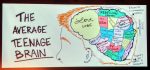
Dr. Mike Teschuk created this image to illustrate how a teen brain prioritizes.

“First thing you’ll notice is the largest lobe is the love lobe,” said Dr. Mike Teschuk, showing an image of how a teen brain prioritizes. “For teenagers, this is the capital lobe. ‘I love my new outfit. I love my girlfriend of two weeks, the latest YouTube video … but not necessarily my parents. Maybe they still do love their parents, but they don’t show it, for sure. You’ll notice, in the smallest corner, is the memory for chores and homework. That’s the smallest part of the teenage brain.”

Teschuk was speaking at a National Council of Jewish Women of Canada event on Feb. 6, held at the Rady JCC’s Berney Theatre in Winnipeg. It offered parents insights and suggestions as to how to best work with their (and other) teens.

Teschuk is a clinical psychologist at the University of Manitoba and with the Winnipeg Regional Health Authority. Besides having parented three adolescents who are now young adults, he has provided clinical services to children, adolescents and parents at the Health Sciences Centre in the department of clinical health psychology for the past 20 years.

According to Teschuk, while addiction to cellphones might be somewhat new, the way a teen brain is drawn to new and different things, and their contempt for authority, has always been present. Knowing this, he said, can help put teens’ odd and/or inconsistent behaviours into perspective for parents, and help them become more effective and empathetic caregivers. Changes that the teen brain goes through can be very intense and overwhelming.

“There is a great little analogy in Ron Clavier’s book Teen Brain, Teen Mind,” said Teschuk. He likens this new, more efficient brain that is emerging to getting a new computer. You get a new computer, it can do so much more than the old one. It takes awhile to get the hang of it, a new operating system. If you’re like me, it can be an intense learning process, sometimes frustrating. Sometimes, you’re overwhelmed. You long for the old computer, because it was more simple. Right? It was more predictable. I think we can feel more empathy for teenagers if we realize that this kind of stuff is happening in the brain.

“These changes create a sense of anxiety and stress. And, though they vacillate, they show signs of more maturity than regression backwards. They don’t want to be treated like a little kid anymore. You get this ambivalence.

“There are interesting studies that show that early to mid teens, when they have to process information and emotional tasks – when you look at the brain with more function and see what’s happening – you see they are using those temporal lobes, the middle of the brain, to process those emotions,” he said. “Eventually, what happens with age is they move into that later stage of adolescence [and] the frontal lobes take over.

“It’s what all parents are waiting for. As the frontal lobes develop, the individual can see into the future more, inhibit their impulsive behaviours, better plan, socialize and make decisions. But remember, this is a work in process,” he cautioned.

Teens become more able to consider hypothetical ideas and are more flexible in their thinking, he said. “You begin to see it by 12, 13, 14 years old – they can consider alternative possibilities. What if there is no God? What if I decide not to continue dance class or hockey … these activities my parents signed me up for when I was 5 years old?”

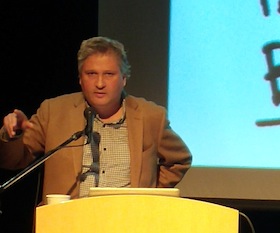
photo - Dr. Mike Teschuk spoke at a National Council of Jewish Women of Canada event on Feb. 6, held at the Rady JCC’s Berney Theatre in Winnipeg
Dr. Mike Teschuk spoke at a National Council of Jewish Women of Canada event on Feb. 6, held at the Rady JCC’s Berney Theatre in Winnipeg. (photo by Rebeca Kuropatwa)

Teschuk is a big proponent of looking at situations from the other person’s perspective. He said laying down the law and being confrontational does not work well with teens. He suggested instead to take the time to understand why they do things a certain way, and to find a way to work together to create a better outcome. This can be done by asking questions and listening, by dialogue.

“So, how do all these changes impact self-esteem?” he asked. “We know it has a big impact. Research says self-esteem often declines during early adolescence, and then improves again as they get a bit older. The idea is there can be discrepancies between who you are and who you think you should be. [Teens] start to reflect on how they are not the ideal person they want to be. At this stage, teens need a lot of reassurance from us. There is a symbolic kind of transition that has to happen. Like, in our family, the transition from the kids’ table to the grown-ups’ table. Going to the grown-up table is about also having your own views to express.”

According to Teschuk, at around 14 years of age, teens go through a “rejecting stage,” they don’t want to be with their parents at all. They want to pretend they don’t even have parents. But, Teschuk reassured the 100-person audience by way of personal example, his 23-year-old daughter, who went through this stage, now likes to go out for coffee with him – so, these things, too, shall pass. Your kids will not feel the same way at 23 as they did at 14, he said.

As parents, he said, we need to recognize that this is a normal stage of development. You don’t have to argue about it or be upset about it. Your teens will feel the need to reject a lot of the things they had until then taken for granted. They want to be independent, but it’s daunting for them.”

According to Teschuk, parent-to-adolescent connectedness is very important, especially when things are rough. Simply by hanging in there as a parent and showing how much you care has a large impact, he said, acknowledging that this is the most fundamental, yet hardest, thing to do when teens push back. “It’s easy to want to reject them, when someone is making your life very difficult,” said Teschuk. “It’s natural to feel that way, but, being able to hang in there is huge.

“Relationships with adults outside the family are important, too – with teachers, coaches, people in church or synagogue, extended family members – having other trusted adults. School connectedness is super-important, too. Schools offer so much more than academics,” he said. “If teens want to go to school because they’re on sports teams, in a play, or some other engaging activities … follow their lead and support them in those interests. Positive peer environments are important … but, of course, parents can have a role in creating those peer environments. Knowing your teenagers’ friends … and making your house a place where they want to hang out is a great strategy.”

Teschuk offered a couple of other tips. He suggested that parents, when driving their kids around, take the time to talk with their children and to connect with them. Also, he said, talking with them in this way gives the teens the chance to talk without being face-to-face, which can be uncomfortable and stress-inducing. Last but not least, Teschuk said family meals are also a great time to connect.

Rebeca Kuropatwa is a Winnipeg freelance writer.

Format ImagePosted on March 23, 2018March 23, 2018Author Rebeca KuropatwaCategories NationalTags family life, health, Mike Teschuk, science, teenagers
Exploring the science of life

Exploring the science of life

Amy Amantea and Jake Anthony in Sequence, which runs March 14-24 at Presentation House Theatre. (photo by Tim Matheson)

“To direct this play requires a willingness to grapple with the concepts, to accept that sometimes questions are more important than answers, not everything is answerable, and to be committed to entertaining possibilities. It’s heady stuff,” director Rena Cohen told the Independent about Sequence, which opens next week at Presentation House in North Vancouver.

Describing the play as “a science thriller that will challenge as much as it entertains,” Cohen, who is also managing artistic director of Realwheels Theatre, explained, “In Sequence, we follow two absorbing stories. In one, a professor confronts a student who’s defied probability by taking a multiple-choice exam only to get every answer – 150 of them – wrong (the chance of achieving this is one in a pentillion). In the second story, the ‘Luckiest Man Alive’ – his status cemented by his uncanny ability to predict the winner of the Super Bowl coin toss for 20 years running – is confronted by a young woman who claims to know his secret.

“Each of these narratives is presented coherently, cleverly and simultaneously, and it’s how they intertwine through ‘wormholes’ in the dialogue that makes the play fascinating, and mystifying. Playwright Arun Lakra compares the structure of the play to two strands of intertwining DNA. You could argue it’s comparable to a Möbius strip-like dramatic encounter. You’re following two narratives, only to have the carpet swept out from under you.”

For readers who don’t have Wikipedia or a dictionary handy, a Möbius strip, or band, is “a surface with only one side and only one edge. It can be made using a strip of paper by gluing the two ends together with a half-twist.” It’s a non-orientable surface, which means it “cannot be moved around the surface and back to where it started so that it looks like its own mirror image.” The example given for further explanation, is that “no matter what, a human right hand, cannot be rotated in such a way that it becomes a human left hand. The right hand is, therefore, orientable.”

How does one direct a play like Sequence so that it’s enjoyable and comprehensible?

“There are ways we harness the ‘language of theatre’ to capture audiences’ attention, to heighten a moment,” said Cohen. “Sometimes, it’s in the way an actor delivers a line, the way they land on a phrase containing important information. We also signal key moments using lighting and/or sound, so even if, when information doesn’t necessarily register on a conscious level, you absorb it.’”

The material of the play – “Wading into new intellectual territory, learning the mathematical concepts used to understand randomness and probability” – was initially a challenge for Cohen.

“My last physics course was in high school, the last time I studied math was in CEGEP [a post-secondary school program in Quebec] and I’ve never taken a biology course,” she said, “so some of the references in the play – regarding genetics, for example – may not be complicated to a Grade 10 biology student, but they’ve been a challenge to me.

“Sequence is also very fast-paced, and there’s a ton of stage business, most of which is – incidentally – performed by Amy Amantea, our actor who lives with blindness. She’s fearless.”

And, added Cohen, “Working with an integrated cast of performing artists with disabilities and able-bodied artists means there’s a wider range of experience, and we’re challenged to become an ensemble in a few short weeks.”

photo - Krista Skwarok and Byron Noble
Krista Skwarok and Byron Noble. (photo by Tim Matheson)

Amantea (as the professor) will be joined in the performance by actors Jake Anthony (the student), Byron Noble (the “luckiest man”) and Krista Skwarok (the woman who purports to know his secret).

“Two members of the cast live with disability: Amy is legally blind and Jake lives with autism,” said Cohen. “The casting speaks to our (Realwheels’) commitment to fostering interchange between mainstream and disability arts sectors. That means interchange between artists, and we’re all learning from each other.

“Amy Amantea has such a generous spirit, so much heart and decency and, in Sequence, she’s playing a dark, angry character. Her character is also very funny and over-the-top, and this is new territory for Amy, who left the performing arts after she lost her sight 11 years ago. Furthermore, Amy’s character lives with severe sight loss, but of a type that’s different from her own, so there’s a whole other layer of challenge. She also has the most ‘stage business.’

“Jake Anthony is a sensitive actor, and an incredible advocate for persons with autism; getting to know him means gaining appreciation for the gifts that accompany autism,” continued Cohen. “Jake is a decisive and determined individual, very focused, so lovely and respectful to everyone, and he’s bringing tremendous insight into his character, a young man of faith, and an inveterate optimist.”

Skwarok is a recent graduate of Langara College’s Studio 58 theatre program, said Cohen, “and this is her first professional gig. Such bright energy, she’s super-smart and quick and creative and game. Expect to see a lot more of her – Krista’s talent is explosive.”

As for Noble, Cohen said he “is loaded with charm.” In Sequence, she said, his character “is slick, playful and, yes, he’s a charmer – and we get to see his character grow and other unexpected qualities emerge. It’s beautiful to watch. Byron is the most seasoned actor in the Sequence company, and we’re all benefiting from his experience and generosity.”

She said this play feels made for Realwheels “because it isn’t about disability, yet disability forms the landscape against which universal issues are debated onstage.”

She explained, “The four characters in Sequence are attached to their individual frameworks of the world: faith versus science, fate versus DNA. Did God use evolution as a means of creation? If something isn’t testable, how do you justify believing it? Is there an innate rightness to biological outcomes rooted in our fundamental DNA?”

Sequence has won several awards. The playwright, Lakra, is an ophthalmologist in Calgary, where he splits his time between practising medicine and writing, said Cohen. “This is the first time,” she said, “the play is being produced with an integrated cast – professional actors with disabilities playing alongside able-bodied actors.”

Sequence runs 80 minutes with no intermission, and is not suitable for children. It is at Presentation House Theatre March 14-24 (except March 19), with proceeds from the March 14 preview going to Realwheels Society to cover production costs. For tickets ($28-$10), call 604-990-3474 or visit phtheatre.org.

Format ImagePosted on March 9, 2018March 7, 2018Author Cynthia RamsayCategories Performing ArtsTags Arun Lakra, inclusion, physics, Presentation House, Realwheels, science, Sequence
Targeting diseased tissue

Targeting diseased tissue

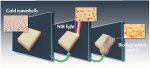
(image from Technion)

Technion-Israel Institute of Technology doctoral candidate Alona Shagan and assistant professor Boaz Mizrahi have developed a technology that enables drugs to be delivered and released only to the diseased tissue that a drug is targeting. Researchers designed the one-of-a-kind delivery method to release under long wave light (near-infrared, NIR). The light warms the gold nanoshells, melting the polymer packaging, and releasing the drug. The primary advantage of NIR light is its ability to penetrate bodily tissues without harming them. The researchers believe this new technology can be used for a variety of other applications, such as the sealing of internal and external injuries, temporary holding of tissue during surgery, or as biodegradable scaffolds for growing transplant organs.

Format ImagePosted on March 2, 2018March 1, 2018Author Technion via AshernetCategories IsraelTags pharmaceuticals, science, technology
Jumping gene research

Jumping gene research

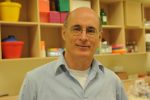
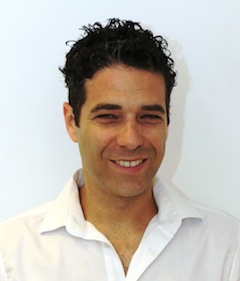
Dr. Gideon Rechavi, who founded Sheba Cancer Research Centre, was in Vancouver in January for an international conference at which he presented new findings on “jumping genes.” (photo from Sheba Cancer Research Centre)

Dr. Gideon Rechavi, who founded Sheba Cancer Research Centre, in Ramat Gan, Israel, was in Vancouver in January for an international conference on DNA and RNA methylation.*

“I described a new work we just published, regarding ‘jumping genes,’” he told the Independent about his presentation at the conference. “Forty-five percent of our genome, part of what people used to call ‘junk DNA,’ is composed of genes that can jump from one place to another.”

As far as what this means for the functioning of a body, he explained, “When they jump, they can activate genes and they can also inactivate genes, and it’s a random process. Actually, when I was PhD student in ’82 at the Weizmann Institute, I found the first example of such an event in mammals.” And, he added, “We were also the first to show the role of such events in cancer.”

Rechavi explained, “In cancer, there is a set of genes called oncogenes, genes that usually are normal genes in our genome but, when they are over-activated or activated in the wrong cell or at the wrong time, they can push the cell to proliferate and can cause cancer.”

Now, he said, many years later, using advanced technologies based on whole genome sequencing, they have found that, “in a variety of neurodevelopmental disorders, such as autism and Rett syndrome and similar diseases, there is a basic gene defect in the family or in the affected child. However, the clinical presentation can differ even between identical twins. Nobody understands why the same genome and the same genetic background will result in such a difference, one patient will be affected by epilepsy, the other one by autism or mental retardation.

“The mechanism that we show is that, in the brain, there is, normally, a constant level of jumping of such genes and, probably, it’s essential for diversity of neurons and brain plasticity and activity.”

This is happening all the time in neuronal stem cells, he said. “During the differentiation of neuronal stem cells … there is a very precise time window of 48 hours when such transposition events can take place. And, probably, it’s essential, because you find it in mice, in monkeys and in humans. However, in all the diseases that we are studying, there is over-activation of the mechanism, so you have many more jumping events.”

We have neuronal stem cells dividing in the brain our whole life, said Rechavi. “In the past, we used to think that all of the neurons are created during pregnancy or soon after, but now, in the last 20 years or so, we know there are also adult neuronal stem cells. When you do gymnastics or when you take Prozac, there are more neuronal stem cells. And, in these neuronal stem cells, these transposable elements – jumping genes – are jumping and probably contribute to brain function.”

The process seems to be quite regulated, he said. “The mechanism we suggest, we call it the ‘lightning rod’ mechanism or hypothesis.”

He explained, “The majority of jumping events occur in sequences in the genome where integration will not cause harm. So, in a normal level of jumping, we expect it will be beneficial, and the chance for damage is low. Although, if, in a variety of diseases, there is uncontrolled activation of this mechanism, so there are many more jumps, then it can saturate the lightning rod safeguard mechanism and then affect genes that are relevant to neuronal diseases, and we have a lot of examples where such things happened.”

To study this, said Rechavi, they sequenced the genomes of 100 samples, which included normal, diseased and control brain samples. “We were able to show that there is a particular normal level of transposition … and, then, over-activation, with many more transposition events, in the brains of disease-affected children.”

From these results, he said, we know that “the genes affected by such insertions from these transpositions, you see that many of them are relevant to neuronal functioning, neural development and a variety of neuronal disorders, such as autism and schizophrenia.”

By understanding the biochemical mechanism in these patients, what activates the jumping, “then you can intervene,” said Rechavi. For example, perhaps a drug could be developed that would decrease the level of transposition.

“This is the next step,” he said. “Now, we have several patients where we know the gene defect involved in the syndrome and, therefore, is involved in the enhanced transposition, so now we have to find a way to shut it off, to lower the activity.”

Rechavi said his lab is researching these jumping genes and their effects in both cancer and neuronal disorders, and that they are currently looking for funding to study the involvement of such genes in Alzheimer’s and in aging.

The purpose of the jumping genes is not certain. “What people suggest,” said Rechavi, “is that it has to do with diversity.” Recalling that it is a random process, he explained, “So, instead of having all the neurons in a particular part of the brain being identical, now you have diversity and probably the diversity increases the efficiency of the brain circuits, etc. It can also be relevant to plasticity. We know that specific brain regions can take over following damage or following a kind of environmental influence and change the activity and perform new activities. So, maybe the ability to create diversity in the brain is an advantage.

“A similar model has to do with the immune system,” he added. “With the immune system, we know that there are genetic mechanisms that increase diversity and, then, the cells of the immune system of an individual can respond to any virus and any bacteria.”

The main focus of his lab at Sheba Medical Centre, he said, is to find new genetic and epigenetic mechanisms, “and then to ask, what is their relevance to normal physiology and what’s their relevance to diseases. That’s how this story that started with cancer research turned out to be very relevant to neuronal disorders and psychiatric disorders.”

Rechavi said the phenomenon of jumping genes, or transposable elements, was first identified by American scientist Barbara McClintock (1902-1992) in experiments with maize. (She won the Nobel Prize in 1983 for this and other contributions to the study of genetics.) “She found it in maize,” he said. “We found it in mammals.”

Conferences like the one Rechavi was attending in Vancouver when he spoke to the Independent by phone Jan. 23 from his room at the Fairmont Hotel Vancouver, where the conference was being held, are useful for several reasons.

“Some people, after my talk, came and they wanted to collaborate, they want to learn the methodologies. Some people suggested samples we could analyze…. This is the basis for scientific collaboration, the main reason to do scientific meetings. You can read everything on the internet,” he said, “but when you discuss with people the findings and you drink coffee together and discuss the details, you can get new information, new non-published information, and also collaborations and friendships.”

Sheba Medical Centre doesn’t have many partnerships with Canadian institutions, said Rechavi. The centre’s main collaboration in Canada, he said, is with Toronto’s Hospital for Sick Children, especially in the field of brain tumours, because one of Rechavi’s former trainees, Dr. Uri Tabori, went to SickKids to study such tumours and stayed there.

Before obtaining his PhD at the Weizmann Institute of Science, in Rehovot, Rechavi earned his doctor of medicine at Tel Aviv University’s Sackler School of Medicine. He is a professor of hematology at Sackler School and heads the Cancer Research Centre at Sheba Medical Centre, the largest hospital in Israel, which serves as a university teaching hospital (affiliated with Sackler) and as a tertiary referral centre. He has published more than 450 scientific papers.

In addition to treating some 1.5 million patients annually, Sheba Medical Centre has 75 laboratories and more than 2,000 ongoing clinical trials; 30% of Israeli medical research is performed at Sheba, which files, on average, 15 biomedical patent applications per year.

In October 2017, Sheba Medical Centre inaugurated the Wohl Institute for Translational Medicine. The idea, said Rechavi, is to take the “findings emerging from basic research and try to translate it into taking care of patients; to better diagnose, to [develop] better treatments.”

* Methylation, explained Dr. Gideon Rechavi, “is the addition of a chemical group known as methyl on the four basic letters of the genetic material (DNA and RNA) to generate a new expanded ‘alphabet.’”


Format ImagePosted on February 16, 2018February 14, 2018Author Cynthia RamsayCategories IsraelTags aging, Alzheimer's, cancer, DNA, Gideon Rechavi, health, jumping genes, medicine, methylation, neurodevelopmental disorders, science, Sheba Medical Centre
The start of an ancient grove?

The start of an ancient grove?

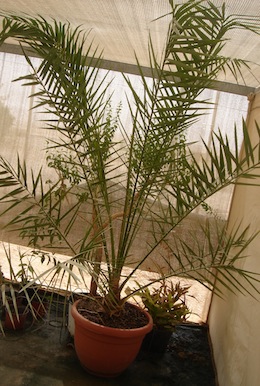
The date palm Methuselah “is a big boy now.” (photo from Arava Institute)

When I contacted Dr. Elaine Solowey, a California-born botanist of the Arava Institute for Environmental Studies at Kibbutz Ketura, for an update on the date palm Methuselah, she said, “He is a big boy now. He has flowered several times and his pollen is good. I hope to have some good news about companions for him.”

In honour of Tu b’Shevat in 2011, I wrote about Methuselah for the Jewish Independent and other publications. What best symbolizes the holiday known in the Talmud as Rosh Hashanah l’Ilanot, the New Year of the Trees, more than dates?

For that 2011 article, I interviewed London-born Dr. Sarah Sallon, director of the Louis Borick Natural Medicine Research Centre at Hadassah Medical Centre in Jerusalem, who is friends and colleagues with Solowey.

Sallon said that, in 2005, “we were interested in rejuvenating lost flora of Eretz Yisrael,” including the Judaean date. During a conversation with scientists about extracting DNA from ancient seeds, she wondered about the possibility of growing such seeds, and Masada came up.

In the early 1960s, during excavations of Masada – the fortress built by King Herod more than 2,000 years ago – archeologists Yigal Yadin and Ehud Netzer found date palm seeds. Under the custodianship of Netzer, the seeds were stored at Bar Ilan University in Tel Aviv.

At the Louis Borick Centre, Sallon directs research on complementary alternative and integrated medicine through the Middle Eastern Medicinal Plant Project. After studying medicines of Tibet, as an introduction to the ancient world of traditional medicine, the centre began to look at the medicinal plants of Eretz Yisrael, of which there are approximately 2,900 species. Sallon asked Netzer if she and her researchers could have a few seeds, and they were given five palm seeds, which Sallon took to Solowey.

photo - Methuselah in 2005
Methuselah in 2005. (photo from Arava Institute)

Solowey took three of the ancient seeds and planted them in January 2005. Other seeds were sent to the University of Zurich, Switzerland, for radiocarbon dating and other testing. The date palm, which can be male or female, was domesticated more than 6,000 years ago, and is used for lung disease, colds, heart disease, hair growth and other things.

After eight weeks, in March 2005, one seed successfully germinated and was named Methuselah, after the biblical person who was said to have lived 969 years. Initially, the leaves had white spots because of a lack of chlorophyll. At 15 months, the seedling was transferred to a larger pot. After 26 months, the plant showed normal development, and Sallon said Methuselah is accepted by Guinness World Records as the oldest seed cultivated.

In 2011, I saw a photograph of Methuselah on a computer when its location was secret. At that time, it was two metres high (about six-and-a-half feet) and in a “protected quarantine site,” due to its scientific and financial value. In April of that year, a white flower appeared on the inner part of the tree, indicating that Methuselah was a male date palm. And, on Nov. 24, 2011, Methuselah was planted at Kibbutz Ketura.

Today, Methuselah has a permanent home at the Arava Institute research park on Kibbutz Ketura. As I wrote this update, there was hope for Methuselah to be bred with a female tree to produce the same date variety eaten commonly in ancient Judea, where it was valued as much for its flavour as for its medicinal properties.

Solowey continues to work with palms and has grown other date palms from ancient seeds found in archeological sites around the Dead Sea, as well.

“I’m trying to figure out how to plant an ancient date grove,” she said. And, if she can succeed in bringing forth a modern grove of ancient trees, it would provide unique insight into history. “We would know what kind of dates they ate in those days and what they were like,” she said. “That would be very exciting.”

Sybil Kaplan is a journalist, lecturer, book reviewer and food writer in Jerusalem. She created and leads the weekly English-language Shuk Walks in Machane Yehuda, she has compiled and edited nine kosher cookbooks, and is the author of Witness to History: Ten Years as a Woman Journalist in Israel.

Format ImagePosted on January 26, 2018January 24, 2018Author Sybil KaplanCategories IsraelTags Arava Institute, archeology, biology, date palm, Hadassah, Methuselah, science
Eat bugs to repair the world?

Eat bugs to repair the world?

Burgers made with insect protein, and no meat. (photo from Eran Gronich)

While the thought of eating insects or worms may sound outlandish or disgusting to many of us, there is growing support for doing just that.

In less than 25 years, the world will have nine billion people living on it. As things stand, there is not enough space or resources to support conventional protein production – beef, chicken, fish, etc. – for that many people. One solution that has been brought to the fore is that we can start eating insect protein. And now, the Israeli company Flying Spark is raising capital to make this a reality.

Leading the charge is Eran Gronich, a serial entrepreneur, and his partner, entomologist Dr. Yoram Yerushalmi.

“When I was looking for my next project, looking into all kinds of ideas, start-ups, etc., I came across a TED Talk in which this university professor was talking about the world having nine billion people by 2040,” said Gronich. “He was talking about all the damages of livestock farming – causing global warming, [using] 70% of growing seed, oceans over-fished…. He was saying the best solution is switching to insect consumption … and, I don’t know why, but I was fascinated. I started to learn about it…. When I realized I don’t know anything about insects, I found my partner, Dr. Yerushalmi, and together we started Flying Spark.”

They chose the larva of fruit flies to work with because it has a number of benefits, such as high values of protein, iron, calcium and magnesium. Its fat is unsaturated and, unlike some other insects, a fruit fly has no cholesterol.

The fruit fly uses less than one percent of water and land resources, has hardly any waste and 100% of the larva can be used. The lifespan of the larva is only six days and it multiplies 15 times in that time.

As it’s a vegetation-eating fly, it is a safe insect to use. No antibiotics, hormones or additives are used in the growing process, and the insect does not share any diseases with human beings.

photo - Flying Spark’s Eran Gronich
Flying Spark’s Eran Gronich. (photo from Eran Gronich)

Gronich and Yerushalmi’s project was chosen as the winner of a mass accelerator challenge in Boston. “We spent four months in Boston working on accelerating the growth of the company,” said Gronich. “We raised some money there from investors and sent it to Israel. We developed the farming and ecosystem technology around farming the larva, reducing the cost.

“In the food lab, we developed the process that’s basically taking the larva and turning it into high-quality, 70% protein powder and high-quality oil. Also, we worked on all kinds of applications and the functionality of the protein powder. We made all kinds of products just to prove the point that you can make almost anything out of our materials – bread, pasta, cereal, cakes, whatever. And, also, achieve meat replacement, even milk, with more protein than cows.”

As it turns out, the larvae will be fed by fruit surpluses, which, according to Gronich, exist everywhere. “They are in every country and also throughout the supply chain – surplus that the farmer or grocery chain has,” he said. “It’s good food, but doesn’t look so good anymore. So, we developed this formula – based on feeding software – to calculate the right percentage … to get the nutritional diet needed.”

Gronich is working with several major food manufacturers, trying out various applications, with varying degrees of success.

According to Gronich, the product is not kosher and his market is not yet in Israel, though he does have some Israeli and Jewish backers. One of his backers is the Strauss Group, which invested money and provides support with offices, labs and a lot of technical support for marketing and networking with institutions worldwide.

“For Strauss, it’s a financial investment,” said Gronich. “Strauss believes insects will be a part of the human diet in the near future and decided to invest in the best company.”

Another important collaboration in which Flying Spark is involved is with IKEA. “IKEA, eight months ago, [invited] all kinds of start-ups to apply for special programs focused on making the world a better place, especially sustainability aspects. Thirteen hundred companies applied from about 80 countries around the world; they chose 10. We were lucky enough to be one of those 10 companies. So, we started a three-month program. My partner is in Sweden right now, in the IKEA centre, and the goal of the program in the end is to have a product made from our material in the IKEA restaurant.”

Gronich is currently working on designing Flying Spark’s first production facility in Israel, with operations scheduled for the end of 2018. “Now, we are raising three and a half million dollars to build the facility, which will be in Ashdod,” said Gronich.

While selling the product to the Western world is a bit tricky, in the Eastern world or in South America, insects are eaten regularly. So, heading east with their product is an obvious choice.

As for the West, Gronich said, “Now, people from Western countries … when I’m explaining to them about the larva – about how it cleans itself and its nutritional value – people understand it. They get that it is one of the best sources of protein. If you’re comparing it to shrimp or other kinds of seafood, it looks much better. It definitely looks much better than a dead chicken. And millennials are very much aware of what they put into their bodies, and aspects of food and farming, so it’s easier.”

Flying Spark was very happy with their positive reception in Boston. There, more than 85% of millennials told them they had no problem tasting it. And, when they gave people samples, the reaction was positive.

“Now, we’re working with companies that have heard about us through PR,” said Gronich. “Multinational companies approached us and the conversations with them have all been focused on nutritional value – source of the protein, they don’t care about it…. We call it the industrial approach. We’re not serving the insect in its original form. We’re turning it into a white powder and are selling it to regular, traditional food manufacturers – and there is a need for this product.”

Rebeca Kuropatwa is a Winnipeg freelance writer.


Format ImagePosted on October 27, 2017October 25, 2017Author Rebeca KuropatwaCategories WorldTags environment, Eran Gronich, Flying Spark, IKEA, insects, Israel, science
Mimicking silkworms

Mimicking silkworms

A silkworm viewed with an infrared camera. The pale elongated cavity is the silk gland. (photo from © 2017 Natural Materials Group)

Scientists have designed microscopic silk capsules that mimic, on a very small scale, the structure of silkworm cocoons. The capsules can serve as a protective environment for the transport of sensitive “cargo” such as natural silk proteins, antibodies or other delicate molecules. The collaborative research – which was performed by an international team of academics from the Weizmann Institute of Science in Israel; the universities of Cambridge, Oxford and Sheffield in the United Kingdom; and the ETH in Switzerland – may lead to a host of applications in the cosmetics, food and pharmaceutical industries, particularly in the delivery of drugs within the body. The findings were reported this summer in Nature Communications.

The use of natural proteins from which silkworms and spiders spin their elastic fibres has been limited, as these proteins have a tendency to clump together once extracted. Until now, researchers have been using chemically processed silk fibres, which have different mechanical properties and are relatively inert compared to the natural ones. Dr. Ulyana Shimanovich – then a postdoctoral fellow supervised by Prof. Tuomas P. J. Knowles at Cambridge and now head of a new lab in Weizmann’s materials and interfaces department – decided to find out what keeps the natural silk proteins from clumping together in the animal prior to the spinning.

The silk proteins are stored in liquid form in the silkworm’s glands before they are spun into the threads used to construct the cocoons. To imitate the natural process of structuring silk protein into protective capsules, the researchers used the principles of microfluidics, a field that deals with the control of fluid flow parameters on the micron-scale level. They placed proteins extracted directly from the glands of silkworms inside microscopic channels on a chip made of a silicon-derived polymer and caused the protein molecules to self-assemble into a gel-like material, exactly as in a silkworm. The gel formed microscopic capsules; within these capsules, the rest of the protein stayed protected as a solution, as it does in the animal’s gland. By controlling the viscosity of the silk protein solution and the forces acting upon it, the researchers have been able to control the capsules’ shape (round or elongated) and size: from 300 nanometres to more than 20 micrometres. Inside these artificial capsules, the natural silk proteins remained intact for an unlimited amount of time without losing their properties or ability to function.

“Making synthetic capsules is normally a complex and energy-intensive process,” explained Shimanovich. “In contrast, silk capsules are easier to produce and require less energy to manufacture. Moreover, silk is biodegradable.”

The tough silk capsules may be used to protect sensitive molecules, such as antibodies and other proteins, preventing them from losing desired qualities. The capsules can be employed, for example, to deliver drugs or vaccines intact to target organs. In particular, said Shimanovich, they may help develop future therapies for neurodegenerative diseases: because the capsules can penetrate the blood-brain barrier, they may enable the development of new treatment for these diseases.

As well, since the capsules are biodegradable, they may have multiple uses. For example, they might be employed in the food industry to incorporate healthful oil particles into bread or other products. Potential applications for natural silk proteins stored inside the new capsules include the development of skin treatments for burns or cosmetic use, and the design of strong elastic fibres for tissue engineering – for example, for the fabrication of improved biological implants.

The research team included Dr. Simone F. Ruggeri, Dr. Erwin De Genst, Dr. Thomas Mueller, Dr. Teresa P. Barros and Prof. Christopher M. Dobson of Cambridge; Dr. Jozef Adamcik and Prof. Raffaele Mezzenga of ETH Zurich; professors David Porter and Fritz Vollrath of Oxford; and Dr. Chris Holland of the University of Sheffield. Shimanovich’s research is supported by the Benoziyo Fund for the Advancement of Science; the Peter and Patricia Gruber Awards; and Georges Lustgarten.


Format ImagePosted on October 20, 2017October 19, 2017Author Weizmann Institute of ScienceCategories IsraelTags Israel, science, silkworms, Ulyana Shimanovich
Israel joins the fruit-fly fight

Israel joins the fruit-fly fight

Biofeed’s Nimrod Israely, top centre, with mango growers in Karnataka, India. (photo from Biofeed via Israel21c)

Shortly before Indian Prime Minister Narendra Modi’s visit to Israel in early July, Indian diplomats in Israel heard about a revolutionary no-spray, environmentally friendly solution against the Oriental fruit fly (Bactrocera dorsalis) made by Biofeed, a 10-employee ag-tech company. They invited Biofeed to be one of six innovative Israeli companies meeting with Modi and Israeli Prime Minister Binyamin Netanyahu.

The company’s founder and chief executive officer, Nimrod Israely, who has a PhD in fruit-fly ecology, told the two leaders that Biofeed’s product can protect Indian farmers against fruit flies like the Iron Dome system protects the people of Israel against missiles. The Oriental fruit fly has been decimating 300 fruit species in India and in 65 other countries in Asia, Africa and the Americas and is considered to be the most destructive, invasive and widespread of all fruit flies.

Biofeed’s lures, hung on trees, contain an organic customized mix of food, feeding stimulants and control or therapeutic agents delivered by a patented gravity-controlled fluid release platform. Attracted by the odour, the fly takes a sip and soon dies – without any chemicals reaching the fruit, air or soil.

The launch of Biofeed’s first-in-class attractant for female Oriental fruit flies results from 15 years of development of the core platform and more than a year of development and testing in Israel and Karnataka, India. Mango farmers on four Indian orchards saw an overall decrease of fruit-fly infestation from 95% to less than five percent.

“We were hoping to bring a solution that will replace spraying and increase productivity by 50%,” Israely told Israel21c. “I am excited by the results, demonstrating the future potential for some farmers to bring about 900 times more marketable produce to market.”

photo - A fruit fly feeding in a Biofeed lure
A fruit fly feeding in a Biofeed lure. (photo from Biofeed via Israel21c)

One farmer in the Biofeed pilot explained that previously he had used a trap that attracted only male fruit flies, with limited success. “If you cut 25 fruits, we were getting only one good fruit; 24 were infected,” he said.

K. Srinivas Gowda, president of the 70,000-farmer Karnataka Mango Growers Association, wrote in a letter presented to Modi and Netanyahu that he “would like to have this [Biofeed] technology implemented to all the mango farmers through the government of India. This technology can be used to develop pest-free zones in the mango-growing belts in India.”

The pilot project started after Biofeed won a Grand Challenges Israel grant last year from the Israel Innovation Authority and the Foreign Ministry’s international development agency, Mashav.

“We don’t have the Oriental fruit fly in Israel. However, until now there was no solution for this problem. So, we took the challenge and chose to focus on India,” Israely said. The company worked with Kempmann Bioorganics in Bangalore to carry out the trial.

Biofeed’s products are used in many Israeli fruit orchards against the Mediterranean fruit fly and other common pests, including the olive fruit fly and the peach fruit fly (Bactrocera zonata).

“Bactrocera zonata is the number two pest in India. There are three main pests in India, so now we’ve given, within two years, a solution for the two most devastating fruit flies in India and in other parts of the world,” said Israely.

“We are the only company in the world with a solution for those two pests and both solutions are harmless to the environment,” he added. “We estimate the annual market potential of these two pest segments to be well over $1 billion.”

The Biofeed platform is effective with as few as 10 units per hectare and for a period of nearly a year before the dispenser needs replacing.

Biofeed, founded in 2005, also has a formula targeting mosquitoes that bear viruses such as Zika.

“Evolution has given insects an elaborate sense of smell, which they utilize to find mates, food, egg-laying sites and more,” Israely told Israel21c last year. “The company has developed a liquid formula that ‘knows’ how to tie different kinds of smells to other materials, as the need arises. The result is a special ‘decoy’ that draws the target insect through smell. The decoy is slow-released from a device over the course of a year. The insect is drawn to the decoy, feeds off it and dies shortly after.”

Headquartered in Kfar Truman, Biofeed sees the future of agriculture in developing countries such as India and China.

“We want to bring something that is extremely easy to use: you don’t need tractors, you don’t need to remember to spray once a week, you don’t need to put yourself in danger with sprays, there’s no safety equipment. This is something that can make a dramatic change in agriculture and human health,” said Israely.

For more information, visit biofeed.co.il/enhome.

Israel21c is a nonprofit educational foundation with a mission to focus media and public attention on the 21st-century Israel that exists beyond the conflict. For more, or to donate, visit israel21c.org.

Format ImagePosted on September 15, 2017September 14, 2017Author Abigail Klein Leichman ISRAEL21CCategories WorldTags ag-tech, agriculture, environment, farming, India, Israel, science, technology, tikkun olam
Betalains boost resistance?

Betalains boost resistance?

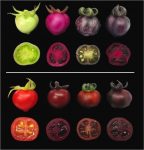
Unripe (top) and ripe (bottom) tomatoes. Regular tomatoes (far left) start out green (far left top) and turn red when ripe (far left bottom). In contrast, genetically engineered tomatoes assume different shades of red-violet, depending on whether they produce betalains (the column second from left), pigments called anthocyanins (second from right) or betalains together with anthocyanins (far right). (photo from wis-wander.weizmann.ac.il)

Colour in the plant kingdom is not merely a joy to the eye. Coloured pigments attract pollinating insects, they protect plants against disease, and they confer health benefits and are used in the food and drug industries. A new study conducted at the Weizmann Institute of Science, published in Proceedings of the National Academy of Sciences, USA, has opened the way to numerous potential uses of betalains, the highly nutritious red-violet and yellow pigments known for their antioxidant properties and commonly used as food dyes.

Betalains are made by cactus fruit, flowers such as bougainvillea and certain edible plants – most notably, beets. They are relatively rare in nature, compared to the two other major groups of plant pigments and, until recently, their synthesis in plants was poorly understood. Prof. Asaph Aharoni of Weizmann’s plant and environmental sciences department and Dr. Guy Polturak, then a research student, along with other team members, used two betalain-producing plants – red beet (Beta vulgaris) and four o’clock flowers (Mirabilis jalapa) – in their analysis. Using next-generation RNA sequencing and other advanced technologies, the researchers identified a previously unknown gene involved in betalain synthesis and revealed which biochemical reactions plants use to convert the amino acid tyrosine into betalains.

To test their findings they genetically engineered yeast to produce betalains. They then tackled the ultimate challenge: reproducing betalain synthesis in edible plants that do not normally make these pigments.

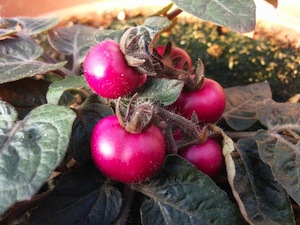
photo - Tomatoes that have been genetically engineered to produce betalains only in the fruit, but not elsewhere in the plant
Tomatoes that have been genetically engineered to produce betalains only in the fruit, but not elsewhere in the plant. (photo from wis-wander.weizmann.ac.il)

The success announced itself in living colour. The researchers produced potatoes, tomatoes and eggplants with red-violet flesh and skin. They also managed to control the exact location of betalain production by, for example, causing the pigment to be made only in the fruit of the tomato plant but not in the leaves or stem.

Using the same approach, the scientists caused white petunias to produce pale violet flowers, and tobacco plants to flower in hues varying from yellow to orange pink. They were able to achieve a desired hue by causing the relevant genes to be expressed in different combinations during the course of betalain synthesis. These findings may be used to create ornamental plants with colours that can be altered on demand.

But a change in colour was not the only outcome. Healthy antioxidant activity was 60% higher in betalain-producing tomatoes than in average ones. “Our findings may in the future be used to fortify a wide variety of crops with betalains in order to increase their nutritional value,” said Aharoni.

An additional benefit is that the researchers discovered that betalains protect plants against grey mold, Botrytis cinerea, which annually causes losses of agricultural crops worth billions of dollars. The study showed that resistance to grey mold rose by a whopping 90% in plants engineered to make betalains.

The scientists produced versions of betalain that do not exist in nature. “Some of these new pigments may potentially prove more stable than the naturally occurring betalains,” said Polturak. “This can be of major significance in the food industry, which makes extensive use of betalains as natural food dyes, for example, in strawberry yogurts.”

Furthermore, the findings of the study may be used by the drug industry. When plants start manufacturing betalains, the first step is conversion of tyrosine into an intermediate product, the chemical called L-dopa. Not only is this chemical itself used as a drug, it also serves as a starting material in the manufacture of additional drugs, particularly opiates such as morphine. Plants and microbes engineered to convert tyrosine into L-dopa may, therefore, serve as a source of this valuable material.

The research team included Noam Grossman, Dr. Yonghui Dong, Margarita Pliner and Dr. Ilana Rogachev of Weizmann’s plant and environmental sciences department, and Dr. Maggie Levy, Dr. David Vela-Corcia and Adi Nudel of the Hebrew University of Jerusalem. Aharoni’s research is supported by the John and Vera Schwartz Centre for Metabolomics, which he heads; the Leona M. and Harry B. Helmsley Charitable Trust; the Adelis Foundation; the Lerner Family Plant Science Research Fund; the Monroe and Marjorie Burk Fund for Alternative Energy Studies; the Sheri and David E. Stone Fund for Microbiota Research; Dana and Yossie Hollander, Israel; the AMN Fund for the Promotion of Science, Culture and Arts in Israel; and the Tom and Sondra Rykoff Family Foundation. Aharoni is the recipient of the André Deloro Prize, and the incumbent of the Peter J. Cohn Professorial Chair.

For more on the research being conducted at the Weizmann Institute, visit wis-wander.weizmann.ac.il.

Format ImagePosted on September 15, 2017September 14, 2017Author Weizmann InstituteCategories IsraelTags ag-tech, agriculture, Israel, science, technology
Population growth & nature

Population growth & nature

The four lines in this diagram are projections based on four levels of fertility of the general population. In 2059, there could be more than 20 million people in the state of Israel. However, if the birthrate drops to the replacement level of 2.1 children per woman during her lifetime, in 2059, it would be only about 10 million. (image from population.org.il)

While by no means unique to Israel, with less space than most to work with, it is happening a little faster there – population overload. While some feel it is too late to do anything to alleviate the problem, one growing group of Israelis is putting its energy into making a bid to re-educate the public about the need for stabilization, as opposed to growth.

One of the leaders in the group is Prof. Alon Tal, chair of the department of public policy at Tel Aviv University (TAU). Tal was born and raised in North Carolina before making aliyah after high school, at the age of 20.

“I’m an activist trapped in the body of an academic,” he quipped. “For many years, I fought it, but I tried very hard to stay an advocate for environmental interests in the country.”

A father to three daughters, Tal decided to move to Israel, as it seemed like a unique and exciting place, and he wanted to take his Jewish identity seriously.

“In Israel, every year, we take open spaces and turn them into houses, highways and commercial centres,” he told the Jewish Independent. “We live in a small country. We have the responsibility to give quality of life, to find a better way. We’re not meeting our responsibility to our great land.”

Tal is at the forefront of Israeli leaders calling on the Israeli government to adopt a policy that stabilizes the population.

“We have to cancel financial payments to families with more than two children,” he said. “We should not be encouraging it [larger families]. It means that we need to strengthen the status of women in the communities, like in the Orthodox communities. We need to make contraception available free of charge, [grant] basic rights of women to abortion, by removing some of the strings attached…. We need a policy that [aims for] stability, rather than maximum growth.”

While most Israeli Jews are raised with the fear that the Arab population will outgrow the Jewish one, Tal is trying to make people aware that there are lower fertility levels being seen in most populations, including Arab ones, while Jewish are on the rise.

A main thrust to all this need for change, Tal said, is the alarming rate of vanishing nature.

“To me, it’s very clear,” he said. “Israel’s wildlife is disappearing. It’s happening faster than I thought it would. If we had 10,000 gazelles 15 years ago, there are only about 2,500 now and they were just declared endangered by the International Union for Conservation of Nature (IUCN). Pretty much, when you go through that report, you can see everything is on the decline. One-third of mammalian species are described as endangered or extinct. It’s a horrible thing that Israel is letting this happen. I don’t want anyone to [be able to say] they didn’t know this was going on.”

When the Independent contacted Tal to be interviewed for this article, he was en route to the official opening of a new museum at TAU – Israel’s Museum of Natural History.

Tal has helped write new laws and has also been involved, indirectly, with Israel’s National Nature Assessment Program (NNAP). Recently, the first State of Nature report came out, explaining how construction and agricultural development have introduced some invasive species to Israel – to the extent that several bird species in southern Israel can no longer survive.

NNAP has established a program that operates out of the new museum, as part of a joint initiative with Jewish National Fund Israel, the Environmental Protection Ministry, and Israel Nature and Parks Authority. Its mission is to promote proper land management based on the science of open areas with Israel’s biological diversity in mind.

“It’s not a policy thing,” said Tal. “We want to save wildlife, set aside land, create ecological corridors, stop hunting and stabilize population growth.”

Although Tal acknowledged that the need to do these things is not news to many people, he is adamant that it must continuously be communicated in different ways to get to the tipping point of producing change.

“I was on television three times this week,” he said. “Every time I’m there, I mention what’s going on. I’m doing what I can do. Everyone needs to make a contribution.

“This is really about a change in Israel’s cultural DNA. We were raised on maximum population growth. We now have to stabilize. We have to tell people that, if we want to be responsible for other species that means we have to stop the incredible hemorrhaging of open spaces. If we don’t, then there won’t be any more nature.”

Tal plans to keep meeting with every willing influential person in order to educate enough people to swing the pendulum towards restoring nature. He anticipates that the new museum will be helpful in this regard.

“In order to change something, you have to know,” said Tal. “You have to look at the habitats, species logs, and take measures there. Anybody who considers Israel a promised land or has an emotional attachment to this holy place – Christian, Muslim, Jewish – we all share this responsibility. Just like how I make contributions for the Amazon rainforest, because I understand how it affects me. If you have an initiative you feel connected to, you should support it. Come to Israel and get involved, go on vacation and get involved, write letters to Israel’s decision-makers letting them know you expect the Jewish state to be a responsible trustee of its nature.”

For more information, visit population.org.il.

Rebeca Kuropatwa is a Winnipeg freelance writer.

Format ImagePosted on July 21, 2017July 21, 2017Author Rebeca KuropatwaCategories IsraelTags Alon Tal, environment, population growth, science, sustainability, TAU, Tel Aviv University

Posts pagination

Previous page Page 1 … Page 8 Page 9 Page 10 Page 11 Next page
Proudly powered by WordPress