Skip to content
  • Home
  • Subscribe / donate
  • Events calendar
  • News
    • Local
    • National
    • Israel
    • World
    • עניין בחדשות
      A roundup of news in Canada and further afield, in Hebrew.
  • Opinion
    • From the JI
    • Op-Ed
  • Arts & Culture
    • Performing Arts
    • Music
    • Books
    • Visual Arts
    • TV & Film
  • Life
    • Celebrating the Holidays
    • Travel
    • The Daily Snooze
      Cartoons by Jacob Samuel
    • Mystery Photo
      Help the JI and JMABC fill in the gaps in our archives.
  • Community Links
    • Organizations, Etc.
    • Other News Sources & Blogs
    • Business Directory
  • FAQ
  • JI Chai Celebration
  • JI@88! video

Recent Posts

  • BGU fosters startup culture
  • Photography and glass
  • Is it the end of an era?
  • Taking life a step at a time
  • Nakba exhibit biased
  • Film festival starts next week
  • Musical with heart and soul
  • Rabbi marks 13 years
  • Keeper of VTT’s history
  • Gala fêtes Infeld’s 20th
  • Building JWest together
  • Challah Mom comes to Vancouver
  • What to do about media bias
  • Education offers hope
  • Remembrance – a moral act
  • What makes us human
  • המלחמות של נתניהו וטראמפ
  • Zionism wins big in Vegas
  • Different but connected
  • Survival not passive
  • Musical celebration of Israel
  • Shoppe celebrates 25 years
  • Human “book” event
  • Reclaiming Jewish stories
  • Bema presents Perseverance
  • CSS honours Bellas z”l
  • Sheba Promise here May 7
  • Reflections from Be’eri
  • New law a desecration
  • Resilient joy in tough times
  • Rescue dog brings joy
  • Art chosen for new museum
  • Reminder of hope, resilience
  • The national food of Israel?
  • Story of Israel’s north
  • Sheltering in train stations

Archives

Follow @JewishIndie
image - The CJN - Visit Us Banner - 300x600 - 101625

Tag: science

A potential malaria vaccine

A potential malaria vaccine

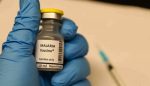
A malaria vaccine based on stabilized proteins could circumvent today’s problems. (photo from wis-wander.weizmann.ac.il)

Despite decades of malaria research, the disease still afflicts hundreds of millions and kills around half a million people each year – most of them children in tropical regions.

Part of the problem is that the malaria parasite is a shape-shifter, making it hard to target. But another part of the problem is that even the parasite’s proteins that could be used as vaccines are unstable at tropical temperatures and require complicated, expensive cellular systems to produce them in large quantities. Unfortunately, the vaccines are most needed in areas where refrigeration is lacking and funds to buy vaccines are scarce. A new approach developed at the Weizmann Institute of Science, recently reported in Proceedings of the National Academy of Science, could, in the future, lead to an inexpensive malaria vaccine that can be stored at room temperature.

The RH5 protein is one of the malaria parasite’s proteins that has been tested for use as a vaccine. This protein is used by the parasite to anchor itself to the red blood cells it infects. Using the protein as a vaccine alerts the immune system to the threat without causing disease, thus enabling it to mount a rapid response when the disease strikes, and to disrupt the parasite’s cycle of infection.

Research student Adi Goldenzweig and Dr. Sarel Fleishman of the institute’s biomolecular sciences department decided to use the computer-based protein design tools they have been developing in Fleishman’s lab to improve the usefulness of this protein.

Based on software they have been creating for stabilizing protein structures, Goldenzweig developed a new way of “programming” proteins used in vaccines against infectious diseases. Such proteins, because they are under constant attack by the immune system, tend to mutate from generation to generation. So, the program she developed uses all the known information on different configurations of the protein sequence in different versions of the parasite. “The parasite deceives the immune system by mutating its surface proteins,” she explained. “Paradoxically, the better the parasite is at evading the immune system, the more clues it leaves for us to use in designing a successful artificial protein.”

The researchers sent the programmed artificial protein to a group in Oxford that specializes in developing malaria vaccines. This group, led by Prof. Matthew Higgins and Simon Draper, soon had good news: the results showed that, in contrast with the natural ones, the programmed protein can be produced in simple, inexpensive cell cultures, and in large quantities. This could significantly lower production costs. In addition, it is stable at temperatures of up to 50°C, so it won’t need refrigeration. Best of all, in animal trials, the proteins provoked a protective immune response.

“The method Adi developed is really general,” said Fleishman. “It has succeeded where others have failed and, because it is so easy to use, it might be applied to emerging infectious diseases like Zika or Ebola, when quick action can stop an epidemic from developing.”

Fleishman and his group are currently using their method to test a different strategy for treating malaria, based on targeting the RH5 protein itself and blocking its ability to mediate the contact between the parasite and human red blood cells.

For more on the research being conducted at the Weizmann Institute, visit wis-wander.weizmann.ac.il.

Format ImagePosted on April 21, 2017April 20, 2017Author Weizmann InstituteCategories IsraelTags malaria, science, vaccine
Forgetting our fright?

Forgetting our fright?

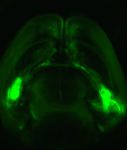
An entire mouse brain viewed from above: neuronal extensions connect the two amygdalas (brightest spots on both sides of the brain) with the prefrontal cortex (top). (photo from wis-wander.weizmann.ac.il)

Erasing unwanted memories is still the stuff of science fiction, but Weizmann Institute scientists have now managed to erase one type of memory in mice. In a study reported in Nature Neuroscience, they succeeded in shutting down a neuronal mechanism by which memories of fear are formed in the mouse brain. After the procedure, the mice resumed their earlier fearless behavior, “forgetting” they had previously been frightened.

This research may one day help extinguish traumatic memories in humans – for example, in people with post-traumatic stress disorder, or PTSD.

“The brain is good at creating new memories when these are associated with strong emotional experiences, such as intense pleasure or fear,” said team leader Dr. Ofer Yizhar. “That’s why it’s easier to remember things you care about, be they good or bad; but it’s also the reason that memories of traumatic experiences are often extremely long-lasting, predisposing people to PTSD.”

In the study, postdoctoral fellows Dr. Oded Klavir (now an investigator at the University of Haifa) and Dr. Matthias Prigge, both from Yizhar’s lab in the neurobiology department, together with departmental colleague Prof. Rony Paz and graduate student Ayelet Sarel, examined the communication between two brain regions: the amygdala and the prefrontal cortex. The amygdala plays a central role in controling emotions, whereas the prefrontal cortex is mostly responsible for cognitive functions and storing long-term memories. Previous studies had suggested that the interactions between these two brain regions contribute to the formation and storage of aversive memories, and that these interactions are compromised in PTSD, but the exact mechanisms behind these processes were unknown.

In the new study, the researchers first used a genetically engineered virus to mark those amygdala neurons that communicate with the prefrontal cortex. Next, using another virus, they inserted a gene encoding a light-sensitive protein into these neurons. When they shone a light on the brain, only the neurons containing the light-sensitive proteins became activated. These manipulations, belonging to optogenetics – a technique extensively studied in Yizhar’s lab – enabled the researchers to activate only those amygdala neurons that interact with the cortex, and then to map out the cortical neurons that receive input from these light-sensitive neurons.

Once they had achieved this precise control over the cellular interactions in the brain, they turned to exploring behaviour: mice that are less fearful are more likely to venture farther than others. They found that when the mice were exposed to fear-inducing stimuli, a powerful line of communication was activated between the amygdala and the cortex. The mice whose brains displayed such communication were more likely to retain a memory of the fear, acting frightened every time they heard the sound that had previously been accompanied by the fear-inducing stimuli.

Finally, to clarify how this line of communication contributes to the formation and stability of memory, the scientists developed an optogenetic technique for weakening the connection between the amygdala and the cortex, using a series of repeated light pulses. Indeed, once the connection was weakened, the mice no longer displayed fear upon hearing the sound. Evidently, “tuning down” the input from the amygdala to the cortex had destabilized or perhaps even destroyed their memory of fear.

“Our research,” said Yizhar, “has focused on a fundamental question in neuroscience: How does the brain integrate emotion into memory? But, one day, our findings may help develop better therapies targeting the connections between the amygdala and the prefrontal cortex, in order to alleviate the symptoms of fear and anxiety disorders.”

For more about the research being done at the Weizmann Institute, visit wis-wander.weizmann.ac.il.

Format ImagePosted on April 7, 2017April 4, 2017Author Weizmann InstituteCategories IsraelTags memory, science
An artificial odour test

An artificial odour test

(image from wis-wander.weizmann.ac.il)

Say someone claims to have developed a system to “capture” any odour in the form of a digital code – one that could be transmitted online or uploaded to the internet and faithfully reproduced at the receiving end. How could we be sure that the system is valid? In other words, how can we know that, for any possible odour someone has captured digitally and transmitted, the smell we receive is indeed a recognizable, fair rendition of the original?

Prof. David Harel of the Weizmann Institute of Science’s computer science and applied mathematics department explains that, as opposed to video and audio, an odour reproduction system is still far from viable, although some of the components already exist.

“We still don’t understand the process by which the numerous combinations of odourants in our environment are identified and sensed as a particular smell in our brains after they enter our noses, attach to the several hundred kinds of odour receptors there and are transferred to the brain as signals,” he said. But he and his colleagues had, already 15 years ago, laid out the basic principles of such a digital smell system.

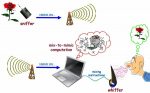
This system would need a “sniffer” – a sort of artificial nose – to take “snapshots” of the odourous substances in the air. It would also need a “whiffer” that, something like a colour printer, would be able to mix a fixed set of around 50 chemical odourants in precisely given proportions – something in the way a printer mixes a small number of inks – and release measured amounts of the resulting odour into the air accurately, in a controlled manner.

photo - Prof. David Harel of the Weizmann Institute of Science
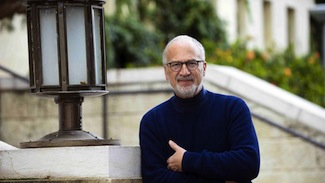
Prof. David Harel of the Weizmann Institute of Science. (photo from wis-wander.weizmann.ac.il)

Harel believes that such systems will eventually exist, pointing out that research is continually improving our understanding of how smell is “encoded” and how we perceive it. Although reasonably good sniffers and whiffers exist, the tantalizing scientific challenge is to work out the algorithm for connecting the sniffer’s reading into the whiffer’s emission; that is, a method is needed for translating any given odour into precise instructions for the whiffer to follow. The output mixtures would have to be experienced by humans in the way that photos are today – as reproductions that our sense recognizes as faithfully capturing the original.

Despite the fact that this challenge appears to be extremely difficult, Harel recently devised a test that could be used to assess the validity of such a system, if and when one is proposed. One of his inspirations was the Turing test proposed by the British father of computer science, Alan Turing, to test claims of human-like intelligence in a machine. A tester sits in one room and holds conversations with entities in two other rooms – one a human and the other the candidate computer. Through questions, chitchat and serious discourse, the tester tries to identify which is which; if repeated tests cannot distinguish the computer from the human, it is said to possess artificial intelligence. “The problem with using such a test for artificial olfaction,” said Harel, “is that such blind comparisons are detached from the element of human recognizability; and there is no adequate language to describe smells in general, meaning verbal discussions would not work either.”

Harel devised a “lineup” test, whose key feature is the immersion of odours with their natural audio-visual references, thus eliminating the need for verbal description. A team of neutral testers is given several short video clips – for example, of a bakery, a zoo, a dusty attic, a flowering meadow, etc. – and is asked to match an odour emitted by the sniffer with its correct clip. The clips are prepared by a team of challengers, whose role is to try to disprove the claim that the proposed system is valid.

To make sure that the test is fair – for example, the subjects won’t be required to identify the odour of a damp cave hidden from view in the clip of a meadow scene – the group is divided into two. One half is exposed to the actual odours collected and preserved at the video sites, and the other to the artificial, chemically reproduced odour created by the sniffer-whiffer system. That way, the second team of participants – those smelling the whiffer output – are required only to correctly match the odour to its clip when the first team – those exposed to the real odour – succeeds. As in the Turing test, the artificial is pitted against the natural in a blinded experiment, but here the test uses odour immersion for recognizability, and the test is asymmetric, requiring from the artificial no more than is required from the real thing in order to be declared successful.

For more on the research being conducted at the Weizmann Institute, visit wis-wander.weizmann.ac.il.

Format ImagePosted on March 31, 2017March 31, 2017Author Weizmann InstituteCategories IsraelTags David Harel, science, Weizmann Institute
Meet scientists of tomorrow

Meet scientists of tomorrow

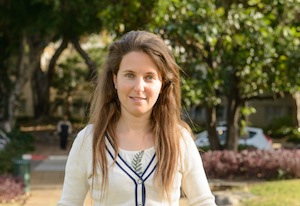
Feinberg Graduate School-Weizmann Institute student Vered Shacham-Silverberg is coming to Vancouver with two of her peers. (photo from Weizmann Canada)

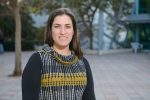
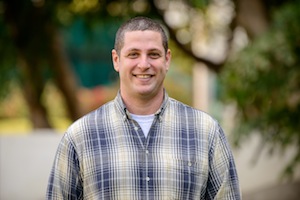
Cliché as it may sound, the future is almost here. On March 29, three PhD students from the Feinberg Graduate School at Weizmann Institute of Science (WIS) in Rehovot will arrive in Vancouver. As part of a North American speaking tour called Scientists of Tomorrow, Vered Shacham-Silverberg, Adi Goldenzweig and Uri Weill will share not only details of their research but also their passion for the Weizmann Institute.

Rather than highlighting established scientists, this tour focuses on the experience of students who are performing the experiments being conducted in the labs.

“I believe that we, as students, enjoy many of the benefits the WIS provides and we can shed more light on those benefits,” said Shacham-Silverberg about why she believes she and her colleagues are well-suited to spread the word about what’s happening at the institute.

photo - Uri Weill
Uri Weill (photo from Weizmann Canada)

“We know firsthand how important it is to have a supporting and nurturing environment in research,” said Weill. “We can also bring stories from the working bench of live research that is happening now.”

WIS focuses exclusively on basic science research, the kind of investigation and experimentation that answers big questions. Its students are given the opportunity to have some of the brightest minds in the world as their supervisors and to use some of the best equipment in their research. WIS scientists are uncovering mysteries such as how the body works on the molecular level, and are translating their findings into ways to improve the world in which we live.

For example, Weill is creating a living catalogue of more than 6,000 yeast strains, so scientists can study how certain proteins function both as healthy organisms and diseased ones. His research in the department of molecular genetics could have far-reaching applications to finding cures for many illnesses.

Goldenzweig’s study of how proteins work with molecules has led to the discovery of a way to stabilize proteins that are usually structurally fragile when created in large quantities in a lab. The algorithm she has developed was recently successfully applied to a protein to combat malaria. This could be the key to developing an effective malaria vaccine.

And Shacham-Silverberg is working to discover how to improve the way the body gets rid of unproductive neurons in order to make room for the ones that will lead to best function. Her research will lead to discoveries in neurodegenerative diseases such as Alzheimer’s, ALS and Parkinson’s.

Having these students visit Vancouver is a unique chance for the local Jewish community. The students will not only share some of their research but also their perspectives on being students in Israel.

photo - Adi Goldenzweig
Adi Goldenzweig (photo from Weizmann Canada)

“Although there are many women in the life science faculties,” said Goldenzweig, “unfortunately … their number decreases dramatically in established positions. But this keeps changing and we’ll hopefully be closer to 50% within a few decades.”

WIS is also interested in promoting benefits for Canadian students interested in science. Every year, two Canadian second-year undergraduate students receive a fully paid two-month supervised internship over the summer in a lab at the institute. Two years ago, one of the recipients of this scholarship was a University of British Columbia student whose experience was so positive, he was asked to return the following summer.

The other program is the Kupcinet-Getz International Summer School, a four-week internship with funding currently for six Canadian students. The program brings together 80 pre-university students interested in research in physics, math, chemistry and the life sciences from a total of 17 countries. Many of these students are experiencing Israel for the first time, and form lasting impressions of and connections to the country. As well, they are introduced to some of the possibilities for their future in science.

The immersive scientific experience is what makes these summer programs so exciting for students, and is part of what drew Shacham-Silverberg, Goldenzweig and Weill to study at WIS.

Weill said he chose the institute because of the access to cutting-edge research tools, which enable him to ask and find the answers to new questions. He added, “At the WIS, we have collaborations with labs from around the world. It makes for the perfect conditions for scientific discovery.”

On March 29, all are welcome to come and learn more about scientific innovation in Israel. At the end of the students’ presentations, a dessert reception will provide a chance to meet the speakers, as well as the Feinberg Graduate School academic secretary, Dr. Ami Shalit. The event is being held in a private home, so if you would like to attend or are looking for more information, contact the WIS Western Canadian development associate, Camille Wenner, at 604-260-8506 or [email protected].

Michelle Dodek is a freelance writer living in Vancouver.

Format ImagePosted on March 24, 2017March 23, 2017Author Michelle DodekCategories LocalTags Israel, science, Weizmann
Curiosity, activism, Judaism

Curiosity, activism, Judaism

Rebecca Baron gave a TEDx talk last year, calling for more encouragement and more opportunities for women in the STEM fields. Her nine-minute talk can be viewed at tedxkidsbc.com/rebecca-baron. (screenshot)

Rebecca Baron, a teenager who does research on air quality and speaks out about the gender gap in the sciences, has won the inaugural Temple Sholom Teen Tikkun Olam Award.

Baron will be given the award on March 5 at Temple Sholom’s Dreamers and Builders Gala, honouring world-renowned landscape architect Cornelia Hahn Oberlander.

“We are incredibly proud to be able to offer this Temple Sholom Teen Tikkun Olam Award to Rebecca,” said Temple Sholom Rabbi Dan Moskovitz. “Even at a relatively young age, Rebecca had demonstrated a passionate commitment to using her intellect and Jewish values to repair brokenness in our world.”

Baron, 16, is currently a Grade 11 student at Prince of Wales Mini School but has already been recognized nationally for her experiments on air quality. She won top medals at the Canada-Wide Science Fair in 2015 for research on whether bacteria found in household plant roots filter formaldehyde from paint fumes. Last summer, she won an award for the best business plan at a national student program focused on STEM (science, technology, engineering and math).

Baron said in an interview that she became aware of a gender gap in the sciences as early as Grade 3. As an example, boys and girls were interested in dissecting a fish when she was in kindergarten – she was so excited about the project that she decided at that moment to become a scientist. But when her class did a similar experiment in Grade 3, many girls were no longer interested. In subsequent years, she noticed how stereotypes, social pressure and cultural biases pushed many young girls away from the sciences.

She felt the curriculum that she experienced was not geared to encouraging girls to pursue studies in STEM. For instance, women were seldom portrayed as scientists in textbooks.

On their own, the incidents may not seem like much, but small things add up and contribute to an overall negative effect, she said. Statistics Canada in 2014 reported that women account for only 22% of the STEM-related workforce. Baron gave a TEDx talk last year calling for more encouragement and more opportunities for women in the STEM fields.

Baron attributed her unflagging interest in math and science to encouragement from family and friends. “It may be harder for others who do not have as much support as I have,” she said. “I just pushed through it.”

As her fascination with science developed, Baron began to conduct experiments at home, working on the kitchen counter. After winning awards, she “cold-called” academic researchers to ask if she could use their labs. Eventually, she found someone who said yes.

She now conducts her experiments after school in a lab at the University of British Columbia’s Life Sciences Institute. She also takes part in Science World’s Future Science Leaders program.

She linked her intellectual curiosity and social activism to values instilled by her parents and inspired by Judaism. She sees Judaism as valuing the strength and wisdom of women.

“The Torah emphasizes the emotional and physical differences between men and women,” she said in her submission for the Tikkun Olam Award. “However, these defining characteristic are not seen as inferior or superior to one another, but instead are considered to have cause for equal celebration.”

Baron went to Vancouver Talmud Torah for kindergarten, and from grades 3 to 7. Her bat mitzvah was at Masada, the Israeli mountaintop that symbolizes the determination of the Jewish people to control their own fate. As she stood amid the archeological ruins and looked toward Jerusalem, she felt a strong connection with the Jewish people. “It was a really neat experience,” she said. “I definitely did not expect that.”

She intends to use the Tikkun Olam Award money to help develop a nonprofit organization to encourage young women to pursue STEM and familiarize them with job-related opportunities.

Moskovitz said the annual Temple Sholom award is for a Jewish teen who is “doing the sacred and important work of tikkun olam,” regardless of affiliation or religious congregation.

The award was made possible by Temple Sholom members Michelle and Neil Pollack, who initiated efforts to create a prize recognizing teens who make a difference. Their generosity enabled Temple Sholom to make the Dreamers and Builders Teen Tikkun Olam Award an annual celebration and recognition of one of many inspiring Jewish teens in Vancouver.

Robert Matas, a Vancouver-based writer, is a former journalist with the Globe and Mail.

Format ImagePosted on February 24, 2017February 21, 2017Author Robert MatasCategories LocalTags Baron, science, STEM, Temple Sholom, tikkun olam, women
How trees adapt to conditions

How trees adapt to conditions

The Weizmann Tree Lab, left to right: Dr. Tamir Klein, Ido Rog, Yael Wagner, Omri Lapidot and Shacham Magidish. (screenshot from wis-wander.weizmann.ac.il)

While studying trees during his postdoctoral fellowship, Dr. Tamir Klein made such a startling discovery that his research supervisor at the University of Basel at first declared that it must have been a mistake. In the forest, trees are known to compete for resources such as light and nutrients, but Klein found that the same trees also engage in sharing: he showed that carbon molecules taken up by the canopies of mature spruce trees were passed through the soil in large quantities to neighbouring beech, larch and pine. As he reported in Science in 2016, the carbon was being transferred via “underground highways” formed by overlapping networks of root fungi.

“Neighbouring trees interact with one another in complex ways,” said Klein. “Of course, there is a great deal of competition among them, but they also form communities, sorts of ‘guilds,’ within which individual trees share valuable resources. In fact, trees belonging to a ‘guild’ usually do much better than those that don’t.”

In his new lab in the Weizmann Institute’s plant and environmental sciences department, Klein follows up on these findings to investigate tree ecophysiology: how the tree functions in its ecosystem.

“Studies on ‘underground’ tree collaboration may reveal which tree species get along well, and this may help determine which trees should be planted next to one another,” he said. “Our studies have additional relevance to forestry and agriculture because we elaborate on the mechanisms of growth and drought resistance of different tree species.”

Only five percent of Israel’s land is covered by forest, but the country nonetheless offers unique advantages for forest research: its hot, dry climate provides an opportunity for investigating how trees adapt to drought and stress. Many trees common to Israel are already resistant to drought; understanding the mechanisms that allow them to live with little rain may help develop varieties of lemons, almonds, olives and other tree crops that can grow in even drier areas.

image - A micro-computer tomography scan of a Jerusalem pine branch, performed after a dry spell, reveals large amounts of air (blue) filling the water channels
A micro-computer tomography scan of a Jerusalem pine branch, performed after a dry spell, reveals large amounts of air (blue) filling the water channels. (image from wis-wander.weizmann.ac.il)

Projects in Klein’s lab aim to clarify how trees manage their water and carbon budgets – both separately and as a forest community. In one study, the team focuses on emboli: tiny air bubbles that form inside the tree’s water channels during drought. When drought persists, the emboli can kill a tree, much like blood vessel clots that can cause a fatal heart attack in a human being. After injecting fluids into tree branches at different pressures, Klein and his students analyze the emboli in the minutest detail, using micro-computed tomography.

In Weizmann’s greenhouses, Klein’s team members experiment with seedlings of pine, cypress, carob and other trees commonly found in Israel. The researchers make use of advanced technologies, including nuclear magnetic resonance imaging, to study hydraulic conductivity in trees and a special lamp-equipped belowground camera to study the growth of tree roots in the soil.

When conducting field studies on their research plot near Beit Shemesh, Klein and his students hug trees – not to have a spiritual experience, but to follow a tree’s growth by encircling the trunk with a measuring tape. In parallel, they apply laser isotope analysis and analytical chemistry techniques to trace carbon metabolism in individual trees, and they investigate carbon transfer among trees via different types of fungal “highways.” The scientists also employ thermal imaging, which enables remote temperature measurements, to study the rate of evaporation in the foliage.

These studies will help predict how future climate changes, including global warming and the rise in greenhouse gases, may affect forests. In one set of experiments, for example, Klein will double the concentration of CO2 to mimic the atmospheric conditions that may emerge on earth as a result of pollution. Klein hasn’t owned a car in 10 years, so as not to contribute to CO2 emissions, but he warns against jumping to conclusions when it comes to the impact of increased CO2 on tree biology. “Higher CO2 concentrations don’t help trees grow faster – contrary to the hopes of industrialists – but, surprisingly, recent research suggests they might render the trees more resistant to drought-induced stress. This doesn’t mean it’s OK to carry on with CO2 pollution, but it does mean that we need to deepen our understanding of its effects on trees in general and on agricultural tree crops in particular.”

Klein is the incumbent of the Edith and Nathan Goldenberg Career Development Chair. His research is supported by Nella and Leon Y. Benoziyo; and Norman Reiser. More on Weizmann Institute research can be found at wis-wander.weizmann.ac.il.

Format ImagePosted on January 27, 2017January 27, 2017Author Weizmann InstituteCategories IsraelTags climate change, ecophysiology, science, trees, Weizmann Institute
Challenging an established idea

Challenging an established idea

(image from wis-wander.weizmann.ac.il)

The formation of the moon has remained something of a puzzle. A leading theory proposes a cataclysmic impact involving a Mars-sized object and a young earth. But there are some inconsistencies with this scenario. A new study at the Weizmann Institute of Science, based on hundreds of simulations run on a computer cluster, suggests that a more plausible chain of events might involve a number of run-ins with smaller objects. This would have produced smaller moonlets that would have eventually coalesced into the single moon we have today. The research appeared this month in Nature Geoscience.

Research student Raluca Rufu and Prof. Oded Aharonson of the Weizmann Institute’s earth and planetary sciences department point out that the accepted explanations for the formation of our moon rely on highly specific initial conditions – for example, a collision with an object of a particular size traveling at a defined velocity and hitting the earth at a specific angle. Furthermore, in a typical impact, different proportions of that object would have ended up in the earth and the moon, leaving a detectable difference between the bodies, but various chemical analyses of the moon’s makeup, taken from samples returned by astronauts, reveal that it is nearly identical to that of the earth. In other words, there is no trace of the large body that supposedly hit the earth, and the theories, say the researchers, turn out to be improbable.

Rufu and Aharonson, together with Dr. Hagai Perets of the Technion–Israel Institute of Technology, asked whether a number of smaller collisions might better explain what happened several billion years ago, when the solar system was taking shape. Such smaller bodies would have been more prevalent in the system, and thus collisions with smaller objects would have been more likely. Small, high-velocity collisions could also mine more material from the earth than a single, large one. In addition, explained Aharonson, if a number of different bodies collided with the earth over a period of millions of years, their different chemical signatures – for example, ratios of oxygen-16 to its heavier cousins, oxygen-17 and -18 – might even out, masking the traces of the various collisions.

The collisions – with small planets one-tenth the mass of the earth to space rocks the size of the moon, a hundredth the mass of the earth – would have sent clouds of rubble, melt and vapour into orbit around the early earth. These, according to the simulations the scientists created, would have cooled and agglomerated into small moonlets that, in time, could have merged into one.

To test this scenario, the group ran around 800 impact simulations on the Weizmann Institute of Science’s Chemfarm cluster, which has more than 5,000 processor cores.

“The new scenario does not require finely tuned initial conditions,” said Rufu, “and, if the smaller moonlets, as we think, were drawn into the same orbit, they could have merged over millions of years.”

“We are now running further simulations to try to understand how the smaller moonlets produced in these simulations might have coalesced to form our moon,” added Aharonson.

Aharonson’s research is supported by the Benoziyo Endowment Fund for the Advancement of Science; the Helen Kimmel Centre for Planetary Science, which he heads; the Minerva Centre for Life under Extreme Planetary Conditions, which he heads; the J & R Centre for Scientific Research; and the Adolf and Mary Mil Foundation.

For more on the research being conducted at the Weizmann Institute, visit wis-wander.weizmann.ac.il.

Format ImagePosted on January 20, 2017January 17, 2017Author Weizmann InstituteCategories IsraelTags astronomy, science
Keeping the weight off

Keeping the weight off

(image from wis-wander.weizmann.ac.il)

Following a successful diet, many people are dismayed to find their weight rebounding – an all-too-common phenomenon termed “recurrent” or “yo-yo” obesity. Worse still, the vast majority of recurrently obese individuals not only rebound to their pre-dieting weight but also gain more weight with each dieting cycle. During each round of dieting-and-weight-regain, their proportion of body fat increases, and so does the risk of developing the manifestations of metabolic syndrome, including adult-onset diabetes, fatty liver and other obesity-related diseases.

As recently reported in Nature, researchers at the Weizmann Institute of Science have shown in mice that intestinal microbes – collectively termed the gut microbiome – play an unexpectedly important role in exacerbated post-dieting weight gain, and that this common phenomenon may in the future be prevented or treated by altering the composition or function of the microbiome.

The study was performed by research teams headed by Dr. Eran Elinav of the immunology department and Prof. Eran Segal of the computer science and applied mathematics department. The researchers found that, after a cycle of gaining and losing weight, all the mice’s body systems fully reverted to normal – except the microbiome. For about six months after losing weight, post-obese mice retained an abnormal “obese” microbiome.

“We’ve shown in obese mice that, following successful dieting and weight loss, the microbiome retains a ‘memory’ of previous obesity,” said Elinav. “This persistent microbiome accelerated the regaining of weight when the mice were put back on a high-calorie diet or ate regular food in excessive amounts.”

Segal elaborated: “By conducting a detailed functional analysis of the microbiome, we’ve developed potential therapeutic approaches to alleviating its impact on weight regain.”

The study was led by Christoph Thaiss, a PhD student in Elinav’s lab. Thaiss collaborated with master’s student Shlomik Itav of Elinav’s lab, Daphna Rothschild, a PhD student of Segal’s lab, as well as with other scientists from Weizmann and elsewhere.

In a series of experiments, the scientists demonstrated that the makeup of the “obese” microbiome was a major driver of accelerated post-dieting weight gain. For example, when the researchers depleted the intestinal microbes in mice by giving them broad-spectrum antibiotics, the exaggerated post-diet weight gain was eliminated. In another experiment, when intestinal microbes from mice with a history of obesity were introduced into germ-free mice – which, by definition, carry no microbiome of their own – their weight gain was accelerated upon feeding with a high-calorie diet, compared to germ-free mice that had received an implant of intestinal microbes from mice with no history of weight gain.

Next, the scientists developed a machine-learning algorithm, based on hundreds of individualized microbiome parameters, which successfully and accurately predicted the rate of weight regain in each mouse, based on the characteristics of its microbiome after weight gain and successful dieting. Furthermore, by combining genomic and metabolic approaches, they then identified two molecules driving the impact of the microbiome on regaining weight. These molecules – belonging to the class of organic chemicals called flavonoids that are obtained through eating certain vegetables – are rapidly degraded by the “post-dieting” microbiome, so that the levels of these molecules in post-dieting mice are significantly lower than those in mice with no history of obesity. The researchers found that under normal circumstances, these two flavonoids promote energy expenditure during fat metabolism. Low levels of these flavonoids in weight cycling prevented this fat-derived energy release, causing the post-dieting mice to accumulate extra fat when they were returned to a high-calorie diet.

Finally, the researchers used these insights to develop new proof-of-concept treatments for recurrent obesity. First, they implanted formerly obese mice with gut microbes from mice that had never been obese. This fecal microbiome transplantation erased the “memory” of obesity in these mice when they were re-exposed to a high-calorie diet, preventing excessive recurrent obesity.

Next, the scientists used an approach that is likely to be more unobjectionable to humans: they supplemented post-dieting mice with flavonoids added to their drinking water. This brought their flavonoid levels, and thus their energy expenditure, back to normal levels. As a result, even on return to a high-calorie diet, the mice did not experience accelerated weight gain.

“We call this approach ‘post-biotic’ intervention,” Segal said. “In contrast to probiotics, which introduce helpful microbes into the intestines, we are not introducing the microbes themselves but substances affected by the microbiome, which might prove to be more safe and effective.”

Recurrent obesity is an epidemic. “Obesity affects nearly half of the world’s adult population, and predisposes people to common life-risking complications such as adult-onset diabetes and heart disease,” said Elinav. “If the results of our mouse studies are found to be applicable to humans, they may help diagnose and treat recurrent obesity and this, in turn, may help alleviate the obesity epidemic.”

Also taking part in the study were Mariska Meijer, Maayan Levy, Claudia Moresi, Lenka Dohnalova, Sofia Braverman, Shachar Rozin, Dr. Mally Dori-Bachash and staff scientist Hagit Shapiro of the immunology department, staff scientists Drs. Yael Kuperman and Inbal Biton, and Prof. Alon Harmelin of the veterinary resources department, and Dr. Sergey Malitsky and Prof. Asaph Aharoni of the plant and environmental sciences department – all of the Weizmann Institute – as well as Prof. Arieh Gertler of the Hebrew University of Jerusalem and Prof. Zamir Halpern of the Tel-Aviv Sourasky Medical Centre.

Format ImagePosted on December 23, 2016December 21, 2016Author Weizmann InstituteCategories IsraelTags health, obesity, science
Beef versus legumes

Beef versus legumes

If the entire population of the United States changed their diet from a beef-heavy plan to one based on chicken, it would be possible to feed 120 to 140 million more people with the same resources. (photo from wis-wander.weizmann.ac.il)

How much does a steak really cost? Or chicken nuggets, or a plate of hummus? New research by Prof. Ron Milo and Alon Shepon of the plant and environmental sciences department of the Weizmann Institute of Science, together with Prof. Gideon Eshel of Bard College in New York, took a look at the figures – including the environmental costs – of the different foods we eat. The research appeared in Environmental Research Letters.

The data for the study came from figures for cattle and poultry growing and consumption in the United States. To compare, the researchers calculated the nutritional value of each – usable calories and protein – versus the environmental cost. The latter included the use of land for fodder or grazing and the emission of greenhouse gases in both growing the food and in growing the animals themselves.

Chickens, according to the study, produce much more edible meat per kilogram of feed consumed, and they produce their meat faster than cattle, meaning more can be grown on the same amount of land. For every 100 calories and 100 grams of protein fed to beef cattle, the consumer ends up with around three calories and three grams of protein. For poultry, that figure is about 13 calories and 21 grams of protein.

The researchers then asked what would happen if the entire population of the United States were persuaded to change their diet from a beef-heavy plan to one based on chicken. Their answer: it would be possible to feed 40% more people – 120 to 140 million more people – with the same resources.

What would happen if the same population was persuaded to adopt an entirely plant-based diet? That is, instead of using land to grow cow or chicken feed and then eating the animals, to use that land to grow nutritional crops – mainly legumes, including peanuts, soya, garbanzos and lentils. These can supply all of a person’s nutritional requirements, except vitamin B12, which can be obtained from nutritional yeast.

A separate study, published in Environmental Science and Technology – “Environmentally optimal, nutritionally aware beef replacement plant-based diets,” by Milo, Shepon, Gidon Eshel and Elad Noor – suggests that an extra 190 million people could eat off the same environmental resources in this way.

“If we changed our diet, we would change the environmental price we pay, with every meal,” said Shepon. “Eating a plant-based diet can both meet our nutritional requirements and save on land use, as well as the release of greenhouse gases into the atmosphere and excess nitrogen from fertilizers into the water supply. These are real costs that we all bear, especially when people eat beef.”

Milo’s research is supported by the Leona M. and Harry B. Helmsley Charitable Trust; Dana and Yossie Hollander, Israel; and the Larson Charitable Foundation. Milo is the incumbent of the Charles and Louise Gartner Professorial Chair.

For more on the research being conducted at the Weizmann Institute, visit wis-wander.weizmann.ac.il.

Format ImagePosted on December 16, 2016December 15, 2016Author Weizmann InstituteCategories IsraelTags environment, health, science, vegetarian
Another planet earth?

Another planet earth?

An artist’s impression of the newly discovered planet, Proxima Centauri b. (photo from ESO/M. Kornmesser)

An international team announced recently that a planet with a mass similar to that of earth has been observed orbiting the star Proxima Centauri – the closest star to our sun, just over four light years (about 40 trillion kilometres) away.

The collaboration of scientists from nine countries, known as the “Pale Red Dot” and led by Dr. Guillem Anglada-Escudé of Queen Mary University of London, included Weizmann Institute of Science’s Dr. Aviv Ofir, who is in the group of Prof. Oded Aharonson of the earth and planetary sciences department.

Proxima Centauri is a red dwarf – a star with a diameter about one seventh that of our sun and far dimmer: it gives off only 1/600 the light of our sun. The team’s calculations show that the planet, known as Proxima Centauri b, has a mass of at least 1.3 times that of earth and its year – the time it takes to orbit its sun – is a little over 11 days. It orbits quite close to its sun – only five percent of the distance from earth to our sun; but, since its sun is so dim, the temperature on Proxima Centauri b may be relatively balmy and liquid water could theoretically exist on its surface.

The range of distances where the planet’s temperature permits liquid water is often referred to as “the habitable zone.” Although conditions on the planet’s surface are as yet unclear, the scientific team hopes to learn more about this planet in further research. Ofir said it is not at all clear whether life as we know it could have evolved on the planet, and the subject is already the focus of intense debate.

The planet was discovered through measurements of the radial velocity of the star. Such measurements rely on the Doppler effect, the shift in wavelength as an object moves closer to or away from the viewer. The star, according to the team’s highly accurate measurements, is moving at a speed of about a metre a second (or 3.6 kilometres an hour) towards and away from us.

Ofir explained that, when we speak of a planet orbiting a star, in reality they are both orbiting a shared centre of gravity. Since the mass of the star is naturally much greater than that of its planets, that centre of gravity is usually close to the centre of the star, and planets make the star’s motion appear as a “wobble.” And that wobble can be detected by today’s instruments: in the case of Proxima Centauri, the scientists observed periodic changes in the star’s velocity, the result of another body tugging at it. That body, according to the measurements, is a planet with a relatively small mass, just over that of earth.

Ofir pointed out that Proxima Centauri has been studied for the past century, but only now have observations – designed for this very purpose – become sensitive enough to decisively detect the presence of this small planet. He is continuing to work on this and other projects to identify and study planets around Proxima Centauri.

“We discovered the planet with an observatory in Chile. We can’t see Proxima Centauri from our observatories in Israel,” he explained. “It is well below the southern horizon, so it is unobservable from Israel all year round.”

For more information about Weizmann Institute research, visit wis-wander.weizmann.ac.il.

Format ImagePosted on September 23, 2016September 21, 2016Author Weizmann InstituteCategories WorldTags astronomy, earth-like planets, Proxima Centauri, science

Posts pagination

Previous page Page 1 … Page 9 Page 10 Page 11 Next page
Proudly powered by WordPress