Skip to content
  • Home
  • Subscribe / donate
  • Events calendar
  • Business Directory
  • FAQ
  • News
    • Local
    • National
    • Israel
    • World
    • עניין בחדשות
      A roundup of news in Canada and further afield, in Hebrew.
  • Opinion
    • From the JI
    • Op-Ed
  • Arts & Culture
    • Performing Arts
    • Music
    • Books
    • Visual Arts
    • TV & Film
  • Life
    • Celebrating the Holidays
    • Travel
    • The Daily Snooze
      Cartoons by Jacob Samuel
    • Mystery Photo
      Help the JI and JMABC fill in the gaps in our archives.
  • Community Links
    • Organizations, Etc.
    • Other News Sources & Blogs
  • JI Chai Celebration
  • JI@88! video

Recent Posts

  • SFU honours Gloria Gutman
  • Lifting people’s spirits
  • Wedding a ray of light
  • Indigeneity and Zionism
  • Rule of law broken: councilor
  • Football and its roles
  • The burden of defence
  • Fish Café returns after fire
  • All right in what goes wrong
  • Nuns & mermaids at TUTS
  • Camp offers holiday retreat
  • Students and mentors inspire
  • Once-in-a-lifetime trip
  • 100 dancers, one heart
  • Money for the sciences
  • What “Jewish food” means
  • Have a cookie, schnitzel too
  • Federation now across BC
  • Israel fighting for its existence
  • Deal strengthens Iran
  • Patriotic belonging diminishes
  • A campaign to engage
  • Upstanders’ first live event
  • Responding to Carney
  • Having your own home
  • Music a family tradition
  • Musical to warm heart
  • Community milestones … June 2026
  • Sharing her passion for Israel
  • Or Shalom reopens its doors
  • JFS from past to future
  • Need holistic approach
  • Sharing stories, advice
  • Journalist shares fears
  • Skills to live together
  • Road to independence

Archives

Follow @JewishIndie
image - CJN box ad Rockowers 2026

Tag: Rosh Hashanah

Striving and building more

I wanted to share an interesting issue I stumbled into while reading online. It was in a Jewish discussion group. The short version (without violating anyone’s privacy) was that one person would be having surgery in the days before Yom Kippur. She was struggling with the concept that she couldn’t fast, as she had to be eating and drinking frequently, in small amounts, after the surgery.

It took me a while to figure this post out. This was bigger than the observance of a specific commandment. This was a person who was having a weight-loss procedure. Her issues around food were likely larger than fasting on Yom Kippur. The people in the discussion group emphasized how important the surgery was to her long-term health. (Nobody embarrassed her by asking difficult questions.) Meanwhile, another person in the group was having shoulder surgery. She worried about how she would hold a prayer book. This seemed easier to solve, as it was a physical and not a psychological issue. Suggestions flew across the web: a music stand, a lectern, a friend who could help, etc.

As a kid, growing up in the Reform movement, there was a great emphasis put on fasting on Yom Kippur. Fasting was a sign that you were really invested in the holiness of the day. Yet, this wasn’t something done on other fast days, or even in terms of other mitzvot (commandments). My family was involved in the Jewish community every day, but, on Yom Kippur, I remember seeing people at our congregation putting a big energy into fasting that I hardly saw at other times of the year.

When I was in university and when I met my husband, I was introduced to people with many other ways of observing Jewish tradition (or not). His family is everything from secular to Lubavitch, with every variation in between. He pointed out that, if you’re sick, a rabbi would tell you not to fast. He pointed out that, in his extended family, there were people who fasted but did not attend synagogue, and those who attended synagogue daily, but couldn’t fast for health reasons. He reminded me that this isn’t clear-cut, even if it initially looks that way.

When we learn about Judaism, often as kids before bar or bat mitzvah age, we’re presented with a lot of information in binaries. It’s black and white, but that is also the way most grade school children absorb any new information, not just Jewish content. As we age, we learn that, in fact, the world is often more complex. It’s often multiple variations of grey (never mind chartreuse) instead.

Health issues, child rearing, our work lives – these all affect how we observe holidays. There is no universal measuring stick that indicates how this works, either. Things change over our lives, and having kids or an illness can affect our observances. Some people fast easily, and others build sukkot (temporary hut dwellings) without a fuss. Others cannot fast without serious issues, and I’d bet there are plenty of people in the Jewish community who hesitate, for one reason or another, to erect a sukkah on their own.

The thing that hopefully does remain constant, for everyone, is the emphasis on striving to be better people in the year to come. Wherever you are, in your Jewish practice, or in the way you treat others, or in your business dealings, you can probably grow and improve. We can choose to make change in our lives.

There are, of course, people out there who are Jewish but don’t think about mitzvot, attend any synagogue or fast. However, some of these same people may pride themselves in being ethical in their business, in how they treat others, or in how they treat animals. They may not even realize that these, too, are Jewish values.

There are also so many ways in which these are particular Jewish concerns that link us to other faith communities. One of the pillars of Islam is jihad and, no, it’s not all about holy war. For faithful Muslims, this concept is about striving – striving to be a better student, family member or worker, to be more religious or spiritual, and onwards. Christians often speak about love, but also it must be put into action. It’s work to make compassionate acts towards others a priority, no matter your religion.

Whatever your community, you can offer others a supportive presence that helps them become the people they aim to be. It’s in a community, whether it’s physical or an online discussion group, that we can unwrap our concerns and get help in solving obstacles that keep us from doing what we’d hoped in life (Jewishly, or otherwise).

I love Sukkot and am looking forward to spending time in the sukkah outdoors. However, it’s also a time to welcome people in as guests – and to build that supportive space. You may not build a sukkah or wave a lulav and etrog, but you can be a builder. Begin by supporting others as they strive towards being their best selves. It starts with a smile, a welcoming invitation or a positive response. Happy 5779! May it be everything that you hope to become!

Joanne Seiff writes regularly for CBC Manitoba and various Jewish publications. She is the author of three books, including From the Outside In: Jewish Post Columns 2015-2016, a collection of essays available for digital download or as a paperback from Amazon. See more about her at joanneseiff.blogspot.com.

Posted on September 21, 2018September 20, 2018Author Joanne SeiffCategories Op-EdTags Judaism, Rosh Hashanah, spirituality, Sukkot, Yom Kippur

Do you know your priorities?

During the months of Elul and Tishri, when we’re in the midst of the High Holiday season, things are busy. Kids are in (and out) of school and activities, parents are facing the fall rush of activities in their own work lives. Things are rushed. However, if you’re going to synagogue and have even a moment to reflect, you’re being asked to examine yourself. What have you done right this year? What’s gone wrong? What could you do better?

Some years, I’m thinking about my failings, or I get mesmerized by the long list of things that one could do wrong when we list the confession of sins. Other years, I’m so concerned by holiday meals or my kids’ behaviour that I sing along, but my focus is not really on the most important holiday tasks at hand.

Recently though, I got to thinking about this a different way. Instead of focusing exclusively on how we’ve gone wrong, or how we could do better, I wondered, of all the things in the world to fix, what are my top priorities? How could I focus on a few things that are most important?

When we wish people happy new year, we often wish them a happy and healthy year. It’s hard to work towards happiness – and, to be honest, I’m not sure I’d know when I got there. Working on health seems like a given to some people, and is completely ignored by others. What does it mean? Well, for some it means taking medicines, or being able to afford their medicines. For others, it might mean exercise or better food choices, or even being able to purchase healthy foods.

We also mention, in Jewish tradition, an effort to strengthen our commitment to Judaism. Maybe that means going to services more, doing more mitzvot (commandments) or doing more to help others. It might mean offering your kids tools so that they can learn about their faith. For some, it means helping others get to Jewish events – offering a ride, for instance, if the person is unable to drive or walk – or making them feel included and valued when they get there.

People also may have big holiday meals with family and friends. This can be wonderful, and trying. I’ll be the first to admit that sometimes family gatherings force us to confront things that we’d rather not deal with. (Maybe it’s an uncle’s politics or a child’s misbehaviour, or the aging of a beloved parent.) Do you prioritize family? Do you commit to supporting and caring for your family, both those related by blood and those who you choose? Are you willing to travel long distances to see relatives? What about your family friends, those to whom you choose to feel related?

Awhile ago, I was chatting with someone about all my uncles and aunts. She expressed wonder at how many relatives I had. It took me a bit to realize what she meant. Where I grew up, in Virginia, just outside of Washington, D.C., many families had moved to work in the U.S. capital. It meant that they weren’t near their families, so we created extended families. All those aunts and uncles were close friends with my parents. I played with kids at those folks’ houses, ate dinner at their holiday tables and learned from them about what it was to be part of a loving family. Our Jewish customs varied, our DNA was different, but our effort included everyone.

The person I spoke with seemed alarmed and uncomfortable with the fact that I called all these people who weren’t blood relatives aunt or uncle. Yet, it was a time and place when many people didn’t live near family.

Some families had been decimated by the Holocaust, so it seemed entirely logical to us. In our circle, there were people who didn’t have grandparents – they had died in Europe. Some had no cousins, either. This was true among people I knew as a kid, and continues to be true. In my husband’s family, for example, I know people who lost many relatives and whose family structures, even in 2018, continue to resonate with that trauma.

This extended family friend concept is also related to our priorities. For me, personally, it’s key, and I choose to continue this practice. Why reinforce alienation for those who lack supportive extended family? My kids have a “tante” who made quilts for their beds and sends them gorgeous handmade gifts. She’s not my blood relative, but we’re part of her family. And we serve as honourary aunt and uncle for a 2-year-old in Montreal, as well.

Recently, I received an email that pointed out the Winnipeg Jewish Federation’s priority action areas for fall 2018, and I loved it. This action document lists many of our community’s Jewish concerns and priorities – many of which, no doubt, are similar to the Vancouver Jewish community’s concerns and priorities.

The Winnipeg Federation document is a good start. While some may think that the points are ambitious, other aspects are simply part of how a community – an extended family – should act. We should care about others, full stop. We should try to include everyone in Jewish life regardless of what they can afford. While it may seem like an enormous goal to “mitigate poverty,” it’s easy to pick an apple tree in the neighbourhood and donate the fruit to the food bank. Nor is it a big deal to bring your kids to visit an older person to help reduce their isolation.

Instead of focusing on the enormity of the individual points, we can instead point to our priorities for the new year. For instance: it improves our health to attend gatherings, socialize and engage in learning in multi-age settings.

I don’t know about expecting happiness, but we can adjust our priorities to include health, well-being and Jewish supports for one another. This is possible – and, to borrow Theodor Herzl’s phrase: “If we will it, it is no dream,” so make your priorities and dream bigger. It’s well worth considering. Happy 5779, everybody!

Joanne Seiff writes regularly for CBC Manitoba and various Jewish publications. She is the author of three books, including From the Outside In: Jewish Post Columns 2015-2016, a collection of essays available for digital download or as a paperback from Amazon. See more about her at joanneseiff.blogspot.com.

Posted on September 14, 2018September 12, 2018Author Joanne SeiffCategories Op-EdTags Federation, High Holidays, Judaism, lifestyle, Rosh Hashanah
Shana tova on West Boulevard

Shana tova on West Boulevard

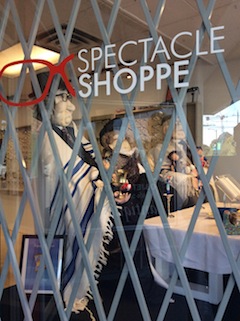
photo - The Spectacle Shoppe’s display window, side view
(photo by Cynthia Ramsay)

The Spectacle Shoppe’s display window. (photo by Cynthia Ramsay)

Once again, Leo Franken has made the Spectacle Shoppe’s display window on West Boulevard in Vancouver eye-catching for the holidays. Passersby on Sunday afternoon, when these photos were taken, voiced their appreciation of his efforts and the Rosh Hashanah message – “Happy New Year!”

Format ImagePosted on September 7, 2018September 6, 2018Author The Editorial BoardCategories Celebrating the HolidaysTags Leo Franken, Rosh Hashanah, Spectacle Shoppe
Many good things happened

Many good things happened

Prime Minister Binyamin Netanyahu presents the nuclear secrets of Iran at a special press briefing in Jerusalem on April 30, 2018. (photo from IGPO courtesy Ashernet)

It has been a year of diplomatic success for Israel, as more countries upgraded their relations with the Jewish state. This took, in general, two forms: heads of government making an official visit to Israel or Prime Minister Binyamin Netanyahu visiting other countries; and the establishment of the embassies of the United States, Guatemala and Panama in Jerusalem, Israel’s capital.

photo - The newly discovered Lod mosaic.
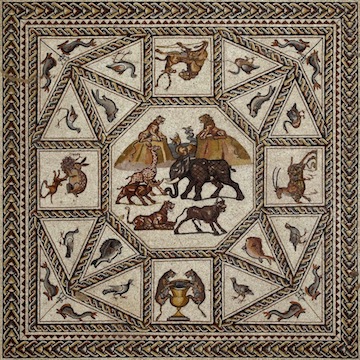
The newly discovered Lod mosaic. (photo from IGPO courtesy Ashernet)

In April, at a special press conference hosted by Netanyahu, the world learned of the secret storage facilities in Iran that housed Iran’s nuclear ambitions. It is not known exactly how Israel managed to find out the location of the files, or how they were copied and brought back to Israel, but the revelations served Israel well, and the files were instrumental in making the United States renege on the nuclear agreement that President Barack Obama had made with the Iranian regime.

It was a long, hot summer in more ways than one. The latest form of terrorist aggravation was for Gazans to assemble in the thousands along the Gaza-Israel border and launch kites and balloons to which were attached flaming torches that set fire to forests and agricultural fields in Israel, causing uncountable damage and destruction. A variation of this procedure was for terrorists to attach flaming torches to lines attached to the legs of kestrels who managed to survive long enough to set trees alight in Israeli forests near the border.

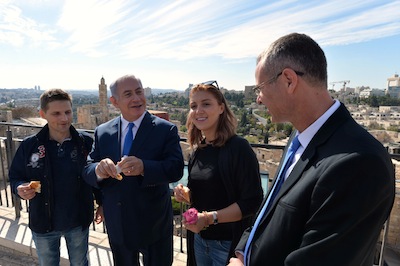
photo - In November last year, the three millionth tourist of 2017 arrived in Israel. He and his partner were shown around Jerusalem’s Tower of David Museum by Prime Minister Binyamin Netanyahu
In November last year, the three millionth tourist of 2017 arrived in Israel. He and his partner were shown around Jerusalem’s Tower of David Museum by Prime Minister Binyamin Netanyahu. (photo from IGPO courtesy Ashernet)

In better news, this year Israel became the focus of the world’s cycling fraternity. Due to the generosity of Israeli-Canadian billionaire Sylvan Adams, one of the three most important annual cycling races in the world, the Giro d’Italia, started in Jerusalem with a time trial and then took the cyclists from Haifa to Tel Aviv, with a third stage from Be’er Sheva to Eilat. All this was made possible by an $80 million donation to the federation organizing the event. It was one of the biggest sporting events ever staged in Israel and was seen by tens of thousands on television around the world.

The Jewish year opened with the announcement that one of the most outstanding mosaics ever found in Israel, from the Roman era, was going to be incorporated in a new museum in the city of Lod, where it had been found during preparations for building works. This beautiful mosaic was one of many important archeological finds in Israel in the past 12 months.

photo - Prime Minister Binyamin Netanyahu is welcomed by Indian Prime Minister Narendra Modi in New Delhi in January 2018.
Prime Minister Binyamin Netanyahu is welcomed by Indian Prime Minister Narendra Modi in New Delhi in January 2018. (photo from IGPO courtesy Ashernet)

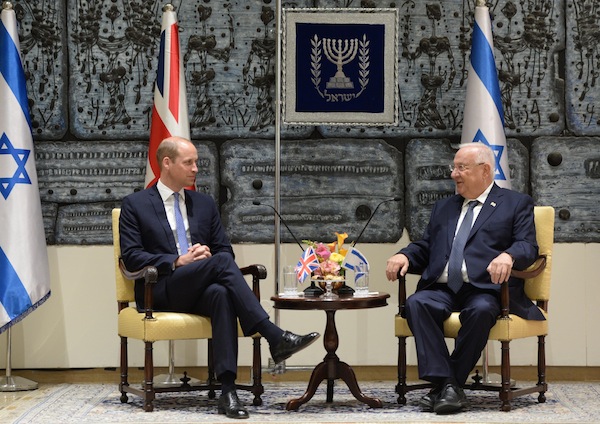
Also at the start of the Jewish year, tourism in Israel hit a new high, with the three millionth tourist of 2017 arriving at Ben-Gurion International Airport in November. And, this summer, Prince William made an official visit to Israel, where he was received by President Reuven Rivlin and Netanyahu. Members of the British Royal family have been to Israel before, but never on an official visit.

As always, Israeli technology, universities and medical prowess was remarkable over the year. And, when natural disasters occurred around the world, such as earthquakes and floods, Israel was among the first to send aid.

Not all the news was good for Netanyahu, who, for a major part of the year, was being investigated and questioned by Israel Police for allegedly obtaining inappropriate large-scale benefits from businessmen – charges Netanyahu strenuously denied. Ari Harrow, Netanyahu’s former chief of staff, signed a deal to become a state witness to testify against the prime minister.

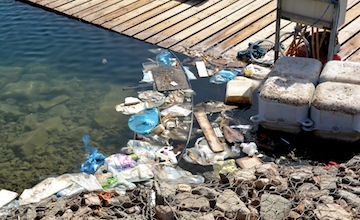
photo - Plastic waste accumulates in an inlet along Eilat’s Red Sea coast. A worldwide problem, much is being done in Israel to manage the correct disposal of plastic, paper and glass
Plastic waste accumulates in an inlet along Eilat’s Red Sea coast. A worldwide problem, much is being done in Israel to manage the correct disposal of plastic, paper and glass. (photo from IGPO courtesy Ashernet)

The Jewish year also saw Netanyahu’s wife Sara receiving a lot of negative press. In the previous year, the Jerusalem Labour Court awarded an employee of Sara Netanyahu’s the sum of $46,000 as he claimed that she had been abusive towards him and withheld wages at times. While she appealed the ruling, it was turned down. She is now being investigated for allegedly ordering expensive meals at the prime minister’s official Jerusalem residence at government expense, despite the fact that the prime minister’s official residence employed a cook. She refutes the accusations.

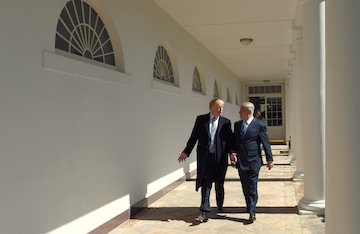
Despite these problems, Binyamin Netanyahu maintains a high international profile – he has the ear of presidents Donald Trump and Vladimir Putin, for example.

photo - U.S. President Donald Trump and Prime Minister Binyamin Netanyahu at the White House in January 2018
U.S. President Donald Trump and Prime Minister Binyamin Netanyahu at the White House in January 2018. (photo from IGPO courtesy Ashernet)

As 5778 closes, Israel has the pleasurable problem of deciding how best to market the huge natural gas finds that are presently churning about below the waves of the Mediterranean Sea, well within Israel’s exclusive continental shelf.


photo - Left to right: Prime Minister Binyamin Netanyahu, Sara Netanyahu, Ivanka Trump and Jared Kushner at the opening of the U.S. embassy in Jerusalem
Left to right: Prime Minister Binyamin Netanyahu, Sara Netanyahu, Ivanka Trump and Jared Kushner at the opening of the U.S. embassy in Jerusalem. (photo from IGPO courtesy Ashernet)
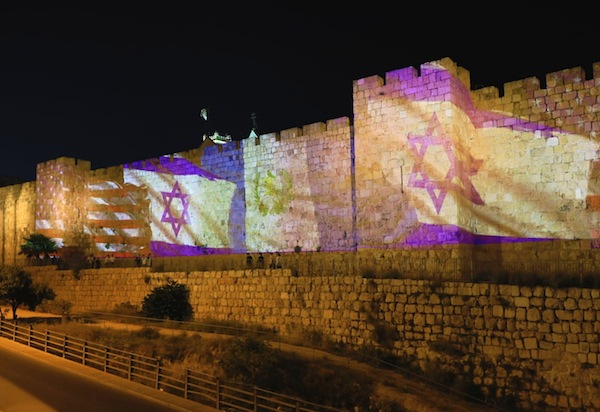
photo - The Guatemalan flag is projected on Jerusalem’s Old City walls in anticipation of Guatemala moving its embassy from Tel Aviv to Jerusalem
The Guatemalan flag is projected on Jerusalem’s Old City walls in anticipation of Guatemala moving its embassy from Tel Aviv to Jerusalem. (photo from IGPO courtesy Ashernet)
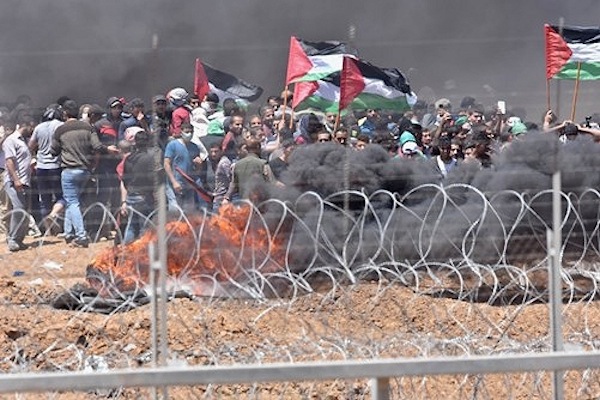
photo - Violence along the Gaza border
Violence along the Gaza border. (photo from IGPO courtesy Ashernet)
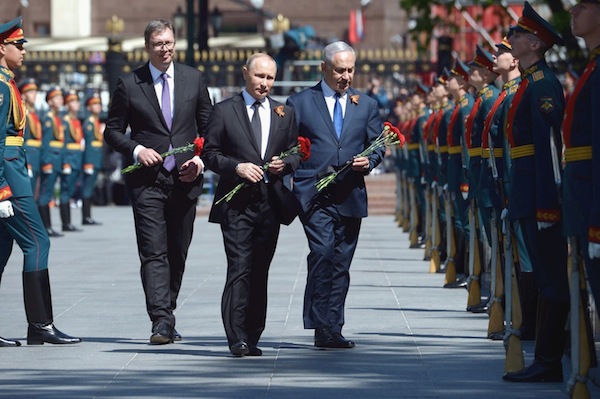
photo - Prime Minister Binyamin Netanyahu and Russian President Vladimir Putin in Moscow
Prime Minister Binyamin Netanyahu and Russian President Vladimir Putin in Moscow. (photo from IGPO courtesy Ashernet)
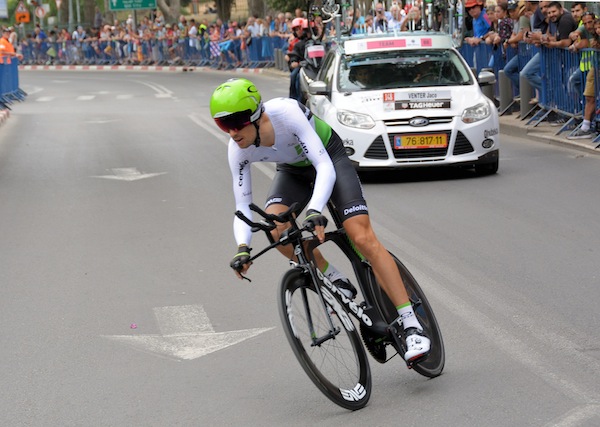
photo - The Giro d’Italia time trials in Jerusalem
The Giro d’Italia time trials in Jerusalem. (photo from IGPO courtesy Ashernet)
photo - Prince William and President Reuven Rivlin in Jerusalem
Prince William and President Reuven Rivlin in Jerusalem. (photo from IGPO courtesy Ashernet)
Format ImagePosted on September 7, 2018September 6, 2018Author Edgar AsherCategories IsraelTags environment, Israel, Netanyahu, photography, Putin, Rosh Hashanah, Trump
Israel’s assets versus liabilities

Israel’s assets versus liabilities

Israel’s beauty is a definite asset. (photo by Cynthia Ramsay)

During the month of Elul, as we approach Rosh Hashanah, which this year falls on Sept. 9, Jews traditionally practise a kind of spiritual stocktaking. These are days when we look inward – assessing what happened to last year’s dreams, asking pardon for the wrongs we have committed and hoping, by repentance, charity and prayers, to be written into the Book of Life for the coming year.

I doubt if you would find many people in Israel who would say that 5778 was a particularly good year. The facts speak for themselves – no progress in the peace process, international isolation and antisemitism. These are the liabilities, and they are not figments of the imagination – they are real, and have led to a fall in the general morale.

But what is there to put in the assets column? There must surely be something to balance the account. Otherwise, why are there olim (immigrants) who stay on year after year, new ones motivated to come, and Israelis who go on trying to find solutions for seemingly insoluble problems, both on the personal and the national planes?

There were times during the last year when I was tempted to despair. But, even as I said the words, I knew I wasn’t fooling anyone, least of all myself. Because the positive things I have found in Israel I know cannot be duplicated anywhere else in the world.

First, I have found a family – the whole house of Israel. How wonderful to walk the streets and know that everyone is your brother or sister. Of course, just like in a real family, there are times that this same sibling is rude or aggressive and you react with bitterness towards their manners, opinions, behaviour. But, while you feel free to criticize them, let a stranger do it and you jump to their defence.

You argue that they live under continual tension, are wearied from fighting five wars and from the ongoing hostilities; that they have lost many dear ones and must always be prepared to cope with terrorist attacks. And, while you are explaining them and defending them – just like in a real family – you know even more that you love them.

With this realization comes another. You know that, if you are ever sick or in need, you are among people who care about you. There is nowhere else in the world where people take so much responsibility for one another, who care so much, become involved so much.

Nor is there any other country in the world where the youth are so magnificent. At an age when teenagers elsewhere may be sowing their wild oats and are their parents’ despair, our boys and girls are putting on uniforms and quietly devoting the fun years of their lives to serving their country. There is no fanfare or extraordinary praise. They do it as a duty, conscientiously, modestly. They are Israel’s riches that no inflation can ever devalue; they are our hopes and our future.

Israel is a unique ethnic mosaic. It has taken in Jews of every background, language and social level; it has provided a home for the homeless; a refuge for the persecuted. It doesn’t ask an immigrant, “What are you bringing to us – what skills, what capital?” Those who bring little or nothing are no less welcome. Israel, as a whole, really cares.

And it is a beautiful country, no matter where you travel. Haifa, seen at night from Mt. Carmel, is diamonds scattered on black velvet. The Galilee – terraced rows of grey-green olive trees and lush vegetation of date-palms. Cosmopolitan sidewalk cafés in Tel Aviv. Scarlet sunsets over the Dead Sea and deep indigo twilight over Eilat. And Jerusalem – our eternal city – the special, spiritual, abiding jewel in our crown.

Yet, that is not all. There are so many more things you could add. Really, there is no end to them. It is a country of enormous achievement – in agriculture, in science, in high-tech, in the arts. It is a country where every festival – religious or secular – is celebrated, to a greater or lesser degree, by the whole population. With all their troubles, Israelis are a spontaneous people who don’t need expensive entertainment. They can have a wonderful time singing around a campfire, having a backyard barbecue or dancing in the streets.

Thinking it over, you realize that the assets column far outweighs the liabilities column. And then you ponder the fact that, even if the opposite were true, Israel, with and without the blemishes, is yours.

Happy New Year to us all.

Dvora Waysman is the author of four books, one of which, The Pomegranate Pendant, has been made into the movie The Golden Pomegranate. Her latest novel is Searching for Sarah. Australian-born, she has lived in Jerusalem for 47 years.

Posted on September 7, 2018September 6, 2018Author Dvora WaysmanCategories Op-EdTags Israel, Rosh Hashanah
Relish the New Year’s apples

Relish the New Year’s apples

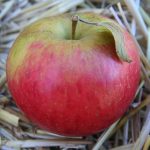
(photo by Jonathunde)

Although summer is still in full swing, apples come into the markets here in Israel before Rosh Hashanah. I love apples; they are probably my most favourite fruit, especially in fall and winter. Here are some apple recipes for your holiday table.

BAKED APPLE RELISH
I found this recipe in a women’s magazine 40 years ago but it still makes a good accompaniment for chicken or meat.

6 small baking apples, core removed, scooped out insides leaving a shell, setting the scooped out insides in a bowl
2 tbsp butter or margarine
1 cup chopped onions
1 cup chopped tomatoes
1/4 cup raisins
1 tbsp chopped fresh ginger or 1/2 tsp ground ginger
1/4 tsp dry mustard
4 tbsp red fruit preserves
4 tbsp cider vinegar
1/4 tsp crushed red pepper (optional)

1. Preheat oven to 400°F.

2. Melt butter or margarine in a large frying pan. Add onion and sauté five minutes.

3. Add chopped apples, tomato, raisins, ginger, mustard, one tablespoon preserves, one tablespoon vinegar, and red pepper, if using. Cook five minutes or until mixture starts to thicken.

4. Spoon into hollowed out apples. Arrange apples in a shallow baking pan.

5. Add remaining preserves and vinegar to frying pan and heat a few minutes. Pour over apples.

6. Bake for 30-45 minutes.

HONEY AND APPLE CAKE
I found this recipe of an Israeli chef from a Bnei Brak bakery in a local newspaper. It makes two loaves.

4 eggs
3/4 cup sugar
3/4 cup oil
1 cup honey
2 1/2 cups flour
1 tsp baking powder
1 tsp baking soda
1 cup strong fruit tea
1 tsp cinnamon
1 tsp ground ginger
1/4 tsp ground cloves
2 to 3 green apples, cut into small cubes

1. Preheat the oven to 350°F. Oil two loaf pans.

2. In a mixing bowl, beat eggs and sugar for two minutes in a mixer at medium speed. Add oil then honey and mix.

3. In another bowl, mix flour, baking powder, baking soda, cinnamon, ginger and cloves.

4. Add to egg-sugar-oil-honey mixture. Mix until smooth.

5. Add tea and apples and mix.

6. Pour batter into two loaf pans. Bake for 40 minutes.

MY FAVOURITE MICROWAVE APPLE CHUTNEY
I make this chutney for our favourite fish curry, but it can be used with other dishes as well. Makes two cups.

1/3 cup chopped lemon
1 chopped garlic clove
1 2/3 cups chopped apples
3/4 cup brown sugar
1/2 cup raisins
1 tbsp ground ginger
dash chili powder
2/3 cup cider vinegar

1. Place all ingredients in a microwavable dish. Microwave four minutes.

Sybil Kaplan is a journalist, lecturer, book reviewer and food writer in Jerusalem. She created and leads the weekly English-language Shuk Walks in Machane Yehuda, she has compiled and edited nine kosher cookbooks, and is the author of Witness to History: Ten Years as a Woman Journalist in Israel.

Format ImagePosted on September 7, 2018September 7, 2018Author Sybil KaplanCategories Celebrating the HolidaysTags apples, recipes, Rosh Hashanah
The mitzvah of challah

The mitzvah of challah

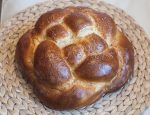
On Rosh Hashanah, the challah is round and sweet, symbolizing our collective wish for a good, sweet year. (photo by Przemyslaw Wierzbowski)

It was two years ago that I fell in love with challah. I attended a challah baking workshop at a Jewish retreat and, at that point, the extent of my challah knowledge was that it’s sold in delis, comes in a plastic bag with a twist tie and makes great French toast. I was a challah virgin. This was around the same time that I was test-driving a more observant Jewish life, and figured it behooved me to learn more about our people’s famous braided egg bread. Little did I know how profoundly the workshop would affect me.

There we were, 40 or so Jewish women, up to our elbows in yeast dough, patiently following the instructor’s directions. She explained what each ingredient symbolizes, and how making challah each week is an auspicious time for Jewish women to pray for what they want and need. I was hooked. When it came time to make the blessing over the challah, that’s when I lost it, and became emotional. Something about a sisterhood of Jewish women gathered around tables doing something their mothers and grandmothers had been doing for generations struck a chord deep within me.

As I said the blessing, with my eyes closed and my hands atop the soft dough – “Baruch atah Adonai, Eloheinu, melech ha’olam asher kidshanu b’mitzvotav v’tzivanu, l’hafrish challah” – tears poured down my cheeks like they would never stop. The woman sitting next to me (almost a complete stranger) heard my sniffling and put her arm around me. I’m sure she was puzzled by my tearful response and, truth to tell, I was embarrassed, but I was overcome and just couldn’t help myself. Somehow, the mitzvah of making challah, and all that it symbolizes in our collective identity as Jewish women, hit me.

It mattered, in a deep-seated way, that I was part of something much bigger than myself – something inextricably tied to my Jewish roots, something to which I had paid scant attention over the years. I knew this activity would become a meaningful part of my life from that moment on. Challah is far more than just a food to sustain my family and me physically. It fills us spiritually as well. And that’s the most beautiful taste in the world.

Long story short, I now bake challah on a regular basis, for others and myself. It reminds me of who I am at my core. It draws me closer to my community of Jewish friends and acquaintances, and places me smack in the middle of what is real and true – my Yiddishkeit. Who knew that combining a few essential ingredients could produce such an inexplicable gift in my life?

It’s no secret that every Jewish custom is significant on a spiritual level. With Rosh Hashanah approaching, I set out to learn how to make one of the many unique symbols of the Jewish New Year – the round challah. The rest of the year, we make braided challot and dip them in salt, but, on Rosh Hashanah, the challah is round and sweet, symbolizing our collective wish for a good, sweet year. Its circular shape, which represents the cycle of life, has no beginning and no end, thereby symbolizing the continuity of the Jewish people. You could also say it’s a metaphor for the endless blessings that God sends us. Another interpretation is that the round challah resembles a crown, symbolizing the supreme power and authority of God.

As Rosh Hashanah nears, it’s a time for personal introspection and the beginning of our individual and collective teshuvah (return or repentance). We get ready to reflect, repent and ask for forgiveness. It’s a time to elevate ourselves and direct our thoughts and deeds toward a higher, more purposeful end. At precisely this time, when our thoughts turn to repentance and resolutions for improvement, the round challah reminds us that the opportunity for teshuvah is never-ending. This Rosh Hashanah, may we all be successful in elevating ourselves from our current reality into a higher, more spiritual state of being, on both an individual and collective level.

For those of you who want to learn more about the significance of baking challah, there’s a fascinating book called The Mitzvah of Challah by Esther Rivka Toledano (ArtScroll Mesorah Publications, 2018). The author dives deep into what is undeniably a mitzvah granted especially to women. She shares the history, the halachic (Jewish legal) guidelines, several recipes and lots more. The book goes far beyond the basics for those who really want to understand and embrace the mitzvah of challah.

May we all have a sweet, happy, healthy and prosperous New Year. L’shana tova u’metuka!

Shelley Civkin is a happily retired librarian and communications officer. For 17 years, she wrote a weekly book review column for the Richmond Review, and currently writes a bi-weekly column about retirement for the Richmond News.

Format ImagePosted on September 7, 2018September 6, 2018Author Shelley CivkinCategories Celebrating the HolidaysTags baking, challah, history, Judaism, Rosh Hashanah, tradition, women
Every year, a new beginning

Every year, a new beginning

Barring disaster, this season’s apple harvest would be bountiful. (photo from maxpixel.net)

“I don’t want to do my job any more.” That loud thought just popped into Rabbi Yohon Abrahms’ head.

It was dawn, and the birds were singing. He was lying in bed alone, staring up at the whitewashed wooden ceiling of his small house. Alone.

Summer in Chelm had been hot, with enough rain to produce a bumper crop of wheat, rye, corn, squash, barley and buckwheat. Hard work. Lots of sweat. In a small village like Chelm, when it was time for ingathering, all hands, even the rabbi, joined in the work. From daybreak to dark for nearly a month, the fields had been full of neighbours working and laughing and complaining.

The whole world thought that everyone in Chelm was always happy but, of course, there was complaining. As Rabbi Kibbitz, the wise old man, often said, “Kvetching is one of the greatest pleasures in life! It’s free and opportunities are plentiful. Anyone can kvetch! And you should!”

The harvest was hard. Back-bending, blister-raising, mind-numbingly repetitive tasks. Reach, cut, lift, wrap, tie, and a small sheaf of buckwheat stood in the field, drying under the sun. Bend, grasp, twist, pick, turn, place the cucumber in a basket. Curse the sharp thorn that poked through a hole in the worn leather glove. And repeat.

It had been bliss. For weeks on end, Rabbi Abrahms had lived in his community, outside his house, surrounded by fellows, outside his mind. All summer, he had not had a moment’s peace to think about his own problems. Instead, he’d rushed from field to field, with the occasional visit with Reb Schlum, the butcher, to perform his job as mashgiach, overseeing the ritual slaughter of chickens and cows. He barely had time to eat and, when he fell asleep at night, it was an exhausted and dreamless slumber that left him feeling eager and refreshed in the morning.

Yesterday, though, the last of the crops had been harvested. The fresh vegetables were on their way to market or into barrels for pickling. The seeds in the field weren’t dry enough to begin threshing.

“Enjoy your rest,” said Reb Cantor, the merchant, over his shoulder as he drove his cart toward Smyrna. “Rosh Hashanah is coming soon and, this year especially, Rabbi Kibbitz is going to need your help.”

The great Rabbi Kibbitz was old. He had always been old. When Rabbi Abrahms first moved to Chelm decades ago, Rabbi Kibbitz had seemed ancient. Now he was practically prehistoric, eating nothing but the healthy chicken soup made by his beloved wife, Mrs. Chaipul (she kept her name, which is another story). Rabbi Kibbitz was beginning to fail. Everyone knew it, but nobody would say it. Soon, beloved Rabbi Kibbitz was going to die.

“Chak, chak, chak.” A red-spotted bluethroat, pecked at a piece of straw outside Rabbi Abrams window. “Chak, chak.”

Rabbi Abrahms did not want to lead the Rosh Hashanah and Yom Kippur services by himself. For years, he had assisted, ready to take over whenever the senior rabbi got tired or needed a break. But Rabbi Kibbitz had been an indomitable bear of a man, davening his prayers from side to side in his peculiar fashion long after younger men grew weak and sat down for a rest.

Rabbi Abrahms did not want to stand on the bimah alone. Truth be told, he did not want to stand on the bimah at all. For years, he’d been picking at that scab, a sore spot in his thoughts, that perhaps being a rabbi was not for him.

It was nonsense, of course. He had studied hard to become a rabbi. He had moved to Chelm to accept the position. He had worked hard as a maschgiach and even harder to teach the stubborn children in the village’s small yeshivah. Being a rabbi had consumed his life. Of course, he was a rabbi.

He was 55 years old, and still the junior rabbi. What else could he be?

He was not married, something that the yentas in Chelm tutted him about regularly. As a younger man, he had loved and lost and, until it was necessary, he would not walk that road again. So he had no children to occupy his mind and time.

He had written some small books: a thin catalogue called The Wildlife of Chelm and the Nearby Black Forest, an English and Hebrew Haggadah that had been published by someone in America named Maxwell House, even a slender humorous novel in the style of the Russians. Writing, though, was not a job that would pay for eggs and tea and firewood.

“Chak, chak,” the bluethroat chided.

Foolish thoughts.

But, even after Rabbi Kibbitz left the world behind (may that day be distant), Rabbi Abrahms knew that he would always be the junior rabbi of Chelm.

It wasn’t the relative position or lack of prestige that bothered him. Rabbi Abrahms hated listening to other people’s troubles. He didn’t like cheering people up. He was bored with morning prayers, afternoon prayers, evening prayers and Sabbath prayers, let alone the special prayers for holidays and festivals. He dreaded officiating over wedding and bris ceremonies. Visiting the sick made him feel sick. And the idea of saying the Mourner’s Kaddish at Rabbi Kibbitz’s funeral left him weak and heartbroken.

Even being called Rabbi Abrahms chafed like a burr.

“My name is Yohon,” he whispered at the wall. “Can’t you see?”

Perhaps if he had mentioned his affliction to Rabbi Kibbitz a few years earlier, they could have worked something out. Put an advertisement in the Jewish newspaper in Pinsk for a new rabbi for Chelm. Or together found passages in the Torah or Mishnah that would have eased his mind.

But the great man was dying. Rabbi Abrahms shouldn’t trouble him.

Maybe he wouldn’t die this year. Maybe there would be time.

Barring disaster, this season’s apple harvest would be bountiful.

Sukkot was early, right at harvest time, and Rabbi Abrahms would take to the fields, climb the thin triangular ladder with a basket looped over his shoulder. Reach. Pick. Drop. Until the basket was full.

Then move the ladder to another tree, and begin again.

Every so often, he would stop, near the top of a tree heavy with fruit. He would lean against the trunk, take a bite of a crisp just-picked apple, and look up through the leaves at the wide, blue sky.

Mark Binder is a writer and storyteller, who lives in Providence, R.I. He is the author of more than 20 books and audio recordings, including The Brothers Schlemiel, a novel of Chelm. Follow him on Instagram, @MarkBinderBooks, or visit his website markbinder.com.

Format ImagePosted on September 7, 2018September 6, 2018Author Mark BinderCategories Celebrating the HolidaysTags Chelm, Rosh Hashanah, storytelling
To embrace teshuvah

To embrace teshuvah

“King David Playing the Harp,” by Gerard van Honthorst, 1622. All of the biblical heroes are imperfect, as are we. (photo from artsandculture.google.com)

One of the beautiful ideas behind Rosh Hashanah and Yom Kippur is the notion that we need to reflect, review and rethink who we are and what we have achieved in our lives. We should never see who we are and what we have created as the ultimate expression of who we ought to be. There must always be a gap between who we are and who we ought to be, between reality and our aspirations. When our aspirations are fulfilled, there must be something wrong with our aspirations.

This is the fundamental idea behind teshuvah and its challenge to us – to embark on a process of self-criticism and reflection. To embrace teshuvah is the ultimate aspiration of our humanity, for the highest level that humans can achieve is not one of fulfilling all our values, but of constantly maintaining a tension in which goals serve as a foundation to evaluate the lives we have created and to challenge us to move forward and beyond.

An expression of this idea is found in the biblical depiction of heroes, all of whom are imperfect. We are never given a hero who embodies everything. Sometimes, it’s embarrassing. The biblical heroes seem too human, permeated by too much imperfection. The Bible is teaching us that being a hero doesn’t mean that one is devoid of imperfections; it means that one must do something about those imperfections.

By elevating these people to be our ideal, it challenges us to emulate them. You are going to fail like Moshe or Avraham. You are going to sin like David. There are going to be multiple dimensions of your life, whether it’s in your worship of God, with your spouse, with your children or with your friends, where you’re not going to be who you ought to be. Welcome to the human story. Our religion has no fantasies about human beings. It has aspirations from human beings.

For human beings to embody the aspiration of self-criticism and reflection, it is not only the individual who must be open to change but also the societies within which we live. People around us often want us to remain who we are. People don’t want us to change. They have gotten used to and comfortable with our imperfections, for it gives legitimacy to theirs.

Some rabbis in the Talmud were deeply worried about the social pressure to maintain mediocrity and lock everyone within the status quo of their failings. As a result, in Tractate Baba Kama 94b we find the following teaching:

It once happened with a certain man (thief) who desired to repent and make restitution (to those from whom he stole). His wife said to him: “Fool, if you are going to make restitution, even the clothing which is on your back would not remain yours.” He consequently refrained from repenting. It was at that time that it was declared: “If robbers or usurers are prepared to make restitution, it is not right to accept it from them, and he who accepts it does not obtain approval of the sages.”

A thief’s desire to complete his or her process of self-correction by making restitution is clearly understood and valued. The problem is that this standard may inhibit them from beginning the process. A lifetime of harm cannot be erased and, as a result, may lock us in our imperfections under the argument that one can never really begin again. “Fool, if you are going to make restitution, even the clothing which is on your back would not remain yours.”

In response, the rabbis teach that we have a responsibility towards each other to enable these new beginnings. A Jewish society is one where we make sure that reflection, self-criticism, self-evaluation and the ability to accept new horizons and new ideas are things society fosters and encourages, even at a high cost. We are individually responsible to not merely refrain from hindering each other’s growth, but that we must be willing to forgo what is rightfully ours in order to ensure that our fellow citizens will grow and change.

A Jewish society is not simply characterized by a high level of kashrut or Shabbat observance. A Jewish society is one where we allow others to do teshuvah, where we are not threatened by others’ desires to move in a new direction. A Jewish society is one that understands that to be fully human is not to accept our failings: to be fully human is to aspire to overcome them.

Shana tova to us all.

Rabbi Dr. Donniel Hartman is president of the Shalom Hartman Institute and author of the 2016 book Putting God Second: How to Save Religion from Itself. Articles by Hartman and other institute scholars can be found at shalomhartman.org.


Format ImagePosted on September 7, 2018September 6, 2018Author Donniel Hartman SHICategories Celebrating the HolidaysTags Judaism, Rosh Hashanah, Torah, Yom Kippur
Seeing God’s humanity, our own

Seeing God’s humanity, our own

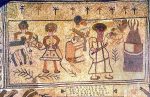
A mosaic of the Akeida in Bet Alfa National Park in Israel. (photo from hartman.org.il)

For many of us, the approach of the Jewish New Year offers an opportunity to take a moment from our harried lives to reflect on life’s “big” questions. It is a time for many of us – across the religious spectrum – to think about our relationships with ourselves and our families, with our tradition and with God. For those of us who choose to spend Rosh Hashanah in synagogue, the holiday offers the opportunity to participate in a communal reading of some of our most sacred and paradigmatic collective narratives, which in turn have the potential to illuminate some of our most pressing personal dilemmas.

Two of the most important biblical stories we revisit every Rosh Hashanah are the binding of Isaac (known in the Hebrew parlance as the Akeida) and Abraham’s argument with God regarding the fate of the inhabitants of Sedom. These two accounts represent two different religious anthropologies: one of sacrificial self-surrender and one of assertive moral challenge. As I have previously written, the personal moral empowerment displayed by Abraham in the story of Sedom – his insistence on his own ethical intuition and God’s acceptance, in turn, of those claims – is, for me, the foundation of the covenantal relationship.

The account of the Akeida, on the other hand, presents a distinct moral dilemma: How do we begin to understand a God who would ask His most loyal follower to sacrifice his beloved son? There are many ways to approach the theological puzzle that is the Akeida. This Rosh Hashanah, as we pause to examine not only our relationship to the divine, but our personal family relationships as well, I propose rereading the story of the Akeida by looking at God’s character through an anthropomorphic lens.

Before I begin describing God in human terms, however, it is important to remember that we have a long and deep tradition of doing so. The Bible is replete with images of God experiencing “human” emotions. Throughout the biblical narrative, we are presented with a God who is alternately angry, jealous or ego-driven.

During the Jewish people’s sojourn in the desert, for example, Moses, like Abraham before him, finds himself in the position of having to plead with God not to destroy a people – in this case, the Jews of the desert generation. The Bible describes God in nakedly human terms, as Moses finds that he has to, in some way, appeal to God’s ego. The Midrash describes Moses grabbing hold of God and saying to Him, “I’m not going to let you do what you want to do to the Jews.” Moses even appeals to God’s public relations considerations: he reminds God that He not so recently delivered this desert people from bondage in Egypt; if He kills them now, the other nations will say that He took them out of slavery only to slaughter them in the wilderness. Moses tells God in no uncertain terms that he will not help facilitate a people’s destruction.

Moses has to convince God not to allow His “emotions” to overpower Him, not to let His anger consume Him. This is but one example of many throughout the Bible and the Midrash of profound anthropomorphism, of portraying God as a character full of human weaknesses, with the potential to be both vulnerable and volatile.

In examining the story of the Akeida, we are compelled to ask, How could the God of the covenant – the God who promised Abraham that a great and multitudinous nation would emerge from his son Isaac – command that Isaac be killed? How are we able to understand the covenant in light of this seemingly unfathomable dictum? In attempting to understand the God of the Akeida, and what the Akeida might mean for us today, I have found it helpful to look at God as a parent.

God made the covenant with Abraham. But, after He did so, He got nervous, He suddenly felt scared. He had given over enormous power to human beings and He felt His ego being threatened. Thus, when God commands Abraham to “Take your son,” Abraham senses intuitively that it is not a moment in which to approach God with his moral claims. When God says, “Take your son,” Abraham understands that the God who is speaking – the God of the Akeida – is a God who experiences His own authority as under siege.

Abraham knows that the moment of the Akeida is not a moment for encounter or dialogue, but a moment that requires silence. It is a moment when Abraham knows that his only choice is to be quiet and submit. Abraham, a lover of God, senses the divine mood. When Abraham stood in front of God at Sedom, it was, in part, because he felt that it was a time when he could approach God; he sensed that God was in a willing position, that there was a possibility that He would be receptive to Abraham making covenantal demands.

Abraham’s response to God is analogous to a child’s response to a parent who the child knows is feeling challenged or threatened. There are times in a family’s life when a child knows intuitively – as Abraham knew intuitively – that there’s an opportunity for discussion, a moment when he can be critical of his parents, and his parents will be receptive to what he has to say. But there are other moments when a child understands that his parent is feeling insecure; moments when the mother or father is terrified of losing his or her authority. A child knows that is not the moment to try to encounter the parent in critical relationship; it’s not the moment to remind the parent that, in the past, he or she has encouraged critical reflection. That is a reality of family life: parents can become terrified of losing their position of power; they can become frightened that their children misjudge their encouragement of critical reflection as a negation of their parental authority. So, in some way, I attribute to God the same weakness or the same dilemma. He feels threatened. He feels that He must assert His power and test His child.

Before the Akeida, Abraham is referred to as ohavai elokim, a lover of God. Subsequent to the Akeida, he is referred to as yerei elokim, a fearer of God. The question we are faced with is why must God demand Abraham’s submission and fear? Why was his love not enough? To understand the God of the Akeida, we have to understand that God has conflicting forces within Him. The Midrash on the Akeida paints a very strange portrait of a God who says to the Jewish people, “Please pray for me. Please pray that my attribute of compassion will overcome my attribute of justice.”

Who is this God that must pray to human beings for help in overcoming His impulses? Who is the God that needs to ask human beings to remind Him of compassion? The Midrash illuminates for us the reality of a God who is struggling to reconcile the opposing forces within Him. It is my view that the Akeida is a moment of God’s struggle within Himself. God tests Abraham because of God’s own internal difficulty balancing justice with compassion, fear with love.

How can we talk about God experiencing an internal struggle? The great contemporary biblical scholar Yohanan Muffs argues that it is only in human terms that we can most authentically grasp the nature of the divine. I share Muffs’ view that God’s humanity, so to speak, is essential to a true understanding of Him. Yet it is not only 20th-century thinkers such as Muffs, Abraham Joshua Heschel and I who have portrayed God in starkly mortal terms. Drawing on the tradition of the Bible and the Midrash, the rabbis of the rabbinic period routinely discussed God as having an interior emotional life. While this approach did not fit in with medieval philosophy, which maintains that God cannot take on any human form, that any change or emotion in God is a sign of imperfection, the great figures of the rabbinic period were not frightened to speak of God in the language of human psychology.

It is this tradition that empowers me to think of God in terms of psychodynamic maturation: to cite His shift from being a figure of complete and total authority to a figure who works in concert with human beings. It is the deep rabbinical tradition of ascribing human qualities to God that enables me to see a God who decides to become accountable to human beings.

And it is this precedent of anthropomorphism in the rabbinic canon that informs my view of the God of the Akeida as a parent struggling with his identity, grappling with the competing values within Him. He loves Abraham and He has planned great things for him, but God is beset by his own internal dilemmas, by his own conflicting emotions. This is the God of the Midrash, the God who says to Moses, “Hold me back, Moses, I’m losing myself.”

If this is a bold way of discussing the divine, it is no bolder than the way the Bible itself discusses God. Rather than diminish God in our eyes, looking at God in human terms enables us to understand Him on a deeper level. The God who experiences emotion, who experiences internal struggle, is a God who can enter into a relationship of mutual accountability with human beings. The God who experiences His own psychodynamic reality is the God of covenantal spirituality.

This Rosh Hashanah, as we examine our relationships with our parents and our children, with ourselves and with our tradition, we are all faced in some form or another with the challenge of balancing compassion with justice, authority with love. As the Jewish New Year draws closer, let us allow ourselves to draw on the wisdom of our shared narratives as we struggle to reconcile the competing values within us.

Rabbi Prof. David Hartman (1931-2013) was founder of the Shalom Hartman Institute. Articles by Hartman, z”l, and other institute scholars can be found at shalomhartman.org.

Format ImagePosted on September 7, 2018September 6, 2018Author David Hartman SHICategories Celebrating the HolidaysTags Akeida, Judaism, Rosh Hashanah, teshuvah, Torah

Posts pagination

Previous page Page 1 … Page 6 Page 7 Page 8 … Page 10 Next page
Proudly powered by WordPress