Skip to content
  • Home
  • Subscribe / donate
  • Events calendar
  • Business Directory
  • FAQ
  • News
    • Local
    • National
    • Israel
    • World
    • עניין בחדשות
      A roundup of news in Canada and further afield, in Hebrew.
  • Opinion
    • From the JI
    • Op-Ed
  • Arts & Culture
    • Performing Arts
    • Music
    • Books
    • Visual Arts
    • TV & Film
  • Life
    • Celebrating the Holidays
    • Travel
    • The Daily Snooze
      Cartoons by Jacob Samuel
    • Mystery Photo
      Help the JI and JMABC fill in the gaps in our archives.
  • Community Links
    • Organizations, Etc.
    • Other News Sources & Blogs
  • JI Chai Celebration
  • JI@88! video

Recent Posts

  • SFU honours Gloria Gutman
  • Lifting people’s spirits
  • Wedding a ray of light
  • Indigeneity and Zionism
  • Rule of law broken: councilor
  • Football and its roles
  • The burden of defence
  • Fish Café returns after fire
  • All right in what goes wrong
  • Nuns & mermaids at TUTS
  • Camp offers holiday retreat
  • Students and mentors inspire
  • Once-in-a-lifetime trip
  • 100 dancers, one heart
  • Money for the sciences
  • What “Jewish food” means
  • Have a cookie, schnitzel too
  • Federation now across BC
  • Israel fighting for its existence
  • Deal strengthens Iran
  • Patriotic belonging diminishes
  • A campaign to engage
  • Upstanders’ first live event
  • Responding to Carney
  • Having your own home
  • Music a family tradition
  • Musical to warm heart
  • Community milestones … June 2026
  • Sharing her passion for Israel
  • Or Shalom reopens its doors
  • JFS from past to future
  • Need holistic approach
  • Sharing stories, advice
  • Journalist shares fears
  • Skills to live together
  • Road to independence

Archives

Follow @JewishIndie
image - CJN box ad Rockowers 2026

Tag: Rosh Hashanah

Rosh Hashanah market

Rosh Hashanah market

(photo by Shula Klinger)

Paul Harnett shows off his wares at the recent open house and market at the Jewish Community Centre of Greater Vancouver. (For more on Harnett, see jewishindependent.ca/time-for-new-shofar.) The JCC Rosh Hashanah Marketplace took place Sept. 12-14 and 18 and featured several vendors – of jewelry, art, glassware, clothing, hats and more – and some community organizations also had stands.

Format ImagePosted on October 6, 2017October 5, 2017Author Shula KlingerCategories LocalTags Jewish Community Centre, Paul Harnett, Rosh Hashanah, shofars
About the JI Rosh Hashanah cover art

About the JI Rosh Hashanah cover art

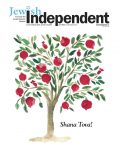
“Pomegranate Tree” is a fine art print of an original watercolour by Yael Berger. It is inspired by traditional folk art paintings. Pomegranate trees are actually big bushes, and their shape has inspired a lot of textile and illustration. Pomegranates symbolize plenty, wisdom and fertility, and the fruit is one of the symbols of Rosh Hashanah. The original painting was sold.

Berger is an Israel-based textile designer. After graduating from Shenkar College of Engineering, Design and Art in Ramat Gan, she worked in the fashion and home textile industry for more than 20 years, had her own design studio and sold funky printed T-shirts. Then she worked for 16 years as a senior sock designer and stylist at Delta Galil Ltd., a leading company of socks and underwear.

Her greatest passion is for colour and pattern, which is reflected in the name of her shop, the Joy of Color. “I hope my optimism and the joy I feel when creating is reflected in my paintings and prints,” she writes. “Nature, everyday objects and folk art inspire me and make me happy. As a minimalist at heart, I try to keep the shapes as simple as possible and let the colour speak. I do hope that my work will bring you joy and happiness.”

To see more of Berger’s work, visit etsy.com/shop/thejoyofcolor.


Format ImagePosted on September 15, 2017September 14, 2017Author Yael BergerCategories Visual ArtsTags folk art, pomegranates, Rosh Hashanah, Yael Berger

A holiday for memories

When it comes to Rosh Hashanah, I’m a big fan. It’s hard not to love a Jewish holiday that’s all about spiritual renewal, deep reflection and heartfelt promises to work harder to present our “better selves” to those around us. But, as I move into my mid-40s, I’m realizing there’s more than that to the Jewish New Year – more than those deep brown challahs filled with sweet raisins, more than the novelty of dipping apples in golden honey and dripping them all over the tablecloth before a great meal. Rosh Hashanah is also a profound vessel of memory and, as I defrost my brisket, hunt for the best-yet new quinoa recipe and knead and shape my challahs, I’ll be thinking of the past.

I don’t realize, until Rosh Hashanah rolls around, how vividly that past is available. I yank those memories from the recesses of my mind and daydream my way back to a 14-year-old self growing up in Cape Town, South Africa. Back then, Rosh Hashanah meant receiving a batch of my grandmother’s taiglach, a recipe I’m still determined to tackle and one that will take me, in spirit, immediately and joyfully, into her tiny kitchen. It meant hours in synagogue, listening to the deep baritone voices of the Rondebosch shul choir, and the wonderful melodies of the cantor, who we imported from Israel for that time of year.

It meant family discussions on who to invite to our Rosh Hashanah table, and long debates about whether we could tolerate, for another year, the uncle who arrived in his farm-stained overalls and fell asleep on the sofa before the meal was over. Or the aunt who was always asking for recipes (and never using them) and used fingers, rather than salad servers, to select the leafy greens she wanted on her plate.

There were wild cousins whose antics my parents weren’t certain they wanted unleashed in the house. And friends whose children my sister and I wanted nothing to do with and campaigned loudly for their removal from the guest list.

With hours before the festival’s arrival, as my mother’s culinary activities sent rich aromas wafting over the house, we kids were in charge of setting the table and removing from the dusty cabinet the exquisite glasses my parents had bought while on a Venice honeymoon 15 years earlier. We’d craft name tags and carefully position them around the table, ensuring we occupied the best seats in the house. And we’d decant the wine an elderly relative had made, pouring it carefully into the crystal decanter only used on such occasions.

At the time, I rolled my eyes at the list of chores, grateful for the reprieve from school but unappreciative, as only a teenager with little worldly experience can be, of the treasures at that table. The family members we’d lose as age and cancer robbed them of more time with us. The recipes I’d never have the foresight to record and the hugs and kisses I never cherished long enough.

What I did bring with me over the decades, that would follow me into married life with children, was an unbridled love for Rosh Hashanah and a determination to make it as memory-laden, meaningful and delicious as possible in my home. It’s why, this year and in the years ahead, I’ll spend hours on dishes I’d never normally prepare: sodium-filled chicken soup with kneidlach, tender brisket that will tempt even the avowed vegetarians among my kids and wafer-thin kichel biscuits, perfect with chopped herring. Maybe I’ll even summon the courage to attempt baking sweet, sticky taiglach, a recipe that requires copious amounts of syrup and hours of careful babysitting.

I’ll do all this and more in the name of memory, because it will conjure my own past, a continent and lifetime away, so vividly. And I’ll hug my kids extra-tight, subdued in the knowledge that, one day, they, too, will celebrate this holiday with their own families after I’m six feet under, hopefully cherishing the food and love-laden Rosh Hashanah memories of their own long-gone childhoods.

Lauren Kramer, an award-winning writer and editor, lives in Richmond. To read her work online, visit laurenkramer.net.

Posted on September 15, 2017September 14, 2017Author Lauren KramerCategories Celebrating the HolidaysTags family, memoir, Rosh Hashanah

On making a new start

Why is it so hard for many of us to shake off the past and begin anew? My Bride often tells me she finds it amazing how easily I forgive myself for my errors. She holds her misgivings about past actions to her breast for eternity. For me, when I forgive myself, I find it much easier to strike off in another direction, one which may, or may not, lead to a better result.

Maybe it has something to do with my background. As an adherent to Judaism, I have always been much taken by the ideas associated with the Jewish New Year. Rosh Hashanah, occurring in the autumn, as determined by the lunar calendar, is one of our major holidays. It is a happy holiday, a time of feasting and family gatherings, celebrating that we managed to get safely through another year. And there are lots of wishes expressed that we might do the same again next year, even marking it in our spiritual birthplace, Jerusalem.

But there is a serious side to the holiday as well. The New Year will be followed closely by the Day of Atonement, Yom Kippur, when all Jews are assessed and judged as to what their fate will be in the year to come. So, the New Year is a time when all Jews are expected to examine their behaviours and make resolutions that, hopefully, will guide their actions more positively in the coming year.

To do so, one has to search one’s conscience, one has to admit to oneself all those things that we have done wrong, that only we know about. We have to admit to ourselves remorse for our actions that we know have not been correct in the light of our values. Then we have to decide that we will not do those things again. We have to forgive ourselves and resolve to do differently. Indeed, during this season, many individuals go out of their way to visit antagonists and others to whom they may have done wrong to beg pardon for any perceived excesses to which they may have been a party.

So, you can see that I come by my approach rightly. It was imbibed with my mother’s milk. Judaism is not unique in including this concept within its construct. It seems to be an important element within many religious and philosophical approaches as to how humans should live. The key thing to me is that we have to be able to forgive ourselves so that our contrition can motivate actions toward a new start.

I must admit I always feel refreshed when I am in the position of having cast off the constrictions imposed by ideas I have been forced to abandon. Ahead of me lie whole new worlds of possibilities. That old stuff didn’t work. What did I learn? Where can I go from here?

What about that idea that we discarded before as impractical, impossible? Could there be something in it? What about what Joe suggested, which we shouted down? Maybe we should ask him to explain it more fully. Could there be something in it that we missed? He has had good ideas before. What if we put that idea together with the one we had? Could that give us a better result? Anybody who has spent a part of his or her life confronting problems, and problem-solving, in concert with other people, will know that of which I speak.

Don’t we feel better after we have cleared the decks with an old adversary? Now maybe we can make a fresh start and work together to accomplish common goals that we share. Isn’t it great when the difference you have had with your spouse has been resolved and you have returned together to the zone of loving and sharing that you were in danger of losing? Isn’t that more important than things that may have divided you? Aren’t so many long-term relationships built by making new starts over and over again?

The Jewish New Year ethic is a part of how we can live our lives each day. Making a fresh start is what we can do every day we wake up. We all know there are things percolating on the back burner. We may not want to think about some of these things. We may push them off to the back of our minds because of their unpleasantness. But they don’t go away. They are the things we will have to tackle if we want to make a fresh start in some important area of our lives.

Max Roytenberg is a Vancouver-based poet, writer and blogger. His recently published Hero in My Own Eyes: Tripping a Life Fantastic is available from Amazon and other online booksellers.

Posted on September 15, 2017September 14, 2017Author Max RoytenbergCategories Celebrating the HolidaysTags forgiveness, Judaism, Rosh Hashanah, teshuvah
Recipes for a tradition

Recipes for a tradition

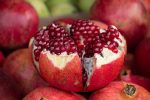
(photo by Noa Fisher via PikiWiki-Israel)

Pomegranates are referred to in the Bible in many various ways. In the sensual poetry of Song of Songs, we read, “I went down into the garden of nuts … to see whether the vine budded and the pomegranates were in flower.” In another passage, the poet writes, “I would cause thee to drink of spiced wine, of the juice of my pomegranate.” Song of Songs has four additional mentions of pomegranates, and there are also references in Joel, Haggai and I Kings.

For many Jews, pomegranates are traditional for Rosh Hashanah. Some believe the dull and leathery skinned, crimson fruit may have really been the tapuach, apple, of the Garden of Eden. According to Forward “Food Maven” Matthew Goodman, the pomegranate originated in Persia and is one of the world’s oldest cultivated fruits, having been domesticated around 4000 BCE. The Egyptians imported pomegranates from the Holy Land in 1150 BCE and natural pomegranate juice, made into spiced wine, was a favourite of Hebrews living in Egypt. Pomegranate wood could also be carved into skewers on which to roast the lamb for Passover.

The word pomegranate means “grained apple.” In Hebrew, it is called rimon, which is also the word for hand grenade! In fact, the English term “hand grenade” is said to come from this and that both the town of Granada in Spain and the stone garnet come from the name and colour of the pomegranate. The juice can also be made into grenadine.

The Hebrews yearned for the pomegranates they left behind in Egypt while wandering in the desert – “And wherefore have ye made us to come up out of Egypt, to bring us in unto this evil place? It is no place of seed, or of figs, or of vines, or of pomegranates.” (Numbers 20:5) And the spies reported their findings in Canaan to Moses: “And they came unto the valley Eshkol and cut down from thence a branch with one cluster of grapes, and they bore it upon a pole between two; they took also of the pomegranates and of the figs.” (Numbers 13:23)

Pomegranates were also used on the faces of the shekel in the second century BCE. King Solomon had an orchard of pomegranates, and pomegranates of brass were part of the pillars of his great Temple in Jerusalem. Throughout the Bible, pomegranates are referred to as a symbol of fertility. As well, in the Jewish mystical tradition of kabbalah, it is said there are 613 seeds in each pomegranate, equaling the number of mitzvot commanded by God.

On the second night of Rosh Hashanah, when it is customary to eat a “new” fruit, one that celebrants have not eaten during the year, many Sephardi Jews choose the pomegranate. They recite the prayer “ken yehi ratzon, may it be thy will, O Creator, that our year be rich and replete with blessings, as the pomegranate is rich and replete with seeds.”

In modern days, a study at the Technion in Haifa a few years ago showed the power of the fruit. The cholesterol oxidation process, which creates lesions that narrow arteries and result in heart disease, was slowed by as much as 40% when subjects drank two to three ounces of pomegranate juice a day for two weeks. The juice reduced the retention of LDL, the “bad” cholesterol that aggregates and forms lesions. When subjects stopped drinking the juice, the beneficial effects lasted about a month. Other studies have shown that pomegranates fight inflammation and cancer, and slow cellular aging. Pomegranates are a good source of potassium, low in calories and low in sodium.

When choosing a pomegranate, look for one that is large, brightly coloured and has a shiny skin. You should store a pomegranate in a plastic bag in the refrigerator, and it can keep up to 10 weeks. To open a pomegranate, score the outside skin into four pieces, then break the fruit apart with your hands following the divisions of the membranes. Pull off the membranes then scrape the seeds into your mouth or lift them out with a spoon. Here are some recipes for those seeds.

POMEGRANATE SYRUP

6 pomegranates
1/3 cup white sugar
1/3 cup brown sugar
1 cinnamon stick
1/8 tsp nutmeg
1/8 tsp allspice

  1. Puree seeds from pomegranates in blender or food processor and strain. Place in saucepan.
  2. Add white sugar, brown sugar and cinnamon stick. Bring to a boil. Reduce heat and simmer about 10 minutes. Add nutmeg and allspice and cook one minute.
  3. Remove from heat, discard cinnamon stick and strain.

BAKED APPLES IN POMEGRANATE SYRUP
6-8 servings

4 slightly tart apples
1 halved pomegranate
apple juice
1/3 cup preserves of your choice
1/2 tsp cinnamon

  1. Cut each apple into four wedges. Place in microwavable dish.
  2. Squeeze juice from half the pomegranate into a measuring cup. Add enough apple juice to make half a cup. Add preserves and cinnamon and mix well. Pour over apples to coat them.
  3. Cover with plastic wrap and microwave for two minutes. Stir and microwave two more minutes. Place apple wedges in serving dishes.
  4. Remove seeds from other half of pomegranate and garnish apples.

POMEGRANATE FRUIT SOUFFLE

3 eggs
1 cup + 3 tbsp confectioners’ sugar
1 tbsp unflavoured gelatin
1/2 cup hot water
1/2 cup cold water
7 tbsp orange juice
2 1/2 tbsp lemon juice
pulp and seeds of 6 pomegranates

  1. Place yolks and sugar in a saucepan over a second saucepan filled with water (double boiler-style). Cook, stirring, until thick and creamy.
  2. Dissolve gelatin in a bowl of hot water. Then stir in cold water.
  3. Add orange juice, lemon juice, pomegranate pulp and seeds and mix.
  4. Add juice mixture to egg yolk mixture.
  5. Beat egg whites until stiff. Fold into pomegranate mixture. Pour into a soufflé dish or casserole with height built up of three to four inches with a double thickness of wax paper or aluminum foil, stapled or held in place with a paper clip.
  6. Chill in refrigerator until set. Remove band of paper. Decorate with whipped cream.

Sybil Kaplan is a journalist, lecturer, book reviewer and food writer in Jerusalem. She created and leads the weekly English-language Shuk Walks in Machane Yehuda, she has compiled and edited nine kosher cookbooks, and is the author of Witness to History: Ten Years as a Woman Journalist in Israel.


Format ImagePosted on September 15, 2017September 14, 2017Author Sybil KaplanCategories Celebrating the HolidaysTags food, history, Judaism, pomegranates, recipes, Rosh Hashanah
Apples and honey – so good

Apples and honey – so good

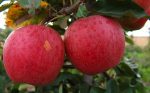
(photo by Markus Hagenlocher)

One of the most well-known customs of Rosh Hashanah is the dipping of apple pieces in honey but what is its origin?

In the time of King David, we know he had a “cake made in a pan and a sweet cake” (II Samuel 6: 15, 19) given to everyone. Hosea 3:1 identifies the “sweet cake” as a raisin cake.

The Torah also describes Israel as eretz zvat chalav u’dvash, the land flowing with milk and honey, although the honey was more than likely date honey, a custom retained by many Sephardi Jews to this day.

While honey may have been used in King David’s cake, the honey of ancient Eretz Yisrael was made from dates, grapes, figs or raisins because there were no domestic bees in the land. At that time, only the Syrian bees were there and, to extract honey from their combs, it had to be smoked. Still, honey was of importance in biblical times, as there was no sugar then.

During the Roman period, Italian bees were introduced to the Middle East, and bee honey became more common. Today, Israel has roughly 500 beekeepers who have some 90,000 beehives, which produce more than 3,500 tons of honey annually. Kibbutz Yad Mordechai is the largest producer of honey – 10,000 bottles a day.

Among Ashkenazi Jews, challah is dipped in honey on Rosh Hashanah, instead of having the usual salt sprinkled on it. The blessing over the apple is, “May it be Your will to renew for us a good and sweet year,” before it is dipped in honey.

Dipping the apple in honey on Rosh Hashanah is said to symbolize the desire for a sweet new year. Why an apple? In Bereishit, Isaac compares the fragrance of his son, Jacob (who he thinks is his son Esau), to a field, and Rashi says it is sadeh shel tapuchim, a field of apple trees.

Scholars tell us that mystical powers were ascribed to the apple, and people believed it provided good health and personal well-being.

Some attribute the using of an apple at Rosh Hashanah to the translation of the story of Adam and Eve and the forbidden fruit, which caused the expulsion from paradise. The Garden of Eden is also called Chakal Tapuchim, “Garden (or field) of Apple Trees.”

According to Gil Marks (z”l) in Encyclopedia of Jewish Food, “the first recorded association of apples with Rosh Hashanah was in Machzor Vitry, a siddur compiled around 1100, which included this explanation: ‘The residents of France have the custom to eat on Rosh Hashanah red apples….’ Future generations of Ashkenazim adopted the French custom … leading to the most popular and widespread Ashkenazi Rosh Hashanah tradition.”

Rabbi Jacob ben Asher, born around 1269, who fled with his family to Spain in 1303, was the first to mention the custom of apples dipped in honey in his legal compendium Arbah Turim, circa 1310, citing it as a German tradition.

Rabbi Alexander Susslein of Frankfurt, Germany, a 14th-century rabbinic authority, revealed it had become a widespread practice in Germany.

A few years ago, an article revealed that the average Israeli eats 125 apples and 750 grams of honey a year, mostly around the High Holy Days. Israel is very self-sufficient with regard to apples, with around 9,900 acres cultivated yearly, grown in the north, the Galilee hills and the Golan Heights. The most popular types of apples grown are Golden Delicious, Starking, Granny Smith, Jonathan, Gala and Pink Lady.

Honey in Hebrew, dvash, has the same numerical value as the words Av Harachamim, Father of Mercy. We hope that G-d will be merciful on Rosh Hashanah as He judges us for our year’s deeds.

Moroccans dip apples in honey and serve cooked quince, which is an apple-like fruit, symbolizing a sweet future. Other Moroccans dip dates in sesame and anise seeds and powdered sugar in addition to dipping apples in honey. Among some Jews from Egypt, a sweet jelly made of gourds or coconut is used to ensure a sweet year and apples are dipped in sugar water instead of in honey.

Honey is also used by Jews around the world not only for dipping apples but in desserts. Some believe in the phrase, “go your way, eat the fat, drink the sweet,” the sweet referring to apples and honey. Here are some recipes using honey for your Rosh Hashanah eating.

TISHPISHTI: MIDDLE EASTERN HONEY-NUT CAKE

Honey syrup:
1 1/2 cups honey
2/3 cup water
1/3 cup sugar
1/4 cup lemon juice

Cake:
2 cups finely ground almonds, hazelnuts, pistachios or walnuts
1 cup cake meal
2 tsp orange juice
1 tsp ground cinnamon
1/2 tsp allspice or ground cloves
6 eggs
1 cup sugar
1/2 cup vegetable oil
1 tbsp grated orange or lemon zest

  1. Stir honey, water, sugar and lemon juice in a saucepan over low heat until the sugar dissolves, about five minutes. Increase heat to medium, bring to a boil and boil for one minute. Let cool.
  2. Preheat oven to 350°F. Grease a 13-by-nine-inch baking pan.
  3. Combine nuts, cake meal, cinnamon and cloves in a mixing bowl.
  4. In another bowl, beat egg yolks with sugar. Add to nut mixture with orange juice. Add oil and orange or lemon zest.
  5. In a third bowl, beat egg whites until stiff but not dry. Fold into batter. Pour batter into baking pan and bake for 45 minutes. Cool.
  6. Cut cake into one- to two-inch squares or diamonds. Drizzle cooled syrup over the warm cake. Serve at warm or room temperature.

MY GRANDMA SADE’S TEIGLACH
Though my grandmother was born in New Jersey, her mother came to the United States as a young girl from Russia, so she probably learned this dish from her mother. Teiglach means “little dough pieces,” and it was originally for family celebrations and various holidays. Today, it is made primarily for Rosh Hashanah as a symbol for a sweet new year. According to my favourite reference book for any food, Marks’ Encyclopedia of Jewish Food, Teiglach was brought to the United States by Eastern Europeans in the early 1900s, and nuts were not part of the recipe in the old country.

2 1/2 cups flour
1 tsp baking powder
4 tbsp oil
4 eggs
1/8 tsp salt
3/4 cup brown sugar
1 1/3 cups honey
1 tsp ground ginger
1/2 tsp ground nutmeg
1 cup finely chopped pecans

  1. In a mixing bowl, combine flour, baking powder, oil, eggs and salt. Stir until dough is formed.
  2. In a saucepan, boil sugar, honey, ginger and nutmeg for 15 minutes.
  3. Wet a board with cold water.
  4. Pinch pieces of dough and drop them into the boiling honey mixture. Cook until very thick. Add nuts and stir. Pour honeyed pieces onto the wet board and cool slightly.
  5. With wet hands, shape dough into two-inch balls or squares. Let cool. Store in an airtight container.

Sybil Kaplan is a journalist, lecturer, book reviewer and food writer in Jerusalem. She created and leads the weekly English-language Shuk Walks in Machane Yehuda, she has compiled and edited nine kosher cookbooks, and is the author of Witness to History: Ten Years as a Woman Journalist in Israel.
Format ImagePosted on September 15, 2017September 14, 2017Author Sybil KaplanCategories Celebrating the HolidaysTags food, history, Judaism, Rosh Hashanah

Shul etiquette “commandments”

There’s no use in pretending it doesn’t bother me. The woman has invaded my sacrosanct space and time! But what can I do about it?

Let me explain.

I have a precious and brief time that I dedicate to enhancing my well-being each week. I attend a yoga class on my doctor’s order to become mindful of my time and space. I have come to cherish this opportunity to shut out the constant and disparate white noise that my brain exudes during the rest of my week. It’s the noise that reminds me to pay a bill, check my calendar for meetings, and note the items I have to remember to add to the shopping list. Not to mention all the family obligations that must be juggled. I’m anxious just writing these items, worried that my life is spinning out of my control, hence my doctor’s suggestion-cum-order.

In the first few minutes of each class, I focus my energy, breathing in and exhaling slowly. Recently, just as I was reaching the plateau that allows me to connect mind and body, the door to the quiet room opened with a woman who was not quite finished a phone conversation.

“Yeah, I know just what you mean, Sally. I had the same issue with her. I’ll have to tell you about it after my yoga class. I’m just getting in to it now.” Sally’s friend looks around, finds a spot, dumps her bag and continues to talk. “Oh, you do? Which one do you take?” She tucks the phone between her ear and shoulder, then unrolls her mat. “Really? Uh huh. Oh, and how much is it? Wow, that’s a lot less than I’m spending.” She upends her bag, looking for her water bottle. The instructor looks at her and smiles, suggesting she is ready to begin. “Listen sweetie, I gotta go, this class makes the British rail schedule look slack! Yeah, let’s do that, I’ll check my schedule for next week. No problem, I’m always here for you.”

As the instructor takes us through the first movement, Sally’s friend declares that this first stretch is feeling good, especially after such a stressful day. I am regaining my initial plateau, reminding myself that I need to judge others favorably. But with each position shift Sally’s friend has a comment. I’m finding these verbal utterances very intrusive.

Sally’s friend is not content with oohing and aahing. Now she is complimenting other classmates on their yoga attire. My desired state of mind is now wishful thinking. The only thing I am mindful of is how aggravated I am getting. Doesn’t Sally’s friend realize that this space and time is sacrosanct to me and to the others? Surely she must realize that there is a time and place for everything, and that this is neither the time, nor the place for her behavior. How can she be so oblivious to her poor yoga etiquette? Can she not see the distress she is causing?

This is related to my other dilemma. I don’t go to yoga to enhance my well-being and connect with my soul and my soul-maker; for that, I go to shul and pray with my community. And Sally’s friend’s behaviors reflect behaviors that regularly occur each Rosh Hashanah, Yom Kippur and on any given Shabbos, from people both religiously observant and not. So, I humbly submit for consideration and hopeful implementation “10 commandments of etiquette for shul attendance.”

  1. Remember in whose house you are a guest. The sanctuary is G-d’s domain, not yours. People often comment they don’t find shul a “spiritual experience,” but a little preparation can help. Just as you ready yourself for a day of work, ensuring you have briefed yourself for an upcoming meeting, for example, so you should ready yourself for prayer. Avail yourself of the many sources of Jewish inspirational writings for the appropriate holy day. It’s up to all of us to bring our own spiritual thoughts and emotions to the sanctuary.
  2. No cellphones. Just as theatres request that you refrain from talking, texting or photographing, shul is not a place for cellphone use during Shabbos or Yom Tov. If G-d needs you, He’s got a better way of getting your attention. And, if you can’t separate yourself from your communicator for the length of services, you’ve probably got an addiction and may need some professional help – perhaps even a yoga class.
  3. Stop the chatter. Shul is not a baseball diamond, and you are not in the outfield yelling, “batter, batter, batter, swing batter.” The rabbi, chazzan and Torah reader do not require a cheering section and you are not there to provide color commentary. They do require your respectful attention.
  4. Socialize outside the sanctuary. Any conversation longer than the prerequisite greeting of “Good Shabbos or good Yom Tov” should be held outside of the sanctuary. Nobody else wants to hear about your bad back and why you can’t golf or play tennis anymore.
  5. No market reports, please. Whether it’s Bloomberg, BNN, the Wall Street Journal or the costs of buying kosher meat and poultry, if it is important enough to discuss at length, see Commandment #4.
  6. Wear comfortable shoes. Women, you are not walking the catwalk in a Jimmy Choo or Louboutin fashion show. There are lengthy periods of the services that require standing in front of the open ark. Sitting down while the ark is open is disrespectful unless you’re over 70 or have a serious medical condition or impairment. If you regularly suffer from foot fatigue, pinched toes or aching bunions, bring a pair of flats.
  7. No beach, cocktail or lingerie wear. It should be obvious but if your outfit suggests you need to apply sunscreen, then don’t wear it to shul, as it’s unlikely that there will be a tanning bed provided. Likewise, men, jeans – no matter if they are considered “dress wear” – are not appropriate unless you are under the age of 6, and even then it’s questionable. As well, unless your shul sports a disco ball from the ceiling over the bimah, leave the booty-shaking togs at home.
  8. Don’t show off your offspring. Bubbies and zaidies, your grandchildren are not fashion accessories. They are small human beings, worthy of your respect. If you insist on traipsing them through the sanctuary to have your shul mates ooh and aah over them, you are doing yourself and your grandchildren a disservice, and creating a distraction for all around you.
  9. Bribing children into the sanctuary. From a small child’s point of view, the sanctuary is crowded and there are a bunch of strangers wanting to pinch their cheeks or kiss them. Offering bribes in the form of candy, juice, cookies or an iPad or other tech gadget often results in major negotiations that would impress even the most accomplished CEO. Save yourself the grief and sign the kids up for shul programs for their age group, or leave them at home with Mary Poppins.
  10. No electronic gadgets. This is for shul attendees of all ages. Just as police are cracking down on distracted driving, there should be a penalty for distracted davening. Do not engage your smartphone or Star Trek communicator during “slow parts” of the service. Answering your email, checking Facebook or sharing your latest photos are not earning you any extra credit with G-d.

We all have a lot to be grateful for and Rosh Hashanah is the time to express our gratitude to our creator on the anniversary of the creation of the world. At a time when we ask for emotional, physical and spiritual help on behalf of ourselves and others, we should be mindful that we are being judged by the king of all judges regarding our behavior, our attitudes, our compassion and our consideration for our fellow human beings.

Ellen Freedman is a native Vancouverite. She is a longtime reader and first-time writer.

Posted on September 30, 2016September 28, 2016Author Ellen FreedmanCategories Op-EdTags Jewish life, Judaism, mindfulness, Rosh Hashanah, synagogues
About the cover art

About the cover art

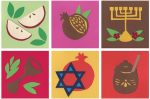
Shula Klinger creates her vibrant, whimsical designs with cut paper. The art is then scanned and reproduced as prints and greeting cards. Selections of her work can be purchased at Delish General Store (Granville Island) and Queensdale Market (North Vancouver). To see her full range of work, visit niftyscissors.myshopify.com or find her at the Artisan Fair, hosted by the North Shore Jewish Community at Congregation Har El in West Vancouver on Oct. 16, noon-4 p.m.

Format ImagePosted on September 23, 2016September 21, 2016Author The Editorial BoardCategories Celebrating the HolidaysTags art, gift cards, High Holidays, Rosh Hashanah
An apple-honey cake

An apple-honey cake

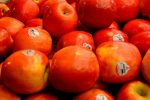
Add some apples to your honey cake this year. (photo by Barry A. Kaplan)

In the spirit of trying new things and as the New Year approaches, here is a recipe from my kosher kitchen, a slightly different take on the traditional honey cake. It’s a Rosh Hashanah favorite.

TWO-LAYER APPLE-HONEY CAKE

2 cups flour
2 tsp baking soda
2 tsp ground cinnamon
1/8 tsp ground nutmeg
1/4 tsp ground cloves
3/4 cup sugar or sugar substitute
1 1/2 tsp vanilla extract
2 large eggs
3/4 cup canola oil
1/3 cup non-dairy creamer
1/2 cup honey or honey substitute
3 cups grated apples

Frosting
2 cups tofu cream cheese
1/2 cup unsalted pareve margarine
1 tsp grated orange peel
1 cup confectioners sugar
2 tsp vanilla extract
1/2 cup honey or honey substitute

  1. Preheat oven to 325˚F.
  2. Put vegetable spray on two nine-inch cake pans.
  3. Place flour, baking soda, cinnamon, nutmeg, cloves and sugar or sugar substitute in a large bowl and mix.
  4. Add vanilla, eggs, oil, non-dairy creamer and honey. Mix, then add apples. Place half of the batter in each baking pan. Bake in the oven about 45 minutes or until a toothpick inserted into the centre comes out clean. Cool.
  5. Beat cream cheese and margarine in a bowl until fluffy.
  6. Add orange peel, confectioners sugar and vanilla and blend. Add honey. Chill until firm enough to spread.
  7. Place one cake on a serving dish. Spread with one cup of frosting. Top with the second cake and spread the remaining frosting on the top and sides.

Sybil Kaplan is a journalist, foreign correspondent, lecturer, food writer and book reviewer who lives in Jerusalem. She also does the restaurant features for janglo.net and leads walks in English in Jerusalem’s market.

Format ImagePosted on September 23, 2016September 21, 2016Author Sybil KaplanCategories Celebrating the HolidaysTags apples, kosher, recipes, Rosh Hashanah
Celebrate sweetness

Celebrate sweetness

The High Holidays are all about family and friends coming together and sharing a meal. Kosher Taste: Plan. Prepare. Plate (Feldheim, 2016) by Toronto-based Amy Stopnicki offers home cooks a new formula for kosher cooking, with more than 100 recipes and photos.

In Kosher Taste, Stopnicki has taken her best innovations from years of experience and combined them with her passion for creating balanced and beautiful meals.

book cover - Kosher Taste“I love to cook and I love to entertain. The warmth and beauty of sharing a beautifully set Shabbos or holiday table with friends and family is my passion and joy,” she explained. “The satisfaction I feel when family and guests dig in for seconds, or when kids enjoy a new dish, this makes all the effort of planning and preparing worthwhile. My goal with Kosher Taste is to share this joy, this passion, with home cooks who are looking to experience delicious new tastes and flavors to share with their families.”

Every recipe offers an easy-to-follow formula. Plan: tips for preparing ingredients ahead of time. Prepare: simple instructions and a step-by-step guide help any level of home cook recreate Stopnicki’s recipes. Plate: making what you have prepared look beautiful when served and what you can serve it with.

Recipes include squash zucchini soup, mango salad with raspberry vinaigrette, broccoli kugel, grilled fennel with balsamic reduction, stuffed mushrooms, salmon pad thai, wasabi tuna steaks, maple-glazed turkey breast, spinach pesto stuffed chicken, skirt steak in rum sauce, simple savory brisket, chocolate-dipped hamantashen and pumpkin pie brulée.

Here are some recipes to try for the New Year.

QUINOA SCHNITZEL
status: meat, serves 6-8

Plan: This recipe can also be baked on cookie sheets. Lightly cover the cookie sheet with oil and coat the top of each schnitzel with non-stick cooking spray. Bake at 350°F for approximately 10 minutes on each side. Quinoa flakes are a great gluten-free alternative. They are light and healthy and easy to work with and can be found in most health food stores.

8 chicken breasts
2-2 1/2 cups dried quinoa flakes
1 tsp salt
1/2 tsp paprika
1/2 tsp garlic powder
1/2 tsp pepper
2 eggs
1/2 cup cornstarch or potato starch
canola (or safflower) oil for frying

Prepare:
1. Slice chicken breasts horizontally and pound to flatten.
2. In a shallow bowl, combine quinoa flakes, salt, paprika, garlic powder and pepper.
3. In another shallow bowl, lightly beat eggs.
4. Pour the starch on a plate.
5. In a large skillet, heat oil over a high temperature for frying.
6. Lightly dip each piece of chicken in starch, egg, and finally the quinoa mixture.
7. Fry each piece of chicken, turning when necessary. You will know it’s cooked when all sides are golden.

Plate: There are endless debates on how one serves and eats schnitzel: with noodles, or salad, or even in a sandwich. Stopnicki’s favorite is Israeli-style with hummus, Israeli salad and basmati rice.

APPLE CINNAMON STREUSEL MUFFINS
status: pareve, makes 18 muffins

Plan: This sweet treat is a great muffin to have for the kids as an after-school snack. Double the recipe and freeze them so you can take them out as needed. They thaw in 10 minutes or so.

2 eggs
1 tbsp vanilla extract
1 cup sugar
1/2 cup canola oil
2 cups flour
1 tbsp cinnamon
2 tbsp baking powder
1/2 cup applesauce
1 cup water
2 gala apples, peeled and finely diced

Streusel topping
3 tbsp margarine
1 cup flour
1/2 cup brown sugar
1/2 tsp cinnamon

Prepare:
1. Preheat oven to 350°F.
2. In a large mixing bowl, cream eggs, vanilla, sugar and oil until mixture is light.
3. Add dry ingredients, applesauce, water and apples and combine well.
4. Pour batter into paper-lined muffin tins, filling them 2⁄3 of the way.
5. Meanwhile, combine all streusel ingredients until they achieve a sand-like consistency.
6.Pour one tablespoon of streusel mixture on top of each unbaked muffin.
7. Bake for 20-30 minutes or until the tops are slightly golden.

Plate: Enjoy these alone or with a hot cup of tea.

Format ImagePosted on September 23, 2016September 21, 2016Author Trina Kaye OrganizationCategories Celebrating the HolidaysTags cookbooks, kosher, Rosh Hashanah

Posts pagination

Previous page Page 1 … Page 7 Page 8 Page 9 Page 10 Next page
Proudly powered by WordPress